
Direct Hits
Author of Direct Hits Toughest Vocabulary of the SAT
Works by Direct Hits
Tagged
Common Knowledge
There is no Common Knowledge data for this author yet. You can help.
Members
Reviews
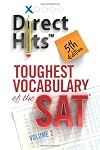
I found this book an enjoyable read and review of vocabulary. I liked that the examples were often modern day, and easy to relate to. I feel as though with time some of the words might enter my more common usage. As some other reviewers have noted, many of the words were things that I already knew, but most were not words that I used regularly. Having read the book once, I plan to continue to pick it up from time to time to add to my common vocabulary. I would also guess that this book would show more be helpful for SAT prep. It has a good layout of definition with example, quick review, and test questions. show less
 This review was written for LibraryThing Early Reviewers.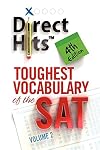
You will greatly benefit from and enjoy the process of building your vocabulary, even if you are not preparing to sit for the SAT exam, as you read one or both volumes of the 4th edition of Core Vocabulary of the SAT and Toughest Vocabulary of the SAT by Direct HitsTM
Did I just say “enjoy” in connection with learning vocabulary? Yes, I did, and I meant it. Both books are divided into three main sections: several chapters of vocabulary, a fast review section, and a test (with answers show more following). There is also a useful Index so you can mark words that may require extra study after you take the exam.
Volume One covers the core vocabulary in six chapters. Volume Two covers toughest terms in five chapters. What sets both of these books apart from standard vocabulary builders is that these make learning fun. SAT applicants will connect with the contemporary references that augment the traditional definitions. These books give valuable hooks that help you remember what each word means.
What most of us forget is that vocabulary adeptness isn't just a skill useful to ace entrance exams. A strong and confident use of words marks us as educated, thoughtful people. Being able to speak well and understand others helps us move up the career ladder and aids us in clearly communicating our ideas.
However, even if your purpose is simply to pass the SAT, you cannot go wrong in getting these books. Despite their compact size, they pack a wallop (my apologies to the authors but sometimes you simply have to use a common phrase to describe the impact, ahem, of a good book – or, in this case, two good books).
Volume 1 covers 220 core SAT vocabulary, dividing them into distinct sections. Chapters 1 and 2 cover 100 terms that are considered “high frequency” words that are necessary to score well on the Critical Reading portion of the SAT. These are the core vocabulary divided by the Educational Test Service (ETS) into five levels of difficulty. Studying these is important because levels 3 and 4 are missed by half of those taking the SAT. Study and master these are you are already ahead of the game.
Chapter 3 covers 30 words used to describe people who have achieved a certain fame or infamy. Chapter 4 provides a solid foundation of 25 “history-based” words that help students understand the history of words that form our language. Prefixes are the focus of Chapter 5, but unlike boring lists, this book divides prefixes into five sets which makes learning them much easier. Chapter 6 covers a crucial skill set on most college entrance exams: words that describe an author's attitude or the tone of a reading passage.
Volume 2 presents the toughest vocabulary that exam takers will encounter. The chapter numbers follow consecutively from Volume 1: Chapter 7 covers rhetorical and literary terms; Chapter 8 handles terms from the scientific and social science fields; Chapter 9 helps you understand words with multiple meanings; Chapters 10 and 11 tackle the toughest words on the SAT, those dreaded Level 5 terms.
I thoroughly enjoyed reading through these books because of their logical presentation and contemporary approach to defining vocabulary. I believe these books can help transform an average reader into either a lover of words or at least someone who will appreciate what language can do to clarify, amplify, and even simplify our ability to communicate effectively with one another. show less
Did I just say “enjoy” in connection with learning vocabulary? Yes, I did, and I meant it. Both books are divided into three main sections: several chapters of vocabulary, a fast review section, and a test (with answers show more following). There is also a useful Index so you can mark words that may require extra study after you take the exam.
Volume One covers the core vocabulary in six chapters. Volume Two covers toughest terms in five chapters. What sets both of these books apart from standard vocabulary builders is that these make learning fun. SAT applicants will connect with the contemporary references that augment the traditional definitions. These books give valuable hooks that help you remember what each word means.
What most of us forget is that vocabulary adeptness isn't just a skill useful to ace entrance exams. A strong and confident use of words marks us as educated, thoughtful people. Being able to speak well and understand others helps us move up the career ladder and aids us in clearly communicating our ideas.
However, even if your purpose is simply to pass the SAT, you cannot go wrong in getting these books. Despite their compact size, they pack a wallop (my apologies to the authors but sometimes you simply have to use a common phrase to describe the impact, ahem, of a good book – or, in this case, two good books).
Volume 1 covers 220 core SAT vocabulary, dividing them into distinct sections. Chapters 1 and 2 cover 100 terms that are considered “high frequency” words that are necessary to score well on the Critical Reading portion of the SAT. These are the core vocabulary divided by the Educational Test Service (ETS) into five levels of difficulty. Studying these is important because levels 3 and 4 are missed by half of those taking the SAT. Study and master these are you are already ahead of the game.
Chapter 3 covers 30 words used to describe people who have achieved a certain fame or infamy. Chapter 4 provides a solid foundation of 25 “history-based” words that help students understand the history of words that form our language. Prefixes are the focus of Chapter 5, but unlike boring lists, this book divides prefixes into five sets which makes learning them much easier. Chapter 6 covers a crucial skill set on most college entrance exams: words that describe an author's attitude or the tone of a reading passage.
Volume 2 presents the toughest vocabulary that exam takers will encounter. The chapter numbers follow consecutively from Volume 1: Chapter 7 covers rhetorical and literary terms; Chapter 8 handles terms from the scientific and social science fields; Chapter 9 helps you understand words with multiple meanings; Chapters 10 and 11 tackle the toughest words on the SAT, those dreaded Level 5 terms.
I thoroughly enjoyed reading through these books because of their logical presentation and contemporary approach to defining vocabulary. I believe these books can help transform an average reader into either a lover of words or at least someone who will appreciate what language can do to clarify, amplify, and even simplify our ability to communicate effectively with one another. show less
This review was written for LibraryThing Early Reviewers.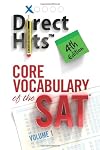
You will greatly benefit from and enjoy the process of building your vocabulary, even if you are not preparing to sit for the SAT exam, as you read one or both volumes of the 4th edition of Core Vocabulary of the SAT and Toughest Vocabulary of the SAT by Direct HitsTM
Did I just say “enjoy” in connection with learning vocabulary? Yes, I did, and I meant it. Both books are divided into three main sections: several chapters of vocabulary, a fast review section, and a test (with answers show more following). There is also a useful Index so you can mark words that may require extra study after you take the exam.
Volume One covers the core vocabulary in six chapters. Volume Two covers toughest terms in five chapters. What sets both of these books apart from standard vocabulary builders is that these make learning fun. SAT applicants will connect with the contemporary references that augment the traditional definitions. These books give valuable hooks that help you remember what each word means.
What most of us forget is that vocabulary adeptness isn't just a skill useful to ace entrance exams. A strong and confident use of words marks us as educated, thoughtful people. Being able to speak well and understand others helps us move up the career ladder and aids us in clearly communicating our ideas.
However, even if your purpose is simply to pass the SAT, you cannot go wrong in getting these books. Despite their compact size, they pack a wallop (my apologies to the authors but sometimes you simply have to use a common phrase to describe the impact, ahem, of a good book – or, in this case, two good books).
Volume 1 covers 220 core SAT vocabulary, dividing them into distinct sections. Chapters 1 and 2 cover 100 terms that are considered “high frequency” words that are necessary to score well on the Critical Reading portion of the SAT. These are the core vocabulary divided by the Educational Test Service (ETS) into five levels of difficulty. Studying these is important because levels 3 and 4 are missed by half of those taking the SAT. Study and master these are you are already ahead of the game.
Chapter 3 covers 30 words used to describe people who have achieved a certain fame or infamy. Chapter 4 provides a solid foundation of 25 “history-based” words that help students understand the history of words that form our language. Prefixes are the focus of Chapter 5, but unlike boring lists, this book divides prefixes into five sets which makes learning them much easier. Chapter 6 covers a crucial skill set on most college entrance exams: words that describe an author's attitude or the tone of a reading passage.
Volume 2 presents the toughest vocabulary that exam takers will encounter. The chapter numbers follow consecutively from Volume 1: Chapter 7 covers rhetorical and literary terms; Chapter 8 handles terms from the scientific and social science fields; Chapter 9 helps you understand words with multiple meanings; Chapters 10 and 11 tackle the toughest words on the SAT, those dreaded Level 5 terms.
I thoroughly enjoyed reading through these books because of their logical presentation and contemporary approach to defining vocabulary. I believe these books can help transform an average reader into either a lover of words or at least someone who will appreciate what language can do to clarify, amplify, and even simplify our ability to communicate effectively with one another. show less
Did I just say “enjoy” in connection with learning vocabulary? Yes, I did, and I meant it. Both books are divided into three main sections: several chapters of vocabulary, a fast review section, and a test (with answers show more following). There is also a useful Index so you can mark words that may require extra study after you take the exam.
Volume One covers the core vocabulary in six chapters. Volume Two covers toughest terms in five chapters. What sets both of these books apart from standard vocabulary builders is that these make learning fun. SAT applicants will connect with the contemporary references that augment the traditional definitions. These books give valuable hooks that help you remember what each word means.
What most of us forget is that vocabulary adeptness isn't just a skill useful to ace entrance exams. A strong and confident use of words marks us as educated, thoughtful people. Being able to speak well and understand others helps us move up the career ladder and aids us in clearly communicating our ideas.
However, even if your purpose is simply to pass the SAT, you cannot go wrong in getting these books. Despite their compact size, they pack a wallop (my apologies to the authors but sometimes you simply have to use a common phrase to describe the impact, ahem, of a good book – or, in this case, two good books).
Volume 1 covers 220 core SAT vocabulary, dividing them into distinct sections. Chapters 1 and 2 cover 100 terms that are considered “high frequency” words that are necessary to score well on the Critical Reading portion of the SAT. These are the core vocabulary divided by the Educational Test Service (ETS) into five levels of difficulty. Studying these is important because levels 3 and 4 are missed by half of those taking the SAT. Study and master these are you are already ahead of the game.
Chapter 3 covers 30 words used to describe people who have achieved a certain fame or infamy. Chapter 4 provides a solid foundation of 25 “history-based” words that help students understand the history of words that form our language. Prefixes are the focus of Chapter 5, but unlike boring lists, this book divides prefixes into five sets which makes learning them much easier. Chapter 6 covers a crucial skill set on most college entrance exams: words that describe an author's attitude or the tone of a reading passage.
Volume 2 presents the toughest vocabulary that exam takers will encounter. The chapter numbers follow consecutively from Volume 1: Chapter 7 covers rhetorical and literary terms; Chapter 8 handles terms from the scientific and social science fields; Chapter 9 helps you understand words with multiple meanings; Chapters 10 and 11 tackle the toughest words on the SAT, those dreaded Level 5 terms.
I thoroughly enjoyed reading through these books because of their logical presentation and contemporary approach to defining vocabulary. I believe these books can help transform an average reader into either a lover of words or at least someone who will appreciate what language can do to clarify, amplify, and even simplify our ability to communicate effectively with one another. show less
A great study tool for the SAT.
Aspects I particularly liked:
1. The definitions were distinct from explanations and neither were too laborious.
2. Explanations provided a modern, interesting context. For example, there were references to Pirates of the Carribean and the Matthew Broderick Kia commerical. Very up to date and very accessible.
3. Reinforcement was present in the explanations. Vocab words were used over again in different contexts and in different explanations. Page numbers were show more provided for words used elsewhere. So, in essence, you're testing yourself as you read through the book. Can't remember the definition? Use the page number to go back and review. show less
Aspects I particularly liked:
1. The definitions were distinct from explanations and neither were too laborious.
2. Explanations provided a modern, interesting context. For example, there were references to Pirates of the Carribean and the Matthew Broderick Kia commerical. Very up to date and very accessible.
3. Reinforcement was present in the explanations. Vocab words were used over again in different contexts and in different explanations. Page numbers were show more provided for words used elsewhere. So, in essence, you're testing yourself as you read through the book. Can't remember the definition? Use the page number to go back and review. show less
This review was written for LibraryThing Early Reviewers.Statistics
- Works
- 3
- Members
- 87
- Popularity
- #211,167
- Rating
- 4.2
- Reviews
- 40
- ISBNs
- 4
