
Barbara Kingsolver
Author of The Poisonwood Bible
About the Author
Barbara Kingsolver was born on April 8, 1955 in Annapolis, Maryland and grew up in Eastern Kentucky. As a child, Kingsolver used to beg her mother to tell her bedtime stories. She soon started to write stories and essays of her own, and at the age of nine, she began to keep a journal. After show more graduating with a degree in biology form De Pauw University in Indiana in 1977, Kingsolver pursued graduate studies in biology and ecology at the University of Arizona in Tucson. She earned her Master of Science degree in the early 1980s. A position as a science writer for the University of Arizona soon led Kingsolver into feature writing for journals and newspapers. Her articles have appeared in a number of publications, including The Nation, The New York Times, and Smithsonian magazines. In 1985, she married a chemist, becoming pregnant the following year. During her pregnancy, Kingsolver suffered from insomnia. To ease her boredom when she couldn't sleep, she began writing fiction Barbara Kingsolver's first fiction novel, The Bean Trees, published in 1988, is about a young woman who leaves rural Kentucky and finds herself living in urban Tucson. Since then, Kingsolver has written other novels, including Holding the Line, Homeland, and Pigs in Heaven. In 1995, after the publication of her essay collection High Tide in Tucson: Essays from Now or Never, Kingsolver was awarded an Honorary Doctorate of Letters from her alma mater, De Pauw University. Her latest works include The Lacuna and Flight Behavior. Barbara's nonfiction book, Animal, Vegetable, Miracle was written with her family. This is the true story of the family's adventures as they move to a farm in rural Virginia and vow to eat locally for one year. They grow their own vegetables, raise their own poultry and buy the rest of their food directly from farmers markets and other local sources. (Bowker Author Biography) show less
Series
Works by Barbara Kingsolver
The Complete Fiction: The Bean Trees, Homeland, Animal Dreams, Pigs in Heaven (1995) 93 copies, 3 reviews
Homeland {short story} 2 copies
Loveroot * 1 copy
Kingsolver, Barbara Archive 1 copy
falling house 1 copy
Kingsolver Barbara 1 copy
Associated Works
King Leopold's Ghost: A Story of Greed, Terror and Heroism in Colonial Africa (1998) — Foreword, some editions — 5,596 copies, 144 reviews
A Sand County Almanac and Sketches Here and There (1949) — Introduction, some editions — 5,095 copies, 74 reviews
Writers on Writing: Collected Essays from the New York Times (2001) — Contributor — 478 copies, 5 reviews
Sisters of the Earth: Women's Prose and Poetry About Nature (1991) — Contributor — 441 copies, 6 reviews
Teaching with Fire: Poetry That Sustains the Courage to Teach (2003) — Contributor — 223 copies, 1 review
Touchstone Anthology of Contemporary Creative Nonfiction: Work from 1970 to the Present (2007) — Contributor — 219 copies, 3 reviews
I Should Have Stayed Home: The Worst Trips of the Great Writers (1994) — Contributor — 187 copies, 5 reviews
This Is My Best: Great Writers Share Their Favorite Work (2004) — Contributor — 173 copies, 3 reviews
Novel History: Historians and Novelists Confront America's Past and Each Other (2001) — Contributor — 139 copies, 1 review
War No More: Three Centuries of American Antiwar and Peace Writing (2016) — Contributor — 108 copies, 2 reviews
Mid-life Confidential: The Rock Bottom Remainders Tour America with Three Chords and an Attitude (1994) — Contributor — 75 copies, 4 reviews
Did My Mama Like to Dance? and Other Stories about Mothers and Daughters (1994) — Contributor — 41 copies
The Haves and Have Nots: 30 Stories About Money and Class in America (1999) — Contributor — 36 copies
Tagged
Common Knowledge
- Legal name
- Kingsolver, Barbara Ellen
- Birthdate
- 1955-04-08
- Gender
- female
- Education
- DePauw University (BS|1977|biology)
University of Arizona (MS|ecology and evolutionary biology) - Occupations
- novelist
poet
short story writer - Organizations
- Rock Bottom Remainders (band)
- Awards and honors
- Pulitzer Prize for Fiction (2023)
James Tait Black Memorial Prize for fiction (2022)
National Humanities Medal (2000)
Best American Science and Nature Writing (2001)
Richard C. Holbrooke Distinguished Achievement Award (2011)
Arizona Press Club Award for Outstanding Feature Writing (1986) (show all 14)
Women's Prize for Fiction (2010, 2023)
Orange Prize for Fiction (2010)
James Beard Foundation Award (2008)
Los Angeles Times Book Prize (1993)
Library of Virginia Lifetime Achievement Award (2014)
Virginia Women in History (2018)
Honorary Doctorate of Letters, DePauw University (1994)
Phi Beta Kappa (DePauw University, 1977) - Agent
- Frances Goldin (Frances Goldin Literary Agency)
- Relationships
- Kingsolver, Camille (daughter)
Hopp, Steven (husband)
Hopp, Lily (daughter) - Short biography
- Barbara Kingsolver is an American novelist, essayist and poet. She was raised in rural Kentucky and lived briefly in the Congo in her early childhood. Kingsolver earned degrees in biology at DePauw University and the University of Arizona and worked as a freelance writer before she began writing novels. Her widely known works include The Poisonwood Bible, the tale of a missionary family in the Congo, and Animal, Vegetable, Miracle, a non-fiction account of her family's attempts to eat locally. Her work often focuses on topics such as social justice, biodiversity and the interaction between humans and their communities and environments.
- Nationality
- USA
- Birthplace
- Annapolis, Maryland, USA
- Places of residence
- Carlisle, Kentucky, USA
Léopoldville, Congo (now Kinshasa, Democratic Republic of the Congo)
Greencastle, Indiana, USA
Tucson, Arizona, USA
Washington County, Virginia, USA
England, UK (show all 8)
France
Canary Islands, Spain - Associated Place (for map)
- USA
Members
Discussions
group read [Demon Copperhead] in Club Read 2025 (July 2025)
"Demon Copperhead" by Barbara Kingsolver in 75 Books Challenge for 2023 (March 2024)
August 2019: Barbara Kingsolver in Monthly Author Reads (December 2020)
Barbara Kingsolver: American Author Challenge in 75 Books Challenge for 2015 (December 2015)
[The Lacuna] by [[Barbara Kingsolver]] in Orange January/July (July 2011)
Reviews
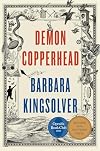
In this semi-reenacted David Copperfield, Kingslover manages to create an indelible portrait of a boy born into poverty to a single mother fighting her own demons of addiction. The narrative is chronological but hints of a memoir being told by a survivor. "We’ve got story enough here to eff up more than one young life, but it is a project." In a sense that style is the only reason we have to hope that Damon Fields, aka Demon Copperhead, manages to make it out of various foster homes, show more constant hunger, abusive relationships, and addiction. The writing is chock full of Appalachian wisdom and humorous anecdotes, much like a Huck Finn of modern times. "Sunday school stories are just another type of superhero comic. Counting on Jesus to save the day is no more real than sending up the Batman signal." In addition a great cast of memorable characters,( each one with a nickname like Fast Forward, Swap-Out,Maggot, Angus, ... give the novel an epic feel of a journey not soon forgotten. The story of the evil of Perdue Pharma has been increasingly publicized, but Kingsolver helps depict of heartlessness of company greed. As a side note I highly recommend the show Dopesick with Michael Keaton as a nice tie in to this novel.
Lines
Mom had her own version of the day I was born, which I never believed, considering she was passed out for the event. Not that I’m any witness, being a newborn infant plus inside a bag. But I knew Mrs. Peggot’s story. And if you’d spent even a day in the company of her and my mom, you would know which of those two lotto tickets was going to pay out.
People love to believe in danger, as long as it’s you in harm’s way, and them saying bless your heart.
Advice to anybody with the plan of naming your kid Junior: going through life as mini-you will be as thrilling as finding dried-up jizz on the carpet.
Whereas this Romeo is a stud menace. Magazine-model looks, like the dudes in the J. C. Penney’s ads that would not in a million years be wearing those dad clothes if not getting paid the big bucks for it. He’s dead fit, killer smile, lion-king mane, the whole picture.
I told her a person could get used to anything except hanging by the neck.
We drove around with “Proud Tobacco Farmer” stickers on our trucks till they peeled and faded along with our good health and dreams of greatness. If you’re standing on a small pile of shit, fighting for your one place to stand, God almighty how you fight.
She sounded like a man, with that deep type voice smokers get as their prize for the hundred millionth pack.
Also for a guy it’s different. If you sit still and let your ears take all that girl business, other body parts may get their turn.
Nobody needed to get all that educated for being a miner, so they let the schools go to rot. And they made sure no mills or factories got in the door. Coal only. To this day, you have to cross a lot of ground to find other work. Not an accident,
“Certain pitiful souls around here see whiteness as their last asset that hasn’t been totaled or repossessed.”
“You never were one to fall only halfway down the well, were you?” “No ma’am,” I said. “I fall all the way in.”
She had on a red turtleneck and fleece type boots that looked like they’d come from the sheep to her feet with minimal processing. show less
Lines
Mom had her own version of the day I was born, which I never believed, considering she was passed out for the event. Not that I’m any witness, being a newborn infant plus inside a bag. But I knew Mrs. Peggot’s story. And if you’d spent even a day in the company of her and my mom, you would know which of those two lotto tickets was going to pay out.
People love to believe in danger, as long as it’s you in harm’s way, and them saying bless your heart.
Advice to anybody with the plan of naming your kid Junior: going through life as mini-you will be as thrilling as finding dried-up jizz on the carpet.
Whereas this Romeo is a stud menace. Magazine-model looks, like the dudes in the J. C. Penney’s ads that would not in a million years be wearing those dad clothes if not getting paid the big bucks for it. He’s dead fit, killer smile, lion-king mane, the whole picture.
I told her a person could get used to anything except hanging by the neck.
We drove around with “Proud Tobacco Farmer” stickers on our trucks till they peeled and faded along with our good health and dreams of greatness. If you’re standing on a small pile of shit, fighting for your one place to stand, God almighty how you fight.
She sounded like a man, with that deep type voice smokers get as their prize for the hundred millionth pack.
Also for a guy it’s different. If you sit still and let your ears take all that girl business, other body parts may get their turn.
Nobody needed to get all that educated for being a miner, so they let the schools go to rot. And they made sure no mills or factories got in the door. Coal only. To this day, you have to cross a lot of ground to find other work. Not an accident,
“Certain pitiful souls around here see whiteness as their last asset that hasn’t been totaled or repossessed.”
“You never were one to fall only halfway down the well, were you?” “No ma’am,” I said. “I fall all the way in.”
She had on a red turtleneck and fleece type boots that looked like they’d come from the sheep to her feet with minimal processing. show less
There are some writers whose new books you always pick up, no matter how long, because you know the reading experience will be worth every minute spent on that tome. For me, Barbara Kingsolver is one of those writers. I count on her to give me quirky (sometimes downright bizarre) characters who come across as genuine—people I want to spend time with in a book, whether or not I might want to spend time with them in the real world.
I got a late start on Demon Copperhead (the date of its show more release) because I was daunted by the book's length—and here I am five days later not only glad I read it, but also having gone out of the way to purchase a copy I'll be gifting to someone near and dear very soon.
Demon Copperhead is a bumpy ride. In places, it's hilarious—the kind of fiction you want to read aloud to someone just to increase the pleasure of its wit. In other spots, it leaves one aching. If Demon Copperhead were a YA title, I'd call it a problem novel: the problem(s) in this situation being a combination of the inadequacies of the foster care system in the U.S. and the start of the opioid crisis that has devastated communities large and small. Kingsolver explains that Demon Copperhead is her homage to Charles Dickens' David Copperfield, her attempt to show ugly truths while giving us characters we can care deeply for. As the promo material for the book explains "In transposing a Victorian epic novel to the contemporary American South, Barbara Kingsolver enlists Dickens' anger and compassion, and above all, his faith in the transformative powers of a good story."
As with Dickens, Demon Copper gives us plenty of villains: old, young, brutal, self-centered, avaricious, and sadistic. For the most part, though, we can see how the world Demon is trying to fight his way through has also contributed to their villainy.
This isn't my favorite Kingsolver novel. For me, as for many people, that will probably always be The Poisonwood Bible, but Demon Copperhead offers the kind of extended, heart-tugging, clear-eyed narrative that can fill a string of days.
I received a free electronic review copy of this title; the opinions are my own. show less
I got a late start on Demon Copperhead (the date of its show more release) because I was daunted by the book's length—and here I am five days later not only glad I read it, but also having gone out of the way to purchase a copy I'll be gifting to someone near and dear very soon.
Demon Copperhead is a bumpy ride. In places, it's hilarious—the kind of fiction you want to read aloud to someone just to increase the pleasure of its wit. In other spots, it leaves one aching. If Demon Copperhead were a YA title, I'd call it a problem novel: the problem(s) in this situation being a combination of the inadequacies of the foster care system in the U.S. and the start of the opioid crisis that has devastated communities large and small. Kingsolver explains that Demon Copperhead is her homage to Charles Dickens' David Copperfield, her attempt to show ugly truths while giving us characters we can care deeply for. As the promo material for the book explains "In transposing a Victorian epic novel to the contemporary American South, Barbara Kingsolver enlists Dickens' anger and compassion, and above all, his faith in the transformative powers of a good story."
As with Dickens, Demon Copper gives us plenty of villains: old, young, brutal, self-centered, avaricious, and sadistic. For the most part, though, we can see how the world Demon is trying to fight his way through has also contributed to their villainy.
This isn't my favorite Kingsolver novel. For me, as for many people, that will probably always be The Poisonwood Bible, but Demon Copperhead offers the kind of extended, heart-tugging, clear-eyed narrative that can fill a string of days.
I received a free electronic review copy of this title; the opinions are my own. show less
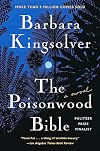
What a truly amazing book. As a preacher's kid growing up in the 1970's South, I was struck by the difference between my family situation and the Nathan Price sort of missionaries. We had lots of missionary kids living where we lived, usually for a year or two or for a summer, and none, not one, of their fathers were like this crazy white preacher. Maybe it was the difference in the time frame, or the higher level of ecclesiastical education, or even the simple difference in Protestant show more denominations that caused these differences, but now I understand what people think when I say I am a preacher's kid."
The story of the family, a woman and her four daughters (and thank goodness they were daughters - the trauma on them could easily have multiplied had there been a son or two), who are taken from their Betty Crocker world into the unforgiving Congo wilderness is heart-wrenching. And all too reflective of the worldview of colonial nations. One only has to read the accounts of English living in India to see the parallels between 1959 US and the Congo.
The humility that Nathan refuses to show at the beginning of the novel, whether it be how to plant seeds to why not to baptize at the edge of the river, is hard won. The elders of the villages who wonder why a vote must be done democratically when such a vote does not take into account the ideas and concerns of the dissenters is as real in that time as in any. And the observation of the daughter who looks at grocery shelves and wonders at the huge selection of hair shampoo and cleaning products instead of simple food is still a relevant thought that pops through the surface.
I highly recommend this book for its observations, its writing style, and it story of women's lives. As one reviewer said, there are women who do not leave their Nathan Price's, and this novel does help explain why." show less
The story of the family, a woman and her four daughters (and thank goodness they were daughters - the trauma on them could easily have multiplied had there been a son or two), who are taken from their Betty Crocker world into the unforgiving Congo wilderness is heart-wrenching. And all too reflective of the worldview of colonial nations. One only has to read the accounts of English living in India to see the parallels between 1959 US and the Congo.
The humility that Nathan refuses to show at the beginning of the novel, whether it be how to plant seeds to why not to baptize at the edge of the river, is hard won. The elders of the villages who wonder why a vote must be done democratically when such a vote does not take into account the ideas and concerns of the dissenters is as real in that time as in any. And the observation of the daughter who looks at grocery shelves and wonders at the huge selection of hair shampoo and cleaning products instead of simple food is still a relevant thought that pops through the surface.
I highly recommend this book for its observations, its writing style, and it story of women's lives. As one reviewer said, there are women who do not leave their Nathan Price's, and this novel does help explain why." show less

Summary: Dellarobia Turnbow feels trapped in her life - orphaned too early, married in high school to the boy who got her pregnant, and now stuck on her husband's family farm raising two small kids, with no job, no higher education, and no hope of change - so when she heads into the woods behind their property for an illicit extramarital meeting, she's not looking for much beyond something different, a temporary escape. But what she finds up there instead - a forest that looks like it's on show more fire with the swarming of millions of migrating monarch butterflies - is not at all what she'd expected. Some folks in town proclaim it to be a miracle, while others seek to profit off the tourism it brings in. But then a scientist who studies the monarchs, Ovid Byron, arrives, and sets up shop on Turnbow land, and what he brings is not a story of beauty and miracles but of a world gone terribly wrong, and the butterflies that are paying the price. But for Dellarobia, they may represent a ray of hope after all, although not in a way she ever could have expected.
Review: I may be somewhat of an oddity among Barbara Kingsolver's fans, in that while I like Poisonwood Bible quite a bit, my favorite book of hers (and one of my favorite books, full stop) has always been Prodigal Summer. I love the story, but I also love the interweaving of ecology and evolution into the fiction, and I particularly loved the sense of place. I've done fieldwork in the southern Appalachians, so I'm immediately familiar with the landscape she's writing about - and to some extent, the people as well. So, on that front at least, I absolutely loved Flight Behavior. Slipping into this book felt a little like going home, as if Flight Behavior is the winter-time counterpart to Prodigal Summer, and I kept half-expecting characters from Egg Fork to show up in Feathertown.
I also really enjoyed how Kingsolver is able to fit so much biology into a fictional story. And this is fiction; the monarchs' typical winter migration to Mexico has not (yet) been disrupted enough for them to show up in Tennessee. But it was eminently plausible that it might, and Kingsolver walks readers (alongside Dellarobia) through the very real ecological and climatological and genetic and evolutionary reasons why behind it. It did occasionally get a little bit infodump-ish, although for the most part, the information was presented in a way that was organic to the story at hand (a perk of having a scientist character in frequent conversation with other characters with varying degrees of ignorance and denial, I guess.) On the other hand, I didn't think it ever dragged, and I didn't feel as though it ever got lecture-y in the sense of badgering the reader about their habits, which is something to which I tend to be very sensitive. The scene between Dellarobia and the carbon-footprint guy was particularly skillfully done, and also hilarious. (I also realized that I have basically been the graduate student characters in this story, although they handled interacting with the local population with more grace and skill than I likely did.)
So: yay Appalachia! and yay science! And those two aspects take up really a large majority of the book, so on the whole, I was a happy camper. But where this book loses some points for me is in its tight focus on Dellarobia's story. She's an excellently-drawn character, tough and smart but stuck with few-to-no opportunities, and while I realize that her growth as a character was the primary non-biology focus of the novel, it just didn't feel like quite enough. Maybe I'm (unfairly?) comparing it to Prodigal Summer, which manages to tell the story of not one but three characters with equally-involving character arcs... and to do so in less space. Maybe I wanted the secondary characters to be fleshed out somewhat more than they were. Maybe I wanted another perspective, or a subplot or two. (Maybe I just wanted to Dellarobia to have an honest conversation with her husband for once.) But spending the entire book inside her head felt a little confining, and made me wish Kingsolver had branched out a bit. But on the whole, I quite enjoyed this book, and while it may not become a favorite on the order of some of Kingsolver's other books, but it's a welcome return to form after the struggle that was The Lacuna. 4 out of 5 stars.
Recommendation: Biologists and Barbara Kingsolver fans (and those who are both, like me!) will of course enjoy this book, as will those who like contemporary fiction with a strong sense of place and a healthy dose of science mixed in. show less
Review: I may be somewhat of an oddity among Barbara Kingsolver's fans, in that while I like Poisonwood Bible quite a bit, my favorite book of hers (and one of my favorite books, full stop) has always been Prodigal Summer. I love the story, but I also love the interweaving of ecology and evolution into the fiction, and I particularly loved the sense of place. I've done fieldwork in the southern Appalachians, so I'm immediately familiar with the landscape she's writing about - and to some extent, the people as well. So, on that front at least, I absolutely loved Flight Behavior. Slipping into this book felt a little like going home, as if Flight Behavior is the winter-time counterpart to Prodigal Summer, and I kept half-expecting characters from Egg Fork to show up in Feathertown.
I also really enjoyed how Kingsolver is able to fit so much biology into a fictional story. And this is fiction; the monarchs' typical winter migration to Mexico has not (yet) been disrupted enough for them to show up in Tennessee. But it was eminently plausible that it might, and Kingsolver walks readers (alongside Dellarobia) through the very real ecological and climatological and genetic and evolutionary reasons why behind it. It did occasionally get a little bit infodump-ish, although for the most part, the information was presented in a way that was organic to the story at hand (a perk of having a scientist character in frequent conversation with other characters with varying degrees of ignorance and denial, I guess.) On the other hand, I didn't think it ever dragged, and I didn't feel as though it ever got lecture-y in the sense of badgering the reader about their habits, which is something to which I tend to be very sensitive. The scene between Dellarobia and the carbon-footprint guy was particularly skillfully done, and also hilarious. (I also realized that I have basically been the graduate student characters in this story, although they handled interacting with the local population with more grace and skill than I likely did.)
So: yay Appalachia! and yay science! And those two aspects take up really a large majority of the book, so on the whole, I was a happy camper. But where this book loses some points for me is in its tight focus on Dellarobia's story. She's an excellently-drawn character, tough and smart but stuck with few-to-no opportunities, and while I realize that her growth as a character was the primary non-biology focus of the novel, it just didn't feel like quite enough. Maybe I'm (unfairly?) comparing it to Prodigal Summer, which manages to tell the story of not one but three characters with equally-involving character arcs... and to do so in less space. Maybe I wanted the secondary characters to be fleshed out somewhat more than they were. Maybe I wanted another perspective, or a subplot or two. (Maybe I just wanted to Dellarobia to have an honest conversation with her husband for once.) But spending the entire book inside her head felt a little confining, and made me wish Kingsolver had branched out a bit. But on the whole, I quite enjoyed this book, and while it may not become a favorite on the order of some of Kingsolver's other books, but it's a welcome return to form after the struggle that was The Lacuna. 4 out of 5 stars.
Recommendation: Biologists and Barbara Kingsolver fans (and those who are both, like me!) will of course enjoy this book, as will those who like contemporary fiction with a strong sense of place and a healthy dose of science mixed in. show less
Lists
Female Author (8)
Climate Change (1)
Family Drama (1)
Best Young Adult (1)
100 New Classics (1)
Review 3 (1)
A Novel Cure (1)
Nineties (1)
Sense of place (1)
Women Writers (1)
Wishlist (1)
Garden-fiction (1)
hopes (1)
Books with Twins (1)
Dead narrators (1)
Gen X Library (1)
2024 Challenge (1)
el (1)
1990s (2)
Book Ideas (2)
Favourite Books (2)
Five star books (2)
BBC Big Read (1)
Carole's List (6)
To Read (3)
Unread books (3)
Florida (1)
Africa (1)
AP Lit (1)
Labor History (1)
Books to Read (1)
Books Read 2026 (1)
First Novels (1)
Nature Writing (1)
Best Audiobooks (1)
Awards


You May Also Like


Associated Authors
Statistics
- Works
- 45
- Also by
- 31
- Members
- 98,562
- Popularity
- #92
- Rating
- 4.1
- Reviews
- 2,396
- ISBNs
- 588
- Languages
- 22
- Favorited
- 555


