
Maria Goodin
Author of From the Kitchen of Half Truth
Works by Maria Goodin
Tagged
Common Knowledge
- Gender
- female
Members
Reviews

The Storyteller’s Daughter (first published as Nutmeg in the UK, and to be published in the US as From the Kitchen of Half Truth) by debut author Maria Goodin is a a poignant story of a relationship between a mother who has taken refuge in fantasy and a daughter who wants only the facts.
Meg’s mother has told her daughter whimsical stories of her birth and early childhood, stories Meg had no reason to doubt since she has no memory of anything that happened before her fifth birthday. But show more at eight years old Meg May’s belief in her eccentric mother’s tales of runaway runner beans, neighing horseradish and nipping crab cakes was shattered by the taunts of her peers. Now twenty-one, with her mother, Valerie, dying from a terminal illness, Meg has one last summer to discover the truth about her past.
The Storyteller’s Daughter can not really be labeled as magical realism but it has a sense of whimsy that creates that impression. The imaginative tales stemming from Valerie’s obsession with food and cooking are absolutely charming, from the mint slice that bestows super speed to the hotdogs that bark and the toad in the hole that refuses to stay put. Apparently initially developed from an award winning short story, there are some flaws to be found, with holes in the plot, and sometimes weak characterisation yet the writing has a delightful rhythm and lovely imagery.
Meg’s rejection of her mother’s make believe world has driven her to excel in science, finding comfort in logic and order. In returning home to care for her sick mother Meg is forced to confront her mother’s delusions in her quest for the truth of her early childhood. Humorless and patronising, Meg is not immediately likeable, though she is sympathetic as it’s easy to understand her frustration with her mother’s evasion of the truth.
Valerie’s eccentric behaviour is both endearing and quite maddening. She is an attentive, loving and supportive mother but her denial of reality is quite absurd. It is obvious however that beneath the fantastical stories Meg’s mother has concocted lies a dark secret, and in fact we eventually learn she is hiding some horrifying truths. Truths that Meg finds that she regrets insisting on knowing when they reveal painful memories.
The Storyteller’s Daughter is an enchanting tale of love, loss, and the conflict between what the head knows and what the heart wants. It is quirky and unusual but altogether I thought it moving, tender and funny. show less
Meg’s mother has told her daughter whimsical stories of her birth and early childhood, stories Meg had no reason to doubt since she has no memory of anything that happened before her fifth birthday. But show more at eight years old Meg May’s belief in her eccentric mother’s tales of runaway runner beans, neighing horseradish and nipping crab cakes was shattered by the taunts of her peers. Now twenty-one, with her mother, Valerie, dying from a terminal illness, Meg has one last summer to discover the truth about her past.
The Storyteller’s Daughter can not really be labeled as magical realism but it has a sense of whimsy that creates that impression. The imaginative tales stemming from Valerie’s obsession with food and cooking are absolutely charming, from the mint slice that bestows super speed to the hotdogs that bark and the toad in the hole that refuses to stay put. Apparently initially developed from an award winning short story, there are some flaws to be found, with holes in the plot, and sometimes weak characterisation yet the writing has a delightful rhythm and lovely imagery.
Meg’s rejection of her mother’s make believe world has driven her to excel in science, finding comfort in logic and order. In returning home to care for her sick mother Meg is forced to confront her mother’s delusions in her quest for the truth of her early childhood. Humorless and patronising, Meg is not immediately likeable, though she is sympathetic as it’s easy to understand her frustration with her mother’s evasion of the truth.
Valerie’s eccentric behaviour is both endearing and quite maddening. She is an attentive, loving and supportive mother but her denial of reality is quite absurd. It is obvious however that beneath the fantastical stories Meg’s mother has concocted lies a dark secret, and in fact we eventually learn she is hiding some horrifying truths. Truths that Meg finds that she regrets insisting on knowing when they reveal painful memories.
The Storyteller’s Daughter is an enchanting tale of love, loss, and the conflict between what the head knows and what the heart wants. It is quirky and unusual but altogether I thought it moving, tender and funny. show less
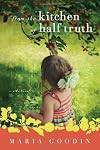
I loved the beginning of the book:
" I came out a little underdone. Five more minutes and I would have been as big as the other children, my mother said. She blamed my pale complexion on her cravings for white bread (too much flour) and asked the doctor if I would have risen better had she done more exercise (too little air). The doctor wasn’t sure about this, but he was very concerned about the size of my feet. He suggested that next time my mother was pregnant she should try standing on show more her head or spinning in circles (spinning in circles on her head would be ideal) as this would aid the mixing process and result in a better proportioned baby."
Meg's mom had an obsession with food which lead to the most outrageously funny fantasies about her daughter's first five years on this planet. At first I laughed, because the stories were so unbelievably creative and funny. I would not have minded to have a mother with an imagination like that all.
But truth be told, I was seldom so touched by a book that I sat with a mouth full of teeth, not knowing what to say in reviewing a book. If I blurted out 'magnificent', I still would have to explain why, in which case it will become necessary to quote this entire book in the review!
A 21-year old girl, Meg May, arrives home after earning a degree in science. She is coming home to take care of her dying mother. It is soon clear that mom's outrageous fibs and fiction hid a mystery about Meg's childhood that she was unable or unwilling to reveal to Meg.
"Throughout her pregnancy my mother suffered all manner of complications. She was overcome by hot flushes several times a day which the midwife blamed on a faulty thermostat, and experienced such bad gas that a man from the local gas board had to come and give her a ten-point safety check. Her fingers swelled up like sausages so that every time she walked down the street the local dogs would chase her, snapping at her hands. She consumed a copious amount of eggs, not because she craved them, but because she was convinced the glaze would give me a nice golden glow. Instead, when the midwife slapped me on the back I clucked like a chicken."
As a young girl, the world of fairies and talking animals only brought rejection from Meg's school friends, which left her lonely and growing up fending for herself in the harsh world of school and mean neighborhood kids. Now, as a grown-up scientist, she wants her mother to finally face reality and tell the truth and stop dodging her own story. Meg is convinced that people who believed in fiction and fantasy were gradually rotting their brains. Their fictional world was destroying them day by day, like a maggot eating away at their brains. Life has taught her that science is the only way to address the world and it's challenges. Science is her way of addressing life. It is the social home where she finally is accepted and respected.
The gardener, Ewan, appears out of nowhere, starts talking to the trees, asks the frogs nicely to leave the garden and explains to snails why they are not welcome. Valerie, Meg's mom, finds a soulmate, which drives Meg to more antagonistic behaviour. But Meg has a few lessons to learn, of which the first one is that Ewan might sometimes have his head in the clouds, but his feet are firmly on the ground.
When Meg finally discovers the truth behind her mom's fantasy world, she is devastated. As she meanders back into her mom's past, she slowly begins the walk on the road of healing and understanding. Forgiveness comes slowly and quietly.
It is the second mother-and-daughter book I read this year that had me in tears. First of longing and sadness, and then of joy. The biggest compliment a daughter can give her mother is to finally be able to say to her: " I am everything you ever taught me, even when you thought I wasn’t listening."
My mom never had to tell me fairy tales like this. She did not have to rewrite my history for me like Meg's mom. This book shocked and shook me to my deepest core. This book is so multifaceted it is very hard to write a complete review on it without turning it into a dissertation! Apart from the delightful fibs and fantasy in the book, it also addresses a magnitude of emotions, perceptions, approaches and -isms that can enhance or destroy lives, depending on how we apply it to our own life stories.
I recommend it to all mothers and daughters alike; to fathers and brothers who always wanted to know what the real magic in fairy tales is all about.
I wanted to rate it five stars for excellent writing, originality and plot, but if it was possible, I would have added another five stars for the unbelievable emotional journey it invites the reader on. Nobody will walk away unscathed from this experience.
From my blog: http://wingbackchoices.blogspot.com/2013/11/nutmeg-by-maria-goodin.html show less
" I came out a little underdone. Five more minutes and I would have been as big as the other children, my mother said. She blamed my pale complexion on her cravings for white bread (too much flour) and asked the doctor if I would have risen better had she done more exercise (too little air). The doctor wasn’t sure about this, but he was very concerned about the size of my feet. He suggested that next time my mother was pregnant she should try standing on show more her head or spinning in circles (spinning in circles on her head would be ideal) as this would aid the mixing process and result in a better proportioned baby."
Meg's mom had an obsession with food which lead to the most outrageously funny fantasies about her daughter's first five years on this planet. At first I laughed, because the stories were so unbelievably creative and funny. I would not have minded to have a mother with an imagination like that all.
But truth be told, I was seldom so touched by a book that I sat with a mouth full of teeth, not knowing what to say in reviewing a book. If I blurted out 'magnificent', I still would have to explain why, in which case it will become necessary to quote this entire book in the review!
A 21-year old girl, Meg May, arrives home after earning a degree in science. She is coming home to take care of her dying mother. It is soon clear that mom's outrageous fibs and fiction hid a mystery about Meg's childhood that she was unable or unwilling to reveal to Meg.
"Throughout her pregnancy my mother suffered all manner of complications. She was overcome by hot flushes several times a day which the midwife blamed on a faulty thermostat, and experienced such bad gas that a man from the local gas board had to come and give her a ten-point safety check. Her fingers swelled up like sausages so that every time she walked down the street the local dogs would chase her, snapping at her hands. She consumed a copious amount of eggs, not because she craved them, but because she was convinced the glaze would give me a nice golden glow. Instead, when the midwife slapped me on the back I clucked like a chicken."
As a young girl, the world of fairies and talking animals only brought rejection from Meg's school friends, which left her lonely and growing up fending for herself in the harsh world of school and mean neighborhood kids. Now, as a grown-up scientist, she wants her mother to finally face reality and tell the truth and stop dodging her own story. Meg is convinced that people who believed in fiction and fantasy were gradually rotting their brains. Their fictional world was destroying them day by day, like a maggot eating away at their brains. Life has taught her that science is the only way to address the world and it's challenges. Science is her way of addressing life. It is the social home where she finally is accepted and respected.
The gardener, Ewan, appears out of nowhere, starts talking to the trees, asks the frogs nicely to leave the garden and explains to snails why they are not welcome. Valerie, Meg's mom, finds a soulmate, which drives Meg to more antagonistic behaviour. But Meg has a few lessons to learn, of which the first one is that Ewan might sometimes have his head in the clouds, but his feet are firmly on the ground.
When Meg finally discovers the truth behind her mom's fantasy world, she is devastated. As she meanders back into her mom's past, she slowly begins the walk on the road of healing and understanding. Forgiveness comes slowly and quietly.
It is the second mother-and-daughter book I read this year that had me in tears. First of longing and sadness, and then of joy. The biggest compliment a daughter can give her mother is to finally be able to say to her: " I am everything you ever taught me, even when you thought I wasn’t listening."
My mom never had to tell me fairy tales like this. She did not have to rewrite my history for me like Meg's mom. This book shocked and shook me to my deepest core. This book is so multifaceted it is very hard to write a complete review on it without turning it into a dissertation! Apart from the delightful fibs and fantasy in the book, it also addresses a magnitude of emotions, perceptions, approaches and -isms that can enhance or destroy lives, depending on how we apply it to our own life stories.
I recommend it to all mothers and daughters alike; to fathers and brothers who always wanted to know what the real magic in fairy tales is all about.
I wanted to rate it five stars for excellent writing, originality and plot, but if it was possible, I would have added another five stars for the unbelievable emotional journey it invites the reader on. Nobody will walk away unscathed from this experience.
From my blog: http://wingbackchoices.blogspot.com/2013/11/nutmeg-by-maria-goodin.html show less
Meg grows up with her head full of fairy stories told to her by her mother. She has though, absolutely no true understanding of her early life. She does not know who her father is, she knows practically nothing about her mother except that she loves to cook. Due to the fanciful way she was reared Meg was laughed at as a child so she made a decision at a very young age that she would only believe in facts. She goes on to be a scientist and to become involved with a scientist. This leaves her show more with a very ordered life.
Until her mother gets sick. She goes to visit and finds that her mother is not just sick, she is dying. Meg is not ready at 21 years old to let her mother go. Her mother is refusing to face the facts of her health and any time Meg addresses her past her mother avoids the issue by fainting. Meg fears she will never learn the secrets of her past. But then a clue drops into her hands and she finally has a path to those answers.
This was like no other book I have ever read. At the beginning there is no grounding in reality but as we get to know Meg and her mother Viv the patchwork of their lives starts to piece together and the reader learns that perhaps living in a dream world is not such a bad thing. The writing is lyrical, magical, special; it takes you places both good and bad. I must admit that I found myself crying at parts; my mother was a difficult woman and we did not have the best of relationships. She was hard to talk to and she died of cancer while refusing to acknowledge her illness. The book hit home in more than a few places for me and the author's words brought me to those tears. She also made me laugh out loud at times and I wanted to shake Meg and tell her to loosen up.
When you have a book that engenders this much emotion you have a book that deserves a place on the "to be read again" shelf. Not always easy to read and not always making sense but a book that makes you think about some of the more important things in life. show less
Until her mother gets sick. She goes to visit and finds that her mother is not just sick, she is dying. Meg is not ready at 21 years old to let her mother go. Her mother is refusing to face the facts of her health and any time Meg addresses her past her mother avoids the issue by fainting. Meg fears she will never learn the secrets of her past. But then a clue drops into her hands and she finally has a path to those answers.
This was like no other book I have ever read. At the beginning there is no grounding in reality but as we get to know Meg and her mother Viv the patchwork of their lives starts to piece together and the reader learns that perhaps living in a dream world is not such a bad thing. The writing is lyrical, magical, special; it takes you places both good and bad. I must admit that I found myself crying at parts; my mother was a difficult woman and we did not have the best of relationships. She was hard to talk to and she died of cancer while refusing to acknowledge her illness. The book hit home in more than a few places for me and the author's words brought me to those tears. She also made me laugh out loud at times and I wanted to shake Meg and tell her to loosen up.
When you have a book that engenders this much emotion you have a book that deserves a place on the "to be read again" shelf. Not always easy to read and not always making sense but a book that makes you think about some of the more important things in life. show less
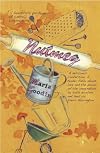
Meg's mother is a compulsive and eccentric cook, who has told Meg all kinds of crazy stories about her birth and early childhood. Meg believed everything until her schoolfriends started calling her a liar. She can't remember anything herself, so when she realises that her mother's stories are not true, she feels quite lost. She gives up on fiction and grows up to become a brilliant scientist. Then when her mother is dying, she has the chance to find out about her real past... and it's quite show more disturbing.
Very well-written; the characters are a little caricatured, but it didn't matter. Quite thought-provoking, too, showing how difficult it can be to separate fact from fiction, and leaving open the question of whether it may sometimes be best to live in a world of fantasy. I loved the odd stories that Meg's mother told her, and found parts of the story very moving. I was surprised at how positive and satisfying the bittersweet ending was, too.
Recommended. show less
Very well-written; the characters are a little caricatured, but it didn't matter. Quite thought-provoking, too, showing how difficult it can be to separate fact from fiction, and leaving open the question of whether it may sometimes be best to live in a world of fantasy. I loved the odd stories that Meg's mother told her, and found parts of the story very moving. I was surprised at how positive and satisfying the bittersweet ending was, too.
Recommended. show less
Statistics
- Works
- 4
- Members
- 134
- Popularity
- #151,726
- Rating
- 4.0
- Reviews
- 14
- ISBNs
- 23
- Languages
- 4