
Stuart Gillespie (1)
Author of The Cambridge Companion to Lucretius
For other authors named Stuart Gillespie, see the disambiguation page.
Works by Stuart Gillespie
Shakespeare's Books: A Dictionary of Shakespeare Sources (Student Shakespeare Library) (2001) 28 copies
Shakespeare And Elizabethan Popular Culture: Arden Critical Companion (Arden Critical Companions) (2006) 10 copies
The Oxford History of Literary Translation in English. Volume 3: 1660-1790 (2005) — Editor — 8 copies
Associated Works
The Cambridge Companion to Sappho (Cambridge Companions to Literature) (2021) — Contributor — 14 copies, 1 review
The Oxford History of Classical Reception in English Literature: Volume 2: 1558-1660 (2015) — Contributor — 11 copies
Horace made new : Horatian influences on British writing from the Renaissance to the twentieth century (1993) — Contributor — 8 copies
Tagged
Common Knowledge
- Canonical name
- Gillespie, Stuart
- Gender
- male
- Occupations
- university lecturer
- Relationships
- University of Glasgow
- Nationality
- England
- Associated Place (for map)
- England
Members
Reviews
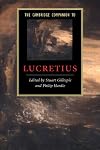
This is a collection of 19 essays by different authors on Lucretius' poem De Rerum Natura - On the Nature of Things. Lucretius wrote the poem to teach the Romans the philosophy of the Greek Epicurus, the most important feature of which was that the world was made up of atoms.
The essays are split into three categories: the place of Lucretius and his writings among the ancients, themes in Lucretius, and his reception in Mediaeval times, the Renaissance, and since then. There are two main show more things that stand out as being significant about the De Rerum Natura, it's literary/poetic value, and it's scientific/philosophic value. For this reason, Lucretius is of high interest to the student of the arts, and the student of the sciences, which is not something many writers can claim to be. show less
The essays are split into three categories: the place of Lucretius and his writings among the ancients, themes in Lucretius, and his reception in Mediaeval times, the Renaissance, and since then. There are two main show more things that stand out as being significant about the De Rerum Natura, it's literary/poetic value, and it's scientific/philosophic value. For this reason, Lucretius is of high interest to the student of the arts, and the student of the sciences, which is not something many writers can claim to be. show less
Lists
You May Also Like
Associated Authors
Statistics
- Works
- 7
- Also by
- 8
- Members
- 125
- Popularity
- #160,150
- Rating
- 3.8
- Reviews
- 1
- ISBNs
- 42