
Lisa Cach
Author of Wake Unto Me
About the Author
Series
Works by Lisa Cach
A Midnight Clear 1 copy
1,001 Erotic Nights, Part 1 1 copy
Associated Works
Tagged
Common Knowledge
- Other names
- Cach, Lisa
- Birthdate
- c.1963
- Gender
- female
- Education
- Mount Holyoke College
- Agent
- Helen Breitwieser
- Short biography
- Lisa Cach grew up in a farm near Portland, Oregon, a place she loves although she'd always trying to leave it. Wanderlust has led her to sail the Sargasso Sea, teach English in Japan, and trek the leech-infested jungles of Borneo. She has degrees in both English and psychology, two subjects that were fun to learn about but that guaranteed her low-paying jobs. Her father, she admits, may have been right about the MBA.
Lisa started to writing romances in her parents' basement during snatched moments from work. Since her writing career began her free time has become less and less as her novels become more and more popular. She's loved romance novels since Junior High School, and at least now she doesn't have to worry about getting caught reading one. Lisa married, and bought with her husband a home in Seattle, Washington. She describes her personal paradise as "...a pile of books, a plate of brownies, and the free time in which to enjoy them". - Nationality
- USA
- Birthplace
- Oregon, USA
- Places of residence
- Oregon, USA
Seattle, Washington, USA - Associated Place (for map)
- USA
Members
Reviews
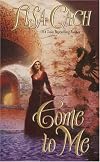
The January 2025 #TBRChallenge is “New Year, Who Dis?” I went for a triple crown to start this year’s challenge: new series, new author, new subgenre – and this book does not disappoint!
The year is 1423. In the heart of Transylvania, 3 families are warring for supremacy: Dragosh of Maramures, Bogdan of Moldavia, and Vlad of Wallachia. Samira is a succubus (a female dream demon), known not only for her expertise in giving men pleasurable dreams, but also well-regarded for her ability show more to induce sexual nightmares. An incubus (male dream demon), Theron, has requested that Samira give an especially horrible dream to Dragosh. Samira doesn’t know why Theron has requested this, but she goes along with it, even though by dabbling in the dreams of princes, they are breaking all of the rules of the Night World which they inhabit. She doesn’t realize it at the time, but Samira gives Dragosh an especially cruel nightmare about his beautiful young sister, one that inadvertently changes the course of history.
Six years pass, during which Samira is wary of her status in the Night World. Succubi and incubi are children of Sleep, and grandchildren of Nyx, the Queen of Chaos. They are lowly demons, soulless beings with humanoid bodies and black leathery wings who serve mortals by giving them sexually pleasurable dreams to help slake repressed or rejected lust. Succubi and incubi have no feelings, no hearts, no real notions of morals; they reflect what their humans are thinking and dreaming about; they can see into the mind and pick out greatest wishes or worst nightmares, depending on what that person deserves to experience. Samira knows that she crossed the line with her dream to Dragosh, not only because of his royal status but because she sensed that he didn’t deserve what she gave him. If she’s caught by Nyx, she will be destroyed.
One night, she spies an especially strong strand of lust emanating from a small island in the middle of nowhere. She descends, curious, and finds a brutally scarred man asleep over a heap of books. She dives into his unconscious and tries to give him a pleasurable dream, but he seems to know that she’s there and that she’s a succubus, and thus he resists with all of his might. Samira is concerned; humans are not supposed to know that they are visited in their dreams by her kind. She notices a crude drawing of a succubus in one of the books and her concern trebles.
She leaves, but can’t quite leave it alone, mild curiosity about the man with such strong repression and dark thoughts. The next night, she is actually summoned by the man and trapped by a spell. The man tells her that he wants to use her to wreak revenge on his enemy: Dragosh of Maramures, who six years ago abruptly severed the betrothal between his sister and himself. The man who has captured Samira is Nicolae of Moldavia. He has been banished to a crumbling monastery on a remote island with a mere five men by his father, Bogdan. Nicolae is desperate not only for revenge, but also to return to his father’s good graces and assist with the war against Maramures and Wallachia. Apparently Dragosh has formed a new alliance with Vlad – now called Vlad Draco, or Vlad the Dragon – and has promised his sister, Lucia, to Vlad as part of the deal.
Samira listens with growing horror as Nicolae tells her all this. She’s the one who induced the nightmare that made Dragosh break the betrothal between Nicolae and Lucia. She holds herself responsible for everything that has happened to Nicolae in the meantime, and becomes desperate to find a way to assist him. He’s holding onto her too long, however; daylight will immediately destroy her, and Nicolae doesn’t believe her until its almost too late.
Samira disappears from the mortal realm, only to find herself still intact in the palace of Nyx, Queen of the Night World. Nyx demands to know who requested that Samira meddle in the dreams of Dragosh, a prince, but Samira refuses to name Theron. She’s ready to accept her fate of immediate death, but pleads with Nyx to give her the chance to assist Niholae and make right what she inadvertently made wrong to begin with. Nyx eventually agrees, and drops Samira back onto Nicolae’s island as a full-blown mortal woman, warning her that she only has 30 days to successfully assist Nicolae and to learn why mortals are so precious to the demons of the Night World who serve them.
It's a lot of setup for the story, but it’s weaved together quite seamlessly. Nicolae has turned away from violence, at which he failed (and for which he has been so brutally disfigured), and towards dark magic in his quest against Dragosh. He grudgingly accepts Samira’s help once she appears to him as a mortal human woman. After all, what could it hurt?
Samira spends her time discovering (and complaining about) her human body, and trying to find a way to help Nicolae, to whom she increasingly becomes attached. She even tells him of the part she played at the start, which leads Nicolae to confess to her why and how he was disfigured. Their bond grows stronger as the story progresses, and she assists Nicolae in discovering his latent abilities as a wizard. Theron shows up again to cause trouble, but ultimately gives them a piece of information which is key in turning the tides of war against their enemies. Samira then has to face Nyx and her destiny – will she be allowed to live, or be destroyed by the all-knowing Queen of Chaos?
I really enjoyed this story, especially when Samira is turned into a human. She has no idea what it’s like to be human – her only knowledge is sexual, and the thoughts and fantasies that humans only dream about. She doesn’t know how to read, or eat, or even dress herself. She’s an interesting contrast to the human characters, and to Nicolae, who is mired in deep depression for the mess he’s made of his life. Samira’s child-like joy at the smallest things, like a sunrise, remind Nicolae that there’s more to life than darkness and heartache. They do fall in love with each other, even though neither can quite believe it (and Nicolae’s men frequently remind Samira that she is a demon); the third act breakup is an interesting twist on the usual misunderstanding.
This is also a very spicy book. Succubi and incubi are dream demons who work in the realm of sex, so there are a lot of explicit scenes, some of them pretty grim (see: Dragosh’s nightmare). But there is also some great emotion, especially when Nicolae acknowledges and grieves his own past, and when he realizes that he doesn’t want anyone to touch Samira except himself.
As for the historical background, it appears to line up fairly well with the actual history of the Transylvania region of present-day Romania. Vlad Draco referred to in the text is likely not the one we immediately think of, but his father, Vlad II Dracul. The human superstitions around religion and demonology also play a role here, especially in the climax of this story.
I enjoyed this immensely. It has both serious and lighthearted moments, spice, sex, and death, all wrapped up into an engrossing fantasy world. I’m looking forward to reading the second book in this duology, which stars Theron, who is a complete asshole in this one. He has his own ambitions and is ready to defy Queen Nyx, and has also made a dastardly deal with Vlad Draco. I am curious to see how he will be redeemed! show less
The year is 1423. In the heart of Transylvania, 3 families are warring for supremacy: Dragosh of Maramures, Bogdan of Moldavia, and Vlad of Wallachia. Samira is a succubus (a female dream demon), known not only for her expertise in giving men pleasurable dreams, but also well-regarded for her ability show more to induce sexual nightmares. An incubus (male dream demon), Theron, has requested that Samira give an especially horrible dream to Dragosh. Samira doesn’t know why Theron has requested this, but she goes along with it, even though by dabbling in the dreams of princes, they are breaking all of the rules of the Night World which they inhabit. She doesn’t realize it at the time, but Samira gives Dragosh an especially cruel nightmare about his beautiful young sister, one that inadvertently changes the course of history.
Six years pass, during which Samira is wary of her status in the Night World. Succubi and incubi are children of Sleep, and grandchildren of Nyx, the Queen of Chaos. They are lowly demons, soulless beings with humanoid bodies and black leathery wings who serve mortals by giving them sexually pleasurable dreams to help slake repressed or rejected lust. Succubi and incubi have no feelings, no hearts, no real notions of morals; they reflect what their humans are thinking and dreaming about; they can see into the mind and pick out greatest wishes or worst nightmares, depending on what that person deserves to experience. Samira knows that she crossed the line with her dream to Dragosh, not only because of his royal status but because she sensed that he didn’t deserve what she gave him. If she’s caught by Nyx, she will be destroyed.
One night, she spies an especially strong strand of lust emanating from a small island in the middle of nowhere. She descends, curious, and finds a brutally scarred man asleep over a heap of books. She dives into his unconscious and tries to give him a pleasurable dream, but he seems to know that she’s there and that she’s a succubus, and thus he resists with all of his might. Samira is concerned; humans are not supposed to know that they are visited in their dreams by her kind. She notices a crude drawing of a succubus in one of the books and her concern trebles.
She leaves, but can’t quite leave it alone, mild curiosity about the man with such strong repression and dark thoughts. The next night, she is actually summoned by the man and trapped by a spell. The man tells her that he wants to use her to wreak revenge on his enemy: Dragosh of Maramures, who six years ago abruptly severed the betrothal between his sister and himself. The man who has captured Samira is Nicolae of Moldavia. He has been banished to a crumbling monastery on a remote island with a mere five men by his father, Bogdan. Nicolae is desperate not only for revenge, but also to return to his father’s good graces and assist with the war against Maramures and Wallachia. Apparently Dragosh has formed a new alliance with Vlad – now called Vlad Draco, or Vlad the Dragon – and has promised his sister, Lucia, to Vlad as part of the deal.
Samira listens with growing horror as Nicolae tells her all this. She’s the one who induced the nightmare that made Dragosh break the betrothal between Nicolae and Lucia. She holds herself responsible for everything that has happened to Nicolae in the meantime, and becomes desperate to find a way to assist him. He’s holding onto her too long, however; daylight will immediately destroy her, and Nicolae doesn’t believe her until its almost too late.
Samira disappears from the mortal realm, only to find herself still intact in the palace of Nyx, Queen of the Night World. Nyx demands to know who requested that Samira meddle in the dreams of Dragosh, a prince, but Samira refuses to name Theron. She’s ready to accept her fate of immediate death, but pleads with Nyx to give her the chance to assist Niholae and make right what she inadvertently made wrong to begin with. Nyx eventually agrees, and drops Samira back onto Nicolae’s island as a full-blown mortal woman, warning her that she only has 30 days to successfully assist Nicolae and to learn why mortals are so precious to the demons of the Night World who serve them.
It's a lot of setup for the story, but it’s weaved together quite seamlessly. Nicolae has turned away from violence, at which he failed (and for which he has been so brutally disfigured), and towards dark magic in his quest against Dragosh. He grudgingly accepts Samira’s help once she appears to him as a mortal human woman. After all, what could it hurt?
Samira spends her time discovering (and complaining about) her human body, and trying to find a way to help Nicolae, to whom she increasingly becomes attached. She even tells him of the part she played at the start, which leads Nicolae to confess to her why and how he was disfigured. Their bond grows stronger as the story progresses, and she assists Nicolae in discovering his latent abilities as a wizard. Theron shows up again to cause trouble, but ultimately gives them a piece of information which is key in turning the tides of war against their enemies. Samira then has to face Nyx and her destiny – will she be allowed to live, or be destroyed by the all-knowing Queen of Chaos?
I really enjoyed this story, especially when Samira is turned into a human. She has no idea what it’s like to be human – her only knowledge is sexual, and the thoughts and fantasies that humans only dream about. She doesn’t know how to read, or eat, or even dress herself. She’s an interesting contrast to the human characters, and to Nicolae, who is mired in deep depression for the mess he’s made of his life. Samira’s child-like joy at the smallest things, like a sunrise, remind Nicolae that there’s more to life than darkness and heartache. They do fall in love with each other, even though neither can quite believe it (and Nicolae’s men frequently remind Samira that she is a demon); the third act breakup is an interesting twist on the usual misunderstanding.
This is also a very spicy book. Succubi and incubi are dream demons who work in the realm of sex, so there are a lot of explicit scenes, some of them pretty grim (see: Dragosh’s nightmare). But there is also some great emotion, especially when Nicolae acknowledges and grieves his own past, and when he realizes that he doesn’t want anyone to touch Samira except himself.
As for the historical background, it appears to line up fairly well with the actual history of the Transylvania region of present-day Romania. Vlad Draco referred to in the text is likely not the one we immediately think of, but his father, Vlad II Dracul. The human superstitions around religion and demonology also play a role here, especially in the climax of this story.
I enjoyed this immensely. It has both serious and lighthearted moments, spice, sex, and death, all wrapped up into an engrossing fantasy world. I’m looking forward to reading the second book in this duology, which stars Theron, who is a complete asshole in this one. He has his own ambitions and is ready to defy Queen Nyx, and has also made a dastardly deal with Vlad Draco. I am curious to see how he will be redeemed! show less
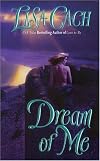
The February 2025 #TBRChallenge is “Previously, in Romance...” If this book choice is a surprise to anyone, you haven't been paying attention, LOL.
I absolutely loved the first book in this duet; unfortunately, this would did not live up to its predecessor's glory. It was always going to be a hard sell for me to make Theron a hero after his behavior in the last book, and the rehabilitation didn't quite hit the mark for me.
As we know from Come to Me, Theron had Samira give Dragosh of show more Maramures a revolting nightmare about his younger sister, Lucia, in order to break the betrothal between Lucia and Nicholae of Moldavia, in order to pave the way for an alliance between Lucia and Vlad Draco instead. Theron did this as part of a bargain he struck with Vlad: he'd deliver Lucia if Vlad would allow him to inhabit his mortal body for 3 days.
Vlad, of course, reneges on the deal, and it takes Theron six years to come to this realization. Once he does, he decides that he's going to destroy Lucia's purity and innocence, the two qualities that Vlad prizes most in his young bride-to-be. He seeks Lucia out, finding her at an abandoned castle on top of a mountain, surrounded by disinterested women and wearing an amulet that has kept incubi at bay. Once he realizes that the key to his plan is getting Lucia to remove the necklace, it's game on in his mind.
Meanwhile Nyx, the Queen of the Night, has decided that she wants to add Theron to her harem of lovers. Theron doesn't want this - he wants to be mortal, and matter in the world - so he bargains for 30 days to "say goodbye" to his old life, in which time he will really work on his plan to gain control of Vlad's body as he was promised all those years ago.
This story just didn't work for me on a bunch of levels:
1) I didn't really like either main character. Lucia is 20 years old but has been kept ignorant of the world. She knows nothing of sex or reproduction (thus keeping her "pure" for her murderous, rapist fiancé) or life, in general, even though she has a sixth sense and can basically stay lucid while dreaming. She saw Theron briefly when she was 14 and the original nightmare had been given to Dragosh, but even her curiosity about him is limited. Apparently she is completely devoid of hormones as well as being made to feel deeply shameful about various impure thoughts and body parts. She's also very stubborn in her stupidity; the entire book is about her figuring out what sex is and what it's for and where babies come from, which was just hard to swallow coming from an otherwise healthy adult female. Worse yet, Theron hones in on her feelings of shame and plays into them as he works his wiles on her in her dreams, so a lot of the sex play is based on shame, the thrill of shame, and bodies betraying themselves. Ugh. This is not my cup of tea at all.
Theron spends most of his time deep in his fee-fees about being so old and insignificant. I suppose this *gestures to the world in general* time isn't the greatest to be reading about some poor insecure male who craves power above all else. I had zero sympathy for him, and even less when he realizes what a putrid, evil asshole Vlad Draco is and still longs to inhabit his body, because he's such a powerful military ruler who could someday consolidate his power. By the end, I wanted to shake him and tell him to find another body already but the pursuit of Vlad was extra gross, heaping onto all the shameful sex stuff. Double ugh!
Vlad goes without further comment. He is depicting as raping his way across the country, and says some super vile things about what he wants to do to Lucia when he finally bothers to retrieve her.
There's also a couple of mad religious figures (Gabriel, Vlad's opium-addicted brother who is sent to capture Theron in a jug; Theresa, the half-mad ancient nun who was charged with Lucia's education) that don't add much except distraction.
2) The magic of the world no longer makes sense. Theron is supposed to be a being who has no heart, no soul, and no feelings, yet somehow he nurses this grudge against Vlad and falls in love with Lucia, thus growing a soul and making the deus ex machina ending (where he takes over Vlad's body forcibly, which should've killed him instantly but doesn't) possible. This was the worldbuilding falling around its ears in service of this plot, which was really disappointing.
3) All of the sex stuff is rapey and/or cringeworthy, both in "real life" and Lucia's dreams. If I never hear the words "crotch monster" again, it will be too soon.
4) The epilogue brings us the birth of Vlad Dracula, aka Vlad the Impaler, aka Dracula the vampire, so does that really count as an HEA? 🤔
This was readable, but not convincing, especially when read in such close proximity with the first book. A disappointment, for sure, but not enough to put me off this author's work. show less
I absolutely loved the first book in this duet; unfortunately, this would did not live up to its predecessor's glory. It was always going to be a hard sell for me to make Theron a hero after his behavior in the last book, and the rehabilitation didn't quite hit the mark for me.
As we know from Come to Me, Theron had Samira give Dragosh of show more Maramures a revolting nightmare about his younger sister, Lucia, in order to break the betrothal between Lucia and Nicholae of Moldavia, in order to pave the way for an alliance between Lucia and Vlad Draco instead. Theron did this as part of a bargain he struck with Vlad: he'd deliver Lucia if Vlad would allow him to inhabit his mortal body for 3 days.
Vlad, of course, reneges on the deal, and it takes Theron six years to come to this realization. Once he does, he decides that he's going to destroy Lucia's purity and innocence, the two qualities that Vlad prizes most in his young bride-to-be. He seeks Lucia out, finding her at an abandoned castle on top of a mountain, surrounded by disinterested women and wearing an amulet that has kept incubi at bay. Once he realizes that the key to his plan is getting Lucia to remove the necklace, it's game on in his mind.
Meanwhile Nyx, the Queen of the Night, has decided that she wants to add Theron to her harem of lovers. Theron doesn't want this - he wants to be mortal, and matter in the world - so he bargains for 30 days to "say goodbye" to his old life, in which time he will really work on his plan to gain control of Vlad's body as he was promised all those years ago.
This story just didn't work for me on a bunch of levels:
1) I didn't really like either main character. Lucia is 20 years old but has been kept ignorant of the world. She knows nothing of sex or reproduction (thus keeping her "pure" for her murderous, rapist fiancé) or life, in general, even though she has a sixth sense and can basically stay lucid while dreaming. She saw Theron briefly when she was 14 and the original nightmare had been given to Dragosh, but even her curiosity about him is limited. Apparently she is completely devoid of hormones as well as being made to feel deeply shameful about various impure thoughts and body parts. She's also very stubborn in her stupidity; the entire book is about her figuring out what sex is and what it's for and where babies come from, which was just hard to swallow coming from an otherwise healthy adult female. Worse yet, Theron hones in on her feelings of shame and plays into them as he works his wiles on her in her dreams, so a lot of the sex play is based on shame, the thrill of shame, and bodies betraying themselves. Ugh. This is not my cup of tea at all.
Theron spends most of his time deep in his fee-fees about being so old and insignificant. I suppose this *gestures to the world in general* time isn't the greatest to be reading about some poor insecure male who craves power above all else. I had zero sympathy for him, and even less when he realizes what a putrid, evil asshole Vlad Draco is and still longs to inhabit his body, because he's such a powerful military ruler who could someday consolidate his power. By the end, I wanted to shake him and tell him to find another body already but the pursuit of Vlad was extra gross, heaping onto all the shameful sex stuff. Double ugh!
Vlad goes without further comment. He is depicting as raping his way across the country, and says some super vile things about what he wants to do to Lucia when he finally bothers to retrieve her.
There's also a couple of mad religious figures (Gabriel, Vlad's opium-addicted brother who is sent to capture Theron in a jug; Theresa, the half-mad ancient nun who was charged with Lucia's education) that don't add much except distraction.
2) The magic of the world no longer makes sense. Theron is supposed to be a being who has no heart, no soul, and no feelings, yet somehow he nurses this grudge against Vlad and falls in love with Lucia, thus growing a soul and making the deus ex machina ending (where he takes over Vlad's body forcibly, which should've killed him instantly but doesn't) possible. This was the worldbuilding falling around its ears in service of this plot, which was really disappointing.
3) All of the sex stuff is rapey and/or cringeworthy, both in "real life" and Lucia's dreams. If I never hear the words "crotch monster" again, it will be too soon.
4) The epilogue brings us the birth of Vlad Dracula, aka Vlad the Impaler, aka Dracula the vampire, so does that really count as an HEA? 🤔
This was readable, but not convincing, especially when read in such close proximity with the first book. A disappointment, for sure, but not enough to put me off this author's work. show less

This was just the sweetest little book. I'm a sucker for a ghostly love story. I loved all the magic throughout this book! Witchcraft and time travel and so much mystery. The research and history that went into this little work was above and beyond. The author didn't skimp one bit on her world building and background, taking bits and pieces from historical truths and embellishing them to fit her story.
Caitlyn literally finds Raphael, the man of her dreams, in her dreams. Each night she show more falls asleep hoping that tonight he'll return to her and together they can solve the mystery surrounding the castle and Raphael's untimely death.
It's one of those great YA boarding school novels (you know you love boarding school novels) that you just can't help but get lost in, complete with awkward new friendships and adversaries. This was a charming little love story. show less
Caitlyn literally finds Raphael, the man of her dreams, in her dreams. Each night she show more falls asleep hoping that tonight he'll return to her and together they can solve the mystery surrounding the castle and Raphael's untimely death.
It's one of those great YA boarding school novels (you know you love boarding school novels) that you just can't help but get lost in, complete with awkward new friendships and adversaries. This was a charming little love story. show less

x and beauty are power. They hold vast potential. But as women have reached for equal standing with men, sometimes this truth has been lost or discounted, even actively shunned. However, that does not make it any less true. And reconciling this truth with modern women’s studies can be a struggle, especially when sexuality and physical beauty are only seen as destructive or belittling forces. In Lisa Cach’s highly entertaining novel Great-Aunt Sophia’s Lessons for Bombshells, this pull show more between what is considered entirely superficial and the perceived deeper intellectual makes for a ripping good read.
Grace Cavanaugh is writing her Women’s Studies dissertation. Her topic: that beauty does not lead to happiness for women; in fact it leads to great unhappiness. And she whole-heartedly believes her thesis. So when her elderly great-aunt, a former B-actress and still a great beauty, asks for her to come live with her in her lush Pebble Beach mansion and be her caretaker while Sophia recovers from hip replacement surgery, Grace figures that she has discovered the perfect research subject. But when she arrives in Pebble Beach, she finds a woman who is far more complex and enchanting and far less unhappy and lonely than she had ever imagined.
When Sophia challenges Grace’s ideas and suggests an experiment, a bet of sorts, to prove that Grace is mistaken in her assumptions, Grace agrees to the conditions, albeit with some misgivings. Grace must take instruction from her great-aunt in how to transform herself from the quietly pretty, earnest intellectual who spends no time on her own appearance into a stunning beauty who has her pick of men. Grace will practice her emerging vamp skills on the two young men who orbit Great-Aunt Sophia: gorgeous Neanderthal-ish financial advisor Declan, and quietly unassuming Doctor Andrew. In return, she can study Sophia to her heart’s content and even earn a substantial paycheck at the end of her time in Pebble Beach.
Grace struggles with her lessons, fearing that this transformation will cause her to lose all self-respect and brand her as frivolous, especially when she admits that she secretly enjoys the frothy beautiful clothing, the barely leashed sexual tension, and the heady feeling of directing the course of her fledgling relationships. But the course of these relationships does not always run smoothly and Grace cannot always see them for what they are. She is determined to pay Declan back for her humiliation from their first encounter, toying with him even as she is coming to find him irresistible. Meanwhile, Andrew is holding back, leaving her frustrated and irrationally angry that while he admires her intellectually, he stays so detached physically, just exactly what she has always professed to prefer and which would lend most credence to her thesis.
But Grace is learning about more than superficial beauty as she progresses through Sophia’s tutelage, even if she does not recognize it right away. She is coming to the transforming idea that beauty is fed from within. It comes from a powerful belief in one’s own attractiveness and inner worth that shines forth on the outside enhancing mere physical features. It’s a heady power indeed. And just perhaps she has underestimated the true value of outward appearance.
On the surface a frothy, humorous, and light story rife with sexual tension and graphically erotic scenes, this is actually an interesting look at an expanded feminism, one that embraces all aspects of a woman, celebrating the whole person, inside and out. The characters are fantastic and complete. Great-Aunt Sophia is particularly wonderful, a master manipulator, scheming and sly but loveable and genuinely charming. Declan and Andrew both have depths slowly revealed through the narration that causes the reader to choose sides long before Grace realizes their respective worths. The long-held family secret is revealed rather suddenly, abruptly and seems almost out of place but it does in fact play into the theme of appearances and how they can either enhance or obfuscate depending on how they are manipulated. Interspersed with Grace’s quasi-scientific field notes, the narrative clips along at a good pace with the reader wondering when Grace’s myopia will clear, allowing her to see what, in fact, has been evident all along. Despite Grace’s obtuseness and her determination to hold to her thesis even in the face of mounting evidence against it, every step of the way toward her changing perceptions is highly entertaining and engaging and the book is a pleasure to read. show less
Grace Cavanaugh is writing her Women’s Studies dissertation. Her topic: that beauty does not lead to happiness for women; in fact it leads to great unhappiness. And she whole-heartedly believes her thesis. So when her elderly great-aunt, a former B-actress and still a great beauty, asks for her to come live with her in her lush Pebble Beach mansion and be her caretaker while Sophia recovers from hip replacement surgery, Grace figures that she has discovered the perfect research subject. But when she arrives in Pebble Beach, she finds a woman who is far more complex and enchanting and far less unhappy and lonely than she had ever imagined.
When Sophia challenges Grace’s ideas and suggests an experiment, a bet of sorts, to prove that Grace is mistaken in her assumptions, Grace agrees to the conditions, albeit with some misgivings. Grace must take instruction from her great-aunt in how to transform herself from the quietly pretty, earnest intellectual who spends no time on her own appearance into a stunning beauty who has her pick of men. Grace will practice her emerging vamp skills on the two young men who orbit Great-Aunt Sophia: gorgeous Neanderthal-ish financial advisor Declan, and quietly unassuming Doctor Andrew. In return, she can study Sophia to her heart’s content and even earn a substantial paycheck at the end of her time in Pebble Beach.
Grace struggles with her lessons, fearing that this transformation will cause her to lose all self-respect and brand her as frivolous, especially when she admits that she secretly enjoys the frothy beautiful clothing, the barely leashed sexual tension, and the heady feeling of directing the course of her fledgling relationships. But the course of these relationships does not always run smoothly and Grace cannot always see them for what they are. She is determined to pay Declan back for her humiliation from their first encounter, toying with him even as she is coming to find him irresistible. Meanwhile, Andrew is holding back, leaving her frustrated and irrationally angry that while he admires her intellectually, he stays so detached physically, just exactly what she has always professed to prefer and which would lend most credence to her thesis.
But Grace is learning about more than superficial beauty as she progresses through Sophia’s tutelage, even if she does not recognize it right away. She is coming to the transforming idea that beauty is fed from within. It comes from a powerful belief in one’s own attractiveness and inner worth that shines forth on the outside enhancing mere physical features. It’s a heady power indeed. And just perhaps she has underestimated the true value of outward appearance.
On the surface a frothy, humorous, and light story rife with sexual tension and graphically erotic scenes, this is actually an interesting look at an expanded feminism, one that embraces all aspects of a woman, celebrating the whole person, inside and out. The characters are fantastic and complete. Great-Aunt Sophia is particularly wonderful, a master manipulator, scheming and sly but loveable and genuinely charming. Declan and Andrew both have depths slowly revealed through the narration that causes the reader to choose sides long before Grace realizes their respective worths. The long-held family secret is revealed rather suddenly, abruptly and seems almost out of place but it does in fact play into the theme of appearances and how they can either enhance or obfuscate depending on how they are manipulated. Interspersed with Grace’s quasi-scientific field notes, the narrative clips along at a good pace with the reader wondering when Grace’s myopia will clear, allowing her to see what, in fact, has been evident all along. Despite Grace’s obtuseness and her determination to hold to her thesis even in the face of mounting evidence against it, every step of the way toward her changing perceptions is highly entertaining and engaging and the book is a pleasure to read. show less
Lists
Awards


You May Also Like


Associated Authors
Statistics
- Works
- 35
- Also by
- 2
- Members
- 1,734
- Popularity
- #14,822
- Rating
- 3.4
- Reviews
- 60
- ISBNs
- 69
- Languages
- 8
- Favorited
- 2