
Sergio Luzzatto
Author of Padre Pio: Miracles and Politics in a Secular Age
About the Author
Sergio Luzzatto is a professor of modern history at the University of Turin, Italy.
Works by Sergio Luzzatto
Associated Works
Atlante della letteratura italiana vol. 1 - Dalle origini al Rinascimento (2010) — Editor — 13 copies
Atlante della letteratura italiana vol. 2 - Dalla Controriforma alla Restaurazione (2010) — Editor — 12 copies
Tagged
Common Knowledge
- Birthdate
- 1963-09-02
- Gender
- male
- Birthplace
- Genoa, Italy
- Map Location
- Italy
Members
Reviews
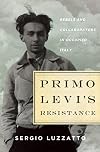
Primo Levi was one of the earliest witnesses to the Holocaust, writing two memoirs [[If This is a Man]] and [[The Truce]], the first describing the circles of hell of Auschwitz, the second his long walk home following liberation.
A later memoir [[The Periodic Table]] ingeniously integrates his life and chemistry.
Sergio Luzzatto latches onto a few lines from the latter, and investigates Levi's time in the resistance. It is amazing how many concrete facts he finds at this late date, even show more including interviews with now greatly aged survivors. In Levi's own words, they were amateurs, and set out to 'invent a resistance'. The setting is in northern Italy after the fall of Mussolini, after Germany has invaded its former ally. Rumors of terrible things happening to Jews reached Levi's family, and they fled to the mountains. During the days young Primo stayed at a resort hotel, and at night worked on that invention with a few other outcasts on the run. The group is quickly infiltrated and broken up, but not before an event that haunted Levi for the rest of his days.
Two partisans from the south, juvenile delinquents, seemingly - have reached the area and are big talkers. They make vague threats the evening after arriving, and are unceremoniously shot in the back from a few yards away. The exact details are now forever lost, but Luzzatto does find the names of the two killed and even interviews some of their decedents. One of those killed, shot in the back by fellow partisans for general banditry, now has two schools and the plaza in his home town named for him, as a martyr for Italy's resistance. Luzzatto even visits one of the schools, where students walk under a portrait of the school's namesake every morning. History is complicated.
Just days after the shooting, Levi and some of his group were arrested by the local Fascist collaborator. At the time he thought himself lucky that he was detained as a Jew and not a partisan. However, that was enough to be deported to Auschwitz. Ironically, one of his collaborators was arrested to be tried as a partisan, but ended up freed after 18 months in prison, and was giving piano lessons to the warden's daughter by the end of the war.
The final chapters are an exploration into the recriminations in post-war Italy, at the time influenced by a hope for the new republic, and Italy's role in the (then) new Cold War. 'Democratic Italy was baptized as Fascist Italy was crucified.' - Sergio Luzzatto
4 1/2 stars, read as LibraryThing Early Reviewer show less
A later memoir [[The Periodic Table]] ingeniously integrates his life and chemistry.
Sergio Luzzatto latches onto a few lines from the latter, and investigates Levi's time in the resistance. It is amazing how many concrete facts he finds at this late date, even show more including interviews with now greatly aged survivors. In Levi's own words, they were amateurs, and set out to 'invent a resistance'. The setting is in northern Italy after the fall of Mussolini, after Germany has invaded its former ally. Rumors of terrible things happening to Jews reached Levi's family, and they fled to the mountains. During the days young Primo stayed at a resort hotel, and at night worked on that invention with a few other outcasts on the run. The group is quickly infiltrated and broken up, but not before an event that haunted Levi for the rest of his days.
Two partisans from the south, juvenile delinquents, seemingly - have reached the area and are big talkers. They make vague threats the evening after arriving, and are unceremoniously shot in the back from a few yards away. The exact details are now forever lost, but Luzzatto does find the names of the two killed and even interviews some of their decedents. One of those killed, shot in the back by fellow partisans for general banditry, now has two schools and the plaza in his home town named for him, as a martyr for Italy's resistance. Luzzatto even visits one of the schools, where students walk under a portrait of the school's namesake every morning. History is complicated.
Just days after the shooting, Levi and some of his group were arrested by the local Fascist collaborator. At the time he thought himself lucky that he was detained as a Jew and not a partisan. However, that was enough to be deported to Auschwitz. Ironically, one of his collaborators was arrested to be tried as a partisan, but ended up freed after 18 months in prison, and was giving piano lessons to the warden's daughter by the end of the war.
The final chapters are an exploration into the recriminations in post-war Italy, at the time influenced by a hope for the new republic, and Italy's role in the (then) new Cold War. 'Democratic Italy was baptized as Fascist Italy was crucified.' - Sergio Luzzatto
4 1/2 stars, read as LibraryThing Early Reviewer show less
 This review was written for LibraryThing Early Reviewers.
L'Italia dei faccendieri e delle mene curiali non conosce crisi stagionali. Luzzatto è molto bravo nel portarne alla luce le trame , nel sottolinearne gli intrecci , le convenienze e le improntitudini lungo il corso di un intero secolo (quasi tutto il Novecento). A tal punto che, in un certo modo, padre pio diventa più una comparsa che un protagonista.
Dato l'autore e la sua professione è implicito che non si tratti di un'opera agiografica ma, nonostante le alte proteste di certi ambienti show more bigotti, non è nemmeno un'opera denigratoria dell'azione del frate di Montalcino ( a ciascun lettore le sue conclusioni in merito)
E' un vero buon libro di storia (avercene) basato su una ricerca documentaria attenta e relativamente nuova e scritto in modo superlativo. show less
Dato l'autore e la sua professione è implicito che non si tratti di un'opera agiografica ma, nonostante le alte proteste di certi ambienti show more bigotti, non è nemmeno un'opera denigratoria dell'azione del frate di Montalcino ( a ciascun lettore le sue conclusioni in merito)
E' un vero buon libro di storia (avercene) basato su una ricerca documentaria attenta e relativamente nuova e scritto in modo superlativo. show less
I saw this book in my local library, and checked it out to learn more about the Capuchin friar; I grew up in a family with roots in southern Italy, and particularly in Apulia, so throughout my childhood I heard stories about Padre Pio and his miracles. Unfortunately, I learned very little about Padre Pio and quite a bit about socio-historical analyses of the motivations and machinations behind the growth of the cult of Padre Pio. The man himself never quite comes into focus, although Italy show more in the 1920s certainly did. The subtitle should be the title of the book based on its subject matter. show less
With the new publication of The Complete Works of Primo Levi getting amazing reviews everywhere, this small addition to the lore and legacy of the great writer is very welcome indeed. While focusing on the underrepresented Italian Resistance movement, this well-written book has great insights to offer about the man behind the writer. Filled with anecdotes and deep history, I would certainly recommend this to any student of World War II, resistance movements or even the modern history of show more Italy itself. Bravo. show less
This review was written for LibraryThing Early Reviewers.Awards


You May Also Like


Associated Authors
Statistics
- Works
- 32
- Also by
- 4
- Members
- 386
- Popularity
- #62,659
- Rating
- 3.7
- Reviews
- 25
- ISBNs
- 61
- Languages
- 4
