
Walter Schellenberg (1) (1910–1953)
Author of The Labyrinth: Memoirs of Walter Schellenberg, Hitler's Chief of Counterintelligence
For other authors named Walter Schellenberg, see the disambiguation page.
About the Author
Walter Schellenberg was sentenced in 1949 to six years' imprisonment by an American military tribunal, but was soon released because of ill health. He died in 1952.
Image credit: Bundesarchiv, Bild 101III-Alber-178-04A, Fotograf: Alber, Kurt
Works by Walter Schellenberg
The Labyrinth: Memoirs of Walter Schellenberg, Hitler's Chief of Counterintelligence (1956) 166 copies, 4 reviews
Associated Works
Tagged
Common Knowledge
- Birthdate
- 1910-01-16
- Date of death
- 1953-03-31
- Gender
- male
- Organizations
- NSDAP
- Short biography
- GND: 118607014
- Nationality
- Germany
- Birthplace
- Saarbrücken
- Place of death
- Turin, Italien
- Associated Place (for map)
- Germany
Members
Reviews
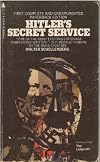
Memoirs by one of the senior members of the SS, one who was in charge of foreign intelligence matters. Take this book with a fifty-pound bag of salt, as in large measure it's a mixture of tall tales and self-serving justifications. Entertainingly written, to be sure, and certainly confirmed insofar as other accounts are full of the backbiting and waste that comprised Nazi leadership. But caution should be used when digesting anything the author says.
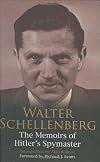
Walter Schellenberg, the Counterintelligence Chief for Adolf Hitler during World War II, wrote his memoirs titled "The Labyrinth" recounting the counterintelligence (CI) operations of Germany during the height of the war. [He received one of the lightest sentences of any WWII war criminal, six years in prison. The mitigating factor in this light sentence was his attempts to help concentration camp prisoners in the latter part of the war.]
In his memoirs, Mr. Schellenberg recounts some of the show more most interesting aspects of the German CI paradigm and the constant battles he waged with his superiors. While many of his tasks were odd by any standard, he also was in charge of one of the most advanced CI and counterespionage (CE) agencies of the time. In fact, in many ways, Schellenberg managed to blend many disparate intelligence disciplines and entities into a workable format. He recounts in his memoirs many of the failures of the Third Reich to recognize the importance of CI and CE and to integrate CI and CE into the operational planning process. One can deductively link the failures of the internal policies in regards to CI to the inability of Germany to effect real stability operations in the Eastern Theater, and consequently win the war. show less
In his memoirs, Mr. Schellenberg recounts some of the show more most interesting aspects of the German CI paradigm and the constant battles he waged with his superiors. While many of his tasks were odd by any standard, he also was in charge of one of the most advanced CI and counterespionage (CE) agencies of the time. In fact, in many ways, Schellenberg managed to blend many disparate intelligence disciplines and entities into a workable format. He recounts in his memoirs many of the failures of the Third Reich to recognize the importance of CI and CE and to integrate CI and CE into the operational planning process. One can deductively link the failures of the internal policies in regards to CI to the inability of Germany to effect real stability operations in the Eastern Theater, and consequently win the war. show less
Hitler's Secret Service (Original title: The labyrinth); memoirs of Walter Schellenberg (1956) by Walter Schellenberg

Top spy for the German Secret Service during WWII
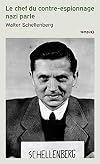
C'est un témoignage intéressant, mais qui n'apporte quasiment rien, hormis l'incroyable habileté à tenter de se dédouaner. Les notes d'éditions sont, elles, éclairantes.
Awards

You May Also Like


Associated Authors
Statistics
- Works
- 7
- Also by
- 1
- Members
- 225
- Popularity
- #99,814
- Rating
- 3.6
- Reviews
- 4
- ISBNs
- 22
- Languages
- 6