
Eric Fair
Author of Consequence: A Memoir
Works by Eric Fair
Tagged
Common Knowledge
There is no Common Knowledge data for this author yet. You can help.
Members
Reviews
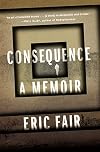
Consequence
I don’t know what I exactly I thought Consequence by Eric Fair would be about when it came in the mail. Maybe some pointed political cautionary tell about how the other side would ruin us all and lead to the unleashing of the apocalypse’s horsemen. I spent way too much time while reading the early part of the book trying to peek around the corner to finally see whatever blue or red demon I thought lay in wait. The only demons hanging about were those inside Mr. Fair and those show more inside me.
It’s easy to look at folks at write them off, diagnosis them with whatever is needed to assure ourselves that at least we aren’t as bad or evil as that bastard. The circle of forgiveness is just big enough to cover our sins and missteps. But there is always that place inside us that knows what we can never keep covered from ourselves. I believe that is what Consequence is about.
Eric Fair was given the gift early in life of know what was right, of knowing God’s love, of recognizing the need to give and receive compassion. Though he might not have understood it explicitly, he knew enough to start a quest for whatever expression of love in the world was to be his. And he knew the fear of that path, the possibility that his talents might fall short of those required to achieve it, and the discomfort of believing himself unworthy.
Damnedest thing, arrogance. Externally we work to keep it at bay, or more accurately, hidden lest others think ill of us. More sinister is that subtlest voice that counsels, “just this once… it won’t hurt anyone.” Then as the evidence stacks up of our misadventure we suddenly somehow come to the conclusion that, despite our belief that God loving and capable of all things, there can’t possibly be any kind of spiritual reconciliation.
Shame is the price for choosing our own way, and to compound that we take the innocent along for the ride. Parents, partners, children, and friends all get to be a passenger on the bus we are steering so recklessly. Our mantra of “what would you have me to do” is replaced by “What have I done?”
A former policeman, Mr. Fair’s style is reminiscent of Dragnet’s emotionalist leader, Sergeant Joe Friday. However, the closer I got to end, the more poignant Mr. Fairs experience became. Without knowing how the reader joins path and is forced confront their own consequences. This is where the healing occurs. show less
I don’t know what I exactly I thought Consequence by Eric Fair would be about when it came in the mail. Maybe some pointed political cautionary tell about how the other side would ruin us all and lead to the unleashing of the apocalypse’s horsemen. I spent way too much time while reading the early part of the book trying to peek around the corner to finally see whatever blue or red demon I thought lay in wait. The only demons hanging about were those inside Mr. Fair and those show more inside me.
It’s easy to look at folks at write them off, diagnosis them with whatever is needed to assure ourselves that at least we aren’t as bad or evil as that bastard. The circle of forgiveness is just big enough to cover our sins and missteps. But there is always that place inside us that knows what we can never keep covered from ourselves. I believe that is what Consequence is about.
Eric Fair was given the gift early in life of know what was right, of knowing God’s love, of recognizing the need to give and receive compassion. Though he might not have understood it explicitly, he knew enough to start a quest for whatever expression of love in the world was to be his. And he knew the fear of that path, the possibility that his talents might fall short of those required to achieve it, and the discomfort of believing himself unworthy.
Damnedest thing, arrogance. Externally we work to keep it at bay, or more accurately, hidden lest others think ill of us. More sinister is that subtlest voice that counsels, “just this once… it won’t hurt anyone.” Then as the evidence stacks up of our misadventure we suddenly somehow come to the conclusion that, despite our belief that God loving and capable of all things, there can’t possibly be any kind of spiritual reconciliation.
Shame is the price for choosing our own way, and to compound that we take the innocent along for the ride. Parents, partners, children, and friends all get to be a passenger on the bus we are steering so recklessly. Our mantra of “what would you have me to do” is replaced by “What have I done?”
A former policeman, Mr. Fair’s style is reminiscent of Dragnet’s emotionalist leader, Sergeant Joe Friday. However, the closer I got to end, the more poignant Mr. Fairs experience became. Without knowing how the reader joins path and is forced confront their own consequences. This is where the healing occurs. show less
 This review was written for LibraryThing Early Reviewers.
Eric Fair's writing is spare. Almost telegraphically so. It adds a layer of harshness to his narrative about how he fell into his role as an interrogator in Iraq. We all know how this story is supposed to go: a perfectly ordinary person gets in over his head, then realizes it, pulls out and writes an apologetic memoir. But while the core beats of the narrative may be the same, Fair refuses to write that book. Instead, he writes the book of how his insecurities overwhelmed him and he avoided show more the moral high ground at every turn. His writing pulls absolutely no punches from that. The result is that his memoir is haunting and a terrifying tale of how easily a whole country can be pulled into a dark place, especially once for-profit companies join a war. show less
Eric Fair's memoir, CONSEQUENCE, is a riveting and compelling read, but it is not a pleasant one. You will find yourself wincing repeatedly at his coldly matter-of-fact and unflinching descriptions of his experience as an interrogator in Iraq, working as a civilian contractor for the notorious CACI (Consolidated Analysis Center, Incorporated). Indeed the company was so secretive and unforthcoming that Fair and many of his co-workers didn't even know what CACI stood for.
CONSEQUENCE is so show more disturbing that it is a hard book to critique. Fair, who grew up a chubby, bullied kid in Bethlehem, Pennsylvania, came from a staunchly Prsbyterian family, and religion played a pivotal role in his life. He was active in church youth groups and attended a Christian college for a year before transferring to Boston U. He then enlisted in the Army, where he learned Arabic at DLIFLC in Monterey, California. Then on to Airborne and Special Ops training and a tour in Egypt. A long way from the shy kid who was mercilessly bullied. He also drifted away from his religious roots. After the army he marries and joins the Bethlehem Police force, but after a few years he learned he had a rare heart defect, which effectively ended his law enforcement career. Then, leveraging his army training and language skills, he signs on with the infamous CACI and heads to Iraq to join a growing cadre of civilian contractors. He is, from the beginning, repulsed by what he witnesses in this job, and then, gradually finds himself becoming part of it all. Remember the Abu Ghraib prison scandal, where a handful of low-ranking military types took the fall for torture and mistreatment of prisoners? Well they were merely scapegoats. The orders came from much higher up, and the civilian contractors were in just as deep. Fair also does a stint as an analyst with the National Security Agency before a return trip to Iraq.
But here's the thing. I'm barely skimming the surface here with this summary. Fair recounts it all in a flat present-tense voice. It's like a recitation of sins, a confession. Is there remorse? Yes. Regret? Yes. Shame? Oh, yes. In fact, Eric Fair is filled with shame and remorse, and, his life and marriage in shambles, he is trying desperately to find his way back to the man he once was. He studies scriptures with a friend, searching for solace. He finds in Maimonides that "the transgressor is required to engage with the aggrieved persons, actively seek their forgiveness ... The remedies are often described as lifelong pursuits." Fair's change of heart and search for forgiveness brought to mind Bernard Malamud's character Frank Alpine in THE ASSISTANT. Except this is not fiction. This is a real person. And he is in real pain.
In 2006 Fair published some newspaper op-ed pieces about his work as an interrogator that brought him thousands of email replies, many of them ugly hate-mails. He admits that his articles were not entirely forthcoming, saying: "I haven't yet mustered the courage to confess ..."
Over the next several years, there was a brief failed stint at Princeton Seminary, he became a father, underwent a heart transplant, and thought often of suicide. In this book, Fair has finally found the courage for a full confession.
"I am a torturer. I have not turned a corner or found my way back. I have not been redeemed. I have no right to expect that I ever will. But I am still obligated to try."
Eric Fair is a tortured soul. He tells his story unflinchingly. He is guilty of terrible sins and he admits it. Scripture tells Fair that seeking forgiveness is a "lifelong pursuit." He is working on it.
This is a memoir of war and its consequences. It will haunt you. Very highly recommended.
- Tim Bazzett, author of the memoir, SOLDIER BOY: AT PLAY IN THE ASA show less
CONSEQUENCE is so show more disturbing that it is a hard book to critique. Fair, who grew up a chubby, bullied kid in Bethlehem, Pennsylvania, came from a staunchly Prsbyterian family, and religion played a pivotal role in his life. He was active in church youth groups and attended a Christian college for a year before transferring to Boston U. He then enlisted in the Army, where he learned Arabic at DLIFLC in Monterey, California. Then on to Airborne and Special Ops training and a tour in Egypt. A long way from the shy kid who was mercilessly bullied. He also drifted away from his religious roots. After the army he marries and joins the Bethlehem Police force, but after a few years he learned he had a rare heart defect, which effectively ended his law enforcement career. Then, leveraging his army training and language skills, he signs on with the infamous CACI and heads to Iraq to join a growing cadre of civilian contractors. He is, from the beginning, repulsed by what he witnesses in this job, and then, gradually finds himself becoming part of it all. Remember the Abu Ghraib prison scandal, where a handful of low-ranking military types took the fall for torture and mistreatment of prisoners? Well they were merely scapegoats. The orders came from much higher up, and the civilian contractors were in just as deep. Fair also does a stint as an analyst with the National Security Agency before a return trip to Iraq.
But here's the thing. I'm barely skimming the surface here with this summary. Fair recounts it all in a flat present-tense voice. It's like a recitation of sins, a confession. Is there remorse? Yes. Regret? Yes. Shame? Oh, yes. In fact, Eric Fair is filled with shame and remorse, and, his life and marriage in shambles, he is trying desperately to find his way back to the man he once was. He studies scriptures with a friend, searching for solace. He finds in Maimonides that "the transgressor is required to engage with the aggrieved persons, actively seek their forgiveness ... The remedies are often described as lifelong pursuits." Fair's change of heart and search for forgiveness brought to mind Bernard Malamud's character Frank Alpine in THE ASSISTANT. Except this is not fiction. This is a real person. And he is in real pain.
In 2006 Fair published some newspaper op-ed pieces about his work as an interrogator that brought him thousands of email replies, many of them ugly hate-mails. He admits that his articles were not entirely forthcoming, saying: "I haven't yet mustered the courage to confess ..."
Over the next several years, there was a brief failed stint at Princeton Seminary, he became a father, underwent a heart transplant, and thought often of suicide. In this book, Fair has finally found the courage for a full confession.
"I am a torturer. I have not turned a corner or found my way back. I have not been redeemed. I have no right to expect that I ever will. But I am still obligated to try."
Eric Fair is a tortured soul. He tells his story unflinchingly. He is guilty of terrible sins and he admits it. Scripture tells Fair that seeking forgiveness is a "lifelong pursuit." He is working on it.
This is a memoir of war and its consequences. It will haunt you. Very highly recommended.
- Tim Bazzett, author of the memoir, SOLDIER BOY: AT PLAY IN THE ASA show less
This review was written for LibraryThing Early Reviewers.This memoir about torture is unsettling for two reasons. First, Fair’s narrative is filled with so many examples of cognitive dissonance. He was raised as a devout Christian and adhered to its basic tenants, but willingly participated in behaviors that he knew were not Christ-like. “I cannot ask God to accompany me into the interrogation booth.” “I am not disgusted by my actions…I am disgusted by how good it felt to wield power.” He had a life-threatening heart condition, but show more consistently acted against medical advice through his alcoholism, stressful exercise and especially by working in a warzone. He was patriotic and felt a need to participate in the war. “I grow up learning that I come from a long line of Presbyterians who valued their faith and marched off to war.” However, his military experience was unsatisfying mainly because of flaws he perceived in the chain of command. Despite his negative experiences, Fair still felt compelled to volunteer as a civilian contractor assigned to interrogate Iraqi detainees. There, he viewed and even participated in atrocities that he considered torture. Instead of refusing or just walking away—which as a civilian he could have easily done—he fixated on issues of mismanagement by his company, CACI. Are we left to conclude that if the military and CACI had not been so incompetent, Eric Fair would not have been enticed to become a torturer? His juvenile failure to assume personal responsibility for his actions is a repeating theme in the memoir. We see it in his marriage, his military service, his religious participation and his failure to protect his own health. On his return to the states, one might expect a reasonable man to tend to his ailing heart and marriage. Yet Fair volunteers once again for service in Iraq, this time with the NSA. Clearly the gap between his self-image and behavior caused Fair much anguish and could be blamed for his alcoholism, nightmares, and marital tensions, as well as his doubts about his own religious beliefs and patriotism. Yet writing seems somehow redemptive for him.
Fair’s personal confession of complicity in torture took courage, but the details were not particularly revealing for anyone who was paying attention at the time. With regard to the Iraq war in general and torture in particular, it is tempting to extrapolate Fair’s behavior to that of the Bush administration. We like to think of ourselves as the “good guys” and that our “war on terror” was noble and ample justification for invading a sovereign country and torturing its people. Like Fair, many of us lived with that dissonance at the time.
The second unsettling feature of this memoir is the writing itself. It lacks emotional highs and lows. Fair’s flat and matter-of-fact delivery of everything leaves the reader wondering just what actually moved him. Is he really religious? He seems to have had a type of faith as a young man, but his dropping out of the Princeton Theological Seminary leaves one wondering how deep that was. Is he patriotic? Fair’s willingness to return again and again to the warzone even in the face of a threatening health issue and strains on his marriage suggests a high degree of patriotism. Yet he participated in actions that he came to reject. Once again one wonders whether a desire to not “want to be seen as the type of people who aren’t cut out for doing their part” can be viewed as adequate justification for the inhumane treatment of people. There are no highs and lows in tone despite remarkable extremes in the facts. Fair’s matter-of-fact delivery is the same whether he is tell us of his life threatening heart condition or standing in line for a burger in Iraq. His witnessing was quite strong, but seemed somehow muted by a lack of any personal interpretation. One wishes he included more personal reflections like his wish to have left Iraq earlier “with my soul intact.” show less
Fair’s personal confession of complicity in torture took courage, but the details were not particularly revealing for anyone who was paying attention at the time. With regard to the Iraq war in general and torture in particular, it is tempting to extrapolate Fair’s behavior to that of the Bush administration. We like to think of ourselves as the “good guys” and that our “war on terror” was noble and ample justification for invading a sovereign country and torturing its people. Like Fair, many of us lived with that dissonance at the time.
The second unsettling feature of this memoir is the writing itself. It lacks emotional highs and lows. Fair’s flat and matter-of-fact delivery of everything leaves the reader wondering just what actually moved him. Is he really religious? He seems to have had a type of faith as a young man, but his dropping out of the Princeton Theological Seminary leaves one wondering how deep that was. Is he patriotic? Fair’s willingness to return again and again to the warzone even in the face of a threatening health issue and strains on his marriage suggests a high degree of patriotism. Yet he participated in actions that he came to reject. Once again one wonders whether a desire to not “want to be seen as the type of people who aren’t cut out for doing their part” can be viewed as adequate justification for the inhumane treatment of people. There are no highs and lows in tone despite remarkable extremes in the facts. Fair’s matter-of-fact delivery is the same whether he is tell us of his life threatening heart condition or standing in line for a burger in Iraq. His witnessing was quite strong, but seemed somehow muted by a lack of any personal interpretation. One wishes he included more personal reflections like his wish to have left Iraq earlier “with my soul intact.” show less
Awards


Statistics
- Works
- 1
- Members
- 130
- Popularity
- #155,341
- Rating
- 4.1
- Reviews
- 17
- ISBNs
- 7
