
Susan Fromberg Schaeffer (1940–2011)
Author of Anya
About the Author
Susan Fromberg Schaeffer is a professor at the University of Chicago.
Works by Susan Fromberg Schaeffer
Folie d'une femme séduite 1 copy
Winter 1 copy
Pennen en potloden 1 copy
Elizabeth/Elizabeth 1 copy
Het NOS jeugdjournaal 1 copy
Associated Works
Cries of the Spirit: A Celebration of Women's Spirituality (2000) — Contributor — 403 copies, 2 reviews
Telephone 16 — Contributor — 1 copy
Tagged
Common Knowledge
- Birthdate
- 1940-03-25
- Date of death
- 2011-08-26
- Gender
- female
- Education
- University of Chicago
- Occupations
- novelist
poet
professor - Organizations
- Brooklyn College
University of Chicago - Relationships
- Schaeffer, Neil (husband)
- Short biography
- Susan Fromberg Schaeffer was born in Brooklyn, New York. She attended South Side High School on Long Island and graduated from the University of Chicago with a bachelor's degree in 1961; she went on to earn a master's in 1963 and her Ph.D. 1966. The following year, she joined the faculty of Brooklyn College, where she met Neil Schaeffer, a fellow English professor and scholarly author. They married in 1970 and had two children. She made her debut as a novelist with the semiautobiographical Falling, published in 1973. During her career as a writer, she published 14 novels, including The Madness of a Seduced Woman (1983); a collection of short stories; six volumes of poetry; and two children’s books. She also contributed often to the New York Times Book Review and published a number of articles on writing in scholarly journals. She also wrote an unpublished memoir, Memories Like Splintered Glass: Growing Up in New York. In 2002, she returned to the University of Chicago to teach English and creative writing.
- Nationality
- USA
- Birthplace
- Brooklyn, New York, USA
- Places of residence
- Rockville Centre, New York, USA
- Place of death
- Chicago, Illinois, USA
- Associated Place (for map)
- New York, USA
Members
Reviews
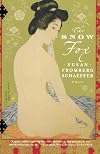
Set in fuedal Japan. It’s a meandering, contemplative yet sparsely-told story about a beautiful woman loved by two men, a noble lord and his closest trusted samurai. Half of the story is about the lives of women in the palace- secluded, pampered, and constantly vying with each other, petty cruelties that sometimes turn deadly. Further on the novel suddenly switches narrators, relating rumors and fables that you’re not sure at first have anything to do with this story, then turning to the show more samurai’s viewpoint. So there are councils of war, strategy planning, battles, villages of poor peasants burned to the ground with no remorse. Men wondering if anyone will recall their exploits when they are long gone, knowing their deeds become legends barely resembling the truth after just a few re-tellings. In the end, this beautiful woman has taken herself to live in seclusion up in the mountains, embittered by what she’s done in the past. The samurai finally encounters her again after what seems like a lifetime of campaigning (and a very long period spent just wandering around in the vast untamed forests with his horse and a fox he tames, when he gets tired of being a soldier). What happens next is idyllic and peaceful- for a while. But it doesn’t end happily.
I just don’t know how to tell about this book. It’s so strange and dreamy and upsetting at the same time. The people speak to each other obliquely and frequently quote poetry. They are enthralled by the beauties of nature, art and poetry, then turn around and cause terribly brutal things to happen. There’s the ravages of disease and other misfortunes- one long segment of the book is about a plague that strikes in summer, very unsettling. The characters for all their high education and artistic poise, are full of superstition and totally inept at dealing with illness or complications of childbirth. It doesn’t take much to bring them down. The feel of this story is very like The Good Earth by Pearl S. Buck to me- in the sweeping breadth of its narrative and precise understatement. It also reminds me strongly of The Worm Ouroboros, one which I probably did not appreciate enough at the time. It feels very foreign in many ways, so I didn’t at all mind the mundane details about how people lived. At the same time it is deeply familiar, with all the concerns and dreams of humanity. One I’ll definitely have to revisit again, as there’s a lot I didn’t quite follow but found intriguing. show less
I just don’t know how to tell about this book. It’s so strange and dreamy and upsetting at the same time. The people speak to each other obliquely and frequently quote poetry. They are enthralled by the beauties of nature, art and poetry, then turn around and cause terribly brutal things to happen. There’s the ravages of disease and other misfortunes- one long segment of the book is about a plague that strikes in summer, very unsettling. The characters for all their high education and artistic poise, are full of superstition and totally inept at dealing with illness or complications of childbirth. It doesn’t take much to bring them down. The feel of this story is very like The Good Earth by Pearl S. Buck to me- in the sweeping breadth of its narrative and precise understatement. It also reminds me strongly of The Worm Ouroboros, one which I probably did not appreciate enough at the time. It feels very foreign in many ways, so I didn’t at all mind the mundane details about how people lived. At the same time it is deeply familiar, with all the concerns and dreams of humanity. One I’ll definitely have to revisit again, as there’s a lot I didn’t quite follow but found intriguing. show less

This is one of the best books I have ever read on a number of levels. First the writing – dense, provocative, evocative prose that cannot be skimmed, but does not bog the reader down with useless details. Every word is important and she chooses some rather interesting and unusual that fit not only the character she is creating, but the concept she is trying to convey. Second the structure – the tale is told from Agnes’s old age, so we know she lives to tell her tale, but this knowing show more does not detract from the tension or the need to know what exactly happened. The third is her characterizations – not only is Agnes fleshed out and realistic, but the supporting cast is not mere set of caricatures designed to fulfill a single purpose or to prop up the plot. We get a very real sense of their role in Agnes’s life. show less

This was a wonderful, epic type novel, taking place during the holocaust. The main protagonist is a young educated Jewish woman, and it's about all that she goes through before, during, and after the Nazi regime. It was really gripping and suspenseful and I cared about her and some of the other characters also. One of my favorite novels.
On my latest reread:
It’s always hardest for me to review the books I love the most. I first read this book in about 1976, and had read it another time or show more two or three before I recently buddy read it with my Goodreads’ friend, Diane, her first time reading it.
It’s still one of my favorite novels. The narrator and title character is so compelling, as are many of the characters They’re so relatable. The main character does a remarkable job of storytelling. I was completed riveted, and so much happens on every page. The writing is wonderful, making me feel as though I was right there.
Reading it in my 60s vs. in my 20s gave me a whole new perspective about the events and people. Interestingly, I forgot a lot, even though it has always made a huge impression on me. I’d intended to skim along, but quickly changed and read the book, partly because I quickly realized I’d forgotten a lot but mostly because I wanted to once again immerse myself in the story; I couldn’t pull away from it.
It’s a real gem. I think it’s brilliant in so many ways. I’m very grateful to have reread it and to be able to discuss it with someone who’s new to it. I had discussed it with one or two friends when I first read it too, but that was a long time ago. It’s a great book for discussion.
Reading it now I understand why my friends and I in our twenties maybe were able to get a bit of understanding and patience about our parents, not that our parents went through even close to what Anya goes through. show less
On my latest reread:
It’s always hardest for me to review the books I love the most. I first read this book in about 1976, and had read it another time or show more two or three before I recently buddy read it with my Goodreads’ friend, Diane, her first time reading it.
It’s still one of my favorite novels. The narrator and title character is so compelling, as are many of the characters They’re so relatable. The main character does a remarkable job of storytelling. I was completed riveted, and so much happens on every page. The writing is wonderful, making me feel as though I was right there.
Reading it in my 60s vs. in my 20s gave me a whole new perspective about the events and people. Interestingly, I forgot a lot, even though it has always made a huge impression on me. I’d intended to skim along, but quickly changed and read the book, partly because I quickly realized I’d forgotten a lot but mostly because I wanted to once again immerse myself in the story; I couldn’t pull away from it.
It’s a real gem. I think it’s brilliant in so many ways. I’m very grateful to have reread it and to be able to discuss it with someone who’s new to it. I had discussed it with one or two friends when I first read it too, but that was a long time ago. It’s a great book for discussion.
Reading it now I understand why my friends and I in our twenties maybe were able to get a bit of understanding and patience about our parents, not that our parents went through even close to what Anya goes through. show less
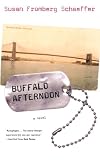
The different chapters switch between different times and places, but they are all about Pete, as a child and as a Vietnam veteran. The first chapter is beautiful - in its description of rice paddies, water buffalo and village life there in Vietnam. Then in chapter two it is after the war. Look at these lines from this chapter:
"When you go over there, no one tells you. You are going to have to live with these memories the rest of your life. This is one blackboard, man, that doesn't show more erase."
"I have to tell the truth to myself because I am going to die with myself."
Chapters three through six focus on Pete's family and his life as a child growing up in Brooklyn. His grandfather was an Italian immigrant. You learn his story too. They are Catholic. It is the writing that attracts - funny and wise at the same time.
"Every day is like a box of Cracker Jacks. Always a different prize in it."
There are so very many funny lines, but to really understand the humor, I would need to quote whole paragraphs, dialogs..... Believe me when I say that Pete and his friends will have you smiling. Now he is only ten. They have gotten a hold of a pink negligee and Ed says to Pete something like, "Girls go crazy over anything that is pink!" Ed is a little older and has taken him under his wing. Cute stuff that will have you chuckling. I had no idea that this would be a coming-of-age story with humor.
I keep wanting to quote lines, so just one more, and then that will have to be enough. This is Pete, I think he is eleven now, thinking about the difference between his father's behavior and that of the women in his family:
"Women, he saw, were not like that. They could imagine two or three right ways for things to be done. When he thought of his mother and grandmother and aunt talking in the kitchen, he thought women believed there were as many right ways to do things as there were people. He tended to believe the same thing, but he suspected such beliefs were womenly, and it was best not to encourage them."
The above describes the beginning of the book. It comes to explain why Pete enlists and goes to the Vietnam War. The next section describes the Vietnam War experience, and it is difficult reading. Very difficult, regardless of the fact that there is great humor. The humor is ironical. You laugh at the stupidity of man. You could not read this without the humor..... I particularly liked that the war episodes follows a limited group of individuals. This section reminded me of the highly acclaimed Matterhorn: A Novel of the Vietnam War. There is one major difference, in Schaeffer's book the focus is on a small group of individuals. You meet them on a deeper more intimate level, and I prefer this.
The final section of the book focuses on how the individuals we have met during the war deal with their war experiences. It deals with PTSD and the final resolution. I will even tell you that the book does ends on a positive note. If it didn't the book would be unbearable! It was very important to me that the book did end with a hopeful, but realistic tone. Why, because I came to care very much for Pete ....... and Sal and others.
What this book does is thoroughly look at the Vietnam experience for those soldiers who were there. Who ended up in that war? What were their experiences? You get the dirty details of that fighting! How did the Vietnamese people experience this war? Those who lived through it, how did they cope with life afterwards? How did they look at life afterwards? All of it is realistic, although at times there are surreal elements. Not only the facts but also one's emotional response is focused upon. You get a more complete look at the entire war experience than you do in Matterhorn. The scope is much larger!
There is humor and there is compassion in this book. I highly recommend it, if you are up to reading about the truth of that war.
Paul Boehmer narrated the audiobook. It was excellently done. I will give the book four stars, but the narrator gets five. It was through his intonations that you heard the humor. Each character and each situation was perfectly executed - the shrill voice of a woman, the psychologist's "Oh?", the soldiers' jokes. At first I was wondering if the lines were making me laugh or the narration. It was in fact both. The lines and the narration were perfectly matched. show less
"When you go over there, no one tells you. You are going to have to live with these memories the rest of your life. This is one blackboard, man, that doesn't show more erase."
"I have to tell the truth to myself because I am going to die with myself."
Chapters three through six focus on Pete's family and his life as a child growing up in Brooklyn. His grandfather was an Italian immigrant. You learn his story too. They are Catholic. It is the writing that attracts - funny and wise at the same time.
"Every day is like a box of Cracker Jacks. Always a different prize in it."
There are so very many funny lines, but to really understand the humor, I would need to quote whole paragraphs, dialogs..... Believe me when I say that Pete and his friends will have you smiling. Now he is only ten. They have gotten a hold of a pink negligee and Ed says to Pete something like, "Girls go crazy over anything that is pink!" Ed is a little older and has taken him under his wing. Cute stuff that will have you chuckling. I had no idea that this would be a coming-of-age story with humor.
I keep wanting to quote lines, so just one more, and then that will have to be enough. This is Pete, I think he is eleven now, thinking about the difference between his father's behavior and that of the women in his family:
"Women, he saw, were not like that. They could imagine two or three right ways for things to be done. When he thought of his mother and grandmother and aunt talking in the kitchen, he thought women believed there were as many right ways to do things as there were people. He tended to believe the same thing, but he suspected such beliefs were womenly, and it was best not to encourage them."
The above describes the beginning of the book. It comes to explain why Pete enlists and goes to the Vietnam War. The next section describes the Vietnam War experience, and it is difficult reading. Very difficult, regardless of the fact that there is great humor. The humor is ironical. You laugh at the stupidity of man. You could not read this without the humor..... I particularly liked that the war episodes follows a limited group of individuals. This section reminded me of the highly acclaimed Matterhorn: A Novel of the Vietnam War. There is one major difference, in Schaeffer's book the focus is on a small group of individuals. You meet them on a deeper more intimate level, and I prefer this.
The final section of the book focuses on how the individuals we have met during the war deal with their war experiences. It deals with PTSD and the final resolution. I will even tell you that the book does ends on a positive note. If it didn't the book would be unbearable! It was very important to me that the book did end with a hopeful, but realistic tone. Why, because I came to care very much for Pete ....... and Sal and others.
What this book does is thoroughly look at the Vietnam experience for those soldiers who were there. Who ended up in that war? What were their experiences? You get the dirty details of that fighting! How did the Vietnamese people experience this war? Those who lived through it, how did they cope with life afterwards? How did they look at life afterwards? All of it is realistic, although at times there are surreal elements. Not only the facts but also one's emotional response is focused upon. You get a more complete look at the entire war experience than you do in Matterhorn. The scope is much larger!
There is humor and there is compassion in this book. I highly recommend it, if you are up to reading about the truth of that war.
Paul Boehmer narrated the audiobook. It was excellently done. I will give the book four stars, but the narrator gets five. It was through his intonations that you heard the humor. Each character and each situation was perfectly executed - the shrill voice of a woman, the psychologist's "Oh?", the soldiers' jokes. At first I was wondering if the lines were making me laugh or the narration. It was in fact both. The lines and the narration were perfectly matched. show less
Lists
Awards


You May Also Like


Associated Authors
Statistics
- Works
- 38
- Also by
- 6
- Members
- 1,597
- Popularity
- #16,148
- Rating
- 3.9
- Reviews
- 26
- ISBNs
- 100
- Languages
- 5
- Favorited
- 4