
Justin Martin (1)
Author of Genius of Place: The Life of Frederick Law Olmsted (A Merloyd Lawrence Book)
For other authors named Justin Martin, see the disambiguation page.
About the Author
Justin Martin is the author of two highly praised biographies, Nader: Crusader, Spoiler, Icon and Greenspan: The Man Behind Money, selected as a notable book for 2001 by the New York Times Book Review. His articles have appeared in a variety of publications, including Fortune, Newsweek, and the San show more Francisco Chronicle. show less
Works by Justin Martin
Genius of Place: The Life of Frederick Law Olmsted (A Merloyd Lawrence Book) (2011) 213 copies, 5 reviews
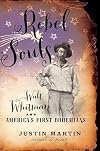
Rebel Souls: Walt Whitman and America's First Bohemians (A Merloyd Lawrence Book) (2014) 82 copies, 1 review
A Fierce Glory: Antietam--The Desperate Battle That Saved Lincoln and Doomed Slavery (2018) 49 copies, 2 reviews
Tagged
Common Knowledge
- Birthdate
- 20th century
- Gender
- male
- Nationality
- USA
- Birthplace
- Lafayette, Indiana, USA
- Places of residence
- New York, USA
- Associated Place (for map)
- USA
Members
Reviews
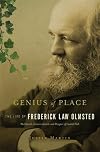
About ten years ago I read Witold Rybczynski's A Clearing in the Distance: Frederick Law Olmsted and America in the 19th Century, and I thoroughly enjoyed it. Yet reading through Justin Martin's new bio on the larger-than-life figure made me realize that Rybczynski didn't have the last word on Olmsted. Both discuss his varied roles and his magisterial creations, but Martin delves deeper into the details, painting a lovely narrative that transports the reader to the ship Omsted sailed and show more toiled upon, his Staten Island farm, the Civil War battlefields, and the other places of his incredibly influential life. show less
A Fierce Glory: Antietam--The Desperate Battle That Saved Lincoln and Doomed Slavery by Justin Martin
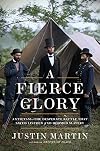
Justin Martin's "A Fierce Glory" is a brilliant recount of what many consider to be the most important battle of the entire American Civil War, The Battle of Antietam. Martin, here, has accomplished something that so many military historians never learn to do well: he put a human face on soldiers on both sides of the battle lines, the strategists responsible for them (Lee and McClellan), and even on those in the government responsible for the strategists (Abraham Lincoln, in particular).
What show more makes Martin's account of the battle so compelling is his focus on the "big picture." Rather than relying on a detailed recounting of troop movements from one part of the field to the other, the author explains what is simultaneously happening from several points of view, including that of Lincoln who was stuck some 55 miles away in Washington without any idea of how the battle was progressing. Much of "A Fierce Glory" focuses on the differences between Lee and McClellan, and how seriously the vain McClellan went out of his way to antagonize Lincoln by keeping him as uninformed as possible for as long as possible as he could. And because Martin had access to so much source material from both sides, he leaves the reader with great insight into the mindset of the common soldier - men who almost never had any idea why they were being asked to do what was required of them.
Antietam was a backbreaker to the hopes of the Confederacy, but as the author points out, it was also a squandered chance to end the war for once and all if only Lincoln's pleas had been headed by the overly cautious McClellan. Instead, McClellan chose to let Lee limp away with his battered army, and thousands more on both sides would die before the war finally ended.
Bottom Line: This one is for those who find too many Civil War histories to be too stiff and detailed for their taste. There is certainly a place for the more detailed histories, but I doubt that the average reader would come away with as much understanding of Antietam from one of those as he will from "A Fierce Glory." show less
What show more makes Martin's account of the battle so compelling is his focus on the "big picture." Rather than relying on a detailed recounting of troop movements from one part of the field to the other, the author explains what is simultaneously happening from several points of view, including that of Lincoln who was stuck some 55 miles away in Washington without any idea of how the battle was progressing. Much of "A Fierce Glory" focuses on the differences between Lee and McClellan, and how seriously the vain McClellan went out of his way to antagonize Lincoln by keeping him as uninformed as possible for as long as possible as he could. And because Martin had access to so much source material from both sides, he leaves the reader with great insight into the mindset of the common soldier - men who almost never had any idea why they were being asked to do what was required of them.
Antietam was a backbreaker to the hopes of the Confederacy, but as the author points out, it was also a squandered chance to end the war for once and all if only Lincoln's pleas had been headed by the overly cautious McClellan. Instead, McClellan chose to let Lee limp away with his battered army, and thousands more on both sides would die before the war finally ended.
Bottom Line: This one is for those who find too many Civil War histories to be too stiff and detailed for their taste. There is certainly a place for the more detailed histories, but I doubt that the average reader would come away with as much understanding of Antietam from one of those as he will from "A Fierce Glory." show less
(Reprinted from the Chicago Center for Literature and Photography [cclapcenter.com]. I am the original author of this essay, as well as the owner of CCLaP; it is not being reprinted illegally.)
Many people of course know about Greenwich Village's reputation in the 20th century as a New York hotbed for the era's underground culture and subversive arts; but did you know that this neighborhood's history of doing so actually goes back to the Victorian Age and beyond? That's the subject of Justin show more Martin's delightful new book, Rebel Souls; or to be more precise, much like its inspiration The Devil in the White City, this actually combines two related stories at once, not just about the formation of America's very first generation of "bohemian" artists (an archetype that wasn't even invented until the mid-1800s; before then artists were thought of much more like carpenters or furniture makers), but also about one of the most famous of those bohemians, revered poet and "America's transgressive forefather" Walt Whitman, whose life intersected with the smoky basements of Greenwich Village for just a small but hugely pivotal time in his career, between his first edition of the seminal Leaves of Grass (largely panned and that sold less than 50 copies) and the third edition (a cult hit among college students which finally started the national conversation about Whitman and his work).
Martin takes us into the Village's Pfaff's Saloon in this engaging book, to show exactly how all these elements came together for the first time -- the European refugee who brought the very idea of "Bohemianism" to New York, the good-natured bar owner who let all the artists drink on enormous tabs just because he liked having them around, the journalists who eventually established the artists' and bar's reputation, and the tiny number of openly gay men in Victorian New York, who inspired people like Whitman to come around on a regular basis in the first place. In fact, that's pretty much the biggest revelation of this whole book, is just how wild and countercultural a small section of New York City was even back in the mid-1800s, a part of history that was squelched by the Modernists who came after them and that we've now largely lost to the ages; but it allowed gay artists like Whitman to essentially go cruising in a horse-and-buggy age, and created an atmosphere where poets like him could even write about the experiences (even if in a highly codified way, through such words as "comrade" when wanting to refer to a lover, and by titling an entire chapter of romantic poems after an obscure flower whose blooms just happen to look like erect penises).
It's fascinating to see how some of the brightest lights of that circle went on to become nationally famous (Artemus Ward was one of the biggest hits of his times, for example, and eventually brought the bohemian aesthetic to the west coast and the attention of a young Mark Twain), while others who were initially much more famous just literally disappeared from the national consciousness within a few years after their deaths; and it's also fascinating to see just how quickly that entire scene fell apart with the outbreak of the Civil War, in which the artists of Pfaff's dispersed to all kinds of far-flung locations and new activities, emerging on the other side to a national audience that no longer wanted the dark comedy and transgressive musings that the bohemians got famous for dishing out. Written at a brisk pace and with clean, plain language, this is an "NPR-worthy" nonfiction book if ever there was one, a strong recommendation to anyone who wants to know more about Whitman, Greenwich Village, the arts, Victoriana, or simply about the small hidden parts of American history that have been deliberately suppressed by the conservatives who are usually in charge of writing the history books.
Out of 10: 9.5 show less
Many people of course know about Greenwich Village's reputation in the 20th century as a New York hotbed for the era's underground culture and subversive arts; but did you know that this neighborhood's history of doing so actually goes back to the Victorian Age and beyond? That's the subject of Justin show more Martin's delightful new book, Rebel Souls; or to be more precise, much like its inspiration The Devil in the White City, this actually combines two related stories at once, not just about the formation of America's very first generation of "bohemian" artists (an archetype that wasn't even invented until the mid-1800s; before then artists were thought of much more like carpenters or furniture makers), but also about one of the most famous of those bohemians, revered poet and "America's transgressive forefather" Walt Whitman, whose life intersected with the smoky basements of Greenwich Village for just a small but hugely pivotal time in his career, between his first edition of the seminal Leaves of Grass (largely panned and that sold less than 50 copies) and the third edition (a cult hit among college students which finally started the national conversation about Whitman and his work).
Martin takes us into the Village's Pfaff's Saloon in this engaging book, to show exactly how all these elements came together for the first time -- the European refugee who brought the very idea of "Bohemianism" to New York, the good-natured bar owner who let all the artists drink on enormous tabs just because he liked having them around, the journalists who eventually established the artists' and bar's reputation, and the tiny number of openly gay men in Victorian New York, who inspired people like Whitman to come around on a regular basis in the first place. In fact, that's pretty much the biggest revelation of this whole book, is just how wild and countercultural a small section of New York City was even back in the mid-1800s, a part of history that was squelched by the Modernists who came after them and that we've now largely lost to the ages; but it allowed gay artists like Whitman to essentially go cruising in a horse-and-buggy age, and created an atmosphere where poets like him could even write about the experiences (even if in a highly codified way, through such words as "comrade" when wanting to refer to a lover, and by titling an entire chapter of romantic poems after an obscure flower whose blooms just happen to look like erect penises).
It's fascinating to see how some of the brightest lights of that circle went on to become nationally famous (Artemus Ward was one of the biggest hits of his times, for example, and eventually brought the bohemian aesthetic to the west coast and the attention of a young Mark Twain), while others who were initially much more famous just literally disappeared from the national consciousness within a few years after their deaths; and it's also fascinating to see just how quickly that entire scene fell apart with the outbreak of the Civil War, in which the artists of Pfaff's dispersed to all kinds of far-flung locations and new activities, emerging on the other side to a national audience that no longer wanted the dark comedy and transgressive musings that the bohemians got famous for dishing out. Written at a brisk pace and with clean, plain language, this is an "NPR-worthy" nonfiction book if ever there was one, a strong recommendation to anyone who wants to know more about Whitman, Greenwich Village, the arts, Victoriana, or simply about the small hidden parts of American history that have been deliberately suppressed by the conservatives who are usually in charge of writing the history books.
Out of 10: 9.5 show less
Fascinating. Since I live in a part of the country surrounded by Olmsted's work, I was eager to read this book. I was struck by the diversity and background of Olmsted that was presented in the book. At first I was a bit taken aback by the informality of the writing. It's tone is quite different from other biographies I have read. As I became more engrossed in the book and reading about Olmsted's life, I found that the author's voice matched the subject of the book and the spirit of show more Olmsted's life. Great read. show less
You May Also Like


Statistics
- Works
- 5
- Members
- 501
- Popularity
- #49,398
- Rating
- 4.0
- Reviews
- 9
- ISBNs
- 25
- Languages
- 2
