
Ruth Rendell (1930–2015)
Author of From Doon with Death
About the Author
Ruth Rendell (1930-2015) Ruth Rendell was born in Essex, England on February 17, 1930. She was educated at Loughton County High School. Rendell began her career as a journalist. She wrote six novels before sending her work in to a publisher. She writes crime novels and psychological thrillers, and show more is best known for her Inspector Wexford books. Rendell also writes under the pseudonym Barbara Vine. Rendell has received many awards for her writing, including the Silver, Gold, and Cartier Diamond Daggers from the Crime Writers' Association, three Edgars from the Mystery Writers of America, The Arts Council National Book Awards, and The Sunday Times Literary Award. She is a fellow of the Royal Society of Literature. Many of her titles have been made into films and made-for-tv movies. Rendell died on May 2, 2015. She was 85 years old. (Bowker Author Biography) show less
Image credit: Ruth Rendell en 2008
Series
Works by Ruth Rendell
The Second Wexford Omnibus: No More Dying Then / Guilty Thing Surprised / Murder Being Once Done (1994) 96 copies
Wexford Omnibus: From Doon With Death / A New Lease of Death / The Best Man to Die (1988) 89 copies, 1 review
The Third Wexford Omnibus: Some Lie and Some Die / Shake Hands for Ever / Sleeping Life (1989) 72 copies, 1 review
The Fourth Wexford Omnibus: Wolf to the Slaughter / Put on by Cunning / The Speaker of Mandarin (1990) 54 copies
The Ruth Rendell Mysteries: The Best Man to Die / An Unkindness of Ravens / The Veiled One (1992) 37 copies, 1 review
Inspector Wexford Omnibus: A New Lease of Death / The Best Man to Die / Wolf to the Slaughter / Put on by Cunning (1994) 29 copies
From Doon with Death / Some Lie and Some Die / Shake Hands for Ever / A Sleeping Life (1993) 21 copies
Inspector Wexford: The Speaker of Mandarin / An Unkindness of Ravens / The Veiled One (1995) 15 copies
Three Barbara Vine Mysteries: A Dark-Adapted Eye, The Chimney Sweeper's Boy, and The Brimstone Wedding (2017) 9 copies
A New Lease of Death / The Speaker of Mandarin / Wolf to the Slaughter / Put on by Cunning (1997) 6 copies
Ruth Rendell Omnibus 3: Murder Being Once Done / One Across, Two Down / The Face of Trespass (1990) 5 copies
Selected Stories 4 copies
Ruth Rendell omnibus. [5] 3 copies
Dämon hinter Spitzenstores / Das geheime Haus des Todes - A Demon in My View / The Secret House of Death (1990) 3 copies
Monster in Box, The 2 copies
TENTATIA 2 copies
Oeuvres choisies de Ruth Rendell : l'été de Trapellune, un enfant pour un autre, l'homme à la tortue, la maison aux escaliers,la gueule du loup (1992) 2 copies
Dämon hinter Spitzenstores /Das geheime Haus des Todes (rororo / Rowohlts Rotations Romane) 2 copies
De dief / Kattenkruid 2 copies
Au nom du père 2 copies
Occhi senza vita 1 copy
A árvore das mãos 1 copy
HIl Isegreto della casa 1 copy
The Fallen Curtains 1 copy
Ruth Rendell 4 book Set - Means of Evil, Sins of the Fathers, An Unkindness of Ravens & Death Notes (1981) 1 copy
Tigerlilys Orchid 1 copy
The Second Omnibus 1 copy
Death Notes r 1 copy
As trevas da noite 1 copy
LES DAMES DU CRIME 1 copy
Harm Done r 1 copy
From Doom With Death 1 copy
Inspector Wexford 1-24 1 copy
The Birthday Present 1 copy
The Minotaur 1 copy
The Blood Doctor 1 copy
The Brimstone Wedding 1 copy
King Solomon's Carpet 1 copy
Sins of the Fathers r 1 copy
O Homem da Borboleta Livro 1 1 copy
Casi humanos 1 copy
Lopott élet 1 copy
De obsessie 1 copy
Sinistra Obsessão 1 copy
Eine entwaffnende Frau / Mord ist ein schweres Erbe. Zwei Inspector-Wexford-Romane in einem Band. (2003) 1 copy
Saint Zita Society, The 1 copy
The giving tree 1 copy
Mord am Polterabend - The Best Man to Die (Wexford 4); Mord ist ein schweres Erbe - A New Lease of Death (Wexford 2) (1996) 1 copy
Computer Séance [SS] 1 copy
Fen Hall [SS] 1 copy
Krokodilo nasruose: romanas 1 copy
Rendell Ruth 1 copy
Sodba v kamnu 1 copy
Puzzle Mortal 1 copy
Dd̜elig hilsen 1 copy
O Tapete do Rei Salomão 1 copy
Ruth Rendell Collection: Live Flesh, Going Wrong, Thirteen Steps Down, the Rottweiler, No More Dying Then (2011) 1 copy
Lapsukesed metsas 1 copy
Wolfchen 1 copy
Zahalena závojem 1 copy
Lhůta pro smrt 1 copy
The Fever Tree [short story] 1 copy
Feitiço Mortal 1 copy
Uma Despedida para Sempre 1 copy
Deadly Feasts 1 copy
Portobello Road 1 copy
Associated Works
Great Detectives: A Century of the Best Mysteries from England and America (1984) — Contributor — 401 copies, 4 reviews
A Moment on the Edge : 100 Years of Crime Stories by Women (2002) — Contributor — 294 copies, 6 reviews
The New Gothic: A Collection of Contemporary Gothic Fiction (1991) — Contributor — 272 copies, 2 reviews
Murder on the Menu: Cordon Bleu Stories of Crime and Mystery, Volume 1 (1984) — Contributor — 211 copies, 2 reviews
The Pleasure of Reading: 43 Writers on the Discovery of Reading and the Books That Inspired Them (2015) — Contributor — 103 copies, 2 reviews
Lethal Kisses: 18 Tales of Sex, Horror, and Revenge (1996) — Contributor, some editions — 75 copies, 5 reviews
Murder by the Book: Literary Mysteries from Alfred Hitchcock Mystery Magazine and Ellery Queen's Mystery Magazine (1995) — Contributor — 71 copies
The Web She Weaves: An Anthology of Mystery and Suspense Stories by Women (1983) — Contributor — 60 copies, 2 reviews
Women of Mystery II: Stories From Ellery Queen's Mystery Magazine and Alfred Hitchcock's Mystery Magazine (1994) — Contributor — 56 copies, 1 review
Murder at Teatime: Mysteries in the Classic Cozy Tradition (1996) — Contributor — 56 copies, 2 reviews
Ladies of the Gothics: Tales of Romance and Terror by the Gentle Sex (1975) — Contributor — 48 copies, 1 review
The World's Finest Mystery and Crime Stories: Third Annual Collection (2002) — Contributor — 46 copies
A Warning to the Curious and Other Ghost Stories (1925) — Introduction, some editions — 46 copies, 1 review
Simply the Best Mysteries: Edgar Award Winners and Front-Runners (1998) — Contributor — 46 copies, 1 review
Ellery Queen's murdercade: 23 stories from Ellery Queen's mystery magazine (Mystery annual ; 29) (1975) — Contributor — 25 copies
Tales of Obsession: Mystery Stories of Fatal Attractions and Deadly Desires (1994) — Contributor — 18 copies
The Year's 25 Finest Crime and Mystery Stories: First Annual Edition (1992) — Contributor — 16 copies
The Year's 25 Finest Crime and Mystery Stories: Second Annual Edition (1993) — Contributor — 12 copies
The Year's 25 Finest Crime and Mystery Stories: Third Annual Edition (1994) — Contributor — 10 copies
Reader's Digest Condensed Books: The Hammer of Eden • A Sight for Sore Eyes • The Kremlin Device • Firebird (1998) — Contributor — 9 copies
The Year's 25 Finest Crime and Mystery Stories: Sixth Annual Edition (1997) — Contributor — 5 copies, 1 review
Reader's Digest Condensed Books: The Keys to the Street • Rose • White Viper • Anything Considered (1996) — Author — 5 copies
Livros Condensados: O homem da estrela branca | Uma família para Cathy Cameron | As chaves da rua | O caderno diário (1997) 4 copies
Great Mystery Series: Eight of the Best Mysteries by the Top Women Writers [audiobook] (2000) — Contributor — 3 copies
Kirjavaliot - Kaukolaukaisin, Rakkaus ei katoa, Kadun hämärässä — Author — 1 copy
Gallowglass [1993 TV series] — Original book — 1 copy
Murder Most British [abridged audio] — Contributor — 1 copy
Appendici in giallo 1 — Contributor — 1 copy
Tagged
Common Knowledge
- Legal name
- Rendell, Ruth Barbara, Baroness Rendell of Babergh
- Other names
- Vine, Barbara
- Birthdate
- 1930-02-17
- Date of death
- 2015-05-02
- Gender
- female
- Education
- County High School, Loughton, Essex, England, UK
- Occupations
- journalist
Member of the House of Lords (Labour)
author
writer
novelist - Organizations
- Detection Club
- Awards and honors
- MWA Grand Master (1997)
Order of the British Empire (Commander, 1996)
Cartier Diamond Dagger (1991)
Life Peerage (1997)
Gumshoe Award (Lifetime Achievement, 2004)
Sunday Times Award for Literary Excellence (1990) (show all 8)
Rivertonprisen ( [1991])
Blue Plaque - Agent
- Charles Walker (United Agents)
- Short biography
- Ruth Barbara Rendell, née Grasemann, was the only child of two schoolteachers. She got her first job as a reporter for a South Woodford newspaper and married her boss, editor Don Rendell, at age 20. The couple had one son. She published her first novel, From Doon with Death, in 1964. Ms. Rendell was a prolific writer of police procedurals and psychological suspense/crime novels exploring such themes as romantic obsession, family secrets, miscommunication, and the impact of chance and coincidence. After years of writing such critically acclaimed works and receiving many awards, in 1986 she created the pseudonym Barbara Vine. The Barbara Vine novels are more oblique and have a recurring theme of consequences from events that occurred in the past. She was made a life peer as Baroness Rendell of Babergh in 1997.
- Cause of death
- complications of a stroke
- Nationality
- UK
- Birthplace
- South Woodford, London, Middlesex, England, UK
- Places of residence
- London, Middlesex, England, UK
Groton, Suffolk, England, UK
Polstead, Suffolk, England, UK
Loughton, Essex, England, UK - Place of death
- London, Middlesex, England, UK
- Burial location
- St. Bartholomew's Churchyard Groton, Babergh District, Suffolk, England, UK
- Map Location
- England, UK
Members
Discussions
Found: mystery based on a bone marrow transplant in Name that Book (June 2024)
Fiction - boy kills partly because he thinks it will help his girlfriend in Name that Book (April 2013)
Reviews

After the sudden death of the well-known author Gerald Candless, his elder daughter is persuaded to write a biography of her beloved father. When she uncovers amid her researches that her father was not who he had claimed to be, that he wasn't in fact called Gerald Candless at all, the results have dramatic and far-reaching repercussions.
Making an unusual departure from the crime fiction genre, Ruth Rendell (writing as Barbara Vine) has written a deeply unsettling portrait of family life, show more populated by memorable but mostly unsympathetic characters; as Jean-Paul Sartre once said: 'Hell is other people.' Her sense of observation and psychological insights are acute and I emotionally winced more than once on behalf of a character after she had metaphorically stabbed them with her pen. Don't expect a lot of action here: the plot is almost entirely character driven and the pace is slow, enabling each character, especially Ursula, to tell their story. I enjoyed the family history angle of the mystery but did feel that the novel could have been around 30 to 50 pages shorter, without losing any of its impact. show less
Making an unusual departure from the crime fiction genre, Ruth Rendell (writing as Barbara Vine) has written a deeply unsettling portrait of family life, show more populated by memorable but mostly unsympathetic characters; as Jean-Paul Sartre once said: 'Hell is other people.' Her sense of observation and psychological insights are acute and I emotionally winced more than once on behalf of a character after she had metaphorically stabbed them with her pen. Don't expect a lot of action here: the plot is almost entirely character driven and the pace is slow, enabling each character, especially Ursula, to tell their story. I enjoyed the family history angle of the mystery but did feel that the novel could have been around 30 to 50 pages shorter, without losing any of its impact. show less
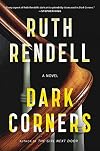
Reading this book was a bittersweet experience for me. It was a joy to read a book by one of my favourite mystery/suspense writers, but it was sad to think that this is the last of her novels since Ruth Rendell died earlier this year.
Carl Martin, a young crime novelist, inherits his father’s house and acquires a tenant, Dermot McKinnon, to give him extra income as he struggles with writing his second novel. Carl also inherits his dad’s collection of alternative, herbal, and homeopathic show more remedies and he sells some diet pills to a friend Stacey, an actress struggling with weight gain. Stacey dies because of those pills. Dermot knows that Carl sold them to her, and he sets out to blackmail Carl: refusing to pay rent and threatening to tell the newspapers about Carl’s involvement in Stacey’s death. Carl’s life soon spirals out of control.
There are two subplots as well: the adventures of Tom Milsom as he explores London using his free seniors’ bus pass, and the petty crimes of his amoral daughter Lizzie who, her father admits, is prone to constant “lying, exaggeration, or fantasizing.”
Usually in a Rendell mystery, plots will converge seamlessly. That is not the case here. Tom’s adventures and Lizzie’s exploits are only tangentially related to Carl’s story. Had Rendell lived to revise and edit, I suspect the narrative threads would have been tightened so they would not seem so meandering and unconnected.
What is explored so well is how everyone has dark corners in his/her mind and how ordinary people can step out of dark corners to commit criminal acts. Carl’s need for respect causes him to take actions of which he does not initially seem capable: “he realized again what he dreaded most in Dermot’s threats. It wasn’t the loss of income. It was the humiliation he feared. He couldn’t live with the shame.” Lizzie is motivated by a need to feel powerful: “Doing [petty thievery] – and she often did it – gave her a sense of power.” Dermot has a similar need: “No one had ever been afraid of Dermot before, or not to this degree, and it gratified him to have caused someone this amount of fear without violence or even the threat of it.”
The book also examines how guilt can destroy a person. In its portrayal of psychological disintegration, the novel is masterful. Carl’s first act of selling dangerous diet pills to Stacey is not an illegal act, merely a careless one. He does however feel guilty and so Dermot’s threats of exposure are effective against him. A girlfriend describes the impact of guilt on Carl: “He hardly speaks but to rage against Dermot. He sleeps a little, dreams violently, cries out, and sits up fighting against something that isn’t there.” Gradually paranoia takes over his life. When one character suggests being too frightened to ever confess to a crime like murder, another responds, “’It wouldn’t be as scary as not confessing. It might even be a comfort. Think what it must have been like to have it on [one’s] conscience.’”
The effectiveness of Rendell’s character development is shown by the novel’s impact on the reader. Readers understand Carl so well that they will want him to go unpunished while at the same time desire some justice. Readers will also be left with a feeling of “There but for the grace of God, go I.”
There are some plot weaknesses but the depth of its psychological analysis, characterization, and thematic development make this a must-read for lovers of suspense books.
Note: I received an ARC of this book from the publisher via NetGalley.
Please check out my reader's blog: http://schatjesshelves.blogspot.ca/. show less
Carl Martin, a young crime novelist, inherits his father’s house and acquires a tenant, Dermot McKinnon, to give him extra income as he struggles with writing his second novel. Carl also inherits his dad’s collection of alternative, herbal, and homeopathic show more remedies and he sells some diet pills to a friend Stacey, an actress struggling with weight gain. Stacey dies because of those pills. Dermot knows that Carl sold them to her, and he sets out to blackmail Carl: refusing to pay rent and threatening to tell the newspapers about Carl’s involvement in Stacey’s death. Carl’s life soon spirals out of control.
There are two subplots as well: the adventures of Tom Milsom as he explores London using his free seniors’ bus pass, and the petty crimes of his amoral daughter Lizzie who, her father admits, is prone to constant “lying, exaggeration, or fantasizing.”
Usually in a Rendell mystery, plots will converge seamlessly. That is not the case here. Tom’s adventures and Lizzie’s exploits are only tangentially related to Carl’s story. Had Rendell lived to revise and edit, I suspect the narrative threads would have been tightened so they would not seem so meandering and unconnected.
What is explored so well is how everyone has dark corners in his/her mind and how ordinary people can step out of dark corners to commit criminal acts. Carl’s need for respect causes him to take actions of which he does not initially seem capable: “he realized again what he dreaded most in Dermot’s threats. It wasn’t the loss of income. It was the humiliation he feared. He couldn’t live with the shame.” Lizzie is motivated by a need to feel powerful: “Doing [petty thievery] – and she often did it – gave her a sense of power.” Dermot has a similar need: “No one had ever been afraid of Dermot before, or not to this degree, and it gratified him to have caused someone this amount of fear without violence or even the threat of it.”
The book also examines how guilt can destroy a person. In its portrayal of psychological disintegration, the novel is masterful. Carl’s first act of selling dangerous diet pills to Stacey is not an illegal act, merely a careless one. He does however feel guilty and so Dermot’s threats of exposure are effective against him. A girlfriend describes the impact of guilt on Carl: “He hardly speaks but to rage against Dermot. He sleeps a little, dreams violently, cries out, and sits up fighting against something that isn’t there.” Gradually paranoia takes over his life. When one character suggests being too frightened to ever confess to a crime like murder, another responds, “’It wouldn’t be as scary as not confessing. It might even be a comfort. Think what it must have been like to have it on [one’s] conscience.’”
The effectiveness of Rendell’s character development is shown by the novel’s impact on the reader. Readers understand Carl so well that they will want him to go unpunished while at the same time desire some justice. Readers will also be left with a feeling of “There but for the grace of God, go I.”
There are some plot weaknesses but the depth of its psychological analysis, characterization, and thematic development make this a must-read for lovers of suspense books.
Note: I received an ARC of this book from the publisher via NetGalley.
Please check out my reader's blog: http://schatjesshelves.blogspot.ca/. show less

I feel like this was an idea book. That after decades of writing novels in which people with psychological issues commit crimes, Rendell thought one day about how many people with bizarre psychological issues never go on to commit crimes, and how most crimes are probably committed by really comparatively ordinary people. And she thought about how people are so interconnected sometimes, in unexpected ways. And so she set this situation up, some people with issues who nevertheless, are leading show more fairly normal lives, and some people who seem saner, yet who end up in inexplicable situations - and she tied them all together, in ways that we can see as the outside observers, but which they themselves cannot. I don't know that this book is the edge-of-your-seat thriller you may be expecting from Rendell. But it's a brilliant experiment.
There's a fictitious painting described in the book, Undine in a Goldfish Bowl - a painting so well described that I thought it was real until a Google Image search told me the sad truth. The painting seems to sum up the book very neatly - a mermaid, trapped in a goldfish bowl, struggling to breathe air and get out - as if she, like some of the people in the book, is more afraid of her own potential weakness than she is cognizant of her ability to breathe underwater. As if she is trapped in the bowl for our viewing pleasure. Like a cast of characters, perhaps. show less
There's a fictitious painting described in the book, Undine in a Goldfish Bowl - a painting so well described that I thought it was real until a Google Image search told me the sad truth. The painting seems to sum up the book very neatly - a mermaid, trapped in a goldfish bowl, struggling to breathe air and get out - as if she, like some of the people in the book, is more afraid of her own potential weakness than she is cognizant of her ability to breathe underwater. As if she is trapped in the bowl for our viewing pleasure. Like a cast of characters, perhaps. show less

I have a long history with Ruth Rendell and she has the ability to either astonish and delight me, or frustrate and disappoint me. In The Water’s Lovely, she manages to do all four. No one is better at building a story, layer by layer than Ruth Rendell, and here she takes a group of people, some virtual strangers to each other, and weaves her magic, blending each character with one another, slowly exposing secrets, and eventually allowing the truth to emerge. You feel the tension mounting show more but are never sure if a murder has happened, if another one it going to happen, or even who will be the victim and who the killer.
I don’t want to discuss the plot in any way as I wouldn’t want to spoil it for a future readers, but be assured that Ruth Rendell is a master at the craft of psychological mysteries. The pacing is excellent as she brings the story to a slow boil, and her characterizations are spot on. Unfortunately, there were couple of flies in the ointment for me, firstly so much of the story revolved on people not talking to one another which would have been believable with some of these very private people, but using the same plot device with all her characters made me feel as if the author was being a little lazy. Secondly, I really hated the ending and felt she cheated the reader out of seeing certain characters get their just rewards.
So for me, a very good read and one that held my attention but even as I was willing to forgive her the repeated plot device, the ending just didn’t satisfy me. show less
I don’t want to discuss the plot in any way as I wouldn’t want to spoil it for a future readers, but be assured that Ruth Rendell is a master at the craft of psychological mysteries. The pacing is excellent as she brings the story to a slow boil, and her characterizations are spot on. Unfortunately, there were couple of flies in the ointment for me, firstly so much of the story revolved on people not talking to one another which would have been believable with some of these very private people, but using the same plot device with all her characters made me feel as if the author was being a little lazy. Secondly, I really hated the ending and felt she cheated the reader out of seeing certain characters get their just rewards.
So for me, a very good read and one that held my attention but even as I was willing to forgive her the repeated plot device, the ending just didn’t satisfy me. show less
Lists
British Mystery (33)
Booker Prize (1)
Next in Series (1)
1970s Thrillers (1)
To Read (1)
Edgar Award (1)
100 New Classics (1)
Books Read in 2016 (11)
Read in 2006 (1)
1960s (1)
Female Author (1)
Awards


You May Also Like


Associated Authors
Statistics
- Works
- 317
- Also by
- 144
- Members
- 51,181
- Popularity
- #298
- Rating
- 3.7
- Reviews
- 1,340
- ISBNs
- 3,633
- Languages
- 28
- Favorited
- 136


