
Fran Ross (1935–1985)
Author of Oreo
About the Author
Works by Fran Ross
Associated Works
Tagged
Common Knowledge
- Legal name
- Ross, Francis D.
- Birthdate
- 1935-06-25
- Date of death
- 1985-09-17
- Gender
- female
- Education
- Temple University (B.S ∙ Communications ∙ Journalism and Theatre)
Overbrook High School, Philadelphia, Pennsylvania, USA - Occupations
- novelist
journalist
comedy writer - Nationality
- USA
- Birthplace
- Philadelphia, Pennsylvania, USA
- Places of residence
- New York, New York, USA
Philadelphia, Pennsylvania, USA - Place of death
- New York, New York, USA
- Associated Place (for map)
- New York, USA
Members
Reviews
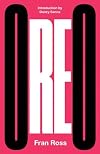
Christine Clark, ironically nicknamed Oreo as a toddler, is a young person on a quest. Born to a black mother and a Jewish father—a marriage that neither family approved from the beginning—Oreo has spent her life torn between two cultures, reflecting her mixed-heritage origins. She and her younger brother also come from a broken home, having been raised in Philadelphia by their maternal grandparents following the parents’ divorce. Helen, the mother, has no interest in raising the kids, show more spending most of her time on the road pursuing an entertainment career. Sam, the father, just simply disappeared to New York City, cutting off all contact with the family. Determined to learn the secret of her birth, a teen-aged Oreo sets out to find her father, with only some cryptic clues he has left to guide her. Once she hits the streets of New York, Oreo’s journey turns into a true picaresque adventure involving an improbable series of events, characters, and mishaps as she tracks down the multitude of people in the phone book who share Sam’s name. Will Oreo ever find her father and how will that quest change her life?
This is the basic plot of Oreo, Fran Ross’ remarkable novel that is at once a searing social satire, a perceptive commentary on racial and ethnic identities, a brilliant lampoon of the Theseus saga from Greek mythology, and an affecting coming-of-age tale of a young woman seeking her place in the world. Written about a half-century ago, it is hard to understand how a book this creative, insightful, and outright hilarious could have languished in relative obscurity for so many years. The wordplay in the book is nothing short of masterful and it is very, very funny in many places. Of course, I found myself relying on both an online Yiddish dictionary and a reader’s guide to the Theseus myth to understand many of those jokes, barbs, and puns—Oreo’s myriad encounters on her journey do indeed parallel those of Theseus as he worked his way home—but that effort was amply rewarded. While Oreo may have been underappreciated when it was published, since its “rediscovery” a few years ago it has apparently become a cult classic and a work that has clearly influenced a new generation of literature (e.g., Paul Beatty’s equally brilliant The Sellout). That is a fitting end for a book that has been on such a lengthy quest of its own. show less
This is the basic plot of Oreo, Fran Ross’ remarkable novel that is at once a searing social satire, a perceptive commentary on racial and ethnic identities, a brilliant lampoon of the Theseus saga from Greek mythology, and an affecting coming-of-age tale of a young woman seeking her place in the world. Written about a half-century ago, it is hard to understand how a book this creative, insightful, and outright hilarious could have languished in relative obscurity for so many years. The wordplay in the book is nothing short of masterful and it is very, very funny in many places. Of course, I found myself relying on both an online Yiddish dictionary and a reader’s guide to the Theseus myth to understand many of those jokes, barbs, and puns—Oreo’s myriad encounters on her journey do indeed parallel those of Theseus as he worked his way home—but that effort was amply rewarded. While Oreo may have been underappreciated when it was published, since its “rediscovery” a few years ago it has apparently become a cult classic and a work that has clearly influenced a new generation of literature (e.g., Paul Beatty’s equally brilliant The Sellout). That is a fitting end for a book that has been on such a lengthy quest of its own. show less
This novel, from the 1970's, by an author who died before she wrote another novel, never deserved to be lost. It's a startling version of Candide, from the PoV of a half black, half Jewish barely adolescent girl, whose custodial mother nicknames her "Oriole", which turns into the name in the title. The creation of new words by Oreo's brother and the Yiddish slang make for a hilarious mixtape/mixture of stunning verbal swordplay, including a quiz for his peers on the woodworking skills of show more Jesus. There's also the fictional Whitehall, an upper middle class African American town that was recently sent up by Key and Peele in their "Negrotown" sketch - for real, they have to have read this book. Oreo's journey from Philadelphia to Harlem to find her runaway Jewish father turns into a re-telling of the life of the Greek hero Theseus. So brilliant, hilarious, and memorable that it's all quotes from here on:
"Look at that moron grin, " a wagonload of Jukes once said as they went creaking and kallikaking past the village green."
"Oreo saw Mrs. Scott drop the same teaspoon seven times. Then the woman pulled herself together and dropped a cup for a change. It was what General Mills must go through when Betty Crocker was in middleschmertz."
"As the train filled, the hardened travelers settled down into the business of Hoping My Seatmate Will Keep His/Her Trap Shut And Let Me Read The Paper to the even more fervent Hoping No Mewling Brats Are Aboard."
"He patted her hand and gave her an actor's look of fake sincerity or sincere fakery - she did not know which." show less
"Look at that moron grin, " a wagonload of Jukes once said as they went creaking and kallikaking past the village green."
"Oreo saw Mrs. Scott drop the same teaspoon seven times. Then the woman pulled herself together and dropped a cup for a change. It was what General Mills must go through when Betty Crocker was in middleschmertz."
"As the train filled, the hardened travelers settled down into the business of Hoping My Seatmate Will Keep His/Her Trap Shut And Let Me Read The Paper to the even more fervent Hoping No Mewling Brats Are Aboard."
"He patted her hand and gave her an actor's look of fake sincerity or sincere fakery - she did not know which." show less
okay, this is maybe going to sound weird... but i felt a lot of joy coming from this book. i only hope ross had as much delight in writing it as i had in reading it.
for sure it's a fantastical story - a retelling of theseus, through a female (and feminist), teenaged main character whose long-absent father is a jewish white guy trying to make it big in the acting world, and whose mother is a black woman, also mostly absent, musically talented, and obsessed with creating mathematical show more equations. it's a quirky cast. the supporting characters were quite interesting and entertaining, and added entertaining layers to the story.
there is so much love of language going on in this book, and each character embraces or displays a different style of communication -- a mute who uses handwritten thought bubbles, formal english, a style of black southern patois, invented language, sing-song dialogue, slang and street talk... the many representations of language on the page were handled very well, and i took a lot of pleasure in this aspect of the book.
christine (oreo) is tough, wise, funny, and a character for the ages. i appreciated this novel so much, and cheered her on as she journeyed through her quest. parts of the book were laugh-out-loud hilarious to me (the pig! the black town dealing with whites moving in!), and i liked the brain gymnastics going on in my head as i read this story, and thought of the myth of theseus. (for those unfamiliar... there is a helpful summary of sorts at the end of oreo.) it's hard to say this book is like any other book, but while i was reading i had moments when it really felt like the coen brothers' 'o brother, where art thou' at times. with a much richer bit of social and racial satire going on.
originally published in 1974... the book fairly fizzled. i am so grateful it was resuscitated in 2015 by new directions. it's certainly a timely book for today's world! the foreword and afterword, by Danzy Senna and Harryette Mullen, are both terrific and added much to the read for me. show less
for sure it's a fantastical story - a retelling of theseus, through a female (and feminist), teenaged main character whose long-absent father is a jewish white guy trying to make it big in the acting world, and whose mother is a black woman, also mostly absent, musically talented, and obsessed with creating mathematical show more equations. it's a quirky cast. the supporting characters were quite interesting and entertaining, and added entertaining layers to the story.
there is so much love of language going on in this book, and each character embraces or displays a different style of communication -- a mute who uses handwritten thought bubbles, formal english, a style of black southern patois, invented language, sing-song dialogue, slang and street talk... the many representations of language on the page were handled very well, and i took a lot of pleasure in this aspect of the book.
christine (oreo) is tough, wise, funny, and a character for the ages. i appreciated this novel so much, and cheered her on as she journeyed through her quest. parts of the book were laugh-out-loud hilarious to me (the pig! the black town dealing with whites moving in!), and i liked the brain gymnastics going on in my head as i read this story, and thought of the myth of theseus. (for those unfamiliar... there is a helpful summary of sorts at the end of oreo.) it's hard to say this book is like any other book, but while i was reading i had moments when it really felt like the coen brothers' 'o brother, where art thou' at times. with a much richer bit of social and racial satire going on.
originally published in 1974... the book fairly fizzled. i am so grateful it was resuscitated in 2015 by new directions. it's certainly a timely book for today's world! the foreword and afterword, by Danzy Senna and Harryette Mullen, are both terrific and added much to the read for me. show less
I adored Fran Ross's word trickery in this one. Wow, she was a smart cookie! I can't even imagine writing this book before being able to access the internet... it certainly helped to have the internet next to me while reading it! Ross throws so many different cultures into her writing, which is probably one of the reasons it was so overlooked in 1974. I am glad it was republished. On one page, I went back to read it to see how many times I laughed and it was at least eight times. Eight show more laughs on one page! That deserves some credit right there. Ross rewrites the myth of Theseus and his quest to find his father to write the story of Oreo, a teen in Pittsburgh, born with an African American mother and a Jewish father. This girl is a superhero, staying tough through all the wacky situations she gets into. As the writer herself must have been a superhero. The book loses a bit of steam towards the end, but it's a must-experience book anyway. I really appreciated the "Key For Speed Readers, Non-classicists" at the back of the book which ran down the Theseus myth. I read it before beginning the narrative and it really helped connect everything to the myth. Otherwise I would have been lost. I can see this book influencing so many other books. show less
Lists
Awards


You May Also Like


Associated Authors
Statistics
- Works
- 1
- Also by
- 2
- Members
- 632
- Popularity
- #39,872
- Rating
- 3.8
- Reviews
- 20
- ISBNs
- 26
- Languages
- 6
- Favorited
- 1