
Bente Klinge
Author of The Invention of Wings
Works by Bente Klinge
Associated Works
Tagged
Common Knowledge
There is no Common Knowledge data for this author yet. You can help.
Members
Reviews
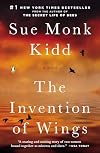
It's a little intimidating to have such a negative opinion of such a well-loved book by such a well-love author. But nevertheless, I have some... thoughts on what Sue Monk Kidd cooked up in The Invention of Wings and I feel like this is a good story about staying in your lane.
The Invention of Wings is told in two POVs - Sarah Grimke and her slave Handful. The first problem here should be obvious, and that is simply that we are far past the need to have an old white woman write a story from show more the point of view of a Black slave. Sue Monk Kidd got away with some stuff when she wrote The Secret Life of Bees, but I think that story worked because she kept it in Lily's POV. Had she turned around and tried to write August, June, or May... I would have been out. Here? I'm out.
Considering she set out to tell the story of two abolitionist growing up in Charleston, SC, the edge of almost white savoriness to this book is... disappointing, but unsurprising. I do believe the author generally thinks she put a good story out there, one that is against racism... while she is passively marginalizing Black voices by using her power to tell Black stories. We are past this. What she could have done, and perhaps it would have been great, is co-write this story with a Black author and let them tell Handful's story.
But. That's not what happened. So immediately, this rubs me the wrong way.
Sarah Grimke is a real historical figure - a young woman who joined the Quakers with one of her younger sisters and spoke against slavery. And while the subject of slavery does come up frequently, it always seem to take Sarah by surprise. "Oh dear brothers, what are you talking about? Slavery? Oh that's a terrible institution." And then they laugh her off. It's peppered in like someone holding heir head high and saying they are doing an important thing, but actually they are more interested in something else and keep forgetting about the Important Thing until it's time for a bit of plot advancement. For Sarah, this is so much about romance. There's a throwaway section early in the book about a beau that didn't work out, pages and pages of unnecessary story if Sue Monk Kidd really wanted to write a culturally important story.
But I don't think that's what Sue Monk Kidd really set out to do. This feels like a book about relationships - romantic, parental, and between friends. It's not altogether all that heartwarming, either. There's a lot of awkward telling and dramatic speeches that fall away useless and brave actions that amount to nothing and just... it was a waste. It felt like a waste of time and paper. And I know that's mean! I'm sorry. It's how I feel.
Perhaps Sarah Grimke was a uniquely fascinating woman. But The Invention of Wings feels like a story written to capitalize on a romantic story using social justice and Black suffering as a backdrop and weak motivator, in a similar vein as her other highly successful book but with far less respect or impact. You can skip this one. Really. show less
The Invention of Wings is told in two POVs - Sarah Grimke and her slave Handful. The first problem here should be obvious, and that is simply that we are far past the need to have an old white woman write a story from show more the point of view of a Black slave. Sue Monk Kidd got away with some stuff when she wrote The Secret Life of Bees, but I think that story worked because she kept it in Lily's POV. Had she turned around and tried to write August, June, or May... I would have been out. Here? I'm out.
Considering she set out to tell the story of two abolitionist growing up in Charleston, SC, the edge of almost white savoriness to this book is... disappointing, but unsurprising. I do believe the author generally thinks she put a good story out there, one that is against racism... while she is passively marginalizing Black voices by using her power to tell Black stories. We are past this. What she could have done, and perhaps it would have been great, is co-write this story with a Black author and let them tell Handful's story.
But. That's not what happened. So immediately, this rubs me the wrong way.
Sarah Grimke is a real historical figure - a young woman who joined the Quakers with one of her younger sisters and spoke against slavery. And while the subject of slavery does come up frequently, it always seem to take Sarah by surprise. "Oh dear brothers, what are you talking about? Slavery? Oh that's a terrible institution." And then they laugh her off. It's peppered in like someone holding heir head high and saying they are doing an important thing, but actually they are more interested in something else and keep forgetting about the Important Thing until it's time for a bit of plot advancement. For Sarah, this is so much about romance. There's a throwaway section early in the book about a beau that didn't work out, pages and pages of unnecessary story if Sue Monk Kidd really wanted to write a culturally important story.
But I don't think that's what Sue Monk Kidd really set out to do. This feels like a book about relationships - romantic, parental, and between friends. It's not altogether all that heartwarming, either. There's a lot of awkward telling and dramatic speeches that fall away useless and brave actions that amount to nothing and just... it was a waste. It felt like a waste of time and paper. And I know that's mean! I'm sorry. It's how I feel.
Perhaps Sarah Grimke was a uniquely fascinating woman. But The Invention of Wings feels like a story written to capitalize on a romantic story using social justice and Black suffering as a backdrop and weak motivator, in a similar vein as her other highly successful book but with far less respect or impact. You can skip this one. Really. show less
Our local museum, the Mint Museum, has started a really cool book club program. They choose books that pair nicely with their current exhibits and offer tours that show off some of the things that are either in the books or reflect the period of the book well. One of my book clubs wanted to try out this program so we read and discussed The Invention of Wings, Sue Monk Kidd's novel about a white woman who became a well known abolitionist and feminist and the black slave woman she grew up show more with, before we walked around the museum to see examples of household goods from the pre-Civil War South and elaborate African masks and other artifacts some slaves might have known before their enslavement. It added a really cool dimension to an already fascinating book.
Based on the real life abolitionist and feminist Sarah Grimke, the novel runs from Sarah's childhood, when at 11 years old she was gifted with her own slave, Hetty (called Handful), to her adulthood when she spoke out publicly against this terrible institution and about the injustices done to all women. Chapters alternating between Sarah's story and Handful's story over their thirty five years together, tell the tale of their lives, the happy and the sad, the terrible and the great, and their relationship to each other. Sarah is the daughter of a conservative wealthy judge, southern aristocracy, but even from a very young age, she confronts entrenched traditions and the inhumanity of slavery. She is incredibly smart and yearns for an education but as a girl, she is not entitled to one, the very idea of her dreams to become a lawyer are laughed off. When she is given Handful as her own personal maid, she finds in the younger child an even more oppressed human being than she is. Her first big act of rebellion, and one that was definitely illegal, was teaching Handful how to read, a skill that would change the course of Handful's life. As both Sarah and Handful grow up, each of them struggles against their respective bonds searching for the freedom and equality they deserve and desire. If they cannot find it within the bounds of the laws of the day, they will find another way.
Sarah and Handful are both amazing and strong women who have much to overcome in their lives because of the time and place in which they lived. Both characters tell their own stories in first person and the chapters alternating between the two of them allows comparisons as well as highlights differences in their circumstances. Each woman lives a constrained life, faces hard or unimaginable sacrifices, and puts right and responsibility above her own welfare and comfort. The story of these two women is both domestic and an insight into the winds of change as abolitionism grew stronger and stronger in our nation's history. The earlier years of the novel felt faster as they built up to the end because the build to the final rebellion was slow and measured, increasing the narrative tension and bringing the reader to the edge of wondering how the book could possibly finish strong and appropriately in so few remaining pages. And yet Kidd has managed to accomplish just that. This is an engaging and insightful look at slavery, feminism, friendship, honor, and perseverance through the fictionalized eyes of a forgotten but important figure in the abolitionist movement and the slave woman who spent so many years with the Grimke family aching for the promised freedom of her own. show less
Based on the real life abolitionist and feminist Sarah Grimke, the novel runs from Sarah's childhood, when at 11 years old she was gifted with her own slave, Hetty (called Handful), to her adulthood when she spoke out publicly against this terrible institution and about the injustices done to all women. Chapters alternating between Sarah's story and Handful's story over their thirty five years together, tell the tale of their lives, the happy and the sad, the terrible and the great, and their relationship to each other. Sarah is the daughter of a conservative wealthy judge, southern aristocracy, but even from a very young age, she confronts entrenched traditions and the inhumanity of slavery. She is incredibly smart and yearns for an education but as a girl, she is not entitled to one, the very idea of her dreams to become a lawyer are laughed off. When she is given Handful as her own personal maid, she finds in the younger child an even more oppressed human being than she is. Her first big act of rebellion, and one that was definitely illegal, was teaching Handful how to read, a skill that would change the course of Handful's life. As both Sarah and Handful grow up, each of them struggles against their respective bonds searching for the freedom and equality they deserve and desire. If they cannot find it within the bounds of the laws of the day, they will find another way.
Sarah and Handful are both amazing and strong women who have much to overcome in their lives because of the time and place in which they lived. Both characters tell their own stories in first person and the chapters alternating between the two of them allows comparisons as well as highlights differences in their circumstances. Each woman lives a constrained life, faces hard or unimaginable sacrifices, and puts right and responsibility above her own welfare and comfort. The story of these two women is both domestic and an insight into the winds of change as abolitionism grew stronger and stronger in our nation's history. The earlier years of the novel felt faster as they built up to the end because the build to the final rebellion was slow and measured, increasing the narrative tension and bringing the reader to the edge of wondering how the book could possibly finish strong and appropriately in so few remaining pages. And yet Kidd has managed to accomplish just that. This is an engaging and insightful look at slavery, feminism, friendship, honor, and perseverance through the fictionalized eyes of a forgotten but important figure in the abolitionist movement and the slave woman who spent so many years with the Grimke family aching for the promised freedom of her own. show less
Compelling multi narrator story of two young girls who grow into womanhood: Sarah Grimke, daughter of Charleston wealthy white family & Handful (Hetty to her white owners), an enslaved black girl who was raised on the Grimke estate and "assigned" to Sarah when she turned 11. The author's seamless prose moves back and forth between these two girls/women's voices without one false note - to my delight realized halfway through this was THE Sarah Grimke, of women's rights/abolitionist fame. In show more spite of all the specific historical detail, author keeps the character development & the fastmoving plot at the core of the story - Kidd's Afterword revealed much about how through her research she was able to create such a "truthful" novel from the historical record left by Sarah Grimke. The perfect "prep" before I visit Charleston,S.C. in a couple weeks! show less
Based on the historical figures, Sarah and Angelina Grimke, this fictionalized version of pre-Civil War events got better and better. So often, just the opposite is true. The characters of Sarah and Hetty "Handful," a slave given to Sarah on her eleventh birthday, are well-developed and quite believable. The author's notes at the end clarified what was invented and what was historically accurate. I can't even begin to understand what it must have been like to be enslaved, but Kidd's show more depiction gave me a small inkling of why some slaves chose death if that was the only way to escape bondage. show less
Lists
Awards


You May Also Like
Associated Authors
Statistics
- Works
- 4
- Also by
- 3
- Members
- 5,803
- Popularity
- #4,244
- Rating
- 4.1
- Reviews
- 340
- ISBNs
- 65
- Languages
- 13