
Frederick William Faber (1814–1863)
Author of All for Jesus: The Easy Ways of Divine Love
About the Author
Works by Frederick William Faber
Purgatory: The Two Catholic Views of Purgatory Based on Catholic Teaching and Revelations of Saintly Souls (from All for Jesus) (2009) 54 copies
A Right View of Yourself: The Devilish Perils & Divine Possibilities of Self-Knowledge (2021) 20 copies
A Father Faber Heritage: Selections from the Writings of Reverend Frederick William Faber of the London Oratory (1958) 13 copies
NOTES ON DOCTRINAL AND SPIRITUAL SUBJECTS, Volume II: The Faith and the Spiritual Life (2020) 4 copies
Ethel's book of tales of the angels 3 copies
A bondade 2 copies
Devotion to the Pope 2 copies
Vesper Chimes 1 copy
Father Frederick W. Faber Set of Eight Books (Bethlehem, The Precious Blood, Spiritual Conferences - Faber, The Ble (2009) 1 copy
The Spiritual Doctrine of Father Louis Lallemant, S.J., preceded by Some Account of His Life — Editor — 1 copy
Espiritu, pensamientos y doctrinas religiosas estractadas de las obras escritas por el Rdo. P 1 copy
O Come and Mourn 1 copy
Associated Works
Hymns of the Church of Jesus Christ of Latter-day Saints (1985) — Contributor — 318 copies, 3 reviews
Tagged
Common Knowledge
- Birthdate
- 1814-06-28
- Date of death
- 1863-09-26
- Gender
- male
- Education
- University of Oxford (Balliol College)
- Occupations
- hymn writer
theologian
Anglican priest
Catholic priest - Organizations
- Church of England
Oxford Movement
Roman Catholic Church
Brompton Oratory (founder)
Oratory of St. Philip Neri - Relationships
- Faber, G.C. (nephew)
- Short biography
- This is a list of the hymns Faber wrote and that are pulbished in hymnals:
Blood Is the Price of Heaven
By the Archangel’s Word of Love
Dear God of Orphans, Hear Our Prayer
Dear Jesus, Ever at My Side
Exceeding Sorrowful to Death
Faith of Our Fathers
From Pain to Pain, from Woe to Woe
Hark! Hark, My Soul!
Have Mercy on Us, God Most High
Holy Ghost, Come Down upon Thy Children
I Wish to Have No Wishes Left
I Wor ship Thee, Sweet Will of God
I Wor ship Thee, Most Gracious God
Jesu, Gentlest Savior
Jesus Is God!
My God! My God! And Can It Be
My God, How Wonderful Thou Art
O Come and Mourn with Me
O Gift of Gifts!
O Jesus, Jesus
O God, Thy Power Is Wonderful
O How the Thought of God Attracts
O Paradise!
O Soul of Jesus, Sick to Death
Oh! Come to the Merciful Savior
Pilgrims of the Night, The
Sleep, Sleep My Beautiful Babe
Souls of Men! Why Will Ye Scatter
There’s a Wideness in God’s Mercy
Sweet Savior, Bless Us Ere We Go
Thy Home Is with the Humble, Lord
True Shepherd, The
Why Is Thy Face So Lit with Smiles?
Workman of God
God’s Glory is a Wondrous Thing
Oh, It Is Hard to Work for God - Nationality
- UK
- Places of residence
- Calverley, Yorkshire, England, UK
Elton, Huntingdonshire, England, UK
Cottam Hall, England
London, England, UK - Place of death
- Brompton, Kensington, Middlesex, England, UK
- Burial location
- Brompton Oratory, London, England, UK
- Map Location
- UK
Members
Reviews
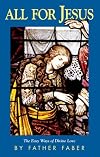
I've just finished reading 'All for Jesus' by Fr. Frederick Faber. This is not just a good book. This is a great book.
Frederick William Faber (1814 – 1863) was a noted English hymn writer and theologian, who converted from Anglicanism to Roman Catholicism in 1845. He was ordained to the Catholic priesthood subsequently in 1847.
Written originally for distribution amongst members of the Confraternity of the Most Precious Blood, which Fr. Faber introduced to England in 1847, and transferred show more to the church of the London Oratory in 1850 when he became an Oratorian, this book is primarily an introduction to a deeper prayer life. It is all about developing our relationship with God, with others, and with ourselves. It is about the inner work.
It is also a book for what Fr. Faber describes as the 'Religious Middle Classes', those who will probably never reach a state of spiritual perfection in this life and yet are more advanced than the beginner. This is important because of what it implies - that the practices and attitudes suggested can be taken up by any faithful follower of Jesus.
Fr Faber lays the ground by identifying what he sees as the three instincts of the saints - eagerness for the glory of God, touchiness about the interests of Jesus, (which Faber says are the glory of His Father, the fruit of His Passion, the honour of His Mother, and the esteem of grace), and an anxiety for the salvation of souls.
What the book succeeds in doing is opening hearts to an abundance of new ways to relate to God, be that in supplication, intercession, adoration, praise, oblation, or thanksgiving, as well as the release of the souls in Purgatory.
I found the book challenging to read at first because I had no idea where it was going. But like most great books it can be compared to climbing a mountain - arduous at first but wow, the views from the summit are stunning.
This has to be one of my top ten Christian books, and was purchased because of recommendations on Goodreads, its high rating on Amazon, and its appearance on a number of 'top 100' Catholic books lists. show less
Frederick William Faber (1814 – 1863) was a noted English hymn writer and theologian, who converted from Anglicanism to Roman Catholicism in 1845. He was ordained to the Catholic priesthood subsequently in 1847.
Written originally for distribution amongst members of the Confraternity of the Most Precious Blood, which Fr. Faber introduced to England in 1847, and transferred show more to the church of the London Oratory in 1850 when he became an Oratorian, this book is primarily an introduction to a deeper prayer life. It is all about developing our relationship with God, with others, and with ourselves. It is about the inner work.
It is also a book for what Fr. Faber describes as the 'Religious Middle Classes', those who will probably never reach a state of spiritual perfection in this life and yet are more advanced than the beginner. This is important because of what it implies - that the practices and attitudes suggested can be taken up by any faithful follower of Jesus.
Fr Faber lays the ground by identifying what he sees as the three instincts of the saints - eagerness for the glory of God, touchiness about the interests of Jesus, (which Faber says are the glory of His Father, the fruit of His Passion, the honour of His Mother, and the esteem of grace), and an anxiety for the salvation of souls.
What the book succeeds in doing is opening hearts to an abundance of new ways to relate to God, be that in supplication, intercession, adoration, praise, oblation, or thanksgiving, as well as the release of the souls in Purgatory.
I found the book challenging to read at first because I had no idea where it was going. But like most great books it can be compared to climbing a mountain - arduous at first but wow, the views from the summit are stunning.
This has to be one of my top ten Christian books, and was purchased because of recommendations on Goodreads, its high rating on Amazon, and its appearance on a number of 'top 100' Catholic books lists. show less

Frederick William Faber (1814-1863), best known as the author of "Faith of Our Fathers" and other hymns, was an Anglican vicar who converted to Catholicism and entered the priesthood. Through the medium of his Christian faith, Faber offers a timeless philosophy on the difficulty of self-knowledge and the search for truth. The subtitle, "A Comedy of Lies," is appropriate. Faber repeatedly makes his point with a hint of tongue-in-cheek. "An honest humorous sense of ridicule is a great help to show more holiness," he writes. "Perhaps nature does not contribute a greater help to grace than this."
"We must also remember that this cure of self-deceit is not a thing which can be done once for all, and then be over. It is a lifelong work," he warns. And cautions that we must "show extreme patience and good-humored contentment with little victories and modest successes." show less
"We must also remember that this cure of self-deceit is not a thing which can be done once for all, and then be over. It is a lifelong work," he warns. And cautions that we must "show extreme patience and good-humored contentment with little victories and modest successes." show less
Self-Deceit: A Comedy on Lies; A Way of Overcoming Them (Pendle Hill Pamphlets Book 50) by Frederick William Faber
These essays on self-deceit come from the volume that Faber named Spiritual Conferences, because they have neither the formality of a lecture nor the dignity of the sermon. The editor chose these essays in the conviction that the failure of our world is the failure of worship; and all worship, be it Quaker, Episcopalian, Muslim, or what not, must have within it some place for self-examination. Here we are at a loss and Faber speaks to that loss. Without self-examination and confession to show more God, common morality, acts of charity and worship itself will turn sour within us and we shall be 10 times worse than if we had never heard of religion. show less
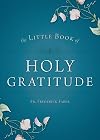
This is a gentle, helpful manual for meditation aimed at gratitude and spiritual growth, rather than harsher disciplines of penance. Fr. Faber offers guidance on good resources and texts for guided meditation, some history, and spiritual examples. This is written from a distinctly Catholic perspective, but may also be welcoming to "Catholic-adjacent" believers such as Episcopalians. It's not intended for non-religious meditation.
Recommended with the above caveat.
Recommended with the above caveat.
You May Also Like


Associated Authors
Statistics
- Works
- 58
- Also by
- 2
- Members
- 1,054
- Popularity
- #24,449
- Rating
- 4.4
- Reviews
- 21
- ISBNs
- 74
- Languages
- 3
- Favorited
- 1