
Rodney Jones (1) (1949–)
Author of Elegy for the Southern Drawl
For other authors named Rodney Jones, see the disambiguation page.
About the Author
Winner of the 1989 National Book Critics Circle Award, Rodney Jones is a professor of English at Southern Illinois University at Carbondale. (Bowker Author Biography)
Image credit: Rodney Jones in New Orleans, fall 2016
Works by Rodney Jones
Going Ahead Looking Back 1 copy
Associated Works
Tagged
Common Knowledge
- Legal name
- Rodney Glenn Jones
- Birthdate
- 1949-02-11
- Gender
- male
- Education
- University of North Carolina, Greensboro (MFA ∙ Creative Writing)
- Occupations
- professor
poet - Organizations
- Fellowship of Southern Writers
- Awards and honors
- Peter I. B. Lavan Younger Poets Award (1986)
Hanes Award for Poetry (2001)
National Book Critics Circle Award (Poetry ∙ 1989) - Birthplace
- Hartselle, Alabama, USA
- Places of residence
- Carbondale, Illinois, USA
- Associated Place (for map)
- USA
Members
Reviews
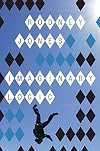
Above-average collection from acerbic Southerner Jones, distinguished by occasionally zany metaphorical conceits and a kind of offbeat wit. Jones's South is populated by deranged football coaches, barflies, Christian zealots, evicted poor whites, and other colorful Faulknerian denizens, and contains plentiful references to carpentry, plumbing, auto repair, and the like, all narrated by an amused -- and occasionally bemused -- "lucky man / alive in the dark country." We poets are jus' folks, too.
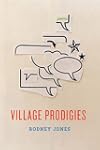
There are few books of poetry that I can sink into with as much ease and pleasure as I sank into this one. Perhaps because this is not a collection of poems but an episodic work of fiction that employs poetry as its storytelling medium, it engaged and sustained this reader's attention from start to finish. As a lifelong poetry enthusiast with an eclectic range of aesthetic tastes, I was also impressed by the stylistic range of this work, for there is much to please the experimentalist and show more formalist alike, yet tone and quality are consistent. It's also a genre-bender: historical fiction in verse with a dash of sci-fi? Yes, please. Never didactic but always meaningful, never facile but always accessible, this book is more than a peek back in time. This book captures an age. (For more specific information about the book's structure, characters, and chronology, see below. I have provided a basic outline while purposefully avoiding plot spoilers.)
The book follows its main character, Seth Portis, and his all-male cast of childhood friends, each one gifted in his own way. Because the book is not chronological, you get to see this group of friends at different phases of their lives, but not in the order you might predict. When we are introduced to Seth Portis in the first section of the book, he is an adult learning to cope with his aging parents, and his dementia-ridden mother in particular. In the second and shortest section of the book, we get a glimpse of an older Seth and a man named Brown, who we do not yet know, both grappling with the news that they have cancer. In the third section, we go back to Seth's childhood, at which point we meet all of his friends (which includes Brown), and the whole cast of characters is introduced rather humorously as a sort of MacCarthy-esque clique of 4th-grade boys who form a secret club in order to make mischief. In the fourth section of the book, we see these characters as young men coming of age during the Vietnam War. Next, we see the same men as young professionals who are incorporating new forms of high-tech entertainment and communication media into their lives (Facebook, videogames, and so on).
Some readers may be tempted to describe this book as a novel in verse, but really it's more of a series of episodes about a group of friends. And along with the poems that deal specifically with our main cast, there are other poems interspersed that act as portraits of the men's hometown, including a few minor episodes about some of the more colorful people who live in the town. (Think Winesburg, Ohio in the rural Southeast, then throw in the Red Scare, small town racisms, Vietnam, LSD, road trips, a chicken processing plant in Mexico, and more.) One has the sense that this book might have gone on forever, giving us more and more episodes about its beloved characters, and yet the collection has a sense of completeness about it. It may well be this poet's best book to date. It certainly contains some of his best poems. show less
The book follows its main character, Seth Portis, and his all-male cast of childhood friends, each one gifted in his own way. Because the book is not chronological, you get to see this group of friends at different phases of their lives, but not in the order you might predict. When we are introduced to Seth Portis in the first section of the book, he is an adult learning to cope with his aging parents, and his dementia-ridden mother in particular. In the second and shortest section of the book, we get a glimpse of an older Seth and a man named Brown, who we do not yet know, both grappling with the news that they have cancer. In the third section, we go back to Seth's childhood, at which point we meet all of his friends (which includes Brown), and the whole cast of characters is introduced rather humorously as a sort of MacCarthy-esque clique of 4th-grade boys who form a secret club in order to make mischief. In the fourth section of the book, we see these characters as young men coming of age during the Vietnam War. Next, we see the same men as young professionals who are incorporating new forms of high-tech entertainment and communication media into their lives (Facebook, videogames, and so on).
Some readers may be tempted to describe this book as a novel in verse, but really it's more of a series of episodes about a group of friends. And along with the poems that deal specifically with our main cast, there are other poems interspersed that act as portraits of the men's hometown, including a few minor episodes about some of the more colorful people who live in the town. (Think Winesburg, Ohio in the rural Southeast, then throw in the Red Scare, small town racisms, Vietnam, LSD, road trips, a chicken processing plant in Mexico, and more.) One has the sense that this book might have gone on forever, giving us more and more episodes about its beloved characters, and yet the collection has a sense of completeness about it. It may well be this poet's best book to date. It certainly contains some of his best poems. show less
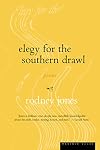
The Southern roots of Rodney Jones are clear in this collection of his poetry. He is honest and straight forward on a broad range of subjects. I especially like his title work. Exceptional work.
Lists
Awards


You May Also Like


Associated Authors
Statistics
- Works
- 13
- Also by
- 14
- Members
- 281
- Popularity
- #82,781
- Rating
- 3.6
- Reviews
- 3
- ISBNs
- 32


