
Diane A. S. Stuckart
Author of The Queen's Gambit
About the Author
Disambiguation Notice:
Diane A. S. Stuckart has also written under the pen names Alexa Smart and Anna Gerard, according to the cover of The Queen's Gambit
Series
Works by Diane A. S. Stuckart
Fire and Sweet Music 1 copy
Roses At Midnight 1 copy
Associated Works
Tagged
Common Knowledge
- Other names
- Smart, Alexa
Gerard, Anna - Gender
- female
- Education
- University of Oklahoma (journalism)
- Nationality
- USA
- Places of residence
- Florida, USA
Texas, USA
Oklahoma, USA - Disambiguation notice
- Diane A. S. Stuckart has also written under the pen names Alexa Smart and Anna Gerard, according to the cover of The Queen's Gambit
- Associated Place (for map)
- USA
Members
Reviews

I don't know if a historical mystery can also be classified as a "cozy" but it fits with this book. The book cover calls it a "Leonardo di Vinci Mystery". di Vinci really is not the crime solver however. It is Dino, his apprentice, that takes front stage.
The jacket review quotes call the book "mesmerizing" and a "tour de force". I would not go that far. I would call the book entertaining. Not only is the story itself good, but the glimpse into 15th century Italy and the world of this great show more artist and inventor is very enjoyable. show less
The jacket review quotes call the book "mesmerizing" and a "tour de force". I would not go that far. I would call the book entertaining. Not only is the story itself good, but the glimpse into 15th century Italy and the world of this great show more artist and inventor is very enjoyable. show less
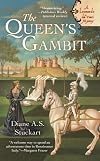
Leonardo di Vinci is the court engineer to Ludovico Sforza, the Duke of Milan, in the late fifteenth century. The Duke, a.k.a. Il Moro, decides he wants to have a human chess match and Leonardo is in charge of making it happen. When one of the white bishops does not return from a break in the action, Leonardo sends his apprentices to look for him. Dino is the apprentice who finds the bishop dead in a secluded garden. And when Il Moro saddles Leonardo with the task of discovering the show more murderer, Leonardo enlists Dino to help in the investigation. Unbeknownst to Leonardo, Dino has a mystery of his own. So while Dino is basking in the joy of assisting his beloved mentor, he's also working very hard to keep his own mystery from being revealed.
THE QUEEN'S GAMBIT is Diane Stuckart's first book in the Leonardo di Vinci mystery series, and I have to say that it is the most unique idea for a mystery series that I have encountered. That uniqueness hooked me from page one, but the strengths of this novel just keep the reader anxiously turning pages.
Strength number one: the characters. Leonardo di Vinci is the epitome of the Renaissance man. History has documented that, so it isn't difficult to believe that he has a multitude of talents. Plus, Stuckart doesn't give him unbelievable talents like some of our modern-day superman-like protagonists. The choice of Leonardo as a protagonist is rather ingenious, actually. Stuckart's fictional sidekick, Dino, is equally wonderful. Dino is the narrator of THE QUEEN'S GAMBIT and the reader sees the plot much like one sees it in a Nero Wolfe, Sherlock Holmes, or John Ceepak mystery. Like Archie, Watson and Danny, Dino worships his mentor, and obviously that injects a bit of a bias in the point of view.
My favorite character would definitely have to be the tailor, Luigi. His hard shell exterior is covering a sentimental, fatherly interior, and he injects comedy into the plot. Only one in a cast of excellent minor, supporting characters ranging from the poor servants up to the royalty.
Strength number two: the historical setting. I'm not a historian, so I don't know all the minor details of fifteenth century Milan, but from an amateur's eye, Stuckart did a great job of setting the scene. The description of clothing, Leonardo's experiments, the art supplies used to paint, even the evolution of chess. One of the elements I had the most fun with was the dialogue. Obviously the book is written in English, but Stuckart makes a nice blend so that the reader can have a taste of the time period but not a difficult time interpreting. I think I may add "Saint's Blood!" to my vocabulary.
Strength number three: the plot. The mystery of this novel is multi-layered, and the characters are often working in circles to try to figure out why their clues are leading them to the wrong conclusions. Chess was the perfect game for Il Moro to choose to enact with live people. The actual game was analogous to Leonardo and Dino's investigation: complex, intelligent and often deceiving.
While I've pulled out and listed these strengths individually, the blending of them is what makes the entire book work so well. While I didn't want the book to end, I was assuaged by the fact that I already have the next book in this fun series, PORTRAIT OF A LADY. I'm looking forward to rejoining Leonardo and Dino in yet another fifteenth century adventure! show less
THE QUEEN'S GAMBIT is Diane Stuckart's first book in the Leonardo di Vinci mystery series, and I have to say that it is the most unique idea for a mystery series that I have encountered. That uniqueness hooked me from page one, but the strengths of this novel just keep the reader anxiously turning pages.
Strength number one: the characters. Leonardo di Vinci is the epitome of the Renaissance man. History has documented that, so it isn't difficult to believe that he has a multitude of talents. Plus, Stuckart doesn't give him unbelievable talents like some of our modern-day superman-like protagonists. The choice of Leonardo as a protagonist is rather ingenious, actually. Stuckart's fictional sidekick, Dino, is equally wonderful. Dino is the narrator of THE QUEEN'S GAMBIT and the reader sees the plot much like one sees it in a Nero Wolfe, Sherlock Holmes, or John Ceepak mystery. Like Archie, Watson and Danny, Dino worships his mentor, and obviously that injects a bit of a bias in the point of view.
My favorite character would definitely have to be the tailor, Luigi. His hard shell exterior is covering a sentimental, fatherly interior, and he injects comedy into the plot. Only one in a cast of excellent minor, supporting characters ranging from the poor servants up to the royalty.
Strength number two: the historical setting. I'm not a historian, so I don't know all the minor details of fifteenth century Milan, but from an amateur's eye, Stuckart did a great job of setting the scene. The description of clothing, Leonardo's experiments, the art supplies used to paint, even the evolution of chess. One of the elements I had the most fun with was the dialogue. Obviously the book is written in English, but Stuckart makes a nice blend so that the reader can have a taste of the time period but not a difficult time interpreting. I think I may add "Saint's Blood!" to my vocabulary.
Strength number three: the plot. The mystery of this novel is multi-layered, and the characters are often working in circles to try to figure out why their clues are leading them to the wrong conclusions. Chess was the perfect game for Il Moro to choose to enact with live people. The actual game was analogous to Leonardo and Dino's investigation: complex, intelligent and often deceiving.
While I've pulled out and listed these strengths individually, the blending of them is what makes the entire book work so well. While I didn't want the book to end, I was assuaged by the fact that I already have the next book in this fun series, PORTRAIT OF A LADY. I'm looking forward to rejoining Leonardo and Dino in yet another fifteenth century adventure! show less
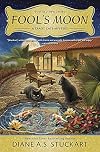
Most days, Ruby Sparks feels like the sign that says Tarot Card Reader Extraordinaire should say Tarot Card Reader Barely Competent. But as challenging as it is to take care of her half-sister's new age shop--and her growing menagerie of mystically inclined pets--Ruby never worries that she's bitten off more than she can chew . . . until a customer wants her to divine the truth about a murder.
When her own life is threatened with a double dose of danger, Ruby begins to wonder if she's being show more played for a fool. Luckily, she has Aphelia and Brandon--sibling black cats with a talent for tarot--and a feisty pitbull friend who all lend a paw in collaring the culprit before Ruby finds herself taking her final cat nap. (less) show less
When her own life is threatened with a double dose of danger, Ruby begins to wonder if she's being show more played for a fool. Luckily, she has Aphelia and Brandon--sibling black cats with a talent for tarot--and a feisty pitbull friend who all lend a paw in collaring the culprit before Ruby finds herself taking her final cat nap. (less) show less
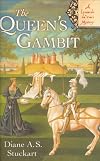
When the Duke of Milan's cousin dies during a human chess game, the Duke charges his court engineer, Leonardo da Vinci, with investigating the crime. Leonardo is assisted by his apprentice, Dino, who discovered the body. Dino is thrilled with the opportunity to spend significant time with the master, but is also apprehensive that increased attention from Leonardo might expose a closely held secret.
This is an entertaining novel, but it's not one that will linger in my memory. The author has show more avoided anachronisms that mar other authors' attempts at recreating a historical era, yet the sense of place and time isn't particularly strong. The investigation lacks focus and seems to stall in places. Leonardo never seems comfortable with his detective persona. Leonardo's apprentices are some of the strongest characters in the book, and I enjoyed the dynamics of their relationships. Dino's character is well developed, and Dino's secret is the most interesting aspect of the book for me, and it's enough of a hook to entice me to read the next book in the series. show less
This is an entertaining novel, but it's not one that will linger in my memory. The author has show more avoided anachronisms that mar other authors' attempts at recreating a historical era, yet the sense of place and time isn't particularly strong. The investigation lacks focus and seems to stall in places. Leonardo never seems comfortable with his detective persona. Leonardo's apprentices are some of the strongest characters in the book, and I enjoyed the dynamics of their relationships. Dino's character is well developed, and Dino's secret is the most interesting aspect of the book for me, and it's enough of a hook to entice me to read the next book in the series. show less
Awards


You May Also Like


Associated Authors
Statistics
- Works
- 11
- Also by
- 8
- Members
- 287
- Popularity
- #81,378
- Rating
- 3.5
- Reviews
- 13
- ISBNs
- 19
- Languages
- 4
- Favorited
- 1
