
Dennis Hamley
Author of Without Warning: Ellen's Story, 1914-1918
About the Author
Dennis Hamley was born in Kent in 1935 and
lived in southern England throughout the war.
He began writing in the 1970s and his beautifully
simple prose transports his readers effortlessly
to the world of his novels.
He is passionate about providing page-turning
reads for a new generation of show more discriminating
readers. show less
Series
Works by Dennis Hamley
Associated Works
Twisted Circuits: A Sinister Collection of Hi-tech Tales (Beaver Books) (1987) — Contributor — 5 copies
Tagged
Common Knowledge
- Birthdate
- 1935-10-14
- Gender
- male
- Nationality
- UK
- Birthplace
- Crockham Hill, Kent, England, UK
- Places of residence
- Crockham Hill, Kent, England, UK
Winslow, Buckingham, England, UK
Oxford, Oxfordshire, England, UK - Associated Place (for map)
- England, UK
Members
Discussions
Children's fiction, rabbit hit by car, animal heaven in Name that Book (June 2011)
Reviews
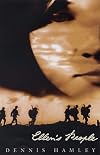
“It’s dark now. The church clock has long struck midnight. Betty and Madge, twins and my younger sisters, went to sleep the moment I blew their candle out, but I can’t sleep and I’m wondering if I ever will again.”
Thus begins Ellen’s People, the first novel in Dennis Hamley’s Ellen Trilogy. Ellen Wilkins, a young woman living in rural England on the eve of World War I, has just witnessed a recruitment drive in her village. She has also witnessed some of the less attractive show more behaviour associated with such campaigns: jingoism, hatred of “the Hun”, and fury against those who openly prefer peace to war. To Ellen, this is more than a purely abstract concern: her beloved brother Jack has enlisted, and she worries about what might happen to him. “I don’t know much about wars,” Ellen admits, “except soldiers and sailors get killed and Jack might get killed with them.”
Ellen’s first-person, frequently present tense narration is deceptively simple. Hamley achieves a beautiful balancing act here: Ellen is highly intelligent and insightful, and yet her tone fits that of a country girl from a simple background who has received rather a basic education. Like many girls of her class and time, any form of Further or Higher Education is out of the question for Ellen: simple economic necessity means that she must, at a young age, go out to work as a maid for a wealthy family. The appalling drudgery of such work is not glossed over; Ellen and her fellow maids work long, gruelling hours for little pay and even less gratitude. When they act together to win a small but significant victory over their employers, we’re absolutely behind them. This small act of rebellion – which is really little more than a simple demand for respect – is also an indication that the determined, courageous Ellen will not remain a housemaid for long.
In the meantime Jack returns from the trenches – alive, but missing a leg, and carrying a world of rage and distress within. As Ellen struggles to nurse him and hold her family together, she develops a strong empathy for the injured and sick, and an interest in nursing as a profession. Eventually, she goes to London to train as a nurse, and from there to join the nursing corps on the Continent. From this point on, the war – which occasionally seemed rather distant in Britain – becomes shockingly real and immediate. There are hellish depictions of the bloody reality of trench warfare. Soldiers are brought into the hospital with destroyed limbs, burns, gaping wounds in their stomachs; many die in agony in front of Ellen’s eyes. There are times when she wonders if she can carry on. She does anyway, constantly growing in empathy and insight. In the end, Ellen transcends her own limitations, the expectations imposed by her sex and class, and becomes a truly rounded, sympathetic, experienced woman.
Ellen’s People is not only about war, but about the prejudice, tribalism, and blind patriotism that give rise to warmongering. It is about much else besides: a class and social structure that was slowly being eroded, family and social relationships, and the increasing shift of power to women as they not only entered the workplace but began to take on ever more responsibility. This is, in short, a world that is becoming more recognisably like our own. 1914 and the outbreak of World War I are, obviously, a full century in the past now, but their repercussions are still being played out today. If anyone thinks that this period of history has lost its immediacy and power to shock, try reading Ellen’s People. Ellen’s urgent, insistent voice speaks directly to us, and her experiences become our experiences too. show less
Thus begins Ellen’s People, the first novel in Dennis Hamley’s Ellen Trilogy. Ellen Wilkins, a young woman living in rural England on the eve of World War I, has just witnessed a recruitment drive in her village. She has also witnessed some of the less attractive show more behaviour associated with such campaigns: jingoism, hatred of “the Hun”, and fury against those who openly prefer peace to war. To Ellen, this is more than a purely abstract concern: her beloved brother Jack has enlisted, and she worries about what might happen to him. “I don’t know much about wars,” Ellen admits, “except soldiers and sailors get killed and Jack might get killed with them.”
Ellen’s first-person, frequently present tense narration is deceptively simple. Hamley achieves a beautiful balancing act here: Ellen is highly intelligent and insightful, and yet her tone fits that of a country girl from a simple background who has received rather a basic education. Like many girls of her class and time, any form of Further or Higher Education is out of the question for Ellen: simple economic necessity means that she must, at a young age, go out to work as a maid for a wealthy family. The appalling drudgery of such work is not glossed over; Ellen and her fellow maids work long, gruelling hours for little pay and even less gratitude. When they act together to win a small but significant victory over their employers, we’re absolutely behind them. This small act of rebellion – which is really little more than a simple demand for respect – is also an indication that the determined, courageous Ellen will not remain a housemaid for long.
In the meantime Jack returns from the trenches – alive, but missing a leg, and carrying a world of rage and distress within. As Ellen struggles to nurse him and hold her family together, she develops a strong empathy for the injured and sick, and an interest in nursing as a profession. Eventually, she goes to London to train as a nurse, and from there to join the nursing corps on the Continent. From this point on, the war – which occasionally seemed rather distant in Britain – becomes shockingly real and immediate. There are hellish depictions of the bloody reality of trench warfare. Soldiers are brought into the hospital with destroyed limbs, burns, gaping wounds in their stomachs; many die in agony in front of Ellen’s eyes. There are times when she wonders if she can carry on. She does anyway, constantly growing in empathy and insight. In the end, Ellen transcends her own limitations, the expectations imposed by her sex and class, and becomes a truly rounded, sympathetic, experienced woman.
Ellen’s People is not only about war, but about the prejudice, tribalism, and blind patriotism that give rise to warmongering. It is about much else besides: a class and social structure that was slowly being eroded, family and social relationships, and the increasing shift of power to women as they not only entered the workplace but began to take on ever more responsibility. This is, in short, a world that is becoming more recognisably like our own. 1914 and the outbreak of World War I are, obviously, a full century in the past now, but their repercussions are still being played out today. If anyone thinks that this period of history has lost its immediacy and power to shock, try reading Ellen’s People. Ellen’s urgent, insistent voice speaks directly to us, and her experiences become our experiences too. show less
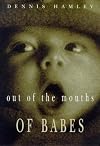
The British class system is a curious thing. It is, on the surface at least, less rigid than in the past, and yet it continues to influence British society and affect the lives of British people. The days of forelock-tugging subservience may be largely over, but those at the top end of the spectrum nevertheless enjoy consistently better opportunities than those who are lower down. This is often accepted with a shrug, as a slight quirk in the social structure; Dennis Hamley’s Out of the show more Mouths of Babes forces you to see it in starkly human terms.
The structure of Out of the Mouths of Babes has echoes of a Greek tragedy: from the opening act there are presentiments of an oncoming catastrophe. Three children are all born on the same day, but into completely different circumstances. Their lives will come together in several unexpected ways, and – as in a Greek tragedy – there seems nothing that any of them can do to alter their fate.
Julian, born into wealth and privilege, stands at one end of the social spectrum. Even the name of his family home, Mockbeggar House, gives an indication as to the kind of people who reside within: people of wealth and power who seem unable to question their own privilege, or to extend a great deal of sympathy to those who, through no fault of their own, are less privileged. From the moment of his birth, much of Julian’s life seems to be preordained: “Prep school, public school and Oxford must follow in due course as they always had for male Claverhouses.” Along with money and status, Julian also inherits many of his parents’ attitudes: complacency, an unquestioning conservatism, and contempt for those who are beneath him in the pecking order. Needless to say, he’s an unsympathetic character – until Hamley takes us further into his mind, and demonstrates that he is, in his own way, as much a victim of circumstances as anyone.
At the other end of the social scale is Gary, a naturally gifted child whose narrow and impoverished circumstances mean that he will never achieve his full potential. He belongs to that class of people who, in Julian’s words and eyes, “mean nothing, make nothing ... are nothing.” Nothing could be further from Julian’s comfortable upbringing, yet by the time they become adults their lives are already inextricably linked. Gary grows into an embittered man, his taciturn manner concealing a world of rage.
Binding the two men still more tightly is Grizelda, the adored child of middle-class hippies made good. “Just be yourself and be beautiful,” is all that her parents ever expected her to do. Grizelda is, aptly, “in the middle”: committed to Julian but able to see Gary’s untapped potential; able to dislike Julian’s attitudes without hating the man himself. It is Grizelda’s chance meeting with Gary that sets off a chain of events that soon gain shocking momentum.
At this point the novel sprung a surprise on me, and in a good way. I was expecting a straightforward romance to develop between Gary and Grizelda. In fact, there’s nothing straightforward about any of the characters’ interactions, which are as complex and troubled as their social circumstances and inner lives. Needless to say, I didn’t get my romance; what I got instead was a much deeper and more profound story about how a person’s entire life can be shaped by their childhood circumstances. “Give me the child, and I will give you the man,” ran the Jesuit slogan, and the stories of Julian, Gary, and Grizelda demonstrate the truth of the maxim.
Hamley effortlessly guides the story to its shocking conclusion, moving in and out of the three characters’ lives, and enabling us to follow both their increasingly troubled inner lives and the series of events that overtake them. I don’t think it’s too great a spoiler to say that the final outcome of those events can hardly be a happy one. But it’s also true to say that whatever your political convictions or social background, Out of the Mouths of Babes will keep you reading right up to the last page. At heart – and in another echo of a Greek tragedy – this is an all-too-human drama that transcends the time and society in which it is set. show less
The structure of Out of the Mouths of Babes has echoes of a Greek tragedy: from the opening act there are presentiments of an oncoming catastrophe. Three children are all born on the same day, but into completely different circumstances. Their lives will come together in several unexpected ways, and – as in a Greek tragedy – there seems nothing that any of them can do to alter their fate.
Julian, born into wealth and privilege, stands at one end of the social spectrum. Even the name of his family home, Mockbeggar House, gives an indication as to the kind of people who reside within: people of wealth and power who seem unable to question their own privilege, or to extend a great deal of sympathy to those who, through no fault of their own, are less privileged. From the moment of his birth, much of Julian’s life seems to be preordained: “Prep school, public school and Oxford must follow in due course as they always had for male Claverhouses.” Along with money and status, Julian also inherits many of his parents’ attitudes: complacency, an unquestioning conservatism, and contempt for those who are beneath him in the pecking order. Needless to say, he’s an unsympathetic character – until Hamley takes us further into his mind, and demonstrates that he is, in his own way, as much a victim of circumstances as anyone.
At the other end of the social scale is Gary, a naturally gifted child whose narrow and impoverished circumstances mean that he will never achieve his full potential. He belongs to that class of people who, in Julian’s words and eyes, “mean nothing, make nothing ... are nothing.” Nothing could be further from Julian’s comfortable upbringing, yet by the time they become adults their lives are already inextricably linked. Gary grows into an embittered man, his taciturn manner concealing a world of rage.
Binding the two men still more tightly is Grizelda, the adored child of middle-class hippies made good. “Just be yourself and be beautiful,” is all that her parents ever expected her to do. Grizelda is, aptly, “in the middle”: committed to Julian but able to see Gary’s untapped potential; able to dislike Julian’s attitudes without hating the man himself. It is Grizelda’s chance meeting with Gary that sets off a chain of events that soon gain shocking momentum.
At this point the novel sprung a surprise on me, and in a good way. I was expecting a straightforward romance to develop between Gary and Grizelda. In fact, there’s nothing straightforward about any of the characters’ interactions, which are as complex and troubled as their social circumstances and inner lives. Needless to say, I didn’t get my romance; what I got instead was a much deeper and more profound story about how a person’s entire life can be shaped by their childhood circumstances. “Give me the child, and I will give you the man,” ran the Jesuit slogan, and the stories of Julian, Gary, and Grizelda demonstrate the truth of the maxim.
Hamley effortlessly guides the story to its shocking conclusion, moving in and out of the three characters’ lives, and enabling us to follow both their increasingly troubled inner lives and the series of events that overtake them. I don’t think it’s too great a spoiler to say that the final outcome of those events can hardly be a happy one. But it’s also true to say that whatever your political convictions or social background, Out of the Mouths of Babes will keep you reading right up to the last page. At heart – and in another echo of a Greek tragedy – this is an all-too-human drama that transcends the time and society in which it is set. show less

There was something in the air; something indefinable; something fearful. Both felt it; neither said anything about it. But they were both watchful.
The stories in Hamley’s collection Out of the Deep are supernatural tales just as I like them: subtle, light on out-and-out horror, but full of psychological insight. These stories have a variety of settings, from a monastery to a football pitch, and a variety of characters, from a vulnerable schoolgirl to a bare-knuckle prizefighter; what they show more all share is an insight into human behaviour and common human situations.
The story Hear my Voice has a mediaeval flavour, as both a monk in the Middle Ages and a modern schoolboy are attacked by the same malign entity. Naturally, their interpretations of this entity differ: to the monk it is of the Devil, while the schoolboy interprets it in altogether more worldly terms. Hear my Voice is about the power of music and the joy, and perhaps the dangers, of creativity; both monk and schoolboy are artists who unwittingly become channels for something altogether more dangerous:
He remembered the great ones of the past: Mozart and Schubert, dead in their prime; Beethoven so deaf he never heard his greatest work. And what about John Keats? ... Yes, he knew what had happened to Colin Chiltern. And perhaps it had to.
From this despair, however, comes a new surge of hope:
Inside his mind the noise changed. The old harmonies did not return. But out of the cacophony there came, dimly at first but steadily stronger, a deeper, stranger music than he had ever heard before. He did not understand it; was not sure if he could handle it. But his pace quickened and soon he broke into a run, to lose no time in trying to capture it forever.
The stories in this collection are all supernatural in nature, often (though not exclusively) dealing with the theme of ghosts. Ironically, ghosts – not generally judged to be “real” – can sometimes illustrate the reality of a given situation, and this is certainly the case in Out of the Deep. The ghost, existing in that queasy no man’s land between body and spirit, and truth and fiction, can nevertheless act as a kind of interpreter insofar as human hopes, fears and longings are concerned. For example, in The Overbalancing Man the ghost is representative not just of an oncoming danger, but of the power of both love and grief.
While it is the ghost who is traditionally seen as “trapped”, many of the living characters in these stories seem equally confined – by parents, guilt, or isolation. In Incident on the Atlantic Coast Express the protagonist is captive not just to his mother, but to the weight of their joint histories. In Early Three Mornings, a young woman is constrained and “haunted” by a traumatic incident in her past. In Time Trial entrapment is born of guilt and lost love.
Yet all these stories offer us hope. Ghosts, whether real or imagined, whether benign or malignant, can be exorcised. In Time Trial a guilt-ridden man is freed when he saves someone else’s life – and in the process, you suspect, his own. In The Shirt Off a Hanged Man’s Back a being trapped by guilt and a sense of injustice, desperate to share his story – “In all time stretched out before me, who will hear me?” – is set free by forgiveness, as is the one who forgives.
Many of the stories in Out of the Deep were written, I believe, for older children or young adults. However, anyone of any age could enjoy them. Like all good supernatural and ghost stories, they are ultimately about human life, in all its splendour and squalor. And for those who enjoy pulling the curtain aside and seeing some of the mechanics of the writing process, Hamley adds a postscript to each story, explaining where the original idea came from, and how the story came to be written – an added bonus for anyone who enjoys peering behind the scenes. show less
The stories in Hamley’s collection Out of the Deep are supernatural tales just as I like them: subtle, light on out-and-out horror, but full of psychological insight. These stories have a variety of settings, from a monastery to a football pitch, and a variety of characters, from a vulnerable schoolgirl to a bare-knuckle prizefighter; what they show more all share is an insight into human behaviour and common human situations.
The story Hear my Voice has a mediaeval flavour, as both a monk in the Middle Ages and a modern schoolboy are attacked by the same malign entity. Naturally, their interpretations of this entity differ: to the monk it is of the Devil, while the schoolboy interprets it in altogether more worldly terms. Hear my Voice is about the power of music and the joy, and perhaps the dangers, of creativity; both monk and schoolboy are artists who unwittingly become channels for something altogether more dangerous:
He remembered the great ones of the past: Mozart and Schubert, dead in their prime; Beethoven so deaf he never heard his greatest work. And what about John Keats? ... Yes, he knew what had happened to Colin Chiltern. And perhaps it had to.
From this despair, however, comes a new surge of hope:
Inside his mind the noise changed. The old harmonies did not return. But out of the cacophony there came, dimly at first but steadily stronger, a deeper, stranger music than he had ever heard before. He did not understand it; was not sure if he could handle it. But his pace quickened and soon he broke into a run, to lose no time in trying to capture it forever.
The stories in this collection are all supernatural in nature, often (though not exclusively) dealing with the theme of ghosts. Ironically, ghosts – not generally judged to be “real” – can sometimes illustrate the reality of a given situation, and this is certainly the case in Out of the Deep. The ghost, existing in that queasy no man’s land between body and spirit, and truth and fiction, can nevertheless act as a kind of interpreter insofar as human hopes, fears and longings are concerned. For example, in The Overbalancing Man the ghost is representative not just of an oncoming danger, but of the power of both love and grief.
While it is the ghost who is traditionally seen as “trapped”, many of the living characters in these stories seem equally confined – by parents, guilt, or isolation. In Incident on the Atlantic Coast Express the protagonist is captive not just to his mother, but to the weight of their joint histories. In Early Three Mornings, a young woman is constrained and “haunted” by a traumatic incident in her past. In Time Trial entrapment is born of guilt and lost love.
Yet all these stories offer us hope. Ghosts, whether real or imagined, whether benign or malignant, can be exorcised. In Time Trial a guilt-ridden man is freed when he saves someone else’s life – and in the process, you suspect, his own. In The Shirt Off a Hanged Man’s Back a being trapped by guilt and a sense of injustice, desperate to share his story – “In all time stretched out before me, who will hear me?” – is set free by forgiveness, as is the one who forgives.
Many of the stories in Out of the Deep were written, I believe, for older children or young adults. However, anyone of any age could enjoy them. Like all good supernatural and ghost stories, they are ultimately about human life, in all its splendour and squalor. And for those who enjoy pulling the curtain aside and seeing some of the mechanics of the writing process, Hamley adds a postscript to each story, explaining where the original idea came from, and how the story came to be written – an added bonus for anyone who enjoys peering behind the scenes. show less

Reminiscent of Umberto Eco’s The Name of the Rose, Of Dooms and Death – the first book in Hamley’s series The Long Journey of Joslin de Lay – evokes a mediaeval world of poverty, privilege and intense religious feeling. Like all good historical fiction, it does more than bring a particular historical period to mind; it makes it real, immediate, and even familiar. When the period in question is as distant in time and mindset from our own as the Middle Ages, this is no mean feat. show more
Joslin de Lay is a young minstrel who, following his father’s death, travels from his native France to England. Prior to his death, his father urged him to travel to Wales on a personal quest (the “long journey” of the series title). Joslin’s ship, however, docks in Eastern England, leaving him with a long way still to go. Making his way inland, Joslin takes refuge in an abandoned plague village near the small town of Stovenham, which makes him an easy target for the superstitious horror of the townsfolk – that, and the fact that he is a Frenchman, and therefore from a country at war with England.
Unsurprisingly, when a series of murders begin in the town Joslin soon finds himself being cast as the prime suspect. Finding the murderer becomes a matter of urgency, and not simply in order for Joslin to clear his name – he soon realises that he may be the next victim. The tension builds steadily, relentlessly, as Joslin and his allies find themselves pitted against an assassin who “works unseen and invisible ... Truly like the serpent at noonday.”
Hamley brings his characters to life beautifully, presenting them as people not, in essence, so very different to us, however unfamiliar their society and culture. They speak in modern English – a good stylistic choice, making their speech not just easy to follow for the modern reader but a vital, living language. (As Hamley points out in the Afterword, the characters would have been speaking modern English by their own lights.) There is a parallel with our own time, too: this is a society where people, enervated by war and sickness, are questioning the system and the ties of tradition. “There’s two laws in the world,” says one character, “God’s and the King’s ... and people are as deserving, whether king or churl.”
A fast-paced mediaeval thriller, Of Dooms and Death is both an immensely satisfying read in its own right, and a captivating introduction to the Joslin de Lay series. show less
Joslin de Lay is a young minstrel who, following his father’s death, travels from his native France to England. Prior to his death, his father urged him to travel to Wales on a personal quest (the “long journey” of the series title). Joslin’s ship, however, docks in Eastern England, leaving him with a long way still to go. Making his way inland, Joslin takes refuge in an abandoned plague village near the small town of Stovenham, which makes him an easy target for the superstitious horror of the townsfolk – that, and the fact that he is a Frenchman, and therefore from a country at war with England.
Unsurprisingly, when a series of murders begin in the town Joslin soon finds himself being cast as the prime suspect. Finding the murderer becomes a matter of urgency, and not simply in order for Joslin to clear his name – he soon realises that he may be the next victim. The tension builds steadily, relentlessly, as Joslin and his allies find themselves pitted against an assassin who “works unseen and invisible ... Truly like the serpent at noonday.”
Hamley brings his characters to life beautifully, presenting them as people not, in essence, so very different to us, however unfamiliar their society and culture. They speak in modern English – a good stylistic choice, making their speech not just easy to follow for the modern reader but a vital, living language. (As Hamley points out in the Afterword, the characters would have been speaking modern English by their own lights.) There is a parallel with our own time, too: this is a society where people, enervated by war and sickness, are questioning the system and the ties of tradition. “There’s two laws in the world,” says one character, “God’s and the King’s ... and people are as deserving, whether king or churl.”
A fast-paced mediaeval thriller, Of Dooms and Death is both an immensely satisfying read in its own right, and a captivating introduction to the Joslin de Lay series. show less
Lists
Awards


You May Also Like


Associated Authors
Statistics
- Works
- 80
- Also by
- 8
- Members
- 542
- Popularity
- #45,992
- Rating
- 3.5
- Reviews
- 12
- ISBNs
- 149
- Languages
- 7