
Cleve Jones
Author of When We Rise: My Life in the Movement
About the Author
Cleve Jones co-founded the San Francisco AIDS Foundation and conceived the Idea of the AIDS Memorial Quilt, which memorializes more than 85,000 Americans who have died from AIDS. Jones was portrayed by Emile Hirsch in Milk and by Guy Pearce in When We Rise. He lives in San Francisco, works as a show more labor activist, and speaks to audience around the world. show less
Image credit: Cleve Jones. Photo by Greg Hernandez.
Works by Cleve Jones
Tagged
Common Knowledge
- Birthdate
- 1954-10-10
- Gender
- male
- Education
- San Francisco State University
- Occupations
- politician
community organizer
lecturer - Organizations
- The NAMES Project
San Francisco AIDS Foundation - Awards and honors
- Honorary Doctorate, Haverford College
Honorary Doctorate, Starr King School for the Ministry
Nicole Murray-Ramirez Lifetime Achievement Award - Nationality
- USA
- Associated Place (for map)
- USA
Members
Reviews
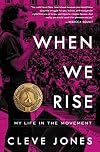
Contemplate a life rich in youth, health, friends, laughter, experiences. Now imagine any of the following happening to you: Candidiasis. Cryptococcosis. Pneumocystis carinii. Lymphoma. Toxoplasmosis. Cytomegalovirus. Cryptosporidiosis. Mycobacterium avium complex. Kaposi’s sarcoma.
Seriously. Imagine it.
And finally, reckon with the discovery that it is happening to friend after friend and that Medicine offers palliative consolations at best, the illness itself regarded as the collateral show more consequence of who you are. It is sickness, it is stigma, it is the destroyer of worlds in which you and your friends breathed.
Now you are prepared to read When We Rise: My Life in the Movement, a memoir by Cleve Jones.
The book is partly the story of how the gay community came to make itself visible to America. It’s also a story of how at least some individuals discovered for themselves a way to find joy. These breakthroughs were accompanied by losses of a scope not commonly experienced outside war, famine, or tyranny.
This memoir is a journey in four parts: The hidden anxieties of childhood—The awakenings and excitements of young adulthood—The intrusion of tragedies—The responses of an activist. While the account of Cleve’s lively young adulthood took some effort to traverse (if you’re keen to hear about his sexual adventures you’ll feel differently) the rest was mostly absorbing.
Near the end of the 1970s the author’s youthful interest in political action was intensified by the impact of the murders of San Francisco politicians Harvey Milk and George Moscone, and then again by the arrival of a syndrome later named AIDS. Some of the public and some politicians claimed that victims of AIDS weren’t victims but instead persons receiving the wrath God’s justice warranted, and seemed even to celebrate the opportunity to believe this was true. It is irony, then, that by helping unmask the relative anonymity of gay people in America that had existed, the crisis caused by AIDS contributed to changes that ultimately led to authorizing gay marriage.
What created this transformation? It was ignited by the work of activists, among whom was the author, originator of the AIDS Memorial Quilt. The last parts of Cleve Jones’s story focus on this work. The rising was made possible first by individual courage and then by the urgency accompanying the grief and desperation and anger brought by AIDS. It was a difficult fight they fought and fight still. When We Rise is one way to know it better, and with respect. show less
Seriously. Imagine it.
And finally, reckon with the discovery that it is happening to friend after friend and that Medicine offers palliative consolations at best, the illness itself regarded as the collateral show more consequence of who you are. It is sickness, it is stigma, it is the destroyer of worlds in which you and your friends breathed.
Now you are prepared to read When We Rise: My Life in the Movement, a memoir by Cleve Jones.
The book is partly the story of how the gay community came to make itself visible to America. It’s also a story of how at least some individuals discovered for themselves a way to find joy. These breakthroughs were accompanied by losses of a scope not commonly experienced outside war, famine, or tyranny.
This memoir is a journey in four parts: The hidden anxieties of childhood—The awakenings and excitements of young adulthood—The intrusion of tragedies—The responses of an activist. While the account of Cleve’s lively young adulthood took some effort to traverse (if you’re keen to hear about his sexual adventures you’ll feel differently) the rest was mostly absorbing.
Near the end of the 1970s the author’s youthful interest in political action was intensified by the impact of the murders of San Francisco politicians Harvey Milk and George Moscone, and then again by the arrival of a syndrome later named AIDS. Some of the public and some politicians claimed that victims of AIDS weren’t victims but instead persons receiving the wrath God’s justice warranted, and seemed even to celebrate the opportunity to believe this was true. It is irony, then, that by helping unmask the relative anonymity of gay people in America that had existed, the crisis caused by AIDS contributed to changes that ultimately led to authorizing gay marriage.
What created this transformation? It was ignited by the work of activists, among whom was the author, originator of the AIDS Memorial Quilt. The last parts of Cleve Jones’s story focus on this work. The rising was made possible first by individual courage and then by the urgency accompanying the grief and desperation and anger brought by AIDS. It was a difficult fight they fought and fight still. When We Rise is one way to know it better, and with respect. show less
3 1/2 stars: Good.
---------------------
(Ghost written) autobiography of Cleve Jones, gay activist and founder of the AIDS quilt.
I've read part of Cleve's story before, as his is interlinked with that of Harvey Milk and is profiled in Randy Shilt's exemplary "And the band played on" about the onset of AIDS in San Francisco.
The salient points are these: Jones was an acolyte of Harvey Milk, and helped Milk get elected to the SF city council. When Milk was assassinated, Jones picked up the show more mantle and began his own political aspirations when AIDS hit San Francisco with a vengeance.
He got the idea for the AIDS quilt from a "quilt" of signs at a protest for Milk. He wanted the squares to be 6 feet by 3 feet--because that's the approximate size of a grave. it is impossible to see the quilt without realising that each square represents a real, vibrant person with loves, fears, hopes, dreams, that was killed by AIDS.
The most poignant parts of the book were the true stories of people who made quilt squares for their loved ones. Often these survivors were parents who had never acknowledged/ accepted their loved ones' homosexuality (or never even knew), or the partner of the deceased, who knew that their time was coming soon. Cleve fought to make AIDS be acknowledged as a human disease not a gay disease. It took time, too much time, but they were successful. And like AIDS is not a gay disease, this is not a book for gays. It is a human story and as a heterosexual who came of age in the late 80s, I am glad I read it.
Jones discusses the death of his partner of age, and knowing that he would likely succumb. He is open about his struggle with depression as his health becomes worse. He comes quite close to death, but does not acknowledge what happened (obviously the advent of medication) for him to miss the reaper. He was involved in the making of the documentary "Milk" and is still alive today (October 2013).
I saw the AIDS quilt when I was in college and it was very moving. I was inspired to see it again. It will be in Laguna Beach this November, and I intend to see it. show less
---------------------
(Ghost written) autobiography of Cleve Jones, gay activist and founder of the AIDS quilt.
I've read part of Cleve's story before, as his is interlinked with that of Harvey Milk and is profiled in Randy Shilt's exemplary "And the band played on" about the onset of AIDS in San Francisco.
The salient points are these: Jones was an acolyte of Harvey Milk, and helped Milk get elected to the SF city council. When Milk was assassinated, Jones picked up the show more mantle and began his own political aspirations when AIDS hit San Francisco with a vengeance.
He got the idea for the AIDS quilt from a "quilt" of signs at a protest for Milk. He wanted the squares to be 6 feet by 3 feet--because that's the approximate size of a grave. it is impossible to see the quilt without realising that each square represents a real, vibrant person with loves, fears, hopes, dreams, that was killed by AIDS.
The most poignant parts of the book were the true stories of people who made quilt squares for their loved ones. Often these survivors were parents who had never acknowledged/ accepted their loved ones' homosexuality (or never even knew), or the partner of the deceased, who knew that their time was coming soon. Cleve fought to make AIDS be acknowledged as a human disease not a gay disease. It took time, too much time, but they were successful. And like AIDS is not a gay disease, this is not a book for gays. It is a human story and as a heterosexual who came of age in the late 80s, I am glad I read it.
Jones discusses the death of his partner of age, and knowing that he would likely succumb. He is open about his struggle with depression as his health becomes worse. He comes quite close to death, but does not acknowledge what happened (obviously the advent of medication) for him to miss the reaper. He was involved in the making of the documentary "Milk" and is still alive today (October 2013).
I saw the AIDS quilt when I was in college and it was very moving. I was inspired to see it again. It will be in Laguna Beach this November, and I intend to see it. show less
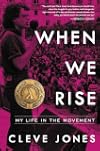
It feels odd to say that as a gay man I have been living with privilege. I strongly believe that my generation of gay men and women take for granted, the battles that were fought and the people who fought them, that have given us this world we take for granted now. Cleve Jones is one of those people we take for granted. This memoir is a glaring portrait of the gay movement that we have forgotten. Whether that was the aim or not, it paints a strong picture of how hard men and women fought to show more give us freedoms we sometimes take for granted. It has been disheartening for me, as I share with friends, that I was reading a memoir by Jones, and very few knew his name. I think it is important for everyone to know his name. In the same way, that he talks about near the end of the memoir, he had been worried people were forgetting who Harvey Milk was, and how wanted to ensure his memory lived on, I think it is important for us to remember not only Harvey, and Cleve, but many of the other people he talks about in the book, and others not mentioned. This book to me, feels very important. It serves as a reminder, in a time, where are once again at war for our rights and our lives.
There is a line in the book, where Cleve asks Dustin Lance Black: "What is it like to be part of a generation with no purpose." For years I think, that is what the gay community felt like. We were content with going to the bar, doing drugs, having sex, and shopping for clothes. It could be argued that movies like Milk, and the battle over Prop 8 awakened something within the community, and the battle for marriage sparked once again a sense of community and movement. And now, during this movement we must look to the leaders who forged the path, like Jones, to help us pave a future.
It's true this memoir is not only about gay rights and the movement Cleve was apart of. It was also about Cleve's life, both before he knew Harvey Milk and after.
My favorite parts of the books are the times when he reflects on the way he fantasized about San Fransisco and how he dreamed of escaping there, and then when he did, the way he paints the city during his youth. You can feel the love and the nostalgia seeping through the pages. It makes me long for that feeling! I have always dreamed of San Fransisco since I was a teenage and fantasized about living there and walking the streets. This book makes me wish it was still the same city Cleve grew up in.
I will do my best to ensure anyone I can convince, that they should read this, do so. We need to remember these people. We need to remember these stories. They are the foundation that built our movement. We have some big shoes to fill.
It was amazing reading Cleve's story, and he has cemented a place in my heart as one of my heroes. His ending passage resonates, and will stay with me forever; "My generation is disappearing; I want the new generations to know what our lives were like, what we fought for, what we lost, and we won." show less
There is a line in the book, where Cleve asks Dustin Lance Black: "What is it like to be part of a generation with no purpose." For years I think, that is what the gay community felt like. We were content with going to the bar, doing drugs, having sex, and shopping for clothes. It could be argued that movies like Milk, and the battle over Prop 8 awakened something within the community, and the battle for marriage sparked once again a sense of community and movement. And now, during this movement we must look to the leaders who forged the path, like Jones, to help us pave a future.
It's true this memoir is not only about gay rights and the movement Cleve was apart of. It was also about Cleve's life, both before he knew Harvey Milk and after.
My favorite parts of the books are the times when he reflects on the way he fantasized about San Fransisco and how he dreamed of escaping there, and then when he did, the way he paints the city during his youth. You can feel the love and the nostalgia seeping through the pages. It makes me long for that feeling! I have always dreamed of San Fransisco since I was a teenage and fantasized about living there and walking the streets. This book makes me wish it was still the same city Cleve grew up in.
I will do my best to ensure anyone I can convince, that they should read this, do so. We need to remember these people. We need to remember these stories. They are the foundation that built our movement. We have some big shoes to fill.
It was amazing reading Cleve's story, and he has cemented a place in my heart as one of my heroes. His ending passage resonates, and will stay with me forever; "My generation is disappearing; I want the new generations to know what our lives were like, what we fought for, what we lost, and we won." show less
This is a book I’m reading for my real-world book club, even though I probably won’t be able to attend the meeting when it is discussed. I had seen the miniseries on tv and enjoyed it. I hadn’t been planning to read the book, but I’m glad that I did. It’s excellent.
I’m in the same generation as the author, just a year/school year older than him, and I was in San Francisco, and so much was familiar and brought up memories, and not just within San Francisco, but the country/the show more world: the war, the politics, the music, the books, the culture/counterculture, the restaurants, the streets & neighborhoods, current events & news & crimes of the era, the public figures, the people, and almost all were familiar and some I hadn’t thought about for a long time. Not this particular sub-culture though I knew a fair amount about it at the time. I couldn’t help but think about what was going on in my life month to month, year to year, as he told his story and told what was going on in the greater world.
I wish he hadn’t changed any names because I am wondering about one man I knew back then and wonder whether he was mentioned in the book but with a pseudonym. A couple more guys too.
Cleve Jones is so personable, and delivers such great storytelling. I found it hard to put this book down, except at times when painful happenings were being covered, and even then.
The author has had an interesting, eventful life.
Even though the book goes in chronological order, there is quite a bit of repetition, but it wasn’t too distracting or annoying.
At the end does touch on our current situation. As I got toward the end I felt more depressed because of what we’re going through right now, but this account does a good job of having the reader see the big picture and seeing the process needed to make positive changes. It’s hard not to get discouraged though fighting the same old battles over and over and over again. This goes for so many issues!
I already knew so much of what I read, though some of the details toward the end of events, during the 21st century, I didn’t know it all, particularly the infighting/disagreements within different groups in the movement, and they remind me more than a bit of the vegan/animal rights/environmental movements, and I’m hoping maybe we can continue to learn from one another.
My emotions were all over the place as I relived the social and personal aspects of my life over these decades. I found it both fun and painful.
I think the pacing and structure were good. The author explains at the end a change he made in how much of what was covered and I do think the choice was good, even though much of the worst of the AIDS epidemic felt skimmed over to me.
A lot of name dropping but he is entitled! And there are always valid reasons for when he does it!
Highly recommended for those who lived it or witnessed it, who lived during these decades, particularly if readers were young adults in the 70s, and also those who are curious about the period and those who want to understand how history makes our present. Through all times and causes/issues. Recommended also for people who enjoy good coming of age and aging memoirs. show less
I’m in the same generation as the author, just a year/school year older than him, and I was in San Francisco, and so much was familiar and brought up memories, and not just within San Francisco, but the country/the show more world: the war, the politics, the music, the books, the culture/counterculture, the restaurants, the streets & neighborhoods, current events & news & crimes of the era, the public figures, the people, and almost all were familiar and some I hadn’t thought about for a long time. Not this particular sub-culture though I knew a fair amount about it at the time. I couldn’t help but think about what was going on in my life month to month, year to year, as he told his story and told what was going on in the greater world.
I wish he hadn’t changed any names because I am wondering about one man I knew back then and wonder whether he was mentioned in the book but with a pseudonym. A couple more guys too.
Cleve Jones is so personable, and delivers such great storytelling. I found it hard to put this book down, except at times when painful happenings were being covered, and even then.
The author has had an interesting, eventful life.
Even though the book goes in chronological order, there is quite a bit of repetition, but it wasn’t too distracting or annoying.
At the end does touch on our current situation. As I got toward the end I felt more depressed because of what we’re going through right now, but this account does a good job of having the reader see the big picture and seeing the process needed to make positive changes. It’s hard not to get discouraged though fighting the same old battles over and over and over again. This goes for so many issues!
I already knew so much of what I read, though some of the details toward the end of events, during the 21st century, I didn’t know it all, particularly the infighting/disagreements within different groups in the movement, and they remind me more than a bit of the vegan/animal rights/environmental movements, and I’m hoping maybe we can continue to learn from one another.
My emotions were all over the place as I relived the social and personal aspects of my life over these decades. I found it both fun and painful.
I think the pacing and structure were good. The author explains at the end a change he made in how much of what was covered and I do think the choice was good, even though much of the worst of the AIDS epidemic felt skimmed over to me.
A lot of name dropping but he is entitled! And there are always valid reasons for when he does it!
Highly recommended for those who lived it or witnessed it, who lived during these decades, particularly if readers were young adults in the 70s, and also those who are curious about the period and those who want to understand how history makes our present. Through all times and causes/issues. Recommended also for people who enjoy good coming of age and aging memoirs. show less
Lists
Awards


You May Also Like


Statistics
- Works
- 6
- Members
- 455
- Popularity
- #53,950
- Rating
- 4.2
- Reviews
- 12
- ISBNs
- 14