
Max F. Long (1890–1971)
Author of The Secret Science Behind Miracles
About the Author
Series
Works by Max F. Long
Introduction to Huna: The Workable Psycho-Religious System of the Polynesians (1945) 16 copies, 1 review
Tagged
Common Knowledge
- Birthdate
- 1890-10-26
- Date of death
- 1971-09-23
- Gender
- male
- Occupations
- novelist
New Age author - Organizations
- Huna Research Associates
- Nationality
- USA
- Associated Place (for map)
- USA
Members
Reviews
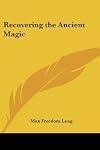
It is easy to dismiss out of hand any suggestion that a real magic exists beyond that variety practiced for our mystification and entertainment on the stage. The author too started from the belief that the universe was made up of matter, force and space, with no room for anything super-physical. For eighteen years he studied magic in its various forms, fourteen of these years being spent in Hawaii. He sought to penetrate beyond the externals of native magic and to discover its basic show more secret.
The evidence he presents is in the form of fifty-one cases given before an imaginary round-table of laymen. The incidents described are based upon either personal participation or accounts received from trusted friends, or are taken form reputable works on the subject of magic.
Magic in all its manifestations is treated in a compelling and personal fashion, and includes fire-walking, spiritualism, levitation, mind reading, instant healing and changes in physical material.
This book, first published in 1936, is now avaliable to challenge a new generation of readers!
Max Freedom Long (1890-1971) was an indefatigable researcher and briliant writer. He spent more than fifty years in recovering the ancient magic of the kahunas. Some of his other books are The Secret Science Behind Miracles, The Secret Science At Work, Growing Into Light, Self-Suggestion, Psychometric Analysis, and The Huna Code in Religions.
Contents
Part One Chapter 1 & 2
Part Two Chapter 1, 2, 3, & 4
Part Three Chapter 1 thru 10 show less
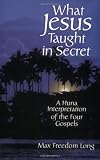
This was among the last works of Max Freedom Long, a teacher who broke the code of the Huna (Hawaiian native religion) and applied it to Christianity, Hinduism, and Ancient Egypt. He was attempting to find the key that would make sense of all religions and religious systems of belief. The amount of research involved in this work covers some 50 years and is scientific in nature as Mr. Long also had an interest in psychology. It remains for the reader to ponder the information and decide for show more himself how to use it to strengthen his own faith and perhaps give more power to his prayers. show less
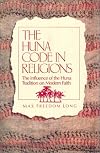
Max Freedom Long was a teacher whose hobby was breaking secret codes. When he went to Hawaii to teach, he looked at a Hawaiian translation of the Book of John and saw a code which he proceeded to dissect. This became his life passion and is poured out into this book where he shares the secrets of the Kahunas, or native shamans, who accepted the Bible along with their native tradition as a mystical religion they lived every day, and enabled them to do what appeared to be miracles of healing. show more The religions of India and China are also compared to the Huna belief system. It was the author's wish that this Huna belief be used in the future as a way of life. show less

""I will tell you a secret," says Max Freedom Long in Short Talk No. 8, "if you will the care to spread it far and wide." He then proceeds to give a hint about the effective use of the huna prayer-action.
"Huna" means secret in the Hawaiian language, and it was Max Freedom Long who uncovered the secrets of the ancient kahunas and made them known to the world through his many books and bulletins.
As groups were formed for the study and practice of the Huna system, Max Long provided study show more materials in the form of taped lectures. The first series was in the mid-1950's, only one of which has survived. It is an excellent general discourse on "The Need for Understanding and Using Huna" (1957). In the early 1960's another series of huna lectures was made on tape, numbering twelve in all. It was found that tapes of forty-five minutes or an hour were too long for group listening, but were excellent for individual study. And so, revisions were begun and nine short talks of about twenty minutes each were completed.
It is these short talks that are transcribed for you here.
Max Freedom Long speaks informally to his students about the Ten Elements of Man. As we "listen in" we hear theories and speculations on the origin of man and of the Huna system. But, he always comes back to the Ten Elements--the three selves with their "shadowy" bodies, three greades of vital force, and the physical body. And always he speaks i practical terms on the use of the huna concepts.
Huna students of today will find these discussions as helpful now as they were when they were first made nearly a decade ago.--Dr. E. Otha Wingo show less
"Huna" means secret in the Hawaiian language, and it was Max Freedom Long who uncovered the secrets of the ancient kahunas and made them known to the world through his many books and bulletins.
As groups were formed for the study and practice of the Huna system, Max Long provided study show more materials in the form of taped lectures. The first series was in the mid-1950's, only one of which has survived. It is an excellent general discourse on "The Need for Understanding and Using Huna" (1957). In the early 1960's another series of huna lectures was made on tape, numbering twelve in all. It was found that tapes of forty-five minutes or an hour were too long for group listening, but were excellent for individual study. And so, revisions were begun and nine short talks of about twenty minutes each were completed.
It is these short talks that are transcribed for you here.
Max Freedom Long speaks informally to his students about the Ten Elements of Man. As we "listen in" we hear theories and speculations on the origin of man and of the Huna system. But, he always comes back to the Ten Elements--the three selves with their "shadowy" bodies, three greades of vital force, and the physical body. And always he speaks i practical terms on the use of the huna concepts.
Huna students of today will find these discussions as helpful now as they were when they were first made nearly a decade ago.--Dr. E. Otha Wingo show less
You May Also Like


Statistics
- Works
- 27
- Members
- 464
- Popularity
- #53,000
- Rating
- 3.5
- Reviews
- 14
- ISBNs
- 63
- Languages
- 2