
Brian Attebery
Author of The Norton Book of Science Fiction: North American Science Fiction, 1960-1990
About the Author
Image credit: Idaho State University
Works by Brian Attebery
The Norton Book of Science Fiction: North American Science Fiction, 1960-1990 (1993) — Editor — 345 copies, 6 reviews
Journal of the fantastic in the arts 3 copies
Associated Works
Hainish Novels and Stories, Volume One: Rocannon's World / Planet of Exile / City of Illusions / The Left Hand of Darkness / The Dispossessed / Stories (2017) — Editor — 319 copies, 5 reviews
Hainish Novels and Stories, Volume Two: The Word for World Is Forest / Stories / Five Ways to Forgiveness / The Telling (2017) — Editor — 282 copies, 2 reviews
Ursula K. Le Guin: The Hainish Novels and Stories [Library of America Boxed Set] (2017) — Editor — 271 copies, 2 reviews
Daughters of Earth: Feminist Science Fiction in the Twentieth Century (2006) — Contributor — 188 copies, 6 reviews
Five Novels : The Lathe of Heaven / The Eye of the Heron / The Beginning Place / Searoad / Lavinia (2024) — Editor — 123 copies
One Earth, One People: The Mythopoeic Fantasy Series of Ursula K. Le Guin, Lloyd Alexander, Madeleine L'engle, Orson Scott Card (2008) — Foreword — 35 copies, 2 reviews
Queering Faith in Fantasy Literature: Fantastic Incarnations and the Deconstruction of Theology (Perspectives on Fantasy) (2022) — Series Editor — 7 copies
reflections on the fantastic: selected essays from the fourth international conference on the fantastic in the arts (1986) — Contributor — 5 copies
Mythlore, Issue 56. Vol.15, No.2. — Contributor — 2 copies
Tagged
Common Knowledge
- Canonical name
- Attebery, Brian
- Legal name
- Attebery, Brian Leonard
- Birthdate
- 1951-12-08
- Gender
- male
- Education
- Brown University (PhD | American Civilization)
Albertson College of Idaho (BA) - Occupations
- English professor
writer - Organizations
- Idaho State University
- Awards and honors
- SFRA Pilgrim Award (2009)
IAFA Distinguished Scholarship (1991) - Nationality
- USA
- Birthplace
- Ontario, Oregon, USA
- Places of residence
- Ontario, Oregon, USA (birth)
- Associated Place (for map)
- Ontario, Oregon, USA
Members
Reviews

This is an odd book; one can tell that as soon as you look at the table of contents. There are not many familiar names or familiar stories here. I think this would be okay if it were marketed as Science Fiction Stories Liked by Le Guin and Attebery, however, it's supposedly The Norton Book of Science Fiction, an overview of an entire genre. The back cover trumpets it as suitable for use in schools, but I think you'd be better off with, say, The Science Fiction Hall of Fame, Volume One if you show more want a chunky anthology that gives an overview of the genre. I don't think an overview has to be historically comprehensive, it just has to cover the range of subforms the genre can take, so the subtitle of "North American Science Fiction, 1960-1990" isn't necessarily limiting even if it is arbitrary. But this feels to me like a limited slice of what science fiction can do.
I guess it shouldn't surprise anyone that Le Guin's taste in sf is literary. That's perfectly fine by me, as I like literary sf, and Le Guin is my joint favorite sf writer. What does surprise me from the author of the Hainish cycle is that it's very Earthbound. Very few stories here take place in space. I think that's what makes it feel limited: sf's ability to imagine other worlds and future times is very underrepresented here. There are times this book feels very insular. It's hard to imagine handing this to a literary sf neophyte and having them come away wowed at the possibilities the genre offers.
Random thoughts on random stories:
So, it's definitely got some interesting stuff going on, and there are stories I would revisit, but on the whole, there are definitely better entries into the genre of Honking Big SF Anthologies than this one. show less
I guess it shouldn't surprise anyone that Le Guin's taste in sf is literary. That's perfectly fine by me, as I like literary sf, and Le Guin is my joint favorite sf writer. What does surprise me from the author of the Hainish cycle is that it's very Earthbound. Very few stories here take place in space. I think that's what makes it feel limited: sf's ability to imagine other worlds and future times is very underrepresented here. There are times this book feels very insular. It's hard to imagine handing this to a literary sf neophyte and having them come away wowed at the possibilities the genre offers.
Random thoughts on random stories:
- "The Handler" by Damon Knight (1960): This felt very old-school to me, a short story constructed around a sort of Twilight Zone-y concept of a man who operates a human suit. But it's more than just a twist, it tells us something about ourselves in that best sfnal way, so I ended up liking it a lot despite the fact there's not a whole lot to it. (Kind of an odd choice to begin the collection, though, but I guess that's chronological order for you.)
- "High Weir" by Samuel R. Delany (1968): I really enjoyed this, a tale of explorers on Mars where an encounter with an ancient, dead civilizations ends up unsettling the minds of one of the explorers. I am always meaning to read some Delany.
- "Day Million" by Frederick Pohl (1969): This is one of the few stories (I think just four?) in the book that I'd read before (in this case, in Ascent of Wonder, a collection it definitely did not belong in). I enjoyed it there and enjoyed it here, a very weird story of romance.
- "The Women Men Don't See" by James Tiptree, Jr. (1973): Justly a classic. My second time reading it, and I still quite enjoyed it. Cleverly written from the perspective of a male protagonist where you have to read against what he says to sympathize with the female characters.
- "Schrödinger's Plague" by Greg Bear (1982): A sort of goofy sf thought experiment about a disease that may or may not exist, but clever enough and well told enough (it's a found documents story) to get away with it.
- "Snow" by John Crowley (1985): A man accesses the life experiences of his dead wife, which had been recorded completely. There's a lot of stories here about people flitting into the lives of the dead, I think, actually, but this is one of the better ones. They didn't exactly love each other, which makes it more poignant.
- "The Brains of Rats" by Michael Blumlein (1986): This was a dark, disturbing story, of a self-hating male feminist scientist. I wouldn't say I loved it, but I did think it was executed with great skill.
- "We See Things Differently" by Bruce Sterling (1989): In a future where America is no longer a dominant world power, a Muslim Egyptian journalist interviews a popular rock star. This did absolutely nothing for me, and I'm not sure what the point was, even with the twist at the end.
- "Half-Life" by Paul Preuss (1989): This is perhaps a typical weak story in some ways, one I wanted to like but couldn't never quite unlock. Something something Marie Curie, but I'd be damned if I could tell you what, and I think how the story is told gets in the way of whatever effect the writer was trying to achieve.
- "And the Angels Sing" by Kate Wilhelm (1990): Perhaps unfairly, you could say this was like a lot of stories in the volume: something fantastic enters into the lives of humdrum people. That said, I did quite enjoy it, as Wilhelm draws character sharply and has a knack for the uncanny and the weird. A reporter who pushes everyone away suddenly finds an alien and has to figure out what to do, along with a photographer who doesn't like him very much.
So, it's definitely got some interesting stuff going on, and there are stories I would revisit, but on the whole, there are definitely better entries into the genre of Honking Big SF Anthologies than this one. show less
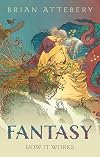
2/5
Dense and academic in the worst ways.
I'm seeming to not enjoy speeches that a writer turns into a book. I didn't much enjoy [b:On Writers and Writing|22747912|On Writers and Writing|Margaret Atwood|https://i.gr-assets.com/images/S/compressed.photo.goodreads.com/books/1407106119l/22747912._SY75_.jpg|2210985] by Margaret Atwood either, but I preferred how she brought up the topics. She feels more conversational, while this book felt dense and academic, like it was part of some report. show more
There's interesting things in there, but it's too hard for me to slog through it. This would probably be much better as a talk, which is what they were originally. I could absorb all of this if I was in a lecture hall and not sitting reading it.
Didn't work for me and I don't think I'll give it a second chance. The cover really sold me, and he's obviously respected in the Fantasy community, but I don't like his delivery. show less
Dense and academic in the worst ways.
I'm seeming to not enjoy speeches that a writer turns into a book. I didn't much enjoy [b:On Writers and Writing|22747912|On Writers and Writing|Margaret Atwood|https://i.gr-assets.com/images/S/compressed.photo.goodreads.com/books/1407106119l/22747912._SY75_.jpg|2210985] by Margaret Atwood either, but I preferred how she brought up the topics. She feels more conversational, while this book felt dense and academic, like it was part of some report. show more
There's interesting things in there, but it's too hard for me to slog through it. This would probably be much better as a talk, which is what they were originally. I could absorb all of this if I was in a lecture hall and not sitting reading it.
Didn't work for me and I don't think I'll give it a second chance. The cover really sold me, and he's obviously respected in the Fantasy community, but I don't like his delivery. show less
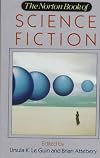
The blurb is wrong, it's not comprehensive. As the subtitle and intro. make clear: English, North America, 1960 to 1990, focus on shorter stories (under 30 pp) to get as many in as possible, careful omission of fantasy (though it does have some stories that have strong elements of fantasy and horror).
I only skimmed the intro. but it would be interesting for scholars. I appreciate the note that though the stories are arranged by date, a history is not intended. And the note that the editors show more 'gave themselves permission to omit anything "seminal" (or "ovular")...' but not the fact that it's not clear exactly what they were going for besides 'at least one of us liked it very much and none of us disliked it' for each nomination.
I am def. leery. There's very little by LeGuin that I actually 'like', or by Fowler, and I've never heard of that other guy. A "Norton" book of 869 pp. seems likely to be of some scholarly bent, protestations against "important" or "seminal" to the contrary. We'll see how many of these I actually like. And how many I already know. And how many I think should be in a Norton anthology. ;)
Anyway. I also find it interesting that the first story is by Damon Knight, best known as an editor.
---
Making progress. Not having much fun nor being wowed at all until "High Weir" by [a:Samuel R. Delany|49111|Samuel R. Delany|https://images.gr-assets.com/authors/1516722468p2/49111.jpg], which is giving me something to chew on, to puzzle over. But in a good way... many of the earlier titles were experimental in a showoff way and annoyingly puzzling.
---
Got better for awhile, then got weird again, and uglier. Reactions to the Vietnam War are not surprising, but not what I want to read these days. I even have skimmed a few, skipped one or two.
But reading the whole book carefully does show that the editors are women. Many of the stories are by authors, and about subjects, not often anthologized in other books I've read. They're not all that different, and there's no reason they shouldn't be familiar to readers of classic SF shorts... but there's a flavor that makes them special. I'm glad the editors sought them out. And I'm very glad I'm reading this, whether or not I can actually say that I'm 'enjoying' it or am getting leads to more authors.
And nearer the end there's a masterpiece, [a:Connie Willis|14032|Connie Willis|https://images.gr-assets.com/authors/1529284935p2/14032.jpg]'s anti-war story, set in WWI, based on real history, "Schwarzchild's Radius." I've read a fair bit by her, but never seen this elsewhere... have you?
There are a couple of well-intentioned but exploitive stories, too. #OwnVoices is what matters, we've finally realized, and so I can't buy into White guys writing anthropologically about real people from indigenous cultures. I did skim those very lightly. Otoh, [a:Phyllis Gotlieb|74090|Phyllis Gotlieb|https://images.gr-assets.com/authors/1250048333p2/74090.jpg] and [a:Diane Glancy|138814|Diane Glancy|https://images.gr-assets.com/authors/1411268219p2/138814.jpg] are worthy of further exploration for 'diverse' sf reading.
---
There are several other stories that I'd recommend individually, but I'm not going to go through this one at a time. There are too many, and besides, your taste might not match mine. If you want a big collection of quality SF shorts, many of which you're likely to enjoy, I recommend this. Yes, even now. One thing the editors mostly got right is that they (consciously? luckily?) chose stories that hold up well, even decades later. show less
I only skimmed the intro. but it would be interesting for scholars. I appreciate the note that though the stories are arranged by date, a history is not intended. And the note that the editors show more 'gave themselves permission to omit anything "seminal" (or "ovular")...' but not the fact that it's not clear exactly what they were going for besides 'at least one of us liked it very much and none of us disliked it' for each nomination.
I am def. leery. There's very little by LeGuin that I actually 'like', or by Fowler, and I've never heard of that other guy. A "Norton" book of 869 pp. seems likely to be of some scholarly bent, protestations against "important" or "seminal" to the contrary. We'll see how many of these I actually like. And how many I already know. And how many I think should be in a Norton anthology. ;)
Anyway. I also find it interesting that the first story is by Damon Knight, best known as an editor.
---
Making progress. Not having much fun nor being wowed at all until "High Weir" by [a:Samuel R. Delany|49111|Samuel R. Delany|https://images.gr-assets.com/authors/1516722468p2/49111.jpg], which is giving me something to chew on, to puzzle over. But in a good way... many of the earlier titles were experimental in a showoff way and annoyingly puzzling.
---
Got better for awhile, then got weird again, and uglier. Reactions to the Vietnam War are not surprising, but not what I want to read these days. I even have skimmed a few, skipped one or two.
But reading the whole book carefully does show that the editors are women. Many of the stories are by authors, and about subjects, not often anthologized in other books I've read. They're not all that different, and there's no reason they shouldn't be familiar to readers of classic SF shorts... but there's a flavor that makes them special. I'm glad the editors sought them out. And I'm very glad I'm reading this, whether or not I can actually say that I'm 'enjoying' it or am getting leads to more authors.
And nearer the end there's a masterpiece, [a:Connie Willis|14032|Connie Willis|https://images.gr-assets.com/authors/1529284935p2/14032.jpg]'s anti-war story, set in WWI, based on real history, "Schwarzchild's Radius." I've read a fair bit by her, but never seen this elsewhere... have you?
There are a couple of well-intentioned but exploitive stories, too. #OwnVoices is what matters, we've finally realized, and so I can't buy into White guys writing anthropologically about real people from indigenous cultures. I did skim those very lightly. Otoh, [a:Phyllis Gotlieb|74090|Phyllis Gotlieb|https://images.gr-assets.com/authors/1250048333p2/74090.jpg] and [a:Diane Glancy|138814|Diane Glancy|https://images.gr-assets.com/authors/1411268219p2/138814.jpg] are worthy of further exploration for 'diverse' sf reading.
---
There are several other stories that I'd recommend individually, but I'm not going to go through this one at a time. There are too many, and besides, your taste might not match mine. If you want a big collection of quality SF shorts, many of which you're likely to enjoy, I recommend this. Yes, even now. One thing the editors mostly got right is that they (consciously? luckily?) chose stories that hold up well, even decades later. show less
"The House the Blakeneys Built," by Avram Davidson (1965): 8.75
- Ends formulaically and violently, although hasn't been quite prefigured this violent turn in them (save, maybe, their continuing anger at the members who had apparently run away earlier). Nonetheless, an effective take on a common trope, but elastic and menacing enough that it could pass as an antecedent for BOTH generation-ship dystopias like Dark Eden AND straight horror scenarios like The Hills Have Eyes.
"Over the River and show more Through the Woods," by Clifford Simak (1965): 7.25
- This story: all in the reveal. these surprise visitor kids from the future, sent by parents to protect them from alien threats. Kind of touching in that instance. But strange. Strange how small some of these older stories are. As small, actually, as a story with this exact plot could be. And there's something to that. But what?
"How Beautiful With Banners," by James Blish (1966): 7
- Ugh, just my fear for the worst of New Wave SFF. Marrying the worst aspects of the genre's convoluted prose impulses — confusing verbosity and syntactical obtuseness for profundity or lyricism — with the worst aspects of the NW's new focus on inferiority and transcendent spiritual experience and sexuality. All of that can create quite a potent brew of nothing. I mean, here’s the whole first paragraph—who really wants to continue after this mess: “Feeling as naked as a peppermint soldier in her transparent film wrap, Dr. Ulla Hillstrøm watched a flying cloak swirl away toward the black horizon with a certain consequent irony. Although nearly transparent itself in the distant dim arc-light flame that was Titan's sun, the fluttering creature looked warmer than what she was wearing, for all that reason said it was at the same minus 316° F. as the thin methane it flew in. Despite the virus space-bubble's warranted and eerie efficiency, she found its vigilance—itself probably as nearly alive as the flying cloak was—rather difficult to believe in, let alone to trust.” The story's conclusions tries its best to salvage the proceedings.
"Nine Hundred Grandmothers," by R.A. Lafferty (1966): 8.75
- I sense some of the Lafferty appeal here. The piece: part of crew on alien world (was the crew needed? what did they add? yes, there was the sense that they were cruel, especially in relation to our protagonist, and their presence implied a sort of colonial/capitalist expoloitation/extraction relationship with the einheimische Bevoelkerung, but this all wasn't necessarily factored in to the sfnal thrust of the story, even if a nice peripheral detail to the nature of this world and its hard-hearted people) discovers local inhabitants do not die and he proceeds to find the original, the first one, to get her (grandmother) to tell him 'how it all started'. The Lafferty absurdism (I can' help but think of Vonnegut and the way his mainstream readers perceive him--meaning, his Prosaic Irony traits are all over these roughly 55 -66 ish stories: chicken or the egg? Do V.'s mainstream audiences see him as such an anamoly because they don't understand the strain from which he comes, or is it the other way around?) is what makes this otherwise (until the last two pages) staid mid-century sf story go. We're well outside the realms of Hard SF by even the standards of the time, and that's all well and good because the point is instead to underscore both the inexplicability of the Question as well as the Desire for the Question, and even the markers of moral action. In effect, he's turned common sfnal assumptions/directions on their head: primarily in the sense that it is not the future, but the past that might tell us the most about science, and that these pasts -- even when they're actually, tangibly reachable (!), as with immortal grandmothers -- are themselves inaccessible and impossible to plainly comprehend. show less
- Ends formulaically and violently, although hasn't been quite prefigured this violent turn in them (save, maybe, their continuing anger at the members who had apparently run away earlier). Nonetheless, an effective take on a common trope, but elastic and menacing enough that it could pass as an antecedent for BOTH generation-ship dystopias like Dark Eden AND straight horror scenarios like The Hills Have Eyes.
"Over the River and show more Through the Woods," by Clifford Simak (1965): 7.25
- This story: all in the reveal. these surprise visitor kids from the future, sent by parents to protect them from alien threats. Kind of touching in that instance. But strange. Strange how small some of these older stories are. As small, actually, as a story with this exact plot could be. And there's something to that. But what?
"How Beautiful With Banners," by James Blish (1966): 7
- Ugh, just my fear for the worst of New Wave SFF. Marrying the worst aspects of the genre's convoluted prose impulses — confusing verbosity and syntactical obtuseness for profundity or lyricism — with the worst aspects of the NW's new focus on inferiority and transcendent spiritual experience and sexuality. All of that can create quite a potent brew of nothing. I mean, here’s the whole first paragraph—who really wants to continue after this mess: “Feeling as naked as a peppermint soldier in her transparent film wrap, Dr. Ulla Hillstrøm watched a flying cloak swirl away toward the black horizon with a certain consequent irony. Although nearly transparent itself in the distant dim arc-light flame that was Titan's sun, the fluttering creature looked warmer than what she was wearing, for all that reason said it was at the same minus 316° F. as the thin methane it flew in. Despite the virus space-bubble's warranted and eerie efficiency, she found its vigilance—itself probably as nearly alive as the flying cloak was—rather difficult to believe in, let alone to trust.” The story's conclusions tries its best to salvage the proceedings.
"Nine Hundred Grandmothers," by R.A. Lafferty (1966): 8.75
- I sense some of the Lafferty appeal here. The piece: part of crew on alien world (was the crew needed? what did they add? yes, there was the sense that they were cruel, especially in relation to our protagonist, and their presence implied a sort of colonial/capitalist expoloitation/extraction relationship with the einheimische Bevoelkerung, but this all wasn't necessarily factored in to the sfnal thrust of the story, even if a nice peripheral detail to the nature of this world and its hard-hearted people) discovers local inhabitants do not die and he proceeds to find the original, the first one, to get her (grandmother) to tell him 'how it all started'. The Lafferty absurdism (I can' help but think of Vonnegut and the way his mainstream readers perceive him--meaning, his Prosaic Irony traits are all over these roughly 55 -66 ish stories: chicken or the egg? Do V.'s mainstream audiences see him as such an anamoly because they don't understand the strain from which he comes, or is it the other way around?) is what makes this otherwise (until the last two pages) staid mid-century sf story go. We're well outside the realms of Hard SF by even the standards of the time, and that's all well and good because the point is instead to underscore both the inexplicability of the Question as well as the Desire for the Question, and even the markers of moral action. In effect, he's turned common sfnal assumptions/directions on their head: primarily in the sense that it is not the future, but the past that might tell us the most about science, and that these pasts -- even when they're actually, tangibly reachable (!), as with immortal grandmothers -- are themselves inaccessible and impossible to plainly comprehend. show less
Lists
Awards


You May Also Like


Associated Authors
Statistics
- Works
- 11
- Also by
- 17
- Members
- 593
- Popularity
- #42,348
- Rating
- 4.2
- Reviews
- 10
- ISBNs
- 26