
Jacob Lawrence (1917–2000)
Author of The Great Migration: An American Story
About the Author
Image credit: Photo by Carl Van Vechten, July 31, 1941 (Library of Congress, Carl Van Vechten Collection, Reproduction number: LC-USZ62-95743)
Works by Jacob Lawrence
Jacob Lawrence 5 copies
Jacob Lawrence, an intimate portrait 2 copies
The Library 2 copies
Street to Mbari 1 copy
The Shoemaker 1 copy
Magic Man 1 copy
Going Home 1 copy
The Builders (Family) 1 copy
A Family 1 copy
Brownstones 1 copy
Tousen Louveti 1 copy
Fruits and Vegetables, 1959 1 copy
The Legend of John Brown 1 copy
The Migration Series, no. 57 1 copy
Associated Works
Black on White: Black Writers on What It Means to Be White (1998) — Contributor — 129 copies, 2 reviews
Tagged
Common Knowledge
- Birthdate
- 1917
- Date of death
- 2000-06-09
- Gender
- male
- Occupations
- artist
professor - Organizations
- University of Washington
- Awards and honors
- National Medal of Arts (1990)
American Academy of Arts and Letters Academy Award (Art, 1953) - Relationships
- Knight, Gwendolyn (wife)
Thomas, Barbara Earl (student/mentee) - Nationality
- USA
- Birthplace
- Atlantic City, New Jersey, USA
- Places of residence
- New York, New York, USA
- Place of death
- Seattle, Washington, USA
- Associated Place (for map)
- USA
Members
Reviews
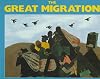
I selected this book to read, even though it appeared to be a children's book, from a Little Free LIbrary because I had just learned about the Great Migration in a recent African American History course. Yes, i was aware of freed black slaves escaping to the north in what I learned as a child in American History courses, but I'm not sure that I ever knew the full extent of this migration. I became interested in learning more about Black history following the Black Lives Matter movement in show more the United States.
I didn't just read this book. I read it aloud to my hisband while we both looked at the pictures, which are beautiful. What especially appealed to me about the pictures were their simplicity, their color palatte, and the story they told. The pictures were all paintings in a series done by the author, himself an artist. These paintings are now in a divided collection between the Metropolitan Museum of Art in New York City and the Phillips Collection in Washington, DC. I do not recall seeing any of these paintings before even though I did visit the Phillips art museum in the past. I have now become more acutely aware of how much I still need to know about my fellow African Americans.
There is a poem at the end of this book by author Walter Dean Myers, a well known children's author. The poem was called "Migration". Yes, it did make me cry. I, being a child of Holocaust survivors from Europe, and my husband, being an immigrant from El Salvador, are only too aware of how much parents do to ensure better lives for their children.
This is a beautiful book in so many ways. It's informative and quick to read. Don't miss it. show less
I didn't just read this book. I read it aloud to my hisband while we both looked at the pictures, which are beautiful. What especially appealed to me about the pictures were their simplicity, their color palatte, and the story they told. The pictures were all paintings in a series done by the author, himself an artist. These paintings are now in a divided collection between the Metropolitan Museum of Art in New York City and the Phillips Collection in Washington, DC. I do not recall seeing any of these paintings before even though I did visit the Phillips art museum in the past. I have now become more acutely aware of how much I still need to know about my fellow African Americans.
There is a poem at the end of this book by author Walter Dean Myers, a well known children's author. The poem was called "Migration". Yes, it did make me cry. I, being a child of Holocaust survivors from Europe, and my husband, being an immigrant from El Salvador, are only too aware of how much parents do to ensure better lives for their children.
This is a beautiful book in so many ways. It's informative and quick to read. Don't miss it. show less
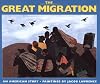
This book chronicles the African-American movement from the south to northern industrial cities after WWI. Not only does it tell how cities like Chicago, Pittsburgh and Detroit appealed to these black migrants, there are over 60 works of art which depict the story. This is a pictorial history with a great story. The guidelines say ages 4-8, but I use this to supplement the concept for 8th graders (great migration) and they love it!
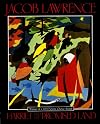
I like the rhythm and flow of the text, it seems like it would be a good read-aloud. While they do help tell the story, some of the illustrations are a little creepy: proportions seem odd and some of the teeth look a bit jagged. I thought it was interesting that despite all of the bright color on the pages, my eye always went to the faces of the African-Americans, a great reminder of who this story (and Harriet Tubman) is all about.
The illustrations for this book are actual paintings titled The Migration of the Negro, total 60 paintings. One half of them are in The New York Museum of Modern Art, the other half are in The Phillips Collection in Washington D.C.
The beautifully stunning images of the Great Migration who occurred the mass migration of blacks seeking to find better jobs, and better opportunities that the south could provide. These free Americans deserved much more than a culture of white domination, wherein show more they still had to walk on the opposite side of the street, still had signs of drinking fountains were also noted Whites...Blacks..
Lawrence's paintings also show the hardship endured in moving from the north to the south. These are strong images are indeed powerful. show less
The beautifully stunning images of the Great Migration who occurred the mass migration of blacks seeking to find better jobs, and better opportunities that the south could provide. These free Americans deserved much more than a culture of white domination, wherein show more they still had to walk on the opposite side of the street, still had signs of drinking fountains were also noted Whites...Blacks..
Lawrence's paintings also show the hardship endured in moving from the north to the south. These are strong images are indeed powerful. show less
Lists
Awards


You May Also Like


Associated Authors
Statistics
- Works
- 40
- Also by
- 3
- Members
- 1,147
- Popularity
- #22,390
- Rating
- 4.0
- Reviews
- 18
- ISBNs
- 38
- Languages
- 1