
Sarah Dunant
Author of The Birth of Venus
About the Author
She began her career writing mysteries, but with her last book, TRANSGRESSIONS (ReganBooks/HarperCollins), graduated to more ambitious, cutting-edge psychological thrillers. Three of her six books, including TRANSGRESSIONS, have been shortlisted for Britain's prestigious Edgar equivalent, the show more Golden Dagger award, and her third novel, FATLANDS, won the Silver Dagger. As a journalist and critic she has worked extensively in print, radio and television, where for many years she hosted her own show on BBC2. She has also edited two books of essays. Dunant lives in London with her family. (Publisher Provided) Sarah Dunant was born Linda Dunant in London, England on August 8, 1950. She read history at Newnham College, Cambridge. Before becoming a full-time author, she worked in theatre, radio and television. Her works include The Birth of Venus, In the Company of the Courtesan, Sacred Hearts, Snow Storms in a Hot Climate, Transgressions, Mapping the Edge, and Blood and Beauty. She is also the author of A Hannah Wolfe Crime Novel series. (Bowker Author Biography) show less
Disambiguation Notice:
Has written two novels with Peter Busby under the pen name of Peter Dunant.
Series
Works by Sarah Dunant
Associated Works
Tagged
Common Knowledge
- Canonical name
- Dunant, Sarah
- Birthdate
- 1950-08-08
- Gender
- female
- Education
- Godolphin and Latymer School, London
University of Cambridge (Newnham College) - Occupations
- broadcaster
novelist
historical novelist - Organizations
- BBC
- Awards and honors
- Walter Scott Prize (2010)
Silver Dagger Award (1993) - Agent
- Clare Alexander (Aitken Alexander Associates)
- Nationality
- UK
- Birthplace
- London, England, UK
- Places of residence
- London, England, UK
Florence, Italy - Map Location
- England, UK
- Disambiguation notice
- Has written two novels with Peter Busby under the pen name of Peter Dunant.
Members
Discussions
Mystery set in renaissance italy-Florence? in Name that Book (April 2012)
Reviews
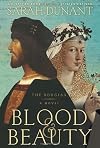
I’ve loved Sarah Dunant’s novels for years, so when I saw that Blood and Beauty was available for review, I jumped at the chance to read it. It tells the story of the Borgia family, specifically Lucrezia, and follows them from Rodrigo Borgia’s ascension to the papacy (and pope Alexander) in 1492 to Lucrezia’s third marriage to Alfonso d’Este in 1502. Rodrigo Borgia’s rise to power was much in keeping with the mores of the time period in which his lived. He even Italianized his show more name from Borja to Borgia. He and his four children, as well as his mistresses, became symbols of the power, splendor, and decadence of the Papal court in the late 15th century.
It’s really, really hard to write fiction about the Borgia family without completely vilifying or vindicating them, but Dunant does a wonderful job of showing both the strengths and weaknesses of these people. They’re ruthless and cunning, but they don’t seem (at first) as bad as history has made them out to be. There’s this wonderful scene about halfway through the novel, where Cesare Borgia gores a boar; the way the scene is described, it serves as a strong metaphor for not only the dangers of the Papal court, but the savageness of Cesare’s character. That’s the kind of fiction I love; the kind of writing that shows you how something is without explicitly saying so. It makes people, places and events seem so much more real. Dunant’s focus is on stripping away the myths in order to reveal the psychological truths that lie beneath the surface.
According to the author’s note at the end, there will be a second novel that will cover the conclusion of Lucrezia’s story. show less
It’s really, really hard to write fiction about the Borgia family without completely vilifying or vindicating them, but Dunant does a wonderful job of showing both the strengths and weaknesses of these people. They’re ruthless and cunning, but they don’t seem (at first) as bad as history has made them out to be. There’s this wonderful scene about halfway through the novel, where Cesare Borgia gores a boar; the way the scene is described, it serves as a strong metaphor for not only the dangers of the Papal court, but the savageness of Cesare’s character. That’s the kind of fiction I love; the kind of writing that shows you how something is without explicitly saying so. It makes people, places and events seem so much more real. Dunant’s focus is on stripping away the myths in order to reveal the psychological truths that lie beneath the surface.
According to the author’s note at the end, there will be a second novel that will cover the conclusion of Lucrezia’s story. show less
 This review was written for LibraryThing Early Reviewers.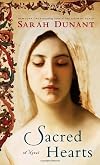
Serafina, the new novice and unwilling bride of Christ has the voice of an angel and seems to be God’s gift to the Convent of Santa Caterina. But she is locked up behind the walls and separated from her one true love because her parents cannot afford to dower more than one daughter. Similar fates are shared by other young aristocratic Italian women of the mid-1500’s as costly marriage contracts leave few options for the bride’s female siblings. When the parental purse runs dry the show more phrase “get thee to a nunnery,” takes on a sinister meaning and Serafina becomes a sacrificial offering to the Catholic Church.
Sarah Dunant’s latest work of historical fiction provides a glimpse behind convent walls where women of God play political games as readily as they pray. Power figures in the cloister include a sister who may be a saint, the abbess leading her flock for God’s glory, the fundamentalist novice mistress, and the vocally gifted Serafina. The most interesting character by far is Sister Zuana (her father was a famous physician - she has hidden his books to use for reference – some books that perhaps include heresy) the nun tasked with caring for the sick.
When Serafina assists in the infirmary Sister Zuana learns more about the novice’s tragic but all too familiar story. The older nun has a crisis of conscious as she begins to understand and care for the younger sister.
Serafina, the heavenly songbird exposes tears and divisions within the walls of the religious community. While her voice brings acclaim beyond the walls of the convent it is outside these same walls that changes within the Catholic Church threaten the sisters of Santa Caterina and their established way of life.
Rich in both historical context and plot SACRED HEARTS offers readers a glimpse behind convent walls and into women’s hearts as some walk their freely chosen path with God while others are sacrificial Brides of Christ. Birth into Italian aristocracy during the 1500’s mandated a marital dowry. If the price for more than one daughter became prohibitive, families merely sent the other daughter(s) to the Church. Christ’s bride price was much less expensive to the familial purse. Dunant’s book is a thought provoking study in the choices families make about their children; the strength, blindness, fragility and healing power of faith; and the complexity found in female relationships. show less
Sarah Dunant’s latest work of historical fiction provides a glimpse behind convent walls where women of God play political games as readily as they pray. Power figures in the cloister include a sister who may be a saint, the abbess leading her flock for God’s glory, the fundamentalist novice mistress, and the vocally gifted Serafina. The most interesting character by far is Sister Zuana (her father was a famous physician - she has hidden his books to use for reference – some books that perhaps include heresy) the nun tasked with caring for the sick.
When Serafina assists in the infirmary Sister Zuana learns more about the novice’s tragic but all too familiar story. The older nun has a crisis of conscious as she begins to understand and care for the younger sister.
Serafina, the heavenly songbird exposes tears and divisions within the walls of the religious community. While her voice brings acclaim beyond the walls of the convent it is outside these same walls that changes within the Catholic Church threaten the sisters of Santa Caterina and their established way of life.
Rich in both historical context and plot SACRED HEARTS offers readers a glimpse behind convent walls and into women’s hearts as some walk their freely chosen path with God while others are sacrificial Brides of Christ. Birth into Italian aristocracy during the 1500’s mandated a marital dowry. If the price for more than one daughter became prohibitive, families merely sent the other daughter(s) to the Church. Christ’s bride price was much less expensive to the familial purse. Dunant’s book is a thought provoking study in the choices families make about their children; the strength, blindness, fragility and healing power of faith; and the complexity found in female relationships. show less
This review was written for LibraryThing Early Reviewers.What an absolutely satisfying, wonderful book. I can never get enough of Sarah Dunant, and Sacred Hearts, her third novel set in Renaissance Italy makes me wish I could read it again for the first time.
Sacred Hearts takes the reader completely into a time when women’s lives were absolutely ruled by men – fathers and husbands on the one hand, and the prevailing rulers on the other. Young girls, particularly in the noble class, had no say in their futures. Their lives could either be lived show more in the home of their husband or in a convent.
Dunant’s two major characters, Serafina and Zuana, both come to convent life unwillingly. Serafina is placed in the convent as punishment because she loves someone other than the man her father picks as her husband, while Zuana entered it years earlier after the death of her father, a learned man who, in teaching his daughter all he knows, renders her too “smart” therefore unmarriageable. How the women deal with their new lives is also very different from each other.
Nevertheless, we soon come to realize that even within the walls of the convent, though governed by the Abbess, the nuns are still subject to the dictates of Rome and that men are still in control and make the decisions about what they can and cannot do, and how much access they are to be allowed to the outside world.
Against this powerful theme, Dunant places the equally powerful themes of love, duty and sisterhood. It is in the clash and balance of these that the novel finds its denouement.
The elegant, tightly crafted plot wound around excellent historical detail and the perfect capacity of the author to show, not tell, allows the reader to feel completely immersed in the life of these women, without feeling swamped by wordy descriptions. Additionally, we are able to feel something for each of the varying characters that Dunant draws for us – their emotions and motivations are strong and we can find in them our own.
I'm certain that Sacred Hearts will appeal to anyone with a love of good historical fiction, as well as to those readers who love well-written characters. show less
Sacred Hearts takes the reader completely into a time when women’s lives were absolutely ruled by men – fathers and husbands on the one hand, and the prevailing rulers on the other. Young girls, particularly in the noble class, had no say in their futures. Their lives could either be lived show more in the home of their husband or in a convent.
Dunant’s two major characters, Serafina and Zuana, both come to convent life unwillingly. Serafina is placed in the convent as punishment because she loves someone other than the man her father picks as her husband, while Zuana entered it years earlier after the death of her father, a learned man who, in teaching his daughter all he knows, renders her too “smart” therefore unmarriageable. How the women deal with their new lives is also very different from each other.
Nevertheless, we soon come to realize that even within the walls of the convent, though governed by the Abbess, the nuns are still subject to the dictates of Rome and that men are still in control and make the decisions about what they can and cannot do, and how much access they are to be allowed to the outside world.
Against this powerful theme, Dunant places the equally powerful themes of love, duty and sisterhood. It is in the clash and balance of these that the novel finds its denouement.
The elegant, tightly crafted plot wound around excellent historical detail and the perfect capacity of the author to show, not tell, allows the reader to feel completely immersed in the life of these women, without feeling swamped by wordy descriptions. Additionally, we are able to feel something for each of the varying characters that Dunant draws for us – their emotions and motivations are strong and we can find in them our own.
I'm certain that Sacred Hearts will appeal to anyone with a love of good historical fiction, as well as to those readers who love well-written characters. show less
Serifina is a young girl who has just unwillingly taken her vows to become a novice in the convent of Santa Caterina. Her family, not able to afford the dowry price for both of their daughters, has decided to marry off the younger, and in turn, giveSerfina over to the service of God. From the moment she steps into the convent, she exhibits extreme rebelliousness and anger the likes of which the nuns at Santa Caterina have never seen. WhenSuora Zuana is charged with her care, the dispensary show more mistress becomes fascinated and disturbed by the girl's furious fervor and vows to make her transition as easy for her as possible. Very soonSerfina begins to calm down, and while the other nuns are grateful and complacent with this change, Zuana becomes suspicious of the rapid change in Serifina's attitude. She is sure there is much more than acceptance and obedience behind the new behavior of the novice. But the secret thatSerifina is keeping is a dangerous one, not only for herself, but for the entire convent. Santa Caterina is going through it's own growing pains as well. The Abbess, MadonnaChaira must constantly balance her sacred duties to her flock with her courting of the outside benefactors that keep the convent solvent as well as quelling the growing tide of sisters who wish to thwart her rule and ultimately replace her. The novel, both intoxicating and lush, peeks behind the convent walls to give a bird's eye view of the daily lives of the women of God, exposing the jealousies, power struggles and alliances that reflect Santa Caterina as an incredibly complex microcosm of Renaissance society.
This was a fabulous read. There was so much feeling in the story and characters that the pages seemed to be brimming with life. In exacting detail, Dunant was able to convey the loneliness and singularity of what a nun's life must be like while also portraying the fierce obedience to tradition and religion that made these women so strong and devout. The atmosphere of the plot was entirely believable, and at times it felt almost claustrophobic to be among these women who shared every aspect of their life with one another, never straying from the convents enclosures. I have long been interested in the aspects, practical and otherwise, of life in a nunnery, and I really feel that the author was able to beautifully convey what life for these women must be like. I was particularly drawn to the depictions of the convent hierarchy and the daily power struggles that went on between the Abbess and the other sisters. There was a deep exploration of the power of various convent factions and the delicacy of governing women from all backgrounds in life.
Serifina's trials were both ensnaring and dramatic, and although I didn't much care for her as a person, I came to understand her motivations and actions, and felt sympathy for her, despite herunlikablity. There was an element in Serifina that I never felt to be fully trustworthy, and even when she was acting in her natural capacity, I felt guarded about believing her motivations. But I liked that. I liked that she was so morally gray at times, and that her behavior was something that one could never calculate. Despite her disagreeableness, there was something about her that made me cheer for her unflagging spirit.
I had a good deal of affinity for Zuana. As the dispensary mistress, she was in charge of all the nursing and medicine making of the convent, and I really liked that Dunant included so much of the earthiness and practicalities of healing in the book. There were some great sections about the procuring of specific herbs and plants for medical use that I felt were very representative of their time, and I would have to say that anytime Zuana was in the dispensary, I was glued to the page. I found Dunant's discussions of ailments and their remidies to be one of the most exemplary aspects of this particular book.
One of the things that I found remarkable about this book were some of the moral choices that the nuns made. Until reading this book, I had believed that a life given to the service of God would be free of the compunction to be self-serving or to have ulterior motives, which is truly not the case. For it wasn't onlySerifina that was hiding in moral grayness. Each nun had her own battles with integrity and ethics, and often they made surprising choices that they felt to be directed by the Almighty, when that was really not the case at all. The story also included a fair a bit about church reform, specifically, the changes that threatened to totally seclude the nuns from outside society, which was a point in history that I was not very familiar with. The pressure that was eventually put on the convents was not only sad, but I feel, unnecessary.
The only gripe I had with the book was the conclusion. I felt that what had been building up through the pages was bound to be a bit more exciting and surprising, but in the end, I felt a bit let down by the book's resolution. It didn't feel entirely believable to me, and that bothered me because until that point the book seemed very realistic and authentic. It was not a terrible ending, and it was fitting, but I felt that it could have been done a little differently.
If you have not yet read a book by Sarah Dunant and wish to, this is the book to read. I have read all of her previous works, and have to say that this one is the best, hands down. This story had just the right amount of drama and a great undercurrent of passion, and I was loathe to read the last page and have it all end for me. There are few books that I move to my permanent collection, but this is definitely one of them. If you are looking for an engrossing read that will keep you thinking and entertained late into the night, you will probably love this book. In particular, those who are fascinated with convent life will really get a lot from it. A great read and highly recommended. show less
This was a fabulous read. There was so much feeling in the story and characters that the pages seemed to be brimming with life. In exacting detail, Dunant was able to convey the loneliness and singularity of what a nun's life must be like while also portraying the fierce obedience to tradition and religion that made these women so strong and devout. The atmosphere of the plot was entirely believable, and at times it felt almost claustrophobic to be among these women who shared every aspect of their life with one another, never straying from the convents enclosures. I have long been interested in the aspects, practical and otherwise, of life in a nunnery, and I really feel that the author was able to beautifully convey what life for these women must be like. I was particularly drawn to the depictions of the convent hierarchy and the daily power struggles that went on between the Abbess and the other sisters. There was a deep exploration of the power of various convent factions and the delicacy of governing women from all backgrounds in life.
Serifina's trials were both ensnaring and dramatic, and although I didn't much care for her as a person, I came to understand her motivations and actions, and felt sympathy for her, despite herunlikablity. There was an element in Serifina that I never felt to be fully trustworthy, and even when she was acting in her natural capacity, I felt guarded about believing her motivations. But I liked that. I liked that she was so morally gray at times, and that her behavior was something that one could never calculate. Despite her disagreeableness, there was something about her that made me cheer for her unflagging spirit.
I had a good deal of affinity for Zuana. As the dispensary mistress, she was in charge of all the nursing and medicine making of the convent, and I really liked that Dunant included so much of the earthiness and practicalities of healing in the book. There were some great sections about the procuring of specific herbs and plants for medical use that I felt were very representative of their time, and I would have to say that anytime Zuana was in the dispensary, I was glued to the page. I found Dunant's discussions of ailments and their remidies to be one of the most exemplary aspects of this particular book.
One of the things that I found remarkable about this book were some of the moral choices that the nuns made. Until reading this book, I had believed that a life given to the service of God would be free of the compunction to be self-serving or to have ulterior motives, which is truly not the case. For it wasn't onlySerifina that was hiding in moral grayness. Each nun had her own battles with integrity and ethics, and often they made surprising choices that they felt to be directed by the Almighty, when that was really not the case at all. The story also included a fair a bit about church reform, specifically, the changes that threatened to totally seclude the nuns from outside society, which was a point in history that I was not very familiar with. The pressure that was eventually put on the convents was not only sad, but I feel, unnecessary.
The only gripe I had with the book was the conclusion. I felt that what had been building up through the pages was bound to be a bit more exciting and surprising, but in the end, I felt a bit let down by the book's resolution. It didn't feel entirely believable to me, and that bothered me because until that point the book seemed very realistic and authentic. It was not a terrible ending, and it was fitting, but I felt that it could have been done a little differently.
If you have not yet read a book by Sarah Dunant and wish to, this is the book to read. I have read all of her previous works, and have to say that this one is the best, hands down. This story had just the right amount of drama and a great undercurrent of passion, and I was loathe to read the last page and have it all end for me. There are few books that I move to my permanent collection, but this is definitely one of them. If you are looking for an engrossing read that will keep you thinking and entertained late into the night, you will probably love this book. In particular, those who are fascinated with convent life will really get a lot from it. A great read and highly recommended. show less
This review was written for LibraryThing Early Reviewers.Lists
Awards


You May Also Like


Associated Authors
Statistics
- Works
- 15
- Also by
- 7
- Members
- 14,546
- Popularity
- #1,578
- Rating
- 3.7
- Reviews
- 551
- ISBNs
- 315
- Languages
- 21
- Favorited
- 35
