
Wei Hui
Author of Shanghai Baby
About the Author
Wei Hui is twenty-seven years old, lives in Shanghai and is at work on her next novel. "Shanghai Baby" is Wei Hui's fourth book, and her first to be published in English. (Bowker Author Biography)
Image credit: Wei Hui
Works by Wei Hui
Practical Encyclopedia of Pregnancy Childbirth (Value Platinum Edition)(Chinese Edition) (2010) 1 copy
drawings of the world history of the world series: United Kingdom (full color version) (1991) 1 copy
ෂැංහයි සොඳුරිය 1 copy
Associated Works
Tagged
Common Knowledge
Members
Reviews
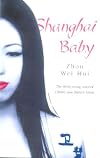
Shanghai Baby (上海寳貝) by Zhou Weihui is the quintessential novel of the modern, middle-class Chinese woman living in the heady days of the early 90s as China underwent massive socio-economic changes.
Semi-autobiographical in nature and with the link between fact and fiction blurred for marketing purposes, Shanghai Baby is replete with brand names, sexualised themes and empty dialogue. Commercialisation and materialism are glamorised to an obscene extent, with the protagonist at every show more opportunity announcing to all the brand name make-up, cars, drinks, music, places etc. she uses and visits. This vapid materialism is compounded by the sexual element of Coco's story - at every opportunity she discusses the superiority of western penises and bemoans the fact her Chinese lover is impotent.
All of this comes together in a heavily commercialised novel that reeks of self-promotion and exhibitionism; sex and material wealth are constantly exploited for commercial profit. Shanghai Baby is merely the culmination of the trend of "Babe Writers", common in the early 90s, whose novels focused on the lives of modern independent women in modern China. However, whatever sociological or literary worth this phenomenon might have had is lost in vapid, empty dialogue, obnoxious and one-dimensional characters, and exploitative writings. Unlike earlier novels by Chinese women, Shanghai Baby has nothing to do with protest, personal growth, or rebellion against social convention; rather it is testimony to the mantra "sex sells".
The only thing modern about this novel is its alternative Shanghai setting populated by artists, writers, and disaffected Generation Y members but ultimately that as well is nothing more than stereotypical hedonism and materialism. show less
Semi-autobiographical in nature and with the link between fact and fiction blurred for marketing purposes, Shanghai Baby is replete with brand names, sexualised themes and empty dialogue. Commercialisation and materialism are glamorised to an obscene extent, with the protagonist at every show more opportunity announcing to all the brand name make-up, cars, drinks, music, places etc. she uses and visits. This vapid materialism is compounded by the sexual element of Coco's story - at every opportunity she discusses the superiority of western penises and bemoans the fact her Chinese lover is impotent.
All of this comes together in a heavily commercialised novel that reeks of self-promotion and exhibitionism; sex and material wealth are constantly exploited for commercial profit. Shanghai Baby is merely the culmination of the trend of "Babe Writers", common in the early 90s, whose novels focused on the lives of modern independent women in modern China. However, whatever sociological or literary worth this phenomenon might have had is lost in vapid, empty dialogue, obnoxious and one-dimensional characters, and exploitative writings. Unlike earlier novels by Chinese women, Shanghai Baby has nothing to do with protest, personal growth, or rebellion against social convention; rather it is testimony to the mantra "sex sells".
The only thing modern about this novel is its alternative Shanghai setting populated by artists, writers, and disaffected Generation Y members but ultimately that as well is nothing more than stereotypical hedonism and materialism. show less
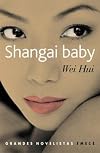
Quería creer que el cuerpo y el corazón de una mujer se pueden separar. Si los hombres podían lograrlo, ¿por qué las mujeres no?» Esta es la historia de Cocó, una joven china aspirante a escritora, atrapada en un triángulo amoroso. Vive con su novio, Tiantian, un joven de una sensibilidad extraordinaria que tiene un grave problema de impotencia y que, a pesar de amar intensamente a Cocó, no puede satisfacerla sexualmente. En una fiesta, Cocó conoce a Mark, un alemán casado, con show more quien iniciará una aventura centrada en la mutua atracción sexual pero que, inevitablemente, se irá desplazando hacia el centro mismo de su ser. En medio del caos emocional, la voz de Cocó nos muestra cómo el amor y el deseo tienen a menudo caminos separados y transmite una inesperada y conmovedora sensación de verdad. Shanghai Baby es también el retrato de la fascinante ciudad de Shanghai en la actualidad. Después de varios libros de éxito que nos han transportado al Oriente de las geishas y sus tradiciones, esta novela nos habla de la vida en la China de hoy. Lírica, inocente, narcisista, apasionada, leal, hedonista, sensible, auténtica, vital, compleja, sincera, sensual, irreverente, frívola y profunda a la vez, Shanghai Baby se ha convertido en un auténtico fenómeno sociocultural y en la referencia de toda una generación de jóvenes chinos, en una novela de culto que afronta con excepcional naturalidad los temas que todavía son tremendos tabús en ese difícil país. Su espectacular acogida de crítica y lectores en Francia, Inglaterra, Italia, Alemana y Japón demuestra una vez más que no hay fronteras para una novela valiente, sincera y rabiosamente contemporánea. show less

Madonna invited us to a retro theme party called Return to Avenue Joffre on the top floor of the high-rise at the corner of Huaihai and Yandang Roads. Avenue Joffre in the 1930s, Huaihai Road today, has long symbolised Shanghai's old dreams. In today's fin-de-siècle, post-colonial mindset, this boulevard - and the bygone era of the revealing traditional dress, the qipao, calendar-girl posters, rickshaws and jazz bands - is fashionable again, like a bow knotted over Shanghai's nostalgic show more heart.
Last year, I read "Red Mandarin Dress" by Qiu Xiaolong, a detective story set in Shanghai in the 1980s, at a time when the whole city seemed to be one vast building building project as China underwent massive social and political changes. "Shanghai Baby" is set in the late 1990s and things couldn't be more different. There are only three or four places in the whole book where I noticed someone saying or doing something that reminded me that they were living in a communist country. Coco and her friends can choose their own careers and change their jobs when they want (unlike the reluctant policeman in "Red Mandarin Dress", who would rather have been a poet), can travel abroad freely, have Western friends and lovers and are most definitely part of a consumer society. Of course China hasn't changed completely, and "Shanghai Baby" was banned in China for its decadent subject matter and being corrupted by Western values.
I found the book interesting from that point of view and I liked the apt quotations that the author had chosen for each chapter, but I didn't really like Coco or care about her tangled love life. show less
Last year, I read "Red Mandarin Dress" by Qiu Xiaolong, a detective story set in Shanghai in the 1980s, at a time when the whole city seemed to be one vast building building project as China underwent massive social and political changes. "Shanghai Baby" is set in the late 1990s and things couldn't be more different. There are only three or four places in the whole book where I noticed someone saying or doing something that reminded me that they were living in a communist country. Coco and her friends can choose their own careers and change their jobs when they want (unlike the reluctant policeman in "Red Mandarin Dress", who would rather have been a poet), can travel abroad freely, have Western friends and lovers and are most definitely part of a consumer society. Of course China hasn't changed completely, and "Shanghai Baby" was banned in China for its decadent subject matter and being corrupted by Western values.
I found the book interesting from that point of view and I liked the apt quotations that the author had chosen for each chapter, but I didn't really like Coco or care about her tangled love life. show less
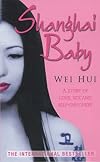
She writes like a disembodied spirit – atmospheric, intimate, sometimes hollow. In this novel, we follow Coco around Shanghai, and into and out of the arms of her two lovers. She maintains a firefly lightness of language and even manages a little tangle of a plot. She does remind me a lot of Anais Nin, darting from observation to sensation, always just slightly surprised.
Lists
Awards

You May Also Like


Associated Authors
Statistics
- Works
- 10
- Also by
- 1
- Members
- 1,064
- Popularity
- #24,196
- Rating
- 3.0
- Reviews
- 22
- ISBNs
- 68
- Languages
- 16
- Favorited
- 1