
David Baddiel
Author of Jews Don’t Count
About the Author
Image credit: Photo: ANDREW CROWLEY
Works by David Baddiel
The Boy Who Got Accidentally Famous: A funny, illustrated children’s book from bestselling David Baddiel (2022) 18 copies
The Boy Who Got Accidentally Famous: the new Bestselling Blockbuster from Baddiel for 2021 (2021) 14 copies
Time For Bed 2 copies
Il desiderio di Dio 1 copy
Juden zählen nicht 1 copy
Vecāku Aģentūra 1 copy
Ovladač lidí 1 copy
Only Children: A funny illustrated story collection for kids from million-copy bestseller David Baddiel (2023) 1 copy
The Secret Purpose 1 copy
History Today [VHS] 1 copy
Associated Works
Tagged
Common Knowledge
- Canonical name
- Baddiel, David
- Legal name
- Baddiel, David
- Birthdate
- 1964-05-28
- Gender
- male
- Education
- Haberdashers' Aske's School for Boys, Hertfordshire, England, UK
University of Cambridge (King's College)
University College London
North West London Jewish Day School - Occupations
- comedian
television presenter - Organizations
- Cambridge Footlights
British Humanist Association (Distinguished Supporter) - Nationality
- USA (birth)
UK - Birthplace
- Troy, New York, USA
- Places of residence
- Willesden, London, England, UK
- Map Location
- UK
Members
Reviews

Jews Count
I have very mixed feelings about this book. It is a topic very close and personal, so this review will be quite long. If you don’t want to read the whole thing, here’s the short version: maybe read this if you are a woke progressive, although I am doubtful it will influence your thinking. Don’t read it if you’re Jewish and proud, because it will just make you angry. If you are a gentile genuinely interested in contemporary anti-semitism, read Dara Horn’s “People Love show more Dead Jews” instead of this one.
I am a decade older than the author, and grew up in New York (and have heard many gentiles say to me “Oh, you’re from Jew York, yuck yuck”). My parents were refugees from Europe who had large swaths of their family murdered by Nazis. Everyone of my childhood friends had parents who were either refugees or camp survivors. I have years of direct experience with Jew hatred, particularly since I grew up Orthodox and wore a kippa. Many times walking the streets of “Jew York”, I was called “hebe”, “dirty Jew” etc. There were universities I didn’t apply too because I knew they didn’t accept many Jews (here’s looking at you Princeton and Brown). I did try Harvard but I guess I exceeded their Jew quota.
I went to Columbia College (their Jew quota was larger, being in Jew York). There I dropped religion. In my senior year I decided to wear a kippa again, to express Jewish pride—not as a religious symbol. A friend who was the student union president of this most liberal university, asked to talk to me in private. He said to me “I don’t understand why you decided to do this, but as a friend I really suggest you reconsider.” Totally surprised and taken aback, I asked why. He said “well, you don’t want to be considered one of them.” My blood ran cold, but I asked him, even though I knew the answer “What do you mean by them?” Without shame he said “Oh you know, loud, pushy, money grubbing” I can go on and on, but the point is Jew hatred and me go way back.
My university education turned me into an old-school follower of Enlightenment values. I am appalled by so-called “progressive” (in my day known as “New Left “) obsession with identity politics. This book is essentially a long whine by the author directed at woke people, begging them to include Jews in the holy inner circle of the oppressed. Since I am neither woke and don’t need to learn about anti-semitism, this book wasn’t written for me. I might be persuaded that perhaps it’s a good thing that one of their own points out to “progressives” just how two-faced, hypocritical and racist they are when it comes to Jews. The author makes some good points. But overall, he totally misunderstands what Jewish pride means and what the appropriate response to Jew hatred should be. He also turns out to behave exactly the same way as those he criticizes.
To fully explain what I mean, here is an extensive quote from Dara Horn’s “People Love Dead Jews” an excellent book covering the same territory as this one, just infinitely wiser, better written, more authentic and true. Her book helped me cleanse the bad taste this book left in my mouth, and clarify what was so awful about it:
“[Bigotry] doesn’t involve ‘intolerance’ or ‘persecution,’ at least not at first. Instead, it looks likes the Jews themselves are choosing to reject their own traditions. It is a form of weaponized shame.
Two distinct patterns of antisemitism can be identified by the Jewish holidays that celebrate triumphs over them: Purim and Hanukkah. In the Purim version of antisemitism, exemplified by the Persian genocidal decrees in the biblical Book of Esther, the goal is openly stated and unambiguous: Kill all the Jews. In the Hanukkah version of antisemitism, whose appearances range from the Spanish Inquisition to the Soviet regime, the goal is still to eliminate Jewish civilization. But in the Hanukkah version, this goal could theoretically be accomplished simply by destroying Jewish civilization, while leaving the warm, de-Jewed bodies of its former practitioners intact.
For this reason, the Hanukkah version of antisemitism often employs Jews as its agents. It requires not dead Jews but cool Jews: those willing to give up whatever specific aspect of Jewish civilization is currently uncool.”
Baddiel fits this description perfectly. Here is what he says about his Jewish identity:
“my Jewish identity is about Groucho Marx, and Larry David, and Sarah Silverman, and Philip Roth, and Seinfeld, and Saul Bellow, and pickled herring, and Passovers in Cricklewood in 1973, and my mother being a refugee from the Nazis, and wearing a yarmulke at my Jewish primary school – and none of that has anything to do with a Middle Eastern country three thousand miles away. And also: Israelis aren’t very Jewish anyway, as far as my relationship with Jewishness is concerned. They’re too macho, too ripped and aggressive and confident. As I say of them – or, to be precise, Lenny, a Jewish-American taxi driver character I invented for my film The Infidel, says of them – ‘Jews without angst, without guilt. So not really Jews at all.”
in other words, being Jewish for Baddiel is all the “cool” things. As for the most “uncool” part of being Jewish these days—particularly for “progressives”—namely Israel, well, Israelis aren’t really Jews at all! Baddiel, who so wants to “count” amongst his “progressive” friends is willing to unashamedly say the largest Jewish community in the world just doesn’t count!
I will quote Horn one more time, because she says far better than I, exactly what Baddiel makes me feel:
“Uncoolness is pretty much Judaism’s brand, which is why cool people find it so threatening—and why Jews who are willing to become cool are absolutely necessary to Hanukkah antisemitism’s success. These ‘converted’ Jews are used to demonstrate the good intentions of the regime—which of course isn’t antisemitic but merely requires that its Jews publicly flush thousands of years of Jewish civilization down the toilet in exchange for the worthy prize of not being treated like dirt, or not being murdered. For a few years. Maybe.” show less
I have very mixed feelings about this book. It is a topic very close and personal, so this review will be quite long. If you don’t want to read the whole thing, here’s the short version: maybe read this if you are a woke progressive, although I am doubtful it will influence your thinking. Don’t read it if you’re Jewish and proud, because it will just make you angry. If you are a gentile genuinely interested in contemporary anti-semitism, read Dara Horn’s “People Love show more Dead Jews” instead of this one.
I am a decade older than the author, and grew up in New York (and have heard many gentiles say to me “Oh, you’re from Jew York, yuck yuck”). My parents were refugees from Europe who had large swaths of their family murdered by Nazis. Everyone of my childhood friends had parents who were either refugees or camp survivors. I have years of direct experience with Jew hatred, particularly since I grew up Orthodox and wore a kippa. Many times walking the streets of “Jew York”, I was called “hebe”, “dirty Jew” etc. There were universities I didn’t apply too because I knew they didn’t accept many Jews (here’s looking at you Princeton and Brown). I did try Harvard but I guess I exceeded their Jew quota.
I went to Columbia College (their Jew quota was larger, being in Jew York). There I dropped religion. In my senior year I decided to wear a kippa again, to express Jewish pride—not as a religious symbol. A friend who was the student union president of this most liberal university, asked to talk to me in private. He said to me “I don’t understand why you decided to do this, but as a friend I really suggest you reconsider.” Totally surprised and taken aback, I asked why. He said “well, you don’t want to be considered one of them.” My blood ran cold, but I asked him, even though I knew the answer “What do you mean by them?” Without shame he said “Oh you know, loud, pushy, money grubbing” I can go on and on, but the point is Jew hatred and me go way back.
My university education turned me into an old-school follower of Enlightenment values. I am appalled by so-called “progressive” (in my day known as “New Left “) obsession with identity politics. This book is essentially a long whine by the author directed at woke people, begging them to include Jews in the holy inner circle of the oppressed. Since I am neither woke and don’t need to learn about anti-semitism, this book wasn’t written for me. I might be persuaded that perhaps it’s a good thing that one of their own points out to “progressives” just how two-faced, hypocritical and racist they are when it comes to Jews. The author makes some good points. But overall, he totally misunderstands what Jewish pride means and what the appropriate response to Jew hatred should be. He also turns out to behave exactly the same way as those he criticizes.
To fully explain what I mean, here is an extensive quote from Dara Horn’s “People Love Dead Jews” an excellent book covering the same territory as this one, just infinitely wiser, better written, more authentic and true. Her book helped me cleanse the bad taste this book left in my mouth, and clarify what was so awful about it:
“[Bigotry] doesn’t involve ‘intolerance’ or ‘persecution,’ at least not at first. Instead, it looks likes the Jews themselves are choosing to reject their own traditions. It is a form of weaponized shame.
Two distinct patterns of antisemitism can be identified by the Jewish holidays that celebrate triumphs over them: Purim and Hanukkah. In the Purim version of antisemitism, exemplified by the Persian genocidal decrees in the biblical Book of Esther, the goal is openly stated and unambiguous: Kill all the Jews. In the Hanukkah version of antisemitism, whose appearances range from the Spanish Inquisition to the Soviet regime, the goal is still to eliminate Jewish civilization. But in the Hanukkah version, this goal could theoretically be accomplished simply by destroying Jewish civilization, while leaving the warm, de-Jewed bodies of its former practitioners intact.
For this reason, the Hanukkah version of antisemitism often employs Jews as its agents. It requires not dead Jews but cool Jews: those willing to give up whatever specific aspect of Jewish civilization is currently uncool.”
Baddiel fits this description perfectly. Here is what he says about his Jewish identity:
“my Jewish identity is about Groucho Marx, and Larry David, and Sarah Silverman, and Philip Roth, and Seinfeld, and Saul Bellow, and pickled herring, and Passovers in Cricklewood in 1973, and my mother being a refugee from the Nazis, and wearing a yarmulke at my Jewish primary school – and none of that has anything to do with a Middle Eastern country three thousand miles away. And also: Israelis aren’t very Jewish anyway, as far as my relationship with Jewishness is concerned. They’re too macho, too ripped and aggressive and confident. As I say of them – or, to be precise, Lenny, a Jewish-American taxi driver character I invented for my film The Infidel, says of them – ‘Jews without angst, without guilt. So not really Jews at all.”
in other words, being Jewish for Baddiel is all the “cool” things. As for the most “uncool” part of being Jewish these days—particularly for “progressives”—namely Israel, well, Israelis aren’t really Jews at all! Baddiel, who so wants to “count” amongst his “progressive” friends is willing to unashamedly say the largest Jewish community in the world just doesn’t count!
I will quote Horn one more time, because she says far better than I, exactly what Baddiel makes me feel:
“Uncoolness is pretty much Judaism’s brand, which is why cool people find it so threatening—and why Jews who are willing to become cool are absolutely necessary to Hanukkah antisemitism’s success. These ‘converted’ Jews are used to demonstrate the good intentions of the regime—which of course isn’t antisemitic but merely requires that its Jews publicly flush thousands of years of Jewish civilization down the toilet in exchange for the worthy prize of not being treated like dirt, or not being murdered. For a few years. Maybe.” show less
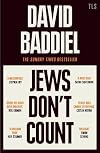
The late Rodney Dangerfield used to quip, “I get no respect.” David Baddiel — like Dangerfield, a Jew turned atheist — makes the same point: Jews get no respect (“don’t count”) when it comes to acknowledgements of discrimination. Anti-Semitism is not treated with the same opprobrium and seriousness as racism against people of color or sexism or homophobia.
I was stunned by this. How could anyone downplay anti-Semitism after the Tree of Life Shooting? The Colleyville synagogue show more hostage crisis? The desecration of Jewish cemeteries? The record high number of anti-Semitic attacks in 2021 (a 34% increase over 2020)? As Baddiel points out with exhaustive examples, downplaying anti-Semitism is done very easily. When reading this essential book, do not overlook the footnotes, which are as instructive as the book. show less
I was stunned by this. How could anyone downplay anti-Semitism after the Tree of Life Shooting? The Colleyville synagogue show more hostage crisis? The desecration of Jewish cemeteries? The record high number of anti-Semitic attacks in 2021 (a 34% increase over 2020)? As Baddiel points out with exhaustive examples, downplaying anti-Semitism is done very easily. When reading this essential book, do not overlook the footnotes, which are as instructive as the book. show less
Exhausting but also thought provoking. Extensively documented discussion of what, in essence, is the hierarchy of victimhood - which groups' historical oppression is more deserving of our condemnationa and repair. Various reasons adduced for the relatively low-level Baddiel sees Jews as having been assigned on this hierarchy - from "I can't tell if you're Jewish just by looking at you" to "you have money and power so you're not really a victim." I found myself wondering the extent to which show more our culture of victimhood requires that the person standing up for the victim feel on some level superior to that victim - how much of a colonialist mindset colors those of us in the oppressor class when we decry the historical mistreatment of other groups. show less

I'd never heard of the author before reading the book, apparently he's a fairly well-known British comedian and public figure. The book was clearly quite personal to him, but he manages to temper his fear and outrage with appropriate doses of humour. It was also nice to get a different perspective from the typical American-centric one that I normally see.
He does a good job of describing the double-standard amongst the progressive/woke left regarding antisemitism and other forms of racism show more and bigotry. Statements that would be roundly condemned if applied to any other group are routinely accepted when directed at Jews. He focuses on social media and the entertainment world, pointing out that these days there is outrage when a white actor is cast to play an Asian or POC character, but no one makes a peep when non-Jews play Jewish characters, even when they bring in disgusting stereotypes to the role. He also points out the hypocrisy of cancelling people like J.K. Rowling for their offensive tweets, but not holding people like Alice Walker who have made even more offensive antisemitic statements to account.
Where he lost me is on his seemingly contradictory position on Israel. He rightly rejects the idea that diaspora Jews should be held accountable to the policies of the Israeli government, but then takes it a step too far. Although he proudly touts his connection to the Jewish people (now and throughout history), somehow that doesn't extend to the Jews living in the actual Jewish nation, which he doesn't care about any more than Argentina or Nepal. It's a bizarre and troubling disconnect that undermines a lot of standing as someone professing to combat antisemitism. show less
He does a good job of describing the double-standard amongst the progressive/woke left regarding antisemitism and other forms of racism show more and bigotry. Statements that would be roundly condemned if applied to any other group are routinely accepted when directed at Jews. He focuses on social media and the entertainment world, pointing out that these days there is outrage when a white actor is cast to play an Asian or POC character, but no one makes a peep when non-Jews play Jewish characters, even when they bring in disgusting stereotypes to the role. He also points out the hypocrisy of cancelling people like J.K. Rowling for their offensive tweets, but not holding people like Alice Walker who have made even more offensive antisemitic statements to account.
Where he lost me is on his seemingly contradictory position on Israel. He rightly rejects the idea that diaspora Jews should be held accountable to the policies of the Israeli government, but then takes it a step too far. Although he proudly touts his connection to the Jewish people (now and throughout history), somehow that doesn't extend to the Jews living in the actual Jewish nation, which he doesn't care about any more than Argentina or Nepal. It's a bizarre and troubling disconnect that undermines a lot of standing as someone professing to combat antisemitism. show less
Lists
Awards


You May Also Like


Associated Authors
Statistics
- Works
- 42
- Also by
- 5
- Members
- 2,248
- Popularity
- #11,403
- Rating
- 3.5
- Reviews
- 37
- ISBNs
- 211
- Languages
- 10