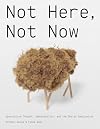
An excellent manual for operating one's imagination. This is both intellectual (based in close reading of relevant academics) and practical (offering the reader useful tools for inventing strange ideas). I also believe that Dunne and Raby have intentions aligned with my own hopes that the world can be changed, or extended, in such a way that all people (or intermediately, more people) can at all times (or intermediately, more often) give and receive dignity and compassion.
I really like this book.
I really like this book.
The basic thesis is that it is valuable to think in other-than-linear, other-than-linguistic ways, and more generally to think in ways that are other-than. I generally affirm this, and I was of course impressed by the book's illustration, but I generally found it unmemorable. I do not, for instance, recall it introducing new ideas.
This is an odd book. It's a collection of blog posts, or of stories posted to blogs. It's fiction targeting the idea of "hyperstition," that being that unreal or nonexistent things can be brought about by our thinking about them. While clearly this is feasible for some "things" (e.g., yet-unthought thoughts), here it forms a justification for some truly bizarre fiction. I did not find it very coherent, but its thematic objects were of interest. It is strongly connected to Nick Land, a philosopher who has worked and is working to push humanity to destruction. It is highly pessimistic. I do not recommend it, generally speaking, though it is not an outright affirmation of fascist or capitalist accelerationism.
I found this to be neither unlikeable nor entirely what I was after. I was not able to tie the story to the ideas I am struggling with. This is a short, readable book.
I understand that the ideas Catren wishes to convey are very abstract and that the goal of a "wordless daydream" is in many ways antithetical to communication through literature, but I still feel very reasonable in complaining about Pleromatica's presentation. It is separated into two entirely unbroken sections of text with very little structure (logical progression of arguments or even description of which ideas shall be elaborated before they are) to grab on to.
I can tell that Catren is largely thinking coherent thoughts, and I am deeply intrigued by many of them and wish to know more of his meaning. Unfortunately, they are presented so unclearly that the occasional spots of clarity are the exception rather than the rule; there are moments of lucidity, but much remains obscure.
-edit- I've read another few chunks, and I think I've reached my verdict. There's a lot I like about this, but on the whole I am disappointed. Beyond what I've said so far about clarity, I've read his mathematical sections and I found that his ideas could be expressed much more simply (I don't think you need category theory to say something like "there are many sensible aspects of the real world; many different types of creatures have different sets of sensing capacities, and we can talk about the relationships between these sets, their differences and similarities. This lets us determine also when a thing presents itself inconsistently to two different creatures and when it presents itself show more consistently." The green/yellow bright/dark glossy/matt coin analogy was very helpful, though.
Gabriel Catren, I'd love to talk about your ideas so that I might better understand what you're shooting for. show less
I can tell that Catren is largely thinking coherent thoughts, and I am deeply intrigued by many of them and wish to know more of his meaning. Unfortunately, they are presented so unclearly that the occasional spots of clarity are the exception rather than the rule; there are moments of lucidity, but much remains obscure.
-edit- I've read another few chunks, and I think I've reached my verdict. There's a lot I like about this, but on the whole I am disappointed. Beyond what I've said so far about clarity, I've read his mathematical sections and I found that his ideas could be expressed much more simply (I don't think you need category theory to say something like "there are many sensible aspects of the real world; many different types of creatures have different sets of sensing capacities, and we can talk about the relationships between these sets, their differences and similarities. This lets us determine also when a thing presents itself inconsistently to two different creatures and when it presents itself show more consistently." The green/yellow bright/dark glossy/matt coin analogy was very helpful, though.
Gabriel Catren, I'd love to talk about your ideas so that I might better understand what you're shooting for. show less
Very interesting ideas. I can tell that Ladyman and Ross are truly committed to naturalism and to - inasmuch as may be possible - developing a metaphysics unwarped by the human perspective. They use clearer language than some, but still more dense than I believe is necessary to convey their ideas. They have made a couple of assertions that I find very hard to defend (e.g., that spooky action at a distance is nothing new; if alice tells bob that she'll call at time T if event X has happened, then does not do so, alice has transmitted information to bob superluminally and without energy - I think it is very easy to show that this is a false equivalence, especially since it's not superluminal (bob must wait until alice's lightcone hits him, not just until "time T", to know she didn't call, and energy has most certainly been expended by both parties in preparation for this act and in its realization (alice elaborating the plan, bob considering the entailments of his not having received a call))). Additionally, though this is very common in books of this kind, I am deeply irritated that the argument and discourse with the philosophical community is held in such high priority that it constantly interrupts the authors in conveying their ideas.
Excellent. The twin gulfs - the hard problem and the is/ought barrier - are rendered forever uncrossable. Pairs well with Hilbert and Gödel. Pairs well with distrust of Camus.
I'd dock half a star or something because I'm not a proponent of mass suicide, but I can't do it. The punch is never pulled, the chicken never swerves. Ligotti seems an honest man.
I'd dock half a star or something because I'm not a proponent of mass suicide, but I can't do it. The punch is never pulled, the chicken never swerves. Ligotti seems an honest man.
Came at an opportune time when I was younger. Very pleasant. Smooth ramp into the impossibility of truth. Rereading today has given me more to chew on.
Incredible. Just the Anaximander essay is enough to merit your attention, reader.
Pretty good.
"Kids" struck me as simply gratuitous.
"The Wide, Carnivorous Sky" had excellent cohesion and compelling characters. That said, it was not all that horrific, and its ending was one of the traditional let-downs in horror: the vague suggestion that perhaps the evil lives on, in some abstract form, within the protagonist.
"Kids" struck me as simply gratuitous.
"The Wide, Carnivorous Sky" had excellent cohesion and compelling characters. That said, it was not all that horrific, and its ending was one of the traditional let-downs in horror: the vague suggestion that perhaps the evil lives on, in some abstract form, within the protagonist.

An excellent novel. It regards, of course, a golem and a jinni. It considers them as non-human creatures (though as creatures very human in the workings of their minds) respectively created for and bound to servitude. The plot ultimately hinges on their overcoming the man who created/bound them so that they can lead life as they see fit.
Much of the novel is spent exploring what it would be for a service-oriented creature, a golem, to be suddenly without a master, left to consider and pursue its own priorities. Just as much, it explores what it means for a creature born free and to its own ends, a jinni, to be perpetually bound, kept from its nature, and with no hope of salvation.
The two are of course held in juxtaposition and eventually brought together so as to better understand them by contrast and comparison. Throughout the novel, themes of Judaic and Islamic mysticism are common. Sometimes it reminds me of Milorad Pavic's work.
Much of the novel is spent exploring what it would be for a service-oriented creature, a golem, to be suddenly without a master, left to consider and pursue its own priorities. Just as much, it explores what it means for a creature born free and to its own ends, a jinni, to be perpetually bound, kept from its nature, and with no hope of salvation.
The two are of course held in juxtaposition and eventually brought together so as to better understand them by contrast and comparison. Throughout the novel, themes of Judaic and Islamic mysticism are common. Sometimes it reminds me of Milorad Pavic's work.

Fascinating - still reading and will update this accordingly as I continue, but I see Land as a truly evil mirror to the core of the absurdist tradition. Through twisted logic (a banal sort well-explored by pundits, frankly), he sees the desert Camus describes and argues (or seems to argue; it's difficult to pin down any specific claim through his neologism) that the implications point toward authoritarianism and capitalism as meritorious systems for the adjudication of value in human lives.
I'm not a fan.
After further exploration, I've found that the core of Land's arguments in "Xenosystems" boil down, approximately, to the sort of (auto-)purportedly hyper-intellectual, emotionally detached abstract thought that ultimately rounds back on the human, and especially on the political, to reach conclusions in concert with the bigotry of the 21st century: the sort one might hear called "scientific racism" or "ethno-nationalism."
In the rare passage where he does not make slimy social prescriptions for how humanity ought to administrate itself, I find his work on absurdism and existential horror to be reasonable and beautifully expressed.
But - need I say it again? - I'm not a fan.
I'm not a fan.
After further exploration, I've found that the core of Land's arguments in "Xenosystems" boil down, approximately, to the sort of (auto-)purportedly hyper-intellectual, emotionally detached abstract thought that ultimately rounds back on the human, and especially on the political, to reach conclusions in concert with the bigotry of the 21st century: the sort one might hear called "scientific racism" or "ethno-nationalism."
In the rare passage where he does not make slimy social prescriptions for how humanity ought to administrate itself, I find his work on absurdism and existential horror to be reasonable and beautifully expressed.
But - need I say it again? - I'm not a fan.
'Pataphysics: The Poetics of an Imaginary Science (Avant-Garde & Modernism Studies) by Christian Bök
There's something here, and it has clarified some of the history of pataphysics (and something of its meaning). Rereading after taking a break to read Faustroll was useful. And yet, as much as I'm sure he intends this, I am offput by the author's obscuration of meaning through overly fancy words and poorly-defined phrases. It's very pataphysical to do this, I'm sure, but I think I might prefer pataphysics in the tradition of Daumal over pataphysics in the tradition of Jarry...
It suffers from the abstruse language common to philosophers that wish to be taken seriously (such as Camus). Bizarre words are used in place of common ones, and new terms are invented which require the reader to have a strong understanding of Latin roots if he is not to rely on a dictionary. Key phrases are coined which are explained only by repeated allusion, yet which bear the weight of the book's whole meaning.
Despite this, Baudrillard is after very important topics including "hyperrealism" (the realer than real), fatalism and anti-fatalism, and perhaps the clearest exploration anywhere of the relationship between subjectivity and objectivity as modes of thought.
Despite this, Baudrillard is after very important topics including "hyperrealism" (the realer than real), fatalism and anti-fatalism, and perhaps the clearest exploration anywhere of the relationship between subjectivity and objectivity as modes of thought.
It's fiction that pretends to masquerade as fact, and I don't think I've ever enjoyed fiction more. The density of connections in "Dictionary of the Khazars" is astounding; it commonly references mythological themes and tropes, some of which originate in our "real" myths and some of which seem wholly confined to the book. These allusions are made indistinguishably, and that only helps to break down divisions between fact and fiction (what, after all, is a "real" myth?) and also to break down divisions between subjective and objective.
Reading this immediately following "Mount Analogue," it seems the perfect complement. As invective against the abuses of language common in Daumal's day (and in ours), it leaves little to be desired. As an invitation to seek meaning, and as a guide to that endeavor, it is a great work.
High-quality prototypical "cosmic horror." A distillation of the fear of the unknown more pure than any offered by Lovecraft.
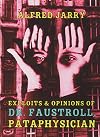
It's fantastic, and I think that if there were fewer years and continents separating me from Jarry, I might have loved this book. As it is, the style of writing (highly connected to contemporary writers, scientists, and other thinkers) means I don't get as much out of it as I was told to expect.
Mount Analogue: A Tale of Non-Euclidean and Symbolically Authentic Mountaineering Adventures by René Daumal

From a note I sent to a friend:
"[Friend], I’ve just finished reading Mount Analogue and been extremely moved - however, it’s midnight, so I’ll write my thoughts here and send them your way at a more appropriate time.
"I feel somewhat daunted to describe the work, and somewhat fearful that if I say I’m daunted, I’ll seem a weak thing that can therefore have been moved only by a weak work.
"Well, I don’t think that’s the case. Without commenting on how weak I might be, I think that Daumal is probably the most mature writer I’ve yet encountered. He apparently led a brief and extremely dense life in the early twentieth century. But I’ll let the translator’s introduction do better justice to this topic than I can, should you choose to read the book.
"Mount Analogue is a mountain and an analogue/analogy/allegory/myth. Thought that I’ve set out (though only rudimentarily, and I don’t think I’ve shared it with you) regarding a division between the “heaven” of abstract and philosophic thought - vice the “earth” of menial and animal existence to which we are all subject - has clearly been trod before by Daumal, and I am inclined to study his footprints. Mount Analogue is the structure connecting the “heaven” and “earth,” a structure which I failed to consider in any allegoric sense as a “structure” but left, instead, always as a process within the minds of individuals.
"When I started reading the book, I told you that it reminded me of show more Piranesi. That held true all the way through. It wasn’t a mystery novel or even a direct description of some beautiful hidden world, but it was written by someone with serious academic and philosophic ambitions, someone who was or who had been an occultist, a student of sacred Sanskrit texts, and someone who had played with poison and with suicide. He wasn't exactly Piranesi, and he wasn't exactly Arne-Sayles, but he makes me fear to become like Ketterly, rooting around in the dust for some transcendence I can’t understand." show less
"[Friend], I’ve just finished reading Mount Analogue and been extremely moved - however, it’s midnight, so I’ll write my thoughts here and send them your way at a more appropriate time.
"I feel somewhat daunted to describe the work, and somewhat fearful that if I say I’m daunted, I’ll seem a weak thing that can therefore have been moved only by a weak work.
"Well, I don’t think that’s the case. Without commenting on how weak I might be, I think that Daumal is probably the most mature writer I’ve yet encountered. He apparently led a brief and extremely dense life in the early twentieth century. But I’ll let the translator’s introduction do better justice to this topic than I can, should you choose to read the book.
"Mount Analogue is a mountain and an analogue/analogy/allegory/myth. Thought that I’ve set out (though only rudimentarily, and I don’t think I’ve shared it with you) regarding a division between the “heaven” of abstract and philosophic thought - vice the “earth” of menial and animal existence to which we are all subject - has clearly been trod before by Daumal, and I am inclined to study his footprints. Mount Analogue is the structure connecting the “heaven” and “earth,” a structure which I failed to consider in any allegoric sense as a “structure” but left, instead, always as a process within the minds of individuals.
"When I started reading the book, I told you that it reminded me of show more Piranesi. That held true all the way through. It wasn’t a mystery novel or even a direct description of some beautiful hidden world, but it was written by someone with serious academic and philosophic ambitions, someone who was or who had been an occultist, a student of sacred Sanskrit texts, and someone who had played with poison and with suicide. He wasn't exactly Piranesi, and he wasn't exactly Arne-Sayles, but he makes me fear to become like Ketterly, rooting around in the dust for some transcendence I can’t understand." show less

Fantastic! Porchia is teaching me just what I want to learn. He's been to the challenging parts of the mind and made something valuable. He gave it to us.
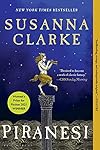
"Piranesi" is fantastic. Thematic elements derive from occultist, magical realist, symbolic, and modern weird fiction communities. Initially I was hopeful that the book might intend a larger message for seekers of meaning. The desperate search for the Great and Secret Knowledge, whose existence some doubt, is resonant with me in my own search. Ultimately, though, Clarke used the Great and Secret Knowledge as character motivation rather than to advise the reader.
An excellent novel.
An excellent novel.
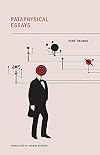
I found this to be somewhat demystifying of the whole "pataphysics" movement, which is what I hoped for it. I think I see now that the playful form very seriously critiques the follies of an increasingly ossified and self-obsessed academia. Additionally, though, there is a definite connection to absurdism - the idea of "pataphysical laughter," central to these essays, rings to me very much like the feeling of simultaneous grandeur/smallness, meaning/hopelessness, etc. that I will often experience and have tended to attribute to absurdist thinking.

Lovely. Entertaining with bits of real insight occasionally available (Weiss's, the translator's, comment that Chazal's observations essentially never err - this comment does not sit well with me).
As a whole, though, it's incredibly instructive in visceral writing. Weiss is absolutely right about that. Nothing else has so expertly described to me the odd little feelings and sensations that, being a human, I often experience and often do not notice.
As a whole, though, it's incredibly instructive in visceral writing. Weiss is absolutely right about that. Nothing else has so expertly described to me the odd little feelings and sensations that, being a human, I often experience and often do not notice.

I think the critics might have missed the point here. This is "utopian," sure. "Architectural," "political," "fantastical." Most of all, though, I think this is an argument, in the form of a novel, regarding the art by which one might *live well* and *die well* - and by which one might ascribe meaning to experiences.
Many of the diverse efforts I engage in to build a structure of meaning in my life are explored here - art, transformation of surroundings, poetry, argument, politics, labor, industry, science.
The stumbling blocks I always hit are explored as well. The value of art is limited by the good will of the audience. Transformation of surroundings requires the consent of one's fellows, and so cannot be total. Politics pools power, so few can have it. Science endlessly chases its tail of answers and questions, never arriving.
Ultimately, having springboarded off of the labor, industry, science, art, and politics of a great many, arrives at an answer that seems to work for him. This answer is something like the following.
Unification, especially in a way that elides the ego of the unified, is a generator of meaning. To be subsumed in a great collective, to be dedicated to a great purpose, to in any fashion "surrender" to a "greaterness," is the goal. Along the way, bliss and satisfaction is brought by enduring pain, outliving it, and enjoying what it buys. The pain of labor in constructing Lesa's tower and the work in the industry by which this construction is accelerated show more produce tremendous fruits.
At the far end of the spectrum of pain, suffering - and therefore at the far end of the mirror spectrum of deferred gratification - waits death. Death, properly conducted (as only a Pallasian can), is the ultimate surrender to some greater thing, and in that surrender, there is rebirth, transformation, transcendence.
Of course, Scheerbart doesn't solve the problem of meaning for me. He can't, first off - it's totally insurmountable. Additionally, the Pallasians have a some wonderful meaning-generative tools which are fundamentally unavailable to the rest of us.
But he does draw the outlines of all the right roads to start me, and start you, on further explorations.
To the content of the book: I love it. The adorable Pallasians and Quikkoyaners, their well-meaning foibles and often impenetrable minds, are compelling. The mechanics of the world - and even sometimes of the language - in with and with which Scheerbart sets the novel - these mechanics are unpredictable, do not follow from those by which I live, sometimes even seem inconsistent. This is a great gift as well: it puts me halfway back into my childhood mind, where experiences wash over me and I accept them and must hold a great many convictions in abeyance for a lack of internally consistent justification in my own mind.
This is an excellent novel and a powerful illustration of a worldview. show less
Many of the diverse efforts I engage in to build a structure of meaning in my life are explored here - art, transformation of surroundings, poetry, argument, politics, labor, industry, science.
The stumbling blocks I always hit are explored as well. The value of art is limited by the good will of the audience. Transformation of surroundings requires the consent of one's fellows, and so cannot be total. Politics pools power, so few can have it. Science endlessly chases its tail of answers and questions, never arriving.
Ultimately, having springboarded off of the labor, industry, science, art, and politics of a great many, arrives at an answer that seems to work for him. This answer is something like the following.
Unification, especially in a way that elides the ego of the unified, is a generator of meaning. To be subsumed in a great collective, to be dedicated to a great purpose, to in any fashion "surrender" to a "greaterness," is the goal. Along the way, bliss and satisfaction is brought by enduring pain, outliving it, and enjoying what it buys. The pain of labor in constructing Lesa's tower and the work in the industry by which this construction is accelerated show more produce tremendous fruits.
At the far end of the spectrum of pain, suffering - and therefore at the far end of the mirror spectrum of deferred gratification - waits death. Death, properly conducted (as only a Pallasian can), is the ultimate surrender to some greater thing, and in that surrender, there is rebirth, transformation, transcendence.
Of course, Scheerbart doesn't solve the problem of meaning for me. He can't, first off - it's totally insurmountable. Additionally, the Pallasians have a some wonderful meaning-generative tools which are fundamentally unavailable to the rest of us.
But he does draw the outlines of all the right roads to start me, and start you, on further explorations.
To the content of the book: I love it. The adorable Pallasians and Quikkoyaners, their well-meaning foibles and often impenetrable minds, are compelling. The mechanics of the world - and even sometimes of the language - in with and with which Scheerbart sets the novel - these mechanics are unpredictable, do not follow from those by which I live, sometimes even seem inconsistent. This is a great gift as well: it puts me halfway back into my childhood mind, where experiences wash over me and I accept them and must hold a great many convictions in abeyance for a lack of internally consistent justification in my own mind.
This is an excellent novel and a powerful illustration of a worldview. show less

The Sciences of the Artificial ("Sciences") is clear and concise. Simon is his usual impressive self. I suppose it needs to be understood that this book, aimed to argue for the existence of a class of science, contains overviews of various computing and psychological concepts. These overviews are dated, of course, and even then not free of typographical errors.
Still, I am enjoying this one very much.
Still, I am enjoying this one very much.
The Myth of Sisyphus ("Sisyphus") strikes me as a fairly correct and important discussion of meaning, value, and purpose. The world doesn't hand these things to us. Sisyphus of course reminds me a great deal of stoic philosophy and of the old Zen Patriarchs. "Not wind, Not flag - Mind moves."
Despite its importance, I do find that this work (at least, the translation I have at my home) is less than clearly stated, sometimes to the point of meandering. That's not a terrible sin, of course, but I'm a fairly slow reader, so I tend to be picky.
I hope that I'll have occasion to return to Sisyphus and re-evaluate.
Despite its importance, I do find that this work (at least, the translation I have at my home) is less than clearly stated, sometimes to the point of meandering. That's not a terrible sin, of course, but I'm a fairly slow reader, so I tend to be picky.
I hope that I'll have occasion to return to Sisyphus and re-evaluate.
This is a novel of first-person stories interspersed with what seem to be jumbled thoughts; yet, the whole thing hangs together quite well. I was time and again impressed by the circles that I only noticed when they were completed, and by the common threads that run like highways through the thing.
I think that if a man had written this in the last thirty years or so, I might be concerned for him, might think it expressed an unhealthy view of men and women. Written in the 1960s, however, I think that "Impossible Object" is a compelling and expert address on the issues of love in a particular time and place.
Mosley's voice is outstanding. I'll be reading more of his work.
I think that if a man had written this in the last thirty years or so, I might be concerned for him, might think it expressed an unhealthy view of men and women. Written in the 1960s, however, I think that "Impossible Object" is a compelling and expert address on the issues of love in a particular time and place.
Mosley's voice is outstanding. I'll be reading more of his work.
Factories of Death: Japanese Biological Warfare, 1932-45 and the American Cover-Up by Sheldon H. Harris
"Factories of Death" is a synthesis, a history book, which is not completely my bag. Please look at my words here with some suspicion. They don't come from an expert.
I read this book in undergrad. I thought it was good. Coming to me recommended as it did, I expect it is or was the best book on the subject.
I remember reading several passages and being struck by the thought that I could kind of understand the mental processes of some of the actors described. A young Japanese man with newfound power in his military endeavors seemed to me, suddenly, an Alcibiades with tremendous undirected ambition. He seemed to me almost a child. That's probably just my imagination as a runaway, though. Dangerous, either way, I think, to imagine understanding so well. I'd rather not mislead myself.
Sometimes when I read history books, a kind of rhythm sets in, and the words become musical. I did not have that experience with Harris.
I read this book in undergrad. I thought it was good. Coming to me recommended as it did, I expect it is or was the best book on the subject.
I remember reading several passages and being struck by the thought that I could kind of understand the mental processes of some of the actors described. A young Japanese man with newfound power in his military endeavors seemed to me, suddenly, an Alcibiades with tremendous undirected ambition. He seemed to me almost a child. That's probably just my imagination as a runaway, though. Dangerous, either way, I think, to imagine understanding so well. I'd rather not mislead myself.
Sometimes when I read history books, a kind of rhythm sets in, and the words become musical. I did not have that experience with Harris.
Most of the stories in this collection really surprised me, almost blew me away. The third story, I think it was, did not move me the same way. When I got to the eponymous piece, I was startled by the voice of it; it was very different from the rest of the collection up to that point, and I recognized in some of the phrases (at least, as translated by Gauvin) a style that I have seen before in a place very meaningful to myself personally.