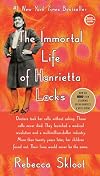
Super interesting--and accessible text. She takes a normally very technical field--medicine--and makes sure we understand just what happened to Henrietta and her family.
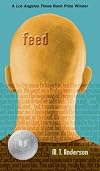
A little distracting--I imagine how having a feed would be. But mostly, I didn't feel like anythign was resolved in the end or that the main character really changed.
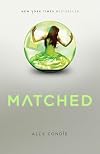
I love futuristic books--The Giver, The Hunger Games--what will life be like when we've decided the one we're living isn't good enough? What I like about this book is that the main character struggles right away with the restrictions from society and she starts rebelling in small ways.

Heard the movie wasn't all that good--but I liked the fast-paced action of this book and how almost all of the characters grow and change as the book moves through. While there are definite bad-guy aliens, the humans are a little more malleable.
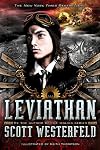
Interesting alternative to history; I've never read anything like that. The story seemed familiar, but the alternate language was hard to get into and several times I had to go back to reference what was being said.
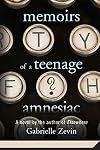
This story is about a high-school junior, Naomi, who after falling down a flight of stairs, loses the past four years of her memory. The reader goes through Naomi's ups and downs of discovering who she is, with all the drama any American high school.
I liked this book even though it was slightly predictable -- does anyone ever become amnesiac and not become a "better" person than they were? -- but Zevin hits on a point that I think everyone can relate to: would it be better if you could just forget the past? Naomi struggles with this question, while surrounded by her colorful peers. The supporting characters were a titch stereotypical--the jocks, the drama kids, the yearbooks staff--but there were a few that I liked, particulary Will, Naomi's best friend. I would recommend this to 7th graders and up.
I liked this book even though it was slightly predictable -- does anyone ever become amnesiac and not become a "better" person than they were? -- but Zevin hits on a point that I think everyone can relate to: would it be better if you could just forget the past? Naomi struggles with this question, while surrounded by her colorful peers. The supporting characters were a titch stereotypical--the jocks, the drama kids, the yearbooks staff--but there were a few that I liked, particulary Will, Naomi's best friend. I would recommend this to 7th graders and up.
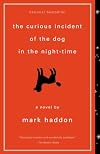
This book is about Christopher, who is a high-schooler with autism. This makes Christopher focus very specifically on some things and be completely oblivious to other things. In the first chapter of this book, Christopher finds his neighbor's dog, Wellington, murdered. He decides to "investigate" to figure out who murdered the dog. Through the investigation, Christopher finds out a lot more than just who murdered the dog.
I would recommend this book to high schoolers and adults. It's pretty funny and I like that we see through Christopher's eyes. Autism can be difficult to understand and deal with, so reading his reasoning behind the things he likes and doesn't like, helped me have more of an idea of what might be going on in someone else's head.
Favorite Quote: "In the bus on the way to school next morning we passed 4 red cars in a row, which meant that it was a Good Day, so I decided not to be sad about Wellington.
Mr. Jeavons, the psychologist at the school, once asked me why 4 red cars in a row made it a Good Day, and 3 red cars in a row made it a Quite Good Day, and 5 red cars in a row made it a Super Good Day, and why 4 yellow cars in a row made it a Black Day, which is a day when I don't speak to anyone and sit on my own reading books and don't each lunch and Take No Risks. He said that I was clearly a very logical person, so he was surprised that I should think like this because it wasn't very logical.
I said I liked things to be in a nice order. And one way of things show more being in a nice order was to be logical. Especially if those things were numbers or an argument. But there were other ways of putting things in a nice order. And that was why I had Good Days and Black Days. And I said that some people who worked in an office came out of their house in the morning and saw that the sun was shining and it made them feel happy, or they saw that it was raining and it made them feel sad, but the only difference was the weather and if they worked in an office, the weather didn't have anything to do with whether they had a good day or a bad day." pg. 24 show less
I would recommend this book to high schoolers and adults. It's pretty funny and I like that we see through Christopher's eyes. Autism can be difficult to understand and deal with, so reading his reasoning behind the things he likes and doesn't like, helped me have more of an idea of what might be going on in someone else's head.
Favorite Quote: "In the bus on the way to school next morning we passed 4 red cars in a row, which meant that it was a Good Day, so I decided not to be sad about Wellington.
Mr. Jeavons, the psychologist at the school, once asked me why 4 red cars in a row made it a Good Day, and 3 red cars in a row made it a Quite Good Day, and 5 red cars in a row made it a Super Good Day, and why 4 yellow cars in a row made it a Black Day, which is a day when I don't speak to anyone and sit on my own reading books and don't each lunch and Take No Risks. He said that I was clearly a very logical person, so he was surprised that I should think like this because it wasn't very logical.
I said I liked things to be in a nice order. And one way of things show more being in a nice order was to be logical. Especially if those things were numbers or an argument. But there were other ways of putting things in a nice order. And that was why I had Good Days and Black Days. And I said that some people who worked in an office came out of their house in the morning and saw that the sun was shining and it made them feel happy, or they saw that it was raining and it made them feel sad, but the only difference was the weather and if they worked in an office, the weather didn't have anything to do with whether they had a good day or a bad day." pg. 24 show less