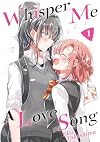
I like trashy yuri sometimes, but this was just a blatant Bloom Into You ripoff.
Think about it.
Black-haired tall third-year girl has never been in love before, but falls in love at first sight upon meeting a kind, short, salmon-haired first-year girl. The black-haired girl confesses her feelings honestly after some romantic tension between the two. However, the salmon-haired girl doesn't reciprocate her feelings... at first (she's actually demiromantic and is trying to figure out what love really means). Meanwhile, the black-haired girl's blonde best friend is secretly in love with her!
This plot applies to both series! And Bloom Into You does it so much better!!
Think about it.
Black-haired tall third-year girl has never been in love before, but falls in love at first sight upon meeting a kind, short, salmon-haired first-year girl. The black-haired girl confesses her feelings honestly after some romantic tension between the two. However, the salmon-haired girl doesn't reciprocate her feelings... at first (she's actually demiromantic and is trying to figure out what love really means). Meanwhile, the black-haired girl's blonde best friend is secretly in love with her!
This plot applies to both series! And Bloom Into You does it so much better!!
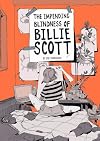
in the last 3 books I've read, you know what the main characters' names are?? Billy Pilgrim, Scott Pilgrim... and Billie Scott. It's a trifecta of Billies and Scotts and Pilgrims.
Anyway, this book is really good.
Anyway, this book is really good.
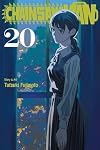
Chainsaw man is falling off hard. All the best characters are dead and Tatsuki Fujimoto's style, amazing as it is, is kinda just devolving in on itself.
Spoilers ahead!!
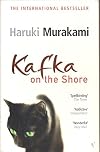
I’m caught between a three and five star review. Some parts- especially the ending- I thought were genius and incredibly interesting to read. Other parts... not so much.
I’ll get the negative stuff out of the way first.
First of all, the main character Kafka was totally unlikeable. He basically didn’t have any redeeming qualities besides, I dunno, his intelligence? I thought he was an uninteresting and hard to root for character, mostly until the end. I pretty much hated him after that scene where he rapes Sakura. At times, hearing his thoughts and descriptions of things was tiring and lacking an interesting voice.
Also, I found Murakami’s portrayal of women to be unsatisfactory, to say the least. There are two named (human) female characters, and both of them are basically sex objects with little autonomy whose only purpose is to further the main character's journey. I found Miss Saeki to be a particularly flat character. Most of her characterization came from other characters talking about her, and I never thought she was interesting when she was actually there. It's clear that the author has a weakness in writing women.
At some points in the novel, I found the plot confusing and I didn't know what direction it was headed. This was mostly cleared up by the end, though, but I'm still left with a lot of lingering questions. What was that slimy thing inside Nakata's mouth? What was the point of the teacher's letter in the very beginning? What happened show more to Kafka's father? Who was Kafka's father anyways? But some part of me thinks these questions aren't meant to be answered. There's definitely a theme of not being able to know some things. Also, there are a lot of themes in this book: memory, love, death, family, home, sex, intelligence, knowledge, prophecy, reality, etc. Sometimes it's unclear how they all fit together, or what the point is, but this is mostly cleared up by the end.
Finally, I didn't enjoy the Oedipus parallels. Maybe I'm missing something since I haven't read Oedipus, but I just didn't understand the point of it. And I didn't really enjoy reading about a 15-year old boy having sex with his 50-year old mother. Is that just me?? (also, there were just too many sex scenes in this book, in general. They didn't further the plot at all.)
Moving on to the positives, this book had unexpectedly good trans representation. Not perfect, mind you, as the novel sometimes misgenders him or doesn't use the correct terminology, but it is pretty progressive for the time. It always makes an effort to humanize Oshima, despite his gender identity.
Connected to my last point- and I don't think this is a good or bad thing- Murakami seems to just write about whatever he thinks is interesting. For example, there's a lot of prose about Beethoven, which I get the sense he just put in there because he thought it was cool. And I think he made Oshima transgender because he thought it would be interesting, not necessarily to communicate some bigger theme. Sometimes, I agree with him, and I think it's interesting. But if he put the Oedipus stuff in there just because it caught his fancy, I don't see the point. Sometimes it hinders the novel from moving forward, and sometimes it enriches its world. It's a coin toss.
I haven't mentioned one of my favorite parts of the book yet. I loved Nakata and Hoshino, as well as their dynamic. I thought Hoshino's journey of self-discovery was really sweet, as well as the admiration he comes to have for the old man. It added levity to the book and broke up the tone in a nice way.
Finally, although it's more than 500 pages, I was never bored by this book. There was always something happening in both storylines, always a new mystery to solve. Since there wasn't a clear direction where the story would go, I was always wondering what would happen next.
This book definitely gave me a lot to think about, and I was left with a pleasant feeling when finished. The ending especially is something special. It's imperfect for sure, but if you're interested in Murakami, it's worth checking out. show less
I’m caught between a three and five star review. Some parts- especially the ending- I thought were genius and incredibly interesting to read. Other parts... not so much.
I’ll get the negative stuff out of the way first.
First of all, the main character Kafka was totally unlikeable. He basically didn’t have any redeeming qualities besides, I dunno, his intelligence? I thought he was an uninteresting and hard to root for character, mostly until the end. I pretty much hated him after that scene where he rapes Sakura. At times, hearing his thoughts and descriptions of things was tiring and lacking an interesting voice.
Also, I found Murakami’s portrayal of women to be unsatisfactory, to say the least. There are two named (human) female characters, and both of them are basically sex objects with little autonomy whose only purpose is to further the main character's journey. I found Miss Saeki to be a particularly flat character. Most of her characterization came from other characters talking about her, and I never thought she was interesting when she was actually there. It's clear that the author has a weakness in writing women.
At some points in the novel, I found the plot confusing and I didn't know what direction it was headed. This was mostly cleared up by the end, though, but I'm still left with a lot of lingering questions. What was that slimy thing inside Nakata's mouth? What was the point of the teacher's letter in the very beginning? What happened show more to Kafka's father? Who was Kafka's father anyways? But some part of me thinks these questions aren't meant to be answered. There's definitely a theme of not being able to know some things. Also, there are a lot of themes in this book: memory, love, death, family, home, sex, intelligence, knowledge, prophecy, reality, etc. Sometimes it's unclear how they all fit together, or what the point is, but this is mostly cleared up by the end.
Finally, I didn't enjoy the Oedipus parallels. Maybe I'm missing something since I haven't read Oedipus, but I just didn't understand the point of it. And I didn't really enjoy reading about a 15-year old boy having sex with his 50-year old mother. Is that just me?? (also, there were just too many sex scenes in this book, in general. They didn't further the plot at all.)
Moving on to the positives, this book had unexpectedly good trans representation. Not perfect, mind you, as the novel sometimes misgenders him or doesn't use the correct terminology, but it is pretty progressive for the time. It always makes an effort to humanize Oshima, despite his gender identity.
Connected to my last point- and I don't think this is a good or bad thing- Murakami seems to just write about whatever he thinks is interesting. For example, there's a lot of prose about Beethoven, which I get the sense he just put in there because he thought it was cool. And I think he made Oshima transgender because he thought it would be interesting, not necessarily to communicate some bigger theme. Sometimes, I agree with him, and I think it's interesting. But if he put the Oedipus stuff in there just because it caught his fancy, I don't see the point. Sometimes it hinders the novel from moving forward, and sometimes it enriches its world. It's a coin toss.
I haven't mentioned one of my favorite parts of the book yet. I loved Nakata and Hoshino, as well as their dynamic. I thought Hoshino's journey of self-discovery was really sweet, as well as the admiration he comes to have for the old man. It added levity to the book and broke up the tone in a nice way.
Finally, although it's more than 500 pages, I was never bored by this book. There was always something happening in both storylines, always a new mystery to solve. Since there wasn't a clear direction where the story would go, I was always wondering what would happen next.
This book definitely gave me a lot to think about, and I was left with a pleasant feeling when finished. The ending especially is something special. It's imperfect for sure, but if you're interested in Murakami, it's worth checking out. show less
I NEED THE NEXT ONE!!!! AUGHGHGHGHHH!!!!!!
Such an amazing portrayal of relationships, complex characters, human motivations, identity.... and of course, green lesbians. What more do you need???
Also, it ends on a total cliffhanger, and I just want to see them patch up their relationship and be happy together!
also also hime-chan can go die. frigging third wheel smh my head
Read it!! But read the first two first, obviously. This might be the best in the whole series??
Such an amazing portrayal of relationships, complex characters, human motivations, identity.... and of course, green lesbians. What more do you need???
Also, it ends on a total cliffhanger, and I just want to see them patch up their relationship and be happy together!
also also hime-chan can go die. frigging third wheel smh my head
Read it!! But read the first two first, obviously. This might be the best in the whole series??
I laughed. I cried. (well, I didn't cry but I don't usually cry at books, but anyway, it's really good.) everyone should read it at least once.