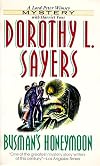
By this point in her series, Sayers has indisputably committed an unforgivable sin in writing: falling in love with her own protagonist. In every book, Lord Peter Wimsey has become more and more of a superman; he even gets taller and better-looking as the books progress. (under 5'9'' in the first book, he is a little under 6' by the last) He goes from an underdeveloped fair-haired Bertie Wooster to a sleek, muscled, intelligent, superhero by the end, who can do everything, from playing the piano like a maestro to swimming to rowing. Needless to say, he is lovable in the beginning, insufferable by the end. Even worse, she writes herself into her books--not, in the Agatha Christie style, as a wittering, absent-minded, endearing Ariadne Ollivers who eats about 20 apples a day and sheds hairpins wherever she goes, but as the persecuted, brilliant, and "oddly captivating" herione (at least, so were are told, by our clearly unbiased narrator) who MARRIES her detective. Both become increasingly, obnoxiously, and sickeningly perfect as time goes on. ugh. They become embarrassing, like reading the effusions of a 13-year-old writing fantasy fiction, where it is painfully clear that the authoress is the heroine and the hero is the Man Of Her Dreams. This book is so sickening in the romantic outpourings of the daydreaming author that it is difficult to read and somewhat of a disappointing end to the series; however, the side characters are still entertaining and enjoyable, and show more although it is difficult to appreciate the perfect-man-Wimsey, one gets flashes every so often of the human character he was before he was placed on his pedestal. show less
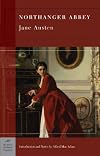
One of the absolute best Austen books, and that is saying something, Northanger Abbey is a spoof of the Gothic fiction of Austen's day. Katherine Morland is a rather empty-headed, naive young girl ready for an adventure. Ready for romance and horror, she is on the lookout for gloomy, haunted castles, secret lairs and wives locked in the attic...but mainly discovers that cabinets contain papers, not decapitated heads, and spare rooms are woefully free of haunts and murdered wives. Brilliant, fun, and even profound at moments, Northanger Abbey is Austen's most lighthearted romp.
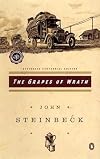
John Steinbeck’s novel, The Grapes of Wrath, engages one’s emotions in an intense struggle for life over death. In this book, one feels intensely that the Joads are caught up in a fate that they cannot control, but must simply continue to fight onwards, carrying their bitterness, their wrath, and most of all, their love. This book is a classic; subtle it is not, but Steinbeck's depiction of life during the Great Depression carries passion that still can be felt almost a century later.
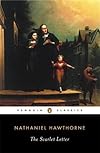
The characters in The Scarlet Letter raise as much sympathy in me as do characters in a badly- filmed and overdramatic soap opera. Dimmesdale, the "hero" of the piece, is a spineless worm that deserves to be squashed. It is impossible to imagine this cringing, crawling invertebrate ever playing the part of a passionate lover. Chillingworth, the villain of the piece, has about as much depth and creativity as his name. He could have been an interestingly twisted character, but is instead reduced to a plot device to keep the action going. He has about as much depth as a villain in a silent movie who laughs maniacally and twirls his mustache as he ties the heroine to a railroad track--not that he would need to actually tie down Hester, the heroine. If told to stand on the racetrack, she would probably do it. The "humble narrator" (yes, he calls himself this) idolizes Hester for her return to domesticity, self-flagelation, and protection of the man who should at least share her punishment. Yet she then flips implausibly back and forth from meek and apologetic to fiery and passionate. Hawthorne has no excuse for such poor writing. Other authors of the time, such as Jane Austen, write with sparkle and interest, with tangibly lifelike characters. Hawthorne’s book is at the same level of flamboyantly unreal drama as Alcott’s The Inheritance or The Long, Fatal Love Chase.
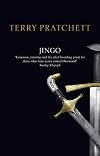
Excellent Vimes book, and good one to start with. Pratchett's satire of racism, imperialism, and, as the title might suggest, jingoism.
Also features fun with the split in the Trousers of Time, Vimes' first struggles with his wife's well-meant gift of a Dis-Organizer, and an enjoyable submarine ride with only Leonardo de Quirm, crazy genius, Vetinari, tyrant, Sgt Colin, complete moron, and Nobby Nobbs, possibly human, as passengers.
Also features Carrot, the unrecognized king of Ankh Morpork, acting human--he finally breaks his rule about not treating personal a completely separate issue than important.
And Vimes has to ride a camel....
Also features fun with the split in the Trousers of Time, Vimes' first struggles with his wife's well-meant gift of a Dis-Organizer, and an enjoyable submarine ride with only Leonardo de Quirm, crazy genius, Vetinari, tyrant, Sgt Colin, complete moron, and Nobby Nobbs, possibly human, as passengers.
Also features Carrot, the unrecognized king of Ankh Morpork, acting human--he finally breaks his rule about not treating personal a completely separate issue than important.
And Vimes has to ride a camel....

Cute. That's about the only word I can really use to describe it.
The basic plot: Eloise Kelly, an ABT (all but thesis) PhD student, is spending some time in London, working on her research. She picked an improbable dissertation topic: the unmasking of the true identity of the "Pink Carnation" (think Scarlet Pimpernel.) Poor men, why on earth would someone pick a flower as a secret identity, let alone a pink carnation? She runs into a handsome, abrupt, and above all, British stranger--of course, he's a member of the aristocracy--and their interactions proceed as one might expect. Colin Selwick, Eloise's answer to Mr. Darcy, has more than just charisma to enchant her. He also has a bunch of old letters that help to uncover the eponymous Pink Carnation.
The story itself is told from two perspectives. Mainly, it is the story of Amy, a contemporary of the mysterious Pink Carnation, told from the third person, but there are brief interludes in which Eloise seeks to uncover more facts. It is light and entertaining, and although perhaps the history isn't great, it isn't too inaccurate, either. I found the book syrupy and saccharine, but maybe that's due to the fact that I seldom read, and basically never enjoy, romance. It's a romance first, a mystery/thriller second, or maybe way farther down the list. Not quite my cup of tea, but cute. And I love the fact that the author is a PhD in history, who got her PhD to write these types of novels.
The basic plot: Eloise Kelly, an ABT (all but thesis) PhD student, is spending some time in London, working on her research. She picked an improbable dissertation topic: the unmasking of the true identity of the "Pink Carnation" (think Scarlet Pimpernel.) Poor men, why on earth would someone pick a flower as a secret identity, let alone a pink carnation? She runs into a handsome, abrupt, and above all, British stranger--of course, he's a member of the aristocracy--and their interactions proceed as one might expect. Colin Selwick, Eloise's answer to Mr. Darcy, has more than just charisma to enchant her. He also has a bunch of old letters that help to uncover the eponymous Pink Carnation.
The story itself is told from two perspectives. Mainly, it is the story of Amy, a contemporary of the mysterious Pink Carnation, told from the third person, but there are brief interludes in which Eloise seeks to uncover more facts. It is light and entertaining, and although perhaps the history isn't great, it isn't too inaccurate, either. I found the book syrupy and saccharine, but maybe that's due to the fact that I seldom read, and basically never enjoy, romance. It's a romance first, a mystery/thriller second, or maybe way farther down the list. Not quite my cup of tea, but cute. And I love the fact that the author is a PhD in history, who got her PhD to write these types of novels.
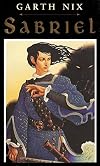
A very creative story, the world is split by an ancient wall between the technologically inclined Ancelstier and the Old World. Sabriel, the eponymous protagonist, is one of the few people who has the right to move between worlds. Raised on the mundane side of the wall, she is the daughter of the Abhorsen, the individual tasked with using the power of necromancy to set the dead to sleep and send them back into the world of the dead. When her father disappears, Sabriel must take up the bells of a necromancer, cross the wall, and try to find her father before his remaining binding spells crumble and release the dead they bind. Magic in the book is strongly tied to necromancy, and there is a lot of mysterious and interesting mythos and mythology built into the world. A fast and interesting read. While the sequels become somewhat darker, this book is relatively light in tone.
The world is again interesting, but I found the characters somewhat flat and difficult to relate to or like. Sabriel is not an unbelievable or unlikeable character. She comes across as very cold and very reserved--which, in fact, she is. I found myself totally unable to relate to or like Touchstone, one of the other major characters, and only mildly liked Sabriel. As in most of Nix's books, it is very difficult, even late in the novels, to tell allies from antagonists, and the element of humanity and warmth is definitely missing. However, the overall plot is so creative and interesting that the flatness show more of the characters is relatively unimportant. show less
The world is again interesting, but I found the characters somewhat flat and difficult to relate to or like. Sabriel is not an unbelievable or unlikeable character. She comes across as very cold and very reserved--which, in fact, she is. I found myself totally unable to relate to or like Touchstone, one of the other major characters, and only mildly liked Sabriel. As in most of Nix's books, it is very difficult, even late in the novels, to tell allies from antagonists, and the element of humanity and warmth is definitely missing. However, the overall plot is so creative and interesting that the flatness show more of the characters is relatively unimportant. show less
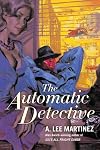
Dresden Files, move over. The Automatic Detective has stolen my heart as the best scifi/fantasy-detective noir crossover out there. The characters are fun and funny and it is a well-written, enjoyable spoof that carries and twists all of the tropes of the noir genre.
Our first-person narrator and PI, Mack Megatron, is an AI-driven robot, which, created to help destroy civilization by a mad genius, unexpectedly developed the "Freewill Glitch" and refused to kill. So now he's trying to eke out a living in the big city as a cab driver while waiting out his probation. As the first killer robot to get the Freewill Bug, the city is still waiting to see if he'll snap back to his violent programming. He isn't adjusting too well--he can't really understand how "biologicals" think and, despite quite a few sessions with a robot psychiatrist, he still thinks of himself as a machine rather than a person. Isolated and practically friendless, he spends a lot of time on low power, staring blankly at his refrigerator. But suddenly he's forced to snap into action. When one of the few families who is kind to him, his next-door-neighbors, are kidnapped, Mack forswears logic (that requires turning off his "difference engine") and sets out to find them. The remaining adventure pulls elements from standard noir--femme fatals, gangsters, and banter abound--and science fiction--almost everyone in the town has some sort of mutation due to vast amounts of pollutants--in a completely original way show more and from a totally new perspective epitomized by his appearance: a bright red robot wandering around in trenchcoat and fedora.
Take the common "hardboiled detective novel" tropes:
--Hardboiled: Mack can take some damage, all right. He was built as a tool of destruction, after all.
--Totally blunt and direct: "My shrink says I should work on my social subroutine."
--Daddy issues: Most noir heroes have sad pasts, usually due to family issues: abuse, being orphaned, etc. Mack's creator was a mad genius, now housed in an asylum-come-prison, and Mack was programmed to be loyal to him. That ends up creating quite a bit of inner conflict.
--Femme Fatals: the lovely Lucia Napier has her sights firmly set on seducing--or at least confusing--Mack. He starts out being extremely bemused by her flirtation, only able to identify it via statistical analysis. He also keeps thinking of her as being squishy:
"Attractive to 92 percent of the average biological populace with an eight point margin based on personal preference."
--Damsel in distress: the mother and daughter Mack is out to find, the only people, before Lucia, who got near to his armor-crushing strength.
--Idiotic closemouthedness: much of the plot of a noir novel is driven by the protagonist's completely stupid unwillingness to trust anyone or tell anyone about what he has discovered. A new twist: the bad guys stick a worm in Mack's programming. He literally can't tell anyone about what's going on.
Fun and brilliant as a spoof, this book sold itself by the characters. Maybe they're not totally deep, but they have entertaining quirks and are extremely sympathetic. Robot or no, Mack Megatron is the most human and sympathetic protagonist I've read for quite a bit. show less
Our first-person narrator and PI, Mack Megatron, is an AI-driven robot, which, created to help destroy civilization by a mad genius, unexpectedly developed the "Freewill Glitch" and refused to kill. So now he's trying to eke out a living in the big city as a cab driver while waiting out his probation. As the first killer robot to get the Freewill Bug, the city is still waiting to see if he'll snap back to his violent programming. He isn't adjusting too well--he can't really understand how "biologicals" think and, despite quite a few sessions with a robot psychiatrist, he still thinks of himself as a machine rather than a person. Isolated and practically friendless, he spends a lot of time on low power, staring blankly at his refrigerator. But suddenly he's forced to snap into action. When one of the few families who is kind to him, his next-door-neighbors, are kidnapped, Mack forswears logic (that requires turning off his "difference engine") and sets out to find them. The remaining adventure pulls elements from standard noir--femme fatals, gangsters, and banter abound--and science fiction--almost everyone in the town has some sort of mutation due to vast amounts of pollutants--in a completely original way show more and from a totally new perspective epitomized by his appearance: a bright red robot wandering around in trenchcoat and fedora.
Take the common "hardboiled detective novel" tropes:
--Hardboiled: Mack can take some damage, all right. He was built as a tool of destruction, after all.
--Totally blunt and direct: "My shrink says I should work on my social subroutine."
--Daddy issues: Most noir heroes have sad pasts, usually due to family issues: abuse, being orphaned, etc. Mack's creator was a mad genius, now housed in an asylum-come-prison, and Mack was programmed to be loyal to him. That ends up creating quite a bit of inner conflict.
--Femme Fatals: the lovely Lucia Napier has her sights firmly set on seducing--or at least confusing--Mack. He starts out being extremely bemused by her flirtation, only able to identify it via statistical analysis. He also keeps thinking of her as being squishy:
"Attractive to 92 percent of the average biological populace with an eight point margin based on personal preference."
--Damsel in distress: the mother and daughter Mack is out to find, the only people, before Lucia, who got near to his armor-crushing strength.
--Idiotic closemouthedness: much of the plot of a noir novel is driven by the protagonist's completely stupid unwillingness to trust anyone or tell anyone about what he has discovered. A new twist: the bad guys stick a worm in Mack's programming. He literally can't tell anyone about what's going on.
Fun and brilliant as a spoof, this book sold itself by the characters. Maybe they're not totally deep, but they have entertaining quirks and are extremely sympathetic. Robot or no, Mack Megatron is the most human and sympathetic protagonist I've read for quite a bit. show less

...which means nothing. Ain't that the truth!
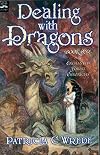
Cimorene is a princess of Linderwall, a middle-sized, middle-tier, very ordinary kingdom, but she's always wanted to break the boundaries, continually sneaking out to learn all sorts of unprincessy skills from magic to fencing to cooking--at least until her parents catch her. About to be married off to the very handsome, very nice, but very dull Prince Therandil, Cimorene decides that she'd rather be eaten by a dragon. Instead, she ends up as the dragon's cook. Hilarity ensues, from Cimorene refusing to be rescued from the dragon by the well-meaning knights who come to her door, meeting with a princess who can't manage to turn straw into gold, and to tons of other fractured fairy tales. Tons of fun, and a refreshing change from the romance that seems to invade all fantasy written by female authors.
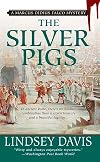
Falco is the typical world-weary, cynical, sex-crazed but chivalric detective noir protagonist. The twist? He lives in Rome, during the time of Vespasian. While I didn't find the writing style or characters engrossing--they're pretty straightforward and sometimes the dialogue turns into historical exposition-- the characters are fun, the world feels realistic, and it is quite meticulously researched. Unlike the Medicus books, where the main character is quite low in society and comes nowhere near the big political movers and shakers, Falco lives in Rome and actually runs into Vespasian and company.
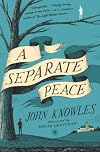
What I got out of this book: Finney is Jesus. Yup, that's about all I got from this--for me, it felt like a sad little allegory wrapped in maudlin prose.
As a coming-of-age story, I know it's supposed to be profound. For me, it just wasn't. I felt it was too direct, the allegory too straightforward, the allusions to war too obvious.
I also read it in English class, so I'm probably biased. In any case, I think Catcher in the Rye is a better coming-of-age story.
As a coming-of-age story, I know it's supposed to be profound. For me, it just wasn't. I felt it was too direct, the allegory too straightforward, the allusions to war too obvious.
I also read it in English class, so I'm probably biased. In any case, I think Catcher in the Rye is a better coming-of-age story.
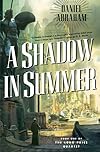
Shadow in Summer had one of the most interesting magical systems and cultures I've encountered. In this world, poets use words and rhythms to trap ideas into the corporeal forms of andat. In the main culture, gestures and positions play as much role in conversation and nuance as words. The whole sense of the book is that of a complex, intricate world that we barely glimpse. It is beautifully done.
My problem with the book, as seems to be my constant refrain, is the characters. They are all so desperately unhappy, and most of their misery is self-inflicted. It seems that all of the characters are unable to distinguish between justice and vengeance, and seek the latter without counting the potential cost. The characters have high aims--or at least what they perceive to be high aims--but it is somewhat appalling how low they will stoop to achieve their goals. As I read on, I kept thinking of the old poem, "all for a horseshoe nail." I have the sense that the rest of the series will follow the collapse of civilization, all for a petty plan to improve trade, a woman's desire for vengeance caged as justice, and the pride and arrogance of the other members of the cast.
I also felt distanced from the characters, somehow. Their emotions and goals felt stilted, and I had real trouble relating to them. I also absolutely detested one of the main characters: a vain, stupid, selfish girl who I think we are supposed to sympathize with. No one in the world was kind without exacting a price show more later on. Almost all the characters are consumed by hatred, and those who are not are consumed by guilt. I found it difficult to inhabit such a place long enough to even finish the book.
The book really brought up a lot of questions about the difference between vengeance and justice, but it wasn't something that the characters actually explored. Each chose a position and went pig-headedly onwards, apparently not even considering the pain they will bring to others.
Overall, although I loved the world the characters inhabited, I kept switching over to other books (something I don't generally do) just to get away from the characters' self-inflicted misery. show less
My problem with the book, as seems to be my constant refrain, is the characters. They are all so desperately unhappy, and most of their misery is self-inflicted. It seems that all of the characters are unable to distinguish between justice and vengeance, and seek the latter without counting the potential cost. The characters have high aims--or at least what they perceive to be high aims--but it is somewhat appalling how low they will stoop to achieve their goals. As I read on, I kept thinking of the old poem, "all for a horseshoe nail." I have the sense that the rest of the series will follow the collapse of civilization, all for a petty plan to improve trade, a woman's desire for vengeance caged as justice, and the pride and arrogance of the other members of the cast.
I also felt distanced from the characters, somehow. Their emotions and goals felt stilted, and I had real trouble relating to them. I also absolutely detested one of the main characters: a vain, stupid, selfish girl who I think we are supposed to sympathize with. No one in the world was kind without exacting a price show more later on. Almost all the characters are consumed by hatred, and those who are not are consumed by guilt. I found it difficult to inhabit such a place long enough to even finish the book.
The book really brought up a lot of questions about the difference between vengeance and justice, but it wasn't something that the characters actually explored. Each chose a position and went pig-headedly onwards, apparently not even considering the pain they will bring to others.
Overall, although I loved the world the characters inhabited, I kept switching over to other books (something I don't generally do) just to get away from the characters' self-inflicted misery. show less
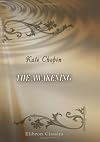
Edna Pontellier starts out as an ordinary housewife with a kindly husband and two children. Her life is insipid and dull, but see that she is contented in it only because she knows nothing else. However, when she falls in love with Robert Lebrun, she awakens to her latent sexuality and begins to wish for freedom from the restraints of family, of duty, of domesticity. As Edna becomes aware of her liberty and power as a woman, she fights the role that she has been thrust into. She wishes to free herself from all responsibilities that chain her from the true emancipation she desires. However, Edna's only freedom is in choosing her bonds. Edna finds that she is still captive when she tries to shake off restraint. Though she feels her marriage to be no bar to her enjoyment of life, her love for Robert and the responsibility for her children become the tightest manacles of all.
The writing is lyrical, but although I sympathize with Edna's struggle, her feeling of being trapped between two worlds, I also find that her willful selfishness makes her a somewhat unsympathetic character. Torn between two worlds, her act of "bravery" is succumbing to passion; she behaves like a child instead of an adult.
The Awakening is a classic; its dreamy, poetic writing and evocative imagery is strong, but I was unable to actually like the characters.
The writing is lyrical, but although I sympathize with Edna's struggle, her feeling of being trapped between two worlds, I also find that her willful selfishness makes her a somewhat unsympathetic character. Torn between two worlds, her act of "bravery" is succumbing to passion; she behaves like a child instead of an adult.
The Awakening is a classic; its dreamy, poetic writing and evocative imagery is strong, but I was unable to actually like the characters.
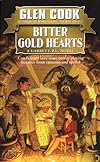
After his last disastrous adventure (Sweet Silver Blues), Garrett, a human detective in a creative and chaotic city chock-full of sorcerers, elves, centaurs, ratmen, and more, is back to just back to trying to make a living in the big city. However, when a beautiful and mysterious half-fey girl turns up in his office, he has a premonition things are about to get complicated. The girl offers him an enormous amount of money to consult on the kidnapping of the son of one of the most powerful sorceresses in the city. But as he plunges more and more deeply into the corrupt politics of the upper-class, Garrett begins to realize that everything is not as it seems.
I was excited to read the series because I had read several reviews which compared Garrett to Raymond Chandler's tenderhearted tarnished knight, Philip Marlowe. But this second story has my mind pretty well made up: Garrett is no Marlowe. Granted, people in Garrett's world call him smart-mouthed and tender-hearted, but I just didn't see it. He's taciturn and doesn't really participate in the snarky badinage common to reincarnations of Marlowe. Also, while Marlowe appears to have a fixation with the female body and spends a lot of time flirting, he's less of a womanizer. Although always disappointed by reality, Marlowe tends to see women as something to be protected and kept safe and pure. Garrett, on the other hand, gets into bed with a girl right after meeting her, and into bed with a different girl the next show more night.
This book really reminded me of Dashiell Hammett's The Maltese Falcon. Not only was the plot scarily similar, but Garrett himself is basically Sam Spade reincarnated, with an added weird necro-chivalric edge. Like Spade, Garrett has a dry, unemotional tone and usually gives little to no indication of his actual reaction and feelings about the events he describes. It is effective in giving him a phlegmatic, reserved voice, but makes it difficult to understand or relate to the character. Like Spade, Garrett plays along with the conspirators he interacts with, pretending to be a criminal, and it is difficult for the reader to determine exactly how mercenary he is actually being. However, like Spade, Garrett has his own peculiar code of honor. He may use and throw away women like crumpled tissues, but he apparently will do anything to avenge those he knew who died--all while sleeping with their rivals.
One of the aspects of the series I really don't like is the repeated use of Deus ex machina-delivering-characters. In fact, in each book I've read has two designated characters who hand out unlikely resolutions: one for knowledge, and one for uber-special spells to get Garrett out of any insurmountable battle. The Dead Man, a Loghyr lodging in Garrett's house, is a literal genius who can always supply any missing plot points or inference. Garrett also always manages to find a witch or sorceress who supplies him with pocket-sized spells that he uses whenever he faces overwhelming odds. It takes the uncertainty, and therefore the excitement, out of the story.
Again, the best part of the book for me was experiencing Garrett's well-crafted and creative world. It seamlessly combines the "realistic" seedy underbelly of the city found in detective noir with outlandish fantasy and magic. Yet again, the failing of the story for me was the characters. I didn't particularly like any of them, including the narrator. It's a creative world, but if I can't warm up to the characters, my enjoyment of the story is greatly decreased. Readers of UF and noir who like their protagonists rough and hard, more like Sam Spade than Philip Marlowe, will enjoy this book. show less
I was excited to read the series because I had read several reviews which compared Garrett to Raymond Chandler's tenderhearted tarnished knight, Philip Marlowe. But this second story has my mind pretty well made up: Garrett is no Marlowe. Granted, people in Garrett's world call him smart-mouthed and tender-hearted, but I just didn't see it. He's taciturn and doesn't really participate in the snarky badinage common to reincarnations of Marlowe. Also, while Marlowe appears to have a fixation with the female body and spends a lot of time flirting, he's less of a womanizer. Although always disappointed by reality, Marlowe tends to see women as something to be protected and kept safe and pure. Garrett, on the other hand, gets into bed with a girl right after meeting her, and into bed with a different girl the next show more night.
This book really reminded me of Dashiell Hammett's The Maltese Falcon. Not only was the plot scarily similar, but Garrett himself is basically Sam Spade reincarnated, with an added weird necro-chivalric edge. Like Spade, Garrett has a dry, unemotional tone and usually gives little to no indication of his actual reaction and feelings about the events he describes. It is effective in giving him a phlegmatic, reserved voice, but makes it difficult to understand or relate to the character. Like Spade, Garrett plays along with the conspirators he interacts with, pretending to be a criminal, and it is difficult for the reader to determine exactly how mercenary he is actually being. However, like Spade, Garrett has his own peculiar code of honor. He may use and throw away women like crumpled tissues, but he apparently will do anything to avenge those he knew who died--all while sleeping with their rivals.
One of the aspects of the series I really don't like is the repeated use of Deus ex machina-delivering-characters. In fact, in each book I've read has two designated characters who hand out unlikely resolutions: one for knowledge, and one for uber-special spells to get Garrett out of any insurmountable battle. The Dead Man, a Loghyr lodging in Garrett's house, is a literal genius who can always supply any missing plot points or inference. Garrett also always manages to find a witch or sorceress who supplies him with pocket-sized spells that he uses whenever he faces overwhelming odds. It takes the uncertainty, and therefore the excitement, out of the story.
Again, the best part of the book for me was experiencing Garrett's well-crafted and creative world. It seamlessly combines the "realistic" seedy underbelly of the city found in detective noir with outlandish fantasy and magic. Yet again, the failing of the story for me was the characters. I didn't particularly like any of them, including the narrator. It's a creative world, but if I can't warm up to the characters, my enjoyment of the story is greatly decreased. Readers of UF and noir who like their protagonists rough and hard, more like Sam Spade than Philip Marlowe, will enjoy this book. show less
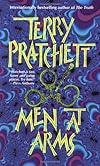
I consider this to be the start of the City Watch subseries of Pratchett's Discworld. I guess officially that would be Guards! Guards!, because that is the first time the characters are introduced, but to me, there are so many differences in characterization between the Guards!Guards! version and the rest of the series, and so many retcons over the Guards!Guards! material, that I just don't consider it part of the series.
So, let's consider Men at Arms to be the "start" of the series. It's a great introduction to the characters, world, and plot, but not particularly strong in terms of characterization. Like so many other series I've read (Butcher's Dresden Files comes to mind in particular), it suffers from "first book syndrome": weaker characterization, more predictable plot, and less elegant language. However, once you read it, you can get into the good stuff with an almost complete background of the characters. It can also be safely skipped in favour of Feet of Clay and Jingo, the next two books in the series.
The story takes place in the colorful, polluted, wild, cynical city-state of Anhk Morpork, cheerful center of crime of the civilized world. Ankh Morpork is ruled by the ascetic, incredibly crafty, and self-proclaimed tyrant, Lord Vetinari. Vetinari long ago decided that if the city was bound to have crime, it might as well be organized--so now the city is the proud home of the Assassins' and Thieves' Guilds, and people can buy yearly insurance against thievery show more (quite reasonable rates!). Since thieves do their own policing and punish non-guild members harshly (non-guild thievery is so bad for business), there's not much for Sam Vimes, head of the Night Watch, to do. Except, of course, get ready for his impending retirement and nuptuals to one of the richest women in the city. For a man whose entire life has revolved around his job, it's an increasingly terrifying prospect. And if that weren't enough, apparently his department has been chosen to herald political correctness by hiring a dwarf, a troll, and (oh, the horrors!), a woman.
But when a mysterious crime occurs right near the Assassin's Guild, Vimes' copper instincts are on fire. It's up to him and his loyal(ish) subordinates to ferret out the crime, all while the various guilds and the patrician himself seek to hold them back.
Men at Arms was my first introduction to Discworld, and, to tell the truth, I didn't warm to the characters when I experienced them in this book. The narrative felt fragmented, as it's told from the perspectives of quite a large subset of the cast, and somehow I didn't like the participants, in particular, Carrot Ironfoundersson, the Galahadesque white knight of the City Watch. (I'm not entirely sure we're supposed to like him; I tend to identify with Vimes, who is himself rather bemused by Carrot). In addition, it's not really a mystery, since we get into the head of the antagonist as well as the protagonist. It utilizes a significant amount of dramatic irony; we know what the antagonist was doing, but have to watch our protagonists stumble around detecting. Notably, this is the last time that Pratchett employs this story structure; from here on out, the mysteries are mysterious to the reader as well as the characters.
For all that, it kept me on the edge of my seat and up till 2AM to finish it. When I went on to read Feet of Clay, most of the characters really grew on me. This has become one of my absolute favorite series, and the pinnacle of it, Night Watch, is one of the best books I have ever read. Sam Vimes is, hands-down, my favorite noir/hardboiled/UF detective. Outwardly a Javert-like, rigid, rule-obsessed copper, he is also cynical, crafty, and incredibly soft-hearted.
Pratchett is, above all else, a satirist. He uses the nonthreatening and ridiculous world of Anhk Morpork to explore deeper philosophical issues. Although less true in this book, most of the others in the series have provided serious food for thought in his nonjudgmental exploration of multiple facets of important political and ethical questions. Overall, a weak first book to a great series; if you want to get a full background on the characters, worth reading, but can be safely skipped for Feet of Clay. show less
So, let's consider Men at Arms to be the "start" of the series. It's a great introduction to the characters, world, and plot, but not particularly strong in terms of characterization. Like so many other series I've read (Butcher's Dresden Files comes to mind in particular), it suffers from "first book syndrome": weaker characterization, more predictable plot, and less elegant language. However, once you read it, you can get into the good stuff with an almost complete background of the characters. It can also be safely skipped in favour of Feet of Clay and Jingo, the next two books in the series.
The story takes place in the colorful, polluted, wild, cynical city-state of Anhk Morpork, cheerful center of crime of the civilized world. Ankh Morpork is ruled by the ascetic, incredibly crafty, and self-proclaimed tyrant, Lord Vetinari. Vetinari long ago decided that if the city was bound to have crime, it might as well be organized--so now the city is the proud home of the Assassins' and Thieves' Guilds, and people can buy yearly insurance against thievery show more (quite reasonable rates!). Since thieves do their own policing and punish non-guild members harshly (non-guild thievery is so bad for business), there's not much for Sam Vimes, head of the Night Watch, to do. Except, of course, get ready for his impending retirement and nuptuals to one of the richest women in the city. For a man whose entire life has revolved around his job, it's an increasingly terrifying prospect. And if that weren't enough, apparently his department has been chosen to herald political correctness by hiring a dwarf, a troll, and (oh, the horrors!), a woman.
But when a mysterious crime occurs right near the Assassin's Guild, Vimes' copper instincts are on fire. It's up to him and his loyal(ish) subordinates to ferret out the crime, all while the various guilds and the patrician himself seek to hold them back.
Men at Arms was my first introduction to Discworld, and, to tell the truth, I didn't warm to the characters when I experienced them in this book. The narrative felt fragmented, as it's told from the perspectives of quite a large subset of the cast, and somehow I didn't like the participants, in particular, Carrot Ironfoundersson, the Galahadesque white knight of the City Watch. (I'm not entirely sure we're supposed to like him; I tend to identify with Vimes, who is himself rather bemused by Carrot). In addition, it's not really a mystery, since we get into the head of the antagonist as well as the protagonist. It utilizes a significant amount of dramatic irony; we know what the antagonist was doing, but have to watch our protagonists stumble around detecting. Notably, this is the last time that Pratchett employs this story structure; from here on out, the mysteries are mysterious to the reader as well as the characters.
For all that, it kept me on the edge of my seat and up till 2AM to finish it. When I went on to read Feet of Clay, most of the characters really grew on me. This has become one of my absolute favorite series, and the pinnacle of it, Night Watch, is one of the best books I have ever read. Sam Vimes is, hands-down, my favorite noir/hardboiled/UF detective. Outwardly a Javert-like, rigid, rule-obsessed copper, he is also cynical, crafty, and incredibly soft-hearted.
Pratchett is, above all else, a satirist. He uses the nonthreatening and ridiculous world of Anhk Morpork to explore deeper philosophical issues. Although less true in this book, most of the others in the series have provided serious food for thought in his nonjudgmental exploration of multiple facets of important political and ethical questions. Overall, a weak first book to a great series; if you want to get a full background on the characters, worth reading, but can be safely skipped for Feet of Clay. show less
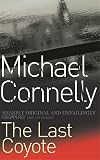
After being on the cusp of mental breakdown for years, Bosch has finally lost it. After comparatively minor provocation (but tangentially related to his mother), Bosch put his superior's head through a glass wall. Forced onto involuntary leave, he begins to look into the crime that has haunted him since childhood: his mother's murder. This excruciatingly painful and personal case leads Bosch into the darkness of the past and causes him to cross more lines than ever before. It's a powerful, agonizing, and gripping story, and I couldn't put it down until I reached the last page.
However, I was left with troubling doubts about the series. Maybe I read it is just that any book was bound to be a letdown after The Concrete Blonde. Much of the plot of Last Coyote centers around Bosch's explosive and unrestrained temper, but to me, this characterization seemed contradictory. Bosch seemed to always be burning with inner anger and pain, but always under tight control. His childhood memory of being pulled out of the swimming pool to be informed of his mother's death exemplified his general demeanour. Hearing the news, he dove deep into the dark waters, letting the depths swallow his screams and the water hide his tears. This is the guy who, in the last book, sat calmly, his face a mask, as he was accused of murder and scheming and called a monster. Bosch's previous actions made him seem someone who controlled and used his pent-up anger, releasing it in calculated bursts. But show more according to this story, he's had a "problem" with his "unrestrained temper" this whole time.
Isolation and loss are major themes of this story. However, this sudden isolation felt scripted and unnatural to me. The desertion of Bosch's love interest, Sylvia, is essentially unexplained--except it is thematically convenient. I feel Connelly has a pattern of treating women as plot devices rather than characters: in each book, a female character is introduced to provide reactions and explication in accordance to the story's theme. This female is then discarded between books, obviating any necessity of any female character development. One of the series' major themes is Bosch's repudiation of the way society treats outcasts and prostitutes. It is therefore rather ironic that Connelly exploits his female characters to develop these themes and disposes of them as soon as they are no longer useful.
I found Bosch a problematic protagonist in this book. He is definitely a rounded and empathetic antihero: deeply driven, with a problematic ethical code and a tendency to make terrible mistakes that have drastic consequences. This book adds new facets to his character by exploring the past he has repressed. But it hit me that he hasn't grown as a character; he's regressed. I'm tired of his apparent desire to alienate everyone around him and troubled and repulsed by his willingness to let ends justify means. This was a hard book to read, not least because so much of Bosch's pain, so much of his isolation, is due his own self-destructive behaviour. Tangentially, the way this book turned all the symbolism and metaphor into straightforward statements from a psychologist made the conclusions feel forced and superficial to me. I loved the relationship developing between Bosch and Irving, but I was irritated by Bosch's antagonism towards a man who has repeatedly stuck his neck out for Bosch. The two characters act as foils: while Bosch rampages towards his own goals and ignores the damage his actions inflict on others, Irving is the voice of practicality and law: a bureaucrat who cynically weighs the cost of his choices. Bosch repeatedly declares that his actions in pursuit of justice for the dead are "right," despite any illegality or cost to innocents. I was left with the sense that, despite grief at the consequence of his actions, Bosch would not rethink his path. It is not just that Bosch doesn't trust the system; he believes that the rules do not apply to him. Despite the opportunities this book provided for self-evaluation, I was left with an unsatisfying sense that Bosch was confirmed in his belief that he had the right to act as judge, jury, and executioner in the pursuit of his own ideal of justice. Perhaps as the series continues, he will begin to reconsider his actions, but I think I'll wait a bit to find out. show less
However, I was left with troubling doubts about the series. Maybe I read it is just that any book was bound to be a letdown after The Concrete Blonde. Much of the plot of Last Coyote centers around Bosch's explosive and unrestrained temper, but to me, this characterization seemed contradictory. Bosch seemed to always be burning with inner anger and pain, but always under tight control. His childhood memory of being pulled out of the swimming pool to be informed of his mother's death exemplified his general demeanour. Hearing the news, he dove deep into the dark waters, letting the depths swallow his screams and the water hide his tears. This is the guy who, in the last book, sat calmly, his face a mask, as he was accused of murder and scheming and called a monster. Bosch's previous actions made him seem someone who controlled and used his pent-up anger, releasing it in calculated bursts. But show more according to this story, he's had a "problem" with his "unrestrained temper" this whole time.
Isolation and loss are major themes of this story. However, this sudden isolation felt scripted and unnatural to me. The desertion of Bosch's love interest, Sylvia, is essentially unexplained--except it is thematically convenient. I feel Connelly has a pattern of treating women as plot devices rather than characters: in each book, a female character is introduced to provide reactions and explication in accordance to the story's theme. This female is then discarded between books, obviating any necessity of any female character development. One of the series' major themes is Bosch's repudiation of the way society treats outcasts and prostitutes. It is therefore rather ironic that Connelly exploits his female characters to develop these themes and disposes of them as soon as they are no longer useful.
I found Bosch a problematic protagonist in this book. He is definitely a rounded and empathetic antihero: deeply driven, with a problematic ethical code and a tendency to make terrible mistakes that have drastic consequences. This book adds new facets to his character by exploring the past he has repressed. But it hit me that he hasn't grown as a character; he's regressed. I'm tired of his apparent desire to alienate everyone around him and troubled and repulsed by his willingness to let ends justify means. This was a hard book to read, not least because so much of Bosch's pain, so much of his isolation, is due his own self-destructive behaviour. Tangentially, the way this book turned all the symbolism and metaphor into straightforward statements from a psychologist made the conclusions feel forced and superficial to me. I loved the relationship developing between Bosch and Irving, but I was irritated by Bosch's antagonism towards a man who has repeatedly stuck his neck out for Bosch. The two characters act as foils: while Bosch rampages towards his own goals and ignores the damage his actions inflict on others, Irving is the voice of practicality and law: a bureaucrat who cynically weighs the cost of his choices. Bosch repeatedly declares that his actions in pursuit of justice for the dead are "right," despite any illegality or cost to innocents. I was left with the sense that, despite grief at the consequence of his actions, Bosch would not rethink his path. It is not just that Bosch doesn't trust the system; he believes that the rules do not apply to him. Despite the opportunities this book provided for self-evaluation, I was left with an unsatisfying sense that Bosch was confirmed in his belief that he had the right to act as judge, jury, and executioner in the pursuit of his own ideal of justice. Perhaps as the series continues, he will begin to reconsider his actions, but I think I'll wait a bit to find out. show less
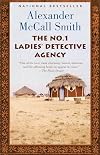
It's probably just my own perspective and prejudices, but this book rubs me the wrong way. An elderly white man trying to write from the perspective of an African woman....despite his well-meaning attempts and good intentions, I find his characterization of her and his use of repetitive, simplistic dialogue disconcertingly patronizing. Otherwise, the story is cute and the general concept is fun.
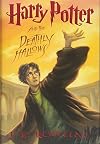
One of my absolute favourites in the series, the story brings a beautiful symmetry to the series and truly captures the power of sacrifice.
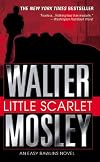
The LA riots have erupted, and the state of mind of Easy Rawlins, official janitor and unofficial detective, reflects the chaos around him. While saddened by the rage and violence, he understands it deeply, seeing that to even make the offenders aware of the gulf between white and black, something has to break. In the midst of his own inner turmoil, the LA police call him in to investigate a potentially racially sensitive case. Easy Rawlins has a unique perspective and voice. He is easy to like and sympathize with, and if the mystery isn't exactly brilliant, the story's theme and message are vital and heartrending.
Like all the stories in the series, its message decrying racism is not exactly subtle. The inequalities and prejudice Rawlins receives are shocking and horrifying, especially since this was less than fifty years ago. Anyone who even thinks to complain that African-Americans have chips on their shoulders or whatever should be forced to read a book from this series along with Beloved by Toni Morrison.
I read this during a bout into noir literature, and I'm left wondering what is wrong with LA (apart from the obvious, of course.) I mean, Chandler's Philip Marlowe, Connelly's Harry Bosch, and Mosley's Easy Rawlins all set up shop there, and all give unique perspectives on the city--a PI in the 30's, a police officer in the 90's, and an unofficial African-American PI in the 60's--and in all of them, the police are incredibly corrupt, the city is an immoral sinkhole, show more and racism is so ubiquitous that it erupts into violence. Mosley's story is important in this set since he is the only writer in this set--in fact, the only noir writer I know of--who describes the racial tensions from the African-American point of view.
Overall, a story very much worth reading; not for the mystery, but for Rawlin's heartwarming interactions with his family and to grasp a very personal perspective of the '65 riots of LA. show less
Like all the stories in the series, its message decrying racism is not exactly subtle. The inequalities and prejudice Rawlins receives are shocking and horrifying, especially since this was less than fifty years ago. Anyone who even thinks to complain that African-Americans have chips on their shoulders or whatever should be forced to read a book from this series along with Beloved by Toni Morrison.
I read this during a bout into noir literature, and I'm left wondering what is wrong with LA (apart from the obvious, of course.) I mean, Chandler's Philip Marlowe, Connelly's Harry Bosch, and Mosley's Easy Rawlins all set up shop there, and all give unique perspectives on the city--a PI in the 30's, a police officer in the 90's, and an unofficial African-American PI in the 60's--and in all of them, the police are incredibly corrupt, the city is an immoral sinkhole, show more and racism is so ubiquitous that it erupts into violence. Mosley's story is important in this set since he is the only writer in this set--in fact, the only noir writer I know of--who describes the racial tensions from the African-American point of view.
Overall, a story very much worth reading; not for the mystery, but for Rawlin's heartwarming interactions with his family and to grasp a very personal perspective of the '65 riots of LA. show less
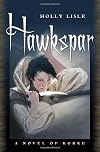
Oh, how I adored the cover of this book. I thought it was so very cool that I may have had overly high expectations in reading this.
The story takes place in Korre, a world torn by war and prejudice. Part of the story is told in first person by a young female acolyte(I don't think we ever get her name) who is essentially trapped in a convent of "sisters" who embed precious stones of various types into their eyes. Once these new "eyes" are placed, they are granted powers conversant with the precious stones and believe themselves to become the mouthpieces of various goddesses. Given power to envision the future, she forsees a terrible fate which will come upon her people. Determined to save them, our heroine begins to devise a plan that will lead her to freedom before it is too late. The other major character, whose story is in third person, is Aaron, who is on a desperate quest to save his sister. He is a member of the oft-enslaved Noble Savage race, the Tonk (somehow, it came out in my head as "honk," which didn't help.) Overall, there was a lot of promise there; I just felt the story didn't follow through.
I found some of the story elements problematic. For one thing, I had issues with the balance of climax and downtime. I felt oddly "cheated" that our heroine, solo and completely alone, ends up discovering that hover for spoiler; at the same time, I felt that her hover for spoiler. Throughout, the problems and solutions felt somewhat contrived to me. In addition, the show more book dealt with oracle demigoddesses, and that's always tricky to pull off well. I just don't think Lisle managed it. The oracle skills were used repeatedly as excuses for deus ex machinas, while at the same time, introducing some significant plot holes.
One thing that wasn't fond of, but that will vary by taste: Lisle tends to "threaten" punishments or outcomes repeatedly. There were several "fates" that the characters mentioned and dreaded over and over and over and over. And then without fail, said events occurred, but since of course our protagonists have to make it through a reasonable portion of the book, the events turned out to not be particularly bad. The antagonists were all bark and despite all of their efforts, simply had no bite. For me, true horror comes from the unseen and unexperienced, from the terrible paths that the imagination can take, and true enjoyment stems from the unexpected. I was able to predict most of the "twists" that occurred in the book; the few I wasn't felt to me like Deux ex machina. As someone who reads mostly mystery interlaced with non-traditional fantasy, I know my irritation at this is far from universal, but it greatly detracted from my enjoyment.
Characterization is very important to me, and I felt that most of the characters lacked...well...character. They tended to be essentially perfect actors, completely without self-interest and fully willing to take all sacrifices for the good of their people, etc. Honestly, they also just weren't that bright. I like characters to be complex and with areas of shade and light. I encountered the same issue with the political message that Lisle seemed to be advocating. Certain groups of people were simply too evil, or too idealistic, to be plausible to me. Guess what? Slavers are Bad People. There is no complexity to evil characters; they are pretty much either evil for power or evil for the fun of it. To keep the balance, the good races/ people are of course essentially perfect. There was also a romance that just seemed contrived and awkward. However, at the same time, I found none of the characters jarring or unsympathetic. I also thought the moments leading up to the climax were very well done, and Lisle's ability to pull the reader into her world is brilliant. Although I couldn't warm to the story, the original concepts and detailed world make it an interesting read. show less
The story takes place in Korre, a world torn by war and prejudice. Part of the story is told in first person by a young female acolyte(I don't think we ever get her name) who is essentially trapped in a convent of "sisters" who embed precious stones of various types into their eyes. Once these new "eyes" are placed, they are granted powers conversant with the precious stones and believe themselves to become the mouthpieces of various goddesses. Given power to envision the future, she forsees a terrible fate which will come upon her people. Determined to save them, our heroine begins to devise a plan that will lead her to freedom before it is too late. The other major character, whose story is in third person, is Aaron, who is on a desperate quest to save his sister. He is a member of the oft-enslaved Noble Savage race, the Tonk (somehow, it came out in my head as "honk," which didn't help.) Overall, there was a lot of promise there; I just felt the story didn't follow through.
I found some of the story elements problematic. For one thing, I had issues with the balance of climax and downtime. I felt oddly "cheated" that our heroine, solo and completely alone, ends up discovering that hover for spoiler; at the same time, I felt that her hover for spoiler. Throughout, the problems and solutions felt somewhat contrived to me. In addition, the show more book dealt with oracle demigoddesses, and that's always tricky to pull off well. I just don't think Lisle managed it. The oracle skills were used repeatedly as excuses for deus ex machinas, while at the same time, introducing some significant plot holes.
One thing that wasn't fond of, but that will vary by taste: Lisle tends to "threaten" punishments or outcomes repeatedly. There were several "fates" that the characters mentioned and dreaded over and over and over and over. And then without fail, said events occurred, but since of course our protagonists have to make it through a reasonable portion of the book, the events turned out to not be particularly bad. The antagonists were all bark and despite all of their efforts, simply had no bite. For me, true horror comes from the unseen and unexperienced, from the terrible paths that the imagination can take, and true enjoyment stems from the unexpected. I was able to predict most of the "twists" that occurred in the book; the few I wasn't felt to me like Deux ex machina. As someone who reads mostly mystery interlaced with non-traditional fantasy, I know my irritation at this is far from universal, but it greatly detracted from my enjoyment.
Characterization is very important to me, and I felt that most of the characters lacked...well...character. They tended to be essentially perfect actors, completely without self-interest and fully willing to take all sacrifices for the good of their people, etc. Honestly, they also just weren't that bright. I like characters to be complex and with areas of shade and light. I encountered the same issue with the political message that Lisle seemed to be advocating. Certain groups of people were simply too evil, or too idealistic, to be plausible to me. Guess what? Slavers are Bad People. There is no complexity to evil characters; they are pretty much either evil for power or evil for the fun of it. To keep the balance, the good races/ people are of course essentially perfect. There was also a romance that just seemed contrived and awkward. However, at the same time, I found none of the characters jarring or unsympathetic. I also thought the moments leading up to the climax were very well done, and Lisle's ability to pull the reader into her world is brilliant. Although I couldn't warm to the story, the original concepts and detailed world make it an interesting read. show less
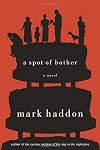
This book to me feels like a very British, dark-comedic version of The Sound and the Fury. I did not enjoy that Southern classic and so did not enjoy this; if you did, then I think this will probably be a good read. It has a large number of similarities with Faulkner's story: like a gentler The Sound and the Fury, it is the story of a dysfunctional family which slowly and agonizingly falls apart and rebuilds itself into something new. It is told from the perspectives of several of the key members of the family, although in this case, it is limited third person perspective rather than first person. At least one of the narrators is not mentally sound. And again, one might consider that most of the emphasis surrounds the marriage of the daughter of the family, although fortunately, incest is not one of the themes here. Unfortunately, though the tale is certainly told--often by people I considered to be idiots--with sound and fury leavened by humour, for me, it too signified nothing.
I felt the same dissatisfaction I experienced when reading The Sound and the Fury: the characters start out as a set of rather unpleasant, unlikeable, selfish people, do their best to make each other absolutely miserable--in this case, often for comedic effect--and eventually troop off the stage without having gained even a smidgeon of self-insight. For me, the phalanx of limited third person perspectives did the story a disservice. That additional layer of separation and dispassion let me hear show more the characters' selfish, vindictive thoughts without feeling, comprehending, or empathizing with the emotions behind them. This culminated in a rather curious effect: I ended by liking and empathizing only with a subset of characters whose perspective I did not experience. I think the story was meant to be profound as well as humorous, but for me, any profundity felt forced and any humour was tainted and stultified by the human misery it stemmed from. Not quite my cup of tea; however, I think readers who enjoy the family drama will appreciate this dark, ironic addition to the genre. show less
I felt the same dissatisfaction I experienced when reading The Sound and the Fury: the characters start out as a set of rather unpleasant, unlikeable, selfish people, do their best to make each other absolutely miserable--in this case, often for comedic effect--and eventually troop off the stage without having gained even a smidgeon of self-insight. For me, the phalanx of limited third person perspectives did the story a disservice. That additional layer of separation and dispassion let me hear show more the characters' selfish, vindictive thoughts without feeling, comprehending, or empathizing with the emotions behind them. This culminated in a rather curious effect: I ended by liking and empathizing only with a subset of characters whose perspective I did not experience. I think the story was meant to be profound as well as humorous, but for me, any profundity felt forced and any humour was tainted and stultified by the human misery it stemmed from. Not quite my cup of tea; however, I think readers who enjoy the family drama will appreciate this dark, ironic addition to the genre. show less
It may be Christmas, but Harry (yes, his name is Hieronymus) Bosch is not exactly feeling peace and goodwill towards all of mankind. With the furor surrounding the events of the previous book finally cooling off and his bullet injury healing up nicely, Harry is back to the standard frustrations of Hollywood police's murder team. Currently, he's got a body in the morgue with no leads except for a link to a new and very expensive drug on the market. When the body of a fellow cop turns up on his beat, Harry is furious when the case is taken away from him. It is almost as though the department is falling apart--again. Another fellow detective has succumbed to drink, and lucky Harry has been given his entire case load with instructions to solve at least one case before New Year's. (That way, the statistics can be twisted to argue that the LAPD is solving at least half of the murders. Go figure.) As Harry begins to dig deeper, he begins to discover that three of his current cases are deeply entangled in a web of deception, lies, and drug trafficking.
I devoured this book right after finishing its predecessor. I was incredibly curious how Bosch, after putting part of the department the grave, part in jail, and the remainder into an apoplectic fury, managed to actually keep his job. Turns out he's still there, still unpopular, and still butting heads with the department. And yet again, the book showcases all of the nasty underbelly possible in the police system: the inhuman show more cruelty, the lies, the tendency to view people as numbers rather than souls, and the corruption of the police. I guessed the twist at the end and thought one of the villains was a little too coldhearted and calculating to be reconcilable with his previous behavior, but I thought the mystery was quite well-done and there were some edge-of-the-seat nail-biting moments.
One snippet of the story I very much enjoyed was Bosch's discussion with another character of Raymond Chandler and his works. There are so many similarities between Philip Marlowe and Harry Bosch--both continually butting heads with authority, both loners, both tarnished knights on the mean streets, and both living in LA, for pete's sake--that this little easter egg homage and analysis was a lot of fun. One major distinction between Chandler and Connelly, which is much to Connelly's credit: he doesn't fall back on quick and convenient racial stereotypes for his characters.
I very much enjoyed the terse, telegraphic writing style, and I felt the dialogue felt more natural than in the last book. Again, Connelly's knowledge of the inner workings of the police system definitely came through and added an authoritative voice to the story. But again, I wonder at his cynicism. It seems that being part of "the system" translates to being cold and corrupt. I find this bitterness intriguing, and I wonder if it stems from anything in Connelly's career as a journalist--especially since journalists are presented positively and Bosch has repeatedly used the "moral force of the press" (hah) several times to outwit the corrupt bureaucracy of the police force. Overall, a very enjoyable read and I'm looking forward to the next. show less
I devoured this book right after finishing its predecessor. I was incredibly curious how Bosch, after putting part of the department the grave, part in jail, and the remainder into an apoplectic fury, managed to actually keep his job. Turns out he's still there, still unpopular, and still butting heads with the department. And yet again, the book showcases all of the nasty underbelly possible in the police system: the inhuman show more cruelty, the lies, the tendency to view people as numbers rather than souls, and the corruption of the police. I guessed the twist at the end and thought one of the villains was a little too coldhearted and calculating to be reconcilable with his previous behavior, but I thought the mystery was quite well-done and there were some edge-of-the-seat nail-biting moments.
One snippet of the story I very much enjoyed was Bosch's discussion with another character of Raymond Chandler and his works. There are so many similarities between Philip Marlowe and Harry Bosch--both continually butting heads with authority, both loners, both tarnished knights on the mean streets, and both living in LA, for pete's sake--that this little easter egg homage and analysis was a lot of fun. One major distinction between Chandler and Connelly, which is much to Connelly's credit: he doesn't fall back on quick and convenient racial stereotypes for his characters.
I very much enjoyed the terse, telegraphic writing style, and I felt the dialogue felt more natural than in the last book. Again, Connelly's knowledge of the inner workings of the police system definitely came through and added an authoritative voice to the story. But again, I wonder at his cynicism. It seems that being part of "the system" translates to being cold and corrupt. I find this bitterness intriguing, and I wonder if it stems from anything in Connelly's career as a journalist--especially since journalists are presented positively and Bosch has repeatedly used the "moral force of the press" (hah) several times to outwit the corrupt bureaucracy of the police force. Overall, a very enjoyable read and I'm looking forward to the next. show less
In this book, Sayers truly describes her element: the college life from the perspective of an academic woman of her time. It is a world she knows and captures in this book. The problem: Harriet Vane is so very, very clearly Sayers writing herself into the novel. Lord Peter Wimsey has become increasingly perfect to meet the needs of Sayers' daydreams of her ideal man. However, the book does a brilliant job at conveying the struggles and experiences of female academic life during Sayers' time.
Poirot is brought up against an international conspiracy headed by the melodramatically-named Big Four: four individuals from America, France, China, and England. Poirot faces each in a series of extremely contrived adventures. The story is extremely cheesy, but lots of fun. Not a story to be taken seriously, but an enjoyable romp.

After about 15 books in which defence attorneys are vilified as evil greedy scumbags who use despicable tactics to free their evil guilty scumbag clients, Connelly has finally produced a story told from the perspective of one such evil greedy scumbag, Mickey Haller. Haller, a defence lawyer in LA, has long since given up any idealism of truth and justice in law that he might once have had. No longer able to see any innocence in his clients, he cynically manipulates the system, constantly focused on pride and money rather than justice or truth. When he receives a case of the attempted murder of a prostitute, he is jarred by his suspicion that his client may actually be innocent of the crime. As he begins to investigate, he is confronted with the face of both pure evil and total innocence and is thrown into a morass of moral and ethical questions and self-doubt.
One thing I've found problematic about most of Connelly's stories is that defence lawyers and IAD (Internal Affairs) are constantly vilified, portrayed as immoral bottom-feeders who maliciously inhibit the course of justice, and are literally called the "lowest of the low." At the same time, in every single story in the Bosch series I have read, the police have been guilty of unspeakable corruption. In fact, in all but one, a policeman has been guilty of the crime. This inconsistency has irritated me throughout. Given the corruption Connelly highlights in the police system, it would seem that defence and IAD are show more completely necessary to ensure justice. Series such as John Mortimer's Rumpole tend to characterize defence lawyers as those upholding justice and defence of the innocent against a corrupt police system. Rumpole truly sees himself as a crusader against a corrupt system, protecting those who are, if not innocent, undeserving of the punishments a corrupt police system wishes to force upon them. Haller on the other hand, is so jaded and cynical that while he may mouth the same platitudes as Rumpole, he repeats them without conviction or belief. The truth, of course, is something in between. This story gave Connelly the perfect opportunity to show the situation from the point of view of the defence. However, although he does highlight some prosecutorial corruption, it tends to be from a position similar to those in the Bosch stories: the prosecution using underhanded tactics to achieve a righteous result. I don't think he really made use of the opportunity to really show why the defence is important: to try to protect innocents unjustly accused of crimes they did not commit.
No matter what he tells himself, no matter how justified he thinks his actions are, I found Haller's actions immoral, self-centred, arrogant, and wrong. He repeatedly decides to avoid due process of law; he claims as narrator that his reasons are just, but they are clearly selfish. His actions cause an incredible amount of damage for those around him. The most striking instance for me was during his defence of his client.hover for spoiler I don't really understand him. I think he's manipulative and wrong and immoral and I think he's about as low down on the antihero scale as he can get. However, although I don't feel the sympathy, empathy, or connection to Haller that I feel to Bosch, I still find myself liking him against my will. I also found many of the characters around him--his two ex-wives in particular--engaging and sympathetic. Also, despite what I see as an impressively narrow-minded bias towards the side of the prosecution, I thought Connelly's description of the LA police system feels both authoritative and well-researched. The villain is incredibly creepy and several scenes made my pulse race. Most importantly, even though I could not approve of him, Connelly's brilliant characterization made Mickey Haller a sympathetic and very real person, torn and tortured by his own conflicting emotions and desires. show less
One thing I've found problematic about most of Connelly's stories is that defence lawyers and IAD (Internal Affairs) are constantly vilified, portrayed as immoral bottom-feeders who maliciously inhibit the course of justice, and are literally called the "lowest of the low." At the same time, in every single story in the Bosch series I have read, the police have been guilty of unspeakable corruption. In fact, in all but one, a policeman has been guilty of the crime. This inconsistency has irritated me throughout. Given the corruption Connelly highlights in the police system, it would seem that defence and IAD are show more completely necessary to ensure justice. Series such as John Mortimer's Rumpole tend to characterize defence lawyers as those upholding justice and defence of the innocent against a corrupt police system. Rumpole truly sees himself as a crusader against a corrupt system, protecting those who are, if not innocent, undeserving of the punishments a corrupt police system wishes to force upon them. Haller on the other hand, is so jaded and cynical that while he may mouth the same platitudes as Rumpole, he repeats them without conviction or belief. The truth, of course, is something in between. This story gave Connelly the perfect opportunity to show the situation from the point of view of the defence. However, although he does highlight some prosecutorial corruption, it tends to be from a position similar to those in the Bosch stories: the prosecution using underhanded tactics to achieve a righteous result. I don't think he really made use of the opportunity to really show why the defence is important: to try to protect innocents unjustly accused of crimes they did not commit.
No matter what he tells himself, no matter how justified he thinks his actions are, I found Haller's actions immoral, self-centred, arrogant, and wrong. He repeatedly decides to avoid due process of law; he claims as narrator that his reasons are just, but they are clearly selfish. His actions cause an incredible amount of damage for those around him. The most striking instance for me was during his defence of his client.hover for spoiler I don't really understand him. I think he's manipulative and wrong and immoral and I think he's about as low down on the antihero scale as he can get. However, although I don't feel the sympathy, empathy, or connection to Haller that I feel to Bosch, I still find myself liking him against my will. I also found many of the characters around him--his two ex-wives in particular--engaging and sympathetic. Also, despite what I see as an impressively narrow-minded bias towards the side of the prosecution, I thought Connelly's description of the LA police system feels both authoritative and well-researched. The villain is incredibly creepy and several scenes made my pulse race. Most importantly, even though I could not approve of him, Connelly's brilliant characterization made Mickey Haller a sympathetic and very real person, torn and tortured by his own conflicting emotions and desires. show less
Wow, it's been a while since I read an honest-to-goodness, down-to-earth, straightforward police procedural/noir. Not part fantasy, not part historical, Connelly's debut is very much a card-carrying member of the hardboiled/noir police detective novel. We have a lot of the standard tropes of the genre--traumatized protagonist, ice-cold blonde love interest, organized crime, antagonistic cops from "the system"--but Connelly manages to carry off a unique voice and add some flair to all the elements he combines.
Harry Bosch (yes, his first name is Hieronymus, poor guy) came out of the Vietnam war with a significant amount of psychological baggage that he carried straight into his new work as a police officer on the murder squad. His intelligence and control helped him to rise through the ranks; his hostility towards authority and willingness to shoot first got him booted out of a prestigious position. The story's voice was somewhat unique for the genre. The story is told in the third person omnipresent and tends to describe peoples' perceptions rather than their conclusions. Harry is typically taciturn, so we get most of the flashes of Harry's sardonic humor through the narrator's description of his perceptions. Two things kept jarring me as I read--first, our narrator refers to Harry Bosch alternately by first and last name, often sentence to sentence, and second, references to "Harry" in a noir situation kept flipping me into Dresden Files mode.
The power from the novel, for show more me, came from Connelly's authoritative voice on police procedure. Connelly himself had been a reporter on the crimes beat and presumably had gotten to know the ins and outs of the police business. He certainly seems very familiar with the small details, the various acronyms, and even the computer systems, and does a great job in bringing this to life. Of course, we also have the typical noir abnormalities--romantic relationships between partners being one example. In addition, it seems to me that IA (internal affairs) gets a hard rap in the literary world. I don't think I've ever encountered a book where is not portrayed as either corrupt or rigid to the point of insanity.
Bosch has the standard case related attraction/relationship, but it wasn't overdone and didn't detract from the story. This is, above all, a detective story, but I thought it did a great job of melding this with character development. I liked Bosch and several of his associates; descriptions tended to be bare, but good at creating a snapshot image, very much in a journalistic style. If you've ever seen the TV show Castle, Connelly is one of Castle's murder mystery poker buddies. On the show, he is very dry and phlegmatic; he's the "after writing my first novel I shut up and wrote 27 more" type. After seeing the show, I was actually very surprised at the difference in passion and demeanor between detective and author. Bosch is also stone-faced, but with a great deal of passion and anger pent up underneath, and with a sarcastic, biting tone that Connelly doesn't seem to share. The story overall had a terse, colorful prose style that I really enjoyed. In addition, although there are some obvious parts of the mystery, there's what I thought was a nice twist at the end--it certainly "got me" at the same time as the protagonist. Altogether a very fun and very straightforward police procedural thriller.
-----
Full Series Review:
After reading a good chunk of the series, I'd like to actually review the whole sequence of Bosch books, but there's no place to do that. I guess here is as good a place as any.
Bosch, as a character, is rich and complex, and remains a strong draw for me throughout the series. I love the fact that he constantly sees his mistakes and evaluates his own error. However, I strongly dislike the fact that his character never develops and remains static throughout. Time and time again, Bosch sees how his self-righteous ruthless independence, his cowboy justice, can do irreparable harm to others. Yet he never changes. It is difficult to even comprehend how a man apparently so aware of his failures can continue to make the same mistakes time and time again.
The other element I find problematic is the side characters. Unlike any author I've ever come across, Connelly doesn't really develop a coterie of loyal sidekicks for his character. On the contrary, character immorality appears to follow a poisson process: the probability the character is secretly evil/immoral goes up exponentially with the number of times they've been somewhat positively portrayed. It leaves an odd, unsettling, and isolating feeling: you can never trust the side characters, because the next book, they'll probably end up as the murderers. In addition, Bosch's love interests never make it through more than a book before they are used up and thrown out. It makes the character base feel unstable, lacking the solidity of most other series I read.
Connelly spent about 12 years on the crime beat, so his description of the police world is thorough, accurate, and natural. It's one of the highlights of the books for me. At the same time, every single book I've read contains incredible corruption within the police department, yet Internal Affairs and similar are vilified. Defence attorneys are also portrayed as immoral and sleazy. This seems hypocritical to me. If the police system is truly so decadent, then there must be ways to watch the watchers. It always leaves me wondering what on earth IAD did to Connelly during his writing career.
What keeps bringing me back to these books is the underlying depth. In an interview, Connelly commented that he writes books to try to tease out answers to the questions and problems that plague his own spirit. Again and again, Connelly tackles Nietzsche'a question of how the hunter of monsters can himself become that which he fights. He also tackles the sensitive topic of race--from the perspective of a white man, yes, but from a man who realizes that he himself is ingrained in a racist culture. The troubling moments when we see Bosch facing his own subconscious racism are illuminating. There are no satisfying, complete answers to these questions, merely conflicting answers to their various facets. Connelly's exploration of these topics leave me ruminating on my own beliefs, prejudices, and choices. Overall, these deeper topics lend Connelly's books a power and depth that is rare in the noir genre. show less
Harry Bosch (yes, his first name is Hieronymus, poor guy) came out of the Vietnam war with a significant amount of psychological baggage that he carried straight into his new work as a police officer on the murder squad. His intelligence and control helped him to rise through the ranks; his hostility towards authority and willingness to shoot first got him booted out of a prestigious position. The story's voice was somewhat unique for the genre. The story is told in the third person omnipresent and tends to describe peoples' perceptions rather than their conclusions. Harry is typically taciturn, so we get most of the flashes of Harry's sardonic humor through the narrator's description of his perceptions. Two things kept jarring me as I read--first, our narrator refers to Harry Bosch alternately by first and last name, often sentence to sentence, and second, references to "Harry" in a noir situation kept flipping me into Dresden Files mode.
The power from the novel, for show more me, came from Connelly's authoritative voice on police procedure. Connelly himself had been a reporter on the crimes beat and presumably had gotten to know the ins and outs of the police business. He certainly seems very familiar with the small details, the various acronyms, and even the computer systems, and does a great job in bringing this to life. Of course, we also have the typical noir abnormalities--romantic relationships between partners being one example. In addition, it seems to me that IA (internal affairs) gets a hard rap in the literary world. I don't think I've ever encountered a book where is not portrayed as either corrupt or rigid to the point of insanity.
Bosch has the standard case related attraction/relationship, but it wasn't overdone and didn't detract from the story. This is, above all, a detective story, but I thought it did a great job of melding this with character development. I liked Bosch and several of his associates; descriptions tended to be bare, but good at creating a snapshot image, very much in a journalistic style. If you've ever seen the TV show Castle, Connelly is one of Castle's murder mystery poker buddies. On the show, he is very dry and phlegmatic; he's the "after writing my first novel I shut up and wrote 27 more" type. After seeing the show, I was actually very surprised at the difference in passion and demeanor between detective and author. Bosch is also stone-faced, but with a great deal of passion and anger pent up underneath, and with a sarcastic, biting tone that Connelly doesn't seem to share. The story overall had a terse, colorful prose style that I really enjoyed. In addition, although there are some obvious parts of the mystery, there's what I thought was a nice twist at the end--it certainly "got me" at the same time as the protagonist. Altogether a very fun and very straightforward police procedural thriller.
-----
Full Series Review:
After reading a good chunk of the series, I'd like to actually review the whole sequence of Bosch books, but there's no place to do that. I guess here is as good a place as any.
Bosch, as a character, is rich and complex, and remains a strong draw for me throughout the series. I love the fact that he constantly sees his mistakes and evaluates his own error. However, I strongly dislike the fact that his character never develops and remains static throughout. Time and time again, Bosch sees how his self-righteous ruthless independence, his cowboy justice, can do irreparable harm to others. Yet he never changes. It is difficult to even comprehend how a man apparently so aware of his failures can continue to make the same mistakes time and time again.
The other element I find problematic is the side characters. Unlike any author I've ever come across, Connelly doesn't really develop a coterie of loyal sidekicks for his character. On the contrary, character immorality appears to follow a poisson process: the probability the character is secretly evil/immoral goes up exponentially with the number of times they've been somewhat positively portrayed. It leaves an odd, unsettling, and isolating feeling: you can never trust the side characters, because the next book, they'll probably end up as the murderers. In addition, Bosch's love interests never make it through more than a book before they are used up and thrown out. It makes the character base feel unstable, lacking the solidity of most other series I read.
Connelly spent about 12 years on the crime beat, so his description of the police world is thorough, accurate, and natural. It's one of the highlights of the books for me. At the same time, every single book I've read contains incredible corruption within the police department, yet Internal Affairs and similar are vilified. Defence attorneys are also portrayed as immoral and sleazy. This seems hypocritical to me. If the police system is truly so decadent, then there must be ways to watch the watchers. It always leaves me wondering what on earth IAD did to Connelly during his writing career.
What keeps bringing me back to these books is the underlying depth. In an interview, Connelly commented that he writes books to try to tease out answers to the questions and problems that plague his own spirit. Again and again, Connelly tackles Nietzsche'a question of how the hunter of monsters can himself become that which he fights. He also tackles the sensitive topic of race--from the perspective of a white man, yes, but from a man who realizes that he himself is ingrained in a racist culture. The troubling moments when we see Bosch facing his own subconscious racism are illuminating. There are no satisfying, complete answers to these questions, merely conflicting answers to their various facets. Connelly's exploration of these topics leave me ruminating on my own beliefs, prejudices, and choices. Overall, these deeper topics lend Connelly's books a power and depth that is rare in the noir genre. show less
So they're running a radio play version of this on BBC, and when I saw it, I thought, why not, maybe I'll listen to it. Then my emotions caught up with my brain and I decided to write a cathartically scathing review instead. Because when I read this in high school, and it left me feeling furious--not particularly with the "correct" villain of the piece, Nurse Rached, but with McMurphy and Kesey himself. (No, this was not a popular viewpoint with my highschool teacher.) It must be said, however, that the sheer memorability of the plot, aided by my clarifying heat of anger (and possibly the class's egregiously slow pace) indicates the quality of the book's writing and the author's success at engaging the reader's interest.
Isn't the massive issue with Nurse Rached the fact that she is a woman who has power and has therefore effectively emasculated the men in her control? Look at all of the descriptions of her power. Her actions are explicitly depicted as castrating her patients and making them effectively impotent. In fact, all of the men are in the institution because of the pernicious influence of the females in their lives, from the doctor's big-breasted wife to Billy's overbearing mother. Because obviously emasculation of men is the secret aim of all women unless you slap them bitches down. Yeah, so Rached does have a massive amount of control and yes, she does have an obsession with discipline, but she's being pushed by an asshole and reacting poorly. McMurphy fights show more back by belittling her as a woman, demonstrating masculine brute strength, using sexual slurs, smuggling in prostitutes, etc, etc. Do I have sympathy for McMurphy's battle against Rached? Heh. Cry me a river.
The real issue is that I'm a woman reading about the oh-so-noble struggle of a psychopathic rapist to wrest power from the control of a woman who has done the unforgivable: sexually dominate and humiliate the men under her control. It is a book about the Ultimate Noble Goal: a man's quest to retain his masculinity--via the domination and humiliation of all the women around him. hover for spoiler Yes, there is a way to read it as the struggle of individuality against the totalitarian inhuman machine, but I have to wonder: if a man had been the nurse, do you think this would have been a classic? show less
Isn't the massive issue with Nurse Rached the fact that she is a woman who has power and has therefore effectively emasculated the men in her control? Look at all of the descriptions of her power. Her actions are explicitly depicted as castrating her patients and making them effectively impotent. In fact, all of the men are in the institution because of the pernicious influence of the females in their lives, from the doctor's big-breasted wife to Billy's overbearing mother. Because obviously emasculation of men is the secret aim of all women unless you slap them bitches down. Yeah, so Rached does have a massive amount of control and yes, she does have an obsession with discipline, but she's being pushed by an asshole and reacting poorly. McMurphy fights show more back by belittling her as a woman, demonstrating masculine brute strength, using sexual slurs, smuggling in prostitutes, etc, etc. Do I have sympathy for McMurphy's battle against Rached? Heh. Cry me a river.
The real issue is that I'm a woman reading about the oh-so-noble struggle of a psychopathic rapist to wrest power from the control of a woman who has done the unforgivable: sexually dominate and humiliate the men under her control. It is a book about the Ultimate Noble Goal: a man's quest to retain his masculinity--via the domination and humiliation of all the women around him. hover for spoiler Yes, there is a way to read it as the struggle of individuality against the totalitarian inhuman machine, but I have to wonder: if a man had been the nurse, do you think this would have been a classic? show less
Wildwood Dancing may be, externally, a fairytale retelling, but on a deeper level, it is a commentary on feminism and the role of women. Jena, the main character, is strong and perceptive, but trapped and stifled by her role as a young girl, forced into dependence by the men around her. My feelings about the book are as mixed and torn as Jena is between her roles of subservience and strength.
The antagonist of the story, Cezar, is actually pretty standard fare for fairytales and romance stories: domineering, controlling, passionate, and angry. Yet although Cezar mouths all of the proper Heathcliffe remarks, despite his "passion" or "love", Jena continues to note how he is driven to stifle and control Jena. Marillier does an absolutely stellar job in capturing the myriad ways in which he seeks to dominate her, including noting each time he physically invades her space--taking her arm, brushing her shoulder, even leaning into her so that their legs touch; for example, "I could feel the imprint of his hand on my waist, like a brand of ownership."
But this is still a fairytale, so we still have the ridiculously young heroines (ages 15 and 16, no less) seeking and finding their "true loves." We still have women obsessing over dressing and dances and parties and planning to effectively sell themselves as property. We still have "true love" as so important and significant that it makes one girl become detached and withdrawn and starve herself--and apparently that's OK, because show more it's the prerogative of one in the throes of True Love. I felt, when reading it, like a bemused Elinor watching the starstruck Marianne in Jane Austen's Sense and Sensibility.
Overall, I found the story enjoyable, and I loved Jena's strength and sense. The story is a fantastic YA novel, a beautiful blend of fairy tales with themes that are both relevant and articulately delivered. show less
The antagonist of the story, Cezar, is actually pretty standard fare for fairytales and romance stories: domineering, controlling, passionate, and angry. Yet although Cezar mouths all of the proper Heathcliffe remarks, despite his "passion" or "love", Jena continues to note how he is driven to stifle and control Jena. Marillier does an absolutely stellar job in capturing the myriad ways in which he seeks to dominate her, including noting each time he physically invades her space--taking her arm, brushing her shoulder, even leaning into her so that their legs touch; for example, "I could feel the imprint of his hand on my waist, like a brand of ownership."
But this is still a fairytale, so we still have the ridiculously young heroines (ages 15 and 16, no less) seeking and finding their "true loves." We still have women obsessing over dressing and dances and parties and planning to effectively sell themselves as property. We still have "true love" as so important and significant that it makes one girl become detached and withdrawn and starve herself--and apparently that's OK, because show more it's the prerogative of one in the throes of True Love. I felt, when reading it, like a bemused Elinor watching the starstruck Marianne in Jane Austen's Sense and Sensibility.
Overall, I found the story enjoyable, and I loved Jena's strength and sense. The story is a fantastic YA novel, a beautiful blend of fairy tales with themes that are both relevant and articulately delivered. show less
The entire time I was reading On Stranger Tides, the soundtrack of Pirates of the Caribbean was stuck in my head. And with good reason. This is basically a more intelligent, more creative version of the Pirates franchise. Pirates, fighting dead men, skeletons, blood curses, captured girls,...this book's got them all. The major difference: Powers fitted his story seamlessly into the real time period and the ancient legends of the region. Oh, and no Jack Sparrow. Anyway, a fun and wild ride.
When John Chandagnac steps aboard ship, he little realizes how much his life will change. As he sets out on a voyage of revenge to restore the fortune that his uncle absconded with, he is soon distracted by the beautiful Elizabeth Hurwood. John begins to sense that something is wrong: Elizabeth is oddly listless, thoroughly controlled by her eccentric father and overbearing doctor. Already conflicted by his interest for the girl, John's life irrevocably alters when pirates attack and take the ship. John's brave and rather idiotic actions during the attack lead to him being offered The Choice: join the pirates or die. Deciding that discretion is the better part of valour, John joins the crew as Jack Shandy. Now a pirate, he discovers that the New World is full of mystery, danger, and literal magic. Beth's father and the fearsome Blackbeard have concocted a horrifying scheme involving powerful Voduun magic and blood sacrifice. Jack, torn between his sense of honour and loyalty, sets show more himself a new goal: to protect and rescue Beth. The story hits climax after climax, and sorcery and swordfights abound.
Considering that the male lead's name is Jack, the female's is Elizabeth, pirates are after a hidden treasure, blood sacrifices are central to the plot, and undead pirates end up battling aboard ship, comparisons with Pirates of the Caribbean: The Black Pearl are pretty much unavoidable*. My issue with the story was the same as the one I had with Pirates of the Caribbean. The very mechanics of the plot meant I could not examine the contents too closely. I have a somewhat inflexible moral compass, and one little thought kept slipping into my head: that a man who pillages and murders, no matter how affable he might be, is not a good guy. The narration appears to cast the "good" pirates as neutral and Shandy as heroic and noble, and like Will Turner in Pirates, neither Shandy nor the narrator reflect much on what it means to join, aid, and be loyal to the pirate crew. I didn't like Will much, and Shandy really, really reminds me of him, with his self-righteous arrogance and his overarching obsession with a woman that we've only seen him speak a few words to. However, morality has little to do with likeability, and like Shandy, I find the pirate captain, Davies, to be an incredibly engaging and enjoyable character. He reminds me of Barbossa, my absolute favourite character of Pirates, but he has an even more wicked sense of humour. I couldn't really empathize with any of the characters, but I liked most of them. I also loved the characterization of Blackbeard as incredibly cold, scary, smart, and charismatic.
The only aspect I think the movie got better was Elizabeth. Elizabeth Hurwood has the worst case of the damsels I think I've ever come across. She spends the entire book as someone's hostage, and her personality remains entirely undeveloped. I think all of her words together might fit on one page, and they are all reactions to circumstance and declarations of affection or fear. She is explicitly considered by the men around her to be merely an object, a vessel to be utilized for the pleasure or convenience of others. The story also uses the "weepy weakling woman threatened with rape" trope way too much and way too graphically for me to be happy. Since Elizabeth appears to have been born with the backbone of a jellyfish and other forces continually use multiple means to control and subdue her, she is little more than a blank-eyed doll, and is actually described as such at several points in the story.
The fight scenes are pulse-racing and oddly realistic, considering most of them involve spells cast by Bokur (Vodou witch-doctors) and zombies joining in the fun. They actually forced me to realize that although I have a fascination with the grotesque, I have an incredibly weak stomach for the gruesome. I never really realized just how wimpy I was until some of the graphic fight scenes in the story. Guhhhk.
My favourite aspect of the story was the way that it intertwined the history and myths of the region. Powers definitely did the research. His New World is vivid and enjoyable, and Powers never rewrites history, something I really appreciate. He adds carefully engineered additional details which not only fit with all the known facts but feel both fitting and creative. For example, in this story, Blackbeard is a Vodun Bokur, which explains some of his fantastic adventures and odd foibles. Other fantastic stories, from Ponce de Leon's fountain of youth to iron's effect on magic, are deftly woven into the tale. Overall, On Stranger Tides is a perfect read for anyone who likes quite a bit of blood, gore, and battle, enjoyed the lurid tales of The Pirate's Own Book, and wants a better-crafted rendition of Pirates of the Caribbean. Bizarre and fantastic, in this book, you're off the edge of the map, mate. Here there be monsters.
*I'm comparing On Stranger Tides solely to Pirates of the Caribbean: The Black Pearl; apparently a later Pirates movie was directly based on On Stranger Tides, but I didn't get that far in the Pirates franchise. show less
When John Chandagnac steps aboard ship, he little realizes how much his life will change. As he sets out on a voyage of revenge to restore the fortune that his uncle absconded with, he is soon distracted by the beautiful Elizabeth Hurwood. John begins to sense that something is wrong: Elizabeth is oddly listless, thoroughly controlled by her eccentric father and overbearing doctor. Already conflicted by his interest for the girl, John's life irrevocably alters when pirates attack and take the ship. John's brave and rather idiotic actions during the attack lead to him being offered The Choice: join the pirates or die. Deciding that discretion is the better part of valour, John joins the crew as Jack Shandy. Now a pirate, he discovers that the New World is full of mystery, danger, and literal magic. Beth's father and the fearsome Blackbeard have concocted a horrifying scheme involving powerful Voduun magic and blood sacrifice. Jack, torn between his sense of honour and loyalty, sets show more himself a new goal: to protect and rescue Beth. The story hits climax after climax, and sorcery and swordfights abound.
Considering that the male lead's name is Jack, the female's is Elizabeth, pirates are after a hidden treasure, blood sacrifices are central to the plot, and undead pirates end up battling aboard ship, comparisons with Pirates of the Caribbean: The Black Pearl are pretty much unavoidable*. My issue with the story was the same as the one I had with Pirates of the Caribbean. The very mechanics of the plot meant I could not examine the contents too closely. I have a somewhat inflexible moral compass, and one little thought kept slipping into my head: that a man who pillages and murders, no matter how affable he might be, is not a good guy. The narration appears to cast the "good" pirates as neutral and Shandy as heroic and noble, and like Will Turner in Pirates, neither Shandy nor the narrator reflect much on what it means to join, aid, and be loyal to the pirate crew. I didn't like Will much, and Shandy really, really reminds me of him, with his self-righteous arrogance and his overarching obsession with a woman that we've only seen him speak a few words to. However, morality has little to do with likeability, and like Shandy, I find the pirate captain, Davies, to be an incredibly engaging and enjoyable character. He reminds me of Barbossa, my absolute favourite character of Pirates, but he has an even more wicked sense of humour. I couldn't really empathize with any of the characters, but I liked most of them. I also loved the characterization of Blackbeard as incredibly cold, scary, smart, and charismatic.
The only aspect I think the movie got better was Elizabeth. Elizabeth Hurwood has the worst case of the damsels I think I've ever come across. She spends the entire book as someone's hostage, and her personality remains entirely undeveloped. I think all of her words together might fit on one page, and they are all reactions to circumstance and declarations of affection or fear. She is explicitly considered by the men around her to be merely an object, a vessel to be utilized for the pleasure or convenience of others. The story also uses the "weepy weakling woman threatened with rape" trope way too much and way too graphically for me to be happy. Since Elizabeth appears to have been born with the backbone of a jellyfish and other forces continually use multiple means to control and subdue her, she is little more than a blank-eyed doll, and is actually described as such at several points in the story.
The fight scenes are pulse-racing and oddly realistic, considering most of them involve spells cast by Bokur (Vodou witch-doctors) and zombies joining in the fun. They actually forced me to realize that although I have a fascination with the grotesque, I have an incredibly weak stomach for the gruesome. I never really realized just how wimpy I was until some of the graphic fight scenes in the story. Guhhhk.
My favourite aspect of the story was the way that it intertwined the history and myths of the region. Powers definitely did the research. His New World is vivid and enjoyable, and Powers never rewrites history, something I really appreciate. He adds carefully engineered additional details which not only fit with all the known facts but feel both fitting and creative. For example, in this story, Blackbeard is a Vodun Bokur, which explains some of his fantastic adventures and odd foibles. Other fantastic stories, from Ponce de Leon's fountain of youth to iron's effect on magic, are deftly woven into the tale. Overall, On Stranger Tides is a perfect read for anyone who likes quite a bit of blood, gore, and battle, enjoyed the lurid tales of The Pirate's Own Book, and wants a better-crafted rendition of Pirates of the Caribbean. Bizarre and fantastic, in this book, you're off the edge of the map, mate. Here there be monsters.
*I'm comparing On Stranger Tides solely to Pirates of the Caribbean: The Black Pearl; apparently a later Pirates movie was directly based on On Stranger Tides, but I didn't get that far in the Pirates franchise. show less