readeron's 12 in 12 challenge
Talk The 12 in 12 Category Challenge
This group has been archived. Find out more.
Join LibraryThing to post.
1readeron
I skipped this kind of challenge in 2011, because I seemed to fail keeping up with any sort of reading plan for so many years before.
Now I feel again that my Mount TBR needs some restructuring. Even if I won't be able to read all the books listed in these categories, at least I'd like to give this challenge a try.:) Making lists is fun anyway.
My categories:
I. Science Fiction
II. Fantasy
III. Horror
IV. Humor, Satire, Comedy
V. YA, Children's Books
VI. 1001
VII. Hungarian Authors
VIII Thriller, Crime, Mystery
IX. Fluff
X. Women Writers
XI. Random Books off the TBR Shelves
XII. Collections of Short Stories
Now I feel again that my Mount TBR needs some restructuring. Even if I won't be able to read all the books listed in these categories, at least I'd like to give this challenge a try.:) Making lists is fun anyway.
My categories:
I. Science Fiction
II. Fantasy
III. Horror
IV. Humor, Satire, Comedy
V. YA, Children's Books
VI. 1001
VII. Hungarian Authors
VIII Thriller, Crime, Mystery
IX. Fluff
X. Women Writers
XI. Random Books off the TBR Shelves
XII. Collections of Short Stories
2readeron
I. Science Fiction
1. The Day of the Triffids by John Wyndham
2. Snow Crash by Neal Stephenson
3. Voodoo Planet by Andre Norton
4. Contact by Carl Sagan
5. The Difference Engine by William Gibson
6. The Postman by David Brin
7. Drowned World by J.G. Ballard
8. Glory Road by Robert A. Heinlein
9. Farnham's Freehold by Robert A. Heinlein
10. The Game-players of Titan by Philip K. Dick
11. Solar Lottery by Philip K. Dick
12. Chocky by John Wyndham
1. The Day of the Triffids by John Wyndham
2. Snow Crash by Neal Stephenson
3. Voodoo Planet by Andre Norton
4. Contact by Carl Sagan
5. The Difference Engine by William Gibson
6. The Postman by David Brin
7.
8. Glory Road by Robert A. Heinlein
9. Farnham's Freehold by Robert A. Heinlein
10. The Game-players of Titan by Philip K. Dick
11. Solar Lottery by Philip K. Dick
12. Chocky by John Wyndham
3readeron
II. Fantasy
1. American Gods by Neil Gaiman
2. Neverwhere by by Neil Gaiman
3. Jonathan Strange & Mr Norrell by Susanna Clarke
4. Mort by Terry Pratchett
5. A Dirty Job by Christopher Moore
6 Hogfather by Terry Pratchett
7. The Dark Tower by Stephen King
8. The Talisman by Stephen King
9. The Once and Future King by T. H. White
10. Howl's Moving Castle by Diana Wynne Jones
11. The Amulet of Samarkand by Jonathan Stroud
12. The Lightning Thief by Rick Riordan
1. American Gods by Neil Gaiman
2. Neverwhere by by Neil Gaiman
3. Jonathan Strange & Mr Norrell by Susanna Clarke
4. Mort by Terry Pratchett
5. A Dirty Job by Christopher Moore
6 Hogfather by Terry Pratchett
7. The Dark Tower by Stephen King
8. The Talisman by Stephen King
9. The Once and Future King by T. H. White
10. Howl's Moving Castle by Diana Wynne Jones
11. The Amulet of Samarkand by Jonathan Stroud
12. The Lightning Thief by Rick Riordan
4readeron
III. Horror
1. Weaveworld by Clive Barker
2. The Rats by James Herbert
3. Rose Madder by Stephen King
4Lisey's Story by Stephen King
5. The Regulators by Stephen King
6. The House Next Door by Anne Rivers Siddon
7. Black Creek Crossing by John saul
8. Nazareth Hill by Ramsey Campbell
9.Under the Dome by Stephen King
10. The Girl Next Door by Jack Ketchum
11.Diary by Chuch Palahniuk
12. Harvest Home by Thomas Tryon
1. Weaveworld by Clive Barker
2. The Rats by James Herbert
3. Rose Madder by Stephen King
4
5. The Regulators by Stephen King
6. The House Next Door by Anne Rivers Siddon
7. Black Creek Crossing by John saul
8. Nazareth Hill by Ramsey Campbell
9.
10. The Girl Next Door by Jack Ketchum
11.
12. Harvest Home by Thomas Tryon
5readeron
IV. Humor, Satire, Comedy
1. Vintage Stuff by Tom Sharpe
2. My Hero by Tom Holt
3. Cold Comfort Farm by Stella Gibbons
4.Breakfast of Champions by Kurt Vonnegut
5. The Picnic and Suchlike Pandemonium by Gerald Durrell
6. Me Talk Pretty One Day by David Sedaris
7. Right Ho, Jeeves by P. G. Wodehouse
8. Stiff Upper Lip, Jeeves by P. G. Wodehouse
9. The Inimitable Jeeves by P. G. Wodehouse
10. A Damsel in Distress by P. G. Wodehouse
11. Something Fresh by P. G. Wodehouse
12. The Hollow Chocolate Bunnies of the Apocalypse by Robert Rankin
1. Vintage Stuff by Tom Sharpe
2. My Hero by Tom Holt
3. Cold Comfort Farm by Stella Gibbons
4.
5. The Picnic and Suchlike Pandemonium by Gerald Durrell
6. Me Talk Pretty One Day by David Sedaris
7. Right Ho, Jeeves by P. G. Wodehouse
8. Stiff Upper Lip, Jeeves by P. G. Wodehouse
9. The Inimitable Jeeves by P. G. Wodehouse
10. A Damsel in Distress by P. G. Wodehouse
11. Something Fresh by P. G. Wodehouse
12. The Hollow Chocolate Bunnies of the Apocalypse by Robert Rankin
6readeron
V. YA, Children's Books
1. I Capture the Castle by Dodie Smith
2. Pippi Longstocking by Astrid Lindgran
3. Heidi by Johanna Spyri
4. The Railway Children Edith Nesbit
5. Mary Poppins Opens the Door by R.L. Travers
6. The Wrath of Mulgarath by Holly Black
7. Charlotte's Web by E. B. White
8. The Golden Compass by Philip Pullman
9. Artemis Fowl by Eoin Colfer
10. Uglies by Scott Westerfeld
11. The Wind in the Willows by Kenneth Grahame
12. Looking for Alibrandi by Melina Marchetta
1. I Capture the Castle by Dodie Smith
2. Pippi Longstocking by Astrid Lindgran
3. Heidi by Johanna Spyri
4. The Railway Children Edith Nesbit
5. Mary Poppins Opens the Door by R.L. Travers
6. The Wrath of Mulgarath by Holly Black
7. Charlotte's Web by E. B. White
8. The Golden Compass by Philip Pullman
9. Artemis Fowl by Eoin Colfer
10. Uglies by Scott Westerfeld
11. The Wind in the Willows by Kenneth Grahame
12. Looking for Alibrandi by Melina Marchetta
7readeron
VI. 1001
1. Pnin by Vladimir Nabokov
2. Kafka on the Shore by Haruki Murakami
3. Gravity's Rainbow by Thomas Pynchon
4. The Hamlet by William Faulkner
5. Coming Up for Air by George Orwell
6.Elementary Particles by Michel Houellebecq
7. The Good Soldier by Ford Madox Ford
8. Martin Eden by jack London
9. Cannery Row by John Steinbeck
10. Humboldt's Gift by Saul Bellow
11. For Whom the Bell Tolls by Ernest Hemingway
12. Silk by Alessandro Baricco
1. Pnin by Vladimir Nabokov
2. Kafka on the Shore by Haruki Murakami
3. Gravity's Rainbow by Thomas Pynchon
4. The Hamlet by William Faulkner
5. Coming Up for Air by George Orwell
6.
7. The Good Soldier by Ford Madox Ford
8. Martin Eden by jack London
9. Cannery Row by John Steinbeck
10. Humboldt's Gift by Saul Bellow
11. For Whom the Bell Tolls by Ernest Hemingway
12.
8readeron
VII. Hungarian Authors
1. Napos oldal by Karácsony Benő
2. A kígyó árnyéka by Rakovszky Zsuzsa
3. Apák könyve by Vámos Mikós
4. Pokolbeli víg napjaim by Faludy György
5.Asszony a fronton by Polcz Alaine
6. Sárbogárdi Jolán: a test angyala by Parti Nagy Lajos
7. A látogató by Konrád György
8. Csontbrigád by Rejtő Jenő
9. Egy polgár vallomásai by Márai Sándor
10. Régimódi történet by Szabó Magda
11. Csillagmajor by Lázár Ervin
12. Tizenhét hattyúk by Csokonai Lili (Esterházy Péter)
1. Napos oldal by Karácsony Benő
2.
3.
4.
5.
6.
7.
8. Csontbrigád by Rejtő Jenő
9.
10. Régimódi történet by Szabó Magda
11.
12.
9readeron
VIII. Thriller, Crime, Mystery
1. Murder Must Advertise by Dorothy L. Sayers
2. Hallowe'en Party by Agatha Christie
3. Them Bones by Carolyn Haines
4. The Husband by Dean Koontz
5. Relic by Douglas Preston
6. The Cabinet of Curiosities by Douglas Preston
7. Die Trying by Lee Child
8. Crocodile on the Sandbank by Elizabeth Peters
9. Crocodile Bird by Ruth Rendell
10. Shadow Prey by John Sandford
11. A Demon in my View by Ruth Rendell
12. The Big sleep by Raymond Chandler
1. Murder Must Advertise by Dorothy L. Sayers
2. Hallowe'en Party by Agatha Christie
3. Them Bones by Carolyn Haines
4. The Husband by Dean Koontz
5. Relic by Douglas Preston
6. The Cabinet of Curiosities by Douglas Preston
7. Die Trying by Lee Child
8. Crocodile on the Sandbank by Elizabeth Peters
9. Crocodile Bird by Ruth Rendell
10. Shadow Prey by John Sandford
11. A Demon in my View by Ruth Rendell
12. The Big sleep by Raymond Chandler
10readeron
IX. Fluff
1. In Her Shoes by Jennifer Weiner
2. When in Rome by Gemma Townley
3. Fasting, Feasting by Anita Desai
4. A Hopeless Romantic by Harriet Evans
5. Cousin Kate by Georgette Heyer
6. Good Girls Gone Bad by Jillian Medoff
7. Strange Bedpersons by Jennifer Crusie
8. Spin Doctor by Leslie Carroll
9. Jemima J by Jane Green
10. Milkrun by sarah Mlynowski
11. Breathing Room by susan Elizabeth Phillips
12. In Deep Voodoo by Stephanie Bond
1. In Her Shoes by Jennifer Weiner
2. When in Rome by Gemma Townley
3. Fasting, Feasting by Anita Desai
4. A Hopeless Romantic by Harriet Evans
5. Cousin Kate by Georgette Heyer
6. Good Girls Gone Bad by Jillian Medoff
7. Strange Bedpersons by Jennifer Crusie
8. Spin Doctor by Leslie Carroll
9. Jemima J by Jane Green
10. Milkrun by sarah Mlynowski
11. Breathing Room by susan Elizabeth Phillips
12. In Deep Voodoo by Stephanie Bond
11readeron
X. Women Writers
1. The Poisonwood Bible by Barbara Kingsolver
2. Breathing Lessons by Anne Tyler
3. Possession by A.S. Byatt
4. The Handmaid's Tale by Margaret Atwood
5. The Bluest Eye by Toni Morrison
6. The Prime of Miss Jean Brodie by Muriel Spark
7. To the Lighthouse by Virginia Woolf
8. The Black Prince by Iris Murdoch
9. Baby Love by Joyce Maynard
10. Look at Me by Anita Brookner
11. Oranges are not the Only Fruit by Jeanette Winterson
12. Solstice by Joyce Carol Oates
1. The Poisonwood Bible by Barbara Kingsolver
2. Breathing Lessons by Anne Tyler
3. Possession by A.S. Byatt
4. The Handmaid's Tale by Margaret Atwood
5. The Bluest Eye by Toni Morrison
6. The Prime of Miss Jean Brodie by Muriel Spark
7. To the Lighthouse by Virginia Woolf
8. The Black Prince by Iris Murdoch
9. Baby Love by Joyce Maynard
10. Look at Me by Anita Brookner
11. Oranges are not the Only Fruit by Jeanette Winterson
12. Solstice by Joyce Carol Oates
12readeron
XI. Random Books off the TBR Shelves
1.Don Quixote by Miguel de Servantes
2.The Long Voyage by Jorge Semprun
3.One Hundred Years of Solitude by Gabriel García Márquez
4. Fury by Salman Rushdie
5. The Cement Garden by ian McEwan
6. Wolf Hall by Hilary Mantel
7. White Noise by Don DeLillo
8. 2666 by Roberto Bolano
9. Sincerely Yours, Shurik by Ljudmilla Ulitzkaja
10.Mr Ibrahim and the Flowers of the Koran by Éric-Emmanuel Schmitt
11. Marry Me by John Updike
12. The Country Girls by Edna O'Brian
1.
2.
3.
4. Fury by Salman Rushdie
5. The Cement Garden by ian McEwan
6. Wolf Hall by Hilary Mantel
7. White Noise by Don DeLillo
8. 2666 by Roberto Bolano
9. Sincerely Yours, Shurik by Ljudmilla Ulitzkaja
10.
11.
12.
13readeron
XII. Collections of Short Stories
1. Night Shift by Stephen King
2. Skeleton Crew by Stephen King
3.The Bloody Chamber by Angela Carter
4. Fragile Things by Neil Gaiman
5. Smoke and Mirrors by neil Gaiman
6. M is for Magic by neil Gaiman
7. The Ballad of the Sad Cafe and Other Stories by Carson McCullers
8. A Good Man is Hard to Find and Other Stories by Flannery O'Connor
9. The Door in the Wall and Other Stories by H. G. Wells
10. Where I'm Calling From by Raymond Carver
11. Pistols for Two by Georgette Heyer
12. The Love of a Good Woman by Alice Munro
1. Night Shift by Stephen King
2. Skeleton Crew by Stephen King
3.
4. Fragile Things by Neil Gaiman
5. Smoke and Mirrors by neil Gaiman
6. M is for Magic by neil Gaiman
7. The Ballad of the Sad Cafe and Other Stories by Carson McCullers
8. A Good Man is Hard to Find and Other Stories by Flannery O'Connor
9. The Door in the Wall and Other Stories by H. G. Wells
10. Where I'm Calling From by Raymond Carver
11. Pistols for Two by Georgette Heyer
12. The Love of a Good Woman by Alice Munro
14mamzel
I'm only familiar with a few of your choices so I will be interested to hearing your comments so I might add to my wish list.
15readeron
I usually collect my thoughts and favourite reviews about the books I've read in the 50 Book Challenge Group - I didn't plan to go into details here, but I think I can always copy here whatever I post there, too. Thanks for following my thread! I'll have to check out your list, as well!:)
16readeron
Pokolbeli víg napjaim by Faludy György a.k.a.
My Happy Days In Hell by György Faludy :

528 pages
5 stars
"George, or Gyorgy, Faludy died at 95 on the first of this last September. Quite a character, even more than this autobiography (some call it an 'autobiographical novel'). This is his classic, now nearly forgotten in the West, account of his early life under first fascist and then communist tyranny, My Happy Days in Hell. He tells here of the period of flight from fascist Hungary in 1938, his escape through a France capitulating to Hitler in turn, and his North African brief but evocatively detailed stay. Roosevelt enables him to gain American asylum. There, he serves in the military and for the Free Hungary Movement. In 1946, compelled by his 'radical liberalism' and democratic socialist principles to help his country, he returns. His account of how life is endured under communist dictatorship is classic. Soon, he is arrested on farcical charges as a Titoist and Yank spy, and sentenced at the AVO secret police's dungeon (the same site had been used by the Nazis and their Arrow Cross sympathizers in WWII, symbolically) to death. Commuted to 25 years, he then goes through two prisons on his way to a labour camp for 1300 intellectuals where he faces slow starvation over the next three years, from 1950-1953. After this book ends with the release of the prisoners in the wake of Stalin's death, he served Hungary again, until he again faced a second exile after the defeat of the Hungarian uprising in 1956. He never shirked a challenge.
(...) He faced fourteen years in prison for an anti-Hitler poem. He had fled, after its fascist Horthy regime had drafted him in November 1938 into its army, allied with the Nazis. In his late twenties, Faludy was already an acclaimed poet, best known for his translations of another jailbird rascal, the medieval balladeer François Villon.
His obituary revealed his later life to be as exciting as the period, from 1938 to 1953, described in Happy Days. I encourage you to find out more about his fascinating subsequent literary career and love life in and out of Hungary. You will be surprised, I guarantee you.
(...) Secular and a gadfly, he could submit to no ideal except, and grudgingly, the categorical imperative. It took me a few weeks on and off to finish this long book, but I enjoyed it more by the halfway point, when he returns to the purported People's Republic and exposes its shams. (...)
For readers in today's climate where as always there are only those few who would sacrifice themselves for an ideal against tyranny, Faludy's experiences remind us of how most of us would choose to survive if we were faced with deadly oppression. Perhaps flight lacks the glamour of rebellion, but those who flee live to fight on another day, as the cliché goes. Chapter one opens as he recalls a dinner party given for a British MP in the wake of Munich and appeasement. Faced with the fact that the West would let Hitler do as he pleased, the guests in Budapest lamented their fate. One Catholic poet fervently vows that he will stand up to the Nazis, `even if he had to give his life for Christianity, for social justice and for Hungary's independence.' (11) The MP responds sadly that when Hitler marched in, their heroic poses would accomplish nothing but their arrests and hangings- in secret so as to discourage martyrs. He urges them all to flee. `After the war, however, we could return and serve the ideals for which, today, we would sacrifice ourselves in vain.' (12) The folks at the party, mostly young, ignore the MP; they merely vent and rant against Chamberlain. Two months later, all but the Catholic poet had left Hungary, many for America or England.
Supporting his poetic practice with his work as a left-wing journalist, Faludy had provoked the fascist Arrow Cross. Briefly jailed, refusing to continue to fight in its militia, Faludy escapes to France, where however the Germans conquer and divide that country next. Trapped in Marseilles, he and thousands of refugees seek asylum. He boards a ship. But, spooked, he then disembarks with his first wife. The next day, that ship sinks, blown up by a mine. Along with a colourfully drawn assortment of flim-flam men and women of easy virtue. Faludy seeks asylum in North Africa. The vagaries of diplomatic sovereignty in French and Spanish territories there manage to, as will be dramatised in the film 'Casablanca' a couple of years later, keep Faludy sporadically secure. His limbo allows him excursions amidst the Berber tribesmen. He describes their customs, brutality, and grace through elegantly rendered vignettes. His powers of recall, which appear unbelievable at this stage of his tale-telling, gain credence later when he tells us how in prison he memorised poems he created in his mind - his only way of recording them - and recalled them daily. Incrementally, he added to his retentive storehouse with verse, anecdote, and witness for years on end. His ability to retreat into his intellectual and artistic mnemonics allowed him the chance to endure within himself. There he cultivated the fortitude to survive the slow starvation, of a less than a thousand calories a day, inflicted upon him and his fellow prisoners left in the open, under communist hard labour, sixteen or even twenty hours a day.
Find this gripping account. Although I find somewhat unbelievable its meticulous re-creation of details from these fifteen years, you do learn how he survived and found ironically 'happy days in hell' by his own inner strength, powers of imagination, and command of retention of so many memorable incidents. I could tell much more, but read the book instead. This book deserves a reprint. It's a good companion to find out how the communists took over in the postwar years, and what happened before the 1956 uprising commemorated this past year and documented most recently in Victor Sebestyen's "Twelve Days." (This review edited from a longer article to appear in the Belfast on-line journal The Blanket)" /John L Murphy "Fionnchú", Amazon/
A really impressing read. I plan to read the sequels, too.
My Happy Days In Hell by György Faludy :

528 pages
5 stars
"George, or Gyorgy, Faludy died at 95 on the first of this last September. Quite a character, even more than this autobiography (some call it an 'autobiographical novel'). This is his classic, now nearly forgotten in the West, account of his early life under first fascist and then communist tyranny, My Happy Days in Hell. He tells here of the period of flight from fascist Hungary in 1938, his escape through a France capitulating to Hitler in turn, and his North African brief but evocatively detailed stay. Roosevelt enables him to gain American asylum. There, he serves in the military and for the Free Hungary Movement. In 1946, compelled by his 'radical liberalism' and democratic socialist principles to help his country, he returns. His account of how life is endured under communist dictatorship is classic. Soon, he is arrested on farcical charges as a Titoist and Yank spy, and sentenced at the AVO secret police's dungeon (the same site had been used by the Nazis and their Arrow Cross sympathizers in WWII, symbolically) to death. Commuted to 25 years, he then goes through two prisons on his way to a labour camp for 1300 intellectuals where he faces slow starvation over the next three years, from 1950-1953. After this book ends with the release of the prisoners in the wake of Stalin's death, he served Hungary again, until he again faced a second exile after the defeat of the Hungarian uprising in 1956. He never shirked a challenge.
(...) He faced fourteen years in prison for an anti-Hitler poem. He had fled, after its fascist Horthy regime had drafted him in November 1938 into its army, allied with the Nazis. In his late twenties, Faludy was already an acclaimed poet, best known for his translations of another jailbird rascal, the medieval balladeer François Villon.
His obituary revealed his later life to be as exciting as the period, from 1938 to 1953, described in Happy Days. I encourage you to find out more about his fascinating subsequent literary career and love life in and out of Hungary. You will be surprised, I guarantee you.
(...) Secular and a gadfly, he could submit to no ideal except, and grudgingly, the categorical imperative. It took me a few weeks on and off to finish this long book, but I enjoyed it more by the halfway point, when he returns to the purported People's Republic and exposes its shams. (...)
For readers in today's climate where as always there are only those few who would sacrifice themselves for an ideal against tyranny, Faludy's experiences remind us of how most of us would choose to survive if we were faced with deadly oppression. Perhaps flight lacks the glamour of rebellion, but those who flee live to fight on another day, as the cliché goes. Chapter one opens as he recalls a dinner party given for a British MP in the wake of Munich and appeasement. Faced with the fact that the West would let Hitler do as he pleased, the guests in Budapest lamented their fate. One Catholic poet fervently vows that he will stand up to the Nazis, `even if he had to give his life for Christianity, for social justice and for Hungary's independence.' (11) The MP responds sadly that when Hitler marched in, their heroic poses would accomplish nothing but their arrests and hangings- in secret so as to discourage martyrs. He urges them all to flee. `After the war, however, we could return and serve the ideals for which, today, we would sacrifice ourselves in vain.' (12) The folks at the party, mostly young, ignore the MP; they merely vent and rant against Chamberlain. Two months later, all but the Catholic poet had left Hungary, many for America or England.
Supporting his poetic practice with his work as a left-wing journalist, Faludy had provoked the fascist Arrow Cross. Briefly jailed, refusing to continue to fight in its militia, Faludy escapes to France, where however the Germans conquer and divide that country next. Trapped in Marseilles, he and thousands of refugees seek asylum. He boards a ship. But, spooked, he then disembarks with his first wife. The next day, that ship sinks, blown up by a mine. Along with a colourfully drawn assortment of flim-flam men and women of easy virtue. Faludy seeks asylum in North Africa. The vagaries of diplomatic sovereignty in French and Spanish territories there manage to, as will be dramatised in the film 'Casablanca' a couple of years later, keep Faludy sporadically secure. His limbo allows him excursions amidst the Berber tribesmen. He describes their customs, brutality, and grace through elegantly rendered vignettes. His powers of recall, which appear unbelievable at this stage of his tale-telling, gain credence later when he tells us how in prison he memorised poems he created in his mind - his only way of recording them - and recalled them daily. Incrementally, he added to his retentive storehouse with verse, anecdote, and witness for years on end. His ability to retreat into his intellectual and artistic mnemonics allowed him the chance to endure within himself. There he cultivated the fortitude to survive the slow starvation, of a less than a thousand calories a day, inflicted upon him and his fellow prisoners left in the open, under communist hard labour, sixteen or even twenty hours a day.
Find this gripping account. Although I find somewhat unbelievable its meticulous re-creation of details from these fifteen years, you do learn how he survived and found ironically 'happy days in hell' by his own inner strength, powers of imagination, and command of retention of so many memorable incidents. I could tell much more, but read the book instead. This book deserves a reprint. It's a good companion to find out how the communists took over in the postwar years, and what happened before the 1956 uprising commemorated this past year and documented most recently in Victor Sebestyen's "Twelve Days." (This review edited from a longer article to appear in the Belfast on-line journal The Blanket)" /John L Murphy "Fionnchú", Amazon/
A really impressing read. I plan to read the sequels, too.
19readeron
Category VI.: 1001
The Elementary Particles by Michel Houellebecq
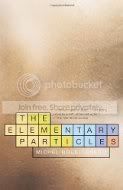
272 pages
5 stars
A brilliant, unputdownable dystopian satire in which (IMO) Huxley meets Updike. Highly recommended, especially if you like dark humour and postmodernist fiction.
"Houellebecq is telling us that "free" market, "free" love and "free" individuality are all an illusion. Sure, it's been said before, but not like this. Read it. Shake your head at the silly parts and give it a good think.
As you read The Elementary Particles, you are reminded of so many French philosophical writers. He takes his personal experiences with absolute misery and frustration and carefully reworks them into a surreal parable in which every twist of the plot is pedantically underlined with a unifying world view.
Just as the Marquis de Sade's sex crazed characters rave on for pages about atheism and Nature, Houellebecq's poor creations deliver speech after speech, sewing up Houellebecq's own enormous thesis. Houellebecq has no time for a clear plot or believable character development, but that's not suprising. He is trying to take on western civilization and he does an admirable job.
As a writer, Houellebecq is an imitator, but in the novel, he makes mention of almost all of his ancestors, Sade, Celine, Camus, Sartre and even Kafka. As a thinker, he comes to the table heavily armed, and although he falters time and again, his second novel cannot be dismissed as cynical nonsense. Even more shocking than Houellebecq's novel is the fact that writers don't try this more often." /Christa Payne, Amazon/
The Elementary Particles by Michel Houellebecq
272 pages
5 stars
A brilliant, unputdownable dystopian satire in which (IMO) Huxley meets Updike. Highly recommended, especially if you like dark humour and postmodernist fiction.
"Houellebecq is telling us that "free" market, "free" love and "free" individuality are all an illusion. Sure, it's been said before, but not like this. Read it. Shake your head at the silly parts and give it a good think.
As you read The Elementary Particles, you are reminded of so many French philosophical writers. He takes his personal experiences with absolute misery and frustration and carefully reworks them into a surreal parable in which every twist of the plot is pedantically underlined with a unifying world view.
Just as the Marquis de Sade's sex crazed characters rave on for pages about atheism and Nature, Houellebecq's poor creations deliver speech after speech, sewing up Houellebecq's own enormous thesis. Houellebecq has no time for a clear plot or believable character development, but that's not suprising. He is trying to take on western civilization and he does an admirable job.
As a writer, Houellebecq is an imitator, but in the novel, he makes mention of almost all of his ancestors, Sade, Celine, Camus, Sartre and even Kafka. As a thinker, he comes to the table heavily armed, and although he falters time and again, his second novel cannot be dismissed as cynical nonsense. Even more shocking than Houellebecq's novel is the fact that writers don't try this more often." /Christa Payne, Amazon/
20readeron
Category XI.:
Random Books off the TBR Shelves
Don Quixote (1605) by Miguel de Cervantes

1056 pages
5 stars
"There is nothing else like Cervantes' masterpiece. It's enchanting, humorous, philosophical, outrageous, absurd, beautiful and all around mesmerizing. There simply aren't words I can use here that wouldn't be totally trite and cliche to try expressing the tremendous value of this great two-part work. (...) There are many, many marvelous descriptions and lovely tableaux of words ingeniously welded into the picaresque tales of Don Quixote, the nobleman from La Mancha who has been deluded by an excess of reading about the knights-errant, accompanied by his loyal squire Sancho Panza upon his donkey Dapple. Their many interchanges are cleverly amusing and humorous. There's just something magical, enchanting and pure about the stories of Don Quixote in spite of all the grandiose absurdity and inexhaustible web of misfortunes in which the two main characters constantly find themselves. It's a work of mammoth scholarship, built on a world of knowledge surrounding medieval literature and all the tales about chivalry and knightly romance, yet stamped all over with an unforgettable uniqueness that makes Don Quixote a totally original work. There's nothing else like Don Quixote and I feel greatly, greatly enriched as a lover of literature having read this literary gold mine." /Daniel Pecheur, goodreads/
"Entertaining, funny, bawdy, inventive, comic, ironic...this is one fantastic piece of literature. It stoops occasionally towards slapstick and toilet humor, but other than that it is sheer genius. Cervantes was inventing the modern novel as he went along. All the forms the modern reader is used to are here. Cervantes never forgets that his job is to entertain, and he skips around, narrating as the author, the editor, anyone and any point of view he needs. It's post-modern! He openly refers to his contemporaries, his rivals, his readers, society at large. He will stop the story dead in order to have one of the characters launch into a side-story. The language is poetic, and it is amazing and enlightening to learn that people 400 years ago were calling each other "blockhead," for example. Go read this masterpiece! /keith koenigsberg, goodreads/
Just what I kept thinking! Why do they call it the first modern novel when it's soooo definitely and obviously post-modern! (And what a brilliant read as such!:)
Random Books off the TBR Shelves
Don Quixote (1605) by Miguel de Cervantes

1056 pages
5 stars
"There is nothing else like Cervantes' masterpiece. It's enchanting, humorous, philosophical, outrageous, absurd, beautiful and all around mesmerizing. There simply aren't words I can use here that wouldn't be totally trite and cliche to try expressing the tremendous value of this great two-part work. (...) There are many, many marvelous descriptions and lovely tableaux of words ingeniously welded into the picaresque tales of Don Quixote, the nobleman from La Mancha who has been deluded by an excess of reading about the knights-errant, accompanied by his loyal squire Sancho Panza upon his donkey Dapple. Their many interchanges are cleverly amusing and humorous. There's just something magical, enchanting and pure about the stories of Don Quixote in spite of all the grandiose absurdity and inexhaustible web of misfortunes in which the two main characters constantly find themselves. It's a work of mammoth scholarship, built on a world of knowledge surrounding medieval literature and all the tales about chivalry and knightly romance, yet stamped all over with an unforgettable uniqueness that makes Don Quixote a totally original work. There's nothing else like Don Quixote and I feel greatly, greatly enriched as a lover of literature having read this literary gold mine." /Daniel Pecheur, goodreads/
"Entertaining, funny, bawdy, inventive, comic, ironic...this is one fantastic piece of literature. It stoops occasionally towards slapstick and toilet humor, but other than that it is sheer genius. Cervantes was inventing the modern novel as he went along. All the forms the modern reader is used to are here. Cervantes never forgets that his job is to entertain, and he skips around, narrating as the author, the editor, anyone and any point of view he needs. It's post-modern! He openly refers to his contemporaries, his rivals, his readers, society at large. He will stop the story dead in order to have one of the characters launch into a side-story. The language is poetic, and it is amazing and enlightening to learn that people 400 years ago were calling each other "blockhead," for example. Go read this masterpiece! /keith koenigsberg, goodreads/
Just what I kept thinking! Why do they call it the first modern novel when it's soooo definitely and obviously post-modern! (And what a brilliant read as such!:)
21banjo123
Thanks for reviewing Happy Days in Hell. I hadn't heard of it and it sounds great.
22LisaMorr
The Elementary Particles sounds very interesting; thanks for your review.
23readeron
I'm glad I could be of help and I hope you'll enjoy the books, too.:) Thanks so much for stopping by!
24dianestm
Don Quixote is a book I have never picked up but based on your review it is one I definitely should be adding to the pile. Thanks.
25lkernagh
I have started Don Quixote for the year-long group read here and have to say that at the end of 8 chapters I cannot wait to see what he will get up to next!
26readeron
> 24 The book became one of my favourites, even though it took for me almost half a year to complete it. I Hope it won't disappoint you either!:)
> 25 I felt like that too! :) It's a great story with the greatest and funniest digressions ever. Absolutely loved every pages of it!:)
> 25 I felt like that too! :) It's a great story with the greatest and funniest digressions ever. Absolutely loved every pages of it!:)
27Neverwithoutabook
Hmmm...Liking your review of Don Quixote and thinking I should maybe give it another try. I first attempted to read it when I was in the latter couple of years of high school. Not sure which year. I remember putting it aside for something much more entertaining to my somewhat immature literary abilities. Now a few decades later, maybe I would not only enjoy it more, but actually finish it! :)
28psutto
I also tried many years ago to read it and gave up, wondering if who does the translation makes a difference?
29The_Hibernator
I tried reading Don Quixote when I was a freshman in college. I was doing fine...it would have taken about a year because I have a short attention span and need to refresh my brain with light, short books. But them my boss said to me "You're taking forever to read that book!" and being the silly shy little girl that I was, I gave up on DQ because I didn't want to look like I was a slow reader! haha But I always regretted it because I'd been enjoying it. I'm reading it with the year-long group read now.
>28 psutto: The Edith Grossman translation is supposed to be the easiest for the modern reader. Her philosophy was that DQ was written in very modern Spanish at the time, and so it ought to be translated into very modern English. :) Though in the DQ thread many people (including myself) are reading the Ormsby translation because it's free on the ereader. I've been liking the Ormsby translation so far.
>28 psutto: The Edith Grossman translation is supposed to be the easiest for the modern reader. Her philosophy was that DQ was written in very modern Spanish at the time, and so it ought to be translated into very modern English. :) Though in the DQ thread many people (including myself) are reading the Ormsby translation because it's free on the ereader. I've been liking the Ormsby translation so far.
30psutto
I'm thinking that next year I'm going to have a category of "books I really should have read already" which would be the classics so DQ would definitely fit
31Bcteagirl
I just started Don Quixote so I am glad that you loved it so much!
Great categories, I am starring this thread. I haven't read Farhams Freehold yet, so look forward to hearing what you think of it. I read The Handmaid's Tale in 2011 and loved it, I look forward to hearing what you think of it. :)
Great categories, I am starring this thread. I haven't read Farhams Freehold yet, so look forward to hearing what you think of it. I read The Handmaid's Tale in 2011 and loved it, I look forward to hearing what you think of it. :)
32readeron
> 27 Thanks for the kind words! I had no idea how much fun this novel can be until I borrowed from the library a whole, unabridged copy. It took me about half a year to complete it, and I read several other books at the same time, too. But I was absolutely loving every minute of reading it..:) I hope, if you decide to give it another try, this time it won't disappoint you either!
> 29 I often make the same mistake even now: chosing a shorter book to feel the progress more easily, it's quite hard to resist the temptation, especially since it became quite a fashion to count how many books we read a year, etc, I think it's great if one has enough self-control to stick with group reads. Hope you are all enjoying the novel, too!
> 30 A great idea, though my list under some similar title would be way too long for a year, I'm afraid!:) (I still keep making lists like that, - after all, every journey starts with a small step!:)
> 31 Thanks for the kind words! I'll hurry up a bit more with my sci-fi category then. I've read only one novel by Heinlein yet (The Puppet Masters) and I really enjoyed it, so since then I can't wait to read more of his novels. I'll try to borrow The Handmaid's Tale soon, as well, thanks for the recommendation. (I must admit that I've never completed a category challenge yet, and I think some of the titles above will stay only reading plans for me again, but still, I try to stay optimistic every year.:)
> 29 I often make the same mistake even now: chosing a shorter book to feel the progress more easily, it's quite hard to resist the temptation, especially since it became quite a fashion to count how many books we read a year, etc, I think it's great if one has enough self-control to stick with group reads. Hope you are all enjoying the novel, too!
> 30 A great idea, though my list under some similar title would be way too long for a year, I'm afraid!:) (I still keep making lists like that, - after all, every journey starts with a small step!:)
> 31 Thanks for the kind words! I'll hurry up a bit more with my sci-fi category then. I've read only one novel by Heinlein yet (The Puppet Masters) and I really enjoyed it, so since then I can't wait to read more of his novels. I'll try to borrow The Handmaid's Tale soon, as well, thanks for the recommendation. (I must admit that I've never completed a category challenge yet, and I think some of the titles above will stay only reading plans for me again, but still, I try to stay optimistic every year.:)
33readeron
Category VII. : Hungarian Authors
Csokonai Lili - Tizenhét hattyúk (seventeen Swans) by Esterházy Péter
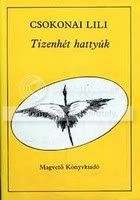
136 pages
3 stars
first published: 1987
"1987 Tizenhét hattyúk (et. Seventeen Swans) The novel was published under the pseudonym Lili Csokonai; the narrative pretends to be the diary of a young uneducated woman. Esterházy's stylistic brilliance is shown in the way the contemporary setting is presented in seventeenth century language." /http://www.frankfurt.matav.hu/angol/irok/esterhazy/public.htm/
"In his book entitled Psziché, the poet Sándor Weöres invented a poetess, with a whole œuvre, biography and network, and gives her as lover an author who really existed, in order to blur the boundaries between reality and fiction. Péter Esterházy's novel published in 1987 (Lili Csokonai: Tizenhét hattyúk) is based on a similar idea: he published this work - in which the female narrator writes of her unhappy love and sexual adventures in a Hungarian spoken four hundred years before - under the name of Lili Csokonai, and for a long time did not reveal the real identity of its author."
/Gabriella Györe, Translated by Kinga Dornacher/
It was amusing in places, but it was hard to care about the characters who weren't much more than cliches and the plot was rather unconvincing (and pretty depressive, too - I wish people would stop thinking that only ancient depressive cliches can have artistic or literary value). I can't for the life of me tell why this novel was recommended to me by a Hungarian fellow reader. Watched the movie, as well, but I still have no clue. What a letdown..., but at least it was a short read.
It was my first Esterházy. I have been hearing so many good things about the author, I really need to read some more of his books. Hopefully I'll like those more.
Csokonai Lili - Tizenhét hattyúk (seventeen Swans) by Esterházy Péter
136 pages
3 stars
first published: 1987
"1987 Tizenhét hattyúk (et. Seventeen Swans) The novel was published under the pseudonym Lili Csokonai; the narrative pretends to be the diary of a young uneducated woman. Esterházy's stylistic brilliance is shown in the way the contemporary setting is presented in seventeenth century language." /http://www.frankfurt.matav.hu/angol/irok/esterhazy/public.htm/
"In his book entitled Psziché, the poet Sándor Weöres invented a poetess, with a whole œuvre, biography and network, and gives her as lover an author who really existed, in order to blur the boundaries between reality and fiction. Péter Esterházy's novel published in 1987 (Lili Csokonai: Tizenhét hattyúk) is based on a similar idea: he published this work - in which the female narrator writes of her unhappy love and sexual adventures in a Hungarian spoken four hundred years before - under the name of Lili Csokonai, and for a long time did not reveal the real identity of its author."
/Gabriella Györe, Translated by Kinga Dornacher/
It was amusing in places, but it was hard to care about the characters who weren't much more than cliches and the plot was rather unconvincing (and pretty depressive, too - I wish people would stop thinking that only ancient depressive cliches can have artistic or literary value). I can't for the life of me tell why this novel was recommended to me by a Hungarian fellow reader. Watched the movie, as well, but I still have no clue. What a letdown..., but at least it was a short read.
It was my first Esterházy. I have been hearing so many good things about the author, I really need to read some more of his books. Hopefully I'll like those more.
34readeron
Category I.: Science Fiction
The Drowned World by J. G. Ballard
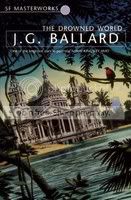
5 stars
176 pages
1962
"Everything you've ever heard about Ballard's view of the world is here in his first novel: distopian, lyrical and prophetic - all from a man bringing up three children on his own in a semi-detached house in Middlesex. JGB uses rich language to conjour a vivd sense of a broken planet and the pull of our more primordial tendencies. Dark and beautiful all at once." /Parthurbook, LibraryThing/
"The Drowned World has much in common with Joseph Conrad's Heart of Darkness. It is set in a future just a couple of generations hence. Freak solar flares have wrought havoc on the Earth's climate, resulting in temperature rises of tens of degrees. Massive flooding and silting have completely changed the landscape, leaving most of the cities of the temperate zone submerged in tepid swamp water and overgrown with jungle. Thus, London, where the novel takes place, has come to resemble Conrad's Congo.
The remnants of humanity have withdrawn to the arctic and antarctic, but survey teams still penetrate the drowned cities looking for scavengeable materials and assessing the still-evolving climate. Members of these teams cope well with the oppressive heat and aggressive jungle life, but find themselves strangely beset by dreams of primitive scenes from mankind's distant past. They become withdrawn, unsociable, and experience an irrational desire to push south into the equatorial inferno. One scientist theorizes that racial memories of our species' distant past are buried in our chromosomes, ready to be triggered by contact with the corresponding environment.
Whatever the cause, something compels certain men to turn away from the comforts and companionship of civilization and push into the darkness. Ballard's contribution to the literature of that phenomenon is concise and well-written. There is a palpable sense of decay and smothering heat in his descriptions of the fetid swamps and ever-encroaching jungle growth. The reader begins to share the character's sense that the jungle is "right," and that civilization is best left entombed.
It's tempting to read The Drowned World as a cautionary tale on global warming, but Ballard, writing in 1962, probably had no such intent. In a way, his version is even more frightening, because it depicts catastrophic changes utterly beyond man's control--changes that affect not only our world, but ourselves as well." /steven03tx, LibraryThing/
More info about the book:
http://en.wikipedia.org/wiki/The_Drowned_World
"This torrid, powerful 1962 novel was a major turning point in J.G. Ballard's career. In this future our old world has been gradually drowned as global warming melts the ice-caps and primordial jungles and swamps have returned to tropical London, recreating the ancient ecology of the Triassic age. According to the logic of Ballardian "inner space", these Turkish-bath surroundings evoke the psychological suction of the deep past, calling the human "hindbrain" back to the enfolding warmth of the womb. The text is rich with dreamy phrases like "the fata morgana of the terminal lagoon" and "the brighter day of the interior, archaeopsychic sun". As various members of an expedition to London busy themselves with more or less futile schemes like draining Leicester Square in hope of loot, the passive central character Kerans moves in his own "neuronic odyssey" to a strange acceptance of and assimilation by this lushly transformed world, vanishing into a final epiphany of heat and light. There is little narrative drive or sense of story (fans of rip-roaring, action-adventure SF tend not to get on with Ballard). The Drowned World is a potent, sensual mood-piece--static, jewelled and unforgettable.
In the 21st century, fluctuations in solar radiation have caused the ide-caps to melt and the seas to rise. Global temperatures have climbed, and civilization has retreated to the Arctic and Antarctic circles. London is a city now inundated by a primeval swamp, to which an expedition travels to record the flora and fauna of this new Triassic Age.
This early novel by the author of CRASH and EMPIRE OF THE SUN is at once a fast paced narrative, a stunning evocation of a flooded, tropical London of the near future and a speculative foray into the workings of the unconscious mind." /antimuzak, Librarything/
"This classic SF novel was published in 1962 but is surely due for a revival, or even a Hollywood blockbuster, as it deals with intense and sudden global warming (caused by sunspots, rather than carbon). The story centres on a military/scientific outpost in the superheated tropical lagoons around an inundated London, the civilized world has retreated to the Poles, and this groups is about to decamp and head north ahead of a rain-belt and the superheated air of up to 180 degrees, which is moving north behind the rain. Of the main characters; Kerans, Bostock, Colonel Riggs and Beatrice Dahl, only Riggs is still in his right mind.
The world conjured up by Ballard is rich and vivid, I loved the albino freebooter, Strangman and his army of scavengers with crocodile outriders. Kerans is the hero and like many Ballard heroes he is passive and an odd fish. The rather silly conceit of the book is that greenhouse earth is causing 'higher' animals to revert back along the spinal cord, following coded memories, back to pre-mamailan evolution, at the same time radiation is causing massive mutations resulting in super fast evolution of primitive plant and animal types. Dr Bostock, explaining this theory, claims that bit isn't merely Lamarckism in reverse, and, of course, it isn't, it's far more barking mad even than that.
However, it's still an atmospheric and compelling read." /greatrakes, LibraryThing/
The Drowned World by J. G. Ballard
5 stars
176 pages
1962
"Everything you've ever heard about Ballard's view of the world is here in his first novel: distopian, lyrical and prophetic - all from a man bringing up three children on his own in a semi-detached house in Middlesex. JGB uses rich language to conjour a vivd sense of a broken planet and the pull of our more primordial tendencies. Dark and beautiful all at once." /Parthurbook, LibraryThing/
"The Drowned World has much in common with Joseph Conrad's Heart of Darkness. It is set in a future just a couple of generations hence. Freak solar flares have wrought havoc on the Earth's climate, resulting in temperature rises of tens of degrees. Massive flooding and silting have completely changed the landscape, leaving most of the cities of the temperate zone submerged in tepid swamp water and overgrown with jungle. Thus, London, where the novel takes place, has come to resemble Conrad's Congo.
The remnants of humanity have withdrawn to the arctic and antarctic, but survey teams still penetrate the drowned cities looking for scavengeable materials and assessing the still-evolving climate. Members of these teams cope well with the oppressive heat and aggressive jungle life, but find themselves strangely beset by dreams of primitive scenes from mankind's distant past. They become withdrawn, unsociable, and experience an irrational desire to push south into the equatorial inferno. One scientist theorizes that racial memories of our species' distant past are buried in our chromosomes, ready to be triggered by contact with the corresponding environment.
Whatever the cause, something compels certain men to turn away from the comforts and companionship of civilization and push into the darkness. Ballard's contribution to the literature of that phenomenon is concise and well-written. There is a palpable sense of decay and smothering heat in his descriptions of the fetid swamps and ever-encroaching jungle growth. The reader begins to share the character's sense that the jungle is "right," and that civilization is best left entombed.
It's tempting to read The Drowned World as a cautionary tale on global warming, but Ballard, writing in 1962, probably had no such intent. In a way, his version is even more frightening, because it depicts catastrophic changes utterly beyond man's control--changes that affect not only our world, but ourselves as well." /steven03tx, LibraryThing/
More info about the book:
http://en.wikipedia.org/wiki/The_Drowned_World
"This torrid, powerful 1962 novel was a major turning point in J.G. Ballard's career. In this future our old world has been gradually drowned as global warming melts the ice-caps and primordial jungles and swamps have returned to tropical London, recreating the ancient ecology of the Triassic age. According to the logic of Ballardian "inner space", these Turkish-bath surroundings evoke the psychological suction of the deep past, calling the human "hindbrain" back to the enfolding warmth of the womb. The text is rich with dreamy phrases like "the fata morgana of the terminal lagoon" and "the brighter day of the interior, archaeopsychic sun". As various members of an expedition to London busy themselves with more or less futile schemes like draining Leicester Square in hope of loot, the passive central character Kerans moves in his own "neuronic odyssey" to a strange acceptance of and assimilation by this lushly transformed world, vanishing into a final epiphany of heat and light. There is little narrative drive or sense of story (fans of rip-roaring, action-adventure SF tend not to get on with Ballard). The Drowned World is a potent, sensual mood-piece--static, jewelled and unforgettable.
In the 21st century, fluctuations in solar radiation have caused the ide-caps to melt and the seas to rise. Global temperatures have climbed, and civilization has retreated to the Arctic and Antarctic circles. London is a city now inundated by a primeval swamp, to which an expedition travels to record the flora and fauna of this new Triassic Age.
This early novel by the author of CRASH and EMPIRE OF THE SUN is at once a fast paced narrative, a stunning evocation of a flooded, tropical London of the near future and a speculative foray into the workings of the unconscious mind." /antimuzak, Librarything/
"This classic SF novel was published in 1962 but is surely due for a revival, or even a Hollywood blockbuster, as it deals with intense and sudden global warming (caused by sunspots, rather than carbon). The story centres on a military/scientific outpost in the superheated tropical lagoons around an inundated London, the civilized world has retreated to the Poles, and this groups is about to decamp and head north ahead of a rain-belt and the superheated air of up to 180 degrees, which is moving north behind the rain. Of the main characters; Kerans, Bostock, Colonel Riggs and Beatrice Dahl, only Riggs is still in his right mind.
The world conjured up by Ballard is rich and vivid, I loved the albino freebooter, Strangman and his army of scavengers with crocodile outriders. Kerans is the hero and like many Ballard heroes he is passive and an odd fish. The rather silly conceit of the book is that greenhouse earth is causing 'higher' animals to revert back along the spinal cord, following coded memories, back to pre-mamailan evolution, at the same time radiation is causing massive mutations resulting in super fast evolution of primitive plant and animal types. Dr Bostock, explaining this theory, claims that bit isn't merely Lamarckism in reverse, and, of course, it isn't, it's far more barking mad even than that.
However, it's still an atmospheric and compelling read." /greatrakes, LibraryThing/
35clfisha
I keep meaning to read Ballard's science fiction (I have only read Empire of the Sun), he seems to be a love him or hate him author but he is so iconic I feel like I am missing out. I might start with The Drowned World after your review.
36readeron
I hope you will like the novel, too!:) It's really so "Dark and beautiful all at once". (I haven't read any other books by Ballard yet, but I'd love to.)
37AHS-Wolfy
I've only ever read Millenium People and have a couple of others on the tbr shelves though unfortunately not The Drowned World. Good to see that you enjoyed it though.
39readeron
Category VII. : Hungarian Authors
The Case Worker (A látogató) by George Konrád (Konrád György)
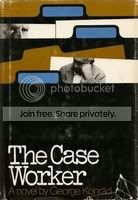
5 stars
172 pages
(first published 1969)
"This novel completely blew me away. I had to finish it quickly, because it hovered over my days like a spectre while I was reading it. Pitch black, grim, relentlessly hopeless account of a social worker in 60's Budapest. He sees the complete trainwreck of modern society in his clients; abuse, extreme poverty, suicides. The social worker knows there's very little he can do to change their situation, he is only there to keep the circus of useless processes going. Being confronted by this grief and misery every day, will he be able to keep it all at a professional distance?
This account brings the dark side that is present in every town to life with such clarity, you can almost smell the mould on the walls of the deadbeat waiting-to-die families. To be sure, this is not a pleasant book, but it's an important one. I have never seen hopelessness portrayed more vividly. The style is also remarkable. It's filled with page-long sentences sometimes go overboard with summaries, but it does in one breath clue you in on the way things have gone so horribly wrong.
Highly recommended. " /Stefan, goodreads/
"The world of Konrad's case worker smells like old tobacco, rotting vegetables and people, and an old leather sofa from "imperial" times that seems wildly out of place (and seems to know it).
This story follows a government child welfare bureaucrat in the damp, dirty, hopeless 1960s Budapest who has a brief excursion into the world of his "clients": the mentally and physically undesirable." /Pierce, goodreads/
"This is a bleak and grim book. I know there are lots of readers who quite understandably prefer not to read books like this. But if you can handle it, the writing is stellar, and the questions raised are profound." /arubabookwoman, LibraryThing/
"This book is one long howl of anger and frustration at everything wrong in the world. It is as relevant in 21st-century America as it was to Hungary under communism. "
/N. Gold "trismegistus", Amazon/
Yes, it could've been written anytime, anywhere.
The novel can be found on the 1001 books list.
(However, I don't plan to reread it any time soon. Actually, I almost gave it four stars.)
The Case Worker (A látogató) by George Konrád (Konrád György)
5 stars
172 pages
(first published 1969)
"This novel completely blew me away. I had to finish it quickly, because it hovered over my days like a spectre while I was reading it. Pitch black, grim, relentlessly hopeless account of a social worker in 60's Budapest. He sees the complete trainwreck of modern society in his clients; abuse, extreme poverty, suicides. The social worker knows there's very little he can do to change their situation, he is only there to keep the circus of useless processes going. Being confronted by this grief and misery every day, will he be able to keep it all at a professional distance?
This account brings the dark side that is present in every town to life with such clarity, you can almost smell the mould on the walls of the deadbeat waiting-to-die families. To be sure, this is not a pleasant book, but it's an important one. I have never seen hopelessness portrayed more vividly. The style is also remarkable. It's filled with page-long sentences sometimes go overboard with summaries, but it does in one breath clue you in on the way things have gone so horribly wrong.
Highly recommended. " /Stefan, goodreads/
"The world of Konrad's case worker smells like old tobacco, rotting vegetables and people, and an old leather sofa from "imperial" times that seems wildly out of place (and seems to know it).
This story follows a government child welfare bureaucrat in the damp, dirty, hopeless 1960s Budapest who has a brief excursion into the world of his "clients": the mentally and physically undesirable." /Pierce, goodreads/
"This is a bleak and grim book. I know there are lots of readers who quite understandably prefer not to read books like this. But if you can handle it, the writing is stellar, and the questions raised are profound." /arubabookwoman, LibraryThing/
"This book is one long howl of anger and frustration at everything wrong in the world. It is as relevant in 21st-century America as it was to Hungary under communism. "
/N. Gold "trismegistus", Amazon/
Yes, it could've been written anytime, anywhere.
The novel can be found on the 1001 books list.
(However, I don't plan to reread it any time soon. Actually, I almost gave it four stars.)
40readeron
VII. Hungarian Authors
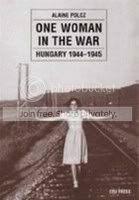
Asszony a fronton by Alaine Polcz
(One Woman in the War: Hungary 1944-1945)
163 pages
5 stars
"This autobiographic account of the experiences of a woman, then 19-20, in the closing months of the Second World War was first published in Hungarian in 1991 and has since been translated into a number of languages. Exciting, shocking and revealing, it is a journey into a piece of Central European history and a testament to the fighting spirit of a woman whose every moment was a challenge and protest against the inhumanity of war." /barnesandnoble/
"A very raw but delicately told story. Polcz's voice is incredibly intimate, and her account is jarring in the way she (seemingly so quickly) grew accustomed to the atrocities she endured on a regular basis, all while still nurturing a hint of hysteria, a sense of being so near breaking. Amazing what one can get used to and endure." /Rebecca Schmidt Castka, goodreads/
Asszony a fronton by Alaine Polcz
(One Woman in the War: Hungary 1944-1945)
163 pages
5 stars
"This autobiographic account of the experiences of a woman, then 19-20, in the closing months of the Second World War was first published in Hungarian in 1991 and has since been translated into a number of languages. Exciting, shocking and revealing, it is a journey into a piece of Central European history and a testament to the fighting spirit of a woman whose every moment was a challenge and protest against the inhumanity of war." /barnesandnoble/
"A very raw but delicately told story. Polcz's voice is incredibly intimate, and her account is jarring in the way she (seemingly so quickly) grew accustomed to the atrocities she endured on a regular basis, all while still nurturing a hint of hysteria, a sense of being so near breaking. Amazing what one can get used to and endure." /Rebecca Schmidt Castka, goodreads/
41readeron
Category VII.: Hungarian Authors
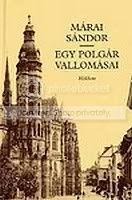
Egy polgár vallomásai by Sándor Márai
456 pages
5 stars
"(The Confessions of a Haut-Bourgeois) 1934-35
A novel, it is one of Márai's best writings and a turning point in his art, a personal account of the writer's childhood in small-town Hungary, an objective but dramatic description of middle-class life. The novel's second part tells about Márai's youth and his life as an artist living and travelling in Western Europe.
"This is the Hungarian middle-class whose way of life I was born into, observed, came to know and scrutinised in all its features to the very roots, and now I see the whole disintegrating. Perhaps this is my life's, my writing's sole duty: to delineate the course of this disintegration." (Sándor Márai) " /HUNLIT/
I realized for the first time here that Márai had a good sense of humor. While having read Embers, I really doubted it. Feeling better now.
Egy polgár vallomásai by Sándor Márai
456 pages
5 stars
"(The Confessions of a Haut-Bourgeois) 1934-35
A novel, it is one of Márai's best writings and a turning point in his art, a personal account of the writer's childhood in small-town Hungary, an objective but dramatic description of middle-class life. The novel's second part tells about Márai's youth and his life as an artist living and travelling in Western Europe.
"This is the Hungarian middle-class whose way of life I was born into, observed, came to know and scrutinised in all its features to the very roots, and now I see the whole disintegrating. Perhaps this is my life's, my writing's sole duty: to delineate the course of this disintegration." (Sándor Márai) " /HUNLIT/
I realized for the first time here that Márai had a good sense of humor. While having read Embers, I really doubted it. Feeling better now.

