SandDune's 13 in 2013
This topic was continued by SandDune's 13 in 2013 Episode 2.
Talk 2013 Category Challenge
Join LibraryThing to post.
This topic is currently marked as "dormant"—the last message is more than 90 days old. You can revive it by posting a reply.
1SandDune
This is the first time that I've joined the 2013 Category Challenge so I've been considering my categories carefully. This is what I've come up with so far although everything's subject to change. All the category names are from books in my library or wishlist.
The Welsh Girl Peter Ho Davies
Fiction about Wales or by Welsh authors set in the twentieth or twenty-first century. No Celtic mythology or Arthurian fables or medieval history.
Astonishing Splashes of Colour Claire Morrell
Picturebooks and graphic novels. This one will include at least some of the Sandman novels by Neil Gaiman
My Dog Tulip J.R. Ackerley
All things dog related.
The Gardens of Kyoto Kate Walbert
Fiction by Japanese authors.
Love on the Dole Walter Greenwood
Working-class fiction.
The End of Your Life Book Club Will Schwalbe
Science non-fiction - in particular climate change, environmental issues and astronomy. I usually read more non-fiction than I've done this year so I need to get back to reading some.
Is There Anything You Want? Margaret Forster
Recommendations from LT and elsewhere.
Possession A.S.Byatt
Books that I've possessed for more than 6 months and that really need reading. Several Persephone books fall into this category.
Touching the Void Joe Simpson
Filling in the gaps on my reading by year list.
Hothouse Brian Aldiss
My Open University reading: nineteenth century novels at the start of the year and probably twentieth century writing at the end.
The Thirteenth Tale Diane Setterfield
Series that I'm currently working through.
Oranges are not the only fruit Jeanette Winterson
The (ex) Orange prize and Booker prize and any other prizes that sound interesting.
A Brief History of the Dead Kevin Brockmeier
Dystopian fiction and the end of the world.
The Welsh Girl Peter Ho Davies
Fiction about Wales or by Welsh authors set in the twentieth or twenty-first century. No Celtic mythology or Arthurian fables or medieval history.
Astonishing Splashes of Colour Claire Morrell
Picturebooks and graphic novels. This one will include at least some of the Sandman novels by Neil Gaiman
My Dog Tulip J.R. Ackerley
All things dog related.
The Gardens of Kyoto Kate Walbert
Fiction by Japanese authors.
Love on the Dole Walter Greenwood
Working-class fiction.
The End of Your Life Book Club Will Schwalbe
Science non-fiction - in particular climate change, environmental issues and astronomy. I usually read more non-fiction than I've done this year so I need to get back to reading some.
Is There Anything You Want? Margaret Forster
Recommendations from LT and elsewhere.
Possession A.S.Byatt
Books that I've possessed for more than 6 months and that really need reading. Several Persephone books fall into this category.
Touching the Void Joe Simpson
Filling in the gaps on my reading by year list.
Hothouse Brian Aldiss
My Open University reading: nineteenth century novels at the start of the year and probably twentieth century writing at the end.
The Thirteenth Tale Diane Setterfield
Series that I'm currently working through.
Oranges are not the only fruit Jeanette Winterson
The (ex) Orange prize and Booker prize and any other prizes that sound interesting.
A Brief History of the Dead Kevin Brockmeier
Dystopian fiction and the end of the world.
2SandDune
The Welsh Girl
Welsh writing from the twentieth and twenty-first century.
Books Read:
1. Clueless Dogs Rhian Edwards
2. The Detour Gerbrand Bakker
Possible books:
Blow on a Dead Man's Embers Mari Strachan
The Small Mine Menna Gallie
Sea Holly Robert Minhinnick
The Keys of Babylon Robert Minhinnick
So Long, Hector Bebb Ron Berry
Wild Abandon Joe Dunthorne
Resistance Owen Sheers
The Hiding Place Trezza Azzopardi
Old People are a Problem Emyr Humphries
Grits Niall Griffiths
Any other books are likely to one from the Wales book of the year award:
http://walesbookoftheyear.co.uk/this-year/
or the Library of Wales:
http://thelibraryofwales.com/catalog/1
Welsh writing from the twentieth and twenty-first century.
Books Read:
1. Clueless Dogs Rhian Edwards
2. The Detour Gerbrand Bakker
Possible books:
Blow on a Dead Man's Embers Mari Strachan
The Small Mine Menna Gallie
Sea Holly Robert Minhinnick
The Keys of Babylon Robert Minhinnick
So Long, Hector Bebb Ron Berry
Wild Abandon Joe Dunthorne
Resistance Owen Sheers
The Hiding Place Trezza Azzopardi
Old People are a Problem Emyr Humphries
Grits Niall Griffiths
Any other books are likely to one from the Wales book of the year award:
http://walesbookoftheyear.co.uk/this-year/
or the Library of Wales:
http://thelibraryofwales.com/catalog/1
3SandDune
Astonishing Splashes of Colour
Picture books and graphic novels.
Books Read:
1. Fun Home: A Family Tragicomic Alison Bechdel
2. Dotter of her Father's Eyes Mary M. Talbot Bryan Talbot
3. Father Christmas Raymond Briggs
4. Ethel and Ernest Raymond Briggs
5. Where the Wind Blows Raymond Briggs
6. Delphine Richard Sala
Possible books:
Sandman Volume 1: Preludes and Nocturnes Neil Gaiman
Tibet: Through the Red Box Peter Sis
Grandville Bryan Talbot
Blankets Craig Thompson
Jerusalem: Chronicles from the Holy City Guy Delisle
The Red Tree Shaun Tan
Picture books and graphic novels.
Books Read:
1. Fun Home: A Family Tragicomic Alison Bechdel
2. Dotter of her Father's Eyes Mary M. Talbot Bryan Talbot
3. Father Christmas Raymond Briggs
4. Ethel and Ernest Raymond Briggs
5. Where the Wind Blows Raymond Briggs
6. Delphine Richard Sala
Possible books:
Sandman Volume 1: Preludes and Nocturnes Neil Gaiman
Tibet: Through the Red Box Peter Sis
Grandville Bryan Talbot
Blankets Craig Thompson
Jerusalem: Chronicles from the Holy City Guy Delisle
The Red Tree Shaun Tan
4SandDune
My Dog Tulip
Anything about dogs.
Books Read:
1. The Lost Dog Michelle de Kretser
2. My Dog Tulip J.R. Ackerley
3. The Last Family in England Matt Haig
Possible books:
We Think the World of You J.R. Ackerley
Flush Virginia Woolf
A Dog's Heart Mikail Bulgakov
Lives of the Monster Dogs Kirstin Bakis
The Dog Kerstin Ekman
In Defence of Dogs: Why Dogs need our Understanding John Bradshaw
Wild Dogs Helen Humphreys
Anything about dogs.
Books Read:
1. The Lost Dog Michelle de Kretser
2. My Dog Tulip J.R. Ackerley
3. The Last Family in England Matt Haig
Possible books:
We Think the World of You J.R. Ackerley
Flush Virginia Woolf
A Dog's Heart Mikail Bulgakov
Lives of the Monster Dogs Kirstin Bakis
The Dog Kerstin Ekman
In Defence of Dogs: Why Dogs need our Understanding John Bradshaw
Wild Dogs Helen Humphreys
5SandDune
The Gardens of Kyoto
Fiction by Japanese authors or set in Japan.
Books Read:
1. A Tale for the Time Being Ruth Ozeki
Possibles:
Beauty and Sadness Yasunari Kawabata
Norwegian Wood Haruki Murakami
An Artist of the Floating World Kazuo Ishiguro
Number 9 Dream David Mitchell
The Silent Cry Kenzaburō Ōe
I am a Cat Soseki Natsume
The Samurai Shusaku Endo
Secret Rendevous Kobo Abe
Fiction by Japanese authors or set in Japan.
Books Read:
1. A Tale for the Time Being Ruth Ozeki
Possibles:
Beauty and Sadness Yasunari Kawabata
Norwegian Wood Haruki Murakami
An Artist of the Floating World Kazuo Ishiguro
Number 9 Dream David Mitchell
The Silent Cry Kenzaburō Ōe
I am a Cat Soseki Natsume
The Samurai Shusaku Endo
Secret Rendevous Kobo Abe
6SandDune
Love on the Dole
Working-class fiction
Books Read:
1. This Boy Alan Johnson
2. Boy James Hanley
Possible reads:
Twenty Thousand Streets under the Sky Patrick Hamilton
London Belongs to Me Norman Collins
Buddha Da Anne Donovan
Waterline Ross Raisin
The Ragged Trousered Philanthropists Robert Tressell
Love on the Dole Walter Greenwood
Union Street Pat Barker
Working-class fiction
Books Read:
1. This Boy Alan Johnson
2. Boy James Hanley
Possible reads:
Twenty Thousand Streets under the Sky Patrick Hamilton
London Belongs to Me Norman Collins
Buddha Da Anne Donovan
Waterline Ross Raisin
The Ragged Trousered Philanthropists Robert Tressell
Love on the Dole Walter Greenwood
Union Street Pat Barker
7SandDune
The End of your Life Book Club
RL book club selections.
Books read:
February: Pure Andrew Miller
April: Angel Elizabeth Taylor
May: The Accidental Tourist Anne Tyler
June: And when Did You Last See Your Father Blake Morrison
September: The Immortal Life of Henrietta Lacks Rebecca Skloot
RL book club selections.
Books read:
February: Pure Andrew Miller
April: Angel Elizabeth Taylor
May: The Accidental Tourist Anne Tyler
June: And when Did You Last See Your Father Blake Morrison
September: The Immortal Life of Henrietta Lacks Rebecca Skloot
8SandDune
Is there Anything You Want?
Recommendations from LT and elsewhere so I'm not planning any of these reads. Waiting for next years book bulletets!
Books Read
1. Salvage the Bones Jesmyn Ward
2. The Unknown Bridesmaid Margaret Forster
3. Redshirts John Scalzi
4. The Humans Matt Haig
5. Where you Once Belonged Kent Haruf
6. The Ocean at the End of the Lane Neil Gaiman
7. The President's Hat Antoine Laurain
Possible books:
The Line Olga Grushin recommended by EBT1002
Recommendations from LT and elsewhere so I'm not planning any of these reads. Waiting for next years book bulletets!
Books Read
1. Salvage the Bones Jesmyn Ward
2. The Unknown Bridesmaid Margaret Forster
3. Redshirts John Scalzi
4. The Humans Matt Haig
5. Where you Once Belonged Kent Haruf
6. The Ocean at the End of the Lane Neil Gaiman
7. The President's Hat Antoine Laurain
Possible books:
The Line Olga Grushin recommended by EBT1002
9SandDune
Possession
Books on my shelves already that I really should get around to. I'm not planning any specific reads here as yet.
Books Read:
1.Sixpence House Paul Collins
2.Dandelion Wine Ray Bradbury
3.Black Swan Green David Mitchell
4.Anne of Green Gables L.M. Montgomery
5.The Damned Busters Matthew Hughes
6.The Last of the Vostyachs Diego Marani
7.How I Won the Yellow Jumper Ned Boulting
8.A Madness of Angels Kate Griffin
Books on my shelves already that I really should get around to. I'm not planning any specific reads here as yet.
Books Read:
1.Sixpence House Paul Collins
2.Dandelion Wine Ray Bradbury
3.Black Swan Green David Mitchell
4.Anne of Green Gables L.M. Montgomery
5.The Damned Busters Matthew Hughes
6.The Last of the Vostyachs Diego Marani
7.How I Won the Yellow Jumper Ned Boulting
8.A Madness of Angels Kate Griffin
10SandDune
Touching the Void
Filling in the gaps on my attempt to read a book from every year (at least from 1800). I'll probably concentrate on the gaps from 1890 onwards
Books read:
1931 A Fortnight in September R. C. Sheriff
1893
Maggie: A Girl of the Streets Stephen Crane
1894
Esther Waters George Moore
1896
The Island of Dr Moreau H.G.Wells or An Outcast of the Islands Joseph Conrad
1909
1914
The Golem Gustav Meyrink or The Pastors Wife Elizabeth von Arnim
1918
My Antonia Willa Cather or The Return of the Soldier Rebecca West
1919
The Metamorphosis and Other Stories Frank Kafka or My Man Jeeves P.G. Wodehouse or South Ernest Shackleton
1931
The Good Earth Pearl Buck or All Passion Spent Vita Sackville-West or The Brontes went to Woolworths Rachel Ferguson or The Fortnight in September R.C. Sherriff
Filling in the gaps on my attempt to read a book from every year (at least from 1800). I'll probably concentrate on the gaps from 1890 onwards
Books read:
1931 A Fortnight in September R. C. Sheriff
1893
Maggie: A Girl of the Streets Stephen Crane
1894
Esther Waters George Moore
1896
The Island of Dr Moreau H.G.Wells or An Outcast of the Islands Joseph Conrad
1909
1914
The Golem Gustav Meyrink or The Pastors Wife Elizabeth von Arnim
1918
My Antonia Willa Cather or The Return of the Soldier Rebecca West
1919
The Metamorphosis and Other Stories Frank Kafka or My Man Jeeves P.G. Wodehouse or South Ernest Shackleton
1931
The Good Earth Pearl Buck or All Passion Spent Vita Sackville-West or The Brontes went to Woolworths Rachel Ferguson or The Fortnight in September R.C. Sherriff
11SandDune
Hothouse
Books that I'm reading for the Open University.
Books Read:
1.Dracula Bram Stoker
2.Heart of Darkness Joseph Conrad
The first half of the year includes:
Madame Bovary Gustave Flaubert
The Women in White Wilkie Collins
The Portait of a Lady Henry James
Heart of Darkness Joseph Conrad
Dracula Bram Stoker
Books that I'm reading for the Open University.
Books Read:
1.Dracula Bram Stoker
2.Heart of Darkness Joseph Conrad
The first half of the year includes:
Madame Bovary Gustave Flaubert
The Women in White Wilkie Collins
The Portait of a Lady Henry James
Heart of Darkness Joseph Conrad
Dracula Bram Stoker
12SandDune
The Thirteenth Tale
Series that I'm going through or want to start.
Books read:
1.Perelandra C.S. Lewis
2.The Girl who Circumnavigated Fairyland in a Ship of her Own Making Catherynne M. Valente
3.Foreigner C. J. Cherryh
4. Moon over Soho Ben Aaronovitch
5. Shards of Honor Lois McMaster Bujold
6. The Warden Anthony Trollope
7. Barchester Towers Anthony Trollope
Possible choices:
Swallows and Amazons Arthur Ransome
Wolves of Willoughby Chase Joan Aiken
Parasol protectorate Gail Carriger
Rivers of London Ben Aaronovitch
Reykjavik Murder Mysteries Arnaldur Indridason
Temeraire Naomi Novik
Matthew Swift Kate Griffin
New Crobuzon China Mieville
Cosmic Trilogy C.S. Lewis
Blackout Connie Willis
Series that I'm going through or want to start.
Books read:
1.Perelandra C.S. Lewis
2.The Girl who Circumnavigated Fairyland in a Ship of her Own Making Catherynne M. Valente
3.Foreigner C. J. Cherryh
4. Moon over Soho Ben Aaronovitch
5. Shards of Honor Lois McMaster Bujold
6. The Warden Anthony Trollope
7. Barchester Towers Anthony Trollope
Possible choices:
Swallows and Amazons Arthur Ransome
Wolves of Willoughby Chase Joan Aiken
Parasol protectorate Gail Carriger
Rivers of London Ben Aaronovitch
Reykjavik Murder Mysteries Arnaldur Indridason
Temeraire Naomi Novik
Matthew Swift Kate Griffin
New Crobuzon China Mieville
Cosmic Trilogy C.S. Lewis
Blackout Connie Willis
13SandDune
Oranges are not the Only Fruit
Ex-Orange and Booker and any other prize lists that I fancy. Waiting for next years prize lists (although I'm not discounting prizes from earlier years either).
Books Read:
1. The Lighthouse Alison Moore (2012 Booker short list) *****
2. Swimming Home Deborah Levy (2012 Booker short list) ****
3. Narcopolis Jeet Thayil (2012 Booker short list) **1/2
4. Bring Up The Bodies Hilary Mantel (2012 Booker short list) ****
5. The Garden of Evening Mists Tan Twan Eng (2012 Booker short list) *****
6. Umbrella Will Self (2012 Booker short list) ****
7. Ignorance Michele Roberts (2013 Orange longlist) ***
8. Where'd you go, Bernadette Maria Semple **1/2 (2013 Orange short list)
9. Island of Wings Karin Altenberg ***
Ex-Orange and Booker and any other prize lists that I fancy. Waiting for next years prize lists (although I'm not discounting prizes from earlier years either).
Books Read:
1. The Lighthouse Alison Moore (2012 Booker short list) *****
2. Swimming Home Deborah Levy (2012 Booker short list) ****
3. Narcopolis Jeet Thayil (2012 Booker short list) **1/2
4. Bring Up The Bodies Hilary Mantel (2012 Booker short list) ****
5. The Garden of Evening Mists Tan Twan Eng (2012 Booker short list) *****
6. Umbrella Will Self (2012 Booker short list) ****
7. Ignorance Michele Roberts (2013 Orange longlist) ***
8. Where'd you go, Bernadette Maria Semple **1/2 (2013 Orange short list)
9. Island of Wings Karin Altenberg ***
14SandDune
A Brief History of the Dead
Dystopian fiction and the end of the world.
Books Read:
1.The Chrysalids John Wyndham
2.The White Mountains John Christopher
3.The City of Gold and Lead John Christopher
4.The Pool of Fire John Christopher
5.A Long Walk to Wimbledon H.F. Keating
6.Divergent Veronica Roth
7.Dark Eden Chris Beckett
8. The Gone Away World Nick Harkaway
Possible choices:
A Journal of the Flood Year David Ely
The uninvited Liz Jensen
The Drowned World J.G. Ballard
I am Legend Richard Matheson
Ridley Walker Russell Hoban
Blood Red Road Moira Young
Dystopian fiction and the end of the world.
Books Read:
1.The Chrysalids John Wyndham
2.The White Mountains John Christopher
3.The City of Gold and Lead John Christopher
4.The Pool of Fire John Christopher
5.A Long Walk to Wimbledon H.F. Keating
6.Divergent Veronica Roth
7.Dark Eden Chris Beckett
8. The Gone Away World Nick Harkaway
Possible choices:
A Journal of the Flood Year David Ely
The uninvited Liz Jensen
The Drowned World J.G. Ballard
I am Legend Richard Matheson
Ridley Walker Russell Hoban
Blood Red Road Moira Young
15PawsforThought
Welcome! Your categories look good, can't wait for your candidates. I'm especially curious about the Wales category - could be very useful for my European Challenge read.
16DeltaQueen50
Welcome to the Challenge. We often visit the same threads over at the 75ers, so I look forward to getting to know you and following your reading next year.
17Crazymamie
Rhian - Found and starred your thread over here. I am doing this challenge for the first time next year also. Love your categories, and I will be waiting to see the rest of your possibilities.
18lkernagh
Welcome to the challenge! I love your categories and the possible candidates you have lined up do far looking interesting. Hope you have a lot of fun with this challenge and I look forward to following your reading.
19luvamystery65
Nice categories! I'll be following to see what makes the cut.
20-Eva-
Welcome!! Looks like you've got some great categories and I have some of your possibilities on my Mt. TBR so I'm looking forward to following along next year!
22SandDune
Hi Paws, Judith, Mamie, Lori, Roberts, Hailelib - thanks for the welcome. It's going to take me a few days or so to get all my possible reads sorted out and some pictures put up. Any suggestions on books gratefully received.
Paws if you're looking for a really good book set in Wales I'd recommend The Earth Hums in B Flat by Mari Strachan which I read a cople of years ago. I've got another of her books on my list which I've also heard good things about.
Paws if you're looking for a really good book set in Wales I'd recommend The Earth Hums in B Flat by Mari Strachan which I read a cople of years ago. I've got another of her books on my list which I've also heard good things about.
23PawsforThought
Thanks for the tip, I'll make a note of it for later (I don't have time to add anything else to my TBR list for 2013 - it's swamped enough as it is.
24LittleTaiko
Welcome! Looking forward to seeing what you read in 2013.
25mamzel
I was glad to see that Shaun Tan has a new book out. I'll have to look for it. Welcome to the challenge. Will the books inspiring the categories be read as well?
26rabbitprincess
Great categories! I'll be following your Wales and dystopian categories in particular :)
27christina_reads
Very creative way to name your categories! I look forward to seeing what you read.
28SandDune
Hi Stacey, Mamzel, Rabbitprincess, Christina,
I'm looking forward to starting the challenge - haven't had much chance to look at everyone else's threads yet though.
Mamzel, sometimes the category names actually fit in the right category. Other times they don't relate themselves or I've read them already.
I'm looking forward to starting the challenge - haven't had much chance to look at everyone else's threads yet though.
Mamzel, sometimes the category names actually fit in the right category. Other times they don't relate themselves or I've read them already.
29susanj67
I highly recommend The Ragged-Trousered Philanthropists for your "Love on the Dole" category. I picked it up in a remainder bookshop, expecting it to be worthy but dull (one of those "should read" books) and it was an exceptionally good read. I might try Love on the Dole, which I have heard of but not read.
30SandDune
Hi Susan, The Ragged Trousered Philanthropists is Definitely top of my list at the moment.
32clue
Oh, thanks for the links to Welsh books. I don't know Welsh writers well and would like to expand my reading of them.
33clfisha
Like the categories & some interesting books. I read The Dark Philosophers this year from the Welsh Library which is certainly interesting and soaked through with Welsh culture.
34SandDune
#31,32,33 Hi psutto, clue, Claire - thanks for the welcome. I've neglected this thread a bit over the last few days - I really need to fill in some of my remaining categories.
35sandragon
I'm a first timer to this challenge as well.
I haven't heard of many of the books you've listed so far so I'm looking forward to your thoughts on them, and possibly adding more books to Mt TBR.
I haven't heard of many of the books you've listed so far so I'm looking forward to your thoughts on them, and possibly adding more books to Mt TBR.
36SandDune
Hi Sandragon, I'm a bit behind on this thread at the moment. I'm not kicking off my challenge until 1st January.
I've realised that I've forgotten to leave a category for my RL book club, so I'm going to replace the A Change of Climate category. Now I just need to decide what to call it!
I've realised that I've forgotten to leave a category for my RL book club, so I'm going to replace the A Change of Climate category. Now I just need to decide what to call it!
37SandDune
The Lighthouse Alison Moore ****1/2
Challenge: Oranges are not the Only Fruit (Booker Prize short listed in 2012)
audiobook

The first book that I have read from the 2012 Booker shortlist, and one that has certain similarities with the long-listed The Unlikely Pilgrimage of Harold Fry, both books being concerned with the reminiscences of a middle-aged man looking back on their life whilst walking, but while I found Harold Fry overly sentimental and a bit too whimsical for my tastes, The Lighthouse is altogether darker and sadder, and resonated with me much more.
Futh is a recently separated man in his mid-forties who decides to take a lone walking tour of the Rhineland in Germany, a holiday for which he is woefully ill-suited. With a pair of brand-new walking-boots never before worn, and feet which are tired after his walk around the deck of the ferry and a blistered mess by the end of his first day of proper walking, Futh is not a natural hiker. But Futh is clearly unsuited to many aspects of his life: throughout he misunderstands both the actions of others and the effect that his own actions will have on them. The circular nature of his walk (starting and finishing in the town of Hellhaus), is echoed by the circular nature of the narrative, as Futh returns over and over again to key points in his childhood and later life. And the circularity is repeated as it becomes clear that the events of Futh's own life echo those of his parents, whose marriage broke up when his mother walked out when he was twelve, an abandonment which has clearly scarred his whole life. As well as Futh, the narrative follows the story of Ester, the fading but promiscuous proprietress of the hotel in Hellhaus, locked into a unhappy marriage with the domineering Bernard. The motif of the lighthouse runs throughout the book from the small silver stopper to an antique perfume bottle which is Futh's only reminder of his mother, to the real lighthouse which is witness to a pivotal scene in Futh's life, to the English translation of the hotel name (bright house or light house). And it is the lighthouse which leads to the implied denouement at the end of the novel.
Overall, this is a novel which although short, easily justifies its place on the Booker Prize short list. A deceptively simple novel which justifies rereading.
Challenge: Oranges are not the Only Fruit (Booker Prize short listed in 2012)
audiobook

The first book that I have read from the 2012 Booker shortlist, and one that has certain similarities with the long-listed The Unlikely Pilgrimage of Harold Fry, both books being concerned with the reminiscences of a middle-aged man looking back on their life whilst walking, but while I found Harold Fry overly sentimental and a bit too whimsical for my tastes, The Lighthouse is altogether darker and sadder, and resonated with me much more.
Futh is a recently separated man in his mid-forties who decides to take a lone walking tour of the Rhineland in Germany, a holiday for which he is woefully ill-suited. With a pair of brand-new walking-boots never before worn, and feet which are tired after his walk around the deck of the ferry and a blistered mess by the end of his first day of proper walking, Futh is not a natural hiker. But Futh is clearly unsuited to many aspects of his life: throughout he misunderstands both the actions of others and the effect that his own actions will have on them. The circular nature of his walk (starting and finishing in the town of Hellhaus), is echoed by the circular nature of the narrative, as Futh returns over and over again to key points in his childhood and later life. And the circularity is repeated as it becomes clear that the events of Futh's own life echo those of his parents, whose marriage broke up when his mother walked out when he was twelve, an abandonment which has clearly scarred his whole life. As well as Futh, the narrative follows the story of Ester, the fading but promiscuous proprietress of the hotel in Hellhaus, locked into a unhappy marriage with the domineering Bernard. The motif of the lighthouse runs throughout the book from the small silver stopper to an antique perfume bottle which is Futh's only reminder of his mother, to the real lighthouse which is witness to a pivotal scene in Futh's life, to the English translation of the hotel name (bright house or light house). And it is the lighthouse which leads to the implied denouement at the end of the novel.
Overall, this is a novel which although short, easily justifies its place on the Booker Prize short list. A deceptively simple novel which justifies rereading.
38lkernagh
Very nice review of The Lighthouse, Rhian!
39SandDune
Hi Lori, I've rather been neglecting this thread what with Christmas, and family illnesses, and trying to keep up with the frenetic pace of the 75 Book Challenge at the start of the year. But now that I have actually started reading some books I must get back to this thread as well.
40SandDune
Fun Home: A Family Tragicomic Alison Bechdel ***1/2
Challenge: Astonishing Splashes of Colour (picturebooks and graphic novels)
graphic novel

A moving and thoughtful memoir of Alison Bechdel's childhood, and in particular her relationship with her father, a troubled man and a closet homosexual who seems almost to be living someone else's life. But rather than being the 'fun home' of the title, Bechdel's childhood home is a house governed by the moods of her father, whose arrival home from work 'cast a cold pall on the peaceable kingdom' where she spent her early days with the mother and brother. In his day job Alison Bechdel's father is a part-time funeral director running the family business, the Bechdel Funeral Home (the 'fun' home of the title), while also teaching English to reluctant students at the local high school. But in his spare time he has a passion and a talent for historical restoration: a passion that gives the Bechdel family a house with gilt cornices, marble fireplaces and crystal chandeliers but where Alison and her siblings seem there just to lend an air of authenticity to his exhibit, 'a sort of still life with children'.
Bechdel's father views his inner feelings through the prism of his favourite writers (James Joyce and F. Scott Fitzgerald) and clearly has his own inner demons. Bechdel's coming out to her family is upstaged by her mother's announcement that her father had had several sexual relationships with young men and boys in their home town, which makes events in her earlier life rather clearer to understand. But this is not a vindictive memoir, rather an attempt to understand her father and in particular why he remained in his small home town leading a life to which he seemed so patently unsuited. So much so that when he was killed in a traffic accident at the age of 44 the assumption of his family was that it was suicide, although no note had been left.
Definitely a rewarding read especially for anyone interested in family relationships.
Challenge: Astonishing Splashes of Colour (picturebooks and graphic novels)
graphic novel

A moving and thoughtful memoir of Alison Bechdel's childhood, and in particular her relationship with her father, a troubled man and a closet homosexual who seems almost to be living someone else's life. But rather than being the 'fun home' of the title, Bechdel's childhood home is a house governed by the moods of her father, whose arrival home from work 'cast a cold pall on the peaceable kingdom' where she spent her early days with the mother and brother. In his day job Alison Bechdel's father is a part-time funeral director running the family business, the Bechdel Funeral Home (the 'fun' home of the title), while also teaching English to reluctant students at the local high school. But in his spare time he has a passion and a talent for historical restoration: a passion that gives the Bechdel family a house with gilt cornices, marble fireplaces and crystal chandeliers but where Alison and her siblings seem there just to lend an air of authenticity to his exhibit, 'a sort of still life with children'.
Bechdel's father views his inner feelings through the prism of his favourite writers (James Joyce and F. Scott Fitzgerald) and clearly has his own inner demons. Bechdel's coming out to her family is upstaged by her mother's announcement that her father had had several sexual relationships with young men and boys in their home town, which makes events in her earlier life rather clearer to understand. But this is not a vindictive memoir, rather an attempt to understand her father and in particular why he remained in his small home town leading a life to which he seemed so patently unsuited. So much so that when he was killed in a traffic accident at the age of 44 the assumption of his family was that it was suicide, although no note had been left.
Definitely a rewarding read especially for anyone interested in family relationships.
41SandDune
Clueless Dogs Rhian Edwards ***
Challenge: The Welsh Girl (Welsh writing)
kindle
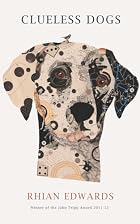
I've rather shoe-horned this book into my Wales category which was originally intended to be fiction only. But Rhian Edwards is a Welsh poet (from about 5 miles down the road from where I come from, it turns out) and several of the poems have clearly local settings, so I think I'm justified in including it. I bought this kindle book for the very shallow reason that I loved the picture on the front cover, and it's not often I come across an author with the same name as me, but I enjoyed these poems, although I didn't find them earth-shattering. The collection deals with love and childhood and the day to day business of living, and some are recognizably from my local area.
Here is one of my favourites:
The Steed
Olive-green skulled, an upside-down
eye, a broom for a body,
a wooden wheel for a hoof,
you were my beast, my favourite
my nameless toy. Between the podge
of my thighs, you were my partner in crime.
Together we galloped through rooms
and gymkhanaed the chairs.
I fed you dandelions and bog water
rammed your muzzle into walls.
Now you lean your punch-drunk head
against the fire's mantle.
Crowned in a silver cloche hat,
noosed in an ostrich feather boa,
you are dandified, moribund,
a Rosebud, a relic,
put out to pasture, living
proof we were once something else.
Challenge: The Welsh Girl (Welsh writing)
kindle
I've rather shoe-horned this book into my Wales category which was originally intended to be fiction only. But Rhian Edwards is a Welsh poet (from about 5 miles down the road from where I come from, it turns out) and several of the poems have clearly local settings, so I think I'm justified in including it. I bought this kindle book for the very shallow reason that I loved the picture on the front cover, and it's not often I come across an author with the same name as me, but I enjoyed these poems, although I didn't find them earth-shattering. The collection deals with love and childhood and the day to day business of living, and some are recognizably from my local area.
Here is one of my favourites:
The Steed
Olive-green skulled, an upside-down
eye, a broom for a body,
a wooden wheel for a hoof,
you were my beast, my favourite
my nameless toy. Between the podge
of my thighs, you were my partner in crime.
Together we galloped through rooms
and gymkhanaed the chairs.
I fed you dandelions and bog water
rammed your muzzle into walls.
Now you lean your punch-drunk head
against the fire's mantle.
Crowned in a silver cloche hat,
noosed in an ostrich feather boa,
you are dandified, moribund,
a Rosebud, a relic,
put out to pasture, living
proof we were once something else.
43-Eva-
->41 SandDune:
That is a fantastic cover!!
That is a fantastic cover!!
44clfisha
Lovely review of Fun Home, I thought it was a very well crafted memoir, very interesting. Can't wait to read her next book about her mother.
46SandDune
#42,44,45 Welcome Lori, Beth, Pete - Fun Home is definitely one I would recommend. It's funny, I don't usually like autobiographies but in GN format I enjoy them quite a lot.
#43 Hi Eva - the picture above doesn't really do it justice to be honest as it's too small to see all the detail. When you look at it closely the dog is made up of all sorts of different bits and pieces.
#43 Hi Eva - the picture above doesn't really do it justice to be honest as it's too small to see all the detail. When you look at it closely the dog is made up of all sorts of different bits and pieces.
49christina_reads
@ 41 -- Somehow I missed that you had a Welsh category! I'm looking to read a book set in Wales (and preferably by a Welsh author) soon...it's part of another book challenge I'm doing. But I'm very unfamiliar with Welsh literature, so any recommendations you could give me would be much appreciated!
50SandDune
Hi Christina, a book I always recommend is The Earth Hums in B flat by Mari Strachan, a sort of coming of age book for a girl in 1950's Wales. I absolutely loved that. I've got another one of her books on my list of possibles this year Blow on a Dead Man's Embers. And I've also got Resistance by Owen Sheers on my list (I've seen the film but not read the book yet) It's set in a remote part of Wales in an alternative history where Germany invaded Britain in the second world war - and it's about the relationships between the women left at home and the German soldiers.
51DeltaQueen50
Resistance sounds really good and I am adding it to my wishlist. While I was looking up Owen Sheers I also saw a book of his called The Dust Diaries a fictionalized story of a missonary to Rhodesia, it's also been added to the ever-growing wishlist.
52christina_reads
@ 50 -- Thanks, SandDune! I actually have Resistance on my TBR list already -- didn't realize it was set in Wales! I've also heard good things about The Earth Hums in B Flat, so it looks like I have some good options. :)
53SandDune
Swimming Home Deborah Levy ****
Challenge: Oranges are Not the Only Fruit (Booker Prize Shortlisted in 2012)
audiobook
Books like this are one of the reasons that I like my RL book club. Despite it being short-listed for the Booker Prize in 2012, I would have been pretty unlikely to have chosen this book for myself if I hadn't been doing my book club read of the shortlist. And I am glad I picked it up: despite having some initial misgivings in the first few chapters I thought it was a rewarding read and it warranted its place on the shortlist.
Joe and Isabel Jacobs are holidaying in the South of France with their 14 year old daughter Nina, and friends Mitchell and Laura. Returning to their villa they find a young woman swimming naked in their pool. She introduces herself as Kitty Finch, and she explains she has also booked the villa, but there has been a mix-up with the dates and she is waiting for the villa's caretaker to find her a local hotel room. When no hotel room is available for several days, Isabel Jacobs surprisingly asks her to stay at the spare room in the villa. Only later does Kitty Finch confess to Joe Jacobs, a well-known poet, that she has followed him to the South of France in order to persuade him to read her poem. And as the day go by, other aspects of Kitty's behaviour start to become more and more unstable as well.
At the start of the book my initial feelings were that these were irritating and arrogant people with whom I did not want to spend time, in particular Mitchell, who is a gun-obsessed obnoxious boor. But as the book progressed, and more and more is revealed this starts to seem a simplistic point of view. The prologue leads the reader to expect an affair between Joe and Kitty, but ultimately Kitty's presence in the villa has effects that stretch out in a far more unexpected direction.
Challenge: Oranges are Not the Only Fruit (Booker Prize Shortlisted in 2012)
audiobook
Books like this are one of the reasons that I like my RL book club. Despite it being short-listed for the Booker Prize in 2012, I would have been pretty unlikely to have chosen this book for myself if I hadn't been doing my book club read of the shortlist. And I am glad I picked it up: despite having some initial misgivings in the first few chapters I thought it was a rewarding read and it warranted its place on the shortlist.
Joe and Isabel Jacobs are holidaying in the South of France with their 14 year old daughter Nina, and friends Mitchell and Laura. Returning to their villa they find a young woman swimming naked in their pool. She introduces herself as Kitty Finch, and she explains she has also booked the villa, but there has been a mix-up with the dates and she is waiting for the villa's caretaker to find her a local hotel room. When no hotel room is available for several days, Isabel Jacobs surprisingly asks her to stay at the spare room in the villa. Only later does Kitty Finch confess to Joe Jacobs, a well-known poet, that she has followed him to the South of France in order to persuade him to read her poem. And as the day go by, other aspects of Kitty's behaviour start to become more and more unstable as well.
At the start of the book my initial feelings were that these were irritating and arrogant people with whom I did not want to spend time, in particular Mitchell, who is a gun-obsessed obnoxious boor. But as the book progressed, and more and more is revealed this starts to seem a simplistic point of view. The prologue leads the reader to expect an affair between Joe and Kitty, but ultimately Kitty's presence in the villa has effects that stretch out in a far more unexpected direction.
54SandDune
Narcopolis Jeet Thayil **1/2
Challenge: Oranges are Not the Only Fruit (2012 Booker Shortlist)
audiobook
How to review this book? I have to begin by saying that I didn't like it, didn't like it at all. At times I got the merest glimpse of what people might see in it, but the merest glimpse only which disappeared as soon as it had come. I wouldn't have finished reading it if I hadn't been determined to finish the Booker shortlist books this year and I certainly don't want to read anything by the same author.
The book dips in and out of the lives of the denizens of Rashid's khana or opium den on Shuklaji Street in Bombay/ Mumbai, and the street and the city are as important a character in the book as they change almost out of recognition from the late 1970's when the book starts to its end in 2004. As are the drugs, changing from the traditional opium to heroin to cocaine and more modern drugs by the end. Characters appear, are followed for a few pages, and then drop out of sight, sometimes to reappear later or sometimes not. Rashid himself whose khana, at one time almost an unofficial tourist attraction of the city, is overtaken by the decline in the popularity of opium. Newton Xavier, the ageing wild child of Indian painting and poetry who turns up to his own poetry reading event too drunk to stand. Mr Lee, a refugee from communist China, who runs a khana so secretive that it is thought to be a myth. Rumi, the cowboy-booted high caste Hindu who despite his education and family connections finds himself falling towards the bottom rungs of society. And Dimple, by far the most interesting character, the Hijra or eunuch prostitute sold by her mother at the age of nine, who tends the pipes at Rashid's and longs to read anything she can lay her hands on.
So why didn't I like it? I suppose I have to say that reading about the heroin addicts of Bombay isn't really my comfort zone, but in the main I didn't like it because I found the book boring. While the idea of the teeming city and streets was very well described, the individual characters themselves didn't really engage my interest. The narrative frequently goes off at a tangent: sometimes a short diversion into people's dreams and poems (most of which seem to deal with the end of the world), and sometimes much longer as when there is a fifty page interlude where Mr Lee relates his life history (and that of his father and mother) in great detail. I can see that this relates to the semi-dreamlike state in which the characters find themselves with the opium, and there are connections to be made between the dreams and reality, but it does seem to go on and on. And there is some fairly violent sex which I found unpleasant, especially in the light of thinking about recent events in India.
I considered giving this only ** but have settled on **1/2 at the moment as I can see that it has literary merit even if it is not at all to my taste. The writing at times is beautiful but in an overblown sort of way with words pouring out everywhere: again not for me as I prefer a simpler writing style where it feels like every word has been carefully chosen. It is a complex book and I'm sure I would understand more on a second reading, but that is something that I definitely won't be devoting the time to.
Challenge: Oranges are Not the Only Fruit (2012 Booker Shortlist)
audiobook
How to review this book? I have to begin by saying that I didn't like it, didn't like it at all. At times I got the merest glimpse of what people might see in it, but the merest glimpse only which disappeared as soon as it had come. I wouldn't have finished reading it if I hadn't been determined to finish the Booker shortlist books this year and I certainly don't want to read anything by the same author.
The book dips in and out of the lives of the denizens of Rashid's khana or opium den on Shuklaji Street in Bombay/ Mumbai, and the street and the city are as important a character in the book as they change almost out of recognition from the late 1970's when the book starts to its end in 2004. As are the drugs, changing from the traditional opium to heroin to cocaine and more modern drugs by the end. Characters appear, are followed for a few pages, and then drop out of sight, sometimes to reappear later or sometimes not. Rashid himself whose khana, at one time almost an unofficial tourist attraction of the city, is overtaken by the decline in the popularity of opium. Newton Xavier, the ageing wild child of Indian painting and poetry who turns up to his own poetry reading event too drunk to stand. Mr Lee, a refugee from communist China, who runs a khana so secretive that it is thought to be a myth. Rumi, the cowboy-booted high caste Hindu who despite his education and family connections finds himself falling towards the bottom rungs of society. And Dimple, by far the most interesting character, the Hijra or eunuch prostitute sold by her mother at the age of nine, who tends the pipes at Rashid's and longs to read anything she can lay her hands on.
So why didn't I like it? I suppose I have to say that reading about the heroin addicts of Bombay isn't really my comfort zone, but in the main I didn't like it because I found the book boring. While the idea of the teeming city and streets was very well described, the individual characters themselves didn't really engage my interest. The narrative frequently goes off at a tangent: sometimes a short diversion into people's dreams and poems (most of which seem to deal with the end of the world), and sometimes much longer as when there is a fifty page interlude where Mr Lee relates his life history (and that of his father and mother) in great detail. I can see that this relates to the semi-dreamlike state in which the characters find themselves with the opium, and there are connections to be made between the dreams and reality, but it does seem to go on and on. And there is some fairly violent sex which I found unpleasant, especially in the light of thinking about recent events in India.
I considered giving this only ** but have settled on **1/2 at the moment as I can see that it has literary merit even if it is not at all to my taste. The writing at times is beautiful but in an overblown sort of way with words pouring out everywhere: again not for me as I prefer a simpler writing style where it feels like every word has been carefully chosen. It is a complex book and I'm sure I would understand more on a second reading, but that is something that I definitely won't be devoting the time to.
55-Eva-
The premise for Narcopolis sounds like it could have been quite a pageturner - sorry for the dud, but thanks for taking the bullet. :)
56SandDune
#55 Hi Eva - I think the content could have made a good book - it was the style that I had real problems with.
57clfisha
Great explanation of why you didn't like it, I think I would have the same issues (I need something to hook onto as well) so one for me to avoid :)
58SandDune
Dotter of her Father's Eyes Mary M. Talbot Bryan Talbot ***1/2
Challenge: picture books and graphic novel
graphic novel

The first graphic novel to win the Costa biography award (or even to be short listed).
Mary Talbot who wrote the text was the daughter of James S. Atherton, a noted expert on James Joyce, and this book combines an account of her own difficult relationship with her father, with an acount of the relationship between James Joyce and his daughter Lucia. Both threads of the book show fathers unable to come to terms with the independence of their daughters. James Atherton is portrayed as a sarcastic and angry man, whose pupils and colleagues found inspirational, but who was unable to inspire love within his own family. A man who took pleasure in mocking and belittling his daughter's achievements. And James Joyce as presented in this book seems to have been an equally disappointing father. While certainly a more loving father when his children were younger, constant moves between Trieste, Zurich and Paris led a family friend to joke that 'Lucia was illiterate in four languages'. And although she developed into a talented and dedicated dancer neither her father or mother would take her ambitions seriously, insisting that numerous family commitments must come before her own ambitions. With Joyce's view being that it was 'enough if a woman can write a letter and carry an umbrella gracefully' compromise was impossible, and deprived of her dancing her mental state began to disintegrate.
Illustrated by Mary Talbot's husband Bryan the book conjures up beautifully the different environments of Paris of the 1920's and 30's and the North of England in the 1950's and 60's.
Although I enjoyed the book I'm not sure whether I would have awarded it the prize myself, as I felt it left a lot unsaid about the subject. But it has made me interested in a subject which I would never otherwise have considered reading about, so perhaps in that it achieved its objective.
Challenge: picture books and graphic novel
graphic novel

The first graphic novel to win the Costa biography award (or even to be short listed).
Mary Talbot who wrote the text was the daughter of James S. Atherton, a noted expert on James Joyce, and this book combines an account of her own difficult relationship with her father, with an acount of the relationship between James Joyce and his daughter Lucia. Both threads of the book show fathers unable to come to terms with the independence of their daughters. James Atherton is portrayed as a sarcastic and angry man, whose pupils and colleagues found inspirational, but who was unable to inspire love within his own family. A man who took pleasure in mocking and belittling his daughter's achievements. And James Joyce as presented in this book seems to have been an equally disappointing father. While certainly a more loving father when his children were younger, constant moves between Trieste, Zurich and Paris led a family friend to joke that 'Lucia was illiterate in four languages'. And although she developed into a talented and dedicated dancer neither her father or mother would take her ambitions seriously, insisting that numerous family commitments must come before her own ambitions. With Joyce's view being that it was 'enough if a woman can write a letter and carry an umbrella gracefully' compromise was impossible, and deprived of her dancing her mental state began to disintegrate.
Illustrated by Mary Talbot's husband Bryan the book conjures up beautifully the different environments of Paris of the 1920's and 30's and the North of England in the 1950's and 60's.
Although I enjoyed the book I'm not sure whether I would have awarded it the prize myself, as I felt it left a lot unsaid about the subject. But it has made me interested in a subject which I would never otherwise have considered reading about, so perhaps in that it achieved its objective.
60SandDune
#59 Hi Claire - I thought it was a bit too short as well. In particular, I wanted to know more about her incarceration in asylums at the end and whether this was unavoidable or whether she was just a troubled woman whose behaviour was unacceptable to her family.
By the way I think I called you Beth further up. Sorry!
By the way I think I called you Beth further up. Sorry!
61Tanglewood
I love your categories! I'm particularly interested in your reads on Japan. Out of your possible graphics, I've read Blankets and really enjoyed. I also liked his later one, Habibi. I'm planning to re-read Madame Bovary this year, as I've gotten a new translation I want to try. It sounds like you have a great year of reading planned out!
62SandDune
Hi Michelle - thanks for dropping by. The Japan category came about because last year I read Shipwrecks and Kafka on the Shore and really wanted to read more, in particular Murakami, but more generally as well. Also, I had a week's trip to Japan a few years ago with work and found it such an interesting experience that ever since I've been wanting to learn more about the country.
63SandDune
Perelandra C. S. Lewis **1/2
Challenge: The Thirteenth Tale (series that I'm working through)
audiobook

I read Out of the Silent Planet, the first book in C.S. Lewis's Space Trilogy, last year and enjoyed it, awarding it four stars, but I found this one a lot less to my taste. While Out of the Silent Planet had theological elements they were not overpowering and I enjoyed the picture which Lewis created of Malacandra (or Mars). But in Perelandra, while the world building still caught my interest, large sections of the book are devoted to theological arguments which most definitely did not. And the absence of women from the narrative seen in Out of the Silent Planet changes in Perelandra to a portrayal of women as subservient and almost childlike. So not a hugely successful read, and disappointing given my reaction to the first book and the fact that C.S. Lewis's Narnia books were some of my favourite reads from childhood.
Elwin Ransom, the philologist and Cambridge don who is the unlikely hero from Out of the Silent Planet, is again the main character in Perelandra. Sent to Perelandra (or Venus) by the Oyassa (or ruler) of Mars to carry out an unnamed task he finds himself in a watery world, where initially the only 'land' seems to be provided by large floating islands made of vegetation. Large and beautiful floating islands with flowers and trees and woods and birds and animals, which all rush up and down the huge waves which surge around the oceans of Venus. Rather than being wholly alone as he had feared, Ransom eventually meets a green-skinned 'human', referred to throughout as the 'lady', and eventually comes to realise that she and the 'king' are the only two intelligent beings on the planet. Biblical references come thick and fast: it is soon clear that Perelandra is a picture of Paradise before the Fall, and the 'king' and the 'lady' are the Adam and Eve of another world. But temptation soon arrives, in the form of the scientist Weston, Ransom's enemy from Out of the Silent planet, whose endless conversations with the 'lady' bring the planet to the brink.
There is very little plot and most of the book deals with the temptation of the 'lady'. Theological arguments are not really my thing, but if they're well argued I'm prepared to give them a go: these just seemed flawed at times and to have noticeable holes in them. And I felt the allegories would have worked better if they had just been a little more subtle, these were just so obvious. In a similar way to his Narnia books, Lewis uses characters and creatures from various mythologies in this novel, and tries to tie them all together. I felt that in a children's book that was acceptable, but here he seems to be trying to create an allegory of an overarching theology, so why only use Western mythology? Isn't that a little Eurocentric.
So overall not a brilliant book for me. I will read the final book in the trilogy, as I want to see where Lewis is taking it, but I'm a lot less hopeful about it than I was.
Challenge: The Thirteenth Tale (series that I'm working through)
audiobook

I read Out of the Silent Planet, the first book in C.S. Lewis's Space Trilogy, last year and enjoyed it, awarding it four stars, but I found this one a lot less to my taste. While Out of the Silent Planet had theological elements they were not overpowering and I enjoyed the picture which Lewis created of Malacandra (or Mars). But in Perelandra, while the world building still caught my interest, large sections of the book are devoted to theological arguments which most definitely did not. And the absence of women from the narrative seen in Out of the Silent Planet changes in Perelandra to a portrayal of women as subservient and almost childlike. So not a hugely successful read, and disappointing given my reaction to the first book and the fact that C.S. Lewis's Narnia books were some of my favourite reads from childhood.
Elwin Ransom, the philologist and Cambridge don who is the unlikely hero from Out of the Silent Planet, is again the main character in Perelandra. Sent to Perelandra (or Venus) by the Oyassa (or ruler) of Mars to carry out an unnamed task he finds himself in a watery world, where initially the only 'land' seems to be provided by large floating islands made of vegetation. Large and beautiful floating islands with flowers and trees and woods and birds and animals, which all rush up and down the huge waves which surge around the oceans of Venus. Rather than being wholly alone as he had feared, Ransom eventually meets a green-skinned 'human', referred to throughout as the 'lady', and eventually comes to realise that she and the 'king' are the only two intelligent beings on the planet. Biblical references come thick and fast: it is soon clear that Perelandra is a picture of Paradise before the Fall, and the 'king' and the 'lady' are the Adam and Eve of another world. But temptation soon arrives, in the form of the scientist Weston, Ransom's enemy from Out of the Silent planet, whose endless conversations with the 'lady' bring the planet to the brink.
There is very little plot and most of the book deals with the temptation of the 'lady'. Theological arguments are not really my thing, but if they're well argued I'm prepared to give them a go: these just seemed flawed at times and to have noticeable holes in them. And I felt the allegories would have worked better if they had just been a little more subtle, these were just so obvious. In a similar way to his Narnia books, Lewis uses characters and creatures from various mythologies in this novel, and tries to tie them all together. I felt that in a children's book that was acceptable, but here he seems to be trying to create an allegory of an overarching theology, so why only use Western mythology? Isn't that a little Eurocentric.
So overall not a brilliant book for me. I will read the final book in the trilogy, as I want to see where Lewis is taking it, but I'm a lot less hopeful about it than I was.
64SandDune
Bring up the Bodies Hilary Mantel ****
Challenge: Oranges are not the Only Fruit
I'm not going to write a formal review for this book as a lot of people have done this already, and besides everyone knows what happened to Anne Boleyn. But this was a beautifully written book which in my opinion was a worthy winner of the 2012 Booker Prize. It was a book which I enjoyed a lot and which drew a wonderfully evocative picture of Tudor England, but I didn't love it as many people seem to have done. I found the historical period dealt with just a little bit too familiar: living with a history teacher who loves his subject and a son who is almost as obsessed, historical events can be a quite common topic of conversation in our house. So while I loved the portrait of Cromwell presented in this book, the book didn't have that uncertainty of plot which I need for a book to become a favourite with me.
It was the portrait of Thomas Cromwell which made the book for me. Risen from being the son of a blacksmith to being one of the most powerful men in England, he is the archetypal self-made man. A complex character with one foot in the modern world and one foot still in the superstition of the medieval age. It's an achievement for Mantel to have presented a character that can be both hugely ruthless and sympathetic at the same time. As he engineers Anne Boleyn's downfall he will stop at nothing to achieve his aims, but at the same time the reader can empathise with his grief about his long dead wife and daughters and his hopes for his son's future.
I should add that I haven't read Wolf Hall but I don't think that detracted too much from my enjoyment of this. And Mr SandDune, who's always happy to discuss anything historical, says that the Shardlake books present a more believable picture of Cromwell (to him at least) than this one.
Challenge: Oranges are not the Only Fruit
I'm not going to write a formal review for this book as a lot of people have done this already, and besides everyone knows what happened to Anne Boleyn. But this was a beautifully written book which in my opinion was a worthy winner of the 2012 Booker Prize. It was a book which I enjoyed a lot and which drew a wonderfully evocative picture of Tudor England, but I didn't love it as many people seem to have done. I found the historical period dealt with just a little bit too familiar: living with a history teacher who loves his subject and a son who is almost as obsessed, historical events can be a quite common topic of conversation in our house. So while I loved the portrait of Cromwell presented in this book, the book didn't have that uncertainty of plot which I need for a book to become a favourite with me.
It was the portrait of Thomas Cromwell which made the book for me. Risen from being the son of a blacksmith to being one of the most powerful men in England, he is the archetypal self-made man. A complex character with one foot in the modern world and one foot still in the superstition of the medieval age. It's an achievement for Mantel to have presented a character that can be both hugely ruthless and sympathetic at the same time. As he engineers Anne Boleyn's downfall he will stop at nothing to achieve his aims, but at the same time the reader can empathise with his grief about his long dead wife and daughters and his hopes for his son's future.
I should add that I haven't read Wolf Hall but I don't think that detracted too much from my enjoyment of this. And Mr SandDune, who's always happy to discuss anything historical, says that the Shardlake books present a more believable picture of Cromwell (to him at least) than this one.
65lkernagh
I read Wolf Hall last year and I loved how Mantel created such a vivid character of Thomas Cromwell..... never saw that coming and it really made Wolf Hall the story it is, IMO! Glad to see her Thomas Cromwell continues to catch a reader's interest. I am going to hold off on reading Bring up the Bodies until the next book comes out.
66SandDune
#75 Hi LoriI think I will certainly try and read Wolf Hall this year, but I think I'm looking forward more to the third book which will cover a period I don't know as much about.
67SandDune
Pure Andrew Miller ***1/2
Challenge: The End of Your Life Book Club (RL Book Club selections)

Only just finished this one in time as my book club meeting was last night and I finished it with a couple of hours to spare.
At the end of the eighteenth century the ancient church and cemetery of Les Innocents in the heart of Paris has become a place which inspires only disgust. For centuries the burial place of the city, the number of bodies have far outstripped the capacity of the ground to cope with them:
They tell me that during one single outbreak of the plague fifty thousand corpses were buried at les Innocents in less than a month. And so it continued, corpse upon corpse, the death-carts queuing along the rue Saint-Denis. There were even burials at night by torchlight. Corpse upon corpse. A number beyond computation. Vast legions packed into a smudge of earth no bigger than a potato field.
But by the year 1785 the result of this overcrowding of the dead have become impossible to ignore. The smell inside the church and cemetery have become almost unbearable: it pervades the surrounding area tainting everything it touches. And there is danger as well, those living around the cemetary find that to enter their own cellar can mean the risk of unconsciousness and death, as the noxious gases seep through the earth. And the final straw comes after heavy rains, when a retaining wall collapses letting the contents of a burial pit spill into the cellar of an unfortunate neighbour. And so the engineer Jean-Baptiste Barratte is appointed to deal with the problem once and for all: to disinterr the remains of les Innocents and transport them to a place outside the city, to demolish the church and to make clean the ground. But not all those living in the area are equally keen to see the destruction of the cemetery, in particular its priest Pere Colbert, and the daughter of the family with whom the engineer lodges, Zygette. And as the work proceeds Jean-Baptiste finds that he has more issues to deal with than merely resentment of his task.
It was actually the story of the cemetery and its destruction, in all its slightly gruesome details, that I enjoyed most about this work, as well as the evocation of a Paris on the borders of change. Set only very slightly before the French Revolution, the idea of change pervades the book, and the cemetery seems to represent the corrupt and moribund ancien regime waiting to be destroyed. Even the glamour of Versailles is clearly a facade: on his visit to receive his instructions the fabled mirrors are there, but tarnished and dusty. I didn't find that the fate of the characters interested me as much as the fate of the cemetery, certainly at the beginning of the book.
Overall, a good read, but I have to say that most people at my RL book club enjoyed it much more than I did. Several loved it, and would obviously have given it five stars if they'd been rating it in that way. But for me it was a good solid enjoyable read but not a special one. But I'd be very happy to try some of the author's other historical novels.
Challenge: The End of Your Life Book Club (RL Book Club selections)

Only just finished this one in time as my book club meeting was last night and I finished it with a couple of hours to spare.
At the end of the eighteenth century the ancient church and cemetery of Les Innocents in the heart of Paris has become a place which inspires only disgust. For centuries the burial place of the city, the number of bodies have far outstripped the capacity of the ground to cope with them:
They tell me that during one single outbreak of the plague fifty thousand corpses were buried at les Innocents in less than a month. And so it continued, corpse upon corpse, the death-carts queuing along the rue Saint-Denis. There were even burials at night by torchlight. Corpse upon corpse. A number beyond computation. Vast legions packed into a smudge of earth no bigger than a potato field.
But by the year 1785 the result of this overcrowding of the dead have become impossible to ignore. The smell inside the church and cemetery have become almost unbearable: it pervades the surrounding area tainting everything it touches. And there is danger as well, those living around the cemetary find that to enter their own cellar can mean the risk of unconsciousness and death, as the noxious gases seep through the earth. And the final straw comes after heavy rains, when a retaining wall collapses letting the contents of a burial pit spill into the cellar of an unfortunate neighbour. And so the engineer Jean-Baptiste Barratte is appointed to deal with the problem once and for all: to disinterr the remains of les Innocents and transport them to a place outside the city, to demolish the church and to make clean the ground. But not all those living in the area are equally keen to see the destruction of the cemetery, in particular its priest Pere Colbert, and the daughter of the family with whom the engineer lodges, Zygette. And as the work proceeds Jean-Baptiste finds that he has more issues to deal with than merely resentment of his task.
It was actually the story of the cemetery and its destruction, in all its slightly gruesome details, that I enjoyed most about this work, as well as the evocation of a Paris on the borders of change. Set only very slightly before the French Revolution, the idea of change pervades the book, and the cemetery seems to represent the corrupt and moribund ancien regime waiting to be destroyed. Even the glamour of Versailles is clearly a facade: on his visit to receive his instructions the fabled mirrors are there, but tarnished and dusty. I didn't find that the fate of the characters interested me as much as the fate of the cemetery, certainly at the beginning of the book.
Overall, a good read, but I have to say that most people at my RL book club enjoyed it much more than I did. Several loved it, and would obviously have given it five stars if they'd been rating it in that way. But for me it was a good solid enjoyable read but not a special one. But I'd be very happy to try some of the author's other historical novels.
68SandDune
The Girl who Circumnavigated Fairyland in a Ship of her Own Making Catherynne M. Valente ***1/2
Challenge: The Thirteenth Tale ( series that I'm reading or want to read)
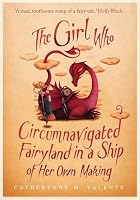
September is a 12 year old girl who is bored at home and who doesn't fit in at school. So when the Green Wind and his leopard (the Leopard of Little Breezes) arrives at her window and invites her on a trip to Fairyland, she isn't likely to refuse. But Fairyland isn't quite as she imagined: for a start there seems to be a surprising lack of fairies. The rule of the benevolent Queen Mallow has been replaced by that of the Marquess, seemingly a young girl but one who holds all Fairyland in her sway. Determining that any visitor to Fairyland needs a serious quest, September undertakes to retrieve the magic spoon of the witch Goodbye which has been stolen by the Marquess. She's befriended in her quest by a wyvern, A-through-L, a dragon-like creature who is unable to fly as all winged creatures have their wings bound with iron chains by order of the Marquess. But the control of the Marquess over Fairyland is greater than September had ever imagined, and her quest becomes seemingly more and more hopeless.
I enjoyed this book, but I was expecting to love it, and in the end I wasn't quite as enthralled by it as other people seem to have been. To me it seems to have slightly fallen between two stools in deciding whether it is an adult's or a children's book. There is beautiful writing here and hugely imaginative ideas, but it just left me a little colder than I was expecting. For me, everything just needed to have a little more depth.
Challenge: The Thirteenth Tale ( series that I'm reading or want to read)
September is a 12 year old girl who is bored at home and who doesn't fit in at school. So when the Green Wind and his leopard (the Leopard of Little Breezes) arrives at her window and invites her on a trip to Fairyland, she isn't likely to refuse. But Fairyland isn't quite as she imagined: for a start there seems to be a surprising lack of fairies. The rule of the benevolent Queen Mallow has been replaced by that of the Marquess, seemingly a young girl but one who holds all Fairyland in her sway. Determining that any visitor to Fairyland needs a serious quest, September undertakes to retrieve the magic spoon of the witch Goodbye which has been stolen by the Marquess. She's befriended in her quest by a wyvern, A-through-L, a dragon-like creature who is unable to fly as all winged creatures have their wings bound with iron chains by order of the Marquess. But the control of the Marquess over Fairyland is greater than September had ever imagined, and her quest becomes seemingly more and more hopeless.
I enjoyed this book, but I was expecting to love it, and in the end I wasn't quite as enthralled by it as other people seem to have been. To me it seems to have slightly fallen between two stools in deciding whether it is an adult's or a children's book. There is beautiful writing here and hugely imaginative ideas, but it just left me a little colder than I was expecting. For me, everything just needed to have a little more depth.
69rabbitprincess
I'd be interested in a non-fiction book about the cemetery and that time period -- your review of Pure has piqued my curiosity!
70-Eva-
The Girl who Circumnavigated Fairyland is on Mt. TBR. I too have only heard great words about it, so I'm glad to hear something, however little, against it, just so I can make sure I don't go in with my expectations too high - I do want to like it a lot! :)
71sandragon
I've got The Girl Who on audio to listen to with my 8yo. Don't know when we'll start it though. We're in the middle of another story right now and what we listen to next will depend on his mood. It sounds interesting to me so I hope it sounds interesting enough to him to give it a try.
72clfisha
I know what you mean about Pure, I liked it a lot less than you did but the setting was greater than the actual plot :)
73SandDune
#69 Hi Rabbitprincess - there's one non-fiction book that I remember hearing about that might fit the bill and I've put it on my own wish list since reading Pure. That's Necropolis: London and its Dead. I know that's a different city, but it seems to cover a lot of the same ground. I think the idea that you could just keep burying and burying more and more corpses in a restricted space without running into problems isn't one that was unique to Paris.
#70 Eva I posted my review The girl who circumnavigated Fairyland on my 75 Books in 2013 thread as well and a couple of people there seemed have a similar reaction. But most reviews I've seen do seem to love it.
#70 Eva I posted my review The girl who circumnavigated Fairyland on my 75 Books in 2013 thread as well and a couple of people there seemed have a similar reaction. But most reviews I've seen do seem to love it.
74SandDune
#71 Hi Sandra I think an 8 year old would probably enjoy it a lot. The book that it reminds me most of is The Phantom Tollbooth which was my son's favourite book for a good couple of years from about age 8 onwards. He's twelve now (actually thirteen tomorrow so I will have a teenager on my hands) and I don't think I'd recommend it for him now. In some ways, I found The Girl Who Circumnavigated Fairyland read like a proper children's (rather than a YA) book: there is quite a straightforward quest and the darker parts are not really that dark. In other ways, it's addressed at an adult audience. But I can't really see it appealing to teenagers - too whimsical.
#72 Claire My husband is in my real life bookclub and he had same opinion about the book that I did. But most of the other people who were there in the meeting seemed to really love it so perhaps our is a minority view.
#72 Claire My husband is in my real life bookclub and he had same opinion about the book that I did. But most of the other people who were there in the meeting seemed to really love it so perhaps our is a minority view.
75sandragon
Good luck with your brand new teenager :o)
My oldest boy just turned 12, so I'm just less than a year from having my own teen in the house. We get to practice on their cousins a bit, but they're girls and not really 'ours' so they go easy on us compared to with their parents.
My oldest boy just turned 12, so I'm just less than a year from having my own teen in the house. We get to practice on their cousins a bit, but they're girls and not really 'ours' so they go easy on us compared to with their parents.
76SandDune
Sandra he's still asking for books, which is good. For his birthday from his grandmother he wanted The Enemy Charlie Higson, TimeRiders: The Pirate Kings Alex Scarrow, and Lamplighter and Factotum by D.M. Cornish
77sandragon
Neither of my boys tend to ask for books (unless something catches their eye in the latest Scholastic book order). They both seem happy to get what they can from the school or public libraries. But my 12yo is also happy to gets books for presents as well, especially if they're from a series he's in the middle of. Most recently these have been the Eragon books, and any of the Olympian or Kane series by Rick Riordan. I'll to keep the ones you've mentioned in mind for future present possibilities.
78SandDune
#77 J didn't really get on with Eragon for some reason but he did love the Rick Riordan ones. 'TimeRiders: The Pirate Kings' is the seventh of a projected nine book series in which time travel has changed the course of history: definitely his favourite series at the moment. And Lamplighter is book two of the Monster Blood Tattoo trilogy - I bought him the first book Foundling for Christmas and it seems to be another favourite.
79rabbitprincess
>73 SandDune:: Ooh, that does sound interesting! Added to library request list.
80lkernagh
Some nice recent reading, Rhian. I have both Pure and Circumnavigated Fairyland on my future reading list. Both sound like quite different reads!
81SandDune
Hi Lori They were very different! I'm looking forward to some lighter reads after finishing my last two Booker prize short list books for our book club meeting next week. I'm currently reading Umbrella and The Garden of Evening Mists.
82SandDune
I have now read five and a half books out of last year's Booker short list, enough to make a tentative judgement on my rankings, although I will finish the last one Umbrella over the next couple of days. And the winner is ... The Garden of Evening Mists by Tan Twan Eng.
1. The Garden of Evening Mists Tan Twan Eng
2. The Lighthouse Alison Moore
3. Bring up the Bodies Hilary Mantel
4. Swimming Home Deborah Levy
5. Umbrella Will Self
6. Narcopolis Jeet Thayil
I have of yet finished Umbrella so there's potential for it to move up. Even on what I have read so far I had to think quite hard on whether to place it fourth or fifth.
1. The Garden of Evening Mists Tan Twan Eng
2. The Lighthouse Alison Moore
3. Bring up the Bodies Hilary Mantel
4. Swimming Home Deborah Levy
5. Umbrella Will Self
6. Narcopolis Jeet Thayil
I have of yet finished Umbrella so there's potential for it to move up. Even on what I have read so far I had to think quite hard on whether to place it fourth or fifth.
83SandDune
Umbrella Will Self****
Challenge: Oranges are not the Only Fruit (2012 Booker Prize Shortlist)
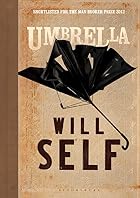
This is not an easy book to read. Paragraphs go on for page after page, so few are the breaks between them that on first sight it seems that there are no paragraphs at all. Streams of consiousnesses flow as the boundaries between the four main characters and three main time periods are endlessly blurred. A sentence will start out at the beginning of the twentieth century and transform seamlessly somewhere in the middle to the thoughts of character nearly a hundred years later. Snippets of songs, and random thoughts force their way into the narrative; a sizeable portion of the text is printed in italics for reasons that are not completely obvious. Looking at the first few pages I very nearly made the decision not to read the book at all, it seemed so obviously to be hard work. But when I started reading, I found that it wasn't the uphill struggle that it had seemed to be. While I certainly couldn't understand everything that was written, or all or even most of the references, by letting it just flow over me I found that I was very engaged with the book, interested in the characters and didn't for a moment think of putting it to one side. In particular I loved the lack of boundaries: the way a Victorian pocket watch transforms within a single sentence to become a digital wrist watch, and the reader suddenly realises that the narrative has changed character and moved forward seventy years.
Audrey Death, (or De'Ath, or Deer as her name endlessly mutates) is a long-term patient in the Frien Barnet mental hospital of 1971 Britain. She is one of a number of patients who are believed to be suffering from encephalitis lethargica, a disease which spread throughout Europe in the aftermath of World War I, leaving a third of its sufferers dead and another third completely unable to interact with the world around them, while at the same time suffering from compulsive repetive tics performed at astonishing speed. Dr Zachary Busner, a psychiatrist at the hospital recognises a similarity between certain of their symptoms and those of Parkinson's disease, for which the drug L-DOPA has had positive results. Deciding to treat the sufferers with this drug in a somewhat unorthodox trial, he discovers that the drug has dramatic effects, and the somnambulant patients wake. Interwoven with this narrative is one of Britain during and immediately after the First World War: Audrey's life as an intelligent and politically active young woman working at the Arsenal munitions factory in London; her younger brother Stanley who is obsessed with the mechanical progress that the new century offers; and her older brother Albert whose astonishing calculating power propels him out of the reach of his working class family. The third and final narrative strand is that of the older Dr Busner, retired and looking back on his life and in particular the summer when he awoke the encephalitic patients.
I found this to be a very rewarding read, and, apart from The Garden of Evening Mists, the most thought-provoking of my Booker short-list reads. I found the awakening of the patients particularly interesting as it is loosely based on a true story, detailed in Oliver Sacks' book Awakenings and also the subject of the film of the same name with Robin Williams and Robert de Niro (neither of which I had come across before reading this book). But I also enjoyed the characters that Will Self had created against this backdrop and I enjoyed the blurring of time and consciousness that he employs. So while this is not a book for everyone, and requires quite slow and careful reading, I'd encourage people to read at least the first forty of fifty pages before deciding it's not for them.
Challenge: Oranges are not the Only Fruit (2012 Booker Prize Shortlist)
This is not an easy book to read. Paragraphs go on for page after page, so few are the breaks between them that on first sight it seems that there are no paragraphs at all. Streams of consiousnesses flow as the boundaries between the four main characters and three main time periods are endlessly blurred. A sentence will start out at the beginning of the twentieth century and transform seamlessly somewhere in the middle to the thoughts of character nearly a hundred years later. Snippets of songs, and random thoughts force their way into the narrative; a sizeable portion of the text is printed in italics for reasons that are not completely obvious. Looking at the first few pages I very nearly made the decision not to read the book at all, it seemed so obviously to be hard work. But when I started reading, I found that it wasn't the uphill struggle that it had seemed to be. While I certainly couldn't understand everything that was written, or all or even most of the references, by letting it just flow over me I found that I was very engaged with the book, interested in the characters and didn't for a moment think of putting it to one side. In particular I loved the lack of boundaries: the way a Victorian pocket watch transforms within a single sentence to become a digital wrist watch, and the reader suddenly realises that the narrative has changed character and moved forward seventy years.
Audrey Death, (or De'Ath, or Deer as her name endlessly mutates) is a long-term patient in the Frien Barnet mental hospital of 1971 Britain. She is one of a number of patients who are believed to be suffering from encephalitis lethargica, a disease which spread throughout Europe in the aftermath of World War I, leaving a third of its sufferers dead and another third completely unable to interact with the world around them, while at the same time suffering from compulsive repetive tics performed at astonishing speed. Dr Zachary Busner, a psychiatrist at the hospital recognises a similarity between certain of their symptoms and those of Parkinson's disease, for which the drug L-DOPA has had positive results. Deciding to treat the sufferers with this drug in a somewhat unorthodox trial, he discovers that the drug has dramatic effects, and the somnambulant patients wake. Interwoven with this narrative is one of Britain during and immediately after the First World War: Audrey's life as an intelligent and politically active young woman working at the Arsenal munitions factory in London; her younger brother Stanley who is obsessed with the mechanical progress that the new century offers; and her older brother Albert whose astonishing calculating power propels him out of the reach of his working class family. The third and final narrative strand is that of the older Dr Busner, retired and looking back on his life and in particular the summer when he awoke the encephalitic patients.
I found this to be a very rewarding read, and, apart from The Garden of Evening Mists, the most thought-provoking of my Booker short-list reads. I found the awakening of the patients particularly interesting as it is loosely based on a true story, detailed in Oliver Sacks' book Awakenings and also the subject of the film of the same name with Robin Williams and Robert de Niro (neither of which I had come across before reading this book). But I also enjoyed the characters that Will Self had created against this backdrop and I enjoyed the blurring of time and consciousness that he employs. So while this is not a book for everyone, and requires quite slow and careful reading, I'd encourage people to read at least the first forty of fifty pages before deciding it's not for them.
84SandDune
The Garden of Evening Mists Tan Twan Eng *****
Challenge: Oranges are not the only Fruit

Teoh Yun Ling takes early retirement from her position as a Supreme Court Judge in the Malaysia of the 1980's to return to the garden of Yugiri in the Cameron Highlands: a place which had a pivotal role in her life but one that she had not visited for the last thirty-six years. A demanding and often abrasive woman, used to keeping lawyers in order from her position on the bench, Yun Ling is not easy to warm to: her one close friend is Frederik Pretorius, the South-African owner of the neighbouring Majuba Tea Estate. And it is to him that she discloses the true reason for her early retirement: she has been diagnosed with an incurable degenerative disease which means that soon she will start to lose her memories and the very faculty for language itself. Faced with the prospect of forgetting everything that makes her what she is, events that she has tried for most of the life to suppress come to the surface, in particular her time in a Japanese prison camp during the Second World War, a camp in which her older sister died, and from which Yun Ling was the only survivor.
The book focuses on Yun Long's first visit to the Cameron Highlands in 1951, when she first visited the garden of Yugiri. Created by Nakamura Arimoto, a Japanese man who was once a gardener to the Emperor, it is a traditional Japanese garden created in the Highlands of Malaya. Yun Ling travels to the Highlands to ask Aritomo to design a garden in memory of her dead sister, who had been a lover of Japanese gardens, but her hatred of the Japanese make their first dealings very difficult. Initially turning down her request, Aritomo then proposes that Yun Ling become his apprentice until the monsoon starts so that she will be able to develop her garden herself. And this is what she does, living alone despite the threat of the communist insurgency which is raging in the Malayan countryside. And as the older Yun Ling looks back upon her time in the garden so many years ago, she starts to remember and to consider the true meaning of the events in her life, both from the time spent in the garden, and from her time as a prisoner of the Japanese.
This is a beautiful book, which has a very appropriate epigraph:
There is a goddess of Memory, Mnemosyne; but none of Forgetting. Yet there should be, as they are twin sisters, twin powers, and walk on either side of us, disputing for sovereignty over us and who we are, all the way until death
and it is the human desire to both remember and to forget that is at the heart of this book.
I found great interest in the setting as well as the story, as it dealt with a location and period that I knew little about: Malaya (as it then was) during and after the Second World War. While I suppose I was reasonably familiar with the fall of Singapore to the Japanese and its aftermath for the British prisoners of war, including women and children, I'd never really considered the situation for non-British inhabitants of the area. And I certainly knew nothing of the communist insurgency after the war. (Mr SandDune of course did, and proceeded to give me a brief description of it, and its knock-on effect on the Vietnamese War)
So my first five star read of the year: one which I think I could read again and again and continue to see connections which I had missed at first. I'd strongly recommend this to anyone who hasn't already read it.
Challenge: Oranges are not the only Fruit

Teoh Yun Ling takes early retirement from her position as a Supreme Court Judge in the Malaysia of the 1980's to return to the garden of Yugiri in the Cameron Highlands: a place which had a pivotal role in her life but one that she had not visited for the last thirty-six years. A demanding and often abrasive woman, used to keeping lawyers in order from her position on the bench, Yun Ling is not easy to warm to: her one close friend is Frederik Pretorius, the South-African owner of the neighbouring Majuba Tea Estate. And it is to him that she discloses the true reason for her early retirement: she has been diagnosed with an incurable degenerative disease which means that soon she will start to lose her memories and the very faculty for language itself. Faced with the prospect of forgetting everything that makes her what she is, events that she has tried for most of the life to suppress come to the surface, in particular her time in a Japanese prison camp during the Second World War, a camp in which her older sister died, and from which Yun Ling was the only survivor.
The book focuses on Yun Long's first visit to the Cameron Highlands in 1951, when she first visited the garden of Yugiri. Created by Nakamura Arimoto, a Japanese man who was once a gardener to the Emperor, it is a traditional Japanese garden created in the Highlands of Malaya. Yun Ling travels to the Highlands to ask Aritomo to design a garden in memory of her dead sister, who had been a lover of Japanese gardens, but her hatred of the Japanese make their first dealings very difficult. Initially turning down her request, Aritomo then proposes that Yun Ling become his apprentice until the monsoon starts so that she will be able to develop her garden herself. And this is what she does, living alone despite the threat of the communist insurgency which is raging in the Malayan countryside. And as the older Yun Ling looks back upon her time in the garden so many years ago, she starts to remember and to consider the true meaning of the events in her life, both from the time spent in the garden, and from her time as a prisoner of the Japanese.
This is a beautiful book, which has a very appropriate epigraph:
There is a goddess of Memory, Mnemosyne; but none of Forgetting. Yet there should be, as they are twin sisters, twin powers, and walk on either side of us, disputing for sovereignty over us and who we are, all the way until death
and it is the human desire to both remember and to forget that is at the heart of this book.
I found great interest in the setting as well as the story, as it dealt with a location and period that I knew little about: Malaya (as it then was) during and after the Second World War. While I suppose I was reasonably familiar with the fall of Singapore to the Japanese and its aftermath for the British prisoners of war, including women and children, I'd never really considered the situation for non-British inhabitants of the area. And I certainly knew nothing of the communist insurgency after the war. (Mr SandDune of course did, and proceeded to give me a brief description of it, and its knock-on effect on the Vietnamese War)
So my first five star read of the year: one which I think I could read again and again and continue to see connections which I had missed at first. I'd strongly recommend this to anyone who hasn't already read it.
85whitewavedarling
I'm glad I read your review of Umbrella--I have one of his books sitting nearby (Dorian), which I'd been incredibly excited about. But, I had a hard time with the style early on, and ended up loosing interest because of it. I'll have to try it again when I have more energy, and focus more on overall impressions (if I can) than meaning word by word...
87clfisha
Oh I am glad you liked The Garden of Evening Mists Tan Twan Eng (great review btw) I bought if for my mum as a present. I haven't heard back yet whether it was good (I haven't read it) so I am nervous.
88SandDune
#87 Claire - so far everyone I've come across who has read The Garden of Evening Mists has loved it so hopefully your Mum will too. This is by far the longest spell of literary fiction that I've read in a while though, and I'm looking forward now to getting onto some of my other categories. Some fantasy or science-fiction appeals.
89SandDune
Sixpence House Paul Collins **1/2
Challenge: Possession (Books I've owned for more than 6months)
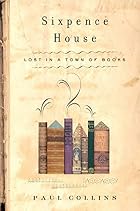
The story of the author's brief relocation from San Francisco to Hay-on-Wye, on the English-Welsh borders, and his discovery that living somewhere and holidaying somewhere can be a very different experience. This fell between a sub-genre that I like (non-British author looks at British society with an outsider's perspective and offers some interesting insights on it) and one that I don't (author moves to another country because he thinks he'd like the lifestyle and then spends all his time wondering why it can't be more like home). Unfortunately, in this book I didn't find that the insights offered were very insightful, and that the prevalent theme was wondering fairly superficially why Britiain wasn't more like the US. And my problems weren't particularly because it's a US writer writing about the UK: there's a distinct sub-genre of books about British writers moving to France and discovering that it's all too ... well ... French, and I don't like those either.
I do think that if an author is going to make the sorts of general points that were being made in this book about what Britain is like then he needs to be able to look at his own experience constructively, to see whether it is characteristic of the country as a whole or specific to the particular circumstances in which he finds himself. And this was the area which I found quite annoying. For, instance, there's quite a lot of discussion about the paucity of what Collins can find in British shops compared to what's available in the U.S. But as he has no car he does his shopping in the small convenience stores that most British people only use to pick up the odd pint of milk or some chocolate on the way home from work, and that are used for a main shop only by those who can't afford the transport to go elsewhere. It would be like me moving to a small town in one of the less propsperous and cosmopolitan states of the US, limiting myself to shops within walking distance and then complaining that US shops didn't have a good a selection of French cheese as you can get in the UK. And I definitely didn't get this comment:
The kitchen, like a bizarrely high proportion of British kitchens that I have seen, is distinctively of 1950's vintage
The one thing that all sections of British society seems to agree on on moving house is the necessity of ripping out the kitchen as soon as possible, and replacing it with something new. I haven't seen a 1950's kitchen since about 1980. In fact, I think a genuine 50's kitchen would be a real selling point at the moment as it would be fashionably retro.
So while I might try something else on a different topic by this author, this one didn't work for me.
Challenge: Possession (Books I've owned for more than 6months)
The story of the author's brief relocation from San Francisco to Hay-on-Wye, on the English-Welsh borders, and his discovery that living somewhere and holidaying somewhere can be a very different experience. This fell between a sub-genre that I like (non-British author looks at British society with an outsider's perspective and offers some interesting insights on it) and one that I don't (author moves to another country because he thinks he'd like the lifestyle and then spends all his time wondering why it can't be more like home). Unfortunately, in this book I didn't find that the insights offered were very insightful, and that the prevalent theme was wondering fairly superficially why Britiain wasn't more like the US. And my problems weren't particularly because it's a US writer writing about the UK: there's a distinct sub-genre of books about British writers moving to France and discovering that it's all too ... well ... French, and I don't like those either.
I do think that if an author is going to make the sorts of general points that were being made in this book about what Britain is like then he needs to be able to look at his own experience constructively, to see whether it is characteristic of the country as a whole or specific to the particular circumstances in which he finds himself. And this was the area which I found quite annoying. For, instance, there's quite a lot of discussion about the paucity of what Collins can find in British shops compared to what's available in the U.S. But as he has no car he does his shopping in the small convenience stores that most British people only use to pick up the odd pint of milk or some chocolate on the way home from work, and that are used for a main shop only by those who can't afford the transport to go elsewhere. It would be like me moving to a small town in one of the less propsperous and cosmopolitan states of the US, limiting myself to shops within walking distance and then complaining that US shops didn't have a good a selection of French cheese as you can get in the UK. And I definitely didn't get this comment:
The kitchen, like a bizarrely high proportion of British kitchens that I have seen, is distinctively of 1950's vintage
The one thing that all sections of British society seems to agree on on moving house is the necessity of ripping out the kitchen as soon as possible, and replacing it with something new. I haven't seen a 1950's kitchen since about 1980. In fact, I think a genuine 50's kitchen would be a real selling point at the moment as it would be fashionably retro.
So while I might try something else on a different topic by this author, this one didn't work for me.
90psutto
Hay-on-Wye is not exactly a bustling metropolis (population less than 1,500 apparently) so not surprised about the local shops thing - I assume he moved there because of the festival? Its well worth a visit (or too dangerous to visit!) by bibliophiles as there are more than 30 bookshops there, its a shortish drive away from Bristol (where I live) too....
91clfisha
I have a horror he has ripped out a very expensive antique aga to replace it with something modern :)
Still its a book to avoid, it is interesting in a way seeing what biases people bring with them but mostly its frustrating
Still its a book to avoid, it is interesting in a way seeing what biases people bring with them but mostly its frustrating
92rabbitprincess
>89 SandDune:: Hm, sounds like I was justified in deleting this one from the TBR list. Hay-on-Wye still sounds lovely though. Someday...!
93-Eva-
->89 SandDune:
It's on my Mt. TBR, but I keep hearing things like this about it. I'll give it a shot, but it might end up in the donation-box faster than normal.
It's on my Mt. TBR, but I keep hearing things like this about it. I'll give it a shot, but it might end up in the donation-box faster than normal.
94SandDune
#90 Pete I've decided I'm being too hard on Sixpence House - it had some interesting things to say about the book trade and Hay on Wye in particular. It was just the constant comparisons between the US and UK that irritated me - the shopping was just an example. According to Collins, if they didn't stock something in the Spar shop in Hay, it just showed how poorly stocked UK shops were in comparison to the US. If the Londis shop had no fresh fruit juice without sugar, then it showed how addicted the British were to sugar. But hadn't he ever heard of Tesco, or Sainsbury's? And he was comparing San Francisco with Hay, for goodness sake!
#91 I have a horror he has ripped out a very expensive antique aga to replace it with something modern Claire there wasn't any ripping out, it was more a sort of 'we want an old house but haven't thought that it might be damp, or need repairs, or cost a fortune' sort of story.
#91 I have a horror he has ripped out a very expensive antique aga to replace it with something modern Claire there wasn't any ripping out, it was more a sort of 'we want an old house but haven't thought that it might be damp, or need repairs, or cost a fortune' sort of story.
95SandDune
#92,93 Hi Rabbitprincess, Eva - to be honest it's not a bad book - I think it just hit all the buttons to annoy me. And if I loved second hand book shops like some people I would probably have liked it a lot more, but it's the new book shops that I love.
96lkernagh
Nice review of Sixpence House, Rhian. I treated it for what it was, an American perspective of life in a small UK town - misconceptions and all - and gave it a 3 star rating. I felt that it lacked an appreciation for the differences between the UK and the US, if that makes any sense, but found it was still worth reading.
97psutto
>94 SandDune: - that would probably annoy me too..
our local Spar closed down a very short time after a Sainsburys Local opened up - I think I went in there once but yeah they're rubbish
our local Spar closed down a very short time after a Sainsburys Local opened up - I think I went in there once but yeah they're rubbish
98SandDune
#96 Lori I am being harsh on Sixpence House - in retrospect three stars would probably be a fairer rating. It's just that sentences like these annoyed me and made me see how little Collins had really understood about Britain today:
'But he is British; I am only British in name. They can settle down - and simply settle, be content with one lot in life. But my parents emigrated into a restless society, with few families retaining their members in one town for more than a few decades before dispersing outward.'
So being British apparently, is to be perfectly content to live in the town where you have grown up, without ambition, just settling for what you have. As someone living in a town of thirty-five thousand people who rarely meets anyone who was born here, that's a bit of a surprise to find out. (One of my friends did go to school here, but only from age 14 onwards). And also as someone whose school friends scatterered to the four winds after university. And the comments don't even make sense in the context of the book, he meets very few people who actually come from Hay. One of the people he's talking about in particular in that quote is Richard Booth, the founder of Hay-on-Wye as a book town. I'm not sure that you can say that putting a whole town on the international map as a book-lovers mecca and restoring a castle could be described as settling down and being content with one's lot in life! There - rant over!
So if Collins had limited his book to an amusing and wry look at the time he spent in Hay-on-Wye, and hadn't kept trying to extrapolate to what Britain is like as a country on a wider scale I'd have liked it a lot more!
'But he is British; I am only British in name. They can settle down - and simply settle, be content with one lot in life. But my parents emigrated into a restless society, with few families retaining their members in one town for more than a few decades before dispersing outward.'
So being British apparently, is to be perfectly content to live in the town where you have grown up, without ambition, just settling for what you have. As someone living in a town of thirty-five thousand people who rarely meets anyone who was born here, that's a bit of a surprise to find out. (One of my friends did go to school here, but only from age 14 onwards). And also as someone whose school friends scatterered to the four winds after university. And the comments don't even make sense in the context of the book, he meets very few people who actually come from Hay. One of the people he's talking about in particular in that quote is Richard Booth, the founder of Hay-on-Wye as a book town. I'm not sure that you can say that putting a whole town on the international map as a book-lovers mecca and restoring a castle could be described as settling down and being content with one's lot in life! There - rant over!
So if Collins had limited his book to an amusing and wry look at the time he spent in Hay-on-Wye, and hadn't kept trying to extrapolate to what Britain is like as a country on a wider scale I'd have liked it a lot more!
99thornton37814
I gave it 3 stars when I read it (Sixpence House), but it's likely that I would have given it 2.5 stars if I read it today because I was a little more generous with my stars at the time I reviewed it than I tend to be now.
100SandDune
Father Christmas Raymond Briggs ***1/2
Challenge: Astonishing Splashes of Colour (picture books and graphic novels)
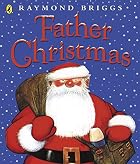
I know it's not very seasonal but on my 75 in 2013 Thread I've been looking at the illustrators of children's books and this month's illustrator is Raymond Briggs. I thought that I'd go back and take a good look at some of his books and we had this one handy.
There's not a lot of magic about Raymond Brigg's take on the Father Christmas story. His Father Christmas is a rather grumpy old man who doesn't like snow and who dreams of warmer climes. Posters of Majorca, and Capri and Malta are pinned up on the wall of his very ordinary house that seems to have come out of a Britain of the 1940's or 50's. Nothing much happens, the story follows Father Christmas's day on Christmas Eve as he goes through his tasks. But despite that it's a warm and humourous book that I like a lot.
Here is Father Christmas about his morning ablutions:

Challenge: Astonishing Splashes of Colour (picture books and graphic novels)
I know it's not very seasonal but on my 75 in 2013 Thread I've been looking at the illustrators of children's books and this month's illustrator is Raymond Briggs. I thought that I'd go back and take a good look at some of his books and we had this one handy.
There's not a lot of magic about Raymond Brigg's take on the Father Christmas story. His Father Christmas is a rather grumpy old man who doesn't like snow and who dreams of warmer climes. Posters of Majorca, and Capri and Malta are pinned up on the wall of his very ordinary house that seems to have come out of a Britain of the 1940's or 50's. Nothing much happens, the story follows Father Christmas's day on Christmas Eve as he goes through his tasks. But despite that it's a warm and humourous book that I like a lot.
Here is Father Christmas about his morning ablutions:

101lkernagh
> 98 - I agree. The book would have worked better if the author had taken a more amusing approach in the presentation of his story. Good rant!
102SandDune
#101 Hi Lori Sometimes when a book annoys you like that you can't really see beyond it. Luckily, I'm enjoying my current read a lot more: The Lost Dog by Michelle de Kretser
103DeltaQueen50
Hi Rhian, I had many of the same thoughts as you when I read Sixpence House, for someone who wrote that he wanted to embrace the British culture, he sure spent a lot of time complaining and whining about it.

105SandDune
#103 Judy, I do think there's a definite tendency of ex-pats everywhere to look back at their own country with rose-tinted spectacles. But I do think you need to embrace the culture that up you find yourself in as well, or what was the point of going!
106SandDune
18. The Lost Dog Michelle de Kretser ***1/2
Challenge: My Dog Tulip (All things dog related)
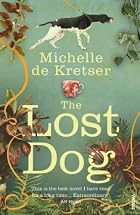
The lost dog of the title is the framework on which the rest of this novel hangs. Tom Locksley has borrowed a remote house in the Australian bush belonging to his friend Nelly Zhang while he finishes his book on Henry James. As he prepares to leave and head back to the city his dog runs into the bush after an animal and becomes lost. The novel follows the Tom over the next two weeks as he searches for his dog and deals at the same time with the increasing realisation that his elderly mother can no longer cope on her own. Interwoven with this is the story of Tom's own origins in India: the son of the British Arthur Locksley, a hard-drinking somewhat ineffectual man, and Iris de Sousa, of mixed Portuguse and Indian descent. Expected to marry a European at all costs, in her thirties Iris is forced to set her sights on the initially unprepossessing Arthur, but in post-independence India Arthur's Englishness is no longer the asset it would once have been. And also interwoven is the story of the Tom's more recent relationship with the artist Nelly Zhang and the group of artists who cluster around her.
In particular I enjoyed the story of Iris and Arthur's marriage, and Tom's own childhood in India and then Australia, which illustrate the changing attitudes of the post-colonial world. But I found Tom's obsession with Nelly Zhang and her art a little tedious: I couldn't see her attraction at all. The book flits backwards and forwards constantly in time and place which means it can be a little difficult to place a particular event, but was full of beautiful vignettes which I would have loved to quote if I hadn't listened to it on audiobook. So overall, a well-written and interesting novel dealing with questions of identity and belonging, but which fell short of being a great read for me.
One comment on the audiobook. As it was set totally in Australia and India, it seemed a little strange to me to have it read in a very proper English accent. Most of the characters sound as if they come straight from an English public school. Altogether, would probably have been a better book to have read, rather than listened to.
Challenge: My Dog Tulip (All things dog related)
The lost dog of the title is the framework on which the rest of this novel hangs. Tom Locksley has borrowed a remote house in the Australian bush belonging to his friend Nelly Zhang while he finishes his book on Henry James. As he prepares to leave and head back to the city his dog runs into the bush after an animal and becomes lost. The novel follows the Tom over the next two weeks as he searches for his dog and deals at the same time with the increasing realisation that his elderly mother can no longer cope on her own. Interwoven with this is the story of Tom's own origins in India: the son of the British Arthur Locksley, a hard-drinking somewhat ineffectual man, and Iris de Sousa, of mixed Portuguse and Indian descent. Expected to marry a European at all costs, in her thirties Iris is forced to set her sights on the initially unprepossessing Arthur, but in post-independence India Arthur's Englishness is no longer the asset it would once have been. And also interwoven is the story of the Tom's more recent relationship with the artist Nelly Zhang and the group of artists who cluster around her.
In particular I enjoyed the story of Iris and Arthur's marriage, and Tom's own childhood in India and then Australia, which illustrate the changing attitudes of the post-colonial world. But I found Tom's obsession with Nelly Zhang and her art a little tedious: I couldn't see her attraction at all. The book flits backwards and forwards constantly in time and place which means it can be a little difficult to place a particular event, but was full of beautiful vignettes which I would have loved to quote if I hadn't listened to it on audiobook. So overall, a well-written and interesting novel dealing with questions of identity and belonging, but which fell short of being a great read for me.
One comment on the audiobook. As it was set totally in Australia and India, it seemed a little strange to me to have it read in a very proper English accent. Most of the characters sound as if they come straight from an English public school. Altogether, would probably have been a better book to have read, rather than listened to.
107rabbitprincess
>104 SandDune:: Pretty daffodils! Happy St David's Day :)
108SandDune
Ethel and Ernest Raymond Briggs ****1/2
Challenge : Astonishing Splashes of Colour ( picture books and graphic novels)

A short and very touching yet unsentimental portrait of the author's parents, from their first meeting to their deaths over forty years later. Ethel (born 1894) and Ernest (born 1900) live lives that must have been typical of many people of their generation, and the book can almost be read as a social history of Britain in the twentieth century. This is a book that is made up of the small and insignificant events that constituted ordinary people's lives: a baby is born, the Second World War comes and goes, but there is a deep sense of continuity as their day to day life continues.
Ernest, a milkman, is a lifelong Labour party supporter, with strong hopes of seeing the rise of the working man as the Labour government takes power after the war. Ethel is adamant that they are not 'working-class' and has aspirations both for herself and for her son Raymond, which seem to be being fulfilled as he wins a place at grammar school. But these are aspirations which she can't quite bring herself to believe or act upon. One of the most poignant scenes in the book was when the old and sick Ethel is wheeled by her husband past a derelict and boarded-up building in the local park, a place that forty years previously had been a smart cafe which she had longed to visit: in all the time it had been open she had never been in, considering it too posh for people like them. Ernest's enthusiastic embrace of technological progress in most of its forms contrasts hugely with Ethel's reluctance: she is naturally suspicious of anything new. But both are equally confused by the changes in society brought by the 50's and 60's, in particular their son's desire to be an artist rather than get a steady job.
Here, the Briggs's discuss the introduction of television by the BBC, something they wouldn't have themselves for over twenty years:

One of the reasons that I liked this so much was that the characters seemed so real. They were almost exact contemporaries of my own grand-parents and I could certainly recognise aspects of my grandparents and other older relatives in Ethel and Ernest; Ernest's rages against politicians and other aspects of the modern world certainly remind me of my grandfather. There is even a little bit of Ethel in my mother with her extreme reluctance to take on new technology. And it is clear that Raymond Briggs bases aspects of the characters for his other books on those of his own parents. So a great graphic memoir - recommended.
Challenge : Astonishing Splashes of Colour ( picture books and graphic novels)

A short and very touching yet unsentimental portrait of the author's parents, from their first meeting to their deaths over forty years later. Ethel (born 1894) and Ernest (born 1900) live lives that must have been typical of many people of their generation, and the book can almost be read as a social history of Britain in the twentieth century. This is a book that is made up of the small and insignificant events that constituted ordinary people's lives: a baby is born, the Second World War comes and goes, but there is a deep sense of continuity as their day to day life continues.
Ernest, a milkman, is a lifelong Labour party supporter, with strong hopes of seeing the rise of the working man as the Labour government takes power after the war. Ethel is adamant that they are not 'working-class' and has aspirations both for herself and for her son Raymond, which seem to be being fulfilled as he wins a place at grammar school. But these are aspirations which she can't quite bring herself to believe or act upon. One of the most poignant scenes in the book was when the old and sick Ethel is wheeled by her husband past a derelict and boarded-up building in the local park, a place that forty years previously had been a smart cafe which she had longed to visit: in all the time it had been open she had never been in, considering it too posh for people like them. Ernest's enthusiastic embrace of technological progress in most of its forms contrasts hugely with Ethel's reluctance: she is naturally suspicious of anything new. But both are equally confused by the changes in society brought by the 50's and 60's, in particular their son's desire to be an artist rather than get a steady job.
Here, the Briggs's discuss the introduction of television by the BBC, something they wouldn't have themselves for over twenty years:

One of the reasons that I liked this so much was that the characters seemed so real. They were almost exact contemporaries of my own grand-parents and I could certainly recognise aspects of my grandparents and other older relatives in Ethel and Ernest; Ernest's rages against politicians and other aspects of the modern world certainly remind me of my grandfather. There is even a little bit of Ethel in my mother with her extreme reluctance to take on new technology. And it is clear that Raymond Briggs bases aspects of the characters for his other books on those of his own parents. So a great graphic memoir - recommended.
109SandDune
When the Wind Blows Raymond Briggs ****
Challenge: Astonishing Splashes of Colour (picture books and graphic novels)
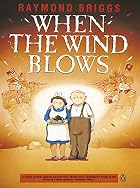
Published in 1982 at a time when nuclear war seemed a much more immediate threat, When the Wind Blows is the story of a retired couple faced with the imminent prospect of a nuclear war. Faced with a situation that they can't comprehend, they expect the coming hostilities to be a re-run of World War II, and comfort themselves that the blitz spirit got them through last time. For their protection, they rely on the government advice to build an 'inner refuge' but the inadequacy of the advice, and their lack of understanding of the dangers of radiation mean that they are exposed to the deadly fallout. Jim and Hilda are heart-breakingly naive and have an almost child-like trust in the advice that they have been given, which makes their fate even more sad.
Here James is constructing his 'inner refuge':

I remember this book when it first came out. It's based on a real-life British government pamphlet 'Protect and Survive' which, together with a number of public information films, was intended to protect the population in the event of nuclear war. Both the pamphlet and films caused a huge amount of controversy at the time with CND in particular criticising the idea that the type of precautions indicated would provide any defence against a nuclear attack.
One thing I noticed when I looked up 'Protect and Survive' was that the films are shown on a loop in a nearby nuclear bunker (now tourist attraction) which I keep meaning to go and visit. It does give rise to the following amusing road sign:

Challenge: Astonishing Splashes of Colour (picture books and graphic novels)
Published in 1982 at a time when nuclear war seemed a much more immediate threat, When the Wind Blows is the story of a retired couple faced with the imminent prospect of a nuclear war. Faced with a situation that they can't comprehend, they expect the coming hostilities to be a re-run of World War II, and comfort themselves that the blitz spirit got them through last time. For their protection, they rely on the government advice to build an 'inner refuge' but the inadequacy of the advice, and their lack of understanding of the dangers of radiation mean that they are exposed to the deadly fallout. Jim and Hilda are heart-breakingly naive and have an almost child-like trust in the advice that they have been given, which makes their fate even more sad.
Here James is constructing his 'inner refuge':

I remember this book when it first came out. It's based on a real-life British government pamphlet 'Protect and Survive' which, together with a number of public information films, was intended to protect the population in the event of nuclear war. Both the pamphlet and films caused a huge amount of controversy at the time with CND in particular criticising the idea that the type of precautions indicated would provide any defence against a nuclear attack.
One thing I noticed when I looked up 'Protect and Survive' was that the films are shown on a loop in a nearby nuclear bunker (now tourist attraction) which I keep meaning to go and visit. It does give rise to the following amusing road sign:

110-Eva-
LOL! I saw that sign on "Top Gear" - I think James May's guess was that the bunker was actually in the opposite direction. :)
I love the art for both Briggs books - they have to go on the wishlist.
I love the art for both Briggs books - they have to go on the wishlist.
111rabbitprincess
Haha, very well-kept secret, that! ;) If you do go see it, be sure to tell us about it! In Ottawa we have a nuclear-bunker-turned-tourist-attraction just west of town: the Diefenbunker (http://www.diefenbunker.ca). It was constructed in the 1950s for then-prime minister John Diefenbaker (hence the name), and when you go in you can just *feel* the Cold War paranoia coming off the walls. A real slice of history.
Edit: Haha! The bunker's website is www.secretnuclearbunker.co.uk !! Love it.
Edit: Haha! The bunker's website is www.secretnuclearbunker.co.uk !! Love it.
112psutto
Some friends of mine got to spend a night in Kelvedon Hatch after hiring it for an event but they couldn't work out how to shut off the automatic announcements so didn't get much sleep :-0
113SandDune
#110 Eva - Wow - they have Top Gear in the US?I'd have put it down as something that wouldn't travel!
#111 Rabbitprincess - we might go over the Easter holidays. My son's thirteen and likes history so it's the sort of thing that might appeal to him. I think it'sonly about forty-five minutes from where we live.
#112 Pete as someone who has an occasional recurring dream of waking up in a room where I'm trapped, spending a night in an underground concrete bunker doesn't appeal at all!
#111 Rabbitprincess - we might go over the Easter holidays. My son's thirteen and likes history so it's the sort of thing that might appeal to him. I think it'sonly about forty-five minutes from where we live.
#112 Pete as someone who has an occasional recurring dream of waking up in a room where I'm trapped, spending a night in an underground concrete bunker doesn't appeal at all!
114clfisha
Oh wow a Raymond Briggs month, one of my favourite authors/artists since I was kid. I adored Fungus the Bogeyman when I was a kid, cried my eyes out at When the Wind Blows as a teenager. I keep meaning to read Ernest and Ethel, can't believe I haven't done so & a great review btw, really sums up Briggs.
115SandDune
Claire - it didn't start out to be a Raymond Briggs month but it does seem to have developed that way. On my 75 thread I've been starting each thread with an illustrator of children's books: so far I've done John Burningham and Quentin Blake and then it was Raymond Briggs's turn. And I remembered I'd got Father Christmas from when my son was smaller, and that just led on to the other ones. I do need to reread Fungus the Bogeyman though - that's definitely one of his best.
116-Eva-
->113 SandDune:
Absolutely! I think Top Gear has taken over the world - my friends in Sweden watch it just as much as I do here. This is the UK version I'm talking about, though - they made a US version as well, but it was rubbish!
Absolutely! I think Top Gear has taken over the world - my friends in Sweden watch it just as much as I do here. This is the UK version I'm talking about, though - they made a US version as well, but it was rubbish!
117SandDune
#116 Eva as I have about zero interest in cars, Top Gear passed me by until my son started watching it, but I've seen enough in the last couple of years to make up for it.
118SandDune
21. My Dog Tulip J.R. Ackerley ****
Challenge: My Dog Tulip (all things dog related)

I first came across mention of My Dog Tulip in An Uncommon Reader by Alan Bennett where the Queen's servant Norman is considering it as a suitable book for the Queen to read. Mr Hutchings the librarian is 'dubious, pointing out that it was a gay book. 'Is it?' said Norman innocently.'I didn't realise that. She'll think it's just about the dog.'. Having now read it, I think I have never come across a book that is so completely 'just about the dog' in my entire life.
In middle age J.R. Ackerley became the owner of a young Alsatian bitch called Queenie (called Tulip in the book) who to all intents and purposes became the love of his life for the next fifteen years. At first glance Tulip does not seem the sort of dog to inspire such undying affection: while she adores Ackerley her attitude to much of the rest of the human race is suspicion, as two bus conductors and a postman could testify to their cost. His friends are reluctant to ask Tulip to stay twice as 'people seem to resent being challenged whenever they approach their own sitting room or dining rooms'.
So this is not your average tale of amusing stories about a family pet: this is nothing less than the story of a man's single minded obsession. And I think it's true to say that Ackerley is obsessed, not just with the Tulip as a friend and companion, but with all aspects of her bodily functions. A whole chapter (descriptively entiled 'Liquids and Solids') is devoted to Tulip's toileting habits, the problems of getting her to perform on demand, and the consequences of his failure to interpret her body signals. And then two more chapters on the difficulties of finding Tulip what Ackerley euphemistically calls a 'husband': but there is nothing euphemistic about his description of the trials and tribulations of Tulip's experience. I feel I've learnt as much as I need to know about the difficulties of procreation in dogs. If Tulip's experiences are standard it does seem surprising that any puppies are ever born at all.
Originally written in 1956, one thing that is clear after reading it is that the treatment of dogs has changed almost beyond all recognition. Ackerley is writing when many dogs were habitually left to roam free, something that I remember as a child but that is just not seen now. The roaming bands of male dogs that plague Ackerley's life when Tulip is in heat are also no more. And that such a loving owner such as Ackerley could consider drowning some of Tulip's puppies would be unthinkable nowadays. But that I think, is the product of a different age, and has to be taken as such.
At times My Dog Tulip did feel rather like one of those medical programmes that you don't really want to watch, but that you can't take your eyes off. But overall I liked it, quite a lot, and I'll be looking out for Ackerley's other books.
Challenge: My Dog Tulip (all things dog related)
I first came across mention of My Dog Tulip in An Uncommon Reader by Alan Bennett where the Queen's servant Norman is considering it as a suitable book for the Queen to read. Mr Hutchings the librarian is 'dubious, pointing out that it was a gay book. 'Is it?' said Norman innocently.'I didn't realise that. She'll think it's just about the dog.'. Having now read it, I think I have never come across a book that is so completely 'just about the dog' in my entire life.
In middle age J.R. Ackerley became the owner of a young Alsatian bitch called Queenie (called Tulip in the book) who to all intents and purposes became the love of his life for the next fifteen years. At first glance Tulip does not seem the sort of dog to inspire such undying affection: while she adores Ackerley her attitude to much of the rest of the human race is suspicion, as two bus conductors and a postman could testify to their cost. His friends are reluctant to ask Tulip to stay twice as 'people seem to resent being challenged whenever they approach their own sitting room or dining rooms'.
So this is not your average tale of amusing stories about a family pet: this is nothing less than the story of a man's single minded obsession. And I think it's true to say that Ackerley is obsessed, not just with the Tulip as a friend and companion, but with all aspects of her bodily functions. A whole chapter (descriptively entiled 'Liquids and Solids') is devoted to Tulip's toileting habits, the problems of getting her to perform on demand, and the consequences of his failure to interpret her body signals. And then two more chapters on the difficulties of finding Tulip what Ackerley euphemistically calls a 'husband': but there is nothing euphemistic about his description of the trials and tribulations of Tulip's experience. I feel I've learnt as much as I need to know about the difficulties of procreation in dogs. If Tulip's experiences are standard it does seem surprising that any puppies are ever born at all.
Originally written in 1956, one thing that is clear after reading it is that the treatment of dogs has changed almost beyond all recognition. Ackerley is writing when many dogs were habitually left to roam free, something that I remember as a child but that is just not seen now. The roaming bands of male dogs that plague Ackerley's life when Tulip is in heat are also no more. And that such a loving owner such as Ackerley could consider drowning some of Tulip's puppies would be unthinkable nowadays. But that I think, is the product of a different age, and has to be taken as such.
At times My Dog Tulip did feel rather like one of those medical programmes that you don't really want to watch, but that you can't take your eyes off. But overall I liked it, quite a lot, and I'll be looking out for Ackerley's other books.
119DeltaQueen50
Rhian, I don't think My Dog Tulip is a book for me, but I gave your review a thumb as it is informative, humorous and very well written without giving too much away.
120SandDune
#119 Judy I think there are quite a lot of people who should probably avoid My Dog Tulip. I have told Mr SandDune that he is to avoid it at all costs as it will put him off dog owners for life.
121SandDune
Dandelion Wine Ray Bradbury ***1/2
Challenge: Possession (books I've owned for more than six months)

When I started Dandelion Wine I was expecting something quite different: a semi-fictionalised account of Bradbury's own childhood, perhaps something along the lines of Cider with Rosie. What I found was a much more fictional series of inter-connected short stories set in the fictitious Greentown (based on Bradbury's own home town). And although the main focus of the book is on the two boys, Douglas and Tom Spaulding, many of the stories focus on other characters, and it is frequently the adult point of view that is seen.
At times this does seem to be the standard nostalgic view of a boyhood summer when the sun was always shining, a safer and simpler age where children play outdoors from dawn until dusk. But there are darker elements at work: mothers warn their children to beware of the 'Lonely One', discovered to be not just a name to frighten children but a real serial killer at large. And some elements seem almost fantastical, in particular the story where one of the town's residents attempts to make a 'happiness machine'. Overall, I found that it was not the picture of childhood that resonated with me most, it was the picture drawn of old age. A favourite was the story of the old Colonel Freeleigh, who brings the past back to life for the boys with his tales of seeing the gigantic herds of buffalo roaming the prairie, and who longs to escape from the stultifying care with which his family has surrounded him in his last days.
And equally good was the story of Ellen Loomis and Bill Forester, who find a true meeting of minds despite there being sixty years difference in their age.
Overall, despite liking some of the individual stories a lot, I found the overall effect a little too determinedly heart-warming for my taste. While people die and things change, there always seems to be some positive lesson that is being learnt by the boys in particular, and I found it ever so slightly cloying after a while. The nostalgia of small town America isn't my nostalgia, so I'm probably not as susceptible as some. A good read, but not great.
Challenge: Possession (books I've owned for more than six months)

When I started Dandelion Wine I was expecting something quite different: a semi-fictionalised account of Bradbury's own childhood, perhaps something along the lines of Cider with Rosie. What I found was a much more fictional series of inter-connected short stories set in the fictitious Greentown (based on Bradbury's own home town). And although the main focus of the book is on the two boys, Douglas and Tom Spaulding, many of the stories focus on other characters, and it is frequently the adult point of view that is seen.
At times this does seem to be the standard nostalgic view of a boyhood summer when the sun was always shining, a safer and simpler age where children play outdoors from dawn until dusk. But there are darker elements at work: mothers warn their children to beware of the 'Lonely One', discovered to be not just a name to frighten children but a real serial killer at large. And some elements seem almost fantastical, in particular the story where one of the town's residents attempts to make a 'happiness machine'. Overall, I found that it was not the picture of childhood that resonated with me most, it was the picture drawn of old age. A favourite was the story of the old Colonel Freeleigh, who brings the past back to life for the boys with his tales of seeing the gigantic herds of buffalo roaming the prairie, and who longs to escape from the stultifying care with which his family has surrounded him in his last days.
And equally good was the story of Ellen Loomis and Bill Forester, who find a true meeting of minds despite there being sixty years difference in their age.
Overall, despite liking some of the individual stories a lot, I found the overall effect a little too determinedly heart-warming for my taste. While people die and things change, there always seems to be some positive lesson that is being learnt by the boys in particular, and I found it ever so slightly cloying after a while. The nostalgia of small town America isn't my nostalgia, so I'm probably not as susceptible as some. A good read, but not great.
122LittleTaiko
>116 -Eva-: - A little late to the Top Gear conversation. Most definitely we have Top Gear in the US. My husband records all of them (UK version of course). They are always entertaining to watch, even on reruns.
124LittleTaiko
Yes, he can be. Hammond is my favorite. Love their little challenges though!
125-Eva-
I know quite a few people find Clarkson annoying - I just think he's funny. My favorite is Captain Slow, but it's really the chemistry that the three of them have that's the key to it - when one is missing, the balance is off a little (unless the other two spend most of the time trashing the one that's missing, of course). :)
126SandDune
The White Mountains John Christopher ***1/2
Challenge: A Brief History of the Dead (dystopian fiction and the end of the world)

This is the first of John Christopher's tripod trilogy which I vaguely remember from the TV series back in the 1980's. The book was written in 1967 and shows its age just a little: much less teenage angst than you often get in a young adult novel today on the plus side, and an absence of meaningful female characters on the minus. But overall a good adventure story that has lasted well.
At an unspecified future date humans live in a society that has reverted to medieval feudalism under the ultimate rule of the tripods, huge three-legged devices that stalk the land. In their fourteenth year all children are 'capped' by the tripods, with a metal cap that becomes fused to their skull: an event that they are taught to look forward to as the start of adulthood. But as his older cousin Jack is capped, and Will notices the changes in his character, he starts to have misgivings. Encountering Ozymandias, seemingly a vagrant, a person whose mind has been broken by the capping process, Will discovers that the cap is the means by which the Tripods control humanity and keep them docile. He resolves to join the resistance in the White Mountains that he is told about by Ozymandias, but this means a long journey to the south. And an uncapped boy alone will attract suspicion ...
With elements of HG Well's The War of the Worlds and a touch of John Wyndham this isn't maybe the most original book ever, but great fun.
Challenge: A Brief History of the Dead (dystopian fiction and the end of the world)

This is the first of John Christopher's tripod trilogy which I vaguely remember from the TV series back in the 1980's. The book was written in 1967 and shows its age just a little: much less teenage angst than you often get in a young adult novel today on the plus side, and an absence of meaningful female characters on the minus. But overall a good adventure story that has lasted well.
At an unspecified future date humans live in a society that has reverted to medieval feudalism under the ultimate rule of the tripods, huge three-legged devices that stalk the land. In their fourteenth year all children are 'capped' by the tripods, with a metal cap that becomes fused to their skull: an event that they are taught to look forward to as the start of adulthood. But as his older cousin Jack is capped, and Will notices the changes in his character, he starts to have misgivings. Encountering Ozymandias, seemingly a vagrant, a person whose mind has been broken by the capping process, Will discovers that the cap is the means by which the Tripods control humanity and keep them docile. He resolves to join the resistance in the White Mountains that he is told about by Ozymandias, but this means a long journey to the south. And an uncapped boy alone will attract suspicion ...
With elements of HG Well's The War of the Worlds and a touch of John Wyndham this isn't maybe the most original book ever, but great fun.
127SandDune
City of Gold and Lead John Christopher ****
Challenge: A Brief History of the Dead (dystopia and the end of the world)

CONTAINS SPOILERS FOR FIRST BOOK IN SERIES
The second in John Christopher's Tripod trilogy which lives up to the promise of the first book, and unusually for a second book, exceeds it. Will, Beanpole and Henry are safely ensconced in the stronghold in the White Mountains, but a plan is being hatched by the leaders of the resistance to try to find a way into the city of the tripods. The champions of each event in the annual games held far to the north are taken as servants to the city, so if representatives of the resistance can be trained to win it will give them the opportunity to discover vital information in their fight against the tripods. Will and Beanpole are chosen, along with another boy called Fritz, and the first half of the book deals with their travels to the games and the games themselves, following similar lines to the first book. However, the book takes a darker turn once the successful boys arrive at the city and the horror of the tripods rule becomes clear. And it was the description of their time in the city that moved this from the three and a half stars of the original book to the four stars that I'm giving this one.
Another really solid YA adventure story.
Challenge: A Brief History of the Dead (dystopia and the end of the world)

CONTAINS SPOILERS FOR FIRST BOOK IN SERIES
The second in John Christopher's Tripod trilogy which lives up to the promise of the first book, and unusually for a second book, exceeds it. Will, Beanpole and Henry are safely ensconced in the stronghold in the White Mountains, but a plan is being hatched by the leaders of the resistance to try to find a way into the city of the tripods. The champions of each event in the annual games held far to the north are taken as servants to the city, so if representatives of the resistance can be trained to win it will give them the opportunity to discover vital information in their fight against the tripods. Will and Beanpole are chosen, along with another boy called Fritz, and the first half of the book deals with their travels to the games and the games themselves, following similar lines to the first book. However, the book takes a darker turn once the successful boys arrive at the city and the horror of the tripods rule becomes clear. And it was the description of their time in the city that moved this from the three and a half stars of the original book to the four stars that I'm giving this one.
Another really solid YA adventure story.
129SandDune
#124,125 Hi Stacey, Eva we were watching their Africa challenge this week and it was funny.
#128 For some reason I don't remember the TV show very well - although I would have expected to like it a lot. I remember that it was on, but I don't really remember anything about it.
#128 For some reason I don't remember the TV show very well - although I would have expected to like it a lot. I remember that it was on, but I don't really remember anything about it.
130AHS-Wolfy
I just can't remember ever watching the Tripods TV series. Looks like I'll at least have to check out the books though.
131clfisha
It was 1984, although I did rewatch it a couple of years ago too :)
Excerpts galore. Ah 80s music
http://www.youtube.com/watch?v=zIlHoHiL4xE&feature=youtube_gdata_player
Excerpts galore. Ah 80s music
http://www.youtube.com/watch?v=zIlHoHiL4xE&feature=youtube_gdata_player
133SandDune
The Pool of Fire John Christopher ***
Challenge: A Brief History of the Dead (dystopia and the end of the world)

CONTAINS SPOILERS
The last book in John Christopher's Tripods trilogy and in my opinion the weakest. It suffers from two tendencies which I've found unfortunately aren't uncommon, and which I always find particulary annoying. Firstly, despite humans being in a pre-industrial state at the start of the trilogy, several hundred years of human technological progress are condensed into about six years, so that by the end they have electricity, radio, television, engines, airplanes and powerful explosives. And it's all been reinvented as far as I can see, as books have been destroyed by the tripods. And secondly, the means by which the tripods are attacked and defeated seem implausible in the extreme given that they were not able to be defeated by the weapons of the twentieth century.
Will, Henry, Beanpole and Fritz continue their efforts to defeat the tripod menace. Despite Will and Fritz's escape from the city of the tripods, the resistance still have insufficient information to mount a meaningful attack, so a living 'master' must be captured alive to provide more information. This leads once more to a desperate undercover operation in the city of the tripods itself in an attempt to destroy them once and for all. And as the resistance attempts to take the struggle to the two other tripod cities as well, dissension grows within its own ranks..
So an OK read, but one which never really came alive for me.
Challenge: A Brief History of the Dead (dystopia and the end of the world)

CONTAINS SPOILERS
The last book in John Christopher's Tripods trilogy and in my opinion the weakest. It suffers from two tendencies which I've found unfortunately aren't uncommon, and which I always find particulary annoying. Firstly, despite humans being in a pre-industrial state at the start of the trilogy, several hundred years of human technological progress are condensed into about six years, so that by the end they have electricity, radio, television, engines, airplanes and powerful explosives. And it's all been reinvented as far as I can see, as books have been destroyed by the tripods. And secondly, the means by which the tripods are attacked and defeated seem implausible in the extreme given that they were not able to be defeated by the weapons of the twentieth century.
Will, Henry, Beanpole and Fritz continue their efforts to defeat the tripod menace. Despite Will and Fritz's escape from the city of the tripods, the resistance still have insufficient information to mount a meaningful attack, so a living 'master' must be captured alive to provide more information. This leads once more to a desperate undercover operation in the city of the tripods itself in an attempt to destroy them once and for all. And as the resistance attempts to take the struggle to the two other tripod cities as well, dissension grows within its own ranks..
So an OK read, but one which never really came alive for me.
134SandDune
Hi Dave, Claire, Pete
Those TV clips really do look very eighties, don't they? The first clip looks vaguely familiar, but the rest don't look familiar at all - maybe I didn't watch more than a couple of episodes - or maybe I din't watch it all and I just remember the trailer. I'm a bit surprised - I was pretty keen on that sort of thing!
Those TV clips really do look very eighties, don't they? The first clip looks vaguely familiar, but the rest don't look familiar at all - maybe I didn't watch more than a couple of episodes - or maybe I din't watch it all and I just remember the trailer. I'm a bit surprised - I was pretty keen on that sort of thing!
135SandDune
Salvage the Bones Jesmyn Ward ****1/2
Challenge: Is there anything You Want (recommendations from LT and elsewhere)
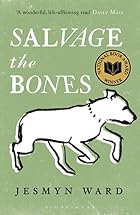
I was apprehensive about reading this book as I'd heard rumours about the dog-fighting, and thought that I might struggle with those scenes. But in the end, rather than being shocked by the dog-fighting, what I found truly shocking was the extreme poverty and lack of opportunity which was the lot of the poor black Batiste family who are at the centre of this novel.
Esch Batiste is fifteen years old and pregnant: she tries to keep her nausea and ever bursting bladder from her family. Her mother died during the birth of her younger brother Junior, leaving the family to the care of their alcoholic and neglectful father, and the care of Junior has fallen almost exclusively on the older children. The eldest brother Randall is desperate to get the basketball scholarship that will take him out of The Pit, the run-down and scrap covered piece of land where the Batiste family live. The second brother Skeetah lives only for his prized pit bull China, a beautiful white dog who has defeated all the local dogs in the fights run by the local boys. And in the days leading up to Hurricane Katrina, as the father tries to prepare for the approaching storm, both Esch and Skeetah have their own battles. Skeetah that of trying to keep China's new puppies alive, when he can't afford the medication that they need, while Esch tries to get Manny, her baby's father, to notice her.
I found this book heart-breaking in many respects: these teenagers have been failed by so many people, even ultimately by their own mother, whose refusal to have medical assistance when giving birth to Junior in all likelihood led to her death. Day to day life is such a struggle with little money for food, and less for the hurricane supplies that they desperately need. I found that even Skeetah's fighting of his beloved China became almost understandable: her prowess in fighting provides him with the only thing in his life that he can be proud about.
Not knowing much about the American South outside the period of segregation and civil rights, one thing that surprised me on reading Salvage the Bones was what completely separate lives the Batistes led from their white neighbours. And the conditions in which they lived seemed not to belong to the twenty-first century, or even the late twentieth, but to an earlier period.
So a book that is highly recommended, and one which drew me in almost as if I were reading about real people.
Challenge: Is there anything You Want (recommendations from LT and elsewhere)
I was apprehensive about reading this book as I'd heard rumours about the dog-fighting, and thought that I might struggle with those scenes. But in the end, rather than being shocked by the dog-fighting, what I found truly shocking was the extreme poverty and lack of opportunity which was the lot of the poor black Batiste family who are at the centre of this novel.
Esch Batiste is fifteen years old and pregnant: she tries to keep her nausea and ever bursting bladder from her family. Her mother died during the birth of her younger brother Junior, leaving the family to the care of their alcoholic and neglectful father, and the care of Junior has fallen almost exclusively on the older children. The eldest brother Randall is desperate to get the basketball scholarship that will take him out of The Pit, the run-down and scrap covered piece of land where the Batiste family live. The second brother Skeetah lives only for his prized pit bull China, a beautiful white dog who has defeated all the local dogs in the fights run by the local boys. And in the days leading up to Hurricane Katrina, as the father tries to prepare for the approaching storm, both Esch and Skeetah have their own battles. Skeetah that of trying to keep China's new puppies alive, when he can't afford the medication that they need, while Esch tries to get Manny, her baby's father, to notice her.
I found this book heart-breaking in many respects: these teenagers have been failed by so many people, even ultimately by their own mother, whose refusal to have medical assistance when giving birth to Junior in all likelihood led to her death. Day to day life is such a struggle with little money for food, and less for the hurricane supplies that they desperately need. I found that even Skeetah's fighting of his beloved China became almost understandable: her prowess in fighting provides him with the only thing in his life that he can be proud about.
Not knowing much about the American South outside the period of segregation and civil rights, one thing that surprised me on reading Salvage the Bones was what completely separate lives the Batistes led from their white neighbours. And the conditions in which they lived seemed not to belong to the twenty-first century, or even the late twentieth, but to an earlier period.
So a book that is highly recommended, and one which drew me in almost as if I were reading about real people.
136aliciamay
Thanks for the review of Salvage the Bones! I was looking at reading this for the April AwardCAT because I had also heard good things, but I didn't know what it was about. Not sure how well I'll be able to stand the poverty, neglect, and dog fighting, but now I'll at least know what I'm getting myself into.
137SandDune
#136 Hi Alicia thanks for dropping by. Salvage the Bones isn't all doom and gloom: I did end up with some positive thoughts, although it isn't a feel good book by any means. As a dog lover, I was surprised that I coped with the dog-fighting as well as I did. I read most of it with my dog Daisy on my lap (that's where she is at the moment): she's a Staffordshire Bull Terrier, so a breed that was originally bred for fighting, but the thought of her being treated in that way really horrifies me.
Here she is with our cat, who usually has the upper hand:

Here she is with our cat, who usually has the upper hand:

138SandDune
The Unknown Bridesmaid Margaret Forster *****
Challenge: Is there anything You Want (recommendations from LT and elsewhere)
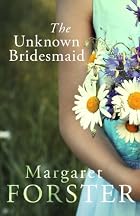
This is a wonderful book: about families, mothers and daughters, secrets kept and secrets told and the unseen cruelties of children. The tone throughout captures perfectly the small resentments of family life that can fester untold for years, and the realities of less than perfect families.
Julia is a psychologist dealing with problem children: her clients are the bullies and the bullied, the runaways, the petty criminals and the violent. Successful in her career, she carries out her duties diligently, and is acknowledged by her colleagues to be very good at her job. But as Julia probes the motivations of client after client, frequently finding the problem to be with the parent rather than the child, it becomes obvious that she has issues from her own childhood that remain unaddressed. And the book follows Julia back to her childhood, to the pivotal year when at the age of eight she is a bridesmaid for her cousin Iris. Julia's mother, a widow with little money, is at first inclined to resent the request from the daughter of her only sister for Julia to be her bridesmaid: there is the expense of the dress and the shoes, and the cost of travel to her home town of Manchester for the wedding. And for Julia's mother, resentment is often the predominant feeling. But eventually allowed to take part, Julia is completely won over by her rarely seen blonde haired, blue-eyed cousin who has the ability to charm everyone, and who, as her mother says, is making a very good match, to a major in the army and the son of an MP at that. Julia's mother's view is that such good fortune cannot last, and so it proves, with Iris widowed within weeks of the wedding when her husband is killed by a sniper's bullet in Northern Ireland. But when a baby is born to Iris, Julia is completely unable to understand the attention it receives from her family, even from her normally unemotional and aloof mother, and resentment starts to develop...
This is a quiet book, full of small incidents: the drinking of tea takes the place of meaningful discussion. The major events are off stage and not talked about but exert their influence nonetheless. It is a wonderful depiction of people who believe that if something isn't talked about then perhaps it didn't really happen, and of the unreliability of memory.
The review which led me to this book felt that Margaret Forster was an unduly neglected writer, whose work would have found its way onto many more prize lists if her subject matter was different, and based on the quality of this book I have to say that I agree. But mothers and daughters, and women left resentful after unfulfilled lives, often seem to be regarded as less 'literary' than middle-aged male angst, although I have to say that personally I think the Booker short list would often be improved by a change of outlook. So, highly recommended.
Challenge: Is there anything You Want (recommendations from LT and elsewhere)
This is a wonderful book: about families, mothers and daughters, secrets kept and secrets told and the unseen cruelties of children. The tone throughout captures perfectly the small resentments of family life that can fester untold for years, and the realities of less than perfect families.
Julia is a psychologist dealing with problem children: her clients are the bullies and the bullied, the runaways, the petty criminals and the violent. Successful in her career, she carries out her duties diligently, and is acknowledged by her colleagues to be very good at her job. But as Julia probes the motivations of client after client, frequently finding the problem to be with the parent rather than the child, it becomes obvious that she has issues from her own childhood that remain unaddressed. And the book follows Julia back to her childhood, to the pivotal year when at the age of eight she is a bridesmaid for her cousin Iris. Julia's mother, a widow with little money, is at first inclined to resent the request from the daughter of her only sister for Julia to be her bridesmaid: there is the expense of the dress and the shoes, and the cost of travel to her home town of Manchester for the wedding. And for Julia's mother, resentment is often the predominant feeling. But eventually allowed to take part, Julia is completely won over by her rarely seen blonde haired, blue-eyed cousin who has the ability to charm everyone, and who, as her mother says, is making a very good match, to a major in the army and the son of an MP at that. Julia's mother's view is that such good fortune cannot last, and so it proves, with Iris widowed within weeks of the wedding when her husband is killed by a sniper's bullet in Northern Ireland. But when a baby is born to Iris, Julia is completely unable to understand the attention it receives from her family, even from her normally unemotional and aloof mother, and resentment starts to develop...
This is a quiet book, full of small incidents: the drinking of tea takes the place of meaningful discussion. The major events are off stage and not talked about but exert their influence nonetheless. It is a wonderful depiction of people who believe that if something isn't talked about then perhaps it didn't really happen, and of the unreliability of memory.
The review which led me to this book felt that Margaret Forster was an unduly neglected writer, whose work would have found its way onto many more prize lists if her subject matter was different, and based on the quality of this book I have to say that I agree. But mothers and daughters, and women left resentful after unfulfilled lives, often seem to be regarded as less 'literary' than middle-aged male angst, although I have to say that personally I think the Booker short list would often be improved by a change of outlook. So, highly recommended.
139aliciamay
>137 SandDune: So cute! Who says big dogs can't be good lap dogs?! I have two black lab mutts and both are good reading companions. My profile pic is me reading with one of them, Bjorn, the other night.
140SandDune
Hi Alicia, Daisy isn't that big. She's a lot smaller than a lab - her shoulder just about comes up to my knee and I'm quite short. But she definitely sees herself as a lapdog.
141SandDune
Angel Elizabeth Taylor ***
Challenge: The End of your Life Book Club (RL book club choices)

Angel Deverell lives her life out of step with those around her. As the daughter of a widowed small shopkeeper who has scrimped and saved to send her to a small private school she has little in common with her classmates. Discovered telling 'lies' to some younger schoolmates about her mythical inheritance of Paradise House, which she has made up from her aunt's stories about the house where she works as a lady's maid, she refuses to return to the school and decides instead, with an extraordinary tenacity, to write a book. And write a book she does: a shocking (for the 1890's that is) tale of passion told in elaborate and flowery language which is destined to become a best seller, and which provides the money for Angel and her mother to escape the terraced streets of their home town to a house in the country with servants. But for Angel's mother it is more of a prison than an escape, forbidden by Angel from carrying out any tasks which the servants should do and finding her old friends resentful and quick to take offence she is isolated from the world that she has known all her life.
And book follows book, but although Angel becomes rich and successful she remains isolated and alone. Unable to empathise with others, and in reality caring for no one but herself Angel is a difficult character to like. People like to invite her to parties, but never ask her twice. And when her star starts to fade Angel finds it as impossible as ever to appreciate te reality of her situation.
So why did I not like this book more? Partly I think because Angel is an unpleasant character, and there was nothing in the book that hooked me in sufficiently to get over this dislike. Partly because the course of Angel's life seemed predictable. But mainly I think because I just didn't believe in the creation of Angel herself: it seems implausible that a fifteen year old girl who never reads, and who has never shown any previous interest in writing should write the sort of runaway best seller that Angel does, and especially when the author is someone like Angel, who seems completely oblivious to the feelings and motivations of other people. So a rather disappointing read for my first foray into Elizabeth Taylor.
Challenge: The End of your Life Book Club (RL book club choices)

Angel Deverell lives her life out of step with those around her. As the daughter of a widowed small shopkeeper who has scrimped and saved to send her to a small private school she has little in common with her classmates. Discovered telling 'lies' to some younger schoolmates about her mythical inheritance of Paradise House, which she has made up from her aunt's stories about the house where she works as a lady's maid, she refuses to return to the school and decides instead, with an extraordinary tenacity, to write a book. And write a book she does: a shocking (for the 1890's that is) tale of passion told in elaborate and flowery language which is destined to become a best seller, and which provides the money for Angel and her mother to escape the terraced streets of their home town to a house in the country with servants. But for Angel's mother it is more of a prison than an escape, forbidden by Angel from carrying out any tasks which the servants should do and finding her old friends resentful and quick to take offence she is isolated from the world that she has known all her life.
And book follows book, but although Angel becomes rich and successful she remains isolated and alone. Unable to empathise with others, and in reality caring for no one but herself Angel is a difficult character to like. People like to invite her to parties, but never ask her twice. And when her star starts to fade Angel finds it as impossible as ever to appreciate te reality of her situation.
So why did I not like this book more? Partly I think because Angel is an unpleasant character, and there was nothing in the book that hooked me in sufficiently to get over this dislike. Partly because the course of Angel's life seemed predictable. But mainly I think because I just didn't believe in the creation of Angel herself: it seems implausible that a fifteen year old girl who never reads, and who has never shown any previous interest in writing should write the sort of runaway best seller that Angel does, and especially when the author is someone like Angel, who seems completely oblivious to the feelings and motivations of other people. So a rather disappointing read for my first foray into Elizabeth Taylor.
142SandDune
Black Swan Green David Mitchell ***1/2
Challenge: Possession (Books I've owned for more than six months)

Jason Taylor is just thirteen in the Worcestershire village of Black Swan Green, the back end of beyond where there aren't even any white swans, never mind black. And as a thirteen year old boy, nothing is more important to Jason that ensuring that his place in the pecking order of the local boys who attend his comprehensive school doesn't deteriorate from its already precarious position. As the son of 'townies', and well-off townies at that, his position is already vulnerable, and as he fails to control his stammer it becomes doubly so. And as Jason focuses on his own problems, he fails to notice that his parents' own marriage is going through struggles of its own.
Black Swan Green is the story of Jason's life through 1982 and into 1983, told in a series of episodes which at first can seen disjointed and unfinished, but which eventually build into a satisfying whole. Some of these episodes are particularly successful: the patriotic fervour in Britain during the Falklands war is captured wonderfully as Jason's initial excitement turns to a realisation of the realities of war when a popular local boy is killed on HMS Coventry. And the interactions of the boys as they try to find their feet in the more complicated world of a teenager are conveyed perfectly. Other episodes work less well, in particular those which seem rather less realist in nature. Jason's relationship with the eccentric Belgian Madame Crommelynk, who encourages him in his writing of poetry, does not ring true, neither does an episode where Jason finds himself locked into a mysterious house in the woods.
I found the evocation of the 1980's very convincing, although I'm not sure how much of this was due to a certain sense of nostalgia on my part to a time when, although I wasn't thirteen, I wasn't much older than a teenager. And the sense of place seems right too: my sister lived in that area for more than twenty years, and the depiction of villages where you were still considered an outsider even though you'd lived there for half a lifetime rang true.
In the end I've rated this as a 3 and a half star read, although it could easily have been a four star read if it had just been a little more consistent. Overall, a book which works well when it focuses on the realities of bring a thirteen year old boy growing up in the 1980's, but less well when less realistic elements intrude.
Challenge: Possession (Books I've owned for more than six months)

Jason Taylor is just thirteen in the Worcestershire village of Black Swan Green, the back end of beyond where there aren't even any white swans, never mind black. And as a thirteen year old boy, nothing is more important to Jason that ensuring that his place in the pecking order of the local boys who attend his comprehensive school doesn't deteriorate from its already precarious position. As the son of 'townies', and well-off townies at that, his position is already vulnerable, and as he fails to control his stammer it becomes doubly so. And as Jason focuses on his own problems, he fails to notice that his parents' own marriage is going through struggles of its own.
Black Swan Green is the story of Jason's life through 1982 and into 1983, told in a series of episodes which at first can seen disjointed and unfinished, but which eventually build into a satisfying whole. Some of these episodes are particularly successful: the patriotic fervour in Britain during the Falklands war is captured wonderfully as Jason's initial excitement turns to a realisation of the realities of war when a popular local boy is killed on HMS Coventry. And the interactions of the boys as they try to find their feet in the more complicated world of a teenager are conveyed perfectly. Other episodes work less well, in particular those which seem rather less realist in nature. Jason's relationship with the eccentric Belgian Madame Crommelynk, who encourages him in his writing of poetry, does not ring true, neither does an episode where Jason finds himself locked into a mysterious house in the woods.
I found the evocation of the 1980's very convincing, although I'm not sure how much of this was due to a certain sense of nostalgia on my part to a time when, although I wasn't thirteen, I wasn't much older than a teenager. And the sense of place seems right too: my sister lived in that area for more than twenty years, and the depiction of villages where you were still considered an outsider even though you'd lived there for half a lifetime rang true.
In the end I've rated this as a 3 and a half star read, although it could easily have been a four star read if it had just been a little more consistent. Overall, a book which works well when it focuses on the realities of bring a thirteen year old boy growing up in the 1980's, but less well when less realistic elements intrude.
143SandDune
The Chrysalids John Wyndham ****1/2
Challenge: A Brief History of the Dead (dystopian fiction and the end of the world)
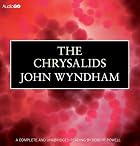
Brian Aldiss is supposed to have coined the term cozy catastrophe to cover John Wyndham's books, but I've never been able to see anything cozy about The Chrysalids, which is my favourite of all Wyndham's books and one of my overall favourite reads from my teenage years. Set in a much warmer Labrador of the far future after a nuclear holocaust has engulfed the world, it depicts an agrarian society where mutations (clearly caused by the high radiation levels) are common. But having no understanding of radiation, and very little understanding of the civilisation that preceded them, people have interpreted its destruction as 'Tribulation' sent by God to punish an evil world. And the only way to prevent tribulation from revisiting them is to root out all mutations, whether human, animal or plant, which depart in any way from the norms laid down by their forefathers. No matter how human a mutant might look, no matter how small might be their departure from the norm, they are merely soulless copies sent by the devil to tempt humans away from the true path laid down for them by God.
Into this world comes David Strorm: seemingly born to a secure life as the only son of a prosperous farmer who owns the biggest farm in the district. But his father is also strict in his persecution of mutants, strict to the point of bigotry some would say, and as the young David realises that he is different from virtually all others around him, even though apparently physically normal, his life becomes a struggle to hide his true nature. And when his younger sister Petra is born, the struggle becomes nearly impossible.
This is a book which, although short, deals with a lot of underlying questions of what it means to be human. Without giving anything away, I can say that I've always found the ending thought-provoking and disturbing. And even though I've read this several times before I enjoyed it equally as much when re-reading it again. Highly recommended.
Challenge: A Brief History of the Dead (dystopian fiction and the end of the world)
Brian Aldiss is supposed to have coined the term cozy catastrophe to cover John Wyndham's books, but I've never been able to see anything cozy about The Chrysalids, which is my favourite of all Wyndham's books and one of my overall favourite reads from my teenage years. Set in a much warmer Labrador of the far future after a nuclear holocaust has engulfed the world, it depicts an agrarian society where mutations (clearly caused by the high radiation levels) are common. But having no understanding of radiation, and very little understanding of the civilisation that preceded them, people have interpreted its destruction as 'Tribulation' sent by God to punish an evil world. And the only way to prevent tribulation from revisiting them is to root out all mutations, whether human, animal or plant, which depart in any way from the norms laid down by their forefathers. No matter how human a mutant might look, no matter how small might be their departure from the norm, they are merely soulless copies sent by the devil to tempt humans away from the true path laid down for them by God.
Into this world comes David Strorm: seemingly born to a secure life as the only son of a prosperous farmer who owns the biggest farm in the district. But his father is also strict in his persecution of mutants, strict to the point of bigotry some would say, and as the young David realises that he is different from virtually all others around him, even though apparently physically normal, his life becomes a struggle to hide his true nature. And when his younger sister Petra is born, the struggle becomes nearly impossible.
This is a book which, although short, deals with a lot of underlying questions of what it means to be human. Without giving anything away, I can say that I've always found the ending thought-provoking and disturbing. And even though I've read this several times before I enjoyed it equally as much when re-reading it again. Highly recommended.
144AHS-Wolfy
I've only read a few of Wyndham's works but really enjoyed those that I have, including The Chrysalids. I can see why it's a favourite for you.
145clfisha
Nice review of Black Swan Green, I think I liked it a bit more, I didn't mind the more fanciful areas plus its amusing to see were it ties up with his other books (yes I am a huge fan of his).
146SandDune
#144 Dave my other favourite is The Kraken Wakes which probably does deserve the label of cosy catastrophe but a good read nonetheless.
#145 Claire usually I like fanciful bits but they just didn't seem to tie up with the rest of the book which was so very not fanciful. I haven't read much else by him, although I keep meaning to: some of his other books appeal rather more than this one.
#145 Claire usually I like fanciful bits but they just didn't seem to tie up with the rest of the book which was so very not fanciful. I haven't read much else by him, although I keep meaning to: some of his other books appeal rather more than this one.
147psutto
I love Wyndham - I was considering a re-read later this year and your review makes it more likely
148SandDune
Pete I thought I'd read all of Wyndham in my teens and early twenties but I've realised recently that I've never read The Trouble with Lichen or Chocky. I've been going through a phase of reading some older sci-fi recently so I'll probably get round to some more of them in the not too distant future.
149psutto
I have & enjoyed the trouble with lichen but haven't got chocky and I've not read it
I also have the seeds of time which I've yet to get to
I also have the seeds of time which I've yet to get to
150SandDune
I have a feeling that I've read The Seeds of Time but ages ago and I can't remember much about it
151DeltaQueen50
Hi Rhian, I am another fan of John Wyndham and I think, The Chrysalids is my favourite of his as well. I originally read it in school and it stayed with me for years and a recent re-read was an enjoyable experience.
I also read Black Swan Green a few years ago and gave it four stars. A quick look at my review showed that I thought it was absorbing and charming.
I also read Black Swan Green a few years ago and gave it four stars. A quick look at my review showed that I thought it was absorbing and charming.
152SandDune
The Last Family in England Matt Haig ***1/2
Challenge: My Dog Tulip (anything to do with dogs)

'Nobody knows exactly how the Springer Uprising started. Or how. There are different stories, but it happened too quickly for anybody to be sure. Within no time at all, Springer spaniels could be found in almost every part of the country, spreading the word.' 'Dogs for Dogs, not for Humans' and 'Pleasure before Duty' say the Springers and more and more dogs follow their lead.
But of course Labradors are everything Springer spaniels are not: dutiful; obedient; prepared to sacrifice everything for their masters. So Prince, a young black Labrador, is a fervent adherent to the Labrador Pact, a resistance movement which reveres the Family as the most beautiful aspect of human existence, and the proper environment for a dog to live. 'Duty over All' is the motto of the Pact and Prince tries to follow this creed as dogs all around him live for the moment. But his family is falling apart: suicide attempts, marriage, breakdown and teenage problems mean that Prince's attempts to protect his family become more and more desperate.
The Last Family in England is a black comedy which starts with Prince awaiting his final appointment with the vet, and tells the story of how his breaking of the Pact led him to that position. I didn't enjoy this one as much as The Radleys by the same author which I read last year, but still a decent book and a good holiday read. And as someone who used to own a Springer Spaniel, the idea that Springers are responsible for an uprising makes perfect sense!
Challenge: My Dog Tulip (anything to do with dogs)

'Nobody knows exactly how the Springer Uprising started. Or how. There are different stories, but it happened too quickly for anybody to be sure. Within no time at all, Springer spaniels could be found in almost every part of the country, spreading the word.' 'Dogs for Dogs, not for Humans' and 'Pleasure before Duty' say the Springers and more and more dogs follow their lead.
But of course Labradors are everything Springer spaniels are not: dutiful; obedient; prepared to sacrifice everything for their masters. So Prince, a young black Labrador, is a fervent adherent to the Labrador Pact, a resistance movement which reveres the Family as the most beautiful aspect of human existence, and the proper environment for a dog to live. 'Duty over All' is the motto of the Pact and Prince tries to follow this creed as dogs all around him live for the moment. But his family is falling apart: suicide attempts, marriage, breakdown and teenage problems mean that Prince's attempts to protect his family become more and more desperate.
The Last Family in England is a black comedy which starts with Prince awaiting his final appointment with the vet, and tells the story of how his breaking of the Pact led him to that position. I didn't enjoy this one as much as The Radleys by the same author which I read last year, but still a decent book and a good holiday read. And as someone who used to own a Springer Spaniel, the idea that Springers are responsible for an uprising makes perfect sense!
153SandDune
#151 Judy I think I first read The Chysalids at school as well, and judging by how well I can remember it I must have read it several times. (I was a great rereader as a teenager).
154SandDune
We've been in Cornwall this week. Didn't take many photos but here are a few of the Eden Project:


And here is Bedruthan Steps our favourite beach:

And my son after doing a spot of climbing:


And here is Bedruthan Steps our favourite beach:

And my son after doing a spot of climbing:

155rabbitprincess
Beautiful beach! Looks like a good trip.
156mamzel
That bumblebee is awesome! I had to look up the Eden Project on line. What a cool place to visit! Art and gardens - great combo.
157SandDune
Hi Rabbitprincess, Mamzel The Eden Project is a great day out. It is quite educational and environmental, but done in a lighthearted sort of way.
This is what the site looked like before they started - an old china clay quarry:

And this is the inside of the tropical biome now:

This is what the site looked like before they started - an old china clay quarry:

And this is the inside of the tropical biome now:

158DeltaQueen50
Great pictures, Rhian. That beach looks like the perfect place for an afternoon ramble.
159lkernagh
I have always been fascinated by the Eden Project ever since I first read about it. Sound like you had a great trip. Thanks for posting the pictures!
161SandDune
#158 Judy we had a great walk along the beach, which is bigger than it looks as there's some in the other direction as well, climbed back up to the top, had a Cornish cream tea (not quite right at lunchtime but it was our last day) and then walked along the top to the headland in the distance. A lovely day!
#159, 160 Lori, Eva if you're ever in the vicinity I'd recommend the Eden Project, and it has the advantage that a big chunk of it is indoors which is always useful somewhere where it rains as much as it does in Cornwall. This time when we went round the rainforest section I was thinking that I will be in a real life rainforest in the summer, as we're off to Malaysia for three weeks in July.
#159, 160 Lori, Eva if you're ever in the vicinity I'd recommend the Eden Project, and it has the advantage that a big chunk of it is indoors which is always useful somewhere where it rains as much as it does in Cornwall. This time when we went round the rainforest section I was thinking that I will be in a real life rainforest in the summer, as we're off to Malaysia for three weeks in July.
162psutto
I enjoyed the Eden project and would also recommend the Lost Gardens of Heligan which is just down the road...
163SandDune
Pete at the moment my son's thirteen and doesn't quite see the points of gardens. But I'm sure we'll get there one day!
164SandDune
Foreigner C.J. Cherryh ****
Challenge: The Thirteenth Tale (series)

Several hundred years ago the spaceship Phoenix had discovered itself hopelessly off course and completely lost. Generations later The descendants of its original passengers attempt the first colonisation of the planet of the Atevi, an alien species that are similar to humans in appearance but built on a much larger and more robust scale. While neither side are initially hostile it soon becomes apparent that Atevi and human brains work in subtly different ways, and misunderstandings ensue that lead to war, a war which despite their more advanced technology the humans are too small in number to win. So to obtain peace and the island of Mospheira on which to live, the humans agree to gradually hand over their superior technology.
Fast forward two hundred years in the future: humans remain isolated on the island of Mospheira while the Atevi civilisation has advanced to the brink of space travel. But only one human is allowed onto the continent controlled by the Atevi: the paidhi, who acts as the only contact between the two species. But after a status quo lasting generations, it seems that the equilibrium is breaking down as an unknown assassin tries to kill Bren Cameron, the current paidhi. While political assassinations are a way of life amongst the Atevi, for the paidhi to be attacked by an unknown assailant in the house of Tabini, one of the most powerful Atevi rulers, is virtually unheard of. And as Bren is spirited away to the fortress of Malguri under the control of Tabini's unpredictable and ambitious grandmother, his situation becomes more and more precarious.
In Foreigner Cherryh has created a very believable world which focuses on the differences between the humans and the Atevi. The growing confusion that Bren feels as he finds everything that he thought he knew about the Atevi being challenged is clear. A slow moving book at the start, with little apparently happening for the first third or so, as Cherryh concentrates on building the world of the Atevi, but the world that is created more than makes up for this.
Challenge: The Thirteenth Tale (series)

Several hundred years ago the spaceship Phoenix had discovered itself hopelessly off course and completely lost. Generations later The descendants of its original passengers attempt the first colonisation of the planet of the Atevi, an alien species that are similar to humans in appearance but built on a much larger and more robust scale. While neither side are initially hostile it soon becomes apparent that Atevi and human brains work in subtly different ways, and misunderstandings ensue that lead to war, a war which despite their more advanced technology the humans are too small in number to win. So to obtain peace and the island of Mospheira on which to live, the humans agree to gradually hand over their superior technology.
Fast forward two hundred years in the future: humans remain isolated on the island of Mospheira while the Atevi civilisation has advanced to the brink of space travel. But only one human is allowed onto the continent controlled by the Atevi: the paidhi, who acts as the only contact between the two species. But after a status quo lasting generations, it seems that the equilibrium is breaking down as an unknown assassin tries to kill Bren Cameron, the current paidhi. While political assassinations are a way of life amongst the Atevi, for the paidhi to be attacked by an unknown assailant in the house of Tabini, one of the most powerful Atevi rulers, is virtually unheard of. And as Bren is spirited away to the fortress of Malguri under the control of Tabini's unpredictable and ambitious grandmother, his situation becomes more and more precarious.
In Foreigner Cherryh has created a very believable world which focuses on the differences between the humans and the Atevi. The growing confusion that Bren feels as he finds everything that he thought he knew about the Atevi being challenged is clear. A slow moving book at the start, with little apparently happening for the first third or so, as Cherryh concentrates on building the world of the Atevi, but the world that is created more than makes up for this.
165SandDune
Blooming Books Raymond Briggs ***
Challenge: Astonishing Splashes of Colour (picture books and graphic novels)
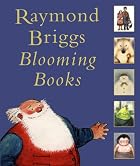
An survey of Raymond Brigg's entire career, excluding his last book The Puddleman, which was published the year after Blooming Books. Quite a comprehensive account including his lesser known early work, with quite a few extended excerpts from his books as well as (I think) the full text of The Snowman, The Bear, Father Christmas, The Elephant and the Bad Baby, and The Tin-Pot Foreign General and the Old Iron Woman. The Bear in particular looks a lovely book which I wish I'd come across when my son was very small, and I can certainly see why The Tin-Pot General and the Old Iron Woman was controversial when it was published.
The books provides some interesting insights into Briggs's work, which seems to have been particularly influenced by his childhood experiences: scenes from his childhood home appear in many of his books and there is a frequently recurring theme of how divisions between parents and children being caused by education. It also provides an insight into the restraining influence of his long-standing editor Julia MacRae, one of whose notes to him read 'Please Raymond, no full-frontal nudity for Father Christmas'.
While I enjoyed the book it seemed to fall slightly between being an anthology of Briggs's work and a commentary on it. Most people who picked it up would already be familiar with many of Briggs's books, so the large excerpts included might already be familiar to them. But to work well as a commentary I felt it needed more background on the context to the books, and above all what made the pictures work as pictures, something that I'm particularly interested in.
So overall, a book that I'm glad I read but one which could have been done better.
Challenge: Astonishing Splashes of Colour (picture books and graphic novels)
An survey of Raymond Brigg's entire career, excluding his last book The Puddleman, which was published the year after Blooming Books. Quite a comprehensive account including his lesser known early work, with quite a few extended excerpts from his books as well as (I think) the full text of The Snowman, The Bear, Father Christmas, The Elephant and the Bad Baby, and The Tin-Pot Foreign General and the Old Iron Woman. The Bear in particular looks a lovely book which I wish I'd come across when my son was very small, and I can certainly see why The Tin-Pot General and the Old Iron Woman was controversial when it was published.
The books provides some interesting insights into Briggs's work, which seems to have been particularly influenced by his childhood experiences: scenes from his childhood home appear in many of his books and there is a frequently recurring theme of how divisions between parents and children being caused by education. It also provides an insight into the restraining influence of his long-standing editor Julia MacRae, one of whose notes to him read 'Please Raymond, no full-frontal nudity for Father Christmas'.
While I enjoyed the book it seemed to fall slightly between being an anthology of Briggs's work and a commentary on it. Most people who picked it up would already be familiar with many of Briggs's books, so the large excerpts included might already be familiar to them. But to work well as a commentary I felt it needed more background on the context to the books, and above all what made the pictures work as pictures, something that I'm particularly interested in.
So overall, a book that I'm glad I read but one which could have been done better.
166SandDune
35. The Travels of Maudie Tipstaff Margaret Forster ****

Margaret Forster has the ability to create intensely believable and well-rounded characters, or perhaps I should say intensely believable and well-rounded female character: her men are perhaps a little bit more shadowy. But then it's women and their family relationships who are the main focus of Margaret Forster's writing. And in this book she has managed to create a title character who is bigoted, irritable, hugely overbearing and convinced that she is right about everything, who I know I would find intensely irritating after only five minutes if I ever met her in real life, and yet who genuinely engages the reader's interest and sympathy.
After nearly fifty years of marriage, the Glaswegian Maudie Tipstaff is coming to terms with the absence of her husband, Joseph. But absence is the operative word, as rather than being dead as the reader initially supposes, it soon becomes apparent that he has left her. The violent and hard-drinking Joseph has always been a great disappointment to the intensely respectable and hard-working Maudie, and his departure means that she can now spend some time in visiting her grown-up children. But rather than finding comfort in her children's presence she finds each of them in their own way as frustrating as the missing Joseph. Jean has inherited her mother housewifely skills, and at first glance is the most similar to her mother, but is the daughter who dreads her mother's visit the most, as her constant disapproval casts a gloomy pall over her comfortable house. 'Dear God!' rings out Maudie's cry time and again, as she picks fault with the small details of Jean's life, while refusing to talk about the emotional problems that Jean longs to discuss. But if Jean is a disappointment to her mother, Sally causes her embarassment and misery as she discovers that her daughter is the talk of the her village, with her slovenly and sluttish ways. Maudie expects all to be resolved with her visit to her son Robert, in Malta, but it is on this visit that she suffers the greatest disillusionment of all.
The Travels of Maudie Tipstaff is one of Margaret Forster's earlier novels (it was published in 1967) and Maudie is a product of her age. But taking that into account she seems utterly believable,as do her daughters. It is only the son Robert, who doesn't quite seem to work as a rounded character. But overall, a great read.

Margaret Forster has the ability to create intensely believable and well-rounded characters, or perhaps I should say intensely believable and well-rounded female character: her men are perhaps a little bit more shadowy. But then it's women and their family relationships who are the main focus of Margaret Forster's writing. And in this book she has managed to create a title character who is bigoted, irritable, hugely overbearing and convinced that she is right about everything, who I know I would find intensely irritating after only five minutes if I ever met her in real life, and yet who genuinely engages the reader's interest and sympathy.
After nearly fifty years of marriage, the Glaswegian Maudie Tipstaff is coming to terms with the absence of her husband, Joseph. But absence is the operative word, as rather than being dead as the reader initially supposes, it soon becomes apparent that he has left her. The violent and hard-drinking Joseph has always been a great disappointment to the intensely respectable and hard-working Maudie, and his departure means that she can now spend some time in visiting her grown-up children. But rather than finding comfort in her children's presence she finds each of them in their own way as frustrating as the missing Joseph. Jean has inherited her mother housewifely skills, and at first glance is the most similar to her mother, but is the daughter who dreads her mother's visit the most, as her constant disapproval casts a gloomy pall over her comfortable house. 'Dear God!' rings out Maudie's cry time and again, as she picks fault with the small details of Jean's life, while refusing to talk about the emotional problems that Jean longs to discuss. But if Jean is a disappointment to her mother, Sally causes her embarassment and misery as she discovers that her daughter is the talk of the her village, with her slovenly and sluttish ways. Maudie expects all to be resolved with her visit to her son Robert, in Malta, but it is on this visit that she suffers the greatest disillusionment of all.
The Travels of Maudie Tipstaff is one of Margaret Forster's earlier novels (it was published in 1967) and Maudie is a product of her age. But taking that into account she seems utterly believable,as do her daughters. It is only the son Robert, who doesn't quite seem to work as a rounded character. But overall, a great read.
167SandDune
37. Redshirts John Scalzi ****
Challenge: Is There Anything You Want? (Recommendations from LT and elsewhere)

Of course in the original Star Trek the redshirts never seemed to notice that their chances of surviving a visit to even the most innocuous and harmless looking planet were probably less than 50%, but start to think about what would happen if they did, and you pretty much have the plot of Redshirts by John Scalzi. On the Universal Union flagship Intrepid any away mission containing Captain Abernathy, Science Officer Q'eeng, Chief Engineer West, Medical Chief Hartnell or Lieutenant Kerensky is virtually guaranteed to have fatalities among the less important crew members, but beyond a few bruises the senior officers are never hurt. Apart from Kerensky that is, who in the past three years has survived three shootings, four deadly diseases, being crushed by a rock pile, a shuttle crash, an explosion, atmospheric decompression, induced mental instability, bites from two venomous animals, and the take over of his body by an alien parasite. But is that normal? Shouldn't he at least have post-traumatic stress disorder?
Such is the (justified) paranoia of the established crew about being sent on away missions they have devised numerous strategies to make sure they stay on the ship. But when Ensign Dahl, and four other new recruits are posted to the Intrepid, and discover how low their chances of survival really are, they decide to try to do something about the situation. Even if that means believing Jenkins, who has secreted himself in the cargo tunnels of the ship after his wife died on an away mission, and has come up with the most unbelievable theory of all...
I have to say that I'm probably quite susceptible to this book. The original Star Trek was about my favourite programme as a kid, and I love Galaxy Quest. So I thought it was great fun, and will be looking out for some more by this author. But if Star Trek was never your thing, the probably this isn't for you.
Challenge: Is There Anything You Want? (Recommendations from LT and elsewhere)

'You know, in the original Star Trek, they always had Kirk and Bones and Spock and then some poor dude in a red shirt who got vaporised before the first commercial. The moral if the story was not to wear a red shirt. Or go on away missions when you're the only one whose name isn't on the opening credits.'
Of course in the original Star Trek the redshirts never seemed to notice that their chances of surviving a visit to even the most innocuous and harmless looking planet were probably less than 50%, but start to think about what would happen if they did, and you pretty much have the plot of Redshirts by John Scalzi. On the Universal Union flagship Intrepid any away mission containing Captain Abernathy, Science Officer Q'eeng, Chief Engineer West, Medical Chief Hartnell or Lieutenant Kerensky is virtually guaranteed to have fatalities among the less important crew members, but beyond a few bruises the senior officers are never hurt. Apart from Kerensky that is, who in the past three years has survived three shootings, four deadly diseases, being crushed by a rock pile, a shuttle crash, an explosion, atmospheric decompression, induced mental instability, bites from two venomous animals, and the take over of his body by an alien parasite. But is that normal? Shouldn't he at least have post-traumatic stress disorder?
Such is the (justified) paranoia of the established crew about being sent on away missions they have devised numerous strategies to make sure they stay on the ship. But when Ensign Dahl, and four other new recruits are posted to the Intrepid, and discover how low their chances of survival really are, they decide to try to do something about the situation. Even if that means believing Jenkins, who has secreted himself in the cargo tunnels of the ship after his wife died on an away mission, and has come up with the most unbelievable theory of all...
I have to say that I'm probably quite susceptible to this book. The original Star Trek was about my favourite programme as a kid, and I love Galaxy Quest. So I thought it was great fun, and will be looking out for some more by this author. But if Star Trek was never your thing, the probably this isn't for you.
170AHS-Wolfy
Glad to see you enjoyed Redshirts. Having read the first two in the Old Man's War series I will be hoping to get to more of his work at some point so always good to see a positive review.
171SandDune
#170 Hi Dave I thought I might give The Old Man's War a go at some stage as it looks quite appealing.
I've abandoned my first book of the year: Bastard out of Carolina. I just decided that I really can't cope with it and it was making me miserable. I don't like not finishing books, unless I think they're no good, and I don't think this one is no good, it's just that the child abuse theme is way outside my comfort zone. If it was a non-fiction book (or even a fiction book) about a current day aspect of society, then I might have forced myself to finish it, but as it is set in the 1950's and the time and the place both seem a million miles away, then I really don't see that I have to.
The reason I chose the book was that I'm not getting along well with my 'Working-Class Fiction' category, one of the reasons being that I can't find many of the books I want to read on audio (or at the library for that matter). But they did have this one, so I thought I'd give it a go. But it didn't work for me.
I've abandoned my first book of the year: Bastard out of Carolina. I just decided that I really can't cope with it and it was making me miserable. I don't like not finishing books, unless I think they're no good, and I don't think this one is no good, it's just that the child abuse theme is way outside my comfort zone. If it was a non-fiction book (or even a fiction book) about a current day aspect of society, then I might have forced myself to finish it, but as it is set in the 1950's and the time and the place both seem a million miles away, then I really don't see that I have to.
The reason I chose the book was that I'm not getting along well with my 'Working-Class Fiction' category, one of the reasons being that I can't find many of the books I want to read on audio (or at the library for that matter). But they did have this one, so I thought I'd give it a go. But it didn't work for me.
172psutto
>169 SandDune: - fraid not, but plan to
173SandDune
The Untied Kingdom Kate Johnson ***1/2
Challenge: Is There Anything you Want (recommendations on LT and elsewhere).

This one was recommended by Susanj67 last year and I saw it was available in my Library's ebook section so decided to give it a go. A mixture of fantasy (alternative history type) and romance, with the romance elements probably being more successful. But good fun, as long as you don't think about certain things too closely.
Eve Carpenter is a C list celebrity whose life is going nowhere since the break-up of her band GrrlPower. With her money siphoned off by her mother and accountant, and the taxman pursuing her for unpaid income tax, it seems that things can't get much worse. But reduced to taking part in a third rate reality TV programme she finds that they can: a hang-gliding stunt above the River Thames in London goes wrong and Eve finds herself falling into the Thames. Rescued from drowning by Major William Harker, Eve finds herself in a London hospital room, but in a London very different from any she has ever known. In this new world, the UK is a third world country fighting (and losing) a desperate war with the major world power, France. Actually there isn't even a United Kingdom, as Scotland and Wales have long ago split away from England. And having had no industrial revolution and been on the (losing) fringes of most of European history England is a place where the people are hungry, only the rich have electricity and computers are unknown.
So when the coalitionist allies of the French are rumoured to have more than one computer in Leeds which they are using to mastermind their attacks against the government troops, Major Harker is sent with some hand picked troops to try to capture one, but as none of them have even seen a computer Eve is reluctantly co-opted onto the expedition. And this is where the romance comes in, with Eve and Major Harker's feeling for each other becoming more and more complicated.
As I said this is probably a book you don't want to think too much about from the fantasy side. While I thought the depiction of third world Britain worked well, once you started to think about how it might have got like that there were a lot of things in this version of history that didn't make too much sense. But it was a really fun read; Major Harker made a very good romantic hero, and Eve a very feisty and capable heroine (even if she did seem to have an unusually good knowledge of computers for someone whose main talent was singing).
Challenge: Is There Anything you Want (recommendations on LT and elsewhere).

This one was recommended by Susanj67 last year and I saw it was available in my Library's ebook section so decided to give it a go. A mixture of fantasy (alternative history type) and romance, with the romance elements probably being more successful. But good fun, as long as you don't think about certain things too closely.
Eve Carpenter is a C list celebrity whose life is going nowhere since the break-up of her band GrrlPower. With her money siphoned off by her mother and accountant, and the taxman pursuing her for unpaid income tax, it seems that things can't get much worse. But reduced to taking part in a third rate reality TV programme she finds that they can: a hang-gliding stunt above the River Thames in London goes wrong and Eve finds herself falling into the Thames. Rescued from drowning by Major William Harker, Eve finds herself in a London hospital room, but in a London very different from any she has ever known. In this new world, the UK is a third world country fighting (and losing) a desperate war with the major world power, France. Actually there isn't even a United Kingdom, as Scotland and Wales have long ago split away from England. And having had no industrial revolution and been on the (losing) fringes of most of European history England is a place where the people are hungry, only the rich have electricity and computers are unknown.
So when the coalitionist allies of the French are rumoured to have more than one computer in Leeds which they are using to mastermind their attacks against the government troops, Major Harker is sent with some hand picked troops to try to capture one, but as none of them have even seen a computer Eve is reluctantly co-opted onto the expedition. And this is where the romance comes in, with Eve and Major Harker's feeling for each other becoming more and more complicated.
As I said this is probably a book you don't want to think too much about from the fantasy side. While I thought the depiction of third world Britain worked well, once you started to think about how it might have got like that there were a lot of things in this version of history that didn't make too much sense. But it was a really fun read; Major Harker made a very good romantic hero, and Eve a very feisty and capable heroine (even if she did seem to have an unusually good knowledge of computers for someone whose main talent was singing).
174SandDune
38.The Accidental Tourist Anne Tyler ****
Challenge: The End of Your Life Book Club (RL book club reads)
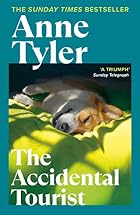
This was the first Anne Tyler that I read, years and years ago, probably not that long after it was published in the 1980's: I enjoyed it then and I enjoyed it again now.
Macon Leary is a conservative and pedantic man, who despite having a dislike of travel himself is the author of a series of successful travel books, the 'Accidental Tourist' series. But rather than waxing lyrical about the delights of the country being visited, the whole purpose of the 'Accidental Tourist' is that they enable the American businessman to spend his time abroad cocooned from the very country he is visiting. No local delicacies are mentioned in Macon's guidebooks, no interesting sights, his readers just want everything to be as familiar as possible and that's exactly what he gives them.
Driving back in the rain from an unsuccessful trip to the beach, Macon's wife announces that she wants a divorce: a surprise to Macon despite the strain put on the marriage by the death of their 13 year old son Ethan in a random shooting the year before. But the stress of coping with his marriage break-down, as well as his continuing grief for his son, threatens to overwhelm Macon, and the routines and fondness for method which had always characterised his life seem to be descending into mania:
But when an accident forces Macon into the home of his three equally conservative siblings, the agressive behaviour of his dog Edward (clearly suffering from some of the stresses that are affecting Macon) becomes unacceptable. And so into his life comes the dog trainer Muriel, and Muriel, a single mother in her twenties, is everything that the middle-aged Macon is not: lively, impulsive, messy, noisy, living a hand to mouth existence with any number of low paid jobs. It is clear that Macon's friends and relations consider her a completely unsuitable match for him, but Macon himself is more unsure ...
Challenge: The End of Your Life Book Club (RL book club reads)
This was the first Anne Tyler that I read, years and years ago, probably not that long after it was published in the 1980's: I enjoyed it then and I enjoyed it again now.
Macon Leary is a conservative and pedantic man, who despite having a dislike of travel himself is the author of a series of successful travel books, the 'Accidental Tourist' series. But rather than waxing lyrical about the delights of the country being visited, the whole purpose of the 'Accidental Tourist' is that they enable the American businessman to spend his time abroad cocooned from the very country he is visiting. No local delicacies are mentioned in Macon's guidebooks, no interesting sights, his readers just want everything to be as familiar as possible and that's exactly what he gives them.
Driving back in the rain from an unsuccessful trip to the beach, Macon's wife announces that she wants a divorce: a surprise to Macon despite the strain put on the marriage by the death of their 13 year old son Ethan in a random shooting the year before. But the stress of coping with his marriage break-down, as well as his continuing grief for his son, threatens to overwhelm Macon, and the routines and fondness for method which had always characterised his life seem to be descending into mania:
Well, you have to carry on. You have to carry on. He decided to switch his shower from morning to night. That showed adaptability, he felt- some freshness of spirit. While he showered he let the water collect in the tub, and he stalked around in noisy circles, sloshing the day's dirty clothes underfoot. Later he wrung out the clothes and hung them on hangers to dry. Then he dressed in tomorrow's underwear so he didn't have to launder any pyjamas. ...he had developed a system that enabled him to sleep in clean sheets every night without the trouble of bed changing. ... What he did was strip the mattress of all linens, replacing them with a giant sort of envelope made from one of the seven sheets he had folded and stiched together ...'
But when an accident forces Macon into the home of his three equally conservative siblings, the agressive behaviour of his dog Edward (clearly suffering from some of the stresses that are affecting Macon) becomes unacceptable. And so into his life comes the dog trainer Muriel, and Muriel, a single mother in her twenties, is everything that the middle-aged Macon is not: lively, impulsive, messy, noisy, living a hand to mouth existence with any number of low paid jobs. It is clear that Macon's friends and relations consider her a completely unsuitable match for him, but Macon himself is more unsure ...
175SandDune
Ignorance Michelle Roberts ***
Challenge: Oranges are not the Only Fruit (Orange and Booker and other prizes)
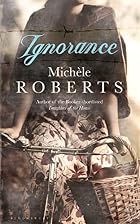
This book reminds me very much of the only other book by Michele Roberts that I have read: Daughters of the House. Both are set in a small French town and are presented from the point of view of two different women looking back on their shared experiences as children. Both look at the French experience in the Second World War in general and the treatment of Jews in particular. In both the memories of the individual and the collective memory of the community are seen to be flawed. But whereas Daughters of the House was a carefully constructed book with a satisfying conclusion, this book, although beautifully written, seemed to drift in its second half and in the end was slightly unsatisfactory.
Ignorance tells the story of Jeanne, the daughter of a widowed charwoman and Marie-Angele, the daughter of more prosperous shopkeepers for who Jeanne's mother works. Thrown together by the illnesses of both their mothers which causes them to become temporary boarders at the convent school which they attend (Marie-Angele paying, Jeanne a charity case and not allowed to forget it) they become almost friends. And although their subsequent lives follow very different paths, they continue to be intertwined. And through their lives we see the day to day reality of the German occupation of the two small towns of Ste-Madeleine and Ste-Marie-du-Ciel: the compromises and adjustments and betrayals which the townspeople make to survive.
Ignorance is the key theme of the book: ignorance of infidelity, of a mother's love and above all the collective ignorance of the population at large who prefer to close their eyes rather than see what is going on around them. But the characters felt a little stereotyped and one dimensional and so overall Ignorance didn't quite seem to live up to the promise of its ambitions.
Challenge: Oranges are not the Only Fruit (Orange and Booker and other prizes)
This book reminds me very much of the only other book by Michele Roberts that I have read: Daughters of the House. Both are set in a small French town and are presented from the point of view of two different women looking back on their shared experiences as children. Both look at the French experience in the Second World War in general and the treatment of Jews in particular. In both the memories of the individual and the collective memory of the community are seen to be flawed. But whereas Daughters of the House was a carefully constructed book with a satisfying conclusion, this book, although beautifully written, seemed to drift in its second half and in the end was slightly unsatisfactory.
Ignorance tells the story of Jeanne, the daughter of a widowed charwoman and Marie-Angele, the daughter of more prosperous shopkeepers for who Jeanne's mother works. Thrown together by the illnesses of both their mothers which causes them to become temporary boarders at the convent school which they attend (Marie-Angele paying, Jeanne a charity case and not allowed to forget it) they become almost friends. And although their subsequent lives follow very different paths, they continue to be intertwined. And through their lives we see the day to day reality of the German occupation of the two small towns of Ste-Madeleine and Ste-Marie-du-Ciel: the compromises and adjustments and betrayals which the townspeople make to survive.
Ignorance is the key theme of the book: ignorance of infidelity, of a mother's love and above all the collective ignorance of the population at large who prefer to close their eyes rather than see what is going on around them. But the characters felt a little stereotyped and one dimensional and so overall Ignorance didn't quite seem to live up to the promise of its ambitions.
176thornton37814
I remember reading The Accidental Tourist years ago after watching a made for TV movie. The Roberts' books, especially the earlier one you mentioned, sound interesting.
177SandDune
Hi Lori - was that the one with Geena Davis? I remember seeing that and thinking she was a bit too attractive for the part of Muriel, but still enjoyed the film. We had our RL book club to discuss The Accidental Tourist on Tuesday and I was really surprised that there was such a difference of opinion about Muriel.
SPOILER ALERT
Group one (in which were me and Mr Sandune) thought that it was clear that Macon was much better off with Muriel than with his wife, and while they were very different sort of people, they were both good for each other at that time in their life. For Macon to have returned to his wife would have been a very backward step.
Group two seemed to see Muriel as a gold-digging floozy who was just out for what she could get, and were hugely disappointed when he didn't get back with his wife. This group saw Macon's attraction to Muriel for anything more than a casual relationship as slightly unbelievable. This was a point of view that hadn't occurred to me at all, but I have to say I wasn't convinced.
Both groups enjoyed the book, so it was great that we got a good discussion going. Usually if everyone likes the book the discussion is a bit bland.
END OF SPOILERS
SPOILER ALERT
Group one (in which were me and Mr Sandune) thought that it was clear that Macon was much better off with Muriel than with his wife, and while they were very different sort of people, they were both good for each other at that time in their life. For Macon to have returned to his wife would have been a very backward step.
Group two seemed to see Muriel as a gold-digging floozy who was just out for what she could get, and were hugely disappointed when he didn't get back with his wife. This group saw Macon's attraction to Muriel for anything more than a casual relationship as slightly unbelievable. This was a point of view that hadn't occurred to me at all, but I have to say I wasn't convinced.
Both groups enjoyed the book, so it was great that we got a good discussion going. Usually if everyone likes the book the discussion is a bit bland.
END OF SPOILERS
178thornton37814
Rhian - I think that Geena Davis was in it.
179SandDune
Shards of Honor Lois McMaster Bujold ****
Challenge: The Thirteenth Tale (series)

This is the first book I've read by this author although I've seen her name around LT a lot recently, but this was great fun so I'll definitely be following it up with the next one in this series.
Captain Cordelia Naismith, from the peaceful world of Beta Colony, commands a scientific survey team on what is thought to be a previously unexplored planet. But when a sudden violent and unexpected encounter with a military party from the warlike planet of Barrayar leaves one of her party dead, and another seriously injured, Cordelia is left stranded on the planet while her outnumbered team make their escape. To make the situation worse, she is not alone: stranded alongside her is the Barrayaran commander, the notorious Captain Aral Vorkosigan, otherwise known as the Butcher of Komarr, notorious for ordering the ruling senate of Komarr murdered after they had surrendered following the Barrayaran invasion. But Vorkosigan has troubles of his own, abandoned after the mutiny of some of his own men in one of the violent power struggles that characterise Barrayaran society, he must get to the Barrayaran supply cache several hundred kilometres away to have any chance of survival and of reasserting his authority. As his prisoner, Cordelia has no choice but to accompany him, but as their journey continues and they both realise that they must cooperate to survive, she discovers that Vorkosigan is a much more complex character that his reputation would suggest.
Challenge: The Thirteenth Tale (series)

This is the first book I've read by this author although I've seen her name around LT a lot recently, but this was great fun so I'll definitely be following it up with the next one in this series.
Captain Cordelia Naismith, from the peaceful world of Beta Colony, commands a scientific survey team on what is thought to be a previously unexplored planet. But when a sudden violent and unexpected encounter with a military party from the warlike planet of Barrayar leaves one of her party dead, and another seriously injured, Cordelia is left stranded on the planet while her outnumbered team make their escape. To make the situation worse, she is not alone: stranded alongside her is the Barrayaran commander, the notorious Captain Aral Vorkosigan, otherwise known as the Butcher of Komarr, notorious for ordering the ruling senate of Komarr murdered after they had surrendered following the Barrayaran invasion. But Vorkosigan has troubles of his own, abandoned after the mutiny of some of his own men in one of the violent power struggles that characterise Barrayaran society, he must get to the Barrayaran supply cache several hundred kilometres away to have any chance of survival and of reasserting his authority. As his prisoner, Cordelia has no choice but to accompany him, but as their journey continues and they both realise that they must cooperate to survive, she discovers that Vorkosigan is a much more complex character that his reputation would suggest.
180SandDune
This Boy Alan Johnson ****
Challenge: Love on the Dole (working-class literature)
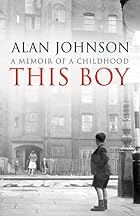
Alan Johnson is a British politician who held a number of senior posts in the last Labour government, culminating in the post of Home Secretary which is one of the key positions in the UK government. He's known for being one of the politicians in the Labour Party with a genuine working-class background, but this memoir reveals that not only did he have an underpriviledged childhood, it was one in which he suffered a level of deprivation that would have horrified most working-class people in the 1950's of his childhood, let alone now. I found it genuinely shocking that people were still living in the sort of conditions described in this book, which seem to belong to the worse period of the depression, rather than the more prosperous post-war period.
Born in 1950 the housing conditions in which the author spent his London childhood were truly appalling. Never with any more than three rooms, his family lived in a succession of damp, crumbling and insect infested homes which in his younger childhood had no electricity or even gas. A bathroom was a luxury not even dreamed of and the outside toilet was shared with neigbbours: buckets of urine in the bedroom took the place of indoor facilities. There was never enough food, or fuel, and Alan and his sister Linda spent their childhood being constantly cold and hungry.
Alan Johnson's father was a sometime painter and decorator who worked only intermittently, and who spent most of what he did earn on drink and gambling. Despite having a heart condition following rheumatic fever as a child, his mother Lily worked constantly, and against medical advice, in a succession of cleaning jobs which damaged her health still further, requiring longer and longer spells in hospital to recover. The author tells a poignant story of a Christmas when, with his mother in hospital, they were abandoned by their father for several days. His ten year old sister attempted to cook the Christmas dinner, not realising that the plastic wrapping should be removed first. And when their father later abandoned the family completely their situation became more and more desperate.
This book is primarily a tribute to the author's mother, and to his older sister who fought tooth and nail to keep the family together after their mother's death. Despite Alan Johnson being only ten years older than me, this really does seem like a story of another age. Even my parents, brought up in a mining village in South Wales a generation earlier during the depression, didn't experience anything like this level of deprivation. This is not the usual political memoir, finishing as it does with the author's wedding at the age of eighteen, and I'd recommend it to anyone who has an interest in the social history of the twentieth century,
Challenge: Love on the Dole (working-class literature)
Alan Johnson is a British politician who held a number of senior posts in the last Labour government, culminating in the post of Home Secretary which is one of the key positions in the UK government. He's known for being one of the politicians in the Labour Party with a genuine working-class background, but this memoir reveals that not only did he have an underpriviledged childhood, it was one in which he suffered a level of deprivation that would have horrified most working-class people in the 1950's of his childhood, let alone now. I found it genuinely shocking that people were still living in the sort of conditions described in this book, which seem to belong to the worse period of the depression, rather than the more prosperous post-war period.
Born in 1950 the housing conditions in which the author spent his London childhood were truly appalling. Never with any more than three rooms, his family lived in a succession of damp, crumbling and insect infested homes which in his younger childhood had no electricity or even gas. A bathroom was a luxury not even dreamed of and the outside toilet was shared with neigbbours: buckets of urine in the bedroom took the place of indoor facilities. There was never enough food, or fuel, and Alan and his sister Linda spent their childhood being constantly cold and hungry.
Alan Johnson's father was a sometime painter and decorator who worked only intermittently, and who spent most of what he did earn on drink and gambling. Despite having a heart condition following rheumatic fever as a child, his mother Lily worked constantly, and against medical advice, in a succession of cleaning jobs which damaged her health still further, requiring longer and longer spells in hospital to recover. The author tells a poignant story of a Christmas when, with his mother in hospital, they were abandoned by their father for several days. His ten year old sister attempted to cook the Christmas dinner, not realising that the plastic wrapping should be removed first. And when their father later abandoned the family completely their situation became more and more desperate.
This book is primarily a tribute to the author's mother, and to his older sister who fought tooth and nail to keep the family together after their mother's death. Despite Alan Johnson being only ten years older than me, this really does seem like a story of another age. Even my parents, brought up in a mining village in South Wales a generation earlier during the depression, didn't experience anything like this level of deprivation. This is not the usual political memoir, finishing as it does with the author's wedding at the age of eighteen, and I'd recommend it to anyone who has an interest in the social history of the twentieth century,
181-Eva-
->171 SandDune:
I tried that one too, but the topic got to me too and I gave my copy away. I think there's a film-version that I'll check out instead if I get a hankering.
->174 SandDune:
I've seen the movie version as well and think I read the book after, but since I don't remember, it should probably go onto the reread list...
I tried that one too, but the topic got to me too and I gave my copy away. I think there's a film-version that I'll check out instead if I get a hankering.
->174 SandDune:
I've seen the movie version as well and think I read the book after, but since I don't remember, it should probably go onto the reread list...
182SandDune
Hi Eva I'm way behind on my thread here. It's been a busy few weeks and I've been struggling to keep up. Well here goes with a catch up.
183SandDune
The Humans Matt Haig ***1/2
Challenge: Is there anything you want (Recommendations from LT and elsewhere)
Matt Haig is becoming an author I like a lot when I feel like something easy-going. This is the third book of his that I've read in the last year or so and I've enjoyed all of them (The Radleys and The Last Family in England were the others).
Professor Andrew Martin, a 43 year old mathematician at Cambridge University has discovered the proof of the Riemann Hypothesis, which will unlock the key to the understanding of prime numbers. But his triumph is short lived, as he is abducted and then replaced by an alien intent of destroying all traces of his work, for if humans have the secret of prime numbers who knows what they will be capable of, and such knowledge in the hands of such a primitive species is surely dangerous. Unfortunately for the alien who has taken the form of Professor Martin, rather than finding himself in the professor's office, he find himself in the middle of the motorway leading into Cambridge. About to be hit by a car. And without any clothes. Luckily alien technology enables him to escape the car crash without a scratch, but it doesn't help him to evade the police as he continues to wander around Cambridge naked.
But what seems like a simple task at first - to destroy all evidence of the professor's work and to kill anyone who might be aware of it - becomes more complicated as the alien professor becomes more comfortable in human society. And especially as he seems to be making a rather more agreeable Professor Martin than the real professor himself.
I really enjoyed Matt Haig's turn of phrase in this book. The picture of the family dog is spot on: ' a category of hairy domestic deity otherwise known as a 'dog''. And this seems a very good description of magazines:
Challenge: Is there anything you want (Recommendations from LT and elsewhere)
Matt Haig is becoming an author I like a lot when I feel like something easy-going. This is the third book of his that I've read in the last year or so and I've enjoyed all of them (The Radleys and The Last Family in England were the others).
Professor Andrew Martin, a 43 year old mathematician at Cambridge University has discovered the proof of the Riemann Hypothesis, which will unlock the key to the understanding of prime numbers. But his triumph is short lived, as he is abducted and then replaced by an alien intent of destroying all traces of his work, for if humans have the secret of prime numbers who knows what they will be capable of, and such knowledge in the hands of such a primitive species is surely dangerous. Unfortunately for the alien who has taken the form of Professor Martin, rather than finding himself in the professor's office, he find himself in the middle of the motorway leading into Cambridge. About to be hit by a car. And without any clothes. Luckily alien technology enables him to escape the car crash without a scratch, but it doesn't help him to evade the police as he continues to wander around Cambridge naked.
But what seems like a simple task at first - to destroy all evidence of the professor's work and to kill anyone who might be aware of it - becomes more complicated as the alien professor becomes more comfortable in human society. And especially as he seems to be making a rather more agreeable Professor Martin than the real professor himself.
I really enjoyed Matt Haig's turn of phrase in this book. The picture of the family dog is spot on: ' a category of hairy domestic deity otherwise known as a 'dog''. And this seems a very good description of magazines:
'Magazines are very popular, despite no human having ever felt better for having read them. Indeed, their chief purpose is to generate a sense of inferiority in the reader that consequently leads to them needing to buy something, which they do, and then feel even worse, and so need to buy another magazine to see what they can buy next. It is an eternal and unhappy spiral that goes by the name of capitalism and it is really quite popular.'
184SandDune
And When Did You Last See Your Father? Blake Morrison ****
Challenge: The End of Your Life Book Club (RL book club)
This is a thoughtful and perceptive reflection on the life, and particularly on the death, of the author's father. But unlike many books of this type, this isn't a picture of a dysfunctional family or unhappy childhood: the relationship between Morrison and his father was ultimately a loving one, although one fraught with frustrations.
Blake Morrison was born around 1950 into a prosperous family: both his parents were doctors in partnership in general practice in a small town in Yorkshire. His father was a larger than life character, perhaps not quite the respectable character that his position might suggest:
What Morrison captures wonderfully is the rivalry, whether physical or otherwise, between father and son, as the one ages and the other grows. And there are some truly funny moments as the son attempts to deal with some of the excesses of his father's behaviour. But what makes the book stand out are Morrison's reflections on his father's death from inoperable cancer at the age of 75. Morrison depicts each stage in the decline in his father's physical condition with unusual clarity, but rather than being unnecessarily graphic , this is done in a very tender and moving way.
We discussed this book at my RL book club last night (Mr SandDune's choice) and all but one really enjoyed it. Several people found the description of the realities of death, and of the family's reaction to death, incredibly moving.
Challenge: The End of Your Life Book Club (RL book club)
This is a thoughtful and perceptive reflection on the life, and particularly on the death, of the author's father. But unlike many books of this type, this isn't a picture of a dysfunctional family or unhappy childhood: the relationship between Morrison and his father was ultimately a loving one, although one fraught with frustrations.
Blake Morrison was born around 1950 into a prosperous family: both his parents were doctors in partnership in general practice in a small town in Yorkshire. His father was a larger than life character, perhaps not quite the respectable character that his position might suggest:
This is the way it was with my father. Minor duplicities. Little fiddles. Money-saving, privilege-attaining fragments of opportunism. The queue-jump, the backhander, the deal under the table. Parking where you shouldn't, drinking after hours, accepting the poached pheasant and the hoods off the back of a lorry.
What Morrison captures wonderfully is the rivalry, whether physical or otherwise, between father and son, as the one ages and the other grows. And there are some truly funny moments as the son attempts to deal with some of the excesses of his father's behaviour. But what makes the book stand out are Morrison's reflections on his father's death from inoperable cancer at the age of 75. Morrison depicts each stage in the decline in his father's physical condition with unusual clarity, but rather than being unnecessarily graphic , this is done in a very tender and moving way.
We discussed this book at my RL book club last night (Mr SandDune's choice) and all but one really enjoyed it. Several people found the description of the realities of death, and of the family's reaction to death, incredibly moving.
185SandDune
The Warden Anthony Trollope ****1/2
Challenge: The Thirteenth Tale (series that I'm reading or want to start)

The first of Anthony Trollope's Barchester Chronicles, The Warden is a short but beautifully formed book. The story of Mr Septimus Harding, the precentor of Barchester Cathedral, and the warden of Hiram's Hospital, an almshouse in the cathedral city of Barchester. The twelve old men housed by the hospital receive an income of one shilling and four pence per day, whereas the increase in the value of the property in the centuries since the charity was founded leaves the warden with a substantial income of eight hundred pounds a year and the use of a handsome house. But as voices begin to be raised questioning whether this division of funds is in line with the original wishes of John Hiram, the very private Mr Harding must face the public scrutiny of his affairs. And to complicate matters the chief instigator of the enquiries is the man with whom Mr Harding's daughter Eleanor is in love.
For me the strength of this book is in the memorable characters that Trollope creates: the honest and generous Mr Harding battling with his own concience; the gentle but ineffectual Bishop; and blowing through the book like a whirlwind there is the wonderful archdeacon Dr Grantley, who alternately organises and terrorises all around him.
Trollope's language at times is just perfect. On discovering that Mr Harding's daughter is likely to become engaged to the chief reformer, John Bold:
I'll definitely going on to read the rest of the Barchester Chronicles.
Challenge: The Thirteenth Tale (series that I'm reading or want to start)

The first of Anthony Trollope's Barchester Chronicles, The Warden is a short but beautifully formed book. The story of Mr Septimus Harding, the precentor of Barchester Cathedral, and the warden of Hiram's Hospital, an almshouse in the cathedral city of Barchester. The twelve old men housed by the hospital receive an income of one shilling and four pence per day, whereas the increase in the value of the property in the centuries since the charity was founded leaves the warden with a substantial income of eight hundred pounds a year and the use of a handsome house. But as voices begin to be raised questioning whether this division of funds is in line with the original wishes of John Hiram, the very private Mr Harding must face the public scrutiny of his affairs. And to complicate matters the chief instigator of the enquiries is the man with whom Mr Harding's daughter Eleanor is in love.
For me the strength of this book is in the memorable characters that Trollope creates: the honest and generous Mr Harding battling with his own concience; the gentle but ineffectual Bishop; and blowing through the book like a whirlwind there is the wonderful archdeacon Dr Grantley, who alternately organises and terrorises all around him.
Trollope's language at times is just perfect. On discovering that Mr Harding's daughter is likely to become engaged to the chief reformer, John Bold:
'The bishop did not whistle; we believe that they lose the power of doing so on being consecrated; and that in these days one might as easily meet a corrupt judge as a whistling bishop; but he looked as if he would have done so, but for his apron.'
I'll definitely going on to read the rest of the Barchester Chronicles.
186SandDune
Anne of Green Gables L.M.Montgomery ****
Challenge: Possession (books on my bookshelf for more than six months)
The story of the red-haired and freckled orphan Anne adopted by an elderly brother and sister on Prince Edward Island is such a familiar book that I won't write a proper review, but just put down a few thoughts. I have been meaning to read this book for some time, since the summer of 2008 to be precise when we spent a week on Prince Edward Island: our accommodation was half a mile at most from the Green Gables House, we had free tickets, and we never went. I've been feeling guilty about that ever since: I know at least two people whose visits to Canada were mainly organised around them satisfying an Anne of Green Gables fixation on P.E.I.. Still ever if we didn't visit the actual house we did see many others like it, and fell in love with P.E.I. and I've been meaning to read it ever since.
This type of girls' story wasn't my favourite type of book when I was a child, I'm not sure I ever managed to finish Little Women, although I did like Pollyanna. It's probably telling that Anne of Green Gables is of a similar date, so the more overt moralising of earlier dated books is replaced by a focus on the inherent goodness of the main child character, who has much to teach the adults around her. And Anne is a very appealing main character, always aiming to be good while constantly getting into scrapes. So I enjoyed this book a lot: it's full of very quiet pleasures and it brings back all the delights of the P.E.I. countryside.
Challenge: Possession (books on my bookshelf for more than six months)
The story of the red-haired and freckled orphan Anne adopted by an elderly brother and sister on Prince Edward Island is such a familiar book that I won't write a proper review, but just put down a few thoughts. I have been meaning to read this book for some time, since the summer of 2008 to be precise when we spent a week on Prince Edward Island: our accommodation was half a mile at most from the Green Gables House, we had free tickets, and we never went. I've been feeling guilty about that ever since: I know at least two people whose visits to Canada were mainly organised around them satisfying an Anne of Green Gables fixation on P.E.I.. Still ever if we didn't visit the actual house we did see many others like it, and fell in love with P.E.I. and I've been meaning to read it ever since.
This type of girls' story wasn't my favourite type of book when I was a child, I'm not sure I ever managed to finish Little Women, although I did like Pollyanna. It's probably telling that Anne of Green Gables is of a similar date, so the more overt moralising of earlier dated books is replaced by a focus on the inherent goodness of the main child character, who has much to teach the adults around her. And Anne is a very appealing main character, always aiming to be good while constantly getting into scrapes. So I enjoyed this book a lot: it's full of very quiet pleasures and it brings back all the delights of the P.E.I. countryside.
187lkernagh
Looks like you have had a stretch of good reading, Rhian! I love it when I come across an author that rights books that appeal to me. Sounds like Haig fits the bill for you. I have a copy of The Radleys ..... I still haven't dived into it but it is on my To Read list, I promise you!
188SandDune
Hi Lori it isn't so much that I've been doing so much reading, more that I am behind on my reviews! Do get round to The Radleys - it's a fun read.
I'm not sure how much time I will have for reading over the next couple of weeks. My son went to Germany on a two week exchange trip on Friday and we are off to collect his exchange partner (who we'll be looking after) from the school in an hour or so. I'll probably be quite busy organising things for him to do for the next two weeks.
I'm not sure how much time I will have for reading over the next couple of weeks. My son went to Germany on a two week exchange trip on Friday and we are off to collect his exchange partner (who we'll be looking after) from the school in an hour or so. I'll probably be quite busy organising things for him to do for the next two weeks.
189-Eva-
I got And When Did You Last See Your Father? for my mum last Xmas since she loves the movie - sounds like I should visit her bookshelves next time I go visit!
190SandDune
Do read And When Did You Last See Your Father. This was Mr SandDune's RL book club choice and some people were moved almost to tears by the description of the father's death. (No spoilers here, it's clear from the beginning that that's what's going to happen.) But it's not a sentimental book: it's very much a warts and all description of a man who must have been incredibly frustrating at times.
191DeltaQueen50
Hi Rhian, I am so glad that you enjoyed Anne of Green Gables. I hope to work my way through the whole series over the next little while and it's a relief for me to find that these books seem to have stood the test of time.
192SandDune
The Detour Gerbrand Bakker ***
Challenge: The Welsh Girl (Welsh fiction)
An initially unnamed Dutch woman leaves her husband and her country, and finds herself in an isolated cottage in North Wales. There are hints of an affair with a student at the University in which she taught, and where she was completing her thesis on Emily Dickinson. Unfamiliar with country living she gradually comes to terms with her surroundings, and with the needs of the ten geese which she has acquired with the rental of the house and which are disappearing one by one. Into this solitary existence comes Rhys Jones, a neighbouring farmer, who Emilie (or is it Agnes) finds repulsive, and Bradwen, a young student who stays in the cottage after a chance encounter. Back in the Netherlands the abandoned husband discovers that her affair was not the only secret his wife was keeping, and resolves to follow her.
So far so good but I also found many things to irritate me about this book, starting with this sentence: 'Rhys Jones looked like a caricature of a Welshman: a broad face, thick greasy hair, watery eyes, unshaven'. And having got me indignant on behalf of my fellow countrymen, the book proceeded to annoy me in a number of other ways. A sense of place is something that's very important to me, but it's something I didn't get from The Detour. I mean it's November ... in Snowdonia ... and yet the weather seems to be warm enough to encourage the main character to strip off and lie naked in the sun, or bathe in newly discovered pools. Where are the howling gales, and the mist, and the rain that goes on for day after day?
And then there are the factual errors about life in Britain that jarred, and further detracted from my enjoyment of the book: a doctor chain smoking in his surgery while seeing patients is one of these (it's been illegal to smoke in any workplace or enclosed public place for some years now, and for years before that it would have been unthinkable to smoke in that particular environment.)And this comment about a ferry from the Netherlands to Hull left me wondering whether the author had ever been on a ferry in his life: 'This boat wasn't set up for meals: it left at 9pm and docked at nine the next morning. The husband and policeman couldn't find any breakfast.' Really? On a twelve hour ferry journey? In my (fairly extensive) experience of ferries the main aim of ferry operators is to get the travellers to spend as much money on food and drink as is humanly possible. You can always get breakfast. And dinner. And lunch. And snacks in between.
But above all my main problem with the book is that none of the character's actions make the slightest sense to me. I'm quite happy with a certain amount of ambiguity, but there wasn't a single character whose motivations I felt I could even begin to guess at. So by the end of the book I had very little idea of what the point of it all had been.
Overall, then, a disappointment, which was a shame as I'd had this one of my wish list for a while and had expected to like it. But no more than adequate for me I'm afraid.
Challenge: The Welsh Girl (Welsh fiction)
An initially unnamed Dutch woman leaves her husband and her country, and finds herself in an isolated cottage in North Wales. There are hints of an affair with a student at the University in which she taught, and where she was completing her thesis on Emily Dickinson. Unfamiliar with country living she gradually comes to terms with her surroundings, and with the needs of the ten geese which she has acquired with the rental of the house and which are disappearing one by one. Into this solitary existence comes Rhys Jones, a neighbouring farmer, who Emilie (or is it Agnes) finds repulsive, and Bradwen, a young student who stays in the cottage after a chance encounter. Back in the Netherlands the abandoned husband discovers that her affair was not the only secret his wife was keeping, and resolves to follow her.
So far so good but I also found many things to irritate me about this book, starting with this sentence: 'Rhys Jones looked like a caricature of a Welshman: a broad face, thick greasy hair, watery eyes, unshaven'. And having got me indignant on behalf of my fellow countrymen, the book proceeded to annoy me in a number of other ways. A sense of place is something that's very important to me, but it's something I didn't get from The Detour. I mean it's November ... in Snowdonia ... and yet the weather seems to be warm enough to encourage the main character to strip off and lie naked in the sun, or bathe in newly discovered pools. Where are the howling gales, and the mist, and the rain that goes on for day after day?
And then there are the factual errors about life in Britain that jarred, and further detracted from my enjoyment of the book: a doctor chain smoking in his surgery while seeing patients is one of these (it's been illegal to smoke in any workplace or enclosed public place for some years now, and for years before that it would have been unthinkable to smoke in that particular environment.)And this comment about a ferry from the Netherlands to Hull left me wondering whether the author had ever been on a ferry in his life: 'This boat wasn't set up for meals: it left at 9pm and docked at nine the next morning. The husband and policeman couldn't find any breakfast.' Really? On a twelve hour ferry journey? In my (fairly extensive) experience of ferries the main aim of ferry operators is to get the travellers to spend as much money on food and drink as is humanly possible. You can always get breakfast. And dinner. And lunch. And snacks in between.
But above all my main problem with the book is that none of the character's actions make the slightest sense to me. I'm quite happy with a certain amount of ambiguity, but there wasn't a single character whose motivations I felt I could even begin to guess at. So by the end of the book I had very little idea of what the point of it all had been.
Overall, then, a disappointment, which was a shame as I'd had this one of my wish list for a while and had expected to like it. But no more than adequate for me I'm afraid.
193SandDune
#191 Judy it's always slightly worrying when you reread a childhood favourite as an adult in case the magic has gone. That happened when I read What Katy Did not so long ago: I really couldn't see why I had enjoyed it so much as a child, and found it much too preachy. But Pollyanna still worked for me when I read it last year and I think Anne of Green Gables retains its appeal as well. I will certainly be reading the next book in the series.
194lkernagh
You list good valid reasons to be irritated with The Detour, Rhian. I have little patience for books when the character's actions make no sense..... unless it is supposed to be ambiguous or a bit of fluff reading. Here is hoping your next read is an improvement over that one!
195SandDune
#194 LoriI think that The Detour is supposed to be ambiguous, but there's too much ambiguity for me to enjoy it. And it may be that there are underlying hints that I just didn't pick up on. But I was left wondering what it had all been about and why the characters has acted as they did. There's clearly a lot of back story, but it's not explained or even hinted at enough to main the events related in the novel make much sense.
196-Eva-
That's a huge shame about The Detour - I was looking forward to it since I read and loved the fantastic The Twin a few years ago. That one took place in Netherlands, though, so perhaps he's better at home... :)
197SandDune
People who have read both seem to rate The Twin more highly. I wouldn't say don't read it - it's a well written book and perhaps the things that irritate me aren't ones that irritate you as much. It was nearly rated as a three and a half but didn't quite make it.
198SandDune
Tolstoy and the Purple Chair: My Year of Magical Reading Nina SankovItch **1/2
Following the death of her elder sister Anne-Marie from cancer at the age of forty-six, Nina Sankovitch found comfort by reading a book a day for a year. That much I knew before I started to read, and I was expecting a book predominantly focused on the books read and the reading experience, with an element of family memoir included. Instead, what I got was exactly the reverse, a family memoir interspersed with brief discursions into books. And a family memoir particularly focused on the sister and Nina's relationship with her. And therein lies the problem for me: Nina Sankovitch clearly adored her sister but she presents her as such an unremitting paragon of virtue that it is difficult to see her as a real person. Paragraphs such as this convey the feel:
Clearly, to lose a sister or any close relative or friend at the age of forty-six is very sad, but Sankovitch comes over as so self-indulgent in her grief that she completely lost my sympathy. I know this sounds cruel and heartless, but after fifty pages I just wanted to tell her to stop thinking about herself all the time and pull herself together. But her focus on the dead Anne-Marie even three years after her death is so complete that there seems to be very little thought left for anyone else: either for her husband whose own sister had died in the same year, or for her four children.
So not a good read for me, and particularly so coming so soon after reading And When Did You Last See Your Father, which, by giving a portrait of the dying man as a real human being with all his faults and foibles, succeeded in portraying a much more moving and rawer account of death and grief.
Following the death of her elder sister Anne-Marie from cancer at the age of forty-six, Nina Sankovitch found comfort by reading a book a day for a year. That much I knew before I started to read, and I was expecting a book predominantly focused on the books read and the reading experience, with an element of family memoir included. Instead, what I got was exactly the reverse, a family memoir interspersed with brief discursions into books. And a family memoir particularly focused on the sister and Nina's relationship with her. And therein lies the problem for me: Nina Sankovitch clearly adored her sister but she presents her as such an unremitting paragon of virtue that it is difficult to see her as a real person. Paragraphs such as this convey the feel:
'But Anne-Marie became my gold standard of achievement, the one whose approval I sought even more than my parents'. Up she went on a pedestal, and for me, she never really came down again.
'I was reminded of Anne-Marie in the characters I was meeting in all of my books. She was the kind of heroine authors like to put in their books, with her quiet strength and resilience, her utter lack of petty or trivial concerns, and the superlative combination of her beauty and her intelligence.'
Clearly, to lose a sister or any close relative or friend at the age of forty-six is very sad, but Sankovitch comes over as so self-indulgent in her grief that she completely lost my sympathy. I know this sounds cruel and heartless, but after fifty pages I just wanted to tell her to stop thinking about herself all the time and pull herself together. But her focus on the dead Anne-Marie even three years after her death is so complete that there seems to be very little thought left for anyone else: either for her husband whose own sister had died in the same year, or for her four children.
So not a good read for me, and particularly so coming so soon after reading And When Did You Last See Your Father, which, by giving a portrait of the dying man as a real human being with all his faults and foibles, succeeded in portraying a much more moving and rawer account of death and grief.
200SandDune
#199 Well, a lot of people seem to like the book but it was a lot too sentimental for me.
201SandDune
51. Boy James Hanley **1/2
Challenge: Love on the Dole (Working-class literature)
Well this wasn't exactly a cheerful read! In fact, I've rarely read such a tale of unremitting gloom and misery. The story is a simple one and the book is short. The 'boy' of the title, Arthur Fearon, is a sensitive working-class boy from a poor Liverpool family who is forced to leave school before the official leaving age of fourteen by his family's circumstances. As a good scholar, he had dreams of becoming a chemist, but he is put to work by his father on one of the worst jobs available: cleaning out the bilges and the boilers of the many ships in port. Hating the work and his workmates, as well as wanting to escape his abusive and violent father, he stows away on a ship, intending to go to America. But the ship he chooses is bound east rather than west, and Arthur is discovered before the voyage is half over. Rather than being put ashore, the death of a crewman means that the Captain agrees to sign him on as an ordinary seaman for the duration of the voyage, but Arthur soon discovers that he has merely substituted one type of abuse for another as several of his shipmates try to abuse him sexually, 'boys' being considered fair game by a number of the seamen. And when the ship docks in Alexandria, events transpire to ensure that there will be no relief from the boy's life of unrelenting misery.
I have to say that I didn't enjoy Boy. I could have coped with the bleakness of the story if I'd found it to be well written, but to be honest I didn't. The conversational language used was stilted and artificial, and just didn't sound like realistic speech. And the boy seemed to exist too much in a vacuum: it would have been a better book if there had been even just one friend or relative with whom he had a positive relationship. A lot of the characters onboard ship were fairly indistinguishable, which didn't help my enjoyment of the book.
Boy is presented by Oneworld Classics in my edition as an 'unjustly neglected work of enduring significance', but apart from a daring frankness (for its time) I cannot personally see what it is that would make it of enduring significance. Boy was prosecuted for obscenity in the UK in 1931, but there is nothing in it that would cause particular comment today. So not a great one for me.
Challenge: Love on the Dole (Working-class literature)
Well this wasn't exactly a cheerful read! In fact, I've rarely read such a tale of unremitting gloom and misery. The story is a simple one and the book is short. The 'boy' of the title, Arthur Fearon, is a sensitive working-class boy from a poor Liverpool family who is forced to leave school before the official leaving age of fourteen by his family's circumstances. As a good scholar, he had dreams of becoming a chemist, but he is put to work by his father on one of the worst jobs available: cleaning out the bilges and the boilers of the many ships in port. Hating the work and his workmates, as well as wanting to escape his abusive and violent father, he stows away on a ship, intending to go to America. But the ship he chooses is bound east rather than west, and Arthur is discovered before the voyage is half over. Rather than being put ashore, the death of a crewman means that the Captain agrees to sign him on as an ordinary seaman for the duration of the voyage, but Arthur soon discovers that he has merely substituted one type of abuse for another as several of his shipmates try to abuse him sexually, 'boys' being considered fair game by a number of the seamen. And when the ship docks in Alexandria, events transpire to ensure that there will be no relief from the boy's life of unrelenting misery.
I have to say that I didn't enjoy Boy. I could have coped with the bleakness of the story if I'd found it to be well written, but to be honest I didn't. The conversational language used was stilted and artificial, and just didn't sound like realistic speech. And the boy seemed to exist too much in a vacuum: it would have been a better book if there had been even just one friend or relative with whom he had a positive relationship. A lot of the characters onboard ship were fairly indistinguishable, which didn't help my enjoyment of the book.
Boy is presented by Oneworld Classics in my edition as an 'unjustly neglected work of enduring significance', but apart from a daring frankness (for its time) I cannot personally see what it is that would make it of enduring significance. Boy was prosecuted for obscenity in the UK in 1931, but there is nothing in it that would cause particular comment today. So not a great one for me.
202SandDune
Barchester Towers Anthony Trollope *****
Challenge: The Thirteenth Tale (series that I'm reading)

I loved this book. Loved it, loved it, loved it! It made me laugh out loud and cry and was absolutely everything a book should be. While I enjoyed The Warden greatly Barchester Towers, although dealing with many of the same characters and something of the same concerns, is even better.
Old Bishop Grantly is dying, and his son the Archdeacon has every expectation of being appointed his successor. Every expectation that is, as long as the present government remains in place, but the present government looks more unsteady by the day. Eventually missing the appointment by a matter of hours the disappointed Archdeacon must come to terms with serving a new bishop, and what is worse, a bishop who has low church tendencies which are an anathema to his high church leanings. And worse still, it is not only the bishop Mr Proudie that the Archdeacon must contend with, but with two other aspirants to power within the diocese: Mrs Proudie the bishop's wife, and Mr Slope, his ambitious personal chaplain. And so there follows a Machiavellian power struggle that would be worthy of any Rennaisance prince. The first meeting of the combatants in the bishop's study gives a taste of what is to come:
And the archdeacon's fury at the machinations of Mr Slope are compounded when it seems that a close connection of his is looking rather more favourably on him. Is Mr Harding's younger daughter Eleanor considering marriage with the hated enemy? Rather conveniently left a rich young widow with £1,000 a year following the early death of her husband John Bold, Eleanor can now be considered a great catch for an ambitious but impecunious young clergyman, or any other young gentleman with need of a steady income.
Once again, the great strength of this book is not in the plot, but with the host of marvellous characters with which Trollope fills his pages. And not only in the main characters, the lesser characters can be equally delightful. The beautiful but crippled Signora Madeline Vesey Neroni, whose only pastime is to snare men into her web as a spider might do, and her brother Bertie Stanhope who has failed at most careers (and religions) known to man, are both wonderful. So I will be continuing with my Trollope experiences after just a very brief break to catch my breath!
Challenge: The Thirteenth Tale (series that I'm reading)

I loved this book. Loved it, loved it, loved it! It made me laugh out loud and cry and was absolutely everything a book should be. While I enjoyed The Warden greatly Barchester Towers, although dealing with many of the same characters and something of the same concerns, is even better.
Old Bishop Grantly is dying, and his son the Archdeacon has every expectation of being appointed his successor. Every expectation that is, as long as the present government remains in place, but the present government looks more unsteady by the day. Eventually missing the appointment by a matter of hours the disappointed Archdeacon must come to terms with serving a new bishop, and what is worse, a bishop who has low church tendencies which are an anathema to his high church leanings. And worse still, it is not only the bishop Mr Proudie that the Archdeacon must contend with, but with two other aspirants to power within the diocese: Mrs Proudie the bishop's wife, and Mr Slope, his ambitious personal chaplain. And so there follows a Machiavellian power struggle that would be worthy of any Rennaisance prince. The first meeting of the combatants in the bishop's study gives a taste of what is to come:
'There were four persons there, each of whom considered himself the most important person in the diocese -himself, indeed, or herself, as Mrs Proudie was one of them -and with such a difference of opinion it was not probable that they would get on pleasantly together. The bishop himself wore the visible apron, and trusted mainly to that -to that and his title, both being facts which could not be overlooked. The archdeacon knew his subject and really understood the business of bishoping, which the others did not, and this was his strong ground. Mrs Proudie had her sex to back her, and her habit of command, and was nothing daunted by the high tone of Dr Grantly's face and figure. Mr Slope had only himself and his own courage and tact to depend on, but he nevertheless was perfectly self-assured, and did not doubt but that he should soon get the better of weak men who trusted so much to externals, as both bishop and archdeacon appeared to do.
And the archdeacon's fury at the machinations of Mr Slope are compounded when it seems that a close connection of his is looking rather more favourably on him. Is Mr Harding's younger daughter Eleanor considering marriage with the hated enemy? Rather conveniently left a rich young widow with £1,000 a year following the early death of her husband John Bold, Eleanor can now be considered a great catch for an ambitious but impecunious young clergyman, or any other young gentleman with need of a steady income.
Once again, the great strength of this book is not in the plot, but with the host of marvellous characters with which Trollope fills his pages. And not only in the main characters, the lesser characters can be equally delightful. The beautiful but crippled Signora Madeline Vesey Neroni, whose only pastime is to snare men into her web as a spider might do, and her brother Bertie Stanhope who has failed at most careers (and religions) known to man, are both wonderful. So I will be continuing with my Trollope experiences after just a very brief break to catch my breath!
203SandDune
Delphine Richard Sala ***
Challenge: Astonishing Flashes of Colour (picture books and graphic novels)
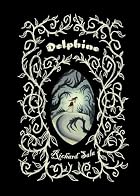
This one didn't really do anything too much for me, hence I've been putting off writing about it until I thought of something interesting to say. But as I still haven't thought of anything interesting to say I thought I'd better just write something. It was a reasonable gothic type of tale mixing fairly tales and myths with the modern world with quite spooky results. A reasonable way to pass an hour but it hasn't left me wanting to try more by the author.
Challenge: Astonishing Flashes of Colour (picture books and graphic novels)
This one didn't really do anything too much for me, hence I've been putting off writing about it until I thought of something interesting to say. But as I still haven't thought of anything interesting to say I thought I'd better just write something. It was a reasonable gothic type of tale mixing fairly tales and myths with the modern world with quite spooky results. A reasonable way to pass an hour but it hasn't left me wanting to try more by the author.
204SandDune
Where You Once Belonged Kent Haruf ****
I've seen quite a lot about Kent Haruf on LT over the last few months, especially Plainsong. But I tried this one as it was the only book by the author in my local library system (I don't think he's particularly well known in the UK). And I found this a powerful and haunting read, with beautiful sparse language, so I will definitely be going on to source some of his other books.
Jack Burdette has returned to his home town of Holt, Colorado after an absence of eight years. But this is no happy homecoming, as he left with over $150,000 belonging to the local farmers' cooperative of which he was the manager, and in which many local people owned shares. The sense of shock with which this hits the local community when this is discovered causes them to hit out at the only person remaining in town who they can associate with the crime: Burdette's wife.
The small town world of Holt is beautifully realised. A world where everyone knows everyone else and where people who do not fit in are ostracised. A world where Jack Burdette is able to rise to the position of manager despite having failed at both school and college, because of the fading glamour that clings to him as a school football star. And the sense of betrayal that the town feels is heightened by that very familiarity with the criminal. Told by Jack's onetime friend Pat Arbuckle, it's a book that builds to a shocking and unexpected conclusion.
I've seen quite a lot about Kent Haruf on LT over the last few months, especially Plainsong. But I tried this one as it was the only book by the author in my local library system (I don't think he's particularly well known in the UK). And I found this a powerful and haunting read, with beautiful sparse language, so I will definitely be going on to source some of his other books.
Jack Burdette has returned to his home town of Holt, Colorado after an absence of eight years. But this is no happy homecoming, as he left with over $150,000 belonging to the local farmers' cooperative of which he was the manager, and in which many local people owned shares. The sense of shock with which this hits the local community when this is discovered causes them to hit out at the only person remaining in town who they can associate with the crime: Burdette's wife.
The small town world of Holt is beautifully realised. A world where everyone knows everyone else and where people who do not fit in are ostracised. A world where Jack Burdette is able to rise to the position of manager despite having failed at both school and college, because of the fading glamour that clings to him as a school football star. And the sense of betrayal that the town feels is heightened by that very familiarity with the criminal. Told by Jack's onetime friend Pat Arbuckle, it's a book that builds to a shocking and unexpected conclusion.
205lkernagh
I have been looking at Delphine and will probably get to it at some point, especially as you mention it is a reasonable gothic type of tale mixing fairly tales and myths. Some reviews are just darn tough to write..... I finished a book during my lunchhour today and it is going to be one of those reviews, I just know.
206clfisha
Sorry to hear you didn't like Delphine, although you are right if that book didn't do anything or you no point trying his others
207SandDune
#205 Lori I think that many people would perhaps like Delphine a lot more than me. It just wasn't really my sort of thing - most of the graphic novels I read are memoirs and I don't really read much spooky stuff. Saying that, my current audiobook is Dracula which I'm enjoying quite a lot.
#206 Claire I wouldn't really say that I didn't enjoy it - it was OK for me - I was quite happy reading it but no more than that. To be honest if something by the same author came my way I'd probably give it a go but I wouldn't go out of my way to find one. I think I was a little disappointed because this one had been on my wishlist for a while and it didn't live up to my expectations.
#206 Claire I wouldn't really say that I didn't enjoy it - it was OK for me - I was quite happy reading it but no more than that. To be honest if something by the same author came my way I'd probably give it a go but I wouldn't go out of my way to find one. I think I was a little disappointed because this one had been on my wishlist for a while and it didn't live up to my expectations.
208SandDune
I'm having a really relaxing morning this morning. J and Mr SandDune finished school yesterday so there is quite a holiday atmosphere (even though I am at work next week) and for the first time for weeks I did not have to get up at the crack of dawn to do something. No taking anyone to the airport, no school, no sports events and best of all no Daisy waking up really early and wanting her breakfast. (She did wake up at 7.40, but I can cope with that - it's when she wakes up at 6.30 on a Saturday that I struggle. So I've been catching up on LT and walking Daisy and eating lots of biscuits!
Edited to add: Mr SandDune now in bad mood as Australia have beaten Lions by one point.
Edited to add: Mr SandDune now in bad mood as Australia have beaten Lions by one point.
209SandDune
An idea that's come to me from reading Whisper1's thread (on the 75 in 2013 Challenge) is to read all the Kate Greenaway medal winners. This is the main prize for illustration of Children's books in the UK and has been awarded since 1955. Here are the winners:
2013 Levi Pinfold, Black Dog
2012 Jim Kay, A Monster Calls
2011 Grahame Baker-Smith, FArTHER
2010 Freya Blackwood, Harry & Hopper
2009 Catherine Rayner, Harris Finds His Feet
2008 Emily Gravett, Little Mouse’s Big Book of Fears
2007 Mini Grey, The Adventures of the Dish and the Spoon
2005 Emily Gravett, Wolves
2004 Chris Riddell, Jonathan Swift's “Gulliver”
2003 Shirley Hughes, Ella's Big Chance
2002 Bob Graham, Jethro Byrde- Fairy Child
2001 Chris Riddell, Pirate Diary
2000 Lauren Child, I Will Not Ever Never Eat a Tomato (read)
1999 Helen Oxenbury, Alice's Adventures in Wonderland (read)
1998 Helen Cooper, Pumpkin Soup (read)
1997 P J Lynch, When Jessie Came Across the Sea
1996 Helen Cooper, The Baby Who Wouldn't Go To Bed (read)
1995 P J Lynch, The Christmas Miracle of Jonathan Toomey
1994 Gregory Rogers, Way Home
1993 Alan Lee, Black Ships Before Troy (read)
1992 Anthony Browne, Zoo
1991 Janet Ahlberg, The Jolly Christmas Postman
1990 Gary Blythe, The Whales' Song
1989 Michael Foreman, War Boy: a Country Childhood
1988 Barbara Firth, Can't You Sleep Little Bear? (read)
1987 Adrienne Kennaway, Crafty Chameleon
1986 Fiona French, Snow White in New York
1985 Juan Wijngaard, Sir Gawain and the Loathly Lady
1984 Errol Le Cain, Hiawatha's Childhood
1983 Anthony Browne, Gorilla (read)
1982 Michael Foreman, Long Neck and Thunder Foot and Sleeping Beauty and Other Favourite Fairy Tales
1981 Charles Keeping, The Highwayman
1980 Quentin Blake, Mr Magnolia (read)
1979 Jan Pienkowski, Haunted House (read)
1978 Janet Ahlberg, Each Peach Pear Plum (read)
1977 Shirley Hughes, Dogger (read)
1976 Gail E Haley, The Post Office Cat
1975 Victor Ambrus, Horses in Battle and Mishka
1974 Pat Hutchins, The Wind Blew
1973 Raymond Briggs, Father Christmas (read)
1972 Krystyna Turska, The Woodcutter's Duck
1971 Jan Pienkowski, The Kingdom under the Sea
1970 John Burningham, Mr Gumpy's Outing (read)
1969 Helen Oxenbury, The Quangle Wangle's hat and The Dragon of an Ordinary Family
1968 Pauline Baynes, Dictionary of Chivalry
1967 Charles Keeping, Charlotte and the Golden Canary
1966 Raymond Briggs, Mother Goose Treasury
1965 Victor Ambrus, The Three Poor Tailors
1964 C W Hodges, Shakespeare's Theatre
1963 John Burningham, Borka: the Adventures of a Goose with No Feathers
1962 Brian Wildsmith, A.B.C
1961 Antony Maitland, Mrs. Cockle's Cat
1960 Gerald Rose, Old Winkle and the Seagulls
1959 William Stobbs, Kashtanka and A Bundle of Ballads
1958 Prize withheld as no book considered suitable
1957 V H Drummond, Mrs Easter and the Storks
1956 Edward Ardizzone, Tim All Alone
1955 Prize withheld as no book considered suitable
2013 Levi Pinfold, Black Dog
2012 Jim Kay, A Monster Calls
2011 Grahame Baker-Smith, FArTHER
2010 Freya Blackwood, Harry & Hopper
2009 Catherine Rayner, Harris Finds His Feet
2008 Emily Gravett, Little Mouse’s Big Book of Fears
2007 Mini Grey, The Adventures of the Dish and the Spoon
2005 Emily Gravett, Wolves
2004 Chris Riddell, Jonathan Swift's “Gulliver”
2003 Shirley Hughes, Ella's Big Chance
2002 Bob Graham, Jethro Byrde- Fairy Child
2001 Chris Riddell, Pirate Diary
2000 Lauren Child, I Will Not Ever Never Eat a Tomato (read)
1999 Helen Oxenbury, Alice's Adventures in Wonderland (read)
1998 Helen Cooper, Pumpkin Soup (read)
1997 P J Lynch, When Jessie Came Across the Sea
1996 Helen Cooper, The Baby Who Wouldn't Go To Bed (read)
1995 P J Lynch, The Christmas Miracle of Jonathan Toomey
1994 Gregory Rogers, Way Home
1993 Alan Lee, Black Ships Before Troy (read)
1992 Anthony Browne, Zoo
1991 Janet Ahlberg, The Jolly Christmas Postman
1990 Gary Blythe, The Whales' Song
1989 Michael Foreman, War Boy: a Country Childhood
1988 Barbara Firth, Can't You Sleep Little Bear? (read)
1987 Adrienne Kennaway, Crafty Chameleon
1986 Fiona French, Snow White in New York
1985 Juan Wijngaard, Sir Gawain and the Loathly Lady
1984 Errol Le Cain, Hiawatha's Childhood
1983 Anthony Browne, Gorilla (read)
1982 Michael Foreman, Long Neck and Thunder Foot and Sleeping Beauty and Other Favourite Fairy Tales
1981 Charles Keeping, The Highwayman
1980 Quentin Blake, Mr Magnolia (read)
1979 Jan Pienkowski, Haunted House (read)
1978 Janet Ahlberg, Each Peach Pear Plum (read)
1977 Shirley Hughes, Dogger (read)
1976 Gail E Haley, The Post Office Cat
1975 Victor Ambrus, Horses in Battle and Mishka
1974 Pat Hutchins, The Wind Blew
1973 Raymond Briggs, Father Christmas (read)
1972 Krystyna Turska, The Woodcutter's Duck
1971 Jan Pienkowski, The Kingdom under the Sea
1970 John Burningham, Mr Gumpy's Outing (read)
1969 Helen Oxenbury, The Quangle Wangle's hat and The Dragon of an Ordinary Family
1968 Pauline Baynes, Dictionary of Chivalry
1967 Charles Keeping, Charlotte and the Golden Canary
1966 Raymond Briggs, Mother Goose Treasury
1965 Victor Ambrus, The Three Poor Tailors
1964 C W Hodges, Shakespeare's Theatre
1963 John Burningham, Borka: the Adventures of a Goose with No Feathers
1962 Brian Wildsmith, A.B.C
1961 Antony Maitland, Mrs. Cockle's Cat
1960 Gerald Rose, Old Winkle and the Seagulls
1959 William Stobbs, Kashtanka and A Bundle of Ballads
1958 Prize withheld as no book considered suitable
1957 V H Drummond, Mrs Easter and the Storks
1956 Edward Ardizzone, Tim All Alone
1955 Prize withheld as no book considered suitable
210mamzel
That's rather odd that the first year of the prize had no winner? Good luck on finding the older titles. I'm sure they will all be beautiful. It would be interesting to watch the change of style through the years.
211SandDune
#210 rather odd that the first year of the prize had no winner - I thought that as well! I don't think that the 1950's was a good period for picture books in Britain. Surprisingly, the very oldest one is the only one of the older ones that I have heard of. My son used to have a couple of those 'Little Tim' books.
212SandDune
Divergent ***1/2
Challenge: A Brief History of the Dead (dystopian fiction and the end of the world).

This is actually J's book but I'd read the first chapter when I first bought it for him, and liked the look of it. (He thought it pretty good but with too much romance - any romance is too much romance in J's opinion).
Some unnamed cataclysm has befallen the Chicago of the future. Much of the city has been abandoned; Lake Michigan is no longer a lake but merely a marsh; and the city is separated from the rest of the world (if there is a rest of the world) by a high wall. Everyone in the city is segregated into five factions at the age of sixteen: Dauntless, Abnegation, Erudite, Amity and Candor. While there are tests to determine their faction, ultimately the choice is the young person's own, but a choice away from their faction of birth will mean a separation from their family and everything that they know and love. And a failure to choose will leave them factionless, belonging to the lowest rung of society.
Tris (or Beatrice) has been brought up within Abnegation: the faction which believes that service to others is all important, and that focusing on personal appearance and desires is to be avoided at all costs. Tris has never felt that Abnegation is truly her home but her testing does not reveal clearly to which faction she should belong. Her tester reveals that she is Divergent: someone who cannot be assigned by the testing process, but this is a dangerous thing to be, and her tester warns her not to reveal this to anyone.
This is a fun read, although not a particularly original one. There are definite overtones of The Hunger Games, and also I think of William Nicholson's The Wind Singer with its idea of society being segregated into distinct and separate segments. I'll be happy to read the next elements in the trilogy.
Challenge: A Brief History of the Dead (dystopian fiction and the end of the world).

This is actually J's book but I'd read the first chapter when I first bought it for him, and liked the look of it. (He thought it pretty good but with too much romance - any romance is too much romance in J's opinion).
Some unnamed cataclysm has befallen the Chicago of the future. Much of the city has been abandoned; Lake Michigan is no longer a lake but merely a marsh; and the city is separated from the rest of the world (if there is a rest of the world) by a high wall. Everyone in the city is segregated into five factions at the age of sixteen: Dauntless, Abnegation, Erudite, Amity and Candor. While there are tests to determine their faction, ultimately the choice is the young person's own, but a choice away from their faction of birth will mean a separation from their family and everything that they know and love. And a failure to choose will leave them factionless, belonging to the lowest rung of society.
Tris (or Beatrice) has been brought up within Abnegation: the faction which believes that service to others is all important, and that focusing on personal appearance and desires is to be avoided at all costs. Tris has never felt that Abnegation is truly her home but her testing does not reveal clearly to which faction she should belong. Her tester reveals that she is Divergent: someone who cannot be assigned by the testing process, but this is a dangerous thing to be, and her tester warns her not to reveal this to anyone.
This is a fun read, although not a particularly original one. There are definite overtones of The Hunger Games, and also I think of William Nicholson's The Wind Singer with its idea of society being segregated into distinct and separate segments. I'll be happy to read the next elements in the trilogy.
213SandDune
How I won the Yellow Jumper Ned Boulting ***1/2
Challenge: Possession (books from my bookshelf)
It's Tour de France time of year again, and so I've finally got round to reading this book which I bought a couple of years ago. Since 2003 Ned Boulting has been a TV reporter on the ITV Tour de France highlights programme, which offers the main coverage of the race in the UK, and in this book he relates some of the events of the Tour de France of those years, and of his experience as part of the tour circus that covers the race every year. In his first year he was very much a novice when it came to the race, with nothing more than a vague idea that it was something to do with Lance Armstrong. Hence the mistake made in one of his first broadcasts when he referred to the famous 'maillot Jaune' or yellow jersey worn by the leader of the race as the 'yellow jumper'.
As someone whose watching of the Tour de France coincides very much with the years covered, I found this a fun and fairly light-hearted read. I'm not sure that it would work for someone new to the Tour de France, as it doesn't provide much background or explanation for a reader who isn't familiar with the riders and events described. But, for someone who is a regular viewer of the race, it was a fun and interesting read to revisit the the events of the race from a different point of view. While the book was written in 2011 and so doesn't deal with the more recent relevations about Lance Armstrong, it doesn't read as if those relevations would have come as a huge surprise to the author, so it doesn't read as too outdated.
For some reason I would never consider reading a book about any other sporting event, but will read a book about the Tour de France quite happily, perhaps because it's so frequently difficult to have a sensible conversation about the Tour to other people in the UK. (Or at least it was until the last couple of years with Wiggins winning in 2012 and Britain as a whole cottoning on to just how good Mark Cavendish is.) The complete lack of interest in cycling can be illustrated by Boulting's story and how he tried (and failed) to persuade a local TV company that after winning four stages in the 2008 Tour he might be worthy of interview on his return to the UK.
So overall, a fun read.
Challenge: Possession (books from my bookshelf)
It's Tour de France time of year again, and so I've finally got round to reading this book which I bought a couple of years ago. Since 2003 Ned Boulting has been a TV reporter on the ITV Tour de France highlights programme, which offers the main coverage of the race in the UK, and in this book he relates some of the events of the Tour de France of those years, and of his experience as part of the tour circus that covers the race every year. In his first year he was very much a novice when it came to the race, with nothing more than a vague idea that it was something to do with Lance Armstrong. Hence the mistake made in one of his first broadcasts when he referred to the famous 'maillot Jaune' or yellow jersey worn by the leader of the race as the 'yellow jumper'.
As someone whose watching of the Tour de France coincides very much with the years covered, I found this a fun and fairly light-hearted read. I'm not sure that it would work for someone new to the Tour de France, as it doesn't provide much background or explanation for a reader who isn't familiar with the riders and events described. But, for someone who is a regular viewer of the race, it was a fun and interesting read to revisit the the events of the race from a different point of view. While the book was written in 2011 and so doesn't deal with the more recent relevations about Lance Armstrong, it doesn't read as if those relevations would have come as a huge surprise to the author, so it doesn't read as too outdated.
For some reason I would never consider reading a book about any other sporting event, but will read a book about the Tour de France quite happily, perhaps because it's so frequently difficult to have a sensible conversation about the Tour to other people in the UK. (Or at least it was until the last couple of years with Wiggins winning in 2012 and Britain as a whole cottoning on to just how good Mark Cavendish is.) The complete lack of interest in cycling can be illustrated by Boulting's story and how he tried (and failed) to persuade a local TV company that after winning four stages in the 2008 Tour he might be worthy of interview on his return to the UK.
So overall, a fun read.
214SandDune
Dracula Bram Stoker ****
Challenge: Hothouse (reading for Open University course)
Everyone knows the story of Dracula, right? I mean, vampires, Transylvanian castles, bats, stakes through the heart in creepy tombs at the dead of night and all that. Except the original story isn't quite the same as it's generally presented nowadays: Dracula isn't a good looking guy in an evening suit for one thing and Van Helsing is definitely not some vampire hunting superhero.
In this original, Jonathan Harker, an English solicitor, travels to Transylvania to assist his firm's client, Count Dracula, with his plans to buy a property in London. Ensconced in Castle Dracula he soon realises that things are not as they seem. Why does his host appear only at night and why does Jonathan never see him eat? It soon becomes apparent that Jonathan is in fact a prisoner, a prisoner who will be not be needed alive for much longer, and as the full horror of his situation becomes clear to him, all his ingenuity is needed for escape to be even a remote possibility.
Meanwhile, back in England Jonathan's fiancée Mina is holidaying in Whitby with Lucy, an old school friend. But after the mysterious arrival of a Russian ship in port, with no crew left alive and the Captain's log talking of a demon on board, Lucy starts to act oddly. As her condition deteriorates, and she becomes paler and weaker by the day, her doctor calls in his old Professor Van Helsing to consult on her condition, and Van Helsing has some very unusual ideas about her condition ...
One thing I really took away from the book was the sense that when it was written the supernatural was being superimposed on the very modern world (to its readers anyway) of nineteenth century London. A world of trains running on time, efficient post and telegram services, detailed Ordnance Survey maps, typewriters, shorthand and where the role of women is definitely changing. That's a juxtaposition that it's easy to miss at a distance of over a hundred years, but it makes the story much more powerful.
The first part of the book I think is the best, and a real sense of horror and foreboding is generated. It does get a little repetitive towards the end, and the main protagonists do seem to miss things that are blindingly obvious to the reader. And Van Helsing gets very irritating at times with his pronouncements that all will be revealed, just not yet. But overall a good read.
Challenge: Hothouse (reading for Open University course)
Everyone knows the story of Dracula, right? I mean, vampires, Transylvanian castles, bats, stakes through the heart in creepy tombs at the dead of night and all that. Except the original story isn't quite the same as it's generally presented nowadays: Dracula isn't a good looking guy in an evening suit for one thing and Van Helsing is definitely not some vampire hunting superhero.
In this original, Jonathan Harker, an English solicitor, travels to Transylvania to assist his firm's client, Count Dracula, with his plans to buy a property in London. Ensconced in Castle Dracula he soon realises that things are not as they seem. Why does his host appear only at night and why does Jonathan never see him eat? It soon becomes apparent that Jonathan is in fact a prisoner, a prisoner who will be not be needed alive for much longer, and as the full horror of his situation becomes clear to him, all his ingenuity is needed for escape to be even a remote possibility.
Meanwhile, back in England Jonathan's fiancée Mina is holidaying in Whitby with Lucy, an old school friend. But after the mysterious arrival of a Russian ship in port, with no crew left alive and the Captain's log talking of a demon on board, Lucy starts to act oddly. As her condition deteriorates, and she becomes paler and weaker by the day, her doctor calls in his old Professor Van Helsing to consult on her condition, and Van Helsing has some very unusual ideas about her condition ...
One thing I really took away from the book was the sense that when it was written the supernatural was being superimposed on the very modern world (to its readers anyway) of nineteenth century London. A world of trains running on time, efficient post and telegram services, detailed Ordnance Survey maps, typewriters, shorthand and where the role of women is definitely changing. That's a juxtaposition that it's easy to miss at a distance of over a hundred years, but it makes the story much more powerful.
The first part of the book I think is the best, and a real sense of horror and foreboding is generated. It does get a little repetitive towards the end, and the main protagonists do seem to miss things that are blindingly obvious to the reader. And Van Helsing gets very irritating at times with his pronouncements that all will be revealed, just not yet. But overall a good read.
215SandDune
Island of Wings Karin Altenberg ***
Challenge Oranges are not the Only Fruit (the ex-Orange, Booker and any other prize)
I've spent several holidays on the Hebrides and have always found the story of St Kilda fascinating, so this book, set on the St Kilda of the mid- nineteenth century, seemed likely to appeal. The most isolated inhabited island of the British Isles, at least until 1930 when the remaining inhabitants requested to be resettled elsewhere, it was one where the task of eking out a living was incredibly difficult. Cut off from even the remote islands of the Outer Hebrides for a large part of every year, the inhabitants depended on the huge colonies of seabirds which nested on the islands, and on the tiny amount of arable land on which they could grow crops. And it was also an existence which was blighted by incredibly high infant mortality rates, with mothers routinely losing child after child within a week or so of birth.
Unfortunately, though, this story of the first minister of St Kilda, Neil MacKenzie and his wife Elizabeth, did not engage my attention as I expected. Island of Wings tells the story of their first arrival as a young married couple in 1830, to their eventual departure in 1843. The book does succeed in conveying the isolation of Elizabeth's position in particular, as an English speaking town bred woman from the Scottish mainland, but for me at no point did the characters or the narrative really come alive. The most interesting part of the book was learning about the social conditions of the St Kildans, which were extraordinarily basic even when compared with the Hebridean Islands which were their nearest neighbour. But I had already come across much of this information, and so not much of this was new. So while I would recommend this book to someone who is not familiar with the St Kildan story and is interested to learn more, I didn't find it particularly gripping apart from this.
Challenge Oranges are not the Only Fruit (the ex-Orange, Booker and any other prize)
I've spent several holidays on the Hebrides and have always found the story of St Kilda fascinating, so this book, set on the St Kilda of the mid- nineteenth century, seemed likely to appeal. The most isolated inhabited island of the British Isles, at least until 1930 when the remaining inhabitants requested to be resettled elsewhere, it was one where the task of eking out a living was incredibly difficult. Cut off from even the remote islands of the Outer Hebrides for a large part of every year, the inhabitants depended on the huge colonies of seabirds which nested on the islands, and on the tiny amount of arable land on which they could grow crops. And it was also an existence which was blighted by incredibly high infant mortality rates, with mothers routinely losing child after child within a week or so of birth.
Unfortunately, though, this story of the first minister of St Kilda, Neil MacKenzie and his wife Elizabeth, did not engage my attention as I expected. Island of Wings tells the story of their first arrival as a young married couple in 1830, to their eventual departure in 1843. The book does succeed in conveying the isolation of Elizabeth's position in particular, as an English speaking town bred woman from the Scottish mainland, but for me at no point did the characters or the narrative really come alive. The most interesting part of the book was learning about the social conditions of the St Kildans, which were extraordinarily basic even when compared with the Hebridean Islands which were their nearest neighbour. But I had already come across much of this information, and so not much of this was new. So while I would recommend this book to someone who is not familiar with the St Kildan story and is interested to learn more, I didn't find it particularly gripping apart from this.
216SandDune
Dark Eden Chris Beckett ****
Challenge: A Brief History of the Dead (dystopias and the end of the world)

Once upon a time Angela and Tommy descended from Starry Swirl with their Three Companions to the planet known as Eden. A planet without a sun, where heat and light is drawn up from the ground by the plants, and the animals generate their own bioluminesce. But the Starship Defiant is damaged and may not be able to make the return journey to Earth, and so Angela and Tommy elect to stay on Eden while the Three Companions risk the return journey to get help. Even if the spaceship doesn't make it all the way, a message will get through, and so Angela and Tommy's descendants must wait in their valley for their rescue.
Nearly two hundred years later they are still waiting and the Family, the descendants of Angela and Tommy, number several hundred. Food is getting scarce, in-breeding is rife, and the level of technology is barely more than Stone Age. But the valley is surrounded by Snowy Dark, which the people of Eden have neither the technology or the desire to cross. But John RedLantern starts to think that if the woollybucks can cross the Snowy Dark maybe people can too, and maybe there are other valleys where people can live. But even to think about going outside the valley goes against everything that the Family hold sacred, especially when John Redlantern is only a newhair not even a full adult.
This was a fun read, with a satisfying conclusion, and with the construction of a believable world. Nothing was really explained about how Eden worked and where the light and heat came from, but as the story is told from the point of view of the Family members, this does not detract from the book as a whole. Recommended.
Challenge: A Brief History of the Dead (dystopias and the end of the world)

Once upon a time Angela and Tommy descended from Starry Swirl with their Three Companions to the planet known as Eden. A planet without a sun, where heat and light is drawn up from the ground by the plants, and the animals generate their own bioluminesce. But the Starship Defiant is damaged and may not be able to make the return journey to Earth, and so Angela and Tommy elect to stay on Eden while the Three Companions risk the return journey to get help. Even if the spaceship doesn't make it all the way, a message will get through, and so Angela and Tommy's descendants must wait in their valley for their rescue.
Nearly two hundred years later they are still waiting and the Family, the descendants of Angela and Tommy, number several hundred. Food is getting scarce, in-breeding is rife, and the level of technology is barely more than Stone Age. But the valley is surrounded by Snowy Dark, which the people of Eden have neither the technology or the desire to cross. But John RedLantern starts to think that if the woollybucks can cross the Snowy Dark maybe people can too, and maybe there are other valleys where people can live. But even to think about going outside the valley goes against everything that the Family hold sacred, especially when John Redlantern is only a newhair not even a full adult.
This was a fun read, with a satisfying conclusion, and with the construction of a believable world. Nothing was really explained about how Eden worked and where the light and heat came from, but as the story is told from the point of view of the Family members, this does not detract from the book as a whole. Recommended.
217SandDune
The Last of the Vostyachs Diego Marani ****1/2
Challenge: Possession (books owned for more than six months)
Ivan walks out of a Siberian gulag after twenty years when it is abandoned by the guards who are no longer being paid. But when he returns to his home in the remote forest he cannot find any trace of the Vostyachs, the tribe to which he belongs. Struggling to deal with a particularly hard winter Ivan seeks refuge in a village, where he encounters a Russian linguist researching the languages of northern Siberia. And she is even more amazed to encounter a speaker of Vostyach, a language thought to be extinct and one which has never previously been recorded. As Olga Pavlovna gains Ivan's trust and records him speaking she realises that Vostyach forms a missing link between the Native American languages of North America and Finnish and its related languages, and so proves her theory that there were once common languages spoken throughout the lands of the far North. She resolves to take Ivan to the upcoming XXIst Congress of Finno-Ugric in Helsinki. But as she needs to stop in Leningrad she asks an fellow academic Professor Jaarmo Aurtova to meet Ivan in Helsinki and look after him until her arrival.
This is where the trouble starts, as the discovery of Vostyach, debunks Professor Aurtova's pet theory that Finnish has been pushed out to the fringes of Europe by barbarian invaders, and has nothing in common with what he views as the primitive languages of North America. And hell hath no fury like an academic whose work of a lifetime has just been discredited...
Another beautifully written and slightly surreal book by Diego Mariani focusing on questions of language and identity. And who knew academics could be so vicious in protecting their academic reputation? (Actually Mr SandDune, who went to Oxford, said he could well believe it, given some of the vitriolic comments about their fellow academicians that his tutors used to come out with). A short book but highly recommended.
Challenge: Possession (books owned for more than six months)
Ivan walks out of a Siberian gulag after twenty years when it is abandoned by the guards who are no longer being paid. But when he returns to his home in the remote forest he cannot find any trace of the Vostyachs, the tribe to which he belongs. Struggling to deal with a particularly hard winter Ivan seeks refuge in a village, where he encounters a Russian linguist researching the languages of northern Siberia. And she is even more amazed to encounter a speaker of Vostyach, a language thought to be extinct and one which has never previously been recorded. As Olga Pavlovna gains Ivan's trust and records him speaking she realises that Vostyach forms a missing link between the Native American languages of North America and Finnish and its related languages, and so proves her theory that there were once common languages spoken throughout the lands of the far North. She resolves to take Ivan to the upcoming XXIst Congress of Finno-Ugric in Helsinki. But as she needs to stop in Leningrad she asks an fellow academic Professor Jaarmo Aurtova to meet Ivan in Helsinki and look after him until her arrival.
This is where the trouble starts, as the discovery of Vostyach, debunks Professor Aurtova's pet theory that Finnish has been pushed out to the fringes of Europe by barbarian invaders, and has nothing in common with what he views as the primitive languages of North America. And hell hath no fury like an academic whose work of a lifetime has just been discredited...
Another beautifully written and slightly surreal book by Diego Mariani focusing on questions of language and identity. And who knew academics could be so vicious in protecting their academic reputation? (Actually Mr SandDune, who went to Oxford, said he could well believe it, given some of the vitriolic comments about their fellow academicians that his tutors used to come out with). A short book but highly recommended.
218SandDune
A Long Walk to Wimbledon H.R.F. Keating ***1/2
Challenge: A Brief History of the Dead (dystopian fiction and the end of the world)

Mark answers his phone to find his ex-mother-in-law on the line: his ex-wife is dying and wants to see him before it's too late. Can Mark make the journey from his home in Highgate (in North London) to Wimbledon (in South-West London) to see her? Seemingly a reasonable request, but Mark's phone has not rung in several years, and he has not been more than a few streets away from his home for even longer. Civilisation has collapsed: public transport no longer runs and virtually no one has access to any private transport more sophisticated than a bicycle. So going to Wimbledon means walking, and walking through the unknown dangers that central London will involve: gangs, private militias, the trigger happy remnants of the army, feral dog packs and more. And Mark, an inoffensive and quiet man who ekes put a living teaching children to read and write, is not well suited to the challenges ahead.
It's an interesting feature of the book that the social collapse has not been precipitated by any external factors: it seems to be an internal collapse of society with minor riots leading to major rioting and then open warfare in the streets of London. The implication is that things may be better elsewhere but this is not certain. And perhaps this says a lot about the time when the book was written, the late 1970's, which was certainly a period when Britain seemed to be going nowhere fast.
Written in 1978, this book shows its age a little when it comes to race. While treated very sympathetically, the Indian Dr Satpathi, who Mark meets on his journey, seems very much a stock character from the TV of the period. And the demonisation of non-whites as 'tropicals', perhaps reflecting worries over racial tension in the 1960's and 70's, reads a little oddly in 2013. But otherwise a decent read.
Challenge: A Brief History of the Dead (dystopian fiction and the end of the world)

Mark answers his phone to find his ex-mother-in-law on the line: his ex-wife is dying and wants to see him before it's too late. Can Mark make the journey from his home in Highgate (in North London) to Wimbledon (in South-West London) to see her? Seemingly a reasonable request, but Mark's phone has not rung in several years, and he has not been more than a few streets away from his home for even longer. Civilisation has collapsed: public transport no longer runs and virtually no one has access to any private transport more sophisticated than a bicycle. So going to Wimbledon means walking, and walking through the unknown dangers that central London will involve: gangs, private militias, the trigger happy remnants of the army, feral dog packs and more. And Mark, an inoffensive and quiet man who ekes put a living teaching children to read and write, is not well suited to the challenges ahead.
It's an interesting feature of the book that the social collapse has not been precipitated by any external factors: it seems to be an internal collapse of society with minor riots leading to major rioting and then open warfare in the streets of London. The implication is that things may be better elsewhere but this is not certain. And perhaps this says a lot about the time when the book was written, the late 1970's, which was certainly a period when Britain seemed to be going nowhere fast.
Written in 1978, this book shows its age a little when it comes to race. While treated very sympathetically, the Indian Dr Satpathi, who Mark meets on his journey, seems very much a stock character from the TV of the period. And the demonisation of non-whites as 'tropicals', perhaps reflecting worries over racial tension in the 1960's and 70's, reads a little oddly in 2013. But otherwise a decent read.
219SandDune
A Tale for the Time Being Ruth Ozeki ***1/2
Challenge: Oranges are not the Only Fruit (The Booker, ex-Orange, and other prizes)
With that definition on the first page and the fact that A Tale for the Time Being ends with six appendices (on subjects as diverse as quantum physics, Schrodinger's cat, Japanese temple names, and Zen Buddhism) as well as a bibliography and a glossary of Japanese phrases, it's clear from the start that this is a book which takes itself seriously, one where the reader is expected to do some work. And this worked for me at the start of the book, but as I read more and more I got the feeling that perhaps the author was trying a little too hard?
Ruth, an American writer of Japanese descent, is walking along the beach near her home on a remote island in British Columbia, when she discovers a well-wrapped package containing the diary of Nao(ko) Yasutani, a Japanese teenager living in Tokyo, as well as other letters. As Ruth reads the diary she becomes more and more concerned about Nao's fate, not only because she assumes that the diary has been swept into the sea by the 2011 tsunami, but also because the diary reveals that Nao plans to commit suicide. Brought up in Silicon Valley, she is facing severe bullying in her new school in Tokyo, where her parents have returned to live after her father lost his job. And so the story continues, alternating between Ruth's life with her husband, a life which to someone from New York City seems sometimes to belong to someone else, and Nao's story in Tokyo. And as Nao tells her own story she also tells the story of her great-grandmother, still alive and well at the age of 104, who was an early feminist and writer in pre-war Japan, and then became a nun after the death of her son in a kamikaze mission in World War II.
When the two strands of the narrative remained separate I had my hopes for this book, but as they begin to come together in the second half I was left with a growing feeling of disatisfaction. The book did not gel into the harmonious whole that I had hoped: rather as the mixture of ideas within the book seemed to be more and more disconnected from each other. So in the end a book with some excellent ideas, but whose execution, for me at any rate, does not wrap them into a coherent whole.
Challenge: Oranges are not the Only Fruit (The Booker, ex-Orange, and other prizes)
'A time being is someone who lives in time, and that means you, and me, and every one of us who is, or was, or ever will be.'
With that definition on the first page and the fact that A Tale for the Time Being ends with six appendices (on subjects as diverse as quantum physics, Schrodinger's cat, Japanese temple names, and Zen Buddhism) as well as a bibliography and a glossary of Japanese phrases, it's clear from the start that this is a book which takes itself seriously, one where the reader is expected to do some work. And this worked for me at the start of the book, but as I read more and more I got the feeling that perhaps the author was trying a little too hard?
Ruth, an American writer of Japanese descent, is walking along the beach near her home on a remote island in British Columbia, when she discovers a well-wrapped package containing the diary of Nao(ko) Yasutani, a Japanese teenager living in Tokyo, as well as other letters. As Ruth reads the diary she becomes more and more concerned about Nao's fate, not only because she assumes that the diary has been swept into the sea by the 2011 tsunami, but also because the diary reveals that Nao plans to commit suicide. Brought up in Silicon Valley, she is facing severe bullying in her new school in Tokyo, where her parents have returned to live after her father lost his job. And so the story continues, alternating between Ruth's life with her husband, a life which to someone from New York City seems sometimes to belong to someone else, and Nao's story in Tokyo. And as Nao tells her own story she also tells the story of her great-grandmother, still alive and well at the age of 104, who was an early feminist and writer in pre-war Japan, and then became a nun after the death of her son in a kamikaze mission in World War II.
When the two strands of the narrative remained separate I had my hopes for this book, but as they begin to come together in the second half I was left with a growing feeling of disatisfaction. The book did not gel into the harmonious whole that I had hoped: rather as the mixture of ideas within the book seemed to be more and more disconnected from each other. So in the end a book with some excellent ideas, but whose execution, for me at any rate, does not wrap them into a coherent whole.
220SandDune
The Gone-Away World Nick Harkaway ****
Challenge: A Brief History of the Dead (dystopian fiction)

The Jorgmund Pipe has encircled the Earth since the aftermath of the Gone Away war, an apocalypse that has killed off the bulk of humanity and left the rest living somewhat of a knife-edge existence. The chemical FOX that is sprayed from the Pipe every few metres is the only thing that allows human life to continue with any normality and venturing more than twenty miles from the pipe is a dangerous business. So when the Pipe catches fire it is a major catastrophe, requiring all the special operations expertise of the Haulage & HazMat Emergency Civil Freebooting Company of Exmoor County. And so the unnamed narrator, his best friend Gonzo Lubitsch, and the other members of the company go into action. But after this all-action start the narrative changes pace completely as the narrator reverts to an account of his childhood, adolescence and early adulthood from his first meeting with Gonzo at the age of five, only reverting back to the action again as the narrative approaches the Gone Away war itself and the building of the Pipe. And once the narrative catches up with itself and we return for the second time to the fire on the Jorgmund Pipe, things start getting a little strange (actually, a lot strange). There's a twist in the tale that I definitely didn't see coming and the seemingly strange structure of the book suddenly makes sense.
Along the way Harkaway brings in a whole raft of larger than life characters: Master Wu, the head of the House of the Voiceless Dragon from whom the narrator learns kung fu; the ninja assassins tracking him down; the modern day pirate Zaher Bey plying his trade on the lakes of the fictional Asian country of Addeh Bey. And it all takes place on the stage of a world which is subtly different from the one we know, a world where Cuba has joined with the U.K. to become the United Island Kingdoms of Britain, Northern Island and Cuba Libre, and where it's a little uncertain even where the action is taking place (Britain - probably? US - maybe?).
So a fun roller-coaster of a read that keeps you bowling along with it, and at the end proves to be much more of a thoughtful book that you thought you were getting into at the beginning. It's not a grim and depressing apocalypse either: considering that most of humanity has been destroyed only a few years previously there seem to be rather more expensive shops selling designer clothing that might normally be expected. More action that I would normally read, but recommended nonetheless.
Challenge: A Brief History of the Dead (dystopian fiction)

The Jorgmund Pipe has encircled the Earth since the aftermath of the Gone Away war, an apocalypse that has killed off the bulk of humanity and left the rest living somewhat of a knife-edge existence. The chemical FOX that is sprayed from the Pipe every few metres is the only thing that allows human life to continue with any normality and venturing more than twenty miles from the pipe is a dangerous business. So when the Pipe catches fire it is a major catastrophe, requiring all the special operations expertise of the Haulage & HazMat Emergency Civil Freebooting Company of Exmoor County. And so the unnamed narrator, his best friend Gonzo Lubitsch, and the other members of the company go into action. But after this all-action start the narrative changes pace completely as the narrator reverts to an account of his childhood, adolescence and early adulthood from his first meeting with Gonzo at the age of five, only reverting back to the action again as the narrative approaches the Gone Away war itself and the building of the Pipe. And once the narrative catches up with itself and we return for the second time to the fire on the Jorgmund Pipe, things start getting a little strange (actually, a lot strange). There's a twist in the tale that I definitely didn't see coming and the seemingly strange structure of the book suddenly makes sense.
Along the way Harkaway brings in a whole raft of larger than life characters: Master Wu, the head of the House of the Voiceless Dragon from whom the narrator learns kung fu; the ninja assassins tracking him down; the modern day pirate Zaher Bey plying his trade on the lakes of the fictional Asian country of Addeh Bey. And it all takes place on the stage of a world which is subtly different from the one we know, a world where Cuba has joined with the U.K. to become the United Island Kingdoms of Britain, Northern Island and Cuba Libre, and where it's a little uncertain even where the action is taking place (Britain - probably? US - maybe?).
So a fun roller-coaster of a read that keeps you bowling along with it, and at the end proves to be much more of a thoughtful book that you thought you were getting into at the beginning. It's not a grim and depressing apocalypse either: considering that most of humanity has been destroyed only a few years previously there seem to be rather more expensive shops selling designer clothing that might normally be expected. More action that I would normally read, but recommended nonetheless.
221SandDune
Where'd you Go Bernadette? Maria Semple **1/2
Challenge: Oranges are Not the Only Fruit (the ex-Orange, Booker and any other prizes)

Looking at the number of four and five star ratings on the review page it seems that everyone loves Where D'You Go Bernadette?! Well I didn't. I suppose saying that I hated it would be an exaggeration, it was OK, but I found the main character Bernadette particularly dislikable, and I didn't much like any of the other characters either. That's maybe not so important, I've read some great books where I hated the characters, but the problem with this one was that I didn't find anyone particularly interesting either.
Bernadette is a complete mystery to the other mothers at Galer Street Elementary School that her daughter Bea, a precocious and extremely intelligent child, attends. She doesn't join in with any of the voluntary activities, she doesn't contribute and is never seen out of her car or without her sunglasses. Bernadette doesn't think much of them either, referring to them as 'gnats'. Despire being an award winning architect her house is falling to pieces and she hasn't designed anything for years. She tries to have as little human contact as possible, and has outsourced much of her life to a virtual assistant in Delhi at $0.75 an hour: unfortunately this has involved handing over more and more details of her credit card, bank accounts, and other personal information, as the family plan a trip to Antartica to reward Bea for her perfect grades at school. And when this policy backfires in a fairly spectacular manner Bernadette's strategy is to run away, showing her usual lack of consideration for her fellow human beings, this time in the shape of her husband and daughter. Personally, I think I'd be quite glad to see the back of Bernadette if she was my mother, but Bea and her father embark on a quest to track her down.
In Bernadette, Maria Semple has created one of the most self-centred characters that I've ever come across. In her own mind she is far too interesting, clever and sophisticated to be expected to interact with any of the people she meets outside her own family, an opinion which extends to cover the entire population of Seattle. But Bernadette hasn't actually done anything interesting or clever herself for the last fifteen years, since an architectural project went wrong and she moved to Seattle with her family. And as far as I can see she hasn't done anything that could be counted as kind or considerate or centred on anyone other than herself either.
An example of the 'me, me, me' train of Bernadette's thoughts:
'The only way to get to Antartica is by cruise ship. Even the smallest one has 150 passengers, which translates into me being trapped with 149 other passengers who will uniquely annoy the hell out of me with their rudeness, waste, idiotic questions, incessant yammering, creepy food requests, boring small talk, etc. Or worse, they might turn their curiosity towards me, and expect pleasantry in return.'
So not a great book for me - it's only getting two and a half stars.
Challenge: Oranges are Not the Only Fruit (the ex-Orange, Booker and any other prizes)

Looking at the number of four and five star ratings on the review page it seems that everyone loves Where D'You Go Bernadette?! Well I didn't. I suppose saying that I hated it would be an exaggeration, it was OK, but I found the main character Bernadette particularly dislikable, and I didn't much like any of the other characters either. That's maybe not so important, I've read some great books where I hated the characters, but the problem with this one was that I didn't find anyone particularly interesting either.
Bernadette is a complete mystery to the other mothers at Galer Street Elementary School that her daughter Bea, a precocious and extremely intelligent child, attends. She doesn't join in with any of the voluntary activities, she doesn't contribute and is never seen out of her car or without her sunglasses. Bernadette doesn't think much of them either, referring to them as 'gnats'. Despire being an award winning architect her house is falling to pieces and she hasn't designed anything for years. She tries to have as little human contact as possible, and has outsourced much of her life to a virtual assistant in Delhi at $0.75 an hour: unfortunately this has involved handing over more and more details of her credit card, bank accounts, and other personal information, as the family plan a trip to Antartica to reward Bea for her perfect grades at school. And when this policy backfires in a fairly spectacular manner Bernadette's strategy is to run away, showing her usual lack of consideration for her fellow human beings, this time in the shape of her husband and daughter. Personally, I think I'd be quite glad to see the back of Bernadette if she was my mother, but Bea and her father embark on a quest to track her down.
In Bernadette, Maria Semple has created one of the most self-centred characters that I've ever come across. In her own mind she is far too interesting, clever and sophisticated to be expected to interact with any of the people she meets outside her own family, an opinion which extends to cover the entire population of Seattle. But Bernadette hasn't actually done anything interesting or clever herself for the last fifteen years, since an architectural project went wrong and she moved to Seattle with her family. And as far as I can see she hasn't done anything that could be counted as kind or considerate or centred on anyone other than herself either.
An example of the 'me, me, me' train of Bernadette's thoughts:
'The only way to get to Antartica is by cruise ship. Even the smallest one has 150 passengers, which translates into me being trapped with 149 other passengers who will uniquely annoy the hell out of me with their rudeness, waste, idiotic questions, incessant yammering, creepy food requests, boring small talk, etc. Or worse, they might turn their curiosity towards me, and expect pleasantry in return.'
So not a great book for me - it's only getting two and a half stars.
222SandDune
A Madness of Angels Kate Griffin ****
Challenge: Possession (books I've owned for more than six months)

A fun urban fantasy which has a lot of similarity with Rivers of London by Ben Aaronovitch. Matthew Swift, a Sorcerer (different apparently from a wizard or a warlock) materialises in his old house after apparently being dead for over two years. And he is not alone: he shares his body with another intelligence, one which has changed his eyes from brown to blue, and which has made him a much more powerful sorcerer than he ever was before his death.
But as Matthew tries to rejoin his old life, he soon realises that there is not much of his old life left to rejoin. All his fellow sorcerers seem to be dead, except his old mentor Bakker, who is commonly believed (among those who know about such things anyway) to be responsible for Matthew's own demise. All that Matthew himself knows is that he quarrelled badly with his mentor and within hours was attacked by an apparition that he has named 'Hunger'. And now Bakker seems to be at the head of the Tower, a criminal organisation seeking control of all of London's magical practitioners.
So in order to find out who was responsible for his murder (and who was responsible for bringing him back), Matthew joins forces with a shaky alliance in opposition to the Tower, drawn both from within the magical community, and from those vehemently opposed to all magic, all of whom are extremely suspicious about his apparent return from the dead. And when the group discover there is an informer in their midst, things start to get really dangerous ...
So a fun read which reaches a satisfying conclusion despite being the first in a series. I'm looking forward to number two
Challenge: Possession (books I've owned for more than six months)

A fun urban fantasy which has a lot of similarity with Rivers of London by Ben Aaronovitch. Matthew Swift, a Sorcerer (different apparently from a wizard or a warlock) materialises in his old house after apparently being dead for over two years. And he is not alone: he shares his body with another intelligence, one which has changed his eyes from brown to blue, and which has made him a much more powerful sorcerer than he ever was before his death.
But as Matthew tries to rejoin his old life, he soon realises that there is not much of his old life left to rejoin. All his fellow sorcerers seem to be dead, except his old mentor Bakker, who is commonly believed (among those who know about such things anyway) to be responsible for Matthew's own demise. All that Matthew himself knows is that he quarrelled badly with his mentor and within hours was attacked by an apparition that he has named 'Hunger'. And now Bakker seems to be at the head of the Tower, a criminal organisation seeking control of all of London's magical practitioners.
So in order to find out who was responsible for his murder (and who was responsible for bringing him back), Matthew joins forces with a shaky alliance in opposition to the Tower, drawn both from within the magical community, and from those vehemently opposed to all magic, all of whom are extremely suspicious about his apparent return from the dead. And when the group discover there is an informer in their midst, things start to get really dangerous ...
So a fun read which reaches a satisfying conclusion despite being the first in a series. I'm looking forward to number two
223SandDune
The Ocean at the End of the the Lane Neil Gaiman *****
Challenge: none really, I just wanted it.
I loved this short book from Neil Gaiman. All the way through I was looking at the percentage left to read on my kindle and thinking that it was going down far too fast and I would finish it all too soon. But when I had finished it didn't seem that it was too short: it just seemed perfectly formed. I'm hard pressed to say exactly what it was that I liked about it: perhaps the combination of a totally believable real world interspersed with a totally believable fantasy world. And there was a twist at the end which added something quite special.
A man returns to look at his childhood home, long sold, on the day of a family funeral (we're never told whose) and finds himself carrying on to the end of the lane, to the farmhouse where his childhood friend Lettie Hempstock lived. Lettie, who was eleven (or was she) the year that he was seven, and no-one came to his birthday party. Lettie, who insisted that the duck pond at the end of the lane was an ocean that she had crossed as a baby when her family came from the old country. And when he had gone with his father and the police to collect his father's car, reported abandoned at the end of the lane, and then discovered to contain the dead body of their lodger who had committed suicide, it was Lettie who had taken him into the farmhouse away from the commotion outside. But Lettie had gone to Australia, hadn't she, at the end of that summer?
But as the man sits by the pond, his memories of that summer start to coalesce, and in particular his memories of Lettie, her mother Mrs Hempstock, and her mother old Mrs Hempstock, who can remember a long, long way back. As she said: Back in the old King's day there were those who'd ride for a week to buy a round of my cheese. They said that the King himself had it with his bread, and his boys, Prince Dickon and Prince Geoffrey and even little Prince John. - so that would be the twelfth century then. And he remembers the true events of that summer, when something that should have been asleep was stirred up and elements of another world intruded into our own. And, seen through the eyes of a seven year old boy, the events of the summer are truly terrifying.
Highly recommended.
Challenge: none really, I just wanted it.
I loved this short book from Neil Gaiman. All the way through I was looking at the percentage left to read on my kindle and thinking that it was going down far too fast and I would finish it all too soon. But when I had finished it didn't seem that it was too short: it just seemed perfectly formed. I'm hard pressed to say exactly what it was that I liked about it: perhaps the combination of a totally believable real world interspersed with a totally believable fantasy world. And there was a twist at the end which added something quite special.
A man returns to look at his childhood home, long sold, on the day of a family funeral (we're never told whose) and finds himself carrying on to the end of the lane, to the farmhouse where his childhood friend Lettie Hempstock lived. Lettie, who was eleven (or was she) the year that he was seven, and no-one came to his birthday party. Lettie, who insisted that the duck pond at the end of the lane was an ocean that she had crossed as a baby when her family came from the old country. And when he had gone with his father and the police to collect his father's car, reported abandoned at the end of the lane, and then discovered to contain the dead body of their lodger who had committed suicide, it was Lettie who had taken him into the farmhouse away from the commotion outside. But Lettie had gone to Australia, hadn't she, at the end of that summer?
But as the man sits by the pond, his memories of that summer start to coalesce, and in particular his memories of Lettie, her mother Mrs Hempstock, and her mother old Mrs Hempstock, who can remember a long, long way back. As she said: Back in the old King's day there were those who'd ride for a week to buy a round of my cheese. They said that the King himself had it with his bread, and his boys, Prince Dickon and Prince Geoffrey and even little Prince John. - so that would be the twelfth century then. And he remembers the true events of that summer, when something that should have been asleep was stirred up and elements of another world intruded into our own. And, seen through the eyes of a seven year old boy, the events of the summer are truly terrifying.
Highly recommended.
224SandDune
The Damned Busters Matthew Hughes **1/2
Challenge: Possession (books owned for more than six months)

A bit meh, this one. It started out promisingly enough. Cheaney Arnstruther, a slightly boring actuary who finds personal relationships difficult, accidentally summons a demon to his tiny apartment. When Chesney refuses to accept the normal agreement (his soul in exchange for the granting of his wish) the demon predicts it will lead to trouble. And it does, as with Hell already on the brink of a major industrial dispute all it takes is Chesney's refusal to cause an all out strike. With the population of Earth up to seven billion and no corresponding increase in the number of demons, the workload of each individual demon has increased exponentially and they are not happy. Hell being on strike does not have quite the positive effect on human society that might be expected: without ambition, greed and vanity much of the economic activity of human society comes to a complete halt. And so Chesney must try to negotiate a deal that does not involve him losing his soul.
Well the book was OK up to that point, but then it just got silly. The eventual agreement with Hell leads to Chesney getting the services of a demon to do whatever he wants for a couple of ours each day, and what Chesney wants most of all is to be a crime-fighting superhero. I've never been a great one for superheroes in films or books, so I lost interest in a fairly major way at that point. And as the first book in a series The Damned Busters did not come to a particularly satisfying conclusion. Clearly, you need to read the next book in the series to find out what's going but I don't think I can really be bothered.
Challenge: Possession (books owned for more than six months)

A bit meh, this one. It started out promisingly enough. Cheaney Arnstruther, a slightly boring actuary who finds personal relationships difficult, accidentally summons a demon to his tiny apartment. When Chesney refuses to accept the normal agreement (his soul in exchange for the granting of his wish) the demon predicts it will lead to trouble. And it does, as with Hell already on the brink of a major industrial dispute all it takes is Chesney's refusal to cause an all out strike. With the population of Earth up to seven billion and no corresponding increase in the number of demons, the workload of each individual demon has increased exponentially and they are not happy. Hell being on strike does not have quite the positive effect on human society that might be expected: without ambition, greed and vanity much of the economic activity of human society comes to a complete halt. And so Chesney must try to negotiate a deal that does not involve him losing his soul.
Well the book was OK up to that point, but then it just got silly. The eventual agreement with Hell leads to Chesney getting the services of a demon to do whatever he wants for a couple of ours each day, and what Chesney wants most of all is to be a crime-fighting superhero. I've never been a great one for superheroes in films or books, so I lost interest in a fairly major way at that point. And as the first book in a series The Damned Busters did not come to a particularly satisfying conclusion. Clearly, you need to read the next book in the series to find out what's going but I don't think I can really be bothered.
225rabbitprincess
Great batch of reviews! I have a copy of The Gone-Away World and am looking forward to reading it, and ditto for The Ocean at the End of the Lane.
226SandDune
Photos from our recent holiday:
LANGKAWI:
Our accommodation:


The local wildlife:

A deserted beach:

LANGKAWI:
Our accommodation:


The local wildlife:

A deserted beach:

227SandDune
PENANG
Our accommodation (ours is the first door on the left in the top picture):


One of the Chinese clan jetties:

And one of the (very) numerous temples:

And a sign that Mr SandDune found highly amusing:

Our accommodation (ours is the first door on the left in the top picture):


One of the Chinese clan jetties:

And one of the (very) numerous temples:

And a sign that Mr SandDune found highly amusing:

228SandDune
CAMERON HIGHLANDS:
Tea plantations:

Our very English hotel, complete with half-timbered bird house:

Tea plantations:

Our very English hotel, complete with half-timbered bird house:

229SandDune
A few more photos:
RAINFOREST:
J on the canopy walkway - I had to be very brave to do this - I don't like heights!

Floating restaurant and water taxis at the entrance to National Park

PERHENTIAN ISLANDS:
Didn't take many photos here as we didn't really move from this beach. But it was a very nice beach.

KUALA LUMPUR:
Finally KL, the Petronas Towers - we went to the top, and it is a very long way down!

RAINFOREST:
J on the canopy walkway - I had to be very brave to do this - I don't like heights!

Floating restaurant and water taxis at the entrance to National Park

PERHENTIAN ISLANDS:
Didn't take many photos here as we didn't really move from this beach. But it was a very nice beach.

KUALA LUMPUR:
Finally KL, the Petronas Towers - we went to the top, and it is a very long way down!

231SandDune
#225 Rabbitprincess I'm catching up after my holiday, when I woefully neglected this thread. All caught up now. I really like the look of Angelmaker but I'd had The Gone Away World sitting on the kindle for ages and I really thought I ought to read that one first. And it turned out that The Gone Away World was much better than I was expecting.
#230 Morphy I don't think we did eat at that one, but there were three or four more floating restaurants further down where we did eat. To be honest, they were pretty much the only places to eat.
#230 Morphy I don't think we did eat at that one, but there were three or four more floating restaurants further down where we did eat. To be honest, they were pretty much the only places to eat.
232mamzel
What a great adventure to share with your son. It looks like you found some less traveled areas to enjoy without crowds.
233SandDune
Mamzel, we were actually on a fairly standard tourist route. But it was just less busy outside the big cities than probably most Europeans and Americans are used to.
236AHS-Wolfy
That's a whole bunch of good reviews. Glad you enjoyed The Gone-Away World especially. I really should pick up Angelmaker sometime soon.
237-Eva-
Well, I was going to comment on a great bunch of reviews, but then I saw the pics and they were just brilliant!! The reviews were too, of course, but holiday-photos from places I've not been will trump that. :)
238SandDune
#236 Thanks Dave I've got Angelmaker on the wish list.
#237 Eva it was a great holiday! And I did get loads of reading done - I suppose having a 12 hour flight either end helped at bit! One of the best experiences was seeing baby turtles released from the beach in the Perhentian Islands where we were staying: it's one of those things that you see on the TV but never think you'll see in real life.
#237 Eva it was a great holiday! And I did get loads of reading done - I suppose having a 12 hour flight either end helped at bit! One of the best experiences was seeing baby turtles released from the beach in the Perhentian Islands where we were staying: it's one of those things that you see on the TV but never think you'll see in real life.
239psutto
great reviews, great pics - am hoping to head out to that area of the world later this year
240-Eva-
"seeing baby turtles released from the beach in the Perhentian Islands'
Well, the envy just went to 11. :) That sounds so cool!
Well, the envy just went to 11. :) That sounds so cool!
241SandDune
#239 Pete I you get to Malaysia if you're in that part of the world - it's a great place to visit. So many different cultures (and foods).
#240 Eva the place we were staying ran a turtle conservation project. They monitored the beaches at night, and whenever a female turtle laid some eggs they dug them up straight away and kept them in their nursery away from predators until they hatched. And then they released them onto a nicely smoothed patch of sand the next evening so that they had as easy as possible route into the sea. So we saw two lots of babies released, but we didn't see any turtles laying unfortunately, as it was coming to the end of the laying season.
#240 Eva the place we were staying ran a turtle conservation project. They monitored the beaches at night, and whenever a female turtle laid some eggs they dug them up straight away and kept them in their nursery away from predators until they hatched. And then they released them onto a nicely smoothed patch of sand the next evening so that they had as easy as possible route into the sea. So we saw two lots of babies released, but we didn't see any turtles laying unfortunately, as it was coming to the end of the laying season.
242rabbitprincess
Awww! Baby turtles! And very nice trip photos. (Did you get any pictures of the turtles?)
243-Eva-
Aw, that's so lovely. I've obviously seen releases on the telly, but seeing it in real life must be astounding!
244clfisha
Loving the holiday pictures :) and so many reviews to catch up on!
Nice review of The Gone-Away World, i very much enjoyed that and Angelmaker although they are different books.
A Long Walk to Wimbledon sounds intriguing but The Damned Busters is moving further down my wishlist!
Nice review of The Gone-Away World, i very much enjoyed that and Angelmaker although they are different books.
A Long Walk to Wimbledon sounds intriguing but The Damned Busters is moving further down my wishlist!
245SandDune
#242 Rabbitprincess - we did take a couple of photos, but it's difficult to distinguish the babies as we weren't allowed to use any flash (only red light was allowed as white light damages their eyesight, apparently.)
#243 Eva what I'd always assumed was that all the babies on the beach hatched at once, because that's what you always see on the TV, but apparently that only happens on certain beaches.
#244 I may have disliked The Damned Busters more than some as I've never really got the superhero thing. But it would have annoyed me anyway with its ending which didn't reach much conclusion at all, which I always hate in a first book. I'm definitely going to be getting round to Angelmaker at some stage.
#243 Eva what I'd always assumed was that all the babies on the beach hatched at once, because that's what you always see on the TV, but apparently that only happens on certain beaches.
#244 I may have disliked The Damned Busters more than some as I've never really got the superhero thing. But it would have annoyed me anyway with its ending which didn't reach much conclusion at all, which I always hate in a first book. I'm definitely going to be getting round to Angelmaker at some stage.
246SandDune
The President's Hat Antoine Laurain ***1/2
Challenge: Is There Anything You Want? (recommendations from LT and elsewhere
Escaping from troubles at work, and not wanting to spend a solitary evening at home while his wife and young son are on holiday with her parents, Daniel Mercier decides to treat himself to a meal in an upmarket Parisian brasserie. He hasn't been to a good brasserie for over a year and settles down to enjoy his 'Plateau Royal de Fruits de Mer' and bottle of white Burgundy with a satisfying sense of self-indulgence. But as he begins on his oysters, he becomes aware that the person who has sat down at the next table to him is none other than the President of France, Francois Mitterrand. Daniel is captivated by his proximity to such a powerful man, and when the President accidentally leaves his hat behind when he leaves the restaurant, the normally law-abiding Daniel succumbs to a sudden impulse and steals it.
And then the hat starts to work its magic. Wearing the hat the next day the normally tongue-tied Daniel discovers that he has taken on something of the confidence and charisma of its owner, and produces a career-changing performance in an important meeting. But hats are easy to misplace, and Daniel is no more successful at retaining possession of the hat than its original owner was. And so the hat starts its journey through a succession of owners, changing each of them in unpredictable ways, and moving on.
This is a sweet little book, without being overly sentimental. I felt that if I was a little more familiar with the France of the 1980's I would probably have picked up on a lot more of the references, which would have added to my enjoyment, but even with my fairly basic knowledge it was still a very enjoyable read. And it described the eating of oysters so beautifully, that I wanted nothing more than to go to a nice brasserie myself and eat oysters, despite the fact that I don't actually like them.
'Next came a basket of pumpernickel bread, a ramekin of shallot vinegar, and the butter dish, Daniel buttered a piece of bread and dipped it discreetly in the mixture - a ritual he performed every time he ate a seafood platter in a restaurant. The taste of the vinegar was chased away by a mouthful of chilled wine. ... The platter arrived, the seafood arranged by species on a bed of crushed ice, Daniel took an oyster, held a quarter of lemon immediately above it, and squeezed gently. A drop of lemon juice fell onto the delicate membrane, which squirmed immediately.'
Recommended.
Challenge: Is There Anything You Want? (recommendations from LT and elsewhere
Escaping from troubles at work, and not wanting to spend a solitary evening at home while his wife and young son are on holiday with her parents, Daniel Mercier decides to treat himself to a meal in an upmarket Parisian brasserie. He hasn't been to a good brasserie for over a year and settles down to enjoy his 'Plateau Royal de Fruits de Mer' and bottle of white Burgundy with a satisfying sense of self-indulgence. But as he begins on his oysters, he becomes aware that the person who has sat down at the next table to him is none other than the President of France, Francois Mitterrand. Daniel is captivated by his proximity to such a powerful man, and when the President accidentally leaves his hat behind when he leaves the restaurant, the normally law-abiding Daniel succumbs to a sudden impulse and steals it.
And then the hat starts to work its magic. Wearing the hat the next day the normally tongue-tied Daniel discovers that he has taken on something of the confidence and charisma of its owner, and produces a career-changing performance in an important meeting. But hats are easy to misplace, and Daniel is no more successful at retaining possession of the hat than its original owner was. And so the hat starts its journey through a succession of owners, changing each of them in unpredictable ways, and moving on.
This is a sweet little book, without being overly sentimental. I felt that if I was a little more familiar with the France of the 1980's I would probably have picked up on a lot more of the references, which would have added to my enjoyment, but even with my fairly basic knowledge it was still a very enjoyable read. And it described the eating of oysters so beautifully, that I wanted nothing more than to go to a nice brasserie myself and eat oysters, despite the fact that I don't actually like them.
'Next came a basket of pumpernickel bread, a ramekin of shallot vinegar, and the butter dish, Daniel buttered a piece of bread and dipped it discreetly in the mixture - a ritual he performed every time he ate a seafood platter in a restaurant. The taste of the vinegar was chased away by a mouthful of chilled wine. ... The platter arrived, the seafood arranged by species on a bed of crushed ice, Daniel took an oyster, held a quarter of lemon immediately above it, and squeezed gently. A drop of lemon juice fell onto the delicate membrane, which squirmed immediately.'
Recommended.
247lkernagh
Lovely review of The President's Hat, Rhian. Adding it to my list of books for potential acquisition as my local library doesn't have this one.
248SandDune
#247 Lori I found The President's Hat a delightful little book - which is strange because usually I don't really like delightful little books. And I am still left with this burning desire to try some oysters - to be honest I don't think I've ever really tried them properly as I've just never liked the idea of them.
All the talk of seafood platters in the book took me back to a holiday we spent in Normandy in the early summer of 1999. For most of the week we ate nothing but shellfish and unpastuerised cheese, and then the next week when I got back to the UK I discovered I was pregnant! Not an ideal early pregnancy diet, but it didn't seem to do J any harm.
All the talk of seafood platters in the book took me back to a holiday we spent in Normandy in the early summer of 1999. For most of the week we ate nothing but shellfish and unpastuerised cheese, and then the next week when I got back to the UK I discovered I was pregnant! Not an ideal early pregnancy diet, but it didn't seem to do J any harm.
249SandDune
Exciting news! We have just come back from the cat shelter, and have adopted a new cat, a ten year old called Sweep. We will be going back to pick her up tomorrow.
Here she is:
http://www.woodgreen.org.uk/rehome/cats/6956_sweep
Here she is:
http://www.woodgreen.org.uk/rehome/cats/6956_sweep
250lkernagh
Sweep looks adorable. She has such intelligent eyes and sounds, based on the description provided, to be a perfect family cat.
251SandDune
#251 Lori - from what we know of her and have seen so far, she seems a nice friendly family pet. She was given up by her elderly owners as they were moving into residential accommodation. She'd been in the shelter about two months, probably because she's a bit older, but she's in good health.
253SandDune
#252 I'll try and put a replacement picture up tomorrow. They do seem very organised at the shelter: Sweep had been marked as reserved before we'd got home from out first visit.
I think things are looking quite promising for dog and cat relations. Sweep seems a much more confident cat than our last cat ever was. There was an accidental encounter between Sweep and Daisy this evening, when Sweep came into the sitting room. So Sweep looked at Daisy and Daisy looked at Sweep. But Daisy was fairly easily distracted with a biscuit and didn't bark or show any aggressive behaviour or show much interest in pursuing Sweep once she had left the room, and Sweep seemed to take Daisy's existence pretty calmly and made no effort to leave the room in a great hurry. In fact at the moment she's miaowing outside the sitting room door to get back in, so I'm assuming she wasn't too worried by the whole encounter.
I think things are looking quite promising for dog and cat relations. Sweep seems a much more confident cat than our last cat ever was. There was an accidental encounter between Sweep and Daisy this evening, when Sweep came into the sitting room. So Sweep looked at Daisy and Daisy looked at Sweep. But Daisy was fairly easily distracted with a biscuit and didn't bark or show any aggressive behaviour or show much interest in pursuing Sweep once she had left the room, and Sweep seemed to take Daisy's existence pretty calmly and made no effort to leave the room in a great hurry. In fact at the moment she's miaowing outside the sitting room door to get back in, so I'm assuming she wasn't too worried by the whole encounter.
255SandDune
Lori - sorry missed your post. We have had a couple of slightly more tense encounters since. Sweep seems fine with Daisy as long as she's sitting still and not moving, but if Daisy is walking around then Sweep seems to find her a bit worrying and feels she ought to get some preliminary hissing and spitting in. Saying that they are both with us in the sitting room now - Daisy asleep on the sofa and Sweep asleep on the floor so I think we will get there in the end. Daisy is being incredibly good about the whole business: she wags her tail hopefully if Sweep comes near and then seems a bit confused that Sweep doesn't like her much.
256-Eva-
->255 SandDune:
Well, that bodes well for the future. Fingers Xed!
Well, that bodes well for the future. Fingers Xed!
257SandDune
#256 Eva unfortunately, just after I'd posted that Sweep wandered over to where Daisy was sitting, stared at her from about three inches away, and then launched a fierce spitting attack. It really made me jump, never mind about Daisy, who looked very worried.
It seems that as Sweep is getting more settled in she seems to have decided that the house would be a lot more comfortable without Daisy and has embarked on a campaign to get rid of her. All the information we have provides information on protecting the cat, but it seems in our case it is the dog that is in need of protection. Daisy is avoiding Sweep as much as possible but Sweep is actively seeking her out and intimidating her. This morning Daisy had to be rescued from a corner which Sweep had her pinned into, and was hissing and spitting at her. Sweep seems to be a very confident cat, and it makes no difference to her at all that Daisy is at least three times heavier than she is. And Daisy is not an aggressive dog at all, and is clearly very unhappy about the whole business - she really hasn't done anything at all to provoke this treatment and hasn't retaliated in the slightest.
We have bought some Feliway diffuser which is supposed to calm cats, but does anyone else have any experience of this situation? Sweep is a lovely cat apart from that, extremely friendly to people, and very playful, but we need to get the situation resolved.
It seems that as Sweep is getting more settled in she seems to have decided that the house would be a lot more comfortable without Daisy and has embarked on a campaign to get rid of her. All the information we have provides information on protecting the cat, but it seems in our case it is the dog that is in need of protection. Daisy is avoiding Sweep as much as possible but Sweep is actively seeking her out and intimidating her. This morning Daisy had to be rescued from a corner which Sweep had her pinned into, and was hissing and spitting at her. Sweep seems to be a very confident cat, and it makes no difference to her at all that Daisy is at least three times heavier than she is. And Daisy is not an aggressive dog at all, and is clearly very unhappy about the whole business - she really hasn't done anything at all to provoke this treatment and hasn't retaliated in the slightest.
We have bought some Feliway diffuser which is supposed to calm cats, but does anyone else have any experience of this situation? Sweep is a lovely cat apart from that, extremely friendly to people, and very playful, but we need to get the situation resolved.
258-Eva-
Oh, that's not good. I know that a house with a kitteh is one ruled by the kitteh, but I'm afraid I don't have any experience with one that'll go after a dog - mine have just climbed up somewhere high where they can't be reached and left the dog to its own devices.
259SandDune
#258 Yes, that's what our last cat did. She'd have a swipe at the dog if it was being annoying but only if the dog approached her - she certainly wouldn't go out of her way to pursue the dog if the dog was retreating away from her. And it's not being done in the heat of the moment either, Sweep seems to be making a conscious decision to pursue Daisy even when Daisy is nowhere near her.
260DeltaQueen50
My sister has a dog and a cat and the cat is definitely the master of the house. Cat and dog usually avoid one another, but when cat is in a bad mood he hunts the dog and usually chases him around the house until the dog takes refuge in his carrying crate. Then the cat sits upon the crate and keeps the dog penned up. The dog is about three times the size of the cat, but always comes out the loser.
Hopefully, Rhian, Sweep will eventually accept Daisy and learn to co-exist in the same house. Good luck.
Hopefully, Rhian, Sweep will eventually accept Daisy and learn to co-exist in the same house. Good luck.
261SandDune
#260 I don't mind the cat being the boss - I don't think that is that uncommon. But at the moment Daisy is definitely not happy: she seems very needy and she's sticking much closer to us than normal. Left to her own devices I'm sure she'd be happy to make friends with Sweep, but at the moment she seems pretty frightened of her.
262SandDune
Here are some pictures of Sweep:
Here she is making herself comfortable on the bed looking as if butter wouldn't melt in her mouth:


And in a box - she likes boxes:

Things seem to be calming down a bit between Sweep and Daisy now. It seems that now that Daisy has completely accepted Sweep's dominance, Sweep is prepared to be a bit more tolerant when it comes to Daisy. Fingers crossed. We have also spoken to the behaviourist at the cat shelter who thinks that the situation may well improve once Sweep is able to go outside as she will be too busy carving out her territory amongst the local cats and doing a spot of hunting, to worry about Daisy. They advise keeping cats in for three weeks after adoption, so we have about another week and a half to go.
Here she is making herself comfortable on the bed looking as if butter wouldn't melt in her mouth:


And in a box - she likes boxes:

Things seem to be calming down a bit between Sweep and Daisy now. It seems that now that Daisy has completely accepted Sweep's dominance, Sweep is prepared to be a bit more tolerant when it comes to Daisy. Fingers crossed. We have also spoken to the behaviourist at the cat shelter who thinks that the situation may well improve once Sweep is able to go outside as she will be too busy carving out her territory amongst the local cats and doing a spot of hunting, to worry about Daisy. They advise keeping cats in for three weeks after adoption, so we have about another week and a half to go.
263rabbitprincess
Awwww! That first shot in particular is adorable.
264SandDune
My favourite is the second one - it didn't take her very long at all to discover where all the beds were!
266lkernagh
Imagine, a cat who likes boxes... :)
That reminds me of the various YouTube clips of Maru, like this one: http://www.youtube.com/watch?v=TbiedguhyvM
That cat really likes his boxes!
That reminds me of the various YouTube clips of Maru, like this one: http://www.youtube.com/watch?v=TbiedguhyvM
That cat really likes his boxes!
267DeltaQueen50
I'd say Maru needs a bigger box or perhaps a tiny diet! :)
269SandDune
The Immortal Life of Henrietta Lacks Rebecca Skloot ***
Challenge: The End of Your Life Book Club (RL Book Club choices)
Oh dear, everyone loves this one it seems. But while I found it thought provoking, I came away from it feeling dissatisfied: I certainly had a sense of indignation and moral outrage at times, but unfortunately these weren't necessarily at the times the author intended.
Henrietta Lacks was a young, poor black woman who died of a particularly virulent form of cervical cancer in 1951. A sample of the cancerous cells taken from her before her death were the first human cells to be successfully cultivated for any length of time. Because of their rapid growth and hardiness billions upon billions of the HeLa cells, as they are known, are still in use today in research labs around the world. Amongst many other applications they have been used to develop vaccines for polio, to develop treatments for AIDS, to investigate the effect of radiation and to test new cancer drugs. But Henrietta Lacks's children remained impoverished, unable to afford health care for themselves or their families, with no idea of the importance of their mother's cells to the scientific community until details started to appear in the press many years after her death. And even then the cursory explanations that they were given, combined with their own lack of understanding of scientific matters, meant that they were plagued by fears that their mother was in some sense still alive and being experimented on. The privacy of the Lacks was invaded with details of their mother's genome being published in a form that could clearly be traced back to her children, and they suffered frequent harassment from reporters and others jumping on the bandwagon of Henrietta's memory. In this book Rebecca Skloot tells both stories, that of Henrietta and the journey that her cells took after her death, and that of her family after her death, but above all the book focuses much more than I would have liked on Skloot's own obsession to discover the truth about Henrietta Lacks and the HeLa cells.
Much of the book focuses on the idea that the Lacks family, and Henrietta in particular, had been exploited and manipulated by the medical authorities and researchers: the implication is that they would have been treated very differently had they not been poor and black. However, I came away from the book feeling that far from Henrietta having been exploited, virtually the only aspect of their lives in which the Lacks had not been let down by society at large was that of their mother's medical care. She seems to have received prompt and free medical care, and was given the standard treatment for sufferers of cervical cancer at that time whether white or black. But in most other aspects of their lives Henrietta's family's experience of poverty, ill-health, lack of education and lower life expectancy does seem at least in part a consequence of their colour trapped as they seemed to be until recently in a cycle of poverty which could be traced back to discrimination in the segregated South, and then the Baltimore of the 1940's where they did the dangerous and unhealthy jobs that others would not do, An example of this can be seen in the hearing problems suffered by the Lacks children, which were not identified or treated when they were children and which contributed to their failure in school, and later problems: this is rather dismissively attributed by Skloot to their parents being first cousins. But it seems to me that surely this failure of the medical and school systems to even identify and then treat a hearing problem would have been a far bigger failure of people in authority than anything ever done by medical researchers in relation to their mother's cells. Much is made in the book of the fact that despite Henrietta Lacks's cells having been used latterly to develop profitable drug treatments, her own family were not able to afford health care. This seems a valid argument, but what about the woman whose cells were sampled immediately before Henrietta's cells were taken, and the one whose cells were sampled next? Don't their children deserve proper health care too? After all it was only a chance accident that Henrietta's cells were tested at the time when many other elements came together to ensure that it was her cells that became the standard research tools.
I also had issues with the role of Rebecca Skloot's in the Henrietta Lacks story. While critical of journalists and others who had harassed the Lacks family, it seemed to me that her behaviour was little different. If someone phoned me up every few days for a year to leave messages on my answerphone when I had specifically asked them to leave me alone, as Skloot did to Henrietta's vulnerable daughter Deborah, I certainly know what I would call it.
So while the book raised some important and interesting issues on the medical side about ethics and privacy and ownership of biological material, and on the social history side about the racial discrimination experienced by black people in their dealings with the medical authorities, for me it was an opportunity missed to write something much better.
Challenge: The End of Your Life Book Club (RL Book Club choices)
Oh dear, everyone loves this one it seems. But while I found it thought provoking, I came away from it feeling dissatisfied: I certainly had a sense of indignation and moral outrage at times, but unfortunately these weren't necessarily at the times the author intended.
Henrietta Lacks was a young, poor black woman who died of a particularly virulent form of cervical cancer in 1951. A sample of the cancerous cells taken from her before her death were the first human cells to be successfully cultivated for any length of time. Because of their rapid growth and hardiness billions upon billions of the HeLa cells, as they are known, are still in use today in research labs around the world. Amongst many other applications they have been used to develop vaccines for polio, to develop treatments for AIDS, to investigate the effect of radiation and to test new cancer drugs. But Henrietta Lacks's children remained impoverished, unable to afford health care for themselves or their families, with no idea of the importance of their mother's cells to the scientific community until details started to appear in the press many years after her death. And even then the cursory explanations that they were given, combined with their own lack of understanding of scientific matters, meant that they were plagued by fears that their mother was in some sense still alive and being experimented on. The privacy of the Lacks was invaded with details of their mother's genome being published in a form that could clearly be traced back to her children, and they suffered frequent harassment from reporters and others jumping on the bandwagon of Henrietta's memory. In this book Rebecca Skloot tells both stories, that of Henrietta and the journey that her cells took after her death, and that of her family after her death, but above all the book focuses much more than I would have liked on Skloot's own obsession to discover the truth about Henrietta Lacks and the HeLa cells.
Much of the book focuses on the idea that the Lacks family, and Henrietta in particular, had been exploited and manipulated by the medical authorities and researchers: the implication is that they would have been treated very differently had they not been poor and black. However, I came away from the book feeling that far from Henrietta having been exploited, virtually the only aspect of their lives in which the Lacks had not been let down by society at large was that of their mother's medical care. She seems to have received prompt and free medical care, and was given the standard treatment for sufferers of cervical cancer at that time whether white or black. But in most other aspects of their lives Henrietta's family's experience of poverty, ill-health, lack of education and lower life expectancy does seem at least in part a consequence of their colour trapped as they seemed to be until recently in a cycle of poverty which could be traced back to discrimination in the segregated South, and then the Baltimore of the 1940's where they did the dangerous and unhealthy jobs that others would not do, An example of this can be seen in the hearing problems suffered by the Lacks children, which were not identified or treated when they were children and which contributed to their failure in school, and later problems: this is rather dismissively attributed by Skloot to their parents being first cousins. But it seems to me that surely this failure of the medical and school systems to even identify and then treat a hearing problem would have been a far bigger failure of people in authority than anything ever done by medical researchers in relation to their mother's cells. Much is made in the book of the fact that despite Henrietta Lacks's cells having been used latterly to develop profitable drug treatments, her own family were not able to afford health care. This seems a valid argument, but what about the woman whose cells were sampled immediately before Henrietta's cells were taken, and the one whose cells were sampled next? Don't their children deserve proper health care too? After all it was only a chance accident that Henrietta's cells were tested at the time when many other elements came together to ensure that it was her cells that became the standard research tools.
I also had issues with the role of Rebecca Skloot's in the Henrietta Lacks story. While critical of journalists and others who had harassed the Lacks family, it seemed to me that her behaviour was little different. If someone phoned me up every few days for a year to leave messages on my answerphone when I had specifically asked them to leave me alone, as Skloot did to Henrietta's vulnerable daughter Deborah, I certainly know what I would call it.
So while the book raised some important and interesting issues on the medical side about ethics and privacy and ownership of biological material, and on the social history side about the racial discrimination experienced by black people in their dealings with the medical authorities, for me it was an opportunity missed to write something much better.
270lkernagh
Excellent review and great perspective of the Skoolt book, Rhian. Your observation of what about the women who's cells were tested before and after Henrietta's that helped to establish the HeLa cell line as a standard is a good one. Research and breakthrough advances rarely occur in a vacuum and it is the knowledge of the failures that makes the successes so important. I have been saying I will get to this book for over two years now. Some day I will read it and see what perspective I come away with from the book, although I have to say I am not one for books that take the victimization approach. Like you said, I really think that society as a whole has to step up to the plate and admit they had a role in the ongoing struggles of the Lacks family and families like the Lacks family, even today.
271SandDune
#265, 268 Eva I had absolutely no idea what a Scottish fold might be so I had to look it up.
#266 Lori I had forgotten cats liked boxes so much: our old cat didn't much like strange things so would never get in such a thing as a box.
#267 Judy Maru certainly does look as if he could do with a little dieting.
#266 Lori I had forgotten cats liked boxes so much: our old cat didn't much like strange things so would never get in such a thing as a box.
#267 Judy Maru certainly does look as if he could do with a little dieting.
272SandDune
#270 Lori it's always so much easier to write reviews when there's something irritating about the book. I find it much more difficult to write reviews when I've loved the books. We have two people in the RL book club that used to work in the pharmaceutical industry, so I think we'll get an interesting discussion.
273SandDune
Queen Lucia E.F.Benson ****
Challenge: The Thirteenth Tale (series that I'm reading or want to start)

Mrs Lucas (or Lucia to her friends due to her propensity for peppering her conversation with Italian) is the acknowledged leader of the cultural life of the small English village of Riseholme at the start of the 1920's. It might be, of course, that Lucia is a little bit less well-read that she makes out (could she have looked up her quotations in the Encyclopaedia rather than reading the actual book) and perhaps just a little bit less musical (is it possible that she doesn't play the second and third parts of the Moonlight Sonata because they are more difficult than the first, rather than because they are less pleasing to the ear as she suggests) but none of her accolytes would ever dare to suggest those things out loud. But after years of Lucia's autocratic rule, the idea of revolution starts to ferment in Riseholme, with two of her long-time friends and disciples, Georgie and Daisy Quantock, getting ideas above their station and rebelling against her rule. First there is the arrival of Daisy Quantock's guru, a real life Brahmin from Benares no less, who she has engaged to teach her yoga, and whom she has no intention of letting Lucia adopt as a novelty for her summer parties. And then there is the arrival of Olga Bracely, a famous opera singer, whose presence threatens to have disastrous consequences for Lucia's status as Queen Bee.
Lucia behaves appallingly at times, and the undercurrents of jealosies and resentments behind seemingly tranquil village life are laid bare for all to see, but for all that it is very funny with such a wonderful cast of characters. Georgie, a forty-something bachelor, is completely oblivious to the fact that the whole village knows that the reason he is 'busy indoors' one evening a month is that he is having his hair dyed. Mrs Quantock tries every fad under the sun in quick succcession, with yoga following quickly on the heels of Christian Science, abandoned when it failed to cure her cold. Nothing much happens, but it doesn't really need to, the little events of village life have enough drama to keep everyone entertained.
So a really fun read, which I'll be quickly following up with the next in the series.
Challenge: The Thirteenth Tale (series that I'm reading or want to start)

Mrs Lucas (or Lucia to her friends due to her propensity for peppering her conversation with Italian) is the acknowledged leader of the cultural life of the small English village of Riseholme at the start of the 1920's. It might be, of course, that Lucia is a little bit less well-read that she makes out (could she have looked up her quotations in the Encyclopaedia rather than reading the actual book) and perhaps just a little bit less musical (is it possible that she doesn't play the second and third parts of the Moonlight Sonata because they are more difficult than the first, rather than because they are less pleasing to the ear as she suggests) but none of her accolytes would ever dare to suggest those things out loud. But after years of Lucia's autocratic rule, the idea of revolution starts to ferment in Riseholme, with two of her long-time friends and disciples, Georgie and Daisy Quantock, getting ideas above their station and rebelling against her rule. First there is the arrival of Daisy Quantock's guru, a real life Brahmin from Benares no less, who she has engaged to teach her yoga, and whom she has no intention of letting Lucia adopt as a novelty for her summer parties. And then there is the arrival of Olga Bracely, a famous opera singer, whose presence threatens to have disastrous consequences for Lucia's status as Queen Bee.
Lucia behaves appallingly at times, and the undercurrents of jealosies and resentments behind seemingly tranquil village life are laid bare for all to see, but for all that it is very funny with such a wonderful cast of characters. Georgie, a forty-something bachelor, is completely oblivious to the fact that the whole village knows that the reason he is 'busy indoors' one evening a month is that he is having his hair dyed. Mrs Quantock tries every fad under the sun in quick succcession, with yoga following quickly on the heels of Christian Science, abandoned when it failed to cure her cold. Nothing much happens, but it doesn't really need to, the little events of village life have enough drama to keep everyone entertained.
So a really fun read, which I'll be quickly following up with the next in the series.
274clfisha
Great review of Henrietta Lacks. I must admit though its a fascinating story I am a bit put off by the complaints I keep hearing. I think they would drive me nuts.
275SandDune
#274 Most if the reviews of Henrietta Lacks are very favourable, but Mr SandDune who was reading it just after me, had a very similar reaction. My RL book club is a week next Tuesday so it will be interesting to see what the overall opinion is.
276DeltaQueen50
Rhian, great review of Queen Lucia and you have firmly planted it on my wishlist.
277-Eva-
Thought-provoking review of Henrietta Lacks - I've read mainly gushing reviews, so very interesting to see a somewhat more critical look at it. *thumbing*
278SandDune
#276 Thanks Judy Queen Lucia is one of those books that I'd never had thought of reading if I hadn't seen such favourable reports on the series on LT.
#277 I think it's probably a book that's still worth reading Eva but it did annoy me quite a lot in places!
#277 I think it's probably a book that's still worth reading Eva but it did annoy me quite a lot in places!
279psutto
belatedly catching up - for cats who like boxes see this (I was sent this recently) http://www.youtube.com/watch?v=cKXzrWSdgOE
I keep meaning to get to the HeLa book, one of these days - great review of that one
I keep meaning to get to the HeLa book, one of these days - great review of that one
281SandDune
Some more pictures of Daisy and Sweep (and J of course):


They were in the same room and both very relaxed so the tension does seem to be easing:


They were in the same room and both very relaxed so the tension does seem to be easing:
283sandragon
Love all your family pictures, SandDune. And the trip you took looks and sounds amazing. I'd love to be able to take my kids on an adventure like that some day.
284lkernagh
#279 - That is classic! Love it!
Awe, either this is the first pic of Daisy or I haven't paid attention to previously posted pics! What a sweetie! Lovely pics, Rhian.
Awe, either this is the first pic of Daisy or I haven't paid attention to previously posted pics! What a sweetie! Lovely pics, Rhian.
285DeltaQueen50
That video is priceless, put a huge smile on my face!
Rian, it's nice to see that Daisy and Sweep are settling in together.
Rian, it's nice to see that Daisy and Sweep are settling in together.
286SandDune
#283 Hi Sandra it's a lot easier (and cheaper) to travel when you've only got the one, as we have. And even when he was small J was always very amenable to trying new things. In fact our most unsuccessful family holiday was the one that we planned with him in mind when he was younger, as we started to think that we needed to provide other children for him to play with rather than the slightly adult holidays we tended to go on. We went to a campsite in France with lots of children's clubs and entertainments but Mr SandDune hated it and J only found it passable. So ever since we've just done things we're interested in, and it's left J with a real interest in travel.
287SandDune
#284 Lori you're right I haven't posted many pictures of Daisy on this thread. Here are a few from last year to make up.
Daisy as a 6 week old puppy:

Busy burying Mr SandDune on the sand dunes:

This one was taken shortly after we discovered why she'd been quiet for so long ... She'd been eating my Ugg boots:

Daisy as a 6 week old puppy:

Busy burying Mr SandDune on the sand dunes:

This one was taken shortly after we discovered why she'd been quiet for so long ... She'd been eating my Ugg boots:

288SandDune
Judy It did look like we might have to take Sweep back to the shelter at one stage, but they seem to be settling down very well now.
289SandDune
Very amusing story on the radio this morning. In Wales all road signs have to be bilingual and so when builders wanted to put up a sign saying 'No entry for heavy goods vehicles. Residential site only' they emailed it off to the translation department at the local council and duly put the Welsh that came back on their sign. And here it is:

Unfortunately, rather than saying anything about heavy goods vehicles, the Welsh part is an out of office reply saying 'I am not in the office at the moment. Send any work to be translated'.

Unfortunately, rather than saying anything about heavy goods vehicles, the Welsh part is an out of office reply saying 'I am not in the office at the moment. Send any work to be translated'.
290rabbitprincess
>289 SandDune:: BWAAAAAAHAHAHA!!! Love it.
291lkernagh
Daisy as a puppy.... adorable! I so want to reach out and give the nose a friendly rub.
Thanks for posting the pics Rhian, and my other half and I both had a good laugh over the sign translation 'oops'.... given how quickly automated out of office emails can come through the company requesting the translation must have be happy with the speed in which their 'translation' was received. What are the chances that emails out of offices for the translation department might start being bilingual? ;-)
Thanks for posting the pics Rhian, and my other half and I both had a good laugh over the sign translation 'oops'.... given how quickly automated out of office emails can come through the company requesting the translation must have be happy with the speed in which their 'translation' was received. What are the chances that emails out of offices for the translation department might start being bilingual? ;-)
292-Eva-
->287 SandDune:
Oh, my word - ADORABLE!
Oh, my word - ADORABLE!
293SandDune
#290, 291 Rabbitprincess, Lori it is funny isn't it? I wouldn't be surprised if the message actually did have an English translation as well originally but maybe that bit got ignored.
#292 Eva Daisy was a very cute puppy. The first picture was taken on our trip to the breeders to choose her: it was incredibly difficult to decide as she had eight brothers and sisters, and they all looked almost identical. When we went into the room where they were being kept, they all escaped and there was this little sea of staffie puppies everywhere!
#292 Eva Daisy was a very cute puppy. The first picture was taken on our trip to the breeders to choose her: it was incredibly difficult to decide as she had eight brothers and sisters, and they all looked almost identical. When we went into the room where they were being kept, they all escaped and there was this little sea of staffie puppies everywhere!
294-Eva-
->293 SandDune:
Sea of staffie puppies=little piece of heaven. :) Those ears are priceless - love!!!
Sea of staffie puppies=little piece of heaven. :) Those ears are priceless - love!!!
295SandDune
#293 Eva Daisy's ears are just so soft that they are very relaxing to just play with - and she doesn't seem to mind!
This weekend has been busy, as we had my mother to stay over the weekend to attend a family christening. And then I had an evening meeting yesterday and RL book club tonight, so not much reading time. But tomorrow is my first day off since everyone went back to school, so I think I might just get a few hours in! Anyway here is my great-niece (who was the one being christened) with my mother and then with me:


What reading time I have had over the last few days has been spent studying The Rough Guide to Estonia, Latvia & Lithuania as we are thinking about next years holiday. We think we could probably do two out of the three Baltic states but I'm not making much progress on which two look most interesting.
This weekend has been busy, as we had my mother to stay over the weekend to attend a family christening. And then I had an evening meeting yesterday and RL book club tonight, so not much reading time. But tomorrow is my first day off since everyone went back to school, so I think I might just get a few hours in! Anyway here is my great-niece (who was the one being christened) with my mother and then with me:


What reading time I have had over the last few days has been spent studying The Rough Guide to Estonia, Latvia & Lithuania as we are thinking about next years holiday. We think we could probably do two out of the three Baltic states but I'm not making much progress on which two look most interesting.
296SandDune
The Fortnight in September R.C.Sherriff ***1/2
Challenge: Possession (books on my bookshelf)
The Fortnight in September tells the story of the Stevens' family's annual summer holiday in Bognor Regis around 1930, probably the heyday of the traditional British seaside holiday. Mr and Mrs Stevens have been going to the same guesthouse in Bognor Regis for two weeks in September every year since their marriage, but what seems an unchanging ritual is on the brink of ending, as their two grown-up children talk of spending their holidays with friends. The Stevens are a very ordinary and quiet family, there are no dramas and very little happens, but the book is a satisfying read none the less.
What R.C.Sherriff does beautifully is to capture to perfection the whole idea of a holiday:
And what he also captured beautifully were the worries and disappointments lurking underneath the surface of even a seemingly idyllic holiday: Mr Stevens brooding on his disappointments at work; Mrs Stevens hiding the fact that she found the sea terrifying and would actually prefer to be at home; and Dick's unhappiness in the job that his father is so proud of having found for him. Only the youngest child, Ernie, is untouched by the worries of the adult world. And even the guesthouse in which they stay, 'Seaview', has grown old along with its landlady, so that not even the rose-tinted glasses with which it is viewed by the Stevens can hide its gradual decline into dilapidation.
What is also lovely in this book is the period detail of the holidays of that era, something which particularly interests me having grown up in an old holiday resort myself. I was amazed that Mrs Stevens was expected to shop every day for the groceries that were cooked by their landlady. And I found even the little details of their journey fascinating. So overall a good read.
Challenge: Possession (books on my bookshelf)
The Fortnight in September tells the story of the Stevens' family's annual summer holiday in Bognor Regis around 1930, probably the heyday of the traditional British seaside holiday. Mr and Mrs Stevens have been going to the same guesthouse in Bognor Regis for two weeks in September every year since their marriage, but what seems an unchanging ritual is on the brink of ending, as their two grown-up children talk of spending their holidays with friends. The Stevens are a very ordinary and quiet family, there are no dramas and very little happens, but the book is a satisfying read none the less.
What R.C.Sherriff does beautifully is to capture to perfection the whole idea of a holiday:
'The man on his holidays becomes the man he might have been, the man he could have been, had things worked out differently. All men are equal on their holidays: all are free to dream their castles without thought of expense, or skill of architect.'
And what he also captured beautifully were the worries and disappointments lurking underneath the surface of even a seemingly idyllic holiday: Mr Stevens brooding on his disappointments at work; Mrs Stevens hiding the fact that she found the sea terrifying and would actually prefer to be at home; and Dick's unhappiness in the job that his father is so proud of having found for him. Only the youngest child, Ernie, is untouched by the worries of the adult world. And even the guesthouse in which they stay, 'Seaview', has grown old along with its landlady, so that not even the rose-tinted glasses with which it is viewed by the Stevens can hide its gradual decline into dilapidation.
What is also lovely in this book is the period detail of the holidays of that era, something which particularly interests me having grown up in an old holiday resort myself. I was amazed that Mrs Stevens was expected to shop every day for the groceries that were cooked by their landlady. And I found even the little details of their journey fascinating. So overall a good read.
This topic was continued by SandDune's 13 in 2013 Episode 2.

