SandDune's 13 in 2013 Episode 2
This is a continuation of the topic SandDune's 13 in 2013.
Talk 2013 Category Challenge
Join LibraryThing to post.
This topic is currently marked as "dormant"—the last message is more than 90 days old. You can revive it by posting a reply.
1SandDune
Welcome to my second thread for the 2013 Category Challenge. I had an informal target of 5 books per category when I started and some categories are going better than others. The Gardens of Kyoto and Touching the Void currently share the wooden spoon with only 1 book read in each category.:
The Welsh Girl Peter Ho Davies COMPLETED
Fiction about Wales or by Welsh authors set in the twentieth or twenty-first century. No Celtic mythology or Arthurian fables or medieval history.
Astonishing Splashes of Colour Claire Morrell COMPLETED
Picturebooks and graphic novels. This one will include at least some of the Sandman novels by Neil Gaiman
My Dog Tulip J.R. Ackerley COMPLETED
All things dog related.
The Gardens of Kyoto Kate Walbert 1 BOOK READ
Fiction by Japanese authors.
Love on the Dole Walter Greenwood 4 BOOKS READ
Working-class fiction.
The End of Your Life Book Club Will Schwalbe COMPLETED
My RL book club reads
Is There Anything You Want? Margaret Forster COMPLETED
Recommendations from LT and elsewhere.
Possession A.S.Byatt COMPLETED
Books that I've possessed for more than 6 months and that really need reading. Several Persephone books fall into this category.
Touching the Void Joe Simpson 3 BOOKS READ
Filling in the gaps on my reading by year list.
Hothouse Brian Aldiss COMPLETED
My Open University reading: nineteenth century novels at the start of the year and probably twentieth century writing at the end.
The Thirteenth Tale Diane Setterfield COMPLETED
Series that I'm currently working through.
Oranges are not the only fruit Jeanette Winterson COMPLETED
The (ex) Orange prize and Booker prize and any other prizes that sound interesting.
A Brief History of the Dead Kevin Brockmeier COMPLETED
Dystopian fiction and the end of the world.
The Welsh Girl Peter Ho Davies COMPLETED
Fiction about Wales or by Welsh authors set in the twentieth or twenty-first century. No Celtic mythology or Arthurian fables or medieval history.
Astonishing Splashes of Colour Claire Morrell COMPLETED
Picturebooks and graphic novels. This one will include at least some of the Sandman novels by Neil Gaiman
My Dog Tulip J.R. Ackerley COMPLETED
All things dog related.
The Gardens of Kyoto Kate Walbert 1 BOOK READ
Fiction by Japanese authors.
Love on the Dole Walter Greenwood 4 BOOKS READ
Working-class fiction.
The End of Your Life Book Club Will Schwalbe COMPLETED
My RL book club reads
Is There Anything You Want? Margaret Forster COMPLETED
Recommendations from LT and elsewhere.
Possession A.S.Byatt COMPLETED
Books that I've possessed for more than 6 months and that really need reading. Several Persephone books fall into this category.
Touching the Void Joe Simpson 3 BOOKS READ
Filling in the gaps on my reading by year list.
Hothouse Brian Aldiss COMPLETED
My Open University reading: nineteenth century novels at the start of the year and probably twentieth century writing at the end.
The Thirteenth Tale Diane Setterfield COMPLETED
Series that I'm currently working through.
Oranges are not the only fruit Jeanette Winterson COMPLETED
The (ex) Orange prize and Booker prize and any other prizes that sound interesting.
A Brief History of the Dead Kevin Brockmeier COMPLETED
Dystopian fiction and the end of the world.
2SandDune
The Welsh Girl
Welsh writing from the twentieth and twenty-first century.
Books Read:
1. Clueless Dogs Rhian Edwards
2. The Detour Gerbrand Bakker
3. Feet in Chains Kate Roberts
4. The Meat Tree Gwyneth Lewis
5. The Owl Service Alan Garner
Possible books:
Blow on a Dead Man's Embers Mari Strachan
The Small Mine Menna Gallie
Sea Holly Robert Minhinnick
The Keys of Babylon Robert Minhinnick
So Long, Hector Bebb Ron Berry
Wild Abandon Joe Dunthorne
Resistance Owen Sheers
The Hiding Place Trezza Azzopardi
Old People are a Problem Emyr Humphries
Grits Niall Griffiths
Any other books are likely to one from the Wales book of the year award:
http://walesbookoftheyear.co.uk/this-year/
or the Library of Wales:
http://thelibraryofwales.com/catalog/1
Welsh writing from the twentieth and twenty-first century.
Books Read:
1. Clueless Dogs Rhian Edwards
2. The Detour Gerbrand Bakker
3. Feet in Chains Kate Roberts
4. The Meat Tree Gwyneth Lewis
5. The Owl Service Alan Garner
Possible books:
Blow on a Dead Man's Embers Mari Strachan
The Small Mine Menna Gallie
Sea Holly Robert Minhinnick
The Keys of Babylon Robert Minhinnick
So Long, Hector Bebb Ron Berry
Wild Abandon Joe Dunthorne
Resistance Owen Sheers
The Hiding Place Trezza Azzopardi
Old People are a Problem Emyr Humphries
Grits Niall Griffiths
Any other books are likely to one from the Wales book of the year award:
http://walesbookoftheyear.co.uk/this-year/
or the Library of Wales:
http://thelibraryofwales.com/catalog/1
3SandDune
Astonishing Splashes of Colour
Picture books and graphic novels.
Books Read:
1. Fun Home: A Family Tragicomic Alison Bechdel
2. Dotter of her Father's Eyes Mary M. Talbot Bryan Talbot
3. Father Christmas Raymond Briggs
4. Ethel and Ernest Raymond Briggs
5. Where the Wind Blows Raymond Briggs
6. Delphine Richard Sala
Possible books:
Sandman Volume 1: Preludes and Nocturnes Neil Gaiman
Tibet: Through the Red Box Peter Sis
Grandville Bryan Talbot
Blankets Craig Thompson
Jerusalem: Chronicles from the Holy City Guy Delisle
The Red Tree Shaun Tan
Picture books and graphic novels.
Books Read:
1. Fun Home: A Family Tragicomic Alison Bechdel
2. Dotter of her Father's Eyes Mary M. Talbot Bryan Talbot
3. Father Christmas Raymond Briggs
4. Ethel and Ernest Raymond Briggs
5. Where the Wind Blows Raymond Briggs
6. Delphine Richard Sala
Possible books:
Sandman Volume 1: Preludes and Nocturnes Neil Gaiman
Tibet: Through the Red Box Peter Sis
Grandville Bryan Talbot
Blankets Craig Thompson
Jerusalem: Chronicles from the Holy City Guy Delisle
The Red Tree Shaun Tan
4SandDune
My Dog Tulip
Anything about dogs.
Books Read:
1. The Lost Dog Michelle de Kretser
2. My Dog Tulip J.R. Ackerley
3. The Last Family in England Matt Haig
4. Salvage the Bones Jesmyn Ward
5. In Defence of Dogs John Bradshaw
Possible books:
We Think the World of You J.R. Ackerley
Flush Virginia Woolf
A Dog's Heart Mikail Bulgakov
Lives of the Monster Dogs Kirstin Bakis
The Dog Kerstin Ekman
In Defence of Dogs: Why Dogs need our Understanding John Bradshaw
Wild Dogs Helen Humphreys
Anything about dogs.
Books Read:
1. The Lost Dog Michelle de Kretser
2. My Dog Tulip J.R. Ackerley
3. The Last Family in England Matt Haig
4. Salvage the Bones Jesmyn Ward
5. In Defence of Dogs John Bradshaw
Possible books:
We Think the World of You J.R. Ackerley
Flush Virginia Woolf
A Dog's Heart Mikail Bulgakov
Lives of the Monster Dogs Kirstin Bakis
The Dog Kerstin Ekman
In Defence of Dogs: Why Dogs need our Understanding John Bradshaw
Wild Dogs Helen Humphreys
5SandDune
The Gardens of Kyoto
Fiction by Japanese authors or set in Japan.
Books Read:
1. A Tale for the Time Being Ruth Ozeki
Possibles:
Beauty and Sadness Yasunari Kawabata
Norwegian Wood Haruki Murakami
An Artist of the Floating World Kazuo Ishiguro
Number 9 Dream David Mitchell
The Silent Cry Kenzaburō Ōe
I am a Cat Soseki Natsume
The Samurai Shusaku Endo
Secret Rendevous Kobo Abe
Fiction by Japanese authors or set in Japan.
Books Read:
1. A Tale for the Time Being Ruth Ozeki
Possibles:
Beauty and Sadness Yasunari Kawabata
Norwegian Wood Haruki Murakami
An Artist of the Floating World Kazuo Ishiguro
Number 9 Dream David Mitchell
The Silent Cry Kenzaburō Ōe
I am a Cat Soseki Natsume
The Samurai Shusaku Endo
Secret Rendevous Kobo Abe
6SandDune
Love on the Dole
Working-class fiction
Books Read:
1. This Boy Alan Johnson
2. Boy James Hanley
3. The Small Mine Menna Gallie
4. Union Street Pat Barker
Possible reads:
Twenty Thousand Streets under the Sky Patrick Hamilton
London Belongs to Me Norman Collins
Buddha Da Anne Donovan
Waterline Ross Raisin
The Ragged Trousered Philanthropists Robert Tressell
Love on the Dole Walter Greenwood
Union Street Pat Barker
Working-class fiction
Books Read:
1. This Boy Alan Johnson
2. Boy James Hanley
3. The Small Mine Menna Gallie
4. Union Street Pat Barker
Possible reads:
Twenty Thousand Streets under the Sky Patrick Hamilton
London Belongs to Me Norman Collins
Buddha Da Anne Donovan
Waterline Ross Raisin
The Ragged Trousered Philanthropists Robert Tressell
Love on the Dole Walter Greenwood
Union Street Pat Barker
7SandDune
The End of your Life Book Club
RL book club selections.
Books read:
February: Pure Andrew Miller
April: Angel Elizabeth Taylor
May: The Accidental Tourist Anne Tyler
June: And when Did You Last See Your Father Blake Morrison
September: The Immortal Life of Henrietta Lacks Rebecca Skloot
October: Suite Francaise Irene Nemirovsky
RL book club selections.
Books read:
February: Pure Andrew Miller
April: Angel Elizabeth Taylor
May: The Accidental Tourist Anne Tyler
June: And when Did You Last See Your Father Blake Morrison
September: The Immortal Life of Henrietta Lacks Rebecca Skloot
October: Suite Francaise Irene Nemirovsky
8SandDune
Is there Anything You Want?
Recommendations from LT and elsewhere so I'm not planning any of these reads. Waiting for next years book bulletets!
Books Read
1. The Unknown Bridesmaid Margaret Forster
2. Redshirts John Scalzi
3. The Humans Matt Haig
4. Where you Once Belonged Kent Haruf
5. The Ocean at the End of the Lane Neil Gaiman
6. The President's Hat Antoine Laurain
Possible books:
The Line Olga Grushin recommended by EBT1002
Recommendations from LT and elsewhere so I'm not planning any of these reads. Waiting for next years book bulletets!
Books Read
1. The Unknown Bridesmaid Margaret Forster
2. Redshirts John Scalzi
3. The Humans Matt Haig
4. Where you Once Belonged Kent Haruf
5. The Ocean at the End of the Lane Neil Gaiman
6. The President's Hat Antoine Laurain
Possible books:
The Line Olga Grushin recommended by EBT1002
9SandDune
Possession
Books on my shelves already that I really should get around to. I'm not planning any specific reads here as yet.
Books Read:
1.Sixpence House Paul Collins
2.Dandelion Wine Ray Bradbury
3.Black Swan Green David Mitchell
4.Anne of Green Gables L.M. Montgomery
5.The Damned Busters Matthew Hughes
6.The Last of the Vostyachs Diego Marani
7.How I Won the Yellow Jumper Ned Boulting
8.A Madness of Angels Kate Griffin
Books on my shelves already that I really should get around to. I'm not planning any specific reads here as yet.
Books Read:
1.Sixpence House Paul Collins
2.Dandelion Wine Ray Bradbury
3.Black Swan Green David Mitchell
4.Anne of Green Gables L.M. Montgomery
5.The Damned Busters Matthew Hughes
6.The Last of the Vostyachs Diego Marani
7.How I Won the Yellow Jumper Ned Boulting
8.A Madness of Angels Kate Griffin
10SandDune
Touching the Void
Filling in the gaps on my attempt to read a book from every year (at least from 1800). I'll probably concentrate on the gaps from 1890 onwards
Books read:
1893 Maggie A Girl of the Streets Stephen Crane
1918 My Antonia Willa Cather
1931 A Fortnight in September R. C. Sheriff
Possible reads:
1851
Moby Dick Herman Melville
1853
Villette Charlotte Bronte
Cranford Elizabeth Gaskell
1858:
Doctor Thorne Anthony Trollope
1864
A journey to the Centre of the Earth Jules Verne
1875
The Way we Live Now Anthony Trollope
1881
The Portrait of a Lady
1893
Maggie: A Girl of the Streets Stephen Crane
1894
Esther Waters George Moore
1896
The Island of Dr Moreau H.G.Wells or An Outcast of the Islands Joseph Conrad
1909
Gunnar's Daughter Sigrid Undset
Anne of Avonlea L.M. Montgomery
The Machine Stops E.M. Forster
1914
The Golem Gustav Meyrink or The Pastors Wife Elizabeth von Arnim
1919
The Metamorphosis and Other Stories Frank Kafka or My Man Jeeves P.G. Wodehouse or South Ernest Shackleton The Haunted Bookshop Christopher Morley
Filling in the gaps on my attempt to read a book from every year (at least from 1800). I'll probably concentrate on the gaps from 1890 onwards
Books read:
1893 Maggie A Girl of the Streets Stephen Crane
1918 My Antonia Willa Cather
1931 A Fortnight in September R. C. Sheriff
Possible reads:
1851
Moby Dick Herman Melville
1853
Villette Charlotte Bronte
Cranford Elizabeth Gaskell
1858:
Doctor Thorne Anthony Trollope
1864
A journey to the Centre of the Earth Jules Verne
1875
The Way we Live Now Anthony Trollope
1881
The Portrait of a Lady
1893
Maggie: A Girl of the Streets Stephen Crane
1894
Esther Waters George Moore
1896
The Island of Dr Moreau H.G.Wells or An Outcast of the Islands Joseph Conrad
1909
Gunnar's Daughter Sigrid Undset
Anne of Avonlea L.M. Montgomery
The Machine Stops E.M. Forster
1914
The Golem Gustav Meyrink or The Pastors Wife Elizabeth von Arnim
1919
The Metamorphosis and Other Stories Frank Kafka or My Man Jeeves P.G. Wodehouse or South Ernest Shackleton The Haunted Bookshop Christopher Morley
11SandDune
Hothouse
Books that I'm reading for the Open University.
Books Read:
1.Dracula Bram Stoker
2.Heart of Darkness Joseph Conrad
3.The Awakening Kate Chopin
4.Madame Bovary Gustave Flaubert
5.Far from the Madding Crowd Thomas Hardy
6.Northanger Abbey Jane Austen
The first half of the year includes:
Madame Bovary Gustave Flaubert
The Women in White Wilkie Collins
The Portait of a Lady Henry James
Heart of Darkness Joseph Conrad
Dracula Bram Stoker
Books that I'm reading for the Open University.
Books Read:
1.Dracula Bram Stoker
2.Heart of Darkness Joseph Conrad
3.The Awakening Kate Chopin
4.Madame Bovary Gustave Flaubert
5.Far from the Madding Crowd Thomas Hardy
6.Northanger Abbey Jane Austen
The first half of the year includes:
Madame Bovary Gustave Flaubert
The Women in White Wilkie Collins
The Portait of a Lady Henry James
Heart of Darkness Joseph Conrad
Dracula Bram Stoker
12SandDune
A Brief History of the Dead
Dystopian fiction and the end of the world.
Books Read:
1.The Chrysalids John Wyndham
2.The White Mountains John Christopher
3.The City of Gold and Lead John Christopher
4.The Pool of Fire John Christopher
5.A Long Walk to Wimbledon H.F. Keating
6.Divergent Veronica Roth
7.Dark Eden Chris Beckett
8. The Gone Away World Nick Harkaway
Possible choices:
A Journal of the Flood Year David Ely
The uninvited Liz Jensen
The Drowned World J.G. Ballard
I am Legend Richard Matheson
Ridley Walker Russell Hoban
Blood Red Road Moira Young
Dystopian fiction and the end of the world.
Books Read:
1.The Chrysalids John Wyndham
2.The White Mountains John Christopher
3.The City of Gold and Lead John Christopher
4.The Pool of Fire John Christopher
5.A Long Walk to Wimbledon H.F. Keating
6.Divergent Veronica Roth
7.Dark Eden Chris Beckett
8. The Gone Away World Nick Harkaway
Possible choices:
A Journal of the Flood Year David Ely
The uninvited Liz Jensen
The Drowned World J.G. Ballard
I am Legend Richard Matheson
Ridley Walker Russell Hoban
Blood Red Road Moira Young
13SandDune
Oranges are not the Only Fruit
Ex-Orange and Booker and any other prize lists that I fancy. Waiting for next years prize lists (although I'm not discounting prizes from earlier years either).
Books Read:
1. The Lighthouse Alison Moore (2012 Booker short list) *****
2. Swimming Home Deborah Levy (2012 Booker short list) ****
3. Narcopolis Jeet Thayil (2012 Booker short list) **1/2
4. Bring Up The Bodies Hilary Mantel (2012 Booker short list) ****
5. The Garden of Evening Mists Tan Twan Eng (2012 Booker short list) *****
6. Umbrella Will Self (2012 Booker short list) ****
7. Ignorance Michele Roberts (2013 Orange longlist) ***
8. Where'd you go, Bernadette Maria Semple **1/2 (2013 Orange short list)
9. Island of Wings Karin Altenberg ***
Ex-Orange and Booker and any other prize lists that I fancy. Waiting for next years prize lists (although I'm not discounting prizes from earlier years either).
Books Read:
1. The Lighthouse Alison Moore (2012 Booker short list) *****
2. Swimming Home Deborah Levy (2012 Booker short list) ****
3. Narcopolis Jeet Thayil (2012 Booker short list) **1/2
4. Bring Up The Bodies Hilary Mantel (2012 Booker short list) ****
5. The Garden of Evening Mists Tan Twan Eng (2012 Booker short list) *****
6. Umbrella Will Self (2012 Booker short list) ****
7. Ignorance Michele Roberts (2013 Orange longlist) ***
8. Where'd you go, Bernadette Maria Semple **1/2 (2013 Orange short list)
9. Island of Wings Karin Altenberg ***
14SandDune
The Thirteenth Tale
Series that I'm going through or want to start.
Books read:
1.Perelandra C.S. Lewis
2.The Girl who Circumnavigated Fairyland in a Ship of her Own Making Catherynne M. Valente
3.Foreigner C. J. Cherryh
4. Moon over Soho Ben Aaronovitch
5. Shards of Honor Lois McMaster Bujold
6. The Warden Anthony Trollope
7. Barchester Towers Anthony Trollope
8. Five Children and It Edith Nesbit
9. The Phoenix and the Carpet Edith Nesbit
10. The Story of the Amulet Edith Nesbit
11. Miss Mapp E.F. Benson
Possible choices:
Swallows and Amazons Arthur Ransome
Wolves of Willoughby Chase Joan Aiken
Parasol protectorate Gail Carriger
Rivers of London Ben Aaronovitch
Reykjavik Murder Mysteries Arnaldur Indridason
Temeraire Naomi Novik
Matthew Swift Kate Griffin
New Crobuzon China Mieville
Cosmic Trilogy C.S. Lewis
Blackout Connie Willis
Series that I'm going through or want to start.
Books read:
1.Perelandra C.S. Lewis
2.The Girl who Circumnavigated Fairyland in a Ship of her Own Making Catherynne M. Valente
3.Foreigner C. J. Cherryh
4. Moon over Soho Ben Aaronovitch
5. Shards of Honor Lois McMaster Bujold
6. The Warden Anthony Trollope
7. Barchester Towers Anthony Trollope
8. Five Children and It Edith Nesbit
9. The Phoenix and the Carpet Edith Nesbit
10. The Story of the Amulet Edith Nesbit
11. Miss Mapp E.F. Benson
Possible choices:
Swallows and Amazons Arthur Ransome
Wolves of Willoughby Chase Joan Aiken
Parasol protectorate Gail Carriger
Rivers of London Ben Aaronovitch
Reykjavik Murder Mysteries Arnaldur Indridason
Temeraire Naomi Novik
Matthew Swift Kate Griffin
New Crobuzon China Mieville
Cosmic Trilogy C.S. Lewis
Blackout Connie Willis
15lkernagh
Migrating over to your new thread, Rhian and making note of the seven categories you have already completed! Great job!
16SandDune
I think I will probably finish my categories apart from the two where I'm languishing with only one book read. I've got quite a few books lined up in the other categories which should mean that I do get to them by the end of the year.
17rabbitprincess
Hope you enjoy Rivers of London if/when you get around to it! Happy new thread :)
18SandDune
I've read the first two books in the series. Rivers of London I enjoyed a lot, Moon over Soho a bit less so (maybe because I haven't really got any interest in jazz), but I'm looking forward to number 3.
19SandDune
On the radio this morning a lovely little story about a reading room created by two people on Orkney in memory of a friend:
http://www.bbc.co.uk/news/uk-scotland-21016889
http://www.bbc.co.uk/news/uk-scotland-21016889
20SandDune
The Small Mine Menna Gallie ****
Challenge: Love on the Dole (working-class fiction)
When the coal mines were nationalised in Britain in 1947, a number of smaller mines employing less that 50 men were still left in private hands. By 1961, most of the men in the fictional South Wales valleys' village of Cilhendre are employed in the large nationalised coal mine in the next valley but Ben Butch's private mine remains, paying more money to those that will put up with its backward working conditions, and with the whispers of their neighbours that they have somehow betrayed their community by their abandonment of the nationalised industry. Joe Jenkins is one of those who is tempted by the additional money: in the changing world of the 1960's he wants more than his parents ever had: a car and holidays abroad to go with his smart Italian shoes. But in a very short time of his taking the job he is dead, killed in an industrial accident which may be more complicated than it at first seems, and the effect of the death of this popular and well-liked young man on his family and friends, and on the community at large, is the focus of the novel.
The sense of community was portrayed very well in this novel: by that I don't mean that it was sentimentalised in any way, but that both the good and bad points of the community life were put forward and examined. Many of the protagonists of the novel have a strong sense that the community is almost an entity in its own right which it is worth working to preserve, but Gallie does not shie away from examining the pressures, particularly on the women, of that same community's expectations and double-standards. And something that I particularly liked was the portrayal of the children, at first seemingly inserted for a little light relief, but soon becoming pivotal to the events recounted.
The Small Mine is one of the Honno Classics series which, according to the blurb on the back, is 'an imprint which brings books in English by women writers from Wales, long since out of print, to a new generation of readers.' With its well-written picture of a vanished community, The Small Mine seems one that definitely justifies its republication in the twenty-first century. I'll certainly be looking out for more by Menna Gallie in particular and Honno in general.
Challenge: Love on the Dole (working-class fiction)
When the coal mines were nationalised in Britain in 1947, a number of smaller mines employing less that 50 men were still left in private hands. By 1961, most of the men in the fictional South Wales valleys' village of Cilhendre are employed in the large nationalised coal mine in the next valley but Ben Butch's private mine remains, paying more money to those that will put up with its backward working conditions, and with the whispers of their neighbours that they have somehow betrayed their community by their abandonment of the nationalised industry. Joe Jenkins is one of those who is tempted by the additional money: in the changing world of the 1960's he wants more than his parents ever had: a car and holidays abroad to go with his smart Italian shoes. But in a very short time of his taking the job he is dead, killed in an industrial accident which may be more complicated than it at first seems, and the effect of the death of this popular and well-liked young man on his family and friends, and on the community at large, is the focus of the novel.
The sense of community was portrayed very well in this novel: by that I don't mean that it was sentimentalised in any way, but that both the good and bad points of the community life were put forward and examined. Many of the protagonists of the novel have a strong sense that the community is almost an entity in its own right which it is worth working to preserve, but Gallie does not shie away from examining the pressures, particularly on the women, of that same community's expectations and double-standards. And something that I particularly liked was the portrayal of the children, at first seemingly inserted for a little light relief, but soon becoming pivotal to the events recounted.
The Small Mine is one of the Honno Classics series which, according to the blurb on the back, is 'an imprint which brings books in English by women writers from Wales, long since out of print, to a new generation of readers.' With its well-written picture of a vanished community, The Small Mine seems one that definitely justifies its republication in the twenty-first century. I'll certainly be looking out for more by Menna Gallie in particular and Honno in general.
21lkernagh
> 19 - That is an amazing tribute! Thanks for posting the link... now I want to ghttp://www.librarything.com/topic/158581#o visit the Orkneys so I can visit Betty's Reading Room!
22SandDune
My Antonia Willa Cather **1/2
Challenge: Touching the Void (1918 - filling in the gaps in my reading by year)
This is the first book that I've read by Willa Cather and to be honest I was expecting an awful lot more. I really can't see why this book has attained its classic status: clearly a lot of people love it but I struggled to see the attraction and might not even have finished it (unusual for me) if it hadn't been so short. The description of the landscapes of the Nebraskan prairie in the first part of the novel was the only area where the book lived up to expectations, but this was completely overshadowed by the weak characterisation and absence of any plot.
The story revolves around a young orphan Jim Berden who, on his parents' death, is sent to live on his grandparents' farm in rural Nebraska. On the same train that brings Jim to Nebraska are also some Bohemian immigrants, the Shimedas, who have purchased the neighbouring farm. As the Shimedas struggle through their first winter, Jim develops a friendship with their daughter Antonia, only a couple of years older than him. Despite the title of My Antonia the book follows rather the course of Jim's life: but as he moves with his grandparents into the town of Black Rock and later into the city to pursue a college career, his interest in Antonia continues.
Antonia is clearly meant to represent an archetypal pioneer woman struggling with hardship and yet holding her family together through thick and thin. Perhaps this was the problem for me: it is much more difficult to care about an archetype than a living and breathing human being and so I didn't feel at all bound up in the fate of Antonia, or in that of any of the other characters of the book for that matter. There is far too much telling rather than showing, with the reader routinely being brought up to date with each character's history in a few paragraphs, which increases the effect of everyone seeming rather distant and unreal. And there isn't much plot, just a young man's fairly uneventful journey into adulthood: I can cope without plot if the rest of the book makes up for it, but here it did not.
I feel rather guilty giving such a low rating to such a highly regarded book, but in all honestly from a personal perspective I can't give it any more. So two and a half stars only.
Challenge: Touching the Void (1918 - filling in the gaps in my reading by year)
This is the first book that I've read by Willa Cather and to be honest I was expecting an awful lot more. I really can't see why this book has attained its classic status: clearly a lot of people love it but I struggled to see the attraction and might not even have finished it (unusual for me) if it hadn't been so short. The description of the landscapes of the Nebraskan prairie in the first part of the novel was the only area where the book lived up to expectations, but this was completely overshadowed by the weak characterisation and absence of any plot.
The story revolves around a young orphan Jim Berden who, on his parents' death, is sent to live on his grandparents' farm in rural Nebraska. On the same train that brings Jim to Nebraska are also some Bohemian immigrants, the Shimedas, who have purchased the neighbouring farm. As the Shimedas struggle through their first winter, Jim develops a friendship with their daughter Antonia, only a couple of years older than him. Despite the title of My Antonia the book follows rather the course of Jim's life: but as he moves with his grandparents into the town of Black Rock and later into the city to pursue a college career, his interest in Antonia continues.
Antonia is clearly meant to represent an archetypal pioneer woman struggling with hardship and yet holding her family together through thick and thin. Perhaps this was the problem for me: it is much more difficult to care about an archetype than a living and breathing human being and so I didn't feel at all bound up in the fate of Antonia, or in that of any of the other characters of the book for that matter. There is far too much telling rather than showing, with the reader routinely being brought up to date with each character's history in a few paragraphs, which increases the effect of everyone seeming rather distant and unreal. And there isn't much plot, just a young man's fairly uneventful journey into adulthood: I can cope without plot if the rest of the book makes up for it, but here it did not.
I feel rather guilty giving such a low rating to such a highly regarded book, but in all honestly from a personal perspective I can't give it any more. So two and a half stars only.
23-Eva-
I too am migrating over to the new thread. The Small Mine sounds fascinating - wishlisted.
24SandDune
#21Lori we've spent two wonderful holidays on the Orkneys so I always tend to prick up my years when they are mentioned.
#23 Hi Eva glad to provide the recommendation.
#23 Hi Eva glad to provide the recommendation.
25SandDune
Maggie A Girl of the Streets Stephen Crane **1/2
Challenge: Touching the Void (1893 - filling in the gaps of my reading by year)
This very short novella set in a poor district of New York at the end of the nineteenth century tells the story of a young girl's descent into prostitution. The daughter of a drunken and abusive mother and father, Maggie succumbs to the charms of her brother's friend, Pete, who seems to promise a little more fun and excitement that she has ever known. But of course it goes badly wrong.
The blurb on the back says that the book 'shocked a world unprepared for his grim and starkly realistic exploration of the destructive forces within and against us': I'm a little surprised that readers were so very shocked even back in 1893. Everything about Maggie's ruin is implied rather than explicitly gone into, and I always thought that girls being ruined was the mainstay of Victorian melodrama. To be honest I found the story fairly predictable with characters that were not very fully realised. It was interesting as a historical piece of writing, but not that exciting otherwise.
Challenge: Touching the Void (1893 - filling in the gaps of my reading by year)
This very short novella set in a poor district of New York at the end of the nineteenth century tells the story of a young girl's descent into prostitution. The daughter of a drunken and abusive mother and father, Maggie succumbs to the charms of her brother's friend, Pete, who seems to promise a little more fun and excitement that she has ever known. But of course it goes badly wrong.
The blurb on the back says that the book 'shocked a world unprepared for his grim and starkly realistic exploration of the destructive forces within and against us': I'm a little surprised that readers were so very shocked even back in 1893. Everything about Maggie's ruin is implied rather than explicitly gone into, and I always thought that girls being ruined was the mainstay of Victorian melodrama. To be honest I found the story fairly predictable with characters that were not very fully realised. It was interesting as a historical piece of writing, but not that exciting otherwise.
26SandDune
Feet in Chains Kate Roberts ****
Challenge: The Welsh Girl (fiction about Wales and by Welsh authors)
This is the story of a family's struggle to survive in the slate mining community of North Wales in the years between 1880, when the main characters Jane and Ifan are married, and the coming of the First World War. It's quite a short novel to cover such a long time period, but by focusing on a few key incidents Roberts illuminates the whole wonderfully, so that the novel as a whole does not feel rushed. There are no extraordinary or dramatic events, more a day to day struggle to put food on the table and keep the children in school.
This isn't a particularly uplifting read, I have to say, not one of those feel good books where everyone is poor but the sense of family and community more than compensate for this. Family members certainly appear at the first sign of illness or death, but more like maurauding crows to feast on the spoils, than with any family feeling. And having read this so soon after My Antonia it was interesting to compare similarities in the attitudes towards rural and town life, but whereas My Antonia came down firmly on the side of the country life, Feet in Chains is much more ambiguous.
I loved the opening scene of the novel though, where the entire community is at an outdoor prayer meeting on a hot June day, but rather than focusing on the state of their soul the thoughts of the congregation are on more mundane matters: ' especially amongst the women, whose new shoes were pinching, their new stays too tight, and the high collars of their new frocks suffocating'. Jane is an object of envy at this, her first appearance as a new bride in the community of Moel Arian:
Despite the active political life of the author (she was chair of the Women's Committee of the newly formed Welsh Nationalist Party) this isn't a novel that preaches an overtly political message, although politics are certainly dealt with. Rather it shows a concern for the plight of the slate workers who can do very little to improve their lot no matter how hard they work.
According to the introduction Kate Roberts is considered the most important Welsh female novelist of the twentieth century, although I have to admit that I hadn't heard of her before coming across this novel. This book was originally written in Welsh and I do wish I could read it in its original language. Reading it has brought on one of my periodic thoughts that I should learn Welsh properly, but given the fairly scant amount of Welsh that I know at the moment the likelihood of me actually getting to a standard where I could read a book like this is fairly non-existent! But there are several sections in the book where the anglicisation of words is key to characterisation, and that is clumsily conveyed when the whole book is in English. Feet in Chains reminded my a great deal of Bruce Chatwin's On the Black Hill, although as this novel was written in 1933 perhaps I should say that On the Black Hill reminded me of this. But they both have a similar sparse feel: covering decades in just a few pages. Overall then, a thought-provoking and worthwhile read - I'll be looking out for more by this author.
Challenge: The Welsh Girl (fiction about Wales and by Welsh authors)
This is the story of a family's struggle to survive in the slate mining community of North Wales in the years between 1880, when the main characters Jane and Ifan are married, and the coming of the First World War. It's quite a short novel to cover such a long time period, but by focusing on a few key incidents Roberts illuminates the whole wonderfully, so that the novel as a whole does not feel rushed. There are no extraordinary or dramatic events, more a day to day struggle to put food on the table and keep the children in school.
This isn't a particularly uplifting read, I have to say, not one of those feel good books where everyone is poor but the sense of family and community more than compensate for this. Family members certainly appear at the first sign of illness or death, but more like maurauding crows to feast on the spoils, than with any family feeling. And having read this so soon after My Antonia it was interesting to compare similarities in the attitudes towards rural and town life, but whereas My Antonia came down firmly on the side of the country life, Feet in Chains is much more ambiguous.
I loved the opening scene of the novel though, where the entire community is at an outdoor prayer meeting on a hot June day, but rather than focusing on the state of their soul the thoughts of the congregation are on more mundane matters: ' especially amongst the women, whose new shoes were pinching, their new stays too tight, and the high collars of their new frocks suffocating'. Jane is an object of envy at this, her first appearance as a new bride in the community of Moel Arian:
'Her waist was one of the smallest among the women in the congregation, as a result of much tugging at the cords of her stays before she started her way to the service. Her bustle was the largest in the field, the satin of her dress was the heaviest and stiffest there, it was she who had the most frills on her frock and the heaviest feather on her hat. Many of the women's eyes were upon her, since very few of them owned a satin dress which could stand up on its own'The contrast between this promising introduction, and the struggle which characterises the rest of Jane's life as the economic conditions of the neighbourhood deteriorate, is a poignant one.
Despite the active political life of the author (she was chair of the Women's Committee of the newly formed Welsh Nationalist Party) this isn't a novel that preaches an overtly political message, although politics are certainly dealt with. Rather it shows a concern for the plight of the slate workers who can do very little to improve their lot no matter how hard they work.
According to the introduction Kate Roberts is considered the most important Welsh female novelist of the twentieth century, although I have to admit that I hadn't heard of her before coming across this novel. This book was originally written in Welsh and I do wish I could read it in its original language. Reading it has brought on one of my periodic thoughts that I should learn Welsh properly, but given the fairly scant amount of Welsh that I know at the moment the likelihood of me actually getting to a standard where I could read a book like this is fairly non-existent! But there are several sections in the book where the anglicisation of words is key to characterisation, and that is clumsily conveyed when the whole book is in English. Feet in Chains reminded my a great deal of Bruce Chatwin's On the Black Hill, although as this novel was written in 1933 perhaps I should say that On the Black Hill reminded me of this. But they both have a similar sparse feel: covering decades in just a few pages. Overall then, a thought-provoking and worthwhile read - I'll be looking out for more by this author.
27SandDune
The Meat Tree Gwyneth Lewis ***1/2
Challenge: The Welsh Girl (Welsh fiction)
When I decided to have a Welsh category I decided to deliberately exclude any Celtic mythology or fantasy. But here am I reading a novel based on one of the stories of the Mabinogian, the collection of traditional Welsh folk tales, although one that is so far removed from the original that I feel quite happy to include it. The Meat Tree is one of eleven novels published by Seren, an independent Welsh publisher, in which contemporary Welsh writer reimagine the traditional tales for the twenty-first century, or even in the case of The Meat Tree, the twenty-third.
The Meat Tree is based on the story of Blodeuwedd, a woman made of flowers, incidentally the sane story that Alan Garner used in The Owl Service, if anyone has read that. According to the author It's a tale of 'rape, incest, bestiality, miracle births and murder' and there must have been an awful lot of editing before the story was deemed suitable for the children's version of the Mabinogion that I had when I was younger. The first part of the tale (the original version is given in the afterword) will give you a taste:
So much for the original myth: the actual book takes place on a spaceship in the year 2210 where a retiring Inspector of Wrecks is reluctantly taking an equally reluctant apprentice for his last mission, to investigate a spaceship abandoned from the first years of space exploration. Finding no bodies, they investigate the ancient virtual reality consoles left behind for any clues to what has happened to the spaceship's occupants. And then it does get quite strange...
Challenge: The Welsh Girl (Welsh fiction)
When I decided to have a Welsh category I decided to deliberately exclude any Celtic mythology or fantasy. But here am I reading a novel based on one of the stories of the Mabinogian, the collection of traditional Welsh folk tales, although one that is so far removed from the original that I feel quite happy to include it. The Meat Tree is one of eleven novels published by Seren, an independent Welsh publisher, in which contemporary Welsh writer reimagine the traditional tales for the twenty-first century, or even in the case of The Meat Tree, the twenty-third.
The Meat Tree is based on the story of Blodeuwedd, a woman made of flowers, incidentally the sane story that Alan Garner used in The Owl Service, if anyone has read that. According to the author It's a tale of 'rape, incest, bestiality, miracle births and murder' and there must have been an awful lot of editing before the story was deemed suitable for the children's version of the Mabinogion that I had when I was younger. The first part of the tale (the original version is given in the afterword) will give you a taste:
'Math was the lord of Gwynedd and Pryderi of land to the south. Math could only live if his feet we're in the lap of a virgin, except when there was a war..
Goewin, his foot holder, was the most beautiful maiden in the land and Math's nephew, Gilfaethwy, desired her. So Gilfaethwy's brother, Gwydion, the best storyteller in the world, engineered a war with the south and while the king was away Gilfaethwy raped Goedwin. When Math discovered this he married Goewin as recompense. He punished his nephews by turning them into animals for three years, deer for the first year, then boar, then wolves. He forced them to breed and have offspring, whom he fostered.'
So much for the original myth: the actual book takes place on a spaceship in the year 2210 where a retiring Inspector of Wrecks is reluctantly taking an equally reluctant apprentice for his last mission, to investigate a spaceship abandoned from the first years of space exploration. Finding no bodies, they investigate the ancient virtual reality consoles left behind for any clues to what has happened to the spaceship's occupants. And then it does get quite strange...
28SandDune
The Owl Service Alan Garner ****
Challenge: The Welsh Girl (Welsh fiction)
Another story based on the legend of Blodeuwedd from the Mabinogion. In the original story Blodeuwedd is made out of flowers as a wife for Lleu Law Gyffes, who has been cursed by his mother to never have a wife of any human race. But Blodeuwedd falls in love with a huntsman, Gronw, and they plot together to kill Lleu, who only escapes by magic. And when Lleu returns to take his revenge the stone which Gronw holds up for protection is no match for Lleu's spear, which goes straight through it to kill Gronw. And in punishment for her wickedness Blodeuwedd is changed into an owl ...
But all that is just in the background. In the foreground, Alison and her mother are spending their summer in the Welsh countryside with the mother's new husband and his son Roger. The newness of the family relationships causes its own tension, especially with Roger's sensitivity about his own mother's abandonment of her family, and there are other causes of tension in the house as well. A housekeeper has been hired for the summer, bringing her son Gwyn, and the relationship between the upper-middle class and English Alison and Roger, and the working-class and Welsh Gwyn is fraught with problems, with Gwyn falling into an uncomfortable gap between friend and employee. So when Alison hears strange scratching noises in the attic above her room it is Gwyn who goes up to investigate, discovering a china dinner service decorated with flowers. A dinner service which makes his mother unreasonably upset, and with which Alison is seemingly becoming obsessed as she recombines the flower patterns on the plates to form the owls which are hidden within, owls which mysteriously disappear as soon as they are made. And when Roger finds the stone of Gronw in the field below the house it seems as though the events of the legend are starting to impinge on the events of the current day.
I enjoyed this much more than when I'd read it originally as a child when I remember finding it confusing, even though I would have known the basics of the original story: Garner writes in a spare and minimalist style where no extraneous information is given. But reading it as an adult I can see much more of the undercurrents that link the narrative together which make it a rewarding read. So four stars for this one, it would have been four and a half it it hadn't been for the ending, which didn't live up to the promise of the rest of the book.
Challenge: The Welsh Girl (Welsh fiction)
Another story based on the legend of Blodeuwedd from the Mabinogion. In the original story Blodeuwedd is made out of flowers as a wife for Lleu Law Gyffes, who has been cursed by his mother to never have a wife of any human race. But Blodeuwedd falls in love with a huntsman, Gronw, and they plot together to kill Lleu, who only escapes by magic. And when Lleu returns to take his revenge the stone which Gronw holds up for protection is no match for Lleu's spear, which goes straight through it to kill Gronw. And in punishment for her wickedness Blodeuwedd is changed into an owl ...
But all that is just in the background. In the foreground, Alison and her mother are spending their summer in the Welsh countryside with the mother's new husband and his son Roger. The newness of the family relationships causes its own tension, especially with Roger's sensitivity about his own mother's abandonment of her family, and there are other causes of tension in the house as well. A housekeeper has been hired for the summer, bringing her son Gwyn, and the relationship between the upper-middle class and English Alison and Roger, and the working-class and Welsh Gwyn is fraught with problems, with Gwyn falling into an uncomfortable gap between friend and employee. So when Alison hears strange scratching noises in the attic above her room it is Gwyn who goes up to investigate, discovering a china dinner service decorated with flowers. A dinner service which makes his mother unreasonably upset, and with which Alison is seemingly becoming obsessed as she recombines the flower patterns on the plates to form the owls which are hidden within, owls which mysteriously disappear as soon as they are made. And when Roger finds the stone of Gronw in the field below the house it seems as though the events of the legend are starting to impinge on the events of the current day.
I enjoyed this much more than when I'd read it originally as a child when I remember finding it confusing, even though I would have known the basics of the original story: Garner writes in a spare and minimalist style where no extraneous information is given. But reading it as an adult I can see much more of the undercurrents that link the narrative together which make it a rewarding read. So four stars for this one, it would have been four and a half it it hadn't been for the ending, which didn't live up to the promise of the rest of the book.
29SandDune
The Awakening Kate Chopin ***
Challenge: Hothouse (books read for Open University Course)
The awakening to self-awareness of a rich New Orleans woman at the end of the nineteenth century. Unfortunately, in my opinion a rather dull book about a very dull woman.
On the island of Grand Isle in the Gulf of Mexico a number of wealthy New Orleans are spending their summer vacation away from the city. Mrs Pontellier is of these: a young woman who has drifted into marriage and motherhood with very little thought, and with no strong feelings in relation to her husband, and very few towards her children, she finds herself bored with her life after six years of marriage. Robert Lebrun, the son of the house where they are staying, devotes himself slavishly to Edna Pontellier throughout her visit but, as he devotes himself slavishly (and innocently) to one young married woman or other during every summer season, this passes without remark or without exciting any jealousy on the part of Mr Pontallier. But rather than it just being an innocent flirtation for Edna, on her return to New Orleans she starts to question the very life that she leads.
So a story of a woman's awakening to realisation of herself as a person in her own right, rather than as a wife and mother with needs subjugated to those of her family. But unfortunately I couldn't see Edna as anything other than a selfish little rich girl, who was quite happy to take from others without being prepared to give in return, and didn't seem to care about anybody other than herself in any meaningful way. She just didn't engage my interest at all, and neither did any of the other characters. So OK, but not great.
Challenge: Hothouse (books read for Open University Course)
The awakening to self-awareness of a rich New Orleans woman at the end of the nineteenth century. Unfortunately, in my opinion a rather dull book about a very dull woman.
On the island of Grand Isle in the Gulf of Mexico a number of wealthy New Orleans are spending their summer vacation away from the city. Mrs Pontellier is of these: a young woman who has drifted into marriage and motherhood with very little thought, and with no strong feelings in relation to her husband, and very few towards her children, she finds herself bored with her life after six years of marriage. Robert Lebrun, the son of the house where they are staying, devotes himself slavishly to Edna Pontellier throughout her visit but, as he devotes himself slavishly (and innocently) to one young married woman or other during every summer season, this passes without remark or without exciting any jealousy on the part of Mr Pontallier. But rather than it just being an innocent flirtation for Edna, on her return to New Orleans she starts to question the very life that she leads.
So a story of a woman's awakening to realisation of herself as a person in her own right, rather than as a wife and mother with needs subjugated to those of her family. But unfortunately I couldn't see Edna as anything other than a selfish little rich girl, who was quite happy to take from others without being prepared to give in return, and didn't seem to care about anybody other than herself in any meaningful way. She just didn't engage my interest at all, and neither did any of the other characters. So OK, but not great.
30SandDune
Ammonite Nicola Griffith ***1/2
The planet of Jeep was settled hundreds, maybe thousands, of years ago, and then forgotten (never really explained why). But when it's rediscovered by representatives of the Company, who intend to exploit the planet's resources, the population is discovered to be wholly female. And after six months of so the new exploratory expedition discover the reason: one by one they start to develop an unknown disease which kills all the men, and nearly a quarter of the women, with the survivors unable to leave the planet as they remain infected by the virus. After five years for the survivors the situation remains almost unchanged: they remain isolated from the original inhabitants who they consider primitive 'natives'. And they still have no idea how those original inhabitants manage to have children.
Into this world comes Marghe, an anthropologist who has volunteered to test a vaccine against Jeep's virus. But her efforts to investigate some of the mysteries of Jeep's society goes horribly wrong as she is taken prisoner by the Echraidhe who live in one of the most hostile environments that Jeep has to offer. And back at the Company settlement Commander Danner must deal with her increasing suspicions that the Company's plans for Jeep do not include rescuing their stranded staff.
A fun book this, which deals with the creation of all female societies very well. It lost me a little bit towards the end as it seemed to be getting almost a little mystical at times (I prefer my science-fiction to be sciency), but a good read nonetheless.
The planet of Jeep was settled hundreds, maybe thousands, of years ago, and then forgotten (never really explained why). But when it's rediscovered by representatives of the Company, who intend to exploit the planet's resources, the population is discovered to be wholly female. And after six months of so the new exploratory expedition discover the reason: one by one they start to develop an unknown disease which kills all the men, and nearly a quarter of the women, with the survivors unable to leave the planet as they remain infected by the virus. After five years for the survivors the situation remains almost unchanged: they remain isolated from the original inhabitants who they consider primitive 'natives'. And they still have no idea how those original inhabitants manage to have children.
Into this world comes Marghe, an anthropologist who has volunteered to test a vaccine against Jeep's virus. But her efforts to investigate some of the mysteries of Jeep's society goes horribly wrong as she is taken prisoner by the Echraidhe who live in one of the most hostile environments that Jeep has to offer. And back at the Company settlement Commander Danner must deal with her increasing suspicions that the Company's plans for Jeep do not include rescuing their stranded staff.
A fun book this, which deals with the creation of all female societies very well. It lost me a little bit towards the end as it seemed to be getting almost a little mystical at times (I prefer my science-fiction to be sciency), but a good read nonetheless.
31SandDune
I took this picture a couple of days ago. I discovered that Daisy had captured Alan's slippers:


32SandDune
Have made an exciting discovery today. I walked Daisy into town as I wanted to go to the bookshop: I was intending to tie her up outside as I just wanted one specific book, but instead I discovered that they let dogs into the shop. Daisy was in her element, with two shop assistants competing to see who could make the most fuss of her. This is quite a dangerous development though: Waterstones is just about the right distance away for a dog walk!
The book I wanted to buy was Bird Sense by Tim Birkhead which is shortlisted for this year's Royal Society Winton Prize for Science Books. I heard about it on the Guardian's Books podcast yesterday but didn't catch the author's name, but when I looked it up I realised that it was by the person who had taught me behavioural ecology at university thirty years ago. He was a great teacher then and looks like he hasn't lost it since as apparently he was awarded this year's UK bioscience teacher of the year.
The book I wanted to buy was Bird Sense by Tim Birkhead which is shortlisted for this year's Royal Society Winton Prize for Science Books. I heard about it on the Guardian's Books podcast yesterday but didn't catch the author's name, but when I looked it up I realised that it was by the person who had taught me behavioural ecology at university thirty years ago. He was a great teacher then and looks like he hasn't lost it since as apparently he was awarded this year's UK bioscience teacher of the year.
33lkernagh
Walking the dog and book shopping sounds like the perfect combination! Love the pic of Daisy using Alan's slippers as a pillow. ;-)
34SandDune
#33 Lori It had never occurred to me before that they would let dogs in and then I saw a dog in there the other day and so I thought I would ask. And it is probably about fifty minutes round trip (excluding browsing time) which is my usual walk length.
35-Eva-
->31 SandDune:
Love the pic! 100% relaxed. :)
Love the pic! 100% relaxed. :)
36rabbitprincess
Awww! She looks so pleased :)
37SandDune
#35,36 Hi Eva, Rabbitprincess at least the slippers were clean! Usually when she gathers up shoes to take onto the sofa she chooses my muddy dog walking ones!
38SandDune
Suite Francaise Irene Nemirovsky *****
Challenge: The End of the World Book Club (RL book club reads)
The story behind the writing of this book requires a book in its own right. The first two sections of the planned five sections were written in 1941 shortly before the author was deported by the German authorities. She died in Auschwitz in 1942, and the handwritten manuscript, preserved throughout the trials of the war by her young daughter as a memento of her mother, was not published until 64 years after Nemirovsky's death. So what we have are two unfinished fragments of what might have been, but fragments that evokes the experience of living through the first years of the war in France with great clarity.
Storm in June
As the German army approached Paris in the June of 1940, there is a wholescale panic to get out of the city. This first section of Suite Francaise follows a number of separate groups of middle-class Parisians as they attempt to flee the city: from the wealthy Pericands who can call on their own vehicles to transport themselves and their heirlooms and staff (in that order of importance) out of the city, to the poorer Michauds, bank employees who find that the places in their boss's car they have been promised for the evacuation, have been taken by his mistress and her luggage, and who are left with no choice but to walk to Tours. The narrative flits from one group to another in a way which could have been confusing in the hands of a lesser writer but here succeeds brilliantly in recreating the terror and confusion faced by the refugees as their whole world seems to be collapsing around them. But this is not a picture of a country pulling together in adversity, rather a damning indictment of large parts of French society, as the refugees determine to use whatever advantage their money, position and class can bring them to ensure that they do not have to endure the sufferings of the 'ordinary' people.
Dolce
Extracted from the confusion of the initial flight is the village of Bussy, about to be occupied by German troops for the third time since the invasion. And as weeks turn into months and the villagers become used to the German presence in the village, small compromises and understandings emerge between the inhabitants and their occupiers. Although with a completely different tone to 'Storm in June' Nemirovsky paints an extraordinarily nuanced and human portrait of the effect of the occupation on the villagers. To the young women of the village, used to the stultifying boredom of a place where marriages were still usually a matter of economics and a favourable dowry rather than love, the arrival of the Germans at first adds a little frisson of excitement to their lives, but things start to change as the reality of war is brought home to them. There are no easy answers given to how people should behave, no black and white view of right and wrong, just a careful consideration that real people are generally neither true heroes or villains.
The more I think about the book the more i am impressed by it. A strong recommendation.
Challenge: The End of the World Book Club (RL book club reads)
The story behind the writing of this book requires a book in its own right. The first two sections of the planned five sections were written in 1941 shortly before the author was deported by the German authorities. She died in Auschwitz in 1942, and the handwritten manuscript, preserved throughout the trials of the war by her young daughter as a memento of her mother, was not published until 64 years after Nemirovsky's death. So what we have are two unfinished fragments of what might have been, but fragments that evokes the experience of living through the first years of the war in France with great clarity.
Storm in June
As the German army approached Paris in the June of 1940, there is a wholescale panic to get out of the city. This first section of Suite Francaise follows a number of separate groups of middle-class Parisians as they attempt to flee the city: from the wealthy Pericands who can call on their own vehicles to transport themselves and their heirlooms and staff (in that order of importance) out of the city, to the poorer Michauds, bank employees who find that the places in their boss's car they have been promised for the evacuation, have been taken by his mistress and her luggage, and who are left with no choice but to walk to Tours. The narrative flits from one group to another in a way which could have been confusing in the hands of a lesser writer but here succeeds brilliantly in recreating the terror and confusion faced by the refugees as their whole world seems to be collapsing around them. But this is not a picture of a country pulling together in adversity, rather a damning indictment of large parts of French society, as the refugees determine to use whatever advantage their money, position and class can bring them to ensure that they do not have to endure the sufferings of the 'ordinary' people.
Dolce
Extracted from the confusion of the initial flight is the village of Bussy, about to be occupied by German troops for the third time since the invasion. And as weeks turn into months and the villagers become used to the German presence in the village, small compromises and understandings emerge between the inhabitants and their occupiers. Although with a completely different tone to 'Storm in June' Nemirovsky paints an extraordinarily nuanced and human portrait of the effect of the occupation on the villagers. To the young women of the village, used to the stultifying boredom of a place where marriages were still usually a matter of economics and a favourable dowry rather than love, the arrival of the Germans at first adds a little frisson of excitement to their lives, but things start to change as the reality of war is brought home to them. There are no easy answers given to how people should behave, no black and white view of right and wrong, just a careful consideration that real people are generally neither true heroes or villains.
The more I think about the book the more i am impressed by it. A strong recommendation.
39lkernagh
Powerful review of what sounds like an amazing book, Rhian! I need to move that one up my TBR pile.... it has been languishing there for over two years now.
40mamzel
I was very moved by this book, too, and snagged All Our Wordly Goods at a recent book sale. I anticipate it will also be really good.
42SandDune
#39, 40, 41 Hi Lori, Mamzel, Eva we had our RL book club meeting last night and Suite Francaise was a hit with virtually everyone. Of the eight members who attended four gave it ten out of ten, three gave it nine out of ten, and one (the only one who didn't really love it) gave it seven. We were all amazed how someone in the author's position could have written such a compassionate and nuanced book. And we all loved the way that she fixed her characters in your mind with just a few sentences: after reading this about Mme. Pericand there isn't really anything else that needs to be said:
I'd had it on the shelf for years as well and had picked it up a few times, and then put it down again because I didn't think I'd like it. And even this time I spent several days putting off starting it. But by the time I was thirty pages or so in, then I was hooked.
She was proud that she kept her servants a long time. She insisted on looking after them when they were ill. When Madeleine had had a sore throat. Madame Pericand herself prepared her gargle. Since she had no time to administer it during the day, she had waited until she got back from the theatre in the evening. Madeleine had woken up with a start and only expressed her gratitude afterwards, and even then, rather coldly in Madame Pericand's opinion. Well that's the lower classes for you, never satisfied and the more you go out of your way to help them, the more ungrateful and moody they are. But Madame Pericand expected no reward except from God'
I'd had it on the shelf for years as well and had picked it up a few times, and then put it down again because I didn't think I'd like it. And even this time I spent several days putting off starting it. But by the time I was thirty pages or so in, then I was hooked.
43SandDune
These two complete my Hothouse Category (books for my Open University reading). I won't write full reviews for these ones as they are so well known, but here are a few thoughts:
Madame Bovary Gustave Flaubert ****
Challenge: Hothouse (Open University reading)
The wife of a doctor in a small provincial village, Emma Bovary finds the ordinary life which she leads tedious and banal. She longs for money, fine clothes and romantic love affairs, but her husband Charles is stupid and dull and will never be able to provide these things. In essence, Emma is very similar to Edna Pontallier of The Awakening but I think that it's to Flaubert's credit that he manages to engage the readers sympathy for Emma Bovary to a much greater extent than Kate Chopin does for Edna. Emma's downfall proceeds from small beginnings in such small steps that each step seems inevitable and completely plausible, whereas in The Awakening we get very little insight into Edna's motivations apart from her boredom.
Far from the Madding Crowd Thomas Hardy***1/2
Challenge: Hothouse (Open University reading)
This is a reread, but it's not my favourite of Hardy's novels to be honest: that would probably be Tess of the D'Urbervilles or The Mayor of Casterbridge. It's the story of Bathseba Everdene and her three competing suitors in the rural landscape of Hardy's Wessex: earnest and dependable shepherd Gabriel Oak; besotted gentleman farmer Mr Boldwood; and the dissolute but dashing Sergeant Troy. It's in the character of Sergeant Troy that the novel falls down for me, as I just don't find him a very believable character at all.
Madame Bovary Gustave Flaubert ****
Challenge: Hothouse (Open University reading)
The wife of a doctor in a small provincial village, Emma Bovary finds the ordinary life which she leads tedious and banal. She longs for money, fine clothes and romantic love affairs, but her husband Charles is stupid and dull and will never be able to provide these things. In essence, Emma is very similar to Edna Pontallier of The Awakening but I think that it's to Flaubert's credit that he manages to engage the readers sympathy for Emma Bovary to a much greater extent than Kate Chopin does for Edna. Emma's downfall proceeds from small beginnings in such small steps that each step seems inevitable and completely plausible, whereas in The Awakening we get very little insight into Edna's motivations apart from her boredom.
Far from the Madding Crowd Thomas Hardy***1/2
Challenge: Hothouse (Open University reading)
This is a reread, but it's not my favourite of Hardy's novels to be honest: that would probably be Tess of the D'Urbervilles or The Mayor of Casterbridge. It's the story of Bathseba Everdene and her three competing suitors in the rural landscape of Hardy's Wessex: earnest and dependable shepherd Gabriel Oak; besotted gentleman farmer Mr Boldwood; and the dissolute but dashing Sergeant Troy. It's in the character of Sergeant Troy that the novel falls down for me, as I just don't find him a very believable character at all.
44-Eva-
I am glad someone enjoys Madame Bovary - Emma aggravates me so incredibly much that it tops my list of least liked books. :)
45SandDune
#44 Eva I did find her annoying but it didn't make me hate the book. Now Edna Pontallier in The Awakening, she was really, really annoying!
46-Eva-
It was a long time since I read The Awakening, but I can't recall I had any stronger feeling about Edna. Emma, however - growl! :) And the Catherine chick from Wuthering Heights - another great dislike of mine. Ergh.
47SandDune
Been neglecting my own thread again. With Wuthering Heights I had a really different reaction between my first reading of it (aged about 20) and my second (aged about 40). First time around I thought it was incredibly romantic; second time around I thought I'd never come across a more annoying bunch of people!
48DeltaQueen50
Rhian, I felt exactly the same way on my re-read of Wuthering Heights, as a teenager I thought this was so romantic, but on a re-read in my later years I had to control myself from throwing the book across the room. I wanted shake certain characters and tell them to "Grow Up"!
49SandDune
Five Children and It Edith Nesbit ***1/2
The Phoenix and the Carpet Edith Nesbit ***1/2
The Story of the Amulet Edith Nesbit ***1/2
Challenge: The Thirteenth Tale (series that I'm reading or want to read)
I'd never read any Edith Nesbit before, which for someone who is interested in children's literature is a bit of an omission. I'd come across the books before in films or TB adaptions, particularly The Railway Children of course, and certainly two out of the three books in this series as well, but I'd never actually read any. And that's a great pity, because I would have enjoyed all of these books a lot when I was a child, and they're still an enjoyable read now. All concern the adventures of the five children of Five Children and It, Robert, Anthea, Cyril, Jane and the Lamb (but as a baby the Lamb is so young as to not really count), when they discover that the world is not such an unmagical place as they have always supposed it to be.
In Five Children and It the children discover a Psammead (or sand fairy) in the local gravel pit which has the power to grant them a wish every day. But wishes can be dangerous things and have a habit of turning out badly.
In The Phoenix and the Carpet the children's mother inadvertently purchases a magic carpet containing a Phoenix egg when she buys a replacement carpet for their nursery. But even with a magic carpet things can go wrong and a Phoenix is not an easy thing to conceal in the London of 1905.
In The Story of the Amulet the Psammead makes a second appearance when the children rescue him from a pet shop in London, and assists the children to recover the lost half of an Ancient Egyptian amulet, a task which involves time travel into the past and the future.
What I particularly like about these stories is that they are very child-focused, with the narrator siding with the child's point of view throughout. And while they're not funny (and I don't think they're meant to be laugh out loud funny) the author certainly has a droll turn of phrase which is appealing:
'The room had been described in the house agent's list as a 'convenient breakfast-room in basement', and in the daytime it was rather dark. This did not matter so much in the evenings when the gas was alight, but then it was in the evening that the blackbeetles got so sociable, and used to come out of the low cupboards on each side of the fireplace where their homes were, and try to make friends with the children. At least, I suppose that was what they wanted, but the children never would.'
(I've heard about these blackbeetles that infected Victorian houses before and I have to say I don't like the sound of them at all!)
I've seen the books criticised as didactic, and they certainly take place within a tighter moral framework than the children's books of today (these were published in 1902, 1904, and 1906) but I didn't find them didactic at all. So recommended to lovers of children's literature.
The Phoenix and the Carpet Edith Nesbit ***1/2
The Story of the Amulet Edith Nesbit ***1/2
Challenge: The Thirteenth Tale (series that I'm reading or want to read)
I'd never read any Edith Nesbit before, which for someone who is interested in children's literature is a bit of an omission. I'd come across the books before in films or TB adaptions, particularly The Railway Children of course, and certainly two out of the three books in this series as well, but I'd never actually read any. And that's a great pity, because I would have enjoyed all of these books a lot when I was a child, and they're still an enjoyable read now. All concern the adventures of the five children of Five Children and It, Robert, Anthea, Cyril, Jane and the Lamb (but as a baby the Lamb is so young as to not really count), when they discover that the world is not such an unmagical place as they have always supposed it to be.
In Five Children and It the children discover a Psammead (or sand fairy) in the local gravel pit which has the power to grant them a wish every day. But wishes can be dangerous things and have a habit of turning out badly.
In The Phoenix and the Carpet the children's mother inadvertently purchases a magic carpet containing a Phoenix egg when she buys a replacement carpet for their nursery. But even with a magic carpet things can go wrong and a Phoenix is not an easy thing to conceal in the London of 1905.
In The Story of the Amulet the Psammead makes a second appearance when the children rescue him from a pet shop in London, and assists the children to recover the lost half of an Ancient Egyptian amulet, a task which involves time travel into the past and the future.
What I particularly like about these stories is that they are very child-focused, with the narrator siding with the child's point of view throughout. And while they're not funny (and I don't think they're meant to be laugh out loud funny) the author certainly has a droll turn of phrase which is appealing:
'The room had been described in the house agent's list as a 'convenient breakfast-room in basement', and in the daytime it was rather dark. This did not matter so much in the evenings when the gas was alight, but then it was in the evening that the blackbeetles got so sociable, and used to come out of the low cupboards on each side of the fireplace where their homes were, and try to make friends with the children. At least, I suppose that was what they wanted, but the children never would.'
(I've heard about these blackbeetles that infected Victorian houses before and I have to say I don't like the sound of them at all!)
I've seen the books criticised as didactic, and they certainly take place within a tighter moral framework than the children's books of today (these were published in 1902, 1904, and 1906) but I didn't find them didactic at all. So recommended to lovers of children's literature.
50SandDune
Northanger Abbey Jane Austen *****
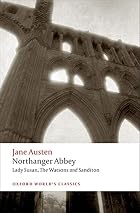
I read this last year as I started doing an Open University course on Nineteenth Century literature - I wasn't able to finish the course at that time so I've re-enrolled this year. So this is a very recent reread but I love this book, so no problems for me with that.
This is what I wrote last year:
I don't think this is the best Jane Austen book - that would have to be Persuasion or Pride and Prejudice in my opinion - but it is one that I love. I must have read it three or four times at least and each time I have enjoyed it more.
At seventeen, Catherine Morland is invited to spend a few weeks in Bath with her neighbours the Allens. The quintessential innocent abroad, Catherine is a sweet girl who loves nothing more than curling up with a gothic novel. She is oblivious to the more worldly behaviour of those around her, in particular that of her new found friend Isabella Thorpe and her brother John, the machinations of which are soon apparent to the reader. But even without understanding the ways of the world, Catharine finds much to enjoy in Bath, in particular when Henry Tilney is presented to her as a suitable partner at the Assembly Rooms and she begins to fancy herself in love. But when she is invited to stay at Northanger Abbey by his sister Eleanor Tilney, her over vivid imagination coupled with her immersion in the most frightening gothic novels that she can find, leads her to a most dramatic conclusion.
I read this last year as I started doing an Open University course on Nineteenth Century literature - I wasn't able to finish the course at that time so I've re-enrolled this year. So this is a very recent reread but I love this book, so no problems for me with that.
This is what I wrote last year:
I don't think this is the best Jane Austen book - that would have to be Persuasion or Pride and Prejudice in my opinion - but it is one that I love. I must have read it three or four times at least and each time I have enjoyed it more.
At seventeen, Catherine Morland is invited to spend a few weeks in Bath with her neighbours the Allens. The quintessential innocent abroad, Catherine is a sweet girl who loves nothing more than curling up with a gothic novel. She is oblivious to the more worldly behaviour of those around her, in particular that of her new found friend Isabella Thorpe and her brother John, the machinations of which are soon apparent to the reader. But even without understanding the ways of the world, Catharine finds much to enjoy in Bath, in particular when Henry Tilney is presented to her as a suitable partner at the Assembly Rooms and she begins to fancy herself in love. But when she is invited to stay at Northanger Abbey by his sister Eleanor Tilney, her over vivid imagination coupled with her immersion in the most frightening gothic novels that she can find, leads her to a most dramatic conclusion.
52lkernagh
I have Northaner Abbey - touchstone not like Austen's novel, go figure! - on my to read list for 2014... looking forward to another dip into Jane Austen!
53SandDune
#51 Eva I wish I'd come across them when my son was younger but he's happily reading Game of Thrones now!
#52Lori Northanger Abbey is a very quick read but it's so much fun. And with Jane Austen the more I study her writing, the more I am getting out of her books.
#52Lori Northanger Abbey is a very quick read but it's so much fun. And with Jane Austen the more I study her writing, the more I am getting out of her books.
54SandDune
Union Street Pat Barker ***1/2
Challenge: Love on the Dole (working class literature)
This one, the first book by Booker prize winning author Pat Barker, has some great reviews but it didn't grab my attention as much as some other readers. To be fair to the book, I read it quite quickly but in retrospect it is a complex book that really demands careful reading and I don't think I gave it the care and attention that it deserved.
The book takes seven female characters from the fictional Union Street of the title and devotes each chapter to a key incident in their life. Beginning with the twelve year old Kelly, raped while her mother is out drinking with her latest boyfriend, the book continues with the stories of older and older women until it ends with seventy-six year old Alice who waits for death in terror of being sent to a residential home before it comes. And at whatever age of woman, life does not come easy: the women struggle against poverty, abusive husbands, unwanted pregnancies and rebellious children. And it is the women who make things happen: their men are generally absent and ineffectual at best, drunken and violent at worst. Each story is self contained, but the characters from one drift, sometimes very subtly, into the story of another, and what appears at first to be a chronological account at first is revealed as an interlocking jigsaw of stories inhabiting the same space.
I'm not sure that I enjoyed Union Street very much when I was reading it, but having finished it and thought about it a little I can see that it's a beautifully constructed book where you eventually end up with sufficient pieces of the jigsaw to put together a picture of the women's lives. But not all the pieces are present - this isn't a book which ties up all of the loose ends - there are no nice neat endings nor are there intended to be. So I'm giving this a stronger recommendation than I was intending originally - maybe the other reviewers are right after all!
Challenge: Love on the Dole (working class literature)
This one, the first book by Booker prize winning author Pat Barker, has some great reviews but it didn't grab my attention as much as some other readers. To be fair to the book, I read it quite quickly but in retrospect it is a complex book that really demands careful reading and I don't think I gave it the care and attention that it deserved.
The book takes seven female characters from the fictional Union Street of the title and devotes each chapter to a key incident in their life. Beginning with the twelve year old Kelly, raped while her mother is out drinking with her latest boyfriend, the book continues with the stories of older and older women until it ends with seventy-six year old Alice who waits for death in terror of being sent to a residential home before it comes. And at whatever age of woman, life does not come easy: the women struggle against poverty, abusive husbands, unwanted pregnancies and rebellious children. And it is the women who make things happen: their men are generally absent and ineffectual at best, drunken and violent at worst. Each story is self contained, but the characters from one drift, sometimes very subtly, into the story of another, and what appears at first to be a chronological account at first is revealed as an interlocking jigsaw of stories inhabiting the same space.
I'm not sure that I enjoyed Union Street very much when I was reading it, but having finished it and thought about it a little I can see that it's a beautifully constructed book where you eventually end up with sufficient pieces of the jigsaw to put together a picture of the women's lives. But not all the pieces are present - this isn't a book which ties up all of the loose ends - there are no nice neat endings nor are there intended to be. So I'm giving this a stronger recommendation than I was intending originally - maybe the other reviewers are right after all!
55DeltaQueen50
Rhian, your description of Union Street has intrigued me and I am adding this one to my wishlist. I read Blow Your House Down by this author a year or so ago and thought it was excellent.
56SandDune
In Defence of Dogs John Bradshaw ****
Challenge: My Dog Tulip (all things dog related)
I'd recommend this book to all dog owners. It is a serious yet readable attempt to explain the current understanding of the behaviour of dogs by a scientist who has been studying this area for the last twenty years. And it seems that popular ideas of what motivates dogs behaviour are frequently wrong, in particular the idea that dogs are striving for a dominant position in the family, echoing a wolf's striving for a dominant position within its pack. The problem with this is that in the wild wolves apparently don't struggle for dominance within the pack: the dominant pair maintain their position for the simple reason that they are the parents or grandparents of the other wolves in the pack which is actually a fairly harmonious affair. So what appears to be dominant behaviour can actually just be the amalgamation of behaviours that dogs have found to get them what they want.
Bradshaw has very firm views on the problems being created by the increasing focus on pedigree dogs which are bred primarily for show rather than for the purpose of becoming family pets. And not just for those particular breeds that are known to have health problems. Here he describes the issue of the lack of genetic variability within breeds:
'Mongrels maintain levels of variability that are similar to those found globally in our own species. In many individual breeds however, the amount of variation within the whole breed amounts to little more than is typical of first cousins in our own species. And we humans know that repeated marriages between cousins eventually lead to the emergence of a wide range of genetic abnormalities, which is why marriages between close relatives are taboo in most societies. It is astonishing that the same consideration has not been given to dogs.'
Altogether a very thought provoking and interesting book.
Challenge: My Dog Tulip (all things dog related)
I'd recommend this book to all dog owners. It is a serious yet readable attempt to explain the current understanding of the behaviour of dogs by a scientist who has been studying this area for the last twenty years. And it seems that popular ideas of what motivates dogs behaviour are frequently wrong, in particular the idea that dogs are striving for a dominant position in the family, echoing a wolf's striving for a dominant position within its pack. The problem with this is that in the wild wolves apparently don't struggle for dominance within the pack: the dominant pair maintain their position for the simple reason that they are the parents or grandparents of the other wolves in the pack which is actually a fairly harmonious affair. So what appears to be dominant behaviour can actually just be the amalgamation of behaviours that dogs have found to get them what they want.
Bradshaw has very firm views on the problems being created by the increasing focus on pedigree dogs which are bred primarily for show rather than for the purpose of becoming family pets. And not just for those particular breeds that are known to have health problems. Here he describes the issue of the lack of genetic variability within breeds:
'Mongrels maintain levels of variability that are similar to those found globally in our own species. In many individual breeds however, the amount of variation within the whole breed amounts to little more than is typical of first cousins in our own species. And we humans know that repeated marriages between cousins eventually lead to the emergence of a wide range of genetic abnormalities, which is why marriages between close relatives are taboo in most societies. It is astonishing that the same consideration has not been given to dogs.'
Altogether a very thought provoking and interesting book.
57SandDune
Miss Mapp E.F. Benson ****
Challenge: The Thirteenth Tale (series)
The second (or the third) in E.F.Benson's Mapp and Lucia series, and one that introduces a completely new set of characters to those of the first book Queen Lucia. Indeed, Lucia herself does not appear in this book, and it is Miss Elizabeth Mapp, a spinster who 'might have been forty' and who had 'taken advantage of this opportunity by being just a year or two older', who is the Queen Bee of Tilling, the small town where the events of the novel take place. But the inhabitants of Tilling, or at least the ones who count in the eyes of Miss Mapp, are just as dreadful as the inhabitants of Lucia's Riseholme, with Miss Mapp the most dreadful of the lot. Tilling is a rather less culturally inclined place than Riseholme, with bridge forming the height of the cultural activities, but the chief occupation of the Tillingites is gossip, and the nastier the gossip that they can promulgate about their neighbours the happier they are. Another great cast of characters is placed alongside the eponymous Miss Mapp: Captain Puffin and Major Flint who hide their propensity for whisky drinking in the evening behind a smokescreen of scholarly pursuits; Mrs Poppit who with her sable furs and her MBE is just a little too flashy for Tilling's tastes; and Godiva Plaistow whose is foiled again and again in her attempts to outshine Miss Mapp in dress.
So, another fun read.
Challenge: The Thirteenth Tale (series)
The second (or the third) in E.F.Benson's Mapp and Lucia series, and one that introduces a completely new set of characters to those of the first book Queen Lucia. Indeed, Lucia herself does not appear in this book, and it is Miss Elizabeth Mapp, a spinster who 'might have been forty' and who had 'taken advantage of this opportunity by being just a year or two older', who is the Queen Bee of Tilling, the small town where the events of the novel take place. But the inhabitants of Tilling, or at least the ones who count in the eyes of Miss Mapp, are just as dreadful as the inhabitants of Lucia's Riseholme, with Miss Mapp the most dreadful of the lot. Tilling is a rather less culturally inclined place than Riseholme, with bridge forming the height of the cultural activities, but the chief occupation of the Tillingites is gossip, and the nastier the gossip that they can promulgate about their neighbours the happier they are. Another great cast of characters is placed alongside the eponymous Miss Mapp: Captain Puffin and Major Flint who hide their propensity for whisky drinking in the evening behind a smokescreen of scholarly pursuits; Mrs Poppit who with her sable furs and her MBE is just a little too flashy for Tilling's tastes; and Godiva Plaistow whose is foiled again and again in her attempts to outshine Miss Mapp in dress.
So, another fun read.
58psutto
trying to catch up and being so many weeks behind! I really enjoyed suite francaise although it's not an easy read (and not because of the writing)

