lyzard's list: once more unto the obscurity, dear friends - Part Three
This is a continuation of the topic lyzard's list: once more unto the obscurity, dear friends - Part Two.
This topic was continued by lyzard's list: once more unto the obscurity, dear friends - Part Four.
Talk 75 Books Challenge for 2016
Join LibraryThing to post.
This topic is currently marked as "dormant"—the last message is more than 90 days old. You can revive it by posting a reply.
1lyzard
Owls Of Australia
Though closely related, the Greater Sooty Owl and the Lesser Sooty Owl are considered distinct species of the genus Tyto. The medium-sized Greater Sooty Owl (right) is found in New Guinea and down the east coast of Australia, from southern Queensland through Victoria; the much smaller Lesser Sooty Owl (left) is restricted to the wet tropics of Queensland. Both species are strictly nocturnal. They are known for their mottled grey plumage with its heart-shaped spots, their distinctive cry (known as a 'bomb whistle') and above all for their classic facial disc and huge dark eyes. Both species are considered vulnerable, bordering on threatened, because of feral animal predation and habitat destruction.


Though closely related, the Greater Sooty Owl and the Lesser Sooty Owl are considered distinct species of the genus Tyto. The medium-sized Greater Sooty Owl (right) is found in New Guinea and down the east coast of Australia, from southern Queensland through Victoria; the much smaller Lesser Sooty Owl (left) is restricted to the wet tropics of Queensland. Both species are strictly nocturnal. They are known for their mottled grey plumage with its heart-shaped spots, their distinctive cry (known as a 'bomb whistle') and above all for their classic facial disc and huge dark eyes. Both species are considered vulnerable, bordering on threatened, because of feral animal predation and habitat destruction.


2lyzard

*************************************************
Currently reading:

Mrs Tim Gets A Job by D. E. Stevenson (1947)
3lyzard
January:
1. Murder At Wrides Park by J. S. Fletcher (1931)
2. Tom Strong, Washington's Scout: A Story Of Patriotism by Alfred Bishop Mason (1911)
3. Fear Stalks The Village by Ethel Lina White (1932)
4. Murder At The College by Victor L. Whitechurch (1932)
5. The Princess Passes by Ruby M. Ayres (1931)
6. The Billiard-Room Mystery by Brian Flynn (1927)
7. The Porro Palaver by Adam Broome (1928)
8. Amos The Wanderer by William Babington Maxwell (1932)
9. 13 Thirteenth Street by Natalie Sumner Lincoln (1932)
10. The Lady Of The Decoration by Frances Little (1907)
11. Murder In The Maze by J. J. Connington (1927)
12. The Secret Of The Morgue by Frederick G. Eberhard (1932)
13. They Were Defeated by Rose Macaulay (1932)
14. The New Woman And The Victorian Novel by Gail Cunningham (1978)
15. Lonesome Road by Patricia Wentworth (1939)
16. April Lady by Georgette Heyer (1957)
17. Murder In The Mews: And Other Stories by Agatha Christie (1937)
18. Mrs Tim Carries On: Leaves From The Diary Of An Officer's Wife In The Year 1940 by D. E. Stevenson (1941)
19. All This, And Heaven Too by Rachel Field (1938)
February:
20. Marriage by Susan Ferrier (1818)
21. Lucia's Progress by E. F. Benson (1935)
22. The Murder Of Mrs Davenport by Anthony Gilbert (1928)
23. The Owl's Warning by Herman Landon (1932)
24. Love's Hour by Elinor Glyn (1932)
25. The Murder Of Caroline Bundy by Alice Campbell (1932)
26. The Madonna Of Seven Moons by Margery Lawrence (1931)
27. Mr Crewe's Career by Winston Churchill (1908)
28. Trent's Last Case by E. C. Bentley (1913)
29. The Three Taps: A Detective Story Without A Moral by Ronald Knox (1927)
March:
30. Sylvester; or, The Wicked Uncle by Georgette Heyer (1957)
31. Trouble For Lucia by E. F. Benson (1939)
32. Dumb Witness by Agatha Christie (1937)
33. The Imperfect Crime by Bruce Graeme (1932)
34. Dusty Death by Clifton Robbins (1931)
35. Rupert Of Hentzau by Anthony Hope (1898)
36. The Inner Shrine by Basil King (1909)
37. The Fortress by Hugh Walpole (1932)
38. Venetia by Georgette Heyer (1958)
39. As A Thief In The Night by R. Austin Freeman (1928)
40. The Red Seal by Natalie Sumner Lincoln (1920)
1. Murder At Wrides Park by J. S. Fletcher (1931)
2. Tom Strong, Washington's Scout: A Story Of Patriotism by Alfred Bishop Mason (1911)
3. Fear Stalks The Village by Ethel Lina White (1932)
4. Murder At The College by Victor L. Whitechurch (1932)
5. The Princess Passes by Ruby M. Ayres (1931)
6. The Billiard-Room Mystery by Brian Flynn (1927)
7. The Porro Palaver by Adam Broome (1928)
8. Amos The Wanderer by William Babington Maxwell (1932)
9. 13 Thirteenth Street by Natalie Sumner Lincoln (1932)
10. The Lady Of The Decoration by Frances Little (1907)
11. Murder In The Maze by J. J. Connington (1927)
12. The Secret Of The Morgue by Frederick G. Eberhard (1932)
13. They Were Defeated by Rose Macaulay (1932)
14. The New Woman And The Victorian Novel by Gail Cunningham (1978)
15. Lonesome Road by Patricia Wentworth (1939)
16. April Lady by Georgette Heyer (1957)
17. Murder In The Mews: And Other Stories by Agatha Christie (1937)
18. Mrs Tim Carries On: Leaves From The Diary Of An Officer's Wife In The Year 1940 by D. E. Stevenson (1941)
19. All This, And Heaven Too by Rachel Field (1938)
February:
20. Marriage by Susan Ferrier (1818)
21. Lucia's Progress by E. F. Benson (1935)
22. The Murder Of Mrs Davenport by Anthony Gilbert (1928)
23. The Owl's Warning by Herman Landon (1932)
24. Love's Hour by Elinor Glyn (1932)
25. The Murder Of Caroline Bundy by Alice Campbell (1932)
26. The Madonna Of Seven Moons by Margery Lawrence (1931)
27. Mr Crewe's Career by Winston Churchill (1908)
28. Trent's Last Case by E. C. Bentley (1913)
29. The Three Taps: A Detective Story Without A Moral by Ronald Knox (1927)
March:
30. Sylvester; or, The Wicked Uncle by Georgette Heyer (1957)
31. Trouble For Lucia by E. F. Benson (1939)
32. Dumb Witness by Agatha Christie (1937)
33. The Imperfect Crime by Bruce Graeme (1932)
34. Dusty Death by Clifton Robbins (1931)
35. Rupert Of Hentzau by Anthony Hope (1898)
36. The Inner Shrine by Basil King (1909)
37. The Fortress by Hugh Walpole (1932)
38. Venetia by Georgette Heyer (1958)
39. As A Thief In The Night by R. Austin Freeman (1928)
40. The Red Seal by Natalie Sumner Lincoln (1920)
4lyzard
April:
41. I Spy by Natalie Sumner Lincoln (1916)
42. Inspector French And The Cheyne Mystery by Freeman Wills Crofts (1926)
43. The Crooked Cross by Charles J. Dutton (1926)
44. Hangman's Holiday by Dorothy L. Sayers (1933)
45. The Mystery Of Edwin Drood by Charles Dickens (1870)
46. Epilogue by Bruce Graeme (1933)
47. The Unknown Ajax by Georgette Heyer (1959)
May:
48. Death On The Nile by Agatha Christie (1937)
49. The Merrivale Mystery by James Corbett (1929)
50. The "Canary" Murder Case by S. S. Van Dine (1927)
51. Murder In A Haystack by Dorothy Aldis (1931)
52. Strange Murders At Greystones by Elsie N. Wright (1931)
53. The Room With The Tassels by Carolyn Wells (1918)
54. The Unseen Ear by Natalie Sumner Lincoln (1921)
55. The Riddle Of The Night by Thomas Hanshew, Mary Hanshew and Hazel Hanshew (1916)
56. The Riddle Of The Purple Emperor by Thomas Hanshew, Mary Hanshew and Hazel Hanshew (1918)
June:
57. Elsie's Womanhood by Martha Finley (1875)
58. The Return Of Clubfoot by Valentine Williams (1922)
59. Seeds Of Murder by Frederick Van Wyck Mason (1930)
60. Colonel Gore's Second Case by Lynn Brock (Allister McAllister) (1925)
61. Tish Marches On by Mary Roberts Rinehart (1937)
62. The Harvester by Gene Stratton-Porter (1911)
63. Kai Lung's Golden Hours by Ernest Bramah (1922)
64. Appointment With Death by Agatha Christie (1938)
65. The Poisoned Chocolates Case by Anthony Berkeley (1929)
66. Pistols For Two, And Other Stories by Georgette Heyer (1960)
July:
67. No Other Way by Gordon Holmes (1912)
68. Patty In Paris by Carolyn Wells (1907)
69. No Other Way by Louis Tracy (1913)
70. The Inside Of The Cup by Winston Churchill (1913)
71. Hunting Shirt by Mary Johnston (1931)
72. Seven Times Seven by John Creasey (1932)
73. Mrs Red Pepper by Grace S. Richmond (1913)
74. Some Do Not... by Ford Madox Ford (1924)
75. Lisarda; or, The Travels Of Love And Jealousy by H. Cox (1690)
76. The Mystery Woman by Alice MacGowan and Perry Newberry (1924)
77. Tom Strong, Lincoln's Scout by Alfred Bishop Mason (1919)
78. The Ginger King by A. E. W. Mason (1940)
79. The House In Lordship Lane by A. E. W. Mason (1946)
80. Arsène Lupin Contre Herlock Sholmes by Maurice Leblanc (1908)
41. I Spy by Natalie Sumner Lincoln (1916)
42. Inspector French And The Cheyne Mystery by Freeman Wills Crofts (1926)
43. The Crooked Cross by Charles J. Dutton (1926)
44. Hangman's Holiday by Dorothy L. Sayers (1933)
45. The Mystery Of Edwin Drood by Charles Dickens (1870)
46. Epilogue by Bruce Graeme (1933)
47. The Unknown Ajax by Georgette Heyer (1959)
May:
48. Death On The Nile by Agatha Christie (1937)
49. The Merrivale Mystery by James Corbett (1929)
50. The "Canary" Murder Case by S. S. Van Dine (1927)
51. Murder In A Haystack by Dorothy Aldis (1931)
52. Strange Murders At Greystones by Elsie N. Wright (1931)
53. The Room With The Tassels by Carolyn Wells (1918)
54. The Unseen Ear by Natalie Sumner Lincoln (1921)
55. The Riddle Of The Night by Thomas Hanshew, Mary Hanshew and Hazel Hanshew (1916)
56. The Riddle Of The Purple Emperor by Thomas Hanshew, Mary Hanshew and Hazel Hanshew (1918)
June:
57. Elsie's Womanhood by Martha Finley (1875)
58. The Return Of Clubfoot by Valentine Williams (1922)
59. Seeds Of Murder by Frederick Van Wyck Mason (1930)
60. Colonel Gore's Second Case by Lynn Brock (Allister McAllister) (1925)
61. Tish Marches On by Mary Roberts Rinehart (1937)
62. The Harvester by Gene Stratton-Porter (1911)
63. Kai Lung's Golden Hours by Ernest Bramah (1922)
64. Appointment With Death by Agatha Christie (1938)
65. The Poisoned Chocolates Case by Anthony Berkeley (1929)
66. Pistols For Two, And Other Stories by Georgette Heyer (1960)
July:
67. No Other Way by Gordon Holmes (1912)
68. Patty In Paris by Carolyn Wells (1907)
69. No Other Way by Louis Tracy (1913)
70. The Inside Of The Cup by Winston Churchill (1913)
71. Hunting Shirt by Mary Johnston (1931)
72. Seven Times Seven by John Creasey (1932)
73. Mrs Red Pepper by Grace S. Richmond (1913)
74. Some Do Not... by Ford Madox Ford (1924)
75. Lisarda; or, The Travels Of Love And Jealousy by H. Cox (1690)
76. The Mystery Woman by Alice MacGowan and Perry Newberry (1924)
77. Tom Strong, Lincoln's Scout by Alfred Bishop Mason (1919)
78. The Ginger King by A. E. W. Mason (1940)
79. The House In Lordship Lane by A. E. W. Mason (1946)
80. Arsène Lupin Contre Herlock Sholmes by Maurice Leblanc (1908)
5lyzard
Reading projects 2016:
Blog reads:
Chronobibliography: Lisarda; or, The Travels Of Love And Jealousy
Authors In Depth: Lady Lisle by Mary Elizabeth Braddon
Reading Roulette: The Holy Lover by Marie Conway Oemler
Australian fiction: The Hermit In Van Diemen's Land by Henry Savery
Gothic novel timeline: Miscellaneous Pieces, In Prose by John and Anna Laetitia Aikin
Early crime fiction: Hargrave by Frances Trollope / The Mysteries Of London by Paul Feval
Related reading:
Group / tutored reads:
Completed: Marriage by Susan Ferrier (thread here)
Upcoming: The Prime Minister by Anthony Trollope
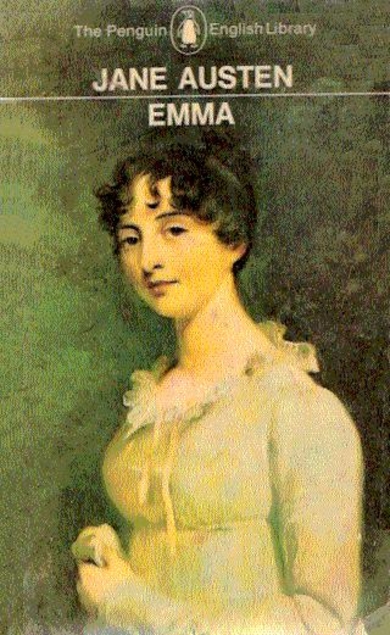
Upcoming: Emma by Jane Austen
Upcoming: Camilla by Fanny Burney
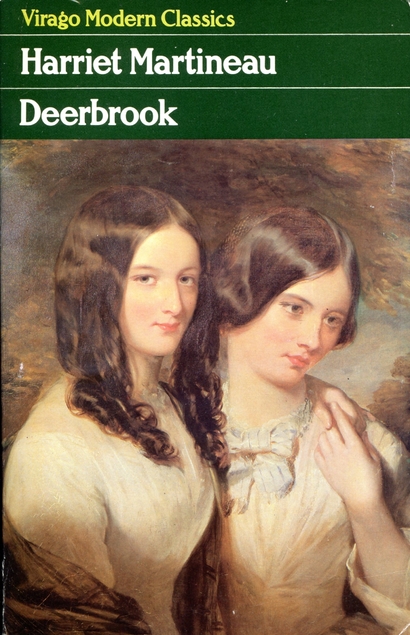
Upcoming: Deerbrook by Harriet Martineau
The evolution of detective fiction:
Next up: The Mysteries Of London by Paul Feval (R. Stephenson, translator)
Virago chronological reading project:
Next up: Deerbrook by Harriet Martineau
America's best-selling novels (1895 - ????):
Next up: The Eyes Of The World by Harold Bell Wright
Agatha Christie mysteries in chronological order:
Next up: Hercule Poirot's Christmas
Georgette Heyer historical romances in chronological order:
Next up: A Civil Contract
Random reading 1940 - 1969:
Next up: Jenny Devlin by Sophie Kerr / Amberwell by D. E. Stevenson
Potential decommission:
Next up: Strange Wine by Harlen Ellison
Possible future reading projects:
- Nobel Prize winners who won for fiction
- Daily Telegraph's 100 Best Novels, 1899
- 1898 C.K. Shorter List of Best 100 Novels
- James Tait Black Memorial Prize
- Berkeley "Books Of The Century"
- Mystery League books (and their covers)
- Collins White Circle Crime Club / Green Penguins
- Dell paperbacks
Blog reads:
Chronobibliography: Lisarda; or, The Travels Of Love And Jealousy
Authors In Depth: Lady Lisle by Mary Elizabeth Braddon
Reading Roulette: The Holy Lover by Marie Conway Oemler
Australian fiction: The Hermit In Van Diemen's Land by Henry Savery
Gothic novel timeline: Miscellaneous Pieces, In Prose by John and Anna Laetitia Aikin
Early crime fiction: Hargrave by Frances Trollope / The Mysteries Of London by Paul Feval
Related reading:
Group / tutored reads:
Completed: Marriage by Susan Ferrier (thread here)
Upcoming: The Prime Minister by Anthony Trollope
Upcoming: Emma by Jane Austen
Upcoming: Camilla by Fanny Burney
Upcoming: Deerbrook by Harriet Martineau
The evolution of detective fiction:
Next up: The Mysteries Of London by Paul Feval (R. Stephenson, translator)
Virago chronological reading project:
Next up: Deerbrook by Harriet Martineau
America's best-selling novels (1895 - ????):
Next up: The Eyes Of The World by Harold Bell Wright
Agatha Christie mysteries in chronological order:
Next up: Hercule Poirot's Christmas
Georgette Heyer historical romances in chronological order:
Next up: A Civil Contract
Random reading 1940 - 1969:
Next up: Jenny Devlin by Sophie Kerr / Amberwell by D. E. Stevenson
Potential decommission:
Next up: Strange Wine by Harlen Ellison
Possible future reading projects:
- Nobel Prize winners who won for fiction
- Daily Telegraph's 100 Best Novels, 1899
- 1898 C.K. Shorter List of Best 100 Novels
- James Tait Black Memorial Prize
- Berkeley "Books Of The Century"
- Mystery League books (and their covers)
- Collins White Circle Crime Club / Green Penguins
- Dell paperbacks
6lyzard
Books in transit:
On interlibrary loan / branch transfer / storage request:
Purchased and shipped:
Shaken Down by Alice MacGowan and Perry Newberry
On loan:
*Seven Times Seven by John Creasey (17/08/2016)
*The Poisoned Chocolates Case by Anthony Berkeley (19/09/2016)
**Marriage by Susan Ferrier (29/09/2016)
**The Fortress by Hugh Walpole (29/09/2016)
*Hangman's Holiday by Dorothy L. Sayers (29/09/2016)
*Inspector French And The Cheyne Mystery by Freeman Wills Crofts (29/09/2016)
*The Mystery Of Edwin Drood by Charles Dickens (29/09/2016)
Follow up:
The Holy Lover by Marie Conway Oemler {academic loan / State Library NSW, held}
The Sign Of the Glove by Carlton Dawe {academic loan / State Library NSW, held}
Daylight Murder by Paul McGuire {academic loan / State Library NSW, held}
One-Man Girl by Maysie Greig {interlibrary loan}
Forgive Us Our Trespasses by Lloyd C. Douglas {interlibrary loan}
Amberwell by D. E. Stevenson {interlibrary loan}
The Thirty-Nine Steps by John Buchan {Sutherland}
Hatter's Castle by A. J. Cronin {Sutherland stack}
Whitehall by E. V. Timms {Fisher storage}
The Avenging Parrot by Anne Austin {rare, expensive}
Mystery Stories For Girls by Agnes Miller {Michigan?}
On interlibrary loan / branch transfer / storage request:
Purchased and shipped:
Shaken Down by Alice MacGowan and Perry Newberry
On loan:
*Seven Times Seven by John Creasey (17/08/2016)
*The Poisoned Chocolates Case by Anthony Berkeley (19/09/2016)
**Marriage by Susan Ferrier (29/09/2016)
**The Fortress by Hugh Walpole (29/09/2016)
*Hangman's Holiday by Dorothy L. Sayers (29/09/2016)
*Inspector French And The Cheyne Mystery by Freeman Wills Crofts (29/09/2016)
*The Mystery Of Edwin Drood by Charles Dickens (29/09/2016)
Follow up:
The Holy Lover by Marie Conway Oemler {academic loan / State Library NSW, held}
The Sign Of the Glove by Carlton Dawe {academic loan / State Library NSW, held}
Daylight Murder by Paul McGuire {academic loan / State Library NSW, held}
One-Man Girl by Maysie Greig {interlibrary loan}
Forgive Us Our Trespasses by Lloyd C. Douglas {interlibrary loan}
Amberwell by D. E. Stevenson {interlibrary loan}
The Thirty-Nine Steps by John Buchan {Sutherland}
Hatter's Castle by A. J. Cronin {Sutherland stack}
Whitehall by E. V. Timms {Fisher storage}
The Avenging Parrot by Anne Austin {rare, expensive}
Mystery Stories For Girls by Agnes Miller {Michigan?}
7lyzard
Series and sequels 1866 - 1920:
(1866 - 1876) **Emile Gaboriau - Monsieur Lecoq - The Widow Lerouge (1/6) {ManyBooks}
(1867 - 1905) **Martha Finley - Elsie Dinsmore - Elsie's Motherhood (5/28) {ManyBooks}
(1867 - 1872) **George MacDonald - The Seaboard Parish - Annals Of A Quiet Neighbourhood (1/3) {ManyBooks}
(1878 - 1917) **Anna Katharine Green - Ebenezer Gryce - The Doctor, His Wife And The Clock (7/12) {Project Gutenberg}
(1896 - 1909) **Melville Davisson Post - Randolph Mason - The Corrector Of Destinies (3/3) {Internet Archive}
(1894 - 1898) **Anthony Hope - Ruritania - Rupert Of Hentzau (3/3) {Project Gutenberg}
(1895 - 1901) **Guy Newell Boothby - Dr Nikola - Dr Nikola (2/5) {ManyBooks}
(1897 - 1900) **Anna Katharine Green - Amelia Butterworth - That Affair Next Door (1/3) {Fisher Library}
(1898 - 1915) **Kate Douglas Wiggins - Penelope - Penelope's English Experiences (1/4) {Project Gutenberg}
(1899 - 1909) **E. W. Hornung - Raffles - Raffles: The Amateur Cracksman (1/4) {ManyBooks}
(1899 - 1919) **Finley Peter Dunne - Mr Dooley - Mr Dooley In Peace And In War (1/8) {Internet Archive}
(1900 - 1974) *Ernest Bramah - Kai Lung - Kai Lung Unrolls His Mat (3/6) {Roy Glashan's Library}
(1901 - 1919) **Carolyn Wells - Patty Fairfield - Patty's Friends (6/17) {Project Gutenberg}
(1901 - 1927) **George Barr McCutcheon - Graustark - Graustark (1/6) {Project Gutenberg}
(1903 - 1904) **Louis Tracy - Reginald Brett - The Albert Gate Mystery (2/2) {ManyBooks}
(1905 - 1925) **Baroness Orczy - The Old Man In The Corner - Unravelled Knots (3/3) {Project Gutenberg Australia}}
(1905 - 1928) **Edgar Wallace - The Just Men - The Law Of The Four Just Men (4/6) {Project Gutenberg Australia}
(1906 - 1930) **John Galsworthy - The Forsyte Saga - Indian Summer Of A Forsyte (short story) (2/11) {Project Gutenberg}
(1907 - 1912) **Carolyn Wells - Marjorie - Marjorie's Vacation (1/6) {ManyBooks}
(1907 - 1942) *R. Austin Freeman - Dr John Thorndyke - Mr Pottermack's Oversight (17/26) {Roy Glashan's Library}
(1907 - 1941) *Maurice Leblanc - Arsene Lupin - Arsène Lupin contre Herlock Sholmès (2/21) {ManyBooks}
(1908 - 1924) **Margaret Penrose - Dorothy Dale - Dorothy Dale: A Girl Of Today (1/13) {ManyBooks}
(1909 - 1942) *Carolyn Wells - Fleming Stone - The Mystery Girl (13/49) {Kindle}
(1909 - 1929) *J. S. Fletcher - Inspector Skarratt - Marchester Royal (1/3) {Kindle}
(1909 - 1912) **Emerson Hough - Western Trilogy - 54-40 Or Fight (!/3) {Project Gutenberg}
(1910 - 1936) *Arthur B. Reeve - Craig Kennedy - The Treasure-Train (6/11) {ManyBooks}
(1910 - 1946) A. E. W. Mason - Inspector Hanaud - The House In Lordship Lane (7/7) {Roy Glashan's Library}
(1910 - ????) *Edgar Wallace - Inspector Smith - Kate Plus Ten (3/?) {Project Gutenberg Australia}
(1910 - 1930) **Edgar Wallace - Inspector Elk - The Joker (3/6?) {ManyBooks}
(1910 - ????) *Thomas, Mary and Hazel Hanshew - Cleek - The Frozen Flames (6/12) {feedbooks}
(1910 - 1918) **John McIntyre - Ashton-Kirk - Ashton-Kirk, Secret Agent (2/4) {Project Gutenberg}
(1910 - 1931) *Grace S. Richmond - Red Pepper Burns - Red Pepper's Patients (3/6) {Project Gutenberg}
(1910 - ????) *Jeffery Farnol - The Vibarts - The Way Beyond (3/?) {Project Gutenberg Canada}
(1911 - 1935) G. K. Chesterton - Father Brown - The Scandal Of Father Brown (5/5) {branch transfer}
(1911 - 1937) Mary Roberts Rinehart - Letitia Carberry - Tish Marches On (5/5) {Kindle}
(1911 - 1919) **Alfred Bishop Mason - Tom Strong - Tom Strong, Lincoln's Scout (5/5) {Project Gutenberg}
(1912 - ????) **Gordon Holmes (Louis Tracy) - Steingall and Clancy - One Wonderful Night (2/3) {ManyBooks}
(1913 - 1928) **Louis Tracy - Winter and Furneaux - The Strange Case Of Mortimer Fenley (2/9) {ManyBooks}
(1913 - 1934) *Alice B. Emerson - Ruth Fielding - Ruth Fielding In Moving Pictures (9/30) {feedbooks}
(1913 - 1973) Sax Rohmer - Fu-Manchu - The Bride Of Fu-Manchu (6/14) {interlibrary loan}
(1913 - 1952) *Jeffery Farnol - Jasper Shrig - Peregrine's Progress (2/9) {ManyBooks}
(1914 - 1950) Mary Roberts Rinehart - Hilda Adams - Episode Of The Wandering Knife (5/5) Better World Books}
(1914 - 1934) *Ernest Bramah - Max Carrados - The Eyes Of Max Carrados (2/4) {Roy Glashan's Library}
(1916 - 1941) John Buchan - Edward Leithen - Sick Heart River (5/5) {Fisher Library}
(1915 - 1936) *John Buchan - Richard Hannay - The Thirty-Nine Steps (1/5) {Fisher Library / Project Gutenberg / branch transfer}
(1916 - 1917) **Carolyn Wells - Alan Ford - Faulkner's Folly (2/2) {owned}
(1916 - 1927) **Natalie Sumner Lincoln - Inspector Mitchell - The Nameless Man (2/10) {AbeBooks}
(1917 - 1929) **Henry Handel Richardson - Dr Richard Mahony - Australia Felix (1/3) {Fisher Library / City of Sydney}
(1918 - 1923) **Carolyn Wells - Pennington Wise - The Man Who Fell Through The Earth (2/8) {Project Gutenberg}
(1918 - ????) *Valentine Williams - Okewood / Clubfoot - Clubfoot The Avenger (4/?) {ManyBooks}
(1919 - 1966) *Lee Thayer - Peter Clancy - The Key (6/60) {expensive / Rare Books}
(1919 - 1921) **Octavus Roy Cohen - David Carroll - The Crimson Alibi (1/3) {Rare Books}
(1920 - 1939)E. F. Benson - Mapp And Lucia - Trouble For Lucia (6/6) {interlibrary loan}
(1920 - 1948) *H. C. Bailey - Reggie Fortune - Mr Fortune, Please (4/23) {State Library NSW, interlibrary loan}
(1920 - 1949) William McFee - Spenlove - The Beachcomber - (3/6) {AbeBooks / Better World Books}
(1920 - 1932) *Alice B. Emerson - Betty Gordon - Betty Gordon At Bramble Farm (1/15) {ManyBooks}
(1920 - 1975) Agatha Christie - Hercule Poirot - Hercule Poirot's Christmas (19/39) {owned}
(1920 - 1921) **Natalie Sumner Lincoln - Ferguson - The Unseen Ear (2/2) {HathiTrust}
(1920 - 1937) *H. C. McNeile - Bulldog Drummond - Bull-Dog Drummond (1/10 - series continued) {Project Gutenberg / Fisher storage}
*** Incompletely available series
** Series complete pre-1931
* Present status pre-1931
(1866 - 1876) **Emile Gaboriau - Monsieur Lecoq - The Widow Lerouge (1/6) {ManyBooks}
(1867 - 1905) **Martha Finley - Elsie Dinsmore - Elsie's Motherhood (5/28) {ManyBooks}
(1867 - 1872) **George MacDonald - The Seaboard Parish - Annals Of A Quiet Neighbourhood (1/3) {ManyBooks}
(1878 - 1917) **Anna Katharine Green - Ebenezer Gryce - The Doctor, His Wife And The Clock (7/12) {Project Gutenberg}
(1895 - 1901) **Guy Newell Boothby - Dr Nikola - Dr Nikola (2/5) {ManyBooks}
(1897 - 1900) **Anna Katharine Green - Amelia Butterworth - That Affair Next Door (1/3) {Fisher Library}
(1898 - 1915) **Kate Douglas Wiggins - Penelope - Penelope's English Experiences (1/4) {Project Gutenberg}
(1899 - 1909) **E. W. Hornung - Raffles - Raffles: The Amateur Cracksman (1/4) {ManyBooks}
(1899 - 1919) **Finley Peter Dunne - Mr Dooley - Mr Dooley In Peace And In War (1/8) {Internet Archive}
(1900 - 1974) *Ernest Bramah - Kai Lung - Kai Lung Unrolls His Mat (3/6) {Roy Glashan's Library}
(1901 - 1919) **Carolyn Wells - Patty Fairfield - Patty's Friends (6/17) {Project Gutenberg}
(1901 - 1927) **George Barr McCutcheon - Graustark - Graustark (1/6) {Project Gutenberg}
(1905 - 1928) **Edgar Wallace - The Just Men - The Law Of The Four Just Men (4/6) {Project Gutenberg Australia}
(1906 - 1930) **John Galsworthy - The Forsyte Saga - Indian Summer Of A Forsyte (short story) (2/11) {Project Gutenberg}
(1907 - 1912) **Carolyn Wells - Marjorie - Marjorie's Vacation (1/6) {ManyBooks}
(1907 - 1942) *R. Austin Freeman - Dr John Thorndyke - Mr Pottermack's Oversight (17/26) {Roy Glashan's Library}
(1907 - 1941) *Maurice Leblanc - Arsene Lupin - Arsène Lupin contre Herlock Sholmès (2/21) {ManyBooks}
(1908 - 1924) **Margaret Penrose - Dorothy Dale - Dorothy Dale: A Girl Of Today (1/13) {ManyBooks}
(1909 - 1942) *Carolyn Wells - Fleming Stone - The Mystery Girl (13/49) {Kindle}
(1909 - 1929) *J. S. Fletcher - Inspector Skarratt - Marchester Royal (1/3) {Kindle}
(1909 - 1912) **Emerson Hough - Western Trilogy - 54-40 Or Fight (!/3) {Project Gutenberg}
(1910 - 1936) *Arthur B. Reeve - Craig Kennedy - The Treasure-Train (6/11) {ManyBooks}
(1910 - ????) *Edgar Wallace - Inspector Smith - Kate Plus Ten (3/?) {Project Gutenberg Australia}
(1910 - 1930) **Edgar Wallace - Inspector Elk - The Joker (3/6?) {ManyBooks}
(1910 - ????) *Thomas, Mary and Hazel Hanshew - Cleek - The Frozen Flames (6/12) {feedbooks}
(1910 - 1918) **John McIntyre - Ashton-Kirk - Ashton-Kirk, Secret Agent (2/4) {Project Gutenberg}
(1910 - 1931) *Grace S. Richmond - Red Pepper Burns - Red Pepper's Patients (3/6) {Project Gutenberg}
(1910 - ????) *Jeffery Farnol - The Vibarts - The Way Beyond (3/?) {Project Gutenberg Canada}
(1912 - ????) **Gordon Holmes (Louis Tracy) - Steingall and Clancy - One Wonderful Night (2/3) {ManyBooks}
(1913 - 1928) **Louis Tracy - Winter and Furneaux - The Strange Case Of Mortimer Fenley (2/9) {ManyBooks}
(1913 - 1934) *Alice B. Emerson - Ruth Fielding - Ruth Fielding In Moving Pictures (9/30) {feedbooks}
(1913 - 1973) Sax Rohmer - Fu-Manchu - The Bride Of Fu-Manchu (6/14) {interlibrary loan}
(1913 - 1952) *Jeffery Farnol - Jasper Shrig - Peregrine's Progress (2/9) {ManyBooks}
(1914 - 1934) *Ernest Bramah - Max Carrados - The Eyes Of Max Carrados (2/4) {Roy Glashan's Library}
(1915 - 1936) *John Buchan - Richard Hannay - The Thirty-Nine Steps (1/5) {Fisher Library / Project Gutenberg / branch transfer}
(1916 - 1927) **Natalie Sumner Lincoln - Inspector Mitchell - The Nameless Man (2/10) {AbeBooks}
(1917 - 1929) **Henry Handel Richardson - Dr Richard Mahony - Australia Felix (1/3) {Fisher Library / City of Sydney}
(1918 - 1923) **Carolyn Wells - Pennington Wise - The Man Who Fell Through The Earth (2/8) {Project Gutenberg}
(1918 - ????) *Valentine Williams - Okewood / Clubfoot - Clubfoot The Avenger (4/?) {ManyBooks}
(1919 - 1966) *Lee Thayer - Peter Clancy - The Key (6/60) {expensive / Rare Books}
(1919 - 1921) **Octavus Roy Cohen - David Carroll - The Crimson Alibi (1/3) {Rare Books}
(1920 - 1939)
(1920 - 1948) *H. C. Bailey - Reggie Fortune - Mr Fortune, Please (4/23) {State Library NSW, interlibrary loan}
(1920 - 1949) William McFee - Spenlove - The Beachcomber - (3/6) {AbeBooks / Better World Books}
(1920 - 1932) *Alice B. Emerson - Betty Gordon - Betty Gordon At Bramble Farm (1/15) {ManyBooks}
(1920 - 1975) Agatha Christie - Hercule Poirot - Hercule Poirot's Christmas (19/39) {owned}
(1920 - 1921) **Natalie Sumner Lincoln - Ferguson - The Unseen Ear (2/2) {HathiTrust}
(1920 - 1937) *H. C. McNeile - Bulldog Drummond - Bull-Dog Drummond (1/10 - series continued) {Project Gutenberg / Fisher storage}
*** Incompletely available series
** Series complete pre-1931
* Present status pre-1931
8lyzard
Series and sequels 1921 - 1929:
(1921 - 1929) ** / ***Charles J. Dutton - John Bartley - Flying Clues (8/9) {AbeBooks}
(1921 - 1925) **Herman Landon - The Gray Phantom - Gray Terror (3/5) {Amazon}
(1922 - 1973) *Agatha Christie - Tommy and Tuppence - N. Or M.? (3/5) {owned}
(1922 - 1927) *Alice MacGowan and Perry Newberry - Jerry Boyne - Shaken Down (3/5) {ordered}
(1922 - 1931) *Valentine Williams - Inspector Manderton - The Yellow Streak (1/4) {Project Gutenberg}
(1923 - 1937) Dorothy L. Sayers - Lord Peter Wimsey - Murder Must Advertise (10/15) {Sutherland stack / Fisher Library}
(1923 - 1924) **Carolyn Wells - Lorimer Lane - The Fourteenth Key (2/2) {eBay}
(1923 - 1931) *Agnes Miller - The Linger-Nots - The Linger-Nots And The Mystery House (1/5) {AbeBooks / Amazon}
(1923 - 1927) **Annie Haynes - Inspector Furnival - The Abbey Court Murder (1/3) {Kindle}
(1924 - 1959) Philip MacDonald - Colonel Anthony Gethryn - Persons Unknown (aka "The Maze") (5/24) {academic loan / State Library NSW, held}
(1924 - 1957) *Freeman Wills Crofts - Inspector French - Inspector French And The Starvel Tragedy (3/30) {academic loan / State Library NSW, Rare Books / Rare Books}
(1924 - 1935) * / ***Francis D. Grierson - Inspector Sims and Professor Wells - The Lost Pearl (3/13) {owned}
(1924 - 1940) *Lynn Brock - Colonel Gore - Colonel Gore's Third Case: The Kink (3/12) {Kindle}
(1924 - 1933) *Herbert Adams - Jimmie Haswell - The Crooked Lip (2/9) {Rare Books}
(1924 - 1944) *A. Fielding - Inspector Pointer - The Charteris Mystery (2/23) {AbeBooks / Rare Books}
(1924 - 1928) **Ford Madox Ford - Parade's End - No More Parades (2/4) {ebook}
(1925 - 1961) ***John Rhode - Dr Priestley - Death In The Hopfields (25/72) {HathiTrust / State Library NSW, held}
(1925 - 1953) *G. D. H. Cole / M. Cole - Superintendent Wilson - The Murder At Crome House (4/?) {academic loan / State Library NSW, held}
(1925 - 1937) *Hulbert Footner - Madame Storey - Madame Storey (2/10) {mobilereads / Project Gutenberg Canada}
(1925 - 1932) *Earl Derr Biggers - Charlie Chan - The Chinese Parrot (2/6) {feedbooks}
(1925 - 1944) *Agatha Christie - Superintendent Battle - Murder Is Easy (4/5) {owned}
(1925 - 1934) *Anthony Berkeley - Roger Sheringham - The Second Shot (5/10) {academic loan / Rare Books}
(1925 - 1950) *Anthony Wynne (Robert McNair Wilson) - Dr Eustace Hailey - The Double-Thirteen Mystery (2/27) (aka "The Double Thirteen") {AbeBooks / Rare Books}
(1925 - 1939) *Charles Barry (Charles Bryson) - Inspector Lawrence Gilmartin - The Smaller Penny (1/15) {AbeBooks}
(1925 - 1929) **Will Scott - Will Disher - Disher--Detective (aka "The Black Stamp") (1/3) {AbeBooks, expensive}
(1926 - 1968) * / ***Christopher Bush - Ludovic Travers - Dead Man Twice (3/63) {owned}
(1926 - 1939) *S. S. Van Dine - Philo Vance - The Greene Murder Case (3/12) {State Library, interlibrary loan / Fisher Library storage}
(1926 - 1952) *J. Jefferson Farjeon - Ben the Tramp - The House Opposite (2/8) {Kindle, upcoming / State Library NSW, held}
(1926 - ????) *G. D. H. Cole / M. Cole - Everard Blatchington - Burglars In Bucks (aka "The Berkshire Mystery") (2/6) {Fisher Library}
(1927 - 1933) *Herman Landon - The Picaroon - The Picaroon Does Justice (2/7) {Book Searchers}
(1927 - 1932) *Anthony Armstrong - Jimmie Rezaire - The Secret Trail (2/5) {Kindle}
(1927 - 1937) *Ronald Knox - Miles Bredon - Footsteps At The Lock (2/5) {mobilereads}
(1927 - 1958) *Brian Flynn - Anthony Bathurst - The Case Of The Black Twenty-Two (2/54) {Amazon}
(1927 - 1947) *J. J. Connington - Sir Clinton Driffield - Tragedy At Ravensthorpe (2/17) {Murder Room ebook}
(1927 - 1935) *Anthony Gilbert (Lucy Malleson) - Scott Egerton - Death At Four Corners (3/10) {State Library NSW, interlibrary loan}
(1927 - 1932) *William Morton (aka William Blair Morton Ferguson) - Daniel "Biff" Corrigan - Masquerade (1/4) {expensive}
(1927- 1929) **George Dilnot - Inspector Strickland - The Crooks' Game (1/2) {AbeBooks / Amazon}
(1928 - 1961) Patricia Wentworth - Miss Silver - In The Balance (aka "Danger Point") (4/33) {State Library NSW, interlibrary loan}
(1928 - 1936) *Gavin Holt - Luther Bastion - The Garden Of Silent Beasts (5/17) {academic loan / State Library NSW, held}
(1928 - ????) Trygve Lund - Weston of the Royal North-West Mounted Police - In The Snow: A Romance Of The Canadian Backwoods (4/?) {AbeBooks}
(1928 - 1936) *Kay Cleaver Strahan - Lynn MacDonald - October House (4/7) {AbeBooks}
(1928 - 1937) *John Alexander Ferguson - Francis McNab - Murder On The Marsh (2/5) {Internet Archive / Rare Books / State Library NSW, held}
(1928 - 1960) *Cecil Freeman Gregg - Inspector Higgins - The Murdered Manservant (aka "The Body In The Safe") (1/35) {rare, expensive}
(1928 - 1959) *John Gordon Brandon - Inspector Patrick Aloysius McCarthy - Red Altars (aka "The Secret Brotherhood") (1/?) {owned}
(1928 - 1935) *Roland Daniel - Wu Fang / Inspector Saville - Wu Fang (2/6)) {expensive}
(1928 - 1946) *Francis Beeding - Alistair Granby - The Five Flamboys (2/18) {State Library NSW, interlibrary loan}
(1928 - 1930) **Annie Haynes - Inspector Stoddart - The Man With The Dark Beard (1/4) {Project Gutenberg Australia / Kindle?}
(1928 - 1930) **Elsa Barker - Dexter Drake and Paul Howard - The Cobra Candlestick (aka "The Cobra Shaped Candlestick") (1/3) {AbeBooks / Rare Books}
(1928 - ????) Adam Broome - Denzil Grigson - Crowner's Quest (2/?) {AbeBooks / eBay}
(1929 - 1947) Margery Allingham - Albert Campion - Sweet Danger (5/35) {Fisher Library}
(1929 - 1984) Gladys Mitchell - Mrs Bradley - Death At The Opera (5/67) {interlibrary loan}
(1929 - 1937) ***Patricia Wentworth - Benbow Smith - Walk With Care (3/4) {expensive}
(1929 - ????) Mignon Eberhart - Nurse Sarah Keate - Murder By An Aristocrat (aka "Murder Of My Patient") (5/8) {Rare Books / Kindle US / academic loan}
(1929 - ????) ***Moray Dalton - Inspector Collier - ???? (3/?) - Death In The Cup {unavailable}, The Wife Of Baal {unavailable}
(1929 - ????) * / ***Charles Reed Jones - Leighton Swift - The King Murder (1/?) {AbeBooks}
(1929 - 1931) Carolyn Wells - Kenneth Carlisle - Sleeping Dogs (1/3) {Amazon / eBay / Rare Books}
(1929 - 1967) *George Goodchild - Inspector McLean - McLean Of Scotland Yard (1/65) {State Library NSW, held}
(1929 - 1979) *Leonard Gribble - Anthony Slade - The Case Of The Marsden Rubies (1/33) {AbeBooks / Rare Books}
(1929 - 1932) *E. R. Punshon - Carter and Bell - The Unexpected Legacy (1/5) {expensive, omnibus / Rare Books}
(1929 - 1971) *Ellery Queen - Ellery Queen - The Roman Hat Mystery (1/40) {interlibrary loan}
(1929 - 1966) *Arthur Upfield - Bony - The Barrakee Mystery (1/29) {Fisher Library}
(1929 - 1931) *Ernest Raymond - Once In England - A Family That Was (1/3) {State Library NSW, interlibrary loan}
(1929 - 1937) *Anthony Berkeley - Ambrose Chitterwick - The Poisoned Chocolates Case (1/3) {Fisher Library / interlibrary loan / State Library NSW, held}
(1929 - 1940) *Jean Lilly - DA Bruce Perkins - The Seven Sisters (1/3) {AbeBooks / expensive shipping}
(1929 - 1935) *N. A. Temple-Ellis (Nevile Holdaway) - Montrose Arbuthnot - The Inconsistent Villains (1/4) {AbeBooks / expensive shipping}
(1929 - 1943) *Gret Lane - Kate Clare Marsh and Inspector Barrin - The Cancelled Score Mystery (1/9) {unavailable?}
(1929 - 1961) *Henry Holt - Inspector Silver - The Mayfair Mystery (aka "The Mayfair Murder") (1/16) {AbeBooks}
(1929 - 1930) *J. J. Connington - Superintendent Ross - The Eye In The Museum (1/2) {Kindle}
(1929 - 1941) *H. Maynard Smith - Inspector Frost - Inspector Frost's Jigsaw (1/7) {AbeBooks, omnibus}
(1929 - ????) *Armstrong Livingston - Jimmy Traynor - The Doublecross (1/?) {AbeBooks}
(1929 - 1932) Clemence Dane and Helen Simpson - Sir John Saumarez - Re-Enter Sir John (3/3) {Fisher Library storage}
(1929 - 1940) *Rufus King - Lieutenant Valcour - Murder By The Clock (1/11) {AbeBooks / omnibus}
(1929 - 1933) *Will Levinrew (Will Levine) - Professor Brierly - Murder On The Palisades (2/5) {Rare Books}
(1929 - 1932) *Nancy Barr Mavity - Peter Piper - The Body On The Floor (1/5) {AbeBooks / Rare Books / State Library NSW, held}
(1929 - 1934) *Charles J. Dutton - Professor Harley Manners - Streaked With Crimson (1/6) {AbeBooks / Amazon}
*** Incompletely available series
** Series complete pre-1931
* Present status pre-1931
(1921 - 1929) ** / ***Charles J. Dutton - John Bartley - Flying Clues (8/9) {AbeBooks}
(1921 - 1925) **Herman Landon - The Gray Phantom - Gray Terror (3/5) {Amazon}
(1922 - 1973) *Agatha Christie - Tommy and Tuppence - N. Or M.? (3/5) {owned}
(1922 - 1927) *Alice MacGowan and Perry Newberry - Jerry Boyne - Shaken Down (3/5) {ordered}
(1922 - 1931) *Valentine Williams - Inspector Manderton - The Yellow Streak (1/4) {Project Gutenberg}
(1923 - 1937) Dorothy L. Sayers - Lord Peter Wimsey - Murder Must Advertise (10/15) {Sutherland stack / Fisher Library}
(1923 - 1931) *Agnes Miller - The Linger-Nots - The Linger-Nots And The Mystery House (1/5) {AbeBooks / Amazon}
(1923 - 1927) **Annie Haynes - Inspector Furnival - The Abbey Court Murder (1/3) {Kindle}
(1924 - 1959) Philip MacDonald - Colonel Anthony Gethryn - Persons Unknown (aka "The Maze") (5/24) {academic loan / State Library NSW, held}
(1924 - 1957) *Freeman Wills Crofts - Inspector French - Inspector French And The Starvel Tragedy (3/30) {academic loan / State Library NSW, Rare Books / Rare Books}
(1924 - 1935) * / ***Francis D. Grierson - Inspector Sims and Professor Wells - The Lost Pearl (3/13) {owned}
(1924 - 1940) *Lynn Brock - Colonel Gore - Colonel Gore's Third Case: The Kink (3/12) {Kindle}
(1924 - 1933) *Herbert Adams - Jimmie Haswell - The Crooked Lip (2/9) {Rare Books}
(1924 - 1944) *A. Fielding - Inspector Pointer - The Charteris Mystery (2/23) {AbeBooks / Rare Books}
(1924 - 1928) **Ford Madox Ford - Parade's End - No More Parades (2/4) {ebook}
(1925 - 1961) ***John Rhode - Dr Priestley - Death In The Hopfields (25/72) {HathiTrust / State Library NSW, held}
(1925 - 1953) *G. D. H. Cole / M. Cole - Superintendent Wilson - The Murder At Crome House (4/?) {academic loan / State Library NSW, held}
(1925 - 1937) *Hulbert Footner - Madame Storey - Madame Storey (2/10) {mobilereads / Project Gutenberg Canada}
(1925 - 1932) *Earl Derr Biggers - Charlie Chan - The Chinese Parrot (2/6) {feedbooks}
(1925 - 1944) *Agatha Christie - Superintendent Battle - Murder Is Easy (4/5) {owned}
(1925 - 1934) *Anthony Berkeley - Roger Sheringham - The Second Shot (5/10) {academic loan / Rare Books}
(1925 - 1950) *Anthony Wynne (Robert McNair Wilson) - Dr Eustace Hailey - The Double-Thirteen Mystery (2/27) (aka "The Double Thirteen") {AbeBooks / Rare Books}
(1925 - 1939) *Charles Barry (Charles Bryson) - Inspector Lawrence Gilmartin - The Smaller Penny (1/15) {AbeBooks}
(1925 - 1929) **Will Scott - Will Disher - Disher--Detective (aka "The Black Stamp") (1/3) {AbeBooks, expensive}
(1926 - 1968) * / ***Christopher Bush - Ludovic Travers - Dead Man Twice (3/63) {owned}
(1926 - 1939) *S. S. Van Dine - Philo Vance - The Greene Murder Case (3/12) {State Library, interlibrary loan / Fisher Library storage}
(1926 - 1952) *J. Jefferson Farjeon - Ben the Tramp - The House Opposite (2/8) {Kindle, upcoming / State Library NSW, held}
(1926 - ????) *G. D. H. Cole / M. Cole - Everard Blatchington - Burglars In Bucks (aka "The Berkshire Mystery") (2/6) {Fisher Library}
(1927 - 1933) *Herman Landon - The Picaroon - The Picaroon Does Justice (2/7) {Book Searchers}
(1927 - 1932) *Anthony Armstrong - Jimmie Rezaire - The Secret Trail (2/5) {Kindle}
(1927 - 1937) *Ronald Knox - Miles Bredon - Footsteps At The Lock (2/5) {mobilereads}
(1927 - 1958) *Brian Flynn - Anthony Bathurst - The Case Of The Black Twenty-Two (2/54) {Amazon}
(1927 - 1947) *J. J. Connington - Sir Clinton Driffield - Tragedy At Ravensthorpe (2/17) {Murder Room ebook}
(1927 - 1935) *Anthony Gilbert (Lucy Malleson) - Scott Egerton - Death At Four Corners (3/10) {State Library NSW, interlibrary loan}
(1927 - 1932) *William Morton (aka William Blair Morton Ferguson) - Daniel "Biff" Corrigan - Masquerade (1/4) {expensive}
(1927- 1929) **George Dilnot - Inspector Strickland - The Crooks' Game (1/2) {AbeBooks / Amazon}
(1928 - 1961) Patricia Wentworth - Miss Silver - In The Balance (aka "Danger Point") (4/33) {State Library NSW, interlibrary loan}
(1928 - 1936) *Gavin Holt - Luther Bastion - The Garden Of Silent Beasts (5/17) {academic loan / State Library NSW, held}
(1928 - ????) Trygve Lund - Weston of the Royal North-West Mounted Police - In The Snow: A Romance Of The Canadian Backwoods (4/?) {AbeBooks}
(1928 - 1936) *Kay Cleaver Strahan - Lynn MacDonald - October House (4/7) {AbeBooks}
(1928 - 1937) *John Alexander Ferguson - Francis McNab - Murder On The Marsh (2/5) {Internet Archive / Rare Books / State Library NSW, held}
(1928 - 1960) *Cecil Freeman Gregg - Inspector Higgins - The Murdered Manservant (aka "The Body In The Safe") (1/35) {rare, expensive}
(1928 - 1959) *John Gordon Brandon - Inspector Patrick Aloysius McCarthy - Red Altars (aka "The Secret Brotherhood") (1/?) {owned}
(1928 - 1935) *Roland Daniel - Wu Fang / Inspector Saville - Wu Fang (2/6)) {expensive}
(1928 - 1946) *Francis Beeding - Alistair Granby - The Five Flamboys (2/18) {State Library NSW, interlibrary loan}
(1928 - 1930) **Annie Haynes - Inspector Stoddart - The Man With The Dark Beard (1/4) {Project Gutenberg Australia / Kindle?}
(1928 - 1930) **Elsa Barker - Dexter Drake and Paul Howard - The Cobra Candlestick (aka "The Cobra Shaped Candlestick") (1/3) {AbeBooks / Rare Books}
(1928 - ????) Adam Broome - Denzil Grigson - Crowner's Quest (2/?) {AbeBooks / eBay}
(1929 - 1947) Margery Allingham - Albert Campion - Sweet Danger (5/35) {Fisher Library}
(1929 - 1984) Gladys Mitchell - Mrs Bradley - Death At The Opera (5/67) {interlibrary loan}
(1929 - 1937) ***Patricia Wentworth - Benbow Smith - Walk With Care (3/4) {expensive}
(1929 - ????) Mignon Eberhart - Nurse Sarah Keate - Murder By An Aristocrat (aka "Murder Of My Patient") (5/8) {Rare Books / Kindle US / academic loan}
(1929 - ????) ***Moray Dalton - Inspector Collier - ???? (3/?) - Death In The Cup {unavailable}, The Wife Of Baal {unavailable}
(1929 - ????) * / ***Charles Reed Jones - Leighton Swift - The King Murder (1/?) {AbeBooks}
(1929 - 1931) Carolyn Wells - Kenneth Carlisle - Sleeping Dogs (1/3) {Amazon / eBay / Rare Books}
(1929 - 1967) *George Goodchild - Inspector McLean - McLean Of Scotland Yard (1/65) {State Library NSW, held}
(1929 - 1979) *Leonard Gribble - Anthony Slade - The Case Of The Marsden Rubies (1/33) {AbeBooks / Rare Books}
(1929 - 1932) *E. R. Punshon - Carter and Bell - The Unexpected Legacy (1/5) {expensive, omnibus / Rare Books}
(1929 - 1971) *Ellery Queen - Ellery Queen - The Roman Hat Mystery (1/40) {interlibrary loan}
(1929 - 1966) *Arthur Upfield - Bony - The Barrakee Mystery (1/29) {Fisher Library}
(1929 - 1931) *Ernest Raymond - Once In England - A Family That Was (1/3) {State Library NSW, interlibrary loan}
(1929 - 1937) *Anthony Berkeley - Ambrose Chitterwick - The Poisoned Chocolates Case (1/3) {Fisher Library / interlibrary loan / State Library NSW, held}
(1929 - 1940) *Jean Lilly - DA Bruce Perkins - The Seven Sisters (1/3) {AbeBooks / expensive shipping}
(1929 - 1935) *N. A. Temple-Ellis (Nevile Holdaway) - Montrose Arbuthnot - The Inconsistent Villains (1/4) {AbeBooks / expensive shipping}
(1929 - 1943) *Gret Lane - Kate Clare Marsh and Inspector Barrin - The Cancelled Score Mystery (1/9) {unavailable?}
(1929 - 1961) *Henry Holt - Inspector Silver - The Mayfair Mystery (aka "The Mayfair Murder") (1/16) {AbeBooks}
(1929 - 1930) *J. J. Connington - Superintendent Ross - The Eye In The Museum (1/2) {Kindle}
(1929 - 1941) *H. Maynard Smith - Inspector Frost - Inspector Frost's Jigsaw (1/7) {AbeBooks, omnibus}
(1929 - ????) *Armstrong Livingston - Jimmy Traynor - The Doublecross (1/?) {AbeBooks}
(1929 - 1940) *Rufus King - Lieutenant Valcour - Murder By The Clock (1/11) {AbeBooks / omnibus}
(1929 - 1933) *Will Levinrew (Will Levine) - Professor Brierly - Murder On The Palisades (2/5) {Rare Books}
(1929 - 1932) *Nancy Barr Mavity - Peter Piper - The Body On The Floor (1/5) {AbeBooks / Rare Books / State Library NSW, held}
(1929 - 1934) *Charles J. Dutton - Professor Harley Manners - Streaked With Crimson (1/6) {AbeBooks / Amazon}
*** Incompletely available series
** Series complete pre-1931
* Present status pre-1931
9lyzard
Series and sequels 1930 - 1953:
(1930 - ????) ***Moray Dalton - Hermann Glide - ???? (3/?) {see above}
(1930 - 1932) Hugh Walpole - The Herries Chronicles - Vanessa (4/4) {Fisher Library storage}
(1930 - 1932) Faith Baldwin - The Girls Of Divine Corners - Myra: A Story Of Divine Corners (4/4) {owned}
(1930 - 1960) ***Miles Burton - Desmond Merrion - Death In The Tunnel (11/57) {Poison Pen Press, May 2016}
(1930 - 1960) ***Miles Burton - Inspector Henry Arnold - Death In The Tunnel (12/60) {Poison Pen Press, May 2016}
(1930 - 1933) ***Roger Scarlett - Inspector Kane - In The First Degree (5/5) {unavailable}
(1930 - 1941) *Harriette Ashbrook - Philip "Spike" Tracy - The Murder Of Sigurd Sharon (3/7) {AbeBooks}
(1930 - 1943) Anthony Abbot - Thatcher Colt - About The Murder Of The Night Club Lady (3/8) {AbeBooks}
(1930 - ????) * / ***David Sharp - Professor Henry Arthur Fielding - My Particular Murder (2/?) {owned}
(1930 - 1950) *H. C. Bailey - Josiah Clunk - Garstons aka The Garston Murder Case (1/11) {AbeBooks}
(1930 - 1968) *Francis Van Wyck Mason - Hugh North - The Vesper Service Murders (2/41) {Kindle}
(1930 - 1976) *Agatha Christie - Miss Jane Marple - The Body In The Library (3/12) {owned}
(1930 - ????) *Anne Austin - James "Bonnie" Dundee - The Avenging Parrot (1/?) - {AbeBooks, expensive shipping}
(1930 - 1950) *Leslie Ford (as David Frome) - Mr Pinkerton and Inspector Bull - The Hammersmith Murders (1/11) {AbeBooks / Rare Books}
(1930 - 1935) *"Diplomat" (John Franklin Carter) - Dennis Tyler - Murder In The State Department (1/7) {expensive}
(1930 - 1962) *Helen Reilly - Inspector Christopher McKee - The Diamond Feather (1/31) {AbeBooks, expensive shipping / Rare Books}
(1930 - 1933) *Mary Plum - John Smith - The Killing Of Judge MacFarlane (1/4) {AbeBooks / Rare Books}
(1930 - 1945) *Hulbert Footner - Amos Lee Mappin - The Mystery Of The Folded Paper (aka The Folded Paper Mystery (1/10) {mobilereads / omnibus}
(1930 - 1940) *E. M. Delafield - The Provincial Lady - The Provincial Lady In Wartime (4/4) {Fisher Library}
(1930 - 1933) *Monte Barrett - Peter Cardigan - The Pelham Murder Case (1/3) {Amazon}
(1930 - ????) Vernon Loder - Inspector Brews and Ned Hope - The Essex Murders (aka "The Death Pool") (1/?) {Kindle}
(1931 - 1940) Bruce Graeme - Superintendent Stevens and Pierre Allain - An International Affair (3/8) {AbeBooks}
(1931 - 1940) Bruce Graeme - Superintendent Stevens - Epilogue (1/?) {owned}
(1931 - 1951) Phoebe Atwood Taylor - Asey Mayo - The Mystery Of The Cape Cod Players (3/24) {AbeBooks / State Library NSW, held}
(1931 - 1955) Stuart Palmer - Hildegarde Withers - Murder On Wheels (2/18) {Kindle?}
(1931 - 1951) Olive Higgins Prouty - The Vale Novels - Now, Voyager (3/5) {interlibrary loan}
(1931 - 1933) Sydney Fowler - Inspector Cleveland - Arresting Delia (4/4) {Book Depository / Rare Books}
(1931 - 1934) J. H. Wallis - Inspector Wilton Jacks - The Capital City Mystery (2/6) {AbeBooks, expensive}
(1931 - ????) Paul McGuire - Inspector Cummings - Daylight Murder (aka "Murder At High Noon") (3/5) {academic loan / State Library NSW, held}
(1931 - 1937) Carlton Dawe - Leathermouth - The Sign Of The Glove (2/13) {academic loan / State Library NSW, held}
(1931 - 1947) R. L. Goldman - Asaph Clume and Rufus Reed - The Murder Of Harvey Blake (1/6) {owned}
(1931 - 1959) E. C. R. Lorac (Edith Caroline Rivett) - Inspector Robert Macdonald - The Murder On The Burrows (1/46) {rare, expensive}
(1931 - ????) Clifton Robbins - Clay Harrison - The Man Without A Face (2/?) {owned}
(1931 - 1972) Georges Simenon - Inspector Maigret - La Nuit du Carrefour (7/75) {interlibrary loan}
(1931 - 1934) T. S. Stribling - The Vaiden Trilogy - The Store (2/3) {academic loan / State Library, held}
(1931 - 1935) Pearl S. Buck - The House Of Earth - Sons (2/3) {Fisher Library}
(1931 - 1942) R. A. J. Walling - Garstang - The Stroke Of One (1/3) {Amazon}
(1931 - ????) Francis Bonnamy (Audrey Boyers Walz) - Peter Utley Shane - Death By Appointment (1/8){AbeBooks / Rare Books}
(1931 - 1937) J. S. Fletcher - Ronald Camberwell - Murder In Four Degrees (2/11) {Kindle / State Library NSW, held}
(1932 - 1954) Sydney Fowler - Inspector Cambridge and Mr Jellipot - The Bell Street Murders (1/11) {AbeBooks / Rare Books}
(1932 - 1935) Murray Thomas - Inspector Wilkins - Buzzards Pick The Bones (1/3) {AbeBooks, expensive}
(1932 - ????) R. A. J. Walling - Philip Tolefree - Follow The Blue Car (2/?) {expensive}
(1932 - 1962) T. Arthur Plummer - Detective-Inspector Andrew Frampton - Shadowed By The C. I. D. (1/50) {unavailable?}
(1932 - 1936) John Victor Turner - Amos Petrie - Death Must Have Laughed (1/7) {Rare Books}
(1932 - 1944) Nicholas Brady (John Victor Turner) - Ebenezer Buckle - The House Of Strange Guests (1/4) {unavailable?}
(1932 - 1932) Lizette M. Edholm - The Merriweather Girls - The Merriweather Girls In Quest Of Treasure (3/4) {ManyBooks}
(1932 - 1933) Barnaby Ross (aka Ellery Queen) - Drury Lane - The Tragedy Of Z (3/4) {Rare Books}
(1932 - 1952) D. E. Stevenson - Mrs Tim - Mrs Tim Gets A Job (4/5) {interlibrary loan}
(1932 - ????) Richard Essex (Richard Harry Starr) - Jack Slade - Slade Of The Yard (1/?) {AbeBooks}
(1932 - 1933) Gerard Fairlie - Mr Malcolm - Shot In The Dark (1/3) (State Library NSW, held}
(1933 - 1959) John Gordon Brandon - Arthur Stukeley Pennington - West End! (1/?) {AbeBooks / State Library, held}
(1933 - 1940) Lilian Garis - Carol Duncan - The Ghost Of Melody Lane (1/9) {AbeBooks}
(1933 - 1934) Peter Hunt (George Worthing Yates and Charles Hunt Marshall) - Allan Miller - Murders At Scandal House (1/3) {AbeBooks / Amazon}
(1933 - 1968) John Dickson Carr - Gideon Fell - Hag's Nook (1/23) {Better World Books / State Library NSW, interlibrary loan}
(1933 - 1939) Gregory Dean - Deputy Commissioner Benjamin Simon - The Case Of Marie Corwin (1/3) {AbeBooks / Amazon}
(1933 - 1956) E. R. Punshon - Detective-Sergeant Bobby Owen - Information Received (1/35) {academic loan / State Library NSW, held / Rare Books}
(1933 - 1970) Dennis Wheatley - Duke de Richlieu - The Forbidden Territory (1/11) {Fisher Library}
(1933 - 1934) Jackson Gregory - Paul Savoy - A Case For Mr Paul Savoy (1/3) {AbeBooks / Rare Books}
(1933 - 1957) John Creasey - Department Z - The Death Miser (1/28) {State Library NSW, held}
(1934 - 1936) Storm Jameson - The Mirror In Darkness - Company Parade (1/3) {Fisher Library}
(1934 - 1953) Leslie Ford (Zenith Jones Brown) - Colonel John Primrose and Grace Latham - The Clock Strikes Twelve (aka "The Supreme Court Murder") (NB: novella) {owned}
(1934 - 1949) Richard Goyne - Paul Templeton - Strange Motives (1/13) {unavailable?}
(1934 - 1941) N. A. Temple-Ellis (Nevile Holdaway) - Inspector Wren - Three Went In (1/3) {unavailable?}
(1934 - 1953) Carter Dickson (John Dickson Carr) - Sir Henry Merivale - The Plague Court Murders (1/22) {Fisher Library}
(1934 - 1968) Dennis Wheatley - Gregory Sallust - Black August (1/11) {interlibrary loan / omnibus}
(1935 - 1939) Francis Beeding - Inspector George Martin - The Norwich Victims (1/3) {AbeBooks / Book Depository / State Library NSW, held}
(1935 - 1976) Nigel Morland - Palmyra Pym - The Moon Murders (1/28) {State Library NSW, held}
(1935 - 1941) Clyde Clason - Professor Theocritus Lucius Westborough - The Fifth Tumbler (1/10) {unavailable?}
(1935 - ????) G. D. H. Cole / M. Cole - Dr Tancred - Dr Tancred Begins (1/?) (AbeBooks, expensive / State Library NSW, held / Rare Books}
(1935 - ????) George Harmon Coxe - Kent Murdock - Murder With Pictures (1/22) {AbeBooks}
(1935 - 1959) Kathleen Moore Knight - Elisha Macomber - Death Blew Out The Match (1/16) {AbeBooks / Amazon}
(1936 - 1974) Anthony Gilbert (Lucy Malleson) - Arthur Crook - Murder By Experts (1/51) {interlibrary loan}
(1936 - 1952) Helen Dore Boylston - Sue Barton - Sue Barton, Student Nurse (1/7) {interlibrary loan}
(1939 - 1942) Patricia Wentworth - Inspector Lamb - Who Pays The Piper? (aka "Account Rendered") (2/3) {State Library NSW, interlibrary loan}
(1947 - 1974) Dennis Wheatley - Roger Brook - The Launching Of Roger Brook (1/12) {Fisher Library storage}
(1948 - 1971) E. V. Timms - The Gubbys - Forever To Remain (1/12) {Fisher Library / interlibrary loan}
(1953 - 1960) Dennis Wheatley - Molly Fountain and Colonel Verney - To The Devil A Daughter (1/2) {Fisher Library storage}
*** Incompletely available series
** Series complete pre-1931
* Present status pre-1931
(1930 - ????) ***Moray Dalton - Hermann Glide - ???? (3/?) {see above}
(1930 - 1932) Hugh Walpole - The Herries Chronicles - Vanessa (4/4) {Fisher Library storage}
(1930 - 1960) ***Miles Burton - Desmond Merrion - Death In The Tunnel (11/57) {Poison Pen Press, May 2016}
(1930 - 1960) ***Miles Burton - Inspector Henry Arnold - Death In The Tunnel (12/60) {Poison Pen Press, May 2016}
(1930 - 1941) *Harriette Ashbrook - Philip "Spike" Tracy - The Murder Of Sigurd Sharon (3/7) {AbeBooks}
(1930 - 1943) Anthony Abbot - Thatcher Colt - About The Murder Of The Night Club Lady (3/8) {AbeBooks}
(1930 - ????) * / ***David Sharp - Professor Henry Arthur Fielding - My Particular Murder (2/?) {owned}
(1930 - 1950) *H. C. Bailey - Josiah Clunk - Garstons aka The Garston Murder Case (1/11) {AbeBooks}
(1930 - 1968) *Francis Van Wyck Mason - Hugh North - The Vesper Service Murders (2/41) {Kindle}
(1930 - 1976) *Agatha Christie - Miss Jane Marple - The Body In The Library (3/12) {owned}
(1930 - ????) *Anne Austin - James "Bonnie" Dundee - The Avenging Parrot (1/?) - {AbeBooks, expensive shipping}
(1930 - 1950) *Leslie Ford (as David Frome) - Mr Pinkerton and Inspector Bull - The Hammersmith Murders (1/11) {AbeBooks / Rare Books}
(1930 - 1935) *"Diplomat" (John Franklin Carter) - Dennis Tyler - Murder In The State Department (1/7) {expensive}
(1930 - 1962) *Helen Reilly - Inspector Christopher McKee - The Diamond Feather (1/31) {AbeBooks, expensive shipping / Rare Books}
(1930 - 1933) *Mary Plum - John Smith - The Killing Of Judge MacFarlane (1/4) {AbeBooks / Rare Books}
(1930 - 1945) *Hulbert Footner - Amos Lee Mappin - The Mystery Of The Folded Paper (aka The Folded Paper Mystery (1/10) {mobilereads / omnibus}
(1930 - 1933) *Monte Barrett - Peter Cardigan - The Pelham Murder Case (1/3) {Amazon}
(1930 - ????) Vernon Loder - Inspector Brews and Ned Hope - The Essex Murders (aka "The Death Pool") (1/?) {Kindle}
(1931 - 1940) Bruce Graeme - Superintendent Stevens and Pierre Allain - An International Affair (3/8) {AbeBooks}
(1931 - 1940) Bruce Graeme - Superintendent Stevens - Epilogue (1/?) {owned}
(1931 - 1951) Phoebe Atwood Taylor - Asey Mayo - The Mystery Of The Cape Cod Players (3/24) {AbeBooks / State Library NSW, held}
(1931 - 1955) Stuart Palmer - Hildegarde Withers - Murder On Wheels (2/18) {Kindle?}
(1931 - 1951) Olive Higgins Prouty - The Vale Novels - Now, Voyager (3/5) {interlibrary loan}
(1931 - 1933) Sydney Fowler - Inspector Cleveland - Arresting Delia (4/4) {Book Depository / Rare Books}
(1931 - 1934) J. H. Wallis - Inspector Wilton Jacks - The Capital City Mystery (2/6) {AbeBooks, expensive}
(1931 - ????) Paul McGuire - Inspector Cummings - Daylight Murder (aka "Murder At High Noon") (3/5) {academic loan / State Library NSW, held}
(1931 - 1937) Carlton Dawe - Leathermouth - The Sign Of The Glove (2/13) {academic loan / State Library NSW, held}
(1931 - 1947) R. L. Goldman - Asaph Clume and Rufus Reed - The Murder Of Harvey Blake (1/6) {owned}
(1931 - 1959) E. C. R. Lorac (Edith Caroline Rivett) - Inspector Robert Macdonald - The Murder On The Burrows (1/46) {rare, expensive}
(1931 - ????) Clifton Robbins - Clay Harrison - The Man Without A Face (2/?) {owned}
(1931 - 1972) Georges Simenon - Inspector Maigret - La Nuit du Carrefour (7/75) {interlibrary loan}
(1931 - 1934) T. S. Stribling - The Vaiden Trilogy - The Store (2/3) {academic loan / State Library, held}
(1931 - 1935) Pearl S. Buck - The House Of Earth - Sons (2/3) {Fisher Library}
(1931 - 1942) R. A. J. Walling - Garstang - The Stroke Of One (1/3) {Amazon}
(1931 - ????) Francis Bonnamy (Audrey Boyers Walz) - Peter Utley Shane - Death By Appointment (1/8){AbeBooks / Rare Books}
(1931 - 1937) J. S. Fletcher - Ronald Camberwell - Murder In Four Degrees (2/11) {Kindle / State Library NSW, held}
(1932 - 1954) Sydney Fowler - Inspector Cambridge and Mr Jellipot - The Bell Street Murders (1/11) {AbeBooks / Rare Books}
(1932 - 1935) Murray Thomas - Inspector Wilkins - Buzzards Pick The Bones (1/3) {AbeBooks, expensive}
(1932 - ????) R. A. J. Walling - Philip Tolefree - Follow The Blue Car (2/?) {expensive}
(1932 - 1962) T. Arthur Plummer - Detective-Inspector Andrew Frampton - Shadowed By The C. I. D. (1/50) {unavailable?}
(1932 - 1936) John Victor Turner - Amos Petrie - Death Must Have Laughed (1/7) {Rare Books}
(1932 - 1944) Nicholas Brady (John Victor Turner) - Ebenezer Buckle - The House Of Strange Guests (1/4) {unavailable?}
(1932 - 1932) Lizette M. Edholm - The Merriweather Girls - The Merriweather Girls In Quest Of Treasure (3/4) {ManyBooks}
(1932 - 1933) Barnaby Ross (aka Ellery Queen) - Drury Lane - The Tragedy Of Z (3/4) {Rare Books}
(1932 - 1952) D. E. Stevenson - Mrs Tim - Mrs Tim Gets A Job (4/5) {interlibrary loan}
(1932 - ????) Richard Essex (Richard Harry Starr) - Jack Slade - Slade Of The Yard (1/?) {AbeBooks}
(1932 - 1933) Gerard Fairlie - Mr Malcolm - Shot In The Dark (1/3) (State Library NSW, held}
(1933 - 1959) John Gordon Brandon - Arthur Stukeley Pennington - West End! (1/?) {AbeBooks / State Library, held}
(1933 - 1940) Lilian Garis - Carol Duncan - The Ghost Of Melody Lane (1/9) {AbeBooks}
(1933 - 1934) Peter Hunt (George Worthing Yates and Charles Hunt Marshall) - Allan Miller - Murders At Scandal House (1/3) {AbeBooks / Amazon}
(1933 - 1968) John Dickson Carr - Gideon Fell - Hag's Nook (1/23) {Better World Books / State Library NSW, interlibrary loan}
(1933 - 1939) Gregory Dean - Deputy Commissioner Benjamin Simon - The Case Of Marie Corwin (1/3) {AbeBooks / Amazon}
(1933 - 1956) E. R. Punshon - Detective-Sergeant Bobby Owen - Information Received (1/35) {academic loan / State Library NSW, held / Rare Books}
(1933 - 1970) Dennis Wheatley - Duke de Richlieu - The Forbidden Territory (1/11) {Fisher Library}
(1933 - 1934) Jackson Gregory - Paul Savoy - A Case For Mr Paul Savoy (1/3) {AbeBooks / Rare Books}
(1933 - 1957) John Creasey - Department Z - The Death Miser (1/28) {State Library NSW, held}
(1934 - 1936) Storm Jameson - The Mirror In Darkness - Company Parade (1/3) {Fisher Library}
(1934 - 1953) Leslie Ford (Zenith Jones Brown) - Colonel John Primrose and Grace Latham - The Clock Strikes Twelve (aka "The Supreme Court Murder") (NB: novella) {owned}
(1934 - 1949) Richard Goyne - Paul Templeton - Strange Motives (1/13) {unavailable?}
(1934 - 1941) N. A. Temple-Ellis (Nevile Holdaway) - Inspector Wren - Three Went In (1/3) {unavailable?}
(1934 - 1953) Carter Dickson (John Dickson Carr) - Sir Henry Merivale - The Plague Court Murders (1/22) {Fisher Library}
(1934 - 1968) Dennis Wheatley - Gregory Sallust - Black August (1/11) {interlibrary loan / omnibus}
(1935 - 1939) Francis Beeding - Inspector George Martin - The Norwich Victims (1/3) {AbeBooks / Book Depository / State Library NSW, held}
(1935 - 1976) Nigel Morland - Palmyra Pym - The Moon Murders (1/28) {State Library NSW, held}
(1935 - 1941) Clyde Clason - Professor Theocritus Lucius Westborough - The Fifth Tumbler (1/10) {unavailable?}
(1935 - ????) G. D. H. Cole / M. Cole - Dr Tancred - Dr Tancred Begins (1/?) (AbeBooks, expensive / State Library NSW, held / Rare Books}
(1935 - ????) George Harmon Coxe - Kent Murdock - Murder With Pictures (1/22) {AbeBooks}
(1935 - 1959) Kathleen Moore Knight - Elisha Macomber - Death Blew Out The Match (1/16) {AbeBooks / Amazon}
(1936 - 1974) Anthony Gilbert (Lucy Malleson) - Arthur Crook - Murder By Experts (1/51) {interlibrary loan}
(1936 - 1952) Helen Dore Boylston - Sue Barton - Sue Barton, Student Nurse (1/7) {interlibrary loan}
(1939 - 1942) Patricia Wentworth - Inspector Lamb - Who Pays The Piper? (aka "Account Rendered") (2/3) {State Library NSW, interlibrary loan}
(1947 - 1974) Dennis Wheatley - Roger Brook - The Launching Of Roger Brook (1/12) {Fisher Library storage}
(1948 - 1971) E. V. Timms - The Gubbys - Forever To Remain (1/12) {Fisher Library / interlibrary loan}
(1953 - 1960) Dennis Wheatley - Molly Fountain and Colonel Verney - To The Devil A Daughter (1/2) {Fisher Library storage}
*** Incompletely available series
** Series complete pre-1931
* Present status pre-1931
10lyzard
Unavailable series works*:
Charles J. Dutton - John Bartley
The Second Bullet (#5)
John Rhode - Dr Priestley
The Paddington Mystery (#1)
Tragedy At The Unicorn (#5)
The Hanging Woman (#11)
Christopher Bush - Ludovic Travers
The Plumley Inheritance (#1)
Patricia Wentworth - Benbow Smith
Walk With Care (#3)
Moray Dalton - Inspector Collier
>#3 onwards (to end of series)
Moray Dalton - Hermann Glide
>#3 onwards (to end of series)
Miles Burton - Desmond Merrion / Inspector Arnold
>everything from #2 - #11 inclusive
David Sharp - Professor Fielding
When No Man Pursueth (#1)
Francis D. Grierson - Inspector Sims and Professor Wells
The Double Thumb (#2)
Roger Scarlett - Inspector Kane
>#4 onwards (to end of series)
Tom Strong - Alfred Bishop Mason
Tom Strong, Boy-Captain (#2)
Tom Strong, Junior (#3)
Tom Strong, Third (#4)
Wu Fang - Roland Daniel
The Society Of The Spiders (#1)
(*Treating works held by my academic library's Rare Books section as 'available')
Charles J. Dutton - John Bartley
The Second Bullet (#5)
John Rhode - Dr Priestley
The Paddington Mystery (#1)
Tragedy At The Unicorn (#5)
The Hanging Woman (#11)
Christopher Bush - Ludovic Travers
The Plumley Inheritance (#1)
Patricia Wentworth - Benbow Smith
Walk With Care (#3)
Moray Dalton - Inspector Collier
>#3 onwards (to end of series)
Moray Dalton - Hermann Glide
>#3 onwards (to end of series)
Miles Burton - Desmond Merrion / Inspector Arnold
>everything from #2 - #11 inclusive
David Sharp - Professor Fielding
When No Man Pursueth (#1)
Francis D. Grierson - Inspector Sims and Professor Wells
The Double Thumb (#2)
Roger Scarlett - Inspector Kane
>#4 onwards (to end of series)
Tom Strong - Alfred Bishop Mason
Tom Strong, Boy-Captain (#2)
Tom Strong, Junior (#3)
Tom Strong, Third (#4)
Wu Fang - Roland Daniel
The Society Of The Spiders (#1)
(*Treating works held by my academic library's Rare Books section as 'available')
11lyzard
Timeline of detective fiction:
Pre-history:
Things As They Are; or, The Adventures Of Caleb Williams by William Godwin (1794)
Mademoiselle de Scudéri by E.T.A. Hoffmann (1819)
Richmond: Scenes In The Life Of A Bow Street Officer by Anonymous (1827)
Memoirs Of Vidocq by Eugene Francois Vidocq (1828)
Le Pere Goriot by Honore de Balzac (1835)
Passages In The Secret History Of An Irish Countess by J. Sheridan Le Fanu (1838); The Purcell Papers (1880)
The Murders In The Rue Morgue: The Dupin Tales by Edgar Allan Poe (1841, 1842, 1845)
Serials:
The Mysteries Of Paris by Eugene Sue (1842 - 1843)
The Mysteries Of London - Paul Feval (1844) (Internet Archive, R. Stephenson)
The Mysteries Of London - George Reynolds (1844 - 1848)
The Mysteries Of The Court Of London - George Reynolds (1848 - 1856)
John Devil by Paul Feval (1861)
Early detective novels:
Recollections Of A Detective Police-Officer by "Waters" (William Russell) (1856)
The Widow Lerouge by Emile Gaboriau (1866)
Under Lock And Key by T. W. Speight (1869)
Checkmate by J. Sheridan LeFanu (1871)
Is He The Man? by William Clark Russell (1876)
Devlin The Barber by B. J. Farjeon (1888)
Mr Meeson's Will by H. Rider Haggard (1888)
The Mystery Of A Hansom Cab by Fergus Hume (1889)
The Queen Anne's Gate Mystery by Richard Arkwright (1889)
The Ivory Queen by Norman Hurst (1889) (Check Julius H. Hurst 1899)
The Big Bow Mystery by Israel Zangwill (1892)
Female detectives:
The Diary Of Anne Rodway by Wilkie Collins (1856)
The Female Detective by Andrew Forrester (1864)
Revelations Of A Lady Detective by William Stephens Hayward (1864)
The Law And The Lady by Wilkie Collins (1875)
Madeline Payne; or, The Detective's Daughter by Lawrence L. Lynch (Emma Murdoch Van Deventer) (1884)
Mr Bazalgette's Agent by Leonard Merrick (1888)
Moina; or, Against The Mighty by Lawrence L. Lynch (Emma Murdoch Van Deventer) (sequel to Madeline Payne?) (1891)
The Experiences Of Loveday Brooke, Lady Detective by Catherine Louisa Pirkis (1893)
Dorcas Dene, Detective by George Sims (1897)
- Amelia Butterworth series by Anna Katharine Grant (1897 - 1900)
Miss Cayley's Adventures by Grant Allan (1899)
Hilda Wade by Grant Allan (1900)
Dora Myrl, The Lady Detective by M. McDonnel Bodkin (1900)
The Investigators by J. S. Fletcher (1902)
Lady Molly Of Scotland Yard by Baroness Orczy (1910)
Constance Dunlap, Woman Detective by Arthur B. Reeve (1913)
Related mainstream works:
Adventures Of Susan Hopley by Catherine Crowe (1841)
Men And Women; or, Manorial Rights by Catherine Crowe (1843)
Hargrave by Frances Trollope (1843)
Clement Lorimer by Angus Reach (1849)
True crime:
Clues: or, Leaves from a Chief Constable's Note Book by Sir William Henderson (1889)
Dreadful Deeds And Awful Murders by Joan Lock
Pre-history:
Serials:
The Mysteries Of London - Paul Feval (1844) (Internet Archive, R. Stephenson)
The Mysteries Of London - George Reynolds (1844 - 1848)
The Mysteries Of The Court Of London - George Reynolds (1848 - 1856)
John Devil by Paul Feval (1861)
Early detective novels:
Recollections Of A Detective Police-Officer by "Waters" (William Russell) (1856)
The Widow Lerouge by Emile Gaboriau (1866)
Under Lock And Key by T. W. Speight (1869)
Checkmate by J. Sheridan LeFanu (1871)
Is He The Man? by William Clark Russell (1876)
Devlin The Barber by B. J. Farjeon (1888)
Mr Meeson's Will by H. Rider Haggard (1888)
The Mystery Of A Hansom Cab by Fergus Hume (1889)
The Queen Anne's Gate Mystery by Richard Arkwright (1889)
The Ivory Queen by Norman Hurst (1889) (Check Julius H. Hurst 1899)
The Big Bow Mystery by Israel Zangwill (1892)
Female detectives:
The Diary Of Anne Rodway by Wilkie Collins (1856)
The Female Detective by Andrew Forrester (1864)
Revelations Of A Lady Detective by William Stephens Hayward (1864)
Madeline Payne; or, The Detective's Daughter by Lawrence L. Lynch (Emma Murdoch Van Deventer) (1884)
Mr Bazalgette's Agent by Leonard Merrick (1888)
Moina; or, Against The Mighty by Lawrence L. Lynch (Emma Murdoch Van Deventer) (sequel to Madeline Payne?) (1891)
The Experiences Of Loveday Brooke, Lady Detective by Catherine Louisa Pirkis (1893)
Dorcas Dene, Detective by George Sims (1897)
- Amelia Butterworth series by Anna Katharine Grant (1897 - 1900)
Miss Cayley's Adventures by Grant Allan (1899)
Hilda Wade by Grant Allan (1900)
Dora Myrl, The Lady Detective by M. McDonnel Bodkin (1900)
The Investigators by J. S. Fletcher (1902)
Lady Molly Of Scotland Yard by Baroness Orczy (1910)
Constance Dunlap, Woman Detective by Arthur B. Reeve (1913)
Related mainstream works:
Hargrave by Frances Trollope (1843)
Clement Lorimer by Angus Reach (1849)
True crime:
Clues: or, Leaves from a Chief Constable's Note Book by Sir William Henderson (1889)





16lyzard
To paraphrase the Bobby Fuller Four---I fought Real Life, and Real Life won.
I don't tend to talk much about non-book stuff here, mostly because over the past few years it has become a mixture of dull and depressing, and why should I inflict that on you?
Chief amongst my grievances is that my job had been creepingly but inexorably narrowing down until it became eight hours a day on a computer. This, in turn, was impacting negatively upon both my always dodgy eyesight and my general health. A full eighteen months ago I made up my mind to resign; however, the work my unit was responsible for is cyclic, and both the major projects slated for 2015 were those where I had the majority of expertise. Pulling out at that point seemed a bit dicky, particularly seeing that a different job turnover had left us with inexperienced staff. "Okay," I thought, "I'll get through that and then resign."
No good deed goes unpunished.
With respect to one of the projects, a major report, the nature of what we would be reporting had changed very significantly due to government involvement in what had previously been a private enterprise / not-for-profit area. I had not been working on this project very long before it became clear that we could no longer report as we used too---that we had a lot of data but very little information. Additionally, since we were now effectively reporting on someone's else's data rather than our own, it was hard to be as frankly critical as we had always tried to be. In short, I was quickly convinced that there was no point in producing the report at all; but I was unable to convince The Powers That Be Of This, who asked that I continue anyway.
So now I was restricted to eight hours a day of number crunching, trying to find some way of reporting meaningfully while becoming more convinced momentarily that it wasn't going to happen. During this phase I began to suffer neck pain which eventually sent me to the doctor, where I was diagnosed with some disc compression, which was also causing associated issues including pain in my shoulders and left arm.
And at almost the same time, The Powers That Be, having looked over my draft report, decided that it was a lot of data but no information and that having to report on other people's data meant we could no longer be as frank...and in short, that there was no point publishing it.
("Hmm," I thought. "This must be how Cassandra felt...")
As you might imagine, this was close to the final straw; but there was still Project B; and there was still my unfortunate manager, who was swamped herself with other projects. So I promised to stay and wrap up the written component, with an end-point of last December. Which became the end of February. Which became the end of April. Which became mid-May...
Not wanting to drag the work out a minute longer than necessary meant solid computer work. Hence my absence from LT: the last thing I wanted when I got home was more computer. I also finished most days brain-tired and eye-sore, and fit for nothing but falling asleep on the couch. So my reading pretty much stopped along with everything else.
But I have, at last, escaped. I'm planning on having a break for a while, and just rest and work on my health issues.
And reading.
My feeling a bit strange at the moment; discombobulated, I guess you could say. So many things in my life have just stopped over the last six months that now I'm panicking over where to even start picking up the pieces again. But it's nice to have time to panic...
So apologies for my silence and lack of response to visitors lately. Particular apologies to those I've left hanging on the shared / group read front. I'll be slowly making my way around and doing some catching up with everyone, and touching base on that particular set of loose ends.
And thanks to those who kept my poor neglected thread warm. :)
I don't tend to talk much about non-book stuff here, mostly because over the past few years it has become a mixture of dull and depressing, and why should I inflict that on you?
Chief amongst my grievances is that my job had been creepingly but inexorably narrowing down until it became eight hours a day on a computer. This, in turn, was impacting negatively upon both my always dodgy eyesight and my general health. A full eighteen months ago I made up my mind to resign; however, the work my unit was responsible for is cyclic, and both the major projects slated for 2015 were those where I had the majority of expertise. Pulling out at that point seemed a bit dicky, particularly seeing that a different job turnover had left us with inexperienced staff. "Okay," I thought, "I'll get through that and then resign."
No good deed goes unpunished.
With respect to one of the projects, a major report, the nature of what we would be reporting had changed very significantly due to government involvement in what had previously been a private enterprise / not-for-profit area. I had not been working on this project very long before it became clear that we could no longer report as we used too---that we had a lot of data but very little information. Additionally, since we were now effectively reporting on someone's else's data rather than our own, it was hard to be as frankly critical as we had always tried to be. In short, I was quickly convinced that there was no point in producing the report at all; but I was unable to convince The Powers That Be Of This, who asked that I continue anyway.
So now I was restricted to eight hours a day of number crunching, trying to find some way of reporting meaningfully while becoming more convinced momentarily that it wasn't going to happen. During this phase I began to suffer neck pain which eventually sent me to the doctor, where I was diagnosed with some disc compression, which was also causing associated issues including pain in my shoulders and left arm.
And at almost the same time, The Powers That Be, having looked over my draft report, decided that it was a lot of data but no information and that having to report on other people's data meant we could no longer be as frank...and in short, that there was no point publishing it.
("Hmm," I thought. "This must be how Cassandra felt...")
As you might imagine, this was close to the final straw; but there was still Project B; and there was still my unfortunate manager, who was swamped herself with other projects. So I promised to stay and wrap up the written component, with an end-point of last December. Which became the end of February. Which became the end of April. Which became mid-May...
Not wanting to drag the work out a minute longer than necessary meant solid computer work. Hence my absence from LT: the last thing I wanted when I got home was more computer. I also finished most days brain-tired and eye-sore, and fit for nothing but falling asleep on the couch. So my reading pretty much stopped along with everything else.
But I have, at last, escaped. I'm planning on having a break for a while, and just rest and work on my health issues.
And reading.
My feeling a bit strange at the moment; discombobulated, I guess you could say. So many things in my life have just stopped over the last six months that now I'm panicking over where to even start picking up the pieces again. But it's nice to have time to panic...
So apologies for my silence and lack of response to visitors lately. Particular apologies to those I've left hanging on the shared / group read front. I'll be slowly making my way around and doing some catching up with everyone, and touching base on that particular set of loose ends.
And thanks to those who kept my poor neglected thread warm. :)
17lyzard
Let's see, who do I owe responses to?
Old thread-wise, thanks and hi to Heather, Roni, Charlotte, Helen, Paul, Carrie, Julia, Judy, and Lori!
As it happens, I completely forgot my Thingaversary, sigh...but maybe I'll revisit that when I'm a bit more settled.
Helen, you were asking about the quotations in The Unknown Ajax. This may have been answered elsewhere, but if not---
Most of the quotes are from Shakespeare's Troilus And Cressida, which is yet another take on the Trojan War. In The Iliad Ajax is a powerful and courageous warrior, as well as very intelligent, but in Shakespeare's version he is very big, very strong---and very, very stupid.
This is the version that Vincent keeps quoting to express his opinion of Hugo (he probably thinks Hugo won't recognise the source or the implication).
The one tricky thing here is that one quote is used "straight" which in the play is meant very differently. In Troilus And Cressida there is a scene in which Ajax is talked into a fight by having his ego stroked; he is told, "Noble Ajax, you are as strong, as valiant, as wise, no less noble, much more gentle, and altogether more tractable" than the person they want him to fight. Of course, when Anthea says this, she means it! :)
Old thread-wise, thanks and hi to Heather, Roni, Charlotte, Helen, Paul, Carrie, Julia, Judy, and Lori!
As it happens, I completely forgot my Thingaversary, sigh...but maybe I'll revisit that when I'm a bit more settled.
Helen, you were asking about the quotations in The Unknown Ajax. This may have been answered elsewhere, but if not---
Most of the quotes are from Shakespeare's Troilus And Cressida, which is yet another take on the Trojan War. In The Iliad Ajax is a powerful and courageous warrior, as well as very intelligent, but in Shakespeare's version he is very big, very strong---and very, very stupid.
This is the version that Vincent keeps quoting to express his opinion of Hugo (he probably thinks Hugo won't recognise the source or the implication).
The one tricky thing here is that one quote is used "straight" which in the play is meant very differently. In Troilus And Cressida there is a scene in which Ajax is talked into a fight by having his ego stroked; he is told, "Noble Ajax, you are as strong, as valiant, as wise, no less noble, much more gentle, and altogether more tractable" than the person they want him to fight. Of course, when Anthea says this, she means it! :)
18lyzard
...and just to make my return official, here's a sloth*!
This is how I've felt for far too long (though not this cute, of course):

(*Thanks for the sloth on the old thread, Lori - much appreciated!)
This is how I've felt for far too long (though not this cute, of course):

(*Thanks for the sloth on the old thread, Lori - much appreciated!)
19ronincats
How serendipitous! I had just gone to my starred "Talk" page intending to navigate to the Group page and locate your thread in the Threadbook. After a month and a half, I was sincerely hoping that Real Life hadn't done you in. It's good to see you back.
20harrygbutler
Welcome back, Liz!
21The_Hibernator
Hi Liz!
23weird_O
Hi Liz. I didn't know you were out of circulation, possibly because my own circulation was been laggard. Happy to visit your new situation.
25DeltaQueen50
Great to see you once again posting, Liz. Welcome back. :)
26kac522
So glad you're back, Liz! Have missed you much and your always eloquent posts. But take it easy on those eyes--truly our greatest asset, IMHO. So take your time picking up those loose ends.
29LovingLit
>16 lyzard: woah, that sounds like a nightmare and a half, I'm glad you have some semblance of your old life back now.
How disappointing to go through all that having known best *all along*. Sheesh,when will they ever stop to ask those at the coal-face that the situation really is.
Enjoy your reading!
How disappointing to go through all that having known best *all along*. Sheesh,when will they ever stop to ask those at the coal-face that the situation really is.
Enjoy your reading!
30souloftherose
Liz is back! :-)
Sorry to hear that work has been so *!?'#@. I hope some time to rest helps with the neck and eye issues. Completely understand feeling discombobulated at first after having been so overwhelmingly busy for the last few months. Hang in there.
Sorry to hear that work has been so *!?'#@. I hope some time to rest helps with the neck and eye issues. Completely understand feeling discombobulated at first after having been so overwhelmingly busy for the last few months. Hang in there.
31CDVicarage
Lovely to see you back, Liz, and hope that you can enjoy life more from now on. (And read more!)
33NanaCC
It is nice to see you back, Liz. You have been missed around here. I'm sorry that work and health issues have been unkind. I can relate, but when I reached that point, I was of an age to able to suggest that my bosses give me a package so that I could retire. I'm looking forward to following your thread again.
35lauralkeet
Welcome back, Liz. It's really nice to have you with us again.
37Smiler69
So happy to see you back, Liz. Totally understandable you weren't feeling up to spending yet more time on the computer... Hope your reading life proves satisfying these days. And PLEASE do not worry about Emma. She's been around for a while and likely to remain there a little while longer still. Plus, there's always 2017 up ahead. ;-)
38lyzard
Goodness me!!
Hi, Judy, Kathy, Helen, Carrie, Megan, Heather, Kerry, Jennifer, Colleen, Amber, Laura, Julia, Ilana! Thank you all so much!
Phew! :)
Hi, Judy, Kathy, Helen, Carrie, Megan, Heather, Kerry, Jennifer, Colleen, Amber, Laura, Julia, Ilana! Thank you all so much!
Phew! :)
39lyzard
Ahhhhh!!!! Disorganisation!!!!
Yes, nice to have time to panic; not so much to have so much to panic over. Books without their details added, books not listed on TIOLI, series lists not updated...
...and unwritten reviews stretching back to - ulp! - February.
(What's that you say? Just let it go? You people know me better than that...!)
Oh, well. Baby steps.
I have managed to fit my few read books into TIOLI (I thought I might have done accidentally what I threatened to do deliberately early this year, break TIOLI's strangle-grip on my reading, but nope). The only one that might be of interest to others is Death On The Nile, which I have listed in #4. Pistols For Two would also fit that challenge, at least; I hadn't particularly planned to read it but I can if anyone else is interested in a shared read?
Yes, nice to have time to panic; not so much to have so much to panic over. Books without their details added, books not listed on TIOLI, series lists not updated...
...and unwritten reviews stretching back to - ulp! - February.
(What's that you say? Just let it go? You people know me better than that...!)
Oh, well. Baby steps.
I have managed to fit my few read books into TIOLI (I thought I might have done accidentally what I threatened to do deliberately early this year, break TIOLI's strangle-grip on my reading, but nope). The only one that might be of interest to others is Death On The Nile, which I have listed in #4. Pistols For Two would also fit that challenge, at least; I hadn't particularly planned to read it but I can if anyone else is interested in a shared read?
40PaulCranswick
Lovely to see you back Liz - you were sorely missed while catching up with yourself.
Less lovely to see that RL has used those owlish talons to grind you down a bit. It often does take time for the claws to catch and snatch and hurt you to the point that you need to shut down for a while. I faced mine down over the last couple of years when in 2014 my private life went off the rails awhile and in 2015 when my business was precariously close to collapse due to embezzlement. I got through somehow and I am sure that you will do. xx
Happy new thread.
Less lovely to see that RL has used those owlish talons to grind you down a bit. It often does take time for the claws to catch and snatch and hurt you to the point that you need to shut down for a while. I faced mine down over the last couple of years when in 2014 my private life went off the rails awhile and in 2015 when my business was precariously close to collapse due to embezzlement. I got through somehow and I am sure that you will do. xx
Happy new thread.
41lyzard
Hi, Paul! Thanks for the encouragement, much appreciated! It's very nice to have found that proverbial light at the end of the tunnel. :)
42lyzard
Finished The Room With The Tassels for TIOLI #11.
Now reading The Unseen Ear by Natalie Sumner Lincoln.
Oooooohhh...that felt good...
Now reading The Unseen Ear by Natalie Sumner Lincoln.
Oooooohhh...that felt good...
43harrygbutler
>42 lyzard: Excellent!
45lyzard

The Riddle Of The Night* - In 1910, the former actor and pulp writer Thomas Hanshew began writing short stories about Hamilton Cleek - or rather, "The Man Who Calls Himself Hamilton Cleek" - also known as "The Man Of The Forty Faces" for his ability to rework his facial features into a resemblance of anyone he chooses, and as "The Vanishing Cracksman" for his ability to elude the police. Completely absurd yet thoroughly entertaining, the early Cleek stories follow his reformation after he falls desperately in love with the proverbial Good Woman, Ailsa Lorne: offering his services to Scotland Yard, Cleek becomes a private investigator, solving mysteries in between making reparation to the former victims of his criminal activities and fending off vengeful attacks by the gang led by "Margot, Queen of the Apaches", his former partner (and lover). As was a common practice at the time, Thomas Hanshew would turn a series of short stories into a novel, stringing them together in a loose narrative arc: in this way he published The Man Of The Forty Faces in 1910 and Cleek Of Scotland Yard in 1914. It was presumable his intention to do so also with the stories that made up Cleek's Greatest Riddles, but sadly Thomas died in 1914 and the work was completed by his wife and daughter, Mary and Hazel. The two women, together and separately, would go on to publish further Cleek works from notes left behind by Thomas, before writing some of their own.
Published in 1916, the third in the series chronologically but set between the events of The Man Of The Forty Faces and Cleek Of Scotland Yard, The Riddle Of The Night was not based on short stories, as such, but was serialised before being published in novel form. Count Franz de Louvisan is found strangled and nailed to a wall in a derelict house on the edge of Wimbledon Common, with a mathematical formula written across his shirt front. The Count was the man chosen by Lord St Ulmer for his daughter, Lady Katharine Fordham, despite the latter's engagement to Geoffrey Clavering: violent threats uttered by the young man against the Count make him the prime suspect, but he was not the Count's only enemy; while when Cleek sees the body, he recognises the mock-crucifixion as a method of punishing traitors favoured by the Apache gangs of Paris, including that led by his former partner, Margot. But how is the death of the Count linked to second murder committed nearby, that of a patrolman on the Common, in which two people were involved...? Though lacking much of the straight-faced absurdity that constitutes the charm of the earlier Cleek stories, The Riddle Of The Night is still a fair mystery---albeit one hampered by its evidently sincere horror at the very thought of "nice" people being mixed up in murder. Moreover, the Claverings are good friends of Superintendent Narkom; while Ailsa Lorne is currently employed as Lady Katharine's companion; so Cleek's investigation is every bit as much about fulfilling personal agendas as about finding the killer (or rather, the narrative assumes these to be the same thing). A complicated story not just of murder, but of blackmail and impersonation, eventually unfolds; with Cleek himself jumping from identity to identity as he untangles a mystery that manages to find reasons for half-a-dozen different people to have been wandering through that derelict house on the night of the crime---so which one is the murderer? Of course, it all ends happily for the nice people, if not necessarily for the reader: though she lurks in the background of the story and gets talked about a lot, Margot herself never puts in an appearance, which is a grave disappointment. On the other hand, hats off to Cleek for his impassioned protest against the double standard, and Society's unfair treatment of women (in which we definitely see Mary and Hazel taking over from Thomas).
The murder of De Louvisan looked more than ever like an Apache crime, in the light of these things. But why an Apache crime? Margot's game was always money; and the pseudo Count de Louvisan had not a shilling to bless himself with. Again, if it were an Apache crime, how came a man who was undeniably Lord St. Ulmer---undeniably everything that he claimed---to be mixed up in the affair to such an extent as he was? And what of Lady Clavering? Where did she come in? What had taken her out upon the Common last night? What of young Geoff? What of his father? And what, of all things, about Lady Katharine Fordham?
None of these people could be connected with Margot---with the Apaches. He had his own ideas relative to Lady Katharine's part in the puzzle, but there was still that bundle of buried clothing, still the fact that it was found in the grounds of Wuthering Grange, and that it was highly improbable either Margot or any of her crew could have put it there. Still, Margot had a purpose in "catching" Mr Harry Raynor; and if--- Ah, well, you never can tell. Shallow-looking pools are sometimes very deep. Which, then, was Mr Harry Raynor: the brainless fool he appeared, or a very excellent actor playing a very cunning part?
(*The full title of The Riddle Of The Night is: The riddle of the night: Being the record of a singular adventure of that remarkable detective genius, Hamilton Cleek, the man of the forty faces, once known to the police as the Vanishing Cracksman.)
46rosalita
Well, look there at that fine review! I'm guessing the term Apache means something different in British crime novels than it would in an American western? It seems like an odd thing to have featured in a non-American setting.
Lawrence Block did/does a similar thing with his books about Keller, the stamp-collecting hit man. They are essentially a series of vignettes loosely connected into a novel-like substance. That format works very well for those stories.
Lawrence Block did/does a similar thing with his books about Keller, the stamp-collecting hit man. They are essentially a series of vignettes loosely connected into a novel-like substance. That format works very well for those stories.
47kac522
>45 lyzard:, >46 rosalita: I'm stumped--so what is an "Apache crime"?
48lyzard
Thank you. :)
Les Apaches were the Parisian street gangs of the early 20th century. Supposedly a journalist of the time reported that a police inspector had likened their violent behaviour to that of the American "savages": the crims were pleased and the name stuck.
There were a lot of pop cultural, anti-hero presentations of Les Apaches in pulp fiction and films that didn't have much to do with the reality of their crimes (you may be familiar with the masked criminal, Fantomas, or the gang in Les Vampires: they were hugely popular representations of the underworld with the criminals as heroes).
In this case the murder "looks like an Apache crime" because the victim has been nailed to a wall, which is an Apache technique for scaring their enemies and preventing betrayal. One of the "nice" suspects might have killed him, but they would hardly have done that afterwards, so Cleek argues.
A lot of early pulp writers did the short story to novel transfer, it was a way of getting paid twice!
Les Apaches were the Parisian street gangs of the early 20th century. Supposedly a journalist of the time reported that a police inspector had likened their violent behaviour to that of the American "savages": the crims were pleased and the name stuck.
There were a lot of pop cultural, anti-hero presentations of Les Apaches in pulp fiction and films that didn't have much to do with the reality of their crimes (you may be familiar with the masked criminal, Fantomas, or the gang in Les Vampires: they were hugely popular representations of the underworld with the criminals as heroes).
In this case the murder "looks like an Apache crime" because the victim has been nailed to a wall, which is an Apache technique for scaring their enemies and preventing betrayal. One of the "nice" suspects might have killed him, but they would hardly have done that afterwards, so Cleek argues.
A lot of early pulp writers did the short story to novel transfer, it was a way of getting paid twice!
49kac522
>48 lyzard: Wow--Thanks--that's a new one for me. But then I'm pretty ignorant of all things French.
50souloftherose
>45 lyzard: Woo - a review!
51rosalita
>48 lyzard: Thanks for that explanation, Liz! Now that you've explained it, I have a vague sort of hazy recollection that there might have been a reference in one of the early Christie novels to Apache crime, which I kind of puzzled over briefly before moving on. Perhaps Murder on the Links which is set in France?
52lyzard
>49 kac522:
Welcome!
>50 souloftherose:
I do hope that's not sarcasm? :D
>51 rosalita:
The Mystery Of The Blue Train, maybe? Jewel robbery-homicide was the type of crime that Les Apaches were associated with. I think there's also an "Apache dance" in The Body In The Library, if you've read that---the pop cultural representation of Les Apaches gave them a particular way of dressing and behaving: it's the origin of the beret-and-stripes cliché for French people, while an Apache dance involved a man and woman slapping each other around in a very stylised way. A lot of films picked up on that; the most famous one is probably the "Slaughter On Tenth Avenue" sequence performed by Gene Kelly and Vera-Ellen in Words And Music (which is on YouTube if you're interested).
Sorry, that's probably much more than you wanted to know!
Welcome!
>50 souloftherose:
I do hope that's not sarcasm? :D
>51 rosalita:
The Mystery Of The Blue Train, maybe? Jewel robbery-homicide was the type of crime that Les Apaches were associated with. I think there's also an "Apache dance" in The Body In The Library, if you've read that---the pop cultural representation of Les Apaches gave them a particular way of dressing and behaving: it's the origin of the beret-and-stripes cliché for French people, while an Apache dance involved a man and woman slapping each other around in a very stylised way. A lot of films picked up on that; the most famous one is probably the "Slaughter On Tenth Avenue" sequence performed by Gene Kelly and Vera-Ellen in Words And Music (which is on YouTube if you're interested).
Sorry, that's probably much more than you wanted to know!
53rosalita
>52 lyzard: Yes, it might well have been The Mystery Of the Blue Train, also set largely in France, I think, and also read fairly recently by me. And yes to having read The Body in the Library as well, so maybe that's what I'm remembering.
Maybe it's because I'm an American and sensitive to the ways that white settlers badly mistreated all indigenous North Americans including the Apache, but I find the whole notion that the French romanticized criminals by equating them with New World "savages" fairly offensive, especially since the stereotype (like most stereotypes) isn't entirely accurate. I know, I know, sign of the times and all that. Some of those things are harder to excuse or gloss over than others for me, and I reckon this must be one of them.
So I won't be reading that book, but your review does make it sound quite interesting apart from the Apache thing.
Maybe it's because I'm an American and sensitive to the ways that white settlers badly mistreated all indigenous North Americans including the Apache, but I find the whole notion that the French romanticized criminals by equating them with New World "savages" fairly offensive, especially since the stereotype (like most stereotypes) isn't entirely accurate. I know, I know, sign of the times and all that. Some of those things are harder to excuse or gloss over than others for me, and I reckon this must be one of them.
So I won't be reading that book, but your review does make it sound quite interesting apart from the Apache thing.
54lyzard
Perfectly understand where you're coming from but I wouldn't let it put you off these sorts of books, which are just silly and honestly not worth getting upset about. As you say, just one more "sign of the times".
55rosalita
>54 lyzard: It's funny (or maybe it's understandable) that I'm much more able to shrug off the rampant sexism from books of that era. Perhaps when the slur is directed toward one's own identity group, there's less of that secondary guilt getting in the way of laughing at the ridiculousness? I just made that up, but as an explanation I kind of like it. :-)
Anyway, I'm sure I will come across the term again, given that Christie has used it at least a couple of times and probably will again in books I've yet to read, so having your explanation will at least save me those few minutes of "what the heck is that all about?"
Anyway, I'm sure I will come across the term again, given that Christie has used it at least a couple of times and probably will again in books I've yet to read, so having your explanation will at least save me those few minutes of "what the heck is that all about?"
57LovingLit
>39 lyzard: lol (sorry- sometimes it's just nice to know that others are not as organic organised*!! as they'd like too)
:)
* case and point
:)
* case and point
59lyzard
And speaking of which...
Wrapped up May with The Riddle Of The Purple Emperor, another Cleek book by the Hanshews, for TIOLI #4.
I have since started June with Elsie's Womanhood by Martha Finley, another of the dreaded Elsie Dinsmore series; this is for TIOLI #16.
Now reading The Return Of Clubfoot by Valentine Williams.
Wrapped up May with The Riddle Of The Purple Emperor, another Cleek book by the Hanshews, for TIOLI #4.
I have since started June with Elsie's Womanhood by Martha Finley, another of the dreaded Elsie Dinsmore series; this is for TIOLI #16.
Now reading The Return Of Clubfoot by Valentine Williams.
60kac522
>51 rosalita: Just finished The Murder on the Links and 'apache' was used at least once, although (of course) I can't find it now! The story does have masked men who tie and gag the victims.
61lyzard
It's there too? Yeah, that's quite common in novels of that time, crimes are automatically blamed on "the apaches" but it's hardly ever them. The Cleek stories are one of the few where it sometimes is them.
Speaking of which...
Speaking of which...
62lyzard

The Riddle Of The Purple Emperor - It's a Cleek-A-Thon!...which turned out to be a very bad idea. I mentioned before that Mary and Hazel Hanshew wrote Cleek stories based on notes left by Thomas---my assumption was that he had left plot outlines and they filled in the details, but now it seems it was the other way around. If I said that The Riddle Of The Night was about murder and blackmail, and that The Riddle Of The Purple Emperor had a Moonstone-esque plot of vengeful Hindus trying to reclaim a jewel looted from an Indian temple, you'd probably assume the two books were quite dissimilar---but in fact they are almost identical in their types of characters and the specifics used to create mystery and spread suspicion, right down to a distinctive perfume being a clue. The two novels were originally published two years apart, after being serialised in different magazines, so I'm sure it was less noticeable at the time; but reading them back-to-back nearly did my head in! Nevertheless, The Riddle Of The Purple Emperor has some original and clever touches---as well as some that make you wince, particularly its attitude to an Indian character. Ailsa Lorne befriends a young heiress travelling home from France. They are to be neighbours in the country and, when no-one is there to meet the girl upon their arrival in London, she asks Cleek (waiting eagerly, not to say obsessively, for her) to drive them both home. But when Cleek escorts Lady Margaret Fordham to the lonely, neglected estate where she is to live with her eccentric aunt, he finds the elderly Miss Cheyne lying shot dead in a darkened room. With no means of communication, Cleek must go and fetch the local police---but when he and a sceptical constable return, they are confronted by---Miss Cheyne!---very alive and very angry... Stunned, but convinced that Lady Margaret is in danger, Cleek monitors the household. When he learns that Miss Cheyne has insisted upon Lady Margaret removing her fabulous jewellery collection, including the famous "Purple Emperor", from the possession of her solicitors, he begins to see a glimmering of light. A notorious gang of jewel thieves covets the Fordham collection; while the Fordham family has long been pursued by priests from the Indian temple from which the Purple Emperor was taken. A series of mysterious events culminates in the disappearance of Lady Margaret---and when Cleek searches the house, he finds Miss Cheyne lying shot dead in a darkened room...
On the hearth-rug on the opposite side of the room from where they stood, half hidden by the great divan chair, lay the figure of a woman. The lifeblood was oozing from a gun-wound above the breast and it needed only one brief glance to tell them that she was already past their aid! Blankly they stared into each other's eyes as recognition came.
"Miss Cheyne!"
Hideous fact though it was, there could be no doubt as to her identity. The golden, curled hair, the beringed hands were identically the same as Cleek had seen, and it seemed to his almost dazed senses, seen in the same position---just a month ago in the ballroom! It was the same woman who had driven the constable and himself away, barely an hour after that dreadful discovery and certainly the same one who had glared at them so threateningly on the previous day!
63rosalita
>60 kac522: Thanks for the confirmation! I thought that was the one but my memory is rubbish.
Liz, is there a next Heyer after The Unknown Ajax? No pressure if you're not ready to resume yet!
Liz, is there a next Heyer after The Unknown Ajax? No pressure if you're not ready to resume yet!
64lyzard
Raring to go! :D
The short-story collection, Pistols For Two, is next on the list (I'll be adding it to TIOLI #13, for anyone interested!).
The short-story collection, Pistols For Two, is next on the list (I'll be adding it to TIOLI #13, for anyone interested!).
65lyzard
There was one particular point of interest about The Riddle Of The Purple Emperor, at least for this reader.
While I'll spare you the word-picture of Cleek disguising himself as "an Australian", his object is to ingratiate himself with an exhibitor at a local fair:
...no notice was taken of it by the youthful denizens of the neighbourhood. To them an inquest could hardly be expected to offer the same absorbing interest as the joys of "Professor James' Marsupial Circus," which legend was inscribed on the carts and gaudy placards that were hastily pasted up. Kangaroos, muskrats, civet-cats, opossums and other specimens of Australian fauna were promised to be shown at the opening performance...
Good grief, where do I start with THAT!?
Mind you, the zoological and geographical inaccuracy is a mere detail beside the role played in the plot by these animals...
While I'll spare you the word-picture of Cleek disguising himself as "an Australian", his object is to ingratiate himself with an exhibitor at a local fair:
...no notice was taken of it by the youthful denizens of the neighbourhood. To them an inquest could hardly be expected to offer the same absorbing interest as the joys of "Professor James' Marsupial Circus," which legend was inscribed on the carts and gaudy placards that were hastily pasted up. Kangaroos, muskrats, civet-cats, opossums and other specimens of Australian fauna were promised to be shown at the opening performance...
Good grief, where do I start with THAT!?
Mind you, the zoological and geographical inaccuracy is a mere detail beside the role played in the plot by these animals...
66lyzard
Finished The Return Of Clubfoot for TIOLI #11.
Now reading Seeds Of Murder by Frederick Van Wyck Mason.
Now reading Seeds Of Murder by Frederick Van Wyck Mason.
67rosalita
>64 lyzard: Thanks for the Heyer update. I just read that one not too long ago so I'll pass on re-reading but I'll be interested to see any comments you and Heather might have.
>65 lyzard: Are you saying that Cleek did not present a convincing portrayal of you Aussies? I always wonder in those situations whether the author had ever visited the maligned country or even spoken to anyone from there. Doesn't seem likely, does it?
>65 lyzard: Are you saying that Cleek did not present a convincing portrayal of you Aussies? I always wonder in those situations whether the author had ever visited the maligned country or even spoken to anyone from there. Doesn't seem likely, does it?
68PaulCranswick
>66 lyzard: Valentine Williams; what an interesting and prolific character. His books are difficult to find these days and are certainly of their time but he can be seen in some ways a stepping stone from Buchan to the later fellows Ambler and Greene, although less gifted. Remarkable life being the reporter on the scene at the opening of the Tomb of Tutankamen and when employed by the secret service for vetting, rather unsuccessfully as it turned out, Kim Philby.
69lyzard
>67 rosalita:
Fair enough - I was likewise off the hook with last month's best-seller challenge book, The Broad Highway by Jeffery Farnol, because I'd read it fairly recently. (As I'm sure you'll be astonished to hear, it's part of a series...)
Ahem:
...a burly Australian swagman dismounted from the car. Swaggering up to what was presumably the tent of the proprietor, he gave a loud "Cooee!" that might easily have been heard on the other side of the river...
And so on.
It's a fact that neither of the Hanshew ladies ever graced these shores, but still...
>68 PaulCranswick:
Quite a few of his books are available online, though, at least I haven't been stumped yet.
Yes, it doesn't sound like there were too many dull moments, does it! And now, now, we don't know what he said about Philby...! :D
Fair enough - I was likewise off the hook with last month's best-seller challenge book, The Broad Highway by Jeffery Farnol, because I'd read it fairly recently. (As I'm sure you'll be astonished to hear, it's part of a series...)
Ahem:
...a burly Australian swagman dismounted from the car. Swaggering up to what was presumably the tent of the proprietor, he gave a loud "Cooee!" that might easily have been heard on the other side of the river...
And so on.
It's a fact that neither of the Hanshew ladies ever graced these shores, but still...
>68 PaulCranswick:
Quite a few of his books are available online, though, at least I haven't been stumped yet.
Yes, it doesn't sound like there were too many dull moments, does it! And now, now, we don't know what he said about Philby...! :D
70PaulCranswick
>69 lyzard: I have seen a few in second hand shops and Abe Books have some but Book Depos available books are a bit expensive.
73lyzard

(NB: Spoilers for Elsie's Girlhood)
Elsie's Womanhood - It was always fairly obvious that Martha Finley originally intended her heavily religious-didactic tales of young Elsie Dinsmore to extend no further than the self-contained first two books, which recount Elsie's conversion of her father to Christianity; but whether due to pressure from Finley's publishers, her public or her bankers, more Elsie books duly appeared, each with a disclaimer about how she hadn't intended to do this... With Elsie's Womanhood, the passage of time carries us into the era that Finley clearly never intended or wanted to venture near: the Civil War; partly because, as we soon realise, she was having difficulty reconciling the conflict with the tenets of her own faith, and partly because this timing finally forced her to deal with the issue she'd been dodging from the outset---namely, ELSIE DINSMORE: SLAVE OWNER.
First, however, we pick up in the wake of Elsie's engagement to the man we are less than ever able not to think of as "Creepy Mr Travilla". The opening passages of this novel at least add an amusing touch to the creepiness, as person after person reacts to Elsie's engagement by (i) exclaiming, "But he's so much older than you!", and (ii) expressing utter incredulity that Horace Dinsmore gave his consent to Elsie marrying anyone at all, even his own best friend. Creepy then reasserts itself, as Horace insists on the wedding being put off at least a year, being more than ever the stern father ("forbidding" Elsie this and that, his favourite occupation), and finally sending her to the altar thus:
He stood a moment silently gazing upon his lovely daughter; then a slight motion of his hand sent all others from the room, the bridesmaids passing into the boudoir, where the groom and his attendants were already assembled, the tirewomen vanishing by a door on the opposite side.
"My darling!" murmured the father, in low, half tremulous accents, putting his arm about the slender waist, "my beautiful darling! how can I give you to another?" and again and again his lips were pressed to hers in long, passionate kisses...
Ahem.
In preparation for the marriage, Elsie is made aware of the nature and extent of her fortune (she casually "supposes" she's worth about a million dollars; Horace informs her even more casually she's worth three million or more). Part of her inheritance is her mother's property in Louisiana, where she and Horace visit before the wedding and where, as Mrs Creepy Travilla, she spends her honeymoon. There we learn such fascinating facts as that slavery isn't really wrong, unless there's active cruelty like whipping involved. Otherwise, black people are grateful rather than not, to be owned---being "childlike" by nature, as well as "naturally slow" and full of "indolent, dawdling ways", they need the white people to look after them and tell them what to do; including with regard to religion.
Here is Elsie teaching her slaves what they can aspire to:
Then she would gather the children about her and tell them of the blessed Jesus and His love for little ones.
"Does He lub niggahs, missus?" queried one grinning little wooly head.
"Yes, if they love Him: and they won't be negroes in heaven."
"White folks, missus? Oh, dat nice! Guess I go dar; ef dey let me in."
Finley manages her plot so as to carry her main characters off to Europe before the outbreak of war, and there they stay for the duration. Both Horace Dinsmore and Edward Travilla have strong views on the subject, although neither, we note, feels any compulsion to go home and fight for his beliefs. Of course, we have a Northerner writing Southerners here, so it's not altogether surprising we get some peculiar philosophies expressed. (The whole thing, we learn, can be blamed on a "few" power-hungry individuals in the South, and their "misguided" counterparts in the North; and of course upon the foreigners in each army.)
When the war is over, the characters go home; or at least, to the second Mrs Dinsmore's home in Philadelphia, since their own properties are the worse for wear. And if Martha Finley avoided the Civil War per se, she positively wallows in the misery of its aftermath. At the same time, we see her trying to find some way of understanding the conflict in the context of her faith: finally she latches onto, Whom the Lord loveth He chasteneth---and deduces that the slaughter was therefore evidence of God's surpassing love for America. Having reached this conclusion, Finley clings to it like the proverbial drowning man and reiterates it about 472 times over the final third of the novel, as her characters pick up the pieces.
Okay...maybe that's slight exaggeration.
Maybe it was only 450 times...
The morning greetings were soon exchanged, and Adelaide led the way to her pleasant sitting-room. "What is the latest news from home, Adelaide?" asked Mr Dinsmore, with evident anxiety. "I have not heard a word for months past."
"I had a long letter from Lora yesterday;" she answered; "the first since the close of the war. Her eldest son, Ned, and Enna's second husband, were killed in the battle of Bentonville, last March. Lora's husband has lost an arm, one of his brothers a leg; the others are all killed, and the family utterly ruined. The Carringtons---father and sons---have all fallen, Sophie is here, with her orphan children; her mother-in-law, with her own daughter, Lucy Ross. Philip has escaped unhurt. They will all be here next week to attend May's wedding. Louise---you know that she too has lost her husband--and Enna are all at the Oaks; for Roselands is a ruin, Ion not very much better, Lora says..."
74casvelyn
Now I almost want to reread the Elsie books, as I don't remember them being nearly this awful.
75rosalita
>73 lyzard: That sounds dreadful, Liz. I love your reviews of dreadful books. :-)
76lyzard
>74 casvelyn:
Perhaps you encountered the edited versions? Or perhaps you've blocked it out?
Now I almost want to reread the Elsie books
Well, I can only apologise for THAT.
>75 rosalita:
Gosh, thanks - that makes it all worthwhile! :D
Perhaps you encountered the edited versions? Or perhaps you've blocked it out?
Now I almost want to reread the Elsie books
Well, I can only apologise for THAT.
>75 rosalita:
Gosh, thanks - that makes it all worthwhile! :D
77casvelyn
>76 lyzard: Well, I was about 10 years old at the time, so 20-odd years ago. They were part of my "mistreated orphans" phase as well as my American Civil War phase. The ones I read were marketed as unabridged reprints, but who knows?
*checks library catalog*
The local public library now has the abridged modern versions, most of which are held by the local Lutheran school that shares a catalog with the library.
*checks library catalog*
The local public library now has the abridged modern versions, most of which are held by the local Lutheran school that shares a catalog with the library.
78lyzard
I'd be interested to know how much they cut out of this one. (Though not interested enough to read it!)
I think at ten you'd be more likely to take a book at its own estimation than you might be later on.
I think at ten you'd be more likely to take a book at its own estimation than you might be later on.
79lyzard

The Return Of Clubfoot - At the conclusion of The Man With The Clubfoot, Dr Adolph Grundt, known as "Der Stelze", "Clubfoot", the head of the Kaiser's Secret Service, had been pretty definitively killed, shot in the face by Francis Okewood, an English secret agent and brother to the story's narrator, soldier Desmond Okewood. Valentine Williams would be neither the first nor the last writer to realise the folly of killing off his master-criminal, however, and I doubt anyone, even in 1922, was particularly surprised to learn that the reports of Dr Grundt's death had been greatly exaggerated... The novel that tells the tale of his reappearance is more of an adventure story than the usual tale of espionage, albeit that it takes place in a post-WWI world still full of tensions and political manoeuvring, where thwarting the Germans and taking revenge on the British are still at the forefront of British and German thinking, respectively. Desmond Okewood is holidaying with a friend in Central America when he comes into possession of a German cipher allegedly describing the whereabouts of a stash of gold, hidden on a small island that was once a pirate's refuge, and much later used as a refuelling base by the Germans. When the dying man who tells this story is brutally murdered immediately afterwards, Desmond's friend, John Bard, urges him to get away as quickly as possible, and arranges for him to sail with millionaire businessman Sir Alexander Garth, about to depart with his daughter, Marjorie, on a pleasure-cruise to Hawaii. Desmond tells his story to Garth, who becomes enthused over "treasure-hunting". The two men agree to be set ashore on the island and left there for a week, while the yacht is sent away so as not to reveal their presence. This arrangement exasperates the beautiful and spirited Marjorie, who has not been taken into their confidence, and sees only that she is being kept out of an adventure. Desmond, Garth and the latter's manservant, Carstairs, find shelter in caves overlooking the shore, while Desmond works at cracking the cipher. But it is not long before they discover that they are not alone on the island... As usual with Valentine Williams, The Return Of Clubfoot is an entertaining thriller that keeps its action moving at a pace sufficient to prevent the reader from thinking too much about its myriad improbabilities---of which, the reappearance of Clubfoot is by no means the greatest. (Actually, for me the most incredible thing is the suggestion that Dead-Eye Francis missed his shot---not hardly!) Hair's-breadth escape follows hair's-breadth escape, as the old enemies play a deadly game of cat-and-mouse all over the small tropical island, with its jungles and its soaring rocky peaks, and its signs of past inhabitants, now long gone---one in which the stakes for Desmond are unacceptably high---not just his own life, but that of Marjorie Garth, who has fallen into the hands of Dr Grundt...
I remained leaning against the rail, my chin on my chest, my pipe in my mouth, and let my thoughts drift... Adams coughing over his pannikin, John Bard, his honest face troubled, looking round that house of death, the yellow-faced Vice-Consul pulling on his black cigar...
But always I found my mind harking back to that ungainly silhouette framed in the doorway of the hut and to the sinister echo of his footsteps in the yard as the stranger turned his back on the scene of slaughter which, I doubted not, had been of his contriving. What had the Vice-Consul said? "His power is tremendous, his vengeance swift and terrible!" Who was this lame man whom nobody saw yet whom everybody feared? There was something of the insistence of a nightmare in the way in which the glimpse I had had of him hung in my thoughts, confounding itself with the ineffaceable image of that club-footed man whom I had seen fall lifeless---how many years ago it seemed now!---before my brother's smoking automatic...
80harrygbutler
>79 lyzard: Now that sounds fun! I'll have to try to track it down.
82harrygbutler
>81 lyzard: That's good to know, Liz. Thanks. I still have to get and read Okewood of the Secret Service first. :-)
83lyzard

Seeds Of Murder - This is the first entry in Frederick Van Wyck Mason's long-running series featuring Captain Hugh North of US Army Intelligence; and while many of the later books do feature an espionage component, Mason began cautiously by introducing his detective in the more traditional "murder at a country-house party" setting; albeit that the country-house in question is on Long Island. The hosts are Royal and Phyllis Delancey---the latter, long loved from afar by our narrator, Walter Allan, who in proper sidekick fashion is both a doctor and, while never getting near the truth of a mystery, unshakeably loyal and ready with fists and guns. Though a violent storm is building outside, this cannot account for the tensions that Walter senses within the house, where the guests include Jacob Wallace, Delancey's business partner; Frederick Burton, an old friend from his days as a planter in the Philippines; Adrian Courtney, Phyllis's hard-drinking young brother; Faustina Welford, the object of Courtney's attentions; and Dolly O'Day, who the disapproving Walter suspects of a connection to her host. Hugh North is late due to the storm and a flat tyre, and as soon as he has arrived the guests are called to dinner---except that Wallace does not appear. A search finds him dead, hanging from a hook in the ceiling of his bathroom. Suicide seems evident, but North has his doubts... But more horror is to follow, with Royal Delancey found stabbed to death in his study the next morning: an event which the new widow greets with a shriek of hysterical laughter. As the abrasive Lieutenant Bullock bullies his way through his suspects, Hugh North's attention is focused upon an odd detail: three seeds, arranged in a triangle, found at the scene of both deaths... Seeds Of Murder is an engaging murder mystery, and also one that ventures into some surprisingly dark territory; however, as is not uncommon with works from this period, its story turns on material likely to make the modern reader wince. On one hand, many of the characters have a background in the Philippines; on the other, a troop of gypsies with a history of feuding with Delancey are camped nearby; and inevitably we hear much to the discredit of both sets of "not-us". However, the so-called "nice" people also turn out to be anything but, as North's investigation reveals everything from embezzlement and blackmail to adultery and domestic violence. It takes an elaborately baited trap set by North to flush out the killer; while we are also treated to a rare scene in which our detective almost lays violent hands upon his own sidekick, upon discovering that the latter withheld, or at least failed to repeat, a piece of information that would have solved the case days earlier, and in far less dangerous fashion...
Needless to say, I went back to the scene of the murder in a desperate mental stampede, with so many fresh elements to rack my brain. First, there was the doubtful suicide of Jacob Wallace, then the sinister condition of the Filipino butler, next the brutal murder of Royal Delancey, and last the dreadful discovery that one of the most beautiful and gentle of women had been whipped by a person or persons unknown. The powers of darkness were hard at work in that house of terror...
84DeltaQueen50
Oh, I used to gobble historical fiction by F. Van Wyck Mason but I don't think I ever read mysteries by him.
86DeltaQueen50
>85 lyzard: And I can't even recommend any titles as they all run together in my mind. I do remember plenty of swashbuckling however. ;)
88lyzard
Finished Colonel Gore's Second Case for TIOLI #6.
Now reading Tish Marches On by Mary Roberts Rinehart.
Now reading Tish Marches On by Mary Roberts Rinehart.
89PaulCranswick
I am not really an e-book kind of guy but I may make an exception for Valentine Williams. Liz, you have me intrigued to read him too.
Have a great weekend.
Have a great weekend.
90lyzard
I always prefer real books but I couldn't stay resistant to ebooks---there's just too much available either freely or inexpensively that way, which is either unavailable or too pricy the other (at least with my obscure tastes!).
91cbl_tn
Another reminder to avoid Elsie Dinsmore. Thank you for this public service!
On the other hand, Seeds of Murder sounds interesting!
On the other hand, Seeds of Murder sounds interesting!
92lyzard

Colonel Gore's Second Case (reissue title: The Powlett Murders: Colonel Gore's Second Case) - Colonel Wickham Gore's hunt for a job leads him to the Marshfont estate of Sir Eustace Powlett. The Powletts are a family touched by tragedy: one of Sir Eustace's brothers, Lionel, was murdered several years earlier, and his killer imprisoned for a strangely short period of time. Sir Eustace confides to Gore his belief that an artist staying at the local inn, who calls himself Whitewell, is actually the convicted killer, Harry Watters. The baronet is worried as well as outraged, since he has staying with him both Lionel's widow, Marion, and her step-daughter, Sylvia Luttrell. While playing golf, Gore sees Watters acting oddly: under the pretence of practising putting, he seems to be following two other golfers, Claude Luttrell, Sir Eustace's nephew-by-marriage, and Robert Powlett, a cousin. Later, Gore chases a lost ball down into the quarry at the side of the course, but finds instead an abandoned truck with bloodstains in its cabin; Gore also notices Watters watching him. That night, Robert Powlett is killed when he falls from a train; in the wake of this, Luttrell disappears. Barely have the Powletts absorbed this blow than the Bishop of Stourbury, another brother of Sir Eustace, is murdered while visiting Marshfont. The eccentric and hot-headed local vicar, seen fleeing the scene, is the prime suspect in the Bishop's murder---but can so much tragedy in one family really be a coincidence? And worse is to come... This second series work by "Lynn Brock" (Alister McAllister) featuring the footloose Colonel Gore starts off like an elbow to the ribs of Herbert Adams and his "golf mysteries", but swiftly turns into something very much darker: an incredibly complicated mystery that piles incident upon bewildering incident and, by the end, boasts a startling body-count. (Never mind "by the end": after the flurry of deaths described, I glanced down and was staggered to realise I was only halfway through the book!) These mounting horrors are somewhat offset by the cool rationality of Wickham Gore himself, who as a detective is more of an observer and a thinker, who focuses much effort on the testing of his theories, than a man of action; although that said, ex-army officer Gore is quite capable of quick and decisive action when necessary. Sir Eustace himself refuses to admit that anyone but Watters could be responsible for the nightmarish series of tragedies, vicar on the run notwithstanding; but Gore isn't so sure---not least because, as he discovers, the disposal of property in the Powlett family means that two rich estates will eventually come to Sylvia, who is toying with the notion of divorcing her feckless - and now missing - husband. Certain that there must be a connection between the murder of Lionel Powlett and the current tragedies, whether or not they can all be tied to Harry Watters, Gore reinvestigates the first murder, attempting to find that crucial link. What he discovers appals him. Before his death, Lionel Powlett was rumoured to be involved with a certain Mrs Parkeston, a young woman of dubious character, in whose newly-rented house he was shot; but when Gore tracks down an acquaintance of Mrs Parkeston who has a photograph of her. It is a face he recognises...
"It seems to me this way, Sir Eustace. In order of date, your brother Lionel was murdered, your cousin Robert Powlett was shot at---quite possibly, I'm afraid, murdered---but I'll come to that---you were shot at---your brother Lorimer was murdered---and finally, your sister-in-law was shot at this evening. Now, we can hardly suppose these are isolated phenomena, can we? This is a series---a series with a gap of over two years, it is true---but still, I think, a series. Supposing that, let us assume that, if Watters is not the author of the first. That brings us at once up against the question---was there, and is there now, any person who had, and who has, a strong motive for bringing about the death of yourself and these other members of the family?"
93lyzard
>91 cbl_tn:
Hey, it's what I do! :D
Yes, some uncomfortable material, as you tend to get in that era, but a pretty good story.
Hey, it's what I do! :D
Yes, some uncomfortable material, as you tend to get in that era, but a pretty good story.
94The_Hibernator
Happy new week!
96lyzard
Finished Tish Marches On for TIOLI #6...
...which means that I have FINISHED A SERIES!!
Alas, merely another five-book series; I really need to work on that...
Now reading The Harvester by Gene Stratton-Porter.
...which means that I have FINISHED A SERIES!!
Alas, merely another five-book series; I really need to work on that...
Now reading The Harvester by Gene Stratton-Porter.
97rosalita
Congratulations on crossing another series off your list, Liz! I don't think a five-book series is insubstantial. Any series more than a trilogy is totally legit as far as I'm concerned.
100lkernagh
Stopping by - rather belatedly - to wish you a happy new thread, Liz. Very sorry to read about the RL issues you have been facing. The sloth in >18 lyzard: seems very apropos, poor you! Very happy to see you back posting and with hopes that RL is under control. (RL is never really under control but sometimes we can trick our brains to think it is). ;-)
101souloftherose
>96 lyzard: & >99 lyzard: Woo hoo! Finishing a series without adding another one? I don't think I ever manage to do that.... :-)
102cbl_tn
Congrats on finishing a series! I haven't read The Harvester yet. Freckles is my favorite of the Gene Stratton-Porter books I've read.
103harrygbutler
>96 lyzard: I was able to locate a copy of The Harvester at a local book store, so I'll be starting it sometime within the next couple days.
104lyzard
>100 lkernagh:
Thank you, Lori! RL is still taking a shot now and then (you know that thing where you've been really stressed, and as soon as you relax, you get sick? - yeah, that), but things are still looking up.
>101 souloftherose:
Trust me, the champagne corks were popping! :D
>102 cbl_tn:
Thanks, Carrie! I've just finished The Harvester, and truthfully I found it a little odd, but I haven't read enough of GSP to know if that's typical or not.
>103 harrygbutler:
Ooh, lucky you, I had to read it via ebook. (I'll be adding it to #3, if you care to join me? I was giddily excited to discover it has a subplot about mushrooms!)
Thank you, Lori! RL is still taking a shot now and then (you know that thing where you've been really stressed, and as soon as you relax, you get sick? - yeah, that), but things are still looking up.
>101 souloftherose:
Trust me, the champagne corks were popping! :D
>102 cbl_tn:
Thanks, Carrie! I've just finished The Harvester, and truthfully I found it a little odd, but I haven't read enough of GSP to know if that's typical or not.
>103 harrygbutler:
Ooh, lucky you, I had to read it via ebook. (I'll be adding it to #3, if you care to join me? I was giddily excited to discover it has a subplot about mushrooms!)
106lyzard

Tish Marches On - I remember being very indignant when I began the 'Tish' series by Mary Roberts Rinehart over the insistence of every other character treating the central triumvirate as "old ladies", when they were still in their forties; now, some twenty-six later, the epithet might better fit but nothing else has changed. The redoubtable Tish Carberry, presumably in her seventies, has not given an inch, retaining her zest for new experiences and still regularly dragging her loyal if occasionally doubting followers, narrator Lizzie and the perpetually hay-fever-stricken Aggie, into numerous adventures and not a little trouble. This was the final collection of Tish's adventures, and if truthfully the formula is getting a bit same-ish, we should remember that Rinehart only published a new Tish story every year or two, and they were not really meant to be read back-to-back. Taken individually, however, there is still plenty to enjoy. In Strange Journey, when Tish is thwarted in her hope of accompanying her nephew, journalist Charlie Sands, to England for the Coronation, she finds an alternative excitement in the prospect of shark-fishing from a small dirigible...and more excitement than she wanted when the dirigible gets caught in a violent storm... In Tish Marches On, having accidentally arrived in England by dirigible in time for the Coronation, Tish and her friends decide to stay...and stumble over what they believe to be a plot to assassinate the royals... In , Tish's attempt to capture a mouse to help Charlie Sands in carrying out a practical joke ends in a close encounter between Aggie and an elephant, and with Tish under psychiatric care... In Tish Lands In Jail, Tish's efforts to help a girl escape persecution finds her unwittingly helping an extortion plot... In The Oyster, Tish's new passion for sport fishing puts her in conflict - and stranded on a desert island - with a choleric businessman who turns out to be Charlie Sands' boss... In The Dipper, a trip to Yellowstone leads to Tish trying to unite a pair of estranged lovers via rather drastic means---kidnapping amongst them...
Only the other day our dear Tish observed that the attempt to help humanity was always an ungrateful one. To support this she quoted the incident of the mouse, and the attitude of Charlie Sands, her nephew, when he found her tied to the bed in the psychopathic ward of our local hospital. She had been on the board of that hospital for years, but no one had even recognised her. As for Charlie Sands himself, his manner was cold and even resentful when, having at last discovered her, he stood over her bed and gazed down at her.
"What does this mean?" was his opening speech, in a stern voice. "Open your eyes and look at me. What about an elephant?"
And when she tried to tell him about where she had left Aggie, and about the elephant and so on, the doctor---who should have known better---said this was merely a delusion. Nor were things better about the peanuts, although that should have been obvious...
107harrygbutler
>104 lyzard: I'll add The Harvester to the challenge, but I don't know for certain that I'll finish it before the end of the month. I'm only about 50 pages in at the moment. And the reminder that I haven't reread the Kai Lung stories for a long time isn't helping me stay focused on the books already under way! :-)
108lyzard
No pressure! If you can I'll be glad to have a shared read, but don't worry about it.
Sorry about the accidental nudge. :)
Sorry about the accidental nudge. :)
109lyzard
Finished Kai Lung's Golden Hours for TIOLI #14.
(And I may say that I finished this "celebrating summer challenge" book on our coldest day of the year!)
Now reading Appointment With Death by Agatha Christie.
(And I may say that I finished this "celebrating summer challenge" book on our coldest day of the year!)
Now reading Appointment With Death by Agatha Christie.
110harrygbutler
>108 lyzard: I surprised myself by finishing up The Harvester yesterday. This week I had to take lots of breaks from working at a computer because the light from the screen was bothering my eyes, and reading a printed book proved a good way to do so.
111lyzard
Ugh! All my sympathies - there's nothing you can tell me about computers and eyes. :(
Well done with The Harvester!
Well done with The Harvester!
112lyzard
Finished Appointment With Death for TIOLI #4.
Now reading The Poisoned Chocolates Case by Anthony Berkeley.
Now reading The Poisoned Chocolates Case by Anthony Berkeley.
113lyzard
The fan of Golden Age mysteries and thrillers is so well catered for these days via inexpensive digital reprints that it seems churlish to complain about the unavailability of certain items.
But---
(You knew there'd be a 'but', right?)
With all that is available, it seems odd to me that no-one has made a point of reissuing Roland Daniel's Wu Fang series, particularly since the character of Wu Fang has been picked up and used by modern pulp writers. Of course the stories are horribly racist, but so are the Fu Manchu stories that inspired the series, and those have never been out of print.
I was doing one of my regular re-hunts for the Wu Fang novels (confirming their unavailability) when I stumbled over a later work by Roland Daniel with surely the greatest pulp-fiction title of all time---and I just had to share:

But---
(You knew there'd be a 'but', right?)
With all that is available, it seems odd to me that no-one has made a point of reissuing Roland Daniel's Wu Fang series, particularly since the character of Wu Fang has been picked up and used by modern pulp writers. Of course the stories are horribly racist, but so are the Fu Manchu stories that inspired the series, and those have never been out of print.
I was doing one of my regular re-hunts for the Wu Fang novels (confirming their unavailability) when I stumbled over a later work by Roland Daniel with surely the greatest pulp-fiction title of all time---and I just had to share:

114rosalita
>113 lyzard: That is a great title! I am puzzling over the placement and possible meanings of that hyphen, though. Women-Dope and Murder (two nouns)? Women, Dope, and Murder (three nouns)? Women-Dope and Murder (two verbs)? The mind reels.
115drneutron
>114 rosalita: Heh. I was just starting to puzzle out the same thing!
116harrygbutler
>111 lyzard: The irksome part was that it was the result of my annual eye exam; this year it really left me sensitive for a long time.
And thanks!
>113 lyzard: I think it likely the modern pulp writers are using the character from the short-lived pulp from the mid-1930s, The Mysterious Wu Fang, with the main novel in each issue written by Robert J. Hogan. I have reprints of a couple of those: The Case of the Six Coffins and The Case of the Suicide Tomb, reprinted in High Adventure #42. I don't know what, if anything beyond a name, the pulp Wu Fang might have in common with Roland Daniel's Wu Fang.
However, at least two of Daniel's Wu Fang novels have been reprinted relatively recently, by one of my favorite sources for offbeat and obscure mysteries, Ramble House: Ruby of a Thousand Dreams (available as an e-book, too) and The Return of Wu Fang (as part of a double with another early Daniel novel). You can find out more here: http://www.ramblehouse.com/.
And thanks!
>113 lyzard: I think it likely the modern pulp writers are using the character from the short-lived pulp from the mid-1930s, The Mysterious Wu Fang, with the main novel in each issue written by Robert J. Hogan. I have reprints of a couple of those: The Case of the Six Coffins and The Case of the Suicide Tomb, reprinted in High Adventure #42. I don't know what, if anything beyond a name, the pulp Wu Fang might have in common with Roland Daniel's Wu Fang.
However, at least two of Daniel's Wu Fang novels have been reprinted relatively recently, by one of my favorite sources for offbeat and obscure mysteries, Ramble House: Ruby of a Thousand Dreams (available as an e-book, too) and The Return of Wu Fang (as part of a double with another early Daniel novel). You can find out more here: http://www.ramblehouse.com/.
117cbl_tn
>113 lyzard: It could have had the greatest pulp fiction cover as well as the greatest title if only there had been a redhead on the cover. Alas!
118rosalita
>117 cbl_tn: So true, Carrie!
119lyzard
>114 rosalita:, >115 drneutron:
I gather it's usually rendered as "Women - Dope - And Murder", so, three nouns. :D
>116 harrygbutler:
Ugh, know all about the fallout from eye exams, too! (Which reminds me, sigh...)
I haven't been able to work out the relationship between the various Wu Fangs, either. I'm aware of the reissues of the later works...but of course I'm out there hunting for the first in the series...
>117 cbl_tn:, >118 rosalita:
Ha! Okay, just for you two---a wicked, wicked redhead:

I gather it's usually rendered as "Women - Dope - And Murder", so, three nouns. :D
>116 harrygbutler:
Ugh, know all about the fallout from eye exams, too! (Which reminds me, sigh...)
I haven't been able to work out the relationship between the various Wu Fangs, either. I'm aware of the reissues of the later works...but of course I'm out there hunting for the first in the series...
>117 cbl_tn:, >118 rosalita:
Ha! Okay, just for you two---a wicked, wicked redhead:

120ronincats
>113 lyzard: But I realized it couldn't be a redhead on the cover because she is dressed too conservatively!
121rosalita
>119 lyzard: Oh boy. A gun that shoots big red question marks!
>120 ronincats: Yes, she should be near-naked like the young lady in >119 lyzard:. And speaking of the "hot redhead meets cold corpse", I've been puzzling over what the mark is on her left chest. Surely it can't be a tattoo? T is for Tawdry? Maybe it's a cunning built-in change purse, since she surely can't have many pockets in that garment she's almost wearing.
>120 ronincats: Yes, she should be near-naked like the young lady in >119 lyzard:. And speaking of the "hot redhead meets cold corpse", I've been puzzling over what the mark is on her left chest. Surely it can't be a tattoo? T is for Tawdry? Maybe it's a cunning built-in change purse, since she surely can't have many pockets in that garment she's almost wearing.
122lyzard
"T for Tawdry", the natural successor to The Scarlet Letter? :D
Alas, I think the "tattoo" is the handiwork of someone other than the cover artist: here's a more battered but less written-on version:

Alas, I think the "tattoo" is the handiwork of someone other than the cover artist: here's a more battered but less written-on version:

123rosalita
>122 lyzard: Ah well. I suspected that might be the case. The artists for these covers generally didn't cover up those heaving bosoms with anything. :-)
126lyzard
...and what would a Georgette Heyer novel be without a terrible cover?
I wonder what part of "pistols" it was that the cover designer didn't understand...?

I wonder what part of "pistols" it was that the cover designer didn't understand...?

129ronincats
This is my cover--rather poor quality as it was scanned and uploaded before LT had the capacity for higher quality images, and the book is not readily accessible at the moment.

At least pistols are featured in the smaller image of the two duelists!

At least pistols are featured in the smaller image of the two duelists!
130DeltaQueen50
>122 lyzard: LOL! That redhead reminds me of Joan Crawford - but then she also had those BAT**** CRAZY EYES!

132casvelyn
>131 rosalita: Clearly they are a couple, and the canary's name is Pistols. Hence, Pistols for Two.
See? Easy!
See? Easy!
133rosalita
>132 casvelyn: Of course! How did I miss that?!
135lyzard
So, yeah, anyway---finished Pistols For Two for TIOLI #13.
And that's me done for June; now I just have to, sigh, get them written up...
Now...do I dare read a book that I don't know fits TIOLI !?
No. No, I don't.
Now reading...um...actually, let me get back to you on that...
And that's me done for June; now I just have to, sigh, get them written up...
Now...do I dare read a book that I don't know fits TIOLI !?
No. No, I don't.
Now reading...um...actually, let me get back to you on that...
136casvelyn
>133 rosalita: See, you actually read the book. I just made assumptions based on the cover. Interpretation is so much easier without all those words getting in the way. :)
137rosalita
>136 casvelyn: That is so, so true. When I looked again at the cover before posting it here, I did spend a few minutes racking my brain trying to remember if there was a key canary character ... and the best answer I came up with was "I don't think so." :-)
138CDVicarage
>131 rosalita: It would have done for Friday's Child. As I read this collection I have been reminded several times of some of her full length books. I wonder if she wrote the short stories first and then expanded some into full length novels.
139rosalita
>138 CDVicarage: I had that same thought, Kerry. I'm not sure of the timeline of what she wrote when but some of these stories do feel a bit like "tryouts" for full-length novels.
140lyzard
Or conversely, try-outs of ideas that she decided wouldn't sustain a novel.
I'm more interested in the fact that this collection of short stories appeared before the longest, most serious of her Regency novels, A Civil Contract. My suspicion is that Heyer was doing exactly what Agatha Christie used to do, holding her publisher at bay while she worked on something more complex than usual.
I'm more interested in the fact that this collection of short stories appeared before the longest, most serious of her Regency novels, A Civil Contract. My suspicion is that Heyer was doing exactly what Agatha Christie used to do, holding her publisher at bay while she worked on something more complex than usual.
141lyzard
Ah, well...my civic duty is done for yet another Federal election...
My best ever election-night memory was the time we turned over to watch a certain 50s thriller starring Richard Widmark, just in time to hear the TV voiceover guy say, "Up next, an election update---and then, PANIC IN THE STREETS!!"
My best ever election-night memory was the time we turned over to watch a certain 50s thriller starring Richard Widmark, just in time to hear the TV voiceover guy say, "Up next, an election update---and then, PANIC IN THE STREETS!!"
142rosalita
>140 lyzard: Or conversely, try-outs of ideas that she decided wouldn't sustain a novel.
Oh, I like that idea! And I hadn't realized that A Civil Contract was the longest of the Regencies. I quite liked that one.
So which Heyer are we reading this month?
>141 lyzard: Brilliant! I bet everyone at that TV station was cracking up all night about that little bit of genius.
Oh, I like that idea! And I hadn't realized that A Civil Contract was the longest of the Regencies. I quite liked that one.
So which Heyer are we reading this month?
>141 lyzard: Brilliant! I bet everyone at that TV station was cracking up all night about that little bit of genius.
143lyzard
A Civil Contract is next, that's what I meant---that she put out Pistols For Two as a stopgap while she was working on that.
I'm quite sure that Panic In The Streets was deliberately scheduled for election night! (As you may have gathered, we don't take our politics quite so seriously here as you guys do!) The other thing that happens here is that State elections tend to coincide with Earth Hour...to which the reaction is usually, "We elected {so-and-so}...and the country was plunged into darkness..."
I'm quite sure that Panic In The Streets was deliberately scheduled for election night! (As you may have gathered, we don't take our politics quite so seriously here as you guys do!) The other thing that happens here is that State elections tend to coincide with Earth Hour...to which the reaction is usually, "We elected {so-and-so}...and the country was plunged into darkness..."
144lyzard
Pardon me while I get something off my chest:
@#$%&%$#@&@#$%&$#%@&!!!!!!!!!!
For some time I have been trying to pin down the details of the series by the prolific British writer, Louis Tracy, featuring Chief-Inspector Winter and Inspector Furneaux---with a view, of course, to then hunting down the first book in that series.
Indirect clues led me to a book called No Other Way, which seemed to have been released in England as by Louis Tracy, but in the US as by Gordon Holmes. That didn't bother me: "Gordon Holmes" was a pseudonym that Tracy sometimes published under, sometimes alone and sometimes when working with a collaborator. More to the point, copies of No Other Way by Gordon Holmes were available for a reasonable price, while those by Louis Tracy were going for upwards of $100.
So with the invaluable and much-appreciated assistance of our very own Julia, I got hold of No Other Way by Gordon Holmes...
...only to discover that Messrs Winter and Furneaux were nowhere to be found in it.
Well...I assumed I had been led astray by inaccurate information on the internet (how unprecedented!); and since it was a very enjoyable novel anyway, and one which I probably wouldn't have chased down as a standalone, I wasn't bothered by the misstep...
...until about two-thirds of the way through the book, when a nasty thought occurred to me...
...a thought which has subsequently proven to be the case.
No Other Way by Gordon Holmes is set in America, dividing its action between New York, Atlantic City, Palm Beach, Providence and the Adirondacks, and focusing upon police officers Inspector Steingall and Detective Clancy of the New York Detective Bureau. Before republishing his novel in England, however...Louis Tracy rewrote it and turned it British...changing its geography and its character names as required. So Claude G. Waverton becomes Sir Claude Waverton; a character who originally had a car accident in Palm Beach now has a car accident in Monte Carlo; a body found in a small yacht off Absecon is now found off Dartmouth; and so on.
And---Inspector Steingall and Detective Clancy of the New York Detective Bureau become Chief-Inspector Winter and Inspector Furneaux of Scotland Yard.
So have I read the first book in the Winter and Furneaux series or not? Was this the only book in the series that Tracy reworked in this way, or are there others??
To reiterate:
@#$%&%$#@&@#$%&$#%@&!!!!!!!!!!
@#$%&%$#@&@#$%&$#%@&!!!!!!!!!!
For some time I have been trying to pin down the details of the series by the prolific British writer, Louis Tracy, featuring Chief-Inspector Winter and Inspector Furneaux---with a view, of course, to then hunting down the first book in that series.
Indirect clues led me to a book called No Other Way, which seemed to have been released in England as by Louis Tracy, but in the US as by Gordon Holmes. That didn't bother me: "Gordon Holmes" was a pseudonym that Tracy sometimes published under, sometimes alone and sometimes when working with a collaborator. More to the point, copies of No Other Way by Gordon Holmes were available for a reasonable price, while those by Louis Tracy were going for upwards of $100.
So with the invaluable and much-appreciated assistance of our very own Julia, I got hold of No Other Way by Gordon Holmes...
...only to discover that Messrs Winter and Furneaux were nowhere to be found in it.
Well...I assumed I had been led astray by inaccurate information on the internet (how unprecedented!); and since it was a very enjoyable novel anyway, and one which I probably wouldn't have chased down as a standalone, I wasn't bothered by the misstep...
...until about two-thirds of the way through the book, when a nasty thought occurred to me...
...a thought which has subsequently proven to be the case.
No Other Way by Gordon Holmes is set in America, dividing its action between New York, Atlantic City, Palm Beach, Providence and the Adirondacks, and focusing upon police officers Inspector Steingall and Detective Clancy of the New York Detective Bureau. Before republishing his novel in England, however...Louis Tracy rewrote it and turned it British...changing its geography and its character names as required. So Claude G. Waverton becomes Sir Claude Waverton; a character who originally had a car accident in Palm Beach now has a car accident in Monte Carlo; a body found in a small yacht off Absecon is now found off Dartmouth; and so on.
And---Inspector Steingall and Detective Clancy of the New York Detective Bureau become Chief-Inspector Winter and Inspector Furneaux of Scotland Yard.
So have I read the first book in the Winter and Furneaux series or not? Was this the only book in the series that Tracy reworked in this way, or are there others??
To reiterate:
@#$%&%$#@&@#$%&$#%@&!!!!!!!!!!
145lyzard
...but at least my other concern about this book proved groundless: it does fit TIOLI, with all three main characters away from home.
So---finished No Other Way by...sigh...Gordon Holmes for TIOLI #16.
Now reading Dead Man Twice by Christopher Bush.
So---finished No Other Way by...sigh...Gordon Holmes for TIOLI #16.
Now reading Dead Man Twice by Christopher Bush.
147lyzard
Oh, good gravy!
It also turns out that the British version of No Other Way was serialised in various Australian newspapers during 1912, under the title There Was No Other Way.
So now I'm reading that, albeit that I have to search for it chapter by chapter in our archives.
I tell ya---sometimes being anal is a pain in the butt...
It also turns out that the British version of No Other Way was serialised in various Australian newspapers during 1912, under the title There Was No Other Way.
So now I'm reading that, albeit that I have to search for it chapter by chapter in our archives.
I tell ya---sometimes being anal is a pain in the butt...
148rosalita
>145 lyzard: I admire your ... dedication, should we call it? That sounds better than madness, right?
:-)
:-)
149lyzard
"Madness" is the more accurate descriptor, though.
BTW, I should warn you that I am in the process of convincing myself that by some obscure means, THIS IS ALL YOUR FAULT!!!! :D
BTW, I should warn you that I am in the process of convincing myself that by some obscure means, THIS IS ALL YOUR FAULT!!!! :D
152rosalita
>149 lyzard: BTW, I should warn you that I am in the process of convincing myself that by some obscure means, THIS IS ALL YOUR FAULT!!!! :D
Ha! If nothing else, I share a nationality with the offending author, so you could just blame Americans in general. Very apropos for the Fourth of July!
Ha! If nothing else, I share a nationality with the offending author, so you could just blame Americans in general. Very apropos for the Fourth of July!
153lyzard
Nnnno, he's British, so it isn't that. (Given the date, I guess we could reverse your suggestion and just say, "Damn Brits!")
Oh, I know!---"None of this would be happening if Julia had just sent me a copy of Twilight!" :D
Oh, I know!---"None of this would be happening if Julia had just sent me a copy of Twilight!" :D
154lyzard
So anyway...
Since I am now reading No Other Way by Louis Tracy in fits and starts online, I have temporarily set aside Dead Man Twice as I prefer to have different kinds of books when I am reading two at once, and picked up instead Patty In Paris by Carolyn Wells, which I have already finished.
So my new second book is The Inside Of The Cup by Winston Churchill, for this month's best-seller challenge.
Since I am now reading No Other Way by Louis Tracy in fits and starts online, I have temporarily set aside Dead Man Twice as I prefer to have different kinds of books when I am reading two at once, and picked up instead Patty In Paris by Carolyn Wells, which I have already finished.
So my new second book is The Inside Of The Cup by Winston Churchill, for this month's best-seller challenge.
155rosalita
>154 lyzard: Oh, he's British?! I just assumed he was American since the American version of the book came out first. Now I'm completely befuddled, which is par for the course.
I knew I should have just bought a copy of Twilight!
I knew I should have just bought a copy of Twilight!
156lyzard
Oh, he has the most complicated publishing history! He was hugely prolific, and used three or four pseudonyms as well as his own name, and sometimes wrote with a collaborator; and he serialised his stories both in the UK and the US, sometimes in one country first and sometimes in the other; and occasionally he rewrote and re-released them---I know of one that exists in four different versions, published at intervals over fifteen years or so. It's because of this that it occurred to me while reading No Other Way that Steingall and Clancy might be the Americanised counterparts of Winter and Furneaux, though as it turned out it was the other way around.
I forgive him only because his mysteries are usually pretty entertaining (and this one was excellent*); although today he is less known for them than he is for his pre-WWI "England gets invaded" fantasies.
(*Trust me, Twilight would have been a very poor substitute!)
I forgive him only because his mysteries are usually pretty entertaining (and this one was excellent*); although today he is less known for them than he is for his pre-WWI "England gets invaded" fantasies.
(*Trust me, Twilight would have been a very poor substitute!)
157lyzard
And now I have finished the British version of No Other Way, also for TIOLI #16.
Still reading The Inside Of The Cup by Winston Churchill.
Still reading The Inside Of The Cup by Winston Churchill.
158lyzard

No Other Way - Caught up in the scandalous Waverton divorce case, the public pays little heed when reclusive and eccentric academic, Herbert W. Kyrle, is found dead on his small yacht, apparently of heart failure. The police, however, know what the public does not: that the notorious Mrs Delamar, named in the Waverton divorce, is actually Mrs Kyrle. When autopsy shows that Kyrle died of nicotine poisoning, Inspector Steingall and Detective Clancy of the New York Detective Bureau become very interested indeed in the relationship between Mrs Delamar and the newly-divorced Claude G. Waverton. However, the latter seems intent upon shunning his mistress, while taking steps to protect his former wife from a fortune-hunter: showing far more consideration for her, in fact, than he ever did while they were married. Indeed, the police officers hear repeatedly that, since being injured in a car accident that also killed a pedestrian, Claude Waverton is a changed man---something they are soon in a position to see for themselves. Keeping Waverton under surveillance, Steingall and Clancy begin to note inconsistencies in his behaviour and knowledge; convenient memory lapses, supposedly from his accident; and an injury to his right arm which seems to come and go---but which prevents him writing or signing his name. Slowly, the detectives become convinced that in pursuing the death of Herbert Kyrle, they have stumbled upon a extraordinary case of fraud and impersonation... This mystery-thriller by "Gordon Holmes" (Louis Tracy) from 1912 is an entertaining and gripping story, albeit one that turns upon an outrageous coincidence. However, that is not exactly unusual in this form of writing; and as long as the reader is prepared to play along, they will be rewarded by a twisting, turning story that goes in several completely unexpected directions. The central police duo form an amusing contrast: Winter, the senior officer, is stolid and methodical, adept at analysing evidence; while the small, mercurial Clancy is deeply intuitive, gifted with the ability to put himself in the shoes of others---criminals in particular. Both men, however, experienced and intelligent as they are, find themselves in unchartered water when it comes to Claude G. Waverton---or "Claude G. Waverton", as the case may be. Convinced in their hearts that it was Waverton who was killed in the accident, and that his place has been taken by his pedestrian-victim, Steingall and Clancy run up against the wall of the unhesitating acceptance of Waverton by those who know him best - his wife, his mistress, his valet. Furthermore, far from the kind of thoroughgoing cad his predecessor was, the detectives discover the new Waverton to be a gentleman of high principles; as well as a formidable opponent in their battle of wits. But whatever their personal feelings, Steingall and Clancy must continue to pursue an investigation that they are sure can only end in the unmasking and imprisonment of an imposter. But fate has a few surprises yet in store...
"I felt that the key of this case would be found in Palm Beach, and I was not wrong. That little doctor man is a pocket marvel. If we were really an up-to-date nation, we'd hire him for life as medical expert to the bureau."
They could hear the waiter halfway up the stairs vociferating instructions about a vin frappé; so Steingall dropped his voice to a murmur.
"If Waverton is Scott, who is Scott?" he asked.
"We must ask him."
"Queer thing his wife didn't have any suspicion of the truth. His own letter proves that he was driven to extremities by her willingness to let bygones be bygones. Poor devil! He is an honourable man, too, Charles."
"Don Miguel was clear on that point."
"The more one looks into this affair the greater tangle it presents. If Waverton is Scott, then it was not Scott, but Waverton, who bought the poison..."
159lyzard

No Other Way - And so, having published his novel in the US during 1912, Louis Tracy then turned around, rewrote it to give it British and European settings and characters, and republished it in the UK during 1913.
Here, Claude G. Waverton becomes Sir Claude Waverton; while Steingall and Clancy of the New York Detective Bureau become Winter and Furneaux of Scotland Yard. One character's background in Arizona and Mexico is transplanted to India; another has come from Madagascar rather than the Argentine. The main action is set in British coastal towns such as Dartmouth and Penzance, rather than in Rhode Island and New Jersey; and the Waverton estate is in Gloucestershire rather than the Adirondacks. Immoral behaviour in Palm Beach becomes immoral behaviour in Monte Carlo.
In its main essentials, however, the story is unchanged---including the outrageous coincidence.
This immediately raised a question in my mind, since I'm not sure that under the British laws of the time, Lady Waverton (as she is in this version) would have had grounds for a divorce. In fact, I wondered if that point was the reason why this story had been set in America in the first place.
On the other hand (for reasons that are too spoiler-iffic to spell out), I think the details of the impersonation plot work better in an English setting.
As far as I have been able to determine, while there are further novels featuring Steingall and Clancy, as there are featuring Winter and Furneaux, the two series henceforth part company, and are not re-workings of one another. I think. After this experience, I'll simply add that ever useful qualifier, we'll see.
161lyzard
Nah, I think Julia was closer to the mark up in >148 rosalita: :D
162lyzard
Well---I've had a long argument with myself, and the outcome is, no, I can't just let stuff go.
So let's do this thing---
So let's do this thing---
163lyzard

Marriage - When Lady Juliana is faced with marriage to a wealthy but much older and distinctly unattractive earl, she goes to the other extreme and elopes with the handsome but penniless officer, Henry Douglas. This hasty marriage is repented soon enough as, unable to support his lovely but vacuous and selfish bride, Douglas carries her to his family home in Scotland, where to her horror she finds herself stranded deep in the country, with only her husband's well-meaning but decidedly unfashionable relatives for company. The marriage crumbles; Douglas resumes his army career and departs for India, never to return; while Lady Juliana gives birth to twin girls. A reluctant mother, she keeps the robust Adelaide with her when, reconciling with her family, she departs for London; while the sickly Mary is left behind in the care of her aunt, the childless Mrs Douglas. The principles on which the two girls are raised could not be more different: Adelaide is imbued with all her mother's ideas of wealth and fashion, while Mary is brought up in an atmosphere of religion and duty. When, many years later, it occurs to Lady Juliana to summon her almost-forgotten second daughter, Mary finds herself having to negotiate the shoals of London life under the dubious care of a parent whose way of life is in every way alien to her own... This 1818 novel by the Scottish writer Susan Ferrier is an uneven but entertaining work examining the various pitfalls - societal and character-based - that may stand in the way of the making of a happy marriage. The main shortcoming of Marriage is its uncertainty of tone: it is very evident that Ferrier was most comfortable writing in a humorous strain, and the novel is studded with funny passages, in particular with regard to the culture-clash between England and Scotland. However, at regular intervals Ferrier seems to remember that she is "supposed" to be writing a didactic novel, and at these times the tone lurches to become solemn and even hectoring. Similarly, various characters are inconsistently drawn, morphing from comic to serious and back again as the plot demands. However, I am prepared to forgive Ferrier a great deal in exchange for her daring in tackling a question that most didactic novels of the 18th and 19th century shied away from. These sorts of books invariably insist upon implicit filial obedience to parental authority---but what is a girl's duty when she has terrible parents? This novel's examination of Mary's attempts to reconcile her religious and moral beliefs with obedience to the commands of the worldly and selfish Lady Juliana is perhaps its strongest aspect; certainly its most courageous aspect. In pursuing this plot, Marriage emphasises that the sins of the parents may be visited upon even the best and most deserving of children---warning that foolishness in one generation can have a devastating impact upon the next. In this respect, less is made of the twin-plot than may be anticipated: Adelaide, her mother's daughter, rejects the unworldly Mary, who turns instead to her volatile cousin, Lady Emily. Here, Ferrier resorts to the not-uncommon novel tactic of giving her "perfect" heroine a far-less perfect friend, who says and does things that a good girl is not supposed to. Lady Emily is shrewd and somewhat cynical, and evinces a lack of respect for authority that shocks Mary; conversely, she is intelligent and warm-hearted, and offers Mary the companionship and affection she desperately craves. Via the two girls' contrasting attempts to negotiate their way to love and marriage, Ferrier dissects various aspects of Regency society, in particular the dangers that await young women not armed by their upbringing to repel them. Marriage is far from a perfect novel, but there is a great deal in it that makes it a worthwhile read. It is also, in its very imperfections, far more representative of the kind of novel that was being written by women in 1818 and read by the general public than that year's other, more famous, female-penned works: Jane Austen's posthumously published Northanger Abbey and Persuasion, and Mary Shelley's Frankenstein.
"In some way I have displeased my mother; her looks---her words---her manner---all tell me how dissatisfied she is with me; while to my sister, and even to her very dogs---" Here Mary's agitation choked her utterance.
"If you expect to be treated like a dog, you will certainly be disappointed," said Lady Emily. "I wonder Mrs Douglas did not warn you of what you had to expect. She must have known something of Lady Juliana's ways; and it would have been as well had you been better prepared to encounter them."
Mary looked hurt, and making an effort to conquer her emotion, she said, "Mrs Douglas never spoke of my mother with disrespect; but she did warn me against expecting too much from her affection. She said I had been too long estranged from her to have retained my place in her heart; but still---"
"You could not foresee the reception you have met with? Nor I neither. Did you, Adelaide?"
"Lady Juliana is sometimes so odd," answered her daughter in her sweetest tone, "that I really am seldom surprised at anything she does; but all this fracas appears to me perfectly absurd, as nobody minds anything she says."
"Impossible!" exclaimed Mary; "my duty must ever be to reverence my mother. My study should be to please her, if I only knew how; and oh! would she but suffer me to love her!"
Adelaide regarded her sister for a moment with a look of surprise; then rose and left the room, humming an Italian air.
Lady Emily remained with her cousin, but she was a bad comforter. Her indignation against the oppressor was always much stronger than her sympathy with the oppressed; and she would have been more in her element scolding the mother than soothing the daughter.
164rosalita
>162 lyzard: We wouldn't want you any other way, La Liz!
167lyzard

The Owl's Warning - Crooked businessman Morley Danforth goes into hiding in a lonely country house to avoid a grand jury investigation---but also because of a warning that his life will be forfeit when he sees a green owl. Danforth's niece, Irene Overton, tracks him to his hideout, confronting him over perjured testimony that sealed the conviction of his associate, Paul Auburn, for embezzlement: a crime Danforth himself committed; Auburn has since escaped prison and gone on the run. Irene is in love with Auburn, and hopes that the investigation into Danforth will lead to a reopening of his case. The scene between uncle and niece turns violent---and when it is over, Danforth lies dead, a bullet in his heart. But when arrested, Irene swears that she fired, not at her uncle, but at a gigantic green owl... This short thriller by prolific pulp writer, Herman Landon, is an odd mixture of elements. On one hand, it offers an entertainingly complicated if not exactly credible crime story, full of murders, frame-ups and false identities; on the other, it has its main - or at least, initial - villain terrorised by visions of supernatural owls, on exactly the same grounds once offered by Adam West's Batman: "Criminals are a cowardly, superstitious lot..." The Owl's Warning evinces a deep cynicism about the workings of the law and the legal system, right down to presenting a completely corrupt lawyer as a hero because he decides to use his gift for twisting and outsmarting the law for niceness instead of evil. With this background, the biggest surprise in this short novel is the character of District Attorney Mahlon, who has his doubts about Irene's guilt and decides to investigate Danforth's death himself, and who turns out to be as honest as he is shrewd. (That said, he does end up participating in a cover-up...) Mahlon's suspicions fasten at first upon fire-warden Peter Lynn, who lives in an observation tower near Danforth's refuge---except that Lynn seems almost to be going out of his way to look guilty. A second murder, a missing cache of stolen money, a forged letter, a double-crossing private investigator, and the arrival on the scene of both an associate of Danforth's who is clearly gunning for Lynn, and another man ruined by Danforth who is out for revenge, all serve to further complicate an already difficult case. And then there's the owl...
"Irene Overton is in a very difficult position. It's my job to get her out. I'll get her out somehow, even if I have to violate all the mythical ethics of my profession." Henderson chuckled gloomily. "The trouble is that she insists on telling the truth...
"You see," he wound up, exasperated, "it simply won't go down. The touch about the grey owl turning green is bad enough. She makes it worse by insisting that Danforth flew into a panic just because the bird changed colour. Now the scene shifts to your apartment, and here comes the worst part. She says she fired a shot, but not at her uncle. She swears she fired at another owl that suddenly appeared out of nowhere---a bigger, greener and better owl. And she tells it with a straight face..."
169souloftherose
>163 lyzard: Congratulations on getting the review written! I'm still at the halfway mark and undecided whether I will try to get back into it or just give up. Given how long it's been since I last read any of it I think the latter option is increasingly likely but I can't quite bring myself to admit that for definite!
170lyzard
Hi, Heather!
Yeah, only five months late! Unfortunately it just wasn't the right time for you and Marriage. I found it a fairly easy read but I do think it's better not picked up and put down, which would certainly emphasise its erratic characteristics. Perhaps another opportunity will eventually present itself?
Given your situation and my situation, I haven't dared mention Deerbrook...and won't now! But if / when you have the time and the inclination, please let me know. :)
Yeah, only five months late! Unfortunately it just wasn't the right time for you and Marriage. I found it a fairly easy read but I do think it's better not picked up and put down, which would certainly emphasise its erratic characteristics. Perhaps another opportunity will eventually present itself?
Given your situation and my situation, I haven't dared mention Deerbrook...and won't now! But if / when you have the time and the inclination, please let me know. :)
171lyzard

The Murder Of Caroline Bundy - American biographer Neil Starkey is invited into the Glastonbury estate of the elderly Miss Caroline Bundy in order to write the life of her father, an eminent Victorian scientist. He finds himself in an uncomfortable household: Miss Bundy's health has significantly deteriorated since he last saw her, leaving her nervous and erratic; a Cockney couple called Tilbury are now occupying the lodge and inexplicably have free run of the main house also; while Natasha Andreyev, Miss Bundy's secretary and niece, who Neil is simultaneously drawn to and provoked by, views all three of the others with scorn. As Neil begins his work, he is surprised to discover that towards the end of his life, Dr Bundy gained a belief in spiritualism; furthermore, that he believed the resting place of the Holy Grail to have been revealed to him in a vision. Meanwhile, Neil discovers that Natasha's unhappiness and financial struggles stem from her efforts to assist her brother, Michael, a wastrel with a criminal record in Europe. When Miss Bundy is brutally murdered, her body dumped some distance from her home, a chain of damning circumstantial evidence leads to Natasha, who is arrested and tried. Thanks to the efforts of Neil and a clever counsel, she is acquitted---but no-one believes her innocent; believing rather that she has acted as accessory to her brother in a robbery-homicide. Realising that Natasha will never be free of accusation until the real killer is discovered, Neil turns detective... Alice Campbell's 1932 mystery is an unusually structured work, with the murder of Caroline Bundy effectively investigated twice over, once by the police and once by a determined amateur: with Natasha's trial acting as a bridge between the parallel plots. Furthermore, this solidly constructed mystery plot operates within a framework of spiritualism and the legend of the Holy Grail; with these disparate elements finally tied neatly together. Clinging to Natasha's word that neither she nor Michael were involved, Neil's suspicions rest upon the Tilburys, who through some unexplained means gained a clear ascendancy over Miss Bundy, and who have inherited the bulk of her estate---with the proviso that they use the money to continue her search for the Grail. But both husband and wife seem to have solid alibis for the time of the murder, with Alfred confined to bed with a serious illness attested by the local doctor, and numerous witnesses to vouch for Connie. On the other hand, it is evident that the Tilburys first act upon inheriting the house was to carry out a desperate search for something; and when Neil realises that their efforts are concentrated upon a bag carried by Miss Bundy when she left the house on the day of her murder, but missing since, he sees a tiny ray of hope. It was Miss Bundy's practice to keep a bundle of her father's writings with her at all times in that bag: what could there be in those papers that has the Tilburys in a state of panic...?
"No," said Natasha," don't blame anyone. It's just circumstances. As soon as I heard of Michael's death I guessed how it would be---that even if I got off I'd still be under a cloud of suspicion. Oh, I'm thankful to be alive!" She put her hand to her throat and laughed shakily. "But you see we can't possibly prove that Michael and I didn't murder her together. You know that as well as I do."
"If I grant your assumption---which I don't---how can it affect you and me?"
"How? Listen. The way you feel about me now can't last forever... No, don't stop me. When it's over, you'll still be tied to a woman whom you've always just a little bit doubted. It's true. At this moment, you're not entirely sure. Soon you'll loathe the very sight of me. You'll try to hide it and that will make it worse. I'll know---and I shan't be able to help myself. At night you'll look at me when I'm asleep and wonder: Did she do it? Did she scheme to murder a harmless old woman for the sake of a string of pearls...?"
173lyzard
Best-selling books in the United States for 1908:
1. Mr. Crewe's Career by Winston Churchill
2. The Barrier by Rex Beach
3. The Trail of the Lonesome Pine by John Fox, Jr.
4. The Lure of the Mask by Harold MacGrath
5. The Shuttle by Frances Hodgson Burnett
6. Peter by F. Hopkinson Smith
7. Lewis Rand by Mary Johnston
8. The Black Bag by Louis Joseph Vance
9. The Man from Brodney's by George Barr McCutcheon
10. The Weavers by Gilbert Parker
The generally serious American readers we've encountered previously in this challenge seem to have given themselves a year off in 1908. Not that there aren't some seriously intended books on the best-seller list; but on the whole the Top Ten is dominated by adventure stories and romantic and social melodramas.
Winston Churchill's historical drama / political exposé, Mr Crewe's Career, may have topped the list, but critics of the time preferred Mary Johnston's Lewis Rand, curiously similar in theme but set in early 19th century Virginia, as opposed to Churchill's home turf of New Hampshire.
However, John Fox Jr's The Trail of the Lonesome Pine is probably the most enduringly well-known book on the list, a westerni-ish adventure set in the Appalachians. Meanwhile, like his better known novel, The Spoilers, Rex Beach's The Barrier is a romantic adventure set in Alaska. Gilbert Parker's The Weavers, a holdover from the previous year's list, divides its action between England and Egypt; while The Man From Brodneys is a highly improbable South Seas romance.
New York is mostly the scene for our remaining books. Burnett's The Shuttle, another 1907 holdover, is about the impoverished British aristocracy seeking rich American wives. Francis Hopkinson Smith's Peter is about an elderly financier whose honesty and integrity make him a beacon of hope to some in a time of increasing corruption. The Lure of the Mask is a romance about a young New Yorker becoming obsessed with discovering the true identity of a mysterious woman.
The remaining work, Louis Joseph Vance's The Black Bag, is the odd one out here: seemingly a fairly standard crime thriller, there doesn't seem to be any particular reason why it was so popular.
1. Mr. Crewe's Career by Winston Churchill
2. The Barrier by Rex Beach
3. The Trail of the Lonesome Pine by John Fox, Jr.
4. The Lure of the Mask by Harold MacGrath
5. The Shuttle by Frances Hodgson Burnett
6. Peter by F. Hopkinson Smith
7. Lewis Rand by Mary Johnston
8. The Black Bag by Louis Joseph Vance
9. The Man from Brodney's by George Barr McCutcheon
10. The Weavers by Gilbert Parker
The generally serious American readers we've encountered previously in this challenge seem to have given themselves a year off in 1908. Not that there aren't some seriously intended books on the best-seller list; but on the whole the Top Ten is dominated by adventure stories and romantic and social melodramas.
Winston Churchill's historical drama / political exposé, Mr Crewe's Career, may have topped the list, but critics of the time preferred Mary Johnston's Lewis Rand, curiously similar in theme but set in early 19th century Virginia, as opposed to Churchill's home turf of New Hampshire.
However, John Fox Jr's The Trail of the Lonesome Pine is probably the most enduringly well-known book on the list, a westerni-ish adventure set in the Appalachians. Meanwhile, like his better known novel, The Spoilers, Rex Beach's The Barrier is a romantic adventure set in Alaska. Gilbert Parker's The Weavers, a holdover from the previous year's list, divides its action between England and Egypt; while The Man From Brodneys is a highly improbable South Seas romance.
New York is mostly the scene for our remaining books. Burnett's The Shuttle, another 1907 holdover, is about the impoverished British aristocracy seeking rich American wives. Francis Hopkinson Smith's Peter is about an elderly financier whose honesty and integrity make him a beacon of hope to some in a time of increasing corruption. The Lure of the Mask is a romance about a young New Yorker becoming obsessed with discovering the true identity of a mysterious woman.
The remaining work, Louis Joseph Vance's The Black Bag, is the odd one out here: seemingly a fairly standard crime thriller, there doesn't seem to be any particular reason why it was so popular.
174lyzard

You again!?
Remarkably, Mr Crewe's Career is Winston Churchill's fourth #1 best-seller in a mere eight years. (And we're not done with him yet!) This work continues the transition marked by his previous list-topper, Coniston, from the pure historical to a more socially conscious brand of fiction, and again illustrates Churchill's increasing concern with the state of American politics.
175lyzard

(NB: Spoilers for Coniston)
Mr Crewe's Career - I commented in my review of Winston Churchill's best-seller from 1906, Coniston, that I found its ending very strange, with political "boss", Jethro Bass, washing his own hands clean of political corruption and reforming---and in the process handing the state of New Hampshire over to the less-than-tender mercies of the local railroad barons, a collective force even more ruthless and corrupt than Jethro himself, who had least had some feeling for the people. This 1908 novel functions as a sequel-of-sorts to Coniston, being set a generation or so later; and when it opens we discover that the promise, or threat, of the ending of Coniston has come to pass, with New Hampshire in the strangling grip of the railroads, whose owners make and break political careers, get the laws they want passed and block those they don't, and generally run the state for their own profit and convenience. What follows, however, is a work oddly divided in tone; almost two different books in one. The "Mr Crewe" of the title is self-satisfied businessman Humphrey Crewe, who embarks upon a political career, only to find himself completely out of his depth when confronted by powers and connections of which he previously had only the faintest conception. It is clear that Churchill knew of what he wrote, when it came to the ugly reality of New Hampshire politics (where he himself won political office); and this section of Mr Crewe's Career has a distinctly satirical edge that is absent from the rest of the novel. Meanwhile, the "serious" half, if we can call it that, deals with the relationship between the idealistic Austen Vane and his father, Hilary Vane, who acts as the railroads' Chief Counsel. Returned from a youth spent adventuring in the West, and with a reputation as a dangerous troublemaker, Austen nevertheless settles down into a legal career, leading his father to hope that his son will, after all, follow in his footsteps---until Austen begins representing clients against the railroads... While the conflict between the two Vanes, and Hilary's slow and painful realisation of just how far he has drifted from the straight path in service of the railroads, are well and poignantly told - and to the extent that Hilary, rather than Austen, becomes the novel's focus over its closing stages - Austen himself makes for a strangely ineffectual hero, despite his willingness to stand up to the local bosses. Theoretically he is the leader, the figurehead, that everyone has been waiting for; but practically, he won't do anything that will hurt or embarrass his father---which necessarily keeps him largely inactive, and prevents him from seeking political office as an anti-railroad candidate. We are to take it, I think, that Austen's example is sufficient to galvanise others into action, and that the power of the railroads will be broken due as the long-term consequence of his initial opposition; but this conclusion is oddly muffled, lost in the overwrought romance that develops between Austen and Victoria Flint, the daughter (of course) of the President of the railroads, Augustus P. Flint. Victoria acts as the bridge between the two halves of Mr Crewe's Career, in that she is also the object of Humphrey Crewe's marital ambitions---and it is probably needless to say that here, as in politics, Mr Crewe rather overreaches himself...
Mr Flint was baffled. Two qualities which were very dear to him he designated as sane and safe, and he had hitherto regarded his counsel as the sanest and safest of men. This remark made him wonder seriously whether the lawyer's mind were not giving away; and if so, to whom was he to turn at this eleventh hour? No man in the State knew the ins and outs of conventions as did Hilary Vane; and, in the rare times when there had been crises, he had sat quietly in the little room off the platform as at the keyboard of an organ, and the delegates had responded to his touch. Hilary Vane had named the presidents of conventions, and the committees, and by pulling out stops could get such resolutions as he wished---or as Mr Flint wished. But now?
Suddenly a suspicion invaded Mr Flint's train of thought; he repeated Hilary's words over to himself. "I'm that kind of a lawyer," and another individuality arose before the president of the Northeastern. Instincts are curious things. On the day, some years before, when Austen Vane had brought his pass into this very room and laid it down on his desk, Mr Flint had recognised a man with whom he would have to deal,---a stronger man than Hilary. Since then he had seen Austen's hand in various disturbing matters, and now it was as if he heard Austen speaking. "I'm that kind of a lawyer." Not Hilary Vane, but Hilary Vane's son was responsible for Hilary Vane's condition---this recognition came to Mr Flint in a flash. Austen had somehow accomplished the incredible feat of making Hilary Vane ashamed---and when such men as Hilary are ashamed, their usefulness is over...
176rosalita
Do you always read the #1 bestseller or do you give yourself some leeway to pick a different, perhaps better or more interesting, book?
Also, I've finished my re-read of A Civil Contract and posted the review on my thread if you ever get bored and want to check it out.
Also, I've finished my re-read of A Civil Contract and posted the review on my thread if you ever get bored and want to check it out.
177lyzard
For this challenge, I always just read the #1; Steve reads that too but sometimes picks others out of the Top Ten to read if they sound more appealing to him. (We've just had a run of romantic melodramas that very much tested his endurance and sent him scrambling for some palette-cleansers!) I also add to The Wishlist anything in the Top Ten that isn't already there, so I might hit them later on.
Well done on A Civil Contract! I expect to get to it this month. I'll be over to your thread when / if I get done with Mr Crewe's Career. :)
Well done on A Civil Contract! I expect to get to it this month. I'll be over to your thread when / if I get done with Mr Crewe's Career. :)
178lyzard

Trent's Last Case - Crime reporter Philip Trent, who has cracked several important cases, is sent to cover the death of American financier, Sigsbee Manderson, who has been found shot in the grounds of his English villa. Arriving on the scene, Trent is delighted to discover that he has a foot in the door courtesy of an old friend, Nathaniel Cupples, who is Mrs Manderson's uncle. Over breakfast, Cupples tells him that the ruthless businessman was every bit as unpleasant in private life as his public reputation would suggest, and admits that Mrs Manderson had grown very unhappy in her marriage. At the scene of the crime, Trent encounters Inspector Murch, who he knows well, and learns that the murder weapon was a gun owned by Manderson's secretary, John Marlowe. However, the weapon was kept where anyone could get at it, and Marlowe himself has an alibi, having been sent away on business by Manderson, and his movements confirmed by the police. Nevertheless, the young man's state of exhaustion and nervous tension catches Trent's attention, and he begins to evolve a theory of the crime that no-one could dislike more than himself---a theory built upon the suspicion of a relationship between Marlowe and the beautiful and enigmatic Mrs Manderson, with whom Trent finds himself falling in love... An almost-permanent fixture on many critics' lists of all-time best mysteries, E. C. Bentley's 1913 novel is an odd sort of work, inasmuch as it ultimately functions as a deconstruction of the British detective story despite being published some ten years before what we might consider the genre's "Golden Age". While functioning superficially as a satisfactory mystery, in its entirety Trent's Last Case considers such broader issues as the legal responsibility of the non-professional detective, and the way in which evidence will, consciously or unconsciously, be interpreted according to the personality, expectations and prejudices of the detective---which likewise make him blind to alternative interpretations. Some of these things are not, perhaps, as well worked out as we might like; nevertheless, we can understand why writers like Dorothy L. Sayers and Anthony Berkeley, famous for their dissection of detective-story tropes, cited Bentley as an influence. (It occurs to me that Berkeley's The Poisoned Chocolates Case, which I've recently read, is the lineal descendant of Trent's Last Case, but written under the influence of fifteen years' further deployment of those tropes.) For Philip Trent, the question of who murdered Sigsbee Manderson ceases to be an academic one from his first glimpse of Mrs Manderson, who he sees communing with herself by the sea---and allowing herself one moment of relief and joy at her new freedom. But does this reaction mean that she was involved in the crime? Was she, knowingly or unknowingly, its motive? Driven into a corner, Trent finally takes the drastic step of laying his theory before Mrs Manderson, and leaving it up to her whether he shall take any further action...
I begin this, my third and probably my final dispatch to the Record upon the Manderson murder, with conflicting feelings. I have a strong sense of relief, because in my two previous dispatches I was obliged, in the interests of justice, to withhold facts ascertained by me which would, if published then, have put a certain person upon his guard and possibly have led to his escape; for he is a man of no common boldness and resource. These facts I shall now set forth. But I have, I confess, no liking for the story of treachery and perverted cleverness which I have to tell. It leaves an evil taste in the mouth, a savour of something revolting in the deeper puzzle of motive underlying the puzzle of the crime itself, which I believe I have solved...
179lyzard
Not wanting to brag, or anything, but---I worked out the identity of Manderson's murderer long before Philip Trent discovered it...probably because I, too, have had the benefit of a further fifteen years' worth of detective stories... :)
182lyzard

The Three Taps: A Detective Story Without A Moral - Ronald Arbuthnot Knox was one of many crime writers of the Golden Age to go from one extreme to the other - personally as well as professionally. Monsignor Knox was ordained as an Anglican minister before his conversion to Catholicism and his ordination as a priest. During WWI he worked in Intelligence, and subsequently became known for his religious writings, including his translation of the Latin Vulgate bible. And - as we say of a number of this era's amazingly multitalented individuals - in his spare time, he wrote detective stories; many of them, not surprisingly, with a Catholic flavour. Such is the case with the 1927 mystery, The Three Taps, which introduces Knox's series detective, insurance investigator Miles Bredon. Wealthy businessman Jephthat Mottram is found dead in his room at 'The Load Of Mischief' inn, apparently the victim of a gas leak---but perhaps not of an accident. Mottram's door was found locked from the inside, suggesting suicide; but the state of the room's rather complicated gas-tap arrangement suggests murder... The Three Taps is an oddly toned book, with a fairly light-hearted, don't-take-it-too-seriously attitude to death on the surface, but sadder undertones when the specifics of Jephthat Mottram's own life and death are revealed. In one particularly puzzling development, it is discovered that a codicil to the will of the irreligious Mottram makes the diocese of Pullford his main beneficiary. Furthermore, Mottram had invited his friend, the Bishop of Pulteney, to meet him at the inn for some fishing; although as it turned out, he was unable to do so. The idea of the gentle, conscientious Bishop being involved in Mottram's death, whatever the benefit to his diocese, strikes everyone as absurd---but they are not quite so certain about the Reverend Mr Eames, the Bishop's rather fanatical chaplain. Also behaving oddly is Mr Brinkman, Mottram's secretary, who makes no secret of his own anti-Catholic prejudice. And then there is Mottram's nephew, Simmonds, who had every reason to think that he would be the main beneficiary of the will---and who happens to be involved with one of the servants at the inn. The Indescribable Insurance Company, which faces a significant payout unless Mottram has killed himself, despatches to the scene Miles Bredon, who finds his old friend, Inspector Leyland, in charge of the official investigation. Intelligent but lazy, it takes a really interesting case and/or some strenuous effort on the part of his far more energetic wife, Angela, to set Miles in motion---but what he finds at 'The Load Of Mischief' more than meets his requirements...
"The man was very heavily insured, you know, and, for one reason or another, the Company were inclined to suspect suicide..."
"Well, you'd better lie low about it and stay on for a few days. Good for you and Mrs Bredon to get a bit of a holiday. But, of course, suicide is right off the map."
"People do commit suicide, don't they, by leaving the gas on?"
"Yes, but they don't get up and turn the gas off, and then go back to bed to die. They don't open the window, and leave it open."
"The gas turned off? The window open? You don't mean---"
"I mean that if it was suicide, it was a very rum kind of suicide, and if it was an accident, it was a very rum kind of accident..."
183lyzard
...which brings us to the end of - oof! - February...
February stats:
Works read: 10
TIOLI: 10, in 8 different challenges, with 2 shared reads
Mystery / thriller: 5
Contemporary romance: 1
Contemporary drama: 1
Historical drama: 1
Humour: 1
Classics: 1
Series works: 4
Blog reads: 0
1932: 3
1931: 1
Virago / Persephone: 0
Potential decommission: 0
Owned: 2
Library: 5
Ebook: 3
Male authors : Female authors: 5 : 5 (including one female with a male pseudonym)
Oldest work: Marriage by Susan Ferrier (1818)
Newest work: Lucia's Progress by E. F. Benson (1935)
February stats:
Works read: 10
TIOLI: 10, in 8 different challenges, with 2 shared reads
Mystery / thriller: 5
Contemporary romance: 1
Contemporary drama: 1
Historical drama: 1
Humour: 1
Classics: 1
Series works: 4
Blog reads: 0
1932: 3
1931: 1
Virago / Persephone: 0
Potential decommission: 0
Owned: 2
Library: 5
Ebook: 3
Male authors : Female authors: 5 : 5 (including one female with a male pseudonym)
Oldest work: Marriage by Susan Ferrier (1818)
Newest work: Lucia's Progress by E. F. Benson (1935)
184lyzard
I appreciate that my slackness in getting reviews written means that I have been depriving everyone of the only real reason anyone visits my thread; so, to compensate, please enjoy a whole basketful of sloths!


185rosalita
SLOTHS!!!!
Ahem. Two comments about your review of The Three Taps:
1. I'm fascinated at the thought of an ordained priest turning to writing crime novels in between decades of the rosary, so to speak.
2. The inn where the murder is committed being called "The Load of Mischief" made me instantly think of the Martha Grimes/Inspector Jury mysteries, where the titles of the books are all names of actual pubs in the U.K. The Man With a Load of Mischief was the first book in that series. I read a bunch of the early ones but kind of trailed off somewhere around Book 10 or so for reasons that escape me now. Too many books too little time, no doubt.
Ahem. Two comments about your review of The Three Taps:
1. I'm fascinated at the thought of an ordained priest turning to writing crime novels in between decades of the rosary, so to speak.
2. The inn where the murder is committed being called "The Load of Mischief" made me instantly think of the Martha Grimes/Inspector Jury mysteries, where the titles of the books are all names of actual pubs in the U.K. The Man With a Load of Mischief was the first book in that series. I read a bunch of the early ones but kind of trailed off somewhere around Book 10 or so for reasons that escape me now. Too many books too little time, no doubt.
186lyzard
Why, Julia!---WHAT a surprise!! :D
There were several crime-writing ministers in England at this time; Knox's Anglican contemporary was the aptly named Victor Whitechurch---although he was better known for straightforward railway mysteries than for religious-y stories. I haven't as yet come across any crime-writing American minister...
I wasn't aware of the Grimes mysteries---but yes, there's hardly any need to make up a pub name!
There were several crime-writing ministers in England at this time; Knox's Anglican contemporary was the aptly named Victor Whitechurch---although he was better known for straightforward railway mysteries than for religious-y stories. I haven't as yet come across any crime-writing American minister...
I wasn't aware of the Grimes mysteries---but yes, there's hardly any need to make up a pub name!
187lyzard
And speaking of Monsignor Knox, I should have course have mentioned his famous "Decalogue Of Detective Fiction", wherein he spelled out what he considered to be the "Ten Commandments" of fair-play detective stories.
It's debatable how seriously Knox took his own rules, since it seems he violated them himself on various occasions, but they are good fun to think about and interesting as a reflection of attitudes during the so-called Golden Age of the British mystery. (I should perhaps point out that #5 was not in fact a bar to Chinese characters, but a criticism of certain writers for their tendency to blame everything on "a wicked Chinaman".)
My own reaction to these rules is that they were either shaped in response to one particular Golden Age writer, or that that same writer took them as a personal challenge...
1. The criminal must be someone mentioned in the early part of the story, but must not be anyone whose thoughts the reader has been allowed to follow.
2. All supernatural or preternatural agencies are ruled out as a matter of course.
3. Not more than one secret room or passage is allowable.
4. No hitherto undiscovered poisons may be used, nor any appliance which will need a long scientific explanation at the end.
5. No Chinaman must figure in the story.
6. No accident must ever help the detective, nor must he ever have an unaccountable intuition which proves to be right.
7. The detective must not himself commit the crime.
8. The detective must not light on any clues which are not instantly produced for the inspection of the reader.
9. The stupid friend of the detective, the Watson, must not conceal any thoughts which pass through his mind; his intelligence must be slightly, but very slightly, below that of the average reader.
10. Twin brothers, and doubles generally, must not appear unless we have been duly prepared for them.
It's debatable how seriously Knox took his own rules, since it seems he violated them himself on various occasions, but they are good fun to think about and interesting as a reflection of attitudes during the so-called Golden Age of the British mystery. (I should perhaps point out that #5 was not in fact a bar to Chinese characters, but a criticism of certain writers for their tendency to blame everything on "a wicked Chinaman".)
My own reaction to these rules is that they were either shaped in response to one particular Golden Age writer, or that that same writer took them as a personal challenge...
1. The criminal must be someone mentioned in the early part of the story, but must not be anyone whose thoughts the reader has been allowed to follow.
2. All supernatural or preternatural agencies are ruled out as a matter of course.
3. Not more than one secret room or passage is allowable.
4. No hitherto undiscovered poisons may be used, nor any appliance which will need a long scientific explanation at the end.
5. No Chinaman must figure in the story.
6. No accident must ever help the detective, nor must he ever have an unaccountable intuition which proves to be right.
7. The detective must not himself commit the crime.
8. The detective must not light on any clues which are not instantly produced for the inspection of the reader.
9. The stupid friend of the detective, the Watson, must not conceal any thoughts which pass through his mind; his intelligence must be slightly, but very slightly, below that of the average reader.
10. Twin brothers, and doubles generally, must not appear unless we have been duly prepared for them.
188cbl_tn
>184 lyzard: There's nothing like hanging out in a basket with several of your closest friends! I think Adrian would love to have a sloth. I'm not sure how good it would be for the sloth, though!
189lauralkeet
>187 lyzard: De-lurking to respond to the rules ...
I don't know whether you've seen the Endeavour mystery series (prequels to Inspector Morse). The most recent season has not been as good as the first, IMO. The first episode violated rule #10 and was such a preposterous resolution to the case that it's been challenging to stay engaged with the rest of the season.
I don't know whether you've seen the Endeavour mystery series (prequels to Inspector Morse). The most recent season has not been as good as the first, IMO. The first episode violated rule #10 and was such a preposterous resolution to the case that it's been challenging to stay engaged with the rest of the season.
190lyzard
>188 cbl_tn:
Hi, Carrie! In that, I'm sure Adrian is just like the rest of us! :)
>189 lauralkeet:
Hi, Laura - thank you for dropping your shields! No, I'm not familiar with the example you cite but you're quite right, once a story or a show crosses the line of "Oh, come on!" it's very hard to re-engage with it.
Hi, Carrie! In that, I'm sure Adrian is just like the rest of us! :)
>189 lauralkeet:
Hi, Laura - thank you for dropping your shields! No, I'm not familiar with the example you cite but you're quite right, once a story or a show crosses the line of "Oh, come on!" it's very hard to re-engage with it.
191lyzard
As I think I've mentioned, my cat really doesn't like having her photo taken, so I end up with a lot of blurs, turned heads, and abrupt departures.
However, the other night she was too comfortable to run away---so instead she resorted to what I suspect translates to something like, "Stop taking my picture, or I will flash-fry you with my laser-vision!"

But fortunately, threatening me with deadly violence turned out to be just too exhausting...

However, the other night she was too comfortable to run away---so instead she resorted to what I suspect translates to something like, "Stop taking my picture, or I will flash-fry you with my laser-vision!"

But fortunately, threatening me with deadly violence turned out to be just too exhausting...

192harrygbutler
>191 lyzard: Cute! We have a photo of our two younger cats when they were kittens (in fact, on the first day we had them), and both have bright green pupils — but not nearly so dangerous-looking (though they certainly drew comments about laser eyes).
193rosalita
>191 lyzard: She looks like she's upside down but that's just because you're in Australia, right? :p
194brodiew2
>187 lyzard: Very interesting.
I am a casual fan of The Shadow and Doc Savage pulps. Not British, of course.
I am a casual fan of The Shadow and Doc Savage pulps. Not British, of course.
195lyzard
>192 harrygbutler:
I have quite a few of her with reflection effects but nothing quite so extreme before!
>193 rosalita:
:P
>194 brodiew2:
Hi, Brodie - welcome! I read all sorts of pulps too, you just happen to have caught me in a British phase. :)
I have quite a few of her with reflection effects but nothing quite so extreme before!
>193 rosalita:
:P
>194 brodiew2:
Hi, Brodie - welcome! I read all sorts of pulps too, you just happen to have caught me in a British phase. :)
196ronincats
>191 lyzard: How funny!
198lyzard
Finished Some Do Not... for TIOLI #19.
So---
Another of the many casualties of my life having its little implosion was my book blog---poor neglected thing! I am hoping now to have the time to get it back up and running and regularly updated, and as a first step:
Now reading Lisarda; or, The Travels Of Love And Jealousy by H. Cox, a short fiction from 1690.
So---
Another of the many casualties of my life having its little implosion was my book blog---poor neglected thing! I am hoping now to have the time to get it back up and running and regularly updated, and as a first step:
Now reading Lisarda; or, The Travels Of Love And Jealousy by H. Cox, a short fiction from 1690.
199lyzard
Finished Lisarda; or, The Travels Of Love And Jealousy for TIOLI #12, which is #75 for the year!
Wish I had 75 reviews written, but one thing at a time, I guess! :)
Now reading The Mystery Woman by Alice MacGowan and Perry Newberry.
Wish I had 75 reviews written, but one thing at a time, I guess! :)
Now reading The Mystery Woman by Alice MacGowan and Perry Newberry.
200cbl_tn
Congrats on hitting 75! I'll loiter and see if any sloths show up. They seem to enjoy a celebration.
201lyzard
Hi, Carrie - thanks! But no, I cannot deceive you: there will be no sloths until the March reviews are finished---that's both the carrot and the stick!
203harrygbutler
>199 lyzard: Congrats on reaching 75!

207lyzard
Finished The Mystery Woman for TIOLI #5.
Now reading Tom Strong, Lincoln's Scout by Alfred Bishop Mason.
Now reading Tom Strong, Lincoln's Scout by Alfred Bishop Mason.
208lyzard

Sylvester; or, The Wicked Uncle - Sylvester Rayne, Duke of Salford, makes up his mind to marry, but finds himself unable to decide upon a suitable bride; even though for years he has had - as he puts it to his mother's dismay - "his pick" of all the most beautiful, accomplished and eligible debutantes. Waving aside the Duchess's insistence that he must wait to fall in love, Salford instead seizes upon her admission that she did once hope for a marriage between him and the daughter of her closest friend, who died when the girl was only a baby. Through his godmother, Lady Marlowe, Salford arranges to meet Phoebe Marlowe at the country estate of her father and step-mother---not realising that he has already met, and completely forgotten her. It never crosses Salford's mind than he might be refused; still less that the prospect of receiving a proposal from him might provoke a girl into running away from home. But this blow to his self-esteem is only the first of many hard lessons that Salford is destined to learn at Phoebe's hands... This 1957 novel by Georgette Heyer is one of her more complex works, certainly on the level of character. Though many of Salford's myriad faults can be attributed to a lifetime of being run after and bowed down to and his merest whims being treated as law, his emotional "withdrawal" in the wake of the death of his twin brother, and the novel's tacit acknowledgement that there can be no complete "cure" for him, not even via falling in love, shows Heyer again willing to deal with darker material than is usually admitted. Phoebe herself, meanwhile, has spent her short life between disregard and bullying, which has left her sensitive and emotionally vulnerable. When Salford, smarting under the knowledge that "nothing could induce her to marry you", as Phoebe's best friend, the ingenuous Tom Orde, tells him to his face, decides to revenge himself by making her fall in love with him, Phoebe is insightful and intelligent enough to realise what he is doing---and makes up her mind, in turn, to take full social advantage of being "Salford's latest flirt". But of course, there are obvious dangers in two people playing at love... Despite its darker undercurrents, there is also plenty of humour in Sylvester, some of it coming in the small form of Salford's young nephew, Edmund, another of Heyer's delightful supporting characters (who gets a line that never fails to make me laugh out loud, when he is promised a treat, on condition: "If I'm good," said Edmund, with unmistakable pessimism). However, the highlight of this novel is the delicious meta-humour associated with Phoebe's writing of a scandalous novel (which prompts Heyer's tongue-in-cheek subtitling of her own work), penned upon her return home from a mostly unsuccessful London season, and stuffed full of wicked satirical sketches of the people she met---as her publisher realises to his glee. But it is the novel's villain that turns the book from a guilty pleasure into a cause celebre, with Phoebe, having suffered a full measure of Salford's unconscious arrogance during their first meeting, long forgotten by him, working out her hurt feelings in a blistering - and accurate - pen-portrait. Her attitude towards him having since changed completely, Phoebe tries but fails to get publication of her novel stopped---and it is just when expectation of an engagement between her and Salford is at its height that the anonymously-authored volumes of The Lost Heir drop upon London like a bombshell...
"What is she like, Sylvester?" The Duchess waited, and then prompted: "Is she pretty?"
He shook his head. "No. Not a beauty, Mama. When she is animated, I believe you would consider her taking."
"I collect, from all I've heard, that she is unusual?"
"Oh, yes, she's unusual!" he said bitterly. "She blurts out whatever may come into her head; she tumbles from one outrageous escapade into another; she's happier grooming horses and hobnobbing with stable-hands than going to parties; she's impertinent; you daren't catch her eye for fear she should start to giggle; she hasn't any accomplishments; I never saw anyone with less dignity; she's abominable, and damnably hot at hand, frank to a fault, and---a darling!"
209lyzard

Dumb Witness (US title: Poirot Loses A Client) - Hercule Poirot receives a letter from a prospective client, the elderly Miss Emily Arudell, who speaks obliquely - and at length - of a delicate matter requiring the most discreet handling. To Poirot, two things about the letter stand out: a strange reference to "the incident of the dog's ball", and the fact that the letter is dated two months before he received it. Captain Hastings in tow, Poirot travels to the village of Market Basing to call upon Miss Arundell, only to learn that she is dead; that she died not long after the letter was written, leaving everything to her companion and cutting off her nephew and nieces completely. By posing as a prospective house-buyer, Poirot meets the servant who found and posted the letter while clearing out Miss Arundell's effects. He also learns that shortly before her death, Miss Arundell suffered a bad fall down the stairs, apparently having tripped over a ball left there by her dog, Bob. But Poirot discovers at the top of the stairs a nail where it should not be---and realises what Miss Arundell herself must have realised---that her fall was no accident... Published in 1937, Dumb Witness is dedicated to Agatha Christie's own dog, Peter, "most faithful of friends, and dearest of companions", and the prominent character - and we must say character - of Bob the wire-haired terrier is clearly the work of someone who knows and understands dogs. The narrative's "incident of the dog's ball" deliberately echoes Conan Doyle's famous "incident of the dog in the night-time", while almost the first thing Poirot does (at least in his own mind) is clear Bob of the false imputation that he was responsible for his mistress's accident, by working out what he was doing "in the night-time". The light-hearted periodic intrusions into the narrative of Bob act as a leaven of sorts for one of Christie's darker stories, wherein Miss Arundell is revealed as an old woman surrounded by people waiting for her death---and her money: brother and sister, Charles and Teresa Arundell, both with expensive habits and no idea of working for them; Rex Donaldson, Teresa's fiancé, an ambitious but penniless researcher; Bella Tanios, another niece, who has (in the family's opinion) disgraced herself by marrying a Greek man, and whose total devotion to her children is her defining characteristic; and Dr Tanios himself, a clever man, they all admit, but--- And what of Minnie Lawson, the now wealthy companion, who swears she had no idea of her pending inheritance? If Miss Arundell's death was not, in fact, due to natural causes---if her fall was a first attempt upon her life, to be followed by a second, successful one---then one of these people must have killed her... In Dumb Witness, Christie again tacitly dissects British attitudes to "foreigners", with Poirot realising quickly that everyone wants very much to believe Dr Tanios the guilty party, partly because he's an outsider, mostly because, well... But for Poirot - a "foreigner" himself, after all - the matter is hardly that simple...
Poirot said gravely: "Yes, it was horrible... It was also unsuccessful. Miss Arundell was very little hurt though she might easily have broken her neck. Very disappointing for our unknown friend! But Miss Arundell was a sharp-witted old lady. Every one told her she had slipped on the ball, and there was the ball as evidence, but she herself recalling the incident felt that the accident had arisen differently. She had not slipped on the ball. And in addition she remembered something else. She remembered hearing Bob barking for admission at five o'clock the next morning.
"This, I admit, is something in the way of guess-work but I believe I am right. Miss Arundell had put away Bob's ball herself the evening before in its drawer. After that he went out and did not return. In that case, it was not Bob who put that ball on the top of the stairs..."
210lyzard

The Imperfect Crime - "Bruce Graeme" (real name: Graham Montague Jeffries) wrote a series of mysteries featuring William Stevens and Pierre Allain---the former with Scotland Yard, the latter an agent of the Sûreté Générale. The first of these, A Murder Of Some Importance, involved the killing of a French politician in London, with Stevens taking charge of the investigation and a focus upon English police methods. The Imperfect Crime reverses this scenario, with Stevens sent to Paris to oversee the extradition of a crooked English financier, Robinson, but staying to assist Allain in the investigation of a baffling murder case, and learning as he goes about French police methods. In truth, there is perhaps a bit too much of this material, though it is certainly interesting (and it occurs to me that Graeme may have been prompted to this by the contemporaneous Maigret series by Georges Simenon, which doesn't stop to explain itself). Furthermore, the mystery in which these details are embedded is as complex as could possibly be desired. It also builds to a shocking climax unthinkable in a British mystery of this period. When Stevens meets up with Allain, the latter has just overseen the arrest of the survivor of what looks like an unsuccessful murder-suicide; but although the case seems open and shut, Allain is disturbed by Paul Weber's refusal to either admit or deny shooting Cecile Blanchard and himself. The case takes a sudden turn when the dead body of Blanchard, Cecile's husband, turns up at a Parisian railway station, stuffed into a trunk---a trunk labelled with the name 'Robinson'. The coincidence of names is enough to pique Stevens' professional interest, though he is hardly expecting the revelation that Paul Weber was the partner of "his" Robinson in his crooked deals. But with both Robinson and Weber in custody, who murdered Blanchard, and why? Allain's investigation is as thorough as it could be, but only succeeds in eliminating everyone as a suspect---except himself: to the detectives' disbelief, an eyewitness places Allain at the scene of Blanchard's murder, his farm in the country. Fortunately, Allain has an alibi; but this twist in the case is more than sufficient to keep him doggedly on the scent of the real killer, even when his investigation leads him into the high corridors of French power---when his superiors warn him off---when persisting might cost him the career of which he is so proud...
"Do you think my honour means nothing to me, Pierre? Do you think I, too, did not refuse at first?" De Chicourt's lined face twisted in his mental agony. "Yet I apologised, Pierre. I apologised to this man, who shall remain nameless. I capitulated to him---I gave him my word that the affair Blanchard should be closed."
"Why?" Allain demanded fiercely.
"Because of what he told me. I gave my word, also, that the reason for these orders should remain a secret. You must trust me, Pierre. Everything that is being done is for the best."
"What of the poor devil who was murdered? Nobody liked him, nobody cared for him, but is that any reason why his death should go unavenged? Is that any reason why the assassin should sit in comfort while obloquy is heaped upon your head and mine? The police are trusted by the public---we are trusted by the police---we cannot close this case, Albert. It must go on until we arrest the culprit, or until we fail. Genuine failure is one thing---this---this unspeakable betrayal is something else..."
211lyzard
Finished Tom Strong, Lincoln's Scout for TIOLI #11.
And though this is the last book in a series, I can't celebrate: I've "finished" this five-book series because books 2-4 are unavailable. It's a shame they're not, because these are very good historical novels, albeit intended for a younger audience.
However---I am now hoping to properly wrap up a series, the Inspector Hanaud stories by A. E. W. Mason. I am currently reading The Ginger King, a short story first published in The Strand Magazine in 1940, and will then be moving to the novel, The House In Lordship Lane.
And though this is the last book in a series, I can't celebrate: I've "finished" this five-book series because books 2-4 are unavailable. It's a shame they're not, because these are very good historical novels, albeit intended for a younger audience.
However---I am now hoping to properly wrap up a series, the Inspector Hanaud stories by A. E. W. Mason. I am currently reading The Ginger King, a short story first published in The Strand Magazine in 1940, and will then be moving to the novel, The House In Lordship Lane.
212harrygbutler
>211 lyzard: Do you know whether Mr. Ricardo appears in any other books outside the Hanaud series other than No Other Tiger?
213lyzard

Dusty Death - This 1931 thriller by Clifton Robbins stumbles from the outset, in going absurdly over the top in its presentation of its protagonist, private detective Clay Harrison. Even Hercule Poirot - who had far more cause to think of himself as "the world's greatest detective" - regularly met people who'd never heard of him, but not our Clay: everyone knows him, everyone is in awe of him; everyone greats him with "not THE Harrison!?"; criminals try pre-emptively to take him out of play, because what's the use of committing a crime with the great Clay Harrison on the job...? This straight-faced narrative worship quickly shifts from funny to exasperating---particularly when it eventually dawns upon the reader that Harrison's "genius" consists chiefly in getting other people to do his work for him...which is genius of a sort, I suppose. However, if you can swallow the sticky pill that is its detective, Dusty Death is an interesting if not entirely credible work, dealing - unusually enough for its time of publication - with international drug trafficking, and offering a between-the-wars portrait of the League of Nations. Two seemingly quite distinct cases on Harrison's books - the death of one young man, from an apparent overdose, in his London lodgings, the disappearance of another in Geneva - end up having a grim connection. More ominous still, the detective has only just made up his mind to travel to Switzerland when he finds obstacles being placed in his way by the beautiful but manipulative columnist, Jeanne de Marplay, who threatens him with unwelcome publicity---and worse. When, upon arrival in Geneva, Harrison realises that Jeanne has used him to smuggle a personal supply of illegal drugs into the country, it is the first hint of the true nature of the case he is investigating. Harrison manages to locate a British official with the League who is not only active against the drug trade, but who knows Gilbert Twining, the missing man. Dawnay tells him that for personal reasons, Twining had devoted himself to fighting the trafficking---and that his disappearance likely means the worst has happened. Since Jeanne's column has already blown Harrison's cover by trumpeting his presence in Geneva, Dawnay gives him an alternative reason to be there by attaching him to one of the League's committees as a consultant. In this capacity, Harrison sees Jeanne amongst the press contingent, in company with a man he learns is the Baron Mayerling, a powerful force in journalism, able to sway public opinion and gain the ear of the police at any time. Harrison is intrigued when the Baron makes a point of being introduced to him; even more so when he proceeds to make apologies for Jeanne's behaviour, attributing her excesses to over-zealousness. In the course of their conversation, the Baron warns Harrison against a crank journalist named Crill, but the only effect of this is to prompt the detective to arrange a secret meeting with him---during which he learns, first, that there is no such person as "Baron Meyerling", and second, that the magnate is almost certainly a major figure in the trafficking cartel...
"What does the paper say?"
"Possibly you don't read French?" said the Baron, very sweetly. "At any rate, without mentioning names, it suggests that a well-known English detective, now in Geneva, is really a drug trafficker and asks the Geneva police to take immediate steps."
"Nonsense," said Harrison.
"As it stands, it might be considered so," replied the Baron. "I myself could hardly bring myself to believe it. But the newspaper says that it can prove it...and that a statement has already been made to the police."
"Ridiculous."
"Hardly ridiculous, Mr Harrison; indeed it seems to me very serious. The newspaper says there is a witness to prove that you actually brought drugs in with you in your luggage..."
215lyzard

(NB: major spoilers for The Prisoner Of Zenda)
Rupert Of Hentzau - Anthony Hope sat on this sequel to The Prisoner Of Zenda for three years before finally publishing it in 1898, and his first instinct was the correct one. Although it offers more of the same sort of swashbuckling adventure and romance as its much more famous predecessor, there is a bleak undertone, a sense of doom, in this novel which suggests that Hope knew he'd have better left well enough alone. Whether pressure from his publishers or clamour from the public was the main motivation for the production of this sequel we cannot know but, either way, it was very much a case of be careful what you wish for: I can't imagine anyone was very happy with this conclusion to the story. When Rupert Of Hentzau opens, three years have passed since the events of The Prisoner Of Zenda---unhappy years for all concerned. Rudolf Rassendyll, having made his great sacrifice, is yet unable to forget the woman he gave up; nor has Flavia been able to tear him out of her own heart. The king, meanwhile, bitterly aware that his wife loves another, and better, man, has lapsed back into his old habits of excess and neglect, much to the disgust of his retainers, Colonel Sapt and Fritz von Tarlenheim, whose loyalty has shifted to Flavia: another of the king's grievances. All these events are watched with interest, albeit from a distance, by the exiled Rupert of Hentzau, who is determined to regain his place and property within Ruritania, by fair means or foul. The one indulgence that Rudolf and Flavia allow themselves is the yearly exchange of a single verbal message, carried by Fritz. This year, however, in the depths of her unhappiness, Flavia takes the risk of writing a letter instead. Rupert's agents, closer to the throne than anyone realises, make it their business to wrest this incendiary document from Fritz---which gives Rupert the power to bring down the throne of Ruritania. Rudolf is summoned by Fritz to lend himself to the desperate task of stopping the letter being shown to the king: a task which requires Rudolf to once more undertake a dangerous masquerade. However, the conspirators cannot prevent a meeting between Rupert and the king, which takes place at the latter's isolated hunting-lodge, and ends in the death of the king: a tragedy which confronts the conspirators with an impossible dilemma, since "the king" was seen alive in Strelsau after the time of his death...
My wife gripped Bernenstein's arm, and he turned to find her pale-faced too, with quivering lips and shining eyes. But the eyes had a message, and an urgent one, for him. He read it; he knew that it bade him second what Rudolf Rassendyll had done. He came forward and approached Rudolf; then he fell on one knee, and kissed Rudolf's left hand that was extended to him.
"I'm very glad to see you, Lieutenant von Bernenstein," said Rudolf Rassendyll.
For a moment the thing was done, ruin averted, and safety secured. Everything had been at stake; that there was such a man as Rudolf Rassendyll might have been disclosed; that he had once filled the king's throne was a high secret which they were prepared to trust to Helsing under stress of necessity; but there remained something which must be hidden at all costs, and which the queen's passionate exclamation had threatened to expose. There was a Rudolf Rassendyll, and he had been king; but, more than all this, the queen loved him and he the queen. That could be told to none, not even to Helsing; for Helsing, though he would not gossip to the town, would yet hold himself bound to carry the matter to the king. So Rudolf chose to take any future difficulties rather than that present and certain disaster. Sooner than entail it on her he loved, he claimed for himself the place of her husband and the name of king...
216lyzard
Best-selling books in the United States for 1909:
1. The Inner Shrine by Basil King
2. Katrine by Elinor Macartney Lane
3. The Silver Horde by Rex Beach
4. The Man in Lower Ten by Mary Roberts Rinehart
5. The Trail of the Lonesome Pine by John Fox Jr
6. Truxton King by George Barr McCutcheon
7. 54-40 or Fight by Emerson Hough
8. The Goose Girl by Harold MacGrath
9. Peter by F. Hopkinson Smith
10. Septimus by William J. Locke
1909's best-seller list confronts us with a now-familiar collection of adventure, social commentary and romantic melodrama---including not one, but two, "Ruritanian" stories: Truxton King is one of George Barr McCutcheon's 'Graustark' novels, while The Goose Girl is about a princess raised by gypsies after the occurrence of one of my favourite Gothic romance tropes, the baby substitution. The Trail of the Lonesome Pine, a holdover from the previous year, and The Silver Horde, another of Rex Beach's stories of Alaska, are more conventional adventure tales. 54-40 or Fight is the first in a western trilogy by Emerson Hough, who was, however, prone to mixing politics and social criticism into his westerns.
Francis Hopkinson Smith's Peter, another 1908 holdover, is a New York-set tale of high finance and honour; while William J. Locke's Septimus is a more humorous but no less seriously intentioned examination of Society, via the experiences of its titular hero, "a modern Don Quixote".
The two best-selling books of the year are both straight-up romances, one historical, one contemporary. Elinor Lane's posthumously published Katrine is about a young plantation owner in North Carolina falling in love with his overseer's daughter; while our #1, Basil King's The Inner Shrine, is about a young widow with a murky reputation who moves from Paris to New York and tries to re-establish herself in the face of doubt and gossip.
For me, however, the year's standout book is our #4, Mary Roberts Rinehart's The Man in Lower Ten, an engaging mystery with an amusingly stuffy narrator-protagonist who finds his dignity - and a few other things - threatened when he becomes the prime suspect in a murder. The book was first published in 1906, but didn't find its audience until after the success of Roberts' The Circular Staircase.
1. The Inner Shrine by Basil King
2. Katrine by Elinor Macartney Lane
3. The Silver Horde by Rex Beach
4. The Man in Lower Ten by Mary Roberts Rinehart
5. The Trail of the Lonesome Pine by John Fox Jr
6. Truxton King by George Barr McCutcheon
7. 54-40 or Fight by Emerson Hough
8. The Goose Girl by Harold MacGrath
9. Peter by F. Hopkinson Smith
10. Septimus by William J. Locke
1909's best-seller list confronts us with a now-familiar collection of adventure, social commentary and romantic melodrama---including not one, but two, "Ruritanian" stories: Truxton King is one of George Barr McCutcheon's 'Graustark' novels, while The Goose Girl is about a princess raised by gypsies after the occurrence of one of my favourite Gothic romance tropes, the baby substitution. The Trail of the Lonesome Pine, a holdover from the previous year, and The Silver Horde, another of Rex Beach's stories of Alaska, are more conventional adventure tales. 54-40 or Fight is the first in a western trilogy by Emerson Hough, who was, however, prone to mixing politics and social criticism into his westerns.
Francis Hopkinson Smith's Peter, another 1908 holdover, is a New York-set tale of high finance and honour; while William J. Locke's Septimus is a more humorous but no less seriously intentioned examination of Society, via the experiences of its titular hero, "a modern Don Quixote".
The two best-selling books of the year are both straight-up romances, one historical, one contemporary. Elinor Lane's posthumously published Katrine is about a young plantation owner in North Carolina falling in love with his overseer's daughter; while our #1, Basil King's The Inner Shrine, is about a young widow with a murky reputation who moves from Paris to New York and tries to re-establish herself in the face of doubt and gossip.
For me, however, the year's standout book is our #4, Mary Roberts Rinehart's The Man in Lower Ten, an engaging mystery with an amusingly stuffy narrator-protagonist who finds his dignity - and a few other things - threatened when he becomes the prime suspect in a murder. The book was first published in 1906, but didn't find its audience until after the success of Roberts' The Circular Staircase.
217lyzard

William Benjamin Basil King was a Canadian-born Anglican clergyman who held ministries in Nova Scotia and Massachusetts before being forced to resign due to his increasing ill-health. He then turned to writing fiction, with his fourth work, the anonymously published The Inner Shrine, becoming America's best-selling novel of 1909.
Basil King was not always appreciated by the critics, who found his heavy sentimentality a bit too much, but he remained popular with the public, and had several of his novels turned into early silent movies. He was also an early example of a novelist being hires to write scenarios for the movies, including adapting novels by other writers.
Many of King's novels have, understandably, a religious theme, and this tendency increased over the course of his career, as his own religious beliefs led him to a belief in spiritualism, which he also began to explore in his novels.
King is today best known for the line, "Go at it boldly, and you'll find unexpected forces closing round you and coming to your aid", from his 1921 novel, The Conquest Of Fear (albeit that the quote is usually shortened / misquoted / misattributed).
218lyzard

The Inner Shrine - Diane Eveleth, securely married to a prominent American, amuses herself with dangerous flirtations that cause even Parisian society to talk. When George Eveleth is killed in a duel, defending his wife's honour against a man who has claimed publically to be her lover, Diane faces social ruin. Worse is to follow, as Diane learns that she and her mother-in-law have been left in dire financial straits. American banker Mr van Tromp is surprised and wary when Diane comes to him for help; astonished when he learns that the help she wants is in settling her remaining money on her mother-in-law, in such a way that Mrs Eveleth will not know where her small income is coming from. The two women relocate to New York where some string-pulling by Mr van Tromp secures Diane a position as companion to Dorothea Pruyn, the young and lovely daughter of wealthy widower, Derek Pruyn. Derek remembers very well the fascinating Mlle Diane de la Ferronaise, an acquaintance of years past; and he soon find himself drawn to the widowed Mrs Eveleth---who frustrates him by coolly placing him at a distance and maintaining towards him a strictly professional attitude. Diane's influence over the spoiled and impetuous Dorothea is all that Derek hoped, however, and he flatters himself that in time he can win Diane over. But the past is not so easily vanquished, and Derek's love and trust face a formidable challenge with the arrival in New York of M. de Bienville, the other man in the duel---the man who boasted of being Diane's lover... For those who like their melodrama ripe, The Inner Shrine is an entertaining piece of nonsense; others will probably find it fairly indigestible. This is one of those books much more interesting in its minutiae than its overarching storyline---interesting, but exasperating too, particularly in its raft of calmly delivered "summations" of the entire female sex. (Her love of luxury and pleasure---her joy in jewels, equipage and dress--her woman's elemental weaknesses, second only to the instinct for maternity...) Modern readers are likely to be diverted from what are supposed to be the main plots, Diane's expiation of her sins (real or imagined) and her reclamation by selfless love on one hand, on the other the struggle between Derek's love for her and his doubt and jealousy, by side-issues such as the fact that nothing in the world is more shameful and humiliating than having to work for your living; or the appalling snobbery displayed by the "nice" people of New York towards the nouveau riche Wappingers (the son, Carli, is "rich and good-looking, with a cultivated mind and a kind heart"---but all of that is treated as beside the point); or the revelation that running away to get married is just as socially disastrous as running away to, uh, not get married. Best, or worst, of all, however, is the truth behind George Eveleth's death: it turns out he hoped to die in the duel because of his overwhelming debt, and that Diane's "affair" was just an excuse; when M. de Bienville declined to shoot him, he shot himself---his friends covering up the suicide so well, all the blame for his death fell upon Diane, leaving her ruined as well as destitute. Nice going, fellas! However, all of these absurdities pale beside the scene between Diane and Derek that closes the novel, wherein the title is explained: I find it hilarious that book could become a best-seller by dramatising - at length - the fact that women like to hear "I love you" while men think they ought to know it without being told...
Diane was forced to confront the fact that, with the same opportunities, she had it in her to go back to the same life. It was a humiliating fact, but it stared her in the face, that experience had shown her a creature for a man to be afraid of. Derek Pruyn had seen her subdued by circumstances, as the panther is subdued by famine; but it was not yet proved that the savage, preying thing was tamed.
There was only one force that would tame her; but there was that force, and Diane knew that she had submitted to its domination. From weeks of tortuous self-examination she emerged into this knowledge, as one comes out of a labyrinthine cavern into sunshine. Even here in the open, however, was a problem still to solve. Could she marry the man who had never told her that he loved her, even though she herself loved him? Had she the power to give herself without stint, while asking of him only what he chose to offer her? Would she, who had made men serve her, with little more than smiles for their reward, be content to serve in her own turn, getting nothing but a half-loaf for her heart's sustenance?
219lyzard
Only four months late---
In his review of The Inner Shrine, Steve questioned the duelling subplot---and he was right to do so. The combination of new laws banning it and increasing social disapproval saw duelling all but dead by the middle of the 19th century. Anthony Trollope's Phineas Finn, published in 1869, has two characters fight a duel: they have to travel to Belgium to do so safe from the law and, when news of it leaks out, the encounter is treated as equally ridiculous and shocking, rather than properly "honourable". Duelling persisted in the military at least to WWI, but that was really the last holdout.
So setting your plot in motion via a duel in 1909 is a dubious choice, to say the least. My guess would be that it was viewed from the North American perspective as something those scandalous Europeans would likely be up to...
In his review of The Inner Shrine, Steve questioned the duelling subplot---and he was right to do so. The combination of new laws banning it and increasing social disapproval saw duelling all but dead by the middle of the 19th century. Anthony Trollope's Phineas Finn, published in 1869, has two characters fight a duel: they have to travel to Belgium to do so safe from the law and, when news of it leaks out, the encounter is treated as equally ridiculous and shocking, rather than properly "honourable". Duelling persisted in the military at least to WWI, but that was really the last holdout.
So setting your plot in motion via a duel in 1909 is a dubious choice, to say the least. My guess would be that it was viewed from the North American perspective as something those scandalous Europeans would likely be up to...
220lyzard

(NB: spoilers for Judith Paris)
The Fortress - This 1932 publication by Hugh Walpole is the third in his four-volume historical saga of the Herries family, which in its entirety stretches from 1730 to contemporary times. As was its predecessor, Judith Paris, the narrative is dominated by the small but formidable figure of Judith - "Madame", as she is known - the daughter of Francis "Rogue" Herries. Though now middle-aged, Judith is still a force to be reckoned with, as demonstrated by her success in forcing the family to accept not just herself but her illegitimate son, Adam, who is the pride of her life. When The Fortress opens, Judith has taken the difficult step of giving up her farm in the Watendleth Valley and her impulse towards a vagabond life to throw in her lot with Jennifer Herries, whose ongoing feud with her nephew, Walter, has grown dangerously poisonous. Jennifer is now a weak and frightened woman, growing old in isolation, with little trace remaining of the scandalous beauty whose husband killed himself for shame; and she believes wholeheartedly in Walter's threat to destroy her and take her property from her children, John and Dorothy. With Judith's strength backing her, Walter fails in his hope of simply driving Jennifer away, so instead he turns to psychological terrorisation, building on the land immediately adjacent to Fell House and huge, bleak intimidating mansion that becomes known as The Fortress. Meanwhile, the hatreds and passions of their elders are passed down to the younger Herries... To me, the strength of Hugh Walpole's historical writing is that he rarely takes the soft option of setting his story in and against famous happenings, but rather shows time passing as it does, with ordinary life occasionally interrupted by stirring events. (Stirring events intrude in this novel when they must: the First Reform Bill and the Great Exhibition, among others.) The first half of The Fortress, indeed, is set within that most neglected 19th century period, the years between the Regency and the ascension of Victoria; though eventually, more than fifty years pass, with the once-disreputable Herries morphing (at least on the whole) into prosperous, respectable, middle-class Victorians, and the novel climaxing with Judith doing her family proud by reaching her 100th birthday. But though the world is changing and some of the Herries with it, in the dales of Yorkshire the old feuds carry on. When John Herries falls in love with Walter's daughter, Elizabeth, it provokes a disproportionately violent response in her brother, Uhland, who is crippled both physically and psychologically, and has inherited his father's taste for terrorisation. The steady, determined Adam, meanwhile, must fight hard to build a life of his own, separate from his domineering mother, and becomes active in social reform and literature. The closing stages of the novel hint at an attraction between Benjamin, the unexpectedly wild son of the gentle John and Elizabeth, and Adam's daughter, Vanessa; and it is their story that comprises the final volume in this saga.
The excitement in the neighbourhood had gone on and on... It was only, they all said, what they might have expected. There had always been a strain of madness in the Herries. Didn't old Herries in the eighteenth century sell his mistress at a Fair, kill his first wife with unhappiness, and marry a gypsy for his second? Hadn't Madame always been crazy, clever though she was? And all the sorry, stale business of Francis and Jennifer came up again, over and over, and then all the drunkenness and evil living at the Fortress, and Uhland of course was mad---everyone knew---but to shoot his cousin who was defenceless, there on Skiddaw, miles from anywhere---and the little dog had been whimpering like a human being when they found the bodies.
But somehow, by sheer strength of personality, Judith had dominated it all and beaten it all down. Now at last the full value and force of her character was seen. For one thing so many of them liked her. She had done so many kindnesses, she was no respecter of persons, the same to one as to another, and yet she was dignified and commanding. She was the more commanding in that she no longer went about, and only visitors to the house saw her, and not many of them. But when they visited her they always returned home with wonderful stories...
221lyzard

Venetia - Since the death of their father, Venetia and Aubrey Lanyon have lived in isolation at their Yorkshire estate, Undershaw, which Venetia manages in the absence of their brother, Sir Conway, who is with the Army of Occupation. In addition to his scholarly habits, Aubrey has a congenital deformity of the hip; between the two, he is content with his solitary situation. The lonely Venetia, however, who at twenty-five has never been further from home than the occasional public assembly, dreams of new experiences and excitement. Setting aside the infatuated adoration of young Oswald Denny, Venetia gloomily contemplates the proposal of Edward Yardley, a high-principled, respectable man---but self-satisfied and humourless with it. Everything changes when Lord Damerel, owner of the neighbouring estate, makes a rare visit to his property. Damerel has been a by-word for scandal since running off with another man's wife at the age of twenty-two, and Venetia knows that she ought to avoid him---but then, she is not expecting to find in "The Wicked Baron" the friend she has always longed for... This 1958 novel finds Georgette Heyer again playing games with the romantic conventions, and in a most satisfying way. Having set up a classic love-at-first-sight cute-meet for Venetia and Damerel, she then veers away from La Grande Passione and instead shows the development between them of a deep friendship, one based on mutual tastes and a shared sense of humour. Love, when it comes, has a real and enduring basis. Around this central situation, Heyer skilfully builds another set of marvellous supporting characters: self-absorbed Aubrey, seeing only what he might get out of his sister's marriage; the ghastly Mrs Scorrier, ruining happiness and comfort wherever she goes; and most intriguingly of all, Sir Lambert and Lady Steeple, whose situation is unique in the Heyer canon. (Like Venetia, I have a soft spot for the disreputable Sir Lambert who, whatever else he is, is a man of tact and kindness.) Venetia herself is a somewhat unusual Regency heroine, in that the circumstances of her upbringing, isolated yet free of the usual stifling restrictions placed on proper young ladies, have left her unconventional in thought and given to speaking her mind, rather than hiding behind the usual polite evasions. When Venetia discovers the secret behind her lifelong immurement at Undershaw, she realises that drastic action will be needed if she is to secure her future happiness---and far from shrinking from a step that might irreparably damage her reputation, she embraces it with enthusiasm. What other choice does she have when, after a lifetime of scandal, Damerel has turned so exasperatingly noble...?
Damerel laughed out at that, flinging his head back in wholehearted enjoyment. "Why, oh why did I never know you until now?"
"It does seem a pity," Venetia agreed. "I have been thinking so myself, for I always wished for a friend to laugh with."
"To laugh with!" he repeated slowly.
"Perhaps you have friends already who laugh when you do," she said diffidently. "I haven't, and it's important, I think---more important than sympathy in affliction, which you might easily find in someone you positively disliked."
"But to share a sense of the ridiculous prohibits dislike---yes, that's true. And rare! My God, how rare! Do they stare at you, our worthy neighbours, when you laugh?"
"Yes! or ask me what I mean when I'm joking."
224lit_chick
Hi Liz, you remind me that I need to read another Heyer soon! Great review, she does indeed write marvellous supporting characters, doesn't she? Had a chuckle at the ghastly Mrs Scorrier.
225lyzard
Hi, Nancy! Hey, everyone needs to read another Heyer soon! Oh, Mrs Scorrier---imagine having THAT move into your house!?
226lyzard
So---
Finished the short story, The Ginger King, and the novel, The House In Lordship Lane, for TIOLI #11---which means that I have legitimately finished a series---whoo!!
(A six-book / seven-story series...still not cracking the big ones, but still...)
Now reading Arsène Lupin Contre Herlock Sholmes by Maurice Leblance.
Finished the short story, The Ginger King, and the novel, The House In Lordship Lane, for TIOLI #11---which means that I have legitimately finished a series---whoo!!
(A six-book / seven-story series...still not cracking the big ones, but still...)
Now reading Arsène Lupin Contre Herlock Sholmes by Maurice Leblance.
227harrygbutler
>226 lyzard: Congratulations!
229lyzard

As A Thief In The Night - Paying a rare visit, Amos Monkhouse is dismayed by the condition of his brother, Harold, a chronic invalid. Angered by Mrs Monkhouse's prolonged absence on a trip, and dissatisfied with Harold's own doctor, Amos calls in a consultant; however, neither man can give him any firm answers about Harold's health, beyond agreeing that he is suffering the complications of several simultaneous health problems. When Harold dies suddenly, everyone is shocked. Called home by the tragedy, Barbara Monkhouse confesses to Rupert Mayfield, her old friend and one of Harold's executors, her feelings of guilt over being away, even though Harold encouraged her to go. When police intervention stops Harold's funeral, Mayfield turns for help to Dr John Thorndyke, who tells him that such a step would not have been taken without strong cause. At the inquest, it is revealed that Harold died of arsenic poisoning, though the means by which the poison was administered cannot be determined. Knowing the household---which, in addition to Barbara, consists of Harold's secretary, Anthony Wallingford, his niece-by-marriage, Madeline Norris, and maid Mabel Withers---Mayfield is convinced that Harold's death must somehow have been an accident, and he asks Thorndyke to investigate. Thorndyke agrees---warning Mayfield, however, that he may not like what he finds... This 16th book in R. Austin's Freeman's Dr Thorndyke series is an interestingly structured work. As usual, the story has a sidekick-narrator, in this case the lawyer Rupert Mayfield; but this time around, rather than the narrator tagging along with Thorndyke and reporting his activities to the reader, the narrative stays with the somewhat blinkered and unimaginative Mayfield and requires the reader to, in effect, read between the lines of the lawyer's limited perspective to see the significance of what Thorndyke is doing. Meanwhile, Mayfield pursues his own thoughts about the case and the people he refuses to consider "suspects"---no matter how suspicious their behaviour gets. The approach is effective on the whole, though the self-absorbed Mayfield, given to dwelling morbidly upon a tragedy in his past, can be an exasperating companion. A more serious issue is that the reader's distance from Thorndyke means that instead of the usual piecemeal explanations of his investigative technique, the novel must conclude with a single lengthy "info-dump". Still, As A Thief In The Night has some tense set-pieces, including the examination of a potential bomb and a midnight exhumation (during which we learn that Thorndyke's first pupil, Dr Jarvis, is now with the Home Office, very convenient for his mentor!); it tells its readers as much, surely, as they could ever have wanted to know about arsenic poisoning; and it builds to a real double-whammy of a climax...
"It seems a difficult case, then?"
"Very. It is extraordinarily obscure and confused. Whoever poisoned that unfortunate man seems to have managed most skilfully to confuse all the issues. Whatever may have been the medium through which the poison was given, that medium is equally associated with a number of different persons. If the medicine was the vehicle, then the responsibility is divided between Dimsdale, who prepared it, and the various persons who administered it. If the poison was mixed with the food, it may have been introduced by any of the persons who prepared it or had access to it on its passage from the kitchen to the patient's bedroom. There is no one person of whom we can say that he or she had any special opportunity that others had not. And it is the same with motive. No one had any really adequate motive for killing Monkhouse; but all the possible suspects benefited by his death..."
230lyzard

The Red Seal - When a man calling himself 'John Smith', who has been arrested for burglary, collapses and dies in the courtroom, it is discovered he is in fact Jimmie Turnbull, the fiancé of Helen McIntyre---who had him arrested. It is at first assumed that Turnbull died of heart disease, from which he was known to suffer---until autopsy shows that he was poisoned. Colonel McIntyre, the father of Helen and her twin, Barbara, reveals that Turnbull was being sought with respect to securities missing from the Metropolis Trust Company, which were turned over to Turnbull on the basis of a letter from McIntyre---which he swears he did not write. The Colonel had refused his consent to Helen's engagement to Turnbull, and he is no better pleased about Barbara and Harry Kent, a close friend of Turnbull who vows to clear his name. Kent's partner in his law firm, is Philip Rochester, Turnbull's good friend and roommate---at least until they became rivals for Helen. When Rochester goes away "for a few days", Kent learns to his horror and dismay that the firm's accounts have been cleaned out: an event which requires the signature of both partners, and which Kent certainly did not give. Yet another forged cheque, this one on the account of Margaret Brewster, a young widow romantically involved with Colonel McIntyre, and cashed by Barbara, confuses matters still further. Eventually, however, Kent grows increasingly certain that the key to the mystery is a packet given to him by Helen, an unaddressed letter with a seal of red wax, which has since disappeared... Though her books were popular, I'm finding the mysteries of Natalie Sumner Lincoln less than satisfying. Though she creates interesting situations, the tactics she resorts to, to build suspense, rather frustrating. Basically---each one of her characters is given reason to suspect someone---which causes them to behave suspiciously---which makes someone else suspicious---who starts behaving suspiciously... It all ends in cross-purposes and coincidences and some truly unbelievable "explanations" of even more unbelievable behaviour. Still---up until its oh-come-on conclusion, The Red Seal is a reasonably entertaining mystery, with the amateur detective work of Harry Kent and the professional investigation of Detective Ferguson running in parallel in a case that piles complication upon complication at every turn. The central situation, with Jimmie Turnbull dead and unable to defend himself, and Colonel McIntyre, already furious with him over Helen before the forgery-robbery is discovered, determined to expose him, is serious enough. So too is the growing estrangement between the McIntyre twins and their father---which may have more ominous grounds than mutual disapproval of their respective romantic involvements. While Kent successfully begs for a few days' grace to try and prove Turnbull's innocence, he cannot prevent Rochester's apparent embezzlement from coming to the attention of the police---and when Detective Ferguson discovers that Rochester was not only in court when "John Smith" collapsed, but handed him a final glass of water, he concludes that he is not only hunting an embezzler, but a murderer...
Kent stared at the seal for a moment in doubt, then his fingers sought his vest pocket and fumbled about for a minute. Taking out Mrs Brewster's cheque, he laid it on the desk alongside the envelope, unfolded it, and picked out a piece of red sealing wax which had slid inside the check. Kent placed the red wax on the broken section of the seal—it fitted exactly, forming a perfect letter "B".
Kent sat in dumbfounded silence, regarding the red seal and the envelope. The piece of wax broken off from the seal had caught on his coat sleeve when he had been in the Venetian casket in the library at the McIntyre house. It was proof positive that not only he had been in the casket, but the sealed envelope also. Helen McIntyre had left the envelope in his care. Mrs Brewster and Colonel McIntyre had both been present when the envelope was stolen from him. Which of them had taken it? Which one had afterwards secreted it in the Venetian casket? And which had brought it back to the safe in his office?
Colonel McIntyre had been in his office within the hour---the question was answered, and Kent's eyes brightened, then clouded---Barbara had been there as well, and Grimes had stated that before he received a knock-out blow in the McIntyre library he heard the swish of skirts!
231lyzard
...and with that, I am caught up to the end of March---yay, I guess.
March stats:
Works read: 11
TIOLI: 11, with 9 different challenges and 4 shared reads
Mysteries / thrillers: 5
Historical romance: 3
Contemporary romance: 1
Humour: 1
Classic: 1
Series works: 8
Blog reads: 0
1932: 2
1931: 1
Virago / Persephone: 0
Potential decommission: 0
Owned: 5
Library: 2
Ebook: 4
Male authors : Female authors: 7 : 4
Oldest work: Rupert Of Hentzau by Anthony Hope (1898)
Newest work: Venetia by Georgette Heyer (1958)
March stats:
Works read: 11
TIOLI: 11, with 9 different challenges and 4 shared reads
Mysteries / thrillers: 5
Historical romance: 3
Contemporary romance: 1
Humour: 1
Classic: 1
Series works: 8
Blog reads: 0
1932: 2
1931: 1
Virago / Persephone: 0
Potential decommission: 0
Owned: 5
Library: 2
Ebook: 4
Male authors : Female authors: 7 : 4
Oldest work: Rupert Of Hentzau by Anthony Hope (1898)
Newest work: Venetia by Georgette Heyer (1958)
232lyzard
First quarter stats:
Works read: 40
TIOLI: 40, in 27 different challenges, with 10 shared reads
Mystery / thriller: 20 (50%)
Historical romance: 4 (10%)
Historical drama: 4 (10%)
Contemporary romance: 3 (7.5%)
Contemporary drama: 3 (7.5%)
Humour: 3 (7.5%)
Classic: 2 (5%)
Non-fiction: 1 (2.5%)
Series works: 20
Blog reads: 0
1932: 11
1931: 4
Virago / Persephone: 1
Potential decommission: 0
Owned: 11
Library: 15
eBook: 14
Male author : Female author: 20 : 20
Oldest work: Marriage by Susan Ferrier (1818)
Newest work: The New Woman And The Victorian Novel by Gail Cunningham (1978)
Works read: 40
TIOLI: 40, in 27 different challenges, with 10 shared reads
Mystery / thriller: 20 (50%)
Historical romance: 4 (10%)
Historical drama: 4 (10%)
Contemporary romance: 3 (7.5%)
Contemporary drama: 3 (7.5%)
Humour: 3 (7.5%)
Classic: 2 (5%)
Non-fiction: 1 (2.5%)
Series works: 20
Blog reads: 0
1932: 11
1931: 4
Virago / Persephone: 1
Potential decommission: 0
Owned: 11
Library: 15
eBook: 14
Male author : Female author: 20 : 20
Oldest work: Marriage by Susan Ferrier (1818)
Newest work: The New Woman And The Victorian Novel by Gail Cunningham (1978)
233lyzard
...and though I am struggling to feel excited about being caught up to the end of March, I can always get enthused about A SLOTH!!


234rosalita
Well, you knew that would get me to crawl out of the woodwork! Congrats on finishing a series up there in >226 lyzard:.
235Helenliz
>226 lyzard: a series finish is a series finish.
I love crossing things off lists.
And I quite like sloths too. I feel we could have a beer* and relax in sympathy
*well we could if I drank beer (urgh) and was going to a jungle anytime soon (I'm not).
I love crossing things off lists.
And I quite like sloths too. I feel we could have a beer* and relax in sympathy
*well we could if I drank beer (urgh) and was going to a jungle anytime soon (I'm not).
237souloftherose
>170 lyzard: Yes, I think I'd better pass on Deerbrook for now. I'm hoping life, and therefore my reading, will be less distracted from October (but then I never expected 2016 to be this distracting so who knows?)
>178 lyzard: Trent's Last Case sounds interesting and is on The List, as is The Poisoned Chocolates Case (which is getting a reissue as a British Library Crime Classic later this year. For some reason I am not reading any crime/detective fiction at the moment.
>184 lyzard: Sloths!
>187 lyzard: Fascinating list and interesting to think that some of the most memorable golden age mysteries I've read were ones which broke one of those rules.
>193 rosalita: *snort*
>226 lyzard: Woo hoo!
>223 lyzard: Sloth!
>178 lyzard: Trent's Last Case sounds interesting and is on The List, as is The Poisoned Chocolates Case (which is getting a reissue as a British Library Crime Classic later this year. For some reason I am not reading any crime/detective fiction at the moment.
>184 lyzard: Sloths!
>187 lyzard: Fascinating list and interesting to think that some of the most memorable golden age mysteries I've read were ones which broke one of those rules.
>193 rosalita: *snort*
>226 lyzard: Woo hoo!
>223 lyzard: Sloth!
238cbl_tn
>233 lyzard: A sloth!! :-)
239lyzard
>234 rosalita:
You have to use the right bait, I guess! Thanks, Julia.
>235 Helenliz:
Aw, Helen, you had me all excited there for a moment, about the prospect of a beer in the jungle! I guess I'll have to settle for a little list-crossing instead...
>236 jnwelch:
Thanks, Joe! I was so far behind the conversations that I didn't comment but when I was catching up on your threads I was very excited to see all the Heyer discussion.
Ooh, yes---I was posting my reviews at the beginning of the year, wasn't I? Another thing that's fallen by the wayside, sigh. Thanks for the nudge!
>237 souloftherose:
Hi, Heather. I'm sorry it's being such a tough year for you. Yeah, it's disappointing that we've had to put these projects aside but I completely sympathise---I know exactly what it's like when both time and energy are taken away. It sounds as if you have a little light at the end of the tunnel come October, though - fingers crossed!
BTW---Ilana and I are back to debating the possibility of Emma next month, so maybe you can tag along with that if it happens? As for the rest, they'll just have to wait: wouldn't be any fun without you! :)
YEEEEE-OUCH!!!! I was supposed to send you a couple of Roger Sheringham books, wasn't I?? Completely forgot, sorry! I will get onto that now.
Yes, I'm sure you know who I mean who was the main breaker of Monsignor Knox's rules! :)
>238 cbl_tn:
Hi, Carrie!
You have to use the right bait, I guess! Thanks, Julia.
>235 Helenliz:
Aw, Helen, you had me all excited there for a moment, about the prospect of a beer in the jungle! I guess I'll have to settle for a little list-crossing instead...
>236 jnwelch:
Thanks, Joe! I was so far behind the conversations that I didn't comment but when I was catching up on your threads I was very excited to see all the Heyer discussion.
Ooh, yes---I was posting my reviews at the beginning of the year, wasn't I? Another thing that's fallen by the wayside, sigh. Thanks for the nudge!
>237 souloftherose:
Hi, Heather. I'm sorry it's being such a tough year for you. Yeah, it's disappointing that we've had to put these projects aside but I completely sympathise---I know exactly what it's like when both time and energy are taken away. It sounds as if you have a little light at the end of the tunnel come October, though - fingers crossed!
BTW---Ilana and I are back to debating the possibility of Emma next month, so maybe you can tag along with that if it happens? As for the rest, they'll just have to wait: wouldn't be any fun without you! :)
YEEEEE-OUCH!!!! I was supposed to send you a couple of Roger Sheringham books, wasn't I?? Completely forgot, sorry! I will get onto that now.
Yes, I'm sure you know who I mean who was the main breaker of Monsignor Knox's rules! :)
>238 cbl_tn:
Hi, Carrie!
240lyzard
Finished Arsène Lupin Contre Herlock Sholmes for TIOLI #17.
Now reading Mrs Tim Gets A Job by D. E. Stevenson.
Now reading Mrs Tim Gets A Job by D. E. Stevenson.
This topic was continued by lyzard's list: once more unto the obscurity, dear friends - Part Four.

