The 2017 Nonfiction Challenge Part V: History in May
This is a continuation of the topic The 2017 Nonfiction Challenge Part IV: Hobbies, Pastimes and Passions in April.
This topic was continued by The 2017 Nonfiction Challenge Part VI: The Natural World in June.
Talk 75 Books Challenge for 2017
This group has been archived. Find out more.
Join LibraryThing to post.
1Chatterbox
Since folks already are starting to get excited about their non-fiction reading plans for May, and since everyone was very helpful about getting April's challenge thread up to the requisite 150 posts (hurrah!!) in a timely fashion, I thought I would be cooperative and get the ball rolling early for May as well.
As already noted, the theme is a very broad one: history! For the sake of argument, let's just say that history will take us up to about 1970 or so, with anything of a later date being more or less contemporary/current affairs. The creation of the Berlin Wall is history; its collapse isn't really history for most of us on LT, I suspect, but is something that many of us remember very clearly. That give us a LOT to pick from, in time and space. Also, history doesn't just mean names, dates, personalities, political and military battles, etc -- the kind of stuff that dominates the headlines and gets taught in classrooms. It can include social history, cultural history, intellectual history, etc. One of my favorite books is Rites of Spring: the Great War and the Birth of the Modern Age by Modris Eksteins, which does deal with some of those headline events, but puts them in a radically different context and examines their legacy in a very, very different way. Reading that made me think of the war itself as more than a series of military battles. One of the most interesting books I read last year was Andrea Wulf's biography of Alexander von Humboldt, which also was a history of the age in which he lived: an era in which a single man could still aspire to be a polymath. This month, I'll finish off A Wicked Company by Philipp Blom, about the radical thinking of the European Enlightenment, a period that I keep seeking out more and more to read about, and I hope to do some reading about the American Revolution as well. Let your only limits be your curiosity and that single upper date limit (which I do realize is somewhat arbitrary... My history teacher in high school defined contemporary history as the period from the birth of the oldest member of our society to the date of our own births, for instance.)
With that in mind... Go forth, and choose your books. And if you have any questions, post them here or PM me. After the first few days of the month, a PM might get a faster response.
Here is what we are reading:







Once again, for those planning ahead, here's a reminder of the rest of the year's schedule for this challenge:
June: The Natural World
Another holdover. Anything about rocks, logs, the sea, the air we breathe, what grows around us, animal life, etc. And the pollution of same...
July: Creators and Creativity
Rather than just a category about the arts, I've broadened this from last year. So, writing, books about books would qualify.
August: I’ve Always Been Curious About….
A catch-all category. If the topic of the book can complete the sentence, you can add it to the challenge.
September: Gods, Demons and Spirits
Religion, spirituality of al kinds; read about the Salem witch trials or animism in West Africa if you want.
October: The World We Live In: Current Affairs
It will be a year after Brexit; a year after Trump's election. What does the world look like? What forces are driving us? Find a book about some of the themes and issues that are at the top of the news by then.
November: Science and Technology
Probably self-explanatory, another holdover.
December: Out of Your Comfort Zone
A nonfiction book that isn't something that you would normally gravitate to, about a subject you'd never normally read about, or that is a "book bullet" you'd never previously heard about from another LT reader.
As already noted, the theme is a very broad one: history! For the sake of argument, let's just say that history will take us up to about 1970 or so, with anything of a later date being more or less contemporary/current affairs. The creation of the Berlin Wall is history; its collapse isn't really history for most of us on LT, I suspect, but is something that many of us remember very clearly. That give us a LOT to pick from, in time and space. Also, history doesn't just mean names, dates, personalities, political and military battles, etc -- the kind of stuff that dominates the headlines and gets taught in classrooms. It can include social history, cultural history, intellectual history, etc. One of my favorite books is Rites of Spring: the Great War and the Birth of the Modern Age by Modris Eksteins, which does deal with some of those headline events, but puts them in a radically different context and examines their legacy in a very, very different way. Reading that made me think of the war itself as more than a series of military battles. One of the most interesting books I read last year was Andrea Wulf's biography of Alexander von Humboldt, which also was a history of the age in which he lived: an era in which a single man could still aspire to be a polymath. This month, I'll finish off A Wicked Company by Philipp Blom, about the radical thinking of the European Enlightenment, a period that I keep seeking out more and more to read about, and I hope to do some reading about the American Revolution as well. Let your only limits be your curiosity and that single upper date limit (which I do realize is somewhat arbitrary... My history teacher in high school defined contemporary history as the period from the birth of the oldest member of our society to the date of our own births, for instance.)
With that in mind... Go forth, and choose your books. And if you have any questions, post them here or PM me. After the first few days of the month, a PM might get a faster response.
Here is what we are reading:


Once again, for those planning ahead, here's a reminder of the rest of the year's schedule for this challenge:
June: The Natural World
Another holdover. Anything about rocks, logs, the sea, the air we breathe, what grows around us, animal life, etc. And the pollution of same...
July: Creators and Creativity
Rather than just a category about the arts, I've broadened this from last year. So, writing, books about books would qualify.
August: I’ve Always Been Curious About….
A catch-all category. If the topic of the book can complete the sentence, you can add it to the challenge.
September: Gods, Demons and Spirits
Religion, spirituality of al kinds; read about the Salem witch trials or animism in West Africa if you want.
October: The World We Live In: Current Affairs
It will be a year after Brexit; a year after Trump's election. What does the world look like? What forces are driving us? Find a book about some of the themes and issues that are at the top of the news by then.
November: Science and Technology
Probably self-explanatory, another holdover.
December: Out of Your Comfort Zone
A nonfiction book that isn't something that you would normally gravitate to, about a subject you'd never normally read about, or that is a "book bullet" you'd never previously heard about from another LT reader.
2Chatterbox
Yes, I have over-committed again. We'll see how much I finish reading in May!
A Wicked Company by Philipp Blom -- About the circle who surrounded French Enlightenment scholars in the mid-1700s, including Scottish thinkers like David Hume. Fascinating so far.
Young Radicals by Jeremy McCarter -- an ARC of an upcoming book focusing on the radicals of a century ago, like John Reed, Max Eastman and Walter Lippmann.
Scars of Independence by Holger Hoock -- new book, arguing against a romantic view of American Revolution (I think.)
The Glass Universe by Dava Sobel -- her newest, focusing on women astronomers at Harvard. A library book that must be read quite soon...
The Unruly City by Mike Rappaport -- He wrote about the revolutions of 1848 and now is writing about Paris, London and NYC in "the age of revolution", which I think/hope in this case is the late 18th century.
The Trials of the King of Hampshire by Elizabeth Foyster -- a quirky tale from the annals of the aristocracy in Georgian England, of batty earls.
The Radium Girls by Kate Moore -- a great tale just surfacing now, of how the discovery of radium, used to create fluorescent watches for soldiers in WW1, later became a consumer craze, and ended up poisoning the young women who made the watches and clocks with details painted on with radium. Horrifying story.
Of Arms and Artists by Paul Staiti -- an art history take on the American Revolution.
I will say that my non-fiction reading has picked up a lot since starting this challenge, so if ALL my non-fiction reading can fit into the month's category, I might just make it... :-)
A Wicked Company by Philipp Blom -- About the circle who surrounded French Enlightenment scholars in the mid-1700s, including Scottish thinkers like David Hume. Fascinating so far.
Young Radicals by Jeremy McCarter -- an ARC of an upcoming book focusing on the radicals of a century ago, like John Reed, Max Eastman and Walter Lippmann.
Scars of Independence by Holger Hoock -- new book, arguing against a romantic view of American Revolution (I think.)
The Glass Universe by Dava Sobel -- her newest, focusing on women astronomers at Harvard. A library book that must be read quite soon...
The Unruly City by Mike Rappaport -- He wrote about the revolutions of 1848 and now is writing about Paris, London and NYC in "the age of revolution", which I think/hope in this case is the late 18th century.
The Trials of the King of Hampshire by Elizabeth Foyster -- a quirky tale from the annals of the aristocracy in Georgian England, of batty earls.
The Radium Girls by Kate Moore -- a great tale just surfacing now, of how the discovery of radium, used to create fluorescent watches for soldiers in WW1, later became a consumer craze, and ended up poisoning the young women who made the watches and clocks with details painted on with radium. Horrifying story.
Of Arms and Artists by Paul Staiti -- an art history take on the American Revolution.
I will say that my non-fiction reading has picked up a lot since starting this challenge, so if ALL my non-fiction reading can fit into the month's category, I might just make it... :-)
3jessibud2
I think I may go with The Life and Times of Tommy Douglas, the father of what we are blessed to know as universal health care here in Canada. Among other things. It's flawed, to be sure, but I can't imagine life here without it.
And, apropos to nothing, he is also the grandfather of Kiefer Sutherland.
And, apropos to nothing, he is also the grandfather of Kiefer Sutherland.
4drneutron
I've got Scars of Independence too - finished the introduction before leaving for my latest meeting in California. I think it'll be interesting, but the style may be a bit academic for some.
5amanda4242
I've pulled In the Wake of the Plague: The Black Death and the World It Made off the shelf for May.
6katiekrug
I've started listening to The Warmth of Other Suns, which has been on my list forever. I also checked out the e-book from the library, so I will be listening and reading it. It's a subject I knew of, could explain generally what the Great Migration was, but had no depth of knowledge about it, so I am looking forward to learning a lot.
7cbl_tn
I'm planning on a reread of Carolina Cradle by Robert W. Ramsey. If I have time, I might also read From the Danube to the Yalu by Mark W. Clark. I know several Korean War veterans, but I know very little about this war other than what I've seen on MASH.
8rosalita
>2 Chatterbox: NPR had a very interesting interview with the author of The Radium Girls on Weekend Edition. It definitely put the book on my radar. And a new Dava Sobel book is always worth noting — I've just put a hold on it at the library.
As for what I'll read, I picked up some history books in a recent Kobo e-sale:
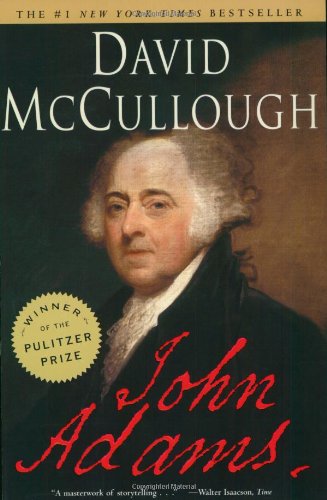
John Adams by David McCullough, which I can't believe I've never read.
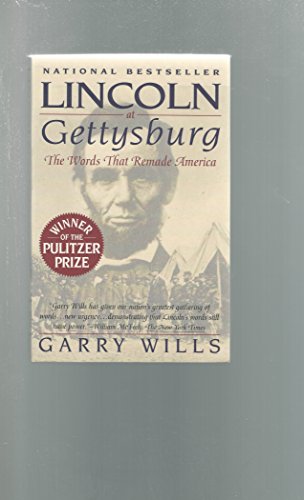
Lincoln at Gettysburg by Garry Willis.
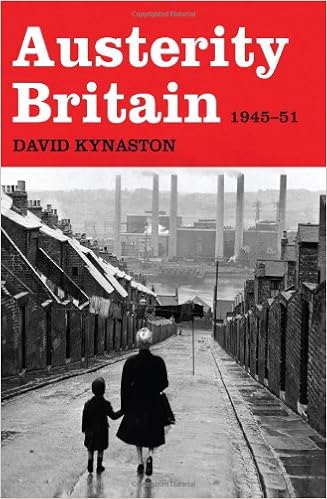
Austerity Britain: 1945-1951 by David Kynaston.
And one I've already read this month but would recommend: Eleanor and Hick by Susan Quinn.
As for what I'll read, I picked up some history books in a recent Kobo e-sale:
John Adams by David McCullough, which I can't believe I've never read.
Lincoln at Gettysburg by Garry Willis.
Austerity Britain: 1945-1951 by David Kynaston.
And one I've already read this month but would recommend: Eleanor and Hick by Susan Quinn.
9fuzzi
>8 rosalita: want to do a shared read? I was thinking about tackling John Adams in May.
10rosalita
>9 fuzzi: Definitely! I was thinking of picking it up around the second week of May or so, as I'm finishing off a chunkster right now. Would that work for you?
11katiekrug
>8 rosalita: - I picked up the John Adams bio recently, too. Probably the same e-book sale. I was thinking of reading it in December for "Out of My Comfort Zone" since I am not usually drawn to straight biographies - I will look forward to hearing what you and fuzzi think of it!
12charl08
>6 katiekrug: I thought this was such a great read.
I've got plenty of history I could be reading, not sure what to choose.
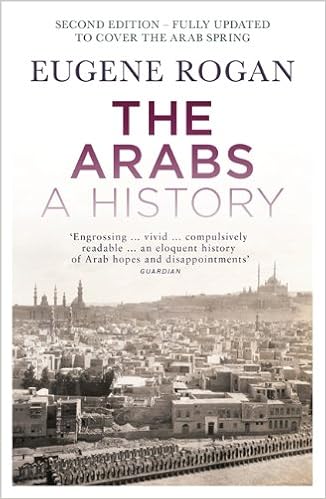
The Arabs: A history seems relevant, but I'm also keen to read Dreamers of a New Day, a book on early twentieth century feminists that sits on my shelves unread.
Mostly because I want to justify buying her new book...
I've got plenty of history I could be reading, not sure what to choose.
The Arabs: A history seems relevant, but I'm also keen to read Dreamers of a New Day, a book on early twentieth century feminists that sits on my shelves unread.
Mostly because I want to justify buying her new book...
13rosalita
>11 katiekrug: I watched the HBO miniseries on Netflix back in the DVD days and thought it was terrific. And McCullough is pretty solid so I have high hopes.
14weird_O
While I am still planning to complete Francine Prose's book Reading Like a Pro Writer for the April challenge, I do know I'll be reading Spain in Our Hearts by Adam Hochschild for May.
15Chatterbox
>14 weird_O: Sigh, a quasi-book bullet. I have been meaning to read that for more than a year, and it's on my personal non-fiction challenge list for 2017. So I may try to squeeze it in, too! I also have Hotel Florida, another book about the Spanish civil war, focusing on a group of folks caught up in it who stayed at the hotel in question in Madrid -- including Hemingway and Gelhorn, natch, but also Dos Pasos, Robert Capa and an official of the Republican government. Brought together by where they stayed, I gather the author has been able to pull together an interesting perspective on the war and a kind of group biography. Not a surprising/revelatory group of individuals, probably, but still of interest to me. On a separate note, a LOT of new stuff out there about Hemingway now, some of which has ended up on my TBR list (because, free copies...) A bio of his friendship with Dos Passos, a book about the writing of The Sun Also Rises, which I originally wanted to get hold off for my now ex-bf, but whatever (I like that novel too) and I've seen some other stuff too. Is copyright expiring on his novels??
And yes, the John Adams epic chunkster sits unread on my Kindle, snaffled during a prior sale.
For anyone looking for Arab-related histories, I found The Crusades Through Arab Eyes by Amin Maalouf to be particularly good. I liked the idea of reading a history that is so emotive from a different perspective -- plus, I was traveling through Jordan and Syria and visiting Crusader castles (including the now-destroyed Krak des Chevaliers) and Saladin's tomb when reading it. Combined it with Zoe Oldenbourg's more traditional history, and wow, the contrast...
And yes, the John Adams epic chunkster sits unread on my Kindle, snaffled during a prior sale.
For anyone looking for Arab-related histories, I found The Crusades Through Arab Eyes by Amin Maalouf to be particularly good. I liked the idea of reading a history that is so emotive from a different perspective -- plus, I was traveling through Jordan and Syria and visiting Crusader castles (including the now-destroyed Krak des Chevaliers) and Saladin's tomb when reading it. Combined it with Zoe Oldenbourg's more traditional history, and wow, the contrast...
16ronincats
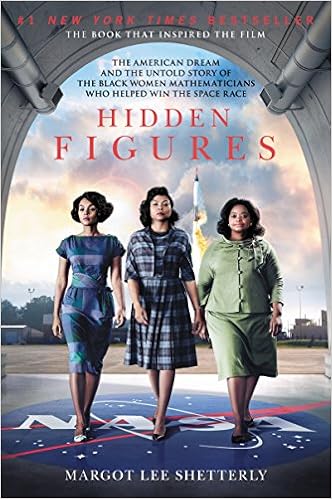
Besides having an unread copy of McCullough's John Adams, I have Liar, Temptress, Soldier, Spy and Merrill's Marauders on the TBR shelves. The former is four women undercover in the Civil War, the latter is about the unit my dad was in during WWII. And I do want to read Hidden Figures after seeing the wonderful movie, although I don't have it in hand like the others. Decisions, decisions!
17Chatterbox
Liar, Temptress, Soldier, Spy was fun, if possibly a bit lightweight. I'm sure the history was solid, but the tone sometimes veered to the breathless. Still, I enjoyed it, even if it sometimes felt as if the author squeezed together four narratives that didn't always fit quite as well as she wanted them to. A lively read, and it really gave me a sense of women's lives during this era, and how volatile the civilian population was in the border regions.
So many books; so little time. I recently saw an Internet piece suggesting that we calculate how many books we can reasonably expect to read before we die. I'd like to shoot whoever thought that was a good idea.
So many books; so little time. I recently saw an Internet piece suggesting that we calculate how many books we can reasonably expect to read before we die. I'd like to shoot whoever thought that was a good idea.
18benitastrnad
I am not sure what I will read. I pulled out Wanderlust: A History of Walking by Rebecca Solnit last night and started it. However, it doesn't seem like "History" to me. It is natural history. I have been wanting to read something about Franklin Roosevelt and I have No Ordinary Time:" Franklin and Eleanor Roosevelt on my shelves, but the idea of reading Doris Kearns Goodwin doesn't really appeal right at this moment. Tulipomania by Mike Dash might be just the thing at this point in time, but I will look tonight and see what I have on my shelves that I can start. As many books as I have on the shelves, I am sure that something will call to me.
19streamsong
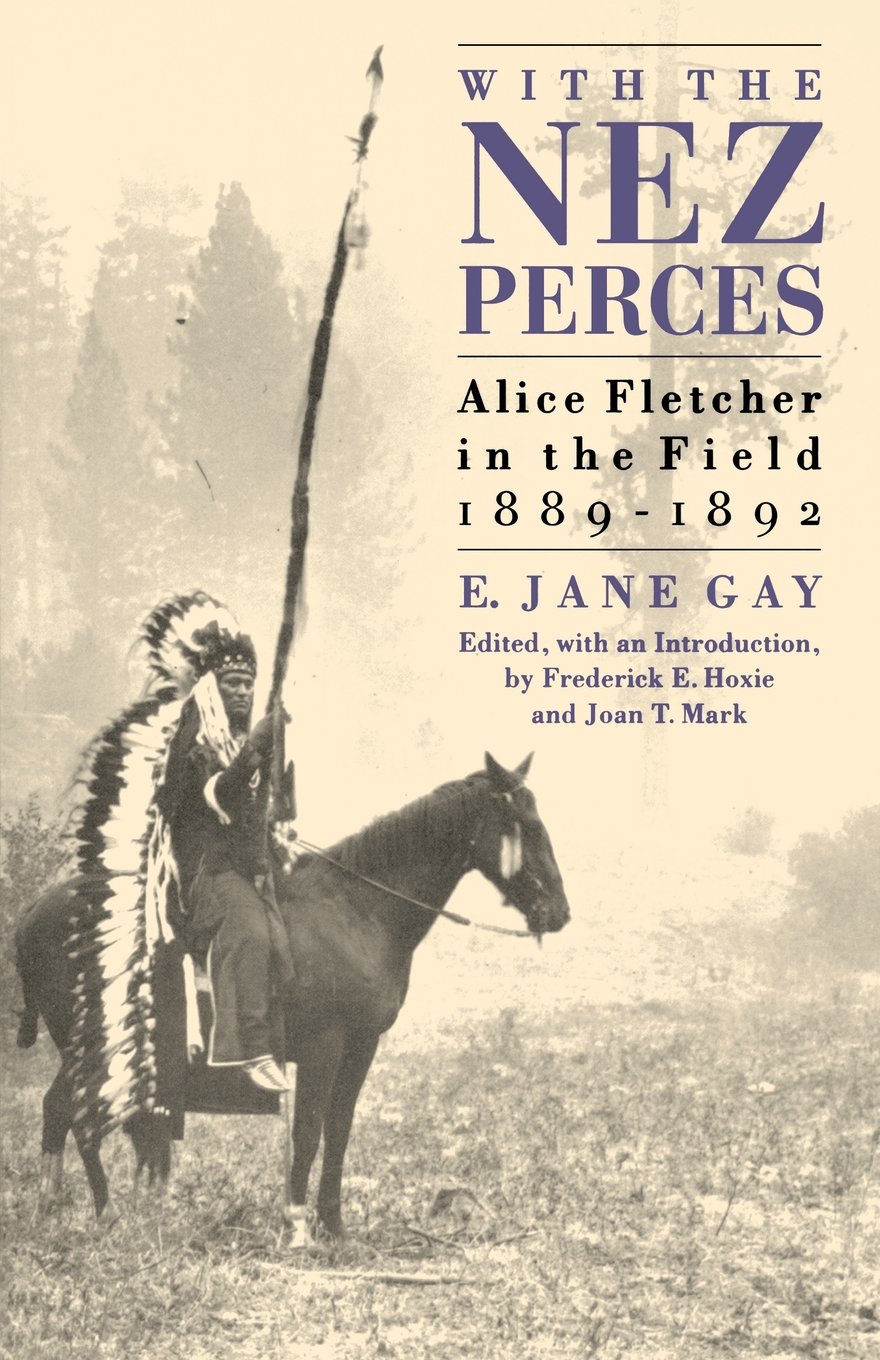
In the spirit of trying to get the very oldest off my TBR pile, I'm going to read one that has been on MT TBR for more than ten years. With the Nez Perces: Alice Fletcher in the Field, 1889-1892. She was a very unusual woman for her time - an anthropologist who was put in charge of allotting the Nez Perce Reservation.
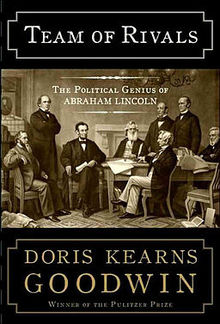
I think I'll also try to listen to Team of Rivals on audio. I didn't finish this when my book club read it several years ago and I've always meant to get back to it.
I think I'll also try to listen to Team of Rivals on audio. I didn't finish this when my book club read it several years ago and I've always meant to get back to it.
20charl08
>19 streamsong: She sounds fascinating. Look forward to hearing more.
21Chatterbox
>18 benitastrnad: Sadly, I think you're correct in deeming Wanderlust to not be history. Something about Tulipomania would be a fun addition to the mix if you decide that your inclinations go that way?
>19 streamsong: Team of Rivals is good, but very long and detailed... And your other choice sounds fascinating. Was just having a discussion on a novelist friend's Facebook thread about how few books there are about women going on a journey (the trope about two common themes in fiction being going on a journey vs a stranger coming to town; her former instructor, John Gardner, had argued that in the case of women protagonists, it was all too often women who dealt with the stranger coming to town. I noted that actually there were women who, in real life, did absolutely fascinating things, from Marie Curie to Lady Hester Stanhope, but that novels with women like them as protagonists wouldn't have sold, because society just didn't want to know or accept that as a lifestyle until very recently. Mary Shelley had a very unconventional lifestyle as a young woman -- but her characters were male. George Eliot had a very unconventional life, living "in sin" and then marrying a man decades her junior -- but her heroines were pretty conventional in behavior, even if their thoughts/ideas were not. Which is a long-winded way of saying I'll be eager to add Alice Fletcher to my list of women who broke the bounds of conventional behavior, but who never would have made it as a heroine in a novel of their times, but who have now been celebrated in a non-fiction tome! Another great reason to read non-fiction, no?
>19 streamsong: Team of Rivals is good, but very long and detailed... And your other choice sounds fascinating. Was just having a discussion on a novelist friend's Facebook thread about how few books there are about women going on a journey (the trope about two common themes in fiction being going on a journey vs a stranger coming to town; her former instructor, John Gardner, had argued that in the case of women protagonists, it was all too often women who dealt with the stranger coming to town. I noted that actually there were women who, in real life, did absolutely fascinating things, from Marie Curie to Lady Hester Stanhope, but that novels with women like them as protagonists wouldn't have sold, because society just didn't want to know or accept that as a lifestyle until very recently. Mary Shelley had a very unconventional lifestyle as a young woman -- but her characters were male. George Eliot had a very unconventional life, living "in sin" and then marrying a man decades her junior -- but her heroines were pretty conventional in behavior, even if their thoughts/ideas were not. Which is a long-winded way of saying I'll be eager to add Alice Fletcher to my list of women who broke the bounds of conventional behavior, but who never would have made it as a heroine in a novel of their times, but who have now been celebrated in a non-fiction tome! Another great reason to read non-fiction, no?
22nittnut
Question? I am reading Zora Neal Hurston's autobiography Dust Tracks on A Road for the AAC, and wondered if it also fits here? She has a lot of personal history, of course, but also history and people of the time period.
Also on the list:
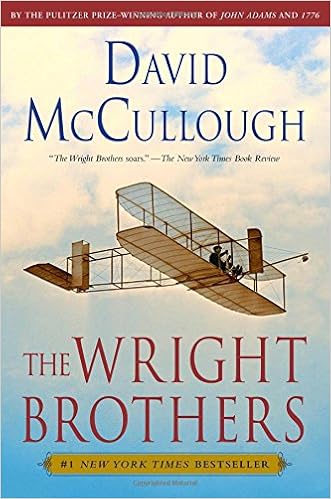
The Wright Brothers
Hidden Figures
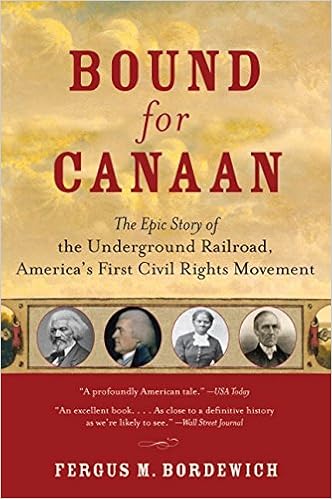
Bound for Canaan: The Under-ground Railroad and the War for the Soul of America
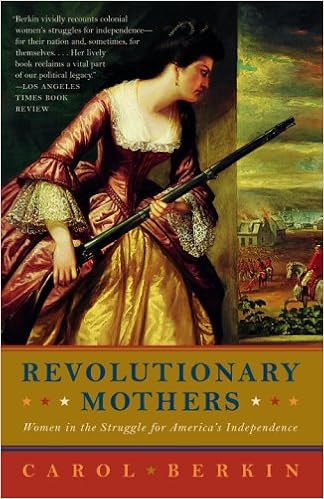
Revolutionary Mothers: Women in the Struggle for Independence
and a newly acquired two volume set of History of the Rise, Progress and Termination of The American Revolution which is cool because Mercy Otis Warren is really the first American woman to write not solely for herself or her family and was quite the historian.
Also on the list:
The Wright Brothers
Hidden Figures
Bound for Canaan: The Under-ground Railroad and the War for the Soul of America
Revolutionary Mothers: Women in the Struggle for Independence
and a newly acquired two volume set of History of the Rise, Progress and Termination of The American Revolution which is cool because Mercy Otis Warren is really the first American woman to write not solely for herself or her family and was quite the historian.
23m.belljackson
Caught in the Web of Words tells both the story of James Murray and the Oxford English Dictionary.
Written by Murray's granddaughter, it promises to be even more insightful than Simon Winchester's Meaning of Everything.
If you check my thread - February 1st, 2017 - Happy Birthday to the OED! -
you'll see why I acquired BOOK D AND E of the OED
and why Caught in the Web of Words is so inviting.
Written by Murray's granddaughter, it promises to be even more insightful than Simon Winchester's Meaning of Everything.
If you check my thread - February 1st, 2017 - Happy Birthday to the OED! -
you'll see why I acquired BOOK D AND E of the OED
and why Caught in the Web of Words is so inviting.
24Chatterbox
>22 nittnut: Does it fit into the dates specified? if so, I have no problem with that. I suspect it does...
26Caroline_McElwee
I'm going to leave deciding for a while. I have several of the books mentioned, so may read one of those, but I have many other prospects in the tbr mountain.
27alcottacre
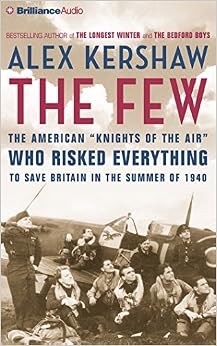
Since I am not going to get The Few read for April's challenge, I am going to carry it over into May since it definitely fits the history category for the month. Beyond that, I am not sure what else I will be reading for May.
28fuzzi
>10 rosalita: after May 10th would work. I'm going to Chicago to visit my granddaughter and family, and have to be back in the office by May 11th.
>11 katiekrug: >15 Chatterbox: >16 ronincats: how many of you want to do a shared read of John Adams?
>11 katiekrug: >15 Chatterbox: >16 ronincats: how many of you want to do a shared read of John Adams?
29Chatterbox
>28 fuzzi: Hmm, not sure about the John Adams bio. It's not on my TBR shortlist this year, and other books are. I may read the Hochschild, though, about the Spanish Civil War. If I add anything to this list, it likely will be the Dan Jones book about the Magna Carta or Sarah Gristwood's group bio about 16th century European queens regnant. I have a few massive bios sitting here, including that one and the Napoleon bio, and I want to read the new bio of Rasputin at some point, but...
30fuzzi
>29 Chatterbox: that's cool. I was "just thinking"...
31rosalita
>28 fuzzi: Sounds good! I've penciled it into the May plans, middle of the month. Have fun in Chicago — probably my favorite big city in the U.S.
32katiekrug
>28 fuzzi: - I may do the JA bio in December. I've already got my book for May started.
33Chatterbox
>30 fuzzi: LOL, yes, indeed -- and I shall watch and cheer you on!! (And maybe watch the TV series, which I haven't done. And join Katie in December.)
34benitastrnad
I looked through my shelves last night and settled on two titles - both from World War II. Wine and War: The French, the Nazis, and the Battle for France's Greatest Treasure by Donald Kladstrup and Dresden: Tuesday, February 13, 1945 by Frederick Taylor. Wine and War will be the first one I attempt to read for May.
35streamsong
>21 Chatterbox: I agree - Team of Rivals may be too complicated for me to listen to the audio. But I'm hoping that since I've read the first half (with about four pages of notes that I made to keep everyone straight), and I have the paper book in hand, listening to the audio will finally see me through to the finish.
Your thoughts on women adventurers are really interesting. I have a few more in my library that might interest you. These are also women who went adventuring in the western US.
- Liberated Woman: A Life of May Arkwright Hutton - hmm I don't have this one in my LT catalog because the copy I picked up at a rummage sale has the first two chapters missing...
- Letters of A Woman Homesteader - Elinore Pruitt Stewart
- Flight of the Dove: The Story of Jeannette Rankin - Keven S Giles I believe Jeannete Rankin is one of the most overlooked of the early feminists. She was the first woman to sit in the US House of Representatives. She made Montana ashamed of her because she was one of a handful that voted against the US entering WWI. She was finally re-elected in the 40's - just in time to be the only member in all of Congress to vote against entering WWII. Shame, shame, shame. There are several other books about her.
A few I haven't read:
- A Cup of Tears: Escape from Siberia to a Life of Triumph in America - Florence Smith
- Women in Wonderland: Lives, Legends, and Legacies of Yellowstone National Park by Elizabeth A Watry
I'm really interested in women's stories. As you say, many of them seem to be small presses and local interest.
Your thoughts on women adventurers are really interesting. I have a few more in my library that might interest you. These are also women who went adventuring in the western US.
- Liberated Woman: A Life of May Arkwright Hutton - hmm I don't have this one in my LT catalog because the copy I picked up at a rummage sale has the first two chapters missing...
- Letters of A Woman Homesteader - Elinore Pruitt Stewart
- Flight of the Dove: The Story of Jeannette Rankin - Keven S Giles I believe Jeannete Rankin is one of the most overlooked of the early feminists. She was the first woman to sit in the US House of Representatives. She made Montana ashamed of her because she was one of a handful that voted against the US entering WWI. She was finally re-elected in the 40's - just in time to be the only member in all of Congress to vote against entering WWII. Shame, shame, shame. There are several other books about her.
A few I haven't read:
- A Cup of Tears: Escape from Siberia to a Life of Triumph in America - Florence Smith
- Women in Wonderland: Lives, Legends, and Legacies of Yellowstone National Park by Elizabeth A Watry
I'm really interested in women's stories. As you say, many of them seem to be small presses and local interest.
36thornton37814
I may go with The Transformation of Virginia, 1740-1790 for this one. I meant to read it earlier in the year and didn't get around to it.
38GerrysBookshelf
I have an interest in World War I, so I will start with Dead Wake: The Last Crossing of the Lusitania by Erik Larson and if time permits, The Proud Tower by Barbara Tuchman.
39Chatterbox
>38 GerrysBookshelf: Both of these are SOOOO good!!!
>35 streamsong: Thanks for the suggestions -- I should draw up a reading list to peruse next year.
>35 streamsong: Thanks for the suggestions -- I should draw up a reading list to peruse next year.
40Fourpawz2
Instead of rummaging through my giant piles of TBR non-fiction, I decided to read The Graves Are Walking by John Kelly that I've had on my kindle for about a thousand years. I'm always forgetting about this book - mostly because I don't love the kindle experience - but I really want to get it read before another year passes.
41benitastrnad
#40
I don't really like the e-reader experience either. Nice to know that there are more of us.
I don't really like the e-reader experience either. Nice to know that there are more of us.
42mstrust
I'm going to read From Hardtack To Home Fries: An Uncommon History of American Cooks and Meals first.
43Chatterbox
Sorry folks, I'm trying to update the cover images, but when I hit "save" -- they don't. Save, I mean. So it's nothing personal, but LT isn't cooperating. I will do this when it's technically possible to do it again.
44fuzzi
>21 Chatterbox: >35 streamsong: Letters of a Woman Homesteader was a good read!
>41 benitastrnad: I don't care for e-books either.
>41 benitastrnad: I don't care for e-books either.
45Chatterbox
I'm completely format-agnostic. The best thing about e-books is that I can walk around with hundreds of chunksters in my pocket. The worst thing is that there's always a 1% chance that the device will crash, and I do like (for non-fiction) the convenience of being able to go back and forth to bibliography, notes, etc. For novels, I really don't care, as long as the formatting is good and I have remembered to charge my Kindle! I just find the Kindle fades into the background and the text and words are what I focus on. Of course, I'm not reading on a backlit tablet.
46Matke
I have two for this month:
In the Heart of the Sea by Nathaniel Philbrick, about the true story which inspired Melville's Moby Dick;
1776 by David McCullough, no explanation neeed
In the Heart of the Sea by Nathaniel Philbrick, about the true story which inspired Melville's Moby Dick;
1776 by David McCullough, no explanation neeed
47jnwelch
I'm reading The Warmth of Other Suns, about the "Great Migration" of African-Americans from the South to the North.
48m.belljackson
>47 jnwelch: The paintings in Jacob Lawrence:The Migration Series - with words by Leah Dickerman and Elsa Smithgall - are a perfect companion to The Warmth of Other Suns.
49charl08
>48 m.belljackson: I've added that one to the wishlist.
50benitastrnad
#45
I agree! I read one work of non-fiction on my Nook and haven't done so since. My reasons are like yours. I feel the need to refer back to notes and bibliography throughout the reading experience and found it hard to do and annoying on the Nook. I do think that with a newer version of the Nook it might be easier to do these things, but I am not inclined to spend the money to try.
I agree! I read one work of non-fiction on my Nook and haven't done so since. My reasons are like yours. I feel the need to refer back to notes and bibliography throughout the reading experience and found it hard to do and annoying on the Nook. I do think that with a newer version of the Nook it might be easier to do these things, but I am not inclined to spend the money to try.
51fuzzi
I can't locate John Adams...uh oh...
52ronincats
I'm going to do John Adams because it also fits the Obama read challenge. I stalled out at page 158 years ago, so this will be my impetus to finish it.
53banjo123
I have To Steal a Kingdom which is about Hawaiian History, and if I have time I may read Adam Hochschild's WWI book. (doubtful but I am ever hopeful.) Oh, and also I have COnfederates in the Attic. Does that count?
Regarding Team of Rivals, I am not sure that the audio would not work, but one technique I sometimes use with non-fiction is to have both the audio and the printed book. THen if there is something I miss (and care about) in the audio, I can go back and read about it later.
Regarding Team of Rivals, I am not sure that the audio would not work, but one technique I sometimes use with non-fiction is to have both the audio and the printed book. THen if there is something I miss (and care about) in the audio, I can go back and read about it later.
54rosalita
>51 fuzzi: Oh, no! I hope you are able to put your hands on it.
55FAMeulstee
I have two books, one reading now and one planned to read, that would fit:
I am reading the Dutch translation of The Embarrassment of Riches: An Interpretation of Dutch Culture In the Golden Age by Simon Schama.
And I plan to read the Dutch translation of The Middle East: A Brief History of the Last 2,000 Years by Bernard Lewis, there might be a tiny bit after 1970, but most of the book is about earlier times.
I am reading the Dutch translation of The Embarrassment of Riches: An Interpretation of Dutch Culture In the Golden Age by Simon Schama.
And I plan to read the Dutch translation of The Middle East: A Brief History of the Last 2,000 Years by Bernard Lewis, there might be a tiny bit after 1970, but most of the book is about earlier times.
56Chatterbox
>53 banjo123: Sorry, but Confederates in the Attic wouldn't work for this challenge. It's written about contemporary Americans dealing with a historic legacy, so not really about history. I'd emphasized/intended that the action/characters in the narrative should take place prior to 1970, and in this case, the author is writing about people doing things contemporaneously, even if they happen to be people obsessed by history. Using that as a criterion, we could stretch the definition of "history" to cover practically anything. This would be a great book for August, if you can wait that long...
>55 FAMeulstee: Yes, the Bernard Lewis book works for this; the latter day stuff is just to wrap up the bulk of the argument. (I've read it; it's interesting, will look forward to your comments.)
>55 FAMeulstee: Yes, the Bernard Lewis book works for this; the latter day stuff is just to wrap up the bulk of the argument. (I've read it; it's interesting, will look forward to your comments.)
57jnwelch
>48 m.belljackson: Thank you, m.belljackson. I have Jacob Lawrence: The Migration Series. We were lucky enough to see the paintings in NYC. They're terrific. You're right, I've been thinking about them while reading The Warmth of Other Suns.
58nittnut
I have finished Dust Tracks on A Road. Reading her autobiography made me wish I could have been friends with Zora Neale Hurston. She knows how to tell a story, her sense of humor is wicked, and she seems absolutely fearless. Her story begins with the town where she was born, and progresses, mostly chronologically, until about chapter 16. From chapter 16 on, the autobiography reads like a series of essays on her life, the times, things she has observed. Her story is fascinating, and well worth the read. I am going to include a bunch of quotes, as that tells more than my review possibly can. There was a hint of controversy or a difference of opinion on certain matters in the introduction by Maya Angelou. It made for interesting reading, keeping my eyes open for some of the issues Angelou mentioned. I don't venture an opinion on those subjects, but I do love the way ZNH puts words together.
Quotes:
There is something about poverty that smells like death. Dead dreams dropping off the heart like leaves in a dry season and rotting around the feet; impulses smothered too long in the fetid air of underground caves. The soul lives in a sickly air. People can be slave-ships in shoes.
--------------------
It was only that night in bed that I analyzed the whole thing and realized that I was giving sanction to Jim Crow, which theoretically, I was supposed to resist. But here were ten Negro barbers, three porters and two manicurists all stirred up at the threat of our living through loss of patronage. Nobody thought it out at the moment. It was an instinctive thing. That was the first time it was called to my attention that self-interest rides over all sorts of lives.
-------------------
...It impressed upon me the universal nature of greed and glory. Lack of power and opportunity passes off too often for virtue. If I were King, let us say, over the Western Hemisphere tomorrow, instead of who I am, what would I consider right and just? Would I put the cloak of Justice on my ambition and send her out a-whoring after conquests?
-------------------
Once when they used to set their mouths in what they thought was the Boston Crimp, and ask me about the great differences between the ordinary Negro and the "better-thinking Negro," I used to show my irritation by saying I did not know who the better-thinking Negro was. I knew who the think-they-are-better Negroes were, but who were the better-thinkers was another matter... So I sensed early, that the Negro race was not one band of heavenly love. There was stress and strain inside as well as out. Being black was not enough. It took more than a community of skin color to make your love come down on you. That was the beginning of my peace.
-------------------
Who can know the outer ranges of friendship? I am tempted to say that no one can live without it. It seems to me that trying to live without friends, is like milking a bear to get cream for your morning coffee. It is a whole lot of trouble, and then not worth much after you get it.
-------------------
I have been in Sorrow's kitchen and licked out all the pots. Then I have stood on the peaky mountain wrappen in rainbows, with a harp and a sword in my hands.
-------------------
Quotes:
There is something about poverty that smells like death. Dead dreams dropping off the heart like leaves in a dry season and rotting around the feet; impulses smothered too long in the fetid air of underground caves. The soul lives in a sickly air. People can be slave-ships in shoes.
--------------------
It was only that night in bed that I analyzed the whole thing and realized that I was giving sanction to Jim Crow, which theoretically, I was supposed to resist. But here were ten Negro barbers, three porters and two manicurists all stirred up at the threat of our living through loss of patronage. Nobody thought it out at the moment. It was an instinctive thing. That was the first time it was called to my attention that self-interest rides over all sorts of lives.
-------------------
...It impressed upon me the universal nature of greed and glory. Lack of power and opportunity passes off too often for virtue. If I were King, let us say, over the Western Hemisphere tomorrow, instead of who I am, what would I consider right and just? Would I put the cloak of Justice on my ambition and send her out a-whoring after conquests?
-------------------
Once when they used to set their mouths in what they thought was the Boston Crimp, and ask me about the great differences between the ordinary Negro and the "better-thinking Negro," I used to show my irritation by saying I did not know who the better-thinking Negro was. I knew who the think-they-are-better Negroes were, but who were the better-thinkers was another matter... So I sensed early, that the Negro race was not one band of heavenly love. There was stress and strain inside as well as out. Being black was not enough. It took more than a community of skin color to make your love come down on you. That was the beginning of my peace.
-------------------
Who can know the outer ranges of friendship? I am tempted to say that no one can live without it. It seems to me that trying to live without friends, is like milking a bear to get cream for your morning coffee. It is a whole lot of trouble, and then not worth much after you get it.
-------------------
I have been in Sorrow's kitchen and licked out all the pots. Then I have stood on the peaky mountain wrappen in rainbows, with a harp and a sword in my hands.
-------------------
59m.belljackson
>58 nittnut:
If you haven't already read it, there's a novel I BEEN IN SORROW'S KITCHEN AND LICKED OUT ALL THE POTS that you might like.
If you haven't already read it, there's a novel I BEEN IN SORROW'S KITCHEN AND LICKED OUT ALL THE POTS that you might like.
60mstrust
I've read From Hardtack to Home Fries: An Uncommon History of American Cooks and Meals. Each chapter looks at a significant moment in American food history. It begins with the history of the Irish Famine, which led to a wave of Irish immigrants working in houses and kitchens. There are chapters on the female hospital volunteers who developed nutritious meals for wounded soldiers during the Civil War, the Harvey Houses, Jewish refugees who ran a successful German-style bake shop in Cambridge, and a very interesting chapter about the housekeeper who ran the kitchen for the Roosevelts in The White House for years, who was an infamously terrible cook.
61eclecticdodo
I will be reading:
The Diary Of A Young Girl and Ann Frank Remembered to fill in a shameful gap in my history.
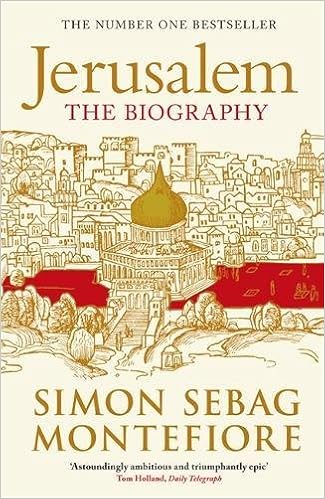
I'm also listening to the audiobook of Jerusalem. So far the author has already annoyed me by misrepresenting the Christian interpretation of the Bible, but it is still interesting.
The Diary Of A Young Girl and Ann Frank Remembered to fill in a shameful gap in my history.
I'm also listening to the audiobook of Jerusalem. So far the author has already annoyed me by misrepresenting the Christian interpretation of the Bible, but it is still interesting.
62fuzzi
>54 rosalita: found it!!!
However, I won't start reading John Adams until I get back from Chicago, about May 10th. :)
However, I won't start reading John Adams until I get back from Chicago, about May 10th. :)
63rosalita
>60 mstrust: You got me with that one, Jennifer. It sounds really interesting!
>61 eclecticdodo: Oh, well done! After the 10th is perfect for me. I just had two library books come in at the same time so I'll be keeping myself busy at least until then. :-)
>61 eclecticdodo: Oh, well done! After the 10th is perfect for me. I just had two library books come in at the same time so I'll be keeping myself busy at least until then. :-)
64ronincats
I'm going to go ahead with the John Adams biography because it also fits the Obama Read category for the month.
65rosalita
>64 ronincats: The more the merrier, Roni!
66mstrust
>63 rosalita: It was interesting, and now I want the cookbook put out by that terrible White House cook. She served pineapple spears rolled in crushed peppermint candy as an appetizer.
67nittnut
>60 mstrust: From Hardtack to Home Fries sounds like lots of fun. >66 mstrust: and the story of the terrible White House cook! Lol I can't even imagine pineapple rolled in peppermint candy. Gak!
68nittnut
I have just finished listening to The Wright Brothers. Excellent. So very excellent. As always, David McCullough does meticulous research and transforms the details into a compelling narrative. I learned so much, and my admiration for Wilbur and Orville Wright is much greater than it was before. One of our favorite parts was how they studied wing motion by making a wind tunnel and populating it with modified hacksaw blades and then studying how each one performed. Such amazing minds and creative thinking. Also impressive was how they did all the research and building on their own dollar and spent, in the end, very little money to create a viable flyer. One minor note - I listened to the audio, narrated by David McCullough. It was good, but not amazing. He is clearly a much better writer than reader. Sigh.
69mstrust
> 67 I know, that sounds so awful that I want to see what else she did. She was an excellent baker and excelled at Viennese style desserts, but was awful at cooking anything else. To be fair, it was the Depression and the White House didn't want to be seen as being exempt, but she apparently took frugality to a new level, even denying FDR and his guests orange juice.
70rosalita
>66 mstrust: Oh dear, that sounds dreadful!
71torontoc
Do memoirs count for this month- i just finished reading the account written by Rabbi Pinchas Hirschprung ( and recently translated from the Yiddish by Vivian Felsen- a friend of mine) His book-The Vale of Tears is about his experiences in a small town in Poland at the start of World War Two and how he travels to find refuge to Vilna. He eventually is able to leave Vilna via a visa issued by the Dutch consul for Curacao, a transit visa via Japan and then Shanghai before Pearl Harbour and believe it or not - get permission to enter Canada in 1941! The story is about the Nazis in Poland, the Soviets in Ukraine and Lithuania. These memoirs were written in Montreal in 1944 and were just translated and published this year.
72banjo123
>56 Chatterbox: That's OK---I wasn't sure how much history was packed into the book, because I haven't read it yet. I was comparing it to Blue Latitudes, which I would argue does fit in the category. I can't read it in August, because I have never before been interested in historical re-enactment, I just like Tony Horwitz. But I will get it in somewhere.
Also, I found yet another historical book, my lesbian book group is reading Charity and Sylvia, which actually looks interesting in a very academic sort of way.
Also, I found yet another historical book, my lesbian book group is reading Charity and Sylvia, which actually looks interesting in a very academic sort of way.
73benitastrnad
#55
I have had Embarrassment of Riches on my TBR pile for years. I understand from some friends that even though it is a chunkster it is easy to read. I may have to dig it out and get to it soon, so let us know what you think of it when you finish.
I have had Embarrassment of Riches on my TBR pile for years. I understand from some friends that even though it is a chunkster it is easy to read. I may have to dig it out and get to it soon, so let us know what you think of it when you finish.
74FAMeulstee
>73 benitastrnad: I am halfway and find it very interesing, as Schama looks in a different way to our culture (as he is English) and puts some in a different perspective. I hope to finish it early next week. It is no difficult read, but I do need some fiction in between the chapters.
I had it on my shelves since the Dutch translation was published, then culled in 2005 as I thought I would never get to it. Regained it in 2011 and finaly am reading it now.
I had it on my shelves since the Dutch translation was published, then culled in 2005 as I thought I would never get to it. Regained it in 2011 and finaly am reading it now.
75Chatterbox
I've finished reading Magna Carta: the Birth of Liberty by Dan Jones. It was a fairly straightforward and well-written/accessible canter through the history of the Plantagenet kings' conflicts with their barons and what led up to the fateful meeting at Runnymede in 1215, as well as what actually the Magna Carta contains -- the contents may surprise many ardent fans of today's democracy movements, as much as what it now stands for may astonish the barons who fought for the right to do what they wanted without the king stealing from them. Basically, it was all about a tussle between two different kinds of tyrannies, and had nothing to do with handing over rights to the populace as a whole. Only with the passage of time and the change in the demographic makeup and economic power of different groups of people in England would it take on different meanings. Alas, while Jones does address that in his final chapter, it's in the form of a kind of brisk epilogue -- I would have been interested in understanding in more detail just how a feudal document became foundational to modern-day democracies and he somehow lets that slide by, over-simplifying. So I'll have to look elsewhere. Read this for an understanding of the Charter itself and the politics of the era, however -- I should have remembered that Jones is essentially a medieval/late medieval historian and not a historian of political thought or anyone of that ilk, and governed my expectations accordingly! 3.9 stars.
76nittnut
>75 Chatterbox: Looks like a good read anyway.
77Chatterbox
>76 nittnut: Oh, it is. Just didn't quite live up to what it promised to do, and best for those who are looking for a comprehensive introductory history on the topic and era. I've read a fair amount about it already in books like 1215 by Danny Danziger, but it was interesting to revisit it in a focused manner. It just didn't go that extra mile. Oh well.
78nittnut
>77 Chatterbox: I am adding it to my pile because it sounds like a good review, and I will keep my eyes open to see if you find something that explains just how a feudal document became foundational to modern-day democracies because I would also be very interested to learn about that.
79Chatterbox
Just drawing attention of US participants in this challenge -- and who read on Kindle -- to the fact that several of Adam Hochschild's books are among the Kindle Daily Deals today, including King Leopold's Ghost and Bury the Chains. I think they are available for about $2.99 for your US Kindle. Most of these titles would be a great fit for this month's challenge.
80ronincats
Thanks, Suz. I've been wanting to pick up King Leopold's Ghost since reading Everfair, an alternate history where natives, English and American blacks use steam technology to battly King Leopold's forces in the Congo.
81EBT1002
I have been listening to Alexander Hamilton for months and I expect to finish it this month so that can count for this. I also plan to read Dust Tracks on a Road. I have several others that would fit and that I very much want to get to, but I'll start with these two and see how it goes.
>79 Chatterbox: Thanks, Suz. I have also been interested in King Leopold's Ghost and I just got it on my (still new) Kindle for $1.99. Nice.
>79 Chatterbox: Thanks, Suz. I have also been interested in King Leopold's Ghost and I just got it on my (still new) Kindle for $1.99. Nice.
82Chatterbox
Just finished my second book for this challenge (and book #150 for the year!), The Radium Girls by Kate Moore. It is a superlative book, although it deals with a depressing subject: the systematic abuse of young women who worked painting radium numbers onto luminous clock and watch dials beginning in World War 1 and continuing into the 1920s, an era when "radium" was code for a new substance that had all kinds of benign, wonderful properties. Of course, time would tell that it definitely didn't, and these women would be the first to pay the terrible price, since the method they were taught for the fine detail painting required twirling the tiny brushes between their teeth every few seconds, over and over, day in and day out. The radium they absorbed went straight to their bones, and within a few years, those bones were honeycombed and fracturing, starting with their jaws... The stage was set for an epic struggle between the companies involved -- one in Orange, NJ and one in Ottawa, Illinois -- that refused any responsibility to the women ('girls') and did their best to wiggle out from paying a single doctor's bill, and a handful of tenacious women and their allies. Someone NEEDS to make a movie of this. 5 stars. What is most chilling (in light of the proposed gutting of the EPA) is that the cleanup of some sites continues to this day, and the most recent radium dial-painting scandal took place within my lifetime, when women were found to be dying of radium poisoning, and the company denied all responsibility, etc. etc. -- shades of the 1920s. Highly recommended.
83rosalita
>82 Chatterbox: Technically not a book bullet since I had already added that one to the TBR list after hearing an interview on NPR with the author, but I'm glad to hear that you found it so compelling.
84laytonwoman3rd
I've picked up a copy of Soldier, Sailor, Writer, Spy (OK, I got the order wrong, but amazingly the touchstone works anyway, and I'm afraid if I fix it, it won't!) in recent travels, so I think I will try to fit that in this month.
85charl08
>82 Chatterbox: Sounds good - hoping to get to this one soon.
86mstrust
I've abandoned San Francisco is Burning. It turned out to be fictionalized history, with thoughts and conversations of people that the author is making up in between the facts. I don't do well with books like that, as I turn into a broken record of "how do you know? how do you know?"
87laytonwoman3rd
>86 mstrust: I know that feeling, and I hate it! Especially when it's so seamlessly done that at first you don't realize that no one could possibly have recorded so many converations verbatim. Spoils a perfectly good read, doesn't it?
88mstrust
It does. Once I start reading of someone's thoughts or having little conversations that would never have been recorded for history, I immediately question the author's authority. If it's fiction, that's fine, but it doesn't work for me when I've picked up non-fiction.
89Chatterbox
Theoretically, it COULD be oral history records (I've transcribed the most remarkable stuff for archives) but without footnotes, you just can't tell. And yes, a novel presenting itself as authoritative account is anathem! Did you hurl it with great force at a wall??
I'm moving on to read Young Radicals by Jeremy McCarter, since there was a reference in the previous book to Walter Lippmann's rousing defense of the "radium girls" and as he is one of the five radicals in question on whom the author has chosen to focus -- radicals whose idealism was battered by the shift to repressive government following the entry of the US into WW1 and the rise of nativism. And yes, McCarter is making explicit comparisons to today's environment -- at least in the introduction. So far, very good (I'm about 120 pages into it.)
I'm moving on to read Young Radicals by Jeremy McCarter, since there was a reference in the previous book to Walter Lippmann's rousing defense of the "radium girls" and as he is one of the five radicals in question on whom the author has chosen to focus -- radicals whose idealism was battered by the shift to repressive government following the entry of the US into WW1 and the rise of nativism. And yes, McCarter is making explicit comparisons to today's environment -- at least in the introduction. So far, very good (I'm about 120 pages into it.)
90amanda4242
I've finished Norman F. Cantor's In the Wake of the Plague: The Black Death and the World It Made, which was complete crap. I made a list of some of the major annoyances:
1. Jumps around time and topics so it's hard to establish what the world was like pre- and post-plague.
2. Cantor never passes up a chance to demonize the Plantagenets, except for Richard II, who he describes as a "sensitive, intelligent monarch." I know the dynasty had more than its share of utter bastards, but was it really necessary to ridicule their sense of fashion?
3. He makes claims without providing any evidence. (King John was manic-depressive, Richard II was gay)
4. He treats legends and rumors as facts. (Robin Hood, the story of Edward II and the hot poker)
5. Focuses almost exclusively on England
6. Paints medieval people as stupid and superstitious.
Avoid this one like the, well, you know.
1. Jumps around time and topics so it's hard to establish what the world was like pre- and post-plague.
2. Cantor never passes up a chance to demonize the Plantagenets, except for Richard II, who he describes as a "sensitive, intelligent monarch." I know the dynasty had more than its share of utter bastards, but was it really necessary to ridicule their sense of fashion?
3. He makes claims without providing any evidence. (King John was manic-depressive, Richard II was gay)
4. He treats legends and rumors as facts. (Robin Hood, the story of Edward II and the hot poker)
5. Focuses almost exclusively on England
6. Paints medieval people as stupid and superstitious.
Avoid this one like the, well, you know.
91FAMeulstee
 Overvloed en onbehagen by Simon Schama, original title The Embarrassment of Riches, 682 pages
Simon Schama's extensive book about culture in the Dutch Golden Age (17th century). How culture and identity developed onward from the formation of the Dutch Republic (end of 16th century). The 80 year war against Spain was the start of our country, freedom of religion was the main reason for the rebellion, so from religion came the thought of a by God chosen country. But to keep Him satisfied moral highgrounds should be walked. Every disaster was seen as Gods punishment. But along the churches (that never got complete reign over the country) the patricians, who governed the cities, had substancial influence and kept freedom of religion intact.
Schama takes us from war and trade to city government and households, using paintings and woodcuts from the 17th century to illustrate his arguments.
I enjoyed the view of an Englishman on the cultural history of my country. Sometimes too many details, wich makes it difficult to keep the main line in sight. When it was first published in 1988 it was a sensation, but now nearly 30 years later a lot of Schama's views have become mainstream thoughts.
I was surprised to see my city (Lelystad) mentioned in the very last chapter. Both the cities of Lelystad and Almere didn't exist in the 17th century and were very new when Schama wrote this book. The land where they are build came dry in the 1960s and both cities are less than 50 years old. Schama saw in Lelystad and Almere the continuation of a diverse culture founded in the Dutch Golden Age.
92Chatterbox
>90 amanda4242: Norman Cantor is a difficult guy to really hail with complete enthusiasm. (I remember catching a blooper in the original version of his main opus that says the Arabs, rather than the Ottomans, conquered Constantinople.) But when he's not getting swamped in the detail or carried away by his own idiosyncratic ideas (Robin Hood, etc.) he was an interesting and controversial medievalist, dedicated to popularizing history, and to bringing more diverse groups into academe, long before such things were mainstream. Re #6, if you read Inventing the Middle Ages, you'd be surprised to find Cantor taking to task medieval historians who try to turn the era into something that it wasn't -- full of knights and tournaments, or images drawn from medieval manuscripts. Obviously, you're not up for reading any more Cantor, but if anyone else is considering something by him, I'd suggest this book of historiography.
>91 FAMeulstee: I've had this sitting around for a while (erm, a very long while) and really should read it... Thanks to reminding me/inspiring me!
>91 FAMeulstee: I've had this sitting around for a while (erm, a very long while) and really should read it... Thanks to reminding me/inspiring me!
93charl08
I've picked up Truevine from three library, and it starts with a great interviewee access story which has me gripped straight away. Hoping it keeps up this pace.
94Chatterbox
>93 charl08: I have had that one out from the Athenaeum's library for a shamefully long period of time, as nobody else has requested it and so I've been able to keep renewing it... It has had wonderful reviews here.
I've been alternating between Young Radicals as a print book and Valiant Ambition as my audiobook; both are superb. Both about revolutionaries, in different eras and with different backgrounds, but with the common idea of what the USA could and should be -- securing it physically and securing it ideologically. Good "bookends"!
I've been alternating between Young Radicals as a print book and Valiant Ambition as my audiobook; both are superb. Both about revolutionaries, in different eras and with different backgrounds, but with the common idea of what the USA could and should be -- securing it physically and securing it ideologically. Good "bookends"!
95Caroline_McElwee
>91 FAMeulstee: I've long had that book haul n my TBR mountain Anita. Glad it impressed. I have several of his other books too, both art history and history. The one nearest the top is Rembrandt's Eyes.
96FAMeulstee
>95 Caroline_McElwee: I hope to get to his Patriots and Liberators next, but Rembrandt's Eyes looks good too.
97Chatterbox
I finished Valiant Ambition by Nathaniel Philbrick, and it's another big winner for this month's challenge. Philbrick juxtaposes the tale of two of the top generals of the revolutionary army from 1776 onward, albeit two men with very different military and personal styles: Washington and Benedict Arnold. When Washington was dithering and nearly bungling the retreat from New York, Arnold was swashbuckling successfully (mostly) up north, provoking the British and preventing them from achieving their goals as smoothly as they would have liked. But what makes this dual biography and history a standout is the way in which Philbrick so smoothly depicts the personalities of the two men, the way they learn (or don't) from their military encounters with the enemy and the political battles with their peers and with Congress. Arnold, a volatile individual, becomes more and more embittered when not given what he believes is his due, whereas Washington turns into an arch-manipulator of his manipulative underlings conspiring behind his back to destabilize and unseat him. It soon becomes easy to see just why Arnold might have allowed a beautiful woman to convince him to sell out to the British, and why a cold Washington would allow John André to hang rather than grant him his only wish: to go before a firing squad. The only real flaw in this book is that there isn't enough "after all the shooting was over" afterward. Did they ever communicate again? Arnold lived until 1801; five of his sons would have been of an age to serve in the war of 1812 -- did they? Of course we know his name became a byword for treason in the US, but what did Arnold himself write or say in later years? It turns out that he led a very adventurous life (nearly being hung for something else in Guadeloupe, for instance) but Philbrick ends his narrative neatly with Arnold's defection. What is excellent/superlative about the book is the whole question of split loyalties, and how difficult it was to determine these during this era. I was particularly struck by Philbrick's note that by the time of Arnold's treason/defection, a sizeable part of the American population had taken a hands-off approach to the whole war. With the arrival of the French on the scene, they were quite prepared to leave the fighting up to them, and to militias (although the latter were actually quite often corrupt, and used as adjuncts of the governor to go after his political enemies.) What was also striking was the absolute reluctance of each state or community to fund anything beyond its borders, so that suspicion of a national army was very high. You know, why pay for anything that I don't KNOW will benefit me personally? (Sounding familiar at all???) So, 4.75 stars, very highly recommended, full of all kinds of the small details and excellent writing that makes a good history book worth writing, together with a novel way of examining its subject and thesis.
I'm still reading Young Radicals by Jeremy McCarter, and my current audiobook is A Wicked Company by Philipp Blom, about the French Enlightenment circle of thinkers led by Diderot and Holbach, inter alia. I'm enjoying the latter, although it's dense in terms of content, in part because the author has such fun skewering the obnoxiousness of Rousseau (I passed the point where Rousseau pats himself on the back for sending his five illegitimate offspring to the workhouse, one at a time, before returning to his mistress to father the next one, over the weekend... He thought it was a rational thing to do because he needed a quiet house to work in, but it didn't stop him writing about education and optimal child-rearing.)
I'm still reading Young Radicals by Jeremy McCarter, and my current audiobook is A Wicked Company by Philipp Blom, about the French Enlightenment circle of thinkers led by Diderot and Holbach, inter alia. I'm enjoying the latter, although it's dense in terms of content, in part because the author has such fun skewering the obnoxiousness of Rousseau (I passed the point where Rousseau pats himself on the back for sending his five illegitimate offspring to the workhouse, one at a time, before returning to his mistress to father the next one, over the weekend... He thought it was a rational thing to do because he needed a quiet house to work in, but it didn't stop him writing about education and optimal child-rearing.)
98ronincats
I've finished part one of John Adams, passing the point where I stalled 10 or 15 years ago when I first picked up the book, and moving ahead steadily.
99charl08

Truevine
This was a fascinating, and very readable account of the lives of two brothers who were taken to work as 'freaks' by circus managers in the early twentieth century. At least, that's the story the family believe: as the author digs deeper she finds a number of contradictory sources that suggest the brothers may well have been sold by the family. Other is really clear, however, as many of the sources of the Family history were either never recorded due to Jim Crow or subsequently destroyed. This is one of those accounts where the author is very present, interviewing, and on particular getting frustrated by the absence of sources. I would have pruned it back a bit, but nonetheless it makes for a compelling, quick read, in a murky and largely ignored bit of uncomfortable history.
I've had to settle for an imperfect and incomplete story line, uncertain but for its riple-free reflections on memory, power and race.
>97 Chatterbox: Valiant Ambition sounds good. Will see if I can get hold of it here.
100FAMeulstee
 Dutch translation of The Middle East by Bernard Lewis, 422 pages
This book was published in 1995, so misses the more recent developments in the Middle East.
Extensive history of the Middle East, starting at the Hellenistic, Roman, Persian and Egyptian civilisations. The break in the Roman empire, leaving the Byzantine Empire as a factor in the Middle East.
The Islamic history in the region (and beyond) from Mohammed, the divide of Sunni and Shia factions, the influences of the Mongols and the long reign of the Ottoman Empire.
Finally the last century, when after the decline of the Ottoman Empire in 1918 Brittain and France divide their influences in the Middle East, finally leading to independent states.. The writer claims the western influence has benefited the region, I am not sure he is right.

101m.belljackson
Written by James Murray's granddaughter, Caught in the Web of Words reads smoothly, at once like a compelling novel and, at the beginning, like a travelogue. It opens fully the life of a man who became one of the world's great Lexicographers, thanks to his encompassing talents, extraordinary perseverance, and astonishing high energy.
We journey with Murray from his rustic Scotland village homes through development into an expert in South Scotch dialect, then finally to fame and recognition, though little fortune.
Recording the growth of The New English Dictionary, the book moves at a lively pace, bogging down only when long and boring negotiations with Oxford and other obstructionists threatened to shut it down.
Many times, progress came to a halt because of personality conflicts and refusal to allow the changes
that Editor Murray required to create his magical dictionary which not only would include EVERY
English word, but the history of every word with quotations from original sources!
Teams of assistants, Murray's eleven kids, and volunteers devoted their time, energy, money, and sometimes their entire lives to the collection of the millions of word definition quote "slips" which entered the alphabetical pigeonholes of the Scriptoriums.
By the conclusion of Caught in the Web of Words, James Murray will be so familiar to readers that they may want to read the early chapters again while enjoying the range of photographs.
Simon Winchester's The Meaning of Everything, while owing an incredible debt to Elisabeth Murray,
additionally offers one important photograph: the famous mail collecting "pillar-box."
Along with current OUTLANDER tours, it would be a good time to add a tour of
The Life of James Murray.
Five Stars
We journey with Murray from his rustic Scotland village homes through development into an expert in South Scotch dialect, then finally to fame and recognition, though little fortune.
Recording the growth of The New English Dictionary, the book moves at a lively pace, bogging down only when long and boring negotiations with Oxford and other obstructionists threatened to shut it down.
Many times, progress came to a halt because of personality conflicts and refusal to allow the changes
that Editor Murray required to create his magical dictionary which not only would include EVERY
English word, but the history of every word with quotations from original sources!
Teams of assistants, Murray's eleven kids, and volunteers devoted their time, energy, money, and sometimes their entire lives to the collection of the millions of word definition quote "slips" which entered the alphabetical pigeonholes of the Scriptoriums.
By the conclusion of Caught in the Web of Words, James Murray will be so familiar to readers that they may want to read the early chapters again while enjoying the range of photographs.
Simon Winchester's The Meaning of Everything, while owing an incredible debt to Elisabeth Murray,
additionally offers one important photograph: the famous mail collecting "pillar-box."
Along with current OUTLANDER tours, it would be a good time to add a tour of
The Life of James Murray.
Five Stars
102jessibud2
>101 m.belljackson: - As a huge Winchester fan and having read both his books about the OED, I would be very interested in reading this one. I will make a note of the author and title and see if my library has it. Thanks, Marianne
103Chatterbox
>100 FAMeulstee: Anita, Bernard Lewis went on to write What Went Wrong? about Islam, Middle East, etc. post 9/11. I read it in the immediate aftermath of 9/11, when I was scooping up everything on the topic. It was a solid argument and clearly based on extensive knowledge, but struck me even then (before all the reading I went on to do later) as being written by someone who felt that he had something to prove, or who was arguing from a pre-determined POV. Still worth reading, maybe, if you're curious about how he addressed his views in the wake of what happened post '95! It's a short book.
>101 m.belljackson: I'm always amazed by lexicographers. I just ran across some books by Henry Hitchings (I'm doing some deaccessioning ahead of a yard sale on Saturday) that reminded me of how much I enjoyed reading about this. Thanks for this tip!
>101 m.belljackson: I'm always amazed by lexicographers. I just ran across some books by Henry Hitchings (I'm doing some deaccessioning ahead of a yard sale on Saturday) that reminded me of how much I enjoyed reading about this. Thanks for this tip!
104FAMeulstee
>103 Chatterbox: Thanks, Suzanne, I am curious about his later views. Sadly my library doesn't have What went wrong?, but does have the Dutch translation of an other Bernard Lewis book that he wrote later The Crisis of Islam: Holy War and Unholy Terror. I might get to that one.
105Matke
>97 Chatterbox: Excellent review of the Philbrick, Suzanne. I discovered his work last year, and have been pleased with both books I've read so far.
106Matke
I finished In the Heart of the Sea by Nathaniel Philbrick early this week. It's an excellent book, but a difficult one to read if the reader is at all concerned about mankind's treatment of animals.
The skeleton of the book is the story of the whaler Essex, which was attacked and sunk by a sperm whale, and which became the basis for Melville's Moby Dick.
The central narrative is one, unsurprisingly, of hubris and greed. Despite much storm damage and the loss of the critical back-up whaleboats, the captain decided to push ahead, sailing further and further from any form of safety.
The crew has a moderately successful run, and then disaster strikes. A sperm whale suddenly turns aggressive and attacks the Essex, causing fatal destruction. The crew manages to salvage three whaleboats and minimal food, water, and supplies before the Essex sinks out of sight.
The agonizing horror of three months at sea in tiny whaleboats; the fear, hunger, and thirst are harrowingly brought to life by Philbrick. The misguided decisions to avoid the nearest islands because of rumors of cannibalism among the natives, the endless sailing in a nearly empty ocean, the decreasing grip on reason and sanity are vividly described. The relief of the rescue of the remaining crew members is poignant.
But the book is much more than that. Nantucket's literal and figurative insularity is explored, and the overall history of whaling is discussed, forming a fascinating background for the central drama. The author shows how the greed of the investors and the short-sighted over "harvesting" of the sperm whale were partially responsible for the tragedy.
The most depressing part of the book, for me, was the casual classism and racism of the time and place. So ingrained as to be unnoticed, these attitudes not only affected the living arrangements but probably led directly to the deaths of several of the crew.
This isn't a book for light reading. But if you want to immerse yourself in a very different era, In the Heart of the Sea is an excellent book to read.
The skeleton of the book is the story of the whaler Essex, which was attacked and sunk by a sperm whale, and which became the basis for Melville's Moby Dick.
The central narrative is one, unsurprisingly, of hubris and greed. Despite much storm damage and the loss of the critical back-up whaleboats, the captain decided to push ahead, sailing further and further from any form of safety.
The crew has a moderately successful run, and then disaster strikes. A sperm whale suddenly turns aggressive and attacks the Essex, causing fatal destruction. The crew manages to salvage three whaleboats and minimal food, water, and supplies before the Essex sinks out of sight.
The agonizing horror of three months at sea in tiny whaleboats; the fear, hunger, and thirst are harrowingly brought to life by Philbrick. The misguided decisions to avoid the nearest islands because of rumors of cannibalism among the natives, the endless sailing in a nearly empty ocean, the decreasing grip on reason and sanity are vividly described. The relief of the rescue of the remaining crew members is poignant.
But the book is much more than that. Nantucket's literal and figurative insularity is explored, and the overall history of whaling is discussed, forming a fascinating background for the central drama. The author shows how the greed of the investors and the short-sighted over "harvesting" of the sperm whale were partially responsible for the tragedy.
The most depressing part of the book, for me, was the casual classism and racism of the time and place. So ingrained as to be unnoticed, these attitudes not only affected the living arrangements but probably led directly to the deaths of several of the crew.
This isn't a book for light reading. But if you want to immerse yourself in a very different era, In the Heart of the Sea is an excellent book to read.
107katiekrug
Apparently, I never commented here after finishing The Warmth of Other Suns. It was just as good as everyone says it is, and I loved how she interweaved general information about the Great Migration into the three narratives of actual people. Utterly fascinating and compelling.
108mstrust
I've been reading The Immortal Life of Henrietta Lacks. Yes, I'm the one who hasn't read it yet.
109rosalita
>108 mstrust: I haven't either if it makes you feel better! It's on the endless TBR list ...
110charl08
>107 katiekrug: I bought my own copy after reading a library one. Great book!
111Matke
I'm adding a new book:
Life in a Medieval City by Joseph Giles.
I've read several books by this author (and his wife), and this volume has been on the shelves for a long time.
Life in a Medieval City by Joseph Giles.
I've read several books by this author (and his wife), and this volume has been on the shelves for a long time.
112banjo123
Read To Steal a Kingdom by Michael Dougherty This isn't the best written book, but it is very informative and well researched. Dougherty details the contacts that Hawaiians had with Western explorers, Businessmen, missionaries and others between James Cook in 1769, and the early 20th century. Herman Melville and Mark Twain both make appearances.
Just one quick fact; estimates indicate that 400,000 (or more) Native Hawaiians were living on the major Hawaiian islands when Cook landed in Hawai'i. Due to the influx of disease, etc, the population dropped to about 40,000 within 100 years.
Just one quick fact; estimates indicate that 400,000 (or more) Native Hawaiians were living on the major Hawaiian islands when Cook landed in Hawai'i. Due to the influx of disease, etc, the population dropped to about 40,000 within 100 years.
113mstrust
>109 rosalita: Thanks. I know I'm somewhere in the back of the line when even my chick lit reading mom has read about Henrietta before I have. : D
114nittnut
I've read Dr. Mutter's Marvels - If you are at all squeamish about surgery or deformity or body fluids, this may not be the book for you. I loved it. It was a completely fascinating look at the state of surgery and medicine from about 1830 to the start of the Civil War. On the one hand, looking at it from the perspective of what we know today, it is absolutely mind boggling. The filthiness of the average surgeon, the ignorance regarding how disease spreads, the unsanitary conditions for water and sewage that caused outbreaks of disease on a regular basis, these are all horrifying. On the other hand, reflecting on what we don't know currently, imagining someone looking back at us from nearly 200 years in the future, is humbling. Dr. Mutter had an amazing understanding of the workings of the human body for his time. He was inventive, smart, clean and courageous. He changed the lives of so many people. An excellent book.
115Chatterbox
>108 mstrust: You are not alone...
Just finished "Young Radicals: In the War for American Ideals" (touchstones not working...) by Jeremy McCarter. An amazing portrayal of the evolution of idealistic young Americans a century ago, and how their dreams of a new progressive era ran full tilt into hard political realities as instead of society continuing to liberalize as technology and new ideas moved forward, World War I erupted, spread to America and gave birth to the Russian Revolution and the crackdown on the "Red Terror". The author has chosen to focus on five individuals -- loosely connected -- from a suffragette to a communist, a philosopher to a political writer and mover and shaker (Walter Lippman); some will be familiar names and others obscure to many contemporary readers. The style is distinctive as if to put the reader in a "you are here now" mood and there are occasional slipups (The Germans weren't afraid of Marxist ideas emanating from Lenin's sealed train; it was Lenin who wanted to be able to claim that he had had no contact with the Germans during his crossing of Germany en route back to Russia.) But that aside, and in spite of the fact that not all of the book's subjects struck me as equally strong candidates for inclusion, the overall tome is a fascinating one. Highly recommended; very, very readable. (The author is co-author with Lin-Manuel Miranda of the book tied to "Hamilton", the musical; book not in the sense of the script but the actual book, "Hamilton; the Revolution.") 5 stars.
Just finished "Young Radicals: In the War for American Ideals" (touchstones not working...) by Jeremy McCarter. An amazing portrayal of the evolution of idealistic young Americans a century ago, and how their dreams of a new progressive era ran full tilt into hard political realities as instead of society continuing to liberalize as technology and new ideas moved forward, World War I erupted, spread to America and gave birth to the Russian Revolution and the crackdown on the "Red Terror". The author has chosen to focus on five individuals -- loosely connected -- from a suffragette to a communist, a philosopher to a political writer and mover and shaker (Walter Lippman); some will be familiar names and others obscure to many contemporary readers. The style is distinctive as if to put the reader in a "you are here now" mood and there are occasional slipups (The Germans weren't afraid of Marxist ideas emanating from Lenin's sealed train; it was Lenin who wanted to be able to claim that he had had no contact with the Germans during his crossing of Germany en route back to Russia.) But that aside, and in spite of the fact that not all of the book's subjects struck me as equally strong candidates for inclusion, the overall tome is a fascinating one. Highly recommended; very, very readable. (The author is co-author with Lin-Manuel Miranda of the book tied to "Hamilton", the musical; book not in the sense of the script but the actual book, "Hamilton; the Revolution.") 5 stars.
116mstrust
>115 Chatterbox: Ha, thanks!
And now that I've finished, I see why it was so very, very popular. The story of Henrietta's life and remarkable cells was so well-done, and it was interesting to read of the laws concerning a patient's rights, or lack of rights, to their own tissue.
And now that I've finished, I see why it was so very, very popular. The story of Henrietta's life and remarkable cells was so well-done, and it was interesting to read of the laws concerning a patient's rights, or lack of rights, to their own tissue.
117charl08
>116 mstrust: I read this for a book group a few years ago - it made for a great discussion (as well as being a good read). Has anyone come across any similarly readable medical histories they'd recommend? I don't read many.
118Familyhistorian
The history category this month was an easy one for me to find something to read. The majority of my personal collection are history books. I selected Neil Oliver's A History of Scotland: A look behind the mist and myth of Scottish history for this month. Scotland, because it is an area I am interested in, Neil Oliver, because I have seen many of his series on TV and I enjoy his shows. He is a pretty good writer too.
119charl08
I've picked up Victorians Undone. I rather liked this from the intro
I am the reader who feels chronically short changed by the lack of physical detail in biography.... how did it feel to catch sight of them across a crowded room, or to find yourself sitting next to them at dinner?Looking forward to this one, if I can get it read before the library request deadline...
120cbl_tn
I'm nearly finished with my re-read of Carolina Cradle. It's an important book on the early history of the North Carolina NW frontier if you have an interest in that location and time period. If it doesn't sound interesting to you, it won't be. :-)
>91 FAMeulstee: I'm glad to read your thoughts about The Embarrassment of Riches since it's on my June reading list!
>91 FAMeulstee: I'm glad to read your thoughts about The Embarrassment of Riches since it's on my June reading list!
121FAMeulstee
>120 cbl_tn: Looking forward to your thoughts on it.
122benitastrnad
My non-fiction reading as stalled in favor of my fiction reading. I will get back to Wine and War but it may not be done by the end of the month. It is an interesting book - but my magic and Martians reading has really captured my attention right now.
123charl08
>119 charl08: This is proving to be a very readable historical account. I had no idea Darwin had skin trouble, or that the navy had different beard rules for the shore and at sea...
124Matke
1776 is, surprisingly, proving to be a bit of a slog, although I'll certainly finish before month's end. Life in a Medieval City, on the other hand, just races along.
So we never know what we'll find between those covers, do we?
So we never know what we'll find between those covers, do we?
128Familyhistorian
>125 katiekrug: Sorry to hear that about 1776 as it is on my shelf waiting to be read. Life in a Medieval City sounds interesting. Is it about life in a particular city?
129benitastrnad
I am hoping to spend the weekend reading. Unfortunately, Monday is not a day off for me. It will be just another work day.
130Oberon
The May challenge was not one that I expected to have much trouble with but my reading didn't line up the way I expected. I am counting Lost City of the Monkey God as my history book. In addition to being a good adventure book, it dealt heavily with non-Mayan culture in Mesoamerica so I think it counts. I will get a review up soonish.
131charl08

I finished a book - Victorians Undone by Kathryn Hughes. I like her writing - she does a lot for the Guardian book pages. It's fairly relaxed and casual, but based on extensive archival research and knowledge of the literature and letters she refers to. Here she takes five potted biographies from body parts which came under focus in the Victorian period, to make a case about the way in which our image of Victorians as all buttoned down is a misunderstanding. The picks are wide ranging, from George Eliot's supposedly dairy-enlargened hand to the head of a small girl brutally murdered in a small town. Hughes uses these points of focus to discuss how the biographical process works - Eliot's rather bizarre late-in-life husband's approach to her memory, or Rossetti's to create a linear relationship history, conveniently writing out one of his model-mistresses who was uncomfortably working class for the reading public and his friends. I found this a very readable account which made me think about how we look at people from an earlier age, as well as some bizarre facts about the lives of famous Victorians: I'm still wondering how many women objected to their husbands' crazy prophet-style beards.
132Caroline_McElwee
>131 charl08: that sounds fascinating Charlotte. I liked Hughes's biography of George Eliot.
I'm not doing well with this challenge really. I am reading a lot of non-fiction, just not managing to read the right books for the right moments ha!
ETA: Actually, I'm reading Zora Neale Hurston's Dust Tracks on the Road for AAC, so that will count for this month too.
I'm not doing well with this challenge really. I am reading a lot of non-fiction, just not managing to read the right books for the right moments ha!
ETA: Actually, I'm reading Zora Neale Hurston's Dust Tracks on the Road for AAC, so that will count for this month too.
133charl08
>132 Caroline_McElwee: I want to read that! I'm waiting for the end of the month to hit buy on my Amazon basket...
I don't think I've read any other books by Hughes but definitely want to based on this one.
I don't think I've read any other books by Hughes but definitely want to based on this one.
134Chatterbox
I finally finished A Wicked Company by Philipp Blom, and it's excellent. The author focuses on the "radical" thinkers of the French Enlightenment, and a few of their fellow travelers (like David Hume), pointing out that Enlightenment thought wasn't holistic. Important, given the myriad groups that all lay claim to being part of the Enlightenment tradition nowadays. Blom is a bit biased; while he deplores the fact that thinkers like Diderot and Holbach (and less in the focus of this book, Helvetius and D'Alembert) have been put in the shadow of Rousseau, he nonetheless makes a powerful case for why this is a travesty. I've long had my problems/issues with some elements of Rousseau's thinking (not to mention his own actions, such as sending, one by one, his five infants born to his mistress off to the orphanage because he couldn't focus on his work with children making noise in the background...) As Blom clearly points out, Rousseau's philosophy has proved to be the foundation of many totalitarian ideologies, beginning with Robespierre, while the idea of "natural man" ends up dividing people from each other rather than bringing them together and helping them find ways to live together in society. So I suppose it's one of those instances where I was going to find the book's particular focus/argument appealing anyway, but Blom also is a rigorous thinker himself, who knows his subjects well (this is his second book on this group -- the first was about the crafting of the mammoth "Encylopédie", Enlightening the World, which also was excellent), so it doesn't irk me. What did annoy me was trying to listen to this on audiobook. Don't do it. the narrator mangles, garbles and distorts every single French name and phrase he encounters and it's so painful that I literally screamed at one point. The book itself gets 4.6 stars.
135Chatterbox
I've had a very good month with non-fiction, generally. This was my fifth book for the history challenge (woot!) and I read another three non-fiction tomes (thus far...): two memoirs and one quasi-history that I haven't counted toward this challenge, about the Nazi looting of libraries during WW2. (disorganized and uneven, alas; can't really recommend unreservedly.) I have another book on deck: Ice Ghosts: The Epic Hunt for the Lost Franklin Expedition, which I may even get to before the end of May. I doubt I'll be as successful in June, however!!
136Chatterbox
I'll aim to have the next thread up Tuesday sometime, assuming that we have passed the 150-post threshold.
How are people faring with their final reads? I'm actually contemplating diving into the book about the Franklin expedition retrieval missions -- it looks like a very fast read, and a suitable conclusion to this month's reading. Some of the other books I have lined up are much more dense and would require more time and focus.
How are people faring with their final reads? I'm actually contemplating diving into the book about the Franklin expedition retrieval missions -- it looks like a very fast read, and a suitable conclusion to this month's reading. Some of the other books I have lined up are much more dense and would require more time and focus.
137benitastrnad
#134
I am currently listening to a work of non-fiction in my car, and that narrator is garbling words and names. It does bug me to. Actually, it really irritates me. As popular as recorded books are getting to be I would think that producers would go over this kind of thing with their readers.
I am currently listening to a work of non-fiction in my car, and that narrator is garbling words and names. It does bug me to. Actually, it really irritates me. As popular as recorded books are getting to be I would think that producers would go over this kind of thing with their readers.
138GerrysBookshelf
I finished Dead Wake earlier in the month.
>39 Chatterbox: You were right - SOOOOO Good!
I had a map sprawled out on the table as I followed the movements of the U-boat and the Lusitania. The personal stories of the passengers and crew, the political maneuverings, and the naval communications (or lack of communications) were fascinating. I couldn't put the book down as the tension kept building toward the fatal day. Even afterwards waiting to see who survived and who didn't. (I think I perfected my "Go away. I'm reading!" look)
I'm about a third of the way through Proud Tower by Barbara Tuchman and enjoying it very much. I love reading books like these that fill in all the interesting details and background surrounding major events in history. So fascinating!
>39 Chatterbox: You were right - SOOOOO Good!
I had a map sprawled out on the table as I followed the movements of the U-boat and the Lusitania. The personal stories of the passengers and crew, the political maneuverings, and the naval communications (or lack of communications) were fascinating. I couldn't put the book down as the tension kept building toward the fatal day. Even afterwards waiting to see who survived and who didn't. (I think I perfected my "Go away. I'm reading!" look)
I'm about a third of the way through Proud Tower by Barbara Tuchman and enjoying it very much. I love reading books like these that fill in all the interesting details and background surrounding major events in history. So fascinating!
139charl08
I'm wondering if I can count a graphic memoir in this category- The Best We Could Do, looking at the writer's personal history and that of her parents growing up in Vietnam. It's very good (even if it doesn't count!)
140rosalita
I ended up reading The Glass Universe instead of my planned book for this challenge due to the vagaries of the library hold system, but I really enjoyed it. It is a fascinating look at the women who made significant contributions to early astronomy.
141Caroline_McElwee
Dust Tracks on the Road (Zora Neale Hurston) ***1/2
I really enjoyed this autobiography, I thought I'd read it before, but I'm not sure I had. Written both very personally, but also quite anthropologically too. She often puts her own behaviour under the microscope, whilst also subjecting the world around her to the same.
If I have a criticism, then occasionally she takes a story on longer than she might; and there was too much repetition from the main book, in the first couple of essays of appendix, the latter no doubt being a lazy publisher's act.
I really enjoyed this autobiography, I thought I'd read it before, but I'm not sure I had. Written both very personally, but also quite anthropologically too. She often puts her own behaviour under the microscope, whilst also subjecting the world around her to the same.
If I have a criticism, then occasionally she takes a story on longer than she might; and there was too much repetition from the main book, in the first couple of essays of appendix, the latter no doubt being a lazy publisher's act.
142cbl_tn
I read a book I just received for my birthday - Lost Attractions of Sevier County. The time period it covers stretches from the 1950s all the way into the mid-90s, so it doesn't quite fit the pre-1970 scope. I thought I'd mention it anyway to inch us closer to the magic 150 posts! I enjoyed the trip down memory lane.
143torontoc
I read a book of essays on artists and art history by James Fenton -Leonardo's Nephew -I liked Fenton's point of view
144Matke
Finished up with 1776 by McCullough. I've read many of his books, a couple of them twice, but this one didn't quite work for me. I expected more background information about the emerging republic. While there was a some of that material, the major focus was the war with Britain.
That said, we get a clear-eyed picture of Washington as a man and a general, along with the appalling state of the American army. There are some nice tidbits here and there, among them that the American colonies had the highest standard of living in the world in 1776.
The book is divided into three sections: one on the successful siege of Boston, the second on the loss of New York City, and the third tells the story of the successful retreat and attacks in New Jersey and Delaware. There was no information on the southern colonies.
There's nothing wrong with this book. But it's far too full of military maneuvers, tactics, and logistics to be enjoyable for anyone not vitally interested in those topics.
That said, we get a clear-eyed picture of Washington as a man and a general, along with the appalling state of the American army. There are some nice tidbits here and there, among them that the American colonies had the highest standard of living in the world in 1776.
The book is divided into three sections: one on the successful siege of Boston, the second on the loss of New York City, and the third tells the story of the successful retreat and attacks in New Jersey and Delaware. There was no information on the southern colonies.
There's nothing wrong with this book. But it's far too full of military maneuvers, tactics, and logistics to be enjoyable for anyone not vitally interested in those topics.
145ronincats
I may not finish John Adams by David McCullough by the end of the month, but I am making good progress. Adams has just been elected President at about the age of 60 after a very active life, much of it in Europe negotiating for the new nation and 8 years of Vice Presidency. I've learned a lot and gained a lot of respect for our second President. And some things never change.
146benitastrnad
I have not made much progress on Wine and War: The French, the Nazis, and the Battle for France's Greatest Treasure. Not because it isn't good, it is just that this month my focus has been on other books and some reading I have to get done for my real life book discussion group. I have been reading a couple of pages a day and I will finish it, but I am sure it will bled over to June's reading.
147Chatterbox
>139 charl08: If it fits the designated timeline, go for it.
>144 Matke: I agree with you. This was one of my first audiobooks (listened to it on CDs, actually) and it almost put me off the genre for life. For what it set out to do, which was chronicle a point in the military campaign where it all could have gone very wrong, but somehow managed to sort of reach a point where there was at least not utter disaster (ie after the retreat from New York), it was good. But there is a lack of context. That's why I really enjoyed reading Valiant Ambition, which puts those events into a bit more context -- not the causes, runup to the conflict, but the personalities, the political manoeuvering, etc. It still is missing too much -- but then it would be a giant history of the American Revolution and not what it is... Oh well.
>144 Matke: I agree with you. This was one of my first audiobooks (listened to it on CDs, actually) and it almost put me off the genre for life. For what it set out to do, which was chronicle a point in the military campaign where it all could have gone very wrong, but somehow managed to sort of reach a point where there was at least not utter disaster (ie after the retreat from New York), it was good. But there is a lack of context. That's why I really enjoyed reading Valiant Ambition, which puts those events into a bit more context -- not the causes, runup to the conflict, but the personalities, the political manoeuvering, etc. It still is missing too much -- but then it would be a giant history of the American Revolution and not what it is... Oh well.
148charl08
>144 Matke: In the spirit of reaching the 150 posts - I listened to this doc this week, about the process of creating the US state, and the logic of the founding Fathers, their expectations about the longevity of the US. Includes Carol Berkin, who I am tempted to add to my wishlist...
The Invention of... - The USA, 'It'll never work!' - @bbcradio4 http://www.bbc.co.uk/programmes/b08npnhd
The Invention of... - The USA, 'It'll never work!' - @bbcradio4 http://www.bbc.co.uk/programmes/b08npnhd
149jessibud2
I have not even started my choice for this month, The Life and Political Times of Tommy Douglas - real life and other distractions - however, I do intend to start it today. In other words, it most definitely won't get finished in May but will get posted in this thread eventually, belatedly.
150charl08
>147 Chatterbox: And yes, it covers the parents' history in what was French Indochina, so I think it fits.
151Chatterbox
>149 jessibud2: That's perfectly fine. I think there were people who were posting April books well into this month, and I'm all in favor of that. Maximum time flexibility...
152Chatterbox
And June is up!! I'm not feeling well, so may not be super-fast in posting covers; please bear with me. (summer cold...)
153Caroline_McElwee
Tissue...
Get better soon Suze.
Get better soon Suze.
154Chatterbox
>153 Caroline_McElwee: Thanks. So far just the putrid sore throat. Blech. I've been remarkably resistant to cold germs throughout the fall/winter, so it's very annoying.
155Kristelh
I read Team of Rivals by Doris Keans Goodwin and while it is biography, it is also a lot of history. Really leaned a lot about the Civil War.
156Matke
>147 Chatterbox: and >148 charl08: Thanks for the suggestions!
>152 Chatterbox: Im sorry you're not feeling well, Suz. Summer colds are the worst.
I finished up Life in a Medieval City, one of several in the series "Life in a Medieval blank" by Joseph and Frances Gies. Like the others, this is chatty and informative, and not in the least dry or dull.
It was interesting to learn that seemingly modern concerns, such as sales taxes and gun control, were being dealt with in 1250.
The authors use 1250 as their central year, although they go backward and forward in time to provide background information. One thing that was disconcerting was the use of the present tense when describing life in the chosen year. It wasn't a big deal, but it jarred a bit.
>152 Chatterbox: Im sorry you're not feeling well, Suz. Summer colds are the worst.
I finished up Life in a Medieval City, one of several in the series "Life in a Medieval blank" by Joseph and Frances Gies. Like the others, this is chatty and informative, and not in the least dry or dull.
It was interesting to learn that seemingly modern concerns, such as sales taxes and gun control, were being dealt with in 1250.
The authors use 1250 as their central year, although they go backward and forward in time to provide background information. One thing that was disconcerting was the use of the present tense when describing life in the chosen year. It wasn't a big deal, but it jarred a bit.
157benitastrnad
I didn't get my history book finished, so far, and am unlikely to do so by tomorrow, but I am caught up on my other reading groups. (sounding hopeful.) I will likely finish Wine and War sometime in June.
158nittnut
I squeezed one more history book in!
I loved Hidden Figures. It is very information dense, and I felt like I took more time than I usually do to read it, but I didn't want to miss a thing. Ms. Shetterly clearly invested a lot of time in her research and it shows. Highly recommended.
I loved Hidden Figures. It is very information dense, and I felt like I took more time than I usually do to read it, but I didn't want to miss a thing. Ms. Shetterly clearly invested a lot of time in her research and it shows. Highly recommended.
159jnwelch
>158 nittnut: Agreed - loved Hidden Figures. Thank goodness Ms. Shetterly brought this story to light, and did it so well.
160laytonwoman3rd
I finished Writer, Sailor, Soldier, Spy: Ernest Hemingway's Secret Adventures, 1935-1961 yesterday. This is a fascinating take on Hemingway's political self, and Reynolds does a fine job of distilling the background needed to grasp where Papa was coming from at any given time from the Spanish Civil War through the Cold War without drowning the reader in detail. Perhaps a good companion read to Hotel Florida, which you mentioned above, Suze. I may want to get my hands on a copy of that one too. I've read a number of other biographies of Hemingway, and have always found his personal life more interesting than his fiction. This one may turn me back to the iconic novels I've brushed aside since my 20's, because now I feel I may "get" them better. I'm sure I'll still find them a bit too macho for my taste, but I've never been entirely comfortable with my attitude toward his work. The premise of WSSS is that Hemingway flirted with spying for Russia, even while he was doing some low-grade espionage in an unofficial capacity for the US. Although he was demonstrably never a communist, or even a sympathizer, he was fiercely anti-fascist, and believed for decades that the United States needed to have better relations with Russia for the good of Europe and North America. He was most definitely contacted by the NKVD (pre-cursor to the KGB) as a potential spy, and the FBI kept a file on him, without actively investigating him. These two facts weighed on Hemingway's mind in his later years, and fear of eventual consequences of his activities may have contributed to the paranoia he suffered before his suicide.
161brenpike
I finished The Radium Girls by Kate Moore today. A fascinating story about the young women who worked (in the early 20th century) as painters of clock/watch faces and aeronautical dials and the effects of their exposure to radium.
162weird_O
I read Adam Hochschild's Spain in Our Hearts for May's NF Challenge. Though I ripped through the book early in the month, my too-easily-distracted nature slowed my report. But I got 'er done finally, and posted on my thread. Here's the link:
 My complete The Weird ReportTM
 My complete The Weird ReportTM
163ronincats
I have read 532 pages of John Adams but still have a ways to go...I'll post here when I finish.
McCullough (and Adams) was NOT a fan of Hamilton, btw.
McCullough (and Adams) was NOT a fan of Hamilton, btw.
164karspeak
I just finished Nothing Daunted, which I quite enjoyed. It is "the acclaimed and captivating true story of two restless society girls who left their affluent lives to "rough it” as teachers in the wilds of Colorado in 1916." I really enjoyed this glimpse, via the engaging letters of one of these women, into rural, mountainous Colorado in 1916. The author did a good job of filling in historical background and details while still keeping the story interesting. Recommended if you'd like to learn more about Colorado in that time period.
165banjo123
I read Charity and Sylvia by Rachel Hope Cleves
We read this for my Lesbian book group, not the best choice, because most of the group found it very dry. It is academic. It apparently won a prize from the Society for Historians of the Early American Republic---they are the kind of historians who study shopping lists, I think. Actually, I did like the book. I imagined I was back in college and reading this for a Women's History class, and kept down the expectations for exciting narrative non-fiction.
The story is interesting. Charity Bryant and Sylvia Drake met in 1807, and soon afterwards moved in together into their own small house. They were able to make a living as seamstresses, and built a life together until Charity's death in 1851. When Sylvia died in 1868, she was buried in the same grave, and the two share a tombstone. Apparently there relationship was accepted and they were well regarded by family and community. Cleves talks about an "open closet," where the community was able to accept the relationship by acknowledging it as like a marriage, but never speaking about the sexual implications.
We read this for my Lesbian book group, not the best choice, because most of the group found it very dry. It is academic. It apparently won a prize from the Society for Historians of the Early American Republic---they are the kind of historians who study shopping lists, I think. Actually, I did like the book. I imagined I was back in college and reading this for a Women's History class, and kept down the expectations for exciting narrative non-fiction.
The story is interesting. Charity Bryant and Sylvia Drake met in 1807, and soon afterwards moved in together into their own small house. They were able to make a living as seamstresses, and built a life together until Charity's death in 1851. When Sylvia died in 1868, she was buried in the same grave, and the two share a tombstone. Apparently there relationship was accepted and they were well regarded by family and community. Cleves talks about an "open closet," where the community was able to accept the relationship by acknowledging it as like a marriage, but never speaking about the sexual implications.
166amanda4242
One of my British Author Challenge reads for June was Simon Schama's A History of Britain: At the Edge of the World? 3000 BC - AD 1603. Covering 4600 years in 400 pages means there's not time to delve too deeply into anything, but Schama does an excellent job of giving an overview and never seems rushed. His style is engaging, there are several full page maps, a good selection of color pictures scattered throughout, and the bibliography is helpfully divided by chapters. Highly recommended.
This topic was continued by The 2017 Nonfiction Challenge Part VI: The Natural World in June.

