The 2018 Nonfiction Challenge Part V: Maps, Geography and Geopolitics in May!
This is a continuation of the topic The 2018 Nonfiction Challenge Part IV: History in April.
This topic was continued by The 2018 Nonfiction Challenge Part VI: The Great Outdoors.
Talk 75 Books Challenge for 2018
Join LibraryThing to post.
This topic is currently marked as "dormant"—the last message is more than 90 days old. You can revive it by posting a reply.
1Chatterbox
Welcome to a new and different kind of category for May!
It's a category that crosses traditional borders (pun fully intentional...) Maps draw lines on our physical landscapes, marking out geographic features and pointing out the contours of things like lakes and volcanoes. They also delineate man-made features: national borders, cities and towns, etc. So if we take maps and their making as the starting point (and books about them), you can take this theme in any direction you want. Simon Winchester has written a fascinating book about a guy who developed geological maps of England, forcing everyone to reconsider the history of time, for instance. What does it mean to transgress a national boundary, these days? There's a fascinating book called The Island of Lost Maps, about a guy who was so fascinated by antique maps that he sliced them out of old books and stole them from libraries. I may read a book by Tim Marshall about how ten maps explain every political problem in the world today. Geopolitics is the study of how maps and geography influence our world and explain all the conflicts we have: Robert Kaplan is an author who has written extensively about this topic. (Only one of them...)
That's just to give you a sense of the myriad ways you can explore this topic. You can do it from the scientific aspect, from the landscape or travel perspective, from the historical perspective. Make a case for how your book connects to a geographic or cartographic issue, or how it's related to borders specifically (so, not about immigration, but about borders), and then go for it.
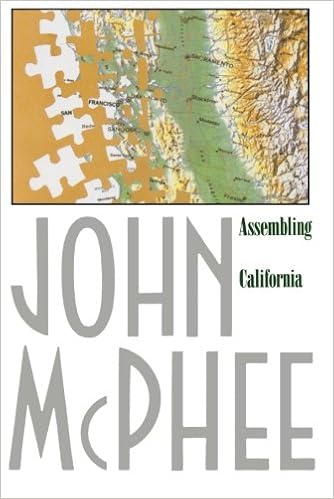
It's a category that crosses traditional borders (pun fully intentional...) Maps draw lines on our physical landscapes, marking out geographic features and pointing out the contours of things like lakes and volcanoes. They also delineate man-made features: national borders, cities and towns, etc. So if we take maps and their making as the starting point (and books about them), you can take this theme in any direction you want. Simon Winchester has written a fascinating book about a guy who developed geological maps of England, forcing everyone to reconsider the history of time, for instance. What does it mean to transgress a national boundary, these days? There's a fascinating book called The Island of Lost Maps, about a guy who was so fascinated by antique maps that he sliced them out of old books and stole them from libraries. I may read a book by Tim Marshall about how ten maps explain every political problem in the world today. Geopolitics is the study of how maps and geography influence our world and explain all the conflicts we have: Robert Kaplan is an author who has written extensively about this topic. (Only one of them...)
That's just to give you a sense of the myriad ways you can explore this topic. You can do it from the scientific aspect, from the landscape or travel perspective, from the historical perspective. Make a case for how your book connects to a geographic or cartographic issue, or how it's related to borders specifically (so, not about immigration, but about borders), and then go for it.
2Chatterbox
What we're reading:
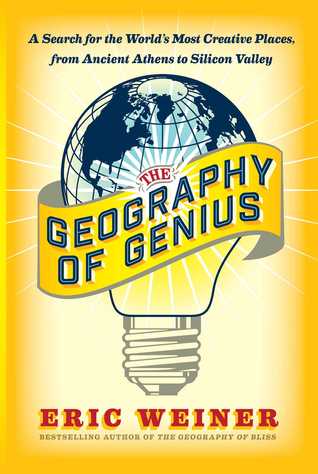
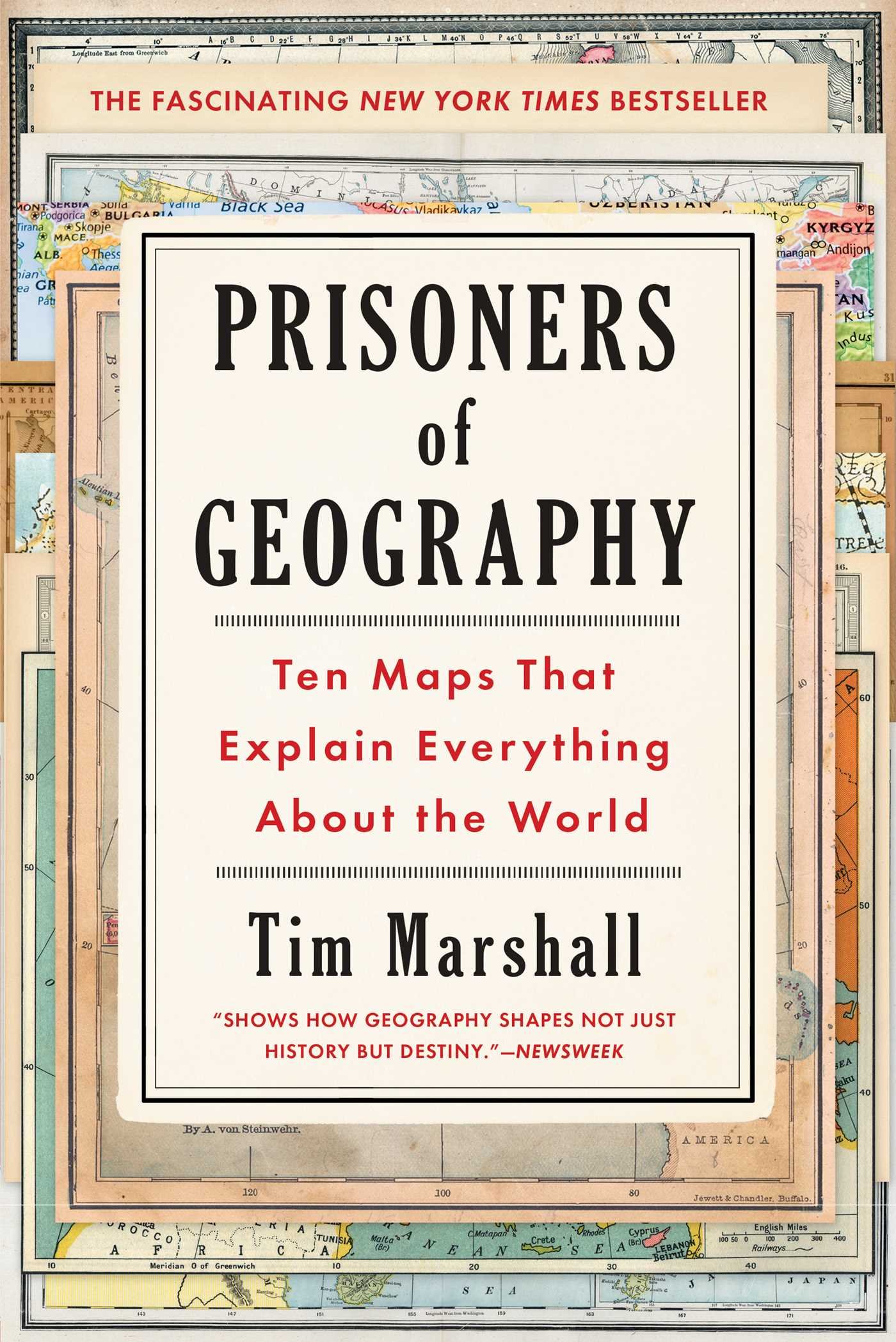
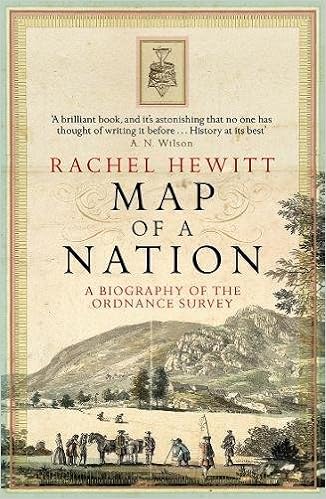







3Chatterbox
For planning purposes...
What's on deck for the rest of 2018:
June – The Great Outdoors -- another hybrid challenge. Want to write about gardening? About the environment? About outdoor sporting events, from baseball to sailing? Do you want to read Cheryl Strayed's book about hiking and her misadventures on the Pacific Coast trail? As long as it happens out of doors, it's all fine.
July – The Arts -- from ballet to classical music, to jazz and rock and roll, to sculpture and painting, and the people involved in these -- oh, and books about books, of course!
August – Short and Sweet: Essays and Other Longform Narratives -- self explanatory. Essays from any anthology, longform pieces from the New Yorker, etc. Please make them reasonably long and not just an 800-word news feature from Mashable. Think, New York Times Magazine, perhaps, or London Review of Books, or...
September – Gods, Demons, Spirits, and Supernatural Beliefs -- from the Book of Common Prayer to things that go bump in the night. A biography of the Dalai Lama? Go for it.
October – First Person Singular -- This is the spot for anything first person. Anything that anyone has written about themselves and their lives in any way. Tina Fey? Paul Kalinithi? (sp?)
November – Politics, Economics & Business -- The stuff we all know we should know about but sometimes hate to think about, especially these days. Call it the hot button issues challenge. Immigration/Racism? Banking regulation? Minimum wage debates?
December – 2018 In Review -- Frustrated because you've got leftover books? You've got too many book bullets from other people? Or -- omigod -- that new biography was just published and you must must must read it? Or you've been reading the lists of best reading of 2018 in the NY Times and just realized, omigod, you MUST READ this one book before the end of the year? This is your holiday gift, from the challenge that keeps on giving...
What's on deck for the rest of 2018:
June – The Great Outdoors -- another hybrid challenge. Want to write about gardening? About the environment? About outdoor sporting events, from baseball to sailing? Do you want to read Cheryl Strayed's book about hiking and her misadventures on the Pacific Coast trail? As long as it happens out of doors, it's all fine.
July – The Arts -- from ballet to classical music, to jazz and rock and roll, to sculpture and painting, and the people involved in these -- oh, and books about books, of course!
August – Short and Sweet: Essays and Other Longform Narratives -- self explanatory. Essays from any anthology, longform pieces from the New Yorker, etc. Please make them reasonably long and not just an 800-word news feature from Mashable. Think, New York Times Magazine, perhaps, or London Review of Books, or...
September – Gods, Demons, Spirits, and Supernatural Beliefs -- from the Book of Common Prayer to things that go bump in the night. A biography of the Dalai Lama? Go for it.
October – First Person Singular -- This is the spot for anything first person. Anything that anyone has written about themselves and their lives in any way. Tina Fey? Paul Kalinithi? (sp?)
November – Politics, Economics & Business -- The stuff we all know we should know about but sometimes hate to think about, especially these days. Call it the hot button issues challenge. Immigration/Racism? Banking regulation? Minimum wage debates?
December – 2018 In Review -- Frustrated because you've got leftover books? You've got too many book bullets from other people? Or -- omigod -- that new biography was just published and you must must must read it? Or you've been reading the lists of best reading of 2018 in the NY Times and just realized, omigod, you MUST READ this one book before the end of the year? This is your holiday gift, from the challenge that keeps on giving...
4Chatterbox
Some other reading ideas:
Maphead by Ken Jennings
The Alps: A Human History from Hannibal to Heidi and Beyond by Stephen O'Shea
Where the Jews Aren't: The Sad and Absurd Story of Birobidzhan, Russia's Jewish Autonomous Region by Masha Gessen
The Cosmopolites: The Coming of the Global Citizen by Atossa Araxia Abrahamian
A Flag Worth Dying For: The Power and Politics of National Symbols by Tim Marshall
Unruly Places: Lost Spaces, Secret Cities, and Other Inscrutable Geographies by Alastair Bonnett
The Sea Inside by Phillip Hoare
History of the World in 12 Maps by Jerry Brotton
London Under: The Secret History Beneath the Streets by Peter Ackroyd
The Geography of Bliss: One Grump's Search for the Happiest Places in the World by Eric Weiner
The Fourth Part of the World: The Race to the Ends of the Earth, and the Epic Story of the Map That Gave America Its Name by Toby Lester
The Revenge of Geography by Robert D. Kaplan
Bad Blood: A Walk Along the Irish Border by Colm Toibin
Blood River by Tim Butcher (the Congo as a route into Africa and a barrier...)
The Ghost Map by Steven Johnson (using maps to identify the source of cholera in London in mid-19th century)
Between East and West: Across the Borderlands of Europe by Anne Applebaum (the idea that there is a border area running north/south that is a zone dividing two distinct political/cultural juggernauts -- the borderlands -- that have a lot in common with each other. Geopolitics.)
Maphead by Ken Jennings
The Alps: A Human History from Hannibal to Heidi and Beyond by Stephen O'Shea
Where the Jews Aren't: The Sad and Absurd Story of Birobidzhan, Russia's Jewish Autonomous Region by Masha Gessen
The Cosmopolites: The Coming of the Global Citizen by Atossa Araxia Abrahamian
A Flag Worth Dying For: The Power and Politics of National Symbols by Tim Marshall
Unruly Places: Lost Spaces, Secret Cities, and Other Inscrutable Geographies by Alastair Bonnett
The Sea Inside by Phillip Hoare
History of the World in 12 Maps by Jerry Brotton
London Under: The Secret History Beneath the Streets by Peter Ackroyd
The Geography of Bliss: One Grump's Search for the Happiest Places in the World by Eric Weiner
The Fourth Part of the World: The Race to the Ends of the Earth, and the Epic Story of the Map That Gave America Its Name by Toby Lester
The Revenge of Geography by Robert D. Kaplan
Bad Blood: A Walk Along the Irish Border by Colm Toibin
Blood River by Tim Butcher (the Congo as a route into Africa and a barrier...)
The Ghost Map by Steven Johnson (using maps to identify the source of cholera in London in mid-19th century)
Between East and West: Across the Borderlands of Europe by Anne Applebaum (the idea that there is a border area running north/south that is a zone dividing two distinct political/cultural juggernauts -- the borderlands -- that have a lot in common with each other. Geopolitics.)
5Chatterbox
Reading suggestions by other challenge participants:
Over the Edge of the World: Magellan's Terrifying Circumnavigation of the World by Laurence Bergreen
How the States Got Their Shapes by Mark Stein
On the Map: Why the World Looks the Way it Does by Simon Garfield
Mercator: The Man Who Mapped the Planet by Nicholas Crane
Violent Borders: Refugees and the Right to Move by Reece Jones
Border: A Journey to the Edge of Europe by Kapka Kasabova
Atlas Obscura: An Explorer's Guide to the World's Hidden Wonders by Joshua Foer
Atlas of Cursed Places: A Travel guide to Dangerous and Frightful Destinations by Oliver Le Carrer
Atlas of Improbable Places: A Journey to the World's Most Improbable Corners by Travis Elborough
City of Thorns: Nine Lives in the World's Largest Refugee Camp by Ben Rawlence
The Color of Law by Richard Rothstein
The Line Becomes a River: Dispatches From the Border by Francisco Cantu
Amexica: War Along the Borderline by Ed Vulliamy
The Source: How Rivers Made America and How America Remade Its Rivers by Martin Doyle
Great Plains by Ian Frazier
Longitude by Dava Sobel
Anything on mapping the sky!!
Over the Edge of the World: Magellan's Terrifying Circumnavigation of the World by Laurence Bergreen
How the States Got Their Shapes by Mark Stein
On the Map: Why the World Looks the Way it Does by Simon Garfield
Mercator: The Man Who Mapped the Planet by Nicholas Crane
Violent Borders: Refugees and the Right to Move by Reece Jones
Border: A Journey to the Edge of Europe by Kapka Kasabova
Atlas Obscura: An Explorer's Guide to the World's Hidden Wonders by Joshua Foer
Atlas of Cursed Places: A Travel guide to Dangerous and Frightful Destinations by Oliver Le Carrer
Atlas of Improbable Places: A Journey to the World's Most Improbable Corners by Travis Elborough
City of Thorns: Nine Lives in the World's Largest Refugee Camp by Ben Rawlence
The Color of Law by Richard Rothstein
The Line Becomes a River: Dispatches From the Border by Francisco Cantu
Amexica: War Along the Borderline by Ed Vulliamy
The Source: How Rivers Made America and How America Remade Its Rivers by Martin Doyle
Great Plains by Ian Frazier
Longitude by Dava Sobel
Anything on mapping the sky!!
6katiekrug
I am planning on Maphead and/or Unruly Places, though I have a few others to choose from, so who knows?
Other possibilities:
How the States Got Their Shapes
On the Map
Over the Edge of the World
Other possibilities:
How the States Got Their Shapes
On the Map
Over the Edge of the World
7cbl_tn
I have Simon Garfield’s On the Map lined up for May. I’d also like to get to The Fabric of America but I probably won’t have time for both.
8Jackie_K
I'm going to read Rory Stewart's The Marches: Walks with my Father which has him walking the borderlands between England and Scotland, and musing on landscape and national identity. I can't wait to start it.
9SuziQoregon
I was going to read On the Map but I've decided to read Maphead instead.
Putting On the Map on a list of possibilities for December.
Putting On the Map on a list of possibilities for December.
10m.belljackson
Here's John McPhee's ASSEMBLING CALIFORNIA
featuring The Master of Moving Boundaries: Plate Tectonics!
He also covers not only California, but a couple of other states, Turkey, and Cyprus,
while delving into rock and mountain boundaries, pillow lava, batholiths, Andesite,
the history of California's borders, and, most important, the boundary changes caused by island chains.
featuring The Master of Moving Boundaries: Plate Tectonics!
He also covers not only California, but a couple of other states, Turkey, and Cyprus,
while delving into rock and mountain boundaries, pillow lava, batholiths, Andesite,
the history of California's borders, and, most important, the boundary changes caused by island chains.
11banjo123
Another Maphead reader! Suzanne, would Lawrence Wright's new book about Texas count? I am intrigued by it, though most likely will not get to it anytime soon.
12jessibud2
My #1 selection for this month is Maphead. If by some miracle, I manage to finish it on time, I may turn to Simon Winchester's The Map That Changed The World. Hmm, would this one actually count?)
And yes, from the last thread, for those who encouraged me to read The Frozen Thames anyhow, even though, strictly speaking, it isn't completely non-fiction, I will definitely get to it but just not this month, most likely. It came to me highly recommended.
And yes, from the last thread, for those who encouraged me to read The Frozen Thames anyhow, even though, strictly speaking, it isn't completely non-fiction, I will definitely get to it but just not this month, most likely. It came to me highly recommended.
13charl08
Verso were having a sale, so I've added these two to the 'potential' list for reading this month.
Violent Borders by Reece Jones
Europe’s Fault Lines by Liz Fekete
Violent Borders by Reece Jones
Europe’s Fault Lines by Liz Fekete
14nittnut
I'm planning on reading Prisoners of Geography, and I have Finding North: How Navigation Makes Us Human on the shelf, but looking it over, I don't think politics really come in, so probably not for this challenge. I'm intrigued by Assembling California, but I doubt I will get to it. My reading seems to be way slower this year.
15Oberon
>4 Chatterbox: Well since you specifically mentioned Blood River and I added it my shelves recently that will be my planned read.
16m.belljackson
Though classed as fiction, HALF A YELLOW SUN by Chimamanda Ngozi Adichie
explicitly presents human, animal, and political boundary changes
in this haunting portrayal of Biafra seceding from Nigeria.
I wonder if Nigeria's current President is Igbo?
Unlikely, with a name like Muhammadu.
(No information so far in media - online says highly intelligent and again prosperous Igbo
are still waiting for an Igbo President.)
explicitly presents human, animal, and political boundary changes
in this haunting portrayal of Biafra seceding from Nigeria.
I wonder if Nigeria's current President is Igbo?
Unlikely, with a name like Muhammadu.
(No information so far in media - online says highly intelligent and again prosperous Igbo
are still waiting for an Igbo President.)
17charl08
Achebe (finally) wrote about Biafra in There was a Country, which would fit the non-fiction part of this challenge. Compare and contrast (perhaps) to Ezenwa-Ohaeto's biography. Soyinka's also written about the war in his (multi volume) memoirs.
I've always been intrigued by Sudan - Ohio have a series of short African histories, so can read about the state on the newest African border- between Sudan and South Sudan. (South Sudan: A New History for a New Nation)
Btw Wikipedia has Buhari's origins as Fulani.
https://en.m.wikipedia.org/wiki/Muhammadu_Buhari
I've always been intrigued by Sudan - Ohio have a series of short African histories, so can read about the state on the newest African border- between Sudan and South Sudan. (South Sudan: A New History for a New Nation)
Btw Wikipedia has Buhari's origins as Fulani.
https://en.m.wikipedia.org/wiki/Muhammadu_Buhari
18benitastrnad
I have started reading Frontiers: From the Arctic Circle to the Aegean by Adam Nicolson. This one is about the borderlands next to the Iron Curtain. It has a copyright date of 1985, so it is one of those before-the-wall-fell books, and so far it reads exactly like that. I picked it because I wanted to read a book by this author at some point, since he has had such fantastic reviews about his seabirds book. Seabird's Cry: The Lives and Loves of the Planet's Great Ocean Voyagers
19benitastrnad
I am also going to try to get How the States Got Their Shapes by Mark Stein done for this month as well.
20Caroline_McElwee
I do have The Sea Inside, so maybe I'll aim for that.
21Chatterbox
>12 jessibud2: The Map That Changed the World was the book that I was actually trying frantically to think of when I was thinking of a book by Winchester that was about maps that weren't geopolitical in nature, but geological. It's a fascinating yarn and definitely would count. Knock yourself out!
Please note, folks:
The Frozen Thames by Helen Humphreys is fiction. Yes, these are vignettes based on things that actually happened (a frost fair on the Thames, Queen Matilda's escape across the river dressed all in white), but it is a collection of fictionalized segments. She doesn't pretend that they are anything else. This wouldn't qualify for this challenge, although it's an interesting book (and a fast read.) If you're VERY ambitious, Peter Ackroyd has written a lengthy book that IS non-fiction about the Thames as a boundary, a waterway, a geographic feature, etc. that would qualify.
Similarly, >16 m.belljackson: Half of a Yellow Sun is very definitely fiction. You might try A Moonless, Starless Sky, which is a collection of stories about people fighting the legacy of extremism left in the wake of tribal, religious and other "boundaries" that have become flashpoints in today's context. The author's origins are African. It has done well; I thought it was interesting, if not great. One of the segments deals with the Nigerian conflict, and tribes and religions. But I bet that there is some non-fiction out there about the Biafran war, too. It was a big conflict in the early 70s.
Please note, folks:
The Frozen Thames by Helen Humphreys is fiction. Yes, these are vignettes based on things that actually happened (a frost fair on the Thames, Queen Matilda's escape across the river dressed all in white), but it is a collection of fictionalized segments. She doesn't pretend that they are anything else. This wouldn't qualify for this challenge, although it's an interesting book (and a fast read.) If you're VERY ambitious, Peter Ackroyd has written a lengthy book that IS non-fiction about the Thames as a boundary, a waterway, a geographic feature, etc. that would qualify.
Similarly, >16 m.belljackson: Half of a Yellow Sun is very definitely fiction. You might try A Moonless, Starless Sky, which is a collection of stories about people fighting the legacy of extremism left in the wake of tribal, religious and other "boundaries" that have become flashpoints in today's context. The author's origins are African. It has done well; I thought it was interesting, if not great. One of the segments deals with the Nigerian conflict, and tribes and religions. But I bet that there is some non-fiction out there about the Biafran war, too. It was a big conflict in the early 70s.
22Chatterbox
>17 charl08: And bingo, Charlotte has some excellent recommendations re Biafra right there!!! Thanks...
>18 benitastrnad: I have to read Nicolson's seabirds book, though it won't fit for this... In a way, the book I recently read about the Hebrides felt as if it might, in a weird way, tie loosely into this challenge, since it made the islands feel like a borderland or other "liminal" space -- one that is on the fringes of a number of regions, but belongs only loosely to one. Its culture is a mish-mash of several places, and distinctive. I enjoy reading about places like that -- Brittany would be another, as a Celtic "leftover" space in France, or the Basque country. Catalonia, which has its own identity within Spain. What are they and where do they belong? Or countries that don't even exist any more. There are still people who define themselves as Assyrians or Ruthenians, but have no country. Look how long a Ukrainian identity persisted without a nation state (officially).
I'll get some images up later today. Still have some more work to do... Happy reading to all!
>18 benitastrnad: I have to read Nicolson's seabirds book, though it won't fit for this... In a way, the book I recently read about the Hebrides felt as if it might, in a weird way, tie loosely into this challenge, since it made the islands feel like a borderland or other "liminal" space -- one that is on the fringes of a number of regions, but belongs only loosely to one. Its culture is a mish-mash of several places, and distinctive. I enjoy reading about places like that -- Brittany would be another, as a Celtic "leftover" space in France, or the Basque country. Catalonia, which has its own identity within Spain. What are they and where do they belong? Or countries that don't even exist any more. There are still people who define themselves as Assyrians or Ruthenians, but have no country. Look how long a Ukrainian identity persisted without a nation state (officially).
I'll get some images up later today. Still have some more work to do... Happy reading to all!
23jessibud2
As a point of interest, I also have another book that would fit this month but I know myself well enough to know that I won't get to it this time: Mercator The Man Who Mapped the Planet by Nicholas Crane.. It has been on my shelf longer than y other two selections and I probably should have chosen it but c'est la vie. I will get to it someday
24m.belljackson
>17 charl08: >21 Chatterbox:
Thank you!
Not only is the current President of Nigeria Fulani, but he engineered a lot of the War against Biafra.
What I remember from the late 1960s is sending money for food and health support that could not reach the people.
With Oberon's finely detailed review (contrasting with others describing There was a Country as very uneven),
I've ordered a copy from abe and will look for other non-fiction accounts.
Does Ezenwa-Ohaeto's biography of Achebe clarify and/or expand on his role in the War?
International responses to genocide in Africa, Germany, Eastern Europe, and, most recently, in Southeast Asia have been unfathomable.
Thank you!
Not only is the current President of Nigeria Fulani, but he engineered a lot of the War against Biafra.
What I remember from the late 1960s is sending money for food and health support that could not reach the people.
With Oberon's finely detailed review (contrasting with others describing There was a Country as very uneven),
I've ordered a copy from abe and will look for other non-fiction accounts.
Does Ezenwa-Ohaeto's biography of Achebe clarify and/or expand on his role in the War?
International responses to genocide in Africa, Germany, Eastern Europe, and, most recently, in Southeast Asia have been unfathomable.
25Chatterbox
I've not read the bio of Achebe and so couldn't comment on that.
Generally speaking -- responses to genocide are difficult. In large part, these are internal events -- happening inside a country. So someone intervening is, essentially, committing an act of aggression, under legal terms. For instance, the UN can't intervene and send peacekeeping troops anywhere without the consent of the country that will host them, or if it's a war/conflict zone, the various countries involved. Their mandate is negotiated and limited. (This was the big problem in the Balkans, when they couldn't stop what happened in Bosnia.) Always, they are outnumbered and outgunned by local forces and that is the basis on which they are allowed to be there. It's about national sovereignty. Who decides who gets to march into somebody else's country and interpose an army in between them? (And that's the only thing that would stop them...) That's what stopped them in Rwanda, if I recall correctly -- the RPF, an existing Tutsi-led force (existence dating back to a previous genocide, and part of an ongoing civil war) resumed its assault on the Hutu government and retook Kigali, putting Kagame in power. What could the international community do in response? They would need to be prepared to begin another Iraq/Syria style conflict -- to bomb and then invade. And to do so on humanitarian grounds. I'm not saying that this wouldn't be justified, but it would be very difficult for any government to do, pragmatically. Imagine France, Britain or the US saying, we're going off to invade Myanmar? Syria is bad enough, and that's after years of bad PR of dead refugees and gas attacks by Assad. There is no good answer, tragically -- except to try to prevent these from reaching the point where the killing starts, identifying when old hostilities are leading up to genocidary pressures. Tragically, we should have enough knowledge...
Generally speaking -- responses to genocide are difficult. In large part, these are internal events -- happening inside a country. So someone intervening is, essentially, committing an act of aggression, under legal terms. For instance, the UN can't intervene and send peacekeeping troops anywhere without the consent of the country that will host them, or if it's a war/conflict zone, the various countries involved. Their mandate is negotiated and limited. (This was the big problem in the Balkans, when they couldn't stop what happened in Bosnia.) Always, they are outnumbered and outgunned by local forces and that is the basis on which they are allowed to be there. It's about national sovereignty. Who decides who gets to march into somebody else's country and interpose an army in between them? (And that's the only thing that would stop them...) That's what stopped them in Rwanda, if I recall correctly -- the RPF, an existing Tutsi-led force (existence dating back to a previous genocide, and part of an ongoing civil war) resumed its assault on the Hutu government and retook Kigali, putting Kagame in power. What could the international community do in response? They would need to be prepared to begin another Iraq/Syria style conflict -- to bomb and then invade. And to do so on humanitarian grounds. I'm not saying that this wouldn't be justified, but it would be very difficult for any government to do, pragmatically. Imagine France, Britain or the US saying, we're going off to invade Myanmar? Syria is bad enough, and that's after years of bad PR of dead refugees and gas attacks by Assad. There is no good answer, tragically -- except to try to prevent these from reaching the point where the killing starts, identifying when old hostilities are leading up to genocidary pressures. Tragically, we should have enough knowledge...
26Chatterbox
>11 banjo123: I'm so sorry -- I missed your query earlier. I had looked at the book about Texas previously and wondered about it, but I have to say that I don't think so. It's more about the place itself, than about separatism, borders, geographic features, etc. Yes, it's about what makes it distinctive, but having skimmed through it, my initial takeaway is that this is more about history, people, the insistence of have a unique role (based on size and history and to some extent geographic locale) in the country's history, but I'm not sure that it rises to a geographic-centric book. If you read it anyway, and think I'm wrong, by all means, challenge me on that. And I may try to read it anyway, and if I'm wrong, I'll circle back to you, and I'll try to put it close to the top of my (vast) TBR list so that I'd give you three weeks or so to get to it if so. Fair?
Unless anyone who has already read the book -- Lawrence Wright's new book on Texas -- wants to weigh in with a more authoritative POV?
Unless anyone who has already read the book -- Lawrence Wright's new book on Texas -- wants to weigh in with a more authoritative POV?
27Chatterbox
Some other thoughts:
For those who are reading books about social justice and politics: there are books about red-lining and maps used to unfairly deny minorities, primarily African-Americans, access to mortgage financing. I've highlighted one in >5 Chatterbox: above, The Color of Law by Richard Rothstein.
Then, I noted that Longitude by Dava Sobel, for those who haven't read it and who are interested, might be an intriguing choice for this... To solve the puzzle of mapping the heavens (point one!), competitors had to follow inadequate maps/charts of the ocean and set off for the South Pacific in the mid-18th century, solving the puzzle of longitude. A great yarn about all kinds of maps and following and making and revising them. And of course, it reminds me that...
Maps aren't just about what we have on the earth but about mapping the skies. So if you want to read about what astronomers have discovered over the centuries, from Copernicus onward, well, that's wide open to you as well! Apologies for not having flagged that previously...
I've posted some other ideas in >5 Chatterbox:, including some about the Texas/Mexico border.
For those who are reading books about social justice and politics: there are books about red-lining and maps used to unfairly deny minorities, primarily African-Americans, access to mortgage financing. I've highlighted one in >5 Chatterbox: above, The Color of Law by Richard Rothstein.
Then, I noted that Longitude by Dava Sobel, for those who haven't read it and who are interested, might be an intriguing choice for this... To solve the puzzle of mapping the heavens (point one!), competitors had to follow inadequate maps/charts of the ocean and set off for the South Pacific in the mid-18th century, solving the puzzle of longitude. A great yarn about all kinds of maps and following and making and revising them. And of course, it reminds me that...
Maps aren't just about what we have on the earth but about mapping the skies. So if you want to read about what astronomers have discovered over the centuries, from Copernicus onward, well, that's wide open to you as well! Apologies for not having flagged that previously...
I've posted some other ideas in >5 Chatterbox:, including some about the Texas/Mexico border.
28quondame
>27 Chatterbox: Longitude is the most appealing to me of the books mentioned so far, so I gone and reserved it.
29Chatterbox
>28 quondame: Rock on! Or perhaps I should have said, read on!
I am off to NYC for the next 48 hours and will try to respond ASAP to comments, post cover images, etc., but no guarantees. I am NOT ignoring any of you... I promise.
I am off to NYC for the next 48 hours and will try to respond ASAP to comments, post cover images, etc., but no guarantees. I am NOT ignoring any of you... I promise.
30GerrysBookshelf
So many good books to choose from!
I love the idea about mapping the sky, so I just requested from my library - Star Maps: History, Artistry, And Cartography by Nick Kanas.
I love the idea about mapping the sky, so I just requested from my library - Star Maps: History, Artistry, And Cartography by Nick Kanas.
31Oberon
>25 Chatterbox: Since this is a a topic I am intensely interested in, I will offer two more reading suggestions although neither fits well into the map topic for the month. The first is Samantha Power's A Problem From Hell which won a Pulitzer. It looks at America's historical reaction to genocide and also discusses options for intervention. The other book is Can Intervention Work? by Rory Stewart. Can Intervention Work? is a look at foreign interventions into failed states. While it is not limited to genocides, the prevention of genocides is a big topic in the book. The main argument advanced by Stewart is that the international community should look at interventions like mountain rescue attempts - that there should be a willingness to try but also a willingness to conclude that the intervention is too hazardous and that a retreat is in the best interest of the intervening power.
Personally, I find the analogy apt. In my opinion, American foreign policy is too focused on "winning" or "losing", thereby distorting American willingness to intervene. For example, the intervention in Somalia (Black Hawk Down) was viewed as a "loss." That loss had a direct impact on the willingness to intervene in Rwanda. If America can move away from the conception that all conflicts end with a formal surrender on the deck of a battleship, there would be a lot more flexibility to intervene in limited ways that could still accomplish critical objectives such as reducing civilian casualties.
IMO, Rwanda was a genocide that could have been prevented or substantially ameliorated by the international community. Syria, by contrast, is far less amenable to intervention and thus a Bosnia style accord makes a lot more sense. In any case, A Problem from Hell and Can Intervention Work? are excellent books to form a baseline understanding from.
Personally, I find the analogy apt. In my opinion, American foreign policy is too focused on "winning" or "losing", thereby distorting American willingness to intervene. For example, the intervention in Somalia (Black Hawk Down) was viewed as a "loss." That loss had a direct impact on the willingness to intervene in Rwanda. If America can move away from the conception that all conflicts end with a formal surrender on the deck of a battleship, there would be a lot more flexibility to intervene in limited ways that could still accomplish critical objectives such as reducing civilian casualties.
IMO, Rwanda was a genocide that could have been prevented or substantially ameliorated by the international community. Syria, by contrast, is far less amenable to intervention and thus a Bosnia style accord makes a lot more sense. In any case, A Problem from Hell and Can Intervention Work? are excellent books to form a baseline understanding from.
32benitastrnad
#4
I have read Geography of Bliss by Eric Weiner and found it to be an interesting book to read. Just what does make a "place" happier than other places. Weiner has an engaging way of writing so if you are thinking of reading this one, it will be engaging and easy to read. It is not an academic tome at all. Much more fun to read.
I have read Geography of Bliss by Eric Weiner and found it to be an interesting book to read. Just what does make a "place" happier than other places. Weiner has an engaging way of writing so if you are thinking of reading this one, it will be engaging and easy to read. It is not an academic tome at all. Much more fun to read.
33benitastrnad
In looking over the suggested titles for this month I remembered that I had a book on my shelves that would fit into this category. Smartest Places on Earth: Why Rustbelts Are the Emerging Hotspots of Global Innovation by Antonine van Agtmael and Fred Bakker. The dust jacket says that the authors "counter recent conventional wisdom that the American and northern European economies have lost their initiative in innovation and their competitive edge by focusing on an unexpected and hopeful trend: the emerging source of economic strength coming from areas once known as "rustbelts" that had been written off as yesterday's history." There are chapters titled "Welcome to the Brainbelt: The People, Places, and Practices That are Turning Globalization on Its Head," and "White Coats and Blue Collars: Cross-Boundry Collaborations in Boscience and Medical Devices." It appears that the book is about old manufacturing regions that are emerging as new centers of activity - places like Pittsburgh, PA and Batesville, Mississippi. Not exactly maps, but more of a why here kind of book?
34Jackie_K
>18 benitastrnad: I've not read Frontiers: From the Arctic Circle to the Aegean (although as an Iron Curtain buff I'm going to add it to the wishlist), but do like the Adam Nicolson book that I have read, Sea Room. Not at all related to this month's theme, but if you wanted to read some Nicolson then I highly recommend this one - I'd say it's in my top 10 books of all time (along with about 20 others!!).
35Familyhistorian
>21 Chatterbox: I have Ackroyd's Thames: Sacred River on my shelves and even in paperback it looks big. I have quite a few map type books when I look around. I was thinking of reading The Ghost Map but see that I started it at one time. I wonder if that means I didn't like it?
>22 Chatterbox: I am currently reading Love of Country: A Hebridean Journey by Madeleine Bunting. Is that the book you could see possibly fitting?
Would books such as The Viking World or The Road Through Time: The Story of Humanity on the Move work for this theme. They are about areas where peoples used to live and the archeology that has placed them on the map.
>22 Chatterbox: I am currently reading Love of Country: A Hebridean Journey by Madeleine Bunting. Is that the book you could see possibly fitting?
Would books such as The Viking World or The Road Through Time: The Story of Humanity on the Move work for this theme. They are about areas where peoples used to live and the archeology that has placed them on the map.
36Chatterbox
>31 Oberon: This makes me think that it's time to add a space up top for a list of general recommendations for non-fiction reading, related or not, that people run across over the space of a month, or that cross their minds in connection with the theme but that doesn't fit into the theme.
>33 benitastrnad: That sounds interesting!!
>34 Jackie_K: I completely agree with you re Sea Room, and am amused by your creative approach to defining your top 10... That said, I don't think I'd ever try to limit myself to 10. A hundred, possibly.
>35 Familyhistorian: Yes, that's the book I was thinking of. I had read it for the travel challenge. It sounds as though the latter two would work, but I will leave it to your judgment. By now we've had enough discussion of the spirit of the challenge: borders, maps, geographical and political boundaries and what they mean for people and civilizations and what kinds of impacts they have on us, directly and indirectly. Oceans can divide and unite. Rivers form barriers but also serve as transportation corridors, and so on. Lines on maps create nation states and a sense of nationalism that can produce conflicts and wars, or simply the desire to say "this is ours" and stake a claim. What does it mean to map something? What are maps and what do they enable us to do? Any book that explores variants on these questions would fit. It's easier for you as you dig into the book to address this.
>33 benitastrnad: That sounds interesting!!
>34 Jackie_K: I completely agree with you re Sea Room, and am amused by your creative approach to defining your top 10... That said, I don't think I'd ever try to limit myself to 10. A hundred, possibly.
>35 Familyhistorian: Yes, that's the book I was thinking of. I had read it for the travel challenge. It sounds as though the latter two would work, but I will leave it to your judgment. By now we've had enough discussion of the spirit of the challenge: borders, maps, geographical and political boundaries and what they mean for people and civilizations and what kinds of impacts they have on us, directly and indirectly. Oceans can divide and unite. Rivers form barriers but also serve as transportation corridors, and so on. Lines on maps create nation states and a sense of nationalism that can produce conflicts and wars, or simply the desire to say "this is ours" and stake a claim. What does it mean to map something? What are maps and what do they enable us to do? Any book that explores variants on these questions would fit. It's easier for you as you dig into the book to address this.
37fuzzi
>1 Chatterbox: I have three books on geography, would they fit?
Poldark's Cornwall
John Muir's Wild America
Touring Iran
Poldark's Cornwall
John Muir's Wild America
Touring Iran
38Chatterbox
Poldark's Cornwall wouldn't. It's basically a very lovely book of photographs and a discussion of the area's history in connection with the TV series, how the sites were chosen, the buildings and the connection between the landscape and the history that led to the books, and how the landscape inspired the author. It's a fave of mine, but it really isn't about geography, maps, boundaries or any of the themes here.
I can't tell much about the other two books from a cursory glance, but Touring Iran seems to be akin to this. I'll leave you to decide about the third.
I can't tell much about the other two books from a cursory glance, but Touring Iran seems to be akin to this. I'll leave you to decide about the third.
39fuzzi
>38 Chatterbox: thanks! One of the three would be a good start, and I appreciate the clarification.
40brenzi
I was really hoping to read Barry Lopez’s book Arctic Dreams for this challenge but on second thought I’m not sure it quite fits. Let me know if it does Suzanne. If not I’ll read either Marsha Gessen’s Where the Jews Aren’t or Between East and West by Anne Applebaum.
41m.belljackson
>40 brenzi:
Arctic Dreams has plenty of geography, mapping, and changing boundaries long before climate change
and so also works for next month's Nature.
I loved this book, but suggest skim reading on the often tedious recounting of European explorations.
Arctic Dreams has plenty of geography, mapping, and changing boundaries long before climate change
and so also works for next month's Nature.
I loved this book, but suggest skim reading on the often tedious recounting of European explorations.
42Chatterbox
>40 brenzi: It's pushing it a bit, based on my cursory glances at the page, but it does seem to include stuff about boundaries, exploration (and thus making and following maps) and studying maps, as well as trying to find the elusive NW Passage. So, go for it...
43Chatterbox
Can I really read three books at once? Well, it seems as if I'm going to try... Rachel Hewitt's book about the Ordnance Survey map starts out very intriguingly, with some compelling yarns about the Jacobite rebellion of 1745, leading into stories about how lost the English troops were without detailed and correct maps, trying to track down the 'rebels'. She has a real sense for how to make what could be a dry subject feel compelling. I decided to pick up the Tim Marshall book for audio, and now I have the the library copy of Eric Weiner's book about whether boundaries and national characteristics make certain regions more brilliant. Moving from one to the other. And I"ll mi and match throughout the month. But right now, I'm too tired to read...
44benitastrnad
I did lots of reading the last two nights and I am about 100 pages into my selection for the month - Frontiers: From the Arctic to the Aegean. It is by Adam Nicolson and I wanted to read something by him because a friend raved about his book on sea birds and how beautiful it was. However, I may just end this before I am finished. The writing in this book is terrible, and add to that the fact that I am sure the author hates everybody he talks to. He makes fun of all of them and he has tried to crash the border of two of the countries he has visited and been rebuffed by guards. Who does he think he is - a priviledged snob? Of course, what else because he is British he is obviously better than the drunk Lapps and Finns that by whom he is surrounded. I keep telling myself that the book was written in 1985 and times have changed, but I wonder if I should bother with continuing.
45Jackie_K
>44 benitastrnad: He actually is privileged in that he's an earl (although as I understand it he chooses not to use the title). That may explain the superior attitudes. Certainly a sense of superiority doesn't come across in the more recent books- in fact despite personally being very anti-landowner/aristocracy in the Scottish context, Sea Room made me wish there were more landowners like him. I think I'd try a more recent book by him before giving up entirely- it sounds like this earlier book isn't a great introduction.
46Chatterbox
>44 benitastrnad: Even if you don't continue with this book, I wouldn't give up on Nicolson entirely. Remember, this would have been written 30 or 35 years ago, and a lot has changed since then... in England, not least of all. Yes, Nicolson is a baron -- the lowest rank of the English nobility -- thanks to an inheritance from his mother's side of the family. And, which is more interesting, he's also "privileged" in a different way because of his father's side of the family. His father was Nigel Nicolson, an MP (member of Parliament) who co-founded the publishing house Weidenfeld & Nicolson. When they decided to publish Lolita in England, the scandal surrounding that (long story short) led to him being forced out of his seat in parliament. It was unfortunate, because he was an interesting guy: he broke with the Tories to vote Labour over abolishing hanging, opposed the intervention in Suez, etc. No wonder the Tories wanted him out... Just as interesting is that he and his wife owned Sissinghurst Castle, one of the most interesting small castles in Kent (which is saying something) and its gardens, although those were turned over turned over to the National Trust, including the very famous White Garden. Because HIS mother was Vita Sackville-West, famous in 20s, 30s etc in her own right for having been raised at Knole, but not allowed to inherit it (female, dontcha know...) Bisexual lover of Virginia Woolf, Violet Trefusis and others. Novelist and writer, etc. etc. She married Harold Nicolson, himself bisexual, who by 1927 had given up diplomacy in order to live in domestic (if not sexual) bliss with her -- they were devoted to each other, most of the time. He had a very brief (less than a year flirtation with Mosley's fascists but by the mid-1930s already was warning of the dangers of fascism as a Labour party MP. He served in Churchill's government throughout the war, with his moment of shock coming when he advocating NOT bombing Monte Cassino; that human lives, even if that of his son Nigel (father of Adam), serving in the forces would be served by destroying the 1,000 year old Benedictine abbey and all the works of art it contained, he wouldn't do it -- human lives are expendable. Gulp. Talk about sticking out your neck.
So, Adam Nicolson is the heir to all that --- Vita Sackville-West's less-scandalous-than-formerly fame, generations of MPs, a name known everywhere in the "right" kind of English society, son of a publisher, owner of Sissinghurst (and at the time this book would have been written, its son & heir), and educated at Eton and Cambridge, all in the days -- he is four or five years older than I am -- when that still meant the status quo. Women only accepted at three colleges at Cambridge, for instance, and state schools getting relative few people into "Oxbridge", which had separate exams. Some of that has changed, and it's significantly more open and democratic now than it would have been in the late 70s -- a friend of mine was at Girton from 78 to 81. It's the reverse of having someone who has never left public housing. They simply haven't experienced "real life" and so their perceptions of it are distorted (the difference being that anyone who has no money and limited experience of world in a broader society likely won't have the opportunity to widen their experience if they want to... whereas the "hooray Harrys" simply often don't want to or don't have the imagination to conceive that there is anything interesting out there...) I have less trouble with someone like Nicolson (in his later books) than I do with someone who has a chip on their shoulders because they still want to be part of that elite crowd, who won't let him in because he's not "one of them" and who is talented and uses that talent either to suck up or be bitter in print. Blech. I have no problems with Nicolson, and I think in Sea Room, where that attitude leaks through in part because it is relevant to the subject matter, it also is dealt with thoughtfully, by someone who comes across as a mature guy who had had time to do his own thing and reflect on his life and the legacy that had been handed on to him. While Jackie comments she wishes more landowners were like him, I have found myself wishing that more of those born into generations of hereditary privilege (and who thus forget that they don't somehow deserve it...) could understand that each generation needs to find their own path and find a way to contribute.
The guy whose most recent book raised my hackles in this regard was Rory Stewart, and The Marches. I found his views on land use very dogmatic and prescriptive: do as I say, because I know best! This from someone who, judging by his other work, doesn't spend much time on the land, but either abroad in military missions or in Parliament. It really set my teeth on edge. And yes, lots of privilege and a patronizing tone to the people who simply make their lives there year round -- the good, worthy men of the soil, or a couple of notches above that. And then there were areas of contrast, when he encountered the local gentry. Sigh. I didn't want to notice that and I kept denying it, but... It still sticks in my memory from reading this last year.
So, Adam Nicolson is the heir to all that --- Vita Sackville-West's less-scandalous-than-formerly fame, generations of MPs, a name known everywhere in the "right" kind of English society, son of a publisher, owner of Sissinghurst (and at the time this book would have been written, its son & heir), and educated at Eton and Cambridge, all in the days -- he is four or five years older than I am -- when that still meant the status quo. Women only accepted at three colleges at Cambridge, for instance, and state schools getting relative few people into "Oxbridge", which had separate exams. Some of that has changed, and it's significantly more open and democratic now than it would have been in the late 70s -- a friend of mine was at Girton from 78 to 81. It's the reverse of having someone who has never left public housing. They simply haven't experienced "real life" and so their perceptions of it are distorted (the difference being that anyone who has no money and limited experience of world in a broader society likely won't have the opportunity to widen their experience if they want to... whereas the "hooray Harrys" simply often don't want to or don't have the imagination to conceive that there is anything interesting out there...) I have less trouble with someone like Nicolson (in his later books) than I do with someone who has a chip on their shoulders because they still want to be part of that elite crowd, who won't let him in because he's not "one of them" and who is talented and uses that talent either to suck up or be bitter in print. Blech. I have no problems with Nicolson, and I think in Sea Room, where that attitude leaks through in part because it is relevant to the subject matter, it also is dealt with thoughtfully, by someone who comes across as a mature guy who had had time to do his own thing and reflect on his life and the legacy that had been handed on to him. While Jackie comments she wishes more landowners were like him, I have found myself wishing that more of those born into generations of hereditary privilege (and who thus forget that they don't somehow deserve it...) could understand that each generation needs to find their own path and find a way to contribute.
The guy whose most recent book raised my hackles in this regard was Rory Stewart, and The Marches. I found his views on land use very dogmatic and prescriptive: do as I say, because I know best! This from someone who, judging by his other work, doesn't spend much time on the land, but either abroad in military missions or in Parliament. It really set my teeth on edge. And yes, lots of privilege and a patronizing tone to the people who simply make their lives there year round -- the good, worthy men of the soil, or a couple of notches above that. And then there were areas of contrast, when he encountered the local gentry. Sigh. I didn't want to notice that and I kept denying it, but... It still sticks in my memory from reading this last year.
47Chatterbox
Meanwhile, of course, the first non-fiction book I read this month is NOT about the theme at all, but a just-released book about Weimar Germany's politics, The Death of Democracy by Benjamin Carter Hett. He doesn't hammer home the comparisons, or at least not until the final two or three sentences, but if you read it with a mind open to them, they actually are more thought-provoking than I was aware of, and I had read a lot of history of this era. That said, this is very deep into Weimar politics, while being VERY readable -- an unusual combination -- and while I thought I was tired of reading about the same set of facts over again (Kellogg-Briand pact, the renegotiations of reparations under the Versailles treaty, etc.) I found I was wrong and that there was a lot of detail I simply wasn't aware of that was fascinating and informative. Flagging it here as a highly-recommended non-fiction book...
48Jackie_K
>46 Chatterbox: Beautifully put re Nicolson! I think, although I did say I wish more landowners were like him, my ideal scenario would be for there to be no rich/hereditary landowners at all. However, given we are where we are at the moment where we do still have them (and actually Scotland is having a lot of discussions right now about land ownership due to the number of absentee and unknown landowners, and increasing community desire to buy them out) I do think that Nicolson is much more sympathetic than most.
Also interesting to read your views on The Marches, which I am reading for this month's challenge here. I'm only 20-something pages in so not yet at the point where he's started his walk, but I'll keep my eyes open. I had high hopes for this book (despite being the polar opposite of anyone who'd vote for Stewart's party). We'll see!
Also interesting to read your views on The Marches, which I am reading for this month's challenge here. I'm only 20-something pages in so not yet at the point where he's started his walk, but I'll keep my eyes open. I had high hopes for this book (despite being the polar opposite of anyone who'd vote for Stewart's party). We'll see!
50Chatterbox
Just spotted a new-ish book by Tim Marshall, available in the UK at least (haven't checked the US) that would fit perfectly into this challenge. The title: Divided: Why We're Living in an Age of Walls and it's about political borders and why they have acquired new importance, why people in the EU are talking about restoring border crossing checkpoints, why crossing from one country to another (one line on a map) is becoming more arduous.
51Chatterbox
>49 m.belljackson: Much of it. I had to check the line of descent of the title, since I didn't think it had come through the Nicolsons (and indeed, it hadn't.) But yes, I knew a fair amount about Vita and Harold already, having read about the literary and political life of their era, and about Weidenfeld and Nicolson as a publishing firm. And I've read several of Adam Nicolson's previous books, although not this early venture. I liked his book about the King James Bible, thought Sea Room was compelling, and found another book, about how a family's history and the history of its house was tied to English history in the key Elizabeth/Jacobean/pre-Civil War era, and Philip Sidney's poetry, fascinating, if sometimes a bit ponderous. So he's an author who I kind of have at the back of my mind and am aware of.
>48 Jackie_K: I'll be interested to hear your thoughts on this, and don't want to prejudge the book for you. It wasn't until later (hmm, around the midway point?) that I found it getting on my nerves to the point that I was deliberately plodding to the finishing line, and he went from being an interesting figure to an annoying one. I still found the relationship between him and his father interesting and often very tender, but he seemed to be en route to becoming a nostalgic old fart: someone kind of yearning for the lost days when the classes knew their places and respected each other (no snootiness like you get with the nouveau riche, but respect, a la Downton Abbey). And as you pointed out, the days of us all yearning for paternalistic landowners like the farmers in Downtown Abbey circa 1913 are kinda gone.
It's interesting that you're having that debate in Scotland. Is it because people have acquired land as estates, for shooting, recreation (because you can get larger estates in Scotland than you can in England, and your money still goes further in many cases, I gather from one acquaintance whose father is, ahem, "landed" north of the border...)? Or is this a case of the people who have inherited simply being absentee much of the time and not playing any kind of role in overseeing or maintaining the community?
Incidentally, I know it's the same in London, and is starting to be so in NYC too -- where there are areas where big mansions or costly flats have been bought up by oligarchs, etc. who spend a week a year there, or who just want to have a London "home". There literally are streets where only a tiny proportion of the houses are occupied/lights on at night. NYC is trending the same way, though the consequences aren't as dramatic or visible, since the purchases being made are of apartments in large buildings, so it doesn't change the life of the streets as much.
>48 Jackie_K: I'll be interested to hear your thoughts on this, and don't want to prejudge the book for you. It wasn't until later (hmm, around the midway point?) that I found it getting on my nerves to the point that I was deliberately plodding to the finishing line, and he went from being an interesting figure to an annoying one. I still found the relationship between him and his father interesting and often very tender, but he seemed to be en route to becoming a nostalgic old fart: someone kind of yearning for the lost days when the classes knew their places and respected each other (no snootiness like you get with the nouveau riche, but respect, a la Downton Abbey). And as you pointed out, the days of us all yearning for paternalistic landowners like the farmers in Downtown Abbey circa 1913 are kinda gone.
It's interesting that you're having that debate in Scotland. Is it because people have acquired land as estates, for shooting, recreation (because you can get larger estates in Scotland than you can in England, and your money still goes further in many cases, I gather from one acquaintance whose father is, ahem, "landed" north of the border...)? Or is this a case of the people who have inherited simply being absentee much of the time and not playing any kind of role in overseeing or maintaining the community?
Incidentally, I know it's the same in London, and is starting to be so in NYC too -- where there are areas where big mansions or costly flats have been bought up by oligarchs, etc. who spend a week a year there, or who just want to have a London "home". There literally are streets where only a tiny proportion of the houses are occupied/lights on at night. NYC is trending the same way, though the consequences aren't as dramatic or visible, since the purchases being made are of apartments in large buildings, so it doesn't change the life of the streets as much.
52Jackie_K
>51 Chatterbox: I think re landowners in Scotland it's both/and, plus the fact that there have never been centralised records kept and there are worryingly large amounts of land where nobody knows who owns it. Andy Wightman, who is now an MSP with the Green Party, wrote a book called Who Owns Scotland? in the mid-1990s, and the subject is still pretty murky today. Now he's in the Scottish Parliament he is continuing to campaign on the issue. I'm really encouraged by the many community buy-outs that are happening in Scotland - the story of Eigg has been well-documented, and last year we spent a few days on Gigha which has been owned by the islanders since 2002. Community ownership isn't a perfect model, but seeing how communities come together to try to do the best for their community is in many cases really inspiring.
53Chatterbox
>52 Jackie_K: Had you read the book I mentioned previously about the Hebrides? Love of Country: A Hebridean Journey by Madeleine Bunting? If not, do look out for it. She addresses some of these questions, and I'd be interested in your take on it. I find the idea of community buy-outs fascinating and compelling as a concept -- I wonder if urban neighborhoods could do this too? And what it might mean for blighted urban areas if a billionaire here wanted to buy his own city? (The way they are trying to experiment with education...) So many interesting questions!
54benitastrnad
#46
I noticed that the publisher of Frontiers: From the Arctic to the Aegean is Weidenfeld and Nicolson. That is an unusual (in the U.S. anyway) way of spelling Nicolson and I wondered about it. As poorly written as this book is I wondered if it wasn’t a case of father indulging son.
I did notice the copyright date as well and was willing to give it some leeway due to the age of the book. I am now in Leningrad with him and it seems that he just doesn’t give a damn about the laws or rules of the country. He is really coming across as an arrogant young fool and he seems to deliberately strick up conversations with people and then make fun of them. He complained vocsifersely about the way the train from Leningrad to Riga smelled. It seems to me that if you want to travel with the unwashed hoard then you need to put up and shut up, or write it in such a way that you let the reader know about it without acting like a know-it-all snob.
I am putting the book aside for a couple of days and will be reading the States Shapes book. Maybe a little distance will make me feel better about the author.
I noticed that the publisher of Frontiers: From the Arctic to the Aegean is Weidenfeld and Nicolson. That is an unusual (in the U.S. anyway) way of spelling Nicolson and I wondered about it. As poorly written as this book is I wondered if it wasn’t a case of father indulging son.
I did notice the copyright date as well and was willing to give it some leeway due to the age of the book. I am now in Leningrad with him and it seems that he just doesn’t give a damn about the laws or rules of the country. He is really coming across as an arrogant young fool and he seems to deliberately strick up conversations with people and then make fun of them. He complained vocsifersely about the way the train from Leningrad to Riga smelled. It seems to me that if you want to travel with the unwashed hoard then you need to put up and shut up, or write it in such a way that you let the reader know about it without acting like a know-it-all snob.
I am putting the book aside for a couple of days and will be reading the States Shapes book. Maybe a little distance will make me feel better about the author.
55Chatterbox
>54 benitastrnad: If you want a book from that era (more or less) about that borderlands phenomenon, take a look at Anne Applebaum's book. Between East and West, or something like that. I think it may have been written a few years after the Wall came down, and part of the focus is one the history of how the borders have shifted, and how nationalism began to rise. That's 20/25 years ago -- and it now strikes the reader as very prescient. Applebaum herself, too, is in a bit of a privileged position -- Sidwell Friends' School, Yale, and then a Marshall Scholar in London, where she met and married Radek Sikorski, who went back to Poland in the aftermath of the collapse of Communism. (He wrote the intriguing The Polish House about reclaiming his family's property, and went into politics and became Foreign Ministers. Applebaum also wrote Gulag, which I know a lot of folks here have read, and which has put her on Russia's enemies list. Anyway -- I keep meaning to re-read her "borders" book, which I remember as one of those very interesting and readable books, nothing about smelly trains (it's less of a travel narrative than a thoughtful book combining scholarship and observations.) The only downside is that it may not be an easy book to locate.
56Jackie_K
>53 Chatterbox: I haven't read it, but it's my birthday next month and it's on the top of my wishlist (when family eventually get round to asking what I want!!). I've heard so many good things about that.
I'd love to see how a community buy-out would work in an urban setting. I'm sure there must be some examples somewhere.
I'd love to see how a community buy-out would work in an urban setting. I'm sure there must be some examples somewhere.
57m.belljackson
Sunday, May 6th's online NEW YORKER has a feature on "Voyages," with good book ideas for this month.
58Familyhistorian
I think that Love of Country: A Hebridean Journey, which is about the author's exploration of some of the Western Isles of Scotland touches on the geopolitical. Through much of the book Bunting talks about the history of the islands as she explores them. Much of their history was due to their “remoteness” and lack of will on the part of the reigning powers to spend time or money on the population that lived there. This was clear in the story of St. Kilda whose population was evacuated because the number of people dwindled because nothing was done to bring in regular shipping or supplies. The shipping and supplies are now in place because there is a military base there.
A passage on p218 fits into the theme as it states:
“By way of explaining how he looked at Gaelic history, he showed me an unfamiliar map. It was a satellite image which faced west to the Atlantic and placed the Hebrides in a swathe across the centre of the page, with Ireland dominant on the left, and mainland Scotland tailing away off the bottom of the page. It was a disorientating reminder of how mapping relies on cultural conventions so that the north sits at the top of every page and the south at the bottom. It is easy enough to turn the compass points around – or even upside down; Malkie pointed out that we say we go down south, but in Gaelic south has always been up. Malkie's map showed Ireland as the dominant land mass, and mainland Scotland as peripheral, with the Hebridean archipelago as an arc of islands stretching north-east towards the Faroe Islands and beyond to Scandinavia. These were the lands of the Gaels for more than 1,500 years. Sharing a language and culture, they were known as the Scoti. They moved back and forth across the islands, absorbing on occasion incomers such as Norsemen from Norway. Over the last five hundred years, the Gaels were progressively beaten back, divided and marginalized in a process which Malkie described as 'indubitably colonization'. The Gaelic-speaking communities bordering the Atlantic from the Butt of Lewis down to the tip of south-west Ireland are the last fragments driven to the edge.”
That really made me think about how mapping feeds into how we view the world and the politics behind it all.
A passage on p218 fits into the theme as it states:
“By way of explaining how he looked at Gaelic history, he showed me an unfamiliar map. It was a satellite image which faced west to the Atlantic and placed the Hebrides in a swathe across the centre of the page, with Ireland dominant on the left, and mainland Scotland tailing away off the bottom of the page. It was a disorientating reminder of how mapping relies on cultural conventions so that the north sits at the top of every page and the south at the bottom. It is easy enough to turn the compass points around – or even upside down; Malkie pointed out that we say we go down south, but in Gaelic south has always been up. Malkie's map showed Ireland as the dominant land mass, and mainland Scotland as peripheral, with the Hebridean archipelago as an arc of islands stretching north-east towards the Faroe Islands and beyond to Scandinavia. These were the lands of the Gaels for more than 1,500 years. Sharing a language and culture, they were known as the Scoti. They moved back and forth across the islands, absorbing on occasion incomers such as Norsemen from Norway. Over the last five hundred years, the Gaels were progressively beaten back, divided and marginalized in a process which Malkie described as 'indubitably colonization'. The Gaelic-speaking communities bordering the Atlantic from the Butt of Lewis down to the tip of south-west Ireland are the last fragments driven to the edge.”
That really made me think about how mapping feeds into how we view the world and the politics behind it all.
59benitastrnad
The idea of borderlands as buffer zone is one that Nicolson talks about in Frontiers but doesn’t explore as much as I would like - at least so far. I was unaware of the tensions between Norway and the then (and I suppose now in the form of resurgent Russia) USSR, over the border between them. It turns out that at the end of WWII Russia ceased traditional Norwegian territory and held on to it as reparations from Norways part as ally of Nazi Germany. Few people realize that a good portion of the troops for much of the Siege of Leningrad were Norwegian.
60Familyhistorian
>52 Jackie_K: Bunting's books goes into some interesting history about the ownership of some of the islands in the Hebrides, Jackie. As Suzanne says in >53 Chatterbox:, I think you would be interested in what she has to say in Love of Country: A Hebridean Journey.
61Jackie_K
>59 benitastrnad: Your mention of the tensions between Norway and Russia reminded me of an episode of the Crossing Continents podcast I listened to a while ago (about contemporary tensions in the border area), so I've dug out the episode - you might find it interesting (if you can't download it from outwith the UK, then the podcast is also available on iTunes, but this is the link from the BBC: https://www.bbc.co.uk/programmes/b06nrqvh
62nittnut
Not related to geopolitics, but I will just leave this here - American Pharaoh is free on Audible until May 9, for those who subscribe.
https://www.audible.com/pd/Bios-Memoirs/American-Pharoah-Audiobook/B01E6AAYU0?re...;
https://www.audible.com/pd/Bios-Memoirs/American-Pharoah-Audiobook/B01E6AAYU0?re...;
63Chatterbox
>58 Familyhistorian: That's EXACTLY what I was thinking of! We're so accustomed to reading maps in one particular way, it kind of does our head in when we are asked to rethink that. Thanks so much for posting this...
The other element that Bunting's book reminded me of, is that while we have grown accustomed to land routes being our primary "ordinary" travel routes, and to defining our borders accordingly, in the region she was writing about the land mass was essentially not passable. People commuted from one place to another by boat, so it was shipping routes and thus those maps of how to get from point A to point B that mattered. What land mass the islands happened to be connected to physically mattered less than the ones that they could most easily reach by boat -- Ireland, Norway, Iceland, etc. Again, requiring us to remember that our assumptions may well be wrong, the further back in time or further in culture, etc., we venture. Reasons I loved this book...
The other element that Bunting's book reminded me of, is that while we have grown accustomed to land routes being our primary "ordinary" travel routes, and to defining our borders accordingly, in the region she was writing about the land mass was essentially not passable. People commuted from one place to another by boat, so it was shipping routes and thus those maps of how to get from point A to point B that mattered. What land mass the islands happened to be connected to physically mattered less than the ones that they could most easily reach by boat -- Ireland, Norway, Iceland, etc. Again, requiring us to remember that our assumptions may well be wrong, the further back in time or further in culture, etc., we venture. Reasons I loved this book...
64Familyhistorian
>63 Chatterbox: That passage made the Lordship of the Isles make much more sense to me. I don't think I will look at maps in quite the same way again.
Routes over water rather than land were much more common for most of the past especially in the Hebrides. According to Road to the Isles: Travellers in the Hebrides 1770-1914 even as recently as 1914 it was easier to get to the islands over the water as there were many more routes and the cost of passage was quite affordable. You easily get from the mainland to the islands and there were even routes between the islands. I really wish there there was still a way to get from Islay to Skye over the water available to the public.
Routes over water rather than land were much more common for most of the past especially in the Hebrides. According to Road to the Isles: Travellers in the Hebrides 1770-1914 even as recently as 1914 it was easier to get to the islands over the water as there were many more routes and the cost of passage was quite affordable. You easily get from the mainland to the islands and there were even routes between the islands. I really wish there there was still a way to get from Islay to Skye over the water available to the public.
65Chatterbox
>64 Familyhistorian: I suppose it's like a lot of public transportation in the UK -- it's no longer "economical". There were a lot of regional bus services that don't exist, or go only once a day each way now. Or little train lines. People started gravitating to cars, and things changed. I think it has done a lot of damage to communities everywhere, the death of public transport. The elderly and others become trapped and isolated unless they live in cities or have friends with cars. We have become a car dependent society...
66m.belljackson
>65 Chatterbox:
My little unincorporated town of Token Creek lies a mere 6 miles from Madison, yet there is no bus or train and
a taxi can take an hour to arrive, if it ever does.
We ALL have cars or pick-up trucks and many are the very old seen driving very slowly.
Even a once or twice a day bus would make a big difference, but that doesn't even qualify as a priority.
Moving on! Monday, May 7th's Atlas Obscura has an intriguing feature on the Tunumit people of Greenland and their wooden maps!
My little unincorporated town of Token Creek lies a mere 6 miles from Madison, yet there is no bus or train and
a taxi can take an hour to arrive, if it ever does.
We ALL have cars or pick-up trucks and many are the very old seen driving very slowly.
Even a once or twice a day bus would make a big difference, but that doesn't even qualify as a priority.
Moving on! Monday, May 7th's Atlas Obscura has an intriguing feature on the Tunumit people of Greenland and their wooden maps!
68m.belljackson
Here's another possibility, the Voyage of H.M.S. Beagle by Charles Darwin:
"There are several other sources of enjoyment in a long voyage, which are of a more reasonable nature.
The map of the world ceases to be a blank,; it becomes a picture full of the most varied and animated figures."
"There are several other sources of enjoyment in a long voyage, which are of a more reasonable nature.
The map of the world ceases to be a blank,; it becomes a picture full of the most varied and animated figures."
69Familyhistorian
>65 Chatterbox: Like everywhere else, public transport was cut back in the UK but it is still easier to get around by transit in the UK than in North America, probably has something to do with the amount of ground to cover. There were lots of seniors on the buses in Scotland but then the fares are free for residents over 60.
70Chatterbox
Some more ideas:
The Island that Disappeared by Tom Feiling -- I figure that an island the vanishes from maps is fair game. Equally, Simon Winchester's book about Krakatoa blowing itself up into smithereens would qualify, in part because it's about a feature on a map (a volcano) and in part because Krakatoa vanished from maps and then reappeared on them -- it altered the landscape.
This is a kind of fun, creative category -- thanks for whoever it was who suggested it!
>69 Familyhistorian: Absolutely... And I think, too, because there is still an element in British society that believes in providing some kind of services of this sort. In the US, the basic concept seems to be, you sort it all out for yourself. If you happen to live in a densely populated region that has legacy infrastructure, you're lucky.
The Island that Disappeared by Tom Feiling -- I figure that an island the vanishes from maps is fair game. Equally, Simon Winchester's book about Krakatoa blowing itself up into smithereens would qualify, in part because it's about a feature on a map (a volcano) and in part because Krakatoa vanished from maps and then reappeared on them -- it altered the landscape.
This is a kind of fun, creative category -- thanks for whoever it was who suggested it!
>69 Familyhistorian: Absolutely... And I think, too, because there is still an element in British society that believes in providing some kind of services of this sort. In the US, the basic concept seems to be, you sort it all out for yourself. If you happen to live in a densely populated region that has legacy infrastructure, you're lucky.
71Familyhistorian
>70 Chatterbox: There is the public good aspect of providing transit in British society but there is also the space thing again. If more people in Britain had to drive everywhere there would be a lot of gridlock!
72thornton37814
I've read many of the suggestions, but I think I still have a few books which fit on my reading list or unread in my library.
73Chatterbox
>72 thornton37814: Excellent!! There are so many dimensions to this challenge and so many ways to approach it that I think many of us may well have books lurking away in our TBR stacks. The more I look, the more I find...
74m.belljackson
>72 thornton37814: >73 Chatterbox:
In case you have John McPhee's ASSEMBLING CALIFORNIA on a shelf to be read, it helps to be a geologist, a polymath,
or have a geological dictionary handy.
It's worth it!
"The Seward Peninsula - where Nome is, in west central Alaska, is a piece of Jurassic blue schist surrounded by ophiolitic rock,
but no one knows where the Seward Peninsula came from. For that matter...there is no certainty about where any of Alaska came from."
Likely among others, I suggested Maps, Geography, and Geology - no idea where Geopolitics came from.
In case you have John McPhee's ASSEMBLING CALIFORNIA on a shelf to be read, it helps to be a geologist, a polymath,
or have a geological dictionary handy.
It's worth it!
"The Seward Peninsula - where Nome is, in west central Alaska, is a piece of Jurassic blue schist surrounded by ophiolitic rock,
but no one knows where the Seward Peninsula came from. For that matter...there is no certainty about where any of Alaska came from."
Likely among others, I suggested Maps, Geography, and Geology - no idea where Geopolitics came from.
75nittnut
Just a warble for Prisoners of Geography. It's a pretty easy read, and very interesting.
76Chatterbox
Two warbles in a row -- even if I have to be a polymath to understand McPhee.
I think I threw in Geopolitics, because it's a logical outgrowth of maps and human behavior. When people fight over territory and land and borders on maps, it's geopolitics in action. And it just sounded fun to have another "geo" in there for good measure!
I think I threw in Geopolitics, because it's a logical outgrowth of maps and human behavior. When people fight over territory and land and borders on maps, it's geopolitics in action. And it just sounded fun to have another "geo" in there for good measure!
77m.belljackson
>76 Chatterbox:
At this rate, we'll be at 150 long before the end of the month!
It would have been welcome had John McPhee added a ton of maps to ASSEMBLING CALIFORNIA,
as well a glossary.
At this rate, we'll be at 150 long before the end of the month!
It would have been welcome had John McPhee added a ton of maps to ASSEMBLING CALIFORNIA,
as well a glossary.
78quondame
Longitude: The True Story of a Lone Genius Who Solved the Greatest Scientific Problem of His Time
Was a delightful morsel, but illustrations would have been much appreciated. Well written and the technical and political details disciplined for the enjoyment of the non-technical and non-political reader.
Was a delightful morsel, but illustrations would have been much appreciated. Well written and the technical and political details disciplined for the enjoyment of the non-technical and non-political reader.
79EllaTim
For once I have actually finished something for this challenge:
Aarde en Klimaat {Earth and Climate}
A series of audio lectures, by Dutch professor Salomon Kroonenberg.
It's a series around climate change and earth's geological history. The story of the three climates that the earth has known in the past, the Red, the Green and the White earth (you will have heard other names, but these give a clear impression).
The red earth was the earliest, a very dry, desert climate. Followed by green, or greenhouse earth, warm, with high ocean levels. Then the ice ages, the white or snowball earth.
He talks about the importance of plate tectonics to explain these changes. Giving a lot of background to the history of all the scientific findings. There is a clear link to maps, you can see the geological strata on both sides of the Atlantic are the same, you can see the split where the continents split apart.
He was quite controversial in Holland as a climate sceptic. He doesn't deny climate change in itself just the importance we give it.. hmmm, sorry, nature can survive a lot, but can we? But apart from that he explains it all very well. And here audio is a clear disadvantage, but I could still follow the story thanks to his easy explanations.
Aarde en Klimaat {Earth and Climate}
A series of audio lectures, by Dutch professor Salomon Kroonenberg.
It's a series around climate change and earth's geological history. The story of the three climates that the earth has known in the past, the Red, the Green and the White earth (you will have heard other names, but these give a clear impression).
The red earth was the earliest, a very dry, desert climate. Followed by green, or greenhouse earth, warm, with high ocean levels. Then the ice ages, the white or snowball earth.
He talks about the importance of plate tectonics to explain these changes. Giving a lot of background to the history of all the scientific findings. There is a clear link to maps, you can see the geological strata on both sides of the Atlantic are the same, you can see the split where the continents split apart.
He was quite controversial in Holland as a climate sceptic. He doesn't deny climate change in itself just the importance we give it.. hmmm, sorry, nature can survive a lot, but can we? But apart from that he explains it all very well. And here audio is a clear disadvantage, but I could still follow the story thanks to his easy explanations.
80Chatterbox
So, it's clearly important to us all, in books about maps, to SHOW the maps (or other illustrations), as >78 quondame: and >79 EllaTim: remind us...
And an interesting point about a book that is about something visual (or musical, for that matter.) It can be hard to capture the full impact of it in words alone, except for the most talented of authors. (That's why, in a completely different area of non-fiction, I so much enjoyed Laura Cumming's book about Velazquez...)
And an interesting point about a book that is about something visual (or musical, for that matter.) It can be hard to capture the full impact of it in words alone, except for the most talented of authors. (That's why, in a completely different area of non-fiction, I so much enjoyed Laura Cumming's book about Velazquez...)
81nittnut
I finished Prisoners of Geography. I was impressed how much information was packed into this deceptively short book. It's a big topic to cover in less than 300 pages. While it isn't highly technical, it is detailed enough to still be interesting no matter what level of knowledge the reader brings. Using ten maps (Russia, China, United States, Western Europe, Africa, The Middle East, India and Pakistan, Korea and Japan, Latin America, and The Arctic) Tim Marshall explains clearly and concisely the basics of how geography defines the limits of power and influences political strategy. This probably should be a required read for pretty much everyone. It's well written, accessible, and at our house, led to more research on side topics like The Grand Ethiopian Renaissance Dam.
82EllaTim
>81 nittnut: It sounds very interesting, BB for me.
83Fourpawz2
Started Flashpoints: The Emerging Crisis in Europe by George Friedman the other day. Don't know anything about this guy and am resisting the urge to look him up on Wikipedia before am done with the book. Don't want to let anything I learn there influence me about him.
84charl08
>81 nittnut: >82 EllaTim: Me too. Although I suspect I have a copy floating around, unread somewhere. A good nudge to get on with it.
ETA: No, I was thinking of this one: A History of the World in Twelve Maps. So now I have two to read!
I've finally picked up Map of a Nation - only at the first chapter, but enjoying the account of post-Jacobin Scotland. I wasn't expecting so many illustrations, either!
ETA: No, I was thinking of this one: A History of the World in Twelve Maps. So now I have two to read!
I've finally picked up Map of a Nation - only at the first chapter, but enjoying the account of post-Jacobin Scotland. I wasn't expecting so many illustrations, either!
85Familyhistorian
>84 charl08: I knew it was dangerous to come on here. You got me with Map of a Nation, Charlotte. I love maps and Scottish history.
86Chatterbox
Yup, I'm on chapter two of Charlotte Hewitt's book of the Ordnance Survey's birth, Charlotte, and I love the way she blends the importance of maps as physical objects with the sense of a national identity and the need to and the ability to travel longer distances. It's that king of "joined up thinking" that really makes me a happy reader...
87Jackie_K
OK, Map of a Nation has found its way to my wishlist too (sigh).
88m.belljackson
For United States map fans,
MAPS AND THE COLUMBIAN ENCOUNTER
is still available for under ten dollars on abe.com.
Well worth the small investment!
MAPS AND THE COLUMBIAN ENCOUNTER
is still available for under ten dollars on abe.com.
Well worth the small investment!
89nittnut
Map of a Nation is going on my wish list too. :)
90SuziQoregon
I started Maphead. I'm enjoying it even though he keeps trying too hard to be funny.
91banjo123
>90 SuziQoregon: I am with you, Juli! I finished Maphead, and it was OK, good travel reading, but not as good a book as I expected.
92jessibud2
>90 SuziQoregon:, >91 banjo123: - I am about 50 pages into it so far but have been dipping in and out as other reads seem to distract me.
93charl08
I wasn't expecting Map of a Nation to be topical but it started talking about surveillance culture in England (following the French revolution). One spy accidentally ended up following Wordsworth, who was plotting a narrative poem. Think I will be dipping in and out for the rest of the month, as the font size in my copy is tiny.
94EllaTim
>93 charl08: LOL!
96fuzzi
Halfway through May and I finally started reading John Muir's Wild America last night.
97Jackie_K
>96 fuzzi: Ooh - I have a John Muir-themed book lined up for next month's challenge.
98fuzzi
>97 Jackie_K: I'm enjoying it so far, lots of photos and interesting information about a man I really know nothing about.
99m.belljackson
>97 Jackie_K: >98 fuzzi:
John Muir is a Wisconsin Hero!
One of his inventions is enshrined in the Madison, Wisconsin,
State Historical Society and can be seen online.
John Muir is a Wisconsin Hero!
One of his inventions is enshrined in the Madison, Wisconsin,
State Historical Society and can be seen online.
100Jackie_K
>100 Jackie_K: He's also a Scottish hero! The John Muir Way is a relatively recent trail that's been set up, to walk Scotland coast to coast: http://johnmuirway.org/
101fuzzi
>99 m.belljackson: that's mentioned in my book, which is a biography of sorts, with lots of photographs of places John Muir lived, or traveled through.
102m.belljackson
>101 fuzzi:
Looking forward to your review of John Muir's Wild America!
Meanwhile, from Thoreau:
"In literature it is only the wild that attracts us."
Looking forward to your review of John Muir's Wild America!
Meanwhile, from Thoreau:
"In literature it is only the wild that attracts us."
103Oberon

Blood River by Tim Butcher
Blood River was my May map book for the non-fiction challenge. A significant number of the review on LT are pretty negative about the book. I disagree and found Blood River to be one of the better books I have read this year.
The book is an account by the author of an attempt to retrace the route of Henry Morton Stanley following the Congo river. Having recently read Explorers of the Nile, Stanley's story was pretty fresh in my recollection but for purposes of the review a thumbnail sketch of Stanley seems to be in order. Stanley started as a journalist and is most remembered for successfully leading an expedition to locate David Livingstone, an early explorer of the African great lakes and Nile river, near Lake Tanganyika. For most people, the line of "Dr. Livingstone, I presume?" is the some total of Stanley's place in the history books. However, after his meeting with Livingstone, Stanley engaged in his own explorations of Africa that were every bit as impressive as Livingstone's and the other Victorian explorers searching for the Nile.
Stanley initially set out to follow a river identified as the Lualaba. Tracing the river was one of Livingstone's goals that he failed to accomplish. The belief at the time was that the Lualaba was a major tributary of the Nile as it was a northern flowing river of considerable volume when first discovered hence it was supposed to be the true start of the Nile. Stanley's expedition proved otherwise as the Lualaba turns west and is in actuality, a major source of the Congo.
Butcher sets out to retrace Stanley's initial trip along the Congo. What makes the book so interesting is the state of modern Congo (called today the Democratic Republic of Congo). Congo is a failed state. Butcher traces the history of Congo and how it got to the state it was in when Butcher set out on his expedition. It is an ugly story of decay, corruption and civil war. Congo was consumed by the same conflict that resulted in the Rwandan genocide. That conflict spilled across Congo's borders and collapsed an already rickety state. The ensuing conflicts (sometimes known as the First and Second Congo War) has resulted in a massive death tolls. One of the great ironies of the conflicts is that no one can agree on how many people have died with estimates ranging from 5.4 million people to about a million. If the conflict is so opaque that you can have a causality rate that varies by 4 million people it is fair to say that there are a lot of unknowns.
Butcher's travel took place shortly after the conclusion the Second Congo War in a period of prolonged instability and low level conflict where there were serious questions about the stability of the accords that ended the Second Congo War.
What Butcher finds on his trip is that the infrastructure of Congo is all but gone. Where once there were highways, railways, bridges and steamships, almost nothing is left. Some has been destroyed by conflict but much has simply been wiped away by the relentless jungle. As a result, Congo has been reduced to a collection towns and cities that are cut off from each other and the broader world. The little bit of civilization present is in the form of the UN or a few aid groups that are supplied largely by air as all other infrastructure is gone. Butcher contrasts this present reality with the state of Congo in the late 50s when it was still a Belgium colony. At that time, there were roads, cars, police and so on and travelers could crisscross the country if they so chose.
The other element of the book that stood out was the level of personal risk that Butcher undertook in making the trip. Here, I had trouble relating to Butcher. The level of risk he took by going into essentially lawless areas was extraordinary. I would characterize it as fool hardy. The fact that he largely succeeded on his trek along the river seems more the result of fortune than anything else and he clearly put himself at significant risk for the project.
There is not much to be cheerful about in a book about Congo but it is a gripping story and a warning that the veneer of civilization can peel away very rapidly. Highly recommended.
104Chatterbox
>103 Oberon: Yes, Butcher, who I got to know after I reviewed this book, is a bit of a nut, but then so are many people who venture into war zones. A friend of mine is involved in "peace philanthropy" and has gone to Sri Lanka and has spent a lot of time in Congo over the last 10/15 years, working with student peace activists. Some of her close friends have been imprisoned there.
I thought this was a more compelling book by a risk-taking travel writer than Walking the Nile by Levison Wood (one of his companions did actually die...) who didn't seem to have a point to that exercise, other than self-aggrandizement and adding another location to his "Walking" series. Butcher, who is South African, has a strong interest in what has happened to the continent that he sees as his home, and a commitment to understanding the ways in which colonial powers wreaked havoc on it.
I thought this was a more compelling book by a risk-taking travel writer than Walking the Nile by Levison Wood (one of his companions did actually die...) who didn't seem to have a point to that exercise, other than self-aggrandizement and adding another location to his "Walking" series. Butcher, who is South African, has a strong interest in what has happened to the continent that he sees as his home, and a commitment to understanding the ways in which colonial powers wreaked havoc on it.
105Jackie_K
So I've just finished Rory Stewart's The Marches: Border Walks with my Father. It is the account of two separate walks that the author does along the England-Scotland borderlands, the first along the length of Hadrian's Wall. and the second from his cottage in Cumbria (NW England) to his family estate where his parents still lived, near Crieff in Perthshire, directly on the line between the Scottish Highlands and Lowlands. Interspersed among it all is the author's relationship with his elderly (and increasingly frail) father. Stewart is a Conservative MP in Cumbria, and previously was in the army and foreign office, so himself has a really interesting history, whilst his father fought in WW2 and then worked himself for the foreign office and secret service, particularly in SW Asia, so there were lots of interesting reminiscences about their former life too. Stewart's aim in doing the walks was to get a handle on English and Scottish identity, with the starting hypothesis that there basically is no difference between the people in these border lands, and in the run up to the Scottish independence referendum he would uncover this and complicate what he expected the dominant narrative of the independence campaign would be, of palpable differences in culture and ethnicity.
The Hadrians Wall walk was interesting in looking at the Roman history of the area, and also his correspondence with his father (initially they were going to walk together for a mile or so then his father would drive on to a meeting place in the evening, but it soon became too much for him so the walk was more solitary). The Cumbria-Crieff walk was longer, and interesting in that Stewart's assumptions about what he would find were challenged (primarily by the lack of interest people he met had in their history, but also by the differences he did see between both sides of the border, even when there might only have been a few hundred metres between villages - differences which he was able to trace to historical and political decisions).
The final part of the book details him discussing the ongoing writing of the book with his father, and then his father's death at home. This was a very tender look at his father's increasing frailty and decline, and was very moving.
Ultimately I don't think Stewart really answers any of his initial questions, but nevertheless this ended up being a fascinating look at a historically fascinating part of both England and Scotland, as well as a moving account of his relationship with his father.
I did bear in mind the views expressed in >46 Chatterbox: and to be honest I kind of understood what you meant, but didn't find it as stark or as off-putting. Actually I thought the places where the "I know best" was most obvious was when he was talking about academics (with whom he disagreed and whom he felt didn't really understand what they were studying) and with new landowners (eg the RSPB), more than the locals. I wouldn't vote for his party in a million years, and hate everything it stands for, but there were quite a few places where I did feel he challenged my narrow view of Tory toffs, and it was clear that in many cases urban and rural Tories are entirely different kettles of fish. So I liked that it made me a little bit uncomfortable, but not enough to make me dismiss it (if that makes sense!).
4.5/5.
The Hadrians Wall walk was interesting in looking at the Roman history of the area, and also his correspondence with his father (initially they were going to walk together for a mile or so then his father would drive on to a meeting place in the evening, but it soon became too much for him so the walk was more solitary). The Cumbria-Crieff walk was longer, and interesting in that Stewart's assumptions about what he would find were challenged (primarily by the lack of interest people he met had in their history, but also by the differences he did see between both sides of the border, even when there might only have been a few hundred metres between villages - differences which he was able to trace to historical and political decisions).
The final part of the book details him discussing the ongoing writing of the book with his father, and then his father's death at home. This was a very tender look at his father's increasing frailty and decline, and was very moving.
Ultimately I don't think Stewart really answers any of his initial questions, but nevertheless this ended up being a fascinating look at a historically fascinating part of both England and Scotland, as well as a moving account of his relationship with his father.
I did bear in mind the views expressed in >46 Chatterbox: and to be honest I kind of understood what you meant, but didn't find it as stark or as off-putting. Actually I thought the places where the "I know best" was most obvious was when he was talking about academics (with whom he disagreed and whom he felt didn't really understand what they were studying) and with new landowners (eg the RSPB), more than the locals. I wouldn't vote for his party in a million years, and hate everything it stands for, but there were quite a few places where I did feel he challenged my narrow view of Tory toffs, and it was clear that in many cases urban and rural Tories are entirely different kettles of fish. So I liked that it made me a little bit uncomfortable, but not enough to make me dismiss it (if that makes sense!).
4.5/5.
106charl08
Fascinating to read the different responses to The Marches - quite tempted to pick this up myself now.
107m.belljackson
One more from ASSEMBLING CALIFORNIA:
The central Adirondacks could be said to be otherworldly,
their lithology being rare on earth but nearly identical with most of the surface of the moon.
The central Adirondacks could be said to be otherworldly,
their lithology being rare on earth but nearly identical with most of the surface of the moon.
108benitastrnad
#107
I read Assembling California for this challenge a year (or more) ago, and enjoyed it very much. (I went back and checked and I read it in July 2017 for this challenge.). One thing I didn’t realize was how new the discovery of plate tectonics is. The book was enlightening in that aspect and it also made me much more aware of geology.
I read Assembling California for this challenge a year (or more) ago, and enjoyed it very much. (I went back and checked and I read it in July 2017 for this challenge.). One thing I didn’t realize was how new the discovery of plate tectonics is. The book was enlightening in that aspect and it also made me much more aware of geology.
109benitastrnad
I finished reading Frontiers: From the Arctic to the Aegean by Adam Nicolson and I am very disappointed in it. I found it to be midway between a rant and a screed. The author clearly stated at the beginning that his object was to travel the Cold War frontier from the Arctic Circle to the Aegean Sea, but in the end he skips the ending in the then Yugoslavia, and ends his journey in Greece. At times the book was interesting, but he clearly despise almost all of the people he meets and that ruins the whole thing. He is angry that he is “played” by many of the people he meets, but he never stops to question himself. For instance, he wants to go right up to the fence that separates Romania from Hungary and is angry when the man who he has hired to take him there leaves with the fee and never even gets him in sight of the border. Duh! How stupid does he think that somebody in Romania is going to be to boldly walk up the the border. He makes fun of the Fins for finding ways to deal with the behemoth that is Russia without trying to understand the Finnish position. He makes fun of the women in Leningrad who are trying to find European men to marry them so that they can leave Russia. He comes across as a young stud on a mission to prove his studliness without having a lick of sense about what he is doing.
I am seldom as turned off by a book as I was this one. I kept thinking that the book would get better and that he would grow up. He doesn’t. I gave this one 1 1/2 stars because I did finish it.
Now it is on to How the States Got Their Shapes. It might be history-lite, but it has got to be better than Nicolson’s attempt.
I am seldom as turned off by a book as I was this one. I kept thinking that the book would get better and that he would grow up. He doesn’t. I gave this one 1 1/2 stars because I did finish it.
Now it is on to How the States Got Their Shapes. It might be history-lite, but it has got to be better than Nicolson’s attempt.
110SuziQoregon
Over the weekend I finished reading Maphead by Ken Jennings. It was entertaining enough and I learned some things. I grew up as and still am a map geek so I could relate to lots of things in the book. I did thoroughly enjoy that he hacked his GPS navigation device to change the 'recalculating' to 'you're going the wrong way dumbass, listen to me.".
I've already got my book for next month checked out from the library. I'm going to read The Baseball Codes: Beanballs, Sign Stealing, and Bench-Clearing Brawls: The Unwritten Rules of America's Pastime by Jason Turbow.
I've already got my book for next month checked out from the library. I'm going to read The Baseball Codes: Beanballs, Sign Stealing, and Bench-Clearing Brawls: The Unwritten Rules of America's Pastime by Jason Turbow.
111fuzzi
>102 m.belljackson: soon, soon. I've been reading it at night, before bed, but have been so tired lately that I'd only get a few pages read before nodding off.
I'm past the halfway mark, should have it done by the weekend.
I'm past the halfway mark, should have it done by the weekend.
112Chatterbox
>105 Jackie_K: Thanks for posting your thoughts! Good to have a second opinion on the book, and I can completely understand how different people would end up having different responses to it. I think it's probably about our tolerance levels to certain "triggers" (silly word in this context, but still!), and I'm glad that my views didn't affect your own feelings. I did find the facts about the distinctions between border villages very intriguing; I found his portrayal of his father very affecting, but still came away with the sense that he was someone who enjoys being an officer and a gentleman quite a lot.
>109 benitastrnad: Sorry that didn't get any better, but please don't let his neophyte effort turn you off Nicolson for good! Try something else by him, perhaps the book about the making of the King James Bible, which is much less personal, or Sea Room, which is personal in a different way -- he's spending time in a place that is part of his family's legacy and coming to understand it himself.
>110 SuziQoregon: I enjoyed Maphead; it was a "thumping good read" for me!
>109 benitastrnad: Sorry that didn't get any better, but please don't let his neophyte effort turn you off Nicolson for good! Try something else by him, perhaps the book about the making of the King James Bible, which is much less personal, or Sea Room, which is personal in a different way -- he's spending time in a place that is part of his family's legacy and coming to understand it himself.
>110 SuziQoregon: I enjoyed Maphead; it was a "thumping good read" for me!
113Jackie_K
>112 Chatterbox: It is interesting, isn't it? I have zero tolerance for Tory politics (and politicians!), and zero tolerance for class-based snobbery, but I didn't feel that he was massively guilty of the latter, at any rate. He did 'know it all', I do agree with you there, but that mainly came across to me in how he talked about academics who advanced different theories to his, rather than the ordinary people he met. I got the feeling that his frustration with the walks was as much about the people not confirming his initial hypothesis (primarily through their lack of interest in the local history) and him not knowing where to go from there. I can't say I particularly warmed to him, but he is far from evoking the disgust I feel about some of his colleagues who are probably just as learned and erudite (and who would have no qualms at all about dismissing the people they met as ignorant oiks).
114fuzzi
>102 m.belljackson: here you go:

John Muir's Wild America by Tom Melham
This is not strictly a biography, as it lets the reader know much more than this famous naturalist's history. The author not only writes about Muir's life and exploits, but follows in his footsteps, climbing the same peaks, walking the same trails, even kayaking down some of the rivers that Muir wrote of. It makes this a more personal and highly enjoyable read. And the many photographs just enhance the experience. Highly recommended.

John Muir's Wild America by Tom Melham
This is not strictly a biography, as it lets the reader know much more than this famous naturalist's history. The author not only writes about Muir's life and exploits, but follows in his footsteps, climbing the same peaks, walking the same trails, even kayaking down some of the rivers that Muir wrote of. It makes this a more personal and highly enjoyable read. And the many photographs just enhance the experience. Highly recommended.

115m.belljackson
>114 fuzzi:
Happy that this John Muir book is a great one - thank you!
I will look for it.
In the meantime, here's a different take on "borders:"
As a young man, W.H. Auden had liked to think of himself as a sort of spy -
poetry itself, he thought, was like espionage, transporting ideas across borders...
From LOVE, SEX, DEATH, AND WORDS
Happy that this John Muir book is a great one - thank you!
I will look for it.
In the meantime, here's a different take on "borders:"
As a young man, W.H. Auden had liked to think of himself as a sort of spy -
poetry itself, he thought, was like espionage, transporting ideas across borders...
From LOVE, SEX, DEATH, AND WORDS
116thornton37814
I completed The Story of Georgia's Boundaries last night. Pretty readable. Seemed to be intended for the layperson rather than academics.
117m.belljackson
If anyone is still searching for a borders book, Henry David Thoreau's
THE MAINE WOODS covers a lot and mentions other states.
THE MAINE WOODS covers a lot and mentions other states.
118m.belljackson
One more possibility =
this just came to my email:
The Map of Salt and Tears
by Jennifer Joukhadar.
It combines geopolitics with "a legendary mapmaker!"
this just came to my email:
The Map of Salt and Tears
by Jennifer Joukhadar.
It combines geopolitics with "a legendary mapmaker!"
119Caroline_McElwee
I will get back to this month in time, and the earlier months. I've just started a new job after a break, and reading time has dropped. Can't have everything I guess. Other RL issues have also affected my reading time.
120Chatterbox
>118 m.belljackson: It does look fascinating -- but it is a novel, alas... and not nonfiction. But great for those who want to combine some fiction that dovetails with their nonfiction challenge reading!! I do have it fairly high up on my TBR list.
>119 Caroline_McElwee: Welcome back! We've missed you... I know the feeling; my reading brain has turned to mush and all I seem to be able to manage are mindless books. I hope the new job is great, the RL issues get sorted out and that you find some great books to tackle...
>119 Caroline_McElwee: Welcome back! We've missed you... I know the feeling; my reading brain has turned to mush and all I seem to be able to manage are mindless books. I hope the new job is great, the RL issues get sorted out and that you find some great books to tackle...
121m.belljackson
>120 Chatterbox:
Re: the Map of Salt and Tears - I should have checked further than LT
after it didn't come up on a Search or Touchstone.
Your "dovetails" idea would make a great Association Challenge to list related fiction reading for each non-fiction month.
Re: the Map of Salt and Tears - I should have checked further than LT
after it didn't come up on a Search or Touchstone.
Your "dovetails" idea would make a great Association Challenge to list related fiction reading for each non-fiction month.
122streamsong
The book for my RLBC is fitting wonderfully into this challenge:
American Nations: A History of the Eleven Rival Regional Cultures of North America
American Nations: A History of the Eleven Rival Regional Cultures of North America
123ronincats

Book #83 Longitude: The True Story of a Lone Genius Who Solved the Greatest Scientific Problem of His Time by Dava Sobel (191 pp.)
I've had this on my Kindle for a while, (April 2012), and the impetus to read it now was for the non-fiction challenge this month. This short book chronicles the work of John Harrison, self-taught clock-maker, and the quest for an accurate means of measuring longitude at sea, dominated by astronomers. Interesting but not outstanding.
124thornton37814
>123 ronincats: I pulled one off my wish list which had been there for awhile, but I had to purchase the Kindle version.
125Chatterbox
I'll add a post next month, and we can all chip in with ideas for fiction for those of us who may want to read novels on the same theme as the non-fiction. It just won't count for the challenge, but since this does come up once every month or so, it will give people a chance to flag interesting historical novels in history months, interesting novels about people in biography months, and so on. Some months may be trickier, but whatever!
Still reading the Ordnance Survey map book here -- it's thick but good. I should finish by month's end. And I'm going back to The Geography of Genius on which I stalled so long ago that I'm ashamed. I'm sure the Athenaeum would love to have their copy back.
But I confess I think I'll be stumped next month. A great choice would have been the travel book I read, about canoeing the Mackenzie River. Pshaw.
Still reading the Ordnance Survey map book here -- it's thick but good. I should finish by month's end. And I'm going back to The Geography of Genius on which I stalled so long ago that I'm ashamed. I'm sure the Athenaeum would love to have their copy back.
But I confess I think I'll be stumped next month. A great choice would have been the travel book I read, about canoeing the Mackenzie River. Pshaw.
126Jackie_K
I've just finished my choice for next month already! (it was an ebook so I didn't realise how short it was till I started reading!). Luckily I have another one up my sleeve to actually read in June. I'll add them both to the next thread.
127EllaTim
>125 Chatterbox: I like that idea! Sometimes reading fiction can help to get into a non-fiction, get you motivated to read up on the facts.
128Caroline_McElwee
>125 Chatterbox: I think that might be an interesting side-bar to the challenge, but I will flag something to be aware of. Years ago I read a biography of Frieda Kahlo, followed by a novelisation of part of her life, enjoying both. But now I have no way of unravelling in my memory what was fact and what was fiction. Just something to consider.
130banjo123
I love the idea of fiction/non-fiction pairing. I agree that sometimes fictionalization of actual people his hazardous, but what works for me is fiction is a similar time period, or that covers a related topic. It could be kind of loose. Like I am planning to read a book about women's soccer for next month, and I could pair it with Fever Pitch, being about soccer (football) or with Franzen's Freedom since women's sports is a big theme there.
131benitastrnad
#122
American Nations sounds like a good 'un. I even looked at the Amazon entry for it, and ended up adding it to my ever growing wish list of titles to read.
American Nations sounds like a good 'un. I even looked at the Amazon entry for it, and ended up adding it to my ever growing wish list of titles to read.
132benitastrnad
#125
I have enjoyed the books by Eric Weiner that I have read, but sometimes I find that they drag. I learn from them, but sometimes I think they run out of gas. I found that the one that I listened to Geography of Bliss went better. Maybe you could try Geography of Genius as an audio book?
I have enjoyed the books by Eric Weiner that I have read, but sometimes I find that they drag. I learn from them, but sometimes I think they run out of gas. I found that the one that I listened to Geography of Bliss went better. Maybe you could try Geography of Genius as an audio book?
133benitastrnad
I am still reading Smartest Places on Earth: Why Rustbelts Are the Emerging Hotspots of Global Innovation by Antoine Van Agtmael and Fred Bakker, but doubt I will finish it before the end of this month. I have been reading it during my lunch time at work. I have had lots to do these last two weeks so have been cutting my lunch time short so the reading time is limited. However, I do think that the authors make some valid points about how it has taken some time for the shift from industrial to information based industry to take hold. That lag made it appear that some of the rustbelt cities were dying, when they were just making a rough transition. According to the authors, cities like Pittsburgh and Buffalo are on the rise and will continue to rise as they are very desirable places to live and work. At the base of all this hotspot stuff is research institutions and both Pittsburgh and Buffalo are blessed with research institutions who know how to work with industry to create new products and refine the production of products already on the market.
At the end of the book is a list of innovation hotspots. I was surprised to see that Starkville/Columbus Mississippi was on the list, while Oxford, Mississippi and Tuscaloosa. Alabama are not. Starkville is the home of Mississippi State University and Columbus is the home base of a major U. S. Air Force installation. Just 50 miles away from both of them is the place where the engines for the space rockets are manufactured. It all comes together and forms a ball of innovative hotspot. Interesting.
At the end of the book is a list of innovation hotspots. I was surprised to see that Starkville/Columbus Mississippi was on the list, while Oxford, Mississippi and Tuscaloosa. Alabama are not. Starkville is the home of Mississippi State University and Columbus is the home base of a major U. S. Air Force installation. Just 50 miles away from both of them is the place where the engines for the space rockets are manufactured. It all comes together and forms a ball of innovative hotspot. Interesting.
134thornton37814
>133 benitastrnad: MSU's engineering programs in other areas are innovative too. I'm certain they continue to lead in agricultural research. I know their meteorology programs was one of the most respected in the nation a few years ago. Nice to see a shout-out to my home state. My dad worked at Columbus AFB and retired from there. It's nice to see the area on a "hot spot" instead of a "bottom of the barrel" list.
135Chatterbox
>129 m.belljackson: I probably won't post the book covers for the novels -- this is a non-fiction challenge, so that's the focus. I'll keep it as a list. (and frankly, putting together all the covers can be a pain, so...)
>128 Caroline_McElwee: Yes, that's worth being aware of, especially when it's a subject that we're not familiar with. For instance, I can sort out the difference between fact & fiction when it comes to many areas of English political/social history, but not when it comes to science/technology or developments in that arena. It's one reason why I really, really hate it when I stumble across tiny errors of fact in a historical novel. How to know whether or not to trust the author's research as a whole? If you happen to know the era, well, that's OK, but if not... I just finished a book that is alternate history about the French Revolution -- the author gets the birth order of George III's children wrong, the names wrong, and the succession wrong. In the context of what he's writing, these are tiny factoids, and he's got other factoids -- bigger in the context of the novel, that help set the mood for the book, like the fact that Lord North DID live at 10 Downing Street unlike most First Ministers, and that the Duchess of Devonshire's novel, "The Sylph", WAS published anonymously -- correct. But if you don't know the history, you still wonder about laziness and inaccuracy and trustworthiness. Grrr.
>132 benitastrnad: Thanks for the suggestion, but I don't want to use one of my credits on a book that already is half-read. I just need some impetus. I'll get to it tomorrow or Weds, when I finish The Wardrobe Mistress (my current library read)...
>128 Caroline_McElwee: Yes, that's worth being aware of, especially when it's a subject that we're not familiar with. For instance, I can sort out the difference between fact & fiction when it comes to many areas of English political/social history, but not when it comes to science/technology or developments in that arena. It's one reason why I really, really hate it when I stumble across tiny errors of fact in a historical novel. How to know whether or not to trust the author's research as a whole? If you happen to know the era, well, that's OK, but if not... I just finished a book that is alternate history about the French Revolution -- the author gets the birth order of George III's children wrong, the names wrong, and the succession wrong. In the context of what he's writing, these are tiny factoids, and he's got other factoids -- bigger in the context of the novel, that help set the mood for the book, like the fact that Lord North DID live at 10 Downing Street unlike most First Ministers, and that the Duchess of Devonshire's novel, "The Sylph", WAS published anonymously -- correct. But if you don't know the history, you still wonder about laziness and inaccuracy and trustworthiness. Grrr.
>132 benitastrnad: Thanks for the suggestion, but I don't want to use one of my credits on a book that already is half-read. I just need some impetus. I'll get to it tomorrow or Weds, when I finish The Wardrobe Mistress (my current library read)...
136jessibud2
I am enjoying Maphead and with any luck, may even get it finished before the end of the month.
I also want to add my voice to the great idea of pairing fiction with the NF, what a great idea
I also want to add my voice to the great idea of pairing fiction with the NF, what a great idea
137m.belljackson
>135 Chatterbox: >128 Caroline_McElwee:
A list of related fiction books would be welcome.
The covers are always so cool - thanks again for the extra effort.
With the fact/fiction book confusion, I also remember reading two Mary Anning books,
and still wonder if she was in love with a professor or if that was the novelized version.
A list of related fiction books would be welcome.
The covers are always so cool - thanks again for the extra effort.
With the fact/fiction book confusion, I also remember reading two Mary Anning books,
and still wonder if she was in love with a professor or if that was the novelized version.
138GerrysBookshelf
I gave up on Star Maps: History, Artistry, and Cartography. It was interesting but lengthy and more like a textbook. So instead I am reading On the Map by Simon Garfield - enjoying it very much and hope to finish it before the end of the month.
On the “related fiction” discussion, I prefer to keep it simple and focus on non fiction.
On the “related fiction” discussion, I prefer to keep it simple and focus on non fiction.
139katiekrug
Welp, I didn't get to my planned read for the month. I've been giving myself permission to back off from various reading commitments given my decreased reading time. We'll see how I do with next month's theme...
140benitastrnad
I have to admit that I did like the topic/theme for this month. It was something really different and yet, as it turned out, fairly wide ranging. There was lots to chew on in reading these titles.
141fuzzi
>140 benitastrnad: agreed, this was an interesting month.
On historic novels being included, I'm fine with that. Some of them are meticulously researched and the author lets the reader know where the fiction is. Sharon Kay Penman does a great job with balancing the fiction and truth, and her books don't read like chunksters.
Note: slightly off-topic, but I just finished one of Ellis Peters Cadfael mysteries, and there were many references to Maud and Stephen that I recalled from reading When Christ and His Saints Slept. Historic fiction can be accurate.
On historic novels being included, I'm fine with that. Some of them are meticulously researched and the author lets the reader know where the fiction is. Sharon Kay Penman does a great job with balancing the fiction and truth, and her books don't read like chunksters.
Note: slightly off-topic, but I just finished one of Ellis Peters Cadfael mysteries, and there were many references to Maud and Stephen that I recalled from reading When Christ and His Saints Slept. Historic fiction can be accurate.
142m.belljackson
Related Historical Fiction.
If that list gets started for Nature in June, here's my choice: House of Rougeaux by Jenny Jaeckel.
If that list gets started for Nature in June, here's my choice: House of Rougeaux by Jenny Jaeckel.
143Familyhistorian
I am going to include The Viking World in this month's challenge. It was a far reaching look at Viking culture but included where the various Scandinavian marauders came from and how some of those boundaries changed over time. It also included the areas that had been touched by Viking raids and settlement as the Vikings expanded their boundaries, often at other people's expense.
144benitastrnad
I am not going to finish How the States Got Their Shapes by Mark Stein before the end of the month. I am still reading it and it is not located in my car. It is perfect to carry around in there because the book is broken up into short segments about each state. It is sort of like reading factoids or sound bites, but it means I can read it easily in short bursts of activity.
145charl08
I've managed to repeatedly leave my book about the ordnance survey maps at work, so I'm not likely to finish this month either. Some fascinating fiction / non-fiction pairings, I anticipate my tbr growing as a result!
146m.belljackson
Based on Gilbert White's original non-fiction The Natural History of Selborne, 1789,
Verlyn Klinkenborg's novel, Timothy; or; Notes of an Abject Reptile, makes a great pairing!
Verlyn Klinkenborg's novel, Timothy; or; Notes of an Abject Reptile, makes a great pairing!
147Caroline_McElwee
>137 m.belljackson: I think I just reread the same novel.
149Caroline_McElwee
>148 m.belljackson: I don't know, I haven't read a biography, I suspect a little dramatic licence may have snuck in there. I walked in her footsteps recently, as I go every year to Lyme Regis.
150benitastrnad
I am about 45 pages from the end of Smartest Places on Earth and it has been an interesting book even though I don't think that it gave me any reasons for why certain areas become innovation hotspots beyond the link between research and manufacturing in the area. For instance, I wanted to know why Seattle became an information industry hot spot and Detroit didn't. Got no answers beyond the fact that the founders of Microsoft were from Seattle. The lesson is that people who are innovative stay close to home. Or at home?
I was thinking that a good book to read in companion with this one would be Once in a Great City, Detroit City is the Place to Be, or Detroit: An American Autopsy. If we do this category again those might be titles that I will think about reading.
I was thinking that a good book to read in companion with this one would be Once in a Great City, Detroit City is the Place to Be, or Detroit: An American Autopsy. If we do this category again those might be titles that I will think about reading.
152Chatterbox
Will have the June thread up some time tomorrow. Sorry, I'm on day three of an epic migraine. Yes, another one!
153raidergirl3
I’m reading The Ghost Map by Steven Johnson right now and will not finish in May but it is really good. It’s 1854 London and cholera is breaking out.
154jessibud2
>152 Chatterbox: - Suz, what do you take for your migraines? I take a drug called Zomig and for the most part, it really works. Last week was a bad week for me, but so far this week, I am already closing in on 48 hours headache-free. Bliss.
I won't be finishing my May book by the end of today but it will get done, hopefully next week.
I won't be finishing my May book by the end of today but it will get done, hopefully next week.
155fuzzi
>152 Chatterbox: so sorry! My daughter suffered from migraines from about age 5, and none of the medications worked well. I took her to my chiropractor, and with adjustments we saw a great reduction in her migraine episodes.
156benitastrnad
#153
I read Ghost Map a year ago for my local Barnes & Noble Book Club. The group loved it - one person still says it is the best book they ever read. I enjoyed it and think it is a fine example of narrative nonfiction at its best. It was on my end of the best of ... list. You are in for a reading treat.
I read Ghost Map a year ago for my local Barnes & Noble Book Club. The group loved it - one person still says it is the best book they ever read. I enjoyed it and think it is a fine example of narrative nonfiction at its best. It was on my end of the best of ... list. You are in for a reading treat.
157Chatterbox
>154 jessibud2: Zomig is, alas, one of the triptans, which send my blood pressure crashing down into the depths. I have low bp normally, so adding triptans to it causes me to faint all over the place. Entertaining for others, but not for me. I take topamax and was taking verapamil but the latter caused extreme lethargy (prob for similar bp reasons, since it's a bp medicine). So now it's the Topamax and Fioricet w/codeine for breakthrough migraines, though I use the latter carefully to try to avoid rebounds. VERY excited about the approval of the CGRP inhibitor though it will be months before they work out (insurers) what the standard is about who gets it and who will have it reimbursed.
OK, the June challenge, in rudimentary form, is up. Shall beg your indulgence on images for a day or two.
OK, the June challenge, in rudimentary form, is up. Shall beg your indulgence on images for a day or two.
158Familyhistorian
>151 fuzzi: But it's only a skinny book!
159fuzzi
>158 Familyhistorian: hahaha!
160jessibud2
Better late than never. I finally finished Maphead
Ken Jennings, of Jeopardy winning fame, has written an entertaining and informative book that will appeal to map nerds and non-geeks alike. I was totally caught up in it, though, admittedly, did skim some of the more technical details of geocaching and GPS and other rather dense sections. But overall, I really enjoyed it. Jennings manages to mix up pop culture with history, literature, technology and general knowledge. And there is a quiz at the end, too, just for fun!
Some of the more sobering quotes from the book included these, (randomly selected here):
"...Today's kids live increasingly in a world without place -- without personal exploration through real-life geographies of any kind..... We've chosen insulated lifestyles -- insulated by car, by TV, by iPod or internet or cell phone -- that distance us from our surroundings, treat anykind of navigation through or interaction with our environment as a necessary evil...
...And children have it worst of all. It's not just technology holding them back -- it's us, their well-meaning parents. Seventy-one percent of us walked or rode a bike to school as children, but only 22% of our kids today do. The radius around home where kids are allowed to play has shrunk to a ninth of what it was in 1970. Not that we leave them time to explore in their overscheduled lives anyway;"
"...But this generation's collective geo-awareness is in just as much jeopardy as its emotional independence or its body mass. Today's stuck-inside kids feel little connection to nature and landscape. In 2002, one study found that eight-year-olds could identify more varieties of Pokémon than real native species in their area..."
Near the end of the book, there was one quote that really had me worried. Probably because it rings so true:
"...But the end of navigation might be more serious. Reckoning with our environment isn't a single skill; it's a whole web of spatial senses and abilities, many so fundamental that we can't afford to lose them to machines. We know that thinking hard about navigation is what grows those neurons in our brains -- what happens if we quit exercising those cells and they get flabby? "Society is geared toward shrinking the hippocampus," says Veronique Bohbot, a Montreal professor of psychiatry who specializes in spatial memory. "In the next twenty years, I think we're going to see dementia occurring earlier and earlier."
Now, that's a scary thought, especially when you think about how it is potentially preventable, though not likely, given the technology that rules our lives. Maybe I'm smart to be so instinctively resistant to technology. to the extent that I am. Who knows?
Ken Jennings, of Jeopardy winning fame, has written an entertaining and informative book that will appeal to map nerds and non-geeks alike. I was totally caught up in it, though, admittedly, did skim some of the more technical details of geocaching and GPS and other rather dense sections. But overall, I really enjoyed it. Jennings manages to mix up pop culture with history, literature, technology and general knowledge. And there is a quiz at the end, too, just for fun!
Some of the more sobering quotes from the book included these, (randomly selected here):
"...Today's kids live increasingly in a world without place -- without personal exploration through real-life geographies of any kind..... We've chosen insulated lifestyles -- insulated by car, by TV, by iPod or internet or cell phone -- that distance us from our surroundings, treat anykind of navigation through or interaction with our environment as a necessary evil...
...And children have it worst of all. It's not just technology holding them back -- it's us, their well-meaning parents. Seventy-one percent of us walked or rode a bike to school as children, but only 22% of our kids today do. The radius around home where kids are allowed to play has shrunk to a ninth of what it was in 1970. Not that we leave them time to explore in their overscheduled lives anyway;"
"...But this generation's collective geo-awareness is in just as much jeopardy as its emotional independence or its body mass. Today's stuck-inside kids feel little connection to nature and landscape. In 2002, one study found that eight-year-olds could identify more varieties of Pokémon than real native species in their area..."
Near the end of the book, there was one quote that really had me worried. Probably because it rings so true:
"...But the end of navigation might be more serious. Reckoning with our environment isn't a single skill; it's a whole web of spatial senses and abilities, many so fundamental that we can't afford to lose them to machines. We know that thinking hard about navigation is what grows those neurons in our brains -- what happens if we quit exercising those cells and they get flabby? "Society is geared toward shrinking the hippocampus," says Veronique Bohbot, a Montreal professor of psychiatry who specializes in spatial memory. "In the next twenty years, I think we're going to see dementia occurring earlier and earlier."
Now, that's a scary thought, especially when you think about how it is potentially preventable, though not likely, given the technology that rules our lives. Maybe I'm smart to be so instinctively resistant to technology. to the extent that I am. Who knows?
This topic was continued by The 2018 Nonfiction Challenge Part VI: The Great Outdoors.

