lyzard's list: Provided with books for the 2019 journey - Part 1
This topic was continued by lyzard's list: Provided with books for the 2019 journey - Part 2.
Talk 75 Books Challenge for 2019
Join LibraryThing to post.
This topic is currently marked as "dormant"—the last message is more than 90 days old. You can revive it by posting a reply.
1lyzard
My thread-toppers this year will be taken from the 'Best Wildlife Photography' finalists hosted by National Geographic. They won't necessarily be the images voted the best, rather the ones that appeal most to me.
Of the 2018 batch, I hesitated over a sleepy leopard and some jumping penguins; but I've had big cats as thread-toppers in the past, and I figured that Charlotte pretty much has the penguin market cornered.
Besides, those choices struck me as a bit over-obvious. So, always inclined to support an underdog, I finally chose this stunning dusk shot of a vampire bat leaving its nest in a temple on the Yucatán Peninsula:

Of the 2018 batch, I hesitated over a sleepy leopard and some jumping penguins; but I've had big cats as thread-toppers in the past, and I figured that Charlotte pretty much has the penguin market cornered.
Besides, those choices struck me as a bit over-obvious. So, always inclined to support an underdog, I finally chose this stunning dusk shot of a vampire bat leaving its nest in a temple on the Yucatán Peninsula:

2lyzard
My thread-title this year is taken from the restored version of Anthony Trollope's The Duke's Children:
If you have a book with you on a journey it is very possible that you may not look at it;---but how terrible a thing it is to come on a journey unprovided with any book!
Welcome!
I'm Liz, and this is my 10th year on LT, and my 9th as a full participant of the 75ers group.
I'm a devotee of the old and the obscure: my reading is dominated by Golden Age mysteries and thrillers, classics, and between-the-wars dramas.
In other words, this is not the place for discussion of the latest best-sellers! :)
I have a book blog, A Course Of Steady Reading, which I'm hoping to put a much more consistent effort into this year. It has several main sections, which reflect my interest in tracing the development of certain sorts of fiction, including the English novel itself. I am also examining the Gothic novel, early Australian fiction, and the evolution of detective fiction. I hope to introduce a new section this year on the ephemeral but in its day wildly popular Silver Fork novel. There are also reviews of books originally published between 1750 - 1930, chosen randomly from my reading list.
I am a devoted participant of the TIOLI (Take It Or Leave It) challenges, which may be found here. If you like a reading challenge, but without the pressure that often kills the fun, give it a try!
I'm an obsessive self-challenger: I am attempting a 'Century Of Reading'---although by now you probably won't be surprised to hear my century of choice is the 19th. I am also reading through one of the earliest 'best novels of all time' list compiled by critic C. K. Shorter in 1898, in which I am sometimes joined by Harry (harrygbutler).
Harry is also accompanying me on a read of the entire mystery and thriller output of the short-lived Mystery League publishing outfit---which prove conclusively that you really shouldn't judge a book by its cover... This year I expect to complete my Agatha Christie chronological read project; I am also reading the Miss Silver mysteries of Patricia Wentworth in company with Julia (rosalita).
Meanwhile, Steve (swynn) joins me for both the Best-Seller Challenge (reading America's best-selling novel of the year, from the Publisher's Weekly lists) and the Banned In Boston! challenge, looking at a time when literary censorship got out of control.
If any of these sound appealing, please feel free to join in!
I also have the privilege of leading groups reads on these threads, usually of 18th and 19th century literature. You will find more information about this year's activities further down the thread.
And if none of this is of interest, perhaps I should mention the sloths...??
If you have a book with you on a journey it is very possible that you may not look at it;---but how terrible a thing it is to come on a journey unprovided with any book!
Welcome!
I'm Liz, and this is my 10th year on LT, and my 9th as a full participant of the 75ers group.
I'm a devotee of the old and the obscure: my reading is dominated by Golden Age mysteries and thrillers, classics, and between-the-wars dramas.
In other words, this is not the place for discussion of the latest best-sellers! :)
I have a book blog, A Course Of Steady Reading, which I'm hoping to put a much more consistent effort into this year. It has several main sections, which reflect my interest in tracing the development of certain sorts of fiction, including the English novel itself. I am also examining the Gothic novel, early Australian fiction, and the evolution of detective fiction. I hope to introduce a new section this year on the ephemeral but in its day wildly popular Silver Fork novel. There are also reviews of books originally published between 1750 - 1930, chosen randomly from my reading list.
I am a devoted participant of the TIOLI (Take It Or Leave It) challenges, which may be found here. If you like a reading challenge, but without the pressure that often kills the fun, give it a try!
I'm an obsessive self-challenger: I am attempting a 'Century Of Reading'---although by now you probably won't be surprised to hear my century of choice is the 19th. I am also reading through one of the earliest 'best novels of all time' list compiled by critic C. K. Shorter in 1898, in which I am sometimes joined by Harry (harrygbutler).
Harry is also accompanying me on a read of the entire mystery and thriller output of the short-lived Mystery League publishing outfit---which prove conclusively that you really shouldn't judge a book by its cover... This year I expect to complete my Agatha Christie chronological read project; I am also reading the Miss Silver mysteries of Patricia Wentworth in company with Julia (rosalita).
Meanwhile, Steve (swynn) joins me for both the Best-Seller Challenge (reading America's best-selling novel of the year, from the Publisher's Weekly lists) and the Banned In Boston! challenge, looking at a time when literary censorship got out of control.
If any of these sound appealing, please feel free to join in!
I also have the privilege of leading groups reads on these threads, usually of 18th and 19th century literature. You will find more information about this year's activities further down the thread.
And if none of this is of interest, perhaps I should mention the sloths...??


4lyzard
2019 reading
Jan:
1. The Road Back by Erich Maria Remarque (1931)
2. Shadows On The Rock by Willa Cather (1931)
3. Family Trouble by William McFee (1949)
4. Patty's Motor Car by Carolyn Wells (1911)
5. Dr Nikola's Experiment by Guy Newell Boothby (1899)
6. Tragedy At The Unicorn by John Rhode (1928)
7. Juliania; or, The Affectionate Sisters by Elizabeth Sandham (1800)
8. The Crime At The Noah's Ark by Molly Thynne (1931)
9. The Mother-In-Law; or, The Isle Of Rays by E.D.E.N. Southworth (1851)
10. The Monster Of Grammont by George Goodchild (1927)
11. The Robe by Lloyd C. Douglas (1942)
12. The Stoneware Monkey by R. Austin Freeman (1938)
13. Cat Among The Pigeons by Agatha Christie (1959)
14. The Captain Of The Vulture by Mary Elizabeth Braddon (1962)
15. The Mystery Of The Peacock's Eye by Brian Flynn (1928)
Jan:
1. The Road Back by Erich Maria Remarque (1931)
2. Shadows On The Rock by Willa Cather (1931)
3. Family Trouble by William McFee (1949)
4. Patty's Motor Car by Carolyn Wells (1911)
5. Dr Nikola's Experiment by Guy Newell Boothby (1899)
6. Tragedy At The Unicorn by John Rhode (1928)
7. Juliania; or, The Affectionate Sisters by Elizabeth Sandham (1800)
8. The Crime At The Noah's Ark by Molly Thynne (1931)
9. The Mother-In-Law; or, The Isle Of Rays by E.D.E.N. Southworth (1851)
10. The Monster Of Grammont by George Goodchild (1927)
11. The Robe by Lloyd C. Douglas (1942)
12. The Stoneware Monkey by R. Austin Freeman (1938)
13. Cat Among The Pigeons by Agatha Christie (1959)
14. The Captain Of The Vulture by Mary Elizabeth Braddon (1962)
15. The Mystery Of The Peacock's Eye by Brian Flynn (1928)
5lyzard
Books in transit:
On interlibrary loan / branch transfer / storage / Rare Book request:
Strange Fruit by Lillian Smith {Fisher storage}
Tragedy On The Line by John Rhode {Rare Books}
Upcoming requests:
Blind Corner by Dornford Yates {ILL}
Home Port by Olive Higgins Prouty {JFR / ILL}
Many Ways by Margaret Pedler {JFR / ILL}
Murder By An Aristocrat (aka "Murder Of My Patient") by Mignon Eberhart {Rare Books}
Tragedy On The Line by John Rhode {Rare Books}
The Hardway Diamonds Mystery by Miles Burton {Rare Books}
Purchased and shipped:
Sandbar Sinister by Phoebe Atwood Taylor
On loan:
The Kellys And The O'Kellys by Anthony Trollope (28/01/2019)
**The Road Back by Erich Maria Remarque (07/03/2019)
**Family Trouble by William McFee (07/03/2019)
**Shadows On The Rock by Willa Cather (08/03/2019)
The Fallen Angel: Chastity, Class And Women's Reading, 1835-1880 by Sally Mitchell (08/03/2019)
Circus Parade by Jim Tully (11/03/2019)
*The Mystery Of The Peacock's Eye by Brian Flynn (11/03/2019)
*The Robe by Lloyd C. Douglas (08/04/2019)
Kenilworth by Walter Scott (08/04/2019)
Wilhelm Meister's Apprenticeship by Johann Wolfgang von Goethe (12/04/2019)
On interlibrary loan / branch transfer / storage / Rare Book request:
Strange Fruit by Lillian Smith {Fisher storage}
Tragedy On The Line by John Rhode {Rare Books}
Upcoming requests:
Blind Corner by Dornford Yates {ILL}
Home Port by Olive Higgins Prouty {JFR / ILL}
Many Ways by Margaret Pedler {JFR / ILL}
Murder By An Aristocrat (aka "Murder Of My Patient") by Mignon Eberhart {Rare Books}
Tragedy On The Line by John Rhode {Rare Books}
The Hardway Diamonds Mystery by Miles Burton {Rare Books}
Purchased and shipped:
Sandbar Sinister by Phoebe Atwood Taylor
On loan:
The Kellys And The O'Kellys by Anthony Trollope (28/01/2019)
**The Road Back by Erich Maria Remarque (07/03/2019)
**Family Trouble by William McFee (07/03/2019)
**Shadows On The Rock by Willa Cather (08/03/2019)
The Fallen Angel: Chastity, Class And Women's Reading, 1835-1880 by Sally Mitchell (08/03/2019)
Circus Parade by Jim Tully (11/03/2019)
*The Mystery Of The Peacock's Eye by Brian Flynn (11/03/2019)
*The Robe by Lloyd C. Douglas (08/04/2019)
Kenilworth by Walter Scott (08/04/2019)
Wilhelm Meister's Apprenticeship by Johann Wolfgang von Goethe (12/04/2019)
6lyzard
Reading projects 2019:
Blog reads:
Chronobibliography: Leandro; or, The Lucky Rescue by James Smythies
Authors In Depth:
- Forest Of Montalbano by Catherine Cuthbertson
- Shannondale (aka "The Three Beauties; or, Shannondale: A Novel") by E.D.E.N. Southworth
- The Captain Of The Vulture by Mary Elizabeth Braddon / Lady Audley's Secret by Mary Elizabeth Braddon
- The Sicilian by 'the author of The Mysterious Wife' / Ellesmere by Mrs Meeke
- The Cottage by Margaret Minifie
- The Old Engagement by Julia Day
- The Refugee In America by Frances Trollope
Reading Roulette: Pique by Sarah Stickney Ellis
Australian fiction: Louisa Egerton by Mary Leman Grimstone
Gothic novel timeline: Reginald Du Bray by 'A Late Nobleman'
Early crime fiction: The Mysteries Of London by G. W. M. Reynolds
Related reading: Gains And Losses by Robert Lee Wollf / The Man Of Feeling by Henry Mackenzie / Le Loup Blanc by Paul Féval
Group / tutored reads:
Coming up: Belinda by Maria Edgeworth
Coming up: The Kellys And The O'Kellys by Anthony Trollope
General reading challenges:
America's best-selling novels (1895 - ????):
Next up: Strange Fruit by Lillian Smith
Virago chronological reading project:
Next up: The Semi-Attached Couple; and The Semi-Detached House by Emily Eden
Agatha Christie mysteries in chronological order:
Next up: The Adventure Of The Christmas Pudding
The C.K. Shorter List of Best 100 Novels:
Next up: Wilhelm Meister by Johann Wolfgang von Goethe
Mystery League publications:
Next up: The Hardway Diamonds Mystery by Miles Burton
Banned In Boston!:
Next up: Circus Parade by Jim Tully
The evolution of detective fiction:
Next up: The Mysteries Of London (Volume III) by G. W. M. Reynolds
Random reading 1940 - 1969:
Next up: Brideshead Revisited by Evelyn Waugh / Blind Corner by Dornford Yates
Potential decommission:
Next up: Broadway Melody Of 1999 by Robert Steiner
Potential decommission (non-fiction):
The Supernatural by Douglas Hill and Pat Williams
Completed challenges:
Georgette Heyer historical romances in chronological order
Possible future reading projects:
- Georgette Heyer's historical fiction
- Nobel Prize winners who won for fiction
- Daily Telegraph's 100 Best Novels, 1899
- James Tait Black Memorial Prize
- Berkeley "Books Of The Century"
- Collins White Circle Crime Club / Green Penguins
- Dell paperbacks
- "El Mundo" 100 best novels of the twentieth century
- 100 Best Books by American Women During the Past 100 Years, 1833-1933
- 50 Classics of Crime Fiction 1900–1950 (Jacques Barzun and Wendell Hertig Taylor)
- The Guardian's 100 Best Novels
- Life Magazine "The 100 Outstanding Books of 1924 - 1944" (Henry Seidel Canby)
- "40 Trashy Novels You Must Read Before You Die" (Flavorwire)
- best-novel lists in Wikipedia article on The Grapes Of Wrath
- Pandora 'Mothers Of The Novel'
Blog reads:
Chronobibliography: Leandro; or, The Lucky Rescue by James Smythies
Authors In Depth:
- Forest Of Montalbano by Catherine Cuthbertson
- Shannondale (aka "The Three Beauties; or, Shannondale: A Novel") by E.D.E.N. Southworth
- The Captain Of The Vulture by Mary Elizabeth Braddon / Lady Audley's Secret by Mary Elizabeth Braddon
- The Sicilian by 'the author of The Mysterious Wife' / Ellesmere by Mrs Meeke
- The Cottage by Margaret Minifie
- The Old Engagement by Julia Day
- The Refugee In America by Frances Trollope
Reading Roulette: Pique by Sarah Stickney Ellis
Australian fiction: Louisa Egerton by Mary Leman Grimstone
Gothic novel timeline: Reginald Du Bray by 'A Late Nobleman'
Early crime fiction: The Mysteries Of London by G. W. M. Reynolds
Related reading: Gains And Losses by Robert Lee Wollf / The Man Of Feeling by Henry Mackenzie / Le Loup Blanc by Paul Féval
Group / tutored reads:
Coming up: Belinda by Maria Edgeworth
Coming up: The Kellys And The O'Kellys by Anthony Trollope
General reading challenges:
America's best-selling novels (1895 - ????):
Next up: Strange Fruit by Lillian Smith
Virago chronological reading project:
Next up: The Semi-Attached Couple; and The Semi-Detached House by Emily Eden
Agatha Christie mysteries in chronological order:
Next up: The Adventure Of The Christmas Pudding
The C.K. Shorter List of Best 100 Novels:
Next up: Wilhelm Meister by Johann Wolfgang von Goethe
Mystery League publications:
Next up: The Hardway Diamonds Mystery by Miles Burton
Banned In Boston!:
Next up: Circus Parade by Jim Tully
The evolution of detective fiction:
Next up: The Mysteries Of London (Volume III) by G. W. M. Reynolds
Random reading 1940 - 1969:
Next up: Brideshead Revisited by Evelyn Waugh / Blind Corner by Dornford Yates
Potential decommission:
Next up: Broadway Melody Of 1999 by Robert Steiner
Potential decommission (non-fiction):
The Supernatural by Douglas Hill and Pat Williams
Completed challenges:
Georgette Heyer historical romances in chronological order
Possible future reading projects:
- Georgette Heyer's historical fiction
- Nobel Prize winners who won for fiction
- Daily Telegraph's 100 Best Novels, 1899
- James Tait Black Memorial Prize
- Berkeley "Books Of The Century"
- Collins White Circle Crime Club / Green Penguins
- Dell paperbacks
- "El Mundo" 100 best novels of the twentieth century
- 100 Best Books by American Women During the Past 100 Years, 1833-1933
- 50 Classics of Crime Fiction 1900–1950 (Jacques Barzun and Wendell Hertig Taylor)
- The Guardian's 100 Best Novels
- Life Magazine "The 100 Outstanding Books of 1924 - 1944" (Henry Seidel Canby)
- "40 Trashy Novels You Must Read Before You Die" (Flavorwire)
- best-novel lists in Wikipedia article on The Grapes Of Wrath
- Pandora 'Mothers Of The Novel'
7lyzard
TBR notes:
Currently 'missing' series works:
Mystery At Greycombe Farm by John Rhode (Dr Priestley #12) {Rare Books}
Dead Men At The Folly by John Rhode (Dr Priestley #13) {Rare Books}
The Robthorne Mystery by John Rhode (Dr Priestley #17) {Rare Books / State Library NSW, held}
Poison For One by John Rhode (Dr Priestley #18) {Rare Books / State Library NSW, held}
Shot At Dawn by John Rhode (Dr Priestley #19) {Rare Books}
The Corpse In The Car by John Rhode (Dr Priestley #20) {CARM}
Hendon's First Case by John Rhode (Dr Priestley #21) {Rare Books}
Mystery At Olympia (aka "Murder At The Motor Show") (Dr Priestley #22) {Kindle / State Library NSW, held}
In Face Of The Verdict by John Rhode (Dr Priestley #24) {Rare Books / State Library NSW, held}
Six Minutes Past Twelve by Gavin Holt (Luther Bastion #1) {State Library NSW, held}
The White-Faced Man by Gavin Holt (Luther Bastion #2) {State Library NSW, held}
Secret Judges by Francis D. Grierson (Sims and Wells #2) {Rare Books}
The Platinum Cat by Miles Burton (Desmond Merrion #17 / Inspector Arnold #18) {Rare Books}
The Double-Thirteen Mystery by Anthony Wynne (Dr Eustace Hailey #2) {Rare Books}
The Black Death by Moray Dalton {CARM}
1931:
Many Ways by Margaret Pedler {ILL / JFR}
Bread And Vinegar by H. A. Manhood {Rare Books}
One-Man Girl by Maisie Greig {Mitchell Library}
The Matilda Hunter Murder by Harry Stephen Keeler {Kindle}
Tragedy On The Line by John Rhode (Dr Priestley #10) {Rare Books}
Death By Appointment by "Francis Bonnamy" (Audrey Walz) (Peter Utley Shane #1) {Rare Books}
The Bell Street Murders by Sydney Fowler (S. Fowler Wright) (Inspector Cambridge and Mr Jellipot #1) {Rare Books}
The Murderer Returns by Edwin Dial Torgerson (Pierre Montigny #1) {Rare Books}
NB: Rest of 1931 listed on the Wiki
Completist reading:
The Spectacles Of Mr Cagliostro (aka The Blue Spectacles) by Harry Stephen Keeler (#3) {CARM}
The Kellys And The O'Kellys by Anthony Trollope (#2) {Fisher storage / on loan}
XYZ by Anna Katharine Green {Project Gutenberg}
The Circular Staircase by Mary Roberts Rinehart {Project Gutenberg}
Shopping list:
The Eye In Attendance by Valentine Williams
Expensive:
The Amber Junk (aka The Riddle Of The Amber Ship) by Hazel Phillips Hanshew (Cleek #9)
The Hawkmoor Mystery by W. H. Lane Crauford
Dead Man's Hat by Hulbert Footner
October House by Kay Cleaver Strahan (Lynn MacDonald #4)
The Double Thumb by Francis Grierson (Sims and Wells #3)
The Mystery Of The Open Window by Anthony Gilbert (Scott Egerton #4)
The Mystery Of The Creeping Man by Frances Shelley Wees (Michael Forrester #2)
The Shadow Of Evil by Charles J. Dutton (Harley Manners #2)
The Seventh Passenger by Alice MacGowan and Perry Newberry (Jerry Boyne #4)
The Daughter Of The House by Carolyn Wells (Fleming Stone #19)
Murdered But Not Dead by Anne Austin (James Dundee #5)
The Pelham Murder Case by Monte Barrett (Peter Cardigan #1)
Prove It, Mr Tolefree (aka "The Tolliver Case") by R. A. J. Walling (Philip Tolefree #3)
Currently 'missing' series works:
Mystery At Greycombe Farm by John Rhode (Dr Priestley #12) {Rare Books}
Dead Men At The Folly by John Rhode (Dr Priestley #13) {Rare Books}
The Robthorne Mystery by John Rhode (Dr Priestley #17) {Rare Books / State Library NSW, held}
Poison For One by John Rhode (Dr Priestley #18) {Rare Books / State Library NSW, held}
Shot At Dawn by John Rhode (Dr Priestley #19) {Rare Books}
The Corpse In The Car by John Rhode (Dr Priestley #20) {CARM}
Hendon's First Case by John Rhode (Dr Priestley #21) {Rare Books}
Mystery At Olympia (aka "Murder At The Motor Show") (Dr Priestley #22) {Kindle / State Library NSW, held}
In Face Of The Verdict by John Rhode (Dr Priestley #24) {Rare Books / State Library NSW, held}
Six Minutes Past Twelve by Gavin Holt (Luther Bastion #1) {State Library NSW, held}
The White-Faced Man by Gavin Holt (Luther Bastion #2) {State Library NSW, held}
Secret Judges by Francis D. Grierson (Sims and Wells #2) {Rare Books}
The Platinum Cat by Miles Burton (Desmond Merrion #17 / Inspector Arnold #18) {Rare Books}
The Double-Thirteen Mystery by Anthony Wynne (Dr Eustace Hailey #2) {Rare Books}
The Black Death by Moray Dalton {CARM}
1931:
Many Ways by Margaret Pedler {ILL / JFR}
Bread And Vinegar by H. A. Manhood {Rare Books}
One-Man Girl by Maisie Greig {Mitchell Library}
The Matilda Hunter Murder by Harry Stephen Keeler {Kindle}
Tragedy On The Line by John Rhode (Dr Priestley #10) {Rare Books}
Death By Appointment by "Francis Bonnamy" (Audrey Walz) (Peter Utley Shane #1) {Rare Books}
The Bell Street Murders by Sydney Fowler (S. Fowler Wright) (Inspector Cambridge and Mr Jellipot #1) {Rare Books}
The Murderer Returns by Edwin Dial Torgerson (Pierre Montigny #1) {Rare Books}
NB: Rest of 1931 listed on the Wiki
Completist reading:
The Spectacles Of Mr Cagliostro (aka The Blue Spectacles) by Harry Stephen Keeler (#3) {CARM}
The Kellys And The O'Kellys by Anthony Trollope (#2) {Fisher storage / on loan}
XYZ by Anna Katharine Green {Project Gutenberg}
The Circular Staircase by Mary Roberts Rinehart {Project Gutenberg}
Shopping list:
The Eye In Attendance by Valentine Williams
Expensive:
The Amber Junk (aka The Riddle Of The Amber Ship) by Hazel Phillips Hanshew (Cleek #9)
The Hawkmoor Mystery by W. H. Lane Crauford
Dead Man's Hat by Hulbert Footner
October House by Kay Cleaver Strahan (Lynn MacDonald #4)
The Double Thumb by Francis Grierson (Sims and Wells #3)
The Mystery Of The Open Window by Anthony Gilbert (Scott Egerton #4)
The Mystery Of The Creeping Man by Frances Shelley Wees (Michael Forrester #2)
The Shadow Of Evil by Charles J. Dutton (Harley Manners #2)
The Seventh Passenger by Alice MacGowan and Perry Newberry (Jerry Boyne #4)
The Daughter Of The House by Carolyn Wells (Fleming Stone #19)
Murdered But Not Dead by Anne Austin (James Dundee #5)
The Pelham Murder Case by Monte Barrett (Peter Cardigan #1)
Prove It, Mr Tolefree (aka "The Tolliver Case") by R. A. J. Walling (Philip Tolefree #3)
8lyzard
A Century (And A Bit) Of Reading:
A book a year from 1800 - 1900!
1800: Juliania; or, The Affectionate Sisters by Elizabeth Sandham
1807: Corinne; ou, l'Italie by Madame de Staël
1809: The Scottish Chiefs by Jane Porter
1812: The Absentee by Maria Edgeworth
1814: The Wanderer; or, Female Difficulties by Frances Burney
1815: Headlong Hall by Thomas Love Peacock
1821: The Ayrshire Legatees; or, The Pringle Family by John Galt / Valerius: A Roman Story by J. G. Lockhart
1836: The Tree And Its Fruits; or, Narratives From Real Life by Phoebe Hinsdale Brown
1845: Zoe: The History Of Two Lives by Geraldine Jewsbury / The Mysteries Of London (Volume I) by G. W. M. Reynolds
1846: The Mysteries Of London (Volume II) by G. W. M. Reynolds
1847: Agnes Grey by Anne Brontë / The Macdermots Of Ballycloran by Anthony Trollope
1851: The Mother-In-Law; or, The Isle Of Rays by E.D.E.N. Southworth
1959: The Semi-Detached House by Emily Eden
1860: The Semi-Attached Couple by Emily Eden
1869: He Knew He Was Right by Anthony Trollope
1873: Had You Been In His Place by Lizzie Bates
1877: Elsie's Children by Martha Finley
1880: The Duke's Children: First Complete Edition by Anthony Trollope / Elsie's Widowhood by Martha Finley
1881: Ghosts by Henrik Ibsen / The Beautiful Wretch by William Black
1882: Grandmother Elsie by Martha Finley
1883: Elsie's New Relations by Martha Finley
1884: Elsie At Nantucket by Martha Finley
1894: Martin Hewitt, Investigator by Arthur Morrison
1897: Penelope's Progress by Kate Douglas Wiggin
1898: A Man From The North by Arnold Bennett / The Lust Of Hate by Guy Newell Boothby
1899: Agatha Webb by Anna Katharine Green / Dr Nikola's Experiment by Guy Newell Boothby
1900: The Circular Study by Anna Katharine Green
A book a year from 1800 - 1900!
1800: Juliania; or, The Affectionate Sisters by Elizabeth Sandham
1807: Corinne; ou, l'Italie by Madame de Staël
1809: The Scottish Chiefs by Jane Porter
1812: The Absentee by Maria Edgeworth
1814: The Wanderer; or, Female Difficulties by Frances Burney
1815: Headlong Hall by Thomas Love Peacock
1821: The Ayrshire Legatees; or, The Pringle Family by John Galt / Valerius: A Roman Story by J. G. Lockhart
1836: The Tree And Its Fruits; or, Narratives From Real Life by Phoebe Hinsdale Brown
1845: Zoe: The History Of Two Lives by Geraldine Jewsbury / The Mysteries Of London (Volume I) by G. W. M. Reynolds
1846: The Mysteries Of London (Volume II) by G. W. M. Reynolds
1847: Agnes Grey by Anne Brontë / The Macdermots Of Ballycloran by Anthony Trollope
1851: The Mother-In-Law; or, The Isle Of Rays by E.D.E.N. Southworth
1959: The Semi-Detached House by Emily Eden
1860: The Semi-Attached Couple by Emily Eden
1869: He Knew He Was Right by Anthony Trollope
1873: Had You Been In His Place by Lizzie Bates
1877: Elsie's Children by Martha Finley
1880: The Duke's Children: First Complete Edition by Anthony Trollope / Elsie's Widowhood by Martha Finley
1881: Ghosts by Henrik Ibsen / The Beautiful Wretch by William Black
1882: Grandmother Elsie by Martha Finley
1883: Elsie's New Relations by Martha Finley
1884: Elsie At Nantucket by Martha Finley
1894: Martin Hewitt, Investigator by Arthur Morrison
1897: Penelope's Progress by Kate Douglas Wiggin
1898: A Man From The North by Arnold Bennett / The Lust Of Hate by Guy Newell Boothby
1899: Agatha Webb by Anna Katharine Green / Dr Nikola's Experiment by Guy Newell Boothby
1900: The Circular Study by Anna Katharine Green
9lyzard
Timeline of detective fiction:
Pre-history:
Things As They Are; or, The Adventures Of Caleb Williams by William Godwin (1794)
Mademoiselle de Scudéri by E.T.A. Hoffmann (1819); Tales Of Hoffmann (1982)
Richmond: Scenes In The Life Of A Bow Street Officer by Anonymous (1827)
Memoirs Of Vidocq by Eugene Francois Vidocq (1828)
Le Pere Goriot by Honore de Balzac (1835)
Passages In The Secret History Of An Irish Countess by J. Sheridan Le Fanu (1838); The Purcell Papers (1880)
The Murders In The Rue Morgue: The Dupin Tales by Edgar Allan Poe (1841, 1842, 1845)
Serials:
The Mysteries Of Paris by Eugene Sue (1842 - 1843)
The Mysteries Of London - Paul Feval (1844)
The Mysteries Of London - George Reynolds (1844 - 1848)
The Mysteries Of The Court Of London - George Reynolds (1848 - 1856)
John Devil by Paul Feval (1861)
Early detective novels:
Recollections Of A Detective Police-Officer by "Waters" (William Russell) (1856)
The Widow Lerouge by Emile Gaboriau (1866)
Under Lock And Key by T. W. Speight (1869)
Checkmate by J. Sheridan LeFanu (1871)
Is He The Man? by William Clark Russell (1876)
Devlin The Barber by B. J. Farjeon (1888)
Mr Meeson's Will by H. Rider Haggard (1888)
The Mystery Of A Hansom Cab by Fergus Hume (1889)
The Queen Anne's Gate Mystery by Richard Arkwright (1889)
The Ivory Queen by Norman Hurst (1889) (Check Julius H. Hurst 1899)
The Big Bow Mystery by Israel Zangwill (1892)
Female detectives:
The Diary Of Anne Rodway by Wilkie Collins (1856)
Ruth The Betrayer; or, The Female Spy by Edward Ellis (!862-1863)
The Female Detective by Andrew Forrester (1864)
Revelations Of A Lady Detective by William Stephens Hayward (1864)
The Law And The Lady by Wilkie Collins (1875)
Madeline Payne; or, The Detective's Daughter by Lawrence L. Lynch (Emma Murdoch Van Deventer) (1884)
Mr Bazalgette's Agent by Leonard Merrick (1888)
Moina; or, Against The Mighty by Lawrence L. Lynch (Emma Murdoch Van Deventer) (sequel to Madeline Payne?) (1891)
The Experiences Of Loveday Brooke, Lady Detective by Catherine Louisa Pirkis (1893)
When The Sea Gives Up Its Dead by Elizaberth Burgoyne Corbett (Mrs George Corbett)
Dorcas Dene, Detective by George Sims (1897)
- Amelia Butterworth series by Anna Katharine Grant (1897 - 1900)
Hagar Of The Pawn-Shop by Fergus Hume (1898)
The Adventures Of A Lady Pearl-Broker by Beatrice Heron-Maxwell (1899)
Miss Cayley's Adventures by Grant Allan (1899)
Hilda Wade by Grant Allan (1900)
Dora Myrl, The Lady Detective by M. McDonnel Bodkin (1900)
The Investigators by J. S. Fletcher (1902)
Lady Molly Of Scotland Yard by Baroness Orczy (1910)
Constance Dunlap, Woman Detective by Arthur B. Reeve (1913)
Related mainstream works:
Adventures Of Susan Hopley by Catherine Crowe (1841)
Men And Women; or, Manorial Rights by Catherine Crowe (1843)
Hargrave by Frances Trollope (1843)
Clement Lorimer by Angus Reach (1849)
True crime:
Clues: or, Leaves from a Chief Constable's Note Book by Sir William Henderson (1889)
Dreadful Deeds And Awful Murders by Joan Lock
Pre-history:
Serials:
The Mysteries Of London - George Reynolds (1844 - 1848)
The Mysteries Of The Court Of London - George Reynolds (1848 - 1856)
John Devil by Paul Feval (1861)
Early detective novels:
Recollections Of A Detective Police-Officer by "Waters" (William Russell) (1856)
The Widow Lerouge by Emile Gaboriau (1866)
Under Lock And Key by T. W. Speight (1869)
Checkmate by J. Sheridan LeFanu (1871)
Is He The Man? by William Clark Russell (1876)
Devlin The Barber by B. J. Farjeon (1888)
Mr Meeson's Will by H. Rider Haggard (1888)
The Mystery Of A Hansom Cab by Fergus Hume (1889)
The Queen Anne's Gate Mystery by Richard Arkwright (1889)
The Ivory Queen by Norman Hurst (1889) (Check Julius H. Hurst 1899)
The Big Bow Mystery by Israel Zangwill (1892)
Female detectives:
The Diary Of Anne Rodway by Wilkie Collins (1856)
Ruth The Betrayer; or, The Female Spy by Edward Ellis (!862-1863)
The Female Detective by Andrew Forrester (1864)
Revelations Of A Lady Detective by William Stephens Hayward (1864)
Madeline Payne; or, The Detective's Daughter by Lawrence L. Lynch (Emma Murdoch Van Deventer) (1884)
Mr Bazalgette's Agent by Leonard Merrick (1888)
Moina; or, Against The Mighty by Lawrence L. Lynch (Emma Murdoch Van Deventer) (sequel to Madeline Payne?) (1891)
The Experiences Of Loveday Brooke, Lady Detective by Catherine Louisa Pirkis (1893)
When The Sea Gives Up Its Dead by Elizaberth Burgoyne Corbett (Mrs George Corbett)
Dorcas Dene, Detective by George Sims (1897)
Hagar Of The Pawn-Shop by Fergus Hume (1898)
The Adventures Of A Lady Pearl-Broker by Beatrice Heron-Maxwell (1899)
Miss Cayley's Adventures by Grant Allan (1899)
Hilda Wade by Grant Allan (1900)
Dora Myrl, The Lady Detective by M. McDonnel Bodkin (1900)
The Investigators by J. S. Fletcher (1902)
Lady Molly Of Scotland Yard by Baroness Orczy (1910)
Constance Dunlap, Woman Detective by Arthur B. Reeve (1913)
Related mainstream works:
Clement Lorimer by Angus Reach (1849)
True crime:
Clues: or, Leaves from a Chief Constable's Note Book by Sir William Henderson (1889)
10lyzard
Series and sequels, 1866 - 1919:
(1866 - 1876) **Emile Gaboriau - Monsieur Lecoq - The Widow Lerouge (1/6) {ManyBooks}
(1867 - 1905) **Martha Finley - Elsie Dinsmore - The Two Elsies (11/28) {Project Gutenberg}
(1867 - 1872) **George MacDonald - The Seaboard Parish - Annals Of A Quiet Neighbourhood (1/3) {ManyBooks}
(1878 - 1917) **Anna Katharine Green - Ebenezer Gryce - The Mystery Of The Hasty Arrow (13/13) {Project Gutenberg}
(1896 - 1909) **Melville Davisson Post - Randolph Mason - The Corrector Of Destinies (3/3) {Internet Archive}
(1893 - 1915) **Kate Douglas Wiggins - Penelope - Penelope's Postscripts (4/4) {Project Gutenberg}
(1894 - 1898) **Anthony Hope - Ruritania - Rupert Of Hentzau (3/3) {Project Gutenberg}
(1894 - 1903) **Arthur Morrison - Martin Hewitt - Chronicles Of Martin Hewitt (2/4) {Roy Glashan's Library}
(1895 - 1901) **Guy Newell Boothby - Dr Nikola - Farewell, Nikola (5/5) {Roy Glashan's Library}
(1897 - 1900) **Anna Katharine Green - Amelia Butterworth - The Circular Study (3/3) {Project Gutenberg}
(1898 - 1918) **Arnold Bennett - Five Towns - Anna Of The Five Towns (2/11) {Sutherland Library}
(1899 - 1917) **Anna Katharine Green - Caleb Sweetwater - The Mystery Of The Hasty Arrow (7/7) {Project Gutenberg}
(1899 - 1909) **E. W. Hornung - Raffles - Mr Justice Raffles (4/4) {Project Gutenberg}
(1900 - 1974) Ernest Bramah - Kai Lung - Kai Lung: Six / Kai Lung Raises His Voice (7/7) {Kindle}
(1901 - 1919) **Carolyn Wells - Patty Fairfield - Patty's Butterfly Days (10/17) {Project Gutenberg}
(1901 - 1927) **George Barr McCutcheon - Graustark - Beverly Of Graustark (2/6) {Project Gutenberg}
(1903 - 1904) **Louis Tracy - Reginald Brett - The Albert Gate Mystery (2/2) {ManyBooks}
(1905 - 1925) **Baroness Orczy - The Old Man In The Corner - Unravelled Knots (3/3) {Project Gutenberg Australia}}
(1905 - 1928) **Edgar Wallace - The Just Men - Again The Three Just Men (6/6) {Roy Glashan's Library}
(1906 - 1930) **John Galsworthy - The Forsyte Saga - To Let (5/11) {Project Gutenberg}
(1907 - 1912) **Carolyn Wells - Marjorie - Marjorie's Vacation (1/6) {ManyBooks}
(1907 - 1942) R. Austin Freeman - Dr John Thorndyke - Mr Polton Explains (25/26) {Roy Glashan's Library}
(1907 - 1941) *Maurice Leblanc - Arsene Lupin - The Hollow Needle (3/21) {ManyBooks}
(1908 - 1924) **Margaret Penrose - Dorothy Dale - Dorothy Dale: A Girl Of Today (1/13) {ManyBooks}
(1909 - 1942) *Carolyn Wells - Fleming Stone - The Daughter Of The House (19/49) {expensive}
(1909 - 1929) *J. S. Fletcher - Inspector Skarratt - Marchester Royal (1/3) {Kindle}
(1909 - 1912) **Emerson Hough - Western Trilogy - 54-40 Or Fight (1/3) {Project Gutenberg}
(1910 - 1936) *Arthur B. Reeve - Craig Kennedy - The Adventuress (10/24) {ILL}
(1910 - 1946) A. E. W. Mason - Inspector Hanaud - The House In Lordship Lane (7/7) {Roy Glashan's Library}
(1910 - 1917) ***Edgar Wallace - Inspector Smith - Kate Plus Ten (3/3) {Project Gutenberg Australia}
(1910 - 1930) **Edgar Wallace - Inspector Elk - The Joker (3/6?) {ManyBooks}
(1910 - 1932) *Thomas, Mary and Hazel Hanshew - Cleek - The Amber Junk (9/12) {AbeBooks}
(1910 - 1918) **John McIntyre - Ashton-Kirk - Ashton-Kirk: Criminologist (4/4) {Project Gutenberg}
(1910 - 1931) Grace S. Richmond - Red Pepper Burns - Red Pepper Returns (6/6) {Internet Archive}
(1910 - 1933) Jeffery Farnol - The Vibarts - The Way Beyond (3/3) {Fisher Library storage / fadedpage.com}
(1911 - 1935) G. K. Chesterton - Father Brown - The Scandal Of Father Brown (5/5) {branch transfer}
(1911 - 1937) Mary Roberts Rinehart - Letitia Carberry - Tish Marches On (5/5) {Kindle}
(1911 - 1919) **Alfred Bishop Mason - Tom Strong - Tom Strong, Lincoln's Scout (5/5) {Project Gutenberg}
(1911 - 1940) *Bertram Atkey - Smiler Bunn - The Amazing Mr Bunn (1/10) {owned}
(1912 - 1919) **Gordon Holmes (Louis Tracy) - Steingall and Clancy - The Bartlett Mystery (3/3) {ManyBooks}
(1913 - 1928) **Louis Tracy - Winter and Furneaux - Number Seventeen (3/9) {Project Gutenberg}
(1913 - 1934) *Alice B. Emerson - Ruth Fielding - Ruth Fielding In The Far North (20/30) {expensive}
(1913 - 1973) Sax Rohmer - Fu-Manchu - The Bride Of Fu-Manchu (6/14) {interlibrary loan / Kindle}
(1913 - 1952) *Jeffery Farnol - Jasper Shrig - The High Adventure (4/9) {State Library NSW, JFR / Rare Books}
(1914 - 1950) Mary Roberts Rinehart - Hilda Adams - Episode Of The Wandering Knife (5/5) Better World Books}
(1914 - 1934) Ernest Bramah - Max Carrados - The Bravo Of London (5/5) {Roy Glashan's Library}
(1916 - 1941) John Buchan - Edward Leithen - Sick Heart River (5/5) {Fisher Library}
(1915 - 1936) *John Buchan - Richard Hannay - The Thirty-Nine Steps (1/5) {Fisher Library / Project Gutenberg / branch transfer / Kindle}
(1915 - 1923) **Booth Tarkington - Growth - The Magnificent Ambersons (2/3) {Project Gutenberg / Fisher Library / Kindle}
(1916 - 1917) **Carolyn Wells - Alan Ford - Faulkner's Folly (2/2) {owned}
(1916 - 1927) **Natalie Sumner Lincoln - Inspector Mitchell - The Nameless Man (2/10) {AbeBooks}
(1916 - 1917) **Nevil Monroe Hopkins - Mason Brant - The Strange Cases Of Mason Brant (1/2) {Coachwhip Books}
(1917 - 1929) **Henry Handel Richardson - Dr Richard Mahony - Australia Felix (1/3) {Fisher Library / Kindle}
(1918 - 1923) **Carolyn Wells - Pennington Wise - The Come Back (4/8) {Project Gutenberg}
(1918 - ????) *Valentine Williams - Okewood / Clubfoot - The Crouching Beast (?/?) {Roy Glashan's Library}
(1918 - 1950) *Wyndham Martyn - Anthony Trent - The Mysterious Mr Garland (3/26) {CARM}
(1919 - 1966) *Lee Thayer - Peter Clancy - The Key (6/60) {expensive / Rare Books}
(1919 - 1921) **Octavus Roy Cohen - David Carroll - The Crimson Alibi (1/3) {Rare Books / HathiTrust}
*** Incompletely available series
** Series complete pre-1931
* Present status pre-1931
(1866 - 1876) **Emile Gaboriau - Monsieur Lecoq - The Widow Lerouge (1/6) {ManyBooks}
(1867 - 1905) **Martha Finley - Elsie Dinsmore - The Two Elsies (11/28) {Project Gutenberg}
(1867 - 1872) **George MacDonald - The Seaboard Parish - Annals Of A Quiet Neighbourhood (1/3) {ManyBooks}
(1894 - 1903) **Arthur Morrison - Martin Hewitt - Chronicles Of Martin Hewitt (2/4) {Roy Glashan's Library}
(1895 - 1901) **Guy Newell Boothby - Dr Nikola - Farewell, Nikola (5/5) {Roy Glashan's Library}
(1898 - 1918) **Arnold Bennett - Five Towns - Anna Of The Five Towns (2/11) {Sutherland Library}
(1901 - 1919) **Carolyn Wells - Patty Fairfield - Patty's Butterfly Days (10/17) {Project Gutenberg}
(1901 - 1927) **George Barr McCutcheon - Graustark - Beverly Of Graustark (2/6) {Project Gutenberg}
(1906 - 1930) **John Galsworthy - The Forsyte Saga - To Let (5/11) {Project Gutenberg}
(1907 - 1912) **Carolyn Wells - Marjorie - Marjorie's Vacation (1/6) {ManyBooks}
(1907 - 1942) R. Austin Freeman - Dr John Thorndyke - Mr Polton Explains (25/26) {Roy Glashan's Library}
(1907 - 1941) *Maurice Leblanc - Arsene Lupin - The Hollow Needle (3/21) {ManyBooks}
(1908 - 1924) **Margaret Penrose - Dorothy Dale - Dorothy Dale: A Girl Of Today (1/13) {ManyBooks}
(1909 - 1942) *Carolyn Wells - Fleming Stone - The Daughter Of The House (19/49) {expensive}
(1909 - 1929) *J. S. Fletcher - Inspector Skarratt - Marchester Royal (1/3) {Kindle}
(1909 - 1912) **Emerson Hough - Western Trilogy - 54-40 Or Fight (1/3) {Project Gutenberg}
(1910 - 1936) *Arthur B. Reeve - Craig Kennedy - The Adventuress (10/24) {ILL}
(1910 - 1930) **Edgar Wallace - Inspector Elk - The Joker (3/6?) {ManyBooks}
(1910 - 1932) *Thomas, Mary and Hazel Hanshew - Cleek - The Amber Junk (9/12) {AbeBooks}
(1910 - 1933) Jeffery Farnol - The Vibarts - The Way Beyond (3/3) {Fisher Library storage / fadedpage.com}
(1911 - 1940) *Bertram Atkey - Smiler Bunn - The Amazing Mr Bunn (1/10) {owned}
(1913 - 1928) **Louis Tracy - Winter and Furneaux - Number Seventeen (3/9) {Project Gutenberg}
(1913 - 1934) *Alice B. Emerson - Ruth Fielding - Ruth Fielding In The Far North (20/30) {expensive}
(1913 - 1973) Sax Rohmer - Fu-Manchu - The Bride Of Fu-Manchu (6/14) {interlibrary loan / Kindle}
(1913 - 1952) *Jeffery Farnol - Jasper Shrig - The High Adventure (4/9) {State Library NSW, JFR / Rare Books}
(1915 - 1936) *John Buchan - Richard Hannay - The Thirty-Nine Steps (1/5) {Fisher Library / Project Gutenberg / branch transfer / Kindle}
(1915 - 1923) **Booth Tarkington - Growth - The Magnificent Ambersons (2/3) {Project Gutenberg / Fisher Library / Kindle}
(1916 - 1927) **Natalie Sumner Lincoln - Inspector Mitchell - The Nameless Man (2/10) {AbeBooks}
(1916 - 1917) **Nevil Monroe Hopkins - Mason Brant - The Strange Cases Of Mason Brant (1/2) {Coachwhip Books}
(1917 - 1929) **Henry Handel Richardson - Dr Richard Mahony - Australia Felix (1/3) {Fisher Library / Kindle}
(1918 - 1923) **Carolyn Wells - Pennington Wise - The Come Back (4/8) {Project Gutenberg}
(1918 - ????) *Valentine Williams - Okewood / Clubfoot - The Crouching Beast (?/?) {Roy Glashan's Library}
(1918 - 1950) *Wyndham Martyn - Anthony Trent - The Mysterious Mr Garland (3/26) {CARM}
(1919 - 1966) *Lee Thayer - Peter Clancy - The Key (6/60) {expensive / Rare Books}
(1919 - 1921) **Octavus Roy Cohen - David Carroll - The Crimson Alibi (1/3) {Rare Books / HathiTrust}
*** Incompletely available series
** Series complete pre-1931
* Present status pre-1931
11lyzard
Series and sequels, 1920 - 1927:
(1920 - 1939)E. F. Benson - Mapp And Lucia - Trouble For Lucia (6/6) {interlibrary loan}
(1920 - 1948) *H. C. Bailey - Reggie Fortune - Case For Mr Fortune (7/23) {State Library NSW, JFR}
(1920 - 1952) William McFee - Spenlove - The Adopted - (7/7) {academic loan}
(1920 - 1932) *Alice B. Emerson - Betty Gordon - Betty Gordon At Bramble Farm (1/15) {ManyBooks}
(1920 - 1975) Agatha Christie - Hercule Poirot - The Adventure Of The Christmas Pudding (32/39) {owned}
(1920 - 1921) **Natalie Sumner Lincoln - Ferguson - The Unseen Ear (2/2) {HathiTrust}
(1920 - 1937) *H. C. McNeile - Bulldog Drummond - Bull-Dog Drummond (1/10 - series continued) {Project Gutenberg / Fisher storage}
(1921 - 1929) **Charles J. Dutton - John Bartley - Streaked With Crimson (9/9) {owned}
(1921 - 1925) **Herman Landon - The Gray Phantom - Hands Unseen (4/5) {online}
(1922 - 1973) Agatha Christie - Tommy and Tuppence - By The Pricking Of My Thumbs (4/5) {owned}
(1922 - 1927) *Alice MacGowan and Perry Newberry - Jerry Boyne - The Seventh Passenger (4/5) {Amazon}
(1922 - 1931) *Valentine Williams - Inspector Manderton - The Eye In Attendance (3/4) {AbeBooks}
(1922 - 1961) Mark Cross ("Valentine", aka Archibald Thomas Pechey) - Daphne Wrayne and her Four Adjusters - The Adjusters (1/53) {rare, expensive}
(1923 - 1937) Dorothy L. Sayers - Lord Peter Wimsey - In The Teeth Of The Evidence (14/14) {interlibrary loan}
(1923 - 1924) **Carolyn Wells - Lorimer Lane - The Fourteenth Key (2/2) {eBay}
(1923 - 1931) *Agnes Miller - The Linger-Nots - The Linger-Nots And The Secret Maze (5/5) {unavailable}
(1923 - 1927) **Annie Haynes - Inspector Furnival - The Crow's Inn Tragedy (3/3) {Kindle, owned}
(1924 - 1959) Philip MacDonald - Colonel Anthony Gethryn - Persons Unknown (aka "The Maze") (5/24) {State Library NSW, JFR / Kindle / interlibrary loan}
(1924 - 1957) *Freeman Wills Crofts - Inspector French - The Sea Mystery (4/30) {Rare Books / State Library NSW, JFR / ILL / Kindle}
(1924 - 1935) * / ***Francis D. Grierson - Inspector Sims and Professor Wells - The Smiling Death (6/13) {AbeBooks, expensive}
(1924 - 1940) *Lynn Brock - Colonel Gore - The Slip-Carriage Mystery (4/12) {Kindle}
(1924 - 1933) *Herbert Adams - Jimmie Haswell - The Crooked Lip (2/9) {Rare Books}
(1924 - 1944) *A. Fielding - Inspector Pointer - The Charteris Mystery (2/23) {AbeBooks / Rare Books / Kindle, Resurrected Press}
(1924 - 1928) **Ford Madox Ford - Parade's End - No More Parades (2/4) {ebook}
(1924 - 1936) *Hulbert Footner - Madame Storey - The Viper (6/14) {Roy Glashan's Library}
(1925 - 1961) ***John Rhode - Dr Priestley - Death In The Hopfields (25/72) {HathiTrust / State Library NSW, held}
(1925 - 1953) *G. D. H. Cole / M. Cole - Superintendent Wilson - Poison In A Garden Suburb (6/?) {State Library NSW, JFR}
(1925 - 1932) *Earl Derr Biggers - Charlie Chan - Charlie Chan Carries On (5/6) {Roy Glashan's Library}
(1925 - 1944) *Agatha Christie - Superintendent Battle - Towards Zero (5/5) {owned}
(1925 - 1934) *Anthony Berkeley - Roger Sheringham - The Second Shot (6/10) {academic loan / Rare Books}
(1925 - 1950) *Anthony Wynne (Robert McNair Wilson) - Dr Eustace Hailey - The Double-Thirteen Mystery (2/27) (aka "The Double Thirteen") {AbeBooks / Rare Books}
(1925 - 1939) *Charles Barry (Charles Bryson) - Inspector Lawrence Gilmartin - The Smaller Penny (1/15) {AbeBooks / Amazon}
(1925 - 1929) **Will Scott - Will Disher - Disher--Detective (aka "The Black Stamp") (1/3) {AbeBooks, expensive}
(1925 - 1927) **Francis Beeding - Professor Kreutzemark - The Seven Sleepers (1/2) {State Library NSW, interlibrary loan}
(1926 - 1968) * / ***Christopher Bush - Ludovic Travers - Murder At Fenwold (3/63) {Rare Books}
(1926 - 1939) *S. S. Van Dine - Philo Vance - The Kennel Murder Case (6/12) {fadedpage.com}
(1926 - 1952) *J. Jefferson Farjeon - Ben the Tramp - The House Opposite (2/8) {interlibrary loan / Kindle / State Library NSW, held}
(1926 - ????) *G. D. H. Cole / M. Cole - Everard Blatchington - Burglars In Bucks (aka "The Berkshire Mystery") (2/6) {Fisher Library}
(1926 - 1936) *Margery Lawrence - The Round Table - Nights Of The Round Table (1/2) {Kindle}
(1926 - ????) *Arthur Gask - Gilbert Larose - The Dark Highway (2/27) {University of Adelaide / Project Gutenberg Australia}
(1927 - 1933) *Herman Landon - The Picaroon - The Picaroon Does Justice (2/7) {Book Searchers / CARM}
(1927 - 1932) *Anthony Armstrong - Jimmie Rezaire - The Trail Of The Lotto (3/5) {AbeBooks}
(1927 - 1937) *Ronald Knox - Miles Bredon - The Body In The Silo (3/5) {Kindle / Rare Books}
(1927 - 1958) *Brian Flynn - Anthony Bathurst - The Five Red Fingers (5/54) {expensive}}
(1927 - 1947) *J. J. Connington - Sir Clinton Driffield - Tragedy At Ravensthorpe (2/17) {Murder Room ebook / Kindle}
(1927 - 1935) *Anthony Gilbert (Lucy Malleson) - Scott Egerton - Mystery Of The Open Window (4/10) {expensive}
(1927 - 1932) *William Morton (aka William Blair Morton Ferguson) - Daniel "Biff" Corrigan - Masquerade (1/4) {expensive}
(1927 - 1929) **George Dilnot - Inspector Strickland - The Crooks' Game (1/2) {AbeBooks / Amazon}
(1927 - 1960) **Mazo de la Roche - Jalna - Jalna (1/16) {State Library NSW, JFR / fadedpage.com}
(1927 - 1949) **Dornford Yates - Richard Chandos - Blind Corner (1/8) {Rare Books / JFR / ILL / Kindle}
*** Incompletely available series
** Series complete pre-1931
* Present status pre-1931
(1920 - 1939)
(1920 - 1948) *H. C. Bailey - Reggie Fortune - Case For Mr Fortune (7/23) {State Library NSW, JFR}
(1920 - 1952) William McFee - Spenlove - The Adopted - (7/7) {academic loan}
(1920 - 1932) *Alice B. Emerson - Betty Gordon - Betty Gordon At Bramble Farm (1/15) {ManyBooks}
(1920 - 1975) Agatha Christie - Hercule Poirot - The Adventure Of The Christmas Pudding (32/39) {owned}
(1920 - 1937) *H. C. McNeile - Bulldog Drummond - Bull-Dog Drummond (1/10 - series continued) {Project Gutenberg / Fisher storage}
(1921 - 1925) **Herman Landon - The Gray Phantom - Hands Unseen (4/5) {online}
(1922 - 1973) Agatha Christie - Tommy and Tuppence - By The Pricking Of My Thumbs (4/5) {owned}
(1922 - 1927) *Alice MacGowan and Perry Newberry - Jerry Boyne - The Seventh Passenger (4/5) {Amazon}
(1922 - 1931) *Valentine Williams - Inspector Manderton - The Eye In Attendance (3/4) {AbeBooks}
(1922 - 1961) Mark Cross ("Valentine", aka Archibald Thomas Pechey) - Daphne Wrayne and her Four Adjusters - The Adjusters (1/53) {rare, expensive}
(1924 - 1959) Philip MacDonald - Colonel Anthony Gethryn - Persons Unknown (aka "The Maze") (5/24) {State Library NSW, JFR / Kindle / interlibrary loan}
(1924 - 1957) *Freeman Wills Crofts - Inspector French - The Sea Mystery (4/30) {Rare Books / State Library NSW, JFR / ILL / Kindle}
(1924 - 1935) * / ***Francis D. Grierson - Inspector Sims and Professor Wells - The Smiling Death (6/13) {AbeBooks, expensive}
(1924 - 1940) *Lynn Brock - Colonel Gore - The Slip-Carriage Mystery (4/12) {Kindle}
(1924 - 1933) *Herbert Adams - Jimmie Haswell - The Crooked Lip (2/9) {Rare Books}
(1924 - 1944) *A. Fielding - Inspector Pointer - The Charteris Mystery (2/23) {AbeBooks / Rare Books / Kindle, Resurrected Press}
(1924 - 1928) **Ford Madox Ford - Parade's End - No More Parades (2/4) {ebook}
(1924 - 1936) *Hulbert Footner - Madame Storey - The Viper (6/14) {Roy Glashan's Library}
(1925 - 1961) ***John Rhode - Dr Priestley - Death In The Hopfields (25/72) {HathiTrust / State Library NSW, held}
(1925 - 1953) *G. D. H. Cole / M. Cole - Superintendent Wilson - Poison In A Garden Suburb (6/?) {State Library NSW, JFR}
(1925 - 1932) *Earl Derr Biggers - Charlie Chan - Charlie Chan Carries On (5/6) {Roy Glashan's Library}
(1925 - 1934) *Anthony Berkeley - Roger Sheringham - The Second Shot (6/10) {academic loan / Rare Books}
(1925 - 1950) *Anthony Wynne (Robert McNair Wilson) - Dr Eustace Hailey - The Double-Thirteen Mystery (2/27) (aka "The Double Thirteen") {AbeBooks / Rare Books}
(1925 - 1939) *Charles Barry (Charles Bryson) - Inspector Lawrence Gilmartin - The Smaller Penny (1/15) {AbeBooks / Amazon}
(1925 - 1929) **Will Scott - Will Disher - Disher--Detective (aka "The Black Stamp") (1/3) {AbeBooks, expensive}
(1925 - 1927) **Francis Beeding - Professor Kreutzemark - The Seven Sleepers (1/2) {State Library NSW, interlibrary loan}
(1926 - 1968) * / ***Christopher Bush - Ludovic Travers - Murder At Fenwold (3/63) {Rare Books}
(1926 - 1939) *S. S. Van Dine - Philo Vance - The Kennel Murder Case (6/12) {fadedpage.com}
(1926 - 1952) *J. Jefferson Farjeon - Ben the Tramp - The House Opposite (2/8) {interlibrary loan / Kindle / State Library NSW, held}
(1926 - ????) *G. D. H. Cole / M. Cole - Everard Blatchington - Burglars In Bucks (aka "The Berkshire Mystery") (2/6) {Fisher Library}
(1926 - 1936) *Margery Lawrence - The Round Table - Nights Of The Round Table (1/2) {Kindle}
(1926 - ????) *Arthur Gask - Gilbert Larose - The Dark Highway (2/27) {University of Adelaide / Project Gutenberg Australia}
(1927 - 1933) *Herman Landon - The Picaroon - The Picaroon Does Justice (2/7) {Book Searchers / CARM}
(1927 - 1932) *Anthony Armstrong - Jimmie Rezaire - The Trail Of The Lotto (3/5) {AbeBooks}
(1927 - 1937) *Ronald Knox - Miles Bredon - The Body In The Silo (3/5) {Kindle / Rare Books}
(1927 - 1958) *Brian Flynn - Anthony Bathurst - The Five Red Fingers (5/54) {expensive}}
(1927 - 1947) *J. J. Connington - Sir Clinton Driffield - Tragedy At Ravensthorpe (2/17) {Murder Room ebook / Kindle}
(1927 - 1935) *Anthony Gilbert (Lucy Malleson) - Scott Egerton - Mystery Of The Open Window (4/10) {expensive}
(1927 - 1932) *William Morton (aka William Blair Morton Ferguson) - Daniel "Biff" Corrigan - Masquerade (1/4) {expensive}
(1927 - 1929) **George Dilnot - Inspector Strickland - The Crooks' Game (1/2) {AbeBooks / Amazon}
(1927 - 1960) **Mazo de la Roche - Jalna - Jalna (1/16) {State Library NSW, JFR / fadedpage.com}
(1927 - 1949) **Dornford Yates - Richard Chandos - Blind Corner (1/8) {Rare Books / JFR / ILL / Kindle}
*** Incompletely available series
** Series complete pre-1931
* Present status pre-1931
12lyzard
Series and sequels, 1928 - 1930:
(1928 - 1961) Patricia Wentworth - Miss Silver - Eternity Ring (14/33) {fadedpage.com}
(1928 - 1936) *Gavin Holt - Luther Bastion - The Garden Of Silent Beasts (5/17) {academic loan / State Library NSW, held}
(1928 - ????) Trygve Lund - Weston of the Royal North-West Mounted Police - The Vanished Prospector (6/9) {AbeBooks}
(1928 - 1936) *Kay Cleaver Strahan - Lynn MacDonald - October House (4/7) {AbeBooks}
(1928 - 1937) *John Alexander Ferguson - Francis McNab - Murder On The Marsh (2/5) {Internet Archive / Rare Books / State Library NSW, held}
(1928 - 1960) *Cecil Freeman Gregg - Inspector Higgins - The Murdered Manservant (aka "The Body In The Safe") (1/35) {rare, expensive}
(1928 - 1959) *John Gordon Brandon - Inspector Patrick Aloysius McCarthy - The Black Joss (2/53) {State Library NSW, held}
(1928 - 1935) *Roland Daniel - Wu Fang / Inspector Saville - Wu Fang (2/6) {expensive}
(1928 - 1946) *Francis Beeding - Alistair Granby - Pretty Sinister (2/18) {academic loan}
(1928 - 1930) **Annie Haynes - Inspector Stoddart - The Crime At Tattenham Corner (2/4) {Project Gutenberg Australia / Kindle / mobilereads}
(1928 - 1930) **Elsa Barker - Dexter Drake and Paul Howard - The Cobra Candlestick (aka "The Cobra Shaped Candlestick") (1/3) {AbeBooks / Rare Books}
(1928 - ????) Adam Broome - Denzil Grigson - Crowner's Quest (2/?) {AbeBooks / eBay}
(1929 - 1947) Margery Allingham - Albert Campion - The Case Of The Late Pig (8/35) {interlibrary loan / Kindle / fadedpage.com}
(1929 - 1984) Gladys Mitchell - Mrs Bradley - The Devil At Saxon Wall (6/67) {interlibrary loan / Kindle}
(1929 - 1937) Patricia Wentworth - Benbow Smith - Down Under (4/4) {Kindle}
(1929 - ????) Mignon Eberhart - Nurse Sarah Keate - Murder By An Aristocrat (aka "Murder Of My Patient") (5/8) {Rare Books / Kindle US / academic loan}
(1929 - ????) ***Moray Dalton - Inspector Collier - ???? (3/?) - Death In The Cup {unavailable}, The Wife Of Baal {unavailable}
(1929 - ????) * / ***Charles Reed Jones - Leighton Swift - The King Murder (1/?) {AbeBooks}
(1929 - 1931) Carolyn Wells - Kenneth Carlisle - The Skeleton At The Feast (3/3) {Kindle}
(1929 - 1967) *George Goodchild - Inspector McLean - McLean Of Scotland Yard (1/65) {State Library NSW, held}
(1929 - 1979) *Leonard Gribble - Anthony Slade - The Case Of The Marsden Rubies (1/33) {AbeBooks / Rare Books / re-check Kindle}
(1929 - 1932) *E. R. Punshon - Carter and Bell - The Unexpected Legacy (1/5) {expensive, omnibus / Rare Books}
(1929 - 1971) *Ellery Queen - Ellery Queen - The Roman Hat Mystery (1/40) {interlibrary loan}
(1929 - 1966) *Arthur Upfield - Bony - The Sands Of Windee (2/29) {interlibrary loan / Rare Books}
(1929 - 1931) *Ernest Raymond - Once In England - A Family That Was (1/3) {State Library NSW, interlibrary loan}
(1929 - 1937) *Anthony Berkeley - Ambrose Chitterwick - The Piccadilly Murder (2/3) {interlibrary loan}
(1929 - 1940) *Jean Lilly - DA Bruce Perkins - The Seven Sisters (1/3) {AbeBooks / expensive shipping}
(1929 - 1935) *N. A. Temple-Ellis (Nevile Holdaway) - Montrose Arbuthnot - The Inconsistent Villains (1/4) {AbeBooks / expensive shipping}
(1929 - 1943) *Gret Lane - Kate Clare Marsh and Inspector Barrin - The Cancelled Score Mystery (1/9) {Kindle}
(1929 - 1961) *Henry Holt - Inspector Silver - The Mayfair Mystery (aka "The Mayfair Murder") (1/16) {AbeBooks}
(1929 - 1930) *J. J. Connington - Superintendent Ross - The Eye In The Museum (1/2) {Kindle}
(1929 - 1941) *H. Maynard Smith - Inspector Frost - Inspector Frost's Jigsaw (1/7) {AbeBooks, omnibus}
(1929 - ????) *Armstrong Livingston - Jimmy Traynor - The Doublecross (1/?) {AbeBooks}
(1929 - 1932) Clemence Dane and Helen Simpson - Sir John Saumarez - Re-Enter Sir John (3/3) {Fisher Library storage}
(1929 - 1940) *Rufus King - Lieutenant Valcour - Murder By The Clock (1/11) {AbeBooks, omnibus / Kindle}
(1929 - 1933) *Will Levinrew (Will Levine) - Professor Brierly - For Sale - Murder (4/5) {AbeBooks}
(1929 - 1932) *Nancy Barr Mavity - Peter Piper - The Body On The Floor (1/5) {AbeBooks / Rare Books / State Library NSW, held}
(1929 - 1934) *Charles J. Dutton - Professor Harley Manners - The Shadow Of Evil (2/6) {expensive}
(1929 - 1932) *Thomas Cobb - Inspector Bedison - Inspector Bedison And The Sunderland Case (2/4) {unavailable?}
(1930 - ????) ***Moray Dalton - Hermann Glide - ???? (3/?) {see above}
(1930 - 1932) Hugh Walpole - The Herries Chronicles - Vanessa (4/4) {Fisher Library storage}
(1930 - 1932) Faith Baldwin - The Girls Of Divine Corners - Myra: A Story Of Divine Corners (4/4) {owned}
(1930 - 1960) ***Miles Burton - Desmond Merrion - The Platinum Cat (17/57) {Rare Books}
(1930 - 1960) ***Miles Burton - Inspector Henry Arnold - The Platinum Cat (18/57) {Rare Books}
(1930 - 1933) ***Roger Scarlett - Inspector Kane - In The First Degree (5/5) {unavailable}
(1930 - 1941) *Harriette Ashbrook - Philip "Spike" Tracy - The Murder Of Sigurd Sharon (3/7) {Rare Books}
(1930 - 1943) Anthony Abbot - Thatcher Colt - About The Murder Of The Night Club Lady (3/8) {AbeBooks / serialised}
(1930 - ????) ***David Sharp - Professor Fielding - I, The Criminal (4/?) {unavailable?}
(1930 - 1950) *H. C. Bailey - Josiah Clunk - Garstons (aka The Garston Murder Case) (1/11) {HathiTrust}
(1930 - 1968) *Francis Van Wyck Mason - Hugh North - The Vesper Service Murders (2/41) {Kindle}
(1930 - 1976) *Agatha Christie - Miss Jane Marple - The Adventure Of The Christmas Pudding (9/12) {owned}
(1930 - ????) *Anne Austin - James "Bonnie" Dundee - Murdered But Not Dead (5/5) - {AbeBooks, expensive}
(1930 - 1950) *Leslie Ford (as David Frome) - Mr Pinkerton and Inspector Bull - The Hammersmith Murders (1/11) {AbeBooks / Rare Books}
(1930 - 1935) *"Diplomat" (John Franklin Carter) - Dennis Tyler - Murder In The State Department (1/7) {Amazon / Abebooks}
(1930 - 1962) *Helen Reilly - Inspector Christopher McKee - The Diamond Feather (1/31) {Rare Books}
(1930 - 1933) *Mary Plum - John Smith - The Killing Of Judge MacFarlane (1/4) {AbeBooks / Rare Books}
(1930 - 1945) *Hulbert Footner - Amos Lee Mappin - The Mystery Of The Folded Paper (aka The Folded Paper Mystery (1/10) {mobilereads / omnibus}
(1930 - 1940) *E. M. Delafield - The Provincial Lady - The Provincial Lady In Wartime (4/4) {Fisher Library}
(1930 - 1933) *Monte Barrett - Peter Cardigan - The Pelham Murder Case (1/3) {Amazon}
(1930 - 1931) Vernon Loder - Inspector Brews - Death Of An Editor (2/2) {Kindle}
(1930 - 1931) *Roland Daniel - John Hopkins - The Rosario Murder Case (1/2) {unavailable?}
*** Incompletely available series
** Series complete pre-1931
* Present status pre-1931
(1928 - 1961) Patricia Wentworth - Miss Silver - Eternity Ring (14/33) {fadedpage.com}
(1928 - 1936) *Gavin Holt - Luther Bastion - The Garden Of Silent Beasts (5/17) {academic loan / State Library NSW, held}
(1928 - ????) Trygve Lund - Weston of the Royal North-West Mounted Police - The Vanished Prospector (6/9) {AbeBooks}
(1928 - 1936) *Kay Cleaver Strahan - Lynn MacDonald - October House (4/7) {AbeBooks}
(1928 - 1937) *John Alexander Ferguson - Francis McNab - Murder On The Marsh (2/5) {Internet Archive / Rare Books / State Library NSW, held}
(1928 - 1960) *Cecil Freeman Gregg - Inspector Higgins - The Murdered Manservant (aka "The Body In The Safe") (1/35) {rare, expensive}
(1928 - 1959) *John Gordon Brandon - Inspector Patrick Aloysius McCarthy - The Black Joss (2/53) {State Library NSW, held}
(1928 - 1935) *Roland Daniel - Wu Fang / Inspector Saville - Wu Fang (2/6) {expensive}
(1928 - 1946) *Francis Beeding - Alistair Granby - Pretty Sinister (2/18) {academic loan}
(1928 - 1930) **Annie Haynes - Inspector Stoddart - The Crime At Tattenham Corner (2/4) {Project Gutenberg Australia / Kindle / mobilereads}
(1928 - 1930) **Elsa Barker - Dexter Drake and Paul Howard - The Cobra Candlestick (aka "The Cobra Shaped Candlestick") (1/3) {AbeBooks / Rare Books}
(1928 - ????) Adam Broome - Denzil Grigson - Crowner's Quest (2/?) {AbeBooks / eBay}
(1929 - 1947) Margery Allingham - Albert Campion - The Case Of The Late Pig (8/35) {interlibrary loan / Kindle / fadedpage.com}
(1929 - 1984) Gladys Mitchell - Mrs Bradley - The Devil At Saxon Wall (6/67) {interlibrary loan / Kindle}
(1929 - ????) Mignon Eberhart - Nurse Sarah Keate - Murder By An Aristocrat (aka "Murder Of My Patient") (5/8) {Rare Books / Kindle US / academic loan}
(1929 - ????) * / ***Charles Reed Jones - Leighton Swift - The King Murder (1/?) {AbeBooks}
(1929 - 1967) *George Goodchild - Inspector McLean - McLean Of Scotland Yard (1/65) {State Library NSW, held}
(1929 - 1979) *Leonard Gribble - Anthony Slade - The Case Of The Marsden Rubies (1/33) {AbeBooks / Rare Books / re-check Kindle}
(1929 - 1932) *E. R. Punshon - Carter and Bell - The Unexpected Legacy (1/5) {expensive, omnibus / Rare Books}
(1929 - 1971) *Ellery Queen - Ellery Queen - The Roman Hat Mystery (1/40) {interlibrary loan}
(1929 - 1966) *Arthur Upfield - Bony - The Sands Of Windee (2/29) {interlibrary loan / Rare Books}
(1929 - 1931) *Ernest Raymond - Once In England - A Family That Was (1/3) {State Library NSW, interlibrary loan}
(1929 - 1937) *Anthony Berkeley - Ambrose Chitterwick - The Piccadilly Murder (2/3) {interlibrary loan}
(1929 - 1940) *Jean Lilly - DA Bruce Perkins - The Seven Sisters (1/3) {AbeBooks / expensive shipping}
(1929 - 1935) *N. A. Temple-Ellis (Nevile Holdaway) - Montrose Arbuthnot - The Inconsistent Villains (1/4) {AbeBooks / expensive shipping}
(1929 - 1943) *Gret Lane - Kate Clare Marsh and Inspector Barrin - The Cancelled Score Mystery (1/9) {Kindle}
(1929 - 1961) *Henry Holt - Inspector Silver - The Mayfair Mystery (aka "The Mayfair Murder") (1/16) {AbeBooks}
(1929 - 1930) *J. J. Connington - Superintendent Ross - The Eye In The Museum (1/2) {Kindle}
(1929 - 1941) *H. Maynard Smith - Inspector Frost - Inspector Frost's Jigsaw (1/7) {AbeBooks, omnibus}
(1929 - ????) *Armstrong Livingston - Jimmy Traynor - The Doublecross (1/?) {AbeBooks}
(1929 - 1940) *Rufus King - Lieutenant Valcour - Murder By The Clock (1/11) {AbeBooks, omnibus / Kindle}
(1929 - 1933) *Will Levinrew (Will Levine) - Professor Brierly - For Sale - Murder (4/5) {AbeBooks}
(1929 - 1932) *Nancy Barr Mavity - Peter Piper - The Body On The Floor (1/5) {AbeBooks / Rare Books / State Library NSW, held}
(1929 - 1934) *Charles J. Dutton - Professor Harley Manners - The Shadow Of Evil (2/6) {expensive}
(1929 - 1932) *Thomas Cobb - Inspector Bedison - Inspector Bedison And The Sunderland Case (2/4) {unavailable?}
(1930 - 1960) ***Miles Burton - Desmond Merrion - The Platinum Cat (17/57) {Rare Books}
(1930 - 1960) ***Miles Burton - Inspector Henry Arnold - The Platinum Cat (18/57) {Rare Books}
(1930 - 1941) *Harriette Ashbrook - Philip "Spike" Tracy - The Murder Of Sigurd Sharon (3/7) {Rare Books}
(1930 - 1943) Anthony Abbot - Thatcher Colt - About The Murder Of The Night Club Lady (3/8) {AbeBooks / serialised}
(1930 - ????) ***David Sharp - Professor Fielding - I, The Criminal (4/?) {unavailable?}
(1930 - 1950) *H. C. Bailey - Josiah Clunk - Garstons (aka The Garston Murder Case) (1/11) {HathiTrust}
(1930 - 1968) *Francis Van Wyck Mason - Hugh North - The Vesper Service Murders (2/41) {Kindle}
(1930 - 1976) *Agatha Christie - Miss Jane Marple - The Adventure Of The Christmas Pudding (9/12) {owned}
(1930 - ????) *Anne Austin - James "Bonnie" Dundee - Murdered But Not Dead (5/5) - {AbeBooks, expensive}
(1930 - 1950) *Leslie Ford (as David Frome) - Mr Pinkerton and Inspector Bull - The Hammersmith Murders (1/11) {AbeBooks / Rare Books}
(1930 - 1935) *"Diplomat" (John Franklin Carter) - Dennis Tyler - Murder In The State Department (1/7) {Amazon / Abebooks}
(1930 - 1962) *Helen Reilly - Inspector Christopher McKee - The Diamond Feather (1/31) {Rare Books}
(1930 - 1933) *Mary Plum - John Smith - The Killing Of Judge MacFarlane (1/4) {AbeBooks / Rare Books}
(1930 - 1945) *Hulbert Footner - Amos Lee Mappin - The Mystery Of The Folded Paper (aka The Folded Paper Mystery (1/10) {mobilereads / omnibus}
(1930 - 1933) *Monte Barrett - Peter Cardigan - The Pelham Murder Case (1/3) {Amazon}
(1930 - 1931) *Roland Daniel - John Hopkins - The Rosario Murder Case (1/2) {unavailable?}
*** Incompletely available series
** Series complete pre-1931
* Present status pre-1931
13lyzard
Series and sequels, 1931 - 1955:
(1931 - 1940) Bruce Graeme - Superintendent Stevens and Pierre Allain - Satan's Mistress (4/8) {expensive}
(1931 - 1951) Phoebe Atwood Taylor - Asey Mayo - Sandbar Sinister (5/24) {AbeBooks, expensive}
(1931 - 1955) Stuart Palmer - Hildegarde Withers - Murder On The Blackboard (3/18) {Kindle}
(1931 - 1951) Olive Higgins Prouty - The Vale Novels - Home Port (4/5) {State Library NSW, JFR}
(1931 - 1933) Sydney Fowler - Inspector Cleveland - Arresting Delia (4/4) {Book Depository / Rare Books / online}
(1931 - 1934) J. H. Wallis - Inspector Wilton Jacks - The Capital City Mystery (2/6) {Rare Books}
(1931 - ????) Paul McGuire - Inspector Cummings - Daylight Murder (aka "Murder At High Noon") (3/5) {academic loan / State Library NSW, held}
(1931 - 1937) Carlton Dawe - Leathermouth - The Sign Of The Glove (2/13) {academic loan / State Library NSW, held}
(1931 - 1947) R. L. Goldman - Asaph Clume and Rufus Reed - Murder Without Motive (2/6) {Wildside Press}
(1931 - 1959) E. C. R. Lorac (Edith Caroline Rivett) - Inspector Robert Macdonald - The Murder On The Burrows (1/46) {rare, expensive}
(1931 - 1935) Clifton Robbins - Clay Harrison - Methylated Murder (5/5) {Kindle}
(1931 - 1972) Georges Simenon - Inspector Maigret - La Guinguette à Deux Sous (11/75) {ILL}
(1931 - 1934) T. S. Stribling - The Vaiden Trilogy - The Store (2/3) {Internet Archive / academic loan / State Library, held}
(1931 - 1935) Pearl S. Buck - The House Of Earth - A House Divided (3/3) {Fisher Library storage}
(1931 - 1942) R. A. J. Walling - Garstang - The Stroke Of One (1/3) {Amazon}
(1931 - ????) Francis Bonnamy (Audrey Boyers Walz) - Peter Utley Shane - Death By Appointment (1/8) {AbeBooks / Rare Books}
(1931 - 1937) J. S. Fletcher - Ronald Camberwell - Murder In The Squire's Pew (3/11) {Kindle / State Library NSW, held}
(1931 - 1933) Edwin Dial Torgerson - Sergeant Pierre Montigny - The Murderer Returns (1/2) {Rare Books)
(1931 - 1933) Molly Thynne - Dr Constantine and Inspector Arkwright - Death In The Dentist's Chair (2/3) {Kindle}
(1931 - 1935) Valentine Williams - Sergeant Trevor Dene - Death Answers The Bell (1/4) {Kindle}
(1931 - 1942) Patricia Wentworth - Frank Garrett - Pursuit Of A Parcel (5/5) {Kindle}
(1932 - 1954) Sydney Fowler - Inspector Cambridge and Mr Jellipot - The Bell Street Murders (1/11) {AbeBooks / Rare Books}
(1932 - 1935) Murray Thomas - Inspector Wilkins - Buzzards Pick The Bones (1/3) {AbeBooks, expensive}
(1932 - ????) R. A. J. Walling - Philip Tolefree - Prove It, Mr Tolefree (aka The Tolliver Case) (3/22) {AbeBooks}
(1932 - 1962) T. Arthur Plummer - Detective-Inspector Andrew Frampton - Shadowed By The C. I. D. (1/50) {unavailable?}
(1932 - 1936) John Victor Turner - Amos Petrie - Death Must Have Laughed (1/7) {Rare Books}
(1932 - 1944) Nicholas Brady (John Victor Turner) - Ebenezer Buckle - The House Of Strange Guests (1/4) {Kindle}
(1932 - 1932) Lizette M. Edholm - The Merriweather Girls - The Merriweather Girls At Good Old Rockhill (4/4) {HathiTrust}
(1932 - 1933) Barnaby Ross (aka Ellery Queen) - Drury Lane - Drury Lane's Last Case (4/4) {AbeBooks}
(1932 - 1952) D. E. Stevenson - Mrs Tim - Mrs Tim Flies Home (5/5) {interlibrary loan}
(1932 - ????) Richard Essex (Richard Harry Starr) - Jack Slade - Slade Of The Yard (1/?) {AbeBooks}
(1932 - 1933) Gerard Fairlie - Mr Malcolm - Shot In The Dark (1/3) (State Library NSW, held}
(1932 - 1934) Paul McGuire - Inspector Fillinger - The Tower Mystery (aka Death Tolls The Bell) (1/5) {Rare Books / State Library, held}
(1932 - 1946) Roland Daniel - Inspector Pearson - The Crackswoman (1/6) {unavailable?}
(1932 - 1951) Sydney Horler - Tiger Standish - Tiger Standish (1/11) {Rare Books}
(1933 - 1959) John Gordon Brandon - Arthur Stukeley Pennington - West End! (1/?) {AbeBooks / State Library, held}
(1933 - 1940) Lilian Garis - Carol Duncan - The Ghost Of Melody Lane (1/9) {AbeBooks}
(1933 - 1934) Peter Hunt (George Worthing Yates and Charles Hunt Marshall) - Allan Miller - Murders At Scandal House (1/3) {AbeBooks / Amazon}
(1933 - 1968) John Dickson Carr - Gideon Fell - Hag's Nook (1/23) {Better World Books / State Library NSW, interlibrary loan}
(1933 - 1939) Gregory Dean - Deputy Commissioner Benjamin Simon - The Case Of Marie Corwin (1/3) {AbeBooks / Amazon}
(1933 - 1956) E. R. Punshon - Detective-Sergeant Bobby Owen - Information Received (1/35) {academic loan / State Library NSW, held / Rare Books}
(1933 - 1970) Dennis Wheatley - Duke de Richlieu - The Forbidden Territory (1/11) {Fisher Library}
(1933 - 1934) Jackson Gregory - Paul Savoy - A Case For Mr Paul Savoy (1/3) {AbeBooks / Rare Books}
(1933 - 1957) John Creasey - Department Z - The Death Miser (1/28) {State Library NSW, held}
(1933 - 1940) Bruce Graeme - Superintendent Stevens - Body Unknown (2/2) {expensive}
(1933 - 1952) Wyndham Martyn - Christopher Bond - Christopher Bond, Adventurer (1/8) {rare}
(1934 - 1936) Storm Jameson - The Mirror In Darkness - Company Parade (1/3) {Fisher Library}
(1934 - 1949) Richard Goyne - Paul Templeton - Strange Motives (1/13) {unavailable?}
(1934 - 1941) N. A. Temple-Ellis (Nevile Holdaway) - Inspector Wren - Three Went In (1/3) {unavailable?}
(1934 - 1953) Carter Dickson (John Dickson Carr) - Sir Henry Merivale - The Plague Court Murders (1/22) {Fisher Library}
(1934 - 1968) Dennis Wheatley - Gregory Sallust - Black August (1/11) {interlibrary loan / omnibus}
(1935 - 1939) Francis Beeding - Inspector George Martin - The Norwich Victims (1/3) {AbeBooks / Book Depository / State Library NSW, held}
(1935 - 1976) Nigel Morland - Palmyra Pym - The Moon Murders (1/28) {State Library NSW, held}
(1935 - 1941) Clyde Clason - Professor Theocritus Lucius Westborough - The Fifth Tumbler (1/10) {unavailable?}
(1935 - ????) G. D. H. Cole / M. Cole - Dr Tancred - Dr Tancred Begins (1/?) (AbeBooks, expensive / State Library NSW, held / Rare Books}
(1935 - ????) George Harmon Coxe - Kent Murdock - Murder With Pictures (1/22) {AbeBooks}
(1935 - 1959) Kathleen Moore Knight - Elisha Macomber - Death Blew Out The Match (1/16) {AbeBooks / Amazon}
(1935 - 1953) Leslie Ford (Zenith Jones Brown) - Colonel John Primrose and Grace Latham - The Clock Strikes Twelve (aka "The Supreme Court Murder") (NB: novella) {owned}
(1936 - 1974) Anthony Gilbert (Lucy Malleson) - Arthur Crook - Murder By Experts (1/51) {interlibrary loan}
(1936 - 1952) Helen Dore Boylston - Sue Barton - Sue Barton, Student Nurse (1/7) {interlibrary loan}
(1936 - 1940) George Bell Dyer - The Catalyst Club - The Catalyst Club (1/3) {AbeBooks}
(1936 - 1956) Theodora Du Bois - Anne and Jeffrey McNeil - Armed With A New Terror (1/19) {unavailable?}
(1938 - 1944) Zelda Popkin - Mary Carner - Death Wears A White Gardenia (1/6) {Kindle}
(1939 - 1942) Patricia Wentworth - Inspector Lamb - Spotlight (8/?) {fadedpage.com}
(1939 - 1940) Clifton Robbins - George Staveley - Six Sign-Post Murder (1/2) {Biblio / rare}
(1940 - 1943) Bruce Graeme - Pierre Allain - The Corporal Died In Bed (1/3) {unavailable?}
(1941 - 1951) Bruce Graeme - Theodore I. Terhune - Seven Clues In Search Of A Crime (1/7) {unavailable?}
(1947 - 1974) Dennis Wheatley - Roger Brook - The Launching Of Roger Brook (1/12) {Fisher Library storage}
(1948 - 1971) E. V. Timms - The Gubbys - Forever To Remain (1/12) {Fisher Library / interlibrary loan}
(1953 - 1960) Dennis Wheatley - Molly Fountain and Colonel Verney - To The Devil A Daughter (1/2) {Fisher Library storage}
(1955 - 1956) D. E. Stevenson - The Ayrton Family - Summerhills (2/2) {interlibrary loan}
(1955 - 1991) Patricia Highsmith - Tom Ripley - Ripley Under Ground (2/5) {interlibrary loan / Kindle}
(1957 - 1993) Chester B. Himes - The Harlem Cycle - For Love Of Imabelle (aka "A Rage In Harlem") (1/9) {interlibrary loan / Kindle}
*** Incompletely available series
** Series complete pre-1931
* Present status pre-1931
(1931 - 1940) Bruce Graeme - Superintendent Stevens and Pierre Allain - Satan's Mistress (4/8) {expensive}
(1931 - 1951) Phoebe Atwood Taylor - Asey Mayo - Sandbar Sinister (5/24) {AbeBooks, expensive}
(1931 - 1955) Stuart Palmer - Hildegarde Withers - Murder On The Blackboard (3/18) {Kindle}
(1931 - 1951) Olive Higgins Prouty - The Vale Novels - Home Port (4/5) {State Library NSW, JFR}
(1931 - 1934) J. H. Wallis - Inspector Wilton Jacks - The Capital City Mystery (2/6) {Rare Books}
(1931 - ????) Paul McGuire - Inspector Cummings - Daylight Murder (aka "Murder At High Noon") (3/5) {academic loan / State Library NSW, held}
(1931 - 1937) Carlton Dawe - Leathermouth - The Sign Of The Glove (2/13) {academic loan / State Library NSW, held}
(1931 - 1947) R. L. Goldman - Asaph Clume and Rufus Reed - Murder Without Motive (2/6) {Wildside Press}
(1931 - 1959) E. C. R. Lorac (Edith Caroline Rivett) - Inspector Robert Macdonald - The Murder On The Burrows (1/46) {rare, expensive}
(1931 - 1972) Georges Simenon - Inspector Maigret - La Guinguette à Deux Sous (11/75) {ILL}
(1931 - 1934) T. S. Stribling - The Vaiden Trilogy - The Store (2/3) {Internet Archive / academic loan / State Library, held}
(1931 - 1942) R. A. J. Walling - Garstang - The Stroke Of One (1/3) {Amazon}
(1931 - ????) Francis Bonnamy (Audrey Boyers Walz) - Peter Utley Shane - Death By Appointment (1/8) {AbeBooks / Rare Books}
(1931 - 1937) J. S. Fletcher - Ronald Camberwell - Murder In The Squire's Pew (3/11) {Kindle / State Library NSW, held}
(1931 - 1933) Edwin Dial Torgerson - Sergeant Pierre Montigny - The Murderer Returns (1/2) {Rare Books)
(1931 - 1933) Molly Thynne - Dr Constantine and Inspector Arkwright - Death In The Dentist's Chair (2/3) {Kindle}
(1931 - 1935) Valentine Williams - Sergeant Trevor Dene - Death Answers The Bell (1/4) {Kindle}
(1932 - 1954) Sydney Fowler - Inspector Cambridge and Mr Jellipot - The Bell Street Murders (1/11) {AbeBooks / Rare Books}
(1932 - 1935) Murray Thomas - Inspector Wilkins - Buzzards Pick The Bones (1/3) {AbeBooks, expensive}
(1932 - ????) R. A. J. Walling - Philip Tolefree - Prove It, Mr Tolefree (aka The Tolliver Case) (3/22) {AbeBooks}
(1932 - 1962) T. Arthur Plummer - Detective-Inspector Andrew Frampton - Shadowed By The C. I. D. (1/50) {unavailable?}
(1932 - 1936) John Victor Turner - Amos Petrie - Death Must Have Laughed (1/7) {Rare Books}
(1932 - 1944) Nicholas Brady (John Victor Turner) - Ebenezer Buckle - The House Of Strange Guests (1/4) {Kindle}
(1932 - ????) Richard Essex (Richard Harry Starr) - Jack Slade - Slade Of The Yard (1/?) {AbeBooks}
(1932 - 1933) Gerard Fairlie - Mr Malcolm - Shot In The Dark (1/3) (State Library NSW, held}
(1932 - 1934) Paul McGuire - Inspector Fillinger - The Tower Mystery (aka Death Tolls The Bell) (1/5) {Rare Books / State Library, held}
(1932 - 1946) Roland Daniel - Inspector Pearson - The Crackswoman (1/6) {unavailable?}
(1932 - 1951) Sydney Horler - Tiger Standish - Tiger Standish (1/11) {Rare Books}
(1933 - 1959) John Gordon Brandon - Arthur Stukeley Pennington - West End! (1/?) {AbeBooks / State Library, held}
(1933 - 1940) Lilian Garis - Carol Duncan - The Ghost Of Melody Lane (1/9) {AbeBooks}
(1933 - 1934) Peter Hunt (George Worthing Yates and Charles Hunt Marshall) - Allan Miller - Murders At Scandal House (1/3) {AbeBooks / Amazon}
(1933 - 1968) John Dickson Carr - Gideon Fell - Hag's Nook (1/23) {Better World Books / State Library NSW, interlibrary loan}
(1933 - 1939) Gregory Dean - Deputy Commissioner Benjamin Simon - The Case Of Marie Corwin (1/3) {AbeBooks / Amazon}
(1933 - 1956) E. R. Punshon - Detective-Sergeant Bobby Owen - Information Received (1/35) {academic loan / State Library NSW, held / Rare Books}
(1933 - 1970) Dennis Wheatley - Duke de Richlieu - The Forbidden Territory (1/11) {Fisher Library}
(1933 - 1934) Jackson Gregory - Paul Savoy - A Case For Mr Paul Savoy (1/3) {AbeBooks / Rare Books}
(1933 - 1957) John Creasey - Department Z - The Death Miser (1/28) {State Library NSW, held}
(1933 - 1940) Bruce Graeme - Superintendent Stevens - Body Unknown (2/2) {expensive}
(1933 - 1952) Wyndham Martyn - Christopher Bond - Christopher Bond, Adventurer (1/8) {rare}
(1934 - 1936) Storm Jameson - The Mirror In Darkness - Company Parade (1/3) {Fisher Library}
(1934 - 1949) Richard Goyne - Paul Templeton - Strange Motives (1/13) {unavailable?}
(1934 - 1941) N. A. Temple-Ellis (Nevile Holdaway) - Inspector Wren - Three Went In (1/3) {unavailable?}
(1934 - 1953) Carter Dickson (John Dickson Carr) - Sir Henry Merivale - The Plague Court Murders (1/22) {Fisher Library}
(1934 - 1968) Dennis Wheatley - Gregory Sallust - Black August (1/11) {interlibrary loan / omnibus}
(1935 - 1939) Francis Beeding - Inspector George Martin - The Norwich Victims (1/3) {AbeBooks / Book Depository / State Library NSW, held}
(1935 - 1976) Nigel Morland - Palmyra Pym - The Moon Murders (1/28) {State Library NSW, held}
(1935 - 1941) Clyde Clason - Professor Theocritus Lucius Westborough - The Fifth Tumbler (1/10) {unavailable?}
(1935 - ????) G. D. H. Cole / M. Cole - Dr Tancred - Dr Tancred Begins (1/?) (AbeBooks, expensive / State Library NSW, held / Rare Books}
(1935 - ????) George Harmon Coxe - Kent Murdock - Murder With Pictures (1/22) {AbeBooks}
(1935 - 1959) Kathleen Moore Knight - Elisha Macomber - Death Blew Out The Match (1/16) {AbeBooks / Amazon}
(1935 - 1953) Leslie Ford (Zenith Jones Brown) - Colonel John Primrose and Grace Latham - The Clock Strikes Twelve (aka "The Supreme Court Murder") (NB: novella) {owned}
(1936 - 1974) Anthony Gilbert (Lucy Malleson) - Arthur Crook - Murder By Experts (1/51) {interlibrary loan}
(1936 - 1952) Helen Dore Boylston - Sue Barton - Sue Barton, Student Nurse (1/7) {interlibrary loan}
(1936 - 1940) George Bell Dyer - The Catalyst Club - The Catalyst Club (1/3) {AbeBooks}
(1936 - 1956) Theodora Du Bois - Anne and Jeffrey McNeil - Armed With A New Terror (1/19) {unavailable?}
(1938 - 1944) Zelda Popkin - Mary Carner - Death Wears A White Gardenia (1/6) {Kindle}
(1939 - 1942) Patricia Wentworth - Inspector Lamb - Spotlight (8/?) {fadedpage.com}
(1939 - 1940) Clifton Robbins - George Staveley - Six Sign-Post Murder (1/2) {Biblio / rare}
(1940 - 1943) Bruce Graeme - Pierre Allain - The Corporal Died In Bed (1/3) {unavailable?}
(1941 - 1951) Bruce Graeme - Theodore I. Terhune - Seven Clues In Search Of A Crime (1/7) {unavailable?}
(1947 - 1974) Dennis Wheatley - Roger Brook - The Launching Of Roger Brook (1/12) {Fisher Library storage}
(1948 - 1971) E. V. Timms - The Gubbys - Forever To Remain (1/12) {Fisher Library / interlibrary loan}
(1953 - 1960) Dennis Wheatley - Molly Fountain and Colonel Verney - To The Devil A Daughter (1/2) {Fisher Library storage}
(1955 - 1991) Patricia Highsmith - Tom Ripley - Ripley Under Ground (2/5) {interlibrary loan / Kindle}
(1957 - 1993) Chester B. Himes - The Harlem Cycle - For Love Of Imabelle (aka "A Rage In Harlem") (1/9) {interlibrary loan / Kindle}
*** Incompletely available series
** Series complete pre-1931
* Present status pre-1931
14lyzard
Unavailable series works:
John Rhode - Dr Priestley {NB: Now becoming available on Kindle}
The Hanging Woman (#11)
The Corpse In The Car (#20) {expensive}
Moray Dalton - Inspector Collier
>#3 onwards (to end of series)
Moray Dalton - Hermann Glide
>#3 onwards (to end of series)
Miles Burton - Desmond Merrion / Inspector Arnold
>everything from #2 - #11 inclusive
David Sharp - Professor Fielding
When No Man Pursueth (#1)
Francis D. Grierson - Inspector Sims and Professor Wells
The Double Thumb (#3) {expensive}
Roger Scarlett - Inspector Kane {NB: Now available in paperback, but expensive}
>#4 onwards (to end of series)
Tom Strong - Alfred Bishop Mason
Tom Strong, Boy-Captain (#2)
Tom Strong, Junior (#3)
Tom Strong, Third (#4)
Wu Fang - Roland Daniel
The Society Of The Spiders (#1)
The Linger-Nots - Agnes Miller
The Linger-Nots And The Secret Maze (#5)
Inspector Bedison - Thomas Cobb
Inspector Bedison And The Sunderland Case (#2)
Inspector Bedison Risks It (#3)
Who Closed The Casement? (#4)
John Rhode - Dr Priestley {NB: Now becoming available on Kindle}
The Hanging Woman (#11)
The Corpse In The Car (#20) {expensive}
Moray Dalton - Inspector Collier
>#3 onwards (to end of series)
Moray Dalton - Hermann Glide
>#3 onwards (to end of series)
Miles Burton - Desmond Merrion / Inspector Arnold
>everything from #2 - #11 inclusive
David Sharp - Professor Fielding
When No Man Pursueth (#1)
Francis D. Grierson - Inspector Sims and Professor Wells
The Double Thumb (#3) {expensive}
Roger Scarlett - Inspector Kane {NB: Now available in paperback, but expensive}
>#4 onwards (to end of series)
Tom Strong - Alfred Bishop Mason
Tom Strong, Boy-Captain (#2)
Tom Strong, Junior (#3)
Tom Strong, Third (#4)
Wu Fang - Roland Daniel
The Society Of The Spiders (#1)
The Linger-Nots - Agnes Miller
The Linger-Nots And The Secret Maze (#5)
Inspector Bedison - Thomas Cobb
Inspector Bedison And The Sunderland Case (#2)
Inspector Bedison Risks It (#3)
Who Closed The Casement? (#4)


17lyzard
Group reads, etc.
Last year, The Virago Chronological Read Project morphed - at least temporarily - into the "Important Female Authors Before Jane Austen" project.
For this, we completed our joint reading of the novels of Frances Burney. We intend now to follow up by reading one of the important novels of Maria Edgeworth (whose extensive bibliography makes it impossible to examine her entire body of work, as we did with Burney).
The first group read of 2019 will therefore be Edgeworth's Belinda, one of the works name-checked by Jane Austen in Northanger Abbey. This will be happening next month. While this will be hosted through the Virago group, everyone is welcome to join in.
Though I have not yet tested the waters for this, personally I would like to follow the Edgeworth read by examining some of the works of Charlotte Smith. Smith is a writer who fell drastically out of favour during the 19th century, due to her proto-feminist plots and her politics (she sided with the French and the Americans in their separate revolutions). Of course the qualities that damned her then make her interesting now.
But if there is not sufficient interest, we may at last divert back to our Virago reads.
Meanwhile, I will be continuing with my attempt to plug the gaps in my reading of Anthony Trollope. I intend to read his second novel, The Kellys And The O'Kellys, next month. At the moment, I know (hope?) that Heather will be joining me for a shared read, but if others were interested I would be happy to turn it into a group read.
Last year, The Virago Chronological Read Project morphed - at least temporarily - into the "Important Female Authors Before Jane Austen" project.
For this, we completed our joint reading of the novels of Frances Burney. We intend now to follow up by reading one of the important novels of Maria Edgeworth (whose extensive bibliography makes it impossible to examine her entire body of work, as we did with Burney).
The first group read of 2019 will therefore be Edgeworth's Belinda, one of the works name-checked by Jane Austen in Northanger Abbey. This will be happening next month. While this will be hosted through the Virago group, everyone is welcome to join in.
Though I have not yet tested the waters for this, personally I would like to follow the Edgeworth read by examining some of the works of Charlotte Smith. Smith is a writer who fell drastically out of favour during the 19th century, due to her proto-feminist plots and her politics (she sided with the French and the Americans in their separate revolutions). Of course the qualities that damned her then make her interesting now.
But if there is not sufficient interest, we may at last divert back to our Virago reads.
Meanwhile, I will be continuing with my attempt to plug the gaps in my reading of Anthony Trollope. I intend to read his second novel, The Kellys And The O'Kellys, next month. At the moment, I know (hope?) that Heather will be joining me for a shared read, but if others were interested I would be happy to turn it into a group read.

20countrylife
You are one of my favorite listers! Love to see your new threads each year!
21FAMeulstee
Happy reading in 2019, Liz!
22harrygbutler

Looking forward to your threads again this year, Liz!
24lyzard
This never lasts, but---
Possible January reading:
Cat Among The Pigeons by Agatha Christie {chronological challenge}
The Robe by Lloyd C. Douglas {best-seller challenge}
The Monster Of Grammont by George Goodchild {Mystery League challenge}
The Mother-In-Law; or, The Isle Of Rays by E. D. E. N. Southworth {blog read}
The Captain Of The Vulture by Mary Elizabeth Braddon {blog read}
The Road Back by Erich Maria Remarque {1931 / TIOLI}
Shadows On The Rock by Willa Cather {1931 / TIOLI}
Family Trouble by William McFee {series work / TIOLI}
Tragedy At The Unicorn by John Rhode {series work / TIOLI}
The Stoneware Monkey by R. Auston Freeman {series work / TIOLI}
The Crime At The 'Noah's Ark' by Molly Thynne {series work / TIOLI}
Last year was tough, and it is not surprising that my reading was dominated by comfort reading in the form of old mysteries. I'd like a better balance this year, and also want more emphasis on works for my blog and 'Century Of Reading' challenge.
We'll see. :)
Possible January reading:
Cat Among The Pigeons by Agatha Christie {chronological challenge}
The Robe by Lloyd C. Douglas {best-seller challenge}
The Monster Of Grammont by George Goodchild {Mystery League challenge}
The Mother-In-Law; or, The Isle Of Rays by E. D. E. N. Southworth {blog read}
The Captain Of The Vulture by Mary Elizabeth Braddon {blog read}
The Road Back by Erich Maria Remarque {1931 / TIOLI}
Shadows On The Rock by Willa Cather {1931 / TIOLI}
Family Trouble by William McFee {series work / TIOLI}
Tragedy At The Unicorn by John Rhode {series work / TIOLI}
The Stoneware Monkey by R. Auston Freeman {series work / TIOLI}
The Crime At The 'Noah's Ark' by Molly Thynne {series work / TIOLI}
Last year was tough, and it is not surprising that my reading was dominated by comfort reading in the form of old mysteries. I'd like a better balance this year, and also want more emphasis on works for my blog and 'Century Of Reading' challenge.
We'll see. :)
25alcottacre
>3 lyzard: I will be curious to see your thoughts on that one. The only book I have read by Remarque is the classic All Quiet on the Western Front.
Happy 2019, Liz!
Happy 2019, Liz!
26lyzard
Another point of emphasis will be upon those series where I'm in the home straight. Though several have stalled close to conclusion due to limited availability of the next book, I have good hopes of wrapping up the following:
Dr Thorndyke - R. Austin Freeman: The Stoneware Monkey (24/26) (This is the big one: the longest-running series I have ever finished, if / when I get there!)
Dr Nikola - Guy Newell Boothby: Dr Nikola's Experiment (4/5)
Spenlove - William McFee: Family Trouble (6/7)
Charlie Chan - Earl Derr Biggers: Charlie Chan Carries On (5/6)
Will Levinrew - Professor Brierly: For Sale--Murder (4/5)
The Vale Novels - Olive Higgins Prouty: Home Port (4/5)
And though I do not look ahead to specifics, I am expecting to finish any or all of Agatha Christie's Hercule Poirot, Miss Marple and Tommy and Tuppence series.
Dr Thorndyke - R. Austin Freeman: The Stoneware Monkey (24/26) (This is the big one: the longest-running series I have ever finished, if / when I get there!)
Dr Nikola - Guy Newell Boothby: Dr Nikola's Experiment (4/5)
Spenlove - William McFee: Family Trouble (6/7)
Charlie Chan - Earl Derr Biggers: Charlie Chan Carries On (5/6)
Will Levinrew - Professor Brierly: For Sale--Murder (4/5)
The Vale Novels - Olive Higgins Prouty: Home Port (4/5)
And though I do not look ahead to specifics, I am expecting to finish any or all of Agatha Christie's Hercule Poirot, Miss Marple and Tommy and Tuppence series.
27lyzard
>25 alcottacre:
Thank you, Stasia!
Alas, I still have to get through my December reviews; but resolving as always to do a better job keeping up-to-date, I would hope to have my thoughts posted in a couple of weeks.
Thank you, Stasia!
Alas, I still have to get through my December reviews; but resolving as always to do a better job keeping up-to-date, I would hope to have my thoughts posted in a couple of weeks.
30Matke
Ah, Liz. I’ve returned from my sabbatical and am planning to participate this year. Looking forward as always to following your...er...esoteric reading adventures.
31lyzard
>27 lyzard:
Yike! I hope so too. :)
>29 drneutron:
Thanks, Jim!
>30 Matke:
:D
Great to have you back, Gail!
Yike! I hope so too. :)
>29 drneutron:
Thanks, Jim!
>30 Matke:
:D
Great to have you back, Gail!
%2Fcdn.vox-cdn.com%2Fuploads%2Fchorus_image%2Fimage%2F52469365%2Fshutterstock_531291301.0.jpeg&f=1)
34The_Hibernator
Happy New Year!

37cbl_tn
Happy new year, and happy reading in 2019! I hope to be back in full swing this year. I'd love to join your Trollope read next month.
38lyzard
Thanks, Carrie!
Ooh! - we almost have enough people for a group read rather than a shared read. Of course I already have one shared read planned next month...hmm...
I might have to get back to you??
Ooh! - we almost have enough people for a group read rather than a shared read. Of course I already have one shared read planned next month...hmm...
I might have to get back to you??
39cbl_tn
>38 lyzard: Sure! Any time will work for me.
41lyzard
Trollope reads:
Rather than trying to do this between threads, I have have set up a designated thread for deciding what books by Anthony Trollope we might read and how to tackle them: if you're interested, please drop in and let me know your preferences:
Trollope-ing in 2019
Rather than trying to do this between threads, I have have set up a designated thread for deciding what books by Anthony Trollope we might read and how to tackle them: if you're interested, please drop in and let me know your preferences:
Trollope-ing in 2019
42PaulCranswick

Happy 2019
A year full of books
A year full of friends
A year full of all your wishes realised
I look forward to keeping up with you, Liz, this year.


46rosalita
Thank you, Roni! I'm glad somebody around here is dedicated to upholding traditions. Hmph.
47souloftherose
Happy new year and new thread Liz!
>1 lyzard: Wow! Surely that's got to be picked up for the cover for some gothic novel reissue?
>2 lyzard: That is an excellent quote.
>17 lyzard: personally I would like to follow the Edgeworth read by examining some of the works of Charlotte Smith
I'll raise my hand to being tentatively interested though I don't think I've heard much about this author before. Is is this Charlotte Smith?
https://www.librarything.com/author/smithcharlotteturner
>43 rosalita:, >44 ronincats:, >46 rosalita: :-D
>1 lyzard: Wow! Surely that's got to be picked up for the cover for some gothic novel reissue?
>2 lyzard: That is an excellent quote.
>17 lyzard: personally I would like to follow the Edgeworth read by examining some of the works of Charlotte Smith
I'll raise my hand to being tentatively interested though I don't think I've heard much about this author before. Is is this Charlotte Smith?
https://www.librarything.com/author/smithcharlotteturner
>43 rosalita:, >44 ronincats:, >46 rosalita: :-D
48lyzard
>42 PaulCranswick:
Thanks, Paul!
>43 rosalita:, >46 rosalita:
And I'm glad you've finally been made to admit that's the only reason you come here. Hmph, indeed!
>44 ronincats:
Thanks, Roni! - though really, you shouldn't spoil Julia like that...
>45 Whisper1:
Hi, Linda, thanks for visiting! Yes, that light effect is really what grabbed me. :)
>47 souloftherose:
Thanks, Heather!
Wellll...that might be perpetuating a stereotype. :)
That's a quote cut from the original version, if you can believe it! (Because of its context, which also got cut, but still...)
That's her, and the fact that you've barely heard of her speaks to how thoroughly she was expunged during the 19th century. Some of her books have been reissued at different times, by different publishers (for different reasons), but until recently they were very hard to find.
Thanks, Paul!
>43 rosalita:, >46 rosalita:
And I'm glad you've finally been made to admit that's the only reason you come here. Hmph, indeed!
>44 ronincats:
Thanks, Roni! - though really, you shouldn't spoil Julia like that...
>45 Whisper1:
Hi, Linda, thanks for visiting! Yes, that light effect is really what grabbed me. :)
>47 souloftherose:
Thanks, Heather!
Wellll...that might be perpetuating a stereotype. :)
That's a quote cut from the original version, if you can believe it! (Because of its context, which also got cut, but still...)
That's her, and the fact that you've barely heard of her speaks to how thoroughly she was expunged during the 19th century. Some of her books have been reissued at different times, by different publishers (for different reasons), but until recently they were very hard to find.
49rosalita
>48 lyzard: Hey, I said I read all the posts! It's not like I scrolled down to the bottom looking for a sloth. Or at least, it's not like I scrolled down to the bottom looking for a sloth and then didn't scroll back up to read the posts. :-p
52lyzard

Ruth Fielding Treasure Hunting; or, A Moving Picture That Became Real - Frustrated by her lack of control over the filming of her screenplays, Ruth Fielding has dreamed of directing and producing her own films: a dream which becomes startling reality when an anonymous donor places a large sum of money at her disposal. Borrowing her own discovery, the Native American actress, Wonota, and her father, Chief Totantora, from her friend and benefactor, the producer Mr Hammond, as well as the director, Mr Hooley, an enthusiastic Ruth plans an elaborate production to be filmed in the Bahamas---where she soon discovers that a producer's job is no sinecure, particularly not when the producer is young and female... This 19th book in the young adult series featuring Ruth Fielding and her friends marks a turning-point in more ways than one. Most significantly, it was the final one actually written by W. Bert Foster, who had guided the series from its inception from behind the Stratemeyer house-name, "Alice B. Emerson", with the task taken over by Elizabeth M. Duffield Ward. Given the shift in tone in this book, my suspicion is that Stratemeyer felt that Foster had made Ruth too independent, too focused upon her career---and insufficiently interested in the attempted courtship of Tom Cameron, whose advances Ruth has, to this point, repeatedly repulsed: partly because of her feeling they are both too young, partly because she is focused on her career, and partly because of her disappointment over Tom's post-war behaviour, particularly the implication that as a rich man's son, he needn't work. And despite Ruth's numerous demonstrations over the earlier books that she is quite capable of running her own life, there is a definite sea-change here, with much of Ruth Fielding Treasure Hunting devoted to teaching her that she can't get along without Tom after all, either emotionally or practically. The main plot-thread has Ruth battling with the difficult realities of film producing, including the behaviour of her cast and crew, the unpredictable weather, and locals who try to take financial advantage of the young film-maker. Meanwhile, Tom follows Ruth to the Bahamas, using as his excuse a story told him by an old sailor about "buried treasure" in the form of the proceeds of a bank robbery, which were cached on a small, uninhabited island. Though treasure hunting is Tom's declared excuse for his presence, he finds himself devoting much of his time to defending Ruth from the people who try to exploit her, or even mean her harm; and finally it is Ruth who makes a startling discovery on one of the islands...
The afternoon dragged by. Ruth had enough to think about to put out of her mind her picture and all that was connected with it.
What was going on at the island where the encampment had been wrecked, scarcely troubled her at all. “Treasure Trove” might remain uncompleted forever; the Fielding Film Company might become bankrupt; everything might go completely to smash! The unknown backer who had come forward so strangely to help her in this new production seemed very remote.
Nothing really mattered but Tom’s physical condition. She tried to cheer Helen; but her own heart was burdened with heavy dread.
Suppose anything really should come to Tom that was fatal? Suppose his strong young body lying there on the blanket under the palm tree should gradually waste away? Suppose he never arose again in health and strength?
Much as Ruth had criticised Tom and his seeming deficiencies in the past few months, she felt no spirit of criticism now. If Tom was in danger---as she feared he was---Ruth felt that she would never again be able to give her mind to her chosen work...
53kac522
>47 souloftherose:, >48 lyzard: I have Smith's Emmeline on my TBR shelf, so I'd be in for a reading of that work.
54lyzard
>52 lyzard:
Excellent!
The Old Manor House is probably Smith's best-known work, and the most accessible; but Emmeline is the one that has been recently taken notice of by feminist critics. Either or both of those would be interesting, I think.
Another option would be Desmond, which has its hero wandering around France in the early days of the Revolution, and offers an excoriating portrait of the consequences of too much "wifely obedience". :)
But we can discuss this post-Belinda!
Excellent!
The Old Manor House is probably Smith's best-known work, and the most accessible; but Emmeline is the one that has been recently taken notice of by feminist critics. Either or both of those would be interesting, I think.
Another option would be Desmond, which has its hero wandering around France in the early days of the Revolution, and offers an excoriating portrait of the consequences of too much "wifely obedience". :)
But we can discuss this post-Belinda!
55lyzard

The Footsteps At The Lock - Cousins Derek and Nigel Burtell have long hated each other; but when an elderly - and wealthy - relative expresses a wish that they got along better, the two agree to bury the hatchet, at least temporarily. The cousins set out on a canoeing trip on the rivers around Oxford, an expedition that also meets the demands of Derek's insurance company, which has taken out a policy on him on the proviso that the dissolute young man take better care of his health. When Nigel must briefly return to Oxford to sit an exam, he and Derek separate---only for an empty, damaged canoe to be later found drifting down the river. Facing a stiff pay-out, the Indescribable Insurance Company dispatches investigator Miles Bredon to the scene to discover whether Derek Burtell is in fact dead, and if so, how he died... The second book in the series by Ronald Knox offers a complicated puzzle-plot that, if it finally strains credibility, keeps the reader entertained both by its various twists and turns, and the slightly tongue-in-cheek tone that encourages us not to take it too seriously. On the other hand, Monsignor Knox uses his narrative to make many tacit criticisms of modern society, particularly the behaviour of too many young men during the between-the-wars era. (That said, I don't think the Monsignor had much first-hand experience of the real-life consequences of drug-taking.) Since Miles Bredon is an insurance investigator, these mysteries differ from most in that Bredon is less interested in whodunnit than in how - accident, murder, suicide? - and in this case, whether Derek Burtell is dead at all, since his body cannot be found. The apparently lazy Bredon is a likeable protagonist, and as usual he is accompanied to the scene of his investigation by his intelligent (and tolerant) wife, Angela---who plays an important role in the resolution of this mystery simply by being nice to someone who isn't used to it. The case reunites Bredon with his friend, Inspector Leyland; and the trio becomes a quartet with the arrival on the scene of American amateur Erasmus Quirk who, in grasping the opportunity to study British methods up close, succeeds in pointing out to Bredon and Leyland some details that influence the direction of their investigation. And indeed, the disappearance of Derek Burtell is a case that seems to need as many investigator as possible. The initial assumption is that, given the poor state of his health, Derek suffered a heart attack and fell out of the canoe; but examination proves that the hole found in the vessel was almost certainly deliberately made. Suspicion falls upon Nigel, who is to inherit the family fortune if Derek dies before reaching the age of twenty-five, but Nigel has a solid alibi---so very solid, in fact, that Bredon grows suspicious... The case is further complicated when the elderly Alma Coolman dies, having made Derek her main beneficiary: not only does the question of whether he is alive or dead become more urgent, but a second suspect emerges in the form of Mrs Coolman's adopted son, Edward Farris, who will inherit if it can be proved that Derek predeceased his great-aunt. Together, Bredon and Leyland try to reconstruct the cousins' movements on the morning of the apparent tragedy, and what really happened between the lock where Derek was last seen alive and the iron bridge downstream where, it seems, he disappeared. A breakthrough is made with the discovery of Nigel's camera, dropped during his cross-country dash to the train station: the undeveloped photographs offer various clues to the cousins' movements---particularly one apparently accidental shot of a series of footprints, left in water by a pair of bare feet...
"I see more difficulty myself," said Quirk, "in finding out just how Derek Burtell caught on that his life was worth taking. If this will was only drawn up last Wednesday, it doesn't seem as if auntie had been very clear in her own mind about her testamentary dispositions. And yet it was before she made up her mind that the murder seems to have happened."
"That's true, you know, Bredon," said Leyland. "Put yourself in this young Farris' place, even supposing that he's a practised criminal---is he going to risk committing a murder when it may prove, after all, quite unnecessary?"
"It was now or never," objected Bredon. "She was in bad health; if her health got worse, it would scarcely be decent for Farris to leave her, and if once she died, no amount of murder would secure the dibs."
"That would have to mean," said Leyland, "that Farris both knew Derek Burtell was the heir, and knew that he himself was the runner-up. Could he be sure of that? Could he be sure, for example, that Nigel Burtell wouldn't be the next candidate?"
"You seem resolved to acquit Nigel now," replied Bredon. "But it still seems to me a possible theory, in spite of Mr Quirk's suggestion, that Nigel was in it all."
"What's that?" asked Mr. Quirk sharply. "Wasn't it Nigel who consented to impersonate Derek Burtell at Millington Bridge, the way he'd get a lead on his pursuers?"
"Yes," returned Bredon dryly, "but did that do Nigel any harm, if at the same time he let Farris know that it was only bluff? Isn't it possible that it was a put-up job from the start between Farris and Nigel Burtell---that Nigel was really leading his cousin on into danger, while he pretended to be shielding him? That he and Farris agreed to go shares, Nigel getting his fifty thousand in any case from the original legacy, and either he or Farris collecting Aunt Alma's?"
56lyzard
See the last sentence of that review??
Yyyyes: this mystery does not turn on footsteps, it turns on footprints. I guess it was just an alternative wording at the time, but I found it weirdly annoying. :)
Yyyyes: this mystery does not turn on footsteps, it turns on footprints. I guess it was just an alternative wording at the time, but I found it weirdly annoying. :)
57rosalita
Was "footsteps" really a common alternative for "footprints" at that time? I never knew that and would have reacted just as you did!
58rosalita
By the way, I picked up a free ebook of The Murder at Sissingham Hall by Clara Benson today. Have you read any of this series? I had chosen it for one of my SantaThing Santees because they wanted Golden Age mysteries and already had all of Rex Stout and Patricia Wentworth, and they PM'd me to say they liked it so much they went and bought the next two.
59Foxen
Happy new year! Very interesting reading lists! I'm curious what the significance of 1931 is? You seem to have that as a cut off in multiple categories - are you working forward/backward chronologically, or is it something else entirely?
(and hopefully this doesn't sound self-promoting, but) since you're interested in roughly that time period and have some books that you're on the hunt for - are you aware of Public Domain Day 2019 things going on? 2019 is the first time in 20 years that new works will be entering the public domain in the US, and everything published in 1923 in the US entered the public domain yesterday. As a result, a lot of libraries around the country are digitizing works published in 1923 for the first time, so things published that year may suddenly become much easier to find (this is what my library is providing (once they actually flip the switch to turn them on...), although there's not much fiction in there). There are a bunch of libraries doing this, so keep an eye out over the month of January (most of the announcements I'm aware of are scheduled for mid-month when people aren't distracted by holidays).
(and hopefully this doesn't sound self-promoting, but) since you're interested in roughly that time period and have some books that you're on the hunt for - are you aware of Public Domain Day 2019 things going on? 2019 is the first time in 20 years that new works will be entering the public domain in the US, and everything published in 1923 in the US entered the public domain yesterday. As a result, a lot of libraries around the country are digitizing works published in 1923 for the first time, so things published that year may suddenly become much easier to find (this is what my library is providing (once they actually flip the switch to turn them on...), although there's not much fiction in there). There are a bunch of libraries doing this, so keep an eye out over the month of January (most of the announcements I'm aware of are scheduled for mid-month when people aren't distracted by holidays).
60lyzard
>57 rosalita:
I don't actually know, but given that Knox called his book that and his editor let him, I can only assume so.
>58 rosalita:
I haven't---because they're faux-Golden Age rather than actual Golden Age. :)
It sounds like you made a great SS call, though!
I don't actually know, but given that Knox called his book that and his editor let him, I can only assume so.
>58 rosalita:
I haven't---because they're faux-Golden Age rather than actual Golden Age. :)
It sounds like you made a great SS call, though!
61lyzard
>59 Foxen:
Thanks, Katie! - and welcome back to the group. :)
Oh dear, yes, 1931: for my blog project I read between 1750 - 1930, so for my reading here I began thinking 'anything after 1930', and my OCD twisted that into, "You must read 1931 before you read 1932!" As it happened I'd accumulated a long Wishlist from that year, which I am sporadically working through...
I wasn't aware of that (being under different public domain arrangements here), so thank you very much for the heads-up, that's really helpful.
Thanks, Katie! - and welcome back to the group. :)
Oh dear, yes, 1931: for my blog project I read between 1750 - 1930, so for my reading here I began thinking 'anything after 1930', and my OCD twisted that into, "You must read 1931 before you read 1932!" As it happened I'd accumulated a long Wishlist from that year, which I am sporadically working through...
I wasn't aware of that (being under different public domain arrangements here), so thank you very much for the heads-up, that's really helpful.
62rosalita
>60 lyzard: But do we know that it was Knox who titled it thus? I think nowadays the publisher is as likely to change the author's suggested title as not, but maybe that wasn't nearly as prevalent back then.
Good point about the faux-Golden Age series! Fortunately my SS seemed happy enough, and I won't have to confess to them that I may have thought they were real. :-)
Good point about the faux-Golden Age series! Fortunately my SS seemed happy enough, and I won't have to confess to them that I may have thought they were real. :-)
63lyzard
>62 rosalita:
No, but with a single exception, the word 'footsteps' is used all through the text, so evidently no-one had a problem with it at the time:
"That's all very well, but what about the fifth film, the one that shows the footsteps? That was surely taken in the morning, because it shows the footsteps still wet. We know the footsteps were there in the morning---Burgess swears to them."
"Oh, the footsteps were photographed in the morning right enough..."
And so on. :)
I don't there's any need to get into the thinking behind the gift! Just you pat yourself on the back and leave it at that. :D
No, but with a single exception, the word 'footsteps' is used all through the text, so evidently no-one had a problem with it at the time:
"That's all very well, but what about the fifth film, the one that shows the footsteps? That was surely taken in the morning, because it shows the footsteps still wet. We know the footsteps were there in the morning---Burgess swears to them."
"Oh, the footsteps were photographed in the morning right enough..."
And so on. :)
I don't there's any need to get into the thinking behind the gift! Just you pat yourself on the back and leave it at that. :D
64rosalita
>63 lyzard: I was just happy my Santee sent me a thank you message! I hate when you pick the books for someone you don't know and then they never acknowledge it. Being nice is so stressful!
65lyzard
Yes, I'm not entirely sorry that international shipping costs preclude me from participation...
66jnwelch
Happy New Year, Liz!
Jeez Louise, that photo up top is creepy (and beautiful), isn't it. It looks like some minion of the vampire Count.
I'm looking forward to your comments on Shadows on the Rock. That's one of hers I haven't yet read.
Jeez Louise, that photo up top is creepy (and beautiful), isn't it. It looks like some minion of the vampire Count.
I'm looking forward to your comments on Shadows on the Rock. That's one of hers I haven't yet read.
67lyzard
>66 jnwelch:
Hi, Joe - thank you!
I find it more beautiful than creepy, but then I really like bats. :)
I am not well-versed in Cather (mea culpa), but I understand this is an atypical work, an historical novel set in late 17th century Quebec.
Hi, Joe - thank you!
I find it more beautiful than creepy, but then I really like bats. :)
I am not well-versed in Cather (mea culpa), but I understand this is an atypical work, an historical novel set in late 17th century Quebec.
68lyzard

The Case Of William Smith - When he is released from a POW camp at the end of the war, William Smith has only two things in his possession: a name he is almost certain isn't his own, and his woodworking skills; his injuries have left him with no memory of anything before the moment he woke up in a German hospital in 1942. After calling upon the grandfather of a young man who died in the camp, William finds himself employed in Mr Tattlecombe's toy-making business, bringing new success to it with his charming carved animals. But though content in his new position, William is haunted by the feeling that, somewhere else, he has an entirely different identity and life... When Mr Tattlecombe is struck and injured by a car, William is placed in temporary charge of the toy-shop. In this capacity he hires Katharine Eversley as his assistant---and promptly falls in love with her. But William's new happiness is marred both by his anomalous situation, and by Mr Tattlecombe's insistence that someone pushed him in front of the car. When William himself is brutally attacked in the street, his life is saved by the intervention of Sergeant Frank Abbott---who offers William new hope with his vague but persistent feeling that they have met before. The question of William's true identity takes on a whole new urgency when there is a second attempt upon his life... The 13th work in Patricia Wentworth's series featuring governess-turned-detective, Miss Maud Silver, is one of the stronger recent entries---chiefly because, I think, in The Case Of William Smith Wentworth succeeds in blending her various plot-threads into a narrative whole, which is not always the case. In particular, the inevitable romantic subplot, which in many of Wentworth's novels tends either to get in the way of the mystery, or be extraneous to it, is absolutely essential here, with the working out of the relationship between William and Katharine, and the slow revelations regarding William's part, integral to the narrative's effectiveness. Furthermore, though Wentworth returns to the "back from the dead" plot that also drove the earlier novel, The Traveller Returns, she handles it much more deftly here---although again with the rather cynical suggestion that such people won't necessarily be welcomed with open arms by their families. This time, however, the lack of welcome takes on a new and sinister dimension, with the realisation that of someone actually is trying to kill William Smith, it must be because they know who he really is... After Frank Abbott saves his life by chasing away his assailant before a fatal blow can be struck, William tells some of his story to the detective, prompted by Frank's certainty that the two of them met on some occasion before the war. Frank, in his turn, tells the entire, disturbing story to Miss Silver---who is later visited by a frightened Katharine, by this time "Mrs William Smith". Katharine's painstaking account of what she knows of William's movements since his return to England brings to light another alarming incident, which may or may not be a coincidence: that when he called at a manufacturing firm in an attempt to gain financial backing for the expansion of Mr Tattlecombe's business, he encountered a man who was certain he knew him---and that, almost immediately, that same man was killed in an apparent hit and run...
Miss Silver said, "I see."
For a moment Katharine felt that the small nondescript-coloured eyes really did see right through her. She felt the kind of panic which comes in dreams when you find yourself naked amongst the clothed. Her hand clenched on the arm of the chair. She got up. "Miss Silver, I mustn’t stop. My husband doesn’t know I’ve come to see you. If---if you think there is anything you can do, will you do it?"
Miss Silver got up too. She said in a very quiet and composed manner, "What do you think I can do?"
Katharine looked at her. "I don’t know. I thought if you could find out---about Emily Salt---"
Miss Silver met the look. "You would like me to find out that it is Miss Salt who has been attempting your husband’s life. She is an unhinged person who ought to be placed under restraint. It would be a simple and satisfactory solution, would it not? But I cannot undertake to provide this solution. I can only promise that I will do my best to arrive at the truth. And I cannot undertake any case where I am deliberately kept in the dark."
"Miss Silver---"
Her rather stern look softened. "You are thinking that you have no reason to trust me. You must decide whether you will or not. Let me quote the late Lord Tennyson---'Oh, trust me all in all, or not at all.'"
"Miss Silver---"
She was met with a sudden disarming smile. "There is no reason for you to trust me. Pray do not think that I would urge your confidence, but you must not think that I can accept the half confidence which aims at concealment. You have kept a good deal from me, have you not? I think you know much more about your husband than you have told me. He has lost his memory, but you have not lost yours..."
69alcottacre
>66 jnwelch: Like Joe, I have not read Shadows on the Rock yet either. Looking forward to seeing what you think of it.
71rosalita
>68 lyzard: Oh, lovely review of The Case of William Smith, Liz! We are very much on the same page with this one. It might be my favorite in the Miss Silver series so far, because as you say all the various elements come together smoothly but not implausibly. I really want to buy one of William's whimsical little wooden animals, too. They sound adorable. :-)
72thornton37814
Dropping off my star! You always dig up such interesting "oldies."
73lyzard
>71 rosalita:
Thank you, Julia! Wentworth found a way to write to her strengths in this one, which isn't always the case. And oh, yes! - I really want a Boomalong Bird! :D
>72 thornton37814:
Thanks very much for that, Lori!
Thank you, Julia! Wentworth found a way to write to her strengths in this one, which isn't always the case. And oh, yes! - I really want a Boomalong Bird! :D
>72 thornton37814:
Thanks very much for that, Lori!
75lyzard

Mr Justice Raffles - The fourth and final entry in E. W. Hornung's series featuring gentleman-crook, A. J. Raffles, is also the only novel in the set---and leads to the conclusion that, like many writers of crime stories at this time, Hornung was more effective in the short-story format. There is, besides, a general air of the unnecessary about Mr Justice Raffles: not just the sense that Hornung had already said all there was to say about Raffles and his sidekick / narrator / patsy, "Bunny" Manders, but in the inadequate nature of the motive that pits Raffles against thuggish money-lender, Dan Levy; and that Hornung himself was quite aware of the latter is evident in how exasperated over it all Bunny gets with the friend he has previously forgiven so much. The crux of the matter is Raffles' slightly suspect fascination with young Teddy Garland, who among other things is also a cricketer; although the deal is sealed when Raffles arrives home unexpectedly to find Teddy in his rooms, trying to forge his name on a cheque. The young man is brought to confess the debts he cannot pay, and his own looming ruin---just at the moment he has become engaged to be married, and been selected to play for Cambridge for the first time. As it turns out, the matter is worse that first realised: Teddy's father is also crippingly in debt to Dan Levy, and about to lose the family home. Raffles makes it his business to free both Teddy and Mr Garland from the money-lender's clutches, a mission complicated both by the fact that he has already attracted Levy's enmity by his attention to Mrs Levy's emerald necklace, and that unbeknownst to either Teddy or Bunny, he has a past connection with Camilla Belsize, Teddy's fiancée... Don't be misled by the title of Mr Justice Raffles: it refers merely to the fact that Raffles has appointed himself Dan Levy's judge. However, it is hard to sympathise with Raffles' righteous indignation here, given that is purely their own weakness and stupidity that have gotten Teddy and his father into their mess; harder still not to join Bunny in his exasperation, as Raffles risks exposure and ruin and even his life in his battle with Levy, even after we come to understand that Camilla has quite as much to do with his choices as the Garlands. There are some effective suspense interludes in this novel, as well as full measure and over of the usual hair's-breadth escapes; but in the end it all feels like much ado about nothing.
"But you're not seriously thinking of it, Raffles?"
"I am if I see half a chance of squaring him short of wilful murder."
"You mean a chance of settling his account against the Garlands?"
"To say nothing of my own account against Dan Levy! I'm spoiling for another round with that sportsman, Bunny, for its own sake quite apart from these poor pals of mine."
"And you really think the game would be worth a candle that might fire the secret mine of your life and blow your character to blazes?"
One could not fraternise with Raffles without contracting a certain facility in fluent and florid metaphor; and this parody of his lighter manner drew a smile from my model. But it was the bleak smile of a man thinking of other things, and I thought he nodded rather sadly. He was standing by the open window; he turned and leant out as I had done that interminable twenty-four hours ago; and I longed to know his thoughts, to guess what it was that I knew he had not told me, that I could not divine for myself. There was something behind his mask of gay pugnacity; nay, there was something behind the good Garlands and their culpably commonplace misfortunes. They were the pretext. But could they be the Cause?
76lyzard
...and even as I was irritated with the footsteps / footprints thing in The Footsteps At The Lock, in Mr Justice Raffles E. W. Hornung made me clench my teeth by having Bunny address Raffles throughout as "A. J.", something he does at no other point in their mutual history---why??
77Dejah_Thoris
>68 lyzard: I've read quite a few of the Miss Silver books (admittedly, not recently), but this one doesn't ring a bell. Happily, my library system has a copy - just one, more than a few counties away - but one is all I need. Thanks!
79lyzard

Ordeal By Innocence - When Dr Arthur Calgary returns to England after two years' absence on a scientific expedition, he is appalled to learn of the fate of "Jacko" Argyle, who died in prison after being convicted of the murder of his adopted mother. At the time Jacko's alibi, that he was being given a lift by a stranger some distance away, could not be corroborated; but the alibi was a true one. It was Dr Calgary who gave Jacko a lift---and who was subsequently injured in a hit and run, recovering from his injuries just in time to leave England, and without ever hearing of the Argyle case... Steeling himself to confront the Argyles, Dr Calgary expects to be received with anger; but he also expects joy and relief at the confirmation of Jacko's innocence. Instead, the Argyles react to his story with dismay and resentment. Calgary is bewildered until he gains a better understanding of the case---and realises that if Jacko did not murder Rachel Argyle, another member of the household must have... This 1958 standalone by Agatha Christie is an odd, melancholy book, as much a rumination upon the vagaries of human nature as a murder mystery, and full of damaged people and thwarted lives. At its centre is the domineering yet pathetic figure of Rachel Argyle who, unable to have the children she desperately wanted, took advantage of war-time conditions to build herself a family by adoption---lavishing material comforts upon the five, yet never succeeding in winning their love. The Argyles themselves offer another intriguing illustration of how attitudes at the time were changing. Among the five, both Hester and Tina are illegitimate, while the latter is also of mixed race; yet these facts are treated in the narrative, not as important in themselves, but only so far as these circumstances impact the development of character: Hester is emotional and given to self-dramatisation, while quiet Tina would do anything for security. Meanwhile, prim Mary learned quickly how to gain advantages by counterfeiting affection; Mickey has a chip on his shoulder from the knowledge that his drunken mother literally sold him to Rachel Argyle; while Jacko was charming, manipulative---and conscienceless. Ordeal By Innocence functions as an interesting counterpoint to many of Christie's novels, with its shifting of emphasis from identification of the guilty to the sufferings of the innocent. However, there is more than a little irony in the handling of the story of Jacko Argyle who, if he didn't hit his mother on the head with a poker, was obviously quite capable of it---with the result that no-one bothered thinking any further than his seemingly false alibi. When Arthur Calgary, tortured by the thought of his culpability in Jacko's fate, forces himself to meet with and apologise to the other parties involved, he is taken aback by the discovery that everyone was perfectly comfortable with the thought of Jacko's guilt---and that no-one is the least bit grateful for his belated intervention. On the contrary... It is only after an encounter with the passionate Hester that Calgary realises that in clearing Jacko, he has thrown suspicion on the entire Argyle household: quiet, retiring Leo, on the verge of remarriage to his secretary, Gwenda Vaughan, a marriage which cannot take place without admitting motive; nurse turned housekeeper Kirsten Lindstrom, who helped Rachel raise the children and remains devoted to them; repressed Mary and her husband, Philip, who is crippled with polio; angry Mickey; insecure Tina; and emotionally unstable Hester. Though the police, perforce, reopen the investigation into Rachel Argyle's murder, two years after the event it is admittedly with little hope of finding the guilty party. That isn't good enough for Arthur Calgary, who takes upon himself the task of exonerating the innocent...
"Nothing was too good for those children. Everything was done for them. That is nearly eighteen years ago. And still, even after she is dead, I stay here---to look after them---to keep the house clean and comfortable, to see they get good food. I love them all---yes, I love them...and Jacko---he was no good! Oh yes, I loved him too. But---he was no good!"
Miss Lindstrom turned away. It seemed she had forgotten her offer to shlow him out. Calgary descended the stairs slowly. As he was fumbling with the front door which had a safety lock he did not understand, he heard light footsteps on the stairs. Hester came flying down them.
She unlatched the door and opened it. They stood looking at each other. He understood less than ever why she faced him with that tragic reproachful stare.
She said, only just breathing the words: "Why did you come? Oh, why did you ever come?"
He looked at her helplessly. "I don't understand you. Don't you want your brother's name cleared? Don't you want him to have justice?"
"Oh, justice!" She threw thew the word at him.
He repeated: "I don't understand..."
"Going on and on about justice! What does it matter to Jacko now? He's dead... It's not the guilty who matter. It's the innocent." She dug her fingers into his arm. "It's we who matter. Don't you see what you've done to us all?"
80lyzard
As was often the case, Ordeal By Innocence offers fascinating insight into post-war conditions and a changing world: I was particular struck by the fact that this is the earliest British novel I've read in which television is a pervasive presence. (Just to note, the Brits had TV first, but the war killed it off.)
There is one slightly mystifying detail in the novel, however: repeated references to something called a "bubble", which is the basis of another extremely topical allusion when (not altogether surprisingly) a neighbourhood boy mistakes Tina Argyle's car for fallen Russian space-junk:

There is one slightly mystifying detail in the novel, however: repeated references to something called a "bubble", which is the basis of another extremely topical allusion when (not altogether surprisingly) a neighbourhood boy mistakes Tina Argyle's car for fallen Russian space-junk:

81lyzard
No-one seems to have exerted themselves too much over Ordeal By Innocence, perhaps because it was a standalone.
Some of the cover artists took a metaphorical approach:


...which is probably preferable to these amusingly blunt offerings:


And as usual, some are just confusing (no red-heads in this one!):


Some of the cover artists took a metaphorical approach:


...which is probably preferable to these amusingly blunt offerings:


And as usual, some are just confusing (no red-heads in this one!):


82lyzard
Hmm. My memory. I had posted here about some weird coincidences in my recent reading, only to then be reminded there was yet another weird coincidence I'd meant to mention; I'll leave it until after the relevant review....
ETA: See >87 lyzard:
ETA: See >87 lyzard:
83swynn
I finally wrapped up my 2018 reads and pitched a 2019 tent. Stopping to drop a star and wish you a happy new year, Liz!
85lyzard

Superintendent Wilson's Holiday - This fifth book in the series by George and Margaret Cole is something of a joke in conception: it follows on from The Man From The River, in which Superintendent Wilson's long-delayed holiday with his friend, Dr Michael Prendergast, turned into a "busman's holiday" instead, in the form of a complicated murder case. We now learn that this was not the first time that Wilson had tried and failed to take a holiday; not by a long shot... The volume of short stories, collected in 1928, covers all phases of the detective's career---that is, the cases occur before, during and after his enforced hiatus from Scotland Yard (for reasons recounted in Death Of A Millionaire), when he was earning his living as Mr Henry Wilson, private investigator. Overall this is a solid collection of crime stories, most of them playing fair with the reader, and a number shot through with the Coles' sardonic social commentary. (As a private investigator Wilson has an unfair advantage, since his former colleagues, knowing he's been canned for political reasons, give him much more help than they should.) In the much-anthologised title story, Wilson's attempted day off, walking in Hampstead with his friend Dr Prendergast, comes to an abrupt end when they pass a house in the country in which a man has just been found shot dead: there is no weapon, so it cannot be suicide; but from the angle of the wound, neither could a second person have shot him... In Wilson's Holiday, Dr Prendergast exercises his powers as Wilson's medical advisor and forces him to take time off---but their walking tour of Norfolk is interrupted when they stumble over what starts out looking like a murder-suicide, but which is further complicated by forgery and false identity... In The International Socialist, a political meeting ends with the assassination of the speaker---except that the person who claims responsibility couldn't possibly have fired the fatal shot... In The Disappearance Of Philip Mansfield, an actor-manager who has consulted Wilson over possible fraud by his business partners vanishes, leaving behind a diamond tie-pin as the only clue... In The Robbery At Bowden, the husband of Wilson's niece, Jean Grant, becomes the prime suspect in a case of robbery and assault... In The Oxford Mystery, family secrets and racial prejudice complicate the investigation of the murder of a popular young student... In The Camden Town Fire, an investigation of a suspicious fire turns into a case of murder when a woman's body is found in the burned remains of a house...
The Downshire Hill Murder (to give it its newspaper name) was discovered about half-past nine on a Sunday morning of May, 1920, one of those lovely mornings with which our climate tries to pretend that it really does know how to make a summer. Superintendent Henry Wilson of New Scotland Yard was walking along Downshire Hill, Hampstead, in company with his friend Dr Michael Prendergast. It was long before the death of Radlett, the millionaire, which, as everyone will remember, covered England and America with placards, and drove Wilson, who had committed the unpardonable sin of detecting an ex-Home Secretary in shady courses, into the exile of private practice. He was still a C.I.D. man, liable at any moment to be called from bed and board to attend to public affairs, and it was not without some misgivings that he had obeyed the commands of his sister, with whom he was staying, to put himself for one day at least beyond the reach of the telephone...
86lyzard

The Secret Of The Silver Car - Having spent the first entry in his series featuring Anthony Trent setting up the new career of his "master criminal", Wyndham Martyn apparently got cold feet almost at once: this second entry finds Trent back-pedalling from his criminal activities, putting his skills to work in the name of Good, and trying to reform himself---all - surprise! - in the name of love. In fact, The Secret Of The Silver Car is not a crime story at all, but rather a strange mixture of political thriller and Ruritanian romance, which finds Trent adopting a false identity and entering the household of a Croatian nobleman of great political influence in order to recover a dangerous document which could not only ruin the life and reputation of an influential English politician, but tip the balance of power in post-war Europe. Having (towards the end of Anthony Trent, Master Criminal) enlisted to fight in WWI, the opening of The Secret Of The Silver Car finds Trent and another man all-but buried alive on the battlefield. Unexpectedly, they are rescued---but not before they have recklessly confided shameful secrets to one another. This poses a problem for Trent post-war, when he encounters the repository of his revelations and, as he supposes, is confronted with either exposure or blackmail. But the truth is far more complicated... The young man in question is really Lord Arthur Grenvil, the younger son of the Earl of Rosecarrel. In time, Trent learns that, when he was "not himself" due to a head injury, Arthur sold a certain document to Count Michael Temesvar, who is now using it to force the Earl, an influential politician who guides British policy in Europe, out of public life. Trent also learns that two attempts have already been made to recover the document by stealth---and that both men involved died horribly after being discovered. Nevertheless, Trent volunteers to make the next attempt, partly because of what is at stake in Europe, partly for the sheer love of adventure---and partly because he has fallen hopelessly in love with the Lady Daphne Grenvil. Trent succeeds in being hired by the Count as a chauffeur and mechanic, and is carried away to his ancient castle in the Croatian mountains, where the old feudal ways still persist, and the Count wields absolute power. Trent soon realises that discovering and stealing the document will be one thing; getting out alive afterwards will be quite another...
"If the document is procured 'Alfred Anthony' would be free to return to London on one condition: that he gave me his word of honor to forget every face and name he had seen or heard in Castle Radna. Under the circumstances I could allow myself to be so generous but I should require the most solemn of oaths." The count leaned forward a little and spoke impressively. "Remember again, that your death will be but poor consolation for me yet it is the most terrible thing that can happen to you."
"I'm not so sure," Anthony Trent muttered.
In that moment there was stripped from him the cunning and audacity that success in crime had brought. Often he had seen himself in a melodramatic almost heroic light, laughing at the nice distinctions of wrong and right, stretching out his hand to take what he wanted and caring nothing for the judgments of men. With the egocentricity of the successful criminal he had felt himself superior to all his opponents and had seen himself in future performing such exploits as none had dared to do.
His months at Castle Radna had been very dull. The plentiful food was coarse; his companions boors; of music he had heard not a note. He was anxious to be back again among people he liked. Such a chance was offered him now. He believed if he gave his solemn word that the count---in order to retain his hold on Lord Rosecarrel---would give him safe conduct to Fiume.
Yet he was amazed to find that he would not accept Count Michæl's offer. Rather than tell him the truth about the document and so bring disaster again on the family of the woman he loved he was content to give up his life. Perhaps there was another reason which brought him to this way of thinking also. Daphne was not for him. That, long ago, he had realised. Life without Daphne! Dreary days that would hold no joy lengthening into months and years of heart hunger and at last into dissatisfied old age...
87lyzard
Right: NOW it's time for a Weirdness Alert!
Not quite back-to-back, but close enough together, I recently read Random Harvest, The Case Of William Smith, Ordeal By Innocence and The Secret Of The Silver Car.
In Random Harvest, the injured soldier-hero is given the name "Smith" by the woman who rescues him after his escape from hospital; in The Case Of William Smith, another injured soldier wakes up in a German hospital under the name "William Smith", which he is sure is not his own; and in The Secret Of The Silver Car a disgraced young nobleman - in between separate head injuries, which cause two complete personality changes - enlists in the army under the name "William Smith".
(Okay, "Smith"; I'm intrigued that, in spite of the cliché, there's not a John in the bunch.)
In Random Harvest, the protagonist gets the memory of his early years back after being hit by a car, but loses his memory of events between the hospital and his accident. In Ordeal By Innocence, a man is hit by a car and loses his memory of events that would provide an alibi for another man accused of murder. In The Case Of William Smith the amnesiac narrowly avoids being pushed in front of a car, but two other men in the same book are not so lucky...
What the hell!?
Not quite back-to-back, but close enough together, I recently read Random Harvest, The Case Of William Smith, Ordeal By Innocence and The Secret Of The Silver Car.
In Random Harvest, the injured soldier-hero is given the name "Smith" by the woman who rescues him after his escape from hospital; in The Case Of William Smith, another injured soldier wakes up in a German hospital under the name "William Smith", which he is sure is not his own; and in The Secret Of The Silver Car a disgraced young nobleman - in between separate head injuries, which cause two complete personality changes - enlists in the army under the name "William Smith".
(Okay, "Smith"; I'm intrigued that, in spite of the cliché, there's not a John in the bunch.)
In Random Harvest, the protagonist gets the memory of his early years back after being hit by a car, but loses his memory of events between the hospital and his accident. In Ordeal By Innocence, a man is hit by a car and loses his memory of events that would provide an alibi for another man accused of murder. In The Case Of William Smith the amnesiac narrowly avoids being pushed in front of a car, but two other men in the same book are not so lucky...
What the hell!?
88rosalita
>87 lyzard: Those are some bizarre coincidences, Liz! When were they published in relation to each other?
89lyzard
Yes, I'd thought of that too. :)
The Secret Of The Silver Car was published in 1920; it's technically American, but completely Anglophile. The other three are British: Random Harvest is from 1941, The Case Of William Smith from 1948, and Ordeal By Innocence from 1958.
I don't think there's any intentional connection between them, but I did wonder if perhaps there was a real case post-WWI that became famous enough to be a sort of unconscious allusion?
But of course, it's the fact that these four books made it to the top of my TBR pile one after the other but quite independently that has me a little freaked...
The Secret Of The Silver Car was published in 1920; it's technically American, but completely Anglophile. The other three are British: Random Harvest is from 1941, The Case Of William Smith from 1948, and Ordeal By Innocence from 1958.
I don't think there's any intentional connection between them, but I did wonder if perhaps there was a real case post-WWI that became famous enough to be a sort of unconscious allusion?
But of course, it's the fact that these four books made it to the top of my TBR pile one after the other but quite independently that has me a little freaked...
90lyzard
Before I'm quite done with The Secret Of The Silver Car, I wanted to quote from it the dedication (upper case Wyndham Martyn's):
THEIR FATHER DEDICATES THESE FURTHER ADVENTURES OF ANTHONY TRENT TO PHYLLIS AND CYNTHIA BUT NOT WITHOUT A GUILTY FEELING THAT THERE MUST HAVE BEEN SOMETHING LACKING IN THE ETHICAL TRAINING OF THESE ESTIMABLE CHILDREN SINCE THEY TAKE SUCH INTEREST IN THE CAREER OF A MASTER CRIMINAL
I can't help wondering if there was some truth behind this joke: perhaps this explains why, after going to so much trouble to make a criminal out of Trent, Martyn reformed him almost at once.
THEIR FATHER DEDICATES THESE FURTHER ADVENTURES OF ANTHONY TRENT TO PHYLLIS AND CYNTHIA BUT NOT WITHOUT A GUILTY FEELING THAT THERE MUST HAVE BEEN SOMETHING LACKING IN THE ETHICAL TRAINING OF THESE ESTIMABLE CHILDREN SINCE THEY TAKE SUCH INTEREST IN THE CAREER OF A MASTER CRIMINAL
I can't help wondering if there was some truth behind this joke: perhaps this explains why, after going to so much trouble to make a criminal out of Trent, Martyn reformed him almost at once.
91rosalita
>89 lyzard: Hmm, those pub dates are far enough apart that it seems unlikely there was any connection, doesn't it? Although I like your hypothesis that there was a true case that captured the public's attention and inspired three different authors to take a stab at it.
>90 lyzard: Now we need to know how Phyllis and Cynthia turned out, don't we? Did they end up leading lives of crime and desperation, led astray by their father's literary creation?
>90 lyzard: Now we need to know how Phyllis and Cynthia turned out, don't we? Did they end up leading lives of crime and desperation, led astray by their father's literary creation?
92lyzard
I know! Perhaps we'll get a hint from future dedications? It's a long series, quite long enough for Phyllis and Cynthia to grow up and choose their careers... :D
93lyzard
Woot!
After a long chase I have finally gotten access to a copy of John Rhode's Tragedy At The Unicorn, one of my long-missing entries in the Dr Priestley series. I could only do it via a complicated academic loan with its attendant fees, and I'm restricted to reading it within the library, but all things considered, I think it still deserves a "Woot!"
They've sent a fairly fragile copy, so the last restriction is understandable. It's also the subject (a victim?) of what I gather was once a common practice in Australian libraries, removing the dust-jacket for general handling, cutting out the cover image, and sticking it on the flyleaf.
Also---was this really once in a circulating library!?


After a long chase I have finally gotten access to a copy of John Rhode's Tragedy At The Unicorn, one of my long-missing entries in the Dr Priestley series. I could only do it via a complicated academic loan with its attendant fees, and I'm restricted to reading it within the library, but all things considered, I think it still deserves a "Woot!"
They've sent a fairly fragile copy, so the last restriction is understandable. It's also the subject (a victim?) of what I gather was once a common practice in Australian libraries, removing the dust-jacket for general handling, cutting out the cover image, and sticking it on the flyleaf.
Also---was this really once in a circulating library!?


94lyzard
Finished Family Trouble for TIOLI #12.
And yeah, now reading Tragedy At The Unicorn by John Rhode; for a portable book, also now reading Patty's Motor Car by Carolyn Wells.
And yeah, now reading Tragedy At The Unicorn by John Rhode; for a portable book, also now reading Patty's Motor Car by Carolyn Wells.
95lyzard
From Family Trouble:
He went upstairs and found Perdita reading. She had developed a liking for Trollope and was taking in the entire series. "He's so sensible!" she had said, and Mr Spenlove had agreed with enthusiasm. She had added, "Half the time I never know what these modern writers are talking about. They aren't interesting. I suppose it's an unfortunate heredity, ducky, but I want a story. I want to know how it comes out."
She put down The Duke's Children and looked at her husband. "How d'you like it?" he said. She patted it affectionately.
"I'm sorry for the girl," she said.
"What girl?"
"Lady Mabel Grex. She's worth a dozen of Silverbridge."
Of course (this is 1935) Perdita is necessarily reading the cut version.
Spenlove himself goes on to opine that for a big finish, Trollope should have had Planty Pal marry Mabel... :D
He went upstairs and found Perdita reading. She had developed a liking for Trollope and was taking in the entire series. "He's so sensible!" she had said, and Mr Spenlove had agreed with enthusiasm. She had added, "Half the time I never know what these modern writers are talking about. They aren't interesting. I suppose it's an unfortunate heredity, ducky, but I want a story. I want to know how it comes out."
She put down The Duke's Children and looked at her husband. "How d'you like it?" he said. She patted it affectionately.
"I'm sorry for the girl," she said.
"What girl?"
"Lady Mabel Grex. She's worth a dozen of Silverbridge."
Of course (this is 1935) Perdita is necessarily reading the cut version.
Spenlove himself goes on to opine that for a big finish, Trollope should have had Planty Pal marry Mabel... :D
96kac522
>95 lyzard: She goes on to opine that for a big finish, Trollope should have had Planty Pal marry Mabel... Oh my!
97lyzard
It's not suggested seriously: it's suggested in the context of Perdita's mother, who writes melodramatic serials for the magazines and likes to "go out with a bang". :D
98lyzard

The Murders Near Mapleton - During a Christmas gathering at Vernon Hall, Sir Eustace Vernon abruptly leaves his guests, saying only that he has received bad news. The party then continues, but Sir Eustace does not return. At length a woman's scream is heard from the study, which is locked. Breaking in, the guests find that one of the maids has fainted; when she comes too she tells a strange story of a mysterious figure that touched her with an icy hand, and threatened her with a knife. Of Sir Eustace there is no sign, but blood is found on his desk. The safe is also open, but Sir Eustace's niece, Helen Ashley, is unable to say whether anything has been taken. Terence Desmond then discovers what looks like a suicide note. As the guests are contemplating this, a second tragedy is discovered, with Purvis the butler found dead in his pantry---having taken or been given poison. On the body is found one a Christmas bon-bon, which carries a note warning of a debt to be paid. Later that same night, the mutilated body of Sir Eustace Vernon discovered upon some railway tracks---another bon-bon, and another warning, in his pocket... The fourth entry in Brian Flynn's series featuring amateur detective, Anthony Bathurst, certainly doesn't stint with respect to its mystery, blending multiple murder, secret identities, dark secrets from the past, a locked-room situation, robbery and a ghostly figure with icy hands into an enjoyably complicated narrative. However, I do have problems with it---although chiefly due to what I admit are a couple of personal hang-ups with these books per se. First, in addition to his odd style, which is both melodramatic and would-be facetious, Brian Flynn has a habit of putting inverted commas around anything that can even remotely be considered slang or jargon, which breaks up his narrative flow more than you might think (it's "jarring", if you "get me"); and second, I find Anthony Bathurst himself even more annoying than his fellow post-Peter-Wimsey bundles of affectation, Roger Sheringham and Reggie Fortune (though I won't say both of them put together). I also dislike it when senior police officials hand cases over to officious amateurs without even giving their own men a decent look in---though there is more excuse for that here than normally, since it is Commissioner Sir Austin Kemble and Anthony Bathurst who discover the body on the railway tracks. In a nearby abandoned car, blood is found; and Bathurst's deduction, that this is murder made to look like suicide, is confirmed when a bullet is found in the body of the man identified as Sir Eustace Vernon. What, then, can be made of the suicide note in Sir Eustace's handwriting which was found in his study? - or for the second Christmas bon-bon carrying a warning note found on his body? - or, for that matter, of the astonishing secret revealed by an examination of the body of Purvis the butler...? Matters are further complicated when Helen finds a last letter from her uncle concealed in her bed, which not only reiterates Sir Eustace's intent to commit suicide, but makes reference to a valuable item kept in the safe, which is to be her inheritance---but no such item was found. It is up to the investigators to determine who turned Sir Eustace's suicide into murder, why someone would want to kill a butler, and whether the robbery is connected to the murders, or a separate crime altogether...
It was gradually coming home to Mr Bathurst---forcibly and unmistakably---that he was engaged upon the investigation of an unspeakably facinorous crime---that for sheer callousness and cold-bloodedness would be extremely difficult to approximate. The same feeling had permeated him during the closing stages of his inquiry into the "Mystery of the Peacock's Eye", but he felt that this last case that had come his way was, in some respects, at least---more devilishly conceived and, if anything, even more hellishly perpetrated. The realisation flooded his brain with pellucid certainty that once again the clutch of circumstance had summoned him to cross swords with one who was undoubtedly a master criminal. A criminal who had made no mistake worth mentioning and who had left no stone unturned in his attempt to defeat the ends of Justice. This fact, however, did not deter Mr Bathurst in the least...
99souloftherose
>79 lyzard: That's also gone on my list to reread (given I missed the scheduled reread).
>80 lyzard: Oh wow - I had never seen that car before.
>95 lyzard: I love coming across characters in books reading other books :-)
>95 lyzard:, >96 kac522: Oh my indeed!
Anyway, I popped over to your thread to say I saw this new rerelease announced by Valancourt books and thought of you ("possibly the first novel to feature a female detective"):
http://www.valancourtbooks.com/ruth-the-betrayer-or-the-female-spy.html
It's 1,100 pages but they do promise it's also 'unflagging' and 'action-packed' :-)
>80 lyzard: Oh wow - I had never seen that car before.
>95 lyzard: I love coming across characters in books reading other books :-)
>95 lyzard:, >96 kac522: Oh my indeed!
Anyway, I popped over to your thread to say I saw this new rerelease announced by Valancourt books and thought of you ("possibly the first novel to feature a female detective"):
http://www.valancourtbooks.com/ruth-the-betrayer-or-the-female-spy.html
It's 1,100 pages but they do promise it's also 'unflagging' and 'action-packed' :-)
100lyzard
Hi Heather!
Hmph! - I had only 10 shared reads last year and IT'S ALL YOUR FAULT!!!! Well...yours and Julia's... :)
Apparently bubbles were a popular low-budget post-war item, but I think Ordeal By Innocence is the only place I've ever heard one mentioned.
Ohhhh, Ruth Trail at last! I've heard of her, of course, but until now she's been unavailable. Thanks so much! - because another 1000-page penny-dreadful on my reading list is exactly what I need... :D
Hmph! - I had only 10 shared reads last year and IT'S ALL YOUR FAULT!!!! Well...yours and Julia's... :)
Apparently bubbles were a popular low-budget post-war item, but I think Ordeal By Innocence is the only place I've ever heard one mentioned.
Ohhhh, Ruth Trail at last! I've heard of her, of course, but until now she's been unavailable. Thanks so much! - because another 1000-page penny-dreadful on my reading list is exactly what I need... :D
101lyzard

The Black Camel - The cast and crew of a Hollywood production that has been filming on location in Tahiti travels to Hawaii for further shooting. On the last night on board ship, wealthy mine owner Alan Jaynes urges actress Shelah Fane to give up her career and marry him. Shelah is tempted, both because of her feeling for Jaynes and because she knows in her heart her professional popularity is waning; but to Jaynes' frustration, she refuses to make a decision before consulting a psychic, Tarneverro the Great, on whose counsel she relies---so much so, she has summoned him from Hollywood to Honolulu. Once alone with Tarneverro, Shelah confesses that her hesitation over marrying Jaynes is due chiefly to a secret in her past... At the beachside house prepared for her by her young secretary, Julie O'Neill, Shelah prepares for a party to be attended by her friends and colleagues; though she also intends to find a moment to tell Jaynes she cannot marry him. The attendees arrive spasmodically, with some walking on the beach or taking a swim, and others arriving just before dinner; but of Shelah herself there is no sign---until Julie and her friend, advertising man Jimmy Bradshaw, discover her body in her garden pavilion: she has been stabbed through the heart... The previous two entries in Earl Derr Biggers' series featuring Charlie Chan found Honolulu police detective, much to his own frustration, trapped on the mainland; in this, the fourth, Charlie has finally made it back home---only to have the mainland and its problems follow him. Like Behind That Curtain before it, The Black Camel finds past wrongdoing casting its shadow over the present---this time in the form of the unsolved murder of actor, Denny Mayo, shot to death some three years before: a fictional case obviously based by Biggers, who makes many wry observations about Hollywood and its peculiar ways through the course of the novel, upon the real-life murder of director, William Desmond Taylor. Charlie Chan - who has been promoted from Sergeant to Inspector in a recent departmental shake-up (and not before time) - finds plenty of possible motives and murderers surrounding Shelah Fane: her discarded ex-husband turns out to be in Honolulu; Alan Jaynes is furious over Shelah's rejection of him; professional jealousy and personal animosity abound; while there is even a chance of simple robbery-homicide, with a valuable ring missing from the body. However, Charlie's attention becomes focused upon the ambiguous figure of Tarneverro: a fraud, certainly, yet no mere charlatan, but an intelligent if sardonic individual who clearly knows more than he is telling, and whose proffered assistance both helps and hinders the investigation. Nevertheless, it is Tarneverro who alerts Charlie to the possible connection between the murder of Shelah Fane and that of Denny Mayo, revealing that in their consultation, Shelah told him she knew the identity of Mayo's killer---but not who it was...
"We mustn't let it stump us," replied the Chief briskly. He was an intelligent man, and he knew where to lean. He foresaw that he was going to do some heavy leaning in the next few days. With an appraising glance, he surveyed his assistant. Charlie looked sleepy and somewhat worn---nothing alert, nothing clever in his appearance now. The Chief consoled himself with memories. Chan, he reflected, was ever keener than he looked.
He considered. "This Tarneverro, Charlie,---what sort of fellow is he?"
Chan brightened. "Ah, perhaps you go to heart of the matter. Tarneverro appears dark as rainy night, but it is his business to act so. He owns a quick mind. And he seems fiercely eager to assist poor policeman like me."
"A bit too eager, maybe?"
Charlie nodded. "I have thought of that. But consider---he offers to produce testimony of old couple with whom he sat until moment murder was discovered. Truth of that will be examined to-morrow, but I do not doubt it. No---I am plenty certain he did not visit house of Shelah Fane until I took him there. Other points absolve him."
"What, for example?"
"I have told you he spoke to me before murder was done, hinting we would to-night make arrest in famous case. That would have been strangely foolish move if he contemplated murder himself. And Tarneverro is not foolish---he goes far the other way. Then, too, indicating he has earnest desire to assist he points out the matter of the watch. It was bright act---not very necessary since I already knew facts from Wu Kno-ching---but all same plenty good proof he sincerely aims to help. No, I do not believe him guilty killer, and yet---"
102lyzard
Finished Patty's Motor Car for TIOLI #5.
Now reading Dr Nikola's Experiment by Guy Newell Boothby; still reading Tragedy At The Unicorn by John Rhode.
Now reading Dr Nikola's Experiment by Guy Newell Boothby; still reading Tragedy At The Unicorn by John Rhode.
103lyzard

The Incredible Crime - We might as well get this out of the way at the outset: Lois Austen-Leigh was the great-great-niece of Jane Austen (who gets quoted, though not name-checked, here): a fact this I think is largely responsible for the resurrection of this 1931 novel as one of the British Library reprints. In spite of the rapturous introduction appended to The Incredible Crime, this is a peculiar book I found it impossible to warm up to. For one thing, it opens with a passage supposedly being quoted from another mystery, which is obviously intended as a satire on the genre, but which bears no resemblance to anything being written at the time (or indeed, ever)---which makes me think Austen-Leigh was one of those people who was rather contemptuous of mysteries and thought anyone could write one. The novel's overall tone is also problematic. In fact, it reminded me of when a particular movie doesn't work, and the director starts excusing it by insisting we "weren't meant to take it seriously". While there's no doubt that much of The Incredible Crime was intended to be humorous, it's almost impossible to distinguish between the parts that were supposed to be funny and those that weren't. For example, the novel has fun with a country doctor's wife who is incapable of thinking or talking about anything but hunting; yet the novel contains so much about hunting generally, and so many enthusiastic hunting scenes, Austen-Leigh makes Anthony Trollope look like an animal rights activist; while characters who don't enjoy or approve of hunting are sneered at. In fact, as a whole The Incredible Crime functions as an elegy for the British class system at its most entitled and feudal, with many of its minor characters being "peasants" of the most contented type, who ask nothing of life but to devote themselves to the interests of "the lord of the manor"---and here, Austen-Leigh is definitely not joking. The most interesting thing about The Incredible Crime is that, in contradistinction to about 99.9% of all university novels ever written, it is set at Cambridge---and its descriptions of university life, offered seriously and otherwise, are its strongest feature. The novel's protagonist is Prudence Pinsent, the daughter of the Master of Prince's College. On her way to the estate of her cousin, Lord Wellende - for the hunting, of course - Prudence encounters an old friend, Captain Harry Studde, a retired naval officer now an Inspector with the Coast Watch. Hearing her destination, Studde hesitatingly takes Prudence into his confidence---telling her that he and the police are on the track of a drug-smuggling ring which they believe to be centred in Cambridge. He adds that he personally believes some other sort of smuggling is also going on at Wellende Hall, amongst the servants. Though offended and outraged on both counts, Prudence finally promises both to say nothing to anyone, and to keep her eyes and ears open---chiefly because she believes Studde to be entirely wrong in all he says. However, once at Wellende, Prudence cannot help noticing certain alarming details, which not only suggest that he is right, but that Lord Wellende himself may be involved...
"I have never been to the Hall myself, but there are legends that it has enormous cellars, that were used in the good old days for what we have been discussing the whole afternoon, when the Temples were in the business themselves."
"There are, replied Prudence. "I shall never forget the fearful joy of exploring those cellars when we were children. There's a canal that comes up right under the house; it's a fascinating place."
"It's a fascinating old family, too," said Studde. "You know Wellende has very special and peculiar rights all along the foreshore, unlike anyone else that I have ever heard of, for instance, he owns into the sea as far as he can ride his war-horse and throw a spear."
"Yes, I remember hearing that," replied Prudence, "and they still have the deed in which the elder brother gave the younger brother the Manor of Wellende in the reign of William II, and dear old Ben himself is as reactionary at bottom as it can be. It transpired the other day he still wore an old-fashioned night-shirt instead of pyjamas, and when I asked him why, he replied quite seriously, 'Of course I do, my father always did.' And there," said Prudence, laughing, "you have the 27th Lord Wellende in a nutshell."
"Yes," said Studde, "glorious home, a great name, fine traditions, and, as far as I have come up against him, loved by all his people; it would be an awful tragedy if a fellow like that came a cropper."
"I know no one less likely to come a cropper than he is," said Prudence brightly, "so cheer up."
104lyzard

Inspector French And The Starvel Tragedy (US title: The Starvel Hollow Tragedy) - Ruth Averill leads a dull and lonely life in the Yorkshire countryside, where she lives with her reclusive, miserly uncle, Simon Averill. However, Ruth's circumstances brighten when, first, she makes the acquaintance of Pierce Whymper, a young architect working on the restoration of the church in the nearest town, and then when she receives an unexpected invitation to spend a rare night away from Starvel from a friend of her late parents. The latter saves Ruth's life: in her absence Starvel is devastated by fire. Three bodies are found in the ruins and, although they cannot be identified, their positioning suggests they are indeed those of Simon Averill and his only servants, John and Flora Roper. The tragedy is magnified still more for Ruth when it is discovered that Simon Averill kept most of his fortune, not in the bank, but in his safe, and that all the paper currency - amounting to thousands of pounds - has been destroyed in the fire. However, when one of the bank-notes known to be in Averill's possession is found to be in circulation, it raises enough suspicion for Inspector French of Scotland Yard to be dispatched to the scene. His investigation of the scene includes an examination of the safe, which he finds of a fire-proof design; yet inside, there remains only ashes. French's expert eye detects that the ashes derive not from bank-notes, but newspapers. He realises that the paper must have been burned deliberately, while the safe was open; and that the Starvel tragedy is therefore no accident, but a case of robbery, arson and murder... Freeman Wills Crofts' series featuring Inspector Joseph French makes for a fascinating anomaly amongst the British mysteries of the Golden Age. It was not only the most popular series to feature a policeman rather than a private investigator or an amateur detective, but it is fair to say that Crofts invented the mystery subgenre we now call the 'police procedural'; his books are often less about the 'whodunnit' than the 'howtoproveit', with the criminal identified quite early in the narrative. This in itself makes the books problematic for some: French is an intelligent man, but his professional success stems not from his brilliant insights, but almost entirely from his eye for detail and his painstaking - not to say plodding - police work (French himself calls his approach "just pegging away"). Crofts was the the first to include in his novels the dull reality of much police work: paperwork, surveillance, and following up leads that often go nowhere; furthermore, he tends to render this in detail. In this novel, for example, when a shoemaker cannot give French the information he is hoping for, we are not merely told so, but offered a page and a half of the ensuing conversation. The consequence of this is that some readers find Crofts' novels rather boring---but in an era dominated by amateurs and their aggravating quirks and leaps of deduction, I have to say I find all this prosaic reality strangely appealing. I am also attracted by the contrast between Crofts' matter-of-fact tone and his often bizarre and convoluted plots---of which tendency, Inspector French And The Starvel Tragedy is a perfect example. Partly because the authorities are not sure that any crime has been committed, and partly to avoid alarming the criminal if it has, when Inspector French arrives at Starvel he is posing as an insurance investigator: a guise which allows him to question those who may have information about Simon Averill and the fire without raising suspicion. Having determined that Averill's fortune - Ruth's inheritance - should indeed have been protected by the safe, French accepts that he is tracking a ruthless and clever criminal. His first investigations present him with two main leads---or perhaps more correctly, two more mysteries. The person who passed the bank-note is identified as Pierce Whymper, who is known to have been at Starvel on the night of the fire, and who subsequently took a brief, unexplained trip to France. Furthermore, when French opens the safety deposit box held by John Roper, Averill's servant, he discovers inside it a statement written and signed by Herbert Philpot, one of the local doctors, in which he confesses to the murder of his wife some years before: an arrangement that, to French, suggests blackmail. When the "confession" turns out to be an elaborate forgery, French persuades Philpot to tell him all he knows of Roper, which reveals him as a dangerous individual with a long history of illegal activities. To French, Roper's very presence at Starvel begins to take on an ominous quality; and when the inspector learns belatedly that there was another, almost unnoticed death in the area at the time of the fire, an incredible suspicion dawns upon him...
At last the screws were removed and the lid was carefully raised and lifted clear. And then the eyes which had been bulging with anticipated horror bulged even more with incredulous amazement. There was no sign of Markham Giles' body or any other! Instead, the coffin was half-full of dark, peaty earth! And when this earth was sifted nothing was found embedded in it.
The sight produced varying emotions in the onlookers. The uninitiated broke into exclamations of wonder: French felt such a eave of satisfaction sweep through him that he could have shouted with delight: Dr Laming contented himself with a quick glance and a murmur of, "One for you, French. Congratulations." All felt that they had assisted in a unique experiment, the result of which triumphantly vindicated the authorities.
This, then was the end of the mystery. The conclusion which French had reached by analysis and deduction had been tested and had proved true, and that proof established at one and the same time the whole of the steps of his line of reasoning. Roper was guilty of one of the most diabolical plots ever conceived in the mind of a criminal. He had allowed nothing to stand in his way. He had sacrificed the lives of no less than three people in order that he mkight with the greater security steal his employer's money. Every part of his devilish scheme was made clear except one---his present whereabouts. French determined that he would immediately begin to trace him and that nothing would induce him to stop until he had succeeded...
105lyzard
BTW, just in case anyone thinks I've been too spoileriffic with that quote---that is by no means "the end of the mystery". That scene takes place only halfway through the novel, and there are several more twists to come; and, as it turns out, French doesn't have it all sussed out after all... :)
106lyzard
Best-selling books in the United States for 1942:
1. The Song of Bernadette by Franz Werfel
2. The Moon Is Down by John Steinbeck
3. Dragon Seed by Pearl S. Buck
4. And Now Tomorrow by Rachel Field
5. Drivin' Woman by Elizabeth Pickett
6. Windswept by Mary Ellen Chase
7. The Robe by Lloyd C. Douglas
8. The Sun Is My Undoing by Marguerite Steen
9. Kings Row by Henry Bellamann
10. The Keys of the Kingdom by A. J. Cronin
Not altogether surprisingly, war and religion dominated American reading in 1942.
Among the exceptions are three historical dramas. Elizabeth Pickett's Drivin' Woman is about the birth of the American tobacco industry in the wake of the Civil War; while Mary Ellen Chase's Windswept and Marguerite Steen's The Sun Is My Undoing are both holdovers from holdovers from the 1941 best-sellers list.
Rachel Field's And Now Tomorrow is a melodrama set (somewhat oddly) against the labour unrest of the 1920s, about a young woman who loses her hearing, and falls for the doctor who helps her adjust; while Henry Bellaman's Kings Row was the Peyton Place of its time, an expose of the dark underbelly of small-town life. Both novels made the transition to the screen.
Pearl Buck's Dragon Seed is about the Japanese invasion of China, and the conversion of a peaceful farming family into ruthless resistance fighters; while John Steinbeck's The Moon Is Down is about the occupation of a Northern European town by an invading army---and while Steinbeck confined himself to universal themes, the novel was recognised as about the Nazi occupation of Norway. Both of these were filmed too (the former very uncomfortably, being full of American actors in 'yellow-face'---including Katharine Hepburn!).
The Keys of the Kingdom by A. J. Cronin, 1941's #1 best-seller, is the story of a Catholic priest; while Lloyd C. Douglas's The Robe is about the aftermath of the Crucifixion.
The best-selling work of 1942 was also concerned with matters of religion and faith: Franz Werfel's The Song of Bernadette, about the miracle of Lourdes.
1. The Song of Bernadette by Franz Werfel
2. The Moon Is Down by John Steinbeck
3. Dragon Seed by Pearl S. Buck
4. And Now Tomorrow by Rachel Field
5. Drivin' Woman by Elizabeth Pickett
6. Windswept by Mary Ellen Chase
7. The Robe by Lloyd C. Douglas
8. The Sun Is My Undoing by Marguerite Steen
9. Kings Row by Henry Bellamann
10. The Keys of the Kingdom by A. J. Cronin
Not altogether surprisingly, war and religion dominated American reading in 1942.
Among the exceptions are three historical dramas. Elizabeth Pickett's Drivin' Woman is about the birth of the American tobacco industry in the wake of the Civil War; while Mary Ellen Chase's Windswept and Marguerite Steen's The Sun Is My Undoing are both holdovers from holdovers from the 1941 best-sellers list.
Rachel Field's And Now Tomorrow is a melodrama set (somewhat oddly) against the labour unrest of the 1920s, about a young woman who loses her hearing, and falls for the doctor who helps her adjust; while Henry Bellaman's Kings Row was the Peyton Place of its time, an expose of the dark underbelly of small-town life. Both novels made the transition to the screen.
Pearl Buck's Dragon Seed is about the Japanese invasion of China, and the conversion of a peaceful farming family into ruthless resistance fighters; while John Steinbeck's The Moon Is Down is about the occupation of a Northern European town by an invading army---and while Steinbeck confined himself to universal themes, the novel was recognised as about the Nazi occupation of Norway. Both of these were filmed too (the former very uncomfortably, being full of American actors in 'yellow-face'---including Katharine Hepburn!).
The Keys of the Kingdom by A. J. Cronin, 1941's #1 best-seller, is the story of a Catholic priest; while Lloyd C. Douglas's The Robe is about the aftermath of the Crucifixion.
The best-selling work of 1942 was also concerned with matters of religion and faith: Franz Werfel's The Song of Bernadette, about the miracle of Lourdes.
107lyzard

Franz Viktor Werfel was born in 1890, in Prague, when it was a part of the Austro-Hungarian Empire. Though his family was Jewish, Werfel had a Catholic governess who often took him to Mass; later, he attended a Catholic school which nevertheless provided classes for its Jewish students that prepared them for their Bar Mitzvahs. This background was a significant influence upon Werfel's own views and later his writing, which often deals with comparative religion and finds the author writing outside his own religious upbringing.
Werfel began writing early in his life and first found fame as a poet---particularly for his poems written during his service in WWI. After the war, he worked as an editor while he continued to write, then branching out into drama and fiction.
At this time he entered into an affair with Alma Gropius, the widow of Gustav Mahler and at that time the wife of the architect, Walter Gropius. Gropius finally agreed to divorce, though Alma did not marry Werfel for another nine years: their relationship was peculiar, with Alma being both older and taller than Werfel, as well as infused with some of the anti-Semitic beliefs of her time; but nevertheless, she significantly fostered his career, and the marriage lasted until Werfel's death.
In 1930, Werfel travelled through the Middle East; his experiences and observations resulted in his 1933 novel, The Forty Days Of Musa Dagh, about the massacre of the Armenian Jews in 1915. (It made the American best-seller list of 1935.) This brought him to the attention of the Nazis: he was publicly denounced, his books were burned, and he was forced out of his position at the Prussian Academy of Arts. He and Alma left Austria and lived near Marseille until the Nazi occupation of France.
Forced to flee in the face of the threat of the concentration camps, Werfel and Alma found shelter in the town of Lourdes, where they were concealed for five weeks until the Emergency Rescue Committee arranged for their escape on foot over the Pyrenees. Once in safety, Werfel fulfilled a vow made during his time in Lourdes, to tell the history of the town and its miracle spring: Das Lied von Bernadette was published in Switzerland in 1941; its English-language translation, The Song Of Bernadette, became America's best-selling book of 1942.
108lyzard

The Song Of Bernadette - In the small town of Lourdes, at the foot of the Pyrenees near to the Italian border, the Soubirous family has fallen upon very hard times: M. Soubirous, once a prosperous miller, now begs for irregular work; Mme Soubirous works when she can as a washerwoman; and the parents and their four children inhabit damp, dirty rooms in an abandoned prison. One day, the two Soubirous sisters, Marie and Bernadette, along with a schoolfriend, set out to help by collecting firewood. Their search leads them to an area near the river, where a deep stone grotto cuts into the foot of the mountain. Alone near the grotto, Bernadette sees radiant light pouring from the opening and, standing in it a beautiful young woman, robed in white and blue, and with golden roses lying upon each of her bare foot... When Marie and Jeanne find her, Bernadette is kneeling before the grotto with her rosary in her hand, in an ecstatic trance from which they arouse her with difficulty. She is brought to describe her experience to the others, both of whom repeat the story---Marie to their mother, while Jeanne blurts it out in school. Finding herself the subject of curiosity, mockery and scorn, Bernadette nevertheless insists upon the truth of the story. She also refers to her vision only as "the lady"---but soon word spreads that the Virgin Mary has appeared to her. As the fame of Lourdes and its grotto spreads, both the civil authorities and the Church must decide how to react to this seeming miracle... Published in 1941, The Song Of Bernadette, Franz Werfel's account of the "miracle town" of Lourdes, the visions experienced by Bernadette Soubirous, and the subsequent emergence in the grotto of a spring with healing waters, is a long but (at least thanks to the translation of Ludwig Lewisohn) not a difficult novel to read. The narrative makes no bones about taking sides, expressing a faith in Bernadette and her experiences as straightforward as Bernadette's own---something which proves to be simultaneously the novel's main strength and its main weakness. From a literary point of view, Bernadette simply isn't a very interesting protagonist; though of course, from an historical / religious viewpoint, that is exactly the point: there was never anything special about Bernadette, an ordinary, not particularly intelligent girl from an ordinary, lower-class family, whose only qualification for being the conduit of miracles turns out to be her capacity for tenacious - not to say obstinate - faith, which sustains her, not only in the immediate aftermath of her visions, but through many years of threats, bullying, ridicule and doubt. Ultimately, however, The Song Of Bernadette is less about Bernadette herself, whose story in some ways is a very simple one, and more about the various reactions to her. It is here that the novel is at its most interesting, as the story spreads across France, and further, and a flood of agendas emerge. Werfel places his story in the context of the political landscape of 19th century France and the reign of Napoleon III and the Empress Eugenie, a time of great tension between Church and State: the secular press uses Bernadette's story to illustrate the backward ignorance of life under the Church; while the Church itself, fighting for its life, dares express no opinion on the seeming "miracle"---not until it is forced to do so, and then responds with a campaign of cruel pressure intended to produce a recantation. Meanwhile, the Mayor of Lourdes, a farseeing man (and perhaps my favourite character, whatever that says about me), dreams of the fortune to be made from commercial exploitation of the situation... As a novel, The Song Of Bernadette is overlong---particularly when dealing with Bernadette's alienation after her visions cease, and her self-evidently doomed wish for a normal life. Werfel is also guilty of romanticising parts of the story, as well as, I gather, tampering somewhat with history, particularly with respect to the characters of the people opposed to Bernadette. (The book saves much of its scorn for the egotistical, atheistic writer, Hyacinthe de Lafite, a nasty sketch of Émile Zola whose sceptical account of the matter, entitled simply Lourdes, offended Werfel; of course Lafite is last seen at the grotto pleading for heavenly mercy.) Overall, however, The Song Of Bernadette is effective both as a piece of historical fiction and as a declaration of faith. The novel concludes with a description of the canonisation of Bernadette, which took place in 1933---the same year that Franz Werfel was denounced by the Nazis, thus setting in motion the series of events that would lead to Werfel taking refuge in Lourdes in 1940...
The events at the grotto," the bishop began, "of which you told us at table, served to confirm my conviction that we have acted correctly. But neither the prefect nor the mayor, I am sure, imagined hat their fence would be pulled down over and over again and every day. Think of the harm that would have accrued to the Church if any part of this fence could have been laid to our account. I must really tell you how much I value your attitude."
"Your Lordship," Peyramale replied with sincere reverence toward the old gentleman, "I ventured to request to-day's interview because I am not at all satisfied in my mind, because I do not think that things are going as they should, because I fear that a change in our attitude will prove to be necessary."
The bishop shook his pinch of snuff back from his fingers into the snuff-box without putting it near his nose. His eyes in their deep hollows were fixed with astonishment on the dean's face. Clearing his throat, he parried Peyramale's attack. "I want first to address a question to you as Dean of Lourdes: Who is Bernadette Soubirous?"
"Yes, who is Bernadette Soubirous?" the dean murmured and looked at the floor. It was a full minute before he turned his furrowed face back to his superior. "Monseigneur, let me confess frankly that I began by taking Bernadette for an imposter, for another Rose Tamisier, and to this day there are fleeting moments when I still do so. I know too well this race of tellers of fairy-tales, dreamers, and clowns, and its ability to take in not only others but itself. And, oh, it's such a desperately poverty-stricken people. I must also confess, Monseigneur, that there were times I considered Bernadette a lunatic and that I still do at moments, though they are rarer and rarer. And lastly I must confess to you, Monseigneur, that I see in Bernadette a true vessel of grace and a worker of miracles..."
109rosalita
>104 lyzard: You've gotta love any book that includes the sentence "This, then, was the end of the mystery" at the midway point!
Ahem. Would it be considered sarcasm if I observed that you are really cranking out the reviews right now? There's nothing like that January burst of inspiration, is there?
:-)
Ahem. Would it be considered sarcasm if I observed that you are really cranking out the reviews right now? There's nothing like that January burst of inspiration, is there?
:-)
110lyzard
:D
Inspector French And The Starvel Tragedy is a long book for a mystery of that era---partly because of the way Crofts goes into detail, but also because every time French thinks he knows what's going on, we get another plot-twist...
Oh, reviews, sigh... I'm trying, m'dear, I'm trying!
(I think that's enough for today, though. Phew!)
Inspector French And The Starvel Tragedy is a long book for a mystery of that era---partly because of the way Crofts goes into detail, but also because every time French thinks he knows what's going on, we get another plot-twist...
Oh, reviews, sigh... I'm trying, m'dear, I'm trying!
(I think that's enough for today, though. Phew!)
111thornton37814
>106 lyzard: I remember seeing The Robe performed about 35 to 40 years ago.
112rosalita
>110 lyzard: The French books weren't serialized, were they? Because that sounds like the classic serial cliffhanger method. Or maybe he just liked the style.
113lyzard
>111 thornton37814:
Hi, Lori! A stage adaptation? How interesting, where was that done? I have seen the Richard Burton film but I have not read the book before.
>112 rosalita:
No, serialisation had mostly stopped in England by this time (it was still common in America and Australia). I don't think it was about cliffhangers as such, more about illustrating French's perseverance (and conversely, how even he can be wrong).
BTW, are you okay for Eternity Ring next month?
Hi, Lori! A stage adaptation? How interesting, where was that done? I have seen the Richard Burton film but I have not read the book before.
>112 rosalita:
No, serialisation had mostly stopped in England by this time (it was still common in America and Australia). I don't think it was about cliffhangers as such, more about illustrating French's perseverance (and conversely, how even he can be wrong).
BTW, are you okay for Eternity Ring next month?
114rosalita
I'm a Go on Eternity Ring! It's going to be hard for her to top ole Billy Smith, but I have faith in our Miss Silver.
117thornton37814
>113 lyzard: I believe I saw it performed in Tupelo, Mississippi. Here's a link to where the drama can be purchased: https://www.dramaticpublishing.com/the-robe
118lyzard

What I Believe - This essay by Bertrand Russell was first released in book form in 1925, as part of the "To-Day And Tomorrow" publisher's series, in which various British and European scientists, philosophers and authors were invited to address the state of the world and their views of the future. Russell's comments are set, in the first place, in the context of his atheism, and the distinction he draws between "the laws of nature", against which Man has no appeal, and conversely the values that are human-made. Here he is particularly critical of religious teaching, in which he finds unnatural restraint and even cruelty. Against this background, Russell expounds his theory of what he calls "the good life", that is, a way of living "inspired by love and guided by knowledge", addressing both aspects of contemporary life and society, and his ideas for a better and stronger future. Among the topics he tackles, albeit, necessarily, to no great length, are warfare, the class system, crime and punishment, education, human relationships - both emotional and physical - and how to balance individual desire with the good of society as a whole. At all points, Russell insists upon the scientific approach to the gaining of knowledge and its application. What I Believe in its entirety, may seem overly optimistic---that is, it ignores the darker and more dangerous aspects of what it addresses. However, this was intentional: Russell expressed his awareness of such pitfalls, and offered a much more pessimistic view of the future, in a sister essay, Icarus; or, The Future Of Science. He also expanded his views on religion in two further works, Why I Am Not A Christian and A Free Man's Worship. The quartet together offer a full statement of Russell's personal philosophy.
Religion, since it has its source in terror, has dignified certain kinds of fear, and made people think them not disgraceful. In this it has done mankind a great disservice: all fear is bad, and ought to be overcome, not by fairy tales, but by courage and rational reflection. I believe that when I die I shall rot, and nothing of my ego will survive. I am not young and I love life. But I should scorn to shiver with terror at the thought of annihilation. Happiness is nonetheless true happiness because it must come to an end, nor do thought and love lose their value because they are not everlasting. Many a man has borne himself proudly on the scaffold; surely the same pride should teach us to think truly about man's place in the world. Even if the open windows of science at first make us shiver after the cosy indoor warmth of traditional humanising myths, in the end the fresh air brings vigour, and the great spaces have a splendour of their own.
119lyzard
Banned in Boston!
There's no mystery at all about why Bertrand Russell's What I Believe was banned: his declaration of atheism alone would have been sufficient; but from there he not only criticises religion generally as based on fear and cruel in its effects, he goes on to express anti-authoritarian views, espouses sexual relations outside of marriage, the practise of birth control and sex education, and protests legal and/or religious interference in the bedroom.
However, being banned in Boston (and some other territories) was not the end of the consequences of this essay for Russell: in 1940, 15 years after it originally appeared, What I Believe was offered in evidence in a court-case brought against him in New York, and used to "prove" that he was unfit to teach college-level philosophy.

There's no mystery at all about why Bertrand Russell's What I Believe was banned: his declaration of atheism alone would have been sufficient; but from there he not only criticises religion generally as based on fear and cruel in its effects, he goes on to express anti-authoritarian views, espouses sexual relations outside of marriage, the practise of birth control and sex education, and protests legal and/or religious interference in the bedroom.
However, being banned in Boston (and some other territories) was not the end of the consequences of this essay for Russell: in 1940, 15 years after it originally appeared, What I Believe was offered in evidence in a court-case brought against him in New York, and used to "prove" that he was unfit to teach college-level philosophy.

120lyzard
Finished Dr Nikola's Experiment for TIOLI #18.
Now reading Juliania; or, The Affectionate Sisters by Elizabeth Sandham; still reading Tragedy At The Unicorn by John Rhode.
Now reading Juliania; or, The Affectionate Sisters by Elizabeth Sandham; still reading Tragedy At The Unicorn by John Rhode.
122lyzard

The Case Of Mortimer Fenley (US title: The Strange Case Of Mortimer Fenley) - Some of you may remember me jumping through hoops trying to sort out the origins of Louis Tracy's No Other Way, which (I finally determined) he first published in America, as an American story, under his pseudonym "Gordon Holmes", then British-ised and published in Britain under the same title, but as by Louis Tracy: the former features New York detectives, Steingall and Clancy; the latter features Scotland Yard detectives, Winter and Furneaux. After that, the two pairs of detectives went their separate ways, in separate series; although, as we now see, Tracy's habit of tweaking his work according to his market persisted. The Case Of Mortimer Fenley was first published in Britain in 1915, but did not appear in the US until 1919, as The Strange Case Of Mortimer Fenley, with the original text's references to the threat of war (it is set pre-WWI) replaced by comments about "looking back" and other such reminiscences. Otherwise, the two versions are the same---and both represent the second outing of Superintendent Winter and Detective-Inspector Furneaux, the "Big 'Un and Little 'Un" of Scotland Yard; the one large in person, and stolid and methodical in his proceedings; the other small and wiry, intuitive in his work, and given to rapid speech and Gallicisms due to his Jersey background. Together, they are formidable... The artist John Trenholme is commissioned to prepare a series of illustrations and paintings of an ancient Hertfordshire village before a planned railway line changes it forever; in particular, he is required to capture views of the Elizabethan mansion known as "The Towers", now the property of self-made millionaire, Mortimer Fenley. Mr Fenley rejects Trenholme's request to enter his grounds; but a local informs the artist that there is a public right of way through the woods that Fenley tried and failed to have cut off. Not wanting any conflict, Trenholme sets out early to do his work---and gets more than he bargained for when a lovely young girl takes an early swim in the lake below his vantage point. The gentleman in Trenholme urges him either to flee or make his presence known; the artist gets hurriedly to work. So it is that he becomes an indirect witness to the murder of Mortimer Fenley, able to testify to both the time and the direction of the shot that killed him... The Case Of Mortimer Fenley is one-half an enjoyable and satisfactory mystery. Winter and Furneaux are an entertaining pair as well as very able detectives; and the murder itself provides an intriguing puzzle. It is determined, partly via the testimony of Trenholme, that the fatal rifle-shot must have been fired from the woods some hundreds of yards away; Furneaux discovers the exact spot, revealed by evidence at the scene, including footprints. Yet, as the detectives are able to prove, had Fenley in fact been shot from that spot, his waiting chauffeur could not have helped but see the gunman. It is soon evident that only only were the victim's two sons, half-brothers Hilton and Robert, at personal loggerheads, chiefly over their separate claims to the person and property of Sylvia Manning, their father's ward, but that both had a motive for their father's death; but Hilton was in the breakfast-room when his father was shot dead on the steps of his house, and Robert wasn't there at all... Like several of the mysteries I've read recently, The Case Of Mortimer Fenley is less about identifying the guilty than about how to go about proving it. Winter and Furneaux soon realise that the killer of Mortimer Fenley has both intelligence and the ability to think on his feet, which make him a formidable adversary. The detectives are sure almost from the first moments of their investigation that one of the Fenley brothers must have murdered their father---but which? Alas, what starts out as an engaging puzzle-plot takes an ugly turn with the revelation that one of the sons is of mixed blood---after which he is referred to not by name, but as "the Eurasian". After that, it is no longer a question of who is guilty, but merely one of proving it. And while all this is quite distasteful enough, it is made even worse by the novel's treatment of the other Fenley son, who may be an irresponsible, sleazy, rather stupid drunk---but (the narrative implies) at least he's properly British. Ugh!
"With luck," Furneaux said to Winter, who had joined him, "with any sort of luck both brothers should pass their father's body on the way to the mortuary. Sometimes, O worthy chief, I find myself regretting the ways and means of the days of old, when men believed in the Judicium Dei. Neither of those sons went near his dead father. If one of them had dared I wonder whether the blood would have liquefied. Do you remember, in the Nibelungenlied, that Hagen is forced to prove his innocence by touching Siegfried's corpse---and fails? That is the point---he fails... Why then did those sons fight shy of touching their father's body? Had it been your father or mine who was beaten down by a murderer's spite, we would surely have given him one fare-well clasp of the hand."
Winter recognised the symptoms. His diminutive friend was examining the embryo of a theory already established in his mind. It was a mere shadow, something vague and dark and uncertain in outline. But it existed, and would assume recognizable shape when an active imagination had fitted some shreds of proof to that which was yet without form and void. At that crisis, contradiction was a tonic.
"I think you're in error in one respect," said Winter quietly. "Hilton Fenley went to his father's assistance, and we don't know whether or not Robert did not approach the body."
"You're wrong, most sapient one. Before telephoning Brondesbury I asked Harris to tell me exactly what happened after the banker dropped at his feet. Harris shouted and knelt over him. Miss Manning ran and lifted his head. Tomlinson, Harris and Brodie carried him to the settee. Hilton Fenley never touched him."
"What of Robert? We cleared out, leaving him there alone."
"I watched him until the undertaker's men were called back. Up to that time he hadn't moved. Bet you a new hat the men will tell you he never went nearer..."
123Matke
Sorry me great reviews here, Liz. I’m looking forward to The Starvel Tragedy, Which awaits me on the kindle.
ETA: Gah! “Some great...” was meant here. Geez...
ETA: Gah! “Some great...” was meant here. Geez...
124lyzard
Well, I'm sorry you're sorry! (Autocorrect, or trying to do this on your phone?? :D )
Thanks, Gail! Have you read any of the Inspector French books before?
Thanks, Gail! Have you read any of the Inspector French books before?
125lyzard
Finished Tragedy At The Unicorn for TIOLI #3.
Still reading Juliania; or, The Affectionate Sisters by Elizabeth Sandham.
Still reading Juliania; or, The Affectionate Sisters by Elizabeth Sandham.
126lyzard
Speaking of Juliania...
While it was one of my plans for this year to put more focus upon my 'Century Of Reading' (see >8 lyzard:), I am developing a feeling that too much of my reading for it so far has been a bit of a cheat---too much shorter fiction, too many light series works.
Of course the reality is that in any given year, lighter works are going to massively outnumber those of substance; yet I can't help feeling that I ought to be aiming for more of the latter in this particular self-challenge.
Which means I've already changed my mind about how I intended to proceed this year: to illustrate, I picked Elizabeth Sandham's Juliania; or, The Affectionate Sisters from my Wishlist because it was both published in 1800 and fitted the parameters of a TIOLI challenge for which I did not otherwise have a book. Now I'm already feeling that I'm cheating my Century challenge due to the book's complete obscurity and lack of substance.
So---going forward, I'm going to be a bit more selective, picking books for more than their publication date. In this respect, Wikipedia's 'The Year In Literature' pages are an important resource, highlighting the more significant releases of any given year.
And in this case, its '1800 In Literature' page tells me I'm off the hook: the majority of the novels listed for that year are no more imperative than Juliania, with the only really significant work being Maria Edgeworth's Castle Rackrent, which I have already read---though alas, before I began upon this challenge: I am only including, not new-to-me-books, necessarily, but books read at this time for a legitimately new purpose. While there will be some re-reads among them, my aim in doing this in the first place was (as so often) plugging the gaps in my reading. (In this respect, my simultaneous C. K. Shorter challenge has been a great help!)
And yeah---a lot of this *is* my OCD playing up: but I know only too well that when that 'uncomfortable' feeling begins to develop, it's best just to give in: it's going to win in the end anyway...
While it was one of my plans for this year to put more focus upon my 'Century Of Reading' (see >8 lyzard:), I am developing a feeling that too much of my reading for it so far has been a bit of a cheat---too much shorter fiction, too many light series works.
Of course the reality is that in any given year, lighter works are going to massively outnumber those of substance; yet I can't help feeling that I ought to be aiming for more of the latter in this particular self-challenge.
Which means I've already changed my mind about how I intended to proceed this year: to illustrate, I picked Elizabeth Sandham's Juliania; or, The Affectionate Sisters from my Wishlist because it was both published in 1800 and fitted the parameters of a TIOLI challenge for which I did not otherwise have a book. Now I'm already feeling that I'm cheating my Century challenge due to the book's complete obscurity and lack of substance.
So---going forward, I'm going to be a bit more selective, picking books for more than their publication date. In this respect, Wikipedia's 'The Year In Literature' pages are an important resource, highlighting the more significant releases of any given year.
And in this case, its '1800 In Literature' page tells me I'm off the hook: the majority of the novels listed for that year are no more imperative than Juliania, with the only really significant work being Maria Edgeworth's Castle Rackrent, which I have already read---though alas, before I began upon this challenge: I am only including, not new-to-me-books, necessarily, but books read at this time for a legitimately new purpose. While there will be some re-reads among them, my aim in doing this in the first place was (as so often) plugging the gaps in my reading. (In this respect, my simultaneous C. K. Shorter challenge has been a great help!)
And yeah---a lot of this *is* my OCD playing up: but I know only too well that when that 'uncomfortable' feeling begins to develop, it's best just to give in: it's going to win in the end anyway...
127lyzard

The Romance Of Elaine - Technically the ninth entry in Arthur B. Reeve's series featuring scientific detective, Craig Kennedy, this is actually Reeve's novelisation of his screenplays for the serials, The New Exploits Of Elaine (1915) and The Romance Of Elaine (1916): it is a direct sequel to his previous such work, The Exploits Of Elaine, based upon the serial of the same name. It also has all of the problems of the earlier work, many of which derive from the fact the these female-focused serials force Kennedy into a secondary role, and to behave in a way that is quite out of character. In addition, the necessarily episodic nature of the serials translates awkwardly to the page, a quality exacerbated by Reeve's choice to present constant back-and-forths of his story via a likewise constantly shifting perspective, which toggles awkwardly between the usual first-person narration of Kennedy's sidekick, Walter Jameson, and a sort-of third-person narration, in which (in effect) Jameson tells us things he couldn't have known at the time. The most fundamental issue, however, is that it reflects too accurately the content of the serials, with too much of its content consisting of people chasing each other back-and-forth in between endless captures and rescues. It just isn't very interesting. The Romance Of Elaine picks up in the immediate wake of The Exploits Of Elaine, and the defeat of the master criminal known as "the Clutching Hand" (whose secret identity is revealed in the first sentence of this, so beware!). The first part of the narrative concerns the race between Kennedy, Jameson and Elaine and the Clutching Hand's main partner in crime, a "sinister Chinaman" known as Wu Fang, to discover the whereabouts of the proceeds of the former's lucrative career. This interlude concludes with Reeve effectively pulling a "Reichenbach Falls", when a struggle between Wu Fang and Kennedy sends them both plunging off a cliff into the sea: Wu Fang's body is later recovered, but Kennedy's is not... The second, and longer, section of The Romance Of Elaine presents the shocked and grieving Elaine and Jameson with a new antagonist: Marcus Del Mar, who poses as a wealthy society figure, but is in reality the head of a network of "sinister foreigners" working to destroy America's coastal defences. Absurdly, though the authorities are apparently aware of Del Mar's intentions, they take no particular action against him, but seem content to let---well, not even Craig Kennedy, since Kennedy is, ahem, dead, but Kennedy's rather inefficient helpers---do most of the heavy lifting in stopping him. Fortunately, the efforts of Elaine and Jameson are repeatedly assisted by the actions of a series of mysterious strangers, who always manage to be on the scene at just the right moment... While we can imagine how having the "dead Kennedy" show up in a series of disguises could have worked onscreen, on the page it is a conceit that grows increasingly tiresome. Nor, in either context, are we inclined to admire the perspicacity of Kennedy's best friend or Kennedy's love interest, both of whom fail to recognise him no matter how much they interact with "the old farmer", "the wandering naturalist", "the tramp", or "Professor Arnold". Frankly, the thought of these two dullards being America's best defence against enemies foreign and domestic is more than a little terrifying---although as it turns out, those enemies are every bit as feeble-minded and incompetent...
The men at the council table rose and saluted as Del Mar himself entered. He returned the salute and quietly made his way to the head of the table where he took a seat, naturally.
"This is the area in which we must work first of all," he began, drawing toward him a book and opening it. "And we must strike quickly, for if they heed the advice in this book, it may be too late for us to take advantage of their foolish unpreparedness."
It was a book entitled Defenseless America, written by a great American inventor, Hudson Maxim.
Del Mar turned the pages until he came to and pointed out a map. The others gathered about him, leaning forward eagerly as he talked to them. There, on the map, with a radius of some one hundred and seventy miles, was drawn a big segment of a circle, with Peekskill, New York, as a centre.
"That is the heart of America," said Del Mar, earnestly. "It embraces New York, Boston, Philadelphia. But that is not the point. Here are the great majority of the gun and armor factories, the powder and cartridge works, together with the principal coal fields of Pennsylvania."
He brought his fist down decisively on the table. "If we hold this section," he declared, "we practically hold America!"
Eagerly the other emissaries listened as Del Mar laid before them the detailed facts which he was collecting, the greater mission than the mere capture of Kennedy's wireless torpedo which had brought him into the country. Detail after detail of their plans they discussed as they worked out the gigantic scheme.
It was a war council of a secret advance guard of the enemies of America!
128lyzard
I'm amused and intrigued at finding the name "Wu Fang" in these works by Arthur B. Reeve. It's a name that, by now, has a long pulp-fiction pedigree.
It next appeared in the works of Roland Daniel (sadly, almost impossible to get hold of), which were clearly inspired by the Fu-Manchu stories of Sax Rohmer. In half-a-dozen novels, published between 1928 - 1935, the sinister Wu Fang battled heroic Inspector Saville in a series of adventures set in London.
Daniel's series had barely concluded when the name "Wu Fang" was hijacked by Robert J. Hogan for a series of literal pulp fictions released by the publisher Popular Publications: his series, under the collective title "The Mysterious Wu Fang", appeared monthly from September 1936 - March 1936. It then stopped abruptly, possibly because of the threat of a lawsuit by Sax Rohmer. If true, this is understandable: the main characters of Hogan's series are shameless expys of the Fu-Manchu characters.
Nevertheless, it is the Hogan stories that have since been resurrected and reissued, making the author's association with the name "Wu Fang" all-but permanent---and making life exceedingly difficult for those of us who would rather like to read Roland Daniel's Wu Fang novels...
It next appeared in the works of Roland Daniel (sadly, almost impossible to get hold of), which were clearly inspired by the Fu-Manchu stories of Sax Rohmer. In half-a-dozen novels, published between 1928 - 1935, the sinister Wu Fang battled heroic Inspector Saville in a series of adventures set in London.
Daniel's series had barely concluded when the name "Wu Fang" was hijacked by Robert J. Hogan for a series of literal pulp fictions released by the publisher Popular Publications: his series, under the collective title "The Mysterious Wu Fang", appeared monthly from September 1936 - March 1936. It then stopped abruptly, possibly because of the threat of a lawsuit by Sax Rohmer. If true, this is understandable: the main characters of Hogan's series are shameless expys of the Fu-Manchu characters.
Nevertheless, it is the Hogan stories that have since been resurrected and reissued, making the author's association with the name "Wu Fang" all-but permanent---and making life exceedingly difficult for those of us who would rather like to read Roland Daniel's Wu Fang novels...
129lyzard

Gray Terror - Helen Hardwick receives an alarming phone-call, informing her that her father has been taken ill. She flies to him---only to find herself in a house that at first seems deserted, but where to her horror she finds herself confronted by an old adversary, the safe-cracker, "Red" Magee. Suddenly the house is plunged into darkness; and as she tries to find a way out, Helen stumbles over a body... Escaping the house, Helen makes her way home, where she finds her father safe and well at home. The next day, however, she is summoned to police headquarters for questioning by Lieutenant Culligore, who after hearing her story informs her that the house she describes has no telephone, so she could not have been called from there, and that it has no such servant as she has described; that her taxi-driver insists he dropped her further up the street; and that Red Magee is dead... Helen's bewilderment turns to horror when Culligore also informs her the house's owner, Paul Ward, has been shot dead, that a compromising letter from her to Ward was found at the scene, and that she is under arrest for murder... Helen is not long in the hands of the police: a daring rescue frees her, and she finds herself on the way to a secret location in the country. At first Helen assumes that her lover, the former master criminal known as "the Gray Phantom", is behind her rescue---only to learn that she has been both framed and captured by the Phantom's deadliest enemies, as part of a plot against him... The third entry in Herman Landon's series featuring Cuthbert Vanardy, aka the Gray Phantom, is quite a complex work, albeit insanely melodramatic even by the standards of this school of writing. The Phantom was once a master criminal (of course), though one with a code of honour even then, but had already undergone a reformation of sorts before we met him, turning into a Robin Hood figure who, though still living outside the law, devoted most of his energies to thwarting other, much worse criminals---including some of his former associates. When, in The Gray Phantom's Return, he met and fell in love with Helen Hardwick, his reformation was complete: he not only gave up crime, but set about making reformation so as to be "worthy". His final public action, for which he entered into an uneasy partnership of sorts with Lieutenant Culligore, was to break up the dangerous criminal gang led by "the Duke" and to ensure the latter's imprisonment. The Duke is not about to take this lying down, however: he continues to run his gang from his prison cell, with the assistance of a sinister individual known only as "Mr Emanon". But this is not enough for the Duke, who wants his freedom back. To this end he has hatched an elaborate plot in which the Gray Phantom, having had him locked up, is now going to break him out again---or else... Perhaps the most interesting thing about Gray Terror is that, for most of it, the bad guys are so entirely in the ascendant---even anticipating and thwarting the Phantom's attempts to free Helen without being forced to follow through on the bargain proposed by the Duke: a bargain that rests on a promise of Helen's future release, but which the Phantom knows very well he cannot trust. Indeed, the gang's framing of Helen for murder is masterly---and ensures that, even if she should succeed in escaping, she will still be wanted for murder. Conversely, the story's main weakness is that it requires Lieutenant Culligore to be not merely willing, but even eager, to believe both Helen and the Phantom guilty of murder. Granted---the evidence against the one is pretty damning, while Culligore personally catches the Phantom with another victim; but still, he's had enough personal exposure to both by now, and to the Phantom's personal "code", to at least consider their innocence. However, this contrivance ensures that both Helen and Phantom are caught in the jaws of a trap, needing to elude the police as much as the Duke's gang. The situation itself, but even more so the thought of Helen in the hands of sadistic criminals, drives the Phantom almost to the brink of madness---and shatters the moral code by which he has always acted...
The Phantom looked down at the knife in his hand. A fury that threatened to break its bounds was hammering furiously at his temples. Only one thought was clear in the squalling confusion in his mind. He must force this woman to tell him where he would find Helen. His whole life seemed to have dwindled down to that one issue. Nothing else mattered in the least: life, death, and eternity were bound up inextricably in a purpose that had become a maddening obsession. But he must not let his reason be submerged in the churning cataract of his emotions. If he could but forget the screams that had echoed through his mind ever since his awakening! If he could only blot out the terror-strained face created by his imagination!
With an effort that brought a groan from his lips, he steadied himself to the task. A voice seemed to cry gleefully in his ears that The Gray Phantom was dead, that his code had died with him, and that the woman now seated before him had helped to destroy both. For once in his life he was not hampered by ethical niceties. His enemies would feel the iron hand of the Frankenstein monster they had aroused to action...
130lyzard
December stats:
Works read: 16
TIOLI: 16, in 13 different challenges
Mystery / thriller: 13
Historical drama: 1
Young adult: 1
Non-fiction: 1
Re-reads: 1
Series works: 12
Blog reads: 0
1932: 0
1931: 1
Virago / Persephone: 0
Potential decommission: 0
Owned: 1
Library: 3
Ebooks: 12
Male authors : female authors : anonymous authors: 13 (including 1 using a female pseudonym) : 4 : 0
Oldest work: Mr Justice Raffles by E. W. Hornung (1909)
Newest work: Ordeal By Innocence by Agatha Christie (1958)
**********************************
FINAL 2019 STATS:
Works read: 170
TIOLI: 170, in 139 different challenges, with 10 shared reads
Mystery / thriller: 81 (47.6%)
Contemporary drama: 17 (10.0%)
Classics: 17 (10.0%)
Historical drama: 12 (7.1%)
Young adult: 9 (5.3%)
Non-fiction: 9 (5.3%)
Horror: 7 (4.1%)
Humour: 6 (3.5%)
Historical romance: 4 (2.4%)
Short stories: 4 (2.4%)
Contemporary romance: 3 (1.8%)
Play: 1 (0.6%)
Re-reads: 30 (17.6%)
Series works: 84 (49.4%)
Blog reads: 9 (5.3%)
1932: 3 (1.8%)
1931: 11 (6.5%)
Virago / Persephone: 3 (1.8%)
Potential decommission: 19 (11.2%)
Owned: 37 (21.8%)
Library: 53 (including 1 ebook) (31.2%)
Ebook: 80 (47.1%)
Male authors (editors) : female authors : anonymous: 98 (including 4 using a female pseudonym) (56.0%) : 73 (41.7%) : 4 (2.3%)
Oldest work: A Defence Of Their Majesties King William And Queen Mary, Against An Infamous And Jesuitical Libel, Entituled, A True Portraicture Of William Henry Prince Of Nassau, &c by Pierre Jurieu (1689) / The Great Bastard, Protector Of The Little One by Anonymous (1689)
Newest work: Kai Lung Raises His Voice by Ernest Bramah (2010) / Little Vampire Women by Lynn Messina and Louisa May Alcott (2010)
Works read: 16
TIOLI: 16, in 13 different challenges
Mystery / thriller: 13
Historical drama: 1
Young adult: 1
Non-fiction: 1
Re-reads: 1
Series works: 12
Blog reads: 0
1932: 0
1931: 1
Virago / Persephone: 0
Potential decommission: 0
Owned: 1
Library: 3
Ebooks: 12
Male authors : female authors : anonymous authors: 13 (including 1 using a female pseudonym) : 4 : 0
Oldest work: Mr Justice Raffles by E. W. Hornung (1909)
Newest work: Ordeal By Innocence by Agatha Christie (1958)
**********************************
FINAL 2019 STATS:
Works read: 170
TIOLI: 170, in 139 different challenges, with 10 shared reads
Mystery / thriller: 81 (47.6%)
Contemporary drama: 17 (10.0%)
Classics: 17 (10.0%)
Historical drama: 12 (7.1%)
Young adult: 9 (5.3%)
Non-fiction: 9 (5.3%)
Horror: 7 (4.1%)
Humour: 6 (3.5%)
Historical romance: 4 (2.4%)
Short stories: 4 (2.4%)
Contemporary romance: 3 (1.8%)
Play: 1 (0.6%)
Re-reads: 30 (17.6%)
Series works: 84 (49.4%)
Blog reads: 9 (5.3%)
1932: 3 (1.8%)
1931: 11 (6.5%)
Virago / Persephone: 3 (1.8%)
Potential decommission: 19 (11.2%)
Owned: 37 (21.8%)
Library: 53 (including 1 ebook) (31.2%)
Ebook: 80 (47.1%)
Male authors (editors) : female authors : anonymous: 98 (including 4 using a female pseudonym) (56.0%) : 73 (41.7%) : 4 (2.3%)
Oldest work: A Defence Of Their Majesties King William And Queen Mary, Against An Infamous And Jesuitical Libel, Entituled, A True Portraicture Of William Henry Prince Of Nassau, &c by Pierre Jurieu (1689) / The Great Bastard, Protector Of The Little One by Anonymous (1689)
Newest work: Kai Lung Raises His Voice by Ernest Bramah (2010) / Little Vampire Women by Lynn Messina and Louisa May Alcott (2010)

133lyzard
Overall thoughts about 2018:
2018 was a tough year personally, so it isn't surprising that my final statistics are dominated by comfort reading in the form of mysteries and thrillers. In fact, I'm surprised that the final counts for my mysteries / thrillers and series work reads fell short (just) of the 50% mark.
Conversely, there is the inevitable disappointment over the figures for certain sections of my reading---particularly for classics and non-fiction; I hope to do better at both this year. And, as always, I really want to do better with my blog-reads---and writing.
My Virago / Persephone reading was also down---but that was partly because I got detoured from actual Viragos to some related works, so I'm less fussed about that. I would like to get to a few more modern-ish Viragos this year, though (and ended up starting 2019 with one).
Apart from the mysteries and thrillers, 2018 was dominated by my challenge reading---which I managed to keep up to speed with, I am happy to say. Thanks again to Steve, Harry, Julia and Heather for reading along and making those even more fun (or, in certain cases, fun at all!).
I was not surprised, given my reading foci, on the final figures for my male / female author stats---but I would like to make those figures more equitable, and will be trying for a higher percentage of female authors this year.
In summing up I would call 2018 a bell-curve of a reading year: plenty of enjoyable reads, but not too many great ones---and fortunately, not too many stinkers, either.
In 2019, my main ambition is some shifting of the emphasis. As mentioned, I hope to read more non-fiction, more classics, and more works by women---and overall, to make works of substance a more significant aspect of my reading.
2018 was a tough year personally, so it isn't surprising that my final statistics are dominated by comfort reading in the form of mysteries and thrillers. In fact, I'm surprised that the final counts for my mysteries / thrillers and series work reads fell short (just) of the 50% mark.
Conversely, there is the inevitable disappointment over the figures for certain sections of my reading---particularly for classics and non-fiction; I hope to do better at both this year. And, as always, I really want to do better with my blog-reads---and writing.
My Virago / Persephone reading was also down---but that was partly because I got detoured from actual Viragos to some related works, so I'm less fussed about that. I would like to get to a few more modern-ish Viragos this year, though (and ended up starting 2019 with one).
Apart from the mysteries and thrillers, 2018 was dominated by my challenge reading---which I managed to keep up to speed with, I am happy to say. Thanks again to Steve, Harry, Julia and Heather for reading along and making those even more fun (or, in certain cases, fun at all!).
I was not surprised, given my reading foci, on the final figures for my male / female author stats---but I would like to make those figures more equitable, and will be trying for a higher percentage of female authors this year.
In summing up I would call 2018 a bell-curve of a reading year: plenty of enjoyable reads, but not too many great ones---and fortunately, not too many stinkers, either.
In 2019, my main ambition is some shifting of the emphasis. As mentioned, I hope to read more non-fiction, more classics, and more works by women---and overall, to make works of substance a more significant aspect of my reading.
134lyzard
2018 Challenge reading: Mysteries and thrillers:
Even as this as a genre dominated my reading, it in turn was dominated by my monthly and bi-monthly, respectively, reading of the novels Agatha Christie in chronological order, and Patricia Wentworth's Miss Silver series.
Completed for the Agatha Christie chronological challenge:
Crooked House
A Murder Is Announced
They Came To Baghdad
Mrs McGinty's Dead
They Do It With Mirrors
After The Funeral
A Pocket Full Of Rye
Destination Unknown
Hickory Dickory Dock
Dead Man's Folly
4.50 From Paddington
Ordeal By Innocence
All of these were re-reads, most of them having been read several times before, so this was like visiting with old friends. It is impossible for me to single any of them out as "the best", but in the end I have chosen to highlight one of the standalones because I think it deserves to be better known:
My pick:

The Miss Silver shared read:
The Key
The Traveller Returns
Pilgrim's Rest
Latter End
Spotlight
The Case Of William Smith
All of these were new to me. This one was a lot easier to call, with two clear standouts:
My picks:


Even as this as a genre dominated my reading, it in turn was dominated by my monthly and bi-monthly, respectively, reading of the novels Agatha Christie in chronological order, and Patricia Wentworth's Miss Silver series.
Completed for the Agatha Christie chronological challenge:
Crooked House
A Murder Is Announced
They Came To Baghdad
Mrs McGinty's Dead
They Do It With Mirrors
After The Funeral
A Pocket Full Of Rye
Destination Unknown
Hickory Dickory Dock
Dead Man's Folly
4.50 From Paddington
Ordeal By Innocence
All of these were re-reads, most of them having been read several times before, so this was like visiting with old friends. It is impossible for me to single any of them out as "the best", but in the end I have chosen to highlight one of the standalones because I think it deserves to be better known:
My pick:

The Miss Silver shared read:
The Key
The Traveller Returns
Pilgrim's Rest
Latter End
Spotlight
The Case Of William Smith
All of these were new to me. This one was a lot easier to call, with two clear standouts:
My picks:

135lyzard
2018 Challenge reading: The best-seller challenge:
In this monthly challenge, Steve (swynn) and I are reading the #1 best-seller for each year, from the lists compiled by Publisher's Weekly. We started this challenge in 2015 (!), with the 1895 best-seller, Ian McLaren's Beside The Bonnie Briar Bush. In 2018, I completed the following:
Anthony Adverse by Hervey Allen (1933 - 1934)
Green Light by Lloyd C. Douglas (1935)
*Gone With The Wind by Margaret Mitchell (1936 - 1937)
The Yearling by Marjorie Kinnan Rawlings (1938)
The Grapes Of Wrath by John Steinbeck (1939)
How Green Was My Valley by Richard Llewellyn (1940)
The Keys Of The Kingdom by A. J. Cronin (1941)
The Song Of Bernadette by Franz Werfel (1942)
(*re-read)
(NB: where a book was #1 for more than one year, or I had read it recently - as was the case with The Good Earth by Pearl Buck (1931 - 1932) - I gave myself a month off; hence only 8 books; though you could argue that Anthony Adverse and Gone With The Wind compensated for my omissions!)
Perhaps oddly (or then again, perhaps not), I find more to complain about than to praise on that list. While there were several I was glad to tick off my to-read list, I didn't have any trouble picking a standout:
My pick:

And though I couldn't find any stinkers among my Agatha Christie or Patricia Wentworth reading, I find plenty on the best-sellers list!
Narrowly missing the cut are Green Light, which I suppose is okay if you can deal with Lloyd Douglas's trademark talking-about-religion-without-talking-about-religion style, but certainly nothing special; and also, I'm afraid, Gone With The Wind. While I fully appreciate the virtues of the latter as a novel and as history, Mitchell's apologist handling of slavery and the Ku Klux Klan is beyond forgiveness.
That said, I'm quite aware that I'm committing an injustice by consigning The Yearling to my 'stinkers' list. There, too, I'm objectively aware of the novel's virtues; but emotionally it hit me at just the wrong moment---and I really, really hated it.
No apologies for its companion on the list, though: between Hervey Allen's excruciatingly detailed writing style, his evident belief that because his novel is about A MAN, every one of those details must be fascinating, and his further expectation that we would excuse the protagonist's slave-trading activities because they made him feel bad (although not bad enough to stop), Anthony Adverse was 1200 pages of torture.
My stinkers:


In this monthly challenge, Steve (swynn) and I are reading the #1 best-seller for each year, from the lists compiled by Publisher's Weekly. We started this challenge in 2015 (!), with the 1895 best-seller, Ian McLaren's Beside The Bonnie Briar Bush. In 2018, I completed the following:
Anthony Adverse by Hervey Allen (1933 - 1934)
Green Light by Lloyd C. Douglas (1935)
*Gone With The Wind by Margaret Mitchell (1936 - 1937)
The Yearling by Marjorie Kinnan Rawlings (1938)
The Grapes Of Wrath by John Steinbeck (1939)
How Green Was My Valley by Richard Llewellyn (1940)
The Keys Of The Kingdom by A. J. Cronin (1941)
The Song Of Bernadette by Franz Werfel (1942)
(*re-read)
(NB: where a book was #1 for more than one year, or I had read it recently - as was the case with The Good Earth by Pearl Buck (1931 - 1932) - I gave myself a month off; hence only 8 books; though you could argue that Anthony Adverse and Gone With The Wind compensated for my omissions!)
Perhaps oddly (or then again, perhaps not), I find more to complain about than to praise on that list. While there were several I was glad to tick off my to-read list, I didn't have any trouble picking a standout:
My pick:

And though I couldn't find any stinkers among my Agatha Christie or Patricia Wentworth reading, I find plenty on the best-sellers list!
Narrowly missing the cut are Green Light, which I suppose is okay if you can deal with Lloyd Douglas's trademark talking-about-religion-without-talking-about-religion style, but certainly nothing special; and also, I'm afraid, Gone With The Wind. While I fully appreciate the virtues of the latter as a novel and as history, Mitchell's apologist handling of slavery and the Ku Klux Klan is beyond forgiveness.
That said, I'm quite aware that I'm committing an injustice by consigning The Yearling to my 'stinkers' list. There, too, I'm objectively aware of the novel's virtues; but emotionally it hit me at just the wrong moment---and I really, really hated it.
No apologies for its companion on the list, though: between Hervey Allen's excruciatingly detailed writing style, his evident belief that because his novel is about A MAN, every one of those details must be fascinating, and his further expectation that we would excuse the protagonist's slave-trading activities because they made him feel bad (although not bad enough to stop), Anthony Adverse was 1200 pages of torture.
My stinkers:


136lyzard
2018 Challenge reading: The C. K. Shorter 'Best 100 Novels' list:
One of the first ever 'best-of' lists was complied in 1898 by the editor and critic, Clement King Shorter, and published in The Bookman. It is a comprehensive list, beginning with Don Quixote from 1604, and embracing both English-language and non-English-language works (which is not true of the vast majority of such lists, alas!). Shorter restricted himself to one book per author, so what we might feel are some obvious choices are omitted; though in some cases this happens because of the critic's obviously idiosyncratic taste.
I did not get as far with this challenge as I hoped---chiefly because it stalled when the next book on the Shorter list turned out to be something I have long been meaning to address in detail at my blog, and so created a roadblock. Setting this in motion again is one of my resolutions for this year (and should be assisted by the fact that I have thought of an excuse for temporarily skipping the book in question, provided I can run it past my OCD).
I am using this challenge chiefly to plug gaps in my reading; so some books on the list were omitted. This year I completed only:
The Absentee by Maria Edgeworth (1812)
Headlong Hall by Thomas Love Peacock (1815)
The Ayrshire Legatees; or, The Pringle Family by John Galt (1821)
Valerius: A Roman Story by J. G. Lockhart (1821)
I won't go so far as to call Valerius a stinker, but it's certainly the dud of this small bunch: I appreciate its historical importance as the first of a genre, but it's pretty dull. I enjoyed each of the other three in their different ways, but do have a standout.
My pick:

One of the first ever 'best-of' lists was complied in 1898 by the editor and critic, Clement King Shorter, and published in The Bookman. It is a comprehensive list, beginning with Don Quixote from 1604, and embracing both English-language and non-English-language works (which is not true of the vast majority of such lists, alas!). Shorter restricted himself to one book per author, so what we might feel are some obvious choices are omitted; though in some cases this happens because of the critic's obviously idiosyncratic taste.
I did not get as far with this challenge as I hoped---chiefly because it stalled when the next book on the Shorter list turned out to be something I have long been meaning to address in detail at my blog, and so created a roadblock. Setting this in motion again is one of my resolutions for this year (and should be assisted by the fact that I have thought of an excuse for temporarily skipping the book in question, provided I can run it past my OCD).
I am using this challenge chiefly to plug gaps in my reading; so some books on the list were omitted. This year I completed only:
The Absentee by Maria Edgeworth (1812)
Headlong Hall by Thomas Love Peacock (1815)
The Ayrshire Legatees; or, The Pringle Family by John Galt (1821)
Valerius: A Roman Story by J. G. Lockhart (1821)
I won't go so far as to call Valerius a stinker, but it's certainly the dud of this small bunch: I appreciate its historical importance as the first of a genre, but it's pretty dull. I enjoyed each of the other three in their different ways, but do have a standout.
My pick:

137lyzard
2018 Challenge reading: The 'Banned in Boston' challenge:
This one has its origins in newspaper articles from the early 1930s, pointing out how literary censorship in the always censorially-inclined city of Boston had gotten out of control---an assertion illustrated by the listing of several dozen books that had been banned from the mid-1920s onwards.
I am now working through that list in the company of Steve (swynn). It's a bit spasmodic, because the books on the list are not all readily available and so take time to access. Though there's rough hope of one-every-two-months, I ended up completing only the following:
Dark Laughter by Sherwood Anderson (1925)
High Winds by Arthur Train (1927)
Blue Voyage by Conrad Aikin (1927)
What I Believe by Bertrand Russell (1925)
(Fun fact: every one of those four brings up the wrong touchstone.)
This is an hard challenge for bests and worsts, because of course doing something to get banned has nothing to do with literary quality; and many of these books are more interesting for what they say about contemporary mores (and hang-ups) than as literature.
But in the first place, Bertrand Russell's essay / manifesto needs to be put in a class of its own.
Of the others, I don't think we have a "best" (though it should be noted that Steve enjoyed Blue Voyage much more than I did). We do, however, have a stinker, which qualifies on the basis of its mix of pretentiousness and racism:
My stinker:

This one has its origins in newspaper articles from the early 1930s, pointing out how literary censorship in the always censorially-inclined city of Boston had gotten out of control---an assertion illustrated by the listing of several dozen books that had been banned from the mid-1920s onwards.
I am now working through that list in the company of Steve (swynn). It's a bit spasmodic, because the books on the list are not all readily available and so take time to access. Though there's rough hope of one-every-two-months, I ended up completing only the following:
Dark Laughter by Sherwood Anderson (1925)
High Winds by Arthur Train (1927)
Blue Voyage by Conrad Aikin (1927)
What I Believe by Bertrand Russell (1925)
(Fun fact: every one of those four brings up the wrong touchstone.)
This is an hard challenge for bests and worsts, because of course doing something to get banned has nothing to do with literary quality; and many of these books are more interesting for what they say about contemporary mores (and hang-ups) than as literature.
But in the first place, Bertrand Russell's essay / manifesto needs to be put in a class of its own.
Of the others, I don't think we have a "best" (though it should be noted that Steve enjoyed Blue Voyage much more than I did). We do, however, have a stinker, which qualifies on the basis of its mix of pretentiousness and racism:
My stinker:

138lyzard
2018 Challenge reading: The 'Mystery League' challenge:
Trying to pick a best book in a challenge where the entire point is that they're all terrible is just little too perverse...
The Mystery League was a short-lived publisher that became an active illustration of the maxim that you shouldn't judge a book by its cover. Its business model was to pick up manuscripts of mysteries and thrillers rejected by all the other publishers and to attempt to disguise their failings with spectacular cover art.
Nevertheless, I am venturing inside those covers; and Harry (harrygbutler) is joining me for the Mystery League books he hasn't read. Like the 'Banned in Boston' challenge, reading is a bit sporadic due to difficulty of access. This year I completed:
Jack O' Lantern by George Goodchild (1929)
The Mystery Of Burnleigh Manor by Walter Livingston (1930)
The Invisible Host by Gwen Bristow and Bruce Manning (1930)
The Day Of Uniting by Edgar Wallace (1926)
And rather than try to pick a best or worst (sadly, even Edgar Wallace lets us down here), I'm going to illustrate the real reason I'm doing this in the first place:


Trying to pick a best book in a challenge where the entire point is that they're all terrible is just little too perverse...
The Mystery League was a short-lived publisher that became an active illustration of the maxim that you shouldn't judge a book by its cover. Its business model was to pick up manuscripts of mysteries and thrillers rejected by all the other publishers and to attempt to disguise their failings with spectacular cover art.
Nevertheless, I am venturing inside those covers; and Harry (harrygbutler) is joining me for the Mystery League books he hasn't read. Like the 'Banned in Boston' challenge, reading is a bit sporadic due to difficulty of access. This year I completed:
Jack O' Lantern by George Goodchild (1929)
The Mystery Of Burnleigh Manor by Walter Livingston (1930)
The Invisible Host by Gwen Bristow and Bruce Manning (1930)
The Day Of Uniting by Edgar Wallace (1926)
And rather than try to pick a best or worst (sadly, even Edgar Wallace lets us down here), I'm going to illustrate the real reason I'm doing this in the first place:


139rosalita
>138 lyzard: Oh goodness, would you look at that basket of adorable baby sloths!!!!!!!!!!!!!!!
I thoroughly enjoyed your year-end wrap-up posts. I agree with the two Miss Silver books you listed as the picks of that particular litter, and I continue to be gobsmacked that such terrible books as the Mystery League series could have such gorgeous covers.
And now: Onward to 2019! Sloths ahoy!!
I thoroughly enjoyed your year-end wrap-up posts. I agree with the two Miss Silver books you listed as the picks of that particular litter, and I continue to be gobsmacked that such terrible books as the Mystery League series could have such gorgeous covers.
And now: Onward to 2019! Sloths ahoy!!
141Matke
>124 lyzard: Sigh. The perils of typing without looking (surely there’s an actual term for that, but it temporarily escapes me) combined with the iPad being at an awkward angle makes every post something of an adventure.
No, haven’t read any Inspector French yet, but that one sounds like something in my preferred realm.
>126 lyzard: I completely get wanting your representative reads for each year to be more refelective of that year’s quality, or at least popular, literary offerings. I’m working on some of that myself this year—fewer light, short reads relative to my total number of reads. So far so good, but there are 50 weeks to go...
>134 lyzard: Oh yes, Crooked House is a personal favorite.
>138 lyzard: Wow! Those covers are terrific. Why can’t some of our better books have imaginative covers like this?
No, haven’t read any Inspector French yet, but that one sounds like something in my preferred realm.
>126 lyzard: I completely get wanting your representative reads for each year to be more refelective of that year’s quality, or at least popular, literary offerings. I’m working on some of that myself this year—fewer light, short reads relative to my total number of reads. So far so good, but there are 50 weeks to go...
>134 lyzard: Oh yes, Crooked House is a personal favorite.
>138 lyzard: Wow! Those covers are terrific. Why can’t some of our better books have imaginative covers like this?
142cbl_tn
>131 lyzard: Sloths make me smile! And I enjoyed your summaries of your 2018 reading!
143lyzard
2018 reading: The rest:
Don't worry---I'm not going to re-list everything else I read last year! Rather I simply want to list a selection of books from my non-challenge reading that stood out from the crowd for me. In addition to genuine excellence, a book might make the list for its general impact, an unusual approach to its material, the cleverness of its plot or plot-twist, or just its sheer enjoyability.
Conversely, when a book makes my stinkers list it usually isn't about its literary qualities (or lack thereof), but rather a sign that it managed to rub me up the wrong way---and did it thoroughly.
General fiction:
The best:


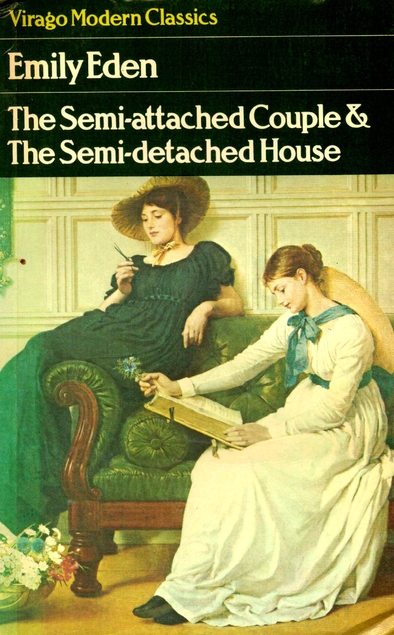


Camilla; or, A Picture Of Youth by Frances Burney (1796)
The Wanderer; or, Female Difficulties by Frances Burney (1814)
The Macdermots Of Ballycloran by Anthony Trollope (1847)
The Semi-Attached Couple; and, The Semi-Detached House by Emily Eden (1860 / 1859)
The Jungle by Upton Sinclair (1906)
Vol du Nuit (Night Flight) by Antoine de Saint-Exupéry (1931)
Spenlove In Arcady by William McFee (1947)
Malefice by Leslie Wilson (1992)
The stinkers:



Elsie At Nantucket by Martha Finley (1884)
The Flickering Lamp by Netta Muskett (1931)
After Rain by Netta Muskett (1931)
The Brownstone by Ken Eulo (1980)
Frisk by Dennis Cooper (1991)
Mysteries / thrillers:
The best:


The Mystery Of The Hasty Arrow by Anna Katharine Green (1917)
The Crimson Circle by Edgar Wallace (1922)
The Loring Mystery by Jeffery Farnol (1924)
Anything But The Truth by Carolyn Wells (1925)
Cloud, The Smiter by Arthur Gask (1926)
Inspector French And The Starvel Tragedy by Freeman Wills Crofts (1927)
Au Rendez-Vous Des Terre-Neuvas (The Sailors' Rendezvous) by Georges Simenon (1931)
The Division Bell Mystery by Ellen Wilkinson (1932)
One Drop Of Blood by Anne Austin (1932)
Felo De Se? by R. Austin Freeman (1937)
The stinkers:
(...noting that none of these are here because they are bad books, but because of their attitudes...)


Martin Hewitt, Investigator by Arthur Morrison (1894)
The Wychford Poisoning Case by Anthony Berkeley (1926)
The Scarab Murder Case by S. S. Van Dine (1929)
The Incredible Crime by Lois Austen-Leigh (1931)
In a class of its own---but in a good way!


The Mysteries Of London: Volume I by G.W.M. Reynolds (1845)
The Mysteries Of London: Volume II by G.W.M. Reynolds (1846)
Don't worry---I'm not going to re-list everything else I read last year! Rather I simply want to list a selection of books from my non-challenge reading that stood out from the crowd for me. In addition to genuine excellence, a book might make the list for its general impact, an unusual approach to its material, the cleverness of its plot or plot-twist, or just its sheer enjoyability.
Conversely, when a book makes my stinkers list it usually isn't about its literary qualities (or lack thereof), but rather a sign that it managed to rub me up the wrong way---and did it thoroughly.
General fiction:
The best:


Camilla; or, A Picture Of Youth by Frances Burney (1796)
The Wanderer; or, Female Difficulties by Frances Burney (1814)
The Macdermots Of Ballycloran by Anthony Trollope (1847)
The Semi-Attached Couple; and, The Semi-Detached House by Emily Eden (1860 / 1859)
The Jungle by Upton Sinclair (1906)
Vol du Nuit (Night Flight) by Antoine de Saint-Exupéry (1931)
Spenlove In Arcady by William McFee (1947)
Malefice by Leslie Wilson (1992)
The stinkers:


Elsie At Nantucket by Martha Finley (1884)
The Flickering Lamp by Netta Muskett (1931)
After Rain by Netta Muskett (1931)
The Brownstone by Ken Eulo (1980)
Frisk by Dennis Cooper (1991)
Mysteries / thrillers:
The best:


The Mystery Of The Hasty Arrow by Anna Katharine Green (1917)
The Crimson Circle by Edgar Wallace (1922)
The Loring Mystery by Jeffery Farnol (1924)
Anything But The Truth by Carolyn Wells (1925)
Cloud, The Smiter by Arthur Gask (1926)
Inspector French And The Starvel Tragedy by Freeman Wills Crofts (1927)
Au Rendez-Vous Des Terre-Neuvas (The Sailors' Rendezvous) by Georges Simenon (1931)
The Division Bell Mystery by Ellen Wilkinson (1932)
One Drop Of Blood by Anne Austin (1932)
Felo De Se? by R. Austin Freeman (1937)
The stinkers:
(...noting that none of these are here because they are bad books, but because of their attitudes...)


Martin Hewitt, Investigator by Arthur Morrison (1894)
The Wychford Poisoning Case by Anthony Berkeley (1926)
The Scarab Murder Case by S. S. Van Dine (1929)
The Incredible Crime by Lois Austen-Leigh (1931)
In a class of its own---but in a good way!


The Mysteries Of London: Volume I by G.W.M. Reynolds (1845)
The Mysteries Of London: Volume II by G.W.M. Reynolds (1846)
145lyzard
>141 Matke:
Hi, Gail!
I hope after all that you do enjoy Inspector French. Hmm, maybe you and I can help keep each other on track with our "reading of substance"? :)
The question of cover art is an interesting one. I spent all last year complaining about the fact that, at some point, Agatha Christie's publishers just stopped bothering: they knew her books would sell regardless of the cover art---and of course they were quite right about that! The Mystery League represents the flip-side of that, luring in readers with their art because they know they have nothing else to offer. So I guess it's a question of balancing the steak with the sizzle.
>142 cbl_tn:
Thanks, Carrie! I'm glad you enjoyed my sloths! (But then, of course you did...!)
Hi, Gail!
I hope after all that you do enjoy Inspector French. Hmm, maybe you and I can help keep each other on track with our "reading of substance"? :)
The question of cover art is an interesting one. I spent all last year complaining about the fact that, at some point, Agatha Christie's publishers just stopped bothering: they knew her books would sell regardless of the cover art---and of course they were quite right about that! The Mystery League represents the flip-side of that, luring in readers with their art because they know they have nothing else to offer. So I guess it's a question of balancing the steak with the sizzle.
>142 cbl_tn:
Thanks, Carrie! I'm glad you enjoyed my sloths! (But then, of course you did...!)
146swynn
Great wrap-up! I agree that The Grapes of Wrath is the standout in the bestsellers category, and that Anthony Adverse is remarkable in its awfulness. In fact, it's a new sort of standard for me, as in "This book is quite bad, but at least it's not Anthony Adverse."
I really do need to take that lunch hour to read the Bertrand Russell. I know I'm going to love it.
(And, I'm averting my eyes about the Werfel. I'm only about halfway through but making progress daily.)
I really do need to take that lunch hour to read the Bertrand Russell. I know I'm going to love it.
(And, I'm averting my eyes about the Werfel. I'm only about halfway through but making progress daily.)
147Helenliz
Loving the sloths, as ever. And that's a fabulour roundup of the year. Now you've offically started 2019, I hope that it goes better for your personally, that your reading ambitions are fulfilled, and that no book is in an uncertain order or missing.
148lyzard
>146 swynn:
Thanks, Steve! Yes, I'm currently in that delusional state where I really believe I'm going to do better at keeping up this year. It was interesting to consider all the challenge books as a group.
Goodness, if you're reading that in the German you get all the leeway you need! I'll be picking up my copy of The Robe on Monday, but please don't feel you need to rush anything.
On the other hand, I'm also planning on placing an ILL for Jim Tully's Circus Parade this week, with the intent of reading it next month, so hopefully you will have squeezed in Bertrand by then?? :)
>147 Helenliz:
Hi, Helen - thank you! Thanks too for all the good wishes. :)
Thanks, Steve! Yes, I'm currently in that delusional state where I really believe I'm going to do better at keeping up this year. It was interesting to consider all the challenge books as a group.
Goodness, if you're reading that in the German you get all the leeway you need! I'll be picking up my copy of The Robe on Monday, but please don't feel you need to rush anything.
On the other hand, I'm also planning on placing an ILL for Jim Tully's Circus Parade this week, with the intent of reading it next month, so hopefully you will have squeezed in Bertrand by then?? :)
>147 Helenliz:
Hi, Helen - thank you! Thanks too for all the good wishes. :)
149lyzard
Before I do get started properly on 2019---
My regular visitors will know that I suffered a bereavement towards the end of last year, when I lost my sixteen-year-old cat, Kara, to cancer. I did not cope well in the wake of this, having bouts of depression and insomnia.
Eventually I decided I had to take some drastic action to break the cycle and, well, long story short:


These two came to me with the unlikely names of Percy and Zeppelin. They are both rescue cats taken off the streets---with all the behavioural issues you would expect. Percy (on the left) has settled in reasonably well, but Zeppelin (right) is extremely timid and skittish; in fact, I suspect from his behaviour that he may have been abused in the past. Both of them need patient work, and both are keeping me on my toes. :)
My regular visitors will know that I suffered a bereavement towards the end of last year, when I lost my sixteen-year-old cat, Kara, to cancer. I did not cope well in the wake of this, having bouts of depression and insomnia.
Eventually I decided I had to take some drastic action to break the cycle and, well, long story short:


These two came to me with the unlikely names of Percy and Zeppelin. They are both rescue cats taken off the streets---with all the behavioural issues you would expect. Percy (on the left) has settled in reasonably well, but Zeppelin (right) is extremely timid and skittish; in fact, I suspect from his behaviour that he may have been abused in the past. Both of them need patient work, and both are keeping me on my toes. :)
150swynn
>149 lyzard: Congrats on the new housemates!
151lyzard
So anyway---
The book I'm stalled on in the C. K. Shorter challenge (see >136 lyzard:) is Wilhelm Meister by Johann Wolfgang von Goethe. The reason I'm stalled is because this is something I had already planned to read for my blog---and keep not getting to.
Wilhelm Meister is in fact the omnibus term for two novels, Wilhelm Meisters Lehrjahre (usually translated as "Wilhelm Meister's Apprenticeship" or "Wilhelm Meister's Years Of Apprenticeship") and Wilhelm Meisters Wanderjahre, oder Die Entsagenden ("Wilhelm Meister's Journeyman Years; or, The Renunciants", also known as "Wilhelm Meister's Years Of Travel").
The historical significance of these works is that in writing them, Goethe basically invented a new genre: the Bildungsroman. When they were translated into English some 20 years after their initial publication, they were a significant influence upon the young male writers of the time. Two of these were Edward Bulwer Lytton and Benjamin Disraeli, whose Pelham and Vivian Grey, respectively, represent their own attempts at this sort of story.
However---because of where they set their stories, Bulwer Lytton and Disraeli, in turn, influenced the development of yet another genre of writing, the so-called "Silver Fork Novel". Briefly, these were tales of high society intended for people who weren't in it. They were promoted as an "insider's view" of the aristocracy, and full of excess and scandal intended both to titillate and to convince outsiders they were better off where they were. The critics blasted them, but for about a decade the reading public ate them up. William Makepeace Thackeray eventually killed off this form of the novel with Vanity Fair, which is simultaneously the Silver Fork Novel to - literally - end all Silver Fork Novels, and a savage deconstruction of the genre.
I have long wanted to take a look at this genre for my blog; but because I'm constitutionally incapable of doing anything in a straightforward manner, naturally I decided that I had to start at the very beginning---that is, with Wilhelm Meister.
So that's the plan; but because I keep not getting to it blog-wise, I am also not progressing with the C. K. Shorter challenge.
But then a thought occurred! - Shorter's listing of the book is not by its original publication date(s) - Wilhelm Meisters Lehrjahre appeared in 1795 - 1796, and Wilhelm Meisters Wanderjahre, oder Die Entsagenden in 1821 or 1829, depending on whether you mean the first edition or the significantly revised second edition (I need to research this) - but by the date of its first English-language translation by Thomas Carlyle, which was published in 1821.
So I'm ALREADY reading it out of order, which means it doesn't matter if I read it MORE out of order.
To which argument, my OCD gave a grudging assent.
(Seriously, folks: THIS is what it's like living inside my head...)
So---I'm going to put Wilhelm Meister aside for the moment - just for the moment - and I'm going to move on to the next book in the C. K. Shorter challenge---yay!
The book I'm stalled on in the C. K. Shorter challenge (see >136 lyzard:) is Wilhelm Meister by Johann Wolfgang von Goethe. The reason I'm stalled is because this is something I had already planned to read for my blog---and keep not getting to.
Wilhelm Meister is in fact the omnibus term for two novels, Wilhelm Meisters Lehrjahre (usually translated as "Wilhelm Meister's Apprenticeship" or "Wilhelm Meister's Years Of Apprenticeship") and Wilhelm Meisters Wanderjahre, oder Die Entsagenden ("Wilhelm Meister's Journeyman Years; or, The Renunciants", also known as "Wilhelm Meister's Years Of Travel").
The historical significance of these works is that in writing them, Goethe basically invented a new genre: the Bildungsroman. When they were translated into English some 20 years after their initial publication, they were a significant influence upon the young male writers of the time. Two of these were Edward Bulwer Lytton and Benjamin Disraeli, whose Pelham and Vivian Grey, respectively, represent their own attempts at this sort of story.
However---because of where they set their stories, Bulwer Lytton and Disraeli, in turn, influenced the development of yet another genre of writing, the so-called "Silver Fork Novel". Briefly, these were tales of high society intended for people who weren't in it. They were promoted as an "insider's view" of the aristocracy, and full of excess and scandal intended both to titillate and to convince outsiders they were better off where they were. The critics blasted them, but for about a decade the reading public ate them up. William Makepeace Thackeray eventually killed off this form of the novel with Vanity Fair, which is simultaneously the Silver Fork Novel to - literally - end all Silver Fork Novels, and a savage deconstruction of the genre.
I have long wanted to take a look at this genre for my blog; but because I'm constitutionally incapable of doing anything in a straightforward manner, naturally I decided that I had to start at the very beginning---that is, with Wilhelm Meister.
So that's the plan; but because I keep not getting to it blog-wise, I am also not progressing with the C. K. Shorter challenge.
But then a thought occurred! - Shorter's listing of the book is not by its original publication date(s) - Wilhelm Meisters Lehrjahre appeared in 1795 - 1796, and Wilhelm Meisters Wanderjahre, oder Die Entsagenden in 1821 or 1829, depending on whether you mean the first edition or the significantly revised second edition (I need to research this) - but by the date of its first English-language translation by Thomas Carlyle, which was published in 1821.
So I'm ALREADY reading it out of order, which means it doesn't matter if I read it MORE out of order.
To which argument, my OCD gave a grudging assent.
(Seriously, folks: THIS is what it's like living inside my head...)
So---I'm going to put Wilhelm Meister aside for the moment - just for the moment - and I'm going to move on to the next book in the C. K. Shorter challenge---yay!
153lyzard
Anyway---
The C. K. Shorter List of the Best 100 Novels:
#29: Kenilworth by Sir Walter Scott (1821)

I have read Walter Scott sporadically, but not this one. One of the so-called "Waverly Novels", this is Scott's telling of the story of Elizabeth I and Robert Dudley, the Earl of Leicester; the latter's secret marriage to Amy Robsart; and her suspicious death.
The C. K. Shorter List of the Best 100 Novels:
#29: Kenilworth by Sir Walter Scott (1821)

I have read Walter Scott sporadically, but not this one. One of the so-called "Waverly Novels", this is Scott's telling of the story of Elizabeth I and Robert Dudley, the Earl of Leicester; the latter's secret marriage to Amy Robsart; and her suspicious death.
154lyzard
>150 swynn:
Thank you - they're a handful!
Zepp is proving useful, though, as I have found that lying on the bed reading and letting him come to me is a good way of proceeding with him. :)
Thank you - they're a handful!
Zepp is proving useful, though, as I have found that lying on the bed reading and letting him come to me is a good way of proceeding with him. :)
155thornton37814
Percy and Zepp will soon realize how good they have it now! If Zepp was abused previously, he'll probably be skittish around strangers for a long time. He'll know, however, he's safe with you.
157lyzard
Finished Juliania; or, The Affectionate Sisters for TIOLI #10.
Now reading The Mother-In-Law; or, The Isle Of Rays by E.D.E.N. Southworth.
However, since this is the horrifyingly tiny-fonted book I highlighted on my previous thread, I am only going to be able to read it during the daytime in natural light, and will need a nighttime reading book too.
Therefore, also now reading The Crime At The 'Noah's Ark' by Molly Thynne.
Now reading The Mother-In-Law; or, The Isle Of Rays by E.D.E.N. Southworth.
However, since this is the horrifyingly tiny-fonted book I highlighted on my previous thread, I am only going to be able to read it during the daytime in natural light, and will need a nighttime reading book too.
Therefore, also now reading The Crime At The 'Noah's Ark' by Molly Thynne.
158Matke
>149 lyzard: What handsome boys have joined you, Liz! I very glad, both for them and for you.
You know, I liked Vanity Fair when I read it in my twenties, but I’ve completely bogged down in the re-read, perhaps half-way through. I may circle back to it, or I might not. Cynicism, while useful when one is considering today’s political scene, doesn’t appeal to me in books as much as it usd to.
Or perhaps I missed a lot the first time around, as I was even more boringly Pollyanna-ish then than I am now.
You know, I liked Vanity Fair when I read it in my twenties, but I’ve completely bogged down in the re-read, perhaps half-way through. I may circle back to it, or I might not. Cynicism, while useful when one is considering today’s political scene, doesn’t appeal to me in books as much as it usd to.
Or perhaps I missed a lot the first time around, as I was even more boringly Pollyanna-ish then than I am now.
159lyzard
Thanks, Gail! Yes, they are: those photos don't quite bring up the difference in their colouring; Percy is a real ginger, while Zepp is that much lighter shade which I would call 'honey' or 'caramel' but which is apparently officially called 'champagne'.
Oh, it's a cynical book, all right; in fact it has a double layer of cynicism that reflects both when it was written, a time of political upheaval and uncertainty, before "Victorianism" had really taken hold, and when it was set, during the morally "looser" Regency. In that respect it can be hard going, though I don't think it's unfair in the social criticisms it makes.
Oh, it's a cynical book, all right; in fact it has a double layer of cynicism that reflects both when it was written, a time of political upheaval and uncertainty, before "Victorianism" had really taken hold, and when it was set, during the morally "looser" Regency. In that respect it can be hard going, though I don't think it's unfair in the social criticisms it makes.
160harrygbutler
>149 lyzard: Congratulations on the welcome new additions to your household, Liz!
>153 lyzard: Will you be reading Kenilworth this month or next? I may join you, as I've not read that Scott either, but I don't know what else I've got coming up in terms of reading.
>153 lyzard: Will you be reading Kenilworth this month or next? I may join you, as I've not read that Scott either, but I don't know what else I've got coming up in terms of reading.
161lyzard
Thank you, Harry!
Next month, I should think---though come to think of it I already have two challenge reads and a group read scheduled; hmm... This month I still have The Robe to get through, which I think will hold me in terms of historical fiction; so it would be either next month or March. Do you have a preference? I'd love to have you join me!
Next month, I should think---though come to think of it I already have two challenge reads and a group read scheduled; hmm... This month I still have The Robe to get through, which I think will hold me in terms of historical fiction; so it would be either next month or March. Do you have a preference? I'd love to have you join me!
162harrygbutler
Either month would be fine, Liz; I've had it on my shelf for years, so it could certainly wait until March. :-)
163Cait86
Your thread is such a wealth of academic knowledge on the books you read! I always come away from it wishing that I could be more focused in my reading. For now, though, I'm just chipping away at the unread books on my shelves. Perhaps if I can get them under control, I can start to think about reading projects like yours.
Your new cats are lovely, and they are lucky to have you.
Your new cats are lovely, and they are lucky to have you.
164lyzard
>162 harrygbutler:
At the moment March is feeling more likely, but I will keep you updated.
>163 Cait86:
Hello, Cait - thank you so much for visiting; my boys thank you too. :)
I would say that chipping away at your shelves is an excellent way of proceeding; though of course no-one understands better than me the lure of THE PROJECT. :D
At the moment March is feeling more likely, but I will keep you updated.
>163 Cait86:
Hello, Cait - thank you so much for visiting; my boys thank you too. :)
I would say that chipping away at your shelves is an excellent way of proceeding; though of course no-one understands better than me the lure of THE PROJECT. :D
165souloftherose
>100 lyzard: 'I had only 10 shared reads last year and IT'S ALL YOUR FAULT!!!!'
Sorry! I'd like to say I will do better this year but I'm not sure it's true. But all the Christie discussion on my thread as reinvigorated my Christie interest so that's good.
>103 lyzard: Well, your review of the Austen-Leigh made me chuckle but I may avoid the book - I've heard mixed things about that one from other quarters too.
>104 lyzard: I've only read one of the French novels and did find it rather on the plodding side (although I could see how it would be relaxing if I was in the right mood). The British Library have reprinted a handful and I'll be interested to see your thoughts on those when you get to that point in the series because they haven't republished them in order and I'm not sure if it's because the earlier novels were harder to get hold of or they decided the ones they republished were 'better'.
>118 lyzard:, >119 lyzard: We have a copy of Why I Am Not a Christian which I have never read but is now sounding interesting based on your comments.
>131 lyzard: Sloths!
>143 lyzard: I'm pleased to have joined in with three of the books on the best general fiction list! And I'm not surprised to see an Elsie book on the stinkers list, just surprised that only one Elsie book made the list.
>149 lyzard: So happy to meet Percy and Zeppelin! Were they companions before they came to you? Hopefully Zeppelin will settle in soon - looking back with Erica it often felt at the time that we were making no progress at all but somehow progress did happen. In the last few years we've found a pheremone diffuser for cats helps her deal with sressful situations and it might be worth trying with Zepp?
>151 lyzard: - >153 lyzard: Phew! (As an aside I keep reading that list as implying these are the 100 Best Shorter novels and getting confused about why something like Kenilworth would be on the list. As much as I'm tempted to broaden my Scott reading I'm not going to commit to anything else 19th century until I see if I actually do manage the Edgeworth and Trollope after getting so behind last year.
Sorry! I'd like to say I will do better this year but I'm not sure it's true. But all the Christie discussion on my thread as reinvigorated my Christie interest so that's good.
>103 lyzard: Well, your review of the Austen-Leigh made me chuckle but I may avoid the book - I've heard mixed things about that one from other quarters too.
>104 lyzard: I've only read one of the French novels and did find it rather on the plodding side (although I could see how it would be relaxing if I was in the right mood). The British Library have reprinted a handful and I'll be interested to see your thoughts on those when you get to that point in the series because they haven't republished them in order and I'm not sure if it's because the earlier novels were harder to get hold of or they decided the ones they republished were 'better'.
>118 lyzard:, >119 lyzard: We have a copy of Why I Am Not a Christian which I have never read but is now sounding interesting based on your comments.
>131 lyzard: Sloths!
>143 lyzard: I'm pleased to have joined in with three of the books on the best general fiction list! And I'm not surprised to see an Elsie book on the stinkers list, just surprised that only one Elsie book made the list.
>149 lyzard: So happy to meet Percy and Zeppelin! Were they companions before they came to you? Hopefully Zeppelin will settle in soon - looking back with Erica it often felt at the time that we were making no progress at all but somehow progress did happen. In the last few years we've found a pheremone diffuser for cats helps her deal with sressful situations and it might be worth trying with Zepp?
>151 lyzard: - >153 lyzard: Phew! (As an aside I keep reading that list as implying these are the 100 Best Shorter novels and getting confused about why something like Kenilworth would be on the list. As much as I'm tempted to broaden my Scott reading I'm not going to commit to anything else 19th century until I see if I actually do manage the Edgeworth and Trollope after getting so behind last year.
166alcottacre
>70 lyzard: I am more than happy to oblige!
>93 lyzard: Woot!
>106ff. I love the look of some of your challenges, Liz, but doubt I would finish any of them :)
>93 lyzard: Woot!
>106ff. I love the look of some of your challenges, Liz, but doubt I would finish any of them :)
167lyzard
>165 souloftherose:
Hi, Heather!
Hey, I couldn't miss the opportunity to point out that for once, I kept to a schedule! Of course I missed the shared reads but I understand why they fell away for you. If you can join in for Cat Among The Pigeons this month, that's just a bonus. :)
The Incredible Crime irritated me enough to make my stinkers list---nothing wrong with the writing, but its whole attitude got up my nose. Not recommended, though I'd be very interested to get your reaction. (Don't read it just for that, though!)
I completely understand why the Inspector French novels leave some people cold, but - and particularly juxtaposed with something like The Murders Near Mapleton and its particularly annoying amateur detective - I find them a nice palette-cleanser. You're right, there never seems much rhyme or reason to the Kindle releases: my next up, The Sea Mystery, is both on Kindle and held in Rare Books, I'm pleased to see.
I found Russell an interesting read though I completely understand that for some people his writings would be very offensive.
Yeah, oddly enough I don't find stories about children being beaten particularly entertaining...
And I was very pleased to have you! :)
Heh! - yes, that's the Shorter list, not the shorter list. At the moment I'm looking at March for Kenilworth (being overbooked in February!), and it looks like Harry will be joining me. It would be great if you could too but don't feel obliged.
I should start posting about Belinda around the threads, I guess...
******
Thank you! No, I took them because (i) they were boys, and so probably less generally adoptable, and (ii) they were older than most of the other shelter cats, and on those two bases I figured they needed the most help.
I still have them separated at the moment: Zepp is living in my bedroom, which is interesting for both of us, while Percy has the run of the rest of the house. He's mostly in the eat-and-sleep phase, but Zepp is given to sudden rampages with lots of running and leaping and shredding, so I'm a bit concerned as to how that will play out---whether he's doing it because he's confined, or that's his natural behaviour.
It also remains to be seen how they get along together. Zepp is obviously very keen to be friends, but Percy seems scared (as he is of most things) so that's another territory to be negotiated.
Yes, it might be worth trying some Feliway; thanks for putting me in mind of that.
Hi, Heather!
Hey, I couldn't miss the opportunity to point out that for once, I kept to a schedule! Of course I missed the shared reads but I understand why they fell away for you. If you can join in for Cat Among The Pigeons this month, that's just a bonus. :)
The Incredible Crime irritated me enough to make my stinkers list---nothing wrong with the writing, but its whole attitude got up my nose. Not recommended, though I'd be very interested to get your reaction. (Don't read it just for that, though!)
I completely understand why the Inspector French novels leave some people cold, but - and particularly juxtaposed with something like The Murders Near Mapleton and its particularly annoying amateur detective - I find them a nice palette-cleanser. You're right, there never seems much rhyme or reason to the Kindle releases: my next up, The Sea Mystery, is both on Kindle and held in Rare Books, I'm pleased to see.
I found Russell an interesting read though I completely understand that for some people his writings would be very offensive.
Yeah, oddly enough I don't find stories about children being beaten particularly entertaining...
And I was very pleased to have you! :)
Heh! - yes, that's the Shorter list, not the shorter list. At the moment I'm looking at March for Kenilworth (being overbooked in February!), and it looks like Harry will be joining me. It would be great if you could too but don't feel obliged.
I should start posting about Belinda around the threads, I guess...
******
Thank you! No, I took them because (i) they were boys, and so probably less generally adoptable, and (ii) they were older than most of the other shelter cats, and on those two bases I figured they needed the most help.
I still have them separated at the moment: Zepp is living in my bedroom, which is interesting for both of us, while Percy has the run of the rest of the house. He's mostly in the eat-and-sleep phase, but Zepp is given to sudden rampages with lots of running and leaping and shredding, so I'm a bit concerned as to how that will play out---whether he's doing it because he's confined, or that's his natural behaviour.
It also remains to be seen how they get along together. Zepp is obviously very keen to be friends, but Percy seems scared (as he is of most things) so that's another territory to be negotiated.
Yes, it might be worth trying some Feliway; thanks for putting me in mind of that.
168lyzard
>166 alcottacre:
I was sure you would be! :D
Thanks; gap-plugging is a great feeling!
It remains to be seen whether I can, either. :)
I was sure you would be! :D
Thanks; gap-plugging is a great feeling!
It remains to be seen whether I can, either. :)
169kac522
Question--I have not read any Scott novels. How criminal would it be to read Kenilworth as my first Waverley read, and therefore (she cringes and ducks) out of order? I do have Waverley and Rob Roy on my TBR.
170lyzard
Hi, Kathy!
Though the Waverley novels are often treated as a set, they are not a series: they are all separate books. They are referred to as "the Waverly Novels" because Scott kept his authorship a secret for a long time, and they were all published (after the first one) as "By the author of Waverley".
So you would be quite safe in reading them in any order...as well as safe from my reaction. :D
Though the Waverley novels are often treated as a set, they are not a series: they are all separate books. They are referred to as "the Waverly Novels" because Scott kept his authorship a secret for a long time, and they were all published (after the first one) as "By the author of Waverley".
So you would be quite safe in reading them in any order...as well as safe from my reaction. :D
171kac522
>170 lyzard: Whew! (glad to have dodged a bullet) OK, then, I might join you for Kenilworth.
173Dejah_Thoris
>149 lyzard: Congratulations on your handsome new gentleman friends! I imagine it will take some time (I had a feral it took me two years to convince to come in the house), but I know you'll convince them they are safe and loved.
>167 lyzard: I may manage Cat Among the Pigeons this month - I've given up on Ruth Fielding, so I won't be able to help with any shared reads there!
>167 lyzard: I may manage Cat Among the Pigeons this month - I've given up on Ruth Fielding, so I won't be able to help with any shared reads there!
174lyzard
Hi, Dejah - thank you! It gets frustrating sometimes but when I think where we were when I first brought them home, I can see we are making progress.
I hope you can!
Me too, though it would be more correct to say Ruth Fielding had given up on me: I don't know if you saw the post about it on my last thread, but after being available free through PG for the first two-thirds of the series, the books are now only available as real - and expensive - copies. So we're having a hiatus while I'm figuring out what, if anything, I can do about it.
I hope you can!
Me too, though it would be more correct to say Ruth Fielding had given up on me: I don't know if you saw the post about it on my last thread, but after being available free through PG for the first two-thirds of the series, the books are now only available as real - and expensive - copies. So we're having a hiatus while I'm figuring out what, if anything, I can do about it.
175lyzard
I can't remember the last time I had three books going simultaneously, but---I went in yesterday to make a start on The Monster Of Grammont by George Goodchild, for the Mystery League challenge.
While I don't much care for the dust-jacket clipping I mentioned re: Tragedy At The Unicorn (see >93 lyzard:), I must admit I was dismayed when this book was delivered to me in its original dust-jacket and without a protective plastic slip-cover:

While I don't much care for the dust-jacket clipping I mentioned re: Tragedy At The Unicorn (see >93 lyzard:), I must admit I was dismayed when this book was delivered to me in its original dust-jacket and without a protective plastic slip-cover:

176harrygbutler
>175 lyzard: I confess I've taken no steps to protect the dust jackets on the few of my Mystery League books that still have them, save shelving the books. :-)
177lyzard
Yeah, but you're not handing your books out to all and sundry.
Although come to think of it---given the nature of these books, the library probably isn't doing that either. :D
Although come to think of it---given the nature of these books, the library probably isn't doing that either. :D
178Helenliz
>149 lyzard: oh what adorable kitties. I hope you'll all be very happy together.
>153 lyzard: (not often I can do this) I've read Kenilworth. Rather front loaded, if memory serves.
>153 lyzard: (not often I can do this) I've read Kenilworth. Rather front loaded, if memory serves.
180lyzard
Finished The Crime At The Noah's Ark for TIOLI #4.
Now reading The Robe by Lloyd C. Douglas; still reading The Mother-In-Law; or, The Isle Of Rays by E.D.E.N. Southworth, and The Monster Of Grammont by George Goodchild.
Now reading The Robe by Lloyd C. Douglas; still reading The Mother-In-Law; or, The Isle Of Rays by E.D.E.N. Southworth, and The Monster Of Grammont by George Goodchild.
181lyzard
Not again.
You might remember that towards the end of last year, for my own peace of mind I had to sort out the "Gray Phantom" stories of Herman Landon, which were originally serialised in the magazines and then reworked into novels, usually under different titles.
Apparently the same is true for Landon's other Robin-Hood-esque series character, Martin Dale aka "The Picaroon". I thought I knew where I stood with this series but now it seems some research is in order...
The upside, I guess, is the possibility that Landon's Picaroon stories were serialised in the newspapers, as were the Gray Phantom novels.
ETA:
My old friend, Yesterday's Faces: From The Dark Side, says that: "The Picaroon enjoyed a mighty run in Detective Story Magazine*. The stories appeared for slightly more than a decade, from 1921 to at least 1932, including more than thirty novelettes and serials. From this material, three books were assembled: The Green Shadow (1927), The Picaroon Resumes Practice (1931) and The Picaroon, Knight Errant (1933)."
(*Also the home of the Gray Phantom.)
There were other books besides those, but as Sampson is only dealing with the ones of pulp-magazine origins, he doesn't get into that here.
Despite that remark about Landon "assembling" books from his magazine stories, Sampson then goes on to say that The Green Shadow was a serialised novel, which ran in Detective Story Magazine in six parts, from November 27, 1926, - January 1, 1927. It was also published in book form during 1927, and is therefore technically the first in the series.
Alas, it seems that the only Picaroon novel to be newspaper-serialised was The Green Shadow, which I've read (typical). Furthermore, while there is evidence it was published, I can find nothing else about The Picaroon Resumes Practice. Possibly it was retitled?
Anyway, my best guess so far is:
The Green Shadow (1927)
The Picaroon Does Justice (1928)
Buy My Silence! (1929)
The Trailing Of The Picaroon (1930)
The Picaroon Resumes Practice (1931)
The Elusive Picaroon (1932)
The Picaroon In Pursuit (1932)
The Picaroon, Knight Errant (1933)
You might remember that towards the end of last year, for my own peace of mind I had to sort out the "Gray Phantom" stories of Herman Landon, which were originally serialised in the magazines and then reworked into novels, usually under different titles.
Apparently the same is true for Landon's other Robin-Hood-esque series character, Martin Dale aka "The Picaroon". I thought I knew where I stood with this series but now it seems some research is in order...
The upside, I guess, is the possibility that Landon's Picaroon stories were serialised in the newspapers, as were the Gray Phantom novels.
ETA:
My old friend, Yesterday's Faces: From The Dark Side, says that: "The Picaroon enjoyed a mighty run in Detective Story Magazine*. The stories appeared for slightly more than a decade, from 1921 to at least 1932, including more than thirty novelettes and serials. From this material, three books were assembled: The Green Shadow (1927), The Picaroon Resumes Practice (1931) and The Picaroon, Knight Errant (1933)."
(*Also the home of the Gray Phantom.)
There were other books besides those, but as Sampson is only dealing with the ones of pulp-magazine origins, he doesn't get into that here.
Despite that remark about Landon "assembling" books from his magazine stories, Sampson then goes on to say that The Green Shadow was a serialised novel, which ran in Detective Story Magazine in six parts, from November 27, 1926, - January 1, 1927. It was also published in book form during 1927, and is therefore technically the first in the series.
Alas, it seems that the only Picaroon novel to be newspaper-serialised was The Green Shadow, which I've read (typical). Furthermore, while there is evidence it was published, I can find nothing else about The Picaroon Resumes Practice. Possibly it was retitled?
Anyway, my best guess so far is:
The Green Shadow (1927)
The Picaroon Does Justice (1928)
Buy My Silence! (1929)
The Trailing Of The Picaroon (1930)
The Picaroon Resumes Practice (1931)
The Elusive Picaroon (1932)
The Picaroon In Pursuit (1932)
The Picaroon, Knight Errant (1933)
182lyzard
Some of us would just appreciate the opportunity to sigh in resignation!
From The Australiasian, 12April 1930:

From The Australiasian, 12April 1930:

183lyzard
On the other hand, here and elsewhere I've seen it indicated that a number of the Picaroon books are collections of the earlier short stories, a number of which if not all were published in the magazines here; that might offer another way of proceeding:


184Dejah_Thoris
>174 lyzard: I missed that about Ruth availability - I suppose I've picked a good time to stop.
Sorry about all the Picaroon confusion....
Sorry about all the Picaroon confusion....
185lyzard
>184 Dejah_Thoris:
Unfortunately I think the series passes out of the public domain at that point. (It also changed authors, but that may just be a coincidence.)
Oh, well: serves me right for reading the silly things! :)
Unfortunately I think the series passes out of the public domain at that point. (It also changed authors, but that may just be a coincidence.)
Oh, well: serves me right for reading the silly things! :)
186lyzard
Finished The Mother-In-Law; or, The Isle Of Rays for TIOLI #2.
Still reading The Robe by Lloyd C. Douglas, and The Monster Of Grammont by George Goodchild.
Still reading The Robe by Lloyd C. Douglas, and The Monster Of Grammont by George Goodchild.
187lyzard
Important note for those intending to join the group read of Belinda:
Please be careful in choosing your edition of Belinda: the novel was originally published in 1801 and reissued in 1802; however, before it was reissued again in 1810, Edgeworth was pressured into editing and significantly revising some of her characters and subplots.
This version was subsequently considered the "standard" text until the novel was reissued in 1986 by Pandora; later editions of Belinda released by the Oxford University Press (including the Kindle version) have also gone back to the original text.
No, no, no! - unfortunately (and rather astonishingly) it turns out that the Pandora edition used the revised text (which probably accounts for the 1811 publication date, incorrectly given).
Consequently, only the Oxford University Press / World's Classics editions have the correct text.
In addition, there is an Everyman edition from 1993 that apparently used the 1801 text---if so, it is missing Edgeworth's voluntary revisions (made for the 1802 reissue), which she made to strengthen some points in the narrative. However, this is an acceptable alternative.
Unfortunately, the Project Gutenberg version uses the edited text; and at the moment I don't think there is a free online version that doesn't. I will continue to research this and add any further information about any other suitable sources.
Please be careful in choosing your edition of Belinda: the novel was originally published in 1801 and reissued in 1802; however, before it was reissued again in 1810, Edgeworth was pressured into editing and significantly revising some of her characters and subplots.
No, no, no! - unfortunately (and rather astonishingly) it turns out that the Pandora edition used the revised text (which probably accounts for the 1811 publication date, incorrectly given).
Consequently, only the Oxford University Press / World's Classics editions have the correct text.
In addition, there is an Everyman edition from 1993 that apparently used the 1801 text---if so, it is missing Edgeworth's voluntary revisions (made for the 1802 reissue), which she made to strengthen some points in the narrative. However, this is an acceptable alternative.
Unfortunately, the Project Gutenberg version uses the edited text; and at the moment I don't think there is a free online version that doesn't. I will continue to research this and add any further information about any other suitable sources.
188Helenliz
>187 lyzard: thanks for the warning. I will check what I have. I assume you are planning on using the original version?
190Helenliz
Phew - my library edition is an Oxford World's Classics and the note on the text begins "The text for Belinda is that of the second editionof 1802." So I'm all set. >:-)
192kac522
>187 lyzard: I've found an OUP edition at a library where I have borrowing privileges and have put it on hold, so should have it soon.
195lyzard
...and just like that, I'm ten reviews behind again.
The problem, of course, is that when I catch up my review-writing, I tend to reward myself by...taking a break from review-writing...
I am working on a blog-post, though, which is at least some sop for my conscience.
The problem, of course, is that when I catch up my review-writing, I tend to reward myself by...taking a break from review-writing...
I am working on a blog-post, though, which is at least some sop for my conscience.
196ronincats
I surely hope that you are able to open this link, Liz.
https://www.facebook.com/AnimalPlanet/videos/10156021883288375/UzpfSTEwMDAwMDgwO...
Cat parent????
https://www.facebook.com/AnimalPlanet/videos/10156021883288375/UzpfSTEwMDAwMDgwO...
Cat parent????
197lyzard
Awww... Yes, thank you, Roni! :D
More like a cat servant at the moment; but isn't that always the way??
More like a cat servant at the moment; but isn't that always the way??
198lyzard
Oh, well done.
I've somehow managed to lose both of my 'potential decommission' reads (fiction and non-fiction); I've poked around in all the most likely places in The Stacks but can't find either of them---grr!!
ETA: Ha! - found one of them, anyway---as soon as I stopped looking and started doing something else...
I've somehow managed to lose both of my 'potential decommission' reads (fiction and non-fiction); I've poked around in all the most likely places in The Stacks but can't find either of them---grr!!
ETA: Ha! - found one of them, anyway---as soon as I stopped looking and started doing something else...
199rretzler
Hi, Liz. Just stopping by to drop a star for this year. I'm looking forward to following your reading - I love all the old Golden Age mysteries. I decided that I would tackle the Coles at the end of last year - I'm on book 3 and have been pleasantly surprised that ILL has had them so far. In fact, the 2nd in the series appeared to be loaned out previously in 2012, and I thought perhaps that could possibly have been you! Sorry to hear about Kara - I lost Matisse in 2017 to cancer. Picasso, Mycroft, Bandit and J'zargo send lots of purrs to Percy and Zepp. We adopted Mycroft, Bandit and J'zargo in 2017 as kittens and for several months I could not get close to Mycroft. But with lots and lots of patience, he has now adopted me as his human and is fairly tolerant to the 3 other humans in our house as well.
200lyzard
Hi, Robin - thanks so much for visiting! Yes, I remember when you lost poor Matisse. Thank you for the encouraging words: it's definitely a work in progress! :)
The Coles are not readily available here but I find these books really interesting and quite fun, too, so it's one of those series I'm putting some extra effort into.
(No, not me: that would require an international ILL! :D )
The Coles are not readily available here but I find these books really interesting and quite fun, too, so it's one of those series I'm putting some extra effort into.
(No, not me: that would require an international ILL! :D )
201lyzard
Book-blogging:
I have finished a two-parter on E.D.E.N. Southworth's The Mother-In-Law; or, The Isle Of Rays, from 1851, a story of nefarious doings and smother love in early 19th century Virginia: lots of sensation-novel fun, plus some serious points about slavery and race relations.
Part 1
Part 2
I have finished a two-parter on E.D.E.N. Southworth's The Mother-In-Law; or, The Isle Of Rays, from 1851, a story of nefarious doings and smother love in early 19th century Virginia: lots of sensation-novel fun, plus some serious points about slavery and race relations.
Part 1
Part 2

203souloftherose
>187 lyzard: Phew! I've got the Oxford World's Classics version waiting for me at the bookshop.
>201 lyzard: Congrats on the blog post!
>201 lyzard: Congrats on the blog post!
204lyzard
>202 lyzard:
'Phew!' is right! I was really shocked to discover how limited our options really are for Belinda: I picked up the Pandora edition without thinking for a moment there might be a problem with it.
Thank you; that one was good fun!
'Phew!' is right! I was really shocked to discover how limited our options really are for Belinda: I picked up the Pandora edition without thinking for a moment there might be a problem with it.
Thank you; that one was good fun!
206lyzard
Oh, dear.
Those moments when our political leaders go out of their way to display their ignorance...as if it was necessary.
I realise much of this may be over most of my visitors' heads (although the Kiwis should appreciate it!), but do take a look at #ThingsCookDid... :D
ETA: Long story short: our Prime Minister, Scott Morrison, wants to spend $6.7 million reenacting Captain James Cook's circumnavigation of Australia; except that---well, maybe I'll let this person explain:

Those moments when our political leaders go out of their way to display their ignorance...as if it was necessary.
I realise much of this may be over most of my visitors' heads (although the Kiwis should appreciate it!), but do take a look at #ThingsCookDid... :D
ETA: Long story short: our Prime Minister, Scott Morrison, wants to spend $6.7 million reenacting Captain James Cook's circumnavigation of Australia; except that---well, maybe I'll let this person explain:

207swynn
>206 lyzard: Well, you probably don't need to hear about *our* leaders and their grasp of history. Or reality. But gosh, what a terrific compromise for the Endeavor boondoggle. If only we could think of an equally reasonable one for our messes.
208lyzard
No, not really. :D
If Morrison's spin-doctors are properly on the case, they should turn this into a plug for our education system: "Look how many people knew the PM was making an arse of himself!"
Though I don't recall the same education system giving that particular version of the Bass-and-Flinders story...
If Morrison's spin-doctors are properly on the case, they should turn this into a plug for our education system: "Look how many people knew the PM was making an arse of himself!"
Though I don't recall the same education system giving that particular version of the Bass-and-Flinders story...
210lyzard
Apparently I should stop moaning about the weather here:
Adelaide is having its hottest day on record, at 46.2C (115F).
Adelaide is having its hottest day on record, at 46.2C (115F).
211lyzard
Fnished Cat Among The Pigeons for TIOLI #11.
And now, having successfully completed a blog-read and posted about it within a reasonable framework for once, naturally I'm tempting fate by trying it again:
Now reading The Captain Of The Vulture by Mary Elizabeth Braddon.
And now, having successfully completed a blog-read and posted about it within a reasonable framework for once, naturally I'm tempting fate by trying it again:
Now reading The Captain Of The Vulture by Mary Elizabeth Braddon.
212lyzard
OMG this is both amazing and hilarious!
Only days after our illustrious PM broadcast his ignorance to the world via his plans to (expensively) commemorate James Cook's circumnavigation of Australia (see >206 lyzard:), workers at an archaeological dig in London have discovered the remains of the man who (i) actually did, and (ii) named the country!
Consensus is that they were led to the grave by the sound of Matthew Flinders turning in it...

Only days after our illustrious PM broadcast his ignorance to the world via his plans to (expensively) commemorate James Cook's circumnavigation of Australia (see >206 lyzard:), workers at an archaeological dig in London have discovered the remains of the man who (i) actually did, and (ii) named the country!
Consensus is that they were led to the grave by the sound of Matthew Flinders turning in it...

213ronincats
>212 lyzard: That IS hilarious, Liz! And I saw where they closed the stadium roof the other night (here it was night, there it was mid-afternoon) when the temperature hit 100 degrees during the tennis match at the Australian Open. Summertime!
214lyzard
I'll say this for our PM: it is not everyone who can provoke a man into rising from the dead just to troll him!
There are heat records being set all over the country at the moment, and terrible bushfires in Tasmania. :(
There are heat records being set all over the country at the moment, and terrible bushfires in Tasmania. :(
215SandDune
>212 lyzard: I was listening to that on the news. And they were saying all about how he loved his cat so much! So sweet!
216lyzard

The Road Back (original title: Der Weg zurück) - This 1931 work by Erich Maria Remarque functions as a sequel of sorts to his seminal anti-war novel, All Quiet On The Western Front, following a handful of German soldiers as they attempt to readjust to civilian life. The central characters are the last survivors of the same unit featured in the earlier novel; though the Armistice does not come soon enough for one of them, who is brought down by a stray bullet and dies slowly, in agony, even as peace is proclaimed. For four years of unimaginable horror and suffering, these men have kept themselves sane by holding hard to the thought of "home"; but the homes that await them offer nothing but disillusionment and alienation... The Road Back is not as powerful a work as All Quiet On The Western Front: there is an obliqueness about the writing here, very different from immediate confronting horrors of the earlier work, which tends to hold the reader at a distance, and which also makes it hard to keep the characters straight; although this may be partly due to the translation. (My edition, translated by A. W. Wheen, was full of inappropriate British-isms that kept jerking me out of the narrative.) The Road Back also takes a very different approach to its material, with the earlier novel's chilling matter-of-factness replaced by a tone of corroding bitterness and resentment, as Remarque describes the post-war rejection of the young men who had the poor taste not to die for their country, and the reaction of their families and the civil authorities to whom, after the first joyful welcome, they are first a mystery, then an embarrassment, then just a nuisance. The details, sadly, are only too familiar, as the returned soldiers struggle with the scarring memories of their experiences and what today we would call their PTSD; some survive it, some do not. The ones with sufficient pragmatism find a place in the new world run by those who stayed at home and profited; others drift away to oblivion. Some, desperate for the comradeship that was their one consolation in war-time, re-enlist---only to discover, as the struggle for power leads to the growth of political factions, and economic struggle to a general unrest, that "the enemy" is now a desperate civilian population... In spite of its flaws, The Road Back is a novel that has only gained from the passing of time; the modern reader is only too painfully aware of what the conditions described, including the treatment of the returned servicemen, would lead to in Germany---and the consequences for the world at large. The denouncing of the "unpatriotic" ex-soldiers within the book, prompted by their refusal - personal, and by the mere fact of their existence - to rewrite history to suit current conditions and policies, was echoed soon enough in reality, with The Road Back being banned and burned upon the ascension of the Nazis.
Anton Demuth in his gilded porter's uniform has fetched a bottle of brandy and is holding it to the wounded man's lips. The manager looks on in horror and makes signs to him, but Anton takes no notice. "Do you think I'll lose my legs?" the wounded man asks. "I'm a chauffeur."
The stretchers come. Again shots are heard outside. We spring up. Hoots, screams, and a clatter of broken glass. We run out. "Rip up the pavement," shouts someone, driving a pick into the cobbles. Mattresses are being thrown down from the houses, chairs, a perambulator. Shots flash out from the square, and now are answered from the roofs.
"Lights out!" A man springs forward and throws a brick. Immediately it is dark. "Kosole!" shouts Albert. It is he. Valentin is beside him. Like a whirlpool the shots have drawn everyone in. "Into 'em Ernst! Ludwig! Albert!" roars Konsole. "The swine are shooting at women!"
We crouch in the doors of the houses, bullets lashing, men shouting; we are submerged swept away, devastated, raging with hate; blood is spurting on the pavement, we are soldiers once more---it has us again, crashing and raging war roars above us, between us, within us---it is finished, comradeship riddled by machine-guns, soldiers shooting at soldiers, comrades at comrades, ended, it is finished---
217lyzard
>215 SandDune:
Trim is the most famous cat in the world at the moment, I think! Here is a statue of him with his human:

It's a great story, though alas, like so many animal stories it has an unhappy ending...
Trim is the most famous cat in the world at the moment, I think! Here is a statue of him with his human:

It's a great story, though alas, like so many animal stories it has an unhappy ending...
218lyzard

Shadows On The Rock - This 1931 novel by Willa Cather is a work of historical fiction set in the French outpost of Quebec ("Kebec", in the contemporary spelling) at the end of the 17th century. Its central characters are Euclid Auclair, a widowed apothecary, and his young daughter, Cécile. Auclair is a reluctant colonist, who left France for Quebec at the behest of the colony's equally equally reluctant governor, Count Frontenac, whose appointment to the position is a form of exile. Like his patron, Auclair considers himself a Frenchman first and last, and dreams and plans for his return to France. For Cécile, however, who has no memory of the country of her birth, Quebec is home; and the possibility of having to give up the only life she knows, a life she loves, throws a shadow across her young life, and creates an unspoken barrier between herself and the father to whom she is devoted... Shadows On The Rock is a novel without a conventional plot. In a series of vignettes, it tells the story of a year passed in the isolated colony---a timeframe measured not by the calendar, but by the once-a-year arrival and departure of ships from France, which carry both supplies and news, and are the colony's only contact with the outside world. Willa Cather's descriptions of the wilderness surrounding the colony, a landscape of white and grey and green offset by sudden eruptions of colour, a landscape of both beauty and cruelty, are vivid and heartfelt; but at all times, she offers an equally heartfelt admiration for the sturdy courage and quiet endurance of the settlers as they face the extreme challenges presented by their surroundings. In many ways, this is a story of contrasts---between civilised France and the isolated Canadian settlement; between the extreme winter that confines and threatens the colony, and the explosion of life and beauty that marks the summer; even between the religious guidance offered the settlers, with the life's work of the elderly Bishop Laval deliberately undone and undermined by his arrogant young successor-to-be, Saint-Vallier. In many ways, Shadows On The Rock is a consideration of the position of the Catholic church at this point in history, not always to the church's advantage; but it is also a generous concession of the importance of religion in the lives of the settlers, and in their battle against physical and emotional isolation. To the imaginative Cécile, with her sensitive awareness of the nuances of her life, the stories of the saints and their miracles are as much a living reality as the yearly return of the swallows, or the first flowering of the plants that cling to the cliffs behind the Auclairs' cottage.
The next morning Cécile's recovery began. As soon as she had drunk her chocolate, her father brought a pair of woollen stockings and told her to put them on. When she looked up wonderingly he said: "I have something to show you."
He wrapped her in a blanket, took her up in his arms, and carried her into the kitchen, where the back door stood open.
"Look out yonder," he said, "and presently you will see something."She looked out at the dreary cliff-side with its black, frozen bushes and dirty snow, and long, grey icicles hanging from the jagged rocks. She wondered if there could be yellow buds on the willows, perhaps; but they were still naked, like stiff black briars.
Suddenly there was a movement up there, a flicker of something swift and slender in the grey light, against the grey, granulated snow,---then a twitter, a scolding anxious protest. Now she knew why her father had smiled so confidently when he lifted her out of bed.
"Oh, Papa, it is our swallow! Then the spring is coming! Nothing can keep it back now." She put her head down on his shoulder and cried a little. He pretended not to notice it, but stood holding her fast, patting her back, so muffled in the folds of the blanket...
219PaulCranswick
>216 lyzard: & >218 lyzard:
Thank you for those tremendous reviews of two books by excellent authors that have thus far passed me by (the books not the authors).
Have a great Sunday, Liz.
Thank you for those tremendous reviews of two books by excellent authors that have thus far passed me by (the books not the authors).
Have a great Sunday, Liz.
221lyzard

Family Trouble - In some respects I was disappointed in this sixth entry in William McFee's series featuring the now former chief engineer, Fred Spenlove: the previous entry concluded with Spenlove embarking upon the uncertain seas of matrimony (and step-parenthood); and I had hopes that Family Trouble - particularly given its title - might actually be about Spenlove's experiencing these things firsthand, rather than acting as raconteur / analyser of other people's relationships, as has hitherto been the case. But, no: we are, rather, asked to take more or less for granted that Spenlove's own relationships with Perdita and Sonia are essentially "perfect"; while the novel as a whole soon settles down into a pattern of the characters piecing together someone else's troubled romantic history. In this case the subject is a former colleague of Spenlove's, Jack Bannister; and the reconstruction is prompted by the awkward discovery that the Spenloves' nearest neighbour in the English countryside is not only the daughter of an old friend, but Bannister's wife---who he has apparently deserted. Though sympathetic with the confusion and embarrassment of Candace, Spenlove thinks he knows what may have prompted Bannister's actions---and it is not any of the obvious reasons... Like most of the Spenlove novels, Family Trouble is both engaging and exasperating. Its dissection of human relationships, and particularly what makes and breaks a romantic connection, is as always sharply observed and rich in irony; and, given Spenlove's new situation, there is thankfully less of the tendency to blame everything upon the woman when a relationship goes wrong, as was too often the case in the earlier novels. Still---there is simultaneously a bit too easy much forgiveness of Bannister, whose capacity to just "move on" is rather chilling. The narrative traces him through three failed relationships: the first, too romantic to last, his marriage to the woman he rescues from the sea after their ship is torpedoed in wartime; the second (which unfolds in McFee's fictional Central American country of "Costaragua", also the setting of his novel, The Beachcomber), his more irregular arrangement with a local girl taken out of her grandmother's brothel, an episode than ends tragically; and the third, his marriage to Candace, the daughter of an unstable artist who committed suicide. It is Spenlove, of course, who finally sees the light---proffering an extraordinary explanation for Bannister's desertion of Candace... Though published in 1949, Family Trouble is set in the mid-30s. This distance allows McFee, writing post-war, to use the reaction of Candace's landed-gentry family to the intrusion of the self-made Bannister---and vice versa---as the basis for a wry dissection of the British class-system, clinging to privilege and gazing aghast at the actions of disgruntled workers - and approving of the brownshirts for their efforts to "keep the riff-raff in their place" - even as war-clouds begin to gather yet again...
"Oh, it's impossible!" Spenlove said, as if he had had a sudden revelation. Perdita looked at him in silence. "Jack," he explained. "He could never be a gentleman. Never."
"And you think that is the trouble."
"Ah! What he used to call family trouble. It's probably the the fundamental reason for all that's happened to him. A knight-errant who isn't a gentleman!"
Perdita gave a little laugh and then she laughed again as she took the idea in. She reached for a cigarette. "Well," she said, "nowadays..."
"There's no nowadays inside that moat," Mr Spenlove said gravely. "He has none of their instincts. Your father and mother, for instance, professional people, may be modern in many ways, but they would share the Enderby-Breton instincts. Candace took me through their garden to a tiny churchyard full of old grey stones buried in long grass. We went into the church and I saw an ancestor's tomb, a crusader. The walls were covered with tablets to Enderby-Bretons and Enderbys. Jack has no idea at all of how they think of things, and being a first-class man in his own right, he doesn't want to learn. He doesn't give a damn. He has probably fled to keep possession of his own soul."
222lyzard

Patty's Motor Car - The ninth entry in Carolyn Wells' young adult series featuring Patty Fairfield is another fairly inconsequential work, although perhaps not one without interest for fans of the "motoring romance" popular in the early decades of the 20th century. This time around, Patty becomes obsessed with winning a newspaper competition, in which first prize is a new car. The competition requires the solution of a full hundred riddles, puzzles and other mental games and, chiefly through her own efforts but also with the necessary help of her friends, Patty solves them all and duly becomes the proud possessor of her own motor car---which, in this short novel's most interesting touch, is electric. Her winning of the prize coincides with a family holiday to the seaside, where the expected expeditions and parties are interspersed with Patty's mastering of her vehicle. This insubstantial plot is bolstered somewhat by two additional threads: Patty's reluctant "friendship" with the girl next door, who she considers pushing and bumptious (as always, the unconscious snobbery of Patty towards anyone who has not had her privileges and advantages is teeth-clenching), and the entry into the tacit love-triangle forming around Patty of a fourth corner, with young college-man and lifelong friend, Kenneth Harper, and older artist, Mr Hepwith, finding a rival for Patty's attention in her self-assured new acquaintance, Philip Van Reypen. Patty, however, though she turns nineteen in this book, isn't interested in any silly romance: she just wants to drive her car...
“Some things you must promise me, Patty,” said her father, seriously, as they drew near the house. “Never start out without knowing pretty definitely how long it will take you, and when you’ll return. Never go without being sure you have enough current for the trip. Of course, Miller will look after this for you, but I want you to understand it thoroughly yourself.”
“Yes, I want to learn all about the working parts, and how to repair them, if necessary.”
“That will come later. Learn to run it perfectly, first. And, too, I want you to promise never to start anywhere so late that there’s even a possibility of your being out after dark. I wouldn’t let you go out alone, or with a girl friend, in the city, but down here you may do so, if you never travel except by daylight. You understand, Patty?”
“Yes, father, and I promise. As you know, I only want to go on little, short drives, two or three hours, usually.”
“Very well. I trust you not to do anything of which I would disapprove. You’re a good girl, Patty; at least, you mean to be. But sometimes your enthusiasms and inclinations run away with you, and you have no sense of moderation.”
“H’m,” said Patty, smiling; “now I’ve been lectured enough for one lesson, father dear. Save the rest for another day, and watch me whiz up this drive to the house like an expert.”
She did so, and Nan, awaiting them, exclaimed with pride at Patty’s skilful driving...
223kac522
>219 PaulCranswick: Ditto what Paul said, Liz. I did not know of the Remarque sequel. And the Cather is the only book of hers that I don't own, but shall remedy that ASAP.
I currently have in front if me all 3 editions of Belinda, and they are At Your Service for comparison if needed.
I currently have in front if me all 3 editions of Belinda, and they are At Your Service for comparison if needed.
224souloftherose
>206 lyzard:, >212 lyzard: 'Consensus is that they were led to the grave by the sound of Matthew Flinders turning in it...'
That is amazing. I hadn't heard of Flinders at all and the news of the discovery of his grave had apparently been drowned in all the cr*p about Brexit but have just done some reading up on this and apparently there's a statue to Flinders at Euston station which I must have walked past hundreds of times. Next time I'm there I will stop and say hello...
Here's the statue of Flinders and Trim outside Euston station.
That is amazing. I hadn't heard of Flinders at all and the news of the discovery of his grave had apparently been drowned in all the cr*p about Brexit but have just done some reading up on this and apparently there's a statue to Flinders at Euston station which I must have walked past hundreds of times. Next time I'm there I will stop and say hello...
Here's the statue of Flinders and Trim outside Euston station.
225lyzard
>223 kac522:
Hi, Kathy - thank you! Would you believe that's the first Cather I've read, mea culpa?
Good grief! I shall leave the long and tortuous text-comparison posts up to you, then! :D
>224 souloftherose:
Well, don't feel bad: you are - if you'll pardon the expression - in the same boat as our Fearless Leader. :)
Thanks for that! They knew, or had a pretty good idea, that Flinders was among those buried in that land; but a lot of the coffins had tin name-plates and have become illegible; we were very, very lucky that Flinders' was marked with a lead plate and could still be read.
Hi, Kathy - thank you! Would you believe that's the first Cather I've read, mea culpa?
Good grief! I shall leave the long and tortuous text-comparison posts up to you, then! :D
>224 souloftherose:
Well, don't feel bad: you are - if you'll pardon the expression - in the same boat as our Fearless Leader. :)
Thanks for that! They knew, or had a pretty good idea, that Flinders was among those buried in that land; but a lot of the coffins had tin name-plates and have become illegible; we were very, very lucky that Flinders' was marked with a lead plate and could still be read.
226lyzard
Finished The Captain Of The Vulture for TIOLI #3.
And, having decided I can squeeze in one more before I need to start Belinda for the group read---now reading The Mystery Of The Peacock's Eye by Brian Flynn.
And, having decided I can squeeze in one more before I need to start Belinda for the group read---now reading The Mystery Of The Peacock's Eye by Brian Flynn.
227lyzard

Dr Nikola's Experiment - Though a qualified doctor, Douglas Ingleby has suffered a series of serious reverses, and is in a state of desperation when he is rescued by an old friend and fellow student called Kelleran, who not only puts him back on his feet in the immediate sense, but paves the way to a lucrative position. Kelleran introduces Ingleby to a certain Dr Nikola, who tells him that he requires a reliable assistant - one who can work long hours, and follow orders exactly - for a medical experiment he is preparing to conduct. Ingleby accepts the position gladly, but is mystified to find himself assisting Nikola to smuggle on board a ship Don Miguel de Moreno, a man so ancient and ill, he seems on the very verge of death, and the Don's beautiful granddaughter, Dona Consuelo de Moreno. Setting out under the cloak of darkness, the group travels to an isolated castle-fortress in Scotland, which Nikola has transformed into an appropriate setting for his experiment; but even here, Nikola is not safe from his enemies... Published in 1899, this fourth book in Guy Newell Boothby's series featuring master criminal / mad scientist / adventurer, Dr Nikola, unfortunately suffers from the same faults as its immediate predecessor, The Lust Of Hate---namely, it foregrounds a not-very-interesting protagonist / narrator in place of Nikola himself, and then involves him in a still-less-interesting romance. We do get a bit more of Nikola than previously, however; and his black cat, Apollyon, puts in a proper appearance; so that's all to the good. Dr Nikola's Experiment is a mixture of a science fiction story and a thriller. The former elements follow on from the events of 1896's Dr Nikola, which found its anti-hero penetrating and stealing the secrets of a Tibetan monastery high in the Himalayas; here Nikola, having built upon his stolen knowledge, conducts an experiment that he believes will result in reversing the human ageing process---perhaps, even, form the basis for human immortality. Intriguing as this is, the reader is left in the same state of ignorance as Ingleby, when it comes to the details of Nikola's experiment, with no attempt made by Boothby to explain the physiological or chemical basis of the anti-ageing process. Meanwhile, the thriller elements involve Nikola and Ingleby trying to evade the "sinister Chinaman" (I assume Boothby meant "sinister Tibetan", but you know...) who has been sent by the monks to reclaim their secrets, and to punish Nikola's transgressions with death...
"For my part I have studied the subject in every form, in every detail. For more years than I can tell you, I have lived for it, dreamed of it, fought for it, and overcome obstacles of the very existence of which no man could dream. The work of my predecessors is known to me; I have studied their writings, and tested their experiments to the last particular. All the knowledge that modern science has accumulated I have acquired. The magic of the East I have explored and tested to the uttermost. Three years ago I visited Thibet under extraordinary circumstances. There, in a certain place, inaccessible to the ordinary man, and at the risk of my own life and that of the brave man who accompanied me, I obtained the information which was destined to prove the coping-stone of the great discovery I have since made. Only two things were wanting then to...complete the whole and to enable me to get to work. One of these I had just found in St. Petersburg when I first met you, Kelleran; the other I discovered three weeks ago. It has been a long and tedious search, but such labour only makes success the sweeter. The machinery is now prepared; all that remains is to fit the various parts together. In six months' time, if all goes well, I will have a man walking upon this earth who, under certain conditions, shall live a thousand years..."
228lyzard

Tragedy At The Unicorn - A group of friends makes the Unicorn Hotel at Clayport the base for their yachting exeditions. Although one of their number, newcomer Harold Merefield, must return to London because of his job, the rest spend a convivial evening with the hotel's proprietor, Mrs Burgess, and her daughters, Phyllis and Joan. The only dampener of their fun is the presence at the inn of Dr Victor Grinling, the estranged uncle of one of the group, Richard Gateman. The next morning, Dr Grinling's valet, Ferguson, raises the alarm when there is no response to his attempts to wake his employer, whose room is locked on the inside. Eventually it is necessary to find and use the key to the communicating door with the next room; that room's overnight occupant, Edward Mortimer, has already left for the day. Inside, Dr Grinling is found dead, of an apparently accidental overdose; or was it suicide? When the preliminary investigation of Superintendant Collins finds high-dose morphia tablets mixed in with Dr Grinling's usual sedative, it begins to look like murder... The fifth book in John Rhode's series featuring professional scientist and amateur detective, Dr Priestley, is unusual both in structure and approach. Though Harold Merefield, Priestley's assistant, forms a link between them, the focus of the narrative stays with the yachting friends: in addition to Gateman, the dead man's nephew, there is Bob Weldon, the yacht's owner, known as 'the Skipper'; quiet, serious Percy Hunter; and the novelist Attercliffe, called 'the Mate', who narrates (and whose first name we never learn). This has the consequence of making both Dr Priestley and Harold outsiders of a sort, with many of their doings occurring out of sight and needing to be reported later, which gives a certain clumsiness to the narrative. However, the plot takes enough turns to compensate for this, as well as offering a couple of startling, of-their-time details, including a pipe with a nicotine-filter made of asbestos, and the casual revelation that Dr Grinling was in the habit of preparing himself an injection of heroin as a sleeping-potion! (Really---it's a wonder anyone survived the 1920s...) In addition, the main storyline of Tragedy At The Unicorn is supported by various heartfelt descriptions of Clayport and the natural beauties of its surroundings; while there is typical British-mystery amusement to be had via the character of Superintendent Collins, whose cheerful demeanour and offhand manner at first lure the hotel guests into thinking him somewhat less than intelligent---but this is, to put it mildly, a mistake... When it is determined that Dr Grinling's death was murder, suspicion initially falls upon Richard Gateson, who is quite frank about disliking his uncle, and having had a motive for his murder: he was in urgent need of the inheritance that could only come to him via Dr Grinling's death. However, two more motives then surface: Bob Weldon is frank about a violent falling-out with Grinling, after the doctor made him what he considered an outrageous business proposition; while Grinling's lecherous insult of Joan Burgess infuriated Percy Hunter, to whom she is engaged. Furthermore, Joan is a trained nurse---who certainly knows how to prepare drugs and use a syringe... Harold Merefield's on-the-spot reports exasperate his irascible employer to the point of bringing him to the Unicorn, to see for himself the scene of the crime and its attendant features. However, what begins as an investigation into the murder of Dr Grinling soon takes an unexpected turn as, under the leadership of Dr Priestley, the friends find themselves banding together to expose a network of drug-smugglers...
It was, of course, ridiculous to suppose that Dr Grinling had been murdered. Not only was there the difficulty of the locked room, but, even though this difficulty could be surmounted, the theory of murder meant that some person or persons whom I knew quite well had committed the crime. And this I utterly refused to believe. Yet, all the same, I could not refuse to admit there were some remarkably suspicious circumstances...
Consider Mortimer's actions, for instance. It looked very much as though the news of Dr Grinling's death had caused the alteration of his plans... Then again, I could not rid my memory of that scrap of conversation which I had overheard between Joan and Percy. Percy had definitely threatened the dead man, and Joan's dislike of him had noticeably impressed Collins. It was unthinkable that I had stumbled by accident upon some deliberate conspiracy, but, all the same, I found myself wishing heartily that our week-end visit to the Unicorn had never taken place.
I was still in the smoking-room when I heard voices in the hall, and shortly afterwards the door burst open, and Richard came up to me impetuously. "I say, Mate, it was awfully good of you to ring me up so promptly!" he exclaimed... "As I told you on the 'phone, I can't believe that his death was accidental. Uncle Victor wasn't the man to make that sort of mistake. But perhaps you've found out something fresh since you spoke to me?"
I was about to answer, when the door opened once more, and to my astonishment, young Merefield came in. I glanced at Richard, who smiled, rather self-consciously, I thought. "Yes, I brought Harold with me," he said. "He's just the man in a case like this. You see, the old boy he works for--- Oh, dash it all, Harold, you'd better spin the yarn yourself."
Merefield sat down and smiled apologetically. "It's like this, Attercliffe," he began. "I am secretary to a man called Dr Priestley, whose name you may have heard. He is pretty well known as a scientific writer, and his books usually cause a bit of a sensation. But, although the fact isn't generally known, Dr Priestley does not confine his attention to the solution of purely scientific problems. He takes a great interest in crime..."
229lyzard

Juliania; or, The Affectionate Sisters - The Dayntons, the parents and three of their four children, live in the country; their eldest son has been away from home for several years, after following in his father's footsteps by embarking upon a naval career. The second daughter, Juliania, has been seriously ill for several months, to the point where her life was despaired of; but to the joy and relief of her family, she then begins a slow recovery. While each family member seeks ways of encouraging and strengthening her, Juliania finds particular comfort from her close relationship with her sister, Anne... This 1800 novel by Elizabeth Sandham is a weak example of the era's didactic fiction, which aimed to teach young people - girls in particular - the "right" way to live. Typically for the genre, Sandham includes criticism of novels in general and their supposed pernicious influence upon the young; but if this is an example of "improving" literature, we understand why readers preferred to go unimproved. Rather than offer a plot, Sandham provides "lessons", with scene after scene of the Dayntons expressing their pleasure in each other's company, and their gratitude for each other's thoughtfulness; and while of course all this is desirable, it doesn't exactly make for gripping reading. Moreover, Sandham insists upon reporting in minute detail every word, thought and action of her characters---even though those words, thoughts and actions finally add up to a big pile of nothing. The novel's lack of substance finally becomes both exasperating and funny as, in order to drag her flimsy work out to novel length, Sandham resorts to including verbatim young Henry's geography lessons, in which he memorises and recites the names of continents, countries, cities and rivers (this is occasionally interesting in spite of itself: did you know there was once a country called "Negroland"!? - I infer this was a contemporary British name for Nigeria); as well as a lengthy, interpolated narrative in the form of an unrelated story read to Juliania by her maid, and huge chunks of the poetry of which she clearly did approve---other people's poetry, that is, to a point rather beyond "fair usage". Also typically of the genre, Juliania contains many warnings about "the world" and its snares, with various characters introduced just so their interest in dress and parties and society can be criticised and rejected. This latter tendency finally takes on a rather insidious quality, in its tacit warning to girls against seeking happiness outside the four walls of home.
Mr Daynton entered, followed by Henry, and congratulated his daughter on feeling herself so much better; when noticing the flowers which stood by her, he asked, "from whence she had them?" "My good brother Henry brought them to me, papa," said she, "was it not kind of him?" "It was very thoughtful," answered Mr Daynton, "and I am glad to see my boy so attentive to his sister; and when she is ill too, it is doubly pleasing." "I should not have thought of it," said Henry, "if I had not heard mama telling you how much Juliania wished for some flowers this morning; now I shall gather some every day. We have made an agreement, that I am to bring her a nosegay every morning; don't you think it a good one, papa?" "Very much so," answered his father, "till your sister is able to gather them herself, which I hope is not far distant." He then smiling on his children, and affectionately kissing Juliania, left the room, promising to visit her again in the course of the day. Mrs Daynton then heard Henry spell, and Anne took a landscape she was drawing to her sister, hoping she might be amused by overlooking her performance. When Henry had wrote, his mother asked him some questions in geography; "tell me," she said, "the boundaries of Europe;" when seeing him hesitate, "I believe," added she, "that your sister can tell, though it is some time since she has been able to attend any lesson." Juliania felt pleased she had not forgot, and readily answered, "the Frozen Sea to the North; Russia in Asia, the River Don, and the Black Sea to the East; the Mediterranean to the South; and to the West the Atlantic Ocean."
230lyzard
Finished The Mystery Of The Peacock's Eye for TIOLI #3.
That will be the end of my January reading (I'm halfway through my reviews; not too bad!).
Now reading Belinda by Maria Edgeworth, in preparation for the upcoming group read.
That will be the end of my January reading (I'm halfway through my reviews; not too bad!).
Now reading Belinda by Maria Edgeworth, in preparation for the upcoming group read.
231swynn
>216 lyzard: I think I liked that one rather more than you did, Liz. It's certainly more polemic, where All Quiet On the Western Front let events speak for themselves. But the point is powerful and, as you point out, something we've only become more acutely aware of.
232lyzard
>231 swynn:
Well---as we said re: The Grapes Of Wrath, it isn't a case of wanting to dispute the polemic, merely of noting how much of it there is. I'm still undecided whether my issues with The Road Back are endemic or translation-related, but the bottom line is, it didn't quite grab me the same way as All Quiet On The Western Front, though I entirely admire its intentions.
Well---as we said re: The Grapes Of Wrath, it isn't a case of wanting to dispute the polemic, merely of noting how much of it there is. I'm still undecided whether my issues with The Road Back are endemic or translation-related, but the bottom line is, it didn't quite grab me the same way as All Quiet On The Western Front, though I entirely admire its intentions.
This topic was continued by lyzard's list: Provided with books for the 2019 journey - Part 2.

