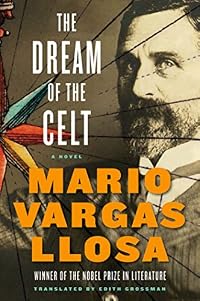
The Dream of the Celt
by Mario Vargas Llosa
On This Page
Description
"In 1916, the Irish nationalist Roger Casement was hanged by the British government for treason. Casement had dedicated his extraordinary life to improving the plight of oppressed peoples around the world--especially the native populations in the Belgian Congo and the Amazon--but when he dared to draw a parallel between the injustices he witnessed in African and American colonies and those committed by the British in Northern Ireland, he became involved in a cause that led to his show more imprisonment and execution. Ultimately, the scandals surrounding Casement's trial and eventual hanging tainted his image to such a degree that his pioneering human rights work wasn't fully reexamined until the 1960s."--Dust jacket. show lessTags
Recommendations











Member Recommendations
gust Met een uitgebreid hoofdstuk over Roger Casement het hoofpersonage uit Llosa's roman.
Member Reviews
My third historical novel in a row. And it was not nearly as good as Hilary Mantel's Bring Up the Bodies or Laurent Binet's HHhH (not to mention Vargas Llosa's absolutely brilliant The Feast of the Goat or epic The War at the End of the World). Although it was still worth reading.
Bring Up the Bodies is deeply immersed in its history, but tells its story as a novel, largely dialogue between the characters, that makes their psychologies and motivations come alive--all while wearing its history lightly with little exposition or digressions into history. HHhH is an experimental novel that tries to faithfully recount its history, reluctantly follows novelistic conventions for short spurts (and quite well), but then retreats into the show more narrator's voice to apologize for fabricating anything.
In contrast, the majority of The Dream of the Celt reads more like a history book or biography than a novel. Those parts have little dialogue, few invented characters, and very extended descriptions of Roger Casement's trips to investigate and report on the epic atrocities in King Leopold's Congo and the Putumayo region of Peruvian Amazonia. These parts are almost always interesting (and horrifying), rarely tedious, but are not infused with anything of the special possibilities that is afforded by the novel of going deeper into a character's head, shifting perspectives, showing through stories, a plot, developing multiple characters, or just about anything else.
These historical chapters alternate with somewhat shorter chapters that depict Casement's final days before his execution for treason in Pentonville prison. These are more novelistic, with dialogue, somewhat more interesting characters (e.g., the prison's sheriff), and lots of flashbacks to Casement's role in what eventually became the Easter Uprising. These are perfectly fine, fast reading, but do not come anywhere close to The Feast of the Goat.
Altogether much of the interest of the book comes from learning about Roger Casement (who was largely new to me), more about the Congo and Putumayo, and the Easter Uprising and how that period in Ireland's struggle for independence intersected with the First World War. All interestingly told. And this is reason enough to read the novel. show less
Bring Up the Bodies is deeply immersed in its history, but tells its story as a novel, largely dialogue between the characters, that makes their psychologies and motivations come alive--all while wearing its history lightly with little exposition or digressions into history. HHhH is an experimental novel that tries to faithfully recount its history, reluctantly follows novelistic conventions for short spurts (and quite well), but then retreats into the show more narrator's voice to apologize for fabricating anything.
In contrast, the majority of The Dream of the Celt reads more like a history book or biography than a novel. Those parts have little dialogue, few invented characters, and very extended descriptions of Roger Casement's trips to investigate and report on the epic atrocities in King Leopold's Congo and the Putumayo region of Peruvian Amazonia. These parts are almost always interesting (and horrifying), rarely tedious, but are not infused with anything of the special possibilities that is afforded by the novel of going deeper into a character's head, shifting perspectives, showing through stories, a plot, developing multiple characters, or just about anything else.
These historical chapters alternate with somewhat shorter chapters that depict Casement's final days before his execution for treason in Pentonville prison. These are more novelistic, with dialogue, somewhat more interesting characters (e.g., the prison's sheriff), and lots of flashbacks to Casement's role in what eventually became the Easter Uprising. These are perfectly fine, fast reading, but do not come anywhere close to The Feast of the Goat.
Altogether much of the interest of the book comes from learning about Roger Casement (who was largely new to me), more about the Congo and Putumayo, and the Easter Uprising and how that period in Ireland's struggle for independence intersected with the First World War. All interestingly told. And this is reason enough to read the novel. show less
El sueño del celta
Mario Vargas Llosa
Publicado: 2010 | 431 páginas
Novela Histórico
«El sueño del celta» es una novela histórica, última creación de Mario Vargas Llosa, que salió a la luz coronando este 2010 en que fue distinguido con el Premio Nobel de Literatura. Narra una aventura casi épica, que empieza en el Congo en 1903 y termina en una cárcel de Londres, una mañana de 1916. Aquí se cuenta la peripecia vital de un hombre de leyenda: el irlandés Roger Casement, nacido el las afueras de Dublín. Héroe y villano, traidor y libertario, moral e inmoral, su figura múltiple se apaga y renace tras su muerte en la horca, por orden del gobierno británico. Casement, que se desempeñaba como diplomático para el gobierno show more inglés, fue uno de los primeros europeos en denunciar los horrores del colonialismo. De sus viajes al Congo Belga y a la Amazonía sudamericana quedaron dos informes memorables y escandalosos que conmocionaron a la sociedad de su tiempo por los espantos que describían: masacres, esclavitud, castigos inhumanos, mutilaciones, niñas violadas y hombres quemados vivos, entre otras barbaridades... Estos dos viajes y lo que allí vio cambiarían a Casement para siempre, haciéndole emprender otra travesía, en este caso intelectual y cívica, tanto o más devastadora. La que lo llevó a enfrentarse a una Inglaterra a la que admiraba y a militar activamente en la causa del nacionalismo irlandés. También en la intimidad, Roger Casement fue un personaje múltiple: la publicación de fragmentos de unos diarios, de veracidad dudosa, ya que se sospecha de un montaje del Foreign Office para desacreditarlo, en los últimos días de su vida, airearon unas escabrosas aventuras sexuales que le valieron el desprecio de muchos compatriotas. «El sueño del celta» describe una aventura existencial, en la que la oscuridad del alma humana aparece en su estado más puro y, por tanto, más enfangado. Una novela mayor de Mario Vargas Llosa. show less
Mario Vargas Llosa
Publicado: 2010 | 431 páginas
Novela Histórico
«El sueño del celta» es una novela histórica, última creación de Mario Vargas Llosa, que salió a la luz coronando este 2010 en que fue distinguido con el Premio Nobel de Literatura. Narra una aventura casi épica, que empieza en el Congo en 1903 y termina en una cárcel de Londres, una mañana de 1916. Aquí se cuenta la peripecia vital de un hombre de leyenda: el irlandés Roger Casement, nacido el las afueras de Dublín. Héroe y villano, traidor y libertario, moral e inmoral, su figura múltiple se apaga y renace tras su muerte en la horca, por orden del gobierno británico. Casement, que se desempeñaba como diplomático para el gobierno show more inglés, fue uno de los primeros europeos en denunciar los horrores del colonialismo. De sus viajes al Congo Belga y a la Amazonía sudamericana quedaron dos informes memorables y escandalosos que conmocionaron a la sociedad de su tiempo por los espantos que describían: masacres, esclavitud, castigos inhumanos, mutilaciones, niñas violadas y hombres quemados vivos, entre otras barbaridades... Estos dos viajes y lo que allí vio cambiarían a Casement para siempre, haciéndole emprender otra travesía, en este caso intelectual y cívica, tanto o más devastadora. La que lo llevó a enfrentarse a una Inglaterra a la que admiraba y a militar activamente en la causa del nacionalismo irlandés. También en la intimidad, Roger Casement fue un personaje múltiple: la publicación de fragmentos de unos diarios, de veracidad dudosa, ya que se sospecha de un montaje del Foreign Office para desacreditarlo, en los últimos días de su vida, airearon unas escabrosas aventuras sexuales que le valieron el desprecio de muchos compatriotas. «El sueño del celta» describe una aventura existencial, en la que la oscuridad del alma humana aparece en su estado más puro y, por tanto, más enfangado. Una novela mayor de Mario Vargas Llosa. show less
This was a difficult read. Ten pages a day was normally the most I could take. The cruelty it described was right there and I could only endure so much in one sitting. This is a fictional version of the life of a real person, Roger Casement. He lived and died long before I was born. Before I read this book I had never heard of Roger Casement. But Mario Vargas Llosa clearly knew a lot about him. He also sees Roger Casement as an unsung hero. This book attempts to correct the record.
Casement started his career as a Irish Protestant, loyally joining the British Foreign Service looking forward to serving in the magical continent of Africa at the time when Stanley was searching for the missing Dr Livingston. He, like many others, believed in show more the mission. To bring to the people living in darkness the benefits of Christianity and modernity. Leopold II controlled the Congo with its natural resources. Casement became appalled at the cruelties visited upon the native populations on a regular basis. Human life was considered expendable in the unrelenting effort to extract the richness of the rubber growing in the jungle. The torture, the maiming, the killing, were integral to the colonial experience. Casement was appalled and for twenty years he documented the atrocities and wrote a report for the Foreign Office naming names and describing at length the destruction of the indigenous population who were systematically enslaved. The companies under license from the Belgium monarch took advantage of the native population’s inability to read the contracts, and committed the tribes to supply the labor needed to extract the rubber. The “contracts” were enforced brutally.
Casement’s report was published to wide acclaim in Britain. The Foreign Service realized that if Casement returned to the Congo he was unlikely to survive, even as the British Consul. They asked him to investigate what was happening in Amazonia. Casement quickly saw it was just like the Congo, a land where the indigenous people were being brutally victimized to extract the natural resources. But now this was being done by a British company and people in England were the beneficiaries. Casement saw his role as documenting everything. He was even knighted by the King in recognition of his service. The British company responded to say these events happened without their knowledge and those involved would be fired and prosecuted. The Foreign Office asked Casement to confirm the company was following through. After only a very brief stay Casement found that no one was being prosecuted and to avoid being killed Casement quickly returned to England. The Foreign Service asked him to become the British Consul in Argentina. Casement resigned citing poor health.
Casement could no longer serve the Empire which had colonized Ireland for hundreds of years. Casement became a outspoken proponent of Ireland’s independence. He traveled to the U.S. several times to raise funds to buy guns and ammunition for the rebellion. He began to be the object of surveillance by the British Intelligence Service and viewed with suspicion. Casement actually opposed a rebellion as he saw little Ireland as being easily defeated by the much larger British. Those anxious for an active rebellion were not pleased. Then World War I happened. Casement was convinced that Ireland’s only hope of a successful rebellion was by coordinating it with Germany. He bought in to the belief that the enemy of my enemy was my friend. He convinced Germany to allow him to meet with Irish POWs. Almost all Irish POWs rejected Casement’s call to work with the enemy they had just been fighting. He was able to recruit about fifty men to join an Irish military unit and wear a uniform which Casement designed. The Germans also agreed to supply guns and ammunition. When the Germans were told the rebellion would be starting regardless of when Germans wanted it, the Germans transported Casement in a submarine along with a freighter carrying some weapons. The weapons were abandoned at sea and Casement, as he landed, was met by British Intelligence and immediately arrested as a traitor.
Most of this we learn in retrospection as Casement is awaiting execution after being convicted of treason. Given his illustrious career his petition for clemency was supported by many but there was a major problem. Throughout Casement’s career he kept an extensive diary. Not only did it document the atrocities he uncovered it also described hundreds of homosexual encounters and lusting for beautiful young boys that would be considered pedophilia and stalking. These diaries have been kept from public review for a century and many believed were fabrications of British Intelligence. The damage was so severe even close friends like Joseph Conrad declined to support his petition for clemency. Just before execution Casement converted to Catholicism
So how does Mario Vargas Llosa enter the picture? Casement’s work in Amazonia documenting the mistreatment of the indigenous people of Peru is the answer. Casement’s legacy has been revisited especially in Ireland and Peru and he is now seen as a hero of Irish independence. But what about the homosexuality? Vargas Llosa is an author who understands the imagination. In a postscript we learn of the extensive research that has gone into the novel. Vargas Llosa believes that many of the encounters were actually products of Casement’s imagination and lusting for events he knew were forbidden.
A difficult but worthwhile read. show less
Casement started his career as a Irish Protestant, loyally joining the British Foreign Service looking forward to serving in the magical continent of Africa at the time when Stanley was searching for the missing Dr Livingston. He, like many others, believed in show more the mission. To bring to the people living in darkness the benefits of Christianity and modernity. Leopold II controlled the Congo with its natural resources. Casement became appalled at the cruelties visited upon the native populations on a regular basis. Human life was considered expendable in the unrelenting effort to extract the richness of the rubber growing in the jungle. The torture, the maiming, the killing, were integral to the colonial experience. Casement was appalled and for twenty years he documented the atrocities and wrote a report for the Foreign Office naming names and describing at length the destruction of the indigenous population who were systematically enslaved. The companies under license from the Belgium monarch took advantage of the native population’s inability to read the contracts, and committed the tribes to supply the labor needed to extract the rubber. The “contracts” were enforced brutally.
Casement’s report was published to wide acclaim in Britain. The Foreign Service realized that if Casement returned to the Congo he was unlikely to survive, even as the British Consul. They asked him to investigate what was happening in Amazonia. Casement quickly saw it was just like the Congo, a land where the indigenous people were being brutally victimized to extract the natural resources. But now this was being done by a British company and people in England were the beneficiaries. Casement saw his role as documenting everything. He was even knighted by the King in recognition of his service. The British company responded to say these events happened without their knowledge and those involved would be fired and prosecuted. The Foreign Office asked Casement to confirm the company was following through. After only a very brief stay Casement found that no one was being prosecuted and to avoid being killed Casement quickly returned to England. The Foreign Service asked him to become the British Consul in Argentina. Casement resigned citing poor health.
Casement could no longer serve the Empire which had colonized Ireland for hundreds of years. Casement became a outspoken proponent of Ireland’s independence. He traveled to the U.S. several times to raise funds to buy guns and ammunition for the rebellion. He began to be the object of surveillance by the British Intelligence Service and viewed with suspicion. Casement actually opposed a rebellion as he saw little Ireland as being easily defeated by the much larger British. Those anxious for an active rebellion were not pleased. Then World War I happened. Casement was convinced that Ireland’s only hope of a successful rebellion was by coordinating it with Germany. He bought in to the belief that the enemy of my enemy was my friend. He convinced Germany to allow him to meet with Irish POWs. Almost all Irish POWs rejected Casement’s call to work with the enemy they had just been fighting. He was able to recruit about fifty men to join an Irish military unit and wear a uniform which Casement designed. The Germans also agreed to supply guns and ammunition. When the Germans were told the rebellion would be starting regardless of when Germans wanted it, the Germans transported Casement in a submarine along with a freighter carrying some weapons. The weapons were abandoned at sea and Casement, as he landed, was met by British Intelligence and immediately arrested as a traitor.
Most of this we learn in retrospection as Casement is awaiting execution after being convicted of treason. Given his illustrious career his petition for clemency was supported by many but there was a major problem. Throughout Casement’s career he kept an extensive diary. Not only did it document the atrocities he uncovered it also described hundreds of homosexual encounters and lusting for beautiful young boys that would be considered pedophilia and stalking. These diaries have been kept from public review for a century and many believed were fabrications of British Intelligence. The damage was so severe even close friends like Joseph Conrad declined to support his petition for clemency. Just before execution Casement converted to Catholicism
So how does Mario Vargas Llosa enter the picture? Casement’s work in Amazonia documenting the mistreatment of the indigenous people of Peru is the answer. Casement’s legacy has been revisited especially in Ireland and Peru and he is now seen as a hero of Irish independence. But what about the homosexuality? Vargas Llosa is an author who understands the imagination. In a postscript we learn of the extensive research that has gone into the novel. Vargas Llosa believes that many of the encounters were actually products of Casement’s imagination and lusting for events he knew were forbidden.
A difficult but worthwhile read. show less
Find myself irritated once more that Goodreads doesn’t allow half-star ratings, because this book for me was exactly a 2.5. It is neither above nor below average. It is just... fine. In a month or two I will have completely forgotten the fact that I read it at all.
So what makes The Dream of the Celt so middling, so unexceptional, so mediocre? It’s well-written (and well-translated, thanks to the ever-wonderful Edith Grossman) and very, very thorough, but it never actually gets to the heart of its subject, Roger Casement. There are long stretches of this book that read like passages from a Wikipedia article, complete with names and dates that bounced right off my brain. Vargas Llosa clearly researched exhaustively for this book, and show more he does a good job of synthesising it all into a biographical narrative, but this is the narrative of the life of one man, and by the end I really didn’t feel as if I knew that man at all. I didn’t know what made him tick. I got a brief sketch, a shadow, an idea, but nothing more.
I feel that Mario Vargas Llosa never got to the heart of Roger Casement because that would entail an almost fictional creation of a character with which the reader could sympathise. Casement’s been dead for over a hundred years, can’t very well interview him, and to recreate his personality from scant letters and secondhand accounts would require some leaps of creativity that Vargas Llosa may have been uncomfortable doing. But without that, we’re left with a sort of hollow shell, a name, Roger Casement, that doesn’t really connote anyone real, just these cold and shallow lists of facts and deeds and associations. There is more to a person that that, there’s a spark of life, as stupid as that sounds, and to write a book like this without actually coming close to an exhumation of the soul of Roger Casement is ultimately a useless enterprise—one might as well read a Wikipedia article, for all the warmth and humanity contained therein.
I initially read this for my global literature challenge, but since it focuses so much on Ireland, I don’t feel it’s a very good fit for a Peruvian novel. I may replace it with another book from Peru (that actually involves Peru) but for now it’ll stay.
____________________
Global Challenge: Peru show less
So what makes The Dream of the Celt so middling, so unexceptional, so mediocre? It’s well-written (and well-translated, thanks to the ever-wonderful Edith Grossman) and very, very thorough, but it never actually gets to the heart of its subject, Roger Casement. There are long stretches of this book that read like passages from a Wikipedia article, complete with names and dates that bounced right off my brain. Vargas Llosa clearly researched exhaustively for this book, and show more he does a good job of synthesising it all into a biographical narrative, but this is the narrative of the life of one man, and by the end I really didn’t feel as if I knew that man at all. I didn’t know what made him tick. I got a brief sketch, a shadow, an idea, but nothing more.
I feel that Mario Vargas Llosa never got to the heart of Roger Casement because that would entail an almost fictional creation of a character with which the reader could sympathise. Casement’s been dead for over a hundred years, can’t very well interview him, and to recreate his personality from scant letters and secondhand accounts would require some leaps of creativity that Vargas Llosa may have been uncomfortable doing. But without that, we’re left with a sort of hollow shell, a name, Roger Casement, that doesn’t really connote anyone real, just these cold and shallow lists of facts and deeds and associations. There is more to a person that that, there’s a spark of life, as stupid as that sounds, and to write a book like this without actually coming close to an exhumation of the soul of Roger Casement is ultimately a useless enterprise—one might as well read a Wikipedia article, for all the warmth and humanity contained therein.
I initially read this for my global literature challenge, but since it focuses so much on Ireland, I don’t feel it’s a very good fit for a Peruvian novel. I may replace it with another book from Peru (that actually involves Peru) but for now it’ll stay.
____________________
Global Challenge: Peru show less
Roger Casement is a figure in the history of anti-colonialism who is no longer widely remembered. In this exceedingly well-researched historical novel, Vargas Llosa recounts Casement's remarkable work at the turn of the 20th century to draw the world's attention to the real meaning and motives of the colonial adventures of the European powers. Casement was a Irishman of the Protestant class who began his career with a commercial and later diplomatic posting to the Congo. There he became aware of the horrendous abuse of native people who were enslaved, tortured and often murdered by white colonists, mostly Belgians in the service of King Leopold, in pursuit of harvesting natural rubber from the jungles. Casement's report to the British show more government exposed to the world the atrocities committed under the guise of bringing civilization to the "savage" peoples of the region. His report brought shame to the Belgian occupiers and world sanction against their practices. (For a complete account of the horrors of the Belgians in the Congo, see King Leopold's Ghost by Adam Hochshield.)
After exposing the horrors in the Congo, Casement was dispatched to the Amazon where even viler abuses were exacted against the Indians of the basin, this also in pursuit of rubber by a British commercial enterprise. Casement's report again received world wide attention, although promises to stop the abuses were never fully realized. For his efforts, he was knighted and was a figure of admiration in many parts of the world.
Over time Casement equated the rapacity and exploitation of colonial rule with the centuries-long British domination of Ireland, his native country. He fell in with the nationalist movement and came to believe that only the violent overthrow of British rule would bring freedom to the Irish people. At the outbreak of WWI, and in collusion with other well-known nationalists, Casement conceived a scheme to enlist Irish prisoners of war in German camps to form an Irish Brigade which would, alongside German troops, engage the British in Ireland to drive them from the country. This failed to materialize, but he persuaded the German government to supply arms to the Irish patriots. Casement learned very late of the planned Easter week rising and argued against it as a futile waste of blood that would only make martyrs of the nationalist leaders. Nonetheless, the arms were shipped secretly to the west of Ireland, but the British army quickly captured them and arrested Casement.
He was put on trial for treason and sentenced to hanging. The book alternates chapters between Casement's work in the Congo and Amazon and his prison reflections in the days before his execution.
One of the controversial aspects of the story is the discovery and publication by British authorities of Casement's so-called "Black Diaries" in which he recounted his sexual encounters with men and young boys. Vargas Llosa poses the thought that, while Casement was undoubtedly a homosexual, the diaries at least in some part were his fantasies about sexual contacts and not completely the reality of his sexual life. The diaries did much to quell any efforts to spare Casement's life and may have over the many years since kept Casement from receiving the praise given to other heros of the Irish independence movement. It was only in 1965 that the British government finally consented to the reinterrment of Casement's remains in Ireland, where he was given a patriot's recognition.
While a work of fiction, Varga Llosa's book is clearly an accurate history of Casement and his campaign against the evils of colonialism. The fervor of Casement for Irish independence led him to his alliance with Germany, which was not only a foolish quest, but brought the enmity of the British toward him at this time of intense patriotism and anti-German sentiment. In pleading his oppostion to the Easter rising as bound to bring only the bloody sacrifice of the nationalist leadership, he did not imagine that it was the martyrdom of Pearse, Connolley, Plunkett and the others that would stimulate the ever-growing sentiment against British dominion that ultimately saw the independence of Ireland.
This complex and important figure in world and Irish history deserves the sensitive and thoughtful treatment given him in Vargas Llosa's excellent book. show less
After exposing the horrors in the Congo, Casement was dispatched to the Amazon where even viler abuses were exacted against the Indians of the basin, this also in pursuit of rubber by a British commercial enterprise. Casement's report again received world wide attention, although promises to stop the abuses were never fully realized. For his efforts, he was knighted and was a figure of admiration in many parts of the world.
Over time Casement equated the rapacity and exploitation of colonial rule with the centuries-long British domination of Ireland, his native country. He fell in with the nationalist movement and came to believe that only the violent overthrow of British rule would bring freedom to the Irish people. At the outbreak of WWI, and in collusion with other well-known nationalists, Casement conceived a scheme to enlist Irish prisoners of war in German camps to form an Irish Brigade which would, alongside German troops, engage the British in Ireland to drive them from the country. This failed to materialize, but he persuaded the German government to supply arms to the Irish patriots. Casement learned very late of the planned Easter week rising and argued against it as a futile waste of blood that would only make martyrs of the nationalist leaders. Nonetheless, the arms were shipped secretly to the west of Ireland, but the British army quickly captured them and arrested Casement.
He was put on trial for treason and sentenced to hanging. The book alternates chapters between Casement's work in the Congo and Amazon and his prison reflections in the days before his execution.
One of the controversial aspects of the story is the discovery and publication by British authorities of Casement's so-called "Black Diaries" in which he recounted his sexual encounters with men and young boys. Vargas Llosa poses the thought that, while Casement was undoubtedly a homosexual, the diaries at least in some part were his fantasies about sexual contacts and not completely the reality of his sexual life. The diaries did much to quell any efforts to spare Casement's life and may have over the many years since kept Casement from receiving the praise given to other heros of the Irish independence movement. It was only in 1965 that the British government finally consented to the reinterrment of Casement's remains in Ireland, where he was given a patriot's recognition.
While a work of fiction, Varga Llosa's book is clearly an accurate history of Casement and his campaign against the evils of colonialism. The fervor of Casement for Irish independence led him to his alliance with Germany, which was not only a foolish quest, but brought the enmity of the British toward him at this time of intense patriotism and anti-German sentiment. In pleading his oppostion to the Easter rising as bound to bring only the bloody sacrifice of the nationalist leadership, he did not imagine that it was the martyrdom of Pearse, Connolley, Plunkett and the others that would stimulate the ever-growing sentiment against British dominion that ultimately saw the independence of Ireland.
This complex and important figure in world and Irish history deserves the sensitive and thoughtful treatment given him in Vargas Llosa's excellent book. show less
I don’t recall ever reading anything by Nobel Prize winner Vargas Llosa before, so I can’t compare this historical novel and thinly-disguised biography to his other work, but the subject--the life of Sir Roger Casement--is one which interests me deeply. Adam Hochschild’s 1998 book of the Congo, King Leopold's Ghost: A Story of Greed, Terror and Heroism in Colonial Africa, introduced me to the unforgettable figure of Roger Casement and I see Vargas Llosa was similarly captured. Casement was a man who harbored within him enormous contradictions and who struggled to live a life of meaning. Despite being hung for a traitor, he was a man of honor who stood up for his convictions, and who died for them.
Roger Casement (1864-1916) was show more born just outside of Dublin, Ireland, in a seaside location given variously as Sandycove or Kingstown. Though baptized as a child, Casement considered himself Protestant most of his life and embraced his Catholicism only shortly before his death. Much of what we know about him comes from his own journals in which he recorded his work, thoughts, travels, and sexual encounters. Vargas Llosa’s first section detailing Casement’s life and work in the Congo tracked so closely with Hochschild’s account that I realized both must have used the same source materials.
It is the second section, called Amazonia, which held my attention most closely. After Casement works with Protestant missionaries and the journalist and human rights activist E.D. Morel in the Congo disclosing the atrocities committed in the push to harvest rubber, he is dispatched by the British government to Peru to do the same there. He was not a well man by this time, for a white man in the tropics often developed debilitating illnesses that recurred with alarming frequency. Returning to the hot, humid environment of the Amazonian jungle caused his health to further fray. A photograph of Casement in Peru takes one aback; in it Casement looks positively skeletal.
Casement (on left) w/ Representative of Peruvian Amazon Company
Vargas Llosa describes Casement’s life in Peru with a verisimilitude and authenticity that makes those passages come alive. Casement had a nasty assignment, travelling to remote and dangerous outposts to conduct interviews and write detailed reports on atrocities. He couldn’t wait to be shot of it. But he persevered until he had enough damning evidence, only to find that the business interests trumped human rights in the Amazon, as they often did in colonial possessions.
Gradually Casement came to realize that freedom is something one must seize for oneself:
Vargas Llosa also captures the beauty and pathos of Casement’s homosexual encounters, for Casement was a gay man in a world constrained by its own harsh and corrupted morality. By the time he lived in Peru, Casement was increasingly indiscreet in his encounters and his recording of them in his journals. Vargas Llosa makes the point that Casement must have keenly felt his solitary, unmarried life. When Casement leaves the Amazon and returns to Europe via New York, he encounters a handsome young Slav, Eivind, for whom he falls heavily, thinking he is finally enjoying a mutual and adult relationship. Eivind will be his undoing, for he sells Casement’s secrets, including his determination to work for Irish independence, to the British.
Casement had been knighted after his work in Africa. When, in a roiled and pre-WWI Europe, he made the decision to go to a militarizing Germany to get aid for Irish rebels, the British felt sufficiently betrayed to try him for treason. While in Germany, Casement apparently considered every possible means to weaken the hold of the British on her colonies wherever they might be, strengthening the case by the prosecution and ensuring he would never be granted clemency. He was hung in 1916, a mere three months after his dawn capture April 21 at McKenna’s Fort in Ireland.
The last section of Vargas Llosa’s novel details the confusion of Casement’s botched return to Ireland and the support for his case, or lack of it, by longtime friends and admirers. Many old friends, including E.D. Morel, considered Casement seriously off base in his collaboration with the German machine against England, and so never responded to his letters. Though his hangman called him "the bravest man it fell to my unhappy lot to execute," even his Irish compatriots could not hail him wholeheartedly as a nationalist because rumors of his homosexuality offended their sense of moral right.
In the Epilogue, Vargas Llosa celebrates the return of Casement to the popular imagination:
In 1965, Casement’s bones were repatriated and rest now in Dublin’s Glasnevin cemetery.
a> show less
Roger Casement (1864-1916) was show more born just outside of Dublin, Ireland, in a seaside location given variously as Sandycove or Kingstown. Though baptized as a child, Casement considered himself Protestant most of his life and embraced his Catholicism only shortly before his death. Much of what we know about him comes from his own journals in which he recorded his work, thoughts, travels, and sexual encounters. Vargas Llosa’s first section detailing Casement’s life and work in the Congo tracked so closely with Hochschild’s account that I realized both must have used the same source materials.
It is the second section, called Amazonia, which held my attention most closely. After Casement works with Protestant missionaries and the journalist and human rights activist E.D. Morel in the Congo disclosing the atrocities committed in the push to harvest rubber, he is dispatched by the British government to Peru to do the same there. He was not a well man by this time, for a white man in the tropics often developed debilitating illnesses that recurred with alarming frequency. Returning to the hot, humid environment of the Amazonian jungle caused his health to further fray. A photograph of Casement in Peru takes one aback; in it Casement looks positively skeletal.
Casement (on left) w/ Representative of Peruvian Amazon Company
Vargas Llosa describes Casement’s life in Peru with a verisimilitude and authenticity that makes those passages come alive. Casement had a nasty assignment, travelling to remote and dangerous outposts to conduct interviews and write detailed reports on atrocities. He couldn’t wait to be shot of it. But he persevered until he had enough damning evidence, only to find that the business interests trumped human rights in the Amazon, as they often did in colonial possessions.
Gradually Casement came to realize that freedom is something one must seize for oneself:
"I have reached the absolute conviction that the only way the indigenous people of Putumayo can emerge from the miserable condition to which they have been reduced is by rising up in arms against their masters. It is an illusion devoid of all reality to believe…that this state will change when…there are authorities, judges, police to enforce the laws that have prohibited servitude and slavery in Peru since 1854…In this society the state is an inseparable part of the machinery of exploitation and extermination…If they want to be free they have to conquer their freedom with their arms and their courage…We Irish are like the Huitotos, the Boras, the Andoques, and the Muinanes of Putumayo. Colonized, exploited and condemned to be that way forever if we continue trusting in British laws, institutions, and governments to attain our freedom. They will never give it to us. Why would the Empire that colonized us do that unless it felt an irresistible pressure that obliged it to do so? That pressure can only come from weapons."
Vargas Llosa also captures the beauty and pathos of Casement’s homosexual encounters, for Casement was a gay man in a world constrained by its own harsh and corrupted morality. By the time he lived in Peru, Casement was increasingly indiscreet in his encounters and his recording of them in his journals. Vargas Llosa makes the point that Casement must have keenly felt his solitary, unmarried life. When Casement leaves the Amazon and returns to Europe via New York, he encounters a handsome young Slav, Eivind, for whom he falls heavily, thinking he is finally enjoying a mutual and adult relationship. Eivind will be his undoing, for he sells Casement’s secrets, including his determination to work for Irish independence, to the British.
Casement had been knighted after his work in Africa. When, in a roiled and pre-WWI Europe, he made the decision to go to a militarizing Germany to get aid for Irish rebels, the British felt sufficiently betrayed to try him for treason. While in Germany, Casement apparently considered every possible means to weaken the hold of the British on her colonies wherever they might be, strengthening the case by the prosecution and ensuring he would never be granted clemency. He was hung in 1916, a mere three months after his dawn capture April 21 at McKenna’s Fort in Ireland.
The last section of Vargas Llosa’s novel details the confusion of Casement’s botched return to Ireland and the support for his case, or lack of it, by longtime friends and admirers. Many old friends, including E.D. Morel, considered Casement seriously off base in his collaboration with the German machine against England, and so never responded to his letters. Though his hangman called him "the bravest man it fell to my unhappy lot to execute," even his Irish compatriots could not hail him wholeheartedly as a nationalist because rumors of his homosexuality offended their sense of moral right.
In the Epilogue, Vargas Llosa celebrates the return of Casement to the popular imagination:
"With the revolution in customs, principally in the area of sexuality, in Ireland, the name of Casement gradually, though always with reluctance and prudery, began to clear a path to being accepted for what he was: one of the greatest anticolonial fighters and defenders of human rights and indigenous cultures of his time, and a sacrificed combatant for the emancipation of Ireland. Slowly his compatriots became resigned to accepting that a hero and martyr is not an abstract prototype or a model of perfection but a human being made of contradictions and contrasts, weakness and greatness, since a man, as José Enrique Rodó wrote, ‘is many men,’ which means that angels and demons combine inextricably in his personality."
In 1965, Casement’s bones were repatriated and rest now in Dublin’s Glasnevin cemetery.
a> show less
I am ready to bestow on Mario Vargas Llosa the title of “most disappointing author” I ever read. Maybe my mistake was to start reading him with [b:The War of the End of the World|53925|The War of the End of the World|Mario Vargas Llosa|http://photo.goodreads.com/books/1327889425s/53925.jpg|3300507], because none of his books that I read since have been able to match that first experience.
“The Dream of the Celt” was certainly well researched, but maybe this is where the problem with this book lies. The story follows Roger Casement, the humanist and Irish loyalist who was sentenced to be hanged by the British government in 1916. We get lost on the information of dates and which ship the Casement rode, and who he met where, but we show more never get to “feel” what he felt or dream what he dreamed. It is too bad, because Casement – who I confess I knew nothing about – deserved better than that.
Casement, as a British diplomat, was significant in unveiling to the world the atrocities committed against the natives of the Belgium Congo and later at the rubber plantations of Peru. He was knighted by the British government for these efforts. Later, however, his Irish nationalism and idealism led him to approach the German government to help with the Irish uprising of 1916. This was certainly a controversial historical move during World War I, which muddied his image not only among the British, but also with the Irish people.
Roger Casement was also a homosexual, and the discovery of his diaries and publication of passages from it in the British media did not help the efforts by his friends and lawyers to commute his death sentence.
Now, tell me if this is not great material to write an historical book! Vargas Llosa however failed in bringing this controversial man to life, portraying him instead as one-dimensional character, lacking depth and humanity. Maybe the third-person narrator is the problem, where we are told, and not shown the character’s true feelings and experiences.
In the case of Casement’s sexual experiences, Vargas Llosa comes across as a prude. His own belief is that most of the crude descriptions of Casement’s sexual encounters are fabrications of the British government, or simply Casement’s fictional creations to deal with the frustrations of unrealized sexual fantasies. I don’t deny the possibility of the British government “re-writing” Casement’s diaries, but Vargas Llosa did miss a great opportunity to explore the sexual awakening of someone born in Victorian England immersed in a much more sensual Africa and South America. The few attempts the author makes are awkward and constrained.
Ditto on Casement’s conversion to Catholicism, which must had been a profound spiritual awakening – fuelled by political perceptions of the cultural closeness of Ireland and the Catholic religion - but that Vargas Llosa paint in strokes that are careless.
I think, Mario Vargas Llosa, that I have finally gave up on you! I will remain a fan of “The War of the End of the World” but I gave you 4 shots now, and three were misses. I just have too many other authors to read. show less
“The Dream of the Celt” was certainly well researched, but maybe this is where the problem with this book lies. The story follows Roger Casement, the humanist and Irish loyalist who was sentenced to be hanged by the British government in 1916. We get lost on the information of dates and which ship the Casement rode, and who he met where, but we show more never get to “feel” what he felt or dream what he dreamed. It is too bad, because Casement – who I confess I knew nothing about – deserved better than that.
Casement, as a British diplomat, was significant in unveiling to the world the atrocities committed against the natives of the Belgium Congo and later at the rubber plantations of Peru. He was knighted by the British government for these efforts. Later, however, his Irish nationalism and idealism led him to approach the German government to help with the Irish uprising of 1916. This was certainly a controversial historical move during World War I, which muddied his image not only among the British, but also with the Irish people.
Roger Casement was also a homosexual, and the discovery of his diaries and publication of passages from it in the British media did not help the efforts by his friends and lawyers to commute his death sentence.
Now, tell me if this is not great material to write an historical book! Vargas Llosa however failed in bringing this controversial man to life, portraying him instead as one-dimensional character, lacking depth and humanity. Maybe the third-person narrator is the problem, where we are told, and not shown the character’s true feelings and experiences.
In the case of Casement’s sexual experiences, Vargas Llosa comes across as a prude. His own belief is that most of the crude descriptions of Casement’s sexual encounters are fabrications of the British government, or simply Casement’s fictional creations to deal with the frustrations of unrealized sexual fantasies. I don’t deny the possibility of the British government “re-writing” Casement’s diaries, but Vargas Llosa did miss a great opportunity to explore the sexual awakening of someone born in Victorian England immersed in a much more sensual Africa and South America. The few attempts the author makes are awkward and constrained.
Ditto on Casement’s conversion to Catholicism, which must had been a profound spiritual awakening – fuelled by political perceptions of the cultural closeness of Ireland and the Catholic religion - but that Vargas Llosa paint in strokes that are careless.
I think, Mario Vargas Llosa, that I have finally gave up on you! I will remain a fan of “The War of the End of the World” but I gave you 4 shots now, and three were misses. I just have too many other authors to read. show less
Members
- Recently Added By
Lists

Recommend the 20 best books you've read in the last five years
2,167 works; 605 members

real people in fiction circumstances
74 works; 10 members

Books Read in 2017
4,248 works; 129 members

IMPAC Dublin Literary Award 2014 longlist
150 works; 3 members

Books translated from Romance Languages into English
102 works; 6 members

Biggest Disappointments
606 works; 163 members
Author Information

379+ Works 34,338 Members
Mario Vargas Llosa was born in Arequipa, Peru on March 28, 1936. He studied literature and law at the National University of San Marcos and received a Ph.D from the University of Madrid in 1959. He is a writer, politician, and journalist. His works vary in genre from literary criticism and journalism to comedies, murder mysteries, historical show more novels, and political thrillers. His books include The Time of the Hero, The Green House, Conversation in the Cathedral, Aunt Julia and the Scriptwriter, The Feast of the Goat, and The War of the End of the World. He has received numerous awards including the Rómulo Gallegos International Novel Prize, the Premio Leopoldo Alas in 1959, the Premio Biblioteca Breve in 1962, the Premio Planeta in 1993, the Miguel de Cervantes Prize in 1994, the Jerusalem Prize in 1995, and the Nobel Prize in Literature in 2010. (Bowker Author Biography) show less
Some Editions
Awards and Honors
Awards
Distinctions
Notable Lists
Series
Belongs to Publisher Series
Work Relationships
Is abridged in
Common Knowledge
- Canonical title
- The Dream of the Celt
- Original title
- El sueño del celta
- Alternate titles*
- The Dream of the Celt: A Novel
- Original publication date
- 2010 (original Spanish) (original Spanish); 2012 (English: Grossman) (English: Grossman)
- People/Characters
- Roger Casement; Henry Morton Stanley; Alice Stopford Green; Joseph Conrad; E. D. Morel; Herbert Ward (show all 12); Julio César Arana; William Howard Taft; Theobald von Bethmann-Hollweg; Leopold II, King of the Belgians; Eoin MacNeill; Patrick Pearse
- Important places
- Congo Free State; Leopoldville; London, England, UK; Putumayo, Peru; Iquitos, Peru; Ireland (show all 8); Dublin, Ireland; Tower of London, London, England, UK
- Important events
- World War I (1914 | 1918); Easter Rising (1916)
- Dedication*
- Para Álvaro, Gonzalo y Morgana. Y para Josefina, Leandro, Ariadna, Aitana, Isabella y Anaís.
- First words
- When they opened the door to his cell, the street noise that the stone walls had muffled came in along with the stream of light and a blast of wind, and Roger woke in alarm.
- Last words*
- (Click to show. Warning: May contain spoilers.)Il parvint encore à entendre pour la dernière fois un murmure de Mr Ellis : "Si vous retenez votre respiration, ce sera plus rapide, sir." Il obéit.
- Original language
- Spanish
*Some information comes from Common Knowledge in other languages. Click "Edit" for more information.
Classifications
- Genres
- Fiction and Literature, General Fiction, Historical Fiction
- DDC/MDS
- 863.64 — Literature & rhetoric Spanish, Portuguese, Galician literatures Spanish fiction 20th Century 1945-2000
- LCC
- PQ8498.32 .A65 .S8413 — Language and Literature French, Italian, Spanish and Portuguese literatures Spanish literature Provincial, local, colonial, etc. Spanish America
- BISAC
Statistics
- Members
- 1,279
- Popularity
- 18,929
- Reviews
- 53
- Rating
- (3.67)
- Languages
- 27 — Arabic, Bulgarian, Czech, Danish, Dutch, English, Finnish, French, German, Greek, Hebrew, Hungarian, Italian, Norwegian (Bokmål), Norwegian, Farsi/Persian, Polish, Romanian, Russian, Serbian, Croatian, Slovenian, Spanish, Swedish, Turkish, Portuguese (Portugal), Chinese, simplified
- Media
- Paper, Audiobook, Ebook
- ISBNs
- 55
- ASINs
- 18