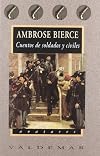
In the Midst of Life: Tales of Soldiers and Civilians
by Ambrose Bierce
All Stories by Ambrose Bierce (1), Collected Works of Ambrose Bierce (2)
On This Page
Description
This revised edition of Ambrose Bierce's 1892 collection of "Soldiers" and "Civilians" tales fills a void in American literature. A veteran of the Civil War and a journalist known for his integrity and biting satire, Ambrose Bierce was also a lively short-story writer of considerable depth and power. As San Francisco's most famous journalist during the late-nineteenth and early-twentieth centuries, Bierce was hired by William Randolph Hearst to write a column for San Francisco Examiner, show more where his "Soldiers" and "Civilians" tales first appeared during the late 1880s.By the standards of his day and ours, Bierce's journalism was often brilliantly insightful, viciously libelous, petty, and grand, frequently in the space of a single paragraph. This edition reveals the often compelling artistry of Bierce's original versions of the tales and the intentionally intricate design and scope of the original collection. show lessTags
Recommendations

















Member Reviews
Dans Morts violentes, il n'y a pas de fantômes ou de phénomènes anormaux mais une exploration clinique de la réalité la plus crue, dont l'issue est l'insoutenable horreur de la mort. A travers les cauchemards de la guerre de Sécession, qui valent bien ceux d'Edgar Poe, Bierce porte la short story à son plus haut degré de perfection et s'affirme comme l'un de précurseurs de la littérature américaine du XXème siècle.
Ambrose Gwinnett Bierce (1842-1914?), nacido en Ohio, fue un escritor, periodista, poeta y veterano de la Guerra Civil Estadounidense, donde sirvió en el Ejército de la Unión y participó en batallas clave como Chickamauga. Conocido por su ingenio cínico y satírico, Bierce se destacó en el periodismo en San Francisco y Washington, donde criticó duramente la corrupción y la hipocresía social. Su obra más célebre incluye El diccionario del diablo (1911), una colección de definiciones mordaces, y cuentos cortos que exploran temas de muerte, horror y el absurdo de la guerra. Desapareció misteriosamente en México en 1913 mientras observaba la Revolución Mexicana, alimentando leyendas sobre su destino. En su narrativa, Bierce show more empleaba un estilo innovador y desconcertante: finales inesperados e irónicos que subvertían las expectativas del lector, combinados con flashbacks y estructuras no lineales que "retroceden" en el tiempo para revelar contextos ocultos, creando suspense psicológico y un efecto de revelación impactante, como en sus relatos bélicos donde lo sucedido se reconstruye a través de perspectivas fragmentadas.
Estos son los relatos contenidos en el libro, donde destaco los que más me gustaron:
SOLDADOS:
Un jinete en el cielo (A Horseman in the Sky, 1889). Durante la Guerra Civil, un joven soldado unionista enfrenta un dilema moral profundo en una misión de vigilancia en las colinas de Virginia, donde debe decidir el destino de un jinete confederado avistado en una posición estratégica.
Un suceso en el puente sobre el río Owl (An Occurrence at Owl Creek Bridge, 1891). Un plantador sureño, Peyton Farquhar, es capturado y condenado a ser ahorcado por soldados unionistas en un puente remoto durante la Guerra Civil, explorando sus pensamientos y percepciones en los instantes previos a la ejecución. Este relato me sigue fascinando como la primera vez.
Chickamauga (Chickamauga, 1889). Un niño de seis años, jugando a ser soldado en el bosque de Georgia durante la Guerra Civil, se encuentra accidentalmente con un grupo de hombres heridos y exhaustos que avanzan en retirada, desencadenando una serie de eventos caóticos e inquietantes.
Un hijo de los dioses (A Son of the Gods, 1888).
Uno de los desaparecidos (One of the Missing, 1888).
Muerto en Resaca (Killed at Resaca, 1887).
El caso de la zanja de Coulter (The Affair at Coulter's Notch, 1889).
Un golpe de gracia (The Coup de Grâce, 1889).
Parker Adderson, filósofo (Parker Adderson, Philosopher, 1891).
Un asunto de avanzadas (An Affair of Outposts, 1897).
Historia de una conciencia (The Story of a Conscience, 1890).
Una clase de oficial (One Kind of Officer, 1893).
Un oficial, un hombre (One Officer, One Man, 1889).
George Thurston (George Thurston, 1883).
El sinsonte (The Mocking-Bird, 1891).
CIVILES:
El hombre que sale de la nariz (The Man Out of the Nose, 1909).
Una aventura en Brownville (An Adventure at Brownville, 1893).
El famoso legado de Gilson (The Famous Gilson Bequest, 1878).
El suplicante (The Applicant, 1892).
El acompañante del muerto (A Watcher by the Dead, 1889). Un estudiante desafía a su profesor en una apuesta para demostrar su coraje, aceptando pasar la noche en una habitación oscura vigilando el cadáver de un desconocido, lo que pone a prueba los límites entre la razón y el terror sobrenatural.
El hombre y la serpiente (The Man and the Snake, 1891). Un erudito escéptico visita a un amigo ocultista que propone un experimento psicológico con una serpiente enjaulada, diseñado para confrontar sus miedos más profundos y revelar la fragilidad de la mente humana.
Un horror (A Holy Terror, 1882).
Las circunstancias apropiadas (The Suitable Surroundings, 1889).
La ventana sellada (The Boarded Window, 1891).
Una dama de Redhorse (A Lady from Redhorse, 1891).
Los ojos de la pantera (The Eyes of the Panther, 1891). Una joven mujer rechaza la propuesta de matrimonio de un hombre contándole una historia perturbadora de su infancia en una cabaña remota, donde un encuentro con una pantera salvaje deja una marca indeleble en su psique y despierta temores ancestrales. Otro increíble relato, sobre todo su estructura narrativa. show less
Estos son los relatos contenidos en el libro, donde destaco los que más me gustaron:
SOLDADOS:
Un jinete en el cielo (A Horseman in the Sky, 1889). Durante la Guerra Civil, un joven soldado unionista enfrenta un dilema moral profundo en una misión de vigilancia en las colinas de Virginia, donde debe decidir el destino de un jinete confederado avistado en una posición estratégica.
Un suceso en el puente sobre el río Owl (An Occurrence at Owl Creek Bridge, 1891). Un plantador sureño, Peyton Farquhar, es capturado y condenado a ser ahorcado por soldados unionistas en un puente remoto durante la Guerra Civil, explorando sus pensamientos y percepciones en los instantes previos a la ejecución. Este relato me sigue fascinando como la primera vez.
Chickamauga (Chickamauga, 1889). Un niño de seis años, jugando a ser soldado en el bosque de Georgia durante la Guerra Civil, se encuentra accidentalmente con un grupo de hombres heridos y exhaustos que avanzan en retirada, desencadenando una serie de eventos caóticos e inquietantes.
Un hijo de los dioses (A Son of the Gods, 1888).
Uno de los desaparecidos (One of the Missing, 1888).
Muerto en Resaca (Killed at Resaca, 1887).
El caso de la zanja de Coulter (The Affair at Coulter's Notch, 1889).
Un golpe de gracia (The Coup de Grâce, 1889).
Parker Adderson, filósofo (Parker Adderson, Philosopher, 1891).
Un asunto de avanzadas (An Affair of Outposts, 1897).
Historia de una conciencia (The Story of a Conscience, 1890).
Una clase de oficial (One Kind of Officer, 1893).
Un oficial, un hombre (One Officer, One Man, 1889).
George Thurston (George Thurston, 1883).
El sinsonte (The Mocking-Bird, 1891).
CIVILES:
El hombre que sale de la nariz (The Man Out of the Nose, 1909).
Una aventura en Brownville (An Adventure at Brownville, 1893).
El famoso legado de Gilson (The Famous Gilson Bequest, 1878).
El suplicante (The Applicant, 1892).
El acompañante del muerto (A Watcher by the Dead, 1889). Un estudiante desafía a su profesor en una apuesta para demostrar su coraje, aceptando pasar la noche en una habitación oscura vigilando el cadáver de un desconocido, lo que pone a prueba los límites entre la razón y el terror sobrenatural.
El hombre y la serpiente (The Man and the Snake, 1891). Un erudito escéptico visita a un amigo ocultista que propone un experimento psicológico con una serpiente enjaulada, diseñado para confrontar sus miedos más profundos y revelar la fragilidad de la mente humana.
Un horror (A Holy Terror, 1882).
Las circunstancias apropiadas (The Suitable Surroundings, 1889).
La ventana sellada (The Boarded Window, 1891).
Una dama de Redhorse (A Lady from Redhorse, 1891).
Los ojos de la pantera (The Eyes of the Panther, 1891). Una joven mujer rechaza la propuesta de matrimonio de un hombre contándole una historia perturbadora de su infancia en una cabaña remota, donde un encuentro con una pantera salvaje deja una marca indeleble en su psique y despierta temores ancestrales. Otro increíble relato, sobre todo su estructura narrativa. show less
391. In the Midst of Life Tales of Soldiers and Civilians, by Ambrose Bierce (read 23 Apr 1951) (Book of the Year) On Apr 7, 1951 I said: "Read some Ambrose Bierce stories. They are really good. I am glad I found the book. The first one I read was 'That Damned Thing' which was a good introduction. Next 'A Horseman in the Sky'--a Union sentry shoots his father's horse rather than his Confederate father. Next ' An Occurrence at Owl Bridge': a masterpiece and something I wish I had written. It is just the sort of thing I'd write if I could. Tells a story of a guy's thoughts between falling and dying while being hanged. Next: 'Chichamanga' a real horrible thing--a little 6 year old boy sees these guys at dusk after a battle: 'The man . . show more .turned upon him a face that lacked a lower jaw--from the upper teeth to the throat was a great red gap fringed with hanging shreds of flesh and splinters of bone.' But all this doesn't bother the little brat till he finds his mother: 'the white face turned upward . . the long dark hair in tangle and full of clotted blood. The greater part of the forehead . . . torn away. from the jagged hole the brain protruded, overflowing the temple, a frothy mass of gray, crowned with clusters of crimson bubbles . . .' Poe was never like this. Next: 'A Son of the Gods' is in the present tense, the only other story I remember reading in present tense was of my own composition. Next: 'One of the Missing.' It, too was my sort of story. A guy was staring down a rifle barrel and couldn't move. What a story! What an author is Ambrose Bierce!" On Apr 9 I said: "Just read a terrific Bierce story 'The Coup de Grace' Tells of a guy who finds his best friend mortally and horribly wounded on a deserted battlefield. Seeing that he seeks death, he stabs him and just then his friend's brother and his own mortal enemy and two stretcher bearers walk up: Wow! What a storyteller! Simple, effective, direct. It is all essential to his story. No surplus wordage. A devastating writer" On Apr 16 I said: "Read two great Bierce stories today. 'George Thurston' told of a scared officer who stabbed himself so the sword came out between his shoulder blades. 'The Mocking Bird' told beautifully and sadly the story of a guy who shot his twin brother. His stuff is pure poetry: 'the shrilling bird upon the bough overhead stilled her song and, flushed with sunset's crimson glory, glided silently away through the solemn spaces of the wood. At roll call that evening in the Federal camp the name William Graycock brought no response, nor ever again thereafter.' With pure simple beauty." On Apr 20: "Read a terrific Bierce story: 'A Watcher by the Dead': A character says: 'if a man were locked up all night with a corpse--alone--in a dark room--of a vacant house--with no bed covers to pull over his head--and lived through it without going altogether mad, he might justly boast himself not of woman born.' The story goes on from there." show less
No one should be allowed to advocate war
UNLESS they have read this book
AND enlist to serve in the front lines.
If you're going to talk the talk, walk the walk.
The Collected Works of Ambrose Bierce, Volume 2:
In the Midst of Life: Tales of Soldiers and Civilians
Ambrose G. Bierce (USA, 1842 – circa 1914).
Journalist · Writer • Civil War Soldier & Battle Veteran (1861-1866).
The sardonic view of human nature that informed his work – along with his vehemence as a critic, with his motto "nothing matters" – earned him the nickname "Bitter Bierce."... though he was known to encourage younger writers ...
Bierce employed a distinctive style of writing, especially in his stories. This style often embraces an abrupt beginning, dark imagery, show more vague references to time, limited descriptions, the theme of war, and impossible events.
Bierce is a master of the surprise ending. As a veteran of the American Civil War (and like many veterans) anger simmers just below the surface ... in his life and in his stories. - GR
SOLDIERS
1. A Horseman in the Sky
2. An Occurrence at Owl Creek Bridge
3. Chickamauga
4. A Son of the Gods
5. One of the Missing
6. Killed at Resaca
7. The Affair at Coulter's Notch
8. The Coup De Grâce
9. Parker Adderson, Philosopher
10. An Affair of Outposts
11. The Story of a Conscience
12. One Kind of Officer
13. One Officer, One Man
14. George Thurston
15. The Mocking-Bird
CIVILIANS
1. The Man Out of the Nose
2. An Adventure at Brownville
3. The Famous Gilson Bequest
4. The Applicant
5. A Watcher by the Dead
6. The Man and the Snake
7. A Holy Terror
8. The Suitable Surroundings
9. The Boarded Window
10. A Lady from Red Horse
11. The Eyes of the Panther show less
UNLESS they have read this book
AND enlist to serve in the front lines.
If you're going to talk the talk, walk the walk.
The Collected Works of Ambrose Bierce, Volume 2:
In the Midst of Life: Tales of Soldiers and Civilians
Ambrose G. Bierce (USA, 1842 – circa 1914).
Journalist · Writer • Civil War Soldier & Battle Veteran (1861-1866).
The sardonic view of human nature that informed his work – along with his vehemence as a critic, with his motto "nothing matters" – earned him the nickname "Bitter Bierce."... though he was known to encourage younger writers ...
Bierce employed a distinctive style of writing, especially in his stories. This style often embraces an abrupt beginning, dark imagery, show more vague references to time, limited descriptions, the theme of war, and impossible events.
Bierce is a master of the surprise ending. As a veteran of the American Civil War (and like many veterans) anger simmers just below the surface ... in his life and in his stories. - GR
SOLDIERS
1. A Horseman in the Sky
2. An Occurrence at Owl Creek Bridge
3. Chickamauga
4. A Son of the Gods
5. One of the Missing
6. Killed at Resaca
7. The Affair at Coulter's Notch
8. The Coup De Grâce
9. Parker Adderson, Philosopher
10. An Affair of Outposts
11. The Story of a Conscience
12. One Kind of Officer
13. One Officer, One Man
14. George Thurston
15. The Mocking-Bird
CIVILIANS
1. The Man Out of the Nose
2. An Adventure at Brownville
3. The Famous Gilson Bequest
4. The Applicant
5. A Watcher by the Dead
6. The Man and the Snake
7. A Holy Terror
8. The Suitable Surroundings
9. The Boarded Window
10. A Lady from Red Horse
11. The Eyes of the Panther show less
I'm setting this audio book aside. I still love the story Occurrence at Owl Creek Bridge but the rest of them are not doing anything for me. I understood when I checked it out that this was not a collection of horror stories, but I still thought I would find something of interest here. Unfortunately, I did not.
Set aside for now to possibly try again at a later time.
Set aside for now to possibly try again at a later time.
This republication on clean stock in readable type of articles written by Ambrose Bierce during and after the 1861-1865 Civil War makes this work of an important journalist and tale-teller available to contemporaries.
This Citadel Press republication fails to provide more than a back cover introduction, although what it provides is not faulted: "Some of the most chilling and macabre tales in the English language can be attributed to American journalist and short story wirter Ambrose Bierce." Citing his books, the anonymous editor states that he "also penned scathing views of frontier life and its lawlessness, and the most causic treatises on war". Both are reflected in these articles.
While "An Occurrence at Owl Creek Bridge" is the one show more familiar to many for having been inserted in many school books and made into films, the other 20 tales are as vividly written.
"It was customary for officers of the regular army to speak of it as 'the army'. As the greatest cities are most provincial, so the self-complacency of aristocracies is most frankly plebeian." [85] How often I observe this myself!
"Grief is an artist of powers as varoius as the instruments upon which he plays his dirges for the dead..." [171]
"...another of Adversity's brood, who, like Garrick between Tragedy and Comedy, had a chronic inability to adjudicate the rival claims of Frost and Famine." [174]
Here, a brief animadversion on Garrick. He was a relentlessly self-promoting English stage "actor". David Garrick (1717-1779) was the most famous English actor of the 18th century. He was remarkably good at promoting his own image and he inspired a number of artworks.
Joshua Reynolds (1723-1792)
David Garrick between Comedy and Tragedy
1761
Think about modern-day celebrities and the ways they present themselves.
This mock-heroic composition is full of jokes and references to mythology and the Grand Tradition of European painting. It is based on representations of the Choice of Hercules, a subject found in ancient Greek and Latin literature. The classical god Hercules was asked to choose between Pleasure and Virtue and chose the more difficult but honourable path of Virtue. In this picture, Garrick is torn between the two dramatic genres of Comedy and Tragedy. Is he apologising to the figure of Tragedy while he yields laughingly to the seductive figure of Comedy? Is he shrugging? Is he politely beseeching her to understand and to forgive? The figure of Tragedy is strong and stiff, her gestures stylised - a little like a classical statue. Comedy looks out at us. Is she proud of her triumph? The direction of Tragedy’s gaze fixes our eye on Garrick’s face whose lively angle and remarkable animation contrasts with her stern profile. show less
This Citadel Press republication fails to provide more than a back cover introduction, although what it provides is not faulted: "Some of the most chilling and macabre tales in the English language can be attributed to American journalist and short story wirter Ambrose Bierce." Citing his books, the anonymous editor states that he "also penned scathing views of frontier life and its lawlessness, and the most causic treatises on war". Both are reflected in these articles.
While "An Occurrence at Owl Creek Bridge" is the one show more familiar to many for having been inserted in many school books and made into films, the other 20 tales are as vividly written.
"It was customary for officers of the regular army to speak of it as 'the army'. As the greatest cities are most provincial, so the self-complacency of aristocracies is most frankly plebeian." [85] How often I observe this myself!
"Grief is an artist of powers as varoius as the instruments upon which he plays his dirges for the dead..." [171]
"...another of Adversity's brood, who, like Garrick between Tragedy and Comedy, had a chronic inability to adjudicate the rival claims of Frost and Famine." [174]
Here, a brief animadversion on Garrick. He was a relentlessly self-promoting English stage "actor". David Garrick (1717-1779) was the most famous English actor of the 18th century. He was remarkably good at promoting his own image and he inspired a number of artworks.
Joshua Reynolds (1723-1792)
David Garrick between Comedy and Tragedy
1761
Think about modern-day celebrities and the ways they present themselves.
This mock-heroic composition is full of jokes and references to mythology and the Grand Tradition of European painting. It is based on representations of the Choice of Hercules, a subject found in ancient Greek and Latin literature. The classical god Hercules was asked to choose between Pleasure and Virtue and chose the more difficult but honourable path of Virtue. In this picture, Garrick is torn between the two dramatic genres of Comedy and Tragedy. Is he apologising to the figure of Tragedy while he yields laughingly to the seductive figure of Comedy? Is he shrugging? Is he politely beseeching her to understand and to forgive? The figure of Tragedy is strong and stiff, her gestures stylised - a little like a classical statue. Comedy looks out at us. Is she proud of her triumph? The direction of Tragedy’s gaze fixes our eye on Garrick’s face whose lively angle and remarkable animation contrasts with her stern profile. show less
Ambrose Bierce -- 1st Thus Edition N/A Printing -- FINE/NONE -- copy of In The Midst of Life. 8vo. 280 pp. First Franklin Library Edition Thus. Fully bound in blue leather. The front and rear boards are elegantly decorated with gilt-stamping. Designs repeated from the boards, the author's name, and the publisher's name are gilt-stamped to the spine and are separated by two untooled raised leather bands. The top-edges, fore-edges, and bottom-edges of the text block are gilt. The endpapers and pastedowns are beautifully executed in lavender silk moire. A matching satin ribbon marker is sewn in. Handsomely illustrated by artist Dennis Lyall. A copy of the Notes From The Editors is laid-in. A stunning, crisp copy.
Members
- Recently Added By
Lists

Lovecraft's 'Supernatural Horror in Literature' Reading List
216 works; 8 members

Trinity College Booklist (1951): Class Ten, English Literature
358 works; 5 members

Fiction (Mostly) in Selective Bibliography of American Literature 1775-1900
431 works; 3 members
Author Information

552+ Works 15,243 Members
Ambrose Bierce was a brilliant, bitter, and cynical journalist. He is also the author of several collections of ironic epigrams and at least one powerful story, "An Occurrence at Owl Creek Bridge." Bierce was born in Ohio, where he had an unhappy childhood. He served in the Union army during the Civil War. Following the war, he moved to San show more Francisco, where he worked as a columnist for the newspaper the Examiner, for which he wrote a number of satirical sketches. Bierce wrote a number of horror stories, some poetry, and countless essays. He is best known, however, for The Cynic's Word Book (1906), retitled The Devil's Dictionary in 1911, a collection of such cynical definitions as "Marriage: the state or condition of a community consisting of a master, a mistress, and two slaves, making in all, two." Bierce's own marriage ended in divorce, and his life ended mysteriously. In 1913, he went to Mexico and vanished, presumably killed in the Mexican revolution. (Bowker Author Biography) show less
Some Editions
Awards and Honors
Series


Belongs to Publisher Series
Modern Library (133.1)
Work Relationships
Common Knowledge
- Canonical title
- Tales of Soldiers and Civilians; In the Midst of Life: Tales of Soldiers and Civilians
- Original title
- Tales of Soldiers and Civilians
- Alternate titles
- The Collected Works of Ambrose Bierce, Vol. 2: In the Midst of Life: Tales of Soldiers and Civilians; The Eyes of the Panther: Tales of Soldiers and Civilians
- Original publication date
- 1891
- Disambiguation notice*
- Este libro, publicado por el periódico El Mundo, no incluye más que una breve selección de historias del volumen homónimo. Por favor, no lo combinéis con la edición completa.
*Some information comes from Common Knowledge in other languages. Click "Edit" for more information.
Classifications
Statistics
- Members
- 654
- Popularity
- 43,890
- Reviews
- 14
- Rating
- (4.04)
- Languages
- 9 — Czech, Danish, Dutch, English, French, German, Italian, Japanese, Spanish
- Media
- Paper, Audiobook, Ebook
- ISBNs
- 78
- ASINs
- 50