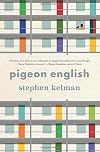
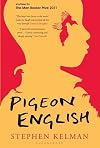
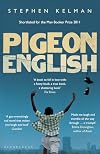
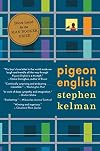
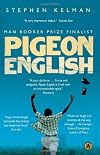
Pigeon English
by Stephen Kelman
On This Page
Description
Lying in front of Harrison Opuku is a body, the body of one of his classmates, a boy known for his crazy basketball skills, who seems to have been murdered for his dinner. Armed with a pair of camouflage binoculars and detective techniques absorbed from television shows like CSI, Harri and his best friend, Dean, plot to bring the perpetrator to justice. They gather evidence-fingerprints lifted from windows with tape, a wallet stained with blood-and lay traps to flush out the murderer. But show more nothing can prepare them for what happens when a criminal feels you closing in on him.Recently emigrated from Ghana with his sister and mother to London?s enormous housing projects, Harri is pure curiosity and ebullience-obsessed with gummy candy, a friend to the pigeon who visits his balcony, quite possibly the fastest runner in his school, and clearly also fast on the trail of a murderer.Told in Harri's infectious voice and multicultural slang, Pigeon English follows in the tradition of our great novels of friendship and adventure, as Harri finds wonder, mystery, and danger in his new, ever-expanding world. show lessTags
Recommendations







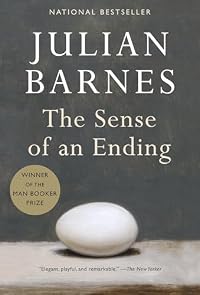

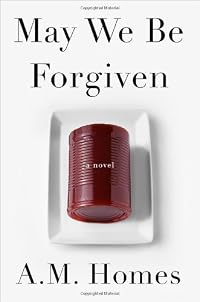

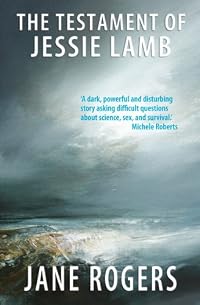

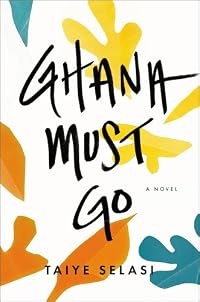


Member Recommendations
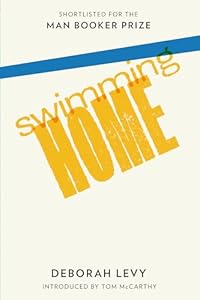
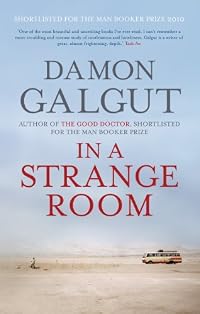
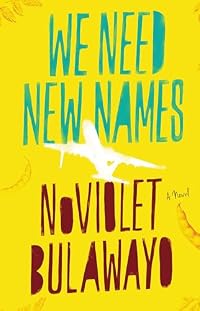
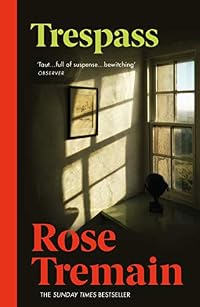
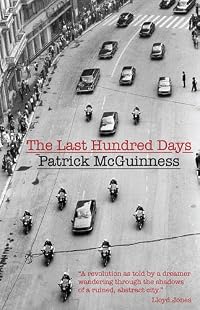
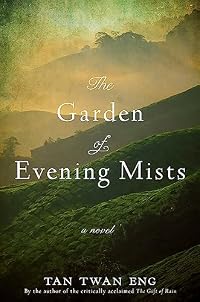
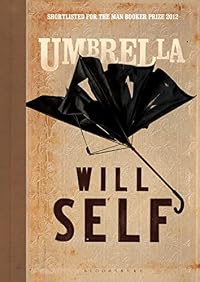
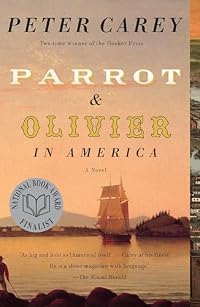
vancouverdeb Both books have a young narrator,and are growing up mainly on their own, in inner cities,dealing with lack of parenting, gangs,drugs,prostitution.
20

Limelite In US, "Little Bee." Another harrowing short novel about African immigrant to England that shares violence.
Member Reviews
Pigeon English is the story of 11 year old Harrison Opoku, a recent immigrant from Ghana. He, his mother and older sister have recently moved to a flat in a rough part of London, while his father, grandmother and little sister are still in Ghana hoping to move soon, too. When an older boy is stabbed to death, Harri's and a friend decide to do their own version of the TV show CSI and find the killer.
The novel is told (mostly) from Harri's point of view. It is here that I can see why the book has been compared to The Curious Incident of the Dog in the Night-time. Through Harri's narration, we end up understanding more than he does about what it going on around him. I think this works in places, and in others have a harder time believing show more he'd be that naïve, even at his age. His enthusiasm and energy come through, as do his sometimes conflicting desires to be safe/fit in vs to be good/truer to himself. Without his father in the home, Harri feels it is his role to protect, to be the man of the family. Yet at 11 years old and in a tough neighborhood where gangs are a part of everyday life, this is not easy. Not to mention, he's just a kid - he wants to use reward money if they solve the crime to buy a Playstation, he likes to run, he's discovering girls...
There are also interludes narrated by a pigeon that watches over Harri. It took some time for these to work for me, but I slowly came around to the metaphor and the role in the story.
I knew the book had a lot of hype, and that tends to make me wary. That said, it is a good first novel, yes, with its flaws and not a particularly surprising ending, but a voice and story that kept me interested throughout. show less
The novel is told (mostly) from Harri's point of view. It is here that I can see why the book has been compared to The Curious Incident of the Dog in the Night-time. Through Harri's narration, we end up understanding more than he does about what it going on around him. I think this works in places, and in others have a harder time believing show more he'd be that naïve, even at his age. His enthusiasm and energy come through, as do his sometimes conflicting desires to be safe/fit in vs to be good/truer to himself. Without his father in the home, Harri feels it is his role to protect, to be the man of the family. Yet at 11 years old and in a tough neighborhood where gangs are a part of everyday life, this is not easy. Not to mention, he's just a kid - he wants to use reward money if they solve the crime to buy a Playstation, he likes to run, he's discovering girls...
There are also interludes narrated by a pigeon that watches over Harri. It took some time for these to work for me, but I slowly came around to the metaphor and the role in the story.
I knew the book had a lot of hype, and that tends to make me wary. That said, it is a good first novel, yes, with its flaws and not a particularly surprising ending, but a voice and story that kept me interested throughout. show less
This Booker Prize longlisted novel is narrated by Harrison Opuku, an 11 year old boy who has recently emigrated to an impoverished south London neighborhood along with his mother and older sister, while his father and baby sister remain behind in Ghana. His mother works long hours as a midwife, and he and his sister Lydia are left mainly to fend for themselves. Harri is a good boy, although a bit naïve in comparison to his classmates and the boys in the neighborhood. He lacks a father or other adult male authority figure that he can relate to, and falls under the influence of a local gang of older boys who terrorize younger kids in his school and conduct random acts of violence in the neighborhood, with little deterrence from the show more adults who live there or the local police, who are generally viewed as incompetent and hostile.
The novel opens with the stabbing death of a schoolboy on a sidewalk near Harri's flat. Harri does not know the boy well, as he is older and goes to another school, but he and his friends vow to find out who murdered him. Inspired by the American television show CSI, the boys use their fledging detective skills to spy on potential suspects and gather fingerprints and other specimens from the crime scene. Harri is generally well liked by his classmates, as he is a fast runner and a good fighter, and he eagerly participates in typical boyhood pranks and games. His home life is a bit dull, as his older sister finds him to be a bother, and he befriends a pigeon who serves as a companion, confidant, and guardian angel.
As the story progresses, the identity of the boy's killer is obvious to the reader, but not to Harri, whose investigation intensifies as he gathers more clues and puts himself in danger.
[Pigeon English] was written in honor of Damilola Taylor, a 10 year old Nigerian boy who was murdered in 2000 in the south London neighborhood of Peckham, along with other children in the UK who experience fear and violence on a daily basis, and is also based on the author's own childhood experiences and people he encountered as a child and young adult. Harrison's voice and character are maddening, lovable, and ultimately unforgettable, and this is one of the better coming of age stories that I've read. The novel's main flaw is the character of the guardian pigeon, whose comments I found inscrutable and whose presence was unnecessary and distracting, which caused me to knock half a star off of my rating of this otherwise superb novel. It is also a very timely one, given the recent acts of violence in impoverished neighborhoods in south London and elsewhere. I doubt that Pigeon English will win this year's Booker Prize or even make the shortlist, but it is a novel that was enjoyable and deserves to be widely read. show less
The novel opens with the stabbing death of a schoolboy on a sidewalk near Harri's flat. Harri does not know the boy well, as he is older and goes to another school, but he and his friends vow to find out who murdered him. Inspired by the American television show CSI, the boys use their fledging detective skills to spy on potential suspects and gather fingerprints and other specimens from the crime scene. Harri is generally well liked by his classmates, as he is a fast runner and a good fighter, and he eagerly participates in typical boyhood pranks and games. His home life is a bit dull, as his older sister finds him to be a bother, and he befriends a pigeon who serves as a companion, confidant, and guardian angel.
As the story progresses, the identity of the boy's killer is obvious to the reader, but not to Harri, whose investigation intensifies as he gathers more clues and puts himself in danger.
[Pigeon English] was written in honor of Damilola Taylor, a 10 year old Nigerian boy who was murdered in 2000 in the south London neighborhood of Peckham, along with other children in the UK who experience fear and violence on a daily basis, and is also based on the author's own childhood experiences and people he encountered as a child and young adult. Harrison's voice and character are maddening, lovable, and ultimately unforgettable, and this is one of the better coming of age stories that I've read. The novel's main flaw is the character of the guardian pigeon, whose comments I found inscrutable and whose presence was unnecessary and distracting, which caused me to knock half a star off of my rating of this otherwise superb novel. It is also a very timely one, given the recent acts of violence in impoverished neighborhoods in south London and elsewhere. I doubt that Pigeon English will win this year's Booker Prize or even make the shortlist, but it is a novel that was enjoyable and deserves to be widely read. show less
Toward the end of this novel, I started to feel like I knew what was coming, but I still wasn't prepared for the ending. I won't spoil anything here, but this is an emotional experience from first line to last and one has to pay attention to see what's happening. Kelman has given us a child-narrator through whose eyes we see the immigrant experience; Harri, the narrator, is a boy from Ghana, living in tower (project) housing in London with part of his mother and sister. He interacts with his local family, his father and other family members back in Ghana, and his friends and enemies in London while we, the readers, watch from inside Harri's head. The paths of the narrative are often as random as conversations with 11-12 year old kids show more can be -- Harri's mind jumps from murder to tennis shoes to pigeons and back to death without warning or transition. Some reader's will not care for this narrative style -- as with Emma Donoghue's 'Room', it takes some time to get used to how this book 'reads', not only because of the narration but also because of the African-English dialect terms (hence, pigeon english) and slang patterns that may be unfamiliar -- but those who make the effort to pay attention will be engaged and intrigued.
On the surface, this appears to be a murder-mystery, but the mystery doesn't last all that long and the story becomes much more about life, about family, and about one child growing up in one particular summer in one particular place. As with many coming-of-age stories, there are familiar patterns followed -- fights, discoveries, kissing, etc. all come in to play at one point or another -- but nothing in this novel feels stale or trite, even in those moments when things feel familiar. Those looking for a cozy, resolved story should keep looking, but for others, this sometimes rambling, sometimes plotless, but always quick and interesting novel is well worth the time. Let this one get under your skin a little. show less
On the surface, this appears to be a murder-mystery, but the mystery doesn't last all that long and the story becomes much more about life, about family, and about one child growing up in one particular summer in one particular place. As with many coming-of-age stories, there are familiar patterns followed -- fights, discoveries, kissing, etc. all come in to play at one point or another -- but nothing in this novel feels stale or trite, even in those moments when things feel familiar. Those looking for a cozy, resolved story should keep looking, but for others, this sometimes rambling, sometimes plotless, but always quick and interesting novel is well worth the time. Let this one get under your skin a little. show less
I got bored at places through this one, but it's really a marvelous coming-of-age story blended with social commentary seated within gang wars in London. Harri is a Year 7, immigrant from Ghana, fast runner and friend of pigeons. He and his friend, Dean, play detective, hoping they can discover who committed the murder of a young boy in the projects. The story moves between sweet descriptions of Harri's discovery of love (and sex), and his concern for his sisters and mother, his natural desire to be "dope-fine" (which means having the right trainers and never showing fear on the playground), and stark presentations of the gang "warfare" around him. Yes, there is a pigeon who also shares his perspective, predictably wiser and more show more philosophical than the human perspectives. That part didn't quite ring true for me through the novel, but in the end it's a device that works.
It seems that we are surrounded with adolescent narrators these days; Harri will stay with me. His description of the world around him, blending his innocence with a sort of 11-year-old wisdom (you know, the wisdom born of innocence), is really quite captivating, amusing, ironic, and sad.
I recommend this book. I recommend staying with it even when you feel like giving it up. show less
It seems that we are surrounded with adolescent narrators these days; Harri will stay with me. His description of the world around him, blending his innocence with a sort of 11-year-old wisdom (you know, the wisdom born of innocence), is really quite captivating, amusing, ironic, and sad.
I recommend this book. I recommend staying with it even when you feel like giving it up. show less
Pigeon English by Stephen Kelman was shortlisted for the Booker Prize, which was why I picked it up. Critics of this year's list were right: it didn't deserve to be there. It wasn't that good.
It wasn't terrible. The voice was interesting and engaging, and I guess the rich, white British people who pick the shortlist would consider it to be singularly unique. But the problem I had was that the entire time, I could tell the author was white. His voice never worked at one hundred percent.
The narrator of Pigeon English is a eleven-year-old boy who recently immigrated from Ghana to a poor neighborhood of London. He experiences the new world he's living in through unique eyes, and it leads to a novel that is all about voice. The voice is show more generally pretty good; it's consistent and engaging, with some funny things going on. But the problem is that there was never a time I found it totally authentic. Halfway through the book, I actually looked the author up online, because I was so certain that he was a white, non-immigrant.
I was correct.
I am absolutely not one of those people who thinks that authors can't write characters outside of their class, their race, their sex, their personal point of view. But when you are doing that, you have an especial burden to make it seem real. You have to have a real and sympathetic understanding of how your character will sound, how he or she will react, how he or she builds a view of the world from his or her past — not yours.
There are lots of writers who do this well. Why is Booker lauding an author who doesn't? show less
It wasn't terrible. The voice was interesting and engaging, and I guess the rich, white British people who pick the shortlist would consider it to be singularly unique. But the problem I had was that the entire time, I could tell the author was white. His voice never worked at one hundred percent.
The narrator of Pigeon English is a eleven-year-old boy who recently immigrated from Ghana to a poor neighborhood of London. He experiences the new world he's living in through unique eyes, and it leads to a novel that is all about voice. The voice is show more generally pretty good; it's consistent and engaging, with some funny things going on. But the problem is that there was never a time I found it totally authentic. Halfway through the book, I actually looked the author up online, because I was so certain that he was a white, non-immigrant.
I was correct.
I am absolutely not one of those people who thinks that authors can't write characters outside of their class, their race, their sex, their personal point of view. But when you are doing that, you have an especial burden to make it seem real. You have to have a real and sympathetic understanding of how your character will sound, how he or she will react, how he or she builds a view of the world from his or her past — not yours.
There are lots of writers who do this well. Why is Booker lauding an author who doesn't? show less
I picked this up when it was longlisted for the 2011 Man Booker Prize.
Pigeon English is narrated by an 11 year old immigrant from Ghana to London. Harri lives in a block of flats with his sister Lydia and his mum. He is wide-eyed and curious about the world he now inhabits often comparing it to the life he remembers in Ghana.
Harri, like every other 11 year old, struggles to cope with the competing demands of school, girls and mates. He wishes he had better trainers and he loves running. He is, in short a perfectly healthy boy.
But the world around Harri is less than perfectly healthy. In Harri's school, bullying is a fact of life as kids learn to carry their lunch money in their socks to avoid getting it "tief'ed". Throughout the novel show more there is an undercurrent of menace as knives and screwdrivers are as commonplace as bruises and scabs in the lives of these young children.
The story begins with the violent death by stabbing (or "chooking" in Harri's version of the language) of a boy from school. The murder remains unsolved and Harri determines to uncover the truth.
The comparisons with Mark Haddon's book The Curious Incident of the Dog in the Night-Time are not entirely unwarranted. Harri has an original voice and an unusual view of the world. Harri says things like "asweh!" instead of "I swear" and his verbal battles with sister Lydia are a mashup of London teentalk and immigrant patois that, while reasonably convincing is not alien enough to deserve the punning title of the novel.
In order to further earn the book's title, the author has Harri chat occasionally with a Pigeon. The pigeon represents some mix of earthbound angel and link to the spirit world. It was all very unclear. On the one hand we know the pigeon's responses are just in Harri's head, on the other hand the pigeon speaks with an articulacy beyond Harri's capability and even interferes with the action at a crucial moment by dropping something unpleasant on the face of an older boy about to do someone harm.
It's a case of the author wanting to have his pigeon pie and eat it too.
Ultimately the book makes the fatal mistake of trying to be about something instead of telling an authentic story. By the end I couldn't shake the feeling that the novelist is sitting at home waiting for his book to be repurposed as a "meaningful" school play performed in lunch-breaks throughout the country. I don't mean to belittle the horrors of knife crime and the fear that young people may experience just turning up to school, but this work ends up too lightweight and populated with too many cookie cutout characters to have any more impact than an episode of Hollyoaks. show less
Pigeon English is narrated by an 11 year old immigrant from Ghana to London. Harri lives in a block of flats with his sister Lydia and his mum. He is wide-eyed and curious about the world he now inhabits often comparing it to the life he remembers in Ghana.
Harri, like every other 11 year old, struggles to cope with the competing demands of school, girls and mates. He wishes he had better trainers and he loves running. He is, in short a perfectly healthy boy.
But the world around Harri is less than perfectly healthy. In Harri's school, bullying is a fact of life as kids learn to carry their lunch money in their socks to avoid getting it "tief'ed". Throughout the novel show more there is an undercurrent of menace as knives and screwdrivers are as commonplace as bruises and scabs in the lives of these young children.
The story begins with the violent death by stabbing (or "chooking" in Harri's version of the language) of a boy from school. The murder remains unsolved and Harri determines to uncover the truth.
The comparisons with Mark Haddon's book The Curious Incident of the Dog in the Night-Time are not entirely unwarranted. Harri has an original voice and an unusual view of the world. Harri says things like "asweh!" instead of "I swear" and his verbal battles with sister Lydia are a mashup of London teentalk and immigrant patois that, while reasonably convincing is not alien enough to deserve the punning title of the novel.
In order to further earn the book's title, the author has Harri chat occasionally with a Pigeon. The pigeon represents some mix of earthbound angel and link to the spirit world. It was all very unclear. On the one hand we know the pigeon's responses are just in Harri's head, on the other hand the pigeon speaks with an articulacy beyond Harri's capability and even interferes with the action at a crucial moment by dropping something unpleasant on the face of an older boy about to do someone harm.
It's a case of the author wanting to have his pigeon pie and eat it too.
Ultimately the book makes the fatal mistake of trying to be about something instead of telling an authentic story. By the end I couldn't shake the feeling that the novelist is sitting at home waiting for his book to be repurposed as a "meaningful" school play performed in lunch-breaks throughout the country. I don't mean to belittle the horrors of knife crime and the fear that young people may experience just turning up to school, but this work ends up too lightweight and populated with too many cookie cutout characters to have any more impact than an episode of Hollyoaks. show less
The best thing about this book is the voice of narrator Harri, who has arrived from Ghana with his mother and sister and is living on a rough inner city estate. Gang related violence and the odd rituals of schoolchildren are all examined and held up to the light through his innocent and yet oddly streetwise eyes. He is believable and frankly utterly adorable, and a tremendous achievement by the author.
The plot such as it is concerns a fatal stabbing in the neighbourhood, which Harri and his friends attempt to investigate, innocently playing detective. This doesn't dominate the narrative however, rather staying in the background as Harri muses about the things that concern or fascinate him such as the plight of trees growing in pots. show more The story is all about what is on his mind at a given time, and I never quite knew where it was heading until it got there, and then it was a shock. It reminded me of real life events from some years ago, and having read the acknowledgements section, I realised that was intentional. show less
The plot such as it is concerns a fatal stabbing in the neighbourhood, which Harri and his friends attempt to investigate, innocently playing detective. This doesn't dominate the narrative however, rather staying in the background as Harri muses about the things that concern or fascinate him such as the plight of trees growing in pots. show more The story is all about what is on his mind at a given time, and I never quite knew where it was heading until it got there, and then it was a shock. It reminded me of real life events from some years ago, and having read the acknowledgements section, I realised that was intentional. show less
Members
- Recently Added By
Published Reviews
ThingScore 63
Pigeon English is indeed a very impressive debut...Pigeon English has a fresh, undeniable appeal, but Kelman doesn’t entirely knock it out of the park. Plotting gets swept aside for long stretches in order to focus on the coming-of-age aspect of the novel, and Harri’s charm-assault eventually begins to flag. Italicized monologues from a kind of “spirit pigeon”— Harri’s favourite show more bird — feel contrived.
Kelman clearly has the instinct and the skills for future greatness. If this book doesn’t make him The Next Big Thing, there’s a good chance his next one will. show less
Kelman clearly has the instinct and the skills for future greatness. If this book doesn’t make him The Next Big Thing, there’s a good chance his next one will. show less
added by vancouverdeb
Pigeon English does an admirable job of revealing the frightened teenage boys behind gang members' tough façades. But it is too conscious of the gulf between its subjects and its inevitably middle-class readers to be truly convincing.
added by geocroc
It is bad form to be rude about first novels, and a pleasure to praise them. Stephen Kelman’s has a powerful story, a pacy plot and engaging characters. It paints a vivid portrait with honesty, sympathy and wit, of a much neglected milieu, and it addresses urgent social questions.
added by mikeg2
Lists

child hero ~ adult novel
60 works; 12 members

Booker Prize
491 works; 62 members

africa diaspora novels
10 works; 1 member

Best books read in 2011
200 works; 50 members

Man Booker Prize Longlist 2011
13 works; 2 members
Adult Books for YA Readers
194 works; 6 members

Booker Prize Shortlist: Titles Not Yet Read
161 works; 4 members

Five Star Novels
20 works; 2 members
Talk Discussions
Past Discussions
Pigeon English by Stephen Kelman in Booker Prize (August 2011)
Author Information

3 Works 1,031 Members
Some Editions
Awards and Honors
Series
Belongs to Publisher Series
A tot vent (631)
Common Knowledge
- Canonical title*
- Pigeon English
- Original title
- Pigeon English
- Original publication date
- 2011-03-07 (UK) (UK); 2011-06-27 (US, e-Book) (US, e-Book); 2011-07-19 (US, hardcover) (US, hardcover)
- People/Characters
- Harri Opuku; Dean; Sonia; Lydia Opuku
- Important places
- London, England, UK; Peckham, Southwark, London, England, UK; Ghana
- Epigraph
- I'd rather learn from one bird how to sing
than teach ten thousand stars how not to dance
E.E. Cummings - Dedication
- For the traveller
- First words
- You could see the blood.
- Last words
- (Click to show. Warning: May contain spoilers.)All babies look the same.
- Original language
- English
*Some information comes from Common Knowledge in other languages. Click "Edit" for more information.
Classifications
Statistics
- Members
- 996
- Popularity
- 26,095
- Reviews
- 61
- Rating
- (3.47)
- Languages
- 9 — Czech, Dutch, English, French, German, Hungarian, Italian, Portuguese, Romanian
- Media
- Paper, Audiobook, Ebook
- ISBNs
- 34
- ASINs
- 6