
Columbine
by Dave Cullen 
On This Page
Description
Ten years in the making and a masterpiece of reportage, "Columbine" is an award-winning journalist's definitive account of one of the most shocking massacres in American history.Tags
Recommendations
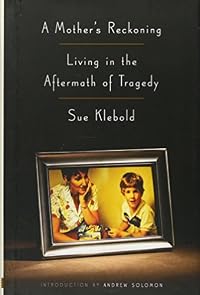
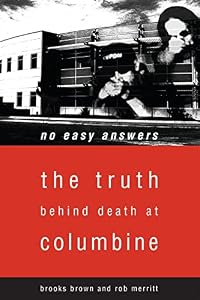
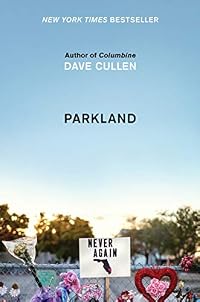
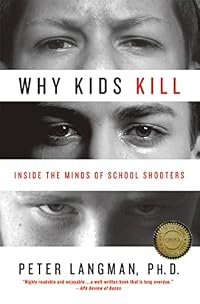
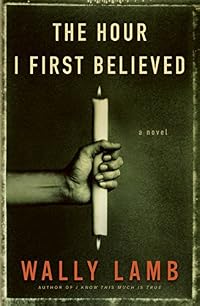
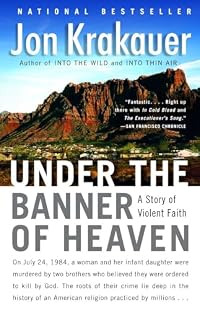
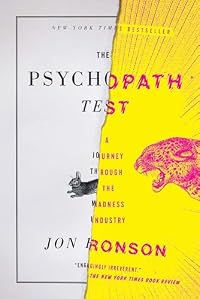
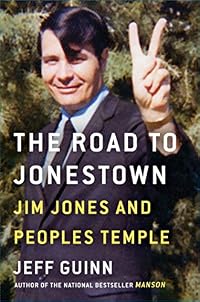

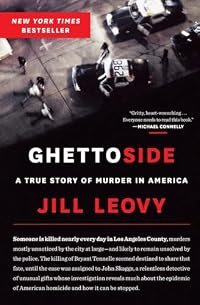
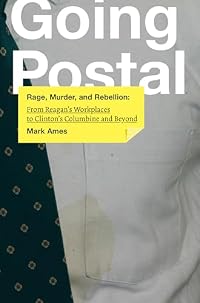
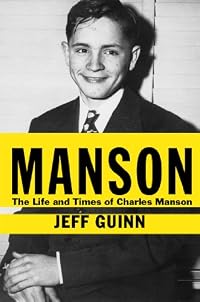

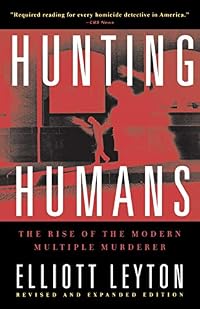
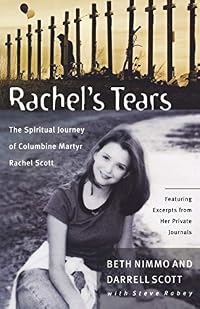
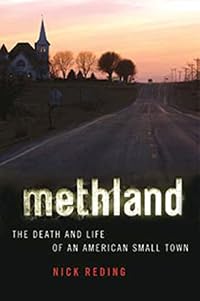
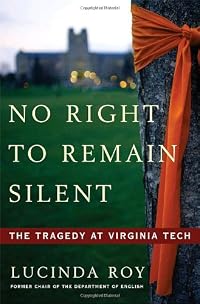
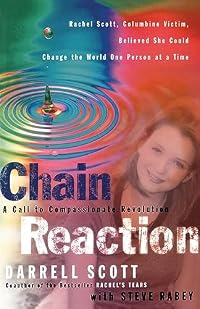
Member Recommendations
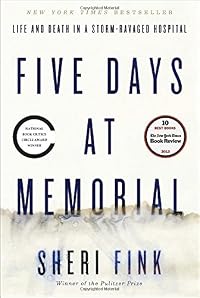
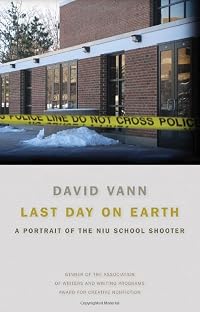
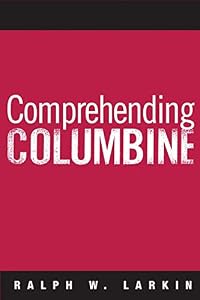
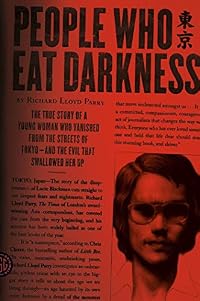
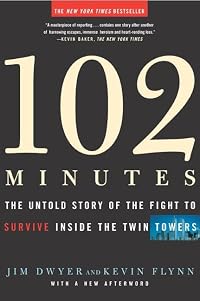
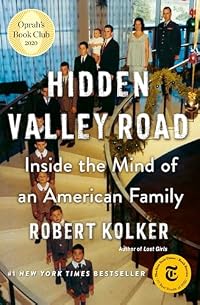
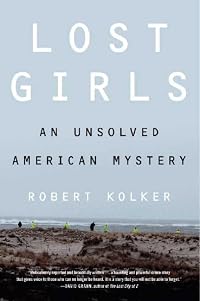
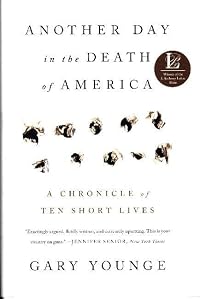
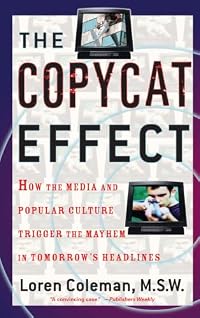
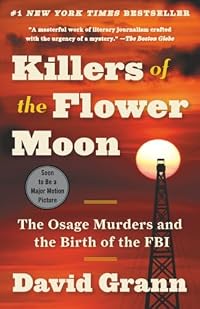
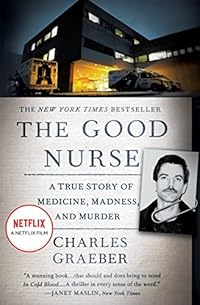
kathleen.morrow Both are well-written, intriguing (and chilling) investigations of atrocious crimes. Also, both challenge common assumptions about the crimes they narrate.
40
alcottacre Another school shooting, in the wake of Columbine, and the story of how it was handled by the Amish community
41
Lost Paradise: From Mutiny on the Bounty to a Modern-Day Legacy of Sexual Mayhem, the Dark Secrets of Pitcairn Island Revealed by Kathy Marks
meggyweg Both solid works of journalism telling the full story of two very terrible and often misunderstood crimes.
Member Reviews
"'I will choose to kill,' Eric wrote. Why? His explanations didn't add up.... To most readers, Eric's rants just sounded nuts.
"Dr. Fuselier had the opposite reaction. Insanity was marked by mental confusion. Eric Harris expressed cold, rational calculation. Fuselier ticked off Eric's personality traits: charming, callous, cunning, manipulative, comically grandiose, and egocentric, with an appalling failure of empathy. It was like reciting the Psychopathy Checklist.
"....
"Diagnosis didn't solve the crime, but it laid the foundation. Ten years afterward, Eric still baffled the public, which insisted on assessing his motives through a 'normal' lens. Eric was neither normal nor insane. Psychopathy (si-COP-uh-thee) represents a third show more category. Psychopathic brains don't function like those in either of the other groups, but they are consistently similar to one another. Eric killed for two reasons: to demonstrate his superiority and to enjoy it."
Kindle location 3920-3933
"... the dyad: murderous pairs who feed off each other. Criminologists have been aware of the dyad phenomenon for decades: Leopold and Loeb, Bonnie and Clyde, the Beltway snipers of 2002. Because dyads account for only a fraction of mass murderers, little research has been conducted on them. We know that the partnerships tend to be asymmetrical. An angry, erratic depressive [Dylan Klebold] and a sadistic psychopath [Eric Harris] make a combustible pair. The psychopath is in control, of course, but the hotheaded sidekick can sustain his excitement leading up to the big kill. 'It takes heat and cold to make a tornado,' Dr. Fuselier is fond of saying. Eric craved heat, but he couldn't sustain it. Dylan was a volcano. You could never tell when he might erupt.
"Day after day, for more than a year, Dylan juiced Eric with erratic jolts of excitement. They played the killing out again and again: the cries, the screams, the smell of burning flesh ...
"Eric savored the anticipation."
Kindle location 4015-4026
"Oddly, a large number of psychopaths spontaneously improve around middle age. The phenomenon has been observed for decades, but not explained. Otherwise, psychopaths appear to be lost causes....
"... Dr. Hare was working on a regimen to address [the psychopath]. Hare began by reexamining the data on those spontaneous improvers. From adolescence to their fifties, psychopaths showed virtually no change in emotional characteristics but improved dramatically in antisocial behavior. The inner drives did not change, but their behavior did.
"Hare believes that these psychopaths might simply be adapting. Fiercely rational, they figured out that prison was not working for them. So Hare proposed using their self-interest to the public advantage. The program he developed accepts that psychopaths will remain egocentric and uncaring for life but will adhere to rules if it's in their own interest. 'Convincing them that there are ways they can get what they want without harming others' is the key, Hare said. 'You say to them, "Most people think with their hearts, not with their heads, and your problem is you think too much with your head. So let's change the problem into an asset." They understand that.'
"....
"Psychopathy experts are cautiously optimistic about coming advances. 'I believe that within ten years we will have a much better perspective on psychopathy than we do now,' Dr. Kiehl said. 'Ideally we will be able to help effectively manage the condition. I would not say that there is a cure on the horizon, but I do hope that we can implement effective management strategies.'"
Kindle location 4035-4062 show less
"Dr. Fuselier had the opposite reaction. Insanity was marked by mental confusion. Eric Harris expressed cold, rational calculation. Fuselier ticked off Eric's personality traits: charming, callous, cunning, manipulative, comically grandiose, and egocentric, with an appalling failure of empathy. It was like reciting the Psychopathy Checklist.
"....
"Diagnosis didn't solve the crime, but it laid the foundation. Ten years afterward, Eric still baffled the public, which insisted on assessing his motives through a 'normal' lens. Eric was neither normal nor insane. Psychopathy (si-COP-uh-thee) represents a third show more category. Psychopathic brains don't function like those in either of the other groups, but they are consistently similar to one another. Eric killed for two reasons: to demonstrate his superiority and to enjoy it."
Kindle location 3920-3933
"... the dyad: murderous pairs who feed off each other. Criminologists have been aware of the dyad phenomenon for decades: Leopold and Loeb, Bonnie and Clyde, the Beltway snipers of 2002. Because dyads account for only a fraction of mass murderers, little research has been conducted on them. We know that the partnerships tend to be asymmetrical. An angry, erratic depressive [Dylan Klebold] and a sadistic psychopath [Eric Harris] make a combustible pair. The psychopath is in control, of course, but the hotheaded sidekick can sustain his excitement leading up to the big kill. 'It takes heat and cold to make a tornado,' Dr. Fuselier is fond of saying. Eric craved heat, but he couldn't sustain it. Dylan was a volcano. You could never tell when he might erupt.
"Day after day, for more than a year, Dylan juiced Eric with erratic jolts of excitement. They played the killing out again and again: the cries, the screams, the smell of burning flesh ...
"Eric savored the anticipation."
Kindle location 4015-4026
"Oddly, a large number of psychopaths spontaneously improve around middle age. The phenomenon has been observed for decades, but not explained. Otherwise, psychopaths appear to be lost causes....
"... Dr. Hare was working on a regimen to address [the psychopath]. Hare began by reexamining the data on those spontaneous improvers. From adolescence to their fifties, psychopaths showed virtually no change in emotional characteristics but improved dramatically in antisocial behavior. The inner drives did not change, but their behavior did.
"Hare believes that these psychopaths might simply be adapting. Fiercely rational, they figured out that prison was not working for them. So Hare proposed using their self-interest to the public advantage. The program he developed accepts that psychopaths will remain egocentric and uncaring for life but will adhere to rules if it's in their own interest. 'Convincing them that there are ways they can get what they want without harming others' is the key, Hare said. 'You say to them, "Most people think with their hearts, not with their heads, and your problem is you think too much with your head. So let's change the problem into an asset." They understand that.'
"....
"Psychopathy experts are cautiously optimistic about coming advances. 'I believe that within ten years we will have a much better perspective on psychopathy than we do now,' Dr. Kiehl said. 'Ideally we will be able to help effectively manage the condition. I would not say that there is a cure on the horizon, but I do hope that we can implement effective management strategies.'"
Kindle location 4035-4062 show less
As did most Americans, I followed the events of the Columbine massacre intently. I was shocked that anything on that scale could happen. I continually listened to and watched the news for information on what happened and, most importantly, why it happened at all. More than 11 years later, I thought I knew the basics. What I found as a result of reading this book was that I knew pieces of misinformation provided via the media. Retractions are never prominent and rarely have the impact of the original story. For example, Michael Moore apparently believed the myth that Eric Harris and Dylan Klebold went bowling the morning of the massacre. In his book, Dave Cullen strips away the myths, rumors, and untruths, bringing to life the facts show more leading up to, including, and following the Columbine massacre. Although non-fiction, Cullen's writing is so engaging that, although I remembered that day and its aftermath pretty well, I was transfixed. I didn't want to leave my car (I read the book via audiobook) because I just had to know exactly what happened next.
I spent a good deal of time talking about the book while I was reading it, but three things continue to come to mind even to this day: Cullen's research into why Eric and Dylan did what they did, the reality of what they'd actually planned on doing, and the Klebold family (see my post from yesterday).
Much of the media focus and, therefore, myths surrounded the simple question "Why?" Cullen did not find much evidence to support the conventional wisdom that Eric and Dylan were bullied to the point of explosion. What he discovered was that Eric was a psychopath and Dylan was suicidal. The combination of these two personalities proved deadly.
I don't want to go into any details regarding Eric and Dylan's original intent. If you've not read the book, this discovery will prove to be some of its most dramatic moments. I would equate talking about it here to adding spoilers when reviewing a work of fiction. Suffice to say that it shocked me, had me talking about Columbine non-stop at work, and kept me up several nights thinking about it.
I rented the audiobook for Columbine from the library because I wanted to read it *now.* It fit in more readily to my audiobook schedule than it ever would have in my neverending TBR pile. It's narrated by Don Leslie, who did an outstanding job reading material that at times was hard enough to listen to - let alone read outloud. I would highly recommend him as a narrator. The person responsible for putting this book into Leslie's capable hands was a genius.
Wow, how to sum up my thoughts and feelings about this book? I don't think there has ever been a work of non-fiction that has had this effect on me. It opened my eyes to the way time and extreme crisis impacts memories. Cullen did a spectacular job of telling the story without taking sides. The factual tone of his writing says so much about the difference when people choose to let tragedy devour them versus let it challenge them to become better, stronger people. I don't know how I could more highly recommend Columbine than to tell you that I bought it in paperback while I was listening to the library's copy. I had to have a copy in my hands to keep. I just had to. show less
I spent a good deal of time talking about the book while I was reading it, but three things continue to come to mind even to this day: Cullen's research into why Eric and Dylan did what they did, the reality of what they'd actually planned on doing, and the Klebold family (see my post from yesterday).
Much of the media focus and, therefore, myths surrounded the simple question "Why?" Cullen did not find much evidence to support the conventional wisdom that Eric and Dylan were bullied to the point of explosion. What he discovered was that Eric was a psychopath and Dylan was suicidal. The combination of these two personalities proved deadly.
I don't want to go into any details regarding Eric and Dylan's original intent. If you've not read the book, this discovery will prove to be some of its most dramatic moments. I would equate talking about it here to adding spoilers when reviewing a work of fiction. Suffice to say that it shocked me, had me talking about Columbine non-stop at work, and kept me up several nights thinking about it.
I rented the audiobook for Columbine from the library because I wanted to read it *now.* It fit in more readily to my audiobook schedule than it ever would have in my neverending TBR pile. It's narrated by Don Leslie, who did an outstanding job reading material that at times was hard enough to listen to - let alone read outloud. I would highly recommend him as a narrator. The person responsible for putting this book into Leslie's capable hands was a genius.
Wow, how to sum up my thoughts and feelings about this book? I don't think there has ever been a work of non-fiction that has had this effect on me. It opened my eyes to the way time and extreme crisis impacts memories. Cullen did a spectacular job of telling the story without taking sides. The factual tone of his writing says so much about the difference when people choose to let tragedy devour them versus let it challenge them to become better, stronger people. I don't know how I could more highly recommend Columbine than to tell you that I bought it in paperback while I was listening to the library's copy. I had to have a copy in my hands to keep. I just had to. show less
On April 20, 1999, Eric Harris and Dylan Kleybold, two Columbine high school students, killed twelve of their fellow students and one teacher in what was, at the time, the worst school shooting in America's history. After reading this book I felt that whatever I thought I knew about the Columbine massacre was completely wrong. The killers were neither unpopular nor resentful about wrongs done to them. There was no Trench-coat Mafia feud between the jocks and the goths. Speculation that the date (Hitler's birthday) was untrue. They planned to do the killings on April 19, but hadn't been able to get ammunition. Eric was a crafty and calculating psychopath who wanted to kill as many people as possible, and Dylan suffered from depression show more and just wanted to kill himself. Together, they decided that murdering as many people as possible was a great idea.
In Columbine, the author successfully argues that we should all be surprised that they only killed thirteen people in total. If the propane bombs they’d planted in the cafeteria gone off as planned, forcing the students out into the parking lot where they were waiting, they might have killed hundreds. Prior to writing this book, Dave Cullen researched everything available on the Columbine story and assembled a comprehensive account of what really happened at Columbine High School. The police went to huge lengths to cover up some of their own incompetence and refused to release numerous critical documents until years after the tragedy. Meanwhile, some people in Littleton embraced misinformation to advance their own requirements. Even though the massacre lasted less than an hour, press helicopters circled the school all day with nothing to report. That lead them to release some serious inaccuracies with their live reporting. The killers aren't the only people who look bad in this story.
What an interesting book. I really enjoyed the fact based narrative intertwined with the last moments of both the killers and the victims. I thought the author did a great job of humanizing both groups. The book gave the reader plenty of information to form their own opinions on what might, or might not, be the cause of this or any other school shooting. show less
In Columbine, the author successfully argues that we should all be surprised that they only killed thirteen people in total. If the propane bombs they’d planted in the cafeteria gone off as planned, forcing the students out into the parking lot where they were waiting, they might have killed hundreds. Prior to writing this book, Dave Cullen researched everything available on the Columbine story and assembled a comprehensive account of what really happened at Columbine High School. The police went to huge lengths to cover up some of their own incompetence and refused to release numerous critical documents until years after the tragedy. Meanwhile, some people in Littleton embraced misinformation to advance their own requirements. Even though the massacre lasted less than an hour, press helicopters circled the school all day with nothing to report. That lead them to release some serious inaccuracies with their live reporting. The killers aren't the only people who look bad in this story.
What an interesting book. I really enjoyed the fact based narrative intertwined with the last moments of both the killers and the victims. I thought the author did a great job of humanizing both groups. The book gave the reader plenty of information to form their own opinions on what might, or might not, be the cause of this or any other school shooting. show less
Without a question this is one of the best and worst books I have read. The writing is powerful in its simplicity, and the subject matter is core-wrenching. The last time I felt this affected by a book was when I read Night by Elie Wiesel. Mr Cullen did an incredible job with this book, and its earned its place permanently on my bookshelf.
The author takes us through the years before and after the Columbine tragedy, through the eyes of the teenage killers in the form of their journals, through the community in the form of interviews, police reports, and court records. It's a shocking awakening into how the action of several hours changed the face of America forever.
The author takes us through the years before and after the Columbine tragedy, through the eyes of the teenage killers in the form of their journals, through the community in the form of interviews, police reports, and court records. It's a shocking awakening into how the action of several hours changed the face of America forever.
I might have known I couldn't get through the week or two it would take me to read Columbine without a current school mass shooting going down. (It was the one at Umpqua Community College.) It seems like we have one or two each month in the US these days, as contrasted with their roughly quarterly occurrence back in the late decades of the previous century. Guns are much easier to get now, so there's that, along with the snowballing of the phenomenon itself: the media spectacle and cultural spasm which was a conscious objective of the killers.
Ten years after the 1999 mass homicides and shooter suicides at Columbine High School in Jefferson County, Colorado, Dave Cullen completed writing what is probably still the most thorough and show more authoritative examination of those events. It is not the final word, however. The parents of the killers, particularly those of Eric Harris, who seems to have been the dominant partner in the project, have been understandably silent, and there is a court seal on many materials in the investigation that will not expire until 2027. Still, Cullen worked on this story from its outset, and followed it long after all the students had graduated, the controversies had been exhausted, and its "record" exceeded by the Virginia Tech massacre in 2007.
Cullen's book begins with a recounting of the April 1999 events from the perspective of teachers and students. Then he splits his narrative, with one part going back to the childhood of the killers and following them forward to their deaths, while the other alternating part continues to follow victims, investigators, and press in the wake of the killings. On the whole, this approach works well, with short chapters heavy on documented detail.
As I look at the thumbnail description of the Columbine massacre in the "List of school shootings in the United States" on Wikipedia at this moment, it consists of two sentences, one of them false. It is not true that Harris and Klebold "had complained of being bullied and ill treated by other students." That claim is part of the matrix of conjecture and myth that accreted around the killers from the day of the event, and solidified through media treatments while police concealed facts from the public for years.
Even in the front matter, Cullen offers a mea culpa regarding the errors and misdeeds of the press regarding Columbine High School. And the press comes to figure as a villain in the later chapters, as their desire to perpetuate a story comes into conflict with the survivors' need to grieve and move on. What's more, although the killers' incompetence meant that they did far less damage than they had planned--all of their large bombs were hopeless failures--the media "bomb" meant that they gained their memory all of the notoriety and even inspirational influence that they coveted.
This book's sober yet sympathizing approach and its thorough command of the public evidence are antidotes to still-popular misconceptions about the 1999 massacre in Colorado and American school shootings generally. Unfortunately, the issue is as current as ever. show less
Ten years after the 1999 mass homicides and shooter suicides at Columbine High School in Jefferson County, Colorado, Dave Cullen completed writing what is probably still the most thorough and show more authoritative examination of those events. It is not the final word, however. The parents of the killers, particularly those of Eric Harris, who seems to have been the dominant partner in the project, have been understandably silent, and there is a court seal on many materials in the investigation that will not expire until 2027. Still, Cullen worked on this story from its outset, and followed it long after all the students had graduated, the controversies had been exhausted, and its "record" exceeded by the Virginia Tech massacre in 2007.
Cullen's book begins with a recounting of the April 1999 events from the perspective of teachers and students. Then he splits his narrative, with one part going back to the childhood of the killers and following them forward to their deaths, while the other alternating part continues to follow victims, investigators, and press in the wake of the killings. On the whole, this approach works well, with short chapters heavy on documented detail.
As I look at the thumbnail description of the Columbine massacre in the "List of school shootings in the United States" on Wikipedia at this moment, it consists of two sentences, one of them false. It is not true that Harris and Klebold "had complained of being bullied and ill treated by other students." That claim is part of the matrix of conjecture and myth that accreted around the killers from the day of the event, and solidified through media treatments while police concealed facts from the public for years.
Even in the front matter, Cullen offers a mea culpa regarding the errors and misdeeds of the press regarding Columbine High School. And the press comes to figure as a villain in the later chapters, as their desire to perpetuate a story comes into conflict with the survivors' need to grieve and move on. What's more, although the killers' incompetence meant that they did far less damage than they had planned--all of their large bombs were hopeless failures--the media "bomb" meant that they gained their memory all of the notoriety and even inspirational influence that they coveted.
This book's sober yet sympathizing approach and its thorough command of the public evidence are antidotes to still-popular misconceptions about the 1999 massacre in Colorado and American school shootings generally. Unfortunately, the issue is as current as ever. show less
Sorry, but pretty much everything you know about Columbine is probably wrong.
For example, you know the Trench Coat Mafia -- the one that shooters Eric Harris and Dylan Klebold belonged to? Well, although there was such a thing, they didn't belong to it (and actually, they were dusters, not trench coats). Nor were Harris and Klebold bullied (they bullied others, actually), nor did they target jocks, or Christians, or anyone else (the shootings were random). And the martyr Cassie Bernall, who was murdered professing her belief in God? Nope, that one isn't true either (she didn't say a word before Harris killed her, nor did Harris ask her whether she believed in God).
Even more interesting, to me at least, was that the common wisdom about show more Harris and Klebold's parents -- they were too busy watching TV in the den to notice that their kids were amassing small armories upstairs -- also misses the mark. Harris and Klebold didn't build pipe bombs under the noses of their neglectful parents; quite to the contrary, their parents were pretty typical middle-class people trying to do their best. Harris, a full-blown psychopath at 17, managed to flimflam nearly everyone, including his strict father. And Klebold's parents, like many other parents, tried but failed to discern the depths of their son's depression.
Dave Cullen's book is painstakingly researched and extremely well-written; the accounts of the shootings are painful to read. As for the reportage, Cullen probes, but doesn't accuse, at least not unfairly. For example, while his portrayal of the Jefferson County Sheriff's office is less than flattering (with good reason), he's generally evenhanded in his criticism, acknowledging the nearly impossible circumstances that faced all the players in Littleton during and after the shooting. Cullen also fixes his eye on the media's behavior after the shooting -- most notably, the eagerness to make Cassie Bernall into a martyr, despite eyewitness testimony casting doubt on the story.
Very well done. show less
For example, you know the Trench Coat Mafia -- the one that shooters Eric Harris and Dylan Klebold belonged to? Well, although there was such a thing, they didn't belong to it (and actually, they were dusters, not trench coats). Nor were Harris and Klebold bullied (they bullied others, actually), nor did they target jocks, or Christians, or anyone else (the shootings were random). And the martyr Cassie Bernall, who was murdered professing her belief in God? Nope, that one isn't true either (she didn't say a word before Harris killed her, nor did Harris ask her whether she believed in God).
Even more interesting, to me at least, was that the common wisdom about show more Harris and Klebold's parents -- they were too busy watching TV in the den to notice that their kids were amassing small armories upstairs -- also misses the mark. Harris and Klebold didn't build pipe bombs under the noses of their neglectful parents; quite to the contrary, their parents were pretty typical middle-class people trying to do their best. Harris, a full-blown psychopath at 17, managed to flimflam nearly everyone, including his strict father. And Klebold's parents, like many other parents, tried but failed to discern the depths of their son's depression.
Dave Cullen's book is painstakingly researched and extremely well-written; the accounts of the shootings are painful to read. As for the reportage, Cullen probes, but doesn't accuse, at least not unfairly. For example, while his portrayal of the Jefferson County Sheriff's office is less than flattering (with good reason), he's generally evenhanded in his criticism, acknowledging the nearly impossible circumstances that faced all the players in Littleton during and after the shooting. Cullen also fixes his eye on the media's behavior after the shooting -- most notably, the eagerness to make Cassie Bernall into a martyr, despite eyewitness testimony casting doubt on the story.
Very well done. show less
Riveting But Extremely Depressing
I have to say, that this is quite possibly the most depressing book I've read in a half decade. And I don't mean that as a critique, but rather as a compliment to the depth of research and writing abilities of David Cullen.
The amount of work it must have taken to completely reconstruct the background and chronology of events is staggering. Cullen intricately weaves between the past and the present with deft skill. As disturbing as the act itself was, it was even more disappointing to see the sensationalism of the 2 perpetrators by the media, the opportunism of certain individuals, and the maze of lawsuits that followed. It was sad to see how this tragic event was turned into a kind of virtual reality of show more what really happened -- memory turned to myth which turned into the truth.
And while we may never know exactly why and what drove these 2 teenagers into mass murder, Cullen's account comes as close to the answers than we'll ever be. Eric Harris was the psychopath, mis-characterized by the media as a loner, rather Eric was intent, obsessed, with overtaking Timothy McVeigh's death count. Dylan Klebold was harder to figure out, a smart kid who was a hopeless romantic, but also suffered from bouts of depression. In the ultimately irony, Eric and Dylan wanted to be seen in the same league as other mass murders like David Koresh and Timothy McVeigh, but were instead lumped with the rest of the loner school shooters.
I've read Cullen's articles recently in the press in the lead up to the book. Cullen makes the repeated bold claim that had Eric and Dylan had acted when they were older, say 21, they probably would have inflicted much more damage. Certainly a debatable claim, but does provide some food for thought. I have to say, though, fortunately, Cullen does not include that hypothetical here in the book.
Although the book was extremely well-written, it was so depressing that I was glad to have finished it, I've never felt so good about moving on from a book as I had after reading "Columbine." There is unfortunately, nothing good to have come out of it. In many ways, it is best to leave it all behind. show less
I have to say, that this is quite possibly the most depressing book I've read in a half decade. And I don't mean that as a critique, but rather as a compliment to the depth of research and writing abilities of David Cullen.
The amount of work it must have taken to completely reconstruct the background and chronology of events is staggering. Cullen intricately weaves between the past and the present with deft skill. As disturbing as the act itself was, it was even more disappointing to see the sensationalism of the 2 perpetrators by the media, the opportunism of certain individuals, and the maze of lawsuits that followed. It was sad to see how this tragic event was turned into a kind of virtual reality of show more what really happened -- memory turned to myth which turned into the truth.
And while we may never know exactly why and what drove these 2 teenagers into mass murder, Cullen's account comes as close to the answers than we'll ever be. Eric Harris was the psychopath, mis-characterized by the media as a loner, rather Eric was intent, obsessed, with overtaking Timothy McVeigh's death count. Dylan Klebold was harder to figure out, a smart kid who was a hopeless romantic, but also suffered from bouts of depression. In the ultimately irony, Eric and Dylan wanted to be seen in the same league as other mass murders like David Koresh and Timothy McVeigh, but were instead lumped with the rest of the loner school shooters.
I've read Cullen's articles recently in the press in the lead up to the book. Cullen makes the repeated bold claim that had Eric and Dylan had acted when they were older, say 21, they probably would have inflicted much more damage. Certainly a debatable claim, but does provide some food for thought. I have to say, though, fortunately, Cullen does not include that hypothetical here in the book.
Although the book was extremely well-written, it was so depressing that I was glad to have finished it, I've never felt so good about moving on from a book as I had after reading "Columbine." There is unfortunately, nothing good to have come out of it. In many ways, it is best to leave it all behind. show less
Members
- Recently Added By
Lists

Really Good Narrative Non-Fiction
65 works; 24 members

Top Five Books of 2013
1,564 works; 716 members

True Crime Books
62 works; 15 members

Favorite books I've read
7 works; 4 members

History can be Interesting (or Horrifying or Fun...)
14 works; 2 members

Non-Fiction Worth Reading
1,015 works; 259 members

Books to Recommend to My Niece/Nephew (The late teenage years)
29 works; 3 members

Books I Would Love to See Everyone Read
5 works; 1 member

True Crime
216 works; 16 members

Books about Gun Violence
54 works; 1 member

2008-2012 Notable Books for Adults
127 works; 10 members

Books for Birute
39 works; 1 member

Books Read in 2017
4,248 works; 130 members

Books Read in 2021
5,361 works; 114 members

Deena's Favorites--How Many have you read?
102 works; 3 members

Diverse Reading Challenge 2020
31 works; 1 member

Edgar Award
418 works; 15 members

Books Read in 2009
464 works; 11 members

Adult Books for YA Readers
194 works; 6 members

Books set in high school
89 works; 6 members

Five star books
1,755 works; 108 members

Favourite Books
1,817 works; 316 members

Best 21st Century Books (So Far)
670 works; 86 members
Author Information

6+ Works 4,824 Members
Dave Cullen is the author of the New York Times bestseller Columbine. He covered Parkland for Vanity Fair since the first weekend, following the Parkland kids around the country and into their rehearsals, their clandestine office, and their homes.
Dave Cullen is a LibraryThing Author, an author who lists their personal library on LibraryThing.
Some Editions
Awards and Honors
Awards
Distinctions
Common Knowledge
- Original title
- Columbine
- Original publication date
- 2009-04-06
- People/Characters
- Eric Harris; Dylan Klebold; Patrick Ireland; Cassie Bernall; Dave Sanders; Brian Rohrbough (show all 34); Danny Rohrbough; Frank DeAngelis; Linda Sanders; Rev. Don Marxhausen; Dwayne Fuselier; Kate Battan; John Stone; Tom Klebold; Sue Klebold; Wayne Harris; Kathy Harris; Brooks Brown; Lauren Townsend; Lance Kirklin; Isaiah Shoels; Brad Bernall; Misty Bernall; Anne Marie Hochhalter; Matthew Kechter; Daniel Mauser; Tom Mauser; Nate Dykeman; Zack Heckler; Judy Brown; Rachel Scott; Valeen Schurr; Emily Wyant; Bill Clinton
- Important places
- Colorado, USA; Denver, Colorado, USA; Jefferson County, Colorado, USA; Littleton, Colorado, USA; Columbine High School, Colorado, USA
- Important events
- Columbine School Shootings
- Epigraph
- The world breaks everyone and afterward many are strong at the broken places.
-- Ernest Hemingway, A Farewell to Arms
I am a wicked man. . . . But do you know, gentlemen, what was the main point about my wickedness? The whole thing, precisely was, the greatest nastiness precisely lay in my being shamefully conscious every moment, even in mom... (show all)ents of the greatest bile, that I was not only not a wicked man but was not even an embittered man, that I was simply frightening sparrows in vain, and pleasing myself with it.
--Fyodor Dostoevsky, Notes from Underground - Dedication
- For Rachel, Danny, Dave, Cassie, Steven, Corey, Kelly, Matthew, Daniel, Isaiah, John, Lauren, and Kyle. And for Patrick, for giving me hope.
- First words
- He told them he loved them. Each and every one of them.
- Last words
- (Click to show. Warning: May contain spoilers.)Then they found one another and coalesced into a single flock, a massive white cloud weaving from left to right and back again, against the clear blue sky.
- Publisher's editor
- Karp, Jonathan
- Blurbers
- Rosenbaum, Ron; Fuller, Alexandra; Cramer, Richard Ben
- Original language*
- Amerikanisch
- Canonical DDC/MDS
- 373.7888
- Canonical LCC
- LB3013.33.C6
*Some information comes from Common Knowledge in other languages. Click "Edit" for more information.
Classifications
- Genres
- General Nonfiction, History, Nonfiction
- DDC/MDS
- 373.7888 — Social sciences Education Secondary education North America Western U.S. Colorado
- LCC
- LB3013.33 .C6 — Education Theory and practice of education Theory and practice of education School administration and organization School management and discipline
- BISAC
Statistics
- Members
- 4,353
- Popularity
- 3,417
- Reviews
- 221
- Rating
- (4.29)
- Languages
- 5 — English, French, Japanese, Polish, Portuguese
- Media
- Paper, Audiobook, Ebook
- ISBNs
- 28
- ASINs
- 18