On This Page
Description
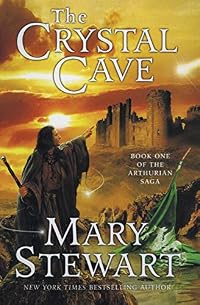
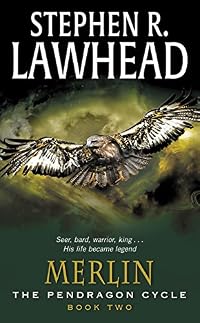
Born the bastard son of a Welsh princess, Myridden Emrys -- or as he would later be known, Merlin -- leads a perilous childhood, haunted by portents and visions. But destiny has great plans for this no-man's-son, taking him from prophesying before the High King Vortigern to the crowning of Uther Pendragon . . . and the conception of Arthur -- king for once and always.Tags
Recommendations
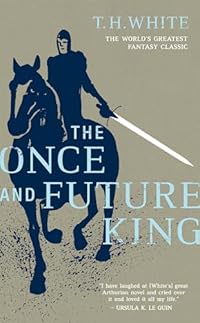
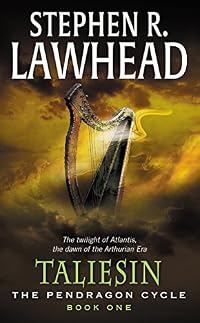

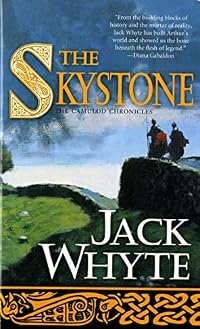

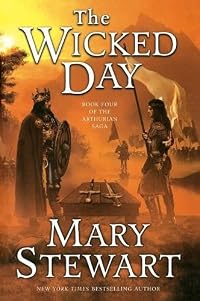
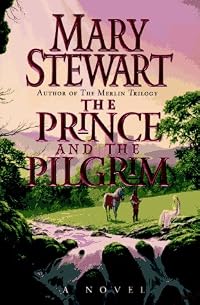
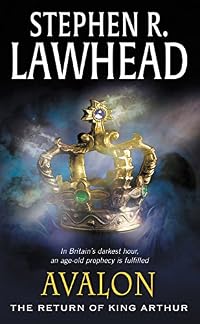


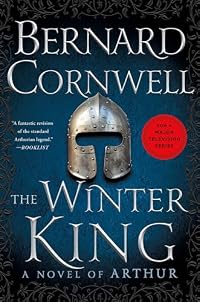
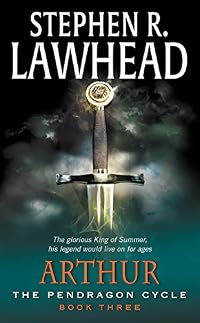










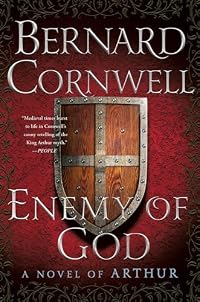
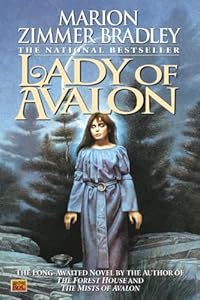
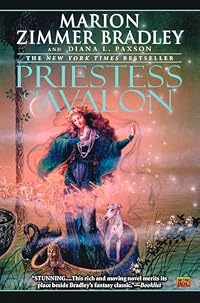

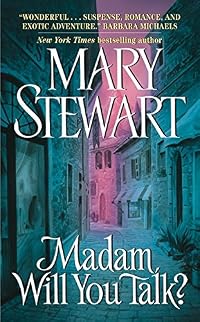
Member Recommendations
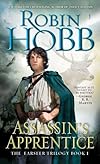
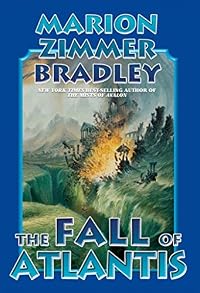
LiddyGally Both "autobiograhical" accounts of the life of a man with powers of a magical kind, told from boyhood to manhood. Compelling writing makes for a great read and memorable story!
40
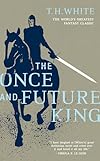
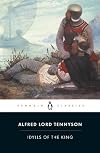
myshelves Tennyson's classic rendering of the Arthurian legends in verse.
30


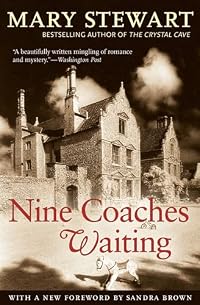
Bookshop_Lady Mary Stuart ties the Arthur legend to Rome through Ambrosius and his brother Uther. Valerio Massimo takes a slightly different turn to the story: The Last Legion is the story of the last Roman emperor, who fled to England searching for the last legion of Roman soldiers, hoping they would still be loyal to him. This last emperor, a youth of about 13 when he attains the throne, will grow up to become Uther Pendragon.
Fan's of Mary Stuart's trilogy will appreciate Massimo's interpretation of the Arthur legend.

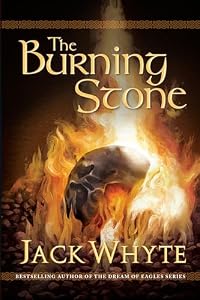
Rowntree Adventures in Britain a generation after King Arthur.

myshelves Non-fiction guide to traditional Authurian sites.
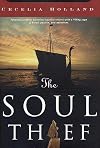
themulhern Fairly realistic historical fiction, with magic added in. Cecilia Holland's is grittier and more original and told from several points of view and not as the memories of a now old man.
bjappleg8 so many common threads: the "bastard" son of a royal daughter whose father turns out to be a king; who is god-touched and destined for glory but ultimately tragic. Also, strange to say, both these re-tellings of ancient myths by women feel fairly misogynistic.
Member Reviews
This is the most convincing retelling of the tales I have ever come across. The tale is told by Merlin himself as an old man, looking back on an extraordinary life lived in the courts of great kings and warriors, but also among the plain folk of the Welsh hills. It is a world in turmoil, the Romans have left and a gaggle of small Celtic kingdoms has sprung up in their wake, who are now beleaguered by bands of Saxons who have come to settle and build their own kingdoms. This is the tale of his youth as a bastard prince, an exile in Brittany, and his return with the last Roman-descended king to Britain who dies before his task is fulfilled. Merlin picks up where he left off and plans the intrigue that will see the conception of Arthur. show more
The world he describes looks and feels real, petty concerns, powerful emotions, strong convictions drive the characters. All the time there is the sense of knowledge and old powers dying, the sense that Merlin is the last of a vanishing breed. Great stuff. show less
The world he describes looks and feels real, petty concerns, powerful emotions, strong convictions drive the characters. All the time there is the sense of knowledge and old powers dying, the sense that Merlin is the last of a vanishing breed. Great stuff. show less
I enjoyed this a lot more than I expected, and I've no idea why I've not come across it before, as it's been a classic since the 70s. It has held up very well, which is very unusual. It's the first of a quintet of Arthurian tales. And this is the young Merlin, from boyhood discovery of his powers and teachers, through to the birth of Arthur.
It's a bit mystical in places Merlin doesn't actively control his powers, he's merely a conduit for The/A god's will. He only foresees a few events, and mostly doesn't know the significance of them until they're occurring. But he does quickly learn that gods help most those who help themselves, and he ensures he puts himself in places and times where the gods help will come to him.
There's a good show more historical feel to it, with various tribes kings looking out for themselves, the invading saxons and the roman remnants still more evident than they are today. Stonehenge was neatly parleyed inot the plot, again without contradicting much that is known to be true, but incorporating a many potential truths instead. The author acknowledges a lot of earlier influences, not necessarily scholarly, but this is certainly a less immediately made-up Merlin tale than many. The pacing and action work well, and it's very focused on Merlin, which is my preferred style of reading, it does mean that there are few secondary characters with any complexity - and of course almost zero women other than his reclusive mother. Merlin being famously celibate ' because of his magic'.
I will read the rest of the series in due course show less
It's a bit mystical in places Merlin doesn't actively control his powers, he's merely a conduit for The/A god's will. He only foresees a few events, and mostly doesn't know the significance of them until they're occurring. But he does quickly learn that gods help most those who help themselves, and he ensures he puts himself in places and times where the gods help will come to him.
There's a good show more historical feel to it, with various tribes kings looking out for themselves, the invading saxons and the roman remnants still more evident than they are today. Stonehenge was neatly parleyed inot the plot, again without contradicting much that is known to be true, but incorporating a many potential truths instead. The author acknowledges a lot of earlier influences, not necessarily scholarly, but this is certainly a less immediately made-up Merlin tale than many. The pacing and action work well, and it's very focused on Merlin, which is my preferred style of reading, it does mean that there are few secondary characters with any complexity - and of course almost zero women other than his reclusive mother. Merlin being famously celibate ' because of his magic'.
I will read the rest of the series in due course show less
This novel tells the life story of the legendary Merlin, from his early childhood up until the conception of King Arthur.
It's hard to know exactly what to say about this book. It's quick, decent, unobjectionable read, and it fleshes out the legends in some moderately interesting ways, but somehow I just never found it nearly as engaging as I wanted it to be. Part of that may be due to the fact that there are longish chunks of narrative that are mostly about the movements of armies, and that's not exactly my favorite thing in the world to read about. But I think it has more to do with Merlin himself. There are two things about the character of Merlin, as he's traditionally presented, that are interesting: his wisdom, and his magic. Well, show more the youngster of this novel may have a lot of knowledge, but he's not really old enough yet to have that kind of iconic wisdom. And the magic is portrayed as something vague, limited, and surprisingly passive. Mostly it consists of visions provided at useful moments and a tendency to find himself drawn toward certain people and places exactly at the right times, which Merlin attributes to the patronage of some god. (Or all gods, or the only God... This book really does want to have its paganism and eat its Christianity, too.) I can't help but feel vaguely disappointed by this, somehow, though it's not because I was hoping for sparkly magical fireworks and didn't get any. I think the idea here is to undercut the mythology a bit and create a more human Merlin, and I actually think that's an approach with some terrific potential. I do, in fact, rather like the way Stewart shows how some of the legends start growing up around him based on stories that are exaggerated or just not true to begin with; there's a nice realism about that. But in general, I just don't think it succeeds very well, because I never did get a strong sense of Merlin as a real person. After spending 380 pages with him -- 380 pages of first-person narration, even! -- if you were to ask me to describe his personality, the best I could manage is, "Well, he's quite intelligent. And, um, he mentions sometimes really liking to be alone, so I guess he's kind of an introvert?" And that's it, because ultimately he comes across less as a fully fleshed human being and more as a passive tool of fate. Unfortunately, passive tools of fate are a lot less interesting. show less
It's hard to know exactly what to say about this book. It's quick, decent, unobjectionable read, and it fleshes out the legends in some moderately interesting ways, but somehow I just never found it nearly as engaging as I wanted it to be. Part of that may be due to the fact that there are longish chunks of narrative that are mostly about the movements of armies, and that's not exactly my favorite thing in the world to read about. But I think it has more to do with Merlin himself. There are two things about the character of Merlin, as he's traditionally presented, that are interesting: his wisdom, and his magic. Well, show more the youngster of this novel may have a lot of knowledge, but he's not really old enough yet to have that kind of iconic wisdom. And the magic is portrayed as something vague, limited, and surprisingly passive. Mostly it consists of visions provided at useful moments and a tendency to find himself drawn toward certain people and places exactly at the right times, which Merlin attributes to the patronage of some god. (Or all gods, or the only God... This book really does want to have its paganism and eat its Christianity, too.) I can't help but feel vaguely disappointed by this, somehow, though it's not because I was hoping for sparkly magical fireworks and didn't get any. I think the idea here is to undercut the mythology a bit and create a more human Merlin, and I actually think that's an approach with some terrific potential. I do, in fact, rather like the way Stewart shows how some of the legends start growing up around him based on stories that are exaggerated or just not true to begin with; there's a nice realism about that. But in general, I just don't think it succeeds very well, because I never did get a strong sense of Merlin as a real person. After spending 380 pages with him -- 380 pages of first-person narration, even! -- if you were to ask me to describe his personality, the best I could manage is, "Well, he's quite intelligent. And, um, he mentions sometimes really liking to be alone, so I guess he's kind of an introvert?" And that's it, because ultimately he comes across less as a fully fleshed human being and more as a passive tool of fate. Unfortunately, passive tools of fate are a lot less interesting. show less
An excellent take on the Arthurian saga that I wish I had read earlier. The old wizard Merlin serves as our narrator, and this first entry tells the story of Merlin's birth as a bastard Welsh prince, up through his childhood and the conception of the future king Arthur. It paints a vivid picture of sub-Roman Britain, much like Cornwell's Warlord Chronicles, which I recently read and also enjoyed. The Crystal Cave is less gritty than Cornwell's take, less grimy and violent, and filled with a bit more magic and wonder. The pace is slow, almost plodding; Mary Stewart definitely takes her time. This novel doesn't even feature Arthur as a character, though his prophesied coming is a constant background hum for those who recognize the bits of show more myth and legend Stewart is pulling from.
The writing is excellent, the prose is rich and evocative without straying into flowery territory, and bits of semi-modern slang are woven into the dialogue in a way that feels really natural, which keeps conversations lively and avoids the stiltedness that some older novels can fall victim to.
There's a reason this series is one of the most recommended on lists of the greatest Arthurian tales. Anyone with an interest in Arthur and native British/Welsh history and culture who has already read the Warlord Chronicles and wants something in a similar vein would do themselves a favor reading this novel. show less
The writing is excellent, the prose is rich and evocative without straying into flowery territory, and bits of semi-modern slang are woven into the dialogue in a way that feels really natural, which keeps conversations lively and avoids the stiltedness that some older novels can fall victim to.
There's a reason this series is one of the most recommended on lists of the greatest Arthurian tales. Anyone with an interest in Arthur and native British/Welsh history and culture who has already read the Warlord Chronicles and wants something in a similar vein would do themselves a favor reading this novel. show less
Though we often think of Arthurian legend as focusing on Arthur himself, in this first novel in her trilogy Stewart focuses almost exclusively on how "Myriddn Emrys" became Merlin, from his childhood as an illegitimate grandson of the King of Wales and discovering his true paternity, to becoming a trusted advisor to several legendary kings battling for power in the British Isles.
This was definitely a palate-cleanser for me. I found the writing captivating and stayed up far too late on more than one evening, not wanting to put it down. The plot did not always play out as this seasoned reader was expecting, so it scores higher for its unpredictability. I had some trouble initially keeping straight allegiances with similar names, but show more ultimately it was enough to be aware of the opposing factions, even if I couldn't always remember who was aligned with whom. Looking forward to the next in the series. show less
This was definitely a palate-cleanser for me. I found the writing captivating and stayed up far too late on more than one evening, not wanting to put it down. The plot did not always play out as this seasoned reader was expecting, so it scores higher for its unpredictability. I had some trouble initially keeping straight allegiances with similar names, but show more ultimately it was enough to be aware of the opposing factions, even if I couldn't always remember who was aligned with whom. Looking forward to the next in the series. show less
Oh. Wow. It is truly an amazing book, a groundbreaking look at Arthur through the eyes of Merlin, and one that acknowledges the disparate bits of history that are traceable as well as Geoffrey of Monmouth's legends. The historical bits are the post-Roman Britons who are struggling to hold onto their lands amidst the constant invasions of the Saxons and the perceived betrayal of the Lord/King Vortigern in his alliances with the Saxons.
In this re-telling, Merlin is the bastard son to a noblewoman, whose father is Ambrosius Aurelianus, exiled to Brittany. Ambrosius is brother to Uther who will later be the Pendragon and father to Arthur, but until then, Ambrosius must claim his crown and train his retainers in fierce fighting and moveable show more military camps. Merlin's upbringing, his servants, his journey, and his education are well-told and full of an appropriate combination of speculation and research. And also in this book is an embrace of the element of magic through the Sight as well as an intelligent mind. And darkness and mist.
I can see why it was better that I read it at an older age instead of in the "Arthur must be medieval!" thinking of my teens. The historical Arthur was of a certain time period and the court customs of the Middle Ages were definitely anachronistic to his history. On the other hand, there is quite a thrill to see "Excalibur" or to read the poetry of Mallory. I highly recommend this book for students of this legend; it is probably the foundation of modern Arthurian tales. show less
In this re-telling, Merlin is the bastard son to a noblewoman, whose father is Ambrosius Aurelianus, exiled to Brittany. Ambrosius is brother to Uther who will later be the Pendragon and father to Arthur, but until then, Ambrosius must claim his crown and train his retainers in fierce fighting and moveable show more military camps. Merlin's upbringing, his servants, his journey, and his education are well-told and full of an appropriate combination of speculation and research. And also in this book is an embrace of the element of magic through the Sight as well as an intelligent mind. And darkness and mist.
I can see why it was better that I read it at an older age instead of in the "Arthur must be medieval!" thinking of my teens. The historical Arthur was of a certain time period and the court customs of the Middle Ages were definitely anachronistic to his history. On the other hand, there is quite a thrill to see "Excalibur" or to read the poetry of Mallory. I highly recommend this book for students of this legend; it is probably the foundation of modern Arthurian tales. show less
With COVID-19 threatening all of us and altering our lives, I have found it hard at times to concentrate on the reading I had planned. I was once asked "if you were stranded on an island, what book would you take with you?" and I responded this one. Well, I am on an island, in a way, and I needed an old friend, so I pulled out my Merlin trilogy and just finished this first book. It is a great book for reminding you what you can overcome if you have God on your side. It was time...I like to meet up with Merlin once every few years in any case.
--------------------------
Who was Merlin? Most of us know the Arthurian tales in some aspect or another, and in them each of us has an idea of the role of Merlin, the great wizard who guides Arthur show more to be a great king. Few of us have ever stopped to think that legends spring from men and to wonder who the man was who was Merlin. Mary Stewart stopped to ask that question, and then proceeded to answer it with such finesse and glory and brilliance that whatever image of Merlin you have ever held will be dispelled and only her version will ever feel satisfactory thereafter.
She begins with Merlin as a boy, a bastard born to Niniane, a Welsh princess. Because of his ignoble birth and the looming threat of his unknown heritage, he is either mistreated, ignored, or feared in his home and becomes solitary in his character. Were he a simple boy, he would never survive his childhood, but like his mother, he is blessed (or cursed) with the “sight”, an ability to know more than his five senses might tell him.
Through a set of unique circumstances and a bit of fate, he comes to be in service to a great king, Ambrosius, and in intimate contact with the volatile and often callous Uther Pendragon, the man destined to father Arthur, the greatest of British Kings.
Where Stewart takes us next is on a very believable, fascinating journey--that is magical in a way that has little to do with magic. She breathes life into every character she presents, not only Merlin but Ambrosius, the King; Uther, his brother; Cerdic and Cadal, Merlin’s servants; Galapas the keeper of the cave, and even the more minor characters like Belasius and Ulfin. There is not one character, no matter how minor his role, that does not serve his function and move the story forward to its pre-ordained end.
Stewart has a sweeping command of the history she presents and an undeniably smooth and fresh writing style that puts you right there in the history, sharing the moment. She has, as well, a deep understanding of what it is to be both human and exceptional, and we understand Merlin on both levels. Then there is the charm of her subtle humor that is always so well placed and so perfectly timed that she has made me chuckle aloud and pathos so real that it has brought me to tears.
In the end, while explaining man, she also explains the unexplainable that is God and how He works in the lives He bestows:
Mithras, Apollo, Arthur, Christ--call him what you will,” I said. “What does it matter what men call the light? It is the same light, and men must live by it or die. I only know that God is the source of all the light which has lit the world, and that his purpose runs through the world and past each one of us like a great river, and we cannot check or turn it, but can only drink from it while living, and commit our bodies to it when we die.”
I first read this book in 1970, at its initial publication. I can remember waiting with great impatience for the next volume to become available and feeling elated by the words between the covers. It was the same response that I had to Tolkien when I discovered him, and while Tolkien has found his audience at last, Stewart is still searching for hers. Stewart deserves a lot more praise and a wider audience in my view. I have read these books over again several times since my first reading and find them undiminished in the enjoyment they bring. They possess the power of a very good and ancient tale told in a new and fresh way. They are a gift you should give to yourself. show less
--------------------------
Who was Merlin? Most of us know the Arthurian tales in some aspect or another, and in them each of us has an idea of the role of Merlin, the great wizard who guides Arthur show more to be a great king. Few of us have ever stopped to think that legends spring from men and to wonder who the man was who was Merlin. Mary Stewart stopped to ask that question, and then proceeded to answer it with such finesse and glory and brilliance that whatever image of Merlin you have ever held will be dispelled and only her version will ever feel satisfactory thereafter.
She begins with Merlin as a boy, a bastard born to Niniane, a Welsh princess. Because of his ignoble birth and the looming threat of his unknown heritage, he is either mistreated, ignored, or feared in his home and becomes solitary in his character. Were he a simple boy, he would never survive his childhood, but like his mother, he is blessed (or cursed) with the “sight”, an ability to know more than his five senses might tell him.
Through a set of unique circumstances and a bit of fate, he comes to be in service to a great king, Ambrosius, and in intimate contact with the volatile and often callous Uther Pendragon, the man destined to father Arthur, the greatest of British Kings.
Where Stewart takes us next is on a very believable, fascinating journey--that is magical in a way that has little to do with magic. She breathes life into every character she presents, not only Merlin but Ambrosius, the King; Uther, his brother; Cerdic and Cadal, Merlin’s servants; Galapas the keeper of the cave, and even the more minor characters like Belasius and Ulfin. There is not one character, no matter how minor his role, that does not serve his function and move the story forward to its pre-ordained end.
Stewart has a sweeping command of the history she presents and an undeniably smooth and fresh writing style that puts you right there in the history, sharing the moment. She has, as well, a deep understanding of what it is to be both human and exceptional, and we understand Merlin on both levels. Then there is the charm of her subtle humor that is always so well placed and so perfectly timed that she has made me chuckle aloud and pathos so real that it has brought me to tears.
In the end, while explaining man, she also explains the unexplainable that is God and how He works in the lives He bestows:
Mithras, Apollo, Arthur, Christ--call him what you will,” I said. “What does it matter what men call the light? It is the same light, and men must live by it or die. I only know that God is the source of all the light which has lit the world, and that his purpose runs through the world and past each one of us like a great river, and we cannot check or turn it, but can only drink from it while living, and commit our bodies to it when we die.”
I first read this book in 1970, at its initial publication. I can remember waiting with great impatience for the next volume to become available and feeling elated by the words between the covers. It was the same response that I had to Tolkien when I discovered him, and while Tolkien has found his audience at last, Stewart is still searching for hers. Stewart deserves a lot more praise and a wider audience in my view. I have read these books over again several times since my first reading and find them undiminished in the enjoyment they bring. They possess the power of a very good and ancient tale told in a new and fresh way. They are a gift you should give to yourself. show less
Members
- Recently Added By
Published Reviews
Eerste deel van een trilogie over het leven van de legendarische tovenaar en helderziende Merlijn. Hij leefde in het Brittannië van de vijfde eeuw en was in zijn latere leven de opvoeder en raadgever van de grote koning Arthur. Dit eerste deel omvat het verhaal over zijn geboorte en eerste levensjaren, doorgebracht aan het hof van zijn grootvader, de koning van Zuid-Wales. Verder: de show more ontdekking van de glazen grot en zijn opleiding bij de ziener Galapas. Het boek eindigt met de geboorte van koning Arthur. Een boeiend verhaal over deze magiër; door haar levende verbeelding en vlotte schrijftrant weet de schrijfster de lezer van begin tot eind te boeien. Wordt vervolgd door: "De holle heuvels". Normale druk, volle bladspiegel.
(Biblion recensie, J. v. Leeuwen-v.d. Tempel.) show less
(Biblion recensie, J. v. Leeuwen-v.d. Tempel.) show less
added by karnoefel
Lists

Best Historical Fiction
620 works; 261 members

Best Arthurian Fiction
104 works; 33 members

Female Author
1,235 works; 65 members

NPRs your picks: top 100 Sci-Fi/Fantasy books
297 works; 78 members

Unread books
1,063 works; 83 members

Historical Fiction
889 works; 89 members

Celtic Fiction
26 works; 9 members

Bibliography for Among Others
159 works; 15 members
Survey of Fantasy Classics
111 works; 23 members

The 100 Best Fantasy Books of All Time
100 works; 15 members

Bookriot's 100 Must-Read Sci-Fi Fantasy Novels By Female Authors
100 works; 9 members

Top Five Books of 2016
795 works; 228 members

Best Historical Fiction authors
41 works; 9 members

1970s
657 works; 23 members

Books Read in 2023
5,547 works; 145 members

Blue Pyramid 1,276 Best Books of All Time
1,248 works; 32 members

Historical Fantasy
93 works; 14 members

Publisher's Weekly Bestsellers - Part II - 1940 - 1979
355 works; 5 members

Carole's List
445 works; 13 members

Necessary & Exquisite
30 works; 4 members
Modern Arthurian Fiction
237 works; 15 members

Books Read in 2019
4,052 works; 108 members

al.vick-series
381 works; 2 members

Swinging Seventies
255 works; 18 members

Books Read in 2021
5,361 works; 114 members

Biggest Disappointments
606 works; 163 members

Published in 1970
58 works; 7 members

Roman Britain
42 works; 12 members

1970 Club
85 works; 2 members

EGBERTINA'S List of childhood books worthy of merit or unspeakable delight
155 works; 6 members

Books Read in 2024
4,623 works; 126 members

Books Read in 2025
4,090 works; 97 members

Books We Couldn't Put Down
443 works; 197 members

Books We Want To Read Again For The First Time
384 works; 160 members

Books talked about in Pamela Dean's Tam Lin
74 works; 1 member

Guilty Pleasures
223 works; 86 members
Talk Discussions
Past Discussions
Mary STewart Merlin Trilogy in Book talk (October 2014)
Arthurian Theme read w/**SPOILERS** in The Green Dragon (March 2008)
Author Information

51+ Works 40,210 Members
Mary Stewart was born on September 17, 1916 in Sunderland, County Durham, England. She received a First Class Honours B.A. in English from Durham University in 1938 and a teaching certificate in 1939. She taught in elementary school until 1941 when she was offered a post at Durham University. She taught there until 1945 and received a M.A. in show more English during that time. Her first book, Madam, Will You Talk?, was published in 1955. Her other works included My Brother Michael, Touch Not the Cat, This Rough Magic, Nine Coaches Waiting, Thornyhold, Rose Cottage, and the Merlin Trilogy. She also wrote children's books including Ludo and the Star Horse and A Walk in Wolf Wood. She died on May 9, 2014 at the age of 97. (Bowker Author Biography) show less
Some Editions
Awards and Honors
Awards
Distinctions
Series
Belongs to Publisher Series
Heyne Fantasy (06/5960)
Heyne Taschenbuch (5035)
Work Relationships
Common Knowledge
- Canonical title
- The Crystal Cave
- Original title
- The Crystal Cave
- Original publication date
- 1970-08
- People/Characters
- Merlin Ambrosius [as Merlin, Merlinus, Myrddin Emrys]; Galapas; Ambrosius Aurelianus; Uther Pendragon; Ulfin; Cadal (show all 9); Belasius; Vortigern; Ralf
- Important places
- Wales, UK; England, UK; Brittany, France
- Related movies
- Merlin of the Crystal Cave (1991 | IMDb)
- Epigraph
- O Merlin in your crystal cave
Deep in the diamond of the day,
Will there ever be a singer
Whose music will smooth away
The Furrow drawn by Adam's finger
Across the meadow and the wave?
Or a runner who'll out... (show all)run
Man's long shadow driving on,
Burst through the gates of history,
And hang the apple on the tree?
Will your sorcery ever show
The sleeping bride shut in her bower,
The day wreathed in its mound of snow,
And Time locked in his tower?
----Edwin Muir - Dedication
- To the Memory
of Mollie Craig
with my love - First words
- PROLOGUE: The Prince of Darkness
I am an old man now, but then I was really past my prime when Arthur was crowned King.
BOOK I: The Dove
The day my uncle Camlach came home, I was just six years old.
BOOK II: The Falcon
The first I knew of our coming to shore was being roused, still heavy with that exhausted sleep, by voices talking over me.
BOOK III: The Wolf
I was five years with Ambrosius in Brittany.
BOOK IV: The Red Dragon
The way the chronicles tell it, you would think it took Ambrosius two months to get himself crowned King and pacify Britain.
BOOK V: The Coming of the Bear
Men said afterwards that the great dragon star which blazed at Ambrosius' death, and from which Uther took the royal name of Pendragon, was a baleful herald for the new reign. - Quotations
- "Mithras, Apollo, Arthur, Christ -- call him what you will," I said. "What does it matter what men call the light? It is the same light, and men must live by it or die. I only know that God is the source of all the light whic... (show all)h has lit the world, and that his purpose runs through the world and past each one of us like a great river, and we cannot check or turn it, but can only drink from it while living, and commit our bodies to it when we die." -- Merlin
- Last words
- (Click to show. Warning: May contain spoilers.)But while I watched it the pale sky grew brighter round it, flooding it with gold and soft fire, and then with a bursting wave of brilliant light, as up over the land where the herald star had hung, rose the young sun.
- Original language*
- Engels
*Some information comes from Common Knowledge in other languages. Click "Edit" for more information.
Classifications
Statistics
- Members
- 6,402
- Popularity
- 1,908
- Reviews
- 119
- Rating
- (4.05)
- Languages
- 11 — Czech, Dutch, English, Estonian, Finnish, French, German, Italian, Portuguese, Spanish, Swedish
- Media
- Paper, Audiobook, Ebook
- ISBNs
- 63
- UPCs
- 1
- ASINs
- 66