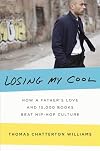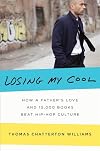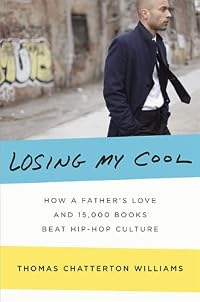
Losing My Cool: How a Father's Love and 15,000 Books Beat Hip-hop Culture
by Thomas Chatterton Williams
On This Page
Description
Describes how the author's hip-hop culture radically contrasted with his book-loving father's endless pursuit of knowledge, revealing how the father-son bond eventually overcame the genre's rebellious messages.Tags
Recommendations






Member Reviews
I picked this book up at random and without any preconceived ideas. Here's my take on first read.
I enjoyed this thoughtful and engaging memoir that did offer me insights into black youth culture as an outsider. I applaud the author for his willingness to expose his past mistakes (including beating his girlfriend) and the learning process he went through to change and see the world from an enlarged perspective. His message comes across most powerfully for me in the closing chapters, when he expresses how he felt betrayed by his friends and community into having a tunnel vision about the world, inflected by the misogyny and materialism of hip hop culture. As a college professor, moreover, it was gratifying to see the profound effects of show more books and higher education on his development. I see many of my students, black and not-black, struggle with similar kinds of cultural and emotional development. Education, if it is truly an education, is transformative: we are not the same person we were before, even if this meant abandoning a particular social group belonging. Both Thomas and his father chose to take advantage of the opportunities for growth afforded to them. This book could be useful in the classroom, though for the purpose of provoking thought and discussion rather than as the ultimate representation of black youth culture.
On the other hand, I have some misgivings.
First, he downplays the role of his white mother in his life. His father, a black man who escaped the Jim Crow South and who has put all his energy into an intellectual life, is clearly a critical and significant influence on the author. I was disappointed, however, to not learn more about how his parents negotiated their mixed-race marriage, and how his biracial background may have, or not, influenced his desire to be accepted into the black youth culture of his neighborhood. His father states that he always wanted to be black, and yet there is no addressing why his father married a white woman--these are not mutually exclusive, but the question arises. Nor is there any discussion of what kind of influence his white mother had on him, other than the fact that she was ostracized by her family for marrying his father. I was also curious about how the role of his mother may have influenced his attitudes towards women in his early years. I wanted to know more about these racial dynamics within his family. and how they may have contributed to his life path.
Second, while he criticizes his black peers for mostly failing to escape their lives of poverty and cultural stultification, it is clear that without his father's intellectual model and demand that Thomas study for the SAT every day after school that the author would likely not have succeeded in being admitted to Georgetown in the first place and thus had exposure to the international elite on offer at such an institution. He is, I think, right, that the issues are cultural, but culture starts at home, and has a profound influence on a child's life trajectory. He suggests that family life is not determinate (Stacey, for example, is also from a middle-class family), and that the "They" of in-group pressures (Heidegger's "They" and Nietzsche's "herd") are more influential. Perhaps they are, but surely the dynamics are more complex than that, speaking as someone who has family members who followed a path similar to Thomas.
Third, while I'm not especially well-versed in hip hop culture or music, I agree with other commentators that his criticisms are narrow. Even if these were his personal experiences with some hip hop music and its infamous gangsta values, it would have been best if he had, at least, acknowledged that there are hip hop artists who take a political stance that is more historically and intellectually self-conscious. The difference between the art itself and the interpretation of that art within culture seems important to stress here.
Finally, the title (of the edition I read) is a bit misleading. Literature doesn't play that important a role here; it's philosophy, particularly continental, that exerts its influence on him at Georgetown, and later his belated reading of Black intellectual writing. Perhaps this was an editorial decision on the assumption that no one wants to read about philosophy, but if so the pandering is palpable and undercuts the very thesis of the book.
These are my first impressions on first read, and without any exposure to controversies in the media. show less
I enjoyed this thoughtful and engaging memoir that did offer me insights into black youth culture as an outsider. I applaud the author for his willingness to expose his past mistakes (including beating his girlfriend) and the learning process he went through to change and see the world from an enlarged perspective. His message comes across most powerfully for me in the closing chapters, when he expresses how he felt betrayed by his friends and community into having a tunnel vision about the world, inflected by the misogyny and materialism of hip hop culture. As a college professor, moreover, it was gratifying to see the profound effects of show more books and higher education on his development. I see many of my students, black and not-black, struggle with similar kinds of cultural and emotional development. Education, if it is truly an education, is transformative: we are not the same person we were before, even if this meant abandoning a particular social group belonging. Both Thomas and his father chose to take advantage of the opportunities for growth afforded to them. This book could be useful in the classroom, though for the purpose of provoking thought and discussion rather than as the ultimate representation of black youth culture.
On the other hand, I have some misgivings.
First, he downplays the role of his white mother in his life. His father, a black man who escaped the Jim Crow South and who has put all his energy into an intellectual life, is clearly a critical and significant influence on the author. I was disappointed, however, to not learn more about how his parents negotiated their mixed-race marriage, and how his biracial background may have, or not, influenced his desire to be accepted into the black youth culture of his neighborhood. His father states that he always wanted to be black, and yet there is no addressing why his father married a white woman--these are not mutually exclusive, but the question arises. Nor is there any discussion of what kind of influence his white mother had on him, other than the fact that she was ostracized by her family for marrying his father. I was also curious about how the role of his mother may have influenced his attitudes towards women in his early years. I wanted to know more about these racial dynamics within his family. and how they may have contributed to his life path.
Second, while he criticizes his black peers for mostly failing to escape their lives of poverty and cultural stultification, it is clear that without his father's intellectual model and demand that Thomas study for the SAT every day after school that the author would likely not have succeeded in being admitted to Georgetown in the first place and thus had exposure to the international elite on offer at such an institution. He is, I think, right, that the issues are cultural, but culture starts at home, and has a profound influence on a child's life trajectory. He suggests that family life is not determinate (Stacey, for example, is also from a middle-class family), and that the "They" of in-group pressures (Heidegger's "They" and Nietzsche's "herd") are more influential. Perhaps they are, but surely the dynamics are more complex than that, speaking as someone who has family members who followed a path similar to Thomas.
Third, while I'm not especially well-versed in hip hop culture or music, I agree with other commentators that his criticisms are narrow. Even if these were his personal experiences with some hip hop music and its infamous gangsta values, it would have been best if he had, at least, acknowledged that there are hip hop artists who take a political stance that is more historically and intellectually self-conscious. The difference between the art itself and the interpretation of that art within culture seems important to stress here.
Finally, the title (of the edition I read) is a bit misleading. Literature doesn't play that important a role here; it's philosophy, particularly continental, that exerts its influence on him at Georgetown, and later his belated reading of Black intellectual writing. Perhaps this was an editorial decision on the assumption that no one wants to read about philosophy, but if so the pandering is palpable and undercuts the very thesis of the book.
These are my first impressions on first read, and without any exposure to controversies in the media. show less
It is always easier for an outsider to be objective about an unfamiliar culture than it is for someone totally immersed in that same culture, especially when strict conformity to the accepted norm of the culture serves as a means of survival within it. I recognize, however, that an outsider brings his own baggage and bias into any discussion about a culture foreign to his eyes. And when it comes to the hip-hop culture that so completely dominates overall black culture today, especially the lives of its younger members, I am absolutely an outsider. But, as such, I have long wondered how, and why, American blacks have allowed their culture and their image as a people to be disgraced by something as shallow and destructive as hip-hop. "In show more Losing My Cool," Thomas Chatterton Williams explores how the hip-hop culture came to dominate Black America and what needs to be done to counter its terrible influence on young people.
As the subtitle to his book ("How a Father's Love and 15,000 Books Beat Hip-Hop Culture") indicates, Thomas Chatterton Williams was one of the lucky ones. It was a close call, but he saw through the false bravado of hip-hop before it was too late for him to make something of his life. Williams and his brother are the products of the marriage between a white woman from California and a black man from Galveston, Texas. The boys grew up in a New Jersey home in which their father stressed to them that learning is a skill that needs to be practiced each and every day. There were no days off for Thomas. His friends might be wasting their summers by posing as thugs on the streets and local basketball courts but Thomas was spending hours preparing for his next school year or prepping for the SAT examination.
His father, largely a self-educated man, led by example; the man practically devoured books. He did not just read them; he had conversations with them, leaving notes and underlined passages on practically every page he read. But for Thomas, as for everyone else he grew up with, hip-hop culture trumped whatever good influence he received at home from his parents. As he puts it, "The nail that sticks up gets hammered down. To survive, I drank in my community's mores, including its fear of learning, even as I capitulated to my father's seemingly eccentric will at home...had mastered the delicate balance of keeping it real and keeping Pappy satisfied at the same time."
Even after the countless hours of study with his father paid off in a scholarship to Georgetown University, Thomas continued to immerse himself exclusively in the world of his fellow black students. He paid no attention to his white dormitory mates, skipped class as much as he attended it, and spent as much time as possible with the black students of Howard University, where he felt totally at home because its students were living exactly the debasing lifestyle he knew from high school.
Thomas Chatterton Williams, though, is a learner and, by his second year at Georgetown, he began to realize just how badly the hip-hop culture had cheated him and his peers out of the finer things of life. They had been compelled to embrace a dishonorable lifestyle, one with no dignity and no future. Thomas discarded a culture that promoted self-hatred, denigrated women, and ridiculed books and learning for his own vision of what a man should be. Thanks to Pappy's influence, Thomas embraced the degree of non-conformity that allowed him to become the man his father always hoped he would become.
"Losing My Cool" is a frank look at what has gone wrong in Black America. Williams points his finger at the culprits - and he names them. Sadly, those who would most benefit from the lessons in "Losing My Cool" are the least likely to read the book, either because they cannot, or because they will not. Either way, that is a tragedy.
Rated at: 5.0 show less
As the subtitle to his book ("How a Father's Love and 15,000 Books Beat Hip-Hop Culture") indicates, Thomas Chatterton Williams was one of the lucky ones. It was a close call, but he saw through the false bravado of hip-hop before it was too late for him to make something of his life. Williams and his brother are the products of the marriage between a white woman from California and a black man from Galveston, Texas. The boys grew up in a New Jersey home in which their father stressed to them that learning is a skill that needs to be practiced each and every day. There were no days off for Thomas. His friends might be wasting their summers by posing as thugs on the streets and local basketball courts but Thomas was spending hours preparing for his next school year or prepping for the SAT examination.
His father, largely a self-educated man, led by example; the man practically devoured books. He did not just read them; he had conversations with them, leaving notes and underlined passages on practically every page he read. But for Thomas, as for everyone else he grew up with, hip-hop culture trumped whatever good influence he received at home from his parents. As he puts it, "The nail that sticks up gets hammered down. To survive, I drank in my community's mores, including its fear of learning, even as I capitulated to my father's seemingly eccentric will at home...had mastered the delicate balance of keeping it real and keeping Pappy satisfied at the same time."
Even after the countless hours of study with his father paid off in a scholarship to Georgetown University, Thomas continued to immerse himself exclusively in the world of his fellow black students. He paid no attention to his white dormitory mates, skipped class as much as he attended it, and spent as much time as possible with the black students of Howard University, where he felt totally at home because its students were living exactly the debasing lifestyle he knew from high school.
Thomas Chatterton Williams, though, is a learner and, by his second year at Georgetown, he began to realize just how badly the hip-hop culture had cheated him and his peers out of the finer things of life. They had been compelled to embrace a dishonorable lifestyle, one with no dignity and no future. Thomas discarded a culture that promoted self-hatred, denigrated women, and ridiculed books and learning for his own vision of what a man should be. Thanks to Pappy's influence, Thomas embraced the degree of non-conformity that allowed him to become the man his father always hoped he would become.
"Losing My Cool" is a frank look at what has gone wrong in Black America. Williams points his finger at the culprits - and he names them. Sadly, those who would most benefit from the lessons in "Losing My Cool" are the least likely to read the book, either because they cannot, or because they will not. Either way, that is a tragedy.
Rated at: 5.0 show less
An engaging memoir that is somewhere between 40% and 90% really social criticism. I'm not sure 100% of the blame Williams puts on "hip-hop culture" belongs there; some of the e.g. anti-intellectualism, "fear of books" or fear of being a nerd, etc. is common to much of American culture. On the flip side, that perhaps makes the question of why more "white boys" were able to "compartmentalize" those things more pressing... This and many other things are left unsaid and uninvestigated.
Those critiques aside, an engaging memoir with, yes, some engaging if not deep cultural criticism. I'd compare this to [b:Buck: A Memoir|16169867|Buck A Memoir|M.K. show more Asante|https://i.gr-assets.com/images/S/compressed.photo.goodreads.com/books/1377634358l/16169867._SX50_.jpg|22016569] but I give this 1 because it is far more critical and less... I can't quite put my finger on it. Williams seems to grow much more; Asante, to a great extent, just doesn't (and, in my mind, maybe retrogresses in his total and complete acceptance of his father's e.g. actions toward his family.) show less
Those critiques aside, an engaging memoir with, yes, some engaging if not deep cultural criticism. I'd compare this to [b:Buck: A Memoir|16169867|Buck A Memoir|M.K. show more Asante|https://i.gr-assets.com/images/S/compressed.photo.goodreads.com/books/1377634358l/16169867._SX50_.jpg|22016569] but I give this 1 because it is far more critical and less... I can't quite put my finger on it. Williams seems to grow much more; Asante, to a great extent, just doesn't (and, in my mind, maybe retrogresses in his total and complete acceptance of his father's e.g. actions toward his family.) show less
I zoomed through this in a day. I was reallyinterested in how the author changed his mindset from one of immersion in hip-hop culture to one focused on philosophy at the collegiate level. I would like some of my teaching colleagues to read it and see if there are any overall ideas that can come from the author's journey, or if it's just one person's (interesting) story of their personal paradigm shift.
Wonderful memoir - I really love the way this guy writes, and what he writes about. A remarkably courageous book.
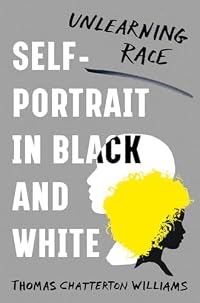
There is a lot of food for thought here. Kudos to Mr. Williams for sharing a not-always flattering account of his younger self and his transformation to adulthood, as the basis in part of the views on life he reached by the 2009 publication date of this book. Personally, I think this is best followed by reading his 2019 [b:Self-Portrait in Black and White: Unlearning Race|43726556|Self-Portrait in Black and White Unlearning Race|Thomas Chatterton Williams|https://i.gr-assets.com/images/S/compressed.photo.goodreads.com/books/1560815450l/43726556._SY75_.jpg|68053671], to understand where his personal journey has taken him and his views now as a husband, father, and world citizen.
A young adult biographical book, but highly recommended for concerned parents, grandparents and educators of all ages. Inspirational and insightful. A coming of age story of a black youth driven to excell by a very wise and determined father. Demonstates different lifestyles and the potential there is to achieve academic success. Education happens inside and out side of high school and college. This would make and excellent class or discussion group book.
Members
- Recently Added By
Author Information

Awards and Honors
Awards
Distinctions
Common Knowledge
- Original title
- Losing My Cool: How a Father's Love and 15,000 Books Beat Hip-hop Culture
- Alternate titles
- Losing My Cool: Love, Literature, and a Black Man's Escape from the Crowd
- People/Characters
- Thomas Chatterton Williams; Clarence Leon Williams
- Important places
- Westfield, New Jersey, USA
- Epigraph
- People who cling to their illusions find it difficult, if not impossible, to learn anything worth learning: a people under the necessity of creating themselves must examine everything, and soak up learning the way the roots o... (show all)f a tree soak up water.
--James Baldwin
I understand you . . . I mean, if I'm right, I think I understand oyou. You're like me and I'm like you. We aren't happy. The atmosphere around us is stifling. We pretend there's nothing wrong, but there is. What's wrong... (show all)? We're being fucking stifled.
--Roberto Bolano - Dedication
- For my parents, Kathleen and Clarence Leon Williams, and for my brother, Clarence Leon Williams II, with all my love.
- First words
- It was wintertime, early in the morning.
- Last words
- (Click to show. Warning: May contain spoilers.)The better approach--if the far more difficult one--would be for us to learn, once and for all, how to interpret and navigate the world around us, and to stop confusing the shoes on our feet or the songs in our ears for ourselves.
- Publisher's editor
- Hughes, Nicole
Classifications
Statistics
- Members
- 201
- Popularity
- 159,417
- Reviews
- 8
- Rating
- (4.08)
- Languages
- English, French
- Media
- Paper, Audiobook, Ebook
- ISBNs
- 7
- ASINs
- 6