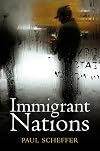
Immigrant nations
by Paul Scheffer
On This Page
Description
This book is a reassessment of how immigration is changing our world. The policies of multiculturalism that were implemented in the wake of postwar immigration have, after 9/11, come under intense scrutiny, and the continuing flow of populations has helped to ensure that immigration remains high on the social and political agenda. Based on his deep knowledge of the European and American experiences, the author shows how immigration entails the loss of familiar worlds, both for immigrants and show more for host societies, and how coming to terms with a new environment evolves from avoidance through conflict to accommodation. The conflict that accompanies all major migratory movements is not a failure of integration but part of a search for new ways to live together. It prompts an intensive process of self-examination. That is why immigration has such a profound existential impact: it goes to the heart of institutions like the welfare state and liberties like the freedom of expression. The author argues that our ability to cope with the challenges posed by immigration requires that we move beyond multiculturalism and find a new balance between openness and exclusion. Tolerance cannot be based on avoidance but should rest on the principle of reciprocity, which means that native populations cannot ask of newcomers any more than they themselves are prepared to contribute. show lessTags
Recommendations
































Member Reviews
aul Scheffer, a Dutch academic, sets out to address the "problems" caused by immigration from developing countries to Western Europe and the US. Immigrant Nations was first published in the Netherlands in 2007 but has been translated into English this year.
This book is a development of earlier pontifications on tensions between Dutch born people and Muslim immigrants, starting in 2000, and continuing after the political rise and assassination of populist and racist Dutch politician Pym Fortuyn.
In size and appearance, Immigrant Nations looks like an academic textbook, and it comes complete with over 50 pages of endnotes, bibliography and name and subject indexes (in a 400 page book). I would argue though that it is less academically show more trustworthy than it looks, and that this is a polemic whose author sets out to back up his arguments by quoting other sources, rather than carrying out balanced research.
As this is a Dutch book, much of his account of immigration to Europe looks at the Netherlands, though he also includes quite a lot on Britain and France. His emphasis is on the failure of immigrants from developing countries, and especially Muslims, to integrate. I do not feel confident to argue with him on the European countries described, but there are lots of examples of the problems with his approach in relation to Britain, which makes me suspicious of the rest of the book.
This is hardly a balanced account of the integration of immigrants (and especially those from Muslim developing countries) in Britain. Significantly, why does he only focus on cities like Bradford where communities are very divided? Why not look at more diverse communities in Leeds or London? Also, what about immigration from Eastern Europe, other English speaking countries like Australia and New Zealand (where my own grandparents were born within Irish immigrant families by the way), or at those of other religions, for example, Christians? I would question the academic rigour of anyone who quotes the well-known Islamophobe (as well as holder of a wide range of other prejudices) and Daily Mail columnist and broadcaster Melanie Phillips without mentioning that lots of people in Britain do not share her views.
One final comment on this book which is not about the content - the English translation is into oddly colloquial English, using a lot of contractions, and it reads oddly in a non-fiction book of this kind, for example "the man who'd welcomed me", "there's a need", "it's easy to see". I think "who had", "there is" and "it is" would be more appropriate.
On the positive side, I found this book very thought provoking and interesting to read, but I am very concerned by what I feel is an attempt to make racism, xenophobia and Islamophobia sound academically respectable (and I say that as a white atheist of both Catholic and protestant descent).
I was hoping for a book which offers a real analysis of the issues raised by immigration, and also, as the writer claims to favour integration of immigrant communities, suggests how our societies could offer immigrants and people still living in the country they were born in a better future. This is not it! A book I did enjoy and appreciate more on the subject of racial and national identities among other things, written by a journalist rather than an academic, is Gary Younge's Who Are We - And Should It Matter in the 21st Century? show less
This book is a development of earlier pontifications on tensions between Dutch born people and Muslim immigrants, starting in 2000, and continuing after the political rise and assassination of populist and racist Dutch politician Pym Fortuyn.
In size and appearance, Immigrant Nations looks like an academic textbook, and it comes complete with over 50 pages of endnotes, bibliography and name and subject indexes (in a 400 page book). I would argue though that it is less academically show more trustworthy than it looks, and that this is a polemic whose author sets out to back up his arguments by quoting other sources, rather than carrying out balanced research.
As this is a Dutch book, much of his account of immigration to Europe looks at the Netherlands, though he also includes quite a lot on Britain and France. His emphasis is on the failure of immigrants from developing countries, and especially Muslims, to integrate. I do not feel confident to argue with him on the European countries described, but there are lots of examples of the problems with his approach in relation to Britain, which makes me suspicious of the rest of the book.
This is hardly a balanced account of the integration of immigrants (and especially those from Muslim developing countries) in Britain. Significantly, why does he only focus on cities like Bradford where communities are very divided? Why not look at more diverse communities in Leeds or London? Also, what about immigration from Eastern Europe, other English speaking countries like Australia and New Zealand (where my own grandparents were born within Irish immigrant families by the way), or at those of other religions, for example, Christians? I would question the academic rigour of anyone who quotes the well-known Islamophobe (as well as holder of a wide range of other prejudices) and Daily Mail columnist and broadcaster Melanie Phillips without mentioning that lots of people in Britain do not share her views.
One final comment on this book which is not about the content - the English translation is into oddly colloquial English, using a lot of contractions, and it reads oddly in a non-fiction book of this kind, for example "the man who'd welcomed me", "there's a need", "it's easy to see". I think "who had", "there is" and "it is" would be more appropriate.
On the positive side, I found this book very thought provoking and interesting to read, but I am very concerned by what I feel is an attempt to make racism, xenophobia and Islamophobia sound academically respectable (and I say that as a white atheist of both Catholic and protestant descent).
I was hoping for a book which offers a real analysis of the issues raised by immigration, and also, as the writer claims to favour integration of immigrant communities, suggests how our societies could offer immigrants and people still living in the country they were born in a better future. This is not it! A book I did enjoy and appreciate more on the subject of racial and national identities among other things, written by a journalist rather than an academic, is Gary Younge's Who Are We - And Should It Matter in the 21st Century? show less
Goed boek dat heel wat spijkers op de kop slaat. Toch blijft het opinie vormend met een gebrek aan objectiviteit. De bibliografie is interessant maar het licht een tip van de sluier. Auteurs die de politieke overtuiging van Scheffer tegenspreken zijn niet gebruikt. Auteurs als Huntington en Landes daarentegen wel.
Amsterdam heeft geen 'Schefferprobleem', zei de toenmalige burgemeester, Schelto Patijn. Dat was nadat Paul Scheffer, bijzonder hoogleraar grootstedelijke problematiek, in 2000 zijn opzienbarende artikel Het multiculturele drama had geschreven. Niets aan de hand, we leven vrolijk verder. Lees verder....
Oct 28, 2007Dutch
Ratings
Members
- Recently Added By
Published Reviews
ThingScore 69
Het is waar, Scheffer heeft een boek geschreven dat in niets op een memo lijkt. Hij brengt er de immigratieonderzoekingen en integratieopvattingen in samen van sociologen als Oscar Handlin, Aristide Zolberg en de zwarte activist-socioloog W.E.B. Du Bois. Dat zijn niet echt klinkende namen in het Nederlandse debat. De hoofdrolspelers dááruit komen daarentegen nauwelijks in het boek voor. show more Hirsi Ali komt er met één vermelding bekaaid van af en aan de rol die Fortuyn heeft gespeeld, wijdt Scheffer drie van de 477 pagina’s. Alleen voor het effect van zijn eigen essay uit 2000 maakt hij een uitzondering. show less
added by PietWester
Het idee van ‘integratie met behoud van de eigen identiteit’ is voorgoed verleden tijd. Waar het om gaat, is de aanvaarding van gemeenschappelijke waarden. Dat is voor de auteur geen vorm van onverschillig wereldburgerschap waarbij men zich niet langer verantwoordelijk voelt voor de gemeenschap waaruit men afkomstig is. Het plaatst de nieuwkomers voor een cruciale keuze: of ze proberen show more deel te worden van de ontvangende samenleving, maar dan corrumperen bijvoorbeeld moslims hun geloof, of ze blijven zuiver in de leer. Volgens Scheffer zou het helpen als ‘een meer liberale islam voet aan de grond zou krijgen’. In elk geval moet volgens de auteur de secularisering van de instituties worden voltooid. Dat betekent niet dat moslims hun geloof moeten afvallen, maar wel dat ze kritiek op hun godsdienst toelaten. ‘De vrijheid van moslims kan alleen maar worden verdedigd wanneer moslims de vrijheid van de critici van hun geloof willen verdedigen.’ Hier komt de auteur tot het centrale discussiepunt. Mogen we godsdiensten bekritiseren of niet? Volgens Scheffer natuurlijk wel. De islam heeft volgens hem behoefte aan klokkenluiders, denk aan vrouwen als Irshad Manji, Nahed Selim en Naema Tahir. Het moet uiteindelijk leiden tot een meer ontspannen houding tegenover de islam. Het alternatief is immers vreselijk, niet alleen voor de islamitische vrouwen en homoseksuelen, maar ook voor de burgers in het Westen. Denk aan de strijd tegen het terrorisme, waarbij tal van rechten en vrijheden van individuen werden opgeofferd voor een virtuele veiligheid. show less
added by PietWester
Het PvdA-lid Scheffer heeft ook veel gezag. Zeven jaar geleden maakte hij met zijn essay over het multiculturele drama een abrupt einde aan de gedachte dat ons vrijblijvende multiculturalisme goed was voor de nieuwkomers. Niet langer wegkijken, vergoelijken en de segregatie maar voor lief nemen, maar de immigranten dwingen om mee te doen. Dat was toen vloeken in de linkse kerk, want veel van show more wat Scheffer zei, werd traditiegetrouw geassocieerd met onfrisse lieden van extreem rechtse signatuur, zoals Janmaat, Le Pen, Dewinter en consorten. Toegegeven, de toenmalige VVD-leider Bolkestein had ook wel eens iets in die trant opgemerkt, maar dat werd als een eenmalige oprisping gezien.
Het land van aankomst is een uitvoerige onderbouwing van Scheffers essay over het multiculturele drama, en meer dan dat. De auteur heeft zich breed ingelezen, en de literatuurlijst is van een encyclopedische omvang. Hier en daar lijkt de tekst op een omgevallen boekenkast, maar dat vergeef je de auteur graag vanwege zijn weloverwogen meningen en zeer leesbare stijl. Het zal overigens nog een hele toer worden om na te gaan waar al die citaten en opvattingen precies vandaan komen, want voetnoten ontbreken. Immigratie en integratie zijn steeds terugkerende thema's, maar en passant behandelt Scheffer ook de geschiedenis van de Europese expansie, het kolonialisme, de dekolonisatie, het racisme, de afwijkende ontwikkeling van China, de eenwording van Europa, de opkomst van de laïcité in Frankrijk, de discriminatie van de ex-slaven in de VS, de gelijkwaardigheid en ongelijkwaardigheid van culturen, en zo kan ik nog wel even doorgaan. show less
Het land van aankomst is een uitvoerige onderbouwing van Scheffers essay over het multiculturele drama, en meer dan dat. De auteur heeft zich breed ingelezen, en de literatuurlijst is van een encyclopedische omvang. Hier en daar lijkt de tekst op een omgevallen boekenkast, maar dat vergeef je de auteur graag vanwege zijn weloverwogen meningen en zeer leesbare stijl. Het zal overigens nog een hele toer worden om na te gaan waar al die citaten en opvattingen precies vandaan komen, want voetnoten ontbreken. Immigratie en integratie zijn steeds terugkerende thema's, maar en passant behandelt Scheffer ook de geschiedenis van de Europese expansie, het kolonialisme, de dekolonisatie, het racisme, de afwijkende ontwikkeling van China, de eenwording van Europa, de opkomst van de laïcité in Frankrijk, de discriminatie van de ex-slaven in de VS, de gelijkwaardigheid en ongelijkwaardigheid van culturen, en zo kan ik nog wel even doorgaan. show less
added by PietWester
Author Information

7 Works 196 Members
Paul Scheffer was formerly professor of European studies at the University of Tilburg.
Some Editions
Common Knowledge
- Canonical title
- Immigrant nations
- Original title
- Het land van aankomst
- Original publication date
- 2007
- Important places
- The Netherlands
- Epigraph*
- So from an early age I developed the habit of looking, detaching myself from a familiar scene and trying to consider it from a distance. It was from this habit of looking that the idea came to me that as a community we had fa... (show all)llen behind. And that was the beginning of my insecurity.
V.S. Naipaul - First words*
- 'Welkom,' klinkt het onverwachts aan de overkant van de straat, 'bevalt het u hier?'
- Last words*
- (Click to show. Warning: May contain spoilers.)Daarmee is het voorgaande de - altijd voorlopige - uitkomst van zeven jaar denken en debatteren, vallen en opstaan.
- Original language*
- Nederlands
*Some information comes from Common Knowledge in other languages. Click "Edit" for more information.
Classifications
- Genres
- Sociology, Nonfiction, General Nonfiction, History, Religion & Spirituality, Politics and Government
- DDC/MDS
- 305.8 — Social sciences Social sciences, sociology & anthropology Groups of people Ethnic and national groups
- LCC
- DJ91 .S3 — History of Europe, Asia, Africa and Oceania Netherlands (Holland) History of Netherlands (Holland) Antiquities. Social life and customs. Ethnography
- BISAC
Statistics
- Members
- 137
- Popularity
- 237,515
- Reviews
- 3
- Rating
- (3.61)
- Languages
- Danish, Dutch, English, German
- Media
- Paper
- ISBNs
- 13