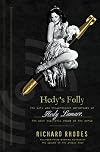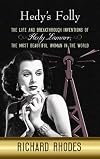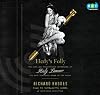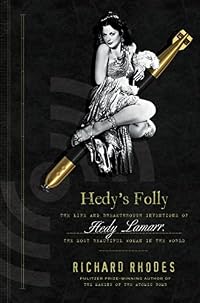
Hedy's Folly: The Life and Breakthrough Inventions of Hedy Lamarr, the Most Beautiful Woman in the World
by Richard Rhodes
On This Page
Description
Pulitzer Prize-winning author Richard Rhodes delivers a remarkable story of science history: how a ravishing film star and an avant-garde composer invented spread-spectrum radio, the technology that made wireless phones, GPS systems, and many other devices possible.Beginning at a Hollywood dinner table, Hedy's Folly tells a wild story of innovation that culminates in U.S. patent number 2,292,387 for a "secret communication system." Along the way Rhodes weaves together Hollywood's golden show more era, the history of Vienna, 1920s Paris, weapons design, music, a tutorial on patent law and a brief treatise on transmission technology. Narrated with the rigor and charisma we've come to expect of Rhodes, it is a remarkable narrative adventure about spread-spectrum radio's genesis and unlikely amateur inventors collaborating to change the world.
. show less
Tags
Recommendations


































Member Reviews
Actress Hedy Lamarr was more than a pretty face. In her spare time from filming, she dabbled at inventing. One of her inventions, in collaboration with composer George Antheil, was a frequency-hopping radio control for torpedoes. Although the patent expired without implementation by the U.S. Navy, it was a step in the development of the spread spectrum technology that enables wireless communications like cell phones, GPS, Bluetooth, and wireless LANs.
The first part of the book explores the backgrounds of both Lamarr and Antheil, emphasizing the aspects of their early lives that contributed to their invention. Lamarr’s first marriage to an Austrian munitions manufacturer was a stepping stone to the invention. Her subsequent marriages show more were not, so they are barely touched on in this book. Her films are mentioned only as markers of time in between stages of the invention and the patent application process.
I found George Antheil’s background even more fascinating that Hedy Lamarr’s. He was a talented pianist, an avant garde composer, and an author as well as an inventor, yet for all of his talent he was barely able to provide for his family. His percussive musical style and his experimental composition for numerous player pianos provided inspiration for the patent he designed with Ms. Lamarr.
The invention is the real focus of the book. The technical details may put off some readers, while others will be disappointed with the scant details provided about Lamarr’s personal life, given the subtitle’s seeming promise that the book is about her life. Many readers will be surprised by George Antheil’s prominence, since he isn’t mentioned in the title at all. Readers willing to set aside any preconceived notions about the book’s contents will be rewarded with an introduction to two intellectually curious individuals and their innovations. show less
The first part of the book explores the backgrounds of both Lamarr and Antheil, emphasizing the aspects of their early lives that contributed to their invention. Lamarr’s first marriage to an Austrian munitions manufacturer was a stepping stone to the invention. Her subsequent marriages show more were not, so they are barely touched on in this book. Her films are mentioned only as markers of time in between stages of the invention and the patent application process.
I found George Antheil’s background even more fascinating that Hedy Lamarr’s. He was a talented pianist, an avant garde composer, and an author as well as an inventor, yet for all of his talent he was barely able to provide for his family. His percussive musical style and his experimental composition for numerous player pianos provided inspiration for the patent he designed with Ms. Lamarr.
The invention is the real focus of the book. The technical details may put off some readers, while others will be disappointed with the scant details provided about Lamarr’s personal life, given the subtitle’s seeming promise that the book is about her life. Many readers will be surprised by George Antheil’s prominence, since he isn’t mentioned in the title at all. Readers willing to set aside any preconceived notions about the book’s contents will be rewarded with an introduction to two intellectually curious individuals and their innovations. show less
Hedy's Lamarr was far, far more than a pretty face. She was a human sponge, seemingly remote and beautiful but always listening and storing away information. Especially during her first marriage, to the head of a munitions company. It helped her to build a better torpedo, though no one knew that for years as the patented technology languished in the Navy's classified files. Finally, in 1999, she was recognized as being a Pioneer of Science. We should think of her every day, because her idea is the basis of much of the wireless technology: cell phones, computers, GPS and more.
This book is the tale of that invention, with colorful bits about Hedy's life in general, as well as her partner on the torpedo invention,and her very good friend, show more the composer George Antheil. The lives they led are fascinating even without the inventions (of which there were many--Hedy's invented things her whole life, and died with sketches on the drawing board for more). Reading this book is taking a very enlightening trip back to the 1920's through the 1950's where legends collected to create, talk, argue, invent and live the golden life. Beauty, brains, abundant talent, Europe, Hollywood,intrigue--this book really has it all. show less
This book is the tale of that invention, with colorful bits about Hedy's life in general, as well as her partner on the torpedo invention,and her very good friend, show more the composer George Antheil. The lives they led are fascinating even without the inventions (of which there were many--Hedy's invented things her whole life, and died with sketches on the drawing board for more). Reading this book is taking a very enlightening trip back to the 1920's through the 1950's where legends collected to create, talk, argue, invent and live the golden life. Beauty, brains, abundant talent, Europe, Hollywood,intrigue--this book really has it all. show less
The big disappointment among my Christmas books. Richard Rhodes has written splendid books with genial portraits of people and their era ("the men from Mars"). The writing is fine, some parts are enjoyable. Two flaws doom the book. Firstly, Hedy Lamarr's Hollywood career was rather limited and stunted due to the war. The attribution of the "Most Beautiful Woman in the World" (which she inherited by the demise of its previous carrier, a starlet) was more marketing buzz than reality. Secondly, the patent about the joint invention of Hedy Lamarr and George Antheil was shelfed by the US military and never served as a the basis of an actual application during and after the war. With a US torpedo failure rate of sixty percent, the Japanese show more were never in need of developing such sophisticated countermeasures that would have necessitated complicated frequency-hopping to thwart their efforts. Thus, at the center of Rhodes' short book is a big hole.
The inclusion of a biography of American composer George Antheil and especially his Paris years was a good if not sufficient addition. Hedy's Vienna years are based on shoddy research with elementary mistakes about Vienna. Rhodes also chickens out of offering an account of the advent of Austrofascism. No, it is not too complex to tell but an account how a conservative alliance of the capitalists, the church and the military-industrial complex abolished democracy might be too close for comfort for his US audience. Another topic not picked up is the transfer of Jewish-Austrian talent to Hollywood.
Rhodes should have condensed his findings into a magazine article. Stretched to book length, his hopping account does not do justice to the ample lives of his protagonists. Like the American torpedoes lacking quality control, this book is a dud. show less
The inclusion of a biography of American composer George Antheil and especially his Paris years was a good if not sufficient addition. Hedy's Vienna years are based on shoddy research with elementary mistakes about Vienna. Rhodes also chickens out of offering an account of the advent of Austrofascism. No, it is not too complex to tell but an account how a conservative alliance of the capitalists, the church and the military-industrial complex abolished democracy might be too close for comfort for his US audience. Another topic not picked up is the transfer of Jewish-Austrian talent to Hollywood.
Rhodes should have condensed his findings into a magazine article. Stretched to book length, his hopping account does not do justice to the ample lives of his protagonists. Like the American torpedoes lacking quality control, this book is a dud. show less
A disappointing book. The actual information on Hedy's invention is very thin, so it's heavily padded in odd ways. The first half or more is a biography of Hedy (reasonable), then a jump back 10 years or so for a biography (with heavy name-dropping) of Antheil, her collaborator on the invention. I find his life even less interesting than Hedy's; he wrote weird music and the critics disliked him, for various reasons but the disliking is constant. The occasional comment of "at this point Hedy was 10 and probably hadn't heard of" his music does very little to tie the story together. We also get a review of politics in Austria between the wars - sordid and nasty. Then Hedy manages to get to the US, and the focus of the story shifts to her show more films - but only in review, very little about what she was actually doing. The constant refrain, when the book actually starts talking about her inventing, is "since she never wrote anything about this (whatever aspect the author is talking about), we are not sure exactly what happened..." Very dull. She (they) invented the torpedo control, it wasn't used but somehow the Navy held the patent, that's all that's known. Scraps of her and Antheil's lives are scattered through this section, but the focus is on numbers - sometimes rather random numbers. The basis for her invention, frequency-hopping, became technologically and economically important (reports on how big the market for it was). Someone finally figured out it was her invention, publicized her connection, got her some awards for it but by that time she didn't want public contact. End of story. It neither evoked the era nor went in to how and why she created what she did (aside from page after page of "things Hedy overheard as a girl that might have been related and therefore gave her what she needed to create her invention" - with an aside about how someone "didn't think she knew A from Z" and tried to assume she'd just borrowed the info. Pot, meet kettle...). Disappointing and annoying - I know very little more than before I read this, and I feel it was a waste of my time. show less
Richard Rhodes, who won a Pulitzer for his book on the making of the atomic bomb, once again turns to technology, but this time tech embodied by the famous Hollywood star, Hedy Lamarr. Ms. Lamarr’s intelligence was often overlooked due to her great beauty, but she was creative and practiced inventing as a hobby. Except that she was really good at it.
Her most important invention, frequency-hopping, was a collaboration with the American modern compose George Antheil, who tried to write mechanistic sounding music to reflect the 20th century. When Ms. Lamarr conceived of frequency hopping as a way to guide torpedoes to their targets, Mr. Antheil had the experience to reduce her concept to a working model. The two inventors were awarded a show more patent in 1942, but the Navy, which acquired and classified the patent, never used it.
Later, the Navy used the patent to inspire spread spectrum technology for various uses. Today that technology lies behind Wi-Fi, cell phones, GPS, etc. But the basic idea that makes it all work begins with a glamorous actress and a struggling composer.
Well written, putting complex ideas into clear language. show less
Her most important invention, frequency-hopping, was a collaboration with the American modern compose George Antheil, who tried to write mechanistic sounding music to reflect the 20th century. When Ms. Lamarr conceived of frequency hopping as a way to guide torpedoes to their targets, Mr. Antheil had the experience to reduce her concept to a working model. The two inventors were awarded a show more patent in 1942, but the Navy, which acquired and classified the patent, never used it.
Later, the Navy used the patent to inspire spread spectrum technology for various uses. Today that technology lies behind Wi-Fi, cell phones, GPS, etc. But the basic idea that makes it all work begins with a glamorous actress and a struggling composer.
Well written, putting complex ideas into clear language. show less
Hedy's Folly There is so much to love in this book! I've been wanting to read more about her ever since I first heard that it was Hedy Lamarr who had so much to do with today's technology and it did not disappoint.
The story was sure to be interesting, having heard about Lamarr's participation in this invention prior to reading (well, listening to) this book. I knew of her Hollywood fame too, and that she had emigrated to the US, but I didn't know about the Nazi ex or the way she came to acting or what prompted the invention.
The book takes the time to tell her whole story, not just the inventing timeframe. When I think of celebrity biographies, I don't tend to think of women who were on the run from Nazi's or who invent things. All told, show more her story is pretty exciting.
Funny enough, the word "folly" isn't totally appropriate but I get why it was used in the title here. She had all the beauty and brains that one could hope for, but she had made a fairly significant error in her calculations for what her invention could do or be used for and she trusted the wrong people, not that it was stolen. It just wasn't appreciated for what it could do. Her thoughts were on a weapon whose guidance can't be jammed while her idea was so much more versatile.
It was also nice to know that she did live to see that not only was her work appreciated and used by a wide range of things, but also long enough to be accredited the invention and appreciated for bringing it to the world. It was interesting to see the ideas she was privy to that ultimately led to her putting them together in this way.
The other great thing about the book is that "spread spectrum radio" had two inventors and it may not equally go into both, but Antheil wasn't exactly neglected here. His progress through life was also told. I particularly loved the way he was approached about meeting her and his response to his friends. It was really cute.
Altogether, this is a must read for women in science, and should count for Read Harder's task 13, Read a nonfiction about technology. It wasn't my pick for that but I came across it and am glad I gave it a listen. It was read by Bernadette Dunne, who did a beautiful job with it. show less
The story was sure to be interesting, having heard about Lamarr's participation in this invention prior to reading (well, listening to) this book. I knew of her Hollywood fame too, and that she had emigrated to the US, but I didn't know about the Nazi ex or the way she came to acting or what prompted the invention.
The book takes the time to tell her whole story, not just the inventing timeframe. When I think of celebrity biographies, I don't tend to think of women who were on the run from Nazi's or who invent things. All told, show more her story is pretty exciting.
Funny enough, the word "folly" isn't totally appropriate but I get why it was used in the title here. She had all the beauty and brains that one could hope for, but she had made a fairly significant error in her calculations for what her invention could do or be used for and she trusted the wrong people, not that it was stolen. It just wasn't appreciated for what it could do. Her thoughts were on a weapon whose guidance can't be jammed while her idea was so much more versatile.
It was also nice to know that she did live to see that not only was her work appreciated and used by a wide range of things, but also long enough to be accredited the invention and appreciated for bringing it to the world. It was interesting to see the ideas she was privy to that ultimately led to her putting them together in this way.
The other great thing about the book is that "spread spectrum radio" had two inventors and it may not equally go into both, but Antheil wasn't exactly neglected here. His progress through life was also told. I particularly loved the way he was approached about meeting her and his response to his friends. It was really cute.
Altogether, this is a must read for women in science, and should count for Read Harder's task 13, Read a nonfiction about technology. It wasn't my pick for that but I came across it and am glad I gave it a listen. It was read by Bernadette Dunne, who did a beautiful job with it. show less
Hedy Lamarr was known for her glamour and beauty. During MGM's "Golden Age" she was a much sought after actress starring alongside Clark Gable, Spencer Tracy, and Victor Mature. But there was more to Ms. Lamarr than Hollywood parties and fancy dresses. Born Hedwig Eva Maria Kiesler in 1914 in Austria, Hedy always wanted to be an actress, and after a short, unhappy marriage to munitions manufacturer Fritz Mandl, Hedy made her way to America.
In between filming movies, Hedy enjoyed inventing. Her hobby took off when she met composer George Antheil. When America entered World War II, both the actress and the composer were inspired to help in any way they could. The result of their collaboration was a patent application for a Secret show more Communication System, which featured "frequency hopping." This technology later became known as spread spectrum communication technology which we still use today for GPS, Wi-Fi, and Bluetooth devices. It's amazing to think that the smartphones we depend on today rely on an idea that came from "the most beautiful woman in the world."
The Bottom Line: This book is part biography about Hedy Lamarr, part biography of George Antheil, and part science text. It is an interesting look at how everything came together at the right time to bring about a technology we depend upon today. Readers interested in women of science will find this slim book fascinating. However, fans of Hedy Lamarr looking for salacious tidbits of her Hollywood life and numerous marriages will have to look elsewhere.
For the complete review including Book Club Notes, please visit the Mini Book Bytes Book Review Blog. show less
In between filming movies, Hedy enjoyed inventing. Her hobby took off when she met composer George Antheil. When America entered World War II, both the actress and the composer were inspired to help in any way they could. The result of their collaboration was a patent application for a Secret show more Communication System, which featured "frequency hopping." This technology later became known as spread spectrum communication technology which we still use today for GPS, Wi-Fi, and Bluetooth devices. It's amazing to think that the smartphones we depend on today rely on an idea that came from "the most beautiful woman in the world."
The Bottom Line: This book is part biography about Hedy Lamarr, part biography of George Antheil, and part science text. It is an interesting look at how everything came together at the right time to bring about a technology we depend upon today. Readers interested in women of science will find this slim book fascinating. However, fans of Hedy Lamarr looking for salacious tidbits of her Hollywood life and numerous marriages will have to look elsewhere.
For the complete review including Book Club Notes, please visit the Mini Book Bytes Book Review Blog. show less
Members
- Recently Added By
Lists

A Brilliant List of Science Books for People Who Want Their Minds Blown
16 works; 3 members
Author Information

28+ Works 10,127 Members
Richard Rhodes, the award-winning author of twenty-two books, lives and works mi the California coast above Half Moon Bay.
Common Knowledge
- Original title
- Hedy's Folly: the Life and Breakthrough Inventions of Hedy Lamar, the Most Beautiful Woman in the World
- Original publication date
- 2011
- People/Characters
- Hedy Lamarr
- Important places
- Hollywood, California, USA; Vienna, Austria; Paris, France
- Dedication
- For Anthony and Denise
A grant from the Alfred P. Sloan Foundation supported the research for this book.
Classifications
- Genres
- Nonfiction, Biography & Memoir, General Nonfiction, Science & Nature, History, Technology
- DDC/MDS
- 791.430 — Arts & recreation Recreation, sports, and performing arts Public performances Motion pictures, radio, television, podcasting Motion pictures Standard subdivisions
- LCC
- PN2287 .L24 .R54 — Language and Literature Literature (General) Literature (General) Drama Dramatic representation. The theater Special regions or countries
- BISAC
Statistics
- Members
- 601
- Popularity
- 48,380
- Reviews
- 22
- Rating
- (3.04)
- Languages
- English
- Media
- Paper, Audiobook, Ebook
- ISBNs
- 8
- ASINs
- 4