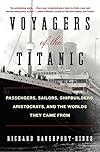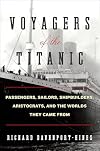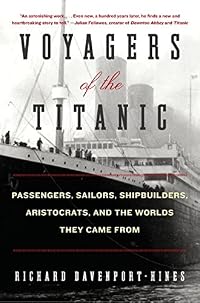
Voyagers of the Titanic: Passengers, Sailors, Shipbuilders, Aristocrats, and the Worlds They Came From
by Richard Davenport-Hines
On This Page
Description
It has been one hundred years since the sinking of the passenger liner Titanic in the North Atlantic, yet worldwide fascination with the epic tragedy remains as strong as ever. With Voyagers of the Titanic, Richard Davenport-Hines gives us a magnificent history of the people intimately connected with the infamous ship—from deal-makers and industry giants, like J.P. Morgan, who built and operated it; to Molly Brown, John Jacob Astor IV, and other glittering aristocrats who occupied its show more first class cabins; to the men and women traveling below decks hoping to find a better life in America. Commemorating the centennial anniversary of the great disaster, Voyagers of the Titanic offers a fascinating, uniquely original view of one of the most momentous catastrophes of the 20th century.. show less
Tags
Recommendations






Member Reviews
What a timely read! On exactly the 100th anniversary of the sinking of the Titanic, I was deep in the middle of the narrative of a new book on the subject. Admittedly, I haven’t read any other books on the subject but certainly I know the gist of the story. Who doesn’t?
Yet this book read like a cliff hanger. How is that possible when I already know the outcome? Maybe because Davenport-Hinds related the story from a personal level, devoting a chapter each to each group that had a part in the tragedy: shipowners, shipbuilders, sailors, first-class, second-class, third-class, and officers and crew. He delves into each group in great detail as he explores their role in what took place.
Above all else, the Titanic was a model of class show more warfare. From the wealthy tycoons, society matrons, and industrial magnates, to the poor immigrants in the cramped steerage quarters, the story of their lives is related in intimate detail. So much so, that at the end, as the ship goes down, the feeling of loss is very real.
Particularly interesting was the delineation of the mistakes that led to the loss of some 1,500 lives on that night in April one hundred years ago including the decision early on in the planning by the ship builders:
”At one day-long meeting, they talked for a total of five or ten minutes about life boat provision; and despite Carlisle’s misgivings, which he dared not express before Pirrie, the provision of lifeboats was cut from 48 to 20…This reduced clutter on the deck as well as costs, but meant that the liner would have lifeboat capacity for a maximum of one-third of its passengers and crew. The risk seemed minimal when the consensus held that the liner was invulnerable.” (Page 57)
That was one reason for the enormous loss of life but, actually, it was a perfect storm of natural occurrences and human error that produced the tragedy that has remained one of the biggest maritime disasters in history. And this book does a fine job of presenting the story in great detail. Highly recommended. show less
Yet this book read like a cliff hanger. How is that possible when I already know the outcome? Maybe because Davenport-Hinds related the story from a personal level, devoting a chapter each to each group that had a part in the tragedy: shipowners, shipbuilders, sailors, first-class, second-class, third-class, and officers and crew. He delves into each group in great detail as he explores their role in what took place.
Above all else, the Titanic was a model of class show more warfare. From the wealthy tycoons, society matrons, and industrial magnates, to the poor immigrants in the cramped steerage quarters, the story of their lives is related in intimate detail. So much so, that at the end, as the ship goes down, the feeling of loss is very real.
Particularly interesting was the delineation of the mistakes that led to the loss of some 1,500 lives on that night in April one hundred years ago including the decision early on in the planning by the ship builders:
”At one day-long meeting, they talked for a total of five or ten minutes about life boat provision; and despite Carlisle’s misgivings, which he dared not express before Pirrie, the provision of lifeboats was cut from 48 to 20…This reduced clutter on the deck as well as costs, but meant that the liner would have lifeboat capacity for a maximum of one-third of its passengers and crew. The risk seemed minimal when the consensus held that the liner was invulnerable.” (Page 57)
That was one reason for the enormous loss of life but, actually, it was a perfect storm of natural occurrences and human error that produced the tragedy that has remained one of the biggest maritime disasters in history. And this book does a fine job of presenting the story in great detail. Highly recommended. show less
 This review was written for LibraryThing Early Reviewers.
There are already a boatload of books about the Titanic disaster, and even more coming out as the 100th anniversary of the sinking arrives. In such a jumble it’s difficult to know which one or two to read and which to let pass. I’ve read many books on the Titanic (although certainly not all!) and I’d highly recommend Voyagers of the Titanic to anyone interested in the stories of the people on the great vessel.
Richard Davenport-Hines is an excellent writer, which immediately distinguishes Voyagers of the Titanic from many of the other books about the tragedy. His keen observations make day-to-day life on board (and by extension, day-to-day life on land), vivid.
His characterizations of the people who sailed on the Titanic are crisp show more and telling – from first class passenger and fashion designer Lady Duff-Gordon whom he describes as “the pioneer of sexy underwear,” to sixteen year old third class passenger Alfred Rush who was “small for his age and might have passed for a child when the lifeboats were being filled. Instead, proud of his birthday, he declared, ‘I am staying here with the MEN.’ ” The book is filled with everything from descriptions of the meals on the great ship to the pet dogs on board. It’s little observations like this that make the world of Titanic feel immediate and real.
Davenport-Hines explores not only the experience of those traveling on the Titanic, but also those that served the passengers on the White Star Line’s floating palaces: “The pretense that one man is as good as another led Americans to treat liner crew with a politeness that was applauded by Violet Jessup,” stewardess to second-class passengers on the White Star’s Majestic before serving on the Titanic. “American passengers, although demanding, were appreciative. [...] They acknowledged you as an individual [...] When they reached their destination, Americans rang to bid goodbye to the steward or stewardess, tip them well, and shake hands heartily. Passengers of other nationalities by contrast, expected stewards to ‘hang about like beggars outside a church, waiting for alms,’ and usually proffered a niggardly tip.”
If there is a downside to Voyagers of the Titanic, it is that the long parade of passenger’s names and lives can sometimes be dizzying. There are so many stories to tell, and they pass by so quickly, that it can take concentration to keep track of who is who. For people who are Titanic fanatics this task won’t be an issue, for those who aren’t immersed in the Titanic, it may sometimes be a bit much.
But the author’s writing style and his evocation of the colorful characters that the ship brought together ultimately make Voyagers of the Titanic a great read and a wonderful contribution to the literature on the most famous ocean liner ever to have sailed. show less
Richard Davenport-Hines is an excellent writer, which immediately distinguishes Voyagers of the Titanic from many of the other books about the tragedy. His keen observations make day-to-day life on board (and by extension, day-to-day life on land), vivid.
His characterizations of the people who sailed on the Titanic are crisp show more and telling – from first class passenger and fashion designer Lady Duff-Gordon whom he describes as “the pioneer of sexy underwear,” to sixteen year old third class passenger Alfred Rush who was “small for his age and might have passed for a child when the lifeboats were being filled. Instead, proud of his birthday, he declared, ‘I am staying here with the MEN.’ ” The book is filled with everything from descriptions of the meals on the great ship to the pet dogs on board. It’s little observations like this that make the world of Titanic feel immediate and real.
Davenport-Hines explores not only the experience of those traveling on the Titanic, but also those that served the passengers on the White Star Line’s floating palaces: “The pretense that one man is as good as another led Americans to treat liner crew with a politeness that was applauded by Violet Jessup,” stewardess to second-class passengers on the White Star’s Majestic before serving on the Titanic. “American passengers, although demanding, were appreciative. [...] They acknowledged you as an individual [...] When they reached their destination, Americans rang to bid goodbye to the steward or stewardess, tip them well, and shake hands heartily. Passengers of other nationalities by contrast, expected stewards to ‘hang about like beggars outside a church, waiting for alms,’ and usually proffered a niggardly tip.”
If there is a downside to Voyagers of the Titanic, it is that the long parade of passenger’s names and lives can sometimes be dizzying. There are so many stories to tell, and they pass by so quickly, that it can take concentration to keep track of who is who. For people who are Titanic fanatics this task won’t be an issue, for those who aren’t immersed in the Titanic, it may sometimes be a bit much.
But the author’s writing style and his evocation of the colorful characters that the ship brought together ultimately make Voyagers of the Titanic a great read and a wonderful contribution to the literature on the most famous ocean liner ever to have sailed. show less
This review was written for LibraryThing Early Reviewers.Just in time for the 100th anniversary of Titanic's sinking, VOYAGERS OF THE TITANIC is one of the better books about the people on board. Richard Davenport-Hines surrounds familiar figures with unfamiliar background and details that pull together into a riveting story. With a novelist's eye, Davenport-Hines sets his first-class passengers against the new Edwardian craze for speed; shows the ship's roots in the labor violence of Belfast; and sets third-class passengers within the great migration from Europe to America. Thomas Andrews comes to life, irascible and dependable; John Jacob Astor ("He was a builder of Titanics on terra firma") also appears in his role as a slum landlord; and includes colorful characters not usually among the show more Titanic cast of characters, such as J.P. Morgan, who owned the White Star Line. A vivid, immensely readable new look at the enduring tragedy of Titanic. show less
This review was written for LibraryThing Early Reviewers.This is an exploration of the Titanic disaster through the colourful and varied lives of some of the 2000 plus people, passengers and crew, who sailed on her notorious maiden voyage in April 1912. The story has been told so many times, but this is a somewhat different approach that allows us glimpses into the lives of a huge and varied cast of characters from American millionaire industrialists, to poor immigrants from Eastern Europe and the Middle East taking all they had in the world with them in a quest for a new life in the United States promising better economic conditions or freedom from religious or racial persecution. While fascinating in concept, it quite often threatens to become little more than long detailed lists of people show more and brief details of their backgrounds without much of a narrative structure. The usual range of dramatic, colourful horrific and pathetic incidents that one would expect are present here though, so this has quite a powerful impact in reminding the reader about many aspects of this most famous of maritime disasters. show less
The thing that most impressed me about this book was all the footnotes and sources. The author really did his research; he didn't just rehash what others have said before.
Each chapter focuses on a different group of people: ship owners, ship builders, sailors, crew, 1st, 2nd, and 3rd class passengers. (Also, I thought the character who opens and closes the book ~no spoiler~ was an eerie touch.) Each chapter gives the background for a number of different people in each category, not just the famous ones, such as Andrews, Ismay, Astor, and the like. The book also follows up with the characters during the sinking and aftermath.
Besides first hand accounts of survivors, the book also sites newspaper articles, letting the reader see how the show more mainlands were dealing with the disaster. The end of the last chapter, to me was sadder than the sinking of the ship; the most poignant lines being "Survivors asked themselves.. why they had lived when so many others had perished. In many cases, their survival felt despicable. They knew that for them to live, it had been necessary for others to die..."
A must-read for any Titanic history buff. show less
Each chapter focuses on a different group of people: ship owners, ship builders, sailors, crew, 1st, 2nd, and 3rd class passengers. (Also, I thought the character who opens and closes the book ~no spoiler~ was an eerie touch.) Each chapter gives the background for a number of different people in each category, not just the famous ones, such as Andrews, Ismay, Astor, and the like. The book also follows up with the characters during the sinking and aftermath.
Besides first hand accounts of survivors, the book also sites newspaper articles, letting the reader see how the show more mainlands were dealing with the disaster. The end of the last chapter, to me was sadder than the sinking of the ship; the most poignant lines being "Survivors asked themselves.. why they had lived when so many others had perished. In many cases, their survival felt despicable. They knew that for them to live, it had been necessary for others to die..."
A must-read for any Titanic history buff. show less
This review was written for LibraryThing Early Reviewers.April 14, 2012 will mark the 100th anniversary date of the sinking of the Titanic.
So much has been written, documented and filmed about the Titanic that it would seem difficult to find a new slant. Yet, the author has indeed accomplished this goal.
Rather than spending pages and pages of technical details regarding the building and sinking of the "unsinkable" luxury liner, Davenport-Hines focuses on the lives of those aboard. He gives in depth stories of the first, second and third class passengers.
While at times redundant and nit picky in detail, still, the author did an incredible job in this well-researched book of the facets and lives of many of the 2,240 people who boarded and the 1,517 who never set foot on land again.
Recommended
So much has been written, documented and filmed about the Titanic that it would seem difficult to find a new slant. Yet, the author has indeed accomplished this goal.
Rather than spending pages and pages of technical details regarding the building and sinking of the "unsinkable" luxury liner, Davenport-Hines focuses on the lives of those aboard. He gives in depth stories of the first, second and third class passengers.
While at times redundant and nit picky in detail, still, the author did an incredible job in this well-researched book of the facets and lives of many of the 2,240 people who boarded and the 1,517 who never set foot on land again.
Recommended
The extent to which one enjoys this book may have to do with how widely one has read about the Titanic disaster. For those who have long been fascinated by this terrible tragedy, there will not be a great deal of new information in Davenport-Hines' book. Those new to the world of maritime history will find it to be full of intriguing, short profiles of various passengers and crew members.
Overall, the feeling of Davenport-Hines book is rushed. It reads as though he took a great deal of time with his research but then wrote quickly, anxious to be done with the task. This may be true, as it is apparent the goal was to have the book out to coincide with the 100th anniversary of the Titanic sinking. There are many times in its pages when show more the reader wishes the author would just slow down and go into a bit more detail. He hops from one individual to another, often without investing the time to create a background on the page for the person to be presented. Granted, little was known about many of the passengers - particularly those traveling third class - but the feeling remains that Davenport-Hines could have done more, perhaps if he'd only had a bit more time.
The best part of Voyagers of the Titanic is that it is devoted to the people who sailed on the ship, a kind of homage to mobility and dreams. In the past, much has been written about the ship itself, lengthy examinations of the building, the failings, and the ultimate blame. Davenport-Hines concentrates on people and names - rich and poor, survivors and victims, passengers and crew. This brings a very human element to his work and is what makes the book appealing and readable.
Anyone who has ever studied maritime history knows that class and custom played huge roles in determining who lived and who died in the Titanic sinking. Voyagers of the Titanic handles these issues well, and no one will come to the last page without reflecting on money, status, and privilege. Every reader will think about what has changed in the past hundred years and how that situation would play out today. Maritime regulations have changed too, and the Titanic was responsible for many of those changes.
Lastly, this book has come out at an appropriate time, not only to honor the Titanic and those who died one-hundred years ago, but also to make us think about how disasters can still happen and how human error can quickly bring tragedy. The recent (2012) incident with the ship, M/S "Costa Concordia" off the island of Giglio in Italy comes immediately to mind. Somehow, large sleek beautiful ships seem built to be worshipped, and when they - or the human beings behind them - fail, we all find ourselves sinking. How easily we all put our trust into what looks to be perfection and how quickly we are disappointed. show less
Overall, the feeling of Davenport-Hines book is rushed. It reads as though he took a great deal of time with his research but then wrote quickly, anxious to be done with the task. This may be true, as it is apparent the goal was to have the book out to coincide with the 100th anniversary of the Titanic sinking. There are many times in its pages when show more the reader wishes the author would just slow down and go into a bit more detail. He hops from one individual to another, often without investing the time to create a background on the page for the person to be presented. Granted, little was known about many of the passengers - particularly those traveling third class - but the feeling remains that Davenport-Hines could have done more, perhaps if he'd only had a bit more time.
The best part of Voyagers of the Titanic is that it is devoted to the people who sailed on the ship, a kind of homage to mobility and dreams. In the past, much has been written about the ship itself, lengthy examinations of the building, the failings, and the ultimate blame. Davenport-Hines concentrates on people and names - rich and poor, survivors and victims, passengers and crew. This brings a very human element to his work and is what makes the book appealing and readable.
Anyone who has ever studied maritime history knows that class and custom played huge roles in determining who lived and who died in the Titanic sinking. Voyagers of the Titanic handles these issues well, and no one will come to the last page without reflecting on money, status, and privilege. Every reader will think about what has changed in the past hundred years and how that situation would play out today. Maritime regulations have changed too, and the Titanic was responsible for many of those changes.
Lastly, this book has come out at an appropriate time, not only to honor the Titanic and those who died one-hundred years ago, but also to make us think about how disasters can still happen and how human error can quickly bring tragedy. The recent (2012) incident with the ship, M/S "Costa Concordia" off the island of Giglio in Italy comes immediately to mind. Somehow, large sleek beautiful ships seem built to be worshipped, and when they - or the human beings behind them - fail, we all find ourselves sinking. How easily we all put our trust into what looks to be perfection and how quickly we are disappointed. show less
This review was written for LibraryThing Early Reviewers.Members
- Recently Added By
Author Information

30+ Works 1,807 Members
Awards and Honors
Awards
Common Knowledge
- Canonical title*
- Lo spettro del ghiaccio. Vite perdute sul Titanic
- Original publication date
- 2012-03-06
- People/Characters
- J. Bruce Ismay; J. Pierpont Morgan; William Pirrie, 1st Viscount Pirrie; Captain Edward J. Smith; Violet Jessop; Harold Lowe (show all 26); Charles Herbert Lightoller; Thomas Andrews, shipbuilder; Sir Cosmo Duff-Gordon, 5th Baronet; Lucy, Lady Duff-Gordon; George Widener; Eleanor Widener; John Jacob Astor IV; Madeleine Astor; Molly Brown; Benjamin Guggenheim; Isidor Straus; Ida Straus; Archie Butt; John B. Thayer; Marion Thayer; Noël Leslie, Countess of Rothes; Archibald Gracie IV; Frederick Fleet; Lawrence Beesley; Hugh Woolner
- Important places
- RMS Titanic; Harland & Wolf Shipyard, Belfast, Northern Ireland, UK; Southampton, England, UK
- Important events
- Sinking of the Titanic (1912)
- Dedication
- For Patric Dickinson and David Kynaston,
and for the gentle memory of Cosmo Davenport-Hines - First words
- PROLOGUE
From Greenland's Icy Mountains
There were no witnesses. It didn't look like a moment from history. - Last words
- (Click to show. Warning: May contain spoilers.)The ice turned to water, became formless, then void, deepening the blue Sargasso Sea.
- Blurbers
- Brown, Craig; Fellowes, Julian; Brendon, Piers; Crane, David; Wilson, Frances; Jones, Nigel
- Canonical DDC/MDS
- 910.91634
- Canonical LCC
- G530.T6
*Some information comes from Common Knowledge in other languages. Click "Edit" for more information.
Classifications
- Genres
- History, Nonfiction, General Nonfiction, Travel, Biography & Memoir
- DDC/MDS
- 910.91634 — History & geography Geography & travel modified standard subdivisions of Geography and travel History, geographic treatment, biography - Discovery. exploration Geography of and travel in areas, regions, places in general Air And Water Atlantic Ocean
- LCC
- G530 .T6 — Geography, Anthropology and Recreation Geography (General) Adventures, shipwrecks, buried treasure, etc.
- BISAC
Statistics
- Members
- 349
- Popularity
- 89,682
- Reviews
- 34
- Rating
- (3.77)
- Languages
- English, Italian
- Media
- Paper, Audiobook, Ebook
- ISBNs
- 13
- ASINs
- 5