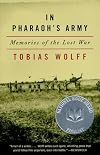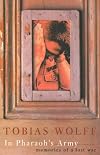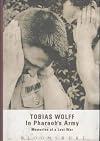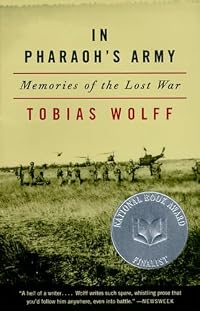
In Pharaoh's Army: Memories of the Lost War
by Tobias Wolff
On This Page
Description
Whether he is evoking the blind carnage of the Tet offensive, the theatrics of his fellow Americans, or the unraveling of his own illusions, Wolff brings to this work the same uncanny eye for detail, pitiless candor and mordant wit that made This Boy's Life a modern classic.Tags
Recommendations







Member Recommendations
Member Reviews
In this extraordinary memoir of Wolff’s Vietnam experience, there is a haunting scene that reveals the major cultural differences between the American soldiers and Vietnamese culture. Wolff was a first lieutenant (he was a special forces member) assigned as an adviser to a South Vietnamese unit. He had spent a year at language school in the United States and was fluent in Vietnamese. He and some ARVN (Army of the Republic of Vietnam) soldiers are hanging out when two of the ARVN find a small puppy wandering around. Wolff watches, annoyed, as one of the soldiers swings the puppy by a leg around his head and then ties it to a tree. Wolff wanders over and asks what they intend to name the dog. The Vietnamese laugh bemusedly at this show more remark, but when Wolff persists, they laugh maliciously and reply, “dog stew.” The sergeant grabs the dog and, knowing it will drive Wolff nuts, swings the puppy slowly over the fire. Wolff tries to get them to stop, knowing they are playing with his mind, but the cultural reality and his whiteness prevent his interference.
Racial issues pervade the story. Wolff was attacked by a group of Vietnamese outside a bar. He keeps yelling he must be the “wrong man,” but they continue until another American steps out of the bar and the attackers realize they have the wrong person. Wolff realizes that to them all white people look the same. When he tries to explain it to his black sergeant, the sergeant understands him immediately and simply says, “You nigger.” The analogy to his experience in the United States is unmistakable.
Wolff's analysis of the Tet offensive is striking. "As a military project Tet failed; as a lesson it succeeded. The VC came into My Tho and all the other towns knowing what would happen. They knew that once they were among the people we would abandon our pretense of distinguishing between them. We would kill them all to get at one. [Iraq come to mind, anyone?:] In this way they taught the people that we did not love them and would not protect them; that for all our talk of partnership and brotherhood we disliked and mistrusted them, and that we would kill every last one of them to save our own skins. . . .They taught that lesson to the people, and also to us. At least to me." show less
Racial issues pervade the story. Wolff was attacked by a group of Vietnamese outside a bar. He keeps yelling he must be the “wrong man,” but they continue until another American steps out of the bar and the attackers realize they have the wrong person. Wolff realizes that to them all white people look the same. When he tries to explain it to his black sergeant, the sergeant understands him immediately and simply says, “You nigger.” The analogy to his experience in the United States is unmistakable.
Wolff's analysis of the Tet offensive is striking. "As a military project Tet failed; as a lesson it succeeded. The VC came into My Tho and all the other towns knowing what would happen. They knew that once they were among the people we would abandon our pretense of distinguishing between them. We would kill them all to get at one. [Iraq come to mind, anyone?:] In this way they taught the people that we did not love them and would not protect them; that for all our talk of partnership and brotherhood we disliked and mistrusted them, and that we would kill every last one of them to save our own skins. . . .They taught that lesson to the people, and also to us. At least to me." show less
Wolff is one of the acknowledged masters of American short fiction, an award winning author and professor of creative writing, so it is unlikely that his memoir of Vietnam would be anything but good. And it is very good.
Wolff went to war because he had run out of options in civilian life, but out of options in a genteel kind of 1960s way. He was expelled from an elite boarding school in his final semester, signed up a as merchant sailor and then missed his boat, and the Army always needed bodies. Even as a youth, he harbored ambitions of being a writer, and the authors he admired most, especially Norman Mailer and Hemingway, had all served. His grifter father's dereliction during the Second World War provided another example. War would show more make him a man, one way or another.
Wolff thrived in military life, going from basic to paratrooper training to officer candidate school. He trained as an artilleryman and was mediocre at it, finishing last in his class. In one of the best lines of the book, he describes how he was kept on because OCS at Fort Sill ended with humorous skits and songs, and he was the only one in his training company who could write and organize a play. The Army made him an officer to literally produce a farce. Then it was off to language school to learn Vietnamese, living as a civilian in Washington DC for a year, while undergoing an intense romance with a madwoman named Vera, and finally Vietnam.
Wolff's war was an odd one. He was assigned as an advisor to an ARVN artillery unit outside My Tho, in the Delta. Through 1967 as the war heated up, My Tho existed in a charmed circle of peace. Wolff and his single American comrade, Sergeant Benet, an African-American lifer, set up a comfortable nest trading counterfeit VC items to a nearby American unit for steaks, liquor, and electronics. The artillery unit rarely patrolled. Of course, it was still war, with death by mine, sniper, or accident, but it was as safe a war as one could get.
The Tet Offensive changed everything. Wolff's artillery unit attacked My Tho, punishing guerrillas and civilians alike. The fear, and the massive devastation changed everything. What had once been an oasis of peace was now a charnal house. The American war machine could not save, it could only destroy.
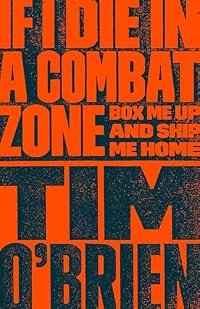
Wolff is a master of short form fiction, and this book excels in brief literary sketches of encounters between Wolff and the illusions of mastery and heroism. Here's Wolff deciding to save a puppy an ARVN sergeant is going to make into stew. Here's Wolff letting a clumsy new Captain wreck a shantytown with helicopter downdraft. Here's Wolff meeting people in Washington DC, San Francisco, and Vietnam, and realizing that above all else, he doesn't want to die in a combat zone.
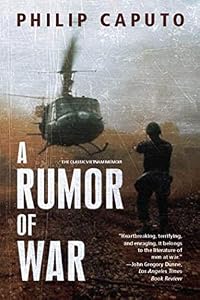
Wolff lacks the raw intensity of A Rumor of War, Where The Rivers Ran Backwards, or even Tim O'Brien's work. This is war as filtered though the MFA workshop. It's very well crafted, but it's also craft. show less
Wolff went to war because he had run out of options in civilian life, but out of options in a genteel kind of 1960s way. He was expelled from an elite boarding school in his final semester, signed up a as merchant sailor and then missed his boat, and the Army always needed bodies. Even as a youth, he harbored ambitions of being a writer, and the authors he admired most, especially Norman Mailer and Hemingway, had all served. His grifter father's dereliction during the Second World War provided another example. War would show more make him a man, one way or another.
Wolff thrived in military life, going from basic to paratrooper training to officer candidate school. He trained as an artilleryman and was mediocre at it, finishing last in his class. In one of the best lines of the book, he describes how he was kept on because OCS at Fort Sill ended with humorous skits and songs, and he was the only one in his training company who could write and organize a play. The Army made him an officer to literally produce a farce. Then it was off to language school to learn Vietnamese, living as a civilian in Washington DC for a year, while undergoing an intense romance with a madwoman named Vera, and finally Vietnam.
Wolff's war was an odd one. He was assigned as an advisor to an ARVN artillery unit outside My Tho, in the Delta. Through 1967 as the war heated up, My Tho existed in a charmed circle of peace. Wolff and his single American comrade, Sergeant Benet, an African-American lifer, set up a comfortable nest trading counterfeit VC items to a nearby American unit for steaks, liquor, and electronics. The artillery unit rarely patrolled. Of course, it was still war, with death by mine, sniper, or accident, but it was as safe a war as one could get.
The Tet Offensive changed everything. Wolff's artillery unit attacked My Tho, punishing guerrillas and civilians alike. The fear, and the massive devastation changed everything. What had once been an oasis of peace was now a charnal house. The American war machine could not save, it could only destroy.
Wolff is a master of short form fiction, and this book excels in brief literary sketches of encounters between Wolff and the illusions of mastery and heroism. Here's Wolff deciding to save a puppy an ARVN sergeant is going to make into stew. Here's Wolff letting a clumsy new Captain wreck a shantytown with helicopter downdraft. Here's Wolff meeting people in Washington DC, San Francisco, and Vietnam, and realizing that above all else, he doesn't want to die in a combat zone.
Wolff lacks the raw intensity of A Rumor of War, Where The Rivers Ran Backwards, or even Tim O'Brien's work. This is war as filtered though the MFA workshop. It's very well crafted, but it's also craft. show less
In this extraordinary memoir of Wolff’s Vietnam experience, there is a haunting scene that reveals the major cultural differences between the American soldiers and Vietnamese culture. Wolff was a first lieutenant (he was a special forces member) assigned as an adviser to a South Vietnamese unit. He had spent a year at language school in the United States and was fluent in Vietnamese. He and some ARVN (Army of the Republic of Vietnam) soldiers are hanging out when two of the ARVN find a small puppy wandering around. Wolff watches, annoyed, as one of the soldiers swings the puppy by a leg around his head and then ties it to a tree. Wolff wanders over and asks what they intend to name the dog. The Vietnamese laugh bemusedly at this show more remark, but when Wolff persists, they laugh maliciously and reply, “dog stew.” The sergeant grabs the dog and, knowing it will drive Wolff nuts, swings the puppy slowly over the fire. Wolff tries to get them to stop, knowing they are playing with his mind, but the cultural reality and his whiteness prevent his interference.
Racial issues pervade the story. Wolff was attacked by a group of Vietnamese outside a bar. He keeps yelling he must be the “wrong man,” but they continue until another American steps out of the bar and the attackers realize they have the wrong person. Wolff realizes that to them all white people look the same. When he tries to explain it to his black sergeant, the sergeant understands him immediately and simply says, “You nigger.” The analogy to his experience in the United States is unmistakable.
Wolff's analysis of the Tet offensive is striking. "As a military project Tet failed; as a lesson it succeeded. The VC came into My Tho and all the other towns knowing what would happen. They knew that once they were among the people we would abandon our pretense of distinguishing between them. We would kill them all to get at one. [Iraq come to mind, anyone?:] In this way they taught the people that we did not love them and would not protect them; that for all our talk of partnership and brotherhood we disliked and mistrusted them, and that we would kill every last one of them to save our own skins. . . .They taught that lesson to the people, and also to us. At least to me." show less
Racial issues pervade the story. Wolff was attacked by a group of Vietnamese outside a bar. He keeps yelling he must be the “wrong man,” but they continue until another American steps out of the bar and the attackers realize they have the wrong person. Wolff realizes that to them all white people look the same. When he tries to explain it to his black sergeant, the sergeant understands him immediately and simply says, “You nigger.” The analogy to his experience in the United States is unmistakable.
Wolff's analysis of the Tet offensive is striking. "As a military project Tet failed; as a lesson it succeeded. The VC came into My Tho and all the other towns knowing what would happen. They knew that once they were among the people we would abandon our pretense of distinguishing between them. We would kill them all to get at one. [Iraq come to mind, anyone?:] In this way they taught the people that we did not love them and would not protect them; that for all our talk of partnership and brotherhood we disliked and mistrusted them, and that we would kill every last one of them to save our own skins. . . .They taught that lesson to the people, and also to us. At least to me." show less
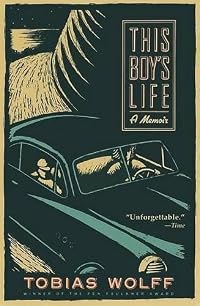
Having read some of Wolff's other work, namely Old School and his childhood memoir This Boy's Life, I was eager to delve into the author's experiences with the proverbial "lost war" of Vietnam. With the same terse and declarative prose of This Boy's Life, Wolff deftly captures the elusive and, oftentimes, discrete sensations of war. For fan's of Wolff, this memoir will not disappoint.
In Pharaoh's Army recounts the author's year long tour in Vietnam, where as a Lieutenant in the Special Forces, he is ultimately assigned the privileged and comparatively "lucky" position of adviser to a South Vietnamese Army battalion stationed in the Delta region of My Tho. His memoir is broken up into 13 discrete chapters, each functioning as a stand show more alone short story. Although all stories relate directly Vietnam and the experiences that led him to enlistment, there is no clear linear narrative in this work. I think this narrative structure succeeds in underscoring the seemingly arbitrary and hazy nature of war itself and overall strengthens the tenor of this work. In Pharaoh's Army lacks the grittiness found in a Tim O'Brien novel. Instead, writes in a low key minimalist style with an economy of prose that is reminiscent of Hemingway (which is not surprising considering that Wolff admired all author's who served, especially Hemingway).
At the onset, Wolff was an idealistic recruit, one with a novel in his head. With his deployment orders in hand, he states, "The life around me began at last to take on form, to signify. No longer a powerless confusion of desires, I was now a protagonist, the hero of a novel to which I endlessly added from the stories I dreamed and saw everywhere." However, In Pharaoh's Army ultimately chronicles the author's growing disillusionment with the American presence in Vietnam. The title itself alludes to the absurd and doomed blind charge of the Pharaoh's chariots into the Red Sea. Though disillusioned, this year of combat nevertheless allowed to author to come into his own and find his true character. In his own words, he "Lost Faith. Prayed anyway. Persisted...That's how we found out who we are". show less
In Pharaoh's Army recounts the author's year long tour in Vietnam, where as a Lieutenant in the Special Forces, he is ultimately assigned the privileged and comparatively "lucky" position of adviser to a South Vietnamese Army battalion stationed in the Delta region of My Tho. His memoir is broken up into 13 discrete chapters, each functioning as a stand show more alone short story. Although all stories relate directly Vietnam and the experiences that led him to enlistment, there is no clear linear narrative in this work. I think this narrative structure succeeds in underscoring the seemingly arbitrary and hazy nature of war itself and overall strengthens the tenor of this work. In Pharaoh's Army lacks the grittiness found in a Tim O'Brien novel. Instead, writes in a low key minimalist style with an economy of prose that is reminiscent of Hemingway (which is not surprising considering that Wolff admired all author's who served, especially Hemingway).
At the onset, Wolff was an idealistic recruit, one with a novel in his head. With his deployment orders in hand, he states, "The life around me began at last to take on form, to signify. No longer a powerless confusion of desires, I was now a protagonist, the hero of a novel to which I endlessly added from the stories I dreamed and saw everywhere." However, In Pharaoh's Army ultimately chronicles the author's growing disillusionment with the American presence in Vietnam. The title itself alludes to the absurd and doomed blind charge of the Pharaoh's chariots into the Red Sea. Though disillusioned, this year of combat nevertheless allowed to author to come into his own and find his true character. In his own words, he "Lost Faith. Prayed anyway. Persisted...That's how we found out who we are". show less
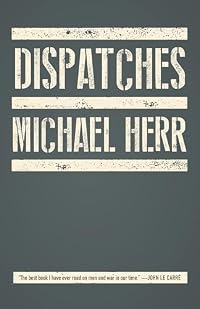
I loved This Boy's Life by Tobias Wolff so reading his memoir of his time in Vietnam was a no-brainer. It is well-written and tells of Vietnam in a succinct almost detached fashion that maximizes the available horror. In particular, Wolff's description of the impact of the Tet Offensive will haunt me to my grave in the way that Michael Herr's description of Hue has.
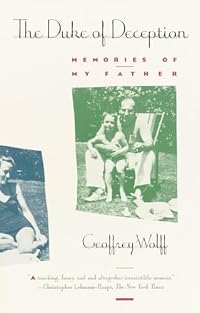
Wolff is less the soldier and more the writer throughout the book and you wonder how he got himself there. In many ways the book is about the search for self and for manhood and all the wrong places those searches can tell you. Interspersed are stories of his family, his parolee father and his brother, academician and writer, Gregory Wolff. Wolff has a talent for relating the show more small detail that sets off a string of details that become a story before you know it's happened. Worth reading both for a deeper understanding of Vietnam and for a great example of good memoir writing. show less
Wolff is less the soldier and more the writer throughout the book and you wonder how he got himself there. In many ways the book is about the search for self and for manhood and all the wrong places those searches can tell you. Interspersed are stories of his family, his parolee father and his brother, academician and writer, Gregory Wolff. Wolff has a talent for relating the show more small detail that sets off a string of details that become a story before you know it's happened. Worth reading both for a deeper understanding of Vietnam and for a great example of good memoir writing. show less
The funny and eminently readable memoir shows the best and worst of the US army during the Vietnam War. On the one hand, it lifted a failed youth out of misery and turned him into an officer and Oxford graduate. On the other hand, the US army destroyed countless lives (both foreign and American) and a country.
Written in 1994, the descriptions of an inept, culturally ignorant and disconnected military makes for an eery reading given the current Iraq mess.
Written in 1994, the descriptions of an inept, culturally ignorant and disconnected military makes for an eery reading given the current Iraq mess.
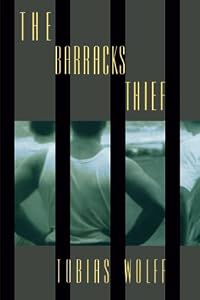
Tobias Wolff is the one writer whose work I simply cannot critique. I think he's the best, and while this isn't the first title of his I would recommend, it carries an incisiveness no other writer is capable of. I wish more people read his work. I didn't love this book as much as I did This Boy's Life or The Barracks Thief, but I have a feeling that from now on, whenever I think of the Vietnam War, images from this memoir will come to mind.
Members
- Recently Added By
Lists

THE WAR ROOM
813 works; 24 members
Author Information

53+ Works 11,064 Members
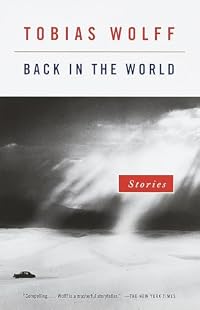
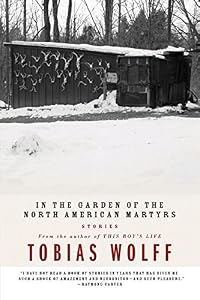
Tobias Wolff was born in Birmingham, Alabama on June 19, 1945. He served in the military as a paratrooper during the Vietnam War. He received a B.A. in 1972 and a M.A. in 1975 from the University of Oxford and a M.A. in 1978 from Stanford University. He held faculty positions at Stanford University, Goddard College, Arizona State University, and show more Syracuse University. He was also a reporter for the Washington Post. His first collection of short stories, In the Garden of the North American Martyrs, won the St. Lawrence award for fiction in 1982. His other works include Back in the World, In Pharaoh's Army: Memories of a Lost War, The Night in Question, Old School, and Our Story Begins. The Barracks Thief won the PEN/Faulkner award for fiction in 1985. This Boy's Life: A Memoir won the Los Angeles Times Book prize in 1989 and was made into a 1993 film starring Robert De Niro and Leonardo DiCaprio. He also won three O. Henry Awards in 1980, 1981, and 1985 and the National Medal of Arts in 2015. He edited several anthologies of short stories including Matters of Life and Death: New American Stories, A Doctor's Visit: Short Stories by Anton Chekhov, and The Vintage Book of Contemporary American Short Stories. (Bowker Author Biography) show less
Awards and Honors
Awards
Distinctions
Common Knowledge
- Original publication date
- 1994
- People/Characters
- Tobias Wolff
- Important places
- Vietnam
- Important events
- Vietnam War
- Dedication
- For my brother, who gave me books
Classifications
- Genres
- Biography & Memoir, Nonfiction, History
- DDC/MDS
- 959.70438 — History & geography History of Asia Southeast Asia Vietnam 1949- 1961–1975 Vietnamese War Other military topics
- LCC
- DS559.5 .W64 — History of Europe, Asia, Africa and Oceania Asia History of Asia Southeast Asia French Indochina Vietnam. Annam Vietnamese Conflict
- BISAC
Statistics
- Members
- 886
- Popularity
- 30,280
- Reviews
- 22
- Rating
- (4.16)
- Languages
- 9 — Danish, English, French, German, Italian, Farsi/Persian, Portuguese, Spanish, Swedish
- Media
- Paper, Audiobook, Ebook
- ISBNs
- 26
- ASINs
- 11