
On This Page
Description
The bard Maerad and her brother Hem hold the key to the mysterious Singing, and each of them must overcome terrible obstacles before they can unite and together unlock the Tree of Song, release the music of the Elidhu, and defeat the Nameless One.Tags
Recommendations


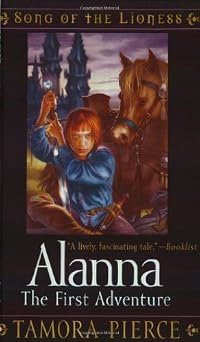
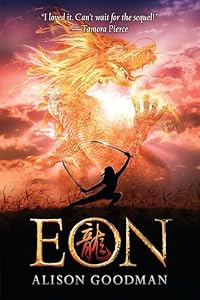

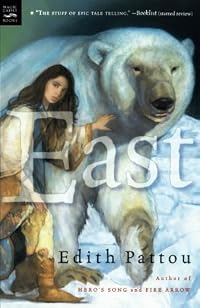
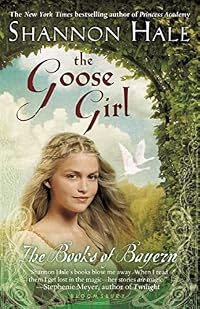

Member Reviews
The Books of Pellinor are a high fantasy series that is a more accessible version of Tolkein's Lord of the Rings with the same richness of imagery and world building but with straightforward names and a less complicated history. That said it could also be that The Books of Pellinor are less intimidating because they're not as famous or as widely read as Tolkein.
The Books of Pellinor are set in the land of Edil-Amarandh - a land which has been on the precipe of danger for years - ever since Sharma, the Nameless One stole the Treesong from the Elementals (Elidhu) and broke the song. Cadvan of Lirigon is working against the dark but there's only so much he can do - until while on a mission he runs into Maerad - a slave girl who can see show more through his invisibility. Soon they're travelling together and finding that all is not right in the land. Then Maerad leads Cadvan to a boy named Hem and nothing is the same. Maerad and Hem have an instant connection and it's not long before Cadvan realises nothing happens without a reason and that only by working together can the light prevail.
The final book begins after the end of The Riddle and The Crow and alternates between Maerad and Hem's viewpoint until they meet up again. I think this was part of the reason I didn't like it quite as much as the others. Although it wasn't split chapter by chapter, but a few chapters by a few, it still had the problem of jolting me out of the story each time the viewpoint changed. And after having Hem's point of view for the last book I just kept wanting him back. But it still is a really great book and I enjoyed the last addition to the series.
I really enjoyed Hem's debut as a player onstage. LMFAO. He begs and begs for the chance and hates it so much. Poor Hem. He never would've guessed to have stage fright. But it made for some pretty amusing moments. I liked Hekibel and the relationship she develops with Saliman. It was nice that he found someone to love. Irc was still hilarious.
Irc continued to live with Hem, and enjoyed as much honor as the other heroes of the Naraudh Lar-Chanë. He clearly never became modest: the phrase Irc-tongue passed into Turbanskian speech as a byword for boastfulness. He died at the ripe old age of twenty-eight, and it was popularly held that when he died, his soul flew to join the Elidhu Nyanar in his land near the Glandugir Hills.
Croggon, Alison. The Singing: The Fourth Book of Pellinor (Pellinor Series 4) (p. 459). Candlewick Press. Kindle Edition.
And I loved that Cadvan gave him the nickname of the Savior of Lirigon. Lol. I was really sad that Hem sees Zelika and she barely acknowledges him. It would've be nice for him to get the same peace that Maerad does when the dead appear. Cadvan still drove me nuts in this one. Even knowing how Maerad struggled with her thoughts and inner darkness in The Riddle, he still refused to speak up about his thoughts and feelings and it drove me mad. Especially since he should know better. Maerad was better, but still somewhat childish in this book as well. She could've said what was on her mind, but it was more understandable coming from her than it was Cadvan. Even when he said he trusted her, he never really seemed to back it up. Honestly I didn't really get their relationship but they seemed happy enough so *shrugs* I loved the relationship between Hem and Maerad though. Him telling her that he's not afraid, that he just sees her, his sister was sweet. And I was really glad to see a happy ending for everyone. It's always better when they live happily ever after.
Overall it was a strong end to a fantastic fantasy series. One I'm sorry to have reached the end of. 5 stars. show less
The Books of Pellinor are set in the land of Edil-Amarandh - a land which has been on the precipe of danger for years - ever since Sharma, the Nameless One stole the Treesong from the Elementals (Elidhu) and broke the song. Cadvan of Lirigon is working against the dark but there's only so much he can do - until while on a mission he runs into Maerad - a slave girl who can see show more through his invisibility. Soon they're travelling together and finding that all is not right in the land. Then Maerad leads Cadvan to a boy named Hem and nothing is the same. Maerad and Hem have an instant connection and it's not long before Cadvan realises nothing happens without a reason and that only by working together can the light prevail.
The final book begins after the end of The Riddle and The Crow and alternates between Maerad and Hem's viewpoint until they meet up again. I think this was part of the reason I didn't like it quite as much as the others. Although it wasn't split chapter by chapter, but a few chapters by a few, it still had the problem of jolting me out of the story each time the viewpoint changed. And after having Hem's point of view for the last book I just kept wanting him back. But it still is a really great book and I enjoyed the last addition to the series.
I really enjoyed Hem's debut as a player onstage.
Irc continued to live with Hem, and enjoyed as much honor as the other heroes of the Naraudh Lar-Chanë. He clearly never became modest: the phrase Irc-tongue passed into Turbanskian speech as a byword for boastfulness. He died at the ripe old age of twenty-eight, and it was popularly held that when he died, his soul flew to join the Elidhu Nyanar in his land near the Glandugir Hills.
Croggon, Alison. The Singing: The Fourth Book of Pellinor (Pellinor Series 4) (p. 459). Candlewick Press. Kindle Edition.
And I loved that Cadvan gave him the nickname of the Savior of Lirigon. Lol.
Overall it was a strong end to a fantastic fantasy series. One I'm sorry to have reached the end of. 5 stars. show less
As with the author, I finished (reading, in my case, writing, in hers) the Pellinor tetralogy with mixed feelings. Regret, first of all, because there was a sense of closure on the whole series: any hint of sequels was firmly dispelled by a note at the beginning of the appendices that outlined the subsequent history of Maerad, Hem and their friends, leaving little chance of another epic undertaking by the characters we had grown to know and love. But satisfaction, too, was there: that wrongs had been righted, balances restored and friendships deepened.
At the beginning of The Singing we pick up again the story of Maerad which was abandoned during The Crow. Maerad finds herself back at the bardic town of Innail where she had first been show more made aware of a life different from her upbringing as a slave, and temporarily finds a respite from her wanderings of close on a year. But she has much still to accomplish – finding her brother and solving the riddle of the Treesong, for example – and so begins the chain of events that lead up to the final confrontation.
I found much to enjoy in this final installment. Themes are re-visited but are never the same: there is a siege, but it is not the kind of siege that Hem experienced in Turbansk; we are re-acquainted with the elemental beings we have met before, the Landrost, the Winterking and Ardina, but the relationships between them and humankind have changed; and all the while the protagonists are growing in maturity, in powers, in insights, no longer the innocents abroad. And, with the pain of growing there come the sacrifices.
For this reader the Pellinor quartet has been a wonderful journey to shadow over the course of the narrative’s year, aided and abetted by the splendid cartography in each volume. I don’t agree with critics who feel the conclusion pat: after all, one of the purposes of fantasy, as with fairytales and other traditional stories, is to tease and cajole but ultimately to reach a satisfying resolution. But Croggon has also managed to invest her main characters with the kind of sympathy that we look for in friends, and for that the Pellinor books are raised above the ordinary. As Maerad is reputed to have written, “… the fairest sight | on this dark earth | is the face of the one you love.” If that is pat, then all human relationships are pat, and I can’t believe that is so.
http://wp.me/s2oNj1-singing show less
At the beginning of The Singing we pick up again the story of Maerad which was abandoned during The Crow. Maerad finds herself back at the bardic town of Innail where she had first been show more made aware of a life different from her upbringing as a slave, and temporarily finds a respite from her wanderings of close on a year. But she has much still to accomplish – finding her brother and solving the riddle of the Treesong, for example – and so begins the chain of events that lead up to the final confrontation.
I found much to enjoy in this final installment. Themes are re-visited but are never the same: there is a siege, but it is not the kind of siege that Hem experienced in Turbansk; we are re-acquainted with the elemental beings we have met before, the Landrost, the Winterking and Ardina, but the relationships between them and humankind have changed; and all the while the protagonists are growing in maturity, in powers, in insights, no longer the innocents abroad. And, with the pain of growing there come the sacrifices.
For this reader the Pellinor quartet has been a wonderful journey to shadow over the course of the narrative’s year, aided and abetted by the splendid cartography in each volume. I don’t agree with critics who feel the conclusion pat: after all, one of the purposes of fantasy, as with fairytales and other traditional stories, is to tease and cajole but ultimately to reach a satisfying resolution. But Croggon has also managed to invest her main characters with the kind of sympathy that we look for in friends, and for that the Pellinor books are raised above the ordinary. As Maerad is reputed to have written, “… the fairest sight | on this dark earth | is the face of the one you love.” If that is pat, then all human relationships are pat, and I can’t believe that is so.
http://wp.me/s2oNj1-singing show less
A fantastic end to a truly spellbinding quartet. Alison Croggon creats a rich, vivid world and characters with real depth; the books are brought to life. Formerly a poet, Croggon really can write compellingly, and the material in itself is a joy to read.
In this final book of Pellinor, Maerad of Pellinor and Cadvan of Lirigon embark on an arduous journey to find Maerad's brother, Hem, who is travelling with the Great Bard Saliman of Turbansk. They race against time as Sharma marches across Edil-Amarandh with his army of darkness, spreading destruction in its wake. Fate lies in the awakening of the treesong within the mysterious Elidhu, themselves a part of nature in Edil Amarandh (the world). If the singing does not prevail, the already show more dimmed light of this world may be crushed altogether. Maerad and Hem, along with their supporters and adversaries, face their greatest battle ever. Emotionally charged and richly imagined, Alison Croggon's THE SINGING gives an amazing finale to an already classic series.
This book is not necessarily perfect what with the sometimes dragging pace and the romances that felt a bit contrived. Nontheless, I was left wanting more. We have only been with Maerad for a year of her life, after all, and the ways of Bards seem only touched upon in this four-book series. Hopefully we will hear more about the Seven Kingdoms in the future. show less
In this final book of Pellinor, Maerad of Pellinor and Cadvan of Lirigon embark on an arduous journey to find Maerad's brother, Hem, who is travelling with the Great Bard Saliman of Turbansk. They race against time as Sharma marches across Edil-Amarandh with his army of darkness, spreading destruction in its wake. Fate lies in the awakening of the treesong within the mysterious Elidhu, themselves a part of nature in Edil Amarandh (the world). If the singing does not prevail, the already show more dimmed light of this world may be crushed altogether. Maerad and Hem, along with their supporters and adversaries, face their greatest battle ever. Emotionally charged and richly imagined, Alison Croggon's THE SINGING gives an amazing finale to an already classic series.
This book is not necessarily perfect what with the sometimes dragging pace and the romances that felt a bit contrived. Nontheless, I was left wanting more. We have only been with Maerad for a year of her life, after all, and the ways of Bards seem only touched upon in this four-book series. Hopefully we will hear more about the Seven Kingdoms in the future. show less
The Singing was all I thought it would be. A truly lyrical novel. This one is scary, but not as dark as the last one. Alison Croggon is an amazing author. These novels have the taste of the Lord of the Rings series, but in an easier to read flavor. The characters are rich and developed. My only problem with this last book was the relationship between Cadvan and Maerad. I don't know why I didn't want them romantically linked. I think it was because I saw Cadvan in my mind as Maerad's father figure. She was 15 or so when he found her and began to teach her. He was like what like 30? I know, in these books bards live extra long lives, but she was a bard too. I just didn't see that connection between them. But, you know everyone loves a show more happy ending, and this definitely was that! I can't wait to see what else Croggon comes up with. I love an author with a good imagination! show less
While I have enjoyed the arc of this story, this final instalment deserved better editing. In particular, the interactions between the characters just left me grating my teeth - confused, repetitive, and not in line with their previous characteristics. Though I must say, the poetry and, in this case, the addenda, are well done.
I admit that I have not read the first three novels, so i am at a significant disadvantage in reviewing this book. I found some of Ms. Croggon's world to be interesting (the elementals), but found Maerad hard to really care deeply about. I'm generally pretty annoyed by "Special Snowflake Syndrome", which Maerad has in spades. I also found much of her mythology and approach really derivative of both Tolkeinian and Welsh tales. I don't feel compelled to read the other three books, particularly, except an idle curiosity over why this war was being fought after all.
That said, I bet i would have loved this as a young teenager.
That said, I bet i would have loved this as a young teenager.
 This review was written for LibraryThing Early Reviewers.
The fourth book of Pellinor is the culmination of a series of coincidences and adventures for Maerad and Hem, sister and brother who were separated years earlier when their home was destroyed by the Dark. Each one thought the other was dead. Both have learned that they are the ones spoken of in prophecies who can restore The Light and destroy the current power of the Dark.
Maerad can be quite decisive but learns to consider her decisions before she acts on them after she kills an innocent Bard. Her power frightens and excites her at the same time and learning to control it is quite a challenge for both her and her mentor Cadvan. Hem, the name he insists on even though his birth name is Cai, doesn't have the same power but has intuition show more that he uses well - a little more cautiously than Maerad. Both are befriended by Elementals - supernatural beings from before the world was created. Indeed, it is the Elementals who direct Maerad and Hem to their destiny.
Characters are well developed and grow physically, mentally, and emotionally througout the course of the chronicle. Action is well paced with fast, exciting adventures with well placed "rests." Alison Croggon has created a world and a story that intriques and fascinates. Once begun, the books are hard to put down. I was anxious to get to this one as the culminating book to find what happens to Maerad, Hem, and Cadvan. show less
Maerad can be quite decisive but learns to consider her decisions before she acts on them after she kills an innocent Bard. Her power frightens and excites her at the same time and learning to control it is quite a challenge for both her and her mentor Cadvan. Hem, the name he insists on even though his birth name is Cai, doesn't have the same power but has intuition show more that he uses well - a little more cautiously than Maerad. Both are befriended by Elementals - supernatural beings from before the world was created. Indeed, it is the Elementals who direct Maerad and Hem to their destiny.
Characters are well developed and grow physically, mentally, and emotionally througout the course of the chronicle. Action is well paced with fast, exciting adventures with well placed "rests." Alison Croggon has created a world and a story that intriques and fascinates. Once begun, the books are hard to put down. I was anxious to get to this one as the culminating book to find what happens to Maerad, Hem, and Cadvan. show less
Members
- Recently Added By
Lists

Absolute Power
107 works; 1 member

mom
729 works; 1 member
Author Information

29+ Works 7,345 Members
Alison Croggon was born in the Transvaal, South Africa in 1962. She worked as a journalist for the Melbourne Herald until 1985. Her first book of poems, This Is the Stone, was published in 1991 and won the Anne Elder Award and the Dame Mary Gilmore Prize. Her other books of poetry include The Blue Gate, Attempts at Being, The Common Flesh: New and show more Selected Poems, and Theatre. She also writes the children's fantasy series Pellinor. Her children's novel, The River and the Book, won the 2016 Wilderness Society Environment Award for Children¿s Literature, Fiction. She is Melbourne theatre critic for The Australian and keeps a blog of theatre criticism called Theatre Notes. In 2009, she was named Geraldine Pascall Critic of the Year. She has also written and had preformed nine theatrical works including the operas Gauguin and The Burrow, and the plays Lenz, Samarkand and The Famine, and Blue. (Bowker Author Biography) show less
Series

Work Relationships
Is contained in
Common Knowledge
- Canonical title
- The Singing
- Original publication date
- 2008
- People/Characters
- Maerad of Pellinor; Hem of Turbansk; Cadvan of Lirigon; Saliman of Turbansk; Irc; Hekibel
- Dedication
- For Daniel
- First words
- A shepherd was gathering firewood by the old Pellinor Road when a strange sight caught his attention.
- Last words
- (Click to show. Warning: May contain spoilers.)"I'd like that," said Maerad.
- Publisher's editor
- Kloet, Chris
Classifications
Statistics
- Members
- 1,089
- Popularity
- 23,280
- Reviews
- 22
- Rating
- (4.11)
- Languages
- English, German, Polish, Spanish
- Media
- Paper, Audiobook, Ebook
- ISBNs
- 29
- ASINs
- 12
