
The Holy Bible: King James Version
by King James Version
On This Page
Description
The King James Bible is an English translation of the Christian Bible for the Church of England begun in 1604 and completed in 1611.Tags
Recommendations













Member Recommendations









lhungsbe My go-to version of the Bible. No additions or deletions. Easy to read.
lhungsbe My go-to version of the Bible. No additions or deletions. Easy to read.
lhungsbe My go-to version of the Bible. No additions or deletions. Easy to read.
lhungsbe My go-to version of the Bible. No additions or deletions. Easy to read.
lhungsbe My go-to version of the Bible. No additions or deletions. Easy to read.
lhungsbe My go-to version of the Bible. No additions or deletions. Easy to read.
lhungsbe My go-to version of the Bible. No additions or deletions. Easy to read.
lhungsbe My go-to version of the Bible. No additions or deletions. Easy to read.
lhungsbe My go-to version of the Bible. No additions or deletions. Easy to read.
divinepeacelutheran My go-to version of the Bible. No additions or deletions. Easy to read.
divinepeacelutheran My go-to version of the Bible. No additions or deletions. Easy to read.
divinepeacelutheran My go-to version of the Bible. No additions or deletions. Easy to read.
43
witybe I love reading the Holy Bible and the international version, it breaks words down more so you can understand. It offers me hope in a hopeless world, and’ that there is more to life than what we see or experience day to day; that there was, and still is a spiritual realm around us, which is God and His son Jesus, long before mankind was even created. The Bible informs us that we were created, and did not just appear or form here. It even gives us hope in our death if we believe. Directing us to what is good, and that there is goodness always present, and to what is evil, and why there is evil always present as well. The Holy Bible to me is the Spirit of God reaching down through an infinite expanse of time, using mankind; the prophets of old, touching generations of people, enlightening those who will hear and believe, so that they may help others who will receive and believe. Otherwise without the Holy Bible we all might have been agnostic and generations would have been oblivious about God. The Bible is a light in a very dark world’ that is relentlessly getting darker. Everyone should give it a read in their life rather you’re a believer or not. I give The Holy Bible five stars, nothing else on this planet offers such hope in life and death in this crazy world we live in.
35
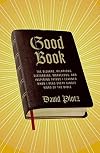
Good Book: The Bizarre, Hilarious, Disturbing, Marvelous, and Inspiring Things I Learned When I Read Every Single Word of the Bible by David Plotz
anonymous user An honest description of what the Bible actually says.
04
Member Reviews
It is important to remember when assessing this 'book' that it is not a book but a 'bible'. It is a collection of books, its title coming from the same Latin root that gives us 'library' (the heritage is more obvious in the French equivalent, bibliothèque). I mention this seemingly trivial fact because it leads into my whole assessment of the Bible. As a self-styled atheist or near-atheist, the Bible only really had an impression on me once I stopped seeing it as the word of God passed down (which can be easily scoffed at) and started seeing it as the words of men, telling stories to try and figure things out. Ignoring a dogmatic approach and appraising it as literature and, increasingly, as philosophy, I think I tapped into the show more wellspring of why the Bible has endured.
This was strange for me. Richard Dawkins' The God Delusion was a formative experience in my teenage years and I've always tried to hold myself to a standard of rationality and freethinking. So it was rather disturbing to me when my open-mindedness forced me to accept that when I actually got around to reading it, I was actually liking the Bible and taking a lot of worth from it.
I had two contemporary aids which I found myself leaning on when trying to understand why this was happening. The first – surprisingly – is the writing of Christopher Hitchens. The arch-atheist and public champion of secular rationality actually wrote glowingly of the King James Version of the Bible (codified in his essay 'When the King Saved God' – https://www.vanityfair.com/culture/2011/05/hitchens-201105) and, certainly, if you want the Bible to have value as literature you have to read the King James translation. It is not up for debate. This is the one with all the seemingly archaic 'thees' and 'thou shalts' and 'cometh unto ye', but such language is beautifully rendered and flows easily from an English tongue. It rings with a cleaner sound than the supposedly more 'modern' translations, which become dated as soon as they are printed, just as a Shakespearean soliloquy can still stir your soul in the 21st century where slam poetry can't. The legacy of this translation in the English oral and literary tradition, from Shakespeare onwards, is unparalleled. If you are serious about literature, you have to read the KJV.
Indeed, my desire to retain my self-respect as an amateur bookworm is what made reading the King James Bible an ambition of mine. To qualify some of the heritage of my language – perhaps the most flexible of languages and certainly the most historically important – was what I expected. And it was what I got. But more than that, I found I was increasingly enjoying the book's lessons, its philosophy and its underlying themes. This is where the second contemporary aid proved useful: Jordan B. Peterson. Less surprising, perhaps, than Hitchens, for those who have engaged with some of this Canadian professor's talks and writings over the last couple of years, but still not entirely regular. Peterson is best-known for his 'self-help' stuff (a massive over-simplification, but I won't go into that here). But he also has a huge body of academic work on the psychology of religion and why such stories resonate with us, and (as a bookworm) it is often this rather than the 'tidy your damn room' stuff which has interested me. I began to find I was reading the Bible – still trying to come to terms with how it was so different from my preconceptions – as literature and as philosophy rather than from the point-of-view of a scofflaw atheist.
And it works on that level. In admiring the Bible, it's not that I've seen the power and the glory and I'm on board with the Light and the Word and I'll be going to church tomorrow, praise the Lord. I won't be. And anyone who thinks I am no longer a rationalist and have become someone who is willing to entertain hocus pocus would be mistaken. But I've been dipping into the Bible on and off over the past year and I have had to admit – at first ruefully and then increasingly unashamedly – that I've really enjoyed it. It's not that I've gone into it thinking, 'this is the Word of God and I have to accept it as truth regardless of what I think'. Instead, it's that I've gone into it and my mind has become shaped by the thoughts: 'these are the words of men and though I don't believe it's literal truth, there is a lot here to appreciate'.
And it is true that there is a lot to scoff at and even some to despise. This is a bible, after all; a library, a compendium, a collection. And like any library, some books on the shelves will be better than others. The Bible starts with Genesis and the four other Books of Moses – Exodus, Leviticus, Numbers and Deuteronomy. This is where it seems that, for many, the Bible's reputation is made. Some original and interesting creation stories, backed with some sound prose, that serves as the strong foundation of the Judeo-Christian faith. These are also the books where there are some rather iffy lines ('thou shalt not suffer a witch to live' is thrown in randomly among a bunch of some-stern and some-innocuous rules in Exodus, for example) and sickening events (Moses' war crimes, for example, or Lot's daughter, who is offered up by her father, the 'last good man in Sodom', to be gang-raped by a mob in order to spare his guests – two angels sent by God – from the same fate) that betray a morality you would not want to abide by. Couple this with some interminable passages in which such-and-such begat such-and-such, son of such-and-such, who begat such-and-such (for pages and pages), and laborious passages on the right way to go about minor rituals about sacrifices and unleavened bread, and you see why atheist mockery has such ample feeding ground. By this point a love-and-hate relationship with the Bible is established with the reader, something reinforced by the books which follow, including the Books of the Kings, which is all more of the same.
Things began to change for me with the Book of Job. Particularly when rendered in the KJV, this book is an absolute masterpiece of literature, and only slightly less so as a piece of philosophy. This was the point where I started to take seriously my reassessment of the Bible and began to embrace its ability to provide for metaphysical and transcendental moments. This is where I began to delve into Peterson's remarks about the Biblical storytelling tradition, particularly when infused into his 'self-help' lectures. From Job onwards, I began to recognize how many of the stories were about challenging God (which is what the name 'Israel' means) and being in conflict with God and, through this fight, becoming someone new and ascendant. There is a strain of individualism that starts to become very apparent, only reinforced by the eloquent and entertaining rants in the books of the Prophets (Ecclesiastes, Isaiah, Jeremiah and Ezekiel) which follow. Add to this the lyricism of the Book of Psalms and the Proverbs, and the message throughout that doom will manifest on an individual and societal level if you do not take on this mantle and improve yourself (thanks to Dr. Peterson, again), and by this point I was seriously impressed. If you read only one book in the Bible, make it the Book of Job. It is the key.
This summarizes the thick wodge of paper that is the Old Testament and, to be honest, I actually prefer it to the New Testament. The New Testament is much shorter (about 250 pages compared to the approximately 870 of the Old) but the imperial joy I felt from reading parts of the Old Testament began to dissipate, even though I was completely on board by this point and putting my atheism to the side. The New Testament is still good, and in the figure of the Christ we have the embodiment of the individual 'ideal' to aspire to, which forms a continuation of the strain of individualism I so enjoyed in the Old books. In the story of the crucifixion we have, if not 'the greatest story ever told', then certainly a strong contender for it.
Furthermore, the line from the Gospel according to St. Matthew, when Jesus is being tortured on the cross and cries aloud to God, "Why hast thou forsaken me?" (Matthew 27:46), is – especially in context – the most heart-breaking line in all literature. A close second is the scene the night before his arrest, when Jesus, knowing exactly what he is going to suffer on the cross, asks God to remove this obligation from him – "let this cup pass from me" (Matthew 26:39) – but, if He cannot, to give him the strength not to falter ("the spirit indeed is willing, but the flesh is weak" – Matthew 26:41). Monty Python were of the right mind when they said that Life of Brian evolved from being a lampooning of Jesus to being a mockery of his dim followers because there wasn't really anything funny about Christ, and that he had some good lessons.
Thinking historically and anthropologically, I also enjoyed the lesson that all men are equal before God, relative to their good or bad deeds. It is a hugely emancipating lesson and I don't know if Western civilization would have advanced beyond tribalism and monarchy and rigid class structure if not for the fact that its founding document had this imperishable kernel of the sovereignty of the individual built into it. But if I continue in that vein, I might as well just direct you to a Jordan Peterson video on YouTube, so I won't.
The problem I had with the New Testament is that whilst it is still a case of people telling stories to one another to try and figure things out, the people in question are becoming increasingly aware of that fact. A lot of Jesus' sayings are clearly inspired by passages from the Old Testament (particularly the books of the Prophets), and the secular response would be that Jesus was a man, rather than the Christ, who assimilated and taught the old lessons well, passing them off as his own. But that's fine – Jesus was clearly a man of fortitude and brotherly love, regardless of his divinity or otherwise.
Rather, it is the books of the Bible following the Gospels which disappointed me. I subscribe to what I call the John Lennon school of thought, which is that Jesus is alright but the disciples come along and ruin it. There are still some good lines, but they bastardize the message not only of Jesus but of the better Old Testament books. I didn't mind the Book of Revelation so much, sick and strange as it is, though I wouldn't want John the Revelator looking after any small children. Instead, it is the Epistles of St. Paul and the other contributions by the apostles which are damaging. The increasingly naked anti-Semitism (and I've read the KJV is actually rather tame compared to other versions) placed a grain of evil in Christianity which laid the first slat on the railroad to Auschwitz, the great failure of Western civilization in the 20th century, which we still have not recovered from.
Paul's epistles also introduce a missionary zeal completely contrary to the individualism of both the Old Testament and the example of the Christ. The establishment of the church and the ministry is the other great Christian error. It took away from the individual whom Christ was set up to represent, perhaps irrevocably. 2nd Peter also says that the Word is not up for interpretation (2 Peter 1:20-21), thereby making dogma rather than liberality the Christian code from then on. St. Paul can turn a phrase, but the Apostles did more harm than good. In some crucial ways, they were dim and dogmatic and closed-minded. (C. K. Stead's short novel My Name Was Judas is great on this.)
Thinking about this sad end to the Bible, with its perversion of all that came before, I was inclined to be unkind in this review. But, ironically, it is one of the lines from these later books, the Epistle of Paul to Titus, which encapsulates why I am unwilling to do so. "And let ours also learn to maintain good works for necessary uses, that they be not unfruitful," says Titus 3:14, and this is why I am unwilling to judge the quality of the library by its least members. There is a lot to embrace in the Bible, from the archetypal stories to the lyricism to the masterpiece of Job to the idea of the sovereignty of the individual. Not to mention its role as one of the two founding pillars of Western civilization. To return to Hitchens, he wrote a few times of the values of the two cities of Athens and Jerusalem, to juxtapose the values of the Enlightenment to the role of Christianity in Western history. But increasingly, I am of the mind that you need both of these pillars; that a secular rationalism is not enough, and placing all the weight on that one pillar of the Enlightenment and the Classical tradition will cause it to wobble. We saw that in the 20th century, as predicted by Nietzsche, when nationalism and socialism and commercialism failed (and continue to fail) to adequately replace religion as a source of meaning.
There is humanism, of course, which is the right idea, but humanism has to embrace Christianity as much as rationality. It needs to be placed lengthways along both pillars in order to serve as the next foundation. You need the balance. People have a need which is emotional, metaphysical, and spiritual, alongside the intellectual and rational need. I am not in any way trying to explain away the horrors of religion which have been wrought throughout history or, for example, the problems involved in Jesus' injunction to believe solely in him, which could easily lead to the despotic, but the Christian tradition at its best had a deep philosophical meaning and sense of individualism. There's a lot about ascension in the New Testament, birthed from the Old, and not just in Revelation. And Christianity is arguably better than the other religions. Certainly, given its history, it has proven it can work in line with the secular tradition, even if that history has not always been an easy one. The test going forward for a rehabilitated Christianity (for I think that is the best possible outcome) will be in whether it can embrace the second pillar of rationality, whether it can resist the hostility to blasphemy and the overly-dogmatic thinking which characterized it when it was 'in charge' in the West. (One simple test might be: 'Can you laugh along with Life of Brian?')
Some secular atheists say, somewhat complacently, that you can make a believer into an atheist if you only get them to read the Bible. Whilst the opposite isn't true (I'm still an atheist), the near-opposite is. Reading the book from a secular point-of-view leads you to assess it as story: as literature and, through its themes, as philosophy. And it stands. As a piece of literature, it stands. And you might be so caught up in it at times that you believe it's real. That, after all, is what the best stories do to us. show less
This was strange for me. Richard Dawkins' The God Delusion was a formative experience in my teenage years and I've always tried to hold myself to a standard of rationality and freethinking. So it was rather disturbing to me when my open-mindedness forced me to accept that when I actually got around to reading it, I was actually liking the Bible and taking a lot of worth from it.
I had two contemporary aids which I found myself leaning on when trying to understand why this was happening. The first – surprisingly – is the writing of Christopher Hitchens. The arch-atheist and public champion of secular rationality actually wrote glowingly of the King James Version of the Bible (codified in his essay 'When the King Saved God' – https://www.vanityfair.com/culture/2011/05/hitchens-201105) and, certainly, if you want the Bible to have value as literature you have to read the King James translation. It is not up for debate. This is the one with all the seemingly archaic 'thees' and 'thou shalts' and 'cometh unto ye', but such language is beautifully rendered and flows easily from an English tongue. It rings with a cleaner sound than the supposedly more 'modern' translations, which become dated as soon as they are printed, just as a Shakespearean soliloquy can still stir your soul in the 21st century where slam poetry can't. The legacy of this translation in the English oral and literary tradition, from Shakespeare onwards, is unparalleled. If you are serious about literature, you have to read the KJV.
Indeed, my desire to retain my self-respect as an amateur bookworm is what made reading the King James Bible an ambition of mine. To qualify some of the heritage of my language – perhaps the most flexible of languages and certainly the most historically important – was what I expected. And it was what I got. But more than that, I found I was increasingly enjoying the book's lessons, its philosophy and its underlying themes. This is where the second contemporary aid proved useful: Jordan B. Peterson. Less surprising, perhaps, than Hitchens, for those who have engaged with some of this Canadian professor's talks and writings over the last couple of years, but still not entirely regular. Peterson is best-known for his 'self-help' stuff (a massive over-simplification, but I won't go into that here). But he also has a huge body of academic work on the psychology of religion and why such stories resonate with us, and (as a bookworm) it is often this rather than the 'tidy your damn room' stuff which has interested me. I began to find I was reading the Bible – still trying to come to terms with how it was so different from my preconceptions – as literature and as philosophy rather than from the point-of-view of a scofflaw atheist.
And it works on that level. In admiring the Bible, it's not that I've seen the power and the glory and I'm on board with the Light and the Word and I'll be going to church tomorrow, praise the Lord. I won't be. And anyone who thinks I am no longer a rationalist and have become someone who is willing to entertain hocus pocus would be mistaken. But I've been dipping into the Bible on and off over the past year and I have had to admit – at first ruefully and then increasingly unashamedly – that I've really enjoyed it. It's not that I've gone into it thinking, 'this is the Word of God and I have to accept it as truth regardless of what I think'. Instead, it's that I've gone into it and my mind has become shaped by the thoughts: 'these are the words of men and though I don't believe it's literal truth, there is a lot here to appreciate'.
And it is true that there is a lot to scoff at and even some to despise. This is a bible, after all; a library, a compendium, a collection. And like any library, some books on the shelves will be better than others. The Bible starts with Genesis and the four other Books of Moses – Exodus, Leviticus, Numbers and Deuteronomy. This is where it seems that, for many, the Bible's reputation is made. Some original and interesting creation stories, backed with some sound prose, that serves as the strong foundation of the Judeo-Christian faith. These are also the books where there are some rather iffy lines ('thou shalt not suffer a witch to live' is thrown in randomly among a bunch of some-stern and some-innocuous rules in Exodus, for example) and sickening events (Moses' war crimes, for example, or Lot's daughter, who is offered up by her father, the 'last good man in Sodom', to be gang-raped by a mob in order to spare his guests – two angels sent by God – from the same fate) that betray a morality you would not want to abide by. Couple this with some interminable passages in which such-and-such begat such-and-such, son of such-and-such, who begat such-and-such (for pages and pages), and laborious passages on the right way to go about minor rituals about sacrifices and unleavened bread, and you see why atheist mockery has such ample feeding ground. By this point a love-and-hate relationship with the Bible is established with the reader, something reinforced by the books which follow, including the Books of the Kings, which is all more of the same.
Things began to change for me with the Book of Job. Particularly when rendered in the KJV, this book is an absolute masterpiece of literature, and only slightly less so as a piece of philosophy. This was the point where I started to take seriously my reassessment of the Bible and began to embrace its ability to provide for metaphysical and transcendental moments. This is where I began to delve into Peterson's remarks about the Biblical storytelling tradition, particularly when infused into his 'self-help' lectures. From Job onwards, I began to recognize how many of the stories were about challenging God (which is what the name 'Israel' means) and being in conflict with God and, through this fight, becoming someone new and ascendant. There is a strain of individualism that starts to become very apparent, only reinforced by the eloquent and entertaining rants in the books of the Prophets (Ecclesiastes, Isaiah, Jeremiah and Ezekiel) which follow. Add to this the lyricism of the Book of Psalms and the Proverbs, and the message throughout that doom will manifest on an individual and societal level if you do not take on this mantle and improve yourself (thanks to Dr. Peterson, again), and by this point I was seriously impressed. If you read only one book in the Bible, make it the Book of Job. It is the key.
This summarizes the thick wodge of paper that is the Old Testament and, to be honest, I actually prefer it to the New Testament. The New Testament is much shorter (about 250 pages compared to the approximately 870 of the Old) but the imperial joy I felt from reading parts of the Old Testament began to dissipate, even though I was completely on board by this point and putting my atheism to the side. The New Testament is still good, and in the figure of the Christ we have the embodiment of the individual 'ideal' to aspire to, which forms a continuation of the strain of individualism I so enjoyed in the Old books. In the story of the crucifixion we have, if not 'the greatest story ever told', then certainly a strong contender for it.
Furthermore, the line from the Gospel according to St. Matthew, when Jesus is being tortured on the cross and cries aloud to God, "Why hast thou forsaken me?" (Matthew 27:46), is – especially in context – the most heart-breaking line in all literature. A close second is the scene the night before his arrest, when Jesus, knowing exactly what he is going to suffer on the cross, asks God to remove this obligation from him – "let this cup pass from me" (Matthew 26:39) – but, if He cannot, to give him the strength not to falter ("the spirit indeed is willing, but the flesh is weak" – Matthew 26:41). Monty Python were of the right mind when they said that Life of Brian evolved from being a lampooning of Jesus to being a mockery of his dim followers because there wasn't really anything funny about Christ, and that he had some good lessons.
Thinking historically and anthropologically, I also enjoyed the lesson that all men are equal before God, relative to their good or bad deeds. It is a hugely emancipating lesson and I don't know if Western civilization would have advanced beyond tribalism and monarchy and rigid class structure if not for the fact that its founding document had this imperishable kernel of the sovereignty of the individual built into it. But if I continue in that vein, I might as well just direct you to a Jordan Peterson video on YouTube, so I won't.
The problem I had with the New Testament is that whilst it is still a case of people telling stories to one another to try and figure things out, the people in question are becoming increasingly aware of that fact. A lot of Jesus' sayings are clearly inspired by passages from the Old Testament (particularly the books of the Prophets), and the secular response would be that Jesus was a man, rather than the Christ, who assimilated and taught the old lessons well, passing them off as his own. But that's fine – Jesus was clearly a man of fortitude and brotherly love, regardless of his divinity or otherwise.
Rather, it is the books of the Bible following the Gospels which disappointed me. I subscribe to what I call the John Lennon school of thought, which is that Jesus is alright but the disciples come along and ruin it. There are still some good lines, but they bastardize the message not only of Jesus but of the better Old Testament books. I didn't mind the Book of Revelation so much, sick and strange as it is, though I wouldn't want John the Revelator looking after any small children. Instead, it is the Epistles of St. Paul and the other contributions by the apostles which are damaging. The increasingly naked anti-Semitism (and I've read the KJV is actually rather tame compared to other versions) placed a grain of evil in Christianity which laid the first slat on the railroad to Auschwitz, the great failure of Western civilization in the 20th century, which we still have not recovered from.
Paul's epistles also introduce a missionary zeal completely contrary to the individualism of both the Old Testament and the example of the Christ. The establishment of the church and the ministry is the other great Christian error. It took away from the individual whom Christ was set up to represent, perhaps irrevocably. 2nd Peter also says that the Word is not up for interpretation (2 Peter 1:20-21), thereby making dogma rather than liberality the Christian code from then on. St. Paul can turn a phrase, but the Apostles did more harm than good. In some crucial ways, they were dim and dogmatic and closed-minded. (C. K. Stead's short novel My Name Was Judas is great on this.)
Thinking about this sad end to the Bible, with its perversion of all that came before, I was inclined to be unkind in this review. But, ironically, it is one of the lines from these later books, the Epistle of Paul to Titus, which encapsulates why I am unwilling to do so. "And let ours also learn to maintain good works for necessary uses, that they be not unfruitful," says Titus 3:14, and this is why I am unwilling to judge the quality of the library by its least members. There is a lot to embrace in the Bible, from the archetypal stories to the lyricism to the masterpiece of Job to the idea of the sovereignty of the individual. Not to mention its role as one of the two founding pillars of Western civilization. To return to Hitchens, he wrote a few times of the values of the two cities of Athens and Jerusalem, to juxtapose the values of the Enlightenment to the role of Christianity in Western history. But increasingly, I am of the mind that you need both of these pillars; that a secular rationalism is not enough, and placing all the weight on that one pillar of the Enlightenment and the Classical tradition will cause it to wobble. We saw that in the 20th century, as predicted by Nietzsche, when nationalism and socialism and commercialism failed (and continue to fail) to adequately replace religion as a source of meaning.
There is humanism, of course, which is the right idea, but humanism has to embrace Christianity as much as rationality. It needs to be placed lengthways along both pillars in order to serve as the next foundation. You need the balance. People have a need which is emotional, metaphysical, and spiritual, alongside the intellectual and rational need. I am not in any way trying to explain away the horrors of religion which have been wrought throughout history or, for example, the problems involved in Jesus' injunction to believe solely in him, which could easily lead to the despotic, but the Christian tradition at its best had a deep philosophical meaning and sense of individualism. There's a lot about ascension in the New Testament, birthed from the Old, and not just in Revelation. And Christianity is arguably better than the other religions. Certainly, given its history, it has proven it can work in line with the secular tradition, even if that history has not always been an easy one. The test going forward for a rehabilitated Christianity (for I think that is the best possible outcome) will be in whether it can embrace the second pillar of rationality, whether it can resist the hostility to blasphemy and the overly-dogmatic thinking which characterized it when it was 'in charge' in the West. (One simple test might be: 'Can you laugh along with Life of Brian?')
Some secular atheists say, somewhat complacently, that you can make a believer into an atheist if you only get them to read the Bible. Whilst the opposite isn't true (I'm still an atheist), the near-opposite is. Reading the book from a secular point-of-view leads you to assess it as story: as literature and, through its themes, as philosophy. And it stands. As a piece of literature, it stands. And you might be so caught up in it at times that you believe it's real. That, after all, is what the best stories do to us. show less
This really isn't something you can "review" as such, so I'm just gonna scribble down some of my thoughts in no particular order now that I've finally reached the end of this eight month journey.
1. Anyone who tells you to simply "read the Bible", with the expectation that it will change your faith has gotta be more specific. Not saying I didn't learn anything, the read certainly helped me understand a lot more about where we come from as a cultural tradition, but I didn't find anything that challenged me spiritually or belief-wise.
2. Whoever edited this needs to take a literal page from Tolkien and move some of this stuff to the appendices. Too often an engaging narrative will be interrupted by a long-ass genealogy or extremely specific show more measurements for a tabernacle or a census or some other highly uninteresting minutiae.
3. I was not ready for the use of "circumcised" and "uncircumcised" as shorthand for "holy" and "not holy". Moses telling God that he was not worthy to speak of him, citing his "uncircumcised lips" THREW me.
4. Reading the Bible really brings out the absurdity of the claim that it's in any way the literal word of God, or dictated by God, or perfect and complete. It's very obviously written by human hands, many of them at that, over hundreds of years. As one of my favourite Youtube channels (Esoterica) pointed out, the Bible works best when thought of not as a book but a library.
4. The darkest part: If God tells you to enact a genocide, does that mean it's not only morally right, but morally REQUIRED to do so? What could have been an interesting question about ancient belief systems becomes highly disturbing in light of current events.
5. You know that "Rivers of Babylon" song by Boney M? It's a bop, right? Do NOT look up the second half of the psalm the lyrics are based on.
6. It slays me that one of the big conflicts Jesus had with the establishment was about him not washing his hands before eating. Like I get what you're going for with the analogy, what goes into us is not what defiles up, but what comes out, our words and actions and all that. But dude, you gotta wash your hands.
7. Paul, you had me at "interminable genealogies".
8. At times, I thought that reading this would give me the knowledge I needed to respond to people who state that the Bible supports this or that position. But then I had the depressing realisation that they probably don't care what the Bible "really" says.
Worth it? Yeah. For me at least, I'm a big fan of mythology and ancient stories. What's unusual for this one is that it has had such cultural staying power, and impact on peoples beliefs and actions until this day. A lot of "title drop" moments where I recognised a phrase or saying that's still used in everyday language.
Life changing? Nah. Not more than any other collection of literature. show less
1. Anyone who tells you to simply "read the Bible", with the expectation that it will change your faith has gotta be more specific. Not saying I didn't learn anything, the read certainly helped me understand a lot more about where we come from as a cultural tradition, but I didn't find anything that challenged me spiritually or belief-wise.
2. Whoever edited this needs to take a literal page from Tolkien and move some of this stuff to the appendices. Too often an engaging narrative will be interrupted by a long-ass genealogy or extremely specific show more measurements for a tabernacle or a census or some other highly uninteresting minutiae.
3. I was not ready for the use of "circumcised" and "uncircumcised" as shorthand for "holy" and "not holy". Moses telling God that he was not worthy to speak of him, citing his "uncircumcised lips" THREW me.
4. Reading the Bible really brings out the absurdity of the claim that it's in any way the literal word of God, or dictated by God, or perfect and complete. It's very obviously written by human hands, many of them at that, over hundreds of years. As one of my favourite Youtube channels (Esoterica) pointed out, the Bible works best when thought of not as a book but a library.
4. The darkest part: If God tells you to enact a genocide, does that mean it's not only morally right, but morally REQUIRED to do so? What could have been an interesting question about ancient belief systems becomes highly disturbing in light of current events.
5. You know that "Rivers of Babylon" song by Boney M? It's a bop, right? Do NOT look up the second half of the psalm the lyrics are based on.
6. It slays me that one of the big conflicts Jesus had with the establishment was about him not washing his hands before eating. Like I get what you're going for with the analogy, what goes into us is not what defiles up, but what comes out, our words and actions and all that. But dude, you gotta wash your hands.
7. Paul, you had me at "interminable genealogies".
8. At times, I thought that reading this would give me the knowledge I needed to respond to people who state that the Bible supports this or that position. But then I had the depressing realisation that they probably don't care what the Bible "really" says.
Worth it? Yeah. For me at least, I'm a big fan of mythology and ancient stories. What's unusual for this one is that it has had such cultural staying power, and impact on peoples beliefs and actions until this day. A lot of "title drop" moments where I recognised a phrase or saying that's still used in everyday language.
Life changing? Nah. Not more than any other collection of literature. show less
Like most ancient works of literature, the storytelling is a sloppy and unedited collection of tall tales about questionable historical events, but this really did not have to be such a long read. The entire book should have been trimmed to maybe 200 pages, as the majority of what is written can be omitted without removing anything from the overall storyline. I understand that due to the difficulty required in writing in ancient times it was hard to edit things over, and most writings were first draft material, but the Epic of Gilgamesh was an easy read and Homer's epics weren't so bad either. There was just so much unnecessary info included in the Bible, like lists of ancestors.
The first five books obviously originated in oral show more tradition, especially Genesis. That's why the story is so convoluted, full of holes and missing details, with some details that sound like they've been passed through word of mouth until removed of any meaning. Several of the stories were stolen from Sumerian folklore as well. About halfway through Exodus to the end of Leviticus was a huge list of laws, most of which are extremely brutal or make absolutely no sense and lack relevance today. A large portion is dedicated to the construction of the temple, which is listed down to the smallest detail. Numbers is just a detailed census-like statement counting things.
The remainder of the Old Testament is filled with tales of God's wrath and the oppression he unleashes upon the world. God is a very brutal character, perhaps the most evil, tyrannous character in the whole novel. Not only is he a narcissistic, powerhungry brute with possessive tendencies and a huge temper problem, but he has absolutely no redeemable qualities about him. After all he created an entire world of people just to worship him and makes extreme demands of them like an abusive husband who clearly wants to be disappointed. It's no wonder that so many of the the minor characters lose faith and disobey him. People don't owe the guy just because he created them out of clay or whatever.
Psalms and Proverbs don't contain the wisdom they're reputed to have. Mostly a bunch of obvious observations, unsolicited advice, and religious fanaticism.
The New Testament was more of a political statement of its time than anything else. The story of Jesus, retold over and over in the first few books, was a criticism of the corruption that was going on among other Jews at the time under the influence of Roman authority. This was continued in Paul's letters.
Revelations showed us the true motive of the Nazarene movement, which was to overthrow the Roman Empire, or at the very least to get them to leave the Jews alone. The whole book was written in code under the wrath of Nero, who notoriously persecuted the Nazarenes. In order to escape the understanding of the Romans, it was written in a manner that only Jews at the time would understand, especially Nazarenes. It was a promise, a call-to-action, to bring forth the fall of Rome, which was already on its decline. The promise was to come "soon", within a few generations. The devil worship and blasphemies spoken of referred to the worship of the Roman emperors and their customs such as orgies, homosexuality, and prostitution that all broke the laws of the Bible. When it said the number of the beast but omitted the name, it was referring to Nero. 666 (or 616) is the sum of Hebrew letters in the name Nero[n] Caesar. The conquests, storms, and earthquakes weren't predictions of geological events; they symbolized the civil unrest and revolution that would be brought upon Rome by the Nazarenes once they'd grow in power. The mission would be to turn the entirety of Rome into a kingdom of God through violent revolution. A couple of centuries later, this became only partially true. When Constantine converted to Christianity, he set Rome up for the reign of Christianity that oppressed Europe throughout the Middle Ages, but this was far from a violent revolution. The symbolic "apocalypse" aka the fall of Rome came not from the Christians but from the Germanic invaders of the north. Christianity, too, lost its message as a mission for the liberation of the Jews and the end of corruption. The Nazarenes hadn't even hoped for anything beyond this. But instead it became a tool for corruption and oppression by the very people they sought to destroy. Instead of burning to the ground, Rome (symbolized by Babylon) became the center of Christianity instead of Jerusalem and Israel, the promised land. Constantine, being a clever politician, managed to put a stop to the rising threat of the Nazarenes by adopting their religion, simultaneously granting his successors a powerful tool to control the masses. And for almost two millennia rulers have followed in his lead, using the failed Nazarene movement to control people who were perfectly ignorant of the origins of the document.
It's absurd that after all these years people are still gullible enough take this book literally, and actually believe it to be of some value. It's hardly even useful as a historical document. show less
The first five books obviously originated in oral show more tradition, especially Genesis. That's why the story is so convoluted, full of holes and missing details, with some details that sound like they've been passed through word of mouth until removed of any meaning. Several of the stories were stolen from Sumerian folklore as well. About halfway through Exodus to the end of Leviticus was a huge list of laws, most of which are extremely brutal or make absolutely no sense and lack relevance today. A large portion is dedicated to the construction of the temple, which is listed down to the smallest detail. Numbers is just a detailed census-like statement counting things.
The remainder of the Old Testament is filled with tales of God's wrath and the oppression he unleashes upon the world. God is a very brutal character, perhaps the most evil, tyrannous character in the whole novel. Not only is he a narcissistic, powerhungry brute with possessive tendencies and a huge temper problem, but he has absolutely no redeemable qualities about him. After all he created an entire world of people just to worship him and makes extreme demands of them like an abusive husband who clearly wants to be disappointed. It's no wonder that so many of the the minor characters lose faith and disobey him. People don't owe the guy just because he created them out of clay or whatever.
Psalms and Proverbs don't contain the wisdom they're reputed to have. Mostly a bunch of obvious observations, unsolicited advice, and religious fanaticism.
The New Testament was more of a political statement of its time than anything else. The story of Jesus, retold over and over in the first few books, was a criticism of the corruption that was going on among other Jews at the time under the influence of Roman authority. This was continued in Paul's letters.
Revelations showed us the true motive of the Nazarene movement, which was to overthrow the Roman Empire, or at the very least to get them to leave the Jews alone. The whole book was written in code under the wrath of Nero, who notoriously persecuted the Nazarenes. In order to escape the understanding of the Romans, it was written in a manner that only Jews at the time would understand, especially Nazarenes. It was a promise, a call-to-action, to bring forth the fall of Rome, which was already on its decline. The promise was to come "soon", within a few generations. The devil worship and blasphemies spoken of referred to the worship of the Roman emperors and their customs such as orgies, homosexuality, and prostitution that all broke the laws of the Bible. When it said the number of the beast but omitted the name, it was referring to Nero. 666 (or 616) is the sum of Hebrew letters in the name Nero[n] Caesar. The conquests, storms, and earthquakes weren't predictions of geological events; they symbolized the civil unrest and revolution that would be brought upon Rome by the Nazarenes once they'd grow in power. The mission would be to turn the entirety of Rome into a kingdom of God through violent revolution. A couple of centuries later, this became only partially true. When Constantine converted to Christianity, he set Rome up for the reign of Christianity that oppressed Europe throughout the Middle Ages, but this was far from a violent revolution. The symbolic "apocalypse" aka the fall of Rome came not from the Christians but from the Germanic invaders of the north. Christianity, too, lost its message as a mission for the liberation of the Jews and the end of corruption. The Nazarenes hadn't even hoped for anything beyond this. But instead it became a tool for corruption and oppression by the very people they sought to destroy. Instead of burning to the ground, Rome (symbolized by Babylon) became the center of Christianity instead of Jerusalem and Israel, the promised land. Constantine, being a clever politician, managed to put a stop to the rising threat of the Nazarenes by adopting their religion, simultaneously granting his successors a powerful tool to control the masses. And for almost two millennia rulers have followed in his lead, using the failed Nazarene movement to control people who were perfectly ignorant of the origins of the document.
It's absurd that after all these years people are still gullible enough take this book literally, and actually believe it to be of some value. It's hardly even useful as a historical document. show less
The King James Version isn’t just a Bible translation, it’s a literary monument.
First published in 1611, it has shaped the English language more than most people realize. If you’ve ever heard phrases like “the powers that be,” “fight the good fight,” or “the writing on the wall,” you’ve heard the KJV. Its cadence is unmatched. It reads like thunder rolling across hills.
The language is older, thee, thou, shalt, begat, so if you’re looking for casual, modern speech, this isn’t it. But that older English isn’t a flaw it’s part of the weight. There’s reverence baked into the rhythm. When it says, “Thus saith the Lord,” it doesn’t sound like a suggestion.
The KJV is based primarily on the Textus Receptus show more for the New Testament and the Masoretic Text for the Old Testament. That matters if you care about manuscript traditions and textual history. It’s not a modern critical-text translation. It represents a particular textual stream, and it does so consistently.
Is it always the easiest to understand? No.
Is it the most precise translation in every debated passage? Scholars argue about that.
But is it powerful, memorable, and theologically robust? Absolutely.
If you want Scripture that sounds like Scripture, not like a blog post, the KJV still stands tall after four centuries.
It’s not trendy.
It’s not simplified.
It’s not trying to impress you.
It just speaks and it speaks with authority.
Obviously highly recommend! A++
However, if you find it hard to follow due to language check out the English Standard Version. Preferably The ESV Reformation study bible! show less
First published in 1611, it has shaped the English language more than most people realize. If you’ve ever heard phrases like “the powers that be,” “fight the good fight,” or “the writing on the wall,” you’ve heard the KJV. Its cadence is unmatched. It reads like thunder rolling across hills.
The language is older, thee, thou, shalt, begat, so if you’re looking for casual, modern speech, this isn’t it. But that older English isn’t a flaw it’s part of the weight. There’s reverence baked into the rhythm. When it says, “Thus saith the Lord,” it doesn’t sound like a suggestion.
The KJV is based primarily on the Textus Receptus show more for the New Testament and the Masoretic Text for the Old Testament. That matters if you care about manuscript traditions and textual history. It’s not a modern critical-text translation. It represents a particular textual stream, and it does so consistently.
Is it always the easiest to understand? No.
Is it the most precise translation in every debated passage? Scholars argue about that.
But is it powerful, memorable, and theologically robust? Absolutely.
If you want Scripture that sounds like Scripture, not like a blog post, the KJV still stands tall after four centuries.
It’s not trendy.
It’s not simplified.
It’s not trying to impress you.
It just speaks and it speaks with authority.
Obviously highly recommend! A++
However, if you find it hard to follow due to language check out the English Standard Version. Preferably The ESV Reformation study bible! show less
This book is a bit of a mess, frankly. Characters are introduced and then disappear without explanation, sometimes to turn up again chapters later. The narration is a mix of first, second and third person, and the tenses are all over the place, which I suppose is due to the fact that it is the product of innumerable authors and sources, and repeated translation.
The cast of characters is huge but, frankly, none of them are likable. The main character in the first half - the Old Testament - is quite seriously the most unpleasant character I've ever come across. This God character is venal, spiteful, petty, self-aggrandising, controlling, dishonest, murderous and constantly demanding. He sets impossible tasks for people and then punishes show more them for failure; he encourages (even orders!) the genocide of whole peoples that are doing nothing so much as living peacefully on a patch of land that he had promised generations earlier to a different bunch of people; he personally arranges the destruction of whole cities for violating rules that he has set down, even though they are nothing to do with him, the death of children for calling one of his followers names, the execution of an old man for collecting firewood on the wrong day - the list goes on and on.
The second part starts more promisingly. The main character here is God's son, Jesus (although there does seem to be an issue of parentage; Jesus is described as belonging to the bloodline of King David through his 'foster father' Joseph) who, when we rejoin him as an adult, is preaching some pretty nifty ideas about peace and brotherly love - curiously rather consonant with some Buddhist teachings that probably arrived in the Middle East in the first century BCE, but that's another story. Jesus has obviously inherited a few of his dad's less pleasant aspects; he has a temper on him, and can be seriously controlling - he tells his followers that they have to give up (indeed "hate") their families to follow him, in the manner that has been beloved of modern cult leaders, and he reinforces the earlier injunctions ("commandments"), although i was never clear on which set of sometimes contradictory orders he meant. But maybe that's just me.
Then, after Jesus is killed by the Romans for being a trouble maker, it gets seriously weird again. It's interesting that the four witnesses to the execution that write about it give massively contradictory accounts, both of the execution and Jesus life (kind of a Rashomon difference of perception thing going on there, I guess), then it rapidly gets weird and nasty again. Paul, the guy who takes over Jesus' work, is frankly a nutter. I think he's one of these "operating psychopaths" that you sometimes find in senior management positions, with a healthy dose of misogyny and self loathing thrown in. The drugs he must be taking probably don't help. I mean, you can see how bipolar he is in some of his letters to the Corinthians, but then by Revelations he's completely lost it. The apocalyptic rantings here fail as horror, mostly because they just don't make any sense. A decent horror writer knows that terror works when it connects with the reader, touches something in their psyche, but this just seems like random, drug-fuelled imagery.
Perhaps I'm being a little unfair. This book should probably be approached as a massive collection of (sometimes loosely) connected stories. Some of them are obviously meant to be parables - although sometimes you have to wonder just what lesson the reader is meant to take away - and probably not take it too seriously. And the saving grace, in this edition at least, is that some of the language is simply wonderful, he imagery occasionally breathtaking. It's interesting to compare to [b:The Epic of Gilgamesh|19351|The Epic of Gilgamesh|Anonymous|http://photo.goodreads.com/books/1167203587s/19351.jpg|3802528] or the [b:Mahabharata|1382693|Mahabharata|R.A. Kosasih|http://photo.goodreads.com/books/1183140875s/1382693.jpg|1372685], books from different cultures on similar themes, although I think both of those are told better. show less
The cast of characters is huge but, frankly, none of them are likable. The main character in the first half - the Old Testament - is quite seriously the most unpleasant character I've ever come across. This God character is venal, spiteful, petty, self-aggrandising, controlling, dishonest, murderous and constantly demanding. He sets impossible tasks for people and then punishes show more them for failure; he encourages (even orders!) the genocide of whole peoples that are doing nothing so much as living peacefully on a patch of land that he had promised generations earlier to a different bunch of people; he personally arranges the destruction of whole cities for violating rules that he has set down, even though they are nothing to do with him, the death of children for calling one of his followers names, the execution of an old man for collecting firewood on the wrong day - the list goes on and on.
The second part starts more promisingly. The main character here is God's son, Jesus (although there does seem to be an issue of parentage; Jesus is described as belonging to the bloodline of King David through his 'foster father' Joseph) who, when we rejoin him as an adult, is preaching some pretty nifty ideas about peace and brotherly love - curiously rather consonant with some Buddhist teachings that probably arrived in the Middle East in the first century BCE, but that's another story. Jesus has obviously inherited a few of his dad's less pleasant aspects; he has a temper on him, and can be seriously controlling - he tells his followers that they have to give up (indeed "hate") their families to follow him, in the manner that has been beloved of modern cult leaders, and he reinforces the earlier injunctions ("commandments"), although i was never clear on which set of sometimes contradictory orders he meant. But maybe that's just me.
Then, after Jesus is killed by the Romans for being a trouble maker, it gets seriously weird again. It's interesting that the four witnesses to the execution that write about it give massively contradictory accounts, both of the execution and Jesus life (kind of a Rashomon difference of perception thing going on there, I guess), then it rapidly gets weird and nasty again. Paul, the guy who takes over Jesus' work, is frankly a nutter. I think he's one of these "operating psychopaths" that you sometimes find in senior management positions, with a healthy dose of misogyny and self loathing thrown in. The drugs he must be taking probably don't help. I mean, you can see how bipolar he is in some of his letters to the Corinthians, but then by Revelations he's completely lost it. The apocalyptic rantings here fail as horror, mostly because they just don't make any sense. A decent horror writer knows that terror works when it connects with the reader, touches something in their psyche, but this just seems like random, drug-fuelled imagery.
Perhaps I'm being a little unfair. This book should probably be approached as a massive collection of (sometimes loosely) connected stories. Some of them are obviously meant to be parables - although sometimes you have to wonder just what lesson the reader is meant to take away - and probably not take it too seriously. And the saving grace, in this edition at least, is that some of the language is simply wonderful, he imagery occasionally breathtaking. It's interesting to compare to [b:The Epic of Gilgamesh|19351|The Epic of Gilgamesh|Anonymous|http://photo.goodreads.com/books/1167203587s/19351.jpg|3802528] or the [b:Mahabharata|1382693|Mahabharata|R.A. Kosasih|http://photo.goodreads.com/books/1183140875s/1382693.jpg|1372685], books from different cultures on similar themes, although I think both of those are told better. show less
This is one of the few books I ever read more than once. It is not linear or chronological, so reading it in order is both difficult and not necessary, but in various forms and fashion I read each book of the bible a minimum of three times. Some books were read perhaps a dozen times. This reading occurred over about 30 years.
I did not do all of this reading because it was an enjoyable story, but out of a sense of compulsion. I grew up Christian and believed for forty years that the Bible held answers and mysteries and was a directly inspired message from God to man. Keep in mind that I was raised as a Fundamentalist, and that we believed in the infallibility of every word, including a literal six-day creation, the global flood, and a show more universe no older than 10,000 years or so...
I now believe quite the opposite, and thus the one-star review. I would like to break my review into a few sections:
History
The Bible is horribly inaccurate historically. A few time periods and names line up with reality and can be verified externally, but the vast majority can not. This extends from Genesis through the New Testament. Extensive archaeological expeditions have shown that people and places mentioned never existed, or existed only centuries after or before the time period referenced. There appears to have been no David or Solomon, or Solomon's temple, for example. No evidence of hundreds of thousands of Hebrews wandering in the desert. No mention of Israel in ancient Egyptian or Babylonian texts. Up until 500BC or so there appear to have been nothing more than a few nomadic tribes wandering around modern-day Israel.
Surprisingly, this lack of evidence extends even to the person of Jesus. What few external references there are are either vague or completely fabricated at a later date. The best evidence suggests a list of 'sayings' that were woven into a history by unknown authors a century after the time period in reference. The debate is hot and heavy here, but only inside Christian circles. Serious scholars outside those circles have long since moved on.
Science
There is simply no debate here - the Bible is as woefully ignorant of science as many other ancient texts, perhaps more so. The universe is either 3.5 billion years old or 10,000 years old. A global flood is either impossible or really happened. All life on earth was either created 10,000 years ago or evolved over several hundred million years. These are completely unreconcileable positions. It is either one or the other, both can not be true. To believe the Bible is to outright reject large disciplines of science.
Morality
Many religious faithful have managed to hold on to their faith in the Bible by doing a bit of a sidestep. They acknowledge the problems with history and science by claiming that the Bible was never intended to address those areas. Tales of creation and flood and ancient people are merely morality tales in this view, and what is important is the lessons they convey, not the details of time or place. They manage to fit the cosmic life cycle of the universe and of Earth in-between verses of Genesis.
It is a tricky balancing act, but it works for many. However, what about the morality that remains? Frankly, I find it as lacking as the history and science.
Even if you don't hold the Old Testament to be historically accurate, the depiction of God is one of anger and jealousy and petty revenge, a harsh taskmaster with blood-lust. This stands in stark contrast to the pacifist, turn-the-other-cheek, peace-loving, miracle-working, healing sacrificial Jesus. And yet both Jesus and Jehovah are said to be one-and-the same God. This is very difficult to reconcile, and yet fundamentalism attempts to do just that. The technique is simple, and in modern terms it is referred to as 'cherry-picking.'
The fact is that the words in the oldest manuscripts of the Bible have not changed for millenia, yet the interpretations have changed as often as the wind. This is why there are so many thousands of sects of religion. Humans tend to pick the interpretation that seems best to them.
This stands in stark contrast to the idea that the Bible supposedly contains absolute truth, especially in moral matters. Atheism is often criticized for lacking any sort of standard with which to guide one's life. How, they are asked, do you know right from wrong? The assumption is that the Bible is such a standard. However, if one simply takes just one step back and looks at the bigger picture, it is obvious that the Bible is no such thing. It is as rigid as water. Religious people have always differed on major issues, including justice, human rights, abortion, the death penalty and homosexuality. One would be hard-pressed to find a single passage of scripture which all believers agree on and follow closely.
However, if you do find such a passage of agreement (such as 'love thy neighbor') it is unlikely to be practiced as such. It is also likely to be found universally in other religions, most of which predate the Judeo-Christian versions. The fact is that the Bible fails miserably as a moral guide.
My Recommendation
I will not, in spite of what I just wrote, tell people to avoid this book. I don't recommend it particularly, but there may still be some value in reading it. This is especially true for those of other faiths. If you want to know why Jews and Christians behave the way they do, and why they say what they say, this is a good starting point. It has value as reference and research, but not much more.
There is one group, however, I do recommend this book to: believers. Unfortunately most of them have never read more than 10% of it. I definitely recommend that they do so, and that they think about what they read in context. But I urge caution here -- many a faith has been undermined by such an undertaking. Proceed with care! show less
I did not do all of this reading because it was an enjoyable story, but out of a sense of compulsion. I grew up Christian and believed for forty years that the Bible held answers and mysteries and was a directly inspired message from God to man. Keep in mind that I was raised as a Fundamentalist, and that we believed in the infallibility of every word, including a literal six-day creation, the global flood, and a show more universe no older than 10,000 years or so...
I now believe quite the opposite, and thus the one-star review. I would like to break my review into a few sections:
History
The Bible is horribly inaccurate historically. A few time periods and names line up with reality and can be verified externally, but the vast majority can not. This extends from Genesis through the New Testament. Extensive archaeological expeditions have shown that people and places mentioned never existed, or existed only centuries after or before the time period referenced. There appears to have been no David or Solomon, or Solomon's temple, for example. No evidence of hundreds of thousands of Hebrews wandering in the desert. No mention of Israel in ancient Egyptian or Babylonian texts. Up until 500BC or so there appear to have been nothing more than a few nomadic tribes wandering around modern-day Israel.
Surprisingly, this lack of evidence extends even to the person of Jesus. What few external references there are are either vague or completely fabricated at a later date. The best evidence suggests a list of 'sayings' that were woven into a history by unknown authors a century after the time period in reference. The debate is hot and heavy here, but only inside Christian circles. Serious scholars outside those circles have long since moved on.
Science
There is simply no debate here - the Bible is as woefully ignorant of science as many other ancient texts, perhaps more so. The universe is either 3.5 billion years old or 10,000 years old. A global flood is either impossible or really happened. All life on earth was either created 10,000 years ago or evolved over several hundred million years. These are completely unreconcileable positions. It is either one or the other, both can not be true. To believe the Bible is to outright reject large disciplines of science.
Morality
Many religious faithful have managed to hold on to their faith in the Bible by doing a bit of a sidestep. They acknowledge the problems with history and science by claiming that the Bible was never intended to address those areas. Tales of creation and flood and ancient people are merely morality tales in this view, and what is important is the lessons they convey, not the details of time or place. They manage to fit the cosmic life cycle of the universe and of Earth in-between verses of Genesis.
It is a tricky balancing act, but it works for many. However, what about the morality that remains? Frankly, I find it as lacking as the history and science.
Even if you don't hold the Old Testament to be historically accurate, the depiction of God is one of anger and jealousy and petty revenge, a harsh taskmaster with blood-lust. This stands in stark contrast to the pacifist, turn-the-other-cheek, peace-loving, miracle-working, healing sacrificial Jesus. And yet both Jesus and Jehovah are said to be one-and-the same God. This is very difficult to reconcile, and yet fundamentalism attempts to do just that. The technique is simple, and in modern terms it is referred to as 'cherry-picking.'
The fact is that the words in the oldest manuscripts of the Bible have not changed for millenia, yet the interpretations have changed as often as the wind. This is why there are so many thousands of sects of religion. Humans tend to pick the interpretation that seems best to them.
This stands in stark contrast to the idea that the Bible supposedly contains absolute truth, especially in moral matters. Atheism is often criticized for lacking any sort of standard with which to guide one's life. How, they are asked, do you know right from wrong? The assumption is that the Bible is such a standard. However, if one simply takes just one step back and looks at the bigger picture, it is obvious that the Bible is no such thing. It is as rigid as water. Religious people have always differed on major issues, including justice, human rights, abortion, the death penalty and homosexuality. One would be hard-pressed to find a single passage of scripture which all believers agree on and follow closely.
However, if you do find such a passage of agreement (such as 'love thy neighbor') it is unlikely to be practiced as such. It is also likely to be found universally in other religions, most of which predate the Judeo-Christian versions. The fact is that the Bible fails miserably as a moral guide.
My Recommendation
I will not, in spite of what I just wrote, tell people to avoid this book. I don't recommend it particularly, but there may still be some value in reading it. This is especially true for those of other faiths. If you want to know why Jews and Christians behave the way they do, and why they say what they say, this is a good starting point. It has value as reference and research, but not much more.
There is one group, however, I do recommend this book to: believers. Unfortunately most of them have never read more than 10% of it. I definitely recommend that they do so, and that they think about what they read in context. But I urge caution here -- many a faith has been undermined by such an undertaking. Proceed with care! show less
For better or for worse, the Christian Bible, and specifically this one translation of it is one of the most significant books in the world. You need to know the basics to be culturally competent (at least in Western cultures), and to understand other great literature, like Shakespeare. The references permeate even post-Christendom societies. You will understand a lot more of what is going on in the world and in the other books you read if you know at least the general outline and the most famous stories.
As for translation choices, this one was very solid for its time. Its translators were very good, but they were limited in what source material they could access, due to the technology that was available. (The manuscripts were all in show more different places!)
It's now hopelessly outdated to the point where you practically have to re-translate it to modern English to get the meaning, but the language remains elegant and if you've heard one translation of one Bible verse, it was probably from the KJV.
The formality is appealing to some, although it can backfire, and cause misinterpretation. For example, "thy kingdom come, thy will be done" is a casual, familiar prayer, as you would speak to a loved one. The insistence on Capitalizing All the Letters (especially pronouns referring to God) also places emphasis where none is intended. (The point of using "He/His" for God is to show respect, not to say anything whatsoever about God's gender. The KJV translators knew that God is not actually male.)
So, if you are looking for a Bible to read in order to get to know the stories and make sense of all those references, maybe try the NRSV, which is widely regarded by scholars as the most accurate translation in the same tradition. In other words, NRSV has translated KJV into modern English (while also updating the translation based on much improved access to the original texts).
But if you want poetry, or if you want to understand the history of the English language better, KJV is still unrivaled. show less
As for translation choices, this one was very solid for its time. Its translators were very good, but they were limited in what source material they could access, due to the technology that was available. (The manuscripts were all in show more different places!)
It's now hopelessly outdated to the point where you practically have to re-translate it to modern English to get the meaning, but the language remains elegant and if you've heard one translation of one Bible verse, it was probably from the KJV.
The formality is appealing to some, although it can backfire, and cause misinterpretation. For example, "thy kingdom come, thy will be done" is a casual, familiar prayer, as you would speak to a loved one. The insistence on Capitalizing All the Letters (especially pronouns referring to God) also places emphasis where none is intended. (The point of using "He/His" for God is to show respect, not to say anything whatsoever about God's gender. The KJV translators knew that God is not actually male.)
So, if you are looking for a Bible to read in order to get to know the stories and make sense of all those references, maybe try the NRSV, which is widely regarded by scholars as the most accurate translation in the same tradition. In other words, NRSV has translated KJV into modern English (while also updating the translation based on much improved access to the original texts).
But if you want poetry, or if you want to understand the history of the English language better, KJV is still unrivaled. show less
Members
- Recently Added By
Lists

Books that changed the world
67 works; 63 members

100 Books to Read in a Lifetime (That Are Older Than 200 Years)
415 works; 175 members

Harold Bloom - The Western Canon: A. The Theocratic Age
97 works; 13 members

Banned or Challenged Books
400 works; 41 members

.
194 works; 2 members
Bible Translations
56 works; 1 member

Books in Riverdale
123 works; 3 members

Our Favorite Banned Books
138 works; 122 members
My List
302 works; 1 member

Western Canon
24 works; 1 member

Mustich's 1000 Books to Read Before You Die: A Life Changing List
1,001 works; 18 members

Books Referenced by Izetbegovic's Islam Between East and West
233 works; 2 members

Publisher's Weekly Bestsellers Prior to 1895 in Chronological Order
95 works; 6 members

A Reading List
100 works; 3 members

Literary and artistic references in HBO's Lovecraft Country
32 works; 1 member
The Great Courses: The Old Testament
78 works; 1 member

1964 College Preparatory Reading List
202 works; 8 members

End of Your Life Book Club
134 works; 4 members

Out of Copyright
244 works; 14 members

BBC Big Read
100 works; 10 members

Asia
178 works; 7 members

Books you should read before you die
12 works; 1 member

Western World's Greatest Books - Project Gutenberg
295 works; 15 members
Ten Books That Have Stayed With Me
160 works; 29 members

Philip Ward's Lifetime Reading Plan
592 works; 22 members
Books I've Read More Than Once
602 works; 49 members

Books You Read During High School (For School)
301 works; 52 members
Abridged Western Canon
14 works; 1 member

Worst religious books
19 works; 8 members
Author Information

127 Works 22,892 Members
Some Editions
Awards and Honors
Notable Lists
Whitcoulls Top 100 Books (15 – 2008)
Work Relationships
Is contained in
Contains
Has the adaptation
Is expanded in
Common Knowledge
- Canonical title
- Holy Bible: King James Version; Holy Bible KJV; The Holy Bible: King James Version
- Alternate titles
- The Holy Bible: Authorized Version
- Canonical DDC/MDS
- 220.52032
- Canonical LCC
- BS190.A3
- Disambiguation notice
- This is the King James Version (KJV) Bible, also known as the Authorized Version. Please combine with all complete KJV Bibles that contain the same books (for example, not just the New Testament, or one that includes the Apoc... (show all)rypha), and which do not contain substantial study materials (minor references and "study helps" are okay).
Do not combine with Bibles that contain different books, different translations (even if related, such as NKJV), or major study materials (this will include most "study Bibles").
If you separate out editions without communicating what makes them different and how to distinguish them (and collecting them with other editions with that some difference), they are liable to end up being re-combined.
Classifications
Statistics
- Members
- 16,131
- Popularity
- 424
- Reviews
- 210
- Rating
- (4.00)
- Languages
- 10 — Armenian, English, French, German, Greek (Ancient), Italian, Latin, Russian, Spanish, Portuguese (Portugal)
- Media
- Paper, Audiobook, Ebook
- ISBNs
- 1,860
- ASINs
- 940