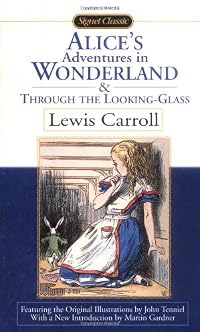
Alice's Adventures in Wonderland / Through the Looking-Glass
by Lewis Carroll 
Alice's Adventures (Collections and Selections — 1-2)
On This Page
Description
By falling down a rabbit hole and stepping through a mirror, Alice experiences unusual adventures with a variety of nonsensical characters.Tags
Recommendations





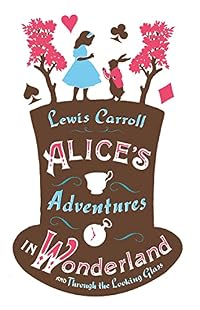
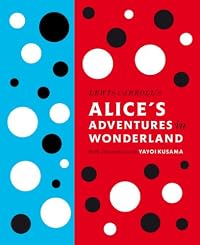






Member Recommendations
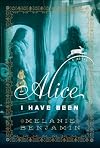
ForeignCircus great fictional look at the life of Alice Liddell who helped inspire Alice in Wonderland. Definitely an adult read as it deals with the semi-disturbing relationship between Alice Liddell and Charles Dodgson.
53
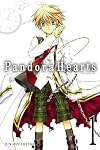
madmarch This manga is based on and contains a multitude of references to the Alice books- a lot of them only extreme fans will get. Not suitable for pre-adolescents.
11
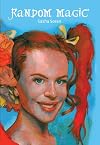
anonymous user Strong link to the Alice books. From the Amazon description: When absent-minded Professor Random misplaces the main character from Alice in Wonderland, young Henry Witherspoon must book-jump to fetch Alice before chaos theory kicks in and the world vanishes. Along the way he meets Winnie Flapjack, a wit-cracking doodle witch with nothing to her name but a magic feather and a plan. Such as it is. Henry and Winnie brave the Dark Queen, whatwolves, pirates, Struths, and fluttersmoths, Priscilla and Charybdis, obnoxiously cheerful vampires, Baron Samedi, a nine-dimensional cat, and one perpetually inebriated Muse to rescue Alice and save the world by tea time.
Also recommended by infiniteletters
11

Kolbkarlsson Östergrens stories have a strong Wonderland influence, both in it's strange logic and surreal tone. Both are contained universes, explored by girls or girl figures, sharing the same trappings.
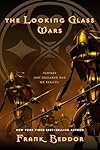
elbakerone Beddor takes an alternative look at Alice's story. Fans of the original may appreciate the new telling and fans of Beddor's reworking will likely enjoy Carroll's classic.
Also recommended by joyfulgirl, Kerian
47
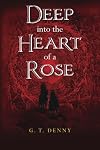
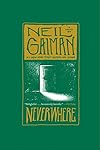
sturlington Neverwhere is a lot like a grown-up's Wonderland, and the two stories have a similar, surrealistic feel.
11
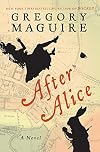
sturlington Retelling
Member Reviews
The last time that I read these books I remember finding them extremely confusing and borderline unreadable due to the constantly shifting narrative, but this time around they seemed a lot more straightforward. Obviously the story hasn't changed, but maybe my acceptance of Alice's mad-cap adventure dream has. I still can't say that I'm a huge fan of these stories, because there doesn't seem to be much of a point by the end (except in adventuring), but I very much appreciate the strange humour and whimsy that Carroll wrote into the stories. It takes a mad sort to write this kind of book, and an even mad-er public to embrace it completely, so we must be living in a mad, mad world indeed!
On with the challenge! The 3rd of the C's.
I was really pleased when I saw that Lewis Carroll's classic was on the list. I've read Alice's Adventures in Wonderland multiple times and never failed to be enchanted by the little girl's adventures in that strange and wondrous place or the breadth of Carroll's incredible imagination.
It's all nonsense, and you know that from the time a bored Alice sees a large white rabbit remove a pocket watch from his waistcoat and consult it before taking off in great haste down a rabbit hole, that you are in for a wild ride.
There is a dreamlike quality to many of the things that happen as Alice wanders through Wonderland trying to make sense of it all. It is explained as a dream when Alice wakes up show more alongside the river with her big sister, to whom she relates the tale of her 'dream'.
Many of the attempts to bring this to screen tend to ignore the Mock Turtle and the Gryphon, which is a great shame, because I find that their chapters contain some of the best imagery in the entire book, they also have some of the best nonsensical verse, although I felt Carroll reached new highs on that score in the sequel Through the Looking Glass.
The book, although written for children, has something to be enjoyed by adults and children alike, and stands up to repeated rereadings. It's stood the test of time very well, I find it's best enjoyed reading a version that contains John Tenniel's original drawings. These flesh out the sparse descriptions that Carroll gives, and have been the basis for any other visuals that have been produced based on the book, including Disney's animated version and the recent Tim Burton sequel.
For reading on a similar theme there's the sequel Through the Looking Glass, where Alice returns to Wonderland. Terry Pratchett seems to be able to make the most nonsensical concepts sound plausible in his Discworld series and Douglas Adams HItchhiker's Guide books contain some of the most inspired lunacy since Carroll passed away. show less
I was really pleased when I saw that Lewis Carroll's classic was on the list. I've read Alice's Adventures in Wonderland multiple times and never failed to be enchanted by the little girl's adventures in that strange and wondrous place or the breadth of Carroll's incredible imagination.
It's all nonsense, and you know that from the time a bored Alice sees a large white rabbit remove a pocket watch from his waistcoat and consult it before taking off in great haste down a rabbit hole, that you are in for a wild ride.
There is a dreamlike quality to many of the things that happen as Alice wanders through Wonderland trying to make sense of it all. It is explained as a dream when Alice wakes up show more alongside the river with her big sister, to whom she relates the tale of her 'dream'.
Many of the attempts to bring this to screen tend to ignore the Mock Turtle and the Gryphon, which is a great shame, because I find that their chapters contain some of the best imagery in the entire book, they also have some of the best nonsensical verse, although I felt Carroll reached new highs on that score in the sequel Through the Looking Glass.
The book, although written for children, has something to be enjoyed by adults and children alike, and stands up to repeated rereadings. It's stood the test of time very well, I find it's best enjoyed reading a version that contains John Tenniel's original drawings. These flesh out the sparse descriptions that Carroll gives, and have been the basis for any other visuals that have been produced based on the book, including Disney's animated version and the recent Tim Burton sequel.
For reading on a similar theme there's the sequel Through the Looking Glass, where Alice returns to Wonderland. Terry Pratchett seems to be able to make the most nonsensical concepts sound plausible in his Discworld series and Douglas Adams HItchhiker's Guide books contain some of the most inspired lunacy since Carroll passed away. show less
Alice in Wonderland by Lewis Carroll is a my absolute favourite book ever. It delights me and reminds me of all the fun I had when I was young. It’s innocent and dark all at the same time. It makes me laugh and think and begin to speak in a very formal way after yet another re-read of this classic. Alice is a typical girl, she can be stubborn and isn’t afraid to pout or throw a tantrum, but she also seems genuinely concerned about these new friends she meets and also the absurdity of this alternate universe she’s plummeted into. I adore the mad hatter and the white rabbit, in fact I love all the characters in this book, even the tyrannical Queen of Hearts. I love that they are all insane. I find that after reading Alice in show more Wonderland I take more notice of my surroundings, finding things that I would usually dismiss or barely notice to be completely riveting or entertaining. Perhaps every time I read this book, I lose another piece of my sanity. If that’s the case, I’m thinking that crazy people might just be the happiest people alive. show less
Strangely enough, despite growing up on L. Frank Baum's Oz novels, I'd never ever read this other early masterpiece of children's fantasy. I'm sorry I missed it as a child; there's a lot to enjoy here, as Lewis Carroll's imagination is prolific and various; I especially enjoyed the mad tea party. Actually, I enjoyed all the bits where Alice runs up against arbitrary social conventions she doesn't understand. Some critics have described the book as showing the madness of childhood, but if you ask me, it shows the madness of adulthood-- Alice has been given all of this education which she's been told will be of use, but absolutely none of it is, and whenever she tries to apply it, she gets laughed at. In the end, all she can do is retreat show more to the safety of tea parties and older sisters, escaping back into childhood, where everything is still sheltered and logical; in "wonderland", logic is just another form of madness (though one Carroll was an expert in, of course).
Carroll's books are often compared to The Wizard of Oz, and I can see why, as both feature rather determined young female protagonists in strange lands, but that's really where the similarity ends. Oz is portrayed as a real place, with a real geography, and real inhabitants that follow strange, but comprehensible principles. There's no comprehension in Wonderland, however; the logic there is purely one of a dream (as it should be), and it can never be deciphered by the dreamer. They're very different places, with very different approaches to fantasy. And of course, Alice and Dorothy themselves are quite different; Alice has a tendency to disbelieve and argue with everyone she meets, which doesn't get her very far, whereas Dorothy calmly listens to people and then decides to help them (her only malignant action the entire novel is undertaken by accident). Is it noteworthy that Alice, living in the middle classes near Oxford, was probably much more educated than Dorothy, a Kansan farm girl living in the middle of nowhere with her wards? I don't know, and though comparing them seems somewhat facile, I do have to admit that I like Dorothy much better. show less
Carroll's books are often compared to The Wizard of Oz, and I can see why, as both feature rather determined young female protagonists in strange lands, but that's really where the similarity ends. Oz is portrayed as a real place, with a real geography, and real inhabitants that follow strange, but comprehensible principles. There's no comprehension in Wonderland, however; the logic there is purely one of a dream (as it should be), and it can never be deciphered by the dreamer. They're very different places, with very different approaches to fantasy. And of course, Alice and Dorothy themselves are quite different; Alice has a tendency to disbelieve and argue with everyone she meets, which doesn't get her very far, whereas Dorothy calmly listens to people and then decides to help them (her only malignant action the entire novel is undertaken by accident). Is it noteworthy that Alice, living in the middle classes near Oxford, was probably much more educated than Dorothy, a Kansan farm girl living in the middle of nowhere with her wards? I don't know, and though comparing them seems somewhat facile, I do have to admit that I like Dorothy much better. show less
Frustratingly brilliant nonsense, basically. Carrol was, is, and forever shall be a master word smith and what he does with the English language is all but expert slight of hand tricks bordering on full fledged magic. Reading these two stories is like going through two vastly different dreams, so much so in fact that it almost seems impossible that the two stories have any sort of coherence or consistency at all. But they do hold together despite all logic dictating otherwise if only because of the eponymous protagonist herself, Alice.
Though apparently relegated to the genre of children's literature it amazes me how dense and complex these two works are, probing deep into the meaning and use of language, sentence structure, and how show more ridiculous our day to day trials and conceits can be looked at.
Carrol, controversial though he was, was a brilliant mind and a near literary dimension all his own. The paradigm of literary nonsense that has become not only a set of pop culture icons but one of the most entertaining and somberly bittersweet meditations on the innocence of youth and the passing of time's clouding and eventual jading of the mind. A wonderful pair of stories. show less
Though apparently relegated to the genre of children's literature it amazes me how dense and complex these two works are, probing deep into the meaning and use of language, sentence structure, and how show more ridiculous our day to day trials and conceits can be looked at.
Carrol, controversial though he was, was a brilliant mind and a near literary dimension all his own. The paradigm of literary nonsense that has become not only a set of pop culture icons but one of the most entertaining and somberly bittersweet meditations on the innocence of youth and the passing of time's clouding and eventual jading of the mind. A wonderful pair of stories. show less
Moral of the story: your kids will be alright. Alice in Wonderland should be read by every prospective parent. More so than what to expect when expecting and what happens in the first year type books and from there any and every child development book that mentions milestones and behaviours. All they do is cause anxiety for everyone concerned. Despite my efforts, the kids turned out OK. Probably because I avoided kids books about messages and preferred to read nursery rhymes and silly old story books where not much happens. But I do wish I had read them Alice.
A few chapters in and I realised timing is everything. When I read to my two children, I only got as far as Winnie the Pooh and nothing more sophisticated than that followed. show more There is a natural moment when children no longer need you reading to them at night and when that happens you start realising that they will eventually grow up without you. Perhaps it’s just before or just after they go to school. I would’ve read Alice to them, but I must've thought it a little too sophisticated at the time, by then I was unnecessary at bedtime and withdrew from that part of their lives. Though I doubt that now. And besides, they had learned to read by then, anyway. I liked reading them nursery rhymes like the Mother Goose series. I mean, I care little about the Grand old Duke of York and his 10 thousand men, but it’s got rhythm. Though perhaps in teen years, reading Alice could be a guide to kids wanting to experiment with psychoactive drugs. But by then they should read it themselves when it might have lessons.
I thought Alice is the perfect child: she basically entertains herself on a sunny afternoon in the garden. No hovering parents in her life. She spots a rabbit, thinks it would be a fun idea to see where it’s going and she has a wonderful time. One minute she’s bored (every modern parent’s nightmare) then *poof*, like magic she’s gone on a wild trip. Just think a child can entertain itself with just imagination (or psychoactive drugs since there could be mushrooms in the garden, though it's a little late in summer for them I’m told). And then *poof* she returns tells her sister who then has a similar experience (maybe they shared drugs) and we have one of two things, either the whole thing was a dream that made a great story and the sister’s imagination was similarly fired up. Or, we have a folie a duex, a strange thing in the psychiatric literature where two people have the same delusion, rare and unprovable (but then this IS the 19thC, though so more things were possible before being disproven, and besides we’re so individually minded now we probably wouldn’t even share a delusion if we could).
Everyone knows about the mad hatter’s tea party, the melancholy story of the mock turtle, the flamingo crochet mallets, hedgehog rolled up as balls, a queen with a fetish for ordering executions and that wonderfully disembodied head of the Cheshire Cat. And then there’s Alice, who is kind of ballsy, likes to argue, doesn’t agree with people; she drinks everything she finds underground in this whacky world regardless of what she learned from the last time she tried something and perhaps because she knew she would shrink or grow; and springs up to speak her mind which makes her sound very modern and unmanageable. But, this is 19th C and parents seem to want to know very little of the child’s world and leave them to their own devices meaning they get to grow up through experiences, rather than endure adult theories about resilience through seminar style education.
“Off with my head!”, I am ranting, the Queen will likely be telling me about now. But this is a truly extraordinary book. It’s language is clear and direct: I could follow the absurd descent in the opening when Alice is travelling downwards for such a long time knowing it’s implausible along the way, except that something has happened to time and so we can easily believe how long it takes. The little rhymes that pepper the story are actually fun and well written, too. Clearly Lewis Carroll could write. He was educated as and often worked as a mathematician, a skill he likely brought to his writing which might explain its precise. It’s a lesson in reading and writing good English, without being a lesson in anything except perhaps leave children to grow up by experience. show less
A few chapters in and I realised timing is everything. When I read to my two children, I only got as far as Winnie the Pooh and nothing more sophisticated than that followed. show more There is a natural moment when children no longer need you reading to them at night and when that happens you start realising that they will eventually grow up without you. Perhaps it’s just before or just after they go to school. I would’ve read Alice to them, but I must've thought it a little too sophisticated at the time, by then I was unnecessary at bedtime and withdrew from that part of their lives. Though I doubt that now. And besides, they had learned to read by then, anyway. I liked reading them nursery rhymes like the Mother Goose series. I mean, I care little about the Grand old Duke of York and his 10 thousand men, but it’s got rhythm. Though perhaps in teen years, reading Alice could be a guide to kids wanting to experiment with psychoactive drugs. But by then they should read it themselves when it might have lessons.
I thought Alice is the perfect child: she basically entertains herself on a sunny afternoon in the garden. No hovering parents in her life. She spots a rabbit, thinks it would be a fun idea to see where it’s going and she has a wonderful time. One minute she’s bored (every modern parent’s nightmare) then *poof*, like magic she’s gone on a wild trip. Just think a child can entertain itself with just imagination (or psychoactive drugs since there could be mushrooms in the garden, though it's a little late in summer for them I’m told). And then *poof* she returns tells her sister who then has a similar experience (maybe they shared drugs) and we have one of two things, either the whole thing was a dream that made a great story and the sister’s imagination was similarly fired up. Or, we have a folie a duex, a strange thing in the psychiatric literature where two people have the same delusion, rare and unprovable (but then this IS the 19thC, though so more things were possible before being disproven, and besides we’re so individually minded now we probably wouldn’t even share a delusion if we could).
Everyone knows about the mad hatter’s tea party, the melancholy story of the mock turtle, the flamingo crochet mallets, hedgehog rolled up as balls, a queen with a fetish for ordering executions and that wonderfully disembodied head of the Cheshire Cat. And then there’s Alice, who is kind of ballsy, likes to argue, doesn’t agree with people; she drinks everything she finds underground in this whacky world regardless of what she learned from the last time she tried something and perhaps because she knew she would shrink or grow; and springs up to speak her mind which makes her sound very modern and unmanageable. But, this is 19th C and parents seem to want to know very little of the child’s world and leave them to their own devices meaning they get to grow up through experiences, rather than endure adult theories about resilience through seminar style education.
“Off with my head!”, I am ranting, the Queen will likely be telling me about now. But this is a truly extraordinary book. It’s language is clear and direct: I could follow the absurd descent in the opening when Alice is travelling downwards for such a long time knowing it’s implausible along the way, except that something has happened to time and so we can easily believe how long it takes. The little rhymes that pepper the story are actually fun and well written, too. Clearly Lewis Carroll could write. He was educated as and often worked as a mathematician, a skill he likely brought to his writing which might explain its precise. It’s a lesson in reading and writing good English, without being a lesson in anything except perhaps leave children to grow up by experience. show less
Alice's Adventures in Wonderland and Through the Looking-Glass and What Alice Found There are two well-loved, oft-adapted, and extremely influential novels written by Lewis Carroll, the pseudonym of English author Charles Lutwidge, in 1865 and 1871 respectively. I was initially a little surprised when Seven Seas announced that it would be publishing a newly illustrated omnibus edition of the novels in 2014, especially as the company had moved away from publishing prose works in recent years in order to focus on manga and other comics. However, the novels do nicely complement Seven Seas' releases of the various Alice in the Country of manga. What makes Seven Seas' edition of Alice's Adventures in Wonderland and Through the Looking-Glass show more stand out from others are the incredibly cute and charming manga-influenced illustrations by Kriss Sison, an International Manga Award-winning artist from the Philippines. In addition to a gallery of color artwork, hundreds of black-and-white illustrations can be found throughout the volume.
Alice was enjoying a leisurely afternoon on a riverbank with her older sister when a very curious thing happened—a rabbit with a pocket watch hurries by talking to itself. When Alice follows after it she tumbles down a rabbit hole to find herself in a very strange place indeed. What else is there to do for an inquisitive and adventurous young girl but to go exploring? And so she does. As Alice wanders about she discovers food and drink that cause her to grow and shrink, animals of all sizes and shapes that can talk, and people who have very peculiar ways of thinking about and approaching life. Eventually she returns home to her sister, but several months later she finds herself once again slipping into a fantastical world when she crawls through the mirror above a fireplace mantel. Of course, Alice immediately sets off exploring, encountering even more strange and wondrous things and meeting all sorts of new and perplexing people.
Despite already being familiar with the story of Alice's Adventures in Wonderland and Through the Looking-Glass (mostly through the seemingly infinite number of adaptations and otherwise Alice-inspired works) and despite having been encouraged for years by devotees of Carroll's writings, I had never actually read the original novels for myself until I picked up Seven Seas' edition. I'm really somewhat astonished that it took me so long to do so and it truly is a shame that I didn't get around to it sooner. Alice's Adventures in Wonderland and Through the Looking-Glass is absolutely marvelous and an utter joy to read. It's easy to see why the novels have been treasured and continue to be treasured by so many people for well over a century. The books are incredibly imaginative and delightfully clever. Carroll liberally employs puns and other wordplay, turning nonsense into logic and vice versa. Alice's Adventures in Wonderland and Through the Looking-Glass has been translated into something like seventy different languages; though certainly worthwhile, I can't imagine these interpretations were easy to accomplish due to the novels' linguistic complexities.
What particularly impresses me about Alice's Adventures in Wonderland and Through the Looking-Glass are the novels' broad appeal. Both children and adults can easily enjoy the works. Younger readers will likely be amused and drawn to their silliness while more mature readers will be able to more fully appreciate the cleverness of Carroll's prose, poetry, and song. I would wholeheartedly encourage just about anyone to read Alice's Adventures in Wonderland and Through the Looking-Glass. Even without counting the multitude of adapted works, there are a huge number of editions of the original two novels available. There is bound to be a version that will appeal, whether it be Martin Gardner's extensively annotated editions, which reveal references that modern readers are apt to miss, or one of the many illustrated releases. While I may one day move on to The Annotated Alice, I was very pleased with Seven Seas' Alice's Adventures in Wonderland and Through the Looking-Glass. Carroll's novels and Sison's illustrations are a delightful combination. I am very glad to have finally read the novels and anticipate reading them again with much enjoyment.
Experiments in Manga show less
Alice was enjoying a leisurely afternoon on a riverbank with her older sister when a very curious thing happened—a rabbit with a pocket watch hurries by talking to itself. When Alice follows after it she tumbles down a rabbit hole to find herself in a very strange place indeed. What else is there to do for an inquisitive and adventurous young girl but to go exploring? And so she does. As Alice wanders about she discovers food and drink that cause her to grow and shrink, animals of all sizes and shapes that can talk, and people who have very peculiar ways of thinking about and approaching life. Eventually she returns home to her sister, but several months later she finds herself once again slipping into a fantastical world when she crawls through the mirror above a fireplace mantel. Of course, Alice immediately sets off exploring, encountering even more strange and wondrous things and meeting all sorts of new and perplexing people.
Despite already being familiar with the story of Alice's Adventures in Wonderland and Through the Looking-Glass (mostly through the seemingly infinite number of adaptations and otherwise Alice-inspired works) and despite having been encouraged for years by devotees of Carroll's writings, I had never actually read the original novels for myself until I picked up Seven Seas' edition. I'm really somewhat astonished that it took me so long to do so and it truly is a shame that I didn't get around to it sooner. Alice's Adventures in Wonderland and Through the Looking-Glass is absolutely marvelous and an utter joy to read. It's easy to see why the novels have been treasured and continue to be treasured by so many people for well over a century. The books are incredibly imaginative and delightfully clever. Carroll liberally employs puns and other wordplay, turning nonsense into logic and vice versa. Alice's Adventures in Wonderland and Through the Looking-Glass has been translated into something like seventy different languages; though certainly worthwhile, I can't imagine these interpretations were easy to accomplish due to the novels' linguistic complexities.
What particularly impresses me about Alice's Adventures in Wonderland and Through the Looking-Glass are the novels' broad appeal. Both children and adults can easily enjoy the works. Younger readers will likely be amused and drawn to their silliness while more mature readers will be able to more fully appreciate the cleverness of Carroll's prose, poetry, and song. I would wholeheartedly encourage just about anyone to read Alice's Adventures in Wonderland and Through the Looking-Glass. Even without counting the multitude of adapted works, there are a huge number of editions of the original two novels available. There is bound to be a version that will appeal, whether it be Martin Gardner's extensively annotated editions, which reveal references that modern readers are apt to miss, or one of the many illustrated releases. While I may one day move on to The Annotated Alice, I was very pleased with Seven Seas' Alice's Adventures in Wonderland and Through the Looking-Glass. Carroll's novels and Sison's illustrations are a delightful combination. I am very glad to have finally read the novels and anticipate reading them again with much enjoyment.
Experiments in Manga show less
Members
- Recently Added By
Lists

1001 Books You Must Read Before You Die
1,448 works; 1,131 members

Favorite Childhood Books
1,602 works; 516 members
Best of British Literature
226 works; 41 members
1001 Children's Books You Must Read Before You Grow Up
774 works; 100 members

Magic Realism
371 works; 52 members

Banned Books Week 2014
268 works; 62 members

Children's Fantasy
73 works; 10 members

Female Protagonist
1,056 works; 56 members
Best Children's Books You've Read
197 works; 74 members
NPRs Ultimate Backseat Bookshelf: 100 Must-Reads for kids 9-14
222 works; 30 members

Classics you know you should have read but probably haven't
421 works; 407 members

Books Set in Great Britain
191 works; 13 members

Best Adventure Stories
66 works; 13 members
BBC Big Read
191 works; 46 members
Survey of Fantasy Classics
111 works; 23 members

Slipstream or Interstitial Fiction
160 works; 19 members

100 books to read in a lifetime
102 works; 37 members
Survey of Science Fiction and Fantasy
101 works; 13 members

Childhood Favorites
427 works; 24 members
Honey For a Child's Heart
1,152 works; 25 members

Best Satire
188 works; 27 members

Books About Girls
219 works; 17 members
Folio Society
831 works; 53 members
Works That Inspired Disney Movies
119 works; 13 members

Children's Classics Worth Reading
68 works; 9 members
Ambleside Books
459 works; 18 members
Books tagged favorites
390 works; 30 members
Tagged Parallel Worlds
43 works; 11 members

Speculative Fiction to Read
706 works; 32 members

Out of Copyright
244 works; 14 members

4th Grade Books
312 works; 5 members
19th Century
190 works; 16 members

Books Read in 2015
3,298 works; 129 members

Favorite Kids Books (chapter, middle grade)
168 works; 4 members

Books We Loved As Children
603 works; 252 members

Our Favorite Comfort Reads
334 works; 200 members
Rereads list from my library
23 works; 1 member
EGBERTINA'S List of childhood books worthy of merit or unspeakable delight
155 works; 6 members
Books We Love to Reread
688 works; 296 members

Rory Gilmore Book Club
193 works; 5 members
Books to Reread Someday
53 works; 7 members
Banned or Challenged Books
400 works; 41 members
Five star books
1,755 works; 108 members
Victorian Period
113 works; 10 members

Books Read in 2018
4,360 works; 110 members

Penguin Random House
458 works; 4 members
Trinity College Booklist (1951): Class Ten, English Literature
358 works; 5 members

Amanda's Guaranteed Books
110 works; 5 members
Stories Featuring Passages, Gateways and Doors
39 works; 11 members
Literature About Women and Girls
391 works; 39 members

Unread books
1,063 works; 83 members

Read For Your Life
157 works; 1 member

Best of World Literature
431 works; 51 members
Favourite 19th century fiction
257 works; 62 members
Author Information

1,450+ Works 107,947 Members
Charles Luthwidge Dodgson was born in Daresbury, England on January 27, 1832. He became a minister of the Church of England and a lecturer in mathematics at Christ Church College, Oxford. He was the author, under his own name, of An Elementary Treatise on Determinants, Symbolic Logic, and other scholarly treatises. He is better known by his pen show more name of Lewis Carroll. Using this name, he wrote Alice in Wonderland and Through the Looking Glass. He was also a pioneering photographer, and he took many pictures of young children, especially girls, with whom he seemed to empathize. He died on January 14, 1898. (Bowker Author Biography) show less
Lewis Carroll has a Legacy Library. Legacy libraries are the personal libraries of famous readers, entered by LibraryThing members from the Legacy Libraries group.
Some Editions
Awards and Honors
Awards
Series

Alice's Adventures (Collections and Selections — 1-2)
Belongs to Publisher Series
Lycoris (2022)
Penguin Clothbound Classics (2009)
Dean's Classics (9)
Corticelli [Mursia] (18)
Letras Universales (172)
Penguin English Library, 2012 series (2012-08)
Perpetua reeks (58)
Zephyr Books (67)
Airmont Classics (79)
Work Relationships
Is contained in
Contains
Is retold in
Has the adaptation
Is abridged in
Is parodied in
Inspired
Has as a reference guide/companion
Has as a commentary on the text
Has as a teacher's guide
Common Knowledge
- Canonical title
- Alice's Adventures in Wonderland / Through the Looking-Glass
- Original title
- Alice's Adventures in Wonderland and Through the Looking Glass
- Alternate titles*
- A través del espejo
- Original publication date
- 1865-11-26 (Alice's Adventures in Wonderland) (Alice's Adventures in Wonderland); 1865; 1871-12-27 (Through the Looking-Glass) (Through the Looking-Glass); 1871
- People/Characters
- Alice in Wonderland; Caterpillar; Father William; White Rabbit; Fish-Footman; Queen of Hearts (show all 37); Frog-Footman; King of Hearts; Duchess' Cook; Cheshire Cat; Duchess; Lory; Caterpillar; Eaglet; Mad Hatter; Duck; Dormouse; Knave of Hearts; Gryphon; Mock Turtle; Kitty (Alice in Wonderland's black kitten); Snowdrop; Alice's Sister; Nobody; Somebody; Jabberwocky; Lion (opponent of the Unicorn); Unicorn (opponent of the Lion); Walrus (friend of the Carpenter); Carpenter (friend of the Walrus); Humpty Dumpty; Red Knight; White Knight; Red King; Tweedledum; Tweedledee; White Queen
- Important places
- London, England, UK; England, UK; Wonderland; Looking-Glass Land
- Important events
- Victorian Era; 19th century
- Related movies
- Alice in Wonderland (1951 | IMDb); Alice in Wonderland (1999 | IMDb); Alice in Wonderland (2010 | IMDb); Alice Through the Looking Glass (1966 | IMDb); Alice Through the Looking Glass (1974 | IMDb); Alice Through the Looking Glass (1987 | IMDb) (show all 8); Alice Through the Looking Glass (1998 | IMDb); Alice (2009 | IMDb)
- First words
- Alice was beginning to get very tired of sitting by her sister on the bank, and of having nothing to do; once or twice she had peeped into the book her sister was reading, but it had no pictures or conversation in it, "and wh... (show all)at is the use of a book," thought Alice, "without pictures or conversations?" [Alice in Wonderland]
One thing was certain, that the white kitten had nothing to do with it—it was the black kitten's fault entirely. [Through the Looking-Glass] - Quotations
- "In that direction," the Cat said, waving its right paw round, "lives a Hatter; and in that direction," waving the other paw, "lives a March Hare. Visit either you like; they're both mad."
"I only wish I had such eyes," the King remarked in a fretful tone. "To be able to see Nobody! And at this distance too! Why, it's as much as I can do to see real people, by this light!"
Off with his head!
I'm very brave, generally . . . only today I happen to have a headache.
"One can't believe impossible things."
"I dare say you haven't had much practice. When I was your age, I always did it for half an hour a day. Why sometimes I've believed as many as six impossible things before breakfa... (show all)st."
Begin at the beginning and go on till you come to the end; then stop.
'What is the use of a book,' thought Alice, 'without pictures?' - Last words
- (Click to show. Warning: May contain spoilers.)Lastly, she pictured herself how this same little sister of hers would, in the after-time, be herself a grown woman; and how she would keep, through all her riper years, the simple and loving heart of her childhood: and how she would gather about her other little children, and make their eyes bright and eager with many a strange tale, perhaps even with the dream of Wonderland of long ago: and how she would feel with all their simple sorrows and find a pleasure in all their simple joys, remembering her own child-life, and the happy summer days. [Alice in Wonderland]
(Click to show. Warning: May contain spoilers.)Life, what is it but a dream?
(Click to show. Warning: May contain spoilers.)Which do you think it was? [Through the Looking-Glass] - Publisher's editor*
- Lancer Books Inc.
- Original language
- English
- Canonical DDC/MDS
- 823.8
- Disambiguation notice
- This is a combined edition of "Alice's adventures in wonderland" and "Through the looking-glass and what Alice found there". Please don't combine with a copy of only one of these.
ISBN 0945260210 is a Reader's Digest ... (show all)condensed [abridged] version of the omnibus and should be treated as a separate work.
ISBN 1582881669 is actually for an omnibus edition of both Alice's Adventures in Wonderland and Through the Looking-Glass. It should not be combined with either individual work.
*Some information comes from Common Knowledge in other languages. Click "Edit" for more information.
Classifications
Statistics
- Members
- 29,300
- Popularity
- 124
- Reviews
- 314
- Rating
- (4.11)
- Languages
- 27 — Armenian, Bulgarian, Catalan, Chinese, Czech, Danish, Dutch, English, Estonian, Finnish, French, German, Hungarian, Italian, Japanese, Latin, Latvian, Lithuanian, Moldavian, Polish, Portuguese, Romanian, Russian, Spanish, Swedish, Turkish, Ukrainian
- Media
- Paper, Audiobook, Ebook
- ISBNs
- 561
- UPCs
- 6
- ASINs
- 479