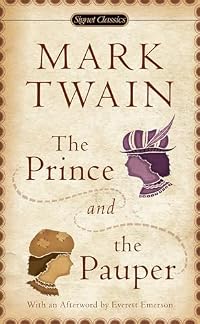
The Prince and the Pauper
by Mark Twain 
On This Page
Description
When young Edward VI of England and a poor boy who resembles him exchange places, each learns something about the other's very different station in life.Tags
Recommendations









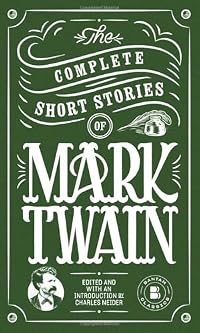
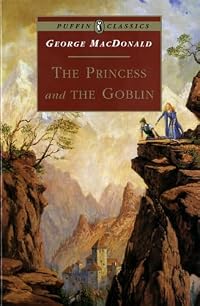
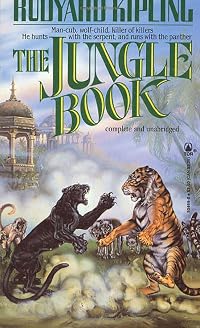
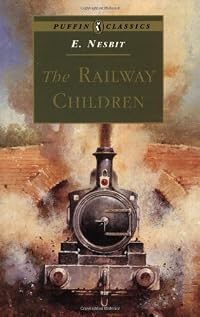



Member Recommendations

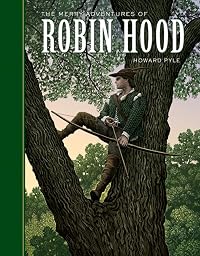
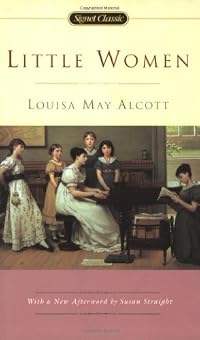
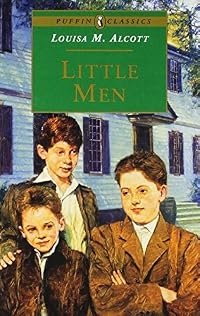
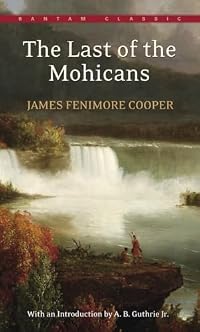
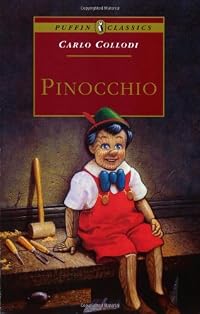
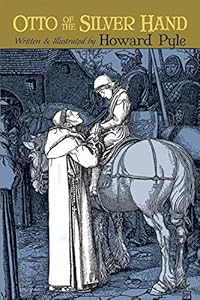
Sasha_Doll Sure, it's twice a movie, but the vintage scholastic version of The Parent Trap is a really fun read for people who enjoy it when two kids switch places.
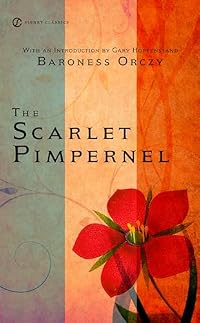
-pilgrim- Another satire of governmental forms, set in English history.
Member Reviews
The Prince and the Pauper is one of those books that part of me always thought I had read because I had seen so many movie adaptations of the book. Some were intended as direct adaptations and others took some significant leeway but they all sort of had a similar vibe. I've always enjoyed Twain but in recent years I've re-realized that I haven't read as many of his novels as I feel I should have. So with that background, I sat down with Prince and the Pauper.
In case there are any people unfamiliar with the story, the basic idea is that we are in ~1600s London and there is a young prince who happens to meet a pauper who has an uncanny twin-like resemblance to the prince. Through some unintended circumstances, the prince ends up kicked show more out of his own castle while the pauper is set up as the prince in his place. Each boy tries to acclimate to his new surroundings and deal with the extreme change in social class. Further complications arise when the King dies and it is announced that the prince is to be crowned King of England.
The first thing that struck me with this book was the style. Twain has always been one who is noted for his rhetoric and his use of dialect and style in such a way as to portray the era and culture he is trying to represent. As such, he writes this book with a somewhat stilted and formal narration filled with "thy"s and "thou"s and "wherefore"s. I had no problem with the language, I just wasn't expecting it. Whether or not it actually added to the tone and nature of the book, I'm not quite sure. I don't think it painted the scene quite as much as do the dialog of Huck Finn and Tom Sawyer but I was still impressed with his use of vocabulary and style to help convey a certain time period.
I also naturally discovered quick differences between the book and the various movie versions. In most of the movie adaptations I've seen, the Prince and Pauper decide to switch places as a sort of game and they are both excited at the idea of swapping roles. In the book, the prince notices their similar appearance and suggests they exchange clothes to see just how similar they might look. The concept of actually exchanging roles never really entered into the discussion and each boy is in fact quite frightened and upset when the exchange occurs.
Not being an avid historian, I can't fully speak to Twain's portrayal either of royalty or poverty of the era, but I did feel both a disgust and a compassion upon the poverty stricken of 16th century London. The squalor they were forced to live in was truly unspeakable. What struck me as interesting was the way Twain presented the reality of the situation. Even though the lifestyle was miserable and unhappy, the people had a sense of acceptance and made the best they could out of bad situations. As the prince tried to fit in and adapt to his new circumstances, each time he complained or worried about the filth and poverty he was chided by those around him and they seemed to be accepting and perhaps even unconsciously ignorant of their plight. It's an interesting social idea and seems to push the idea that those who haven't ever known better never really aspire to better or those who see no opportunity for social mobility are content to stay where they are, no matter how awful. I personally think that mindset may be somewhat true but I think more likely is that those living in poverty were frankly just too exhausted and overwhelmed with trying to survive that they seldom had energy to think about was to escape their situation, let alone to devise a method to climb the social ladder.
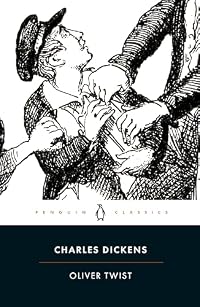
I found myself comparing the life of Twain's prince/pauper in lower class London with Dickens's lower class characters in Oliver Twist or some of his other works. In some ways, I felt like the attitudes of Twain's characters felt a little more realistic but in other instances I felt like Dickens had a better handle on the minds, motivations and actions of the English poor. As I thought about it, I decided that Twain's characters had more "modern" thought processes while Dickens's characters were more likely evocative of a real life citizen of lower class London.
The life of the pauper-turned-prince in the palace is interesting but is often treated with much less detail and consideration than our prince-turned-pauper. We see snippets of life in the castle as the pauper tries to understand his new role and become accustomed to being waited on by attendants on all sides. After a variety of worrisome advisement from counselors and even the king, the young pauper finally takes the role upon himself and does his best to pretend at being the prince. Fortunately he has a few trusted advisors. While they don't believe that he is actually a pauper (everyone thinks he's gone mad), they do work to help him carry out his duties with gentle nudges and whispered reminders of proper behavior and etiquette. Once the king dies, the prince is expected to oversee various declarations and judgements and Twain takes this opportunity to provide some "Solomon-like" deliberations in court to showcase the young pauper's compassion as well as his quick thinking and wit.
Meanwhile, the prince-turned-pauper finds himself fighting for survival in lower class London and finally making friends with a man who also doesn't believe the change in roles (he also thinks the boy must be crazy) but he pretends to believe and acts to help the prince in a variety of ways. The prince never tries to adapt himself to the world of the lower class. He continually tries to convince everyone of his royal lineage and rights. Naturally this doesn't help his situation get any better and in most cases it results in ridicule or harassment of some type.
The high level plot is comical and often used throughout drama and literature. Offhand I can't think how many Shakespearean plays have to do with mistaken or switched identity either with twins or disguise or some other form of subterfuge. Twain uses this oft used trope to bring a lot of light hearted comedy to an investigation of the inequality of social classes and the unbalanced nature of cultural distinctions. The story was very entertaining and had plenty of Twain's quick wit and snarky humor. Beyond the simple humor and the fun, cute story, there is a lot of great material to think about both from social standpoints and from the aspect of literary scholarship. I think it would be entertaining some day to compare Twain's London with Dickens's London or to evaluate Twain's social concerns from this book with any of the various social problems of modern society.
I had a lot of fun reading this book and definitely recommend it. The reading, tone and nature of the writing could be very accessible and entertaining to young readers. Some of the language may be harder for elementary school kids but they would likely enjoy having it read to them. Older readers will enjoy the quick wit, nuanced humor and insightful perspectives on social inequality. Overall this is a great book that is definitely overshadowed by Twain's larger works and as such is likely often overlooked. While it may not be quite as rich as Twain's more impactful books, it definitely stands on its own as a solid classic.
4.5 out of 5 stars show less
In case there are any people unfamiliar with the story, the basic idea is that we are in ~1600s London and there is a young prince who happens to meet a pauper who has an uncanny twin-like resemblance to the prince. Through some unintended circumstances, the prince ends up kicked show more out of his own castle while the pauper is set up as the prince in his place. Each boy tries to acclimate to his new surroundings and deal with the extreme change in social class. Further complications arise when the King dies and it is announced that the prince is to be crowned King of England.
The first thing that struck me with this book was the style. Twain has always been one who is noted for his rhetoric and his use of dialect and style in such a way as to portray the era and culture he is trying to represent. As such, he writes this book with a somewhat stilted and formal narration filled with "thy"s and "thou"s and "wherefore"s. I had no problem with the language, I just wasn't expecting it. Whether or not it actually added to the tone and nature of the book, I'm not quite sure. I don't think it painted the scene quite as much as do the dialog of Huck Finn and Tom Sawyer but I was still impressed with his use of vocabulary and style to help convey a certain time period.
I also naturally discovered quick differences between the book and the various movie versions. In most of the movie adaptations I've seen, the Prince and Pauper decide to switch places as a sort of game and they are both excited at the idea of swapping roles. In the book, the prince notices their similar appearance and suggests they exchange clothes to see just how similar they might look. The concept of actually exchanging roles never really entered into the discussion and each boy is in fact quite frightened and upset when the exchange occurs.
Not being an avid historian, I can't fully speak to Twain's portrayal either of royalty or poverty of the era, but I did feel both a disgust and a compassion upon the poverty stricken of 16th century London. The squalor they were forced to live in was truly unspeakable. What struck me as interesting was the way Twain presented the reality of the situation. Even though the lifestyle was miserable and unhappy, the people had a sense of acceptance and made the best they could out of bad situations. As the prince tried to fit in and adapt to his new circumstances, each time he complained or worried about the filth and poverty he was chided by those around him and they seemed to be accepting and perhaps even unconsciously ignorant of their plight. It's an interesting social idea and seems to push the idea that those who haven't ever known better never really aspire to better or those who see no opportunity for social mobility are content to stay where they are, no matter how awful. I personally think that mindset may be somewhat true but I think more likely is that those living in poverty were frankly just too exhausted and overwhelmed with trying to survive that they seldom had energy to think about was to escape their situation, let alone to devise a method to climb the social ladder.
I found myself comparing the life of Twain's prince/pauper in lower class London with Dickens's lower class characters in Oliver Twist or some of his other works. In some ways, I felt like the attitudes of Twain's characters felt a little more realistic but in other instances I felt like Dickens had a better handle on the minds, motivations and actions of the English poor. As I thought about it, I decided that Twain's characters had more "modern" thought processes while Dickens's characters were more likely evocative of a real life citizen of lower class London.
The life of the pauper-turned-prince in the palace is interesting but is often treated with much less detail and consideration than our prince-turned-pauper. We see snippets of life in the castle as the pauper tries to understand his new role and become accustomed to being waited on by attendants on all sides. After a variety of worrisome advisement from counselors and even the king, the young pauper finally takes the role upon himself and does his best to pretend at being the prince. Fortunately he has a few trusted advisors. While they don't believe that he is actually a pauper (everyone thinks he's gone mad), they do work to help him carry out his duties with gentle nudges and whispered reminders of proper behavior and etiquette. Once the king dies, the prince is expected to oversee various declarations and judgements and Twain takes this opportunity to provide some "Solomon-like" deliberations in court to showcase the young pauper's compassion as well as his quick thinking and wit.
Meanwhile, the prince-turned-pauper finds himself fighting for survival in lower class London and finally making friends with a man who also doesn't believe the change in roles (he also thinks the boy must be crazy) but he pretends to believe and acts to help the prince in a variety of ways. The prince never tries to adapt himself to the world of the lower class. He continually tries to convince everyone of his royal lineage and rights. Naturally this doesn't help his situation get any better and in most cases it results in ridicule or harassment of some type.
The high level plot is comical and often used throughout drama and literature. Offhand I can't think how many Shakespearean plays have to do with mistaken or switched identity either with twins or disguise or some other form of subterfuge. Twain uses this oft used trope to bring a lot of light hearted comedy to an investigation of the inequality of social classes and the unbalanced nature of cultural distinctions. The story was very entertaining and had plenty of Twain's quick wit and snarky humor. Beyond the simple humor and the fun, cute story, there is a lot of great material to think about both from social standpoints and from the aspect of literary scholarship. I think it would be entertaining some day to compare Twain's London with Dickens's London or to evaluate Twain's social concerns from this book with any of the various social problems of modern society.
I had a lot of fun reading this book and definitely recommend it. The reading, tone and nature of the writing could be very accessible and entertaining to young readers. Some of the language may be harder for elementary school kids but they would likely enjoy having it read to them. Older readers will enjoy the quick wit, nuanced humor and insightful perspectives on social inequality. Overall this is a great book that is definitely overshadowed by Twain's larger works and as such is likely often overlooked. While it may not be quite as rich as Twain's more impactful books, it definitely stands on its own as a solid classic.
4.5 out of 5 stars show less
As Relevant to the 21st Century as to the 16th
A case of mistaken identity leads to London street beggar Tom Canty trading places with his body double, Edward Tudor, Prince of Wales, hours before the latter ascends to become King Edward VI in January 1587. It has been adapted, retreaded and parodied many times throughout the last century, but most newer versions merely scratch the surface as a satire about class, while Mark Twain's focus is much deeper. In a key misadventure, Edward encounters a hermit who is as convinced he is an archangel as Edward is that he is king, but the hermit is supposedly really insane, whereas Edward is merely believed to be, which raises the question for modern audiences of young people obsessed with identity show more and how we identify: To what extent do we truly define our identity, and how much of it is built on the definitions of others? Twain himself toys with this notion of identity: A series of footnotes, many from David Hume's The History of England (1762), indicate not only the level of historical accuracy, but even how plausible the completely made-up story is. With a nod toward Jonathan Swift's wry sense of humor and Charles Dickens' fascination with the criminal element, this novel showcases Twain's range and eye for detail. show less
A case of mistaken identity leads to London street beggar Tom Canty trading places with his body double, Edward Tudor, Prince of Wales, hours before the latter ascends to become King Edward VI in January 1587. It has been adapted, retreaded and parodied many times throughout the last century, but most newer versions merely scratch the surface as a satire about class, while Mark Twain's focus is much deeper. In a key misadventure, Edward encounters a hermit who is as convinced he is an archangel as Edward is that he is king, but the hermit is supposedly really insane, whereas Edward is merely believed to be, which raises the question for modern audiences of young people obsessed with identity show more and how we identify: To what extent do we truly define our identity, and how much of it is built on the definitions of others? Twain himself toys with this notion of identity: A series of footnotes, many from David Hume's The History of England (1762), indicate not only the level of historical accuracy, but even how plausible the completely made-up story is. With a nod toward Jonathan Swift's wry sense of humor and Charles Dickens' fascination with the criminal element, this novel showcases Twain's range and eye for detail. show less
"The Prince and the Pauper" is a simple read and has a fairly predictable ending; I don't think it will knock anyone's socks off, but it is well written and a bit of a classic. Twain's original concept of switching roles and fortunes is also one that has been often copied (e.g. the movie "Trading Places" with Eddie Murphy and Dan Ackroyd :-).
There is an interesting undercurrent in the book, for while Twain mocks royalty overtly in scenes such as one with the attendants passing the king's clothes one by one down to him through a long line like a fire brigade, he also does this more subtly. In putting royalty in the context of the 16th century and its way of life - which included many examples of needless violence and cruel torture, show more ignorant superstition, and fundamental unfairness - Twain shows it as outmoded as all of those things. It is arbitrary and corruptible, he is pointing out, and hereditary power for the few while many suffer is wrong. It is a novel set in London and Dickensian in style, but it has an American message at its core.
Quotes:
"...when the office of Taster had its perils, and was not a grandeur to be desired. Why they did not use a dog or a plumber seems strange; but all the ways of royalty are strange."
"None believe in me - neither wilt thou. But no matter - within the compass of a month thou shalt be free; and more, the laws that have dishonoured thee, and shamed the English name, shall be swept from the statute books. The world is made wrong; kings should go to school to their own laws, at times, and so learn mercy."
"...they stepped upon London Bridge, in the midst of a writhing, struggling jam of howling and hurrahing people, whose beer-jolly faces stood out strongly in the glare from manifold torches - and at that instant the decaying head of some former duke or other grandee tumbled down between them, striking Hendon on the elbow and then bounding off among the hurrying confusion of feet. So evanescent and unstable are men's works, in this world! - the late good king is but three weeks dead and three days in his grave, and already the adornments which he took such pains to select from prominent people for his noble bridge are falling."
"Once when his royal "sister", the grimly holy lady Mary, set herself to reason with him against the wisdom of his course in pardoning so many people who would otherwise be jailed or hanged or burned, and reminded him that their august late father's prisons had sometimes contained as high as sixty thousand convicts at one time, and that during his admirable reign he had delivered seventy-two thousand thieves and robbers over to death by the executioner*, the boy was filled with generous indignation, and commanded her to go to her closet and beseech God to take away the stone that was in her breast and give her a human heart."
* Hume's England show less
There is an interesting undercurrent in the book, for while Twain mocks royalty overtly in scenes such as one with the attendants passing the king's clothes one by one down to him through a long line like a fire brigade, he also does this more subtly. In putting royalty in the context of the 16th century and its way of life - which included many examples of needless violence and cruel torture, show more ignorant superstition, and fundamental unfairness - Twain shows it as outmoded as all of those things. It is arbitrary and corruptible, he is pointing out, and hereditary power for the few while many suffer is wrong. It is a novel set in London and Dickensian in style, but it has an American message at its core.
Quotes:
"...when the office of Taster had its perils, and was not a grandeur to be desired. Why they did not use a dog or a plumber seems strange; but all the ways of royalty are strange."
"None believe in me - neither wilt thou. But no matter - within the compass of a month thou shalt be free; and more, the laws that have dishonoured thee, and shamed the English name, shall be swept from the statute books. The world is made wrong; kings should go to school to their own laws, at times, and so learn mercy."
"...they stepped upon London Bridge, in the midst of a writhing, struggling jam of howling and hurrahing people, whose beer-jolly faces stood out strongly in the glare from manifold torches - and at that instant the decaying head of some former duke or other grandee tumbled down between them, striking Hendon on the elbow and then bounding off among the hurrying confusion of feet. So evanescent and unstable are men's works, in this world! - the late good king is but three weeks dead and three days in his grave, and already the adornments which he took such pains to select from prominent people for his noble bridge are falling."
"Once when his royal "sister", the grimly holy lady Mary, set herself to reason with him against the wisdom of his course in pardoning so many people who would otherwise be jailed or hanged or burned, and reminded him that their august late father's prisons had sometimes contained as high as sixty thousand convicts at one time, and that during his admirable reign he had delivered seventy-two thousand thieves and robbers over to death by the executioner*, the boy was filled with generous indignation, and commanded her to go to her closet and beseech God to take away the stone that was in her breast and give her a human heart."
* Hume's England show less
I'm not sure why I love Mark Twain so much, but even this simple, obvious comedy of mistaken identities was a delight. His style is dated, his characters are more often than not cardboard (or archetypes, depending on the benevolence of the reader), his social commentary comes much more often with the mallet than with the scalpel. And still - this was an adventurous romp through the land and society of 16th century England, never in doubt who was the good guys and the villains, and yes, of course I fell in love with Miles Hendon.
And I'm not sure, but... this thing was published first in 1881, and of course audience expectations have changed since then, but reading scenes like Tom experiencing for the first time the morning rituals as show more prince, with the endless ordeals until his clothing finally reaches him, I imagine Mr. Twain sitting at his desk, adding another comma and another element to an already endless list and cackling maniacally while he knows exactly that he's gonna drive his readership insane.
And I can't help myself, but I LOVE this attitude in an author. show less
And I'm not sure, but... this thing was published first in 1881, and of course audience expectations have changed since then, but reading scenes like Tom experiencing for the first time the morning rituals as show more prince, with the endless ordeals until his clothing finally reaches him, I imagine Mr. Twain sitting at his desk, adding another comma and another element to an already endless list and cackling maniacally while he knows exactly that he's gonna drive his readership insane.
And I can't help myself, but I LOVE this attitude in an author. show less
A case of mistaken identity is almost as surefire a way of getting laughs as putting a man in a woman's dress, so it may come as a surprise that the great humorist Mark Twain wrote “The Prince and the Pauper” not as a comic novel but as a mostly serious historical novel, even perhaps a thriller.
Tom Canty is a poor London boy, frequently beaten by both his father and his grandmother when he fails to return from a day of begging with sufficient money. Somehow he meets Edward, the son of King Henry VIII, a boy who looks a lot like him. They decide to see what they look like in each other's clothes. Just then they are interrupted, and Edward is mistaken for a pauper boy and sent away, while Tom is assumed to be the Prince of Wales.
Both show more boys are frustrated by their new circumstances, but despite their claims about their true identities, both are assumed to have suddenly developed a mental disability. Meanwhile the king dies and Tom is proclaimed the new king, with the power to do just about anything but go home. Even now Tom, who liked to pretend to be royalty when he was a pauper, is unhappy about his "compulsory greatness." Edward struggles to return to the palace in his rags while various forces, including Tom's father, work against him. Both boys, in their new identities, get a useful education about how the other half lives, and Twain gives us a great line about how "kings should go to school to their own laws at times, and so learn mercy."
It's a bit difficult to believe now, but Twain's own family thought this novel to be his best book, and in fact Twain himself was so taken with the idea that he interrupted writing “Adventures of Huckleberry Finn” so he could write this much shorter novel. Today the story seems a bit lame, although that probably has much to do with Twain's decision to have his characters speak in Shakespearean English, now even more difficult to wade through than it was 150 years ago. show less
Tom Canty is a poor London boy, frequently beaten by both his father and his grandmother when he fails to return from a day of begging with sufficient money. Somehow he meets Edward, the son of King Henry VIII, a boy who looks a lot like him. They decide to see what they look like in each other's clothes. Just then they are interrupted, and Edward is mistaken for a pauper boy and sent away, while Tom is assumed to be the Prince of Wales.
Both show more boys are frustrated by their new circumstances, but despite their claims about their true identities, both are assumed to have suddenly developed a mental disability. Meanwhile the king dies and Tom is proclaimed the new king, with the power to do just about anything but go home. Even now Tom, who liked to pretend to be royalty when he was a pauper, is unhappy about his "compulsory greatness." Edward struggles to return to the palace in his rags while various forces, including Tom's father, work against him. Both boys, in their new identities, get a useful education about how the other half lives, and Twain gives us a great line about how "kings should go to school to their own laws at times, and so learn mercy."
It's a bit difficult to believe now, but Twain's own family thought this novel to be his best book, and in fact Twain himself was so taken with the idea that he interrupted writing “Adventures of Huckleberry Finn” so he could write this much shorter novel. Today the story seems a bit lame, although that probably has much to do with Twain's decision to have his characters speak in Shakespearean English, now even more difficult to wade through than it was 150 years ago. show less
I remember enjoying this book as a child (although I can't remember what age) and since my son is interested in Mark Twain, we listened to the audiobook on a recent road trip. It was a little bit more complicated than I remembered, and frankly we both had trouble following parts of the story, but perhaps that is a challenge of audiobooks compared with print. The basic story is well-known in which the poor and abused Tom Canty meets Prince Edward and discovering they resemble one another, swap clothing. Through a comedy of errors, they are separated and end up with Tom unwillingly becoming king and the prince having to live life at the very bottom of society. All works out in the end, and Twain is probably too kind on Edward VI's actual show more legacy as king, but the book delves into some of the gritty realities of impoverished masses and the court intrigues of the elites. show less
Mark Twain's classic tale of two identical-looking boys -- the prince and pauper of the title -- who switch clothes for a lark, only to find themselves trapped in each other's roles, with no one able or willing to believe they really are who they say they are.
I first read this when I was about ten, and I hadn't remembered it particularly well. Indeed, I think I had the sense that it was some sort of vaguely ahistorical fairy tale, when it's actually quite firmly grounded in English history -- the prince in question is Edward VI -- complete with historical quotations and footnotes.
I do have the feeling that I enjoyed it well enough as a kid, and I'm pleased to report that's also true on an adult re-read. It's an entertaining enough show more tale, especially the twists and turns of the true prince's unhappy adventures. There's also humor here, of course, although it mostly feels rather low-key, compared to the sharp, acerbic wit Twain was sometimes capable of.
Not at all low-key, though, are the vivid contrasts between the absurdly lavish pomp of the prince's world and the brutal, unjust squalor of the pauper's. Nor is the obvious equality of spirit between the two boys. As social commentary goes, it's something of a blunt instrument, perhaps, but an effective one, all the same. show less
I first read this when I was about ten, and I hadn't remembered it particularly well. Indeed, I think I had the sense that it was some sort of vaguely ahistorical fairy tale, when it's actually quite firmly grounded in English history -- the prince in question is Edward VI -- complete with historical quotations and footnotes.
I do have the feeling that I enjoyed it well enough as a kid, and I'm pleased to report that's also true on an adult re-read. It's an entertaining enough show more tale, especially the twists and turns of the true prince's unhappy adventures. There's also humor here, of course, although it mostly feels rather low-key, compared to the sharp, acerbic wit Twain was sometimes capable of.
Not at all low-key, though, are the vivid contrasts between the absurdly lavish pomp of the prince's world and the brutal, unjust squalor of the pauper's. Nor is the obvious equality of spirit between the two boys. As social commentary goes, it's something of a blunt instrument, perhaps, but an effective one, all the same. show less
Members
- Recently Added By
Lists

1001 Children's Books You Must Read Before You Grow Up
774 works; 101 members

Read the book and saw the movie
1,170 works; 192 members

Historical Fiction
889 works; 91 members
Literature About Social Class
134 works; 19 members

Great American Novels
158 works; 42 members

Favourite 19th century fiction
257 works; 62 members
Folio Society
831 works; 49 members

Childhood Favorites
427 works; 24 members
Favourite Books
1,817 works; 311 members
Out of Copyright
244 works; 14 members
19th Century
190 works; 16 members

Blue Pyramid 1,276 Best Books of All Time
1,248 works; 32 members

Unread books
1,063 works; 85 members

Top 100 to Read before you Die
109 works; 7 members
Daria Morgendorffer's Bookshelf
70 works; 5 members

Satori Smiles Children's Book List
262 works; 7 members
Honey For a Child's Heart
1,152 works; 25 members

CCE 1000 Good Books List
1,033 works; 12 members

Reading history in Children's Books
78 works; 3 members

Best of American Literature
146 works; 9 members

Victorian Period
113 works; 10 members
Ambleside Books
459 works; 18 members

Books with Noble Titles
179 works; 11 members
American Lit for Eng 11 Research Project
368 works; 6 members

HMS: Make Your Child a Lover of Books, Ages 9 & up
111 works; 2 members

Ambleside Year 5
55 works; 1 member

Recommended Reading : 600 Classics Reviewed, Editors of Salem Press, 2015
634 works; 6 members

Recommended Reading List
219 works; 1 member

Swap identities, trade places -- children's/young adult fiction
54 works; 6 members
Works in the game of Authors
44 works; 2 members

Before Austen Comes Aesop
318 works; 9 members

Books Read in 2018
4,360 works; 110 members
Fiction (Mostly) in Selective Bibliography of American Literature 1775-1900
431 works; 3 members

el
1,139 works; 1 member

1970s
657 works; 23 members
Author Information

2,739+ Works 207,927 Members
Mark Twain was born Samuel L. Clemens in Florida, Missouri on November 30, 1835. He worked as a printer, and then became a steamboat pilot. He traveled throughout the West, writing humorous sketches for newspapers. In 1865, he wrote the short story, The Celebrated Jumping Frog of Calaveras County, which was very well received. He then began a show more career as a humorous travel writer and lecturer, publishing The Innocents Abroad in 1869, Roughing It in 1872, and, Gilded Age in 1873, which was co-authored with Charles Dudley Warner. His best-known works are The Adventures of Tom Sawyer, Mississippi Writing: Life on the Mississippi, and The Adventures of Huckleberry Finn. He died of a heart attack on April 21, 1910. (Bowker Author Biography) show less
Mark Twain has a Legacy Library. Legacy libraries are the personal libraries of famous readers, entered by LibraryThing members from the Legacy Libraries group.
Some Editions
Awards and Honors
Distinctions
Notable Lists
Series
Belongs to Publisher Series
Grandes Novelas de Aventuras (XLVII)
Airmont Classics (32)
El País Aventuras (33)
Tus libros (96)
Scholastic T (92)
Work Relationships
Is contained in
Historical Romances: The Prince and the Pauper / A Connecticut Yankee in King Arthur's Court / Personal Recollections of Joan of Arc by Mark Twain
The Prince and the Pauper; A Connecticut Yankee in King Arthur's Court (Signet Classics) by Mark Twain
The Adventures of Huckleberry Finn/The Adventures of Tom Sawyer/The Prince and the Pauper by Mark Twain
Has the adaptation
Is abridged in
Inspired
Has as a student's study guide
Common Knowledge
- Canonical title
- The Prince and the Pauper
- Original title
- The Prince and the Pauper
- Original publication date
- 1881
- People/Characters
- Edward VI, King of England (as Edward, Prince of Wales); Tom Canty; Miles Hendon; Henry VIII, King of England
- Important places
- London, England, UK; England, UK
- Important events
- Reign of Henry VIII; Reign of Edward VI, King of England; Tudor Era; 16th century; 1540s; 1547
- Related movies
- The Prince and the Pauper (1937 | IMDb); The Prince and the Pauper (1962 | IMDb); Crossed Swords (1977 | IMDb); Mickey's the Prince and the Pauper (1990 | IMDb); Wishbone" The Prince and the Pooch (1995 | IMDb); The Prince and the Pauper (2000 | IMDb) (show all 7); The Prince and the Pauper (1976 | IMDb)
- Epigraph
- The quality of mercy...is twice bless'd; / It blesseth him that gives, and him that takes; / 'Tis mightiest in the mightiest: it becomes / The throned monarch better than his crown. --The Merchant of Venice
- Dedication
- To
those good-mannered and agreeable children
Susie and Clara Clemens
this book
is affectionately inscribed
by their father. - First words
- In the ancient city of London, on a certain autumn day in the second quarter of the sixteenth century, a boy was born to a poor family of the name of Canty, who did not want him.
- Last words
- (Click to show. Warning: May contain spoilers.)Now that we are taking leave of him, let us try to keep this in our minds, to his credit.
- Disambiguation notice
- This is the main work for The Prince and the Pauper by Mark Twain. Please do not combine with any adaptation, abridgement, etc.
ISBN 0451516281 is for the omnibus The Prince and the Pauper; A Connecticut Yankee in King Arthur's Court
Do not combine with original title. This is a graded reader for adults learning English.
ISBN 0563380136 is a BBC Children's TV tie-in of The Prince and the Pauper.
ISBN 0451418352 is for New Leaf by Catherine Anderson
ISBN 0140436693 is a Penguin edtion of The Prince and the Pauper.
Classifications
- Genres
- Fiction and Literature, Children's Books, General Fiction
- DDC/MDS
- 813.4 — Literature & rhetoric American literature in English American fiction in English Later 19th Century 1861-1900
- LCC
- PS1316 .A1 — Language and Literature American literature American literature Individual authors 19th century
- BISAC
Statistics
- Members
- 10,914
- Popularity
- 848
- Reviews
- 90
- Rating
- (3.68)
- Languages
- 30 — Arabic, Bosnian, Catalan, Chinese, Dutch, English, Estonian, Finnish, French, German, Greek, Hebrew, Hungarian, Italian, Korean, Latvian, Lithuanian, Norwegian (Bokmål), Norwegian, Farsi/Persian, Polish, Romanian, Russian, Serbian, Croatian, Slovenian, Spanish, Swedish, Turkish, Portuguese (Portugal)
- Media
- Paper, Audiobook, Ebook
- ISBNs
- 738
- UPCs
- 7
- ASINs
- 301