On This Page
Description
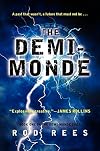
The Demi-Monde, a computer-simulated military training world, begins bleeding into the real world when the U.S. president's daughter becomes trapped inside and enlists the assistance of a reluctant teenager to escape.Tags
Recommendations





























Member Reviews
I came into Demi-Monde: WINTER with pretty much one expectation: that it would be interesting and innovative in its approach. Recommended to me by a friend who said "Its a daring mash-up of genres and tropes that kept me riveted" I mainly wanted to see if it was truly THAT original. Fully immersive virtual realities aren't anything new to me, the .hack universe is built on this principle and as other reviewers have noted there's no small cache of movies or tv shows that explore the idea either.
What Demi-Monde was to me was engaging because Rees spends a lot of effort to detail the simulated world (where soldiers train against some of the most brilliant, cruel and strategic minds from history) and repercussions it has on the real world. show more Your actions, or lack of actions, in the Demi-Monde could have real world consequences to your character and it was intriguing to watch as some people just...ignored that. War Games taken to a new level, soldiers had to think outside the box (and their training) to survive and not everyone is up to that task.
The book is however very very long. Rees had quite a bit of information to build into the plot in order to make the world seem real and plausible, but it became information overload. Much of the military stuff went over my head and that's not even touching on the politics, beliefs and philosophies of 'Demi-Mondians' (basically obsessive fans). The Demi-Mondians take LARP'ers, D&D geeks and MMORPG enthusiasts to a whole new level--and sometimes that level was downright creepifying.
While I enjoyed the concept and kept reading to see what new twist Rees tossed into the pot, in the end this book wouldn't be a 'keeper' for me. My attention strayed and I often turned to shorter books that held my attention much better. show less
What Demi-Monde was to me was engaging because Rees spends a lot of effort to detail the simulated world (where soldiers train against some of the most brilliant, cruel and strategic minds from history) and repercussions it has on the real world. show more Your actions, or lack of actions, in the Demi-Monde could have real world consequences to your character and it was intriguing to watch as some people just...ignored that. War Games taken to a new level, soldiers had to think outside the box (and their training) to survive and not everyone is up to that task.
The book is however very very long. Rees had quite a bit of information to build into the plot in order to make the world seem real and plausible, but it became information overload. Much of the military stuff went over my head and that's not even touching on the politics, beliefs and philosophies of 'Demi-Mondians' (basically obsessive fans). The Demi-Mondians take LARP'ers, D&D geeks and MMORPG enthusiasts to a whole new level--and sometimes that level was downright creepifying.
While I enjoyed the concept and kept reading to see what new twist Rees tossed into the pot, in the end this book wouldn't be a 'keeper' for me. My attention strayed and I often turned to shorter books that held my attention much better. show less
Ella Thomas is a normal eighteen-year-old, trying to earn money to put herself through college and keep her younger brother out of trouble. When she is offered a job to enter the Demi-Monde and rescue the President’s daughter, she also receives five million reasons to accept the dangerous task. Unfortunately, the virtual world is something for which no amount of training can prepare someone, and Ella soon finds herself whisked along in the chaos that is the Demi-Monde, forming unlikely partnerships, crossing paths with some of the most famous and infamous historical and cultural leaders to grace the Earth, and uncovering a dangerous plot with the potential to change the world, real and virtual, forever. Such is the world envisioned by show more Rod Rees in his novel, The Demi-Monde: Winter.
The Demi-Monde: Winter involves a fully-realized virtual reality in which Mr. Rees has already considered and planned the slightest details to make it as realistic as possible. It is complex and layered and not easily explained or understood in a few short pages, let alone chapters. However, this intricacy is necessary for it adds a layer of authenticity to the story and prevents it from becoming farcical. Between the glossaries for common terminology, the explanations that begin each chapter, and the detailed maps of each section of the Demi-Monde itself that precedes each section, a reader can take as much time as necessary to adapt to the lingo, learn the geography, and understand the political, religious, social, and economic differences of each sector before proceeding to the next chapter/page/paragraph. The time taken to understand the Demi-Monde will help immerse the reader into this familiar but different world.
One of the unique features of the Demi-Monde, and therefore of the story, is the fact that the key leaders in the virtual world are historical characters. If one is so inclined, a reader can take the time to learn more about each of the leaders and key players in the drama. Not only does it help a reader understand why they made the chosen list of cyber-duplicates, it adds a sense of tension to know exactly what each character is capable of achieving when allowed to run amok in a virtual world predicated on chaos. There is something profoundly chilling in knowing what Rudolph Heydrich did in real life and seeing how he might have acted without an opposing force to stop him.
The Demi-Monde: Winter is not by any means a character-driven novel. In fact, character development is superficial at best, while character descriptions beyond the physical are also lacking. However, a reader never feels this loss, as the characters’ actions make sense given what little back story is told about them. In addition, much of the character development occurs in the heat of the moment, forgoing the necessity for detailed exposition regarding each character’s past. One does not need to know about Trixie Dashwood’s childhood to understand her transformation by the end of the novel, and Ella’s character is one the evolves as her time in the Demi-Monde lengthens. The only character to suffer from this distinct lack of explanation is the President’s daughter, but it becomes apparent that this is a deliberate choice on Mr. Rees’ part for a reader’s uncertainty about her will play a large role in future novels. Even without a detailed back story, each character has a strong personality that bursts from the page and enlivens the action. One never knows how a character is going to act, and it is this uncertainty which helps generate suspense but also gives readers a feel for the maelstrom that is the very definition of the Demi-Monde.
As with all science fiction novels, there is a level of disbelief that one should suspend for overall enjoyment of the story, and the same is true of The Demi-Monde: Winter. Mr. Rees dispels some of the disbelief himself with the descriptions of the computers used to power the Demi-Monde; they are too powerful for current technology. Then there is the idea of prescient virtual beings who completely understand their environment and its limitations and the idea that a computer simulation could manifest itself in the real world; Mr. Rees uses the long-standing fears of technology becoming cognizant and acting of their own accord to create an element of fear and urgency throughout the story. That being said, one never knows just how advanced computers have become in the private sector, and the mere possibility that the government could create a virtual training world using advanced computers and processing adds to the intrigue. As far-fetched as the premise might be, the fact that there is always a chance of its occurrence is more than enough to make the idea exciting.
The Demi-Monde: Winter is a truly fascinating look at the possibilities of virtual reality and the dangers of becoming to immersed into them. It is also an intriguing sociological experiment in forcing so many megalomaniacs into one small area and watching to see who emerges as a victor. The results are surprising and yet not quite as shocking as one might initially predict. The world inhabited by the Demi-Mondians is suitably horrifying, especially as a counterpoint to modern cultures, but the largest revelation of all is how little it takes to adjust to the differences. The hatred and vitriol spewed by the top leaders in the Demi-Monde never cease to be upsetting but become less outrageous as a reader progresses through the novel. The depravity of the Rookeries and the abject poverty of most of the Demi-Mondians becomes Dickensian rather than appalling, part of the setting rather than any sort of social commentary. Yet the element of danger that a reader first experiences in the prologue never ceases as the story develops. A reader can adjust to the hatred, to the poverty, to the depravity, and to the putrefaction of the Demi-Monde itself, but a reader never adjusts to the danger that is part of the daily life of living in the Demi-Monde. It makes for a gripping story with captivating characters and a fast-paced plot which allows a reader to fly through its 500+ pages. The breathtaking ending will leave a reader eagerly anticipating the next installment in the series. Thankfully, American audiences do not have that much longer to wait. show less
The Demi-Monde: Winter involves a fully-realized virtual reality in which Mr. Rees has already considered and planned the slightest details to make it as realistic as possible. It is complex and layered and not easily explained or understood in a few short pages, let alone chapters. However, this intricacy is necessary for it adds a layer of authenticity to the story and prevents it from becoming farcical. Between the glossaries for common terminology, the explanations that begin each chapter, and the detailed maps of each section of the Demi-Monde itself that precedes each section, a reader can take as much time as necessary to adapt to the lingo, learn the geography, and understand the political, religious, social, and economic differences of each sector before proceeding to the next chapter/page/paragraph. The time taken to understand the Demi-Monde will help immerse the reader into this familiar but different world.
One of the unique features of the Demi-Monde, and therefore of the story, is the fact that the key leaders in the virtual world are historical characters. If one is so inclined, a reader can take the time to learn more about each of the leaders and key players in the drama. Not only does it help a reader understand why they made the chosen list of cyber-duplicates, it adds a sense of tension to know exactly what each character is capable of achieving when allowed to run amok in a virtual world predicated on chaos. There is something profoundly chilling in knowing what Rudolph Heydrich did in real life and seeing how he might have acted without an opposing force to stop him.
The Demi-Monde: Winter is not by any means a character-driven novel. In fact, character development is superficial at best, while character descriptions beyond the physical are also lacking. However, a reader never feels this loss, as the characters’ actions make sense given what little back story is told about them. In addition, much of the character development occurs in the heat of the moment, forgoing the necessity for detailed exposition regarding each character’s past. One does not need to know about Trixie Dashwood’s childhood to understand her transformation by the end of the novel, and Ella’s character is one the evolves as her time in the Demi-Monde lengthens. The only character to suffer from this distinct lack of explanation is the President’s daughter, but it becomes apparent that this is a deliberate choice on Mr. Rees’ part for a reader’s uncertainty about her will play a large role in future novels. Even without a detailed back story, each character has a strong personality that bursts from the page and enlivens the action. One never knows how a character is going to act, and it is this uncertainty which helps generate suspense but also gives readers a feel for the maelstrom that is the very definition of the Demi-Monde.
As with all science fiction novels, there is a level of disbelief that one should suspend for overall enjoyment of the story, and the same is true of The Demi-Monde: Winter. Mr. Rees dispels some of the disbelief himself with the descriptions of the computers used to power the Demi-Monde; they are too powerful for current technology. Then there is the idea of prescient virtual beings who completely understand their environment and its limitations and the idea that a computer simulation could manifest itself in the real world; Mr. Rees uses the long-standing fears of technology becoming cognizant and acting of their own accord to create an element of fear and urgency throughout the story. That being said, one never knows just how advanced computers have become in the private sector, and the mere possibility that the government could create a virtual training world using advanced computers and processing adds to the intrigue. As far-fetched as the premise might be, the fact that there is always a chance of its occurrence is more than enough to make the idea exciting.
The Demi-Monde: Winter is a truly fascinating look at the possibilities of virtual reality and the dangers of becoming to immersed into them. It is also an intriguing sociological experiment in forcing so many megalomaniacs into one small area and watching to see who emerges as a victor. The results are surprising and yet not quite as shocking as one might initially predict. The world inhabited by the Demi-Mondians is suitably horrifying, especially as a counterpoint to modern cultures, but the largest revelation of all is how little it takes to adjust to the differences. The hatred and vitriol spewed by the top leaders in the Demi-Monde never cease to be upsetting but become less outrageous as a reader progresses through the novel. The depravity of the Rookeries and the abject poverty of most of the Demi-Mondians becomes Dickensian rather than appalling, part of the setting rather than any sort of social commentary. Yet the element of danger that a reader first experiences in the prologue never ceases as the story develops. A reader can adjust to the hatred, to the poverty, to the depravity, and to the putrefaction of the Demi-Monde itself, but a reader never adjusts to the danger that is part of the daily life of living in the Demi-Monde. It makes for a gripping story with captivating characters and a fast-paced plot which allows a reader to fly through its 500+ pages. The breathtaking ending will leave a reader eagerly anticipating the next installment in the series. Thankfully, American audiences do not have that much longer to wait. show less
Thank goodness that's over.
The Demi-Monde is a computer simulation modelled on real life and history (Matrix-style, full immersion), used for training purposes. As a starting premise, it's a minefield. When you want to condense the world into microcosm and rejig it, the question isn't whether it will be problematic, it's how and to what degree. Now, as rendered in the book, I found it appalling Euro-centric. There are five sectors, and three of them are Euro (Anglo, Russian/Slav, and Romantic) which leaves the other two being "Asian and stuff" and "African and Muslim and stuff", and these also being the two with skewed gender dynamics. Given that the purported objective of the simulation is to train US forces in low-intensity conflict show more scenarios - which usually do not occur in Europe - this seems a ridiculous set-up. (On the other hand, would setting it up in any other way provide dangerous options of "only the whites are good"? He avoids that problem neatly by having Nazis. Nazis are always as evil as it gets! No wuckers!)
But there were so many things about the way the simulation was set up that made little to no sense. The selection of historical personalities was occasionally interesting, but mostly just baffling. (What on earth was Aleister Crowley doing there? He deserves, in my mind, neither such praise nor such censure; I may have, in ranting about this, referred to him as the Paris Hilton of Victorian esoteria.) There are many detail flaws in the construction of the world - the locals don't bleed, but they bruise; trees can't grow except when we need them for military purposes; the language involves ongoing ridiculous references to things that don't and have never existed in the simulation.
Let's take a moment to fully appreciate the compound irritation offered in those ridiculous reference by the auThor's flagRant misUse of his Shift keY. YOU ARE NOT CLEVER, SONNY.
But the big problem of the book is in the lack of grace in its telling. It starts terribly slowly, "establishing" the simulation nature of things before plunging in (at which point things pick up considerably). I use the quotemarks because very little of actual substance is established about the simulation itself. We learn bugger all of the technical details, which enables the author to handwave such things as the fact that they can jack a character in, but seem unable to jack her out again (even in the Matrix, you could exit through the entry door), not to mention why programming can't solve the problem. IT'S A COMPUTER UNDER YOUR CONTROL.
Pacing and "but why?" continue to plague the story. Major changes in character direction occur over the space of twelve hours, huge action sequences are given the one-paragraph summary ("and then they took the barricade") and big character emotional points are crammed into the last few lines before the end of a chapter, occasionally feeling like they needed to fit it in so they didn't have to go over the page and interrupt the typeset. The writing itself has all the elevation of a kid lying across the coffee table pretending to be Superman, and the main character kept forgetting her reason for being there at all. Not to mention the author's abhorrent tendency to solve everything with her deus ex striptease; in fact, her skin seems to exert such a hypnotic tendency on everyone in the Demi-Monde that I assume if she was naked, she'd crash the server.
Conceptually, I feel like there's a lot of interesting going on here, but the execution is so cack-handed I couldn't recommend it to anyone. show less
The Demi-Monde is a computer simulation modelled on real life and history (Matrix-style, full immersion), used for training purposes. As a starting premise, it's a minefield. When you want to condense the world into microcosm and rejig it, the question isn't whether it will be problematic, it's how and to what degree. Now, as rendered in the book, I found it appalling Euro-centric. There are five sectors, and three of them are Euro (Anglo, Russian/Slav, and Romantic) which leaves the other two being "Asian and stuff" and "African and Muslim and stuff", and these also being the two with skewed gender dynamics. Given that the purported objective of the simulation is to train US forces in low-intensity conflict show more scenarios - which usually do not occur in Europe - this seems a ridiculous set-up. (On the other hand, would setting it up in any other way provide dangerous options of "only the whites are good"? He avoids that problem neatly by having Nazis. Nazis are always as evil as it gets! No wuckers!)
But there were so many things about the way the simulation was set up that made little to no sense. The selection of historical personalities was occasionally interesting, but mostly just baffling. (What on earth was Aleister Crowley doing there? He deserves, in my mind, neither such praise nor such censure; I may have, in ranting about this, referred to him as the Paris Hilton of Victorian esoteria.) There are many detail flaws in the construction of the world - the locals don't bleed, but they bruise; trees can't grow except when we need them for military purposes; the language involves ongoing ridiculous references to things that don't and have never existed in the simulation.
Let's take a moment to fully appreciate the compound irritation offered in those ridiculous reference by the auThor's flagRant misUse of his Shift keY. YOU ARE NOT CLEVER, SONNY.
But the big problem of the book is in the lack of grace in its telling. It starts terribly slowly, "establishing" the simulation nature of things before plunging in (at which point things pick up considerably). I use the quotemarks because very little of actual substance is established about the simulation itself. We learn bugger all of the technical details, which enables the author to handwave such things as the fact that they can jack a character in, but seem unable to jack her out again (even in the Matrix, you could exit through the entry door), not to mention why programming can't solve the problem. IT'S A COMPUTER UNDER YOUR CONTROL.
Pacing and "but why?" continue to plague the story. Major changes in character direction occur over the space of twelve hours, huge action sequences are given the one-paragraph summary ("and then they took the barricade") and big character emotional points are crammed into the last few lines before the end of a chapter, occasionally feeling like they needed to fit it in so they didn't have to go over the page and interrupt the typeset. The writing itself has all the elevation of a kid lying across the coffee table pretending to be Superman, and the main character kept forgetting her reason for being there at all. Not to mention the author's abhorrent tendency to solve everything with her deus ex striptease; in fact, her skin seems to exert such a hypnotic tendency on everyone in the Demi-Monde that I assume if she was naked, she'd crash the server.
Conceptually, I feel like there's a lot of interesting going on here, but the execution is so cack-handed I couldn't recommend it to anyone. show less
Read from February 18 to 21, 2012
I liked this book. I WANTED to love it. There's a lot going on in the Demi-Monde and even though the book gives a lot of explanation, there's still even more that I don't know.
One thing that's frustrating is that this book is a lot of set-up for the rest of the series. Again, I ask, whatever happened to a standalone novel? Other thing that's frustrating: There was no conclusion for the story in THIS BOOK. I like a good series, but I also like a series where each book in the series is simply a good story on its own (ie Parasol Protectorate series by Gail Carriger).
I enjoyed the fusion of historical characters with the smashing up of religions and ideas, but perhaps there was too much of that going on. I show more mean, there's SO much happening and so much to learn about the Demi-Monde world that it's hard to keep it all together.
So I did like the book...obviously, because I finished it. But I was still a little disappointed. Will I read the second in the series? That's still to be determined. show less
I liked this book. I WANTED to love it. There's a lot going on in the Demi-Monde and even though the book gives a lot of explanation, there's still even more that I don't know.
One thing that's frustrating is that this book is a lot of set-up for the rest of the series. Again, I ask, whatever happened to a standalone novel? Other thing that's frustrating: There was no conclusion for the story in THIS BOOK. I like a good series, but I also like a series where each book in the series is simply a good story on its own (ie Parasol Protectorate series by Gail Carriger).
I enjoyed the fusion of historical characters with the smashing up of religions and ideas, but perhaps there was too much of that going on. I show more mean, there's SO much happening and so much to learn about the Demi-Monde world that it's hard to keep it all together.
So I did like the book...obviously, because I finished it. But I was still a little disappointed. Will I read the second in the series? That's still to be determined. show less
Now, this is a Winter I can get on board with!
I started reading this novel on Christmas Day, and what a gift to me! I enjoyed it way more than expected—to the point that I could barely drag myself away to celebrate with friends. Why the limited expectations? Well, I was unfamiliar with the author, but even more I was wary of a science fictiony-sounding premise. The novel does indeed intersect the genres of science fiction, fantasy, and thriller, making it a bit difficult to pigeonhole, but it all comes together terrifically.
Unfortunately, if you try to summarize the plot to anyone, you’ll sound like a lunatic. Early in the novel, a character explains the basic set-up to Ella Thomas, the novel’s protagonist:
“Asymmetric Warfare is show more the U.S. military’s name for all those messy little conflicts that our country keeps finding itself fighting in hellish places like Afghanistan, Iraq and Pakistan. They are wars without rules and without honor and, to be blunt, they are wars the U.S. Army isn’t particularly good at fighting. When the U.S. military began to study its performance in Asymmetric Warfare Environments it discovered that its soldiers, especially its officers, weren’t effective because they had no appreciation of or understanding of what sort of war they would be fighting. So in order to prepare them better, the U.S. Army InDoctrination and Training Command came up with the idea of creating a computer simulation that would let our combat personnel experience what was waiting for them in Peshawar and desperate places like it… The Demi-Monde is the most sophisticated, the most complex and the most terrifying computer simulation ever devised. It’s a simulation that recreates the visceral anxiety and fear of being in an… Asymmetric Warfare Environment. To play the Demi-Monde you have to be hardwired into it and the hardwiring creates a full sensory bypass: you believe you are in the Demi-Monde.”
Oh, and one other little detail… If you die in the Demi-Monde, you die in real life. Ella has been recruited for a rescue mission. She possesses unique skills and qualifications—and is desperate enough to risk her life—in order to save the daughter of the President of the United States, who has somehow been lost in the Demi-Monde.
Okay, that is not the premise of what I typically read, but this book grabbed me almost immediately. Without being “literary” in any way, the novel is very well written. Rees isn’t merely setting his novel, he is world-building. And doing so very, very effectively. (In addition to the descriptions within the novel, I was fascinated by the maps scattered throughout.) Elements of the Demi-Monde are based on Nazi Germany, but the world that Rees has created is so much richer and more complex than just that. The novel is both political and philosophical, and Rees plays around a lot with language. In fact, at the back of the book there’s a complete glossary of words like UnFunDaMentalism, HerEticalism, HimPerialism, ill-ucination, and the like. At first, I thought the author was just having fun and being clever, but soon enough the use of language became highly Orwellian. After all, it was Orwell who said, “But if thought corrupts language, language can also corrupt thought.” It’s all so entertaining and so smart.
And we haven’t even discussed the characters yet. Ella is terrific character to build the novel around, but is actually one of several major characters. The bulk of this novel takes place in the virtual reality of the Demi-Monde, which is peopled with 30 million “dupes,” basically artificial intelligences. And they are so convincingly rendered that the reader experiences the same cognitive dissonance that Ella does in distinguishing exactly who and what is real. The relationships depicted encompass the entire spectrum from love to hate and everything in between. Race, religion, nationality, and yes, reality, all cause conflict with countless lives on the line. But do dupe lives even matter?
You’ve probably gathered by now that this is a complicated 500+ page novel, and it is only the first of a quadrilogy. There is a story arc in this first novel, but there really is no resolution. It ends on multiple cliff-hangers. This is the sort of thing I generally hate, but I was so caught up in this fast-moving epic that really I’m just looking forward to the next installment and pleased that there will be three more volumes to look forward to. Hooray for trying something a bit outside my comfort zone! What a great find! My New Year’s resolution: resist ordering a copy of the sequel from England. It’s going to be hard. show less
I started reading this novel on Christmas Day, and what a gift to me! I enjoyed it way more than expected—to the point that I could barely drag myself away to celebrate with friends. Why the limited expectations? Well, I was unfamiliar with the author, but even more I was wary of a science fictiony-sounding premise. The novel does indeed intersect the genres of science fiction, fantasy, and thriller, making it a bit difficult to pigeonhole, but it all comes together terrifically.
Unfortunately, if you try to summarize the plot to anyone, you’ll sound like a lunatic. Early in the novel, a character explains the basic set-up to Ella Thomas, the novel’s protagonist:
“Asymmetric Warfare is show more the U.S. military’s name for all those messy little conflicts that our country keeps finding itself fighting in hellish places like Afghanistan, Iraq and Pakistan. They are wars without rules and without honor and, to be blunt, they are wars the U.S. Army isn’t particularly good at fighting. When the U.S. military began to study its performance in Asymmetric Warfare Environments it discovered that its soldiers, especially its officers, weren’t effective because they had no appreciation of or understanding of what sort of war they would be fighting. So in order to prepare them better, the U.S. Army InDoctrination and Training Command came up with the idea of creating a computer simulation that would let our combat personnel experience what was waiting for them in Peshawar and desperate places like it… The Demi-Monde is the most sophisticated, the most complex and the most terrifying computer simulation ever devised. It’s a simulation that recreates the visceral anxiety and fear of being in an… Asymmetric Warfare Environment. To play the Demi-Monde you have to be hardwired into it and the hardwiring creates a full sensory bypass: you believe you are in the Demi-Monde.”
Oh, and one other little detail… If you die in the Demi-Monde, you die in real life. Ella has been recruited for a rescue mission. She possesses unique skills and qualifications—and is desperate enough to risk her life—in order to save the daughter of the President of the United States, who has somehow been lost in the Demi-Monde.
Okay, that is not the premise of what I typically read, but this book grabbed me almost immediately. Without being “literary” in any way, the novel is very well written. Rees isn’t merely setting his novel, he is world-building. And doing so very, very effectively. (In addition to the descriptions within the novel, I was fascinated by the maps scattered throughout.) Elements of the Demi-Monde are based on Nazi Germany, but the world that Rees has created is so much richer and more complex than just that. The novel is both political and philosophical, and Rees plays around a lot with language. In fact, at the back of the book there’s a complete glossary of words like UnFunDaMentalism, HerEticalism, HimPerialism, ill-ucination, and the like. At first, I thought the author was just having fun and being clever, but soon enough the use of language became highly Orwellian. After all, it was Orwell who said, “But if thought corrupts language, language can also corrupt thought.” It’s all so entertaining and so smart.
And we haven’t even discussed the characters yet. Ella is terrific character to build the novel around, but is actually one of several major characters. The bulk of this novel takes place in the virtual reality of the Demi-Monde, which is peopled with 30 million “dupes,” basically artificial intelligences. And they are so convincingly rendered that the reader experiences the same cognitive dissonance that Ella does in distinguishing exactly who and what is real. The relationships depicted encompass the entire spectrum from love to hate and everything in between. Race, religion, nationality, and yes, reality, all cause conflict with countless lives on the line. But do dupe lives even matter?
You’ve probably gathered by now that this is a complicated 500+ page novel, and it is only the first of a quadrilogy. There is a story arc in this first novel, but there really is no resolution. It ends on multiple cliff-hangers. This is the sort of thing I generally hate, but I was so caught up in this fast-moving epic that really I’m just looking forward to the next installment and pleased that there will be three more volumes to look forward to. Hooray for trying something a bit outside my comfort zone! What a great find! My New Year’s resolution: resist ordering a copy of the sequel from England. It’s going to be hard. show less
This might be my biggest reader-ly booboo as I totally thought this was some kind of steampunk-y novel set during the historical demimonde (late 1800s, France) although to be fair, other than the title, nothing about this book should have lead me to that conclusion. Nope, I own this mistake and fortunately, it ended pretty well.
The actual premise is that it is 2018 and the Demi-Monde is an online training 'game' for US soldiers to experience immersive extreme combat situations in foreign locales with factions headed by some of history's most violent, deranged, and methodical leaders. The game is self-learning, an active world of 30 million 'dupes' who continue to grow, shape, change, adapt, and evolve even when not in use. (There's a show more 'Product Description Manual' available for download from the book's website -- oddly enough, from option 9, 'Fashion of the Demi-Monde' -- which has some fascinating, nerdy details about the game world, factions, that kind of thing. I found it enormously helpful for understanding the world.)
Most 'dupes' are just ordinary historical figures, but eleven are 'Singularities' -- the super insane, psychotic, charismatic, violent leaders from world history: Ivan the Terrible, Reinhard Heydrich, Henry VIII. Programmers designed the world into five factions, modeled on real world cities and loose exaggerations of cultural stereotypes, and created a nomadic people to increase tension so that there would always be conflict and war between at least two of the factions.
This is a world designed for armed personnel, but at the novel's open, the U.S. President's daughter is scrambling around inside the Demi-Monde, trying desperately to keep away from the SS-Ordo-Templi-Aryanis -- a group that, even if you're not exactly sure who they are, is obviously very very evil -- as, for totally bizarre reasons, the primary currency in Demi-Monde is blood, and the dupes don't make blood. (Seriously, this book takes something from every genre and the kitchen sink, and weirdly, it kind of works!)
The military wants to stage a rescue of the President's daughter Norma, but there's a hitch: the Demi-Mondians have started wondering about the random soldiers who show up now and then (in the Demi-Monde, Aleister Crowley has invited a pseudo-science that says real world humans are demons from another realm) and have sealed off entrances to the Demi-Monde. (I will admit I still have some serious fuzziness on how a computer game can 'stop' people from entering the game, but whatever.) So the military has to 'trick' the Demi-Monde into accepting their hero, an 18-year old high school jazz singer named Ella.
Thankfully, Ella is as ignorant as we of the Demi-Monde, so the first few chapters explain all the world-building around the Demi-Monde, like why the world is centered around Victorian-era techonology(allegedly to replicate the kind of circumstances that US troops face when storming foreign locales), why it feels so real, who some of the factions are, that kind of thing.
And here's where I get to some of the things that didn't work for me in this book, starting with Ella. For all this creative, elaborate world-building, the three lead female characters all super flat and dependent on static shorthand. Ella is a gorgeous, tough, sassy woman of color -- which is exciting -- but her main survival skill seems to be being too gorgeous for the villains to mess with. Her off-the-charts intelligence isn't reflected; in fact, she has a frightening lack of basic knowledge. Our imperious 'British' Demi-Mondian, Trixiebelle Dashwood, who flouts convention in the search for what she wants, remains just that, foot-stompy and head tossing, straight out of a romance novel. Norma, the President's daughter, alternates between being remarkably tough and annoyingly pathetic.
After the heroines, I struggled with Rees' exaggerated Demi-Mondian cultures. One faction, 'The Coven', is basically an extreme man-hating-lesbian-feminist cult. As a lesbian and a feminist who doesn't hate men, it is one of my pet peeves when feminism and lesbians are twisted into this horrible caricature. Not that he singles out feminists and lesbians for this treatment: the Abrahamic traditions are twisted into an extreme anti-woman patriarchy, the Germanic/Tuetonic cultures are smashed into a crazy Nazi/Occult potpourri, the European joie de vivre and bohemianism of the 19th century has mutated into a hedonistic sex party. Subtlety isn't the thing 'round these parts. When I could get past my irritation, or, grew so accustomed that I no longer was bothered, I got lost in the very messed up world of the Demi-Monde.
The end has a serious cliff-hanger, so I'm kind of eager for the next book, but at the same time, I really wish this wasn't a four book series. I'm exhausted by the Demi-Monde and Rees' use of random capitalization and acronyms -- I would probably take more time between books were I not scheduled to review the second book. (Speaking of the second book, I was super confused about the books as there seem to be multiple editions of these novels under varying names, but I think this book, the first, also goes by The Demi-Monde: Winter while the second book, The Shadow Wars, also goes by The Demi-Monde: Spring. I believe the third book has been released in the UK as The Demi-Monde: Summer but I haven't seen what the US release will be titled.)
If you like dystopias, this is your book: it is a dystopia of dystopias. If you like Tron or The Matrix and big chunksters, this also is your book. show less
The actual premise is that it is 2018 and the Demi-Monde is an online training 'game' for US soldiers to experience immersive extreme combat situations in foreign locales with factions headed by some of history's most violent, deranged, and methodical leaders. The game is self-learning, an active world of 30 million 'dupes' who continue to grow, shape, change, adapt, and evolve even when not in use. (There's a show more 'Product Description Manual' available for download from the book's website -- oddly enough, from option 9, 'Fashion of the Demi-Monde' -- which has some fascinating, nerdy details about the game world, factions, that kind of thing. I found it enormously helpful for understanding the world.)
Most 'dupes' are just ordinary historical figures, but eleven are 'Singularities' -- the super insane, psychotic, charismatic, violent leaders from world history: Ivan the Terrible, Reinhard Heydrich, Henry VIII. Programmers designed the world into five factions, modeled on real world cities and loose exaggerations of cultural stereotypes, and created a nomadic people to increase tension so that there would always be conflict and war between at least two of the factions.
This is a world designed for armed personnel, but at the novel's open, the U.S. President's daughter is scrambling around inside the Demi-Monde, trying desperately to keep away from the SS-Ordo-Templi-Aryanis -- a group that, even if you're not exactly sure who they are, is obviously very very evil -- as, for totally bizarre reasons, the primary currency in Demi-Monde is blood, and the dupes don't make blood. (Seriously, this book takes something from every genre and the kitchen sink, and weirdly, it kind of works!)
The military wants to stage a rescue of the President's daughter Norma, but there's a hitch: the Demi-Mondians have started wondering about the random soldiers who show up now and then (in the Demi-Monde, Aleister Crowley has invited a pseudo-science that says real world humans are demons from another realm) and have sealed off entrances to the Demi-Monde. (I will admit I still have some serious fuzziness on how a computer game can 'stop' people from entering the game, but whatever.) So the military has to 'trick' the Demi-Monde into accepting their hero, an 18-year old high school jazz singer named Ella.
Thankfully, Ella is as ignorant as we of the Demi-Monde, so the first few chapters explain all the world-building around the Demi-Monde, like why the world is centered around Victorian-era techonology(allegedly to replicate the kind of circumstances that US troops face when storming foreign locales), why it feels so real, who some of the factions are, that kind of thing.
And here's where I get to some of the things that didn't work for me in this book, starting with Ella. For all this creative, elaborate world-building, the three lead female characters all super flat and dependent on static shorthand. Ella is a gorgeous, tough, sassy woman of color -- which is exciting -- but her main survival skill seems to be being too gorgeous for the villains to mess with. Her off-the-charts intelligence isn't reflected; in fact, she has a frightening lack of basic knowledge. Our imperious 'British' Demi-Mondian, Trixiebelle Dashwood, who flouts convention in the search for what she wants, remains just that, foot-stompy and head tossing, straight out of a romance novel. Norma, the President's daughter, alternates between being remarkably tough and annoyingly pathetic.
After the heroines, I struggled with Rees' exaggerated Demi-Mondian cultures. One faction, 'The Coven', is basically an extreme man-hating-lesbian-feminist cult. As a lesbian and a feminist who doesn't hate men, it is one of my pet peeves when feminism and lesbians are twisted into this horrible caricature. Not that he singles out feminists and lesbians for this treatment: the Abrahamic traditions are twisted into an extreme anti-woman patriarchy, the Germanic/Tuetonic cultures are smashed into a crazy Nazi/Occult potpourri, the European joie de vivre and bohemianism of the 19th century has mutated into a hedonistic sex party. Subtlety isn't the thing 'round these parts. When I could get past my irritation, or, grew so accustomed that I no longer was bothered, I got lost in the very messed up world of the Demi-Monde.
The end has a serious cliff-hanger, so I'm kind of eager for the next book, but at the same time, I really wish this wasn't a four book series. I'm exhausted by the Demi-Monde and Rees' use of random capitalization and acronyms -- I would probably take more time between books were I not scheduled to review the second book. (Speaking of the second book, I was super confused about the books as there seem to be multiple editions of these novels under varying names, but I think this book, the first, also goes by The Demi-Monde: Winter while the second book, The Shadow Wars, also goes by The Demi-Monde: Spring. I believe the third book has been released in the UK as The Demi-Monde: Summer but I haven't seen what the US release will be titled.)
If you like dystopias, this is your book: it is a dystopia of dystopias. If you like Tron or The Matrix and big chunksters, this also is your book. show less
The Demi-Monde Winter is an ambitious undertaking with lots of moving parts, and an inventive storyline. It doesn’t always succeed in all that it seeks to accomplish, but it is entertaining in spots, and has a killer cliffhanger. It’s also the first in a quartet of “seasonal” books.
Members
- Recently Added By
Author Information
16+ Works 477 Members
Series

Common Knowledge
- Canonical title
- The Demi-Monde: Winter
- Original title
- The Demi-Monde: Winter
- Original publication date
- 2011
- Disambiguation notice
- publishers author and title page and booksellers all agree this book is called The Demi-Monde: Winter please do not replace the cannonical title with simply Winter.
Classifications
Statistics
- Members
- 308
- Popularity
- 103,283
- Reviews
- 21
- Rating
- (3.43)
- Languages
- English, French, German
- Media
- Paper, Ebook
- ISBNs
- 11
- ASINs
- 4